


TL;DR
Most "glass" screen protectors are real glass, but the quality gap between a $5 protector and a $20 one is massive
The 9H hardness rating everyone brags about? It measures pencil hardness, not how well it protects against sand or concrete
Real tempered glass shatters into tiny pieces when it breaks. If yours cracks into big shards or just bends, you got scammed
What You're Really Buying When You See "Glass" on the Label
I bought a screen protector last year for four bucks. Two-pack, free shipping, 4.5 stars, thousands of reviews. The listing said "Premium Tempered Glass" in bold letters.
Felt solid when I installed it. Looked clear. No complaints.
Then I dropped my phone from maybe three feet onto my driveway. The protector cracked into exactly three large pieces. My phone screen cracked underneath it.
$280 repair bill.
Turns out what I bought was either regular glass that was never actually tempered, or plastic with some glass coating, or who knows what. The listing lied. The seller's account doesn't exist anymore. I learned an expensive lesson about what "glass" actually means in the screen protector world.
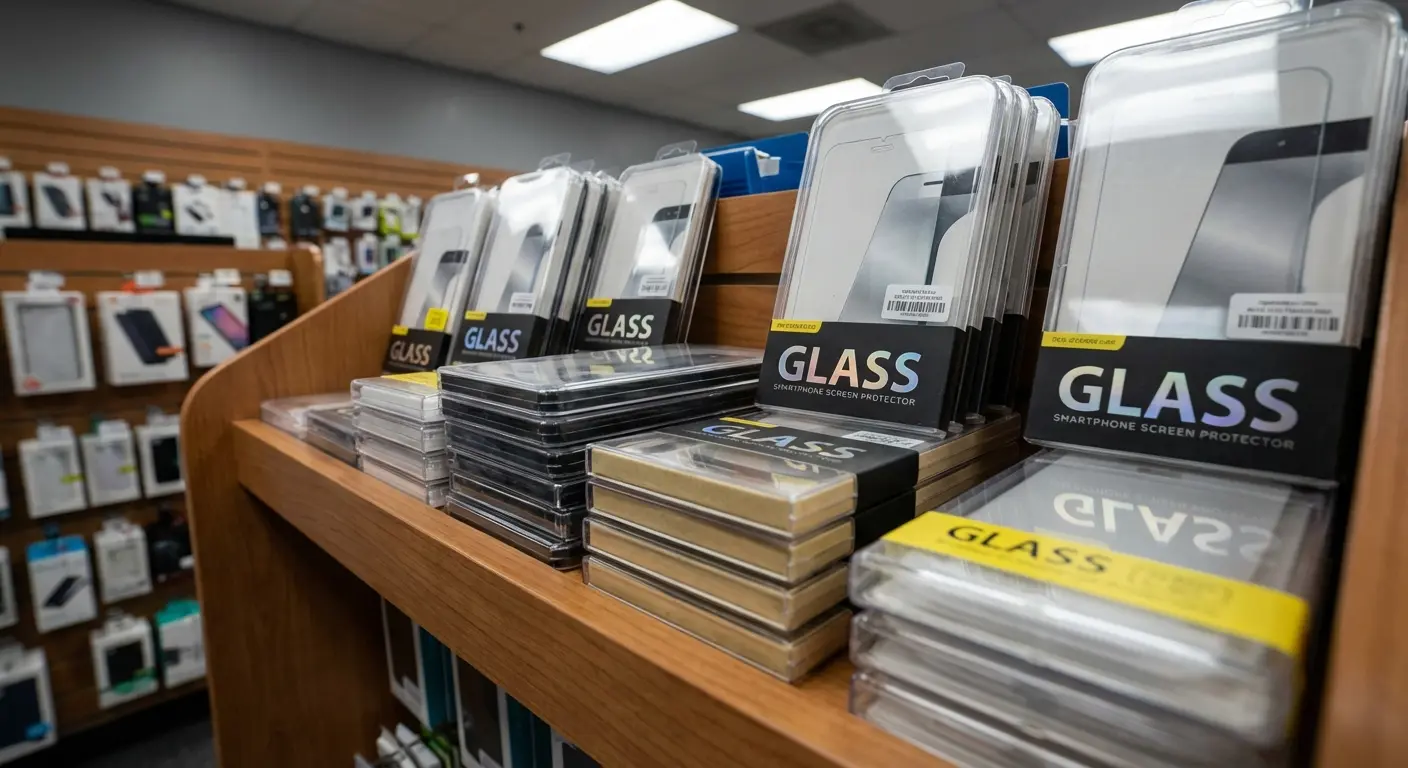
Yeah, most screen protectors labeled as glass do contain actual glass. But that word covers everything from properly tempered protection that'll save your phone to barely-treated sheets that might as well be plastic. The quality spectrum is insane.
Here's where it gets sketchy. Some products are hybrid materials with a plastic base and thin glass coating. Others are straight-up plastic films being sold as "glass" because Amazon doesn't really enforce anything. A few are real glass that never went through the tempering process, so they look right but perform terribly.
The phone accessory market went from $61 billion in 2014 to $107.3 billion by 2022, according to research from Allied Market Research. That kind of money attracts legitimate manufacturers and a whole lot of scammers banking on people not knowing the difference.
Why does this matter? Because glass offers way better scratch resistance, clearer display quality, and smoother touch sensitivity than plastic. When you pay for glass, you deserve to actually get it.
How They Actually Make Tempered Glass
So how do they turn regular glass into something that can protect your phone?
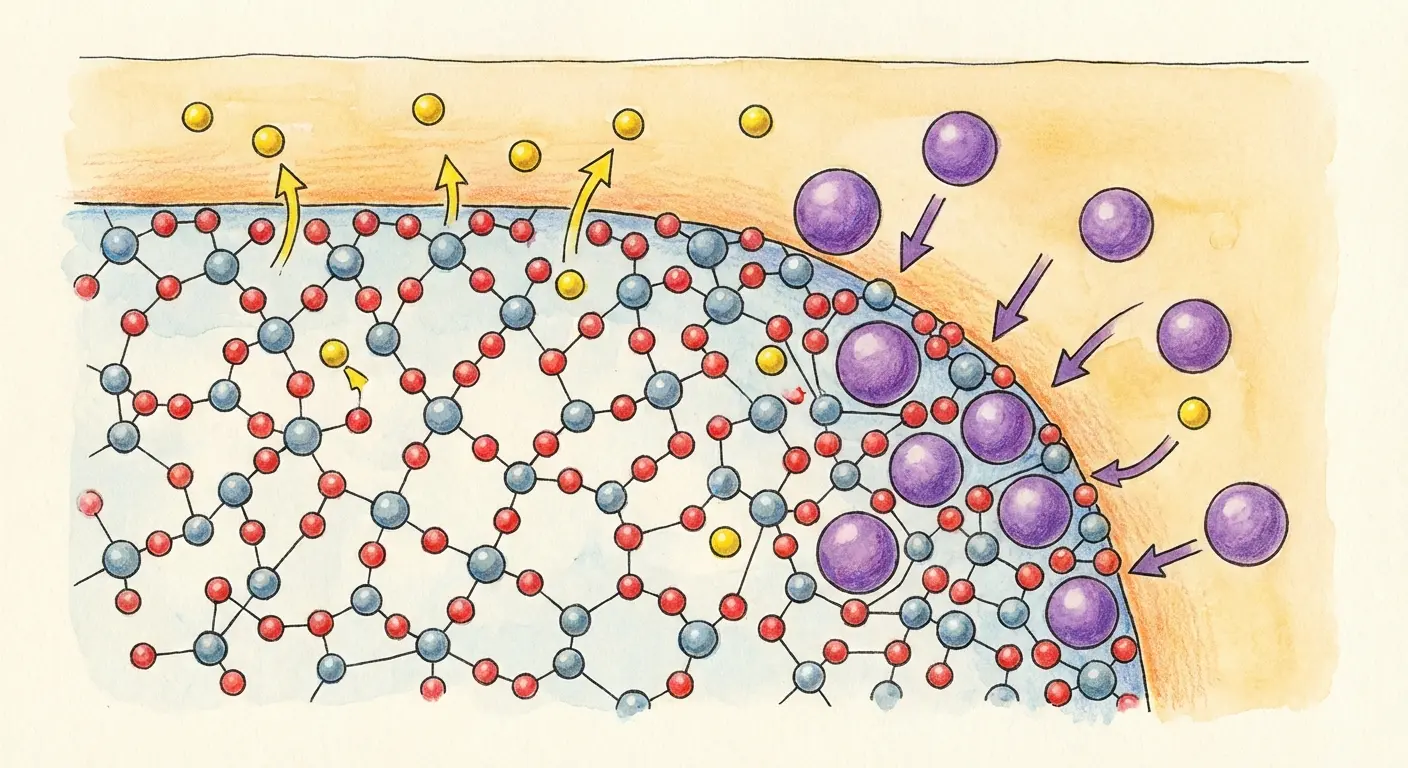
The process starts with thin glass sheets that contain sodium ions. Manufacturers heat these to 400 degrees Celsius and dunk them in a potassium salt bath. The smaller sodium ions migrate out while bigger potassium ions take their place.
Those bigger ions get crammed into spaces meant for smaller ones. This creates constant compression on the glass surface. It's like pre-tensing your abs before someone punches you (terrible analogy, but you get it). The glass is already under stress, so it can handle more stress before breaking.
This takes 6-8 hours and requires precise temperature control. It's expensive. You need specialized equipment and quality control.
Or you can skip it entirely. Just cut thin glass, slap "tempered glass" on the package, and sell it for $5. Most buyers won't know the difference until their phone hits pavement.
I knew a guy who dropped his phone off scaffolding. Twenty feet onto concrete. The screen protector shattered into what looked like a million tiny pieces, but his phone screen was fine. That's what properly tempered glass does. It sacrifices itself.
His coworker dropped his phone from the same height a week later with one of those cheap Amazon protectors. Both the protector and the screen cracked. The protector was probably glass, but it wasn't tempered right, so it didn't absorb the impact.
Why the Shattering Pattern Matters
When real tempered glass breaks, it fragments into hundreds of small, relatively blunt pieces. This happens because of the stress pattern from tempering. The compressed surface is in tension with the glass interior, and when that surface cracks, all the stored energy releases at once.
This fragmentation tells you whether you bought actual tempered glass. Plastic doesn't shatter. It might crack in a line, tear, or just dent. Regular untreated glass breaks into large, sharp shards.
The controlled shattering means the protector did its job. It absorbed impact energy instead of transferring force to your phone's screen. That's the entire point, and it only works when the glass is genuinely tempered through proper chemical processing.
When "Glass" Is Actually Plastic
Here's where companies get sneaky.
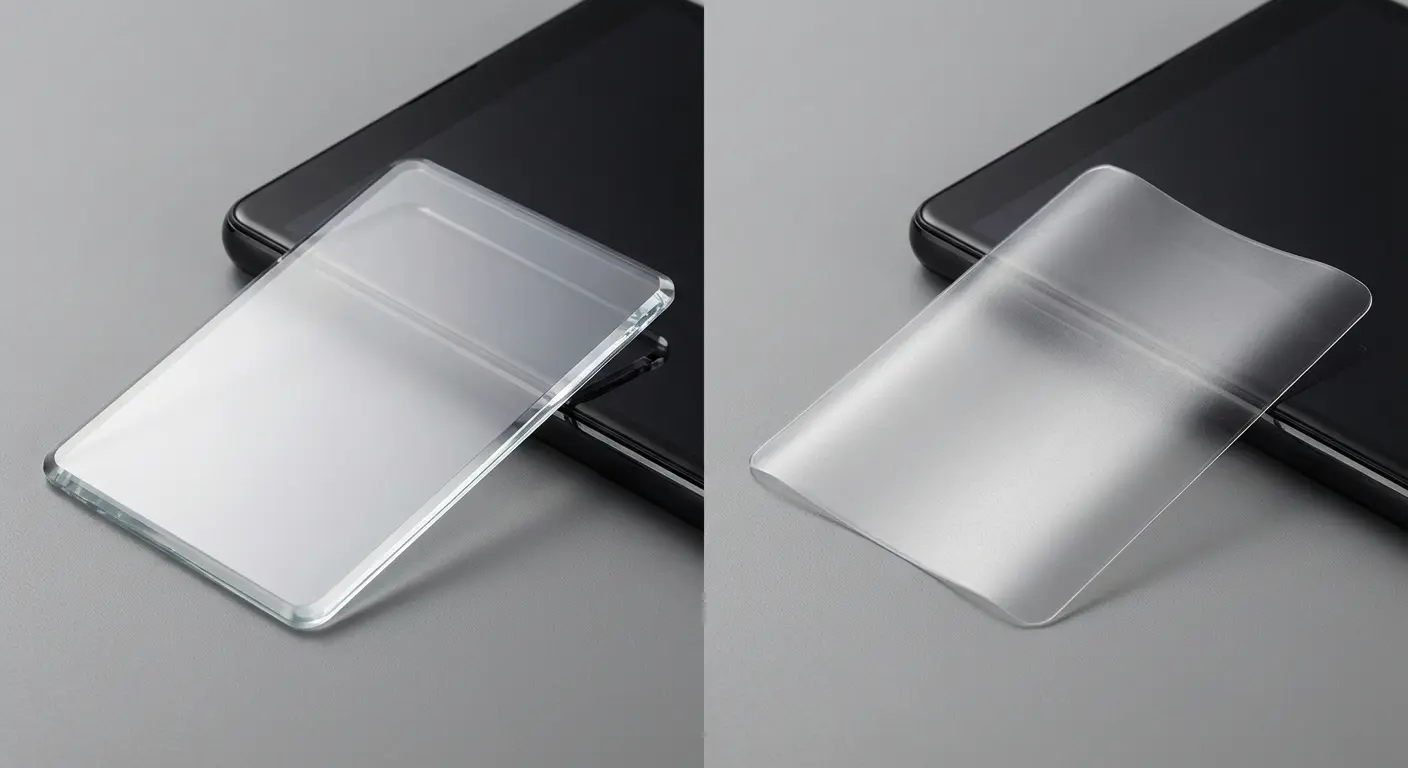
Some protectors use a PET or TPU plastic base with a thin glass coating on top. These hybrids let manufacturers technically claim "glass" in their marketing while keeping costs low. The plastic base provides flexibility (useful for curved screens), while the glass coating offers some scratch resistance.
You can spot these by feel. They're more flexible than solid glass. If you can bend the protector without it snapping, you've got hybrid or full plastic. The edges feel softer and more rounded than the crisp edges of cut glass.
Product descriptions sometimes give it away with phrases like "glass-coated" or "glass composite" if you read carefully. But plenty of sellers just write "tempered glass" and let you assume you're getting solid glass.
The Curved Screen Problem
Curved edges on modern phones created a real engineering problem for glass protectors. Rigid glass won't conform to curves without leaving air gaps at the edges. Those gaps look awful and compromise protection.
Samsung's Galaxy S26 lineup features curved displays that challenge traditional glass designs. Screen protector manufacturers have already released specialized options for the S26 series, with some brands offering hybrid solutions that combine tempered glass centers with flexible TPU edges.
This is one area where TPU actually beats glass. A quality TPU protector designed for curved screens provides edge-to-edge coverage without the halo effect or lifting that plagues glass on curved displays. The flexibility is a feature, not a corner-cutting measure.
The problem is telling the difference between smart engineering and cheap products pretending to be something they're not. A reputable brand will clearly state when they're using TPU or hybrid materials for curved screens and explain why. Sketchy sellers just call everything "glass" and hope you don't notice until after purchase.
What's Really on Your Screen: PET vs. TPU vs. Glass
PET Film
PET is basically plastic wrap. Same stuff as water bottles. It's thin (about 0.1-0.15mm), cheap to make, and you'll find it in multi-packs for under $10.
The texture gives it away immediately. It feels slightly sticky or rubbery compared to glass's smooth, hard surface. Your finger doesn't glide the same way. Touch sensitivity feels slightly dampened.
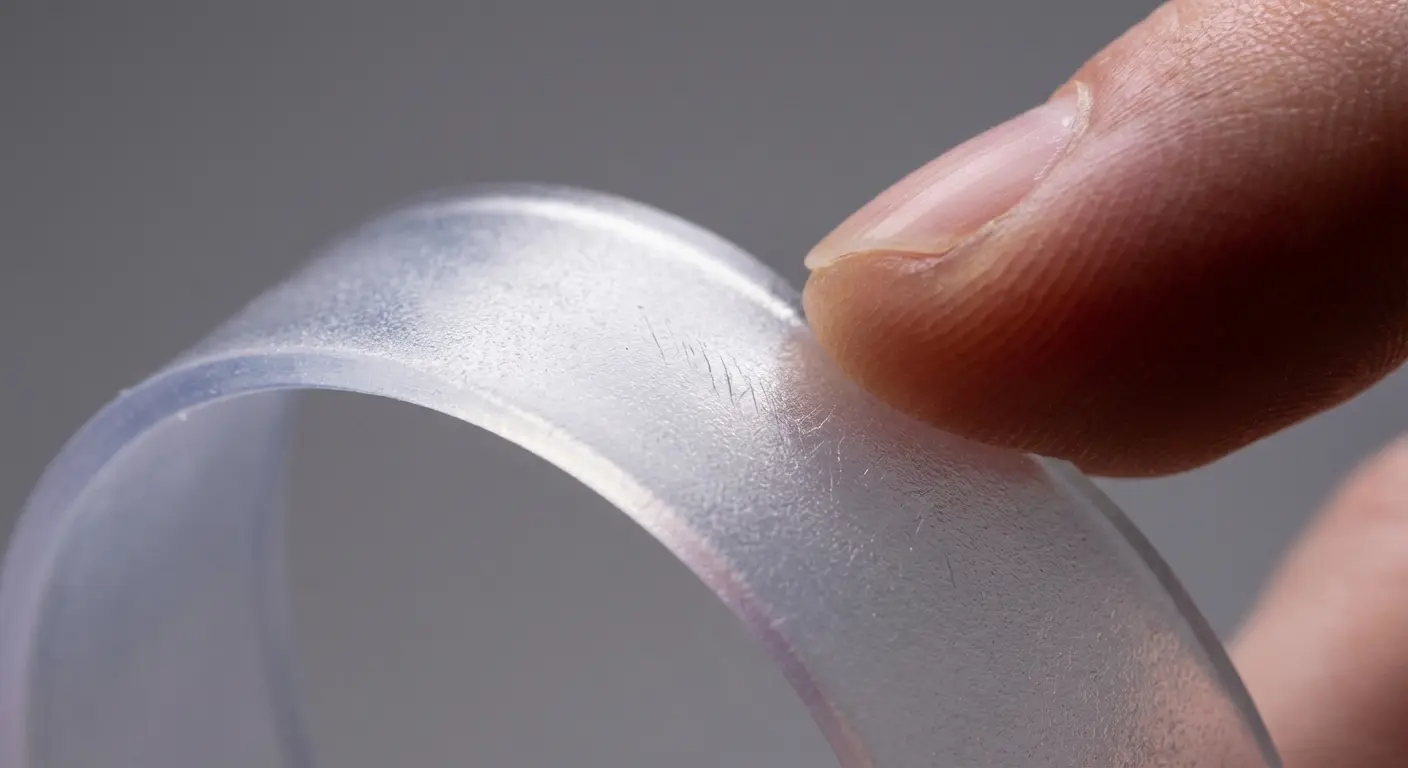
PET scratches from fingernails. Keys, sand, or repeated tapping will leave marks. The material also yellows with UV exposure over time, though this takes months of direct sunlight.
For temporary protection or if you replace protectors frequently, PET works fine. Just don't expect it to perform like glass, and don't pay glass prices for it.
TPU's Weird Advantages
TPU is flexible plastic with elastic properties that let it absorb impacts without cracking. Some TPU formulations include "self-healing" technology where minor scratches literally disappear as the material flows back together. This works for very light scratches, not deep gouges.
The flexibility makes TPU ideal for full-coverage on curved screens or for people who need edge protection. Military-grade phone cases often use TPU for this reason. It won't shatter, won't crack, and can take repeated impacts that would destroy glass.
But TPU isn't as scratch-resistant as tempered glass. The surface can feel slightly tacky or drag against your finger. Optical clarity is good but not quite at glass levels. TPU also attracts dust and fingerprints more readily than glass.
Why Tempered Glass Usually Wins
Tempered glass feels like using your phone without any protector at all. Your finger glides smoothly. There's no drag, no friction. Touch sensitivity stays perfect because you're adding glass to glass, not plastic to glass.
Tempered glass protectors go through a heating and cooling process that makes them five times stronger than plastic protectors. This strength difference explains why tempered glass can withstand impacts that would simply dent or tear through plastic.
Optical clarity is where glass really shines. No color distortion, no rainbow effect, no reduction in screen brightness. Quality glass protectors use oleophobic coatings that repel fingerprints just as effectively as your phone's original screen.
The rigidity of glass also helps maintain your phone's structural integrity. It adds resistance to bending or twisting forces. When you press on your screen, glass doesn't flex or create that weird ripple effect you sometimes see with plastic.
Glass costs more because the materials and manufacturing process are genuinely more expensive. You're paying for protection, not just psychological comfort. When a glass protector shatters from a drop, it absorbed energy that would have transferred to your phone's screen. Plastic simply can't do this as effectively.
The 9H Hardness Rating Is Basically BS
You've seen "9H hardness" on every listing. Sounds impressive, especially if you know diamonds rate 10 on the Mohs hardness scale.
Here's the thing: 9H doesn't refer to Mohs hardness. It refers to pencil hardness, which is completely different.
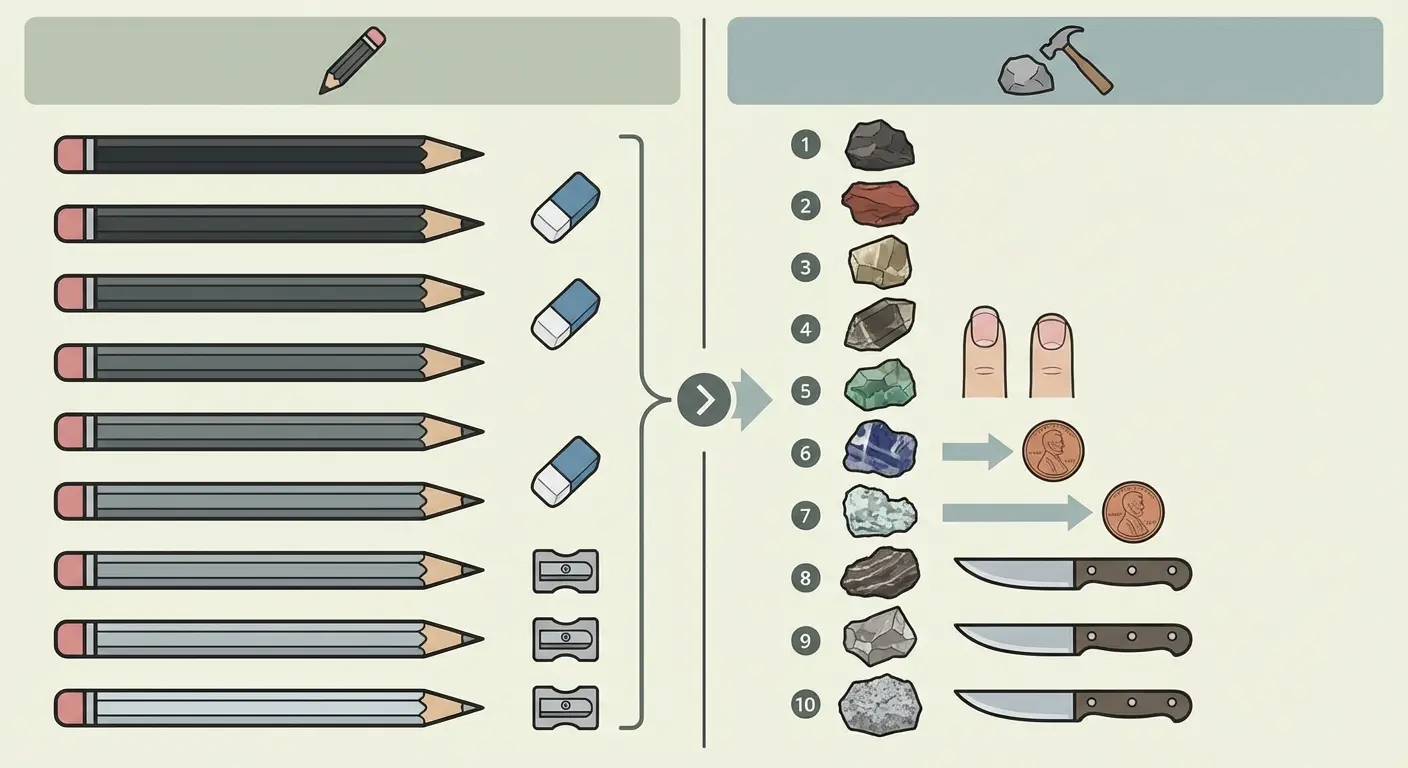
The pencil hardness test drags pencils of varying hardness across a surface to see which one leaves a scratch. Pencils are graded from 9B (very soft) through HB (medium) to 9H (very hard). A 9H rating means the hardest pencil won't scratch the surface.
Great. Except the hardest 9H pencil is much softer than common materials your screen encounters.
On the Mohs scale, glass rates around 5.5 to 6. Sand and dirt contain quartz, which rates 7 on Mohs. This is why sand scratches glass screens despite their "9H" rating. The pencil test tells you the coating is harder than a pencil. That's a pretty low bar.
What Actually Scratches Your Screen
Keys and coins won't scratch tempered glass. They rate around 3 to 4 on Mohs, well below glass. You can rub keys directly on a glass protector without leaving marks. They will easily scratch plastic though.
Sand and dirt are the real problem. They contain quartz particles that rate 7 on Mohs, harder than any glass screen or protector. A single grain of sand trapped between your phone and any surface will scratch glass. Beach trips and construction sites are high-risk.
My buddy Jake does landscaping. His phone is constantly filthy. He goes through a protector every two months because tiny quartz particles in the dirt scratch everything. He tried those $3 Amazon multi-packs. Useless. Tried a $30 "premium" one. Lasted three weeks. Even the best glass protectors show scratches after a month in his pocket with dirt. Point is: sand is harder than glass. Period.
Concrete and ceramic materials also rate high enough to scratch glass. Setting your phone face-down on concrete or sliding it across tile countertops can leave marks.
How Manufacturing Shortcuts Create Fake Products
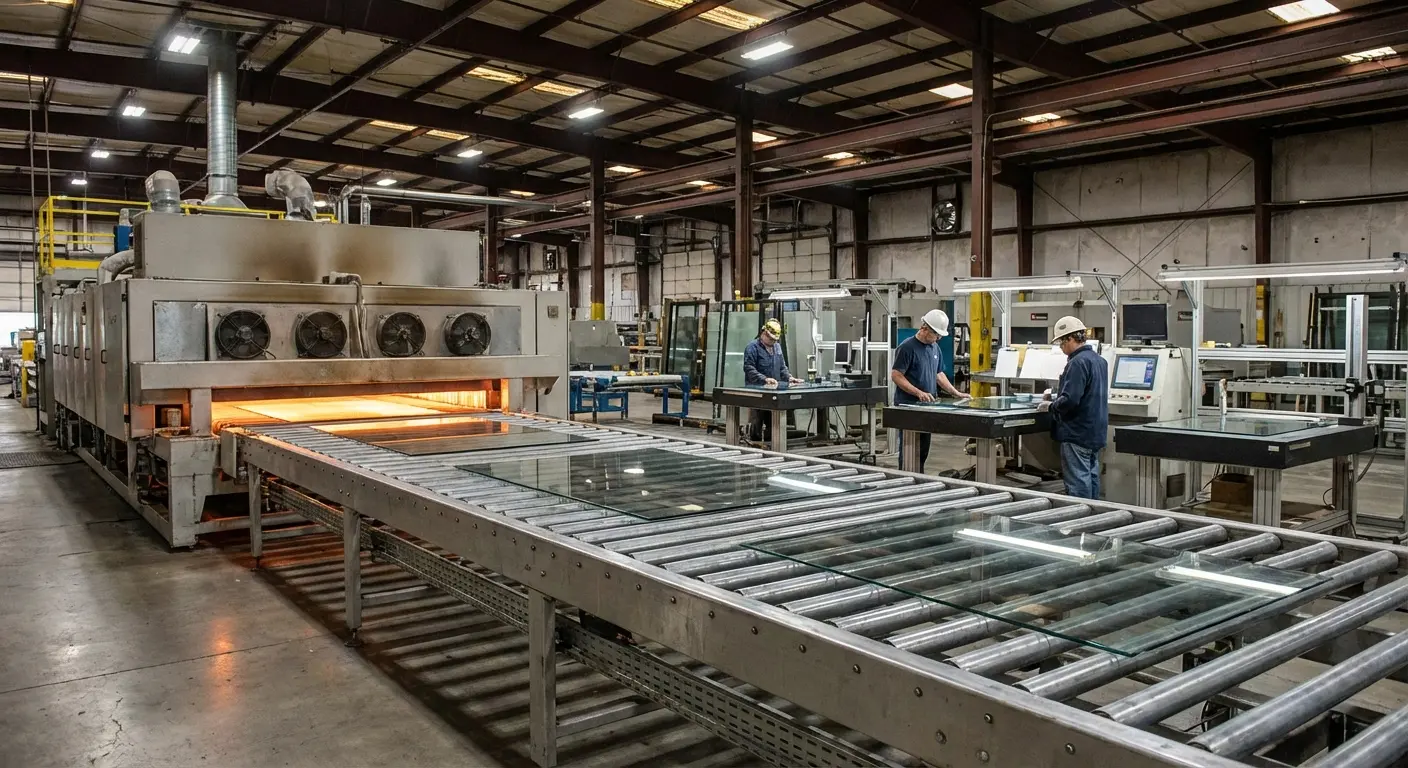
Proper tempering requires time, temperature control, and quality materials. Some manufacturers skip the ion exchange process entirely and just cut thin glass sheets, package them as "tempered glass," and sell them at bargain prices.
You can't tell by looking whether glass has been properly tempered. The difference becomes obvious only when the protector takes an impact. Properly tempered glass absorbs force and shatters into small pieces. Untreated glass cracks in large shards or sometimes just transfers the impact straight through to your phone's screen.
The actual manufacturing cost for properly tempered glass protectors is under $2. The rest covers supply chain and profit margins. This means sellers offering two-packs for $5 with free shipping aren't using properly tempered glass. The math doesn't work unless they're cutting corners somewhere, and the tempering process is the easiest place to cheat because you can't verify it until the product fails.
Material Substitution Games
Blended materials represent another cost-cutting approach. Manufacturers mix glass powder or particles into plastic resin, creating a composite that contains glass but behaves more like plastic. Marketing materials can truthfully claim the product contains glass while delivering plastic-level performance.
Ultra-thin glass bonded to a plastic backing is another variation. The glass layer might be only 0.1mm thick (compared to 0.3-0.4mm for solid glass), providing minimal impact protection while letting manufacturers use "glass" in their product names.
These products aren't complete scams because they do contain glass in some form. But they're misleading because you expect solid tempered glass and get something fundamentally different. The flexibility, scratch resistance, and impact protection all fall short.
What Happens When You Get Fake Glass
The entire purpose of a screen protector is sacrificial protection. It should break instead of your phone's screen. When you're using plastic marketed as glass, or poorly tempered glass, or hybrid materials, the protection equation changes.
Plastic materials dent or crack but don't shatter, which means they don't absorb impact energy the same way tempered glass does. The force transfers through to your phone's screen. You might end up with both a cracked protector and a cracked phone screen. That defeats the entire purpose.
Improperly tempered glass can make things worse. If it cracks into large shards instead of small fragments, those shards can concentrate pressure on your phone's screen at their edges. The protector becomes a liability. You would've been better off with no protector at all.
Adhesive quality matters too. Cheap protectors use weak adhesive that doesn't bond properly. When impact hits, the protector lifts or shifts instead of staying firmly attached. The air gap between protector and screen means force isn't distributed evenly, increasing the chance of screen damage.
Touch sensitivity suffers when the protector material is too thick, too soft, or has poor electrical conductivity. Thick TPU can dampen your touch input, making typing feel mushy. Some cheap glass uses low-quality material that doesn't transmit touch signals effectively.
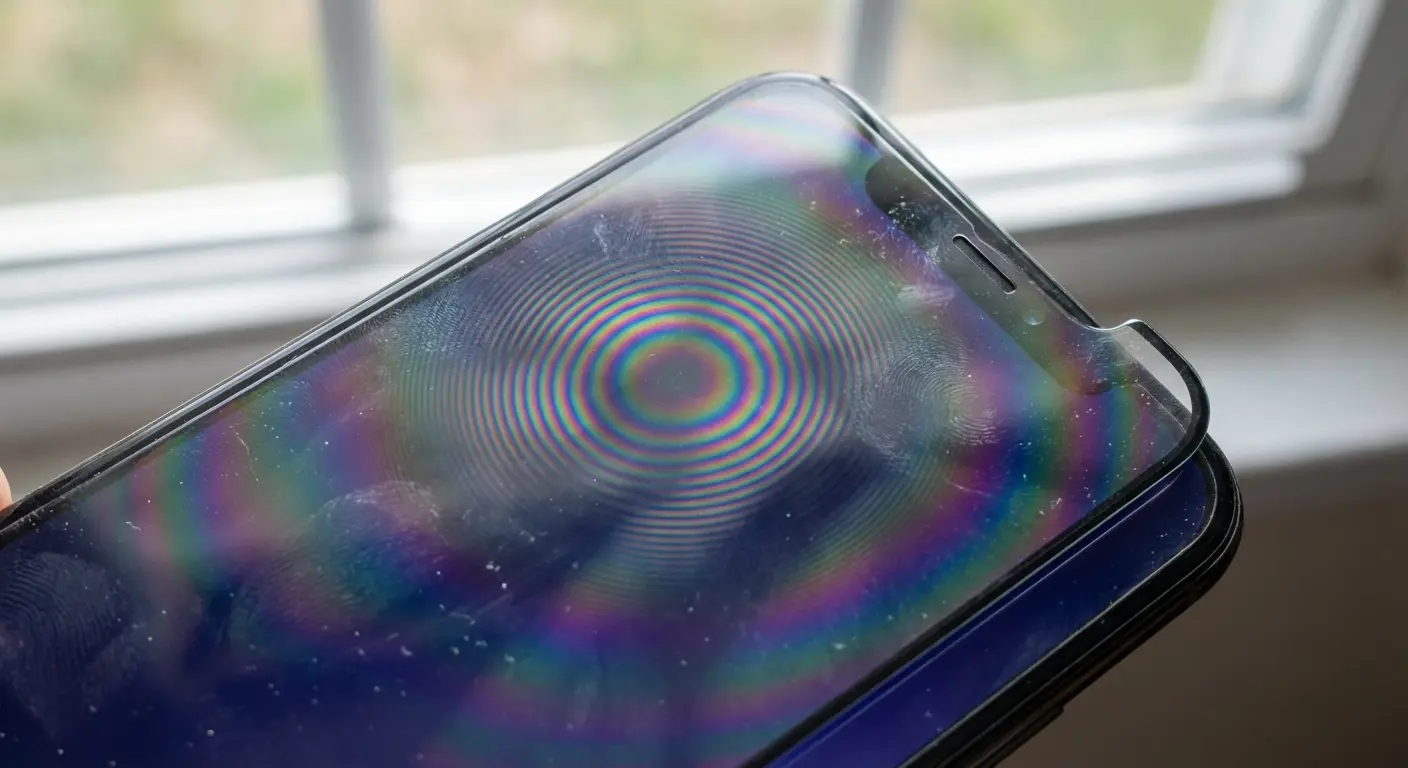
Rainbow effects or Newton rings appear when there's an air gap between the protector and screen, or when the protector has inconsistent thickness. You'll see colorful patterns or halos, especially on white backgrounds. This happens more with cheap glass that isn't perfectly flat.
Display brightness takes a hit with low-quality protectors. Each layer reduces light passing through. Cheap protectors can reduce brightness by 10-15%, forcing you to crank up your screen (which kills battery life). Color accuracy shifts slightly too.
Oleophobic coating quality separates premium from budget protectors. Cheap ones skip this coating entirely or use formulations that wear off within weeks. Your screen becomes a fingerprint magnet. The coating also affects how smoothly your finger glides.
Testing Whether Your Protector Is Real Glass
The Tap Test
Tap your fingernail against the protector and listen. Glass produces a sharp, clear, high-pitched sound. Plastic creates a duller, more muted sound with less resonance.
Compare the sound to tapping on a glass window if you're unsure. The acoustic properties of glass are distinct because of its rigid molecular structure. Plastic absorbs more vibration, dampening the sound.
This test works best before installation. Once the protector is stuck to your phone, the sound changes because you're hearing multiple layers combined. But you can still distinguish between glass and plastic based on tone quality.
Flexibility and Edge Inspection
Hold an uninstalled protector by opposite corners and try to flex it gently. Tempered glass is rigid and will resist bending entirely. If you apply enough force, it will snap rather than bend. PET and TPU will flex noticeably. Hybrid materials might flex slightly before resistance kicks in.
Don't apply excessive force because you might break a genuine glass protector. The point is to feel for any give or flexibility. Even slight bending indicates plastic content, either as hybrid or full plastic construction.
Look at the edges closely. Cut glass has sharp, precise edges with consistent thickness throughout. The edge catches light uniformly and appears perfectly straight. Plastic edges look slightly rounded or beveled. Hybrid materials sometimes show layering if you look at the edge from the right angle.
Weight difference is noticeable too. Glass has more heft than plastic of the same size. If a protector feels surprisingly light, you're probably holding plastic or very thin glass over plastic backing.
The Scratch Test (If You're Willing to Sacrifice One)
This requires destroying a protector, so it's only practical if you bought a multi-pack or have a spare. Use a copper coin or brass key (both softer than glass) and try to scratch the protector with moderate pressure. Genuine tempered glass won't scratch. PET and TPU will show marks immediately.
For a more aggressive test, use a steel knife blade or concrete. These will scratch glass, but you're looking at how the material responds. Glass shows a clean scratch line. Plastic tends to gouge or tear rather than scratch cleanly.
You can also test the shatter pattern if you're willing to destroy the protector completely. Break it deliberately (over a trash can, wearing safety glasses) and observe how it fragments. Tempered glass shatters into many small pieces that stay roughly connected. Plastic cracks in lines but doesn't fragment. Regular untreated glass breaks into large, sharp shards.
Before you install a protector, try these quick tests:
Tap it with your fingernail. Glass sounds sharp and clear. Plastic sounds dull.
Try to bend it slightly. Glass stays rigid and will snap if forced. Plastic flexes.
Look at the edges. Glass has sharp, uniform edges. Plastic looks rounded.
Check the weight. Glass feels noticeably heavier than plastic.
That's it. You don't need calipers or a microscope. These tests will tell you what you need to know.
Why You Can't Trust Product Listings Anymore
Online marketplaces host millions of screen protector listings, many from international sellers operating under business names that change frequently. Enforcing accurate material descriptions at this scale is basically impossible. Platforms rely on customer complaints, which means misleading listings stay active until enough buyers report problems.
Sellers know enforcement is weak. They can list plastic as "tempered glass," collect sales for weeks or months, then disappear and reappear under a new business name if reviews turn negative. The barrier to entry is low, and profit margins on misrepresented products make the strategy worthwhile.
Product descriptions use carefully worded language that's technically not false but deeply misleading. "Glass-like clarity" doesn't mean the product contains glass. "Tempered for durability" could mean anything. "9H hardness" appears on plastic listings because the pencil test can be performed on any material.
Why Brand Names Matter
Established brands have something to lose. A company that's been manufacturing phone accessories for years can't risk their reputation by selling fake glass. Customer reviews, return rates, and word-of-mouth matter when you're building a long-term business.
I've tried Zagg, Spigen, amFilm, and probably ten no-name Amazon brands. Zagg is overpriced but consistent. Spigen is the best value—I've never had one fail. amFilm is hit or miss. The Amazon brands with names like "GPEL" or "Ailun" or random letter combinations? Garbage. Every time.
For the new Samsung Galaxy S26 Plus, established brands like Dbrand, TOCOL, and Zagg have already released verified tempered glass options, with features like auto-alignment trays and lifetime replacement warranties that budget sellers simply can't afford to offer.
These brands work with verified manufacturers and conduct quality control testing. They're more likely to properly temper their glass because they understand the liability implications of protection failures. Their supply chains are established, making it harder for substandard materials to slip through.
Brand-name protectors cost more, but the price difference reflects material and manufacturing quality rather than just marketing markup. You're paying for consistency and accountability. When problems occur, established brands have customer service infrastructure to handle returns and complaints. Fly-by-night sellers just ignore messages or disappear.
This doesn't mean you should blindly trust any brand name. Check recent reviews, not just the overall rating. Look at reviews from the last few months. Check for mentions of material quality, protection performance, and whether the product matches its description.
Making Sense of Your Next Purchase
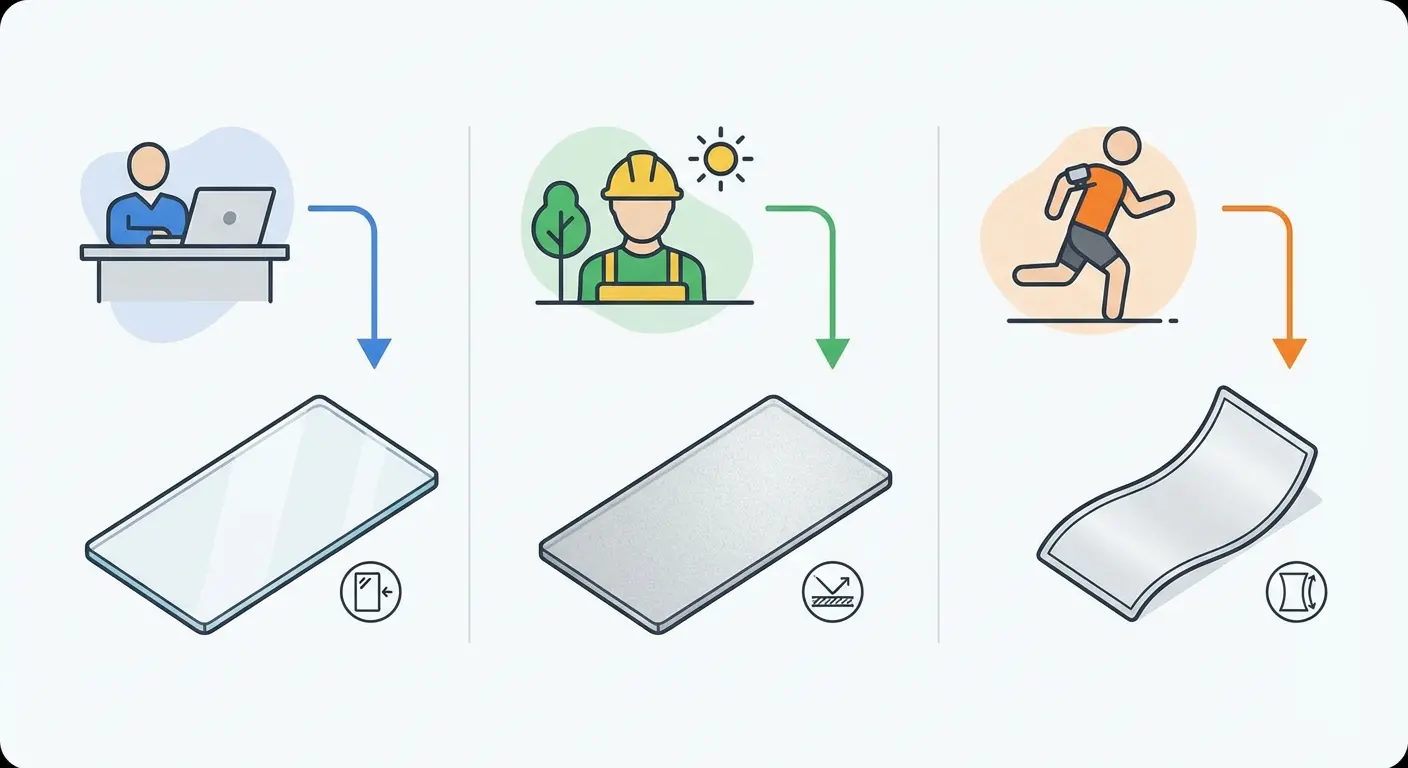
Your protection needs depend on your phone usage and environment. Office workers who use their phones indoors face different risks than construction workers or outdoor enthusiasts. Matching the protector material to your exposure makes more sense than defaulting to "most expensive."
Tempered glass makes sense for most people. It provides the best scratch resistance against everyday hazards, maintains screen clarity and touch sensitivity, and offers solid impact protection. If you're using a flat-screen phone and want the closest thing to no protector while still having protection, quality tempered glass is worth the investment.
TPU or hybrid materials work better for curved screens where glass protectors leave gaps or create halo effects. If you've struggled with glass protectors on your Samsung Galaxy or similar curved-screen phone, a quality TPU designed specifically for your model will provide better coverage and fewer installation headaches.
A photographer I know uses her phone constantly for Instagram and client communications. She needs maximum optical clarity and touch sensitivity for precise editing. She chose a premium tempered glass protector with anti-reflective coating for her flat-screen iPhone. Her husband, a mountain bike guide who uses his Samsung Galaxy S26 Ultra mounted on handlebars in all weather, opted for TPU that wraps fully around his curved screen edges and can handle repeated vibration and occasional branch strikes without shattering.
PET film makes sense as temporary protection or for users who replace protectors frequently. If you're hard on your phone and expect to replace your protector every few months anyway, cheap PET provides basic scratch protection without significant investment. Just understand its limitations and don't expect impact protection.
What Price Actually Tells You
Manufacturing costs set a floor for genuine tempered glass protectors. Proper tempering, quality glass materials, and decent adhesive can't be delivered profitably at rock-bottom prices. Single protectors selling for under $8 or two-packs under $12 should raise questions about material quality or tempering processes.
Look, I get it. You're on Amazon, you see a two-pack for $7 with 4.5 stars and "tempered glass" in the title. The $25 single protector seems like a ripoff. Why pay more for the same thing?
Here's why: it's not the same thing.
That $7 two-pack costs maybe $1.50 to manufacture and ship from China. There's no way to properly temper glass at that price. The economics don't work. You're getting glass, maybe. But it's not tempered, or it's barely tempered, or it's hybrid plastic with a glass coating. And you won't know until it fails.
The $12-20 range for a single tempered glass protector represents the sweet spot for most buyers. This price point supports proper manufacturing while remaining accessible. Brands in this range use genuine tempered glass, include decent oleophobic coatings, and provide reasonable adhesive quality.
Premium protectors ($25-40) include additional features: antimicrobial coatings, blue light filtering, privacy filters, or specialized edge designs. The base glass quality might not differ dramatically from mid-range options, but you're paying for extra features or brand reputation. Evaluate whether those features matter to you before paying the premium.
Installation Actually Matters
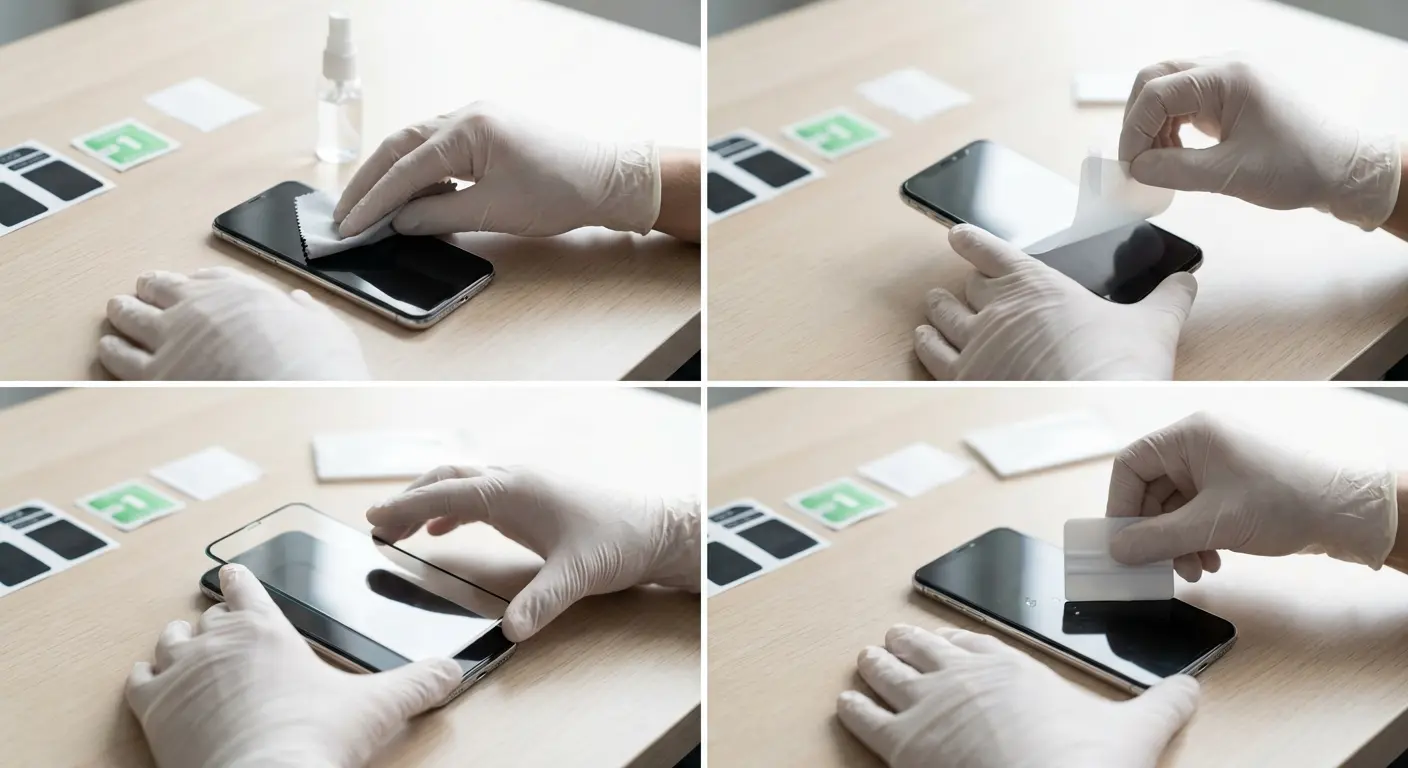
Even the best tempered glass protector will fail if you install it poorly. Dust particles trapped underneath create weak points where cracks can start. Air bubbles prevent proper adhesion, creating gaps that reduce impact protection. Misalignment leaves screen edges exposed.
I've wasted probably three protectors by rushing installation. Now I do it in the bathroom right after a hot shower. Sounds weird, but the steam makes dust settle. I learned this after screwing up installations at my kitchen table multiple times.
Clean your screen thoroughly before installation. Use the alcohol wipe and microfiber cloth that should come with quality protectors. Take your time with alignment because you get one good attempt with glass protectors before the adhesive loses effectiveness.
Press firmly from the center outward to eliminate air bubbles and ensure complete adhesion. Some protectors include installation frames or guides that make alignment foolproof. Use them. The few extra minutes spent on careful installation dramatically improve protection performance and longevity.
If you're not confident in your installation skills, many phone repair shops and mall kiosks offer installation services for a few dollars. Professional installation might be worth it for expensive protectors or if you've wasted protectors in the past through installation mistakes.
Rokform and Real-World Protection
Full disclosure: I work for Rokform. This whole thing started because I got tired of customers asking "Is your screen protector real glass?" after they'd been burned by fake products elsewhere.
So yeah, ours are real tempered glass. Actual ion exchange process, not just cut glass with "tempered" slapped on the package. We make them because our customers mount their phones on motorcycles, bikes, in workshops—places where fake protection fails spectacularly and expensively.
Are they the best protectors ever made? I don't know, probably not. Are they properly tempered and honest about what they are? Yes. That's a low bar, but apparently that's where we are as an industry.
Our tempered glass protectors are designed to work with our case systems. The raised edges on our cases provide additional screen protection while the glass protector handles scratch and impact resistance. The combination delivers protection that exceeds what either component provides alone.
If you're mounting your phone—in vehicles, on motorcycles, on handlebars, on machinery—you need to know your screen protection is legitimate. Our protectors are designed for the vibration, impacts, and environmental exposure that come with using your phone in the real world.
If you want something that's not going to lie to you about being tempered, explore our complete lineup of tempered glass screen protectors engineered to work seamlessly with Rokform cases and mounting systems. If you want to buy elsewhere, cool—just use the tests I mentioned earlier to verify what you're getting.
Either way, stop buying those $4 two-packs. I'm begging you.
Final Thoughts
That $4 protector I mentioned at the start? I finally figured out what it was: regular glass with a thin coating. Not tempered. The seller's account doesn't exist anymore—surprise, surprise.
Here's what I wish someone had told me: "Glass" isn't a guarantee. "Tempered" isn't regulated. Product listings lie. Reviews are fake. You're on your own.
So learn the tap test. Check the price (if it's under $12, be suspicious). Buy from brands that have been around longer than six months. And when a protector shatters and saves your screen, remember that's exactly what you paid for.
The screen protector market is full of misleading claims and material substitutions, but now you know what to look for. You understand what "9H hardness" means (and doesn't mean). You know why proper tempering costs money and why $5 two-packs can't deliver genuine tempered glass. You can spot the difference between glass, plastic, and hybrid materials before you waste money.
Your phone screen is expensive to replace and annoying to use when cracked. Investing in legitimate protection makes sense, but only if you're getting what you pay for. Read carefully, test when possible, buy from accountable sources, and install properly.

