


Table of Contents
The Lightweight Weekend Warriors
The Middle-Weight Road-to-Trail Converters
The Adventure-Ready Heavy Haulers
The Budget-Conscious Street Legal Options
Why Your Phone Mount Matters More Than You Think
Final Thoughts
TL;DR
Dual sport bikes need to survive both commuter traffic and off-road conditions without constant maintenance
Lightweight models under 300 lbs offer the best agility but you'll hate them on highways
Middle-weight bikes balance street manners with trail capability for riders who actually split time 50/50
Adventure-ready options carry gear and passengers but you need experience to handle them off-road
Budget models prove you don't need premium pricing for street legal dirt bike versatility
Seat height matters more than horsepower. Way more.
Most of you will buy based on what looks cool and regret it
The Lightweight Weekend Warriors
You want a bike that does everything. Yeah, that's bullshit. These bikes prove it.
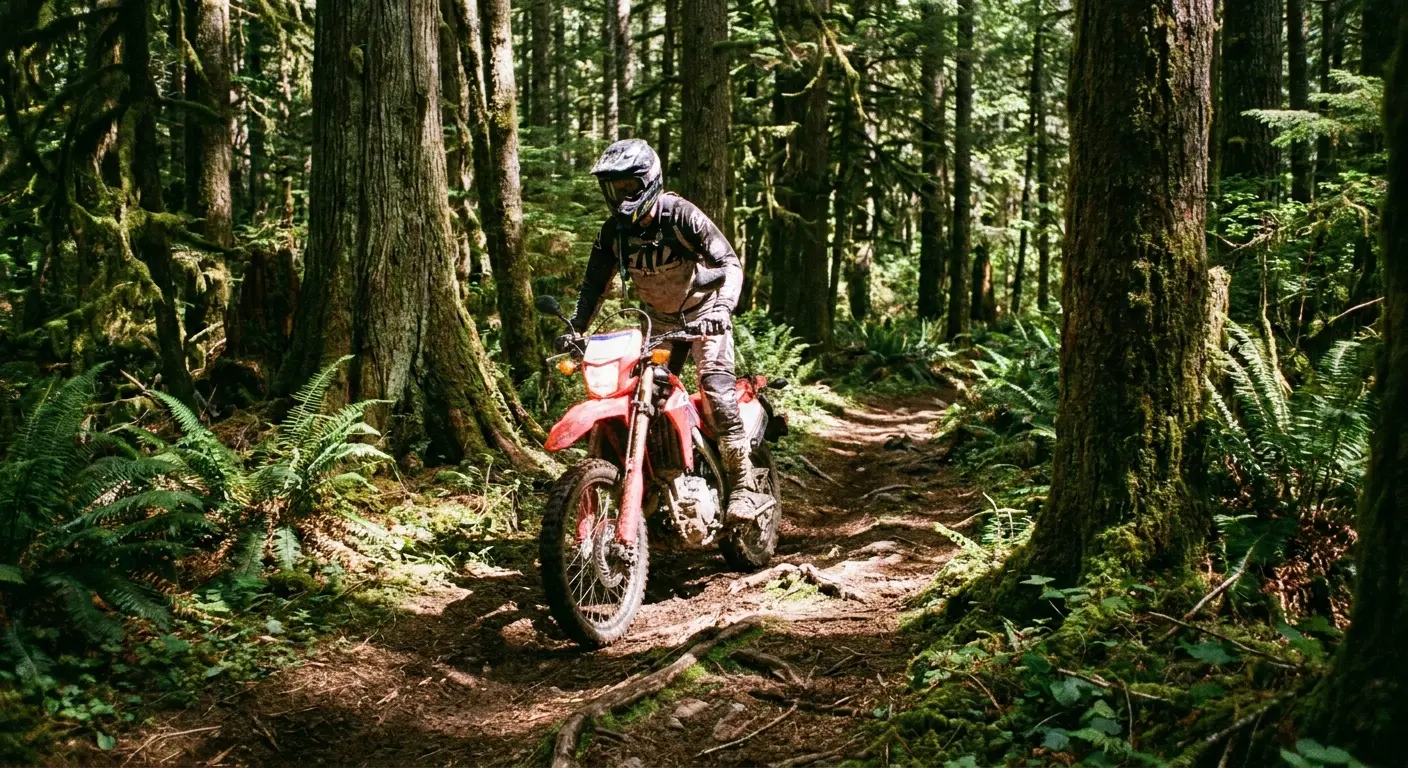
These machines under 300 lbs focus on maneuverability and simplicity. Highway comfort? Not happening. We're talking minimal electronics, punchy low-end power, and the ability to pick up your bike after a drop without calling for help.
Threading through tight trails becomes effortless. The weekday commute is tolerable, nothing more. Fuel capacity limitations mean you're planning routes around gas stations. Weight distributions favor standing and attacking terrain rather than cruising at 75 mph for hours. These work for riders who view pavement as the necessary evil between trailheads.
Bike Model |
Wet Weight |
Seat Height |
Fuel Capacity |
Ground Clearance |
Engine Type |
|---|---|---|---|---|---|
Yamaha WR250R |
295 lbs |
34.0 in |
2.0 gal |
11.2 in |
250cc Single, Fuel-Injected |
Honda CRF300L |
309 lbs |
34.8 in |
2.0 gal |
10.6 in |
286cc Single, Fuel-Injected |
Suzuki DR-Z400S |
317 lbs |
36.8 in |
3.0 gal |
11.4 in |
398cc Single, Carbureted |
KTM 350 EXC-F |
238 lbs |
37.8 in |
2.3 gal |
14.6 in |
350cc Single, Fuel-Injected |
Kawasaki KLX300 |
304 lbs |
35.6 in |
2.0 gal |
10.6 in |
292cc Single, Fuel-Injected |
1. Yamaha WR250R
My buddy's WR250R started at -15°F in Montana. First try. My truck wouldn't even turn over. That fuel-injected engine doesn't care about altitude either. Ran the same at sea level in Oregon as it did at 10,000 feet in Colorado.
That 34-inch seat height sounds manageable on paper. Most riders are balancing on tiptoes at stoplights. The narrow profile helps, but shorter riders need to plan their stops carefully or get comfortable with the lean-and-dab technique.
The suspension handles rocky terrain without constant bottoming, which surprised me given the bike's positioning. You'll trust it through sections that would have you backing off on lesser machines. That 2-gallon tank? You're stopping every 90 miles, sometimes less if you're wringing it out on trails.
Merging onto the highway feels like riding a really angry lawnmower. You'll make it, but you'll be wringing the throttle's neck. Wind protection is non-existent. Extended highway stints become exhausting. The premium price point raises questions about value, especially when cheaper alternatives exist. The reliability justifies the cost if you're keeping this thing for years and putting serious miles on it.
2. Honda CRF300L
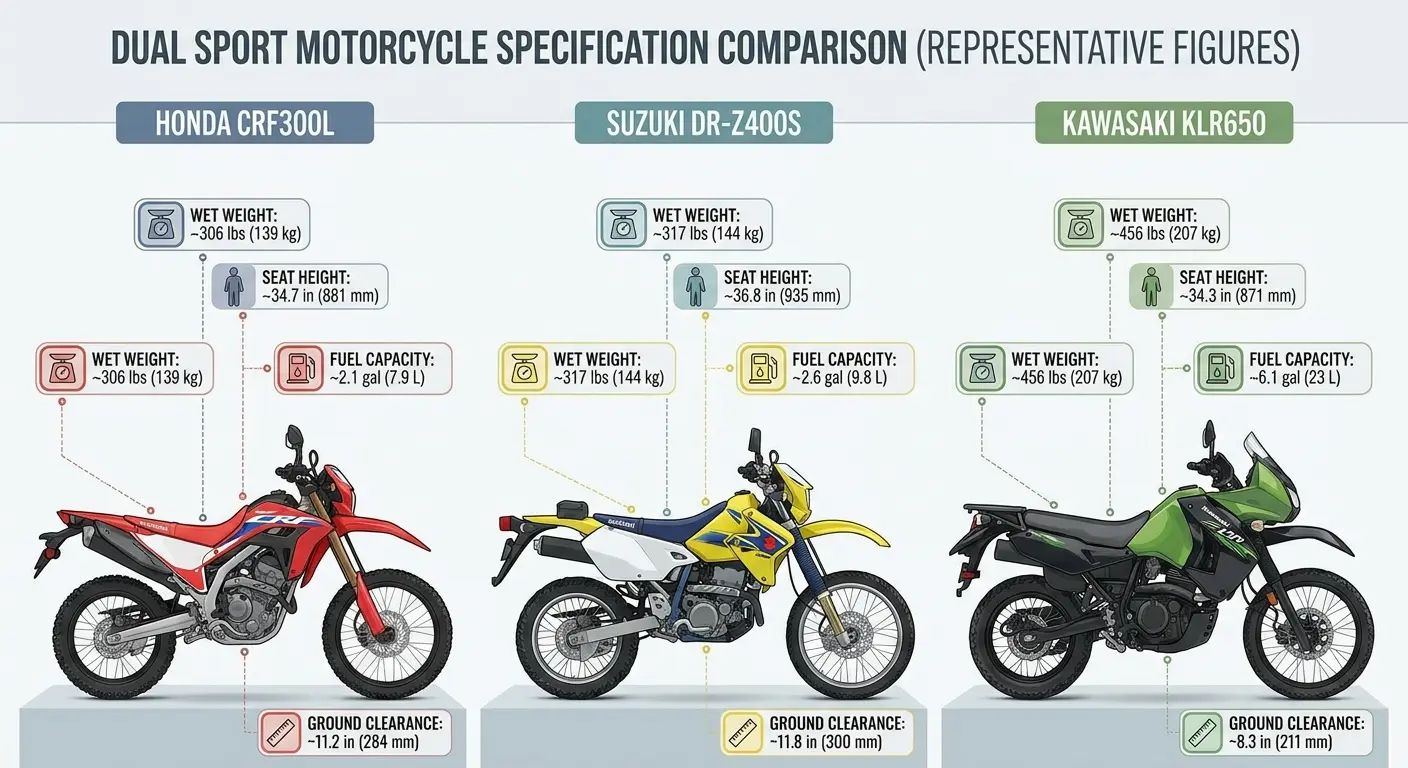
Honda updated this platform recently. The changes actually matter for daily use. The 286cc engine delivers more low-end grunt than the WR250R, which means less clutch work in technical sections. Two-up riding on pavement becomes feasible rather than theoretical.
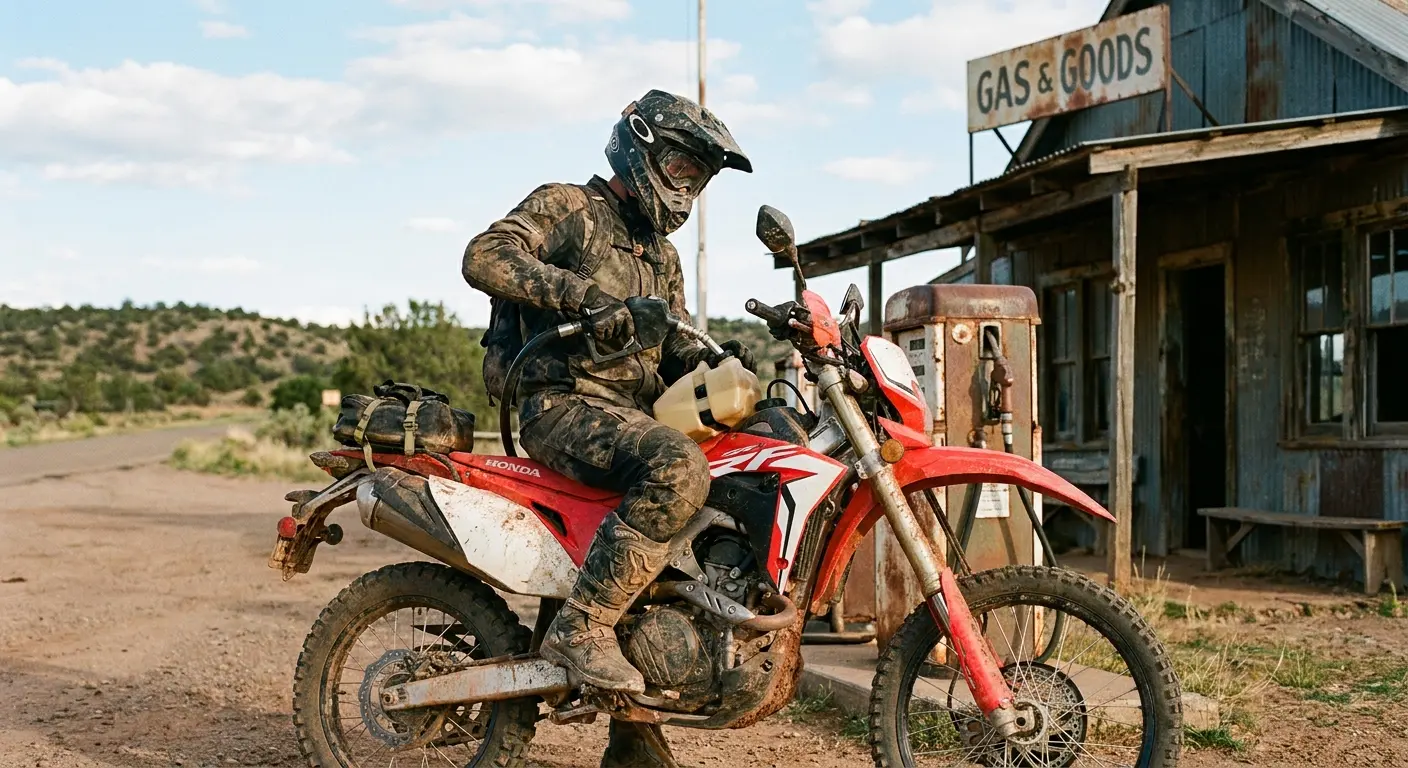
The updated LCD display finally brings this bike into the current decade. Basic information displays clearly, though don't expect smartphone connectivity or navigation integration. The steel frame's durability beats aluminum alternatives when you're dropping the bike repeatedly while learning technical sections.
ABS comes as an option, and it works off-road without killing your momentum. I've tested it on loose gravel and wet pavement, and the system intervenes smoothly rather than grabbing abruptly. You can disable it for serious trail work, which some competitors don't allow.
Ground clearance sits at 7.8 inches, handling most obstacles you'll encounter on fire roads and moderate trails. True enduro bikes clear more, but those bikes also weigh less and lack the street-friendly features that make this practical for daily use. Fuel injection means cold starts are effortless, and the 2.0-gallon tank gives you similar range to the Yamaha.
3. Suzuki DR-Z400S
This carbureted dinosaur refuses to die. Parts availability at any small-town shop means you're never stranded waiting for specialized components. The purchase price leaves budget for modifications, and you'll want to modify this immediately.
Look, the carb thing? Not actually the nightmare everyone claims. It starts fine in most climates, though high-altitude riding requires jet changes. Cold weather below 20°F gets challenging, but how often are you trail riding in those conditions?
Suspension begs for immediate upgrades if you're serious about trails. The stock setup bottoms easily on aggressive terrain and wallows through corners on pavement. Budget $1,000 for proper springs and valving, and suddenly you're riding a completely different machine.
That 3.0-gallon tank extends your range beyond competitors, enabling 150+ mile rides without fuel anxiety. The 36.8-inch seat height intimidates shorter riders, but the narrow profile helps with ground reach. This maintains strong resale value because the platform is proven and the aftermarket support is extensive.
4. KTM 350 EXC-F
First time I rode a 350 EXC-F was at a demo day in Utah. The power delivery surprised me. Coming from Japanese bikes, the explosive throttle response felt almost aggressive. You need smooth inputs on slippery surfaces or you'll be picking yourself up off the ground.
WP suspension outperforms everything in this weight class. The adjustability lets you dial in settings for your weight and riding style, and the range of adjustment actually matters. I've ridden this on everything from rocky single-track to highway slabs, and proper setup makes both scenarios manageable.
That 2.3-gallon tank? It sucks. You'll be hunting for gas stations constantly. Range anxiety becomes real on longer rides, especially when you're exploring unfamiliar territory without knowing where the next gas station hides. Carry a fuel bottle or accept that 100-mile days are your limit.
The 18-month service intervals between top-end rebuilds add up financially. Plan on spending $1,500 every 10,000 miles for major maintenance, and suddenly the total cost of ownership looks different. Electric start reliability has improved significantly in recent years, eliminating the old kickstart-only frustrations. The handlebar-mounted map switch adjusts power delivery on the fly, which helps when conditions change mid-ride. This is the bike for riders pushing limits every ride, but casual weekend warriors should look elsewhere.
5. Kawasaki KLX300
When considering motorcycle maintenance basics, the KLX300's simplicity becomes a major advantage. Oil changes take 20 minutes, valve adjustments happen at reasonable intervals, and parts cost less than European alternatives.
The 292cc engine feels slightly smoother on highways but less aggressive on trails compared to the CRF300L. Power delivery is linear and predictable, which helps newer riders build confidence. You won't find the explosive hit that some riders crave, but you also won't find yourself looping the bike from throttle mismanagement.
Seat height sits at 35.6 inches, and the conventional fork setup lacks the exotic technology of pricier options. Basic doesn't mean bad. The suspension works adequately for most riding, though serious trail riders will want upgrades eventually.
Fuel injection mirrors Honda's reliability. The system adapts to altitude changes automatically, and cold starts require nothing more than thumbing the starter button. That 2.0-gallon tank is standard for this class, giving you 100-120 mile range depending on riding style.
Dealership availability gives Kawasaki an edge in many markets. Lower out-the-door pricing than competitors means more budget for gear and modifications. The steel frame construction holds up, and the basic LCD instrumentation displays everything you need without unnecessary complexity. This works as a first dual sport for riders still learning what they need.
The Middle-Weight Road-to-Trail Converters
These bikes weigh between 350-450 lbs. This is the weight class where things get interesting. I emphasize "genuinely" because most riders claim they'll do 50/50, then end up spending 80% of their time on pavement anyway. That's fine. Just be honest about it.
Better wind protection makes highway miles tolerable rather than torturous. Larger fuel tanks eliminate constant range anxiety. Ergonomics don't destroy your body during 200-mile days, which helps when you're exploring new territory or commuting across sprawling metro areas.
These bikes carry a passenger without feeling sketchy. Packing enough gear for weekend trips becomes feasible. You'll feel that extra 100 lbs in the first tight switchback you try. That weight makes a real difference when you're muscling the bike back upright in soft sand.
Bike Model |
Wet Weight |
Horsepower |
Fuel Capacity |
Seat Height |
Suspension Travel (F/R) |
|---|---|---|---|---|---|
Suzuki V-Strom 650 |
476 lbs |
67 hp |
5.3 gal |
32.9 in |
6.3 in / 6.3 in |
Kawasaki Versys-X 300 |
385 lbs |
39 hp |
5.5 gal |
32.1 in |
5.1 in / 4.9 in |
BMW G 310 GS |
374 lbs |
34 hp |
2.9 gal |
32.9 in |
7.1 in / 7.1 in |
Honda CB500X |
430 lbs |
47 hp |
4.7 gal |
32.7 in |
5.9 in / 5.5 in |
Yamaha Ténéré 700 |
452 lbs |
72 hp |
4.2 gal |
34.8 in |
8.3 in / 7.9 in |
KTM 690 Enduro R |
319 lbs (dry) |
74 hp |
3.4 gal |
35.8 in |
9.8 in / 9.8 in |
6. Suzuki V-Strom 650
The V-Strom's 645cc V-twin delivers smooth, predictable power. Highway miles become effortless, and the torque handles dirt roads and light trails without drama. This engine character makes long days in the saddle manageable rather than exhausting.
Seat height drops to 32.9 inches, and shorter riders can finally manage a dual sport without acrobatics at every stoplight. The low center of gravity helps with confidence, especially when navigating parking lots or slow-speed maneuvering.
That 5.3-gallon tank offers 200+ mile range, eliminating the constant fuel anxiety that plagues smaller bikes. Available traction control helps in slippery conditions, though the system is basic compared to premium alternatives. It works, which is what counts when you hit unexpected rain or gravel patches.
The 476-lb wet weight means you're not tackling single-track. Fire roads and gravel passes are this bike's playground. Luggage mounting options are extensive, and the windscreen provides real protection at highway speeds. This works better as an adventure tourer with dirt capability rather than a true dual sport.
7. Kawasaki Versys-X 300
Kawasaki built this specifically for newer riders wanting adventure capability without intimidation. The 296cc parallel-twin produces 39 hp, which sounds weak until you factor in the 385-lb curb weight. Power-to-weight ratio counts more than peak horsepower numbers.
The 32.1-inch seat height makes this accessible to riders of all sizes. The 5.5-gallon fuel tank enables 250-mile range, and the slipper clutch prevents rear-wheel lockup during aggressive downshifts on dirt. These features help when you're learning and mistakes happen frequently.
Suspension is budget-spec and shows it on rough terrain. Bottoming happens easily, and the damping feels vague through technical sections. The overall package works for riders focusing on comfort over performance, but serious trail riders will find the limitations frustrating.
Included hand guards protect your levers during inevitable drops. The 12V power outlet charges devices on the go, which helps more than you'd think when your phone is your navigation system. Does this make sense versus spending more for the 650 variant? That depends on whether you value accessibility and lower weight over additional power and features.
8. BMW G 310 GS
If you buy the G310 GS for the badge, just admit it. We all know.
BMW's entry-level adventure bike brings German engineering to the affordable segment with mixed results. The 313cc single-cylinder engine, built by TVS in India, produces 34 hp and vibrates noticeably at highway speeds. Extended rides above 65 mph become tiring.
Seat height sits at 32.9 inches, making this manageable for most riders. The 2.9-gallon tank limits range to about 150 miles, and the ABS system can't be disabled for off-road riding. That last point is a significant limitation when you're on loose surfaces where rear-wheel lockup helps with control.
The 374-lb weight feels planted on pavement but cumbersome on trails. Build quality impresses, and the dealer network advantages help when you need service or warranty work. This appeals more to brand-loyal riders than those focusing on pure capability, and there's nothing wrong with that if you value the BMW ownership experience.
9. Honda CB500X
Honda's 471cc parallel-twin delivers 47 hp in a package focusing on road comfort with light off-road capability. The engine runs nearly vibration-free at any speed, which makes this one of the smoothest bikes in the segment. Long highway stints don't leave your hands tingling.
The 32.7-inch seat height accommodates most riders comfortably. That 4.7-gallon tank offers 250+ mile range, and the smooth power delivery makes this bike nearly stress-free to ride. The 430-lb weight and limited suspension travel mean you're sticking to maintained dirt roads rather than technical trails.
The available DCT transmission option works surprisingly well for commuting. Automatic shifting in traffic eliminates clutch hand fatigue, and the system adapts to riding style intelligently. The upright seating position provides good visibility and comfort for all-day rides. This works best for riders who spend 80% of time on pavement but want the option for gravel exploration.
10. Yamaha Ténéré 700
First time I saw a Ténéré 700 was in a Moab parking lot, covered in red dust and looking like it had just finished a Dakar stage. The owner was grinning like an idiot. I get it now.
Yamaha's 689cc parallel-twin creates 72 hp and has developed a cult following among riders who focus on dirt performance over street refinement. Riding one makes it clear why.
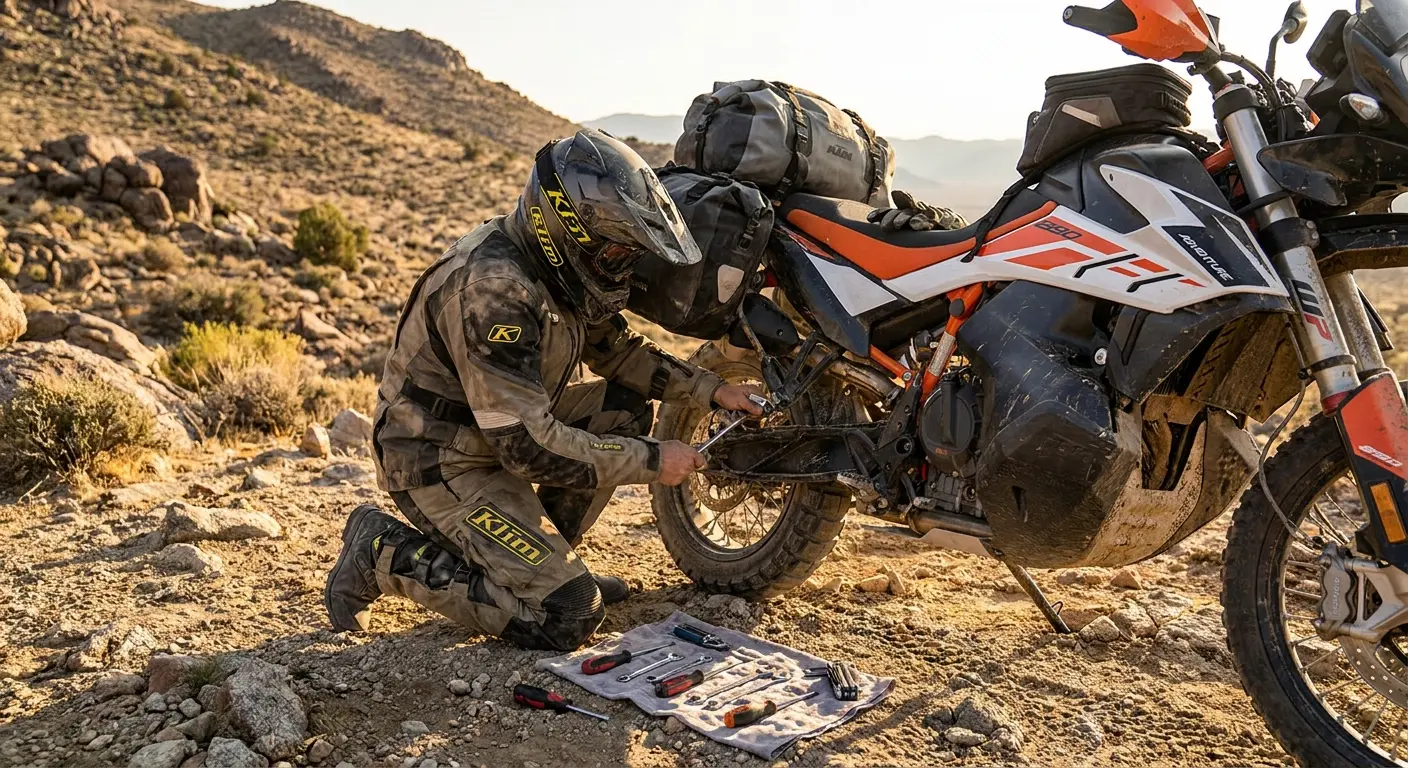
The 34.8-inch seat height favors tall riders while challenging shorter riders. That 4.2-gallon tank provides 180-mile range, and the long-travel suspension soaks up serious terrain. We're talking 8.3 inches front, 7.9 inches rear, which puts this firmly in adventure bike territory.
The 452-lb wet weight is manageable for experienced riders but intimidating for beginners. Tubeless spoke wheels are a rarity in this segment, combining the strength of spokes with the convenience of tubeless tires. The rally-inspired design means aggressive ergonomics that favor standing over sitting.
No traction control or ABS modes mean you're managing everything manually. Some riders view this as a feature rather than a limitation, preferring direct control over electronic intervention. This is one of the best options for riders who genuinely exploit off-road capabilities rather than just talking about it.
11. KTM 690 Enduro R
The 690 is overpriced. But I still want one. Don't ask me to explain it.
KTM's 693cc single-cylinder thumper produces 74 hp and brings serious off-road credentials with street-legal compliance. The 35.8-inch seat height ranks among the tallest here, and the 3.4-gallon tank limits range to about 140 miles. Plan your fuel stops carefully.
WP suspension offers 9.8 inches of travel front and rear, handling everything from rock gardens to highway expansion joints. The 319-lb dry weight makes this the lightest bike in its displacement class, which means you can actually throw this thing around on technical trails. Picking it up after drops remains manageable even when you're exhausted.
Maintenance intervals require attention. Oil changes every 3,000 miles, valve checks every 9,000. The lean-angle-sensitive ABS works intelligently, allowing rear-wheel slides while preventing front-wheel lockup. Premium pricing raises questions about value unless you genuinely exploit these capabilities regularly.
The Adventure-Ready Heavy Haulers
These bikes exceed 500 lbs. Transcontinental trips with full luggage become feasible. Unpaved roads and moderate trails remain within capability, but you're not attacking single-track on these machines.
Advanced electronics, larger displacement engines, and ergonomics designed for all-day comfort define this category. The trade-offs include significant weight penalties, higher seat heights, and the real possibility of needing help if you drop the bike in soft terrain. These work best for experienced riders planning serious distance with varied terrain.
12. BMW R 1250 GS
BMW's flagship adventure bike delivers 136 hp from its 1,254cc boxer twin. The adjustable seat height ranges from 33.5 to 35.0 inches, accommodating different rider sizes. That 5.3-gallon tank offers 200+ mile range, and the electronic suspension adapts to terrain in real-time.
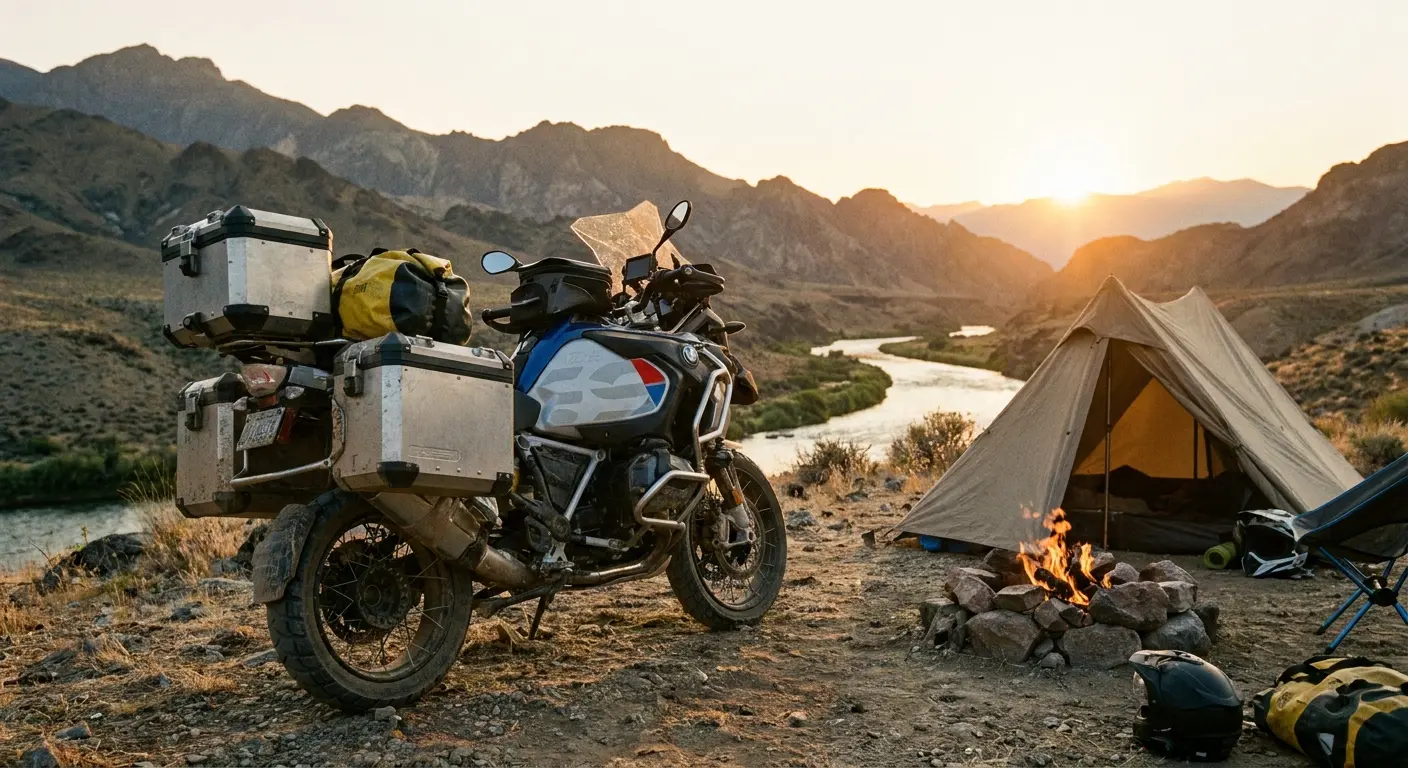
The 549-lb wet weight demands respect, especially when loaded with gear. Riding modes include Rain, Road, Dynamic, Enduro, and Enduro Pro, each adjusting throttle response, ABS intervention, and traction control. The TFT display integrates navigation and smartphone connectivity.
Is the $18,000+ base price worth it? Hell no. Unless you're covering serious miles annually. The shaft drive requires zero maintenance but adds weight and affects handling slightly. This bike excels at eating highway miles while maintaining capability for unpaved detours.
13. KTM 890 Adventure R
KTM's 889cc parallel-twin produces 105 hp and emphasizes off-road capability over luxury features. The 35.0-inch seat height and 5.3-gallon tank position this competitively. WP suspension offering 9.4 inches of travel front and rear handles challenging terrain confidently.
The 465-lb dry weight makes this significantly lighter than competitors. Rally-inspired ergonomics sacrifice some highway comfort for standing capability. The 21-inch front wheel improves off-road performance but limits tire choices compared to 19-inch alternatives.
Cornering ABS and traction control with off-road modes provide safety without being intrusive. This works better than the standard 890 Adventure for riders who venture off-road regularly rather than occasionally. The difference in capability justifies the price premium if you use it.
14. Yamaha Super Ténéré ES
Yamaha's 1,199cc parallel-twin delivers 112 hp in a package emphasizing reliability and comfort over cutting-edge technology. The 34.3-inch seat height and 6.1-gallon tank enabling 250+ mile range make this practical for long-distance touring.
Electronic suspension on the ES model adjusts for load and riding conditions automatically. The 582-lb wet weight feels substantial but manageable once moving. Cruise control and traction control add convenience for highway miles, and the shaft drive eliminates chain maintenance concerns.
The 19-inch front wheel improves street manners but limits off-road capability compared to 21-inch alternatives. This appeals to riders focusing on durability and comfort over the latest electronics. Yamaha's reputation for reliability helps when you're far from dealerships.
15. Triumph Tiger 900 Rally Pro
Triumph's 888cc inline-triple produces 95 hp and offers a unique engine configuration in this segment. The 35.2-inch seat height and 5.3-gallon tank are competitive. Showa suspension providing 9.4 inches of travel handles varied terrain capably.
The 463-lb wet weight positions this against the KTM 890. Six riding modes, cornering ABS, traction control, and TFT display with turn-by-turn navigation provide comprehensive electronics. The 21-inch front wheel and wire-spoke wheels signal serious off-road intent.
Heated grips and adjustable windscreen add touring comfort. Does the triple sound cool? Yeah. Is that worth $3K more? Not to me. But the unique power delivery and sound create an engaging riding experience that some riders value highly.
The Budget-Conscious Street Legal Options
These bikes focus on affordability and simplicity, offering street legal dirt bike capability without premium pricing or complex electronics. Models under $6,000 deliver reliable transportation and weekend trail riding without breaking budgets.
Basic instrumentation, conventional suspension, and engines emphasizing durability over peak performance define this category. These work perfectly for new riders learning what they want or experienced riders needing a beater bike for commuting and casual off-road exploration. I also covered the best naked bikes for riders staying on pavement.
16. Kawasaki KLR650
Understanding motorcycle riding tips becomes especially important when learning on budget-friendly platforms like the KLR650. The 652cc single-cylinder engine has powered adventures worldwide for decades, and the recent redesign addresses most complaints while maintaining the original's bulletproof reputation.
The 34.8-inch seat height and massive 6.1-gallon tank enabling 300+ mile range make this practical for serious distance. Updated LCD instrumentation finally replaces the dated analog gauges. The 456-lb wet weight isn't light, but the low center of gravity helps manageability.
Fuel injection finally replaces the carburetor, and the ABS option adds safety. Strong resale value reflects this bike's proven reliability. The suspension is basic but functional, and aftermarket support is extensive. This remains the default choice for riders wanting one bike that does everything adequately.
17. Suzuki DR650S
Suzuki's carbureted 644cc single has changed minimally since the 1990s. The 34.8-inch seat height and 3.4-gallon tank providing about 140-mile range are competitive. The air-cooled engine's simplicity appeals to riders who do their own maintenance.
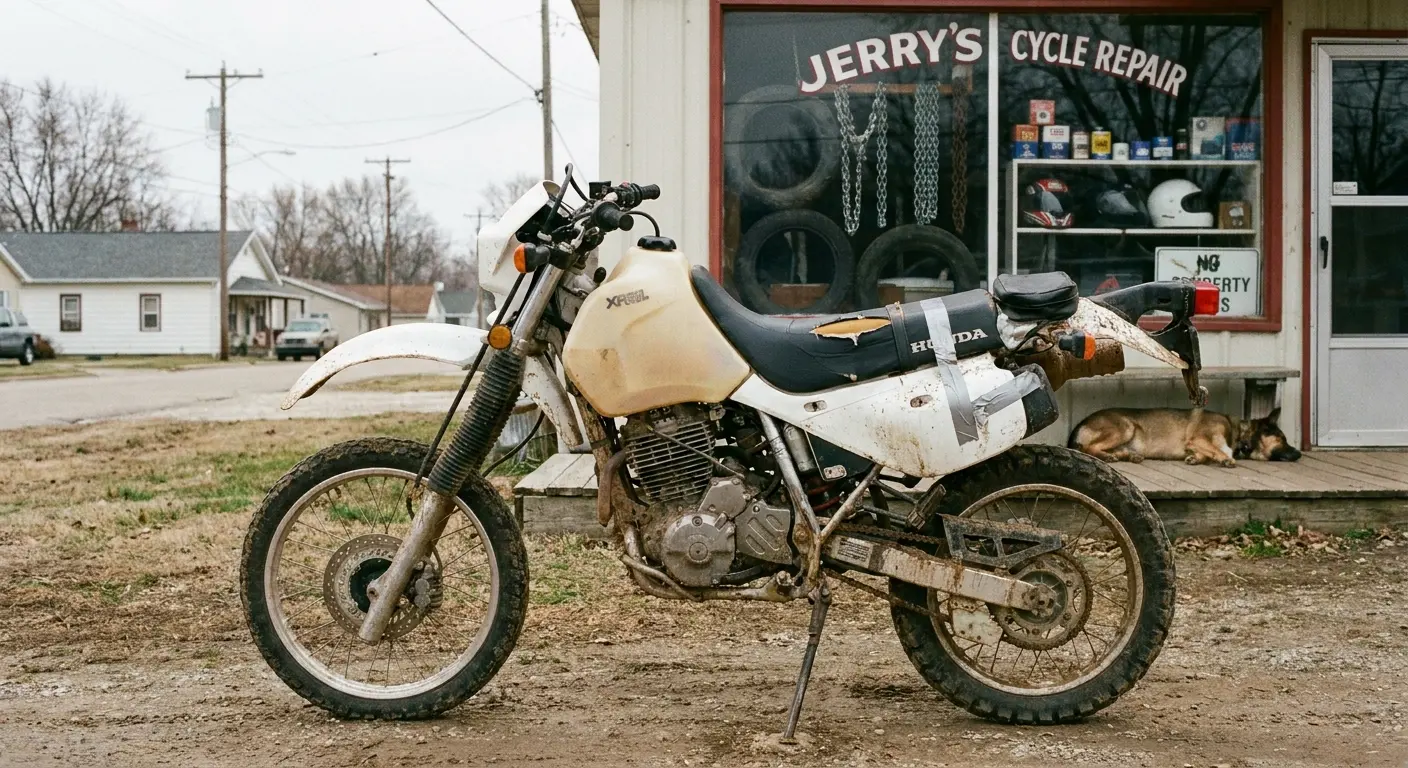
The 366-lb dry weight makes this lighter than the KLR650, improving handling on trails. Kickstart backup provides peace of mind, and basic analog instrumentation never fails. Extensive aftermarket support enables endless customization.
Suspension needs immediate upgrades for serious off-road work, but the base platform is solid. This costs less than most competitors, and the carburetor works fine for most climates and altitudes. Simple, reliable, and affordable define this option for budget-conscious riders.
18. Royal Enfield Himalayan
Royal Enfield's 411cc single-cylinder produces only 24 hp, but the 430-lb wet weight and low 31.5-inch seat height make this accessible to riders of all sizes. The 4.0-gallon tank and long-travel suspension handle varied terrain capably despite limited power.
The air-cooled engine is easy to maintain anywhere. Limited power means highway riding above 70 mph is challenging, but the torquey delivery works well for technical terrain. Basic instrumentation, included luggage rack, and sub-$5,000 pricing make this the most affordable option here.
Build quality has improved significantly in recent years, and the dealer network is expanding. The Himalayan is slow as hell. Buy it anyway if you're broke. You'll have more fun than the guy who overspent on a GS and is terrified to drop it.
Why Your Phone Mount Matters More Than You Think
Real talk about phone mounts because I learned this the expensive way.
Bought a $20 Amazon mount for my first trip. Lasted exactly 47 miles before the vibration shook it apart on a gravel road. Phone hit the pavement at 40mph. That was an $800 lesson.
Now I run a Rokform Pro Series Motorcycle Mount setup. Yeah, it's expensive. It's also the only mount that survived a full season of abuse. The magnetic system means I can actually check GPS without stopping every ten minutes, and the Rugged Case has saved my phone from three crashes I don't want to talk about.
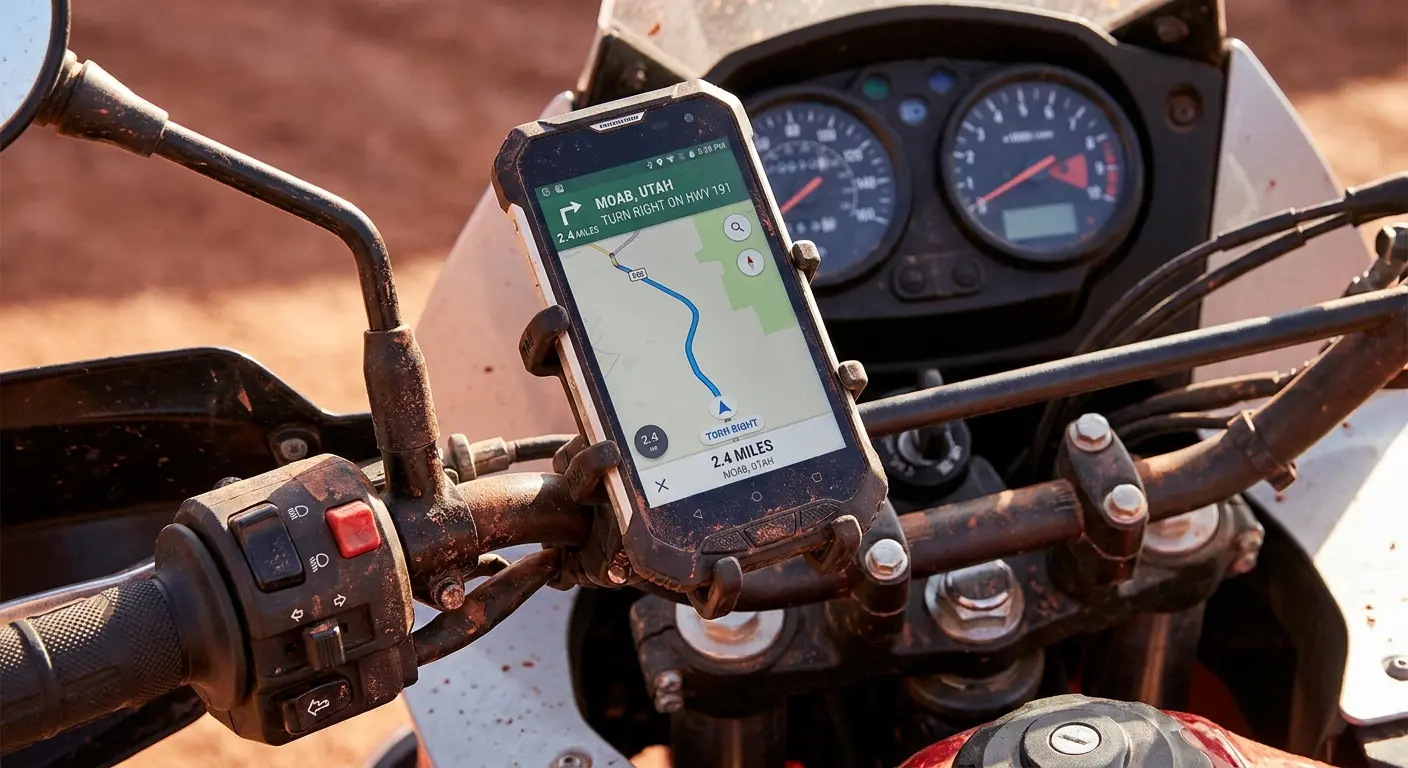
You'll spend $50-150 depending on your bike. Do it anyway. Because getting lost 80 miles from cell service with a broken phone mount is way more expensive than just buying the good shit first.
Cheap mounts fail from vibration, weather exposure, or the first minor drop. Industrial-grade magnets and protective cases designed specifically for constant vibration and impact define quality mounting systems. The twist-lock system prevents your phone from bouncing loose on washboard roads.
Weatherproof cases protect against rain and mud you'll inevitably encounter. For riders considering different mounting positions, our guide to best motorcycle phone mounts covers handlebar, stem, and perch options.
Specific mounting positions work best for different handlebar configurations. Tool-free removal helps for gas stops and trailhead parking where you don't want to leave your phone exposed. The magnetic system means checking navigation with a glance instead of stopping every few miles.
Case protection means drops don't end your ride early. Secure phone mounting changes your willingness to explore unfamiliar routes. The difference between constantly worrying about your phone and trusting your mounting system affects every ride.
Final Thoughts
Before making your final decision, review our comprehensive guide on adventure motorcycle riding for additional preparation tips. The best dual sport bike for you depends on honest assessment of how you'll ride, not aspirational plans that never materialize.
Lighter bikes demand less experience and forgive mistakes more readily. Heavier adventure models require skills that take years to develop. Budget considerations extend beyond purchase price to include maintenance intervals, insurance costs, and the modifications you'll inevitably want.
Seat height counts more than most riders admit. Struggling to touch the ground erodes confidence faster than any other factor. Test rides across multiple categories before committing reveal which compromises you can tolerate. Once you've chosen, explore our motorcycle helmet accessories to complete your setup.
The bike gathering dust in your garage serves no purpose regardless of its capabilities on paper. The bike that gets you out riding regularly beats the premium model that intimidates you into staying home.
Here's what to do: Test the Ténéré 700 and the KLR650. Buy whichever one makes you smile more. Stop overthinking. Pick one. Ride it. You'll figure out what you actually need after 1,000 miles.

