


I dropped my phone in a parking lot last week. It bounced twice, landed face-down on concrete. I picked it up expecting a shattered screen. Nothing. Not a scratch. The case did its job.
But here's what that case isn't protecting against: six months of vibration damage from my car mount. The daily flex stress from sliding in and out of my pocket. The slow degradation happening every time I set it down on my desk.
Drops are scary. Drops get your attention. But drops aren't what's killing most phones.
The global protective phone cover market was valued at USD 28.29 billion in 2025 and is projected to grow to USD 60.26 billion by 2034, which tells you people are finally taking protection seriously. But most of them are still focusing on the wrong threats.
The real damage? It happens in moments you don't even think about. Every time you fumble for your device in your pocket. Each time you set it down on a rough surface. The constant pressure from being wedged into tight spaces. These tiny moments add up. Stress fractures. Loose components. Your phone slowly falling apart from the inside.
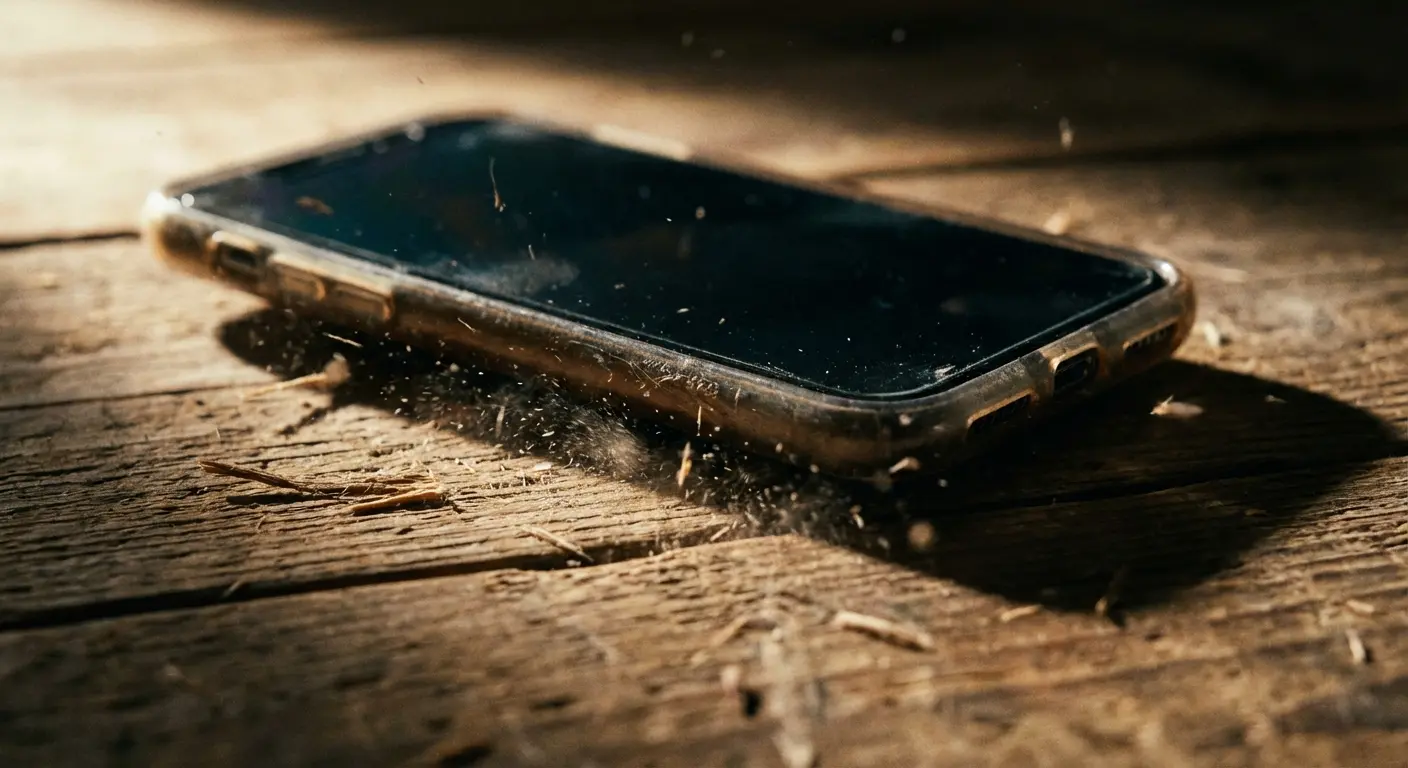
We worry about drops because broken screens are obvious and expensive. What doesn't get attention? The gradual degradation that happens when your phone vibrates against your car's cup holder for months. Or the flex stress that occurs every time you pull a tight-fitting case on and off.
Most manufacturers ignore this completely. They engineer for the catastrophic event while overlooking the cumulative damage that actually shortens your device's lifespan. At Rokform, we've spent years studying both types of threats because your phone needs defense against both.
Drop Protection Is Only Half the Story
Your Phone Is Getting Wrecked Right Now
Your phone's in your pocket right now, yeah? It's pressing against your keys, flexing every time you sit down, heating up against your leg. None of that registers as "damage" in your brain, but your phone's a precision instrument. The gap between the screen and the digitizer underneath? Microscopic. The stabilization in your camera? Works within tolerances you can't even see.
When cases flex, when mounts create pressure points, when you're just using your phone like a normal person, those tolerances get messed up.
You won't notice for months. Then suddenly your camera won't focus right. Or your screen has a dead spot. Or your battery's draining twice as fast because something inside got jostled loose.
Case in point: I know a photographer who uses her iPhone for client previews and social media. She mounted it in her car using one of those cheap dashboard suction mounts during her 45-minute commute. After six months, she noticed her photos showing slight motion blur even in good lighting. The problem wasn't a drop. It was accumulated vibration that degraded the optical image stabilization. The repair? $379 for a camera module replacement that could've been prevented.
Your Car Mount Is Destroying Your Phone
Most people never think about this, but how you mount your phone can damage it more than dropping it.
Cheap mounting systems create point-load stress. A suction cup pulling on your case's back panel. A clamp gripping the sides of your device. A magnetic plate stuck directly to your phone (or worse, between your phone and case, creating an air gap that amplifies impact forces). Understanding how magnetic car phone mounts work can help you avoid these problems.
Every bump in the road, every sudden brake, every pothole translates into stress on your device when it's mounted wrong. The mounting system becomes a force multiplier, transmitting road vibration directly into your phone's guts.
We've tested this extensively. Phones mounted with traditional systems show measurable degradation in gyroscope accuracy, camera stabilization performance, and even battery connection integrity after sustained use. That mounting solution you thought was convenient might be slowly killing your device.
The Environmental Stuff Nobody Mentions
Protection isn't just about impact resistance. Your phone faces environmental threats every single day:
Temperature cycling (from air-conditioned buildings to hot cars)
Humidity exposure (bathroom steam, workout sweat, rain)
UV radiation (ever left your phone on a dashboard?)
Chemical exposure (hand sanitizer, cleaning products, cosmetics)
Electromagnetic interference (from other devices, wireless chargers)
Most cases do absolutely nothing to address these factors. They're designed to absorb one type of force (perpendicular impact) while leaving your phone vulnerable to everything else.
A truly protective system needs to create a barrier against multiple threat vectors at once.
Environmental Threat |
Typical Case Protection |
What You Actually Need |
|---|---|---|
Temperature Extremes |
Minimal insulation |
Material that stays stable from -40°F to 160°F |
UV Radiation |
No UV resistance |
UV-resistant polymers that don't degrade |
Moisture/Humidity |
Open ports, gaps |
Sealed edges with moisture-resistant materials |
Chemical Exposure |
Untreated surfaces |
Chemical-resistant coatings everywhere |
Vibration/Stress |
Rigid mounting points |
Damping materials that absorb and dissipate energy |
Dust/Debris |
Exposed ports |
Reinforced port openings that prevent intrusion |
The Real Cost of "Good Enough" Protection
Beyond Replacement Value
You already know replacing a flagship phone costs hundreds or over a thousand dollars. But that's not the real cost of inadequate protection.
According to industry research, around 1.4 million smartphones were stolen in 2023, and 20 million devices were damaged due to accidents, highlighting just how vulnerable our devices are. These incidents represent way more than replacement cost. They represent the cascading effects of being without your primary device.
Think about what happens when your phone breaks. You lose access to two-factor authentication for your accounts. Your mobile payment methods disappear. Work emails go unanswered. You can't navigate to appointments. Photos from important moments vanish if you haven't backed up recently.
The average person spends three to five days without their primary device when it breaks. Three days of reduced productivity. Three days of being disconnected. Three days of using a backup device (if you have one) that doesn't have your apps, settings, or data configured.
For professionals, this means missed opportunities, delayed projects, damaged credibility. For parents, it means no way to reach kids in emergencies. For travelers, it means no boarding passes, no maps, no translation tools.
The Hidden Costs of Poor Protection
Inadequate protection creates cascading problems.
Your phone becomes harder to use because you're afraid of damaging it. You handle it more carefully, which ironically makes you fumble it more often. You avoid using it in situations where it would be genuinely useful because the risk feels too high.
You buy multiple protective accessories that don't work together. A case. A screen protector. A separate mounting system. A waterproof pouch. Each addition adds bulk, weight, and complexity. Your sleek device becomes a Frankenstein assembly of incompatible products.
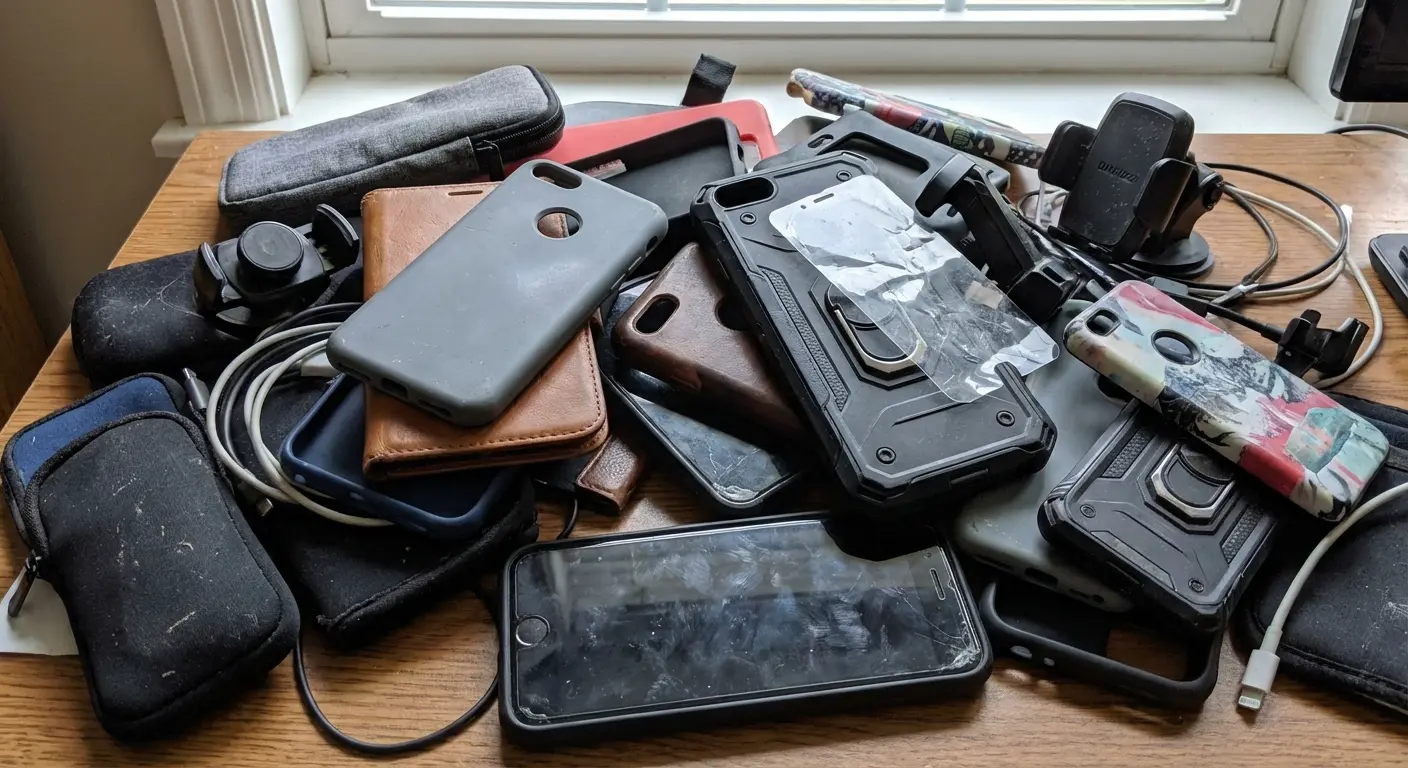
You compromise on functionality. That case with the built-in kickstand? It adds 8mm of thickness. The waterproof case? It muffles your speakers and makes the touchscreen less responsive. The ultra-protective case? It blocks wireless charging and makes your phone too big for standard pockets.
I was talking to a sales exec at a conference last month. He'd bought this tank of a case for his Samsung Galaxy S24 Ultra after dropping his previous phone. Thing added like half an inch all around. Made the phone huge.
What happened? He dropped it MORE with the big case. Why? Couldn't grip it one-handed anymore. Kept fumbling it. Also, the thick case interfered with NFC signal strength, so he missed contactless payments at drive-throughs. He was actually thinking about ditching the case entirely when I met him. Going naked. After spending $60 on "protection."
All that protection, and now his phone's too annoying to actually use. Great.
What Military-Grade Actually Means (And Why It Matters)
Decoding MIL-STD-810G Certification
You've seen "military-grade protection" stamped on countless products. Most of the time, it's marketing garbage. But MIL-STD-810G? That's actually legit.
It's a real specification with real requirements that define what comprehensive protection should look like.
The standard involves 29 different test methods covering environmental stress:
Drop testing from multiple heights and angles (not just flat drops)
Vibration exposure across frequency ranges
Temperature extremes (both high and low, plus rapid cycling)
Humidity resistance
Sand and dust exposure
Altitude simulation
Explosive atmosphere resistance
Products that meet this standard have been subjected to conditions way beyond typical consumer testing. We're talking drops onto concrete from six feet at multiple impact angles. Sustained vibration that simulates helicopter transport. Temperature swings from -40°F to 160°F.
This matters because your phone doesn't just fall straight down onto a flat surface in controlled conditions. It tumbles. It hits corners. It lands on uneven ground. It experiences multiple impacts in a single drop event.
MIL-STD-810G Testing Verification Checklist:
When evaluating "military-grade" protection claims, verify:
[ ] Manufacturer provides specific test method numbers from MIL-STD-810G standard
[ ] Drop testing includes minimum 6-foot height onto concrete surfaces
[ ] Testing covers all six faces, twelve edges, and eight corners of the device
[ ] Temperature testing includes both extremes (-40°F to 160°F) and rapid cycling
[ ] Vibration testing covers multiple frequency ranges (5-500 Hz minimum)
[ ] Independent lab certification is available (not just manufacturer claims)
[ ] Test reports specify number of test samples and pass/fail criteria
[ ] Certification is current and applies to the specific product model
Yeah, this is a lot. Honestly, most people aren't going to check all this. But if you're dropping serious money on a phone, at least verify the drop height rating and whether there's actual third-party testing.
Why Corner and Edge Protection Matters Most
Wild thing is, the flat back and front of your phone are actually the strongest parts. They're designed with structural integrity in mind. The vulnerable points? Corners and edges.
When your phone falls, it almost always hits a corner first. That impact creates a shock wave that travels through the frame. If the corner isn't adequately protected, that energy transfers directly into the screen and internal components.
This is why phones with cracked corners often have screen damage even when the screen didn't directly hit the ground.
Effective protection requires raised edges that absorb corner impacts before they reach the device. But the challenge is precise. Too little protection, and corner impacts still damage your phone. Too much protection, and your device becomes a brick that doesn't fit anywhere or feel comfortable to use.
Material Science in Protection
Not all protective materials are created equal. The physics of impact absorption requires specific material properties.
Hardness prevents scratches and abrasion but doesn't absorb impact well. Hard materials transfer force rather than dissipating it.
Elasticity allows materials to deform and return to shape, absorbing energy in the process. But purely elastic materials can be too soft, allowing excessive flex.
Damping converts kinetic energy into heat, dissipating impact forces. Materials with high damping coefficients reduce the force transmitted to your phone.
The best protective cases use multiple materials in strategic locations. Hard outer shells resist abrasion and distribute point loads. Elastic inner layers absorb impact energy. Damping materials at corners and edges convert impact forces into heat before they reach your device.
This is why single-material cases (all rubber, all plastic, all metal) can't provide optimal protection. You need a composite system engineered for multiple threat types. When evaluating the most protective phone cases on the market, material composition becomes the defining factor in real-world performance.
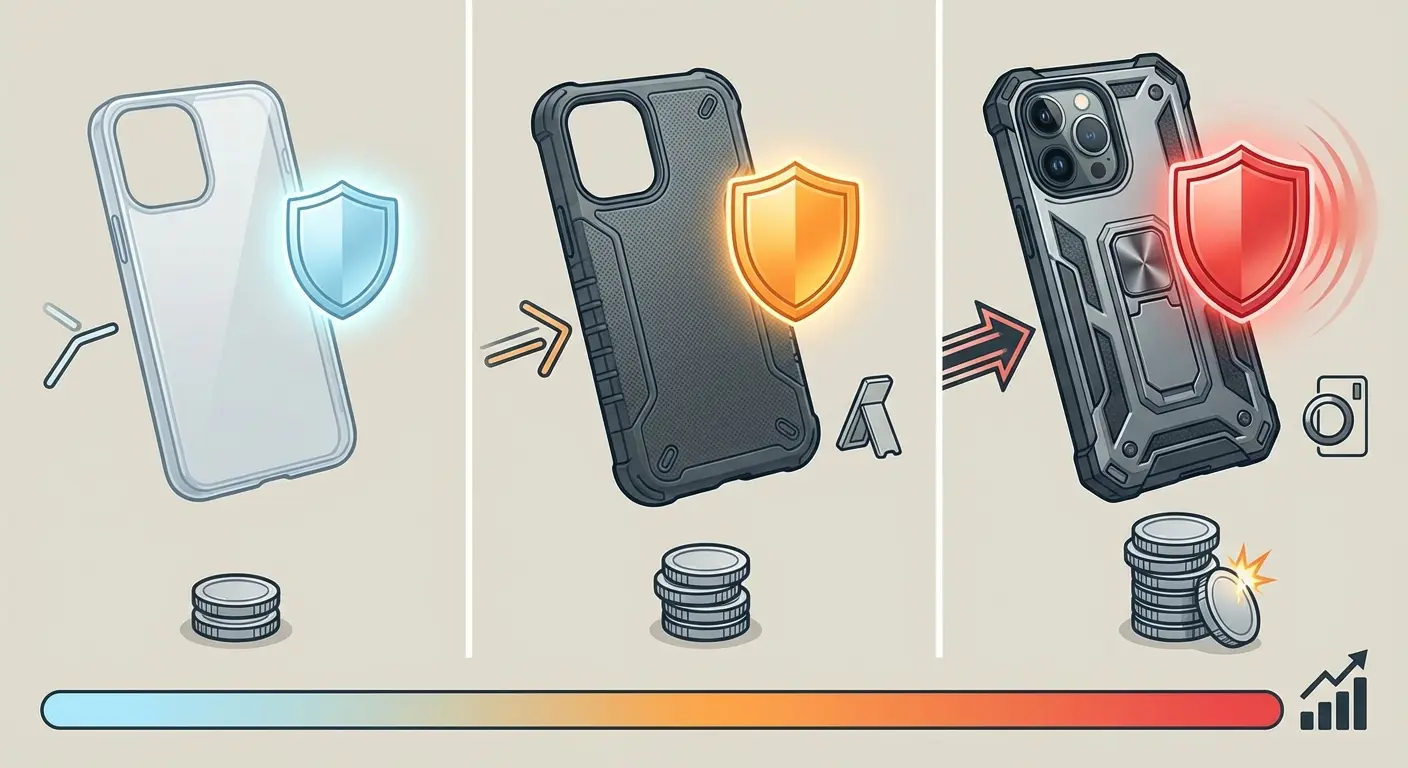
Protection Feature |
Budget Cases ($10-25) |
Mid-Tier Cases ($25-50) |
Premium Engineered Cases ($50+) |
|---|---|---|---|
Drop Height Rating |
3-4 feet |
4-6 feet |
6-10+ feet (MIL-STD-810G) |
Material Layers |
Single material |
Dual-layer (hard + soft) |
Multi-layer composite with damping |
Corner Protection |
Minimal raised edges |
Standard corner bumpers |
Engineered impact zones with air cushions |
Temperature Range |
32°F to 95°F |
0°F to 120°F |
-40°F to 160°F |
Vibration Damping |
None |
Basic absorption |
Engineered damping materials |
Testing Standards |
Basic drop tests |
Some standardized testing |
MIL-STD-810G certified |
Warranty Coverage |
30-90 days |
1 year |
Lifetime or multi-year |
The Mounting Problem Nobody Talks About
How Your Car Mount Might Be Destroying Your Phone
You mount your phone in your car for safety and convenience. But that mounting system might be causing more damage than you realize.
Vent clips create uneven pressure points. As air flows through the vent, temperature changes cause the plastic to expand and contract. This constant movement loosens the grip, which means you have to clamp it tighter, which creates more stress on your phone's frame.
Suction cups fail unpredictably. Temperature changes, UV exposure, and dust accumulation all reduce suction strength. When they fail, your phone doesn't just fall. It often swings down and impacts the dashboard or center console at high speed, with the weight of the mount amplifying the impact.
Dashboard adhesive mounts create a different problem. They hold your phone in the hottest part of your car. Direct sunlight on a dashboard can create temperatures exceeding 150°F. Your phone's battery, screen, and internal components weren't designed for sustained exposure to that heat.
The risks of inadequate mounting solutions have become increasingly obvious. A travel journalist recently documented how a faulty waterproof case during a snorkeling trip in Curacao rendered their phone completely unusable (The Points Guy), demonstrating that even protection designed for specific activities can fail catastrophically when not properly engineered. The incident highlighted how environmental factors combined with inadequate protection systems can lead to total device loss.
The Magnetic Mounting Revolution (Done Right)
Magnetic mounting solves many of these problems, but only when engineered correctly. Cheap magnetic systems use weak magnets and metal plates that add weight and create air gaps in your case.
Proper magnetic mounting requires several elements:
Magnets strong enough to hold your phone securely through bumps and vibration
Magnet placement that doesn't interfere with wireless charging or card readers
A locking mechanism that prevents rotational movement
Weight distribution that doesn't create stress points on your phone's frame
The difference between good and bad magnetic mounting? Night and day.
A well-engineered system holds your phone more securely than mechanical clamps while adding less weight and bulk. A poorly designed system gives you the worst of both worlds: weak hold and added mass.
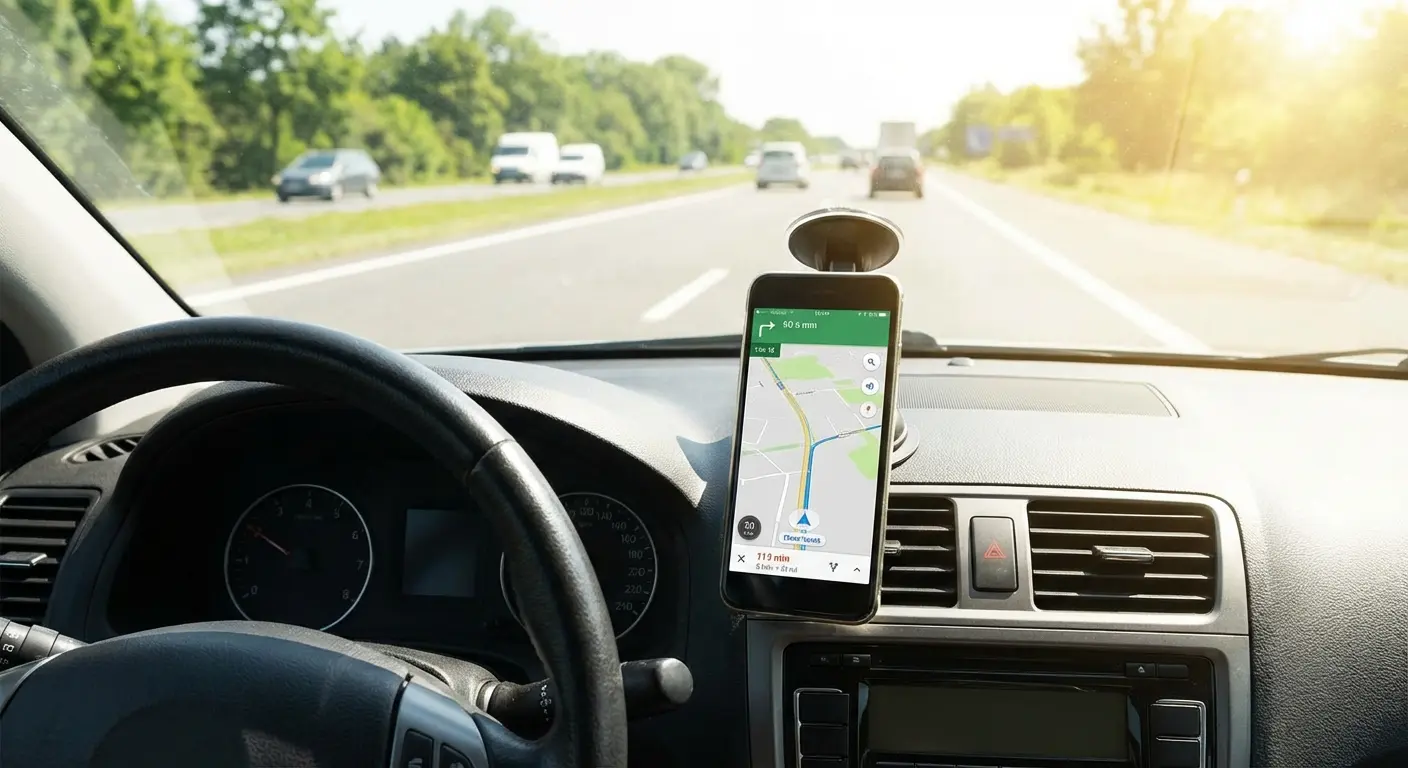
Multi-Point Mounting Versatility
Your phone needs to be mounted in different places for different activities. In your car for navigation. On your bike for fitness tracking. On your motorcycle for touring. At your desk for video calls. In the gym for workout videos.
Traditional mounting solutions require different mounts for each use case. Each mount means another adhesive plate on your case or another clamp system to attach. Each addition adds bulk and weight.
An integrated mounting system changes this equation completely. When your case has built-in mounting capability that works across multiple mount types, you eliminate redundant accessories. Your protection system becomes your mounting system, reducing bulk while increasing versatility.
For cyclists specifically, understanding the best phone mount for bikes means evaluating both security and vibration dampening across different terrain types.
Phone Mounting System Evaluation Template:
Before purchasing any mounting solution, assess these criteria:
Mounting Strength:
[ ] Holds device securely through sustained vibration (test: drive on rough roads for 30+ minutes)
[ ] Withstands sudden braking without device movement or detachment
[ ] Maintains grip through temperature changes (-20°F to 140°F minimum)
[ ] Supports phone weight plus case without sagging or drift

