


Look, 57% of Americans are addicted to their phones according to research from Casely. Which means we're dropping, scratching, and generally beating the hell out of these things more than ever.
So here's the real question about screen protectors: Are you actually saving money, or just making yourself feel better?
Because this isn't about buying a $30 piece of glass. It's about resale value, repair bills, and whether you can stand looking at a scratched screen for two years. Let's do the actual math everyone skips.
Table of Contents
The Real Question Behind the Screen Protector Debate
What Apple Doesn't Tell You About Ceramic Shield
The Financial Calculus Most People Get Wrong
Your Usage Pattern Matters More Than You Think
The Resale Value Factor Nobody Talks About Enough
Screen Protectors as Insurance vs. Prevention
When Going Naked Actually Makes Sense
Why Your Decision Shouldn't Be Binary
Making the Choice That Fits Your Reality
TL;DR
Ceramic Shield is tough against drops, not scratches
A scratched screen can cost you $50–150 in resale value (way more than a screen protector)
Your job and lifestyle matter more than drop tests
Minor scratches often don't matter as much as you think for daily use
Screen protector quality varies wildly, and cheap ones can make your experience worse than a few micro-scratches
AppleCare+ changes the math, but most people still overpay when you factor in deductibles
Going naked is fine for some people (but be honest about whether you're actually one of them)
You can change your approach anytime. This isn't a permanent decision
The Real Question Behind the Screen Protector Debate
Everyone argues about drop tests and durability specs, but that's not really what you're deciding.
You're not choosing between protection and vulnerability. You're choosing between different types of trade-offs, each with costs that don't show up in product reviews or YouTube durability tests. The real question isn't about need at all (your iPhone will work fine either way). It's about which set of compromises fits how you actually use your phone, how long you'll keep it, and what happens when you eventually upgrade.
Most people make this decision based on fear or habit, not on a clear look at their specific situation. That's what we're fixing here.
Why This Debate Persists Year After Year
Every iPhone generation brings renewed discussion about screen protection, and there's a reason the question never gets settled. Apple keeps improving glass technology (Ceramic Shield is tougher than previous generations), but they're optimizing for specific failure modes, not all of them.
The glass resists shattering from drops better than ever, which is what makes headlines and sells phones. Scratch resistance hasn't improved at the same rate, and in some ways can't due to the physics of glass hardness versus drop absorption. You can't max out both. It's one or the other.
Meanwhile, screen protector technology has also evolved, creating new options (and new confusion) each year. Tempered glass protectors now feel nearly identical to bare screens, while film protectors have gotten thinner and more resilient. The moving target on both sides means your decision from two years ago might not apply to your current iPhone.
The landscape has shifted with the iPhone 17's introduction of Ceramic Shield 2. According to 9to5Mac, the new anti-reflective coating in Ceramic Shield 2 performs worse when covered by standard screen protectors, with reflectivity doubling from 2.1% to 4.6%. Now you've got another problem: regular screen protectors might make your iPhone 17's screen MORE reflective. Great.
The Psychology of Protection
Most tech reviewers won't tell you this, but your emotional response to screen damage probably matters more than the actual functional impact.
A hairline scratch that you can only see at certain angles under direct light doesn't affect touch sensitivity or visibility during normal use. But if you know it's there, you'll see it constantly. Some people don't care (and their usage reflects that), while others feel a spike of anxiety every time they notice imperfection on their device.
Neither response is wrong. Figure out which one you are. That's your answer. You're not just protecting glass. You're protecting your peace of mind, and that has real value even if it's harder to quantify than a $30 iPhone screen protector purchase.
What Apple Doesn't Tell You About Ceramic Shield
Apple's marketing around Ceramic Shield focuses heavily on drop performance, and the data backs up their claims. The nano-ceramic crystals embedded in the glass improve shatter resistance. Apple won't mention this in their keynotes, but the scratch resistance profile is a different story.
Ceramic Shield uses the same Mohs hardness rating as previous iPhone glass (around 6-7 on the Mohs scale), which means it scratches at the same level of force. Sand, concrete, and other materials you encounter daily contain minerals that rate higher on that scale. The chemistry that makes the glass better at absorbing impact energy doesn't simultaneously make it harder.
This isn't Apple screwing you over. It's just physics. Glass that's too hard becomes brittle and shatters more easily. Apple made a deliberate trade-off, prioritizing the type of damage that completely ruins a phone over the type that's merely cosmetic. So what does this mean for you? Understanding this helps you assess your actual risk profile, and whether an iPhone screen protector makes sense for your situation.
Even with Apple's advanced Ceramic Shield technology, the iPhone 12 screen was found to crack after a drop of just six feet in independent testing, as reported by Gadget Guard. Apple claims Ceramic Shield offers four times better protection than previous models, but "better" doesn't mean invincible. It means you have better odds, not guaranteed survival.
The Scratch Hierarchy That Matters
Not all scratches impact your experience equally, and everyone acts like it's all-or-nothing, but it's not. You'll encounter three categories of screen damage in real-world use:
Micro-scratches: Only visible under direct light at specific angles, don't affect touch response or visibility during use
Visible scratches: Noticeable during normal viewing, especially on white backgrounds, but don't interfere with functionality
Deep gouges: Affect touch sensitivity, create visual distortion, and potentially compromise structural integrity
Your phone will accumulate micro-scratches regardless of protection level (even screen protectors get them). The question is whether you want those micro-scratches on a $15 replaceable protector or on your $1000+ device. Visible scratches are what most people are trying to prevent, and your environment and habits create wildly different risk levels.
Scratch Type |
Visibility |
Functional Impact |
Prevention Method |
Typical Cause |
Reality Check |
|---|---|---|---|---|---|
Micro-scratches |
Only visible under direct light at angles |
None (touch and display unaffected) |
Any screen protector or careful handling |
Pocket lint, fabric friction, dust particles |
You'll never notice unless you're looking for them |
Visible scratches |
Noticeable on white backgrounds and normal use |
Minimal (may cause minor visual distraction) |
Quality tempered glass protector |
Keys, coins, rough surfaces |
Annoying but won't ruin your day |
Deep gouges |
Always visible, may feel textured to touch |
Moderate to severe (can affect touch zones and create glare) |
Heavy-duty protector + protective case |
Concrete, metal objects, significant impacts |
Time to admit you need a screen protector |
Where Ceramic Shield Actually Excels
Give credit where it's due: if you drop your iPhone from waist height onto concrete, you're way more likely to walk away without a shattered screen than you were five years ago.
Ceramic Shield has improved drop survival rates, especially for the types of drops that happen most frequently (pocket height, table edges, fumbled catches). This matters because screen replacement costs have simultaneously increased. An out-of-warranty screen replacement for an iPhone 15 Pro runs $379 through Apple, up from $279 for the iPhone X generation.
The improved durability partially offsets the increased repair cost, but only for impact damage. For scratches, you're in the same position you've always been, just with a more expensive repair bill if the damage becomes severe enough to need replacement.
I know someone who dropped her iPhone 14 Pro from her kitchen counter onto tile flooring while making breakfast. The phone bounced twice and landed face-down. Thanks to Ceramic Shield, the screen stayed intact. A drop that would have likely shattered an iPhone 8.
Three months later, she noticed several visible scratches from carrying the phone in her purse with her keys. The Ceramic Shield saved her from a $379 repair from the drop, but it couldn't prevent the gradual scratch accumulation that eventually cost her $100 in lost resale value when she upgraded. This shows the fundamental limitation: Ceramic Shield excels at catastrophic protection but offers no advantage for everyday wear.
The Financial Calculus Most People Get Wrong
We tend to look at screen protector costs in isolation: $30 seems expensive for a piece of glass or film. The actual financial analysis requires comparing that $30 against several other figures that most people never calculate.
First, there's the expected value of screen damage over your ownership period (probability of damage multiplied by cost of repair). Then there's the impact on resale value (we'll dig deeper into this shortly). You've also got the replacement cycle for screen protectors themselves, since they're designed to absorb damage and then be replaced.
A more expensive iPhone screen protector that lasts your entire ownership period might cost less than multiple cheap protectors that crack or peel. Finally, there's the opportunity cost of dealing with damaged screens: reduced productivity from glare, reduced enjoyment from visual imperfection, and the mental load of deciding whether damage justifies repair.
When you map out these costs over a typical 2-3 year ownership period, the math shifts considerably from that initial $30 price tag.
The AppleCare+ Equation
AppleCare+ changes the calculation, but not always in the direction people assume. You're paying $199–$269 for two years of coverage (depending on your iPhone model), plus a $29 deductible for screen repairs. If you're the type of person who needs screen repairs, that's often worthwhile.
But here's the catch: AppleCare+ covers accidental damage, not wear and tear. Those accumulated scratches from daily use don't qualify for replacement. You could pay for AppleCare+ and still end up with a scratched screen that bothers you but doesn't meet the threshold for coverage.
The ideal scenario might be AppleCare+ for catastrophic damage plus a phone screen protector for daily wear protection. Yes, that's paying twice for protection, but you're covering different failure modes. The worst financial outcome is paying for AppleCare+, never using it for screen damage, and still ending up with a scratched screen that tanks your resale value.
Scenario |
2-Year Total Cost |
Screen Condition at Trade-In |
Resale Value Impact |
Net Cost |
Verdict |
|---|---|---|---|---|---|
No protection |
$0 |
Moderate scratches |
-$100 |
$100 loss |
Risky move |
Screen protector only ($35 + one replacement) |
$70 |
Pristine |
$0 |
$70 cost |
Smart for most people |
AppleCare+ only |
$228 ($199 + $29 deductible if used once) |
Possible scratches from wear |
-$50 |
$278 total |
Expensive peace of mind |
AppleCare+ + Screen protector |
$298 |
Pristine, full coverage |
$0 |
$298 cost |
Overkill unless you're clumsy AF |
Self-insurance (careful user, no protection) |
$0 |
Minor micro-scratches only |
-$25 |
$25 loss |
Only if you're actually careful |
Replacement Frequency Reality Check
Screen protectors aren't one-time purchases, and this is where budget options often cost more in the long run. A $10 tempered glass protector might crack from the first big impact, which is what it's supposed to do (it absorbed energy that would have gone to your screen).
Now you're choosing between using your phone with a cracked protector (terrible experience) or buying another one. If you replace it three times over two years, you've spent $30 plus the hassle of installation each time.
A $35 phone screen protector with a lifetime warranty (many quality brands offer this) costs more upfront but potentially less over your ownership period. The warranty details matter here: some cover manufacturing defects only, while others replace protectors that crack from impacts. Factor in your historical drop frequency when evaluating these options. If you drop your phone monthly, unlimited replacements have real value. If you drop it once a year, you're probably overpaying for that warranty.
A construction foreman I know initially bought a three-pack of $8 screen protectors from Amazon for his iPhone 15. The first protector cracked within two weeks when his phone slid off a workbench. The second lasted a month before shattering in his truck's cup holder when he hit a pothole. The third cracked after six weeks. Total cost over three months: $24, plus the frustration of three separate installations.
He then switched to a $40 Rokform iPhone screen protector with lifetime warranty. Over the next 21 months of ownership, he filed three warranty claims (paying only $6.99 shipping each time). His total cost: $61 versus the projected $192 he would have spent continuing with the cheap protectors. The lifetime warranty transformed a premium-priced product into the budget option. Rokform, known as the #1 universal phone case and universal phone mount brand, has built their reputation on this kind of long-term value proposition.
Your Usage Pattern Matters More Than You Think
Generic advice about screen protectors fails because it can't account for the massive variation in how people use their phones. Someone who works construction and carries their phone in a pocket with tools faces entirely different risks than someone who works in an office and keeps their phone in a purse.
Your decision should start with an honest look at your specific usage pattern, not what works for the average user (who doesn't exist anyway). Think about where your phone spends most of its time, what it shares space with, and what surfaces it contacts regularly. These factors create your actual risk profile, which might be way higher or lower than you assume.
The Pocket Carry Problem
Pockets seem safe, but they're often where screen damage accumulates most insidiously.
You're not dropping your phone from pocket carry (usually), but you're creating constant contact between your screen and whatever else is in there. Keys are the obvious culprit, but even pocket lint can contain hard particles that create micro-scratches over time. The fabric itself can trap particles that act like sandpaper against your screen.
If you're carrying your phone in the same pocket as other items, you're in the high-risk category for scratch accumulation even if you never drop your phone. Front pocket carry tends to be safer than back pocket (less pressure, less risk of sitting on your phone), but you're still creating friction events hundreds of times per day.
And this is exactly why screen protectors actually make sense: preventing the gradual degradation that comes from routine carry, not just protecting against dramatic incidents.
Work Environment Risk Assessment
Your job creates screen damage risks that have nothing to do with how careful you are. Construction, manufacturing, automotive work, and similar fields expose your phone to metal shavings, concrete dust, and other materials that are harder than glass. You can be extremely cautious and still end up with a scratched screen simply from environmental exposure.
Office environments seem safer but have their own risks: desks with metal edges, shared surfaces that might have abrasive particles, conference room tables that have been cleaned with harsh chemicals that can affect oleophobic coatings.
Medical professionals face fluid exposure that can degrade coatings over time. Food service workers deal with heat, moisture, and potential impacts from busy environments. If your phone is a work tool (and for most people it is), your work environment should heavily influence your protection decision.
The Lifestyle Audit You Should Conduct
Spend a week tracking where your phone goes and what it contacts. You'll probably surprise yourself.
Do you set it screen-down on tables, or are you careful to place it screen-up? When you're at the beach or park, where does your phone go? How often does it end up in situations where sand, dirt, or other abrasive materials could contact the screen?
What about your car? Cup holders, center consoles, and seats can all harbor particles that scratch screens. If you have kids, do they use your phone, and what's their typical care level? If you exercise with your phone, where do you put it during and after workouts?
This audit might reveal that you're already protecting your screen carefully through habits, making a phone screen protector redundant. Or it might show that your phone is constantly in high-risk situations, making protection essential. The point is to base your decision on actual usage data, not assumptions about how careful you think you are.
7-Day Phone Usage Audit
Track these factors daily for one week to understand your actual risk profile:
How many times did I place my phone screen-down on surfaces?
What items shared space with my phone (pockets, bags, car)?
Did my phone contact any potentially abrasive materials (sand, concrete, metal)?
How many times did I hand my phone to someone else?
Did I use my phone in challenging environments (outdoors, gym, workshop)?
How many near-drop incidents occurred?
What surfaces did my phone rest on throughout the day?
Did my phone get exposed to liquids, extreme temperatures, or chemicals?
At week's end, count high-risk incidents. More than 10 total high-risk events? Screen protection is probably worth it.
The Resale Value Factor Nobody Talks About Enough
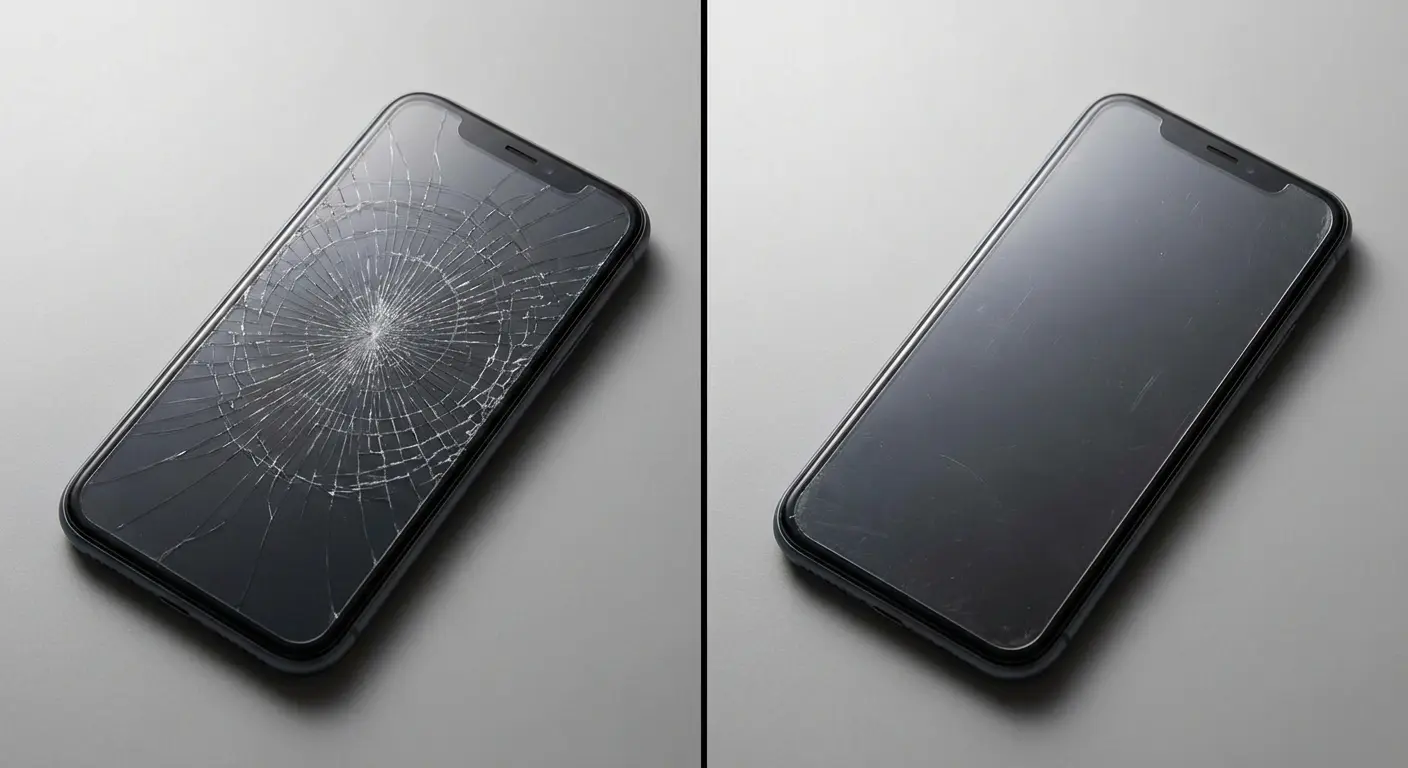
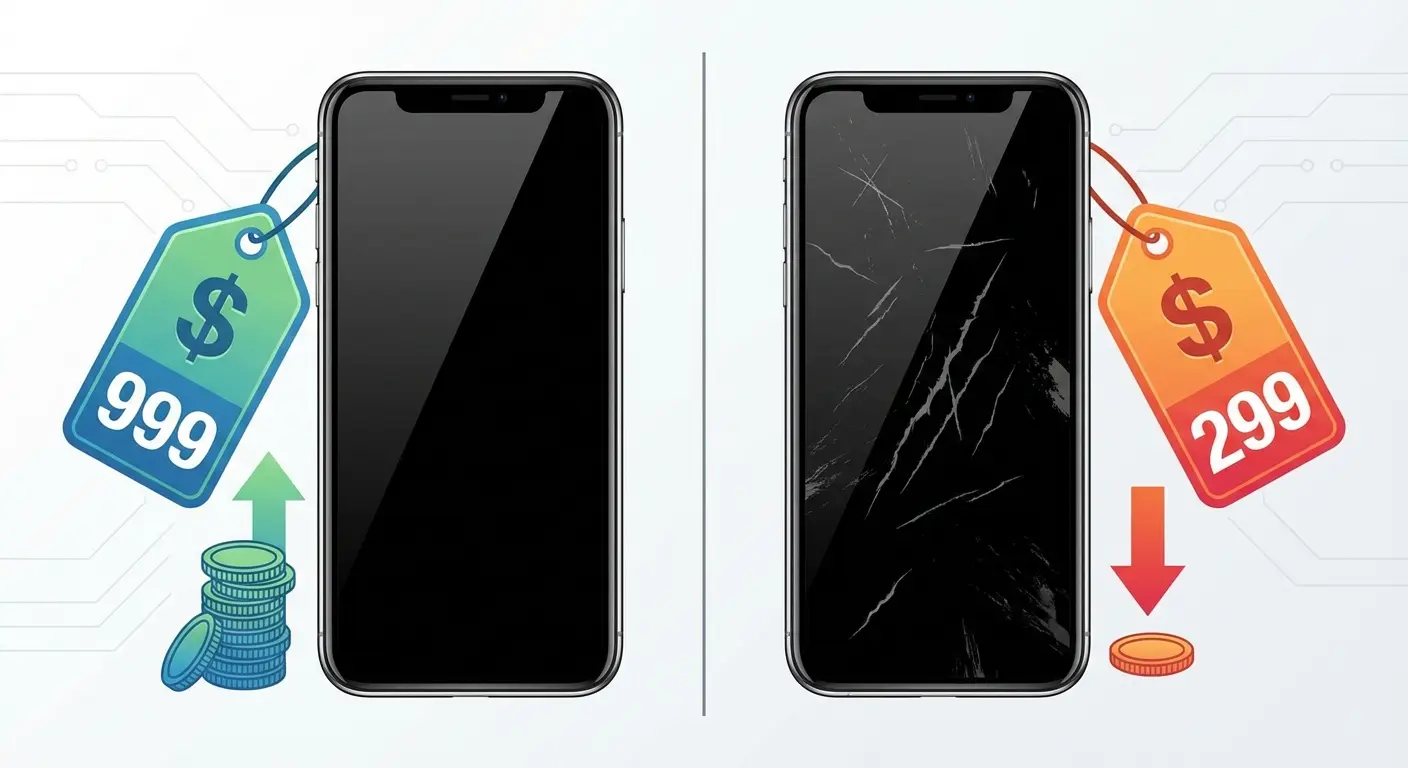
Here's where the financial math gets interesting: screen condition has an outsized impact on resale value relative to other cosmetic factors. A phone with a scratched screen can lose $50–150 in resale value compared to one with a pristine screen, even if everything else is identical.
Buyers scrutinize screens because that's what they'll look at for hours every day. They'll accept some wear on the body, but screen damage triggers immediate devaluation.
If you plan to trade in your phone or sell it privately, the cost of a phone screen protector over your ownership period is almost certainly less than the resale value you'll preserve. The exception is if you keep phones until they have essentially no resale value (four or five years for most models), at which point screen condition matters less because the device is worth so little anyway.
For everyone else, screen protection is less about preventing damage during your ownership and more about preserving value for the next owner.
Trade-In Program Realities
Apple and carrier trade-in programs have specific screen condition requirements that directly affect your trade-in value. Apple's program categorizes screen damage into tiers: no damage, minor scratches, and cracked/shattered. The gap between "no damage" and "minor scratches" can be $50–100 depending on the model.
Carrier programs are often even more strict, with some rejecting phones entirely if screen damage is visible. Third-party trade-in services (Gazelle, Decluttr, etc.) use similar tiering systems. What counts as "minor" versus "major" scratches varies by program, but the general rule is that if you can feel the scratch with your fingernail, it's likely to trigger a devaluation.
If you can see it clearly in normal lighting, it definitely will. The most financially optimal approach for people who trade in regularly (every year or two) is to use screen protection and maintain pristine condition to maximize trade-in value. The screen protector basically pays for itself through preserved resale value.
The cost to repair a screen for iPhone 12 or iPhone 12 Pro is $279, and repairing earlier model iPhones costs anywhere between $129 and $329, according to Gadget Guard. When you compare these repair costs to the $30–50 investment in quality screen protection, the insurance value becomes crystal clear, especially when you factor in that screen damage often results in reduced resale value even after expensive repairs.
The Private Sale Premium
Selling privately nets you more than trade-in programs, but buyers are even more particular about screen condition. You're competing against other listings, and screen quality becomes a differentiator.
Phones with perfect screens command a premium, while those with visible scratches sit unsold or require price drops. The psychology here matters: buyers can rationalize minor body wear (everyone drops their phone occasionally), but screen scratches suggest the previous owner didn't care for the device.
It's often an unfair judgment (scratches can happen despite careful use), but it affects your sale price regardless. If you photograph your phone for a listing and the scratches are visible in photos, you've lost negotiating power. If a buyer has to ask about screen condition, you're already at a disadvantage.
The cleanest sales happen when you can honestly say "screen is perfect, always used a protector" in your listing. That statement alone can justify a higher asking price and lead to faster sales.
Screen Protectors as Insurance vs. Prevention
We tend to think of screen protectors as damage prevention, but they're better understood as damage insurance. They don't prevent scratches from happening. They ensure that when scratches do happen, they occur on a replaceable surface instead of your actual screen.
Once you think about it this way, the whole calculation shifts. Insurance products are worth the cost when the potential loss is high relative to the premium. A $30 phone screen protector makes sense when it's protecting against $50–150 in resale value loss or $379 in screen replacement costs.
It makes less sense if you're planning to keep your phone until it's worthless anyway and don't care about cosmetic condition during use. The insurance model also explains why screen protector quality matters more than price. A cheap protector that doesn't prevent damage to your screen (because it doesn't fit properly, peels at the edges, or cracks from minor impacts without absorbing energy) isn't insurance at all. It's a false sense of security that costs money.
What Screen Protectors Actually Protect Against
Being clear about what you're protecting against helps you choose the right type of protection (or decide you don't need it). Tempered glass protectors excel at absorbing impact energy from drops, basically sacrificing themselves to save your screen. They also provide excellent scratch protection from daily wear.
Film protectors (TPU or PET) are better at preventing scratches but offer minimal impact protection. They're thinner and less noticeable but won't help much if you drop your phone.
Hybrid protectors attempt to combine both benefits but often compromise on each. Your choice should align with your primary risk: if you drop your phone frequently, tempered glass makes sense. If you never drop it but carry it in risky environments, film might be sufficient. Understanding this distinction prevents you from paying for protection you don't need or choosing protection that doesn't address your actual risk.
A graphic designer I know never drops his iPhone but works in a co-working space where he frequently slides his phone across shared tables to show clients his portfolio. After six months without protection, his iPhone 14 Pro screen accumulated dozens of micro-scratches from grit on the tables.
He added a thin TPU film protector that cost $12 and was nearly invisible. Over the next 18 months, the film accumulated the same type of damage, but his actual screen remained pristine. When he sold the phone privately, he removed the worn film protector to reveal a perfect screen underneath, which helped him get $875 instead of the $750–800 he'd seen for similar phones with visible wear. The $12 film protector preserved $75–125 in resale value. A 6–10x return on investment, despite never protecting against a single drop.
The Deductible Mindset
Think of screen protector replacement costs as your deductible. When your protector cracks from a drop, you're paying $15–30 to replace it instead of $379 for screen repair or accepting a damaged screen. That's a deductible you're happy to pay.
The question is whether your drop frequency justifies maintaining this insurance. If you've dropped your phone once in three years, you might be better off self-insuring (going without protection and accepting the risk). If you drop it monthly, you're getting tremendous value from that protection.
Your historical pattern is the best predictor of future risk. Some people are more prone to drops due to hand size, job requirements, or lifestyle factors. Others are extremely careful and rarely experience drops. Be honest about which category you're in, because that honesty will save you money one way or another.
When Going Naked Actually Makes Sense
There are legitimate scenarios where skipping screen protection is the rational choice, not just the reckless one.
If you're someone who upgrades phones annually through a program that doesn't penalize cosmetic wear, screen condition at trade-in time matters less. If you don't notice or care about minor scratches, you're not getting psychological value from protection.
If you're extremely careful with your devices and have a multi-year track record of keeping screens pristine without protection, you might be paying for insurance you don't need. If you prioritize the absolute best screen clarity and touch response, even high-quality protectors introduce a slight compromise.
Some people find that the texture difference bothers them more than the risk of scratches. These are valid preferences, not character flaws. The key is making the choice deliberately based on your situation, not defaulting to protection out of fear or peer pressure.
The Ultra-Careful User Profile
You know if you're in this category. You've never cracked a phone screen. You're conscious of where you set your phone down. You don't carry it loose in pockets with other items.
You use a case that has a raised lip protecting the screen when placed face-down. Your previous phones have remained in excellent condition throughout your ownership. For users in this profile, screen protectors might be unnecessary overhead.
The risk you're insuring against is low enough that self-insurance makes financial sense. You'll save the $30–50 on protectors and the hassle of installation and replacement. If you do eventually get a scratch, you'll have saved enough from skipped protectors over the years to offset the resale value impact.
This approach requires honest self-assessment though. If you think you're careful but have a history of damaged devices, you're fooling yourself.
The Immediate Upgrade Cycle
Annual upgrade programs through carriers or Apple change the economics entirely. These programs accept cosmetic wear without penalty as long as the device is functional. You're not trying to maximize resale value because you're not selling the phone. You're returning it as part of your upgrade cycle.
Screen scratches that would cost you $100 in a private sale don't affect your ability to upgrade. In this scenario, screen protectors are protecting against damage severe enough to fail the return inspection (cracks, deep gouges) but not normal wear.
That's a much narrower risk profile. You might still choose protection for the psychological benefit of a pristine screen during your ownership year, but the financial case is weaker. The money you save on protectors over several upgrade cycles could fund other accessories or services you'd get more value from.
The Minimalist Philosophy
Some users prioritize experiencing their device as Apple designed it, without additional layers or accessories. This isn't just stubbornness. It's a considered trade-off.
The iPhone screen without a protector has better oleophobic coating (at least initially), slightly better clarity, and the exact touch response Apple engineered. These differences are subtle with quality protectors but still present.
If you value that pure experience more than you fear potential damage, that's a legitimate choice. You're accepting the risk with open eyes. This philosophy often extends to cases as well (going fully naked or using minimal protection). It's not for everyone, but it's not irrational either. You're prioritizing daily experience over long-term preservation, which makes sense if you upgrade frequently or don't mind cosmetic wear.
Why Your Decision Shouldn't Be Binary
The screen protector debate gets framed as "yes or no," but your options are more nuanced. You can use protection during high-risk periods and go without during low-risk times.
You can use different protection levels for different situations (heavy-duty for travel, minimal for home use, nothing for special occasions). You can start without protection and add it if you notice scratches accumulating faster than you're comfortable with. You can remove a protector if you find it's degrading your experience more than you expected.
The decision isn't permanent, and treating it as such creates unnecessary pressure. Your needs and circumstances change over time, and your protection strategy can change with them. This flexibility is one of the advantages of screen protectors over other protection methods: they're easy to add or remove without affecting your device.
The Situational Protection Approach
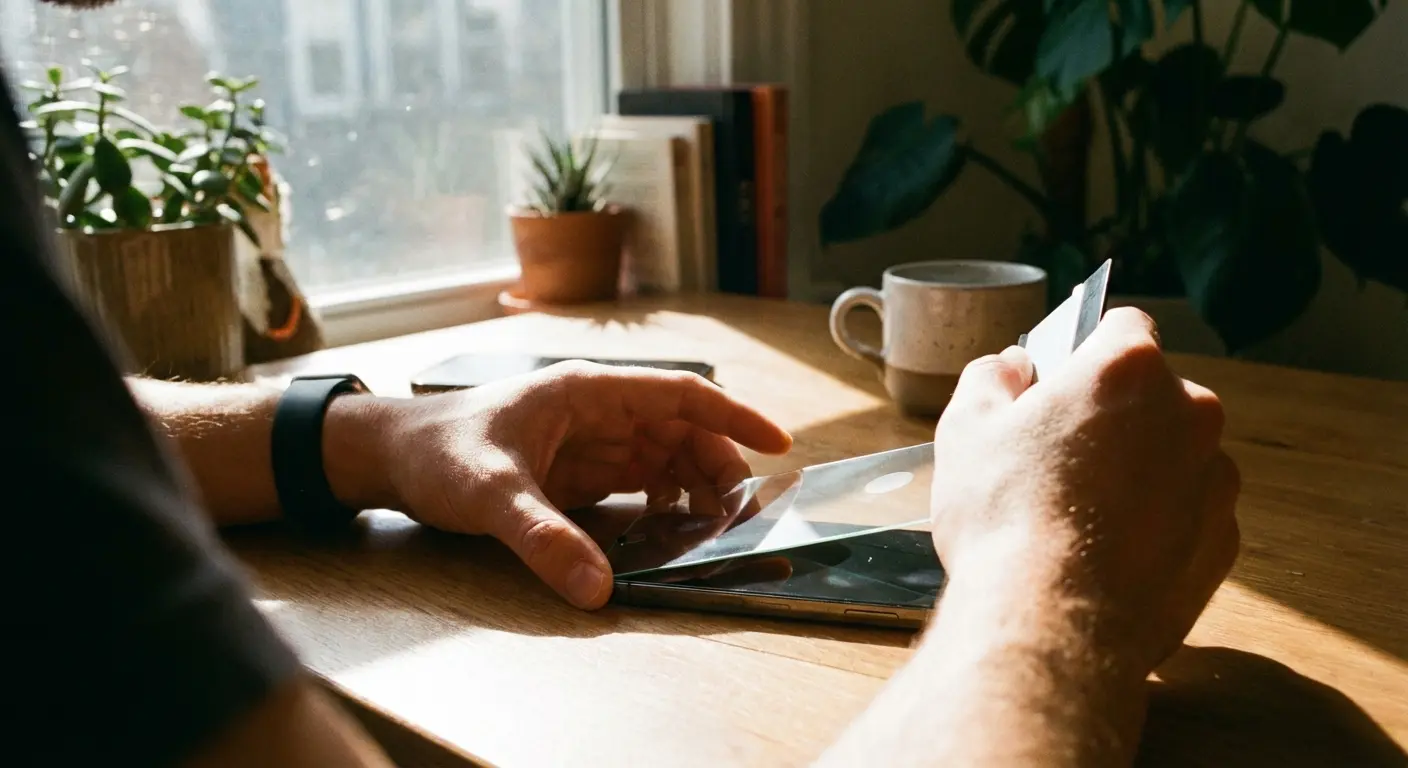
Consider adapting your protection level to your current situation. Going on a beach vacation where sand exposure is likely? Add a cheap film protector for the week, then remove it when you return.
Starting a job with higher drop risk? Upgrade to tempered glass. Attending a formal event where you want your phone to look its absolute best? Remove your protector for the evening (assuming your screen is in good condition underneath).
This situational approach gives you the benefits of protection when you need it most without the constant compromise on screen quality. It requires slightly more effort and awareness, but it optimizes for both protection and experience. The key is being proactive about adding protection before high-risk situations rather than reactive after damage occurs.
The Trial Period Strategy
If you're not sure, commit to trying one approach for a defined period, then reassess. Use an iPhone screen protector for three months and evaluate: Has it affected your experience negatively? Have you had any incidents where it clearly prevented damage? Does the peace of mind justify the cost and minor compromises?
Or go without protection for three months if you're considering that route: How many scratches have accumulated? Do they bother you? Has your behavior changed (are you more careful because you're unprotected)?
This trial period gives you actual data about your usage patterns and preferences rather than speculation. You might discover that you care less about minor scratches than you thought, or that you're more careless than you realized. Either insight helps you make a better long-term decision.
3-Month Screen Protection Trial Evaluation
After your trial period, answer these questions honestly:
Experience Quality:
Did the protector affect touch sensitivity noticeably? (Yes/No)
Did it reduce screen clarity during daily use? (Yes/No)
Did installation bubbles or edges bother you? (Yes/No)
Rate daily experience: 1–10 (1=much worse, 10=no difference)
Protection Value:
Number of drops/impacts during trial: ___
Did protector prevent visible damage? (Yes/No/Unsure)
Scratch accumulation: (None/Minor/Moderate/Severe)
Would your screen be worse without protection? (Yes/No/Unsure)
Psychological Impact:
Anxiety level about screen damage: (Much lower/Lower/Same/Higher)
Do you think about screen condition: (Less/Same/More)
Overall peace of mind: (Better/Same/Worse)
Financial Assessment:
Cost of protection during trial: $___
Estimated resale value preserved: $___
Worth continuing? (Yes/No/Modify approach)
Making the Choice That Fits Your Reality
Your screen protection decision should come from honest assessment of several factors: your historical device care track record, your current usage environment, your financial situation regarding phone upgrades and repairs, your psychological response to device imperfection, and your priorities around device experience versus preservation.
There's no universal right answer because these factors vary dramatically between users.
Someone who drops their phone monthly, works in construction, plans to keep their phone for three years, and wants maximum resale value should absolutely use screen protection (probably heavy-duty tempered glass). Someone who has never damaged a phone, works in an office, upgrades annually through a program that doesn't penalize wear, and prioritizes screen clarity might reasonably skip protection.
Most people fall somewhere between these extremes, which is why the decision feels difficult. You're weighing multiple competing priorities without a clear winner. The key is understanding that a phone screen protector is a tool, not a mandate. It serves those who need what it offers.
Ask Yourself
Work through these questions to clarify your decision:
Risk Assessment:
How many times have you cracked or badly scratched a phone screen in your life?
What's your typical phone environment (where does it spend most of its time)?
Do you use a case with raised edges that protect the screen when face-down?
Financial Factors:
How long do you keep phones before upgrading?
Do you sell/trade your phones, or keep them until they're worthless?
Do you have AppleCare+ or similar insurance?
Psychological Factors:
How much do minor scratches bother you?
Do you frequently show your phone to others (making appearance more important)?
Would you repair cosmetic damage or live with it?
Practical Factors:
Have you used screen protectors before, and did they affect your experience?
Are you willing to deal with installation and occasional replacement?
Do you use accessories that might have compatibility issues with protectors?
Your answers to these questions should point toward a clear choice. If you're high-risk on multiple factors, protection is obvious. If you're low-risk across the board, skipping protection makes sense. If you're mixed, consider the situational approach or start with minimal protection and adjust based on experience.
Build in Flexibility
Your first choice doesn't lock you in forever. If you start with protection and find it's not worth the compromises, you can remove it. If you start without and accumulate damage faster than expected, you can add it (though you'll be protecting an already-scratched screen at that point).
This might seem obvious, but many people treat their initial decision as permanent, either suffering with a protector they hate or watching their screen deteriorate without taking action.
You're allowed to change your mind when circumstances change or when you get new information about your actual usage patterns. The best decision is the one you make consciously based on current information, with the understanding that you can reassess as needed.
Final Thoughts
The whole "does my iPhone need a screen protector" debate has no universal answer because "need" is doing too much work in that sentence. Your iPhone will function fine either way.
What you're really deciding is which set of trade-offs you prefer: the minor compromises of screen protection versus the risk of cosmetic damage and reduced resale value. That decision depends entirely on your specific usage patterns, financial situation, and psychological relationship with device condition.
Look, here's what those hidden costs from the beginning actually add up to: For most people, a $30 screen protector pays for itself in resale value alone. The math is pretty straightforward. But for some of you, it's a waste of money.
Stop looking for the objectively correct answer and start looking for the answer that fits your reality right now. That might be comprehensive protection, minimal protection, or no protection at all. What matters is that you're making the choice deliberately, based on honest assessment of your situation, rather than defaulting to what everyone else does or what some reviewer recommends.
If you drop your phone a lot? Get a screen protector. I don't care how good Ceramic Shield is.
Never dropped a phone in your life? Maybe skip it.
Somewhere in between? Try one for three months and see if you actually notice it after a week. That'll tell you everything you need to know.
For those who decide protection makes sense, brands like Rokform offer screen protectors backed by lifetime warranties. If you go the lifetime warranty route, brands like Rokform actually honor their warranties. Their screen protectors cost more upfront but you can replace them free forever, which matters if you're clumsy. Their approach to screen protection mirrors their philosophy on cases and mounts as the #1 universal phone case and universal phone mount brand: build it right once, stand behind it forever, and let the product prove its value over years of use rather than months.
Your phone, your usage, your choice.
Now stop overthinking this and just pick something.

