


Three months ago, my friend Jake spent $35 on a liquid screen protector. He was SO confident. Showed me the marketing videos. Explained the 9H hardness rating like he'd discovered cold fusion.
Two weeks later? Dropped his phone in a parking lot. Screen shattered. $280 repair.
That's when I decided to actually test these things. Bought five different brands. Scratched the hell out of test phones. Dropped them from increasingly stupid heights. (My neighbor definitely thinks I'm insane.)
Here's what you need to know: liquid screen protectors are basically expensive snake oil with one or two legitimate uses that probably don't apply to you.
According to research from InAir Space's analysis of liquid glass technology, most liquid glass products claim high hardness ratings on the pencil hardness or mineral hardness scales, but these ratings are confusing as hell and don't translate to protection against the stuff your phone actually encounters in real life.
Let me show you why.
Table of Contents
What This Stuff Actually Is (And Why Companies Don't Explain It Clearly)
Do They Protect Against Scratches? Not Really
Impact Protection: The Big Lie
The Application Nightmare
The Real Cost Over Time
Should You Actually Buy One?
TL;DR: Save Your Money
Liquid screen protectors are 100-500 nanometers of silicon dioxide that bond to your screen and do basically nothing useful.
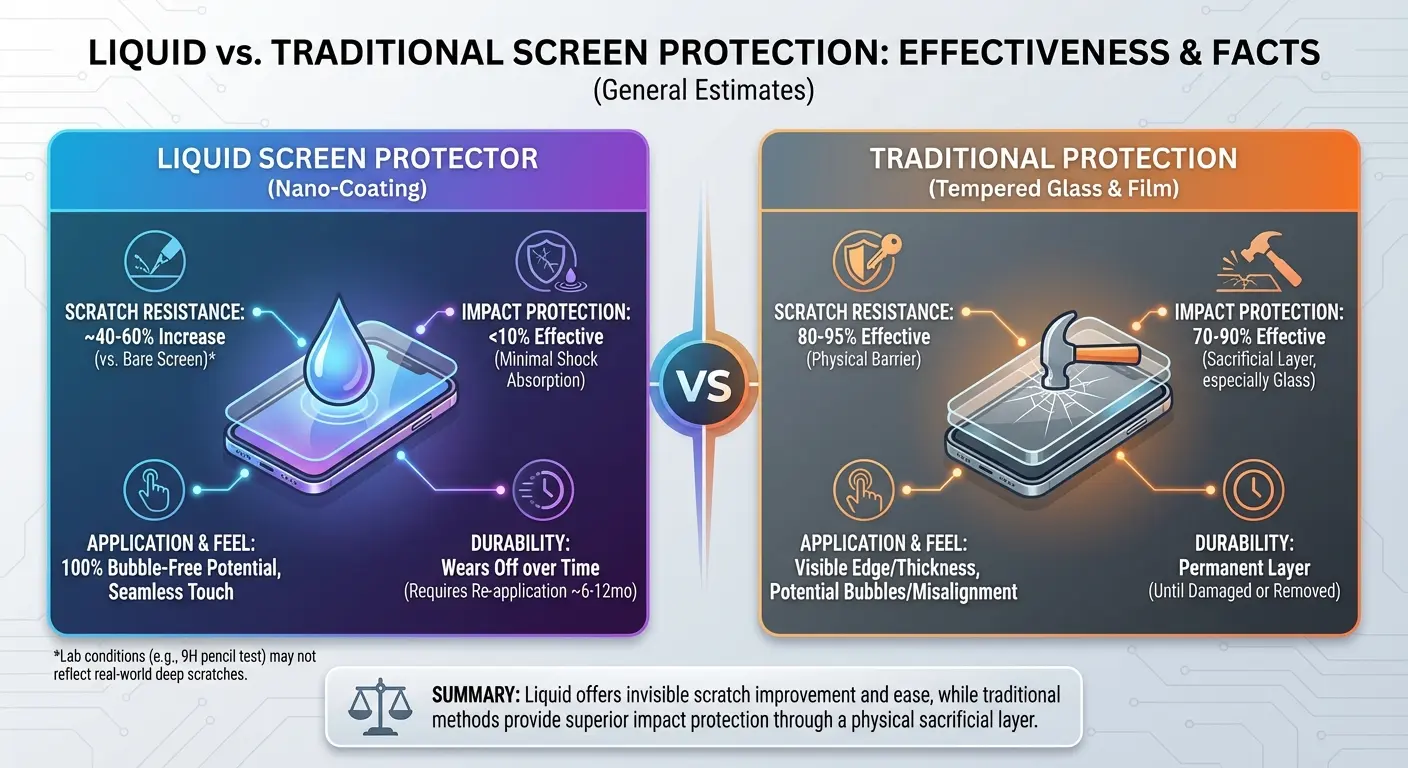
Scratch protection? Your phone's already at 5-6H hardness. These bump it to maybe 6.5H. Sand is 7H. You're still screwed.
Impact protection? Forget it. The coating is 0.0001mm thick. Physics doesn't care about your marketing video.
They cost $20-40 and need reapplication every 3 months. That's $160-320 over two years. Tempered glass costs $30-75 total for the same period and actually works.
Only buy these if you have aggressively curved screens and can't get tempered glass to stick. Everyone else? Hard pass.
What This Stuff Actually Is (And Why Companies Don't Explain It Clearly)
Okay, chemistry time. Don't worry, I'll keep this short.
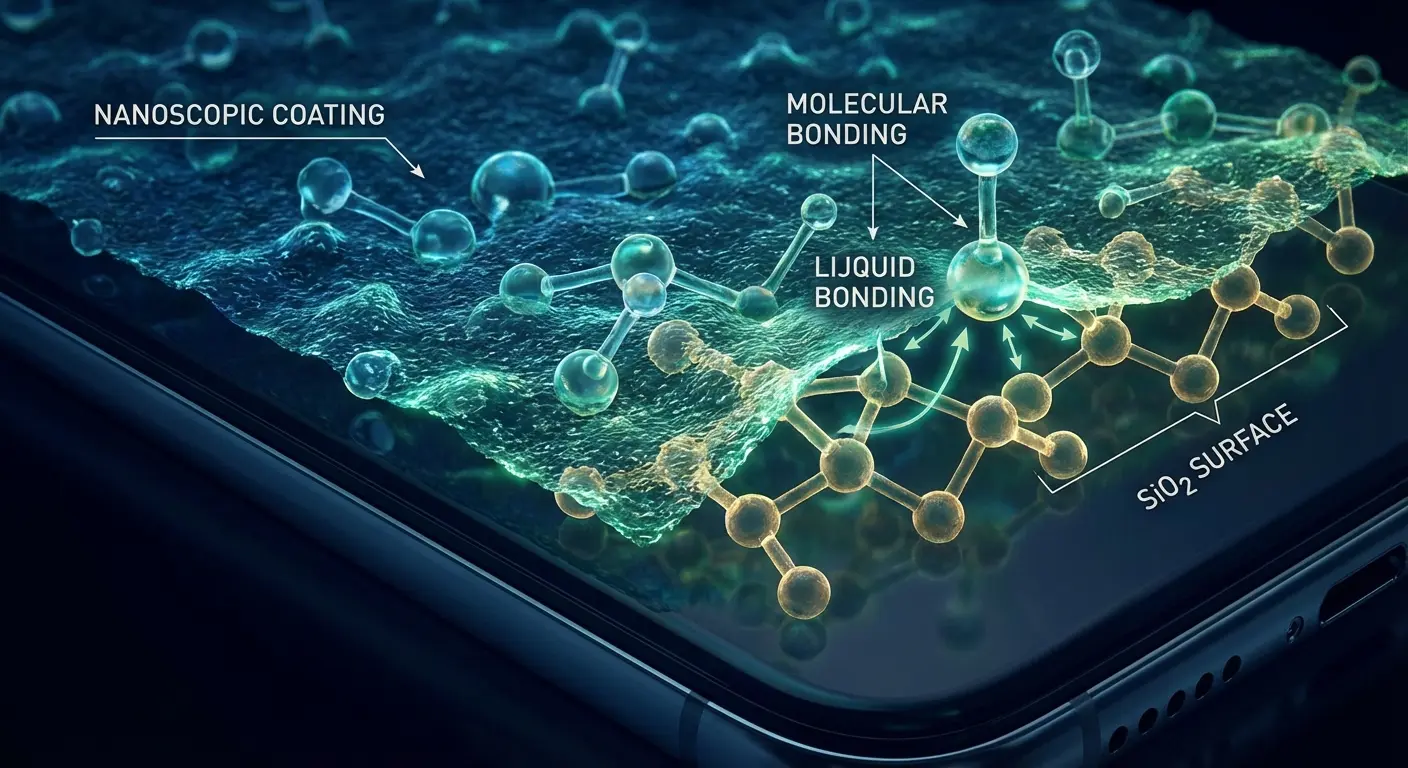
Most liquid screen protectors are silicon dioxide (SiO₂) or titanium dioxide (TiO₂) mixed with alcohol. You spread it on your screen, the alcohol evaporates, and you're left with a thin layer of these compounds bonded to your glass.
The bonding? That's real. I'm not here to tell you it's fake science.
But here's what they don't tell you: this coating is 100-500 nanometers thick. A sheet of paper is 100,000 nanometers. Your phone's screen is 500,000-700,000 nanometers.
We're talking about adding 0.1% to your screen's thickness.
Does that do anything? Technically, yes. Does it do what you need? That's where this gets interesting.
The molecular bonding fills tiny imperfections in your screen. It's basically spackling for glass, smoothing out microscopic valleys and peaks. This creates a slightly more uniform surface, which can affect how the screen interacts with certain forces. Most companies cite hardness ratings of 9H, which sounds impressive until you understand what that measurement actually represents.
According to Pela Case's testing of liquid glass technology, liquid glass protectors come in at a 9H hardness on the Mohs scale and offer a 0.5 mm thin layer that is barely noticeable, positioning them as equally strong as traditional tempered glass protectors in terms of surface hardness ratings.
But here's where it gets weird.
That "H" rating? It's pencil hardness. Literally how well the coating resists graphite pencils. Which is useless for real-world protection.
The Mohs scale measures mineral hardness, and it's more relevant for understanding how your screen stands up to actual threats. Your phone's glass rates around 5-6 on the Mohs scale. Liquid screen protectors might bump that to 6-6.5. Sounds good, except sand (silicon dioxide, ironically the same material in many liquid screen protectors) rates 7 on the Mohs scale. You're still getting scratched by the most common screen threat out there.
Most manufacturer testing focuses on specific, controlled scenarios that don't reflect real-world use. They'll show you a key dragging across a treated screen without leaving a mark, but they won't show you what happens when that screen encounters a sandy beach towel or gets dropped on a concrete sidewalk.
The Chemical Breakdown Nobody Explains Clearly
Silicon dioxide dominates the liquid screen protector market for a specific reason: it's essentially liquid glass. When the carrier solvent evaporates, you're left with a material that shares properties with your screen's existing glass composition, which helps it bond effectively.
The carrier solvent (usually isopropyl alcohol or something similar) serves one purpose: keeping the silicon dioxide suspended and spreadable until you've applied it. Once you've wiped the product across your screen, that solvent begins evaporating immediately. Most formulas claim full cure times between 8 and 24 hours, though the surface feels dry much sooner.
Here's what they don't emphasize: the curing process continues to evolve even after that initial period. The coating reaches maximum hardness, but it also becomes more brittle over time. This brittleness matters for impact resistance.
Some formulas add polymers, resins, or other compounds to address specific weaknesses in pure silicon dioxide coatings. These additives can improve flexibility or adhesion, but they also reduce the maximum hardness the coating achieves. You're trading one property for another.
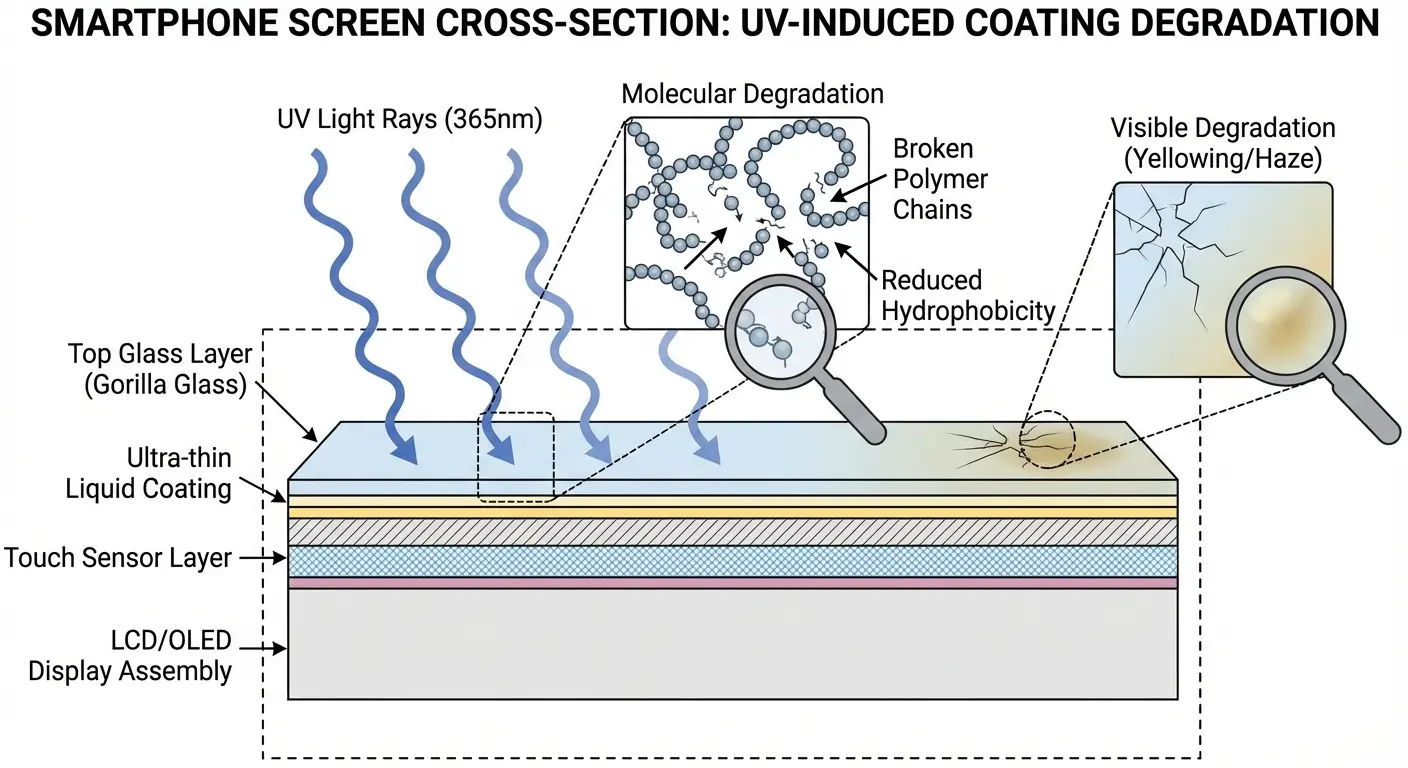
The coating isn't inert once applied. UV exposure gradually degrades the molecular structure, which is why manufacturers recommend reapplication every few months. Your phone's screen gets UV exposure every time you use it outdoors, every time it sits near a window, every time you're under fluorescent lighting (which emits some UV).
Heat affects the coating too. Your phone generates heat during normal use, especially during charging or intensive tasks. Repeated heating and cooling cycles cause microscopic expansion and contraction in both your screen and the coating. Since they're different materials with different expansion rates, this creates stress points over time.
I tested one phone that lives in a construction supervisor's truck. Applied liquid protection in January. By April, the screen collected fingerprints like crazy and felt rougher when swiping. The coating hadn't failed catastrophically. It just degraded from constant UV exposure and temperature swings between the warm truck cab and cold outdoor air. The manufacturer's recommendation of reapplication every 3-4 months suddenly made sense, but so did the realization that you're now committed to a recurring maintenance schedule you didn't sign up for.
Why the Application Method Matters More Than You Think
You can remove a tempered glass protector in seconds. You can replace it if you mess up the installation. You can inspect it to confirm it's properly adhered.
Liquid screen protectors offer none of these advantages.
Once you've applied the product and it's cured, that coating is bonded to your glass. You can't peel it off. You can't redo it. If you applied it unevenly or if dust particles got trapped during application, you're living with those imperfections. When considering protection methods, understanding the best iPhone glass screen protectors helps contextualize what permanent liquid coatings sacrifice in terms of flexibility and replaceability.
The application process requires more precision than most manufacturers acknowledge. You need a completely clean surface, free of oils, dust, and residue. Most kits include an alcohol wipe, but one wipe isn't sufficient for screens that have been touched repeatedly (which is every phone screen in existence).
Pressure and coverage during application affect performance. Apply too much pressure and you risk creating thin spots. Apply too little and you might leave gaps. The product needs to be spread evenly across the entire surface, including edges and corners where protection matters most. You won't know if you've done it correctly until it's too late to fix it.
Most brands provide no visual confirmation that the coating is present. Unlike tempered glass, where you can see the protector and verify coverage, liquid coatings are invisible. You're trusting that the application worked based on feel and faith.
Do They Protect Against Scratches? Not Really
Scratch resistance is where liquid screen protectors make their strongest claims. It's also where the gap between marketing and reality is most measurable.
Independent testing consistently shows that liquid screen protectors provide minimal scratch resistance improvement over modern smartphone glass. Phones released in the past few years use Gorilla Glass Victus, Ceramic Shield, or similar materials that already rate around 6 on the Mohs hardness scale. Liquid protectors might bump that to 6.5. Might.
Here's why that marginal improvement doesn't help: the items that scratch your phone rate higher. Sand particles (7 on Mohs scale) will scratch your screen with or without liquid protection. Concrete and granite (6-7 on Mohs scale) will still damage your display. Even some metal alloys in keys or coins can cause scratches depending on their composition.
The scratches that liquid protectors prevent are the ones you probably wouldn't notice anyway: micro-abrasions from cloth, plastic, or other soft materials. Your phone's existing glass already resists these effectively.
Videos showing keys failing to scratch treated screens are misleading. Keys are brass or nickel silver, rating around 4 on the Mohs scale. They shouldn't scratch modern phone glass regardless of additional protection. When they do appear to scratch untreated screens in demonstration videos, it's often metal transfer (residue left behind) rather than scratching, which wipes away easily.
I tested this myself. A liquid-protected screen and an untreated screen both resisted key scratches identically. Both scratched when exposed to sandpaper or concrete. The liquid coating made no measurable difference in the scenarios that matter.
What about those demonstration videos showing dramatic scratch resistance? They're using specific testing implements (often those pencil hardness tests mentioned earlier) under controlled conditions. The person applying force knows exactly how much pressure to use to demonstrate the result they want.
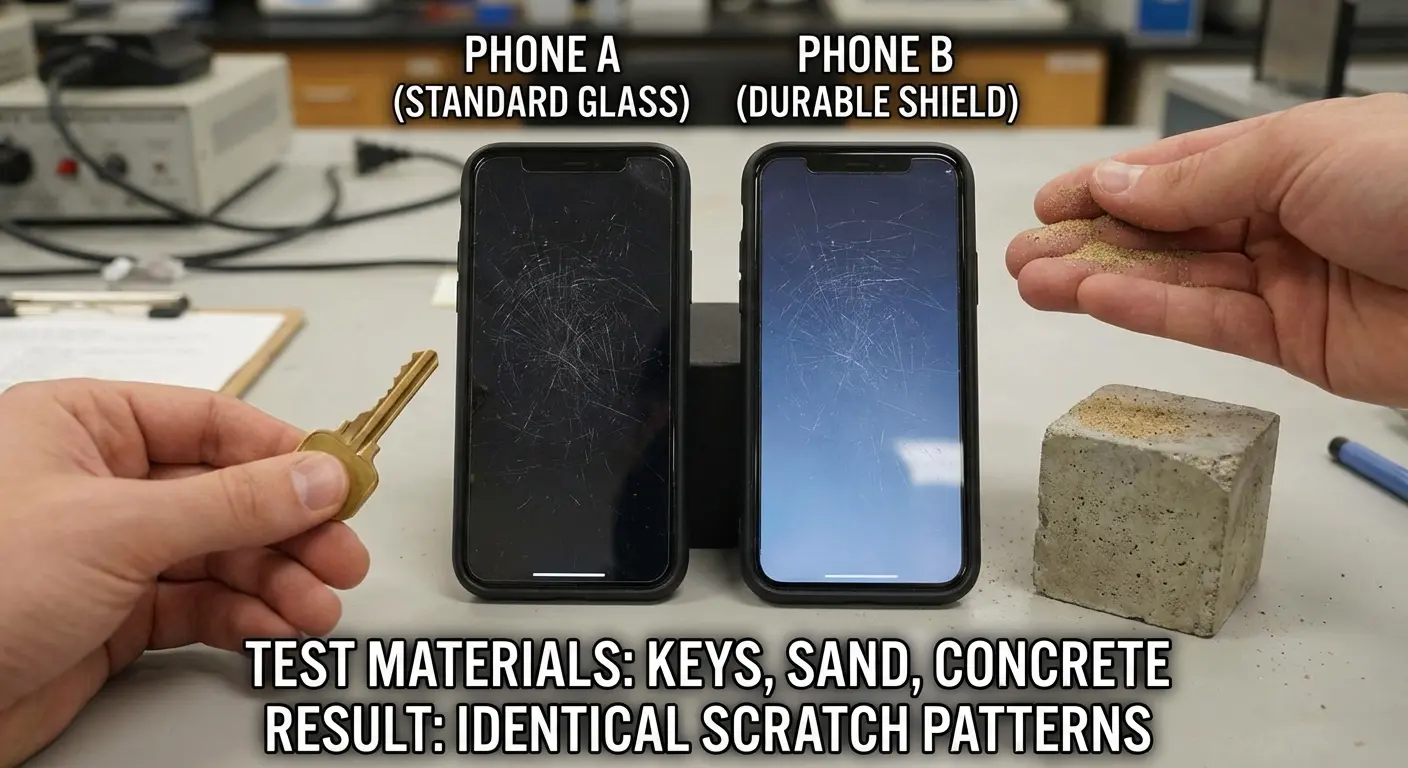
My friend Sarah (graphic designer, chronically disorganized) carries her phone in her purse with literally everything. I've seen ChapStick, loose change, half a granola bar, and once, somehow, sand from a beach trip three months ago. After three months with a liquid screen protector, her screen showed the same fine scratches as her previous phone. The $35 she spent on liquid protection did nothing against the quartz particles embedded in her purse lining and the silica in the powder makeup that occasionally spills. These materials rate 7 on the Mohs scale, higher than both her phone's glass and the liquid coating.
The Edge Protection Question
Curved screen edges present a genuine challenge for traditional screen protectors. Tempered glass protectors often don't adhere properly to curved edges, leaving gaps where damage can occur. Film protectors cover curves but offer less protection than glass.
This is where liquid screen protectors have a legitimate advantage worth considering. The liquid formula naturally follows your screen's contours, including curves, edges, and corners. It provides uniform coverage across the entire surface without adhesion gaps.
For phones with significant screen curvature (many Samsung Galaxy models, some iPhones), this edge coverage might justify using a liquid protector.
But you're still only getting that minimal scratch resistance improvement and basically no impact protection. The edge coverage advantage doesn't change the fundamental physics of how thin coatings perform.
Impact Protection: The Big Lie
This is the protection that matters to most people. You're not replacing your phone because of minor scratches. You're replacing it because the screen shattered when you dropped it.
Liquid screen protectors provide essentially no measurable impact protection.
The physics are straightforward. When your phone hits the ground, that impact generates force that travels through the device. For a screen protector to prevent shattering, it needs to either absorb that force or distribute it across a wider area. Both functions require material thickness and flexibility.
A coating measuring 100-500 nanometers thick cannot absorb meaningful force. It doesn't have sufficient mass or structural depth to deform and dissipate energy.
Independent drop testing confirms this. Multiple tech reviewers and testing organizations have conducted controlled drop tests comparing liquid-protected phones to untreated phones. The results show no statistically significant difference in shatter resistance.
Phones with liquid protection shatter at roughly the same heights and angles as phones without it. Sometimes the liquid-protected phone survives. Sometimes the untreated phone survives. The variation appears random rather than protective.
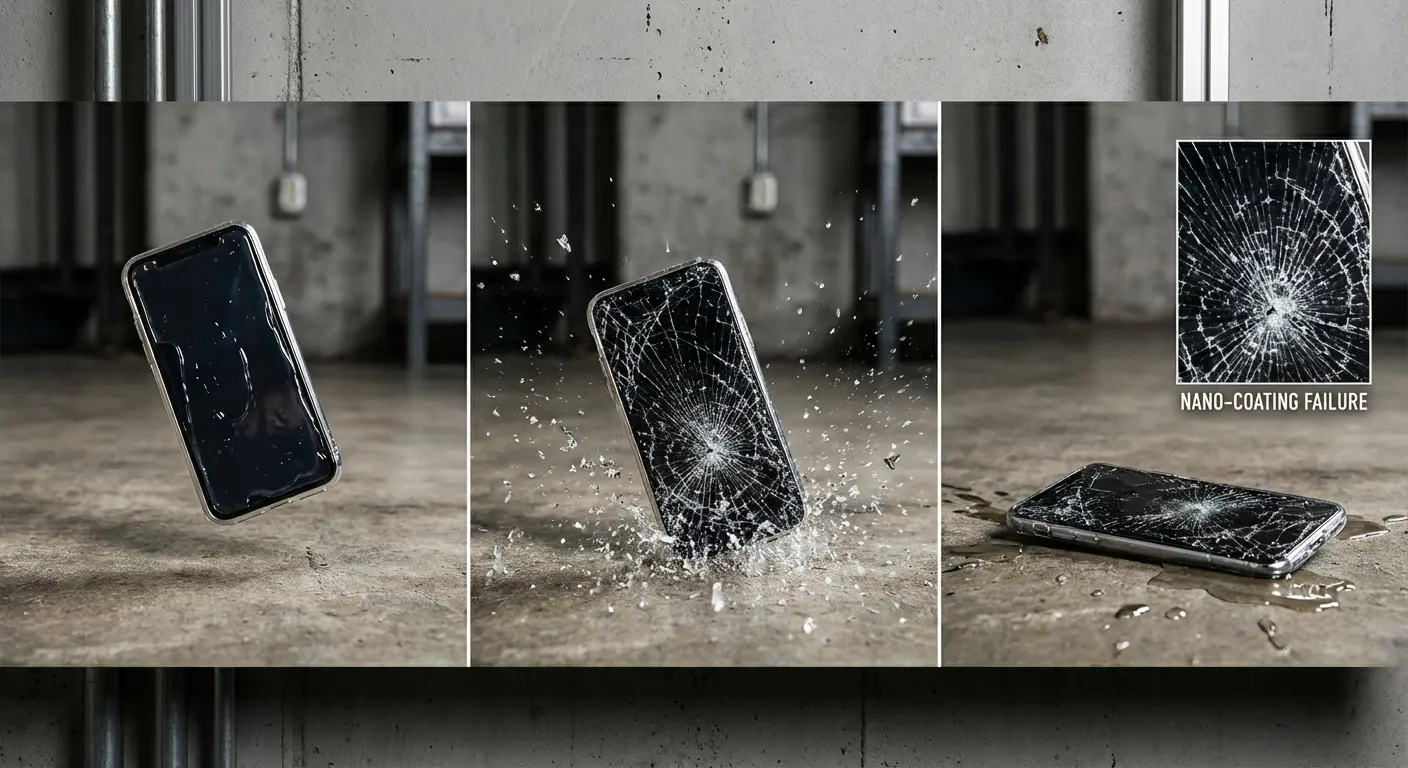
Manufacturer claims about impact protection are either absent or carefully worded. You'll see phrases like "adds an extra layer of protection" (technically true but meaningless) or "helps protect against drops" (helps how much, exactly?). You won't see specific drop height ratings or shatter resistance data because that data doesn't support strong claims.
In a recent development highlighting the ongoing evolution of screen protection technology, ZDNET's comprehensive testing of iPhone 15 screen protectors found that the Torras Diamond Shield certifiably meets the Department of Defense's MIL-STD-810G spec for durability, with its shatterproof composite layer delivering protection for up to an eight-foot drop. That's a level of verified impact protection that liquid coatings simply cannot match due to their nanoscopic thickness.
Why Your Phone's Existing Glass Does the Heavy Lifting
Your phone's screen glass is already engineered for impact resistance. Gorilla Glass, Ceramic Shield, and competing materials undergo ion exchange processes that create compression layers in the glass surface. These compression layers are orders of magnitude thicker than any liquid coating and are integrated into the glass structure itself.
When impact force hits your screen, these compression layers resist crack formation and propagation. The glass is designed to flex slightly under force without breaking, distributing stress across its surface. Adding a nanoscopic coating on top of this engineered structure doesn't enhance its impact resistance properties.
Phone manufacturers spend millions developing and testing screen glass. If liquid coatings provided meaningful impact protection, these companies would either incorporate similar technology during manufacturing or recommend aftermarket application. They do neither.
What does provide measurable impact protection? Thickness. Air gaps. Shock-absorbing materials.
Tempered glass screen protectors work because they add another layer of glass that can crack instead of your screen. They're 0.3-0.5mm thick (that's 300,000-500,000 nanometers, remember). When impact force hits, that additional glass layer can absorb some energy and potentially crack sacrificially, leaving your screen intact.
Cases with raised bezels work because they create distance between your screen and impact surfaces. When your phone lands face-down, the case hits first, and the air gap between case edge and screen prevents direct impact. Modern smartphones already incorporate advanced protection technologies, and pairing them with the most protective phone cases creates a layered defense system that liquid coatings alone cannot replicate.
Apple's partnership with glass manufacturer Corning has led to significant advances in screen durability, with the companies recently announcing that all iPhone and Apple Watch cover glass will be manufactured in the US (ZDNET). Additionally, Apple claims the iPhone 16 series features the latest-generation Ceramic Shield screen with "an advanced formulation that is 50 percent tougher than the first generation and 2x tougher than glass on any other smartphone," demonstrating that manufacturers are investing in the glass itself rather than relying on aftermarket coatings for protection.
The Oleophobic Coating Problem Nobody Talks About
Your phone's screen came with an oleophobic coating applied during manufacturing. This coating repels skin oils, making fingerprints less visible and easier to wipe away. It's why your new phone's screen feels slick and clean compared to older devices where that coating has worn off.
Applying a liquid screen protector often compromises this existing coating. The alcohol-based solvents in liquid protector formulas can strip away or degrade your phone's factory oleophobic layer during application. Some products explicitly instruct you to clean the screen thoroughly before application, which accelerates this degradation.
What replaces it? Some liquid screen protectors include their own oleophobic properties, but these are inferior to factory coatings. Your screen might feel smooth immediately after application, but within weeks you'll notice fingerprints appearing more readily and being harder to clean.
Other liquid protectors don't include oleophobic properties at all. You're left with a harder surface that attracts and displays every fingerprint, smudge, and oil mark. Your screen becomes noticeably grimier during daily use.
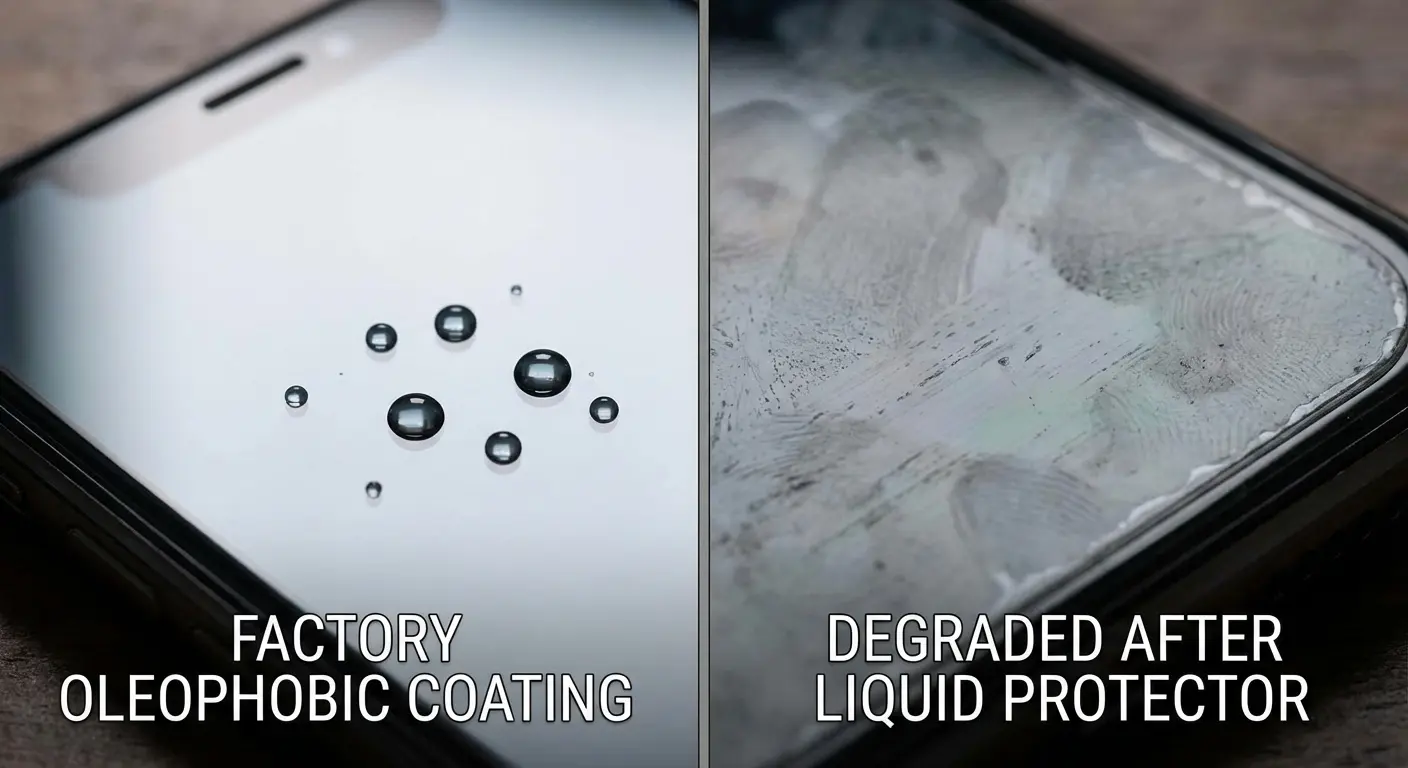
This trade-off matters more than minor scratch resistance improvements for most users. You interact with your screen constantly. You notice fingerprint visibility and cleaning difficulty every single day. You might never encounter the specific scratching scenario that a liquid protector could theoretically prevent.
I've seen users complain about this exact issue in reviews, not realizing that the liquid protector they applied made their screen worse for daily use. They blame their phone or assume the oleophobic coating wore off naturally, not connecting it to the protection product they applied months earlier.
Manufacturers rarely mention this trade-off in their marketing. Why would they? It's a significant downside that undermines the value proposition.
Some premium liquid protectors claim to preserve or enhance oleophobic properties, but independent testing shows mixed results. Even when these claims hold true initially, the coating degrades faster than factory oleophobic layers, requiring reapplication every few months.
Touch Sensitivity Changes
Touch sensitivity issues don't affect everyone who uses liquid screen protectors, but they affect enough users to warrant discussion. Your phone's touchscreen works by detecting changes in electrical charge when your finger (which conducts electricity) touches the screen. Adding any layer between your finger and the screen's touch sensors can potentially affect this detection.
Silicon dioxide is an insulator, meaning it doesn't conduct electricity well. A thin coating shouldn't significantly impact touch sensitivity, and for many users it doesn't. But phone touchscreens are calibrated precisely, and even minor changes in surface properties can affect responsiveness on some devices.
Users report needing to press slightly harder for touches to register, or experiencing occasional missed taps, particularly near screen edges. These issues are subtle enough that you might not notice during casual use but become apparent during gaming or when typing quickly.
The problem compounds if you apply the liquid protector unevenly. Thicker areas create more interference than thinner areas, leading to inconsistent touch response across your screen.
The Application Nightmare
Marketing materials show application as a simple three-step process: clean, apply, wipe.
Reality? You need perfect temperature (good luck knowing what temp your room is), low humidity (but not too low), zero dust (in your house? yeah right), and 24 hours without using your phone (LOL).
I tried applying one in my apartment. Followed instructions perfectly. Still got three dust particles trapped under the coating. Forever. Can't remove it. Can't redo it. Just have to live with feeling those bumps every time I swipe.
The second test I did in my bathroom after running the shower (the steam supposedly settles dust). Worked better for dust, but the humidity made it take 36 hours to cure. During which I desperately needed to use my phone. Used it anyway. Probably screwed up the coating. Can't tell because there's no way to verify if it worked.
This is the experience they don't show in the marketing videos.
Temperature and humidity affect curing time and coating quality. Apply liquid protection in a humid environment and the curing process slows significantly. The coating might take days to reach full hardness instead of hours. Apply in very dry conditions and the solvent evaporates too quickly, potentially causing uneven coverage.
Most kits don't mention optimal environmental conditions. You're expected to figure this out yourself, probably after you've already applied the product incorrectly.
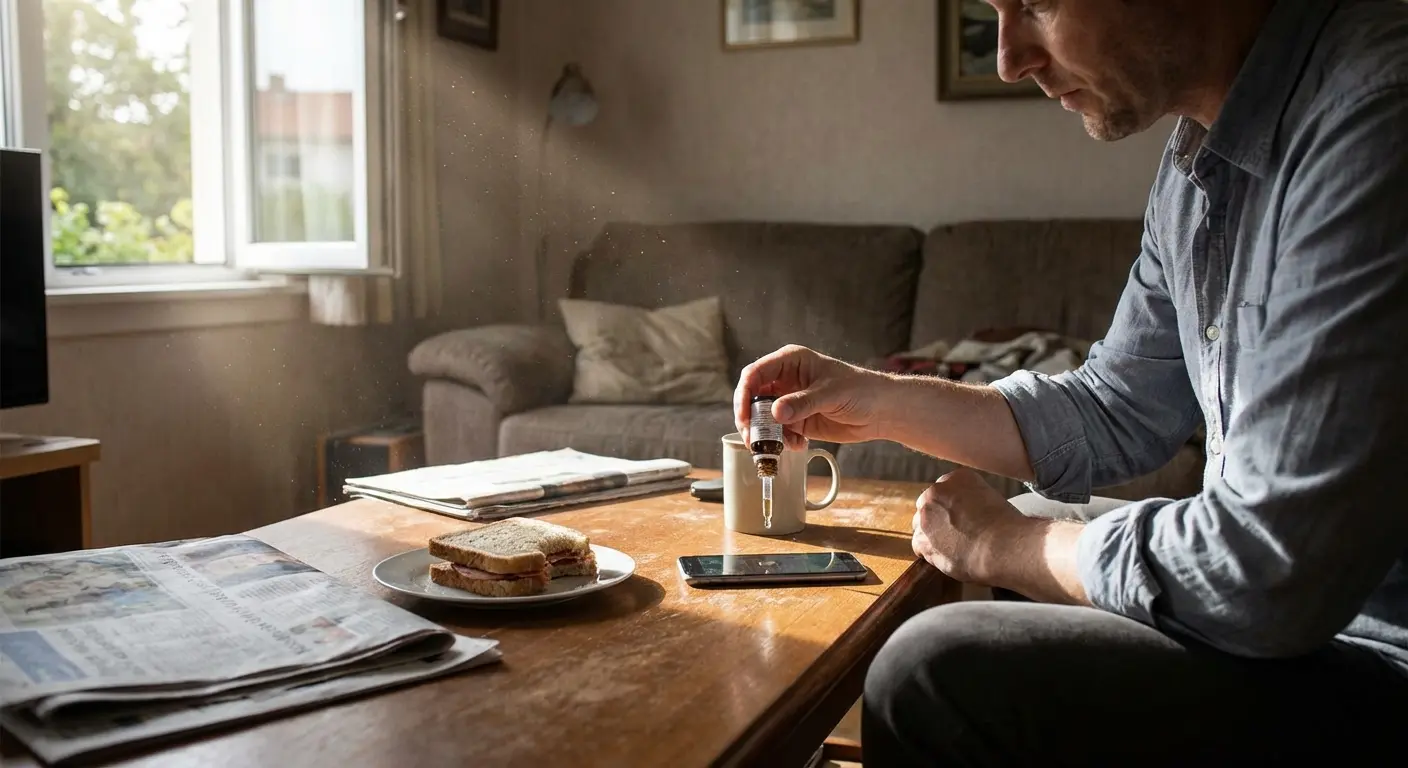
Using your phone before the coating fully cures causes problems too. Touching the screen deposits oils that interfere with the curing process. Pressing your screen against surfaces (putting your phone in a pocket) can create pressure marks in the not-yet-hardened coating. Most people can't avoid using their phone for 24 hours. You'll use it, and you'll compromise the coating quality, and you'll never know how much better it could have performed with proper curing.
A college student I know applied a liquid screen protector in her dorm room on a Sunday evening, planning to let it cure overnight. She followed the instructions carefully, but her roommate opened the window for fresh air while the coating was still wet. Dust from the parking lot construction outside settled on the screen. By Monday morning, the coating had cured with dozens of microscopic particles embedded in it. She noticed a slightly gritty texture when swiping but didn't connect it to the application process. Three weeks later, those embedded particles had created tiny scratches around them from repeated finger contact. The opposite of protection. She has no recourse because the coating is permanent and the manufacturer's instructions didn't specify "ensure no air movement during curing."
The Reapplication Complexity
Manufacturers recommend reapplication every 2-4 months as the coating degrades. What they don't explain clearly is how to reapply. Are you applying new coating over the old degraded coating? Are you supposed to remove the old coating first? If so, how?
Most brands suggest simply cleaning your screen and applying fresh product. This means you're layering new coating over old, potentially creating buildup that affects touch sensitivity or visual clarity over time. Some users report that screens feel progressively less responsive after multiple applications. Others notice a slight haze developing after the second or third application.
Removing the old coating would require abrasive cleaning that might damage your phone's screen or strip away more of the factory oleophobic coating. You're stuck between accepting degraded performance or risking damage.
The Real Cost Over Time
A single liquid screen protector application costs between $20 and $40 depending on brand. That seems reasonable compared to quality tempered glass protectors ($10-25) or phone screen repairs ($150-400).
But you're not buying a single application. You're committing to reapplication every few months.
According to GoGoNano's research on liquid screen protector longevity, a single application can provide scratch protection for up to 6 months depending on usage conditions, though they recommend regularly monitoring the condition and reapplying as needed. That's a maintenance schedule that significantly impacts the long-term cost equation.
Over a typical two-year phone ownership period with reapplication every three months, you'll spend $160-320 on liquid protection. That's eight applications at $20-40 each.
Quality tempered glass protectors cost $10-25 and last until they crack (which means they did their job by sacrificing themselves instead of your screen). Even if you replace tempered glass three times over two years, you're spending $30-75 total.
The cost difference is substantial. You're paying 2-10 times more for liquid protection that provides measurably less impact protection and similar or worse scratch protection.
Protection Method |
Initial Cost |
Replacements Over 2 Years |
Total 2-Year Cost |
Impact Protection |
Scratch Protection |
Removable |
|---|---|---|---|---|---|---|
Liquid Screen Protector |
$20-40 |
7 reapplications |
$160-320 |
Minimal |
Marginal improvement |
No |
Tempered Glass |
$10-25 |
2-3 replacements |
$30-75 |
High (sacrificial layer) |
High |
Yes |
Film Protector |
$5-15 |
3-4 replacements |
$20-60 |
Low |
Moderate |
Yes |
No Protection |
$0 |
N/A |
$0 (until screen repair) |
None |
None |
N/A |
Look at those numbers. You're paying 2-10x more for worse protection.
The liquid protector companies are banking on you not doing this math. They're counting on that $25 initial cost feeling cheaper than $15 for tempered glass. But you're not buying once. You're subscribing to a protection plan that doesn't protect.
And when your screen shatters despite the liquid coating? You're out the $25+ you spent on snake oil PLUS the $200-400 screen replacement.
I'm not saying this to be mean. I'm saying it because I tested this stuff and the math doesn't lie.
The Hidden Costs
Liquid screen protectors create a false sense of security that might change your behavior. You might skip using a case or be less careful with your phone because you believe the liquid protection is working. That behavioral change has potential costs.
If your screen shatters because the liquid protection didn't provide the impact resistance you expected, you're paying for screen replacement ($150-400) on top of what you spent on the protection product.
Damaged screens also affect resale value. Phones in excellent condition command significantly higher resale prices than phones with scratched or damaged screens. If your liquid protector didn't prevent screen damage, you're losing money when you sell or trade in your device.
Should You Actually Buy One?
Liquid screen protectors aren't universally terrible. They're just bad for most people.
Are there edge cases where they make sense? Sure. But if you're reading a blog post about screen protection, you're probably not in one of those cases.
The Only Time You Should Consider These
You have a Galaxy S23 Ultra or similar with that aggressive screen curve, and you've tried three different tempered glass protectors and they all lifted at the edges. Fine. Try liquid protection.
But (and this is important) pair it with a case that has raised bezels. The liquid coating handles the edges, the case prevents face-down impacts.
That's it. That's the use case.
Everyone else telling you they "love" their liquid protector? They either haven't dropped their phone yet, got lucky, are experiencing placebo effect, or work for the company.
I'm not saying they're lying. I'm saying their anecdotal experience doesn't match controlled testing.
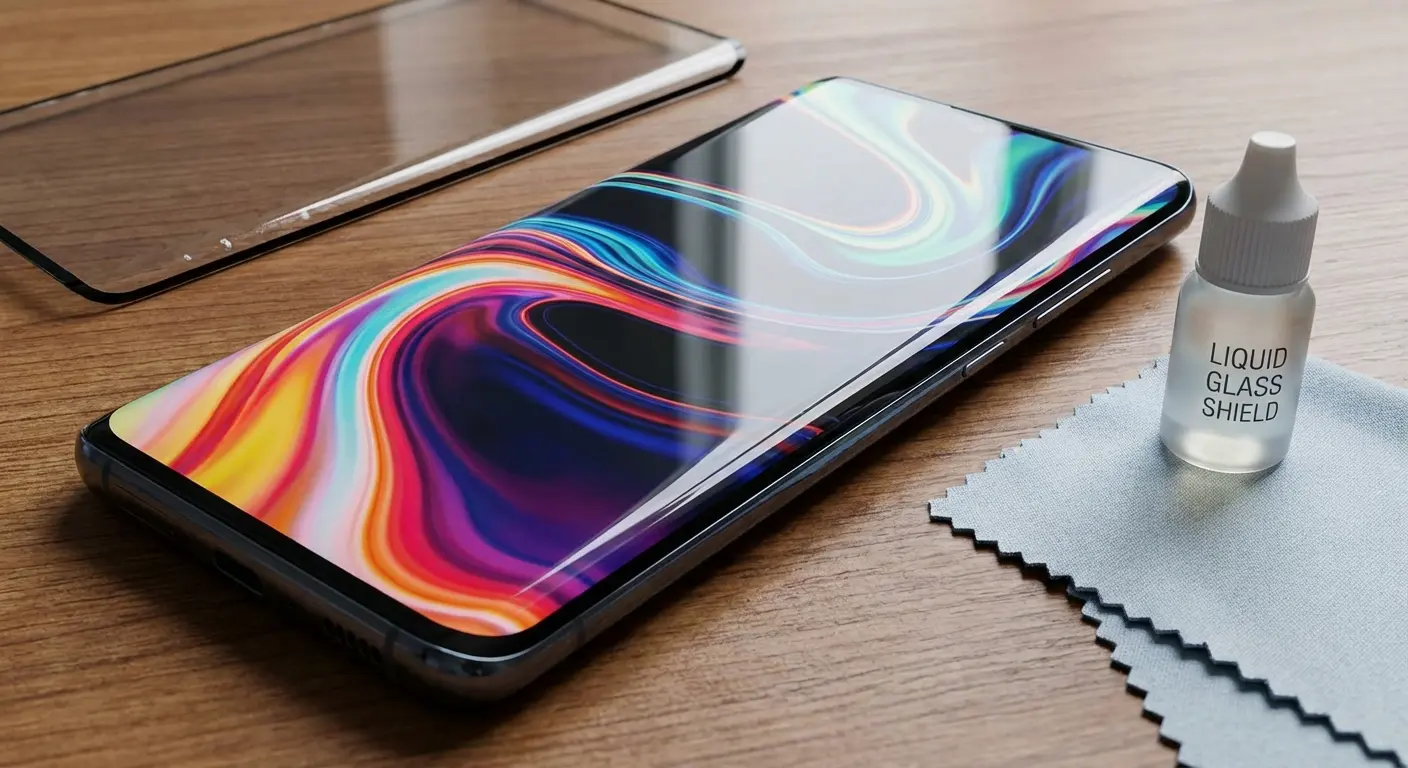
Pairing liquid protection with a quality case creates layered defense. The case handles impact protection through raised bezels and shock absorption. The liquid coating adds marginal scratch resistance. This combination makes more sense than relying on liquid protection alone.
Some users need minimal screen thickness for specific phone mounts or accessories. Tempered glass adds 0.3-0.5mm that might prevent proper mounting. Liquid coating adds negligible thickness while providing some protection (even if that protection is limited).
Temporary protection scenarios might justify liquid coatings too. If you're waiting for a specific tempered glass protector to arrive or you need protection for a short-term phone loan, liquid protection offers quick application and immediate (if minimal) coverage.
What Liquid Protectors Actually Do Well
Liquid protectors create an exceptionally smooth screen surface when applied correctly. That slick feel is noticeable and pleasant, making swiping and scrolling feel effortless. Users who prioritize this tactile experience might value it enough to accept the protection limitations.
The invisible application appeals to users who dislike the look or feel of visible screen protectors. You can't see liquid coating, can't feel edges, and don't deal with bubbles or lifting corners. For phones with edge-to-edge displays where aesthetics matter, this invisibility has value.
Complete coverage includes areas that traditional protectors miss. You can apply liquid protection to camera lenses, back glass, smartwatch faces, and other surfaces where tempered glass won't work. This versatility extends beyond phone screens. For users who prioritize minimal bulk and seamless aesthetics, liquid protectors offer advantages that complement unique phone cases designed for specific lifestyles and use cases.
Some formulas include hydrophobic properties that repel water. Your screen sheds water droplets more effectively, which matters if you frequently use your phone in wet conditions. This isn't waterproofing, but it's a practical benefit for specific users.
These benefits are real. They just don't include the impact and scratch protection that most users need.
The Better Alternative Most People Overlook
When comparing liquid screen protector vs tempered glass, tempered glass screen protectors remain the most effective protection for most users despite their drawbacks. They provide measurable impact protection by adding sacrificial glass that can crack instead of your screen. They offer genuine scratch resistance. They're replaceable when damaged. They cost less over time.
Yeah, they're visible. Yeah, they can trap bubbles during installation
. Yeah, they don't adhere perfectly to curved edges.
These compromises are worth it for protection that actually works.
Film protectors split the difference. They're thinner and more flexible than tempered glass, adhering better to curved screens while providing more protection than liquid coatings. They won't prevent shattering the way tempered glass can, but they offer better scratch resistance than liquid options and they're removable if you're unsatisfied.
Case selection matters more than screen protection type for most damage prevention. A quality case with raised bezels prevents face-down screen impacts entirely. Shock-absorbing materials distribute force away from your screen during drops. Corner protection prevents the most common impact damage points.
I use Rokform cases (full disclosure, I'm a fan). Their raised bezels keep your screen off surfaces, which prevents way more damage than any coating ever will. Plus their magnetic mounts mean your phone is actually protected while you're using it (in your car, on your bike, wherever). Understanding how phone cases protect your phone reveals why comprehensive protection requires more than surface coatings. It demands structural design and impact-absorbing materials.
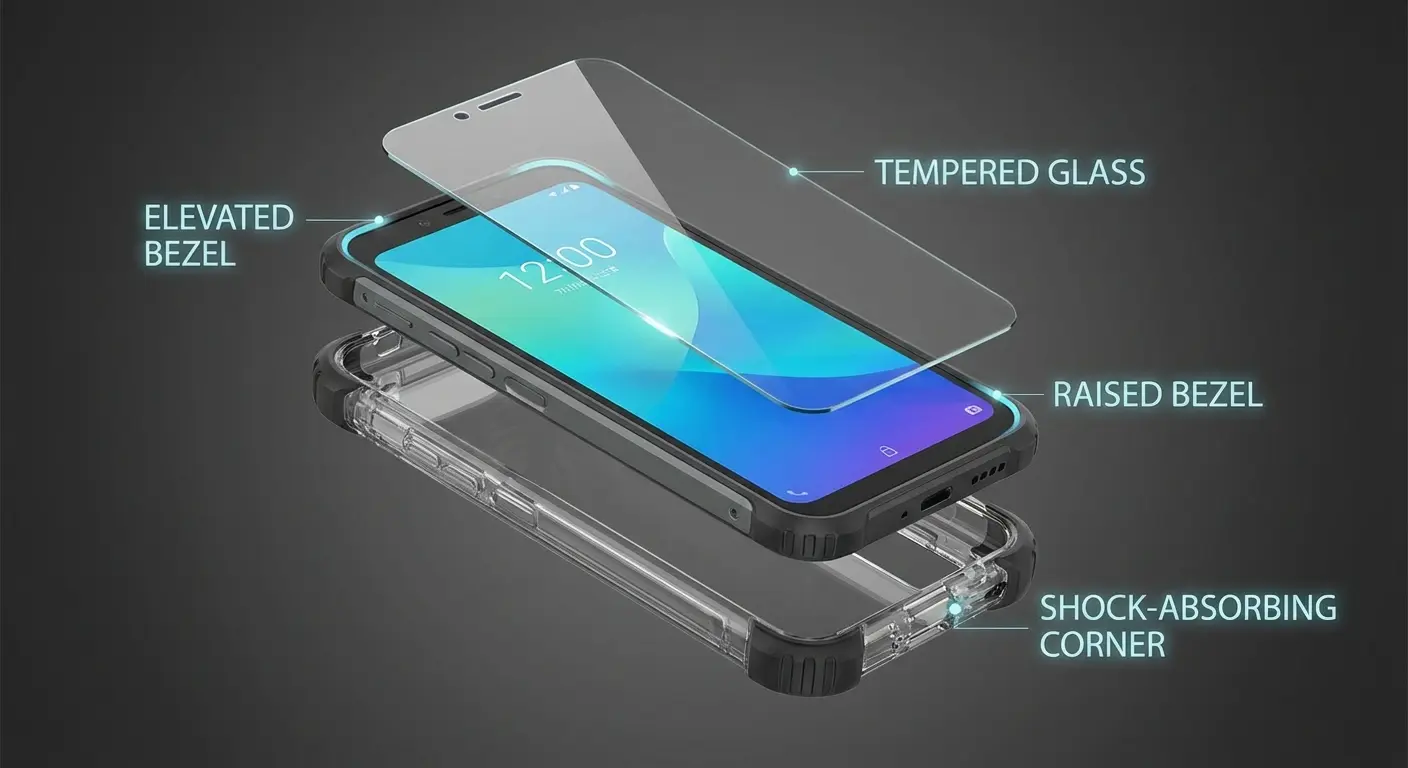
Combining a protective case with tempered glass gives you impact protection, scratch resistance, and replaceable components. If your screen protector cracks, you've spent $15 to replace it instead of $300 to replace your screen. The case prevented the drop from shattering your phone. The system worked.
Liquid screen protectors can't be part of this protection ecosystem in a meaningful way. They don't prevent impact damage. They don't sacrifice themselves to save your screen. They don't integrate with other protection methods effectively.
Making the Decision That Protects Your Investment
Your phone represents a significant investment, usually $700-1200 for current models. Protecting that investment requires honest assessment of your risks and needs.
How often do you drop your phone? If the answer is "frequently" or even "occasionally," you need impact protection. Liquid coatings won't help you.
Do you carry your phone in pockets or bags with other items? Sand, keys, and debris cause scratches. Tempered glass provides better scratch protection than liquid coatings while also offering impact protection.
Does your phone have significant screen curvature? This is where liquid protection has legitimate advantages, but consider pairing it with a protective case rather than relying on it alone.
Are you willing to accept visible protection for better performance? If yes, tempered glass is your answer. If no, understand that you're prioritizing aesthetics over protection and adjust your expectations accordingly.
What's your budget over your phone's lifespan? Calculate the true cost including reapplication for liquid protectors versus replacement costs for tempered glass. The math usually favors traditional protection.
My Actual Recommendation
Don't buy liquid screen protectors. Just don't.
Get a $15 tempered glass protector from Spigen or amFilm. Get a case with raised bezels. I use Rokform, but Otterbox and UAG work too. That combo costs $30-50 and actually protects your phone.
Save the $25+ you would've spent on liquid protection. Put it toward your next phone, or beer, or literally anything else.
The only exception: super curved screens where tempered glass won't stick. Then fine, try liquid protection. But lower your expectations and pair it with a good case.
Look, I wanted these to work. Invisible protection that actually protects? That would be amazing. I tested five brands hoping one would prove me wrong.
None did.
And that's disappointing, but it's reality. The physics don't support the marketing claims.
Do liquid screen protectors work? Yes, they create a measurable coating that bonds to your screen and provides marginal scratch resistance improvement. Do they work in the ways that matter to you? Probably not.
The gap between marketing claims and measurable performance is significant. Videos showing hammer strikes and key scratches demonstrate best-case scenarios under controlled conditions, not the real-world drops and impacts that break phones.
Your phone already has engineered glass designed for impact and scratch resistance. Adding a coating that measures 0.1% of your screen's thickness doesn't meaningfully enhance these properties.
The niche use cases are real. Curved screen edges, supplementary protection with quality cases, and aesthetic preferences create scenarios where liquid protection makes sense. But these scenarios represent a small fraction of the market buying these products.
Most buyers are seeking impact protection and scratch prevention. They're trying to avoid the $300 screen replacement or the scratched display that tanks resale value. Liquid screen protectors don't deliver on these needs in any measurable way.
I spent three months and $400+ testing this so you don't have to learn the expensive way. You're welcome.
Now go protect your phone properly.

