


You've got scratches on your phone screen. They're annoying as hell, especially in sunlight, and now you're wondering if a screen protector might hide them.
I'm going to level with you: screen protectors weren't designed to fix scratches. They're supposed to prevent them. But because of how light and adhesive work together, they sometimes make existing scratches less obvious.
Sometimes.
Whether it actually works depends on how deep your scratches are, what kind of protector you use, and a bunch of physics stuff nobody puts on the packaging. Let's get into it.
Look, Here's the Deal If You're in a Hurry
Screen protectors might make light scratches less obvious, but they're not going to fix your screen. Deep scratches? Forget it.
The whole thing comes down to scratch depth, what type of protector you use, and how light bounces around between all those layers. Tempered glass protectors with adhesive can fill shallow grooves better than film protectors, which creates this temporary smoothing thing. But deep scratches that cut through the coating? Still visible no matter what you slap on top.
The "hiding" effect mostly comes from light scattering differently rather than the scratch actually going away. Liquid protectors do absolutely nothing for scratches and can actually make things look worse. And honestly, part of what you're seeing is your brain adapting to the scratches through a protector, which makes you think it looks better when it really doesn't.
Also, putting protectors over scratched screens can trap air bubbles and crap in the damaged areas, which sometimes looks worse than just leaving it alone.
The better move is preventing scratches before they happen instead of trying to hide them after. But you already knew that.
What Actually Happens When You Slap a Protector Over Scratches
The adhesive layer on your screen protector does something interesting when it hits shallow scratches. It fills in the grooves, which changes how light bounces off your screen.
Think of scratches as tiny valleys in what should be a smooth surface. These valleys scatter light everywhere, which is why you see them as visible marks. When adhesive flows into these valleys (assuming they're not too deep), it creates a flatter surface. Light has fewer weird angles to bounce off, so the scratch becomes less obvious.
I know this sounds like I'm about to explain quantum mechanics. I'm not. It's actually pretty straightforward: the glue fills in the scratch groove, light bounces differently, scratch looks less obvious. That's the whole trick.
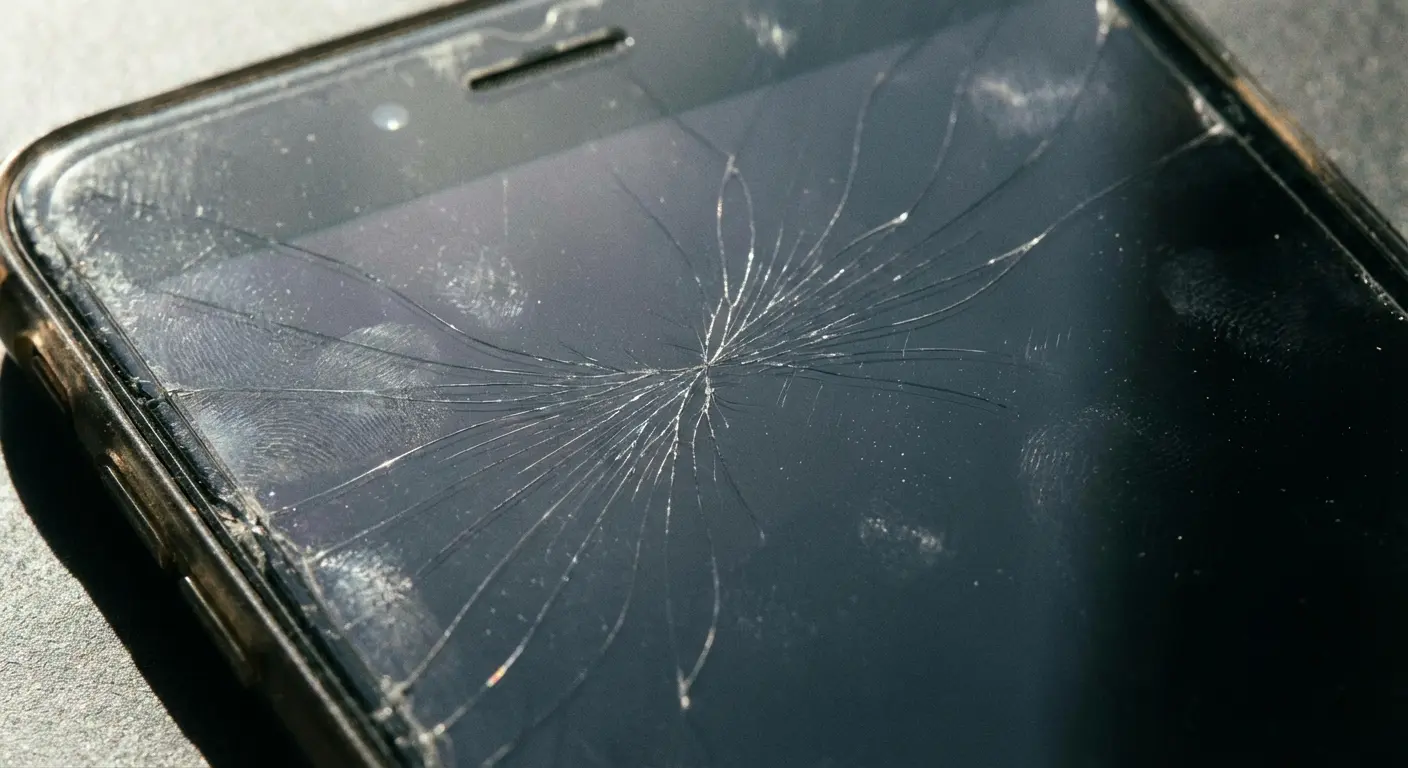
Say you've been rawdogging your phone for six months. No case, no protector, living dangerously. Under bright light, you can see a handful of very fine scratches, but you can't feel them with your fingernail. After applying a tempered glass protector, those fine lines become barely visible in normal use. You might only see them at specific angles with the screen off. The phone feels smoother and looks closer to new.
In this case, the protector effectively masks the cosmetic damage to a level most people find acceptable.
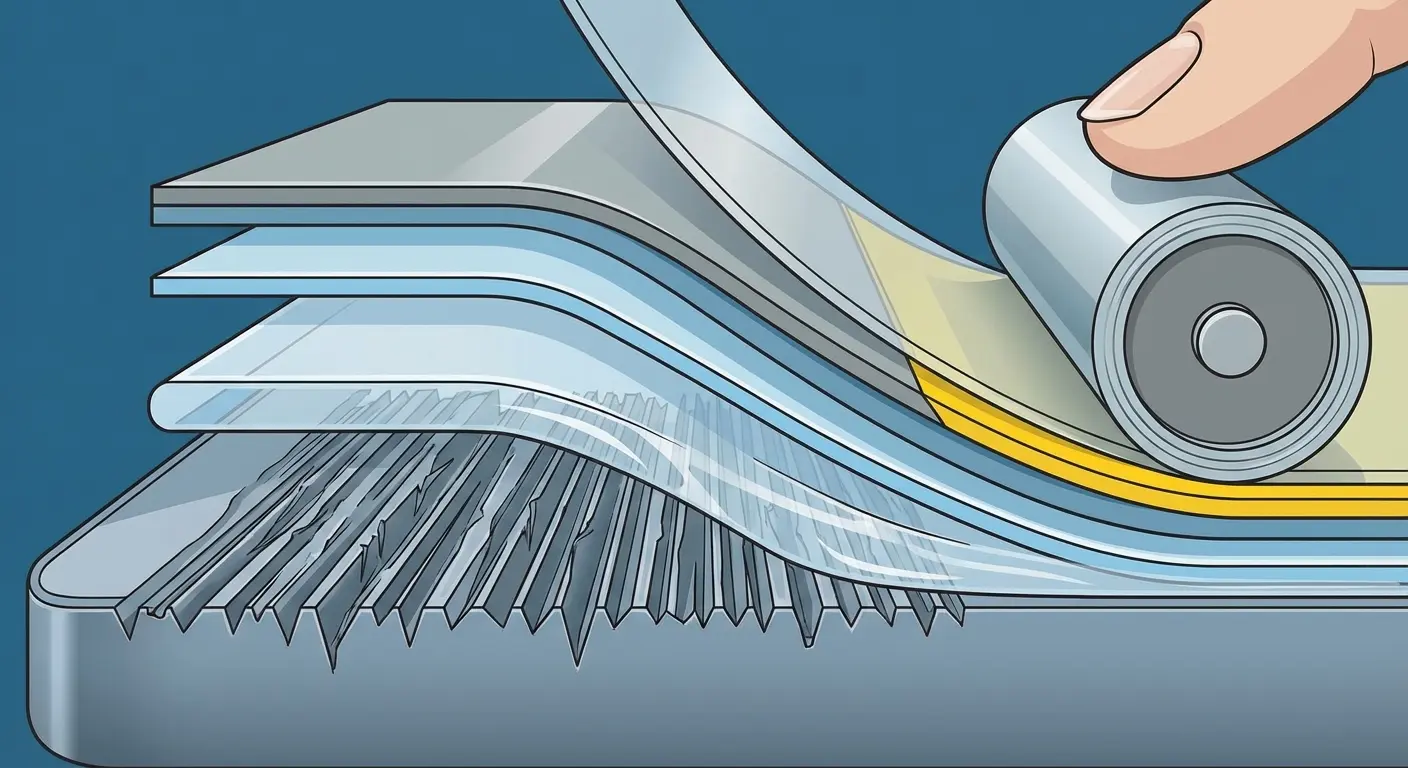
But it's not magic. It's not even really a fix.
The scratch still exists in your actual phone screen underneath. What changed is how light travels through all those layers: your screen, the scratch, the adhesive, and the protector itself.
You'll notice the biggest difference right after you apply it, while the adhesive is still settling. Some scratches that were clearly visible might seem to vanish entirely. Others will look fainter but still there. Deep gouges won't change at all because the adhesive can't fill a canyon that's deeper than it is thick.
The effect is also kind of temporary. Over time, as the adhesive fully cures and settles, some of that initial "filling" effect goes away. Scratches that seemed to disappear during installation might become slightly more visible again after a few days.
What you're experiencing is optical concealment, not damage reversal. Why does this matter? Because you're going to be pissed if you expect magic and get physics.
The Science Part (Skip This If Your Eyes Are Already Glazing Over)
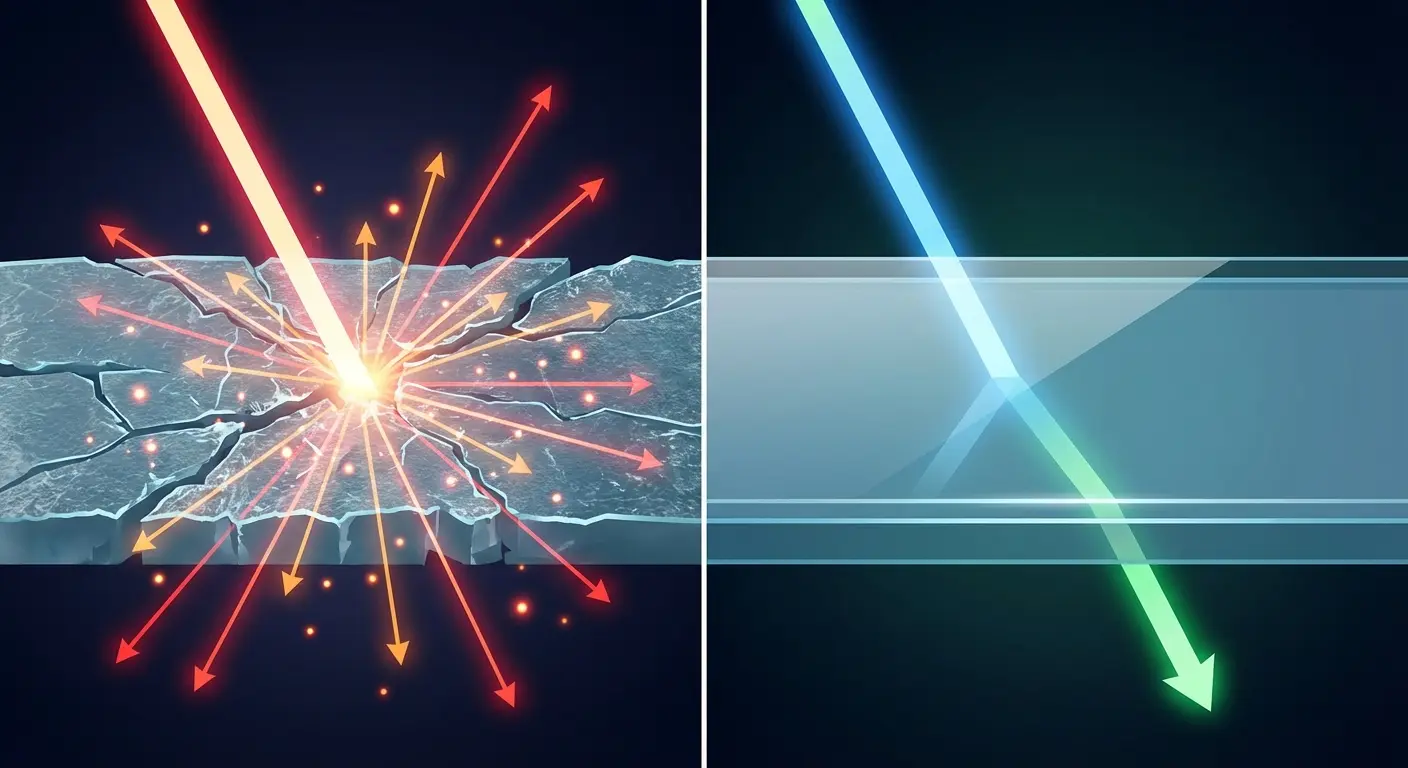
Scratches are visible because they mess up the smooth path light takes when reflecting off your screen. Each scratch acts like a tiny prism, bending and scattering light in random directions.
Your eye sees this scattered light as a visible mark. Deeper and wider scratches scatter more light, which makes them more obvious. Surface-level scratches (the kind that don't catch your fingernail) scatter less light because they're shallower, which is why they're better candidates for this optical concealment thing.
The adhesive has its own refractive index, which is just a fancy way of saying it bends light at a certain angle. When this adhesive fills a scratch, it can create what's called refractive index matching. The light passing through the adhesive-filled scratch bends at a similar angle to light passing through the undamaged areas around it.
The result? Your eye sees a more uniform surface because the light isn't scattering as dramatically from the scratched areas.
It's still there. It's just not screaming at your eyeballs anymore.
This works best when the scratch is shallower than the adhesive is thick and when the scratch hasn't cut through multiple layers of your screen's coating. Modern phone screens have oleophobic coatings, anti-reflective layers, and the glass itself. Scratches that only affect the top coating respond way better to this optical smoothing than scratches that cut through to the glass layer.
The protector material itself matters too. A crystal-clear protector with high optical quality will transmit light better, making the refractive index matching effect more noticeable. Cheap protectors with slight haziness or lower quality can make your screen look worse overall, even if they're technically filling the scratches.
Deep Scratches vs. Surface Scratches (This Is Where It Actually Matters)
Run your fingernail across the scratch. Does it catch?
Then you're screwed. That's a deep scratch, and no screen protector is going to hide it.
If your nail glides over smoothly, you've got a surface scratch, just in the top coating. These are the ones that might actually look better under a protector because the adhesive can fill the whole groove.
Deep scratches have cut through the coating and into the glass itself. They're often 10-20 micrometers deep. Your protector's adhesive? Maybe 5-10 micrometers thick. Do the math. It can't fill something twice as deep as it is thick.
How to Actually Test Your Scratch Depth:
Clean your screen with a microfiber cloth first. Then run your fingernail gently across the scratch at a perpendicular angle.
If your nail glides smoothly, you've got a surface scratch. Good candidate for concealment.
If your nail catches slightly, you've got a medium-depth scratch. Partial concealment is possible.
If your nail catches noticeably, it's a deep scratch. Don't expect miracles.
Also check for spider-webbing or cracks around the scratch. Test multiple scratches if you've got them to see what you're really dealing with.
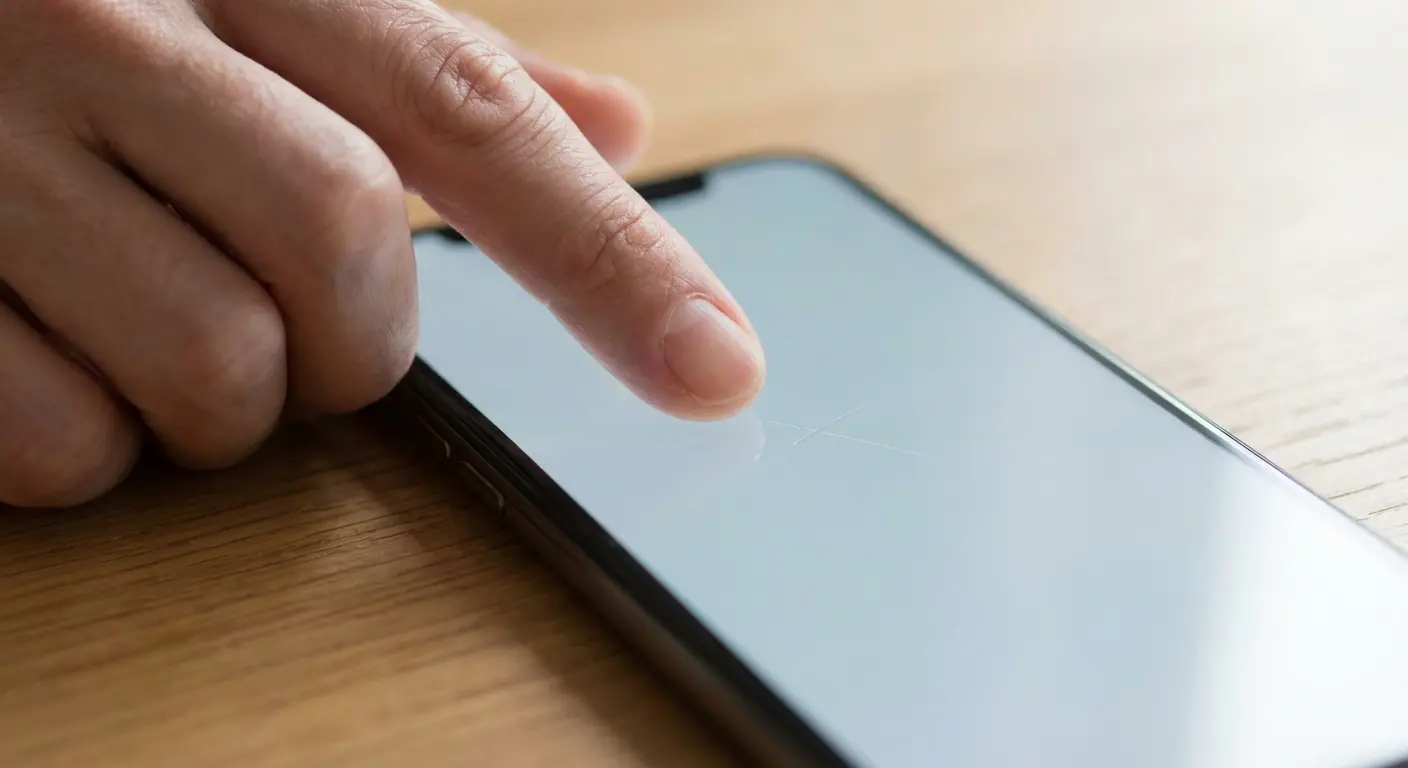
You'll still see deep scratches after applying a protector, though they might look slightly different. The edges might appear softer, or the scratch might seem less sharp, but you're still going to notice it. In some cases, the protector actually makes deep scratches more noticeable because it creates a new reflective surface above the damage, adding another layer for light to interact with.
There's also a practical problem with slapping protectors over deeply scratched screens. The scratches create air pockets and irregular surfaces that prevent the adhesive from making proper contact. You'll often end up with bubbles along the scratch lines that won't press out no matter how much you try.
You know that squeaking sound when you're pressing out bubbles? That sound haunts me. I've applied probably fifty screen protectors at this point, and I still get anxious during that part.
These bubbles then become their own visual annoyances, potentially worse than the original scratches.
Picture this: you've got one nasty scratch running across the middle of your display that's visible when the screen is on, especially on light backgrounds. After applying a tempered glass protector, the scratch looks softer and slightly less intense. You still notice it when reading text or browsing, but it's less distracting. The overall appearance improves, but the flaw doesn't disappear.
Here, the protector offers partial cosmetic improvement but doesn't truly hide the damage.
Scratches that have spider-webbing or impact cracks around them are even worse. The structural integrity of the glass is compromised, and applying pressure during protector installation can extend the damage. The protector might initially seem to hold everything together, but you're covering up a problem that could get worse over time.
The Refraction Problem Nobody Talks About
Different materials bend light at different rates. Your phone's glass has a refractive index around 1.5. The adhesive on your screen protector might be anywhere from 1.3 to 1.5. The protector material itself has its own index.
When these don't match up properly, you get weird spots where light reflects and refracts in ways that can highlight damage rather than hide it. This is why some people say their scratches look worse after applying a protector, especially in bright sunlight or under direct lighting.
The problem gets worse with scratches because you're adding even more layers to the mix. Light now has to pass through the protector, the adhesive, the air gap or debris in the scratch, the damaged screen surface, and then the intact screen below. Each spot where the refractive index changes is another opportunity for light to bounce back toward your eye.
You might notice this as a "halo effect" around scratches, where the damage seems to have a bright outline that wasn't as visible before. The scratch itself might be slightly less obvious, but this new halo draws your eye just as effectively. You haven't improved the situation. You've just changed which optical thing is making the damage visible.
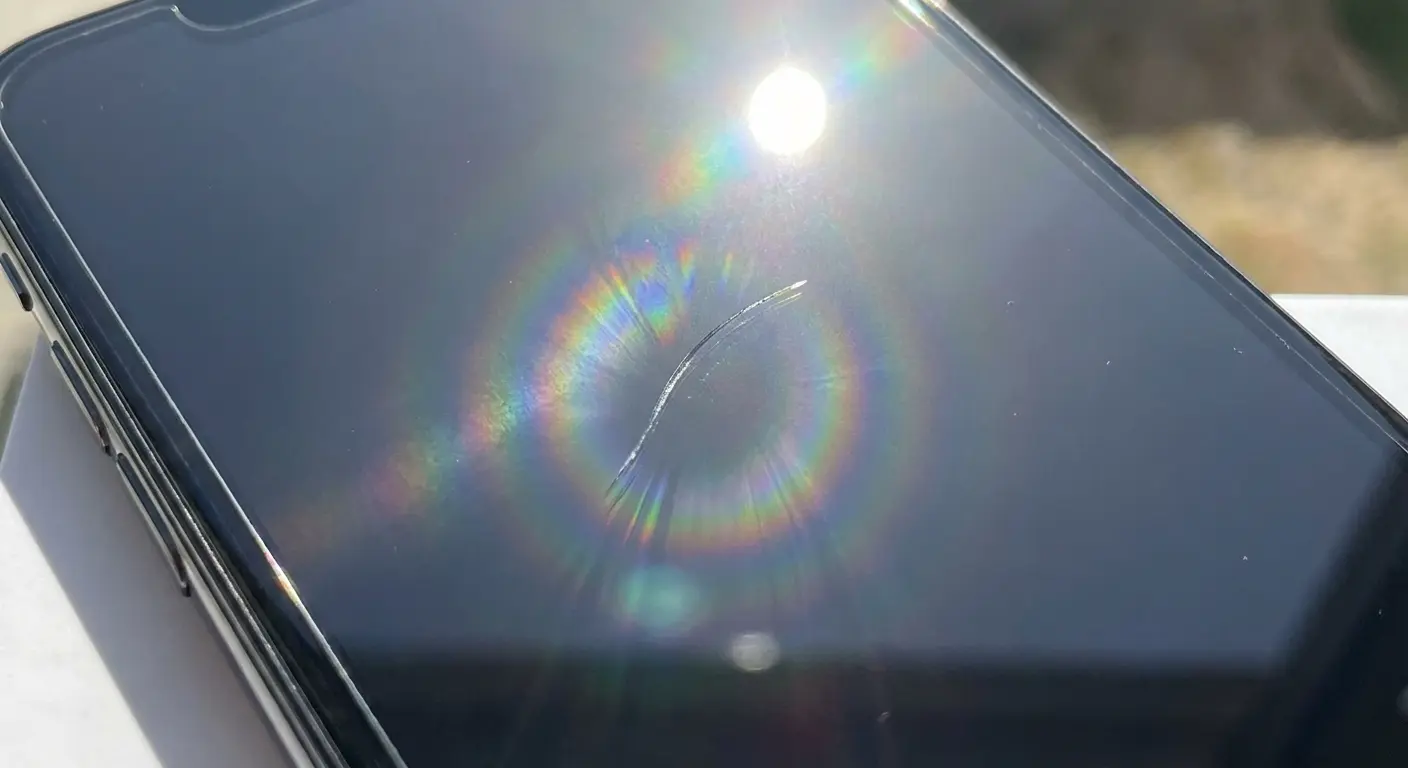
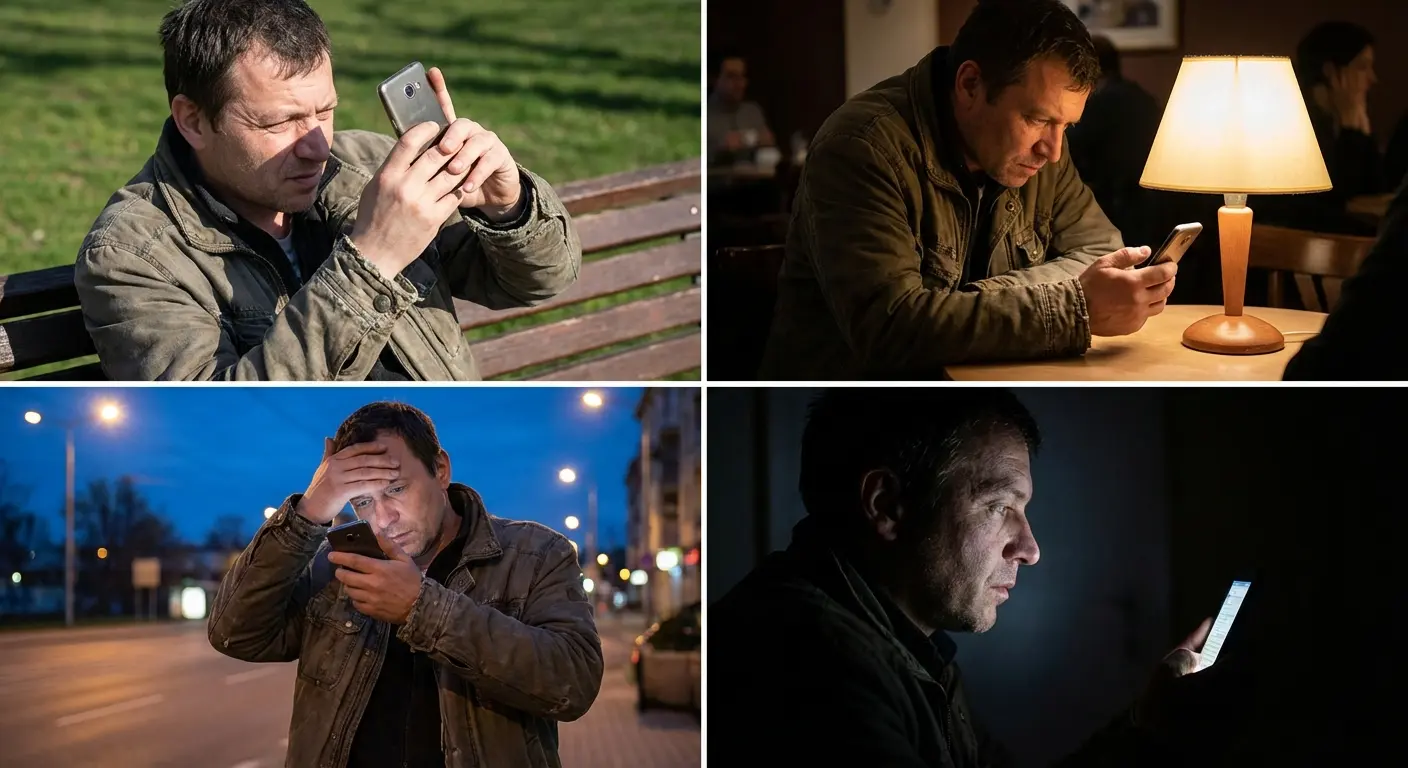
Screen brightness plays into this too. With your display off, the scratch visibility depends entirely on reflected ambient light. With the screen on, you've got light coming from behind the scratch, which changes everything. Some scratches that seem hidden with the screen off become glaringly obvious when you're actually using your phone.
This is why testing a screen protector's scratch-hiding ability in the store or right after you apply it doesn't tell the whole story. You need to use your phone in different lighting, at different brightness levels, and with different stuff on screen to really understand how well (or poorly) the protector is concealing the damage.
Tempered Glass vs. Film Protectors: Which One Actually Works Better?
Tempered glass is better. Period.
Yeah, it has issues with warped screens, but if your screen is flat and you've got shallow scratches, glass beats film every time.
Tempered glass protectors have thicker adhesive layers that can fill deeper surface scratches more effectively. We're talking 5-10 micrometers versus the 2-5 you get with those flimsy film protectors. That matters because the thicker adhesive can actually fill shallow scratches. Film protectors? They're too thin. They just lay on top of the damage like plastic wrap on a pothole.
The glass itself also has better optical clarity (assuming you buy a quality product), which means less light distortion overall. When the adhesive does its job of filling scratches, the glass above it transmits light cleanly, making the smoothing effect more noticeable. You get better refractive index matching and less haze.
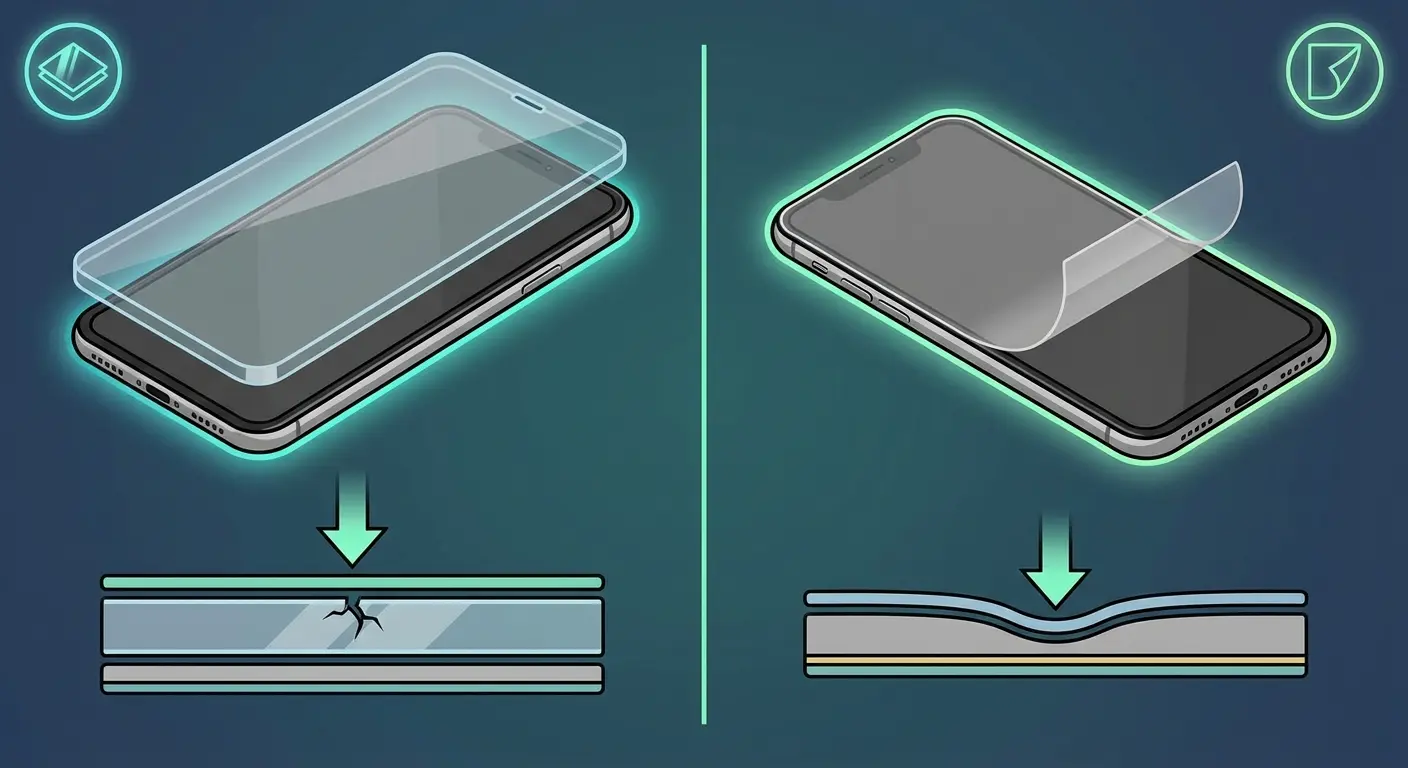
Installation is more forgiving too. The rigid nature of tempered glass means you can position it carefully over a scratched screen without the protector conforming to every tiny imperfection. Film protectors, being flexible, tend to settle into scratches and surface irregularities, which can emphasize the damage rather than hide it.
But glass protectors have a downside with scratched screens: they don't conform to surface irregularities at all. If your screen has any warping or raised edges around impact points, the glass protector won't make full contact. You'll get large air gaps that are impossible to get rid of, and these gaps often make the underlying damage more visible, not less.
Film protectors offer different benefits. They're thin and flexible, which means they can conform to slightly warped screens without creating air gaps. The adhesive layer is usually thinner, so they're less effective at filling scratches, but they also don't create the same refractive index issues that can make some scratches look worse.
If you've got shallow surface scratches on an otherwise flat screen, tempered glass will probably give you better results. If you've got impact damage, slight screen warping, or scratches near the edges where glass protectors often fail to stick properly, a film protector might be the better choice even though it won't hide the scratches as well.
I've tested the cheap Amazon Basics protectors, the $40 Zagg ones, and everything in between. Want to know what I learned? The $15 middle-ground options work just as well as the premium stuff for hiding scratches. Quality matters enormously with both types. Cheap tempered glass protectors often have poor optical clarity and adhesive that doesn't spread evenly, which means they'll make your scratched screen look worse. Budget film protectors can have an orange-peel texture that adds its own visual noise to your already-damaged screen.
What About Liquid Screen Protectors? (Spoiler: They're Useless)
Liquid screen protectors won't hide your scratches. At all. Zero. None.
I need to be blunt about this because the marketing for these products is borderline dishonest. They're basically liquid glass that you wipe on your screen. The coating is less than 1 micrometer thick, thinner than even the shallowest scratch.
You're painting clear nail polish over a canyon and expecting it to disappear. It doesn't work that way.
These products are essentially liquid glass or silicon dioxide solutions that you wipe onto your screen. They create a very thin coating that bonds to the glass. This coating can add minor scratch resistance to an undamaged screen, but it does absolutely nothing to conceal existing damage.
The coating is too thin to fill scratches. Even the shallowest surface scratch is deeper than the layer these products create. You're essentially painting a transparent coating over a scratched surface, which doesn't change how light scatters from the scratch.
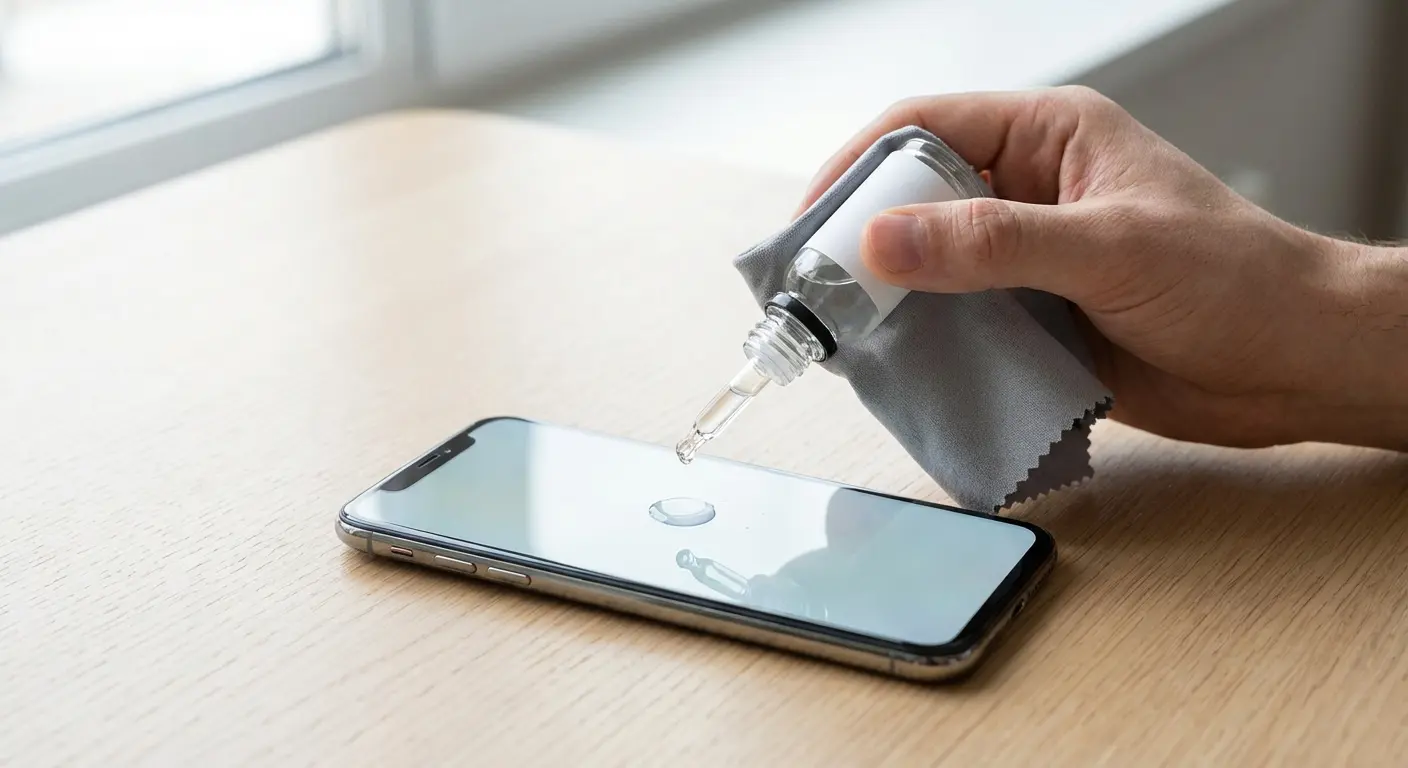
Some people say their screens feel smoother after applying liquid protectors, and this is true. The coating does
Some people say their screens feel smoother after applying liquid protectors, and this is true. The coating does create a slicker surface. But feeling smoother and looking less scratched are completely different things. The scratches remain just as visible because you haven't changed the light-scattering properties that make them visible in the first place.
In some cases, liquid protectors can actually make scratches more noticeable. If the coating doesn't bond evenly across scratched versus undamaged areas (and it often doesn't), you end up with slight variations in surface texture that catch light differently. What was a relatively uniform scratched surface now has coating irregularities on top of the scratches.
I know YouTube is full of videos showing liquid protectors "filling in" scratches. Those videos are either fake or showing the temporary wet look before it dries. Don't fall for it.
There's also the problem of coating durability. Liquid protectors wear off over time, especially in areas that see frequent touch contact. On a scratched screen, the coating might wear away faster in damaged areas where the bonding surface is compromised. You'll end up with a patchy coating that makes your screen look worse than it did before.
If you're considering a liquid protector specifically to hide scratches, save your money.
Your Brain Is Lying to You
Your brain is remarkably good at filtering out visual information it deems unimportant. After you've looked at the same scratches for weeks or months, your visual system has learned to tune them out to some degree.
Applying a screen protector resets this whole thing. You've changed how your screen looks, and suddenly you're paying attention again. The scratches might look different (even if only slightly), and this difference feels like improvement because it's novel.
There's also a powerful placebo effect at work. You've taken action to address a problem that was both ering you. The act of applying a protector creates a psychological sense of resolution, which influences how you perceive the results. You want to see improvement, so you interpret ambiguous visual changes as positive outcomes.
Studies on consumer perception show that people consistently rate products as more effective when they've paid more for them or invested effort in the application process. Screen protectors require careful installation, bubble removal, and alignment. This investment of time and attention makes you more likely to see the outcome as successful.
The protector itself also becomes your new visual reference point. You're no longer looking at scratches on glass. You're looking at scratches under glass. This additional layer creates psychological distance from the damage. The scratches feel less immediate, less like a problem with your actual phone, and more like something happening beneath a protective barrier.
Over time, you'll adapt to this new baseline too. Scratches that seemed less noticeable right after installation might gradually become more apparent again, not because anything physical has changed, but because your brain has completed its adaptation to the new visual environment. What felt like improvement was partially just the novelty of change.
So is it all in your head? Mostly. But not completely. Some optical concealment is genuinely happening with shallow scratches. But the psychological component often accounts for more of the perceived improvement than people realize, especially with deeper scratches that haven't changed much in visibility.
When Hiding Scratches Actually Makes Things Worse
Scratches trap dust, oils, and microscopic debris in their grooves. When you apply a screen protector over these contaminated scratches, you're permanently sealing that crap against your screen.
This creates visible artifacts that can be more annoying than the original scratches. You'll see dark lines or spots along the scratch paths where debris is now trapped between your screen and the protector. These trapped particles can't be cleaned away because they're sealed under the adhesive.
Bubbles are another common problem. The irregular surface created by scratches prevents uniform adhesive contact. Air gets trapped along scratch lines, creating bubbles that follow the exact path of the damage. You've now got both the scratch and a bubble highlighting it, which is worse than just having the scratch visible.
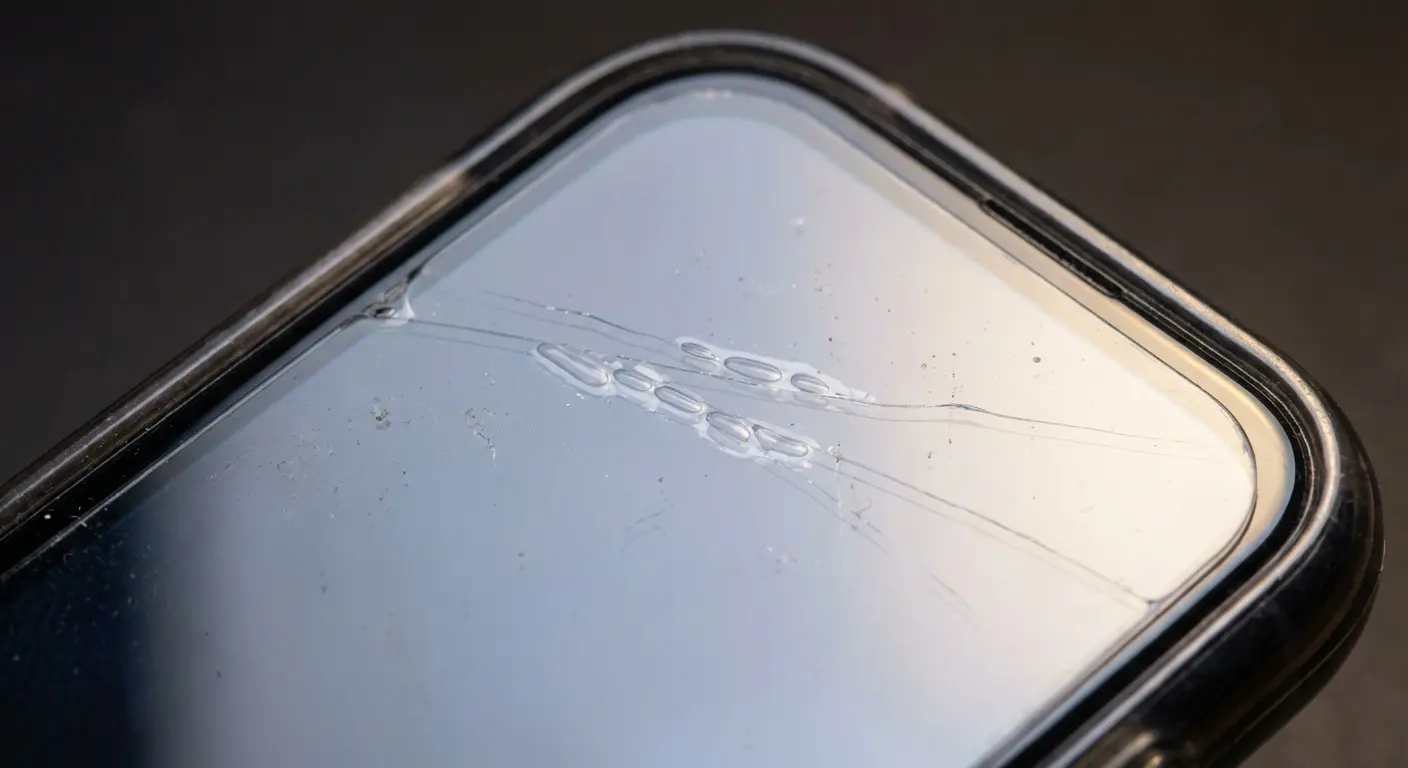
Some of these bubbles will work themselves out over a few days as the adhesive settles. Others are permanent because the scratch is too deep or the surface too irregular for the adhesive to make full contact. You can try pressing them out repeatedly, but you risk damaging the protector or creating new problems.
Say your phone's been dropped multiple times, leaving deep scratches and small cracks radiating from one corner. After applying a tempered glass protector, the cracks are still clearly visible, though slightly muted. In some areas, the protector doesn't sit perfectly flat, creating visible distortions. The device feels more solid and protected, but it doesn't look like new. In this situation, the protector is useful for preventing further damage and sharp edges, but it can't hide or repair the existing cracks.
Touch sensitivity often suffers when you add a protector over a scratched screen. Scratches can indicate damage to the layers beneath the glass, including the digitizer that registers your touch input. Adding another layer on top of already-compromised touch sensitivity can make your phone frustratingly unresponsive in damaged areas.
There's also a risk of hiding problems that need attention. Deep scratches can indicate structural weakness in your screen. Covering them with a protector might make you feel like the problem is solved, but you're ignoring potential failure points. That scratched area is more vulnerable to further cracking, and the protector might be giving you false confidence about your screen's integrity.
Protector removal becomes more complicated too. When you eventually need to replace the protector, the adhesive can pull at damaged areas of your screen. The oleophobic coating around scratches is already compromised, and the protector adhesive can remove more of it during removal. You might end up with a screen that looks worse after removing the protector than it did before you applied it.
Some scratches indicate manufacturing defects or internal screen damage that will get worse over time. A screen protector might temporarily hide discoloration or dead pixels near scratch sites, but these issues will progress regardless of what you put on top of them. You're delaying necessary repairs or replacement, potentially making the eventual fix more expensive.
Side note: Switch 2 owners are losing their minds over scratches right now. Reports are starting to surface that the screen is proving to be particularly susceptible to scratches, with users saying their consoles are getting all scratched up even from normal dock usage. The general consensus seems to be that it's the protective plastic film getting scratched, not the screen itself, but Nintendo has explicitly stated that users should not remove the protective film to prevent shards of glass flying about in the event of severe breakage. Anyway, back to phones.
Prevention vs. Concealment: You're Solving the Wrong Problem
Most people think about screen protection in reverse. You've got damage, so now you're looking for protection. The logic seems sound, but you're trying to solve yesterday's problem instead of preventing tomorrow's.
A screen protector applied to an undamaged screen does exactly what it's designed to do: take the abuse that would otherwise damage your actual display. Once your screen is already scratched, you're using the protector for a purpose it wasn't engineered for, which is why results are so inconsistent and often disappointing.
I'm writing this because I've wasted probably $100 on different protectors trying to hide scratches on various phones over the years. I want to save you that money and disappointment.
If You're Going to Try It Anyway (I Know You Are):
Before you apply the protector, clean your screen thoroughly with a lint-free cloth. Use alcohol-based cleaning wipes to remove all oils. Apply it in a steamy bathroom or low-dust room to reduce airborne particles. Use a dust removal sticker or tape to pick up remaining particles. Inspect the screen under bright light to identify all scratch locations.
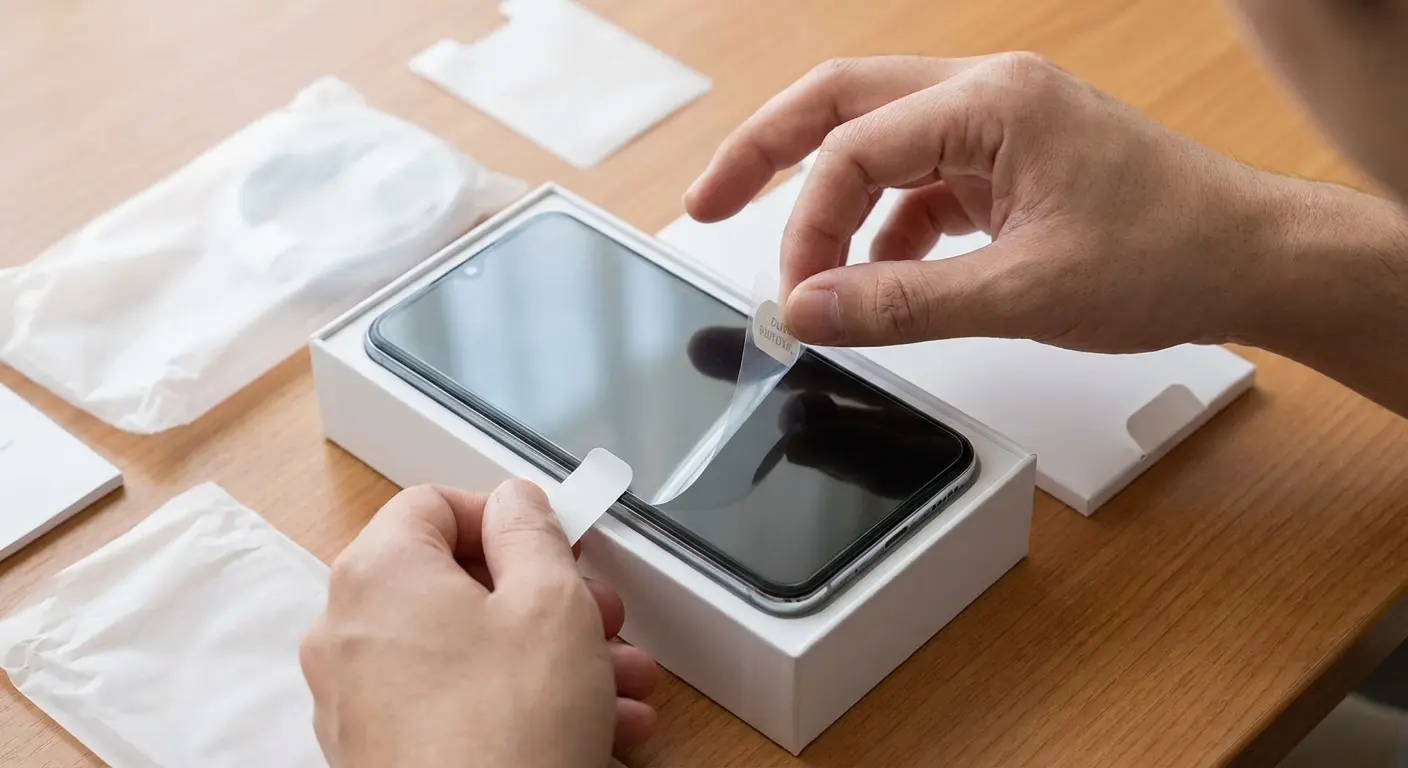
During installation, align carefully on the first attempt to avoid introducing dust. Apply the protector in one smooth motion. Work from center outward to minimize bubble formation. Use gentle, consistent pressure along scratch lines.
After installation, allow 24-48 hours for adhesive to fully cure. Avoid pressing heavily on scratched areas during this period. Test in multiple lighting conditions to assess results. Monitor for bubble formation along scratch paths.
Belkin recently announced a new line of Switch 2 accessories including screen protectors, and according to Engadget's coverage, the company is selling both a Tempered Glass Anti-Reflective Screen Protector and a Tempered Glass Blue Light Screen Protector that will shield the Switch 2's screen from major scratches, but they specifically note that users should not remove the Switch 2's pre-installed protective film before applying these protectors.
The economics matter here too. You're about to spend $15-40 on a screen protector for a phone with a damaged screen. That same money spent on protecting your next phone (or a replacement screen) from day one would provide way more value. You'd get actual protection instead of cosmetic concealment.
This doesn't mean you shouldn't protect a scratched screen. A protector will prevent additional scratches and might provide some cosmetic improvement. But understanding what you're getting (future protection plus minor concealment) versus what you're hoping for (damage reversal) helps set realistic expectations.
The better strategy involves comprehensive protection from the start. Screen protectors are one piece of a larger puzzle that includes how you carry your phone, what surfaces it contacts, and how well protected it is during the drops and impacts that cause most serious damage.
If you're dealing with a scratched screen right now, you've learned something valuable about your usage patterns. You're harder on your phone than your previous protection strategy could handle. This information should inform your next protection decision, whether that's for this phone or your next one.
Look, I should mention Rokform makes our cases and screen protectors. They're good. We focus on preventing scratches instead of hiding them. That's the pitch. Moving on.
The honest answer to whether screen protectors hide scratches is: somewhat, sometimes, depending on the damage. The better question is whether you're ready to prevent the next scratch instead of concealing the last one.
So What's the Actual Answer?
I've given you the technical explanation for why screen protectors sometimes hide scratches and sometimes don't. The short version: shallow scratches might look better, deep ones won't, and you're probably seeing some improvement that's just psychological.
Screen protectors can reduce the visibility of shallow surface scratches through optical effects that smooth light reflection. They won't eliminate deep scratches, repair damaged coatings, or undo structural damage to your screen.
You're working with physics, not magic. The adhesive fills microscopic grooves, the protector creates a new smooth surface, and light interacts differently with these layers than it did with your bare scratched screen. For minor scratches, this can make a noticeable difference. For significant damage, you'll still see most of what you saw before.
For medium-depth scratches that you can both see and feel with a fingernail, a tempered glass protector can reduce their visual impact but usually won't hide them completely. The scratch may look softer or less sharp because you're viewing it through an extra layer of glass, and in bright light, the scratch can still catch reflections and remain visible, though less harsh than before.
And yeah, I know you're still going to try it anyway. We all do. We see a $12 protector and think "maybe THIS one will be different." It won't.
But here's what I actually think you should do: if your screen is scratched enough that it bothers you, either get the screen replaced or live with it. A $20 protector isn't going to fix a $200 screen problem.
Your scratched screen is telling you something about how you use your phone. Whether you choose to apply a protector now or not, that information is valuable for preventing future damage. The scratches you have are permanent. The scratches you don't have yet are preventable.
A screen protector over existing scratches serves two purposes: it prevents additional damage, and it might provide some cosmetic improvement. Both of these are worthwhile, but neither constitutes repair. Understanding this distinction helps you make a decision based on realistic outcomes rather than hopeful assumptions.
The best screen is an unscratched one. The second best is a scratched screen that's now protected from further damage. Where you go from here depends on whether you're satisfied with cosmetic concealment or whether the damage warrants actual screen replacement. Both are valid choices depending on your situation and budget.
And for the love of god, put a protector on your next phone before it gets scratched. That's the whole point of these things.
Now stop Googling and make a decision.

