


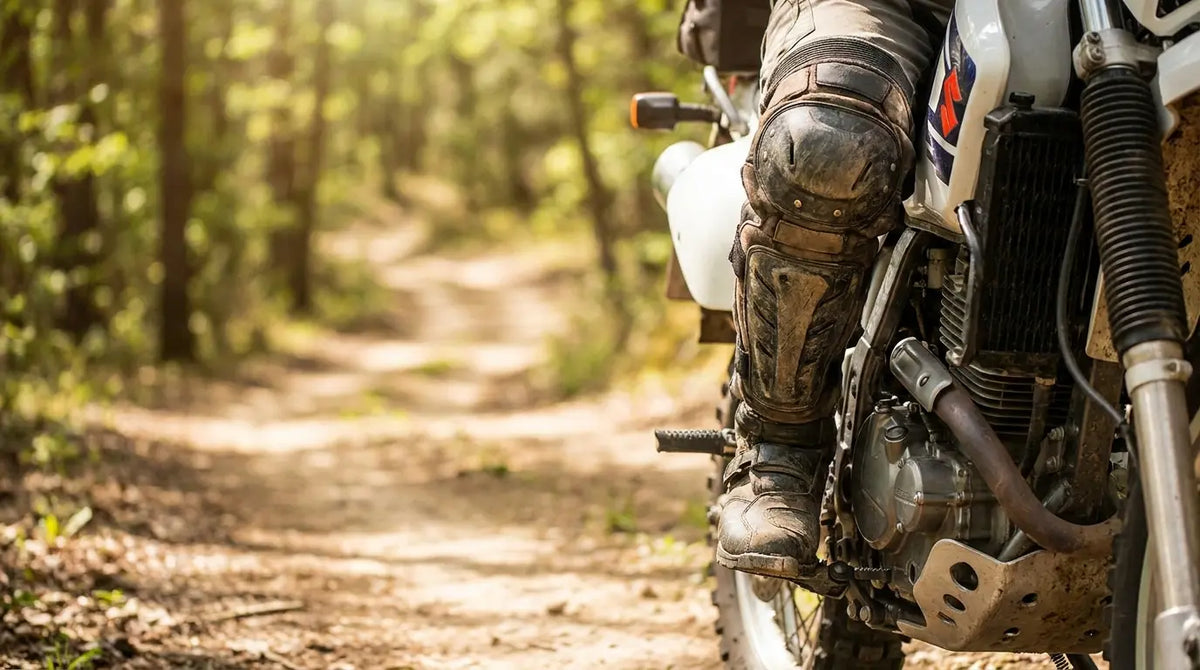
I've been riding for 15 years, mostly trail and enduro with occasional track days when I'm feeling ambitious. I've also crashed enough times to know that knee injuries end riding careers. Over the past two seasons, I've tested 18 different knee pad setups across Colorado trails, desert rides in Utah, and some muddy disasters in the Pacific Northwest. Here's what actually works.
Table of Contents
-
Knee Pads That Move With You (Not Against You)
Fox Racing Launch Pro D3O
Leatt Dual Axis
Alpinestars Sequence
POC Joint VPD 2.0
G-Form Pro-X
Troy Lee Designs Speed
-
Full Coverage Without the Bulk
EVS TP199
Fly Racing Barricade
IXS Flow Zip
Dainese Oak Pro
Acerbis X-Strong
Mobius X8
-
Armor That Doesn't Quit When Conditions Get Messy
Leatt 3DF Hybrid
Fox Racing Titan Race
Alpinestars Vapor Pro
Thor Force XP
Shift WHIT3 Label
661 Recon Advanced
Final Thoughts
TL;DR
Articulation matters more than protection level. Uncomfortable pads stay in your garage. D3O and VPD are better than hard shells for most riders. Combo guards cover more but trap heat. Size carefully because returns suck. The best knee pad is the one you'll actually wear.
Knee Pads That Move With You (Not Against You)
Look, I've watched riders ditch $200 knee pads after one ride because they couldn't bend their damn legs. Articulation is everything. We're talking about designs that bend, flex, and rotate with your natural movement instead of fighting against it.
Riders who shift positions frequently need this flexibility most. Standing on pegs during off-road sections, tucking in during aggressive cornering, or simply adjusting your position during a long highway stretch all require knee armor that moves naturally. When protection restricts your movement, you start riding in weird positions that tire you out and mess with your control.
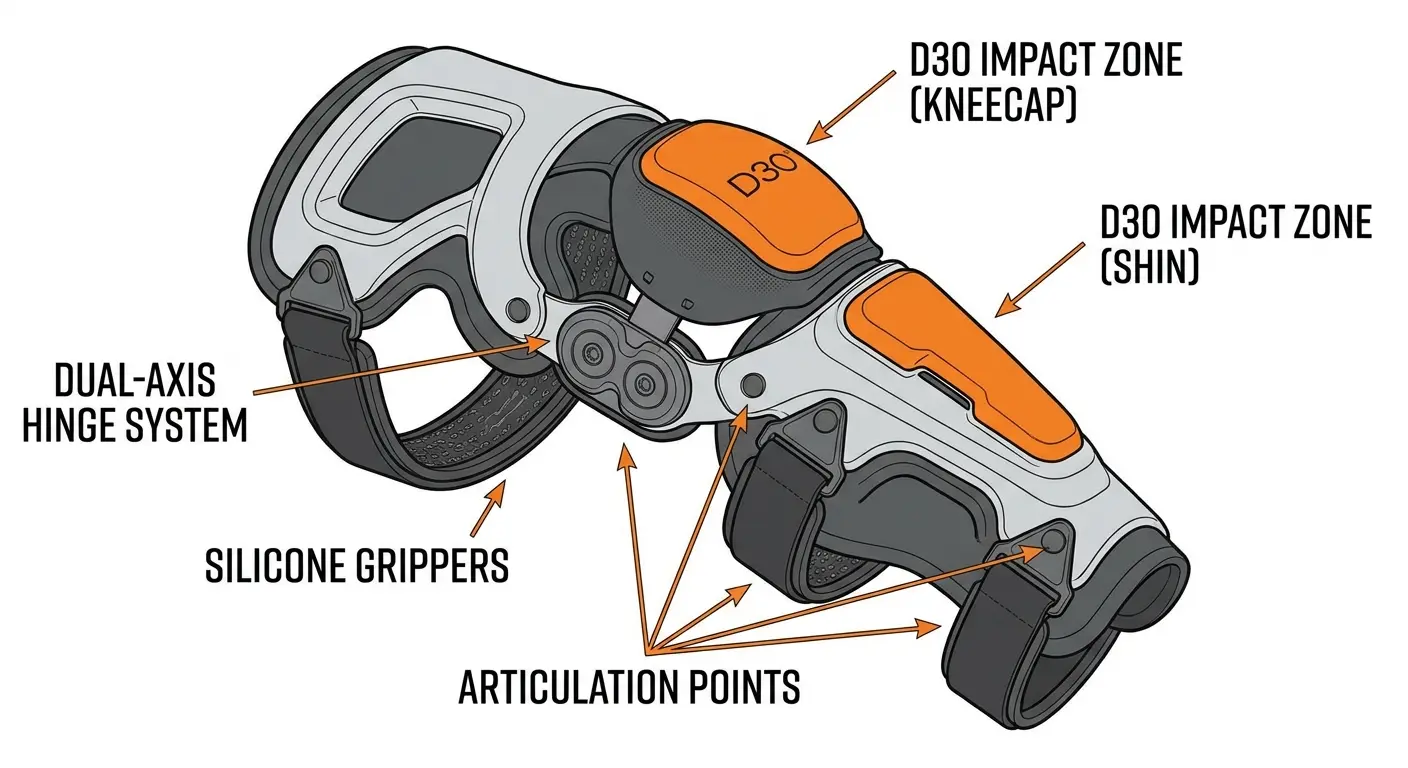
The mechanisms separating real articulation from marketing BS are specific. Dual-axis rotation lets your knee move through its natural range without binding. Multi-panel construction prevents pressure points behind the knee where traditional single-piece designs dig in. Stretch zones accommodate position changes without the pad riding up your thigh or down your shin.
Feature |
Why It Matters |
What to Look For |
|---|---|---|
Hinge System |
Determines natural leg movement vs. restricted motion |
Dual-axis rotation, full range of flex |
Back-of-Knee Panel |
Prevents riding up and pressure points during position changes |
Stretch fabric, minimal seams, anatomical cut |
Gripper Technology |
Keeps pad positioned without constant readjustment |
Silicone strips that don't leave skin marks |
Shell Material |
Affects weight, durability, and impact distribution |
Replaceable caps, rate-sensitive compounds |
Strap Configuration |
Controls stability without cutting circulation |
Ratchet mechanisms, wide straps, multiple adjustment points |
When selecting motorcycle knee protection that moves naturally with your body, consider how you'll access critical riding information. I keep my phone mounted on the bars (I use a Rokform setup) so I can glance at navigation without taking my hands off.
1. Fox Racing Launch Pro D3O
These are my go-to knee pads, and here's why. Fox built a dual-hinge system that rotates on two axes instead of one. Your knee doesn't just bend backward, it rotates slightly inward too. Single-axis hinges bind up and feel awful after 20 minutes.
The D3O insert sits in a flexible sleeve that doesn't restrict blood flow when you're in a tucked position. This rate-sensitive material stiffens on impact, providing protection exactly when you need it while remaining pliable during normal riding. It works.
The back of the knee features a stretch panel that prevents the pad from riding up when you stand. Riders switching between seated and standing positions notice the difference immediately. The silicone gripper on the thigh works without leaving marks on your skin, which sounds minor until you've dealt with pads that create welts after a two-hour ride.
Fair warning: these run narrow through the calf. If you've got tree-trunk legs, size up or you'll be maxing out the velcro and cutting off circulation. The construction quality is solid, with reinforced stitching at stress points that extends durability beyond what you'd expect for the price point (around $120, mid-range for above-average protection).
2. Leatt Dual Axis
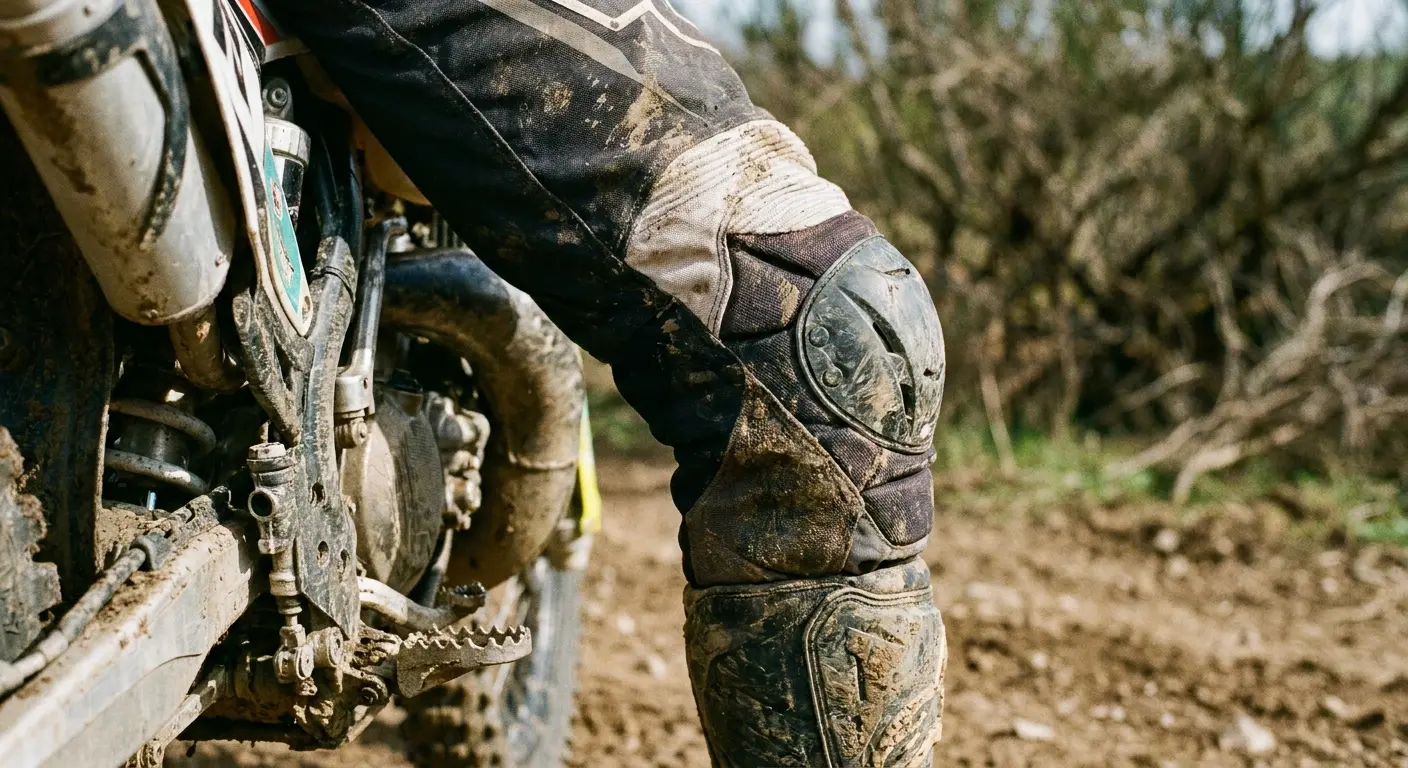
Leatt loves over-engineering stuff, and the Dual Axis is one of their hits. The hinge moves through damn near your full range of motion. I've never felt it bind up, even when I'm picking up my bike after dropping it on a trail (happens more than I'd like to admit).
The best feature? Replaceable outer caps. Most knee pads die when the hard shell cracks. With these, you just buy a new cap for $20 instead of replacing the whole pad. Brilliant.
The foam has actual ventilation channels, not just decorative holes. They work under loose pants but bunch up under tight jeans. Learned that the hard way. The ratchet straps click into place and stay put, which I appreciate when I'm three hours into a ride.
These run wider than the Fox Launch Pro. If the Fox feels too narrow through your calves, try these. They cost about $40 more but the replaceable caps make them worth it if you plan to keep them for years.
3. Alpinestars Sequence
The Sequence uses dual-density foam construction with a stiffer outer layer and softer inner layer, distributing impact force across a wider area. What sets these apart is the asymmetric design. The left and right pads are shaped differently to account for how your legs move on a bike. Your right leg operates the rear brake, your left handles the shifter, and these pads accommodate those different movement patterns.
The knee cup extends lower than most designs, offering coverage that protects the top of your shin without requiring a separate shin guard. The compression sleeve fit works for riders with proportional leg dimensions but can feel restrictive if you've got muscular thighs and slimmer calves.
Ventilation is okay but not exceptional. You'll notice heat buildup during summer rides, though the moisture-wicking liner helps manage sweat reasonably well.
4. POC Joint VPD 2.0
VPD (Visco-Elastic Polymer Dough) stays flexible until impact, then hardens to absorb energy. POC's construction wraps this material in a ventilated sleeve that doesn't trap heat against your skin. The pad conforms to your leg shape after a few rides, molding to your specific knee geometry.
These excel in cooler weather but can feel too insulated when temperatures climb above 80 degrees. The neoprene sleeve provides compression without cutting off circulation, though riders with knee injuries or swelling should test the fit before committing to long rides.
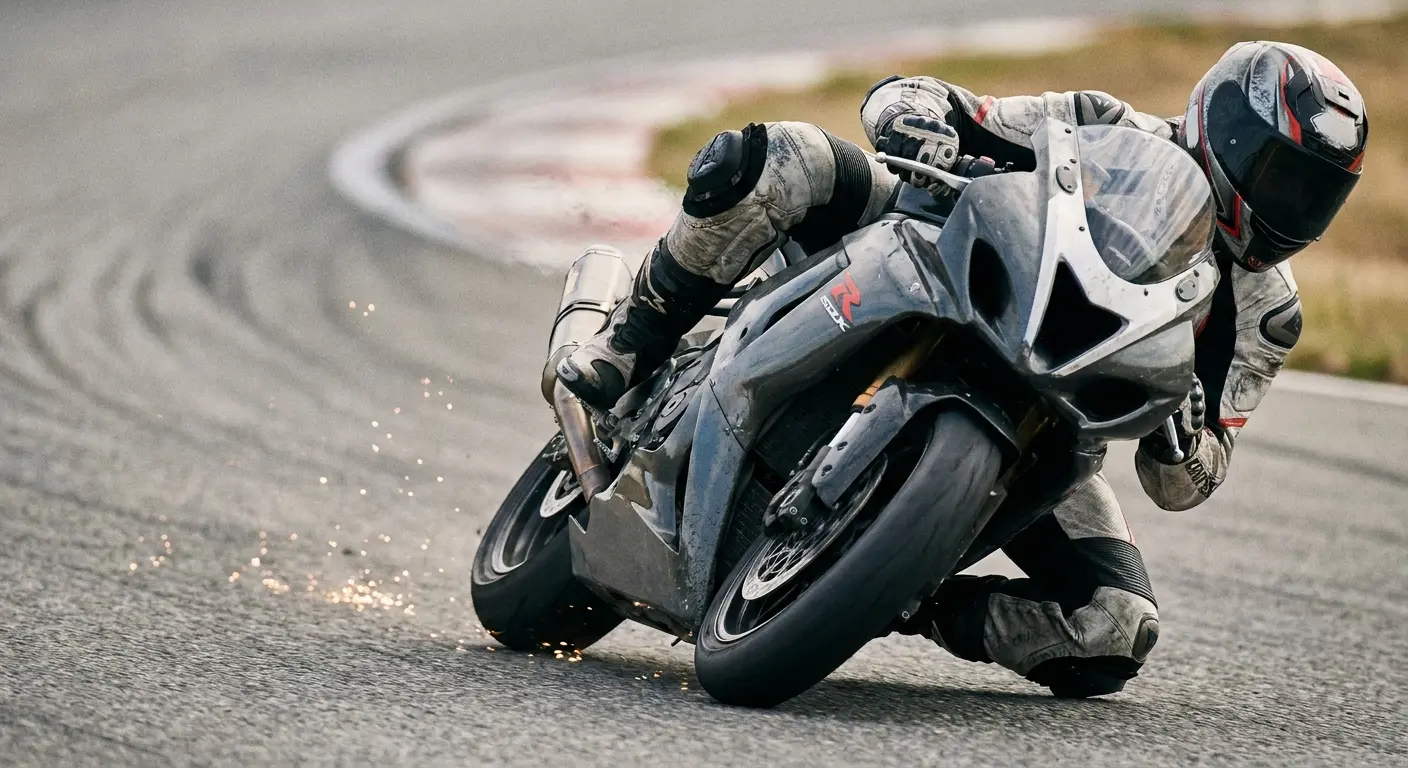
The material breaks in noticeably. What feels slightly stiff during the first ride becomes way more comfortable after five or six sessions. Push through it.
5. G-Form Pro-X
G-Form's RPT (Reactive Protection Technology) padding is thin enough to wear under jeans without looking bulky, which matters if you're commuting or riding in casual settings. The pads harden on impact but remain flexible during normal movement, giving you protection without the stiff feeling of traditional motorcycle knee armor.
The sleeve construction eliminates straps entirely, relying on compression and silicone grippers to stay put. This works well for shorter rides but can slip during extended sessions, especially if you're sweating. These are CE Level 1 certified (basic impact protection, fine for street riding), adequate for street use but not enough for aggressive off-road.
The low profile is their biggest selling point. You can wear these under regular pants without anyone knowing you're geared up, which appeals to riders who don't want to broadcast their protective gear choices. At around $50, they're the budget-friendly option on this list.
6. Troy Lee Designs Speed
TLD designed these for riders who stand frequently, with an extended lower section that protects your shin when your knee bends past 90 degrees. The hard-shell cap features a curved profile that deflects impacts instead of absorbing them directly, reducing the force transferred to your knee.
The back panel uses moisture-wicking fabric that dries between rides. Some pads retain moisture and start to smell after a few uses, but these manage odor better than most. The strap system includes four points of adjustment, giving you precise control over fit.
These run large, particularly through the thigh. Most riders size down from their usual measurements. For riders who frequently transition between standing and seated positions, maintaining visibility of your route is crucial. A good handlebar mount keeps your navigation accessible during aggressive terrain changes.
Full Coverage Without the Bulk
So you want to protect everything from your thigh to your boot. I get it. That gap between knee pads and boots is where a lot of injuries happen. But here's the problem: most combo knee-shin guards are hot, heavy, and slip around.
I've tested six that actually stay put and don't feel like wearing leg armor. They're still bulkier and hotter than knee-only pads (that's physics, not a design flaw). But if you're doing serious off-road or track riding where the extra protection matters, these are worth the trade-off.
Quick reality check: if you're commuting to work, you probably don't need full coverage. But if you're sending jumps or riding gnarly terrain where you're constantly banging your shins, read on.
7. EVS TP199
EVS uses a dual-strap system at the thigh and a single strap below the knee, preventing the shin section from rotating independently. The knee cup and shin plate are connected by a flexible bridge that moves with your leg instead of fighting against it. The padding extends high enough on the thigh that it overlaps with hip protectors, eliminating any gap in coverage.
These are built for over-pants wear. The bulk makes them impractical under riding jeans. The ventilation holes are functional but not sufficient for hot weather riding. Expect sweat buildup during summer sessions.
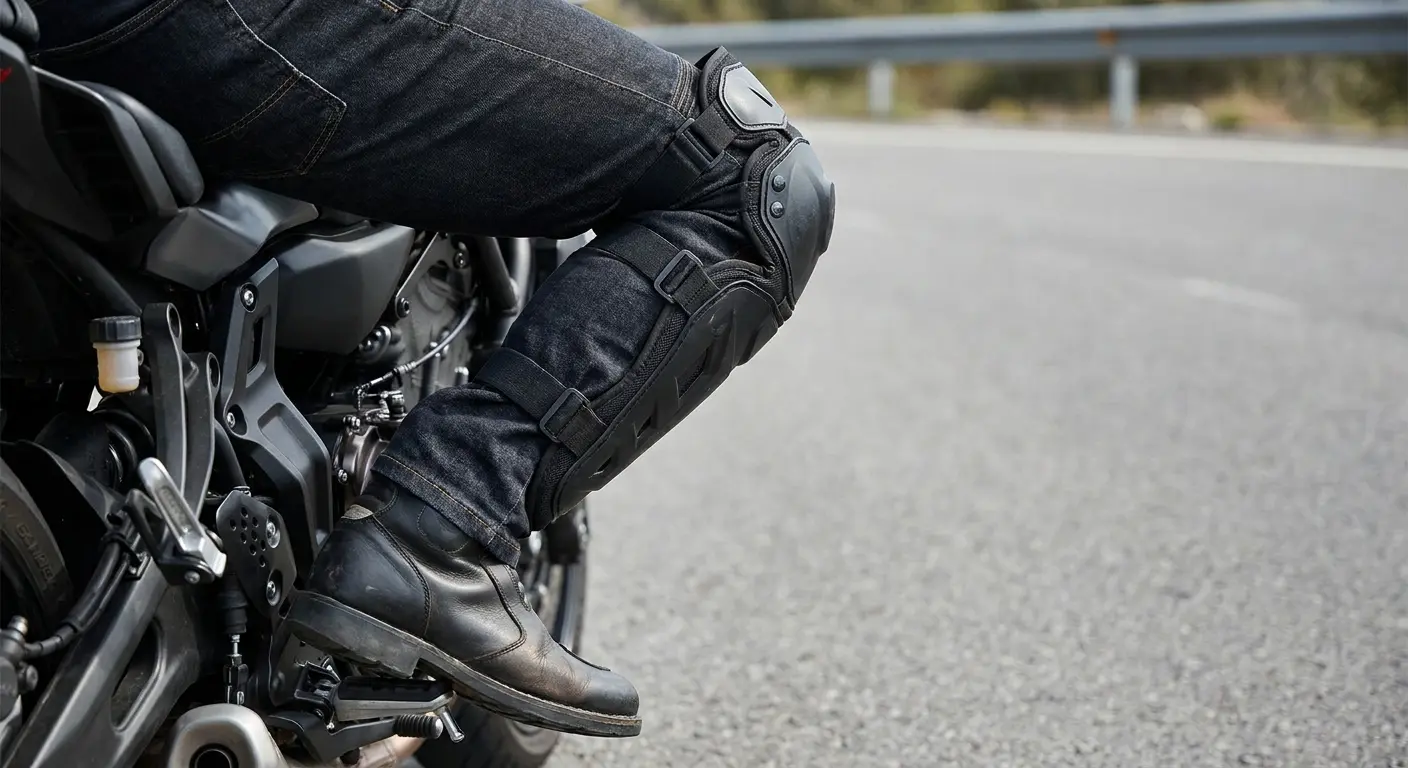
Durability is exceptional. The hard-shell components resist cracking even after repeated impacts, and the strap anchors are reinforced to prevent tearing. These are built to last multiple seasons of aggressive riding.
8. Fly Racing Barricade
Fly's design includes a pre-curved shin plate that matches the natural angle of your lower leg, reducing pressure points against your shin bone. The knee hinge is offset slightly to the outside of your leg, aligning better with your actual joint movement. Your knee doesn't bend straight back, it rotates slightly inward, and this offset hinge accommodates that natural motion.
The calf section tapers to fit inside boots without creating bulk at the top of your boot cuff. The straps use a hook-and-loop system that's easy to adjust but can catch on pants material. These work well for riders who need maximum protection but don't want the weight of full motorcycle knee shin guards with metal components.
Ventilation is better than the EVS design but still not enough for truly hot conditions. The trade-off between protection and breathability leans heavily toward protection here.
9. IXS Flow Zip
The zipper entry system makes these way easier to put on and take off compared to strap-only designs. You zip them closed, then use two straps to fine-tune the fit. This construction creates more consistent compression around your leg, eliminating the loose spots that develop with traditional strapping.
The padding uses IXS's Xmatter foam, which absorbs repeated impacts without breaking down. This matters if you're riding terrain where you're frequently bumping your knees against the bike. The zipper adds a potential failure point, and replacement zippers aren't readily available. A broken zipper means replacing the entire pad.
The convenience factor is real. Getting these on and off quickly matters more than you'd think, especially when you're gearing up in a parking lot or taking a break during a long ride.
10. Dainese Oak Pro
Dainese constructs these with a sock-style lower section that pulls on like a sleeve, then uses straps at the thigh for security. This hybrid approach eliminates straps around your calf, reducing the chance of cutting off circulation to your lower leg. The shin plate is relatively thin but uses a composite material that's stiffer than foam-only designs.
These excel under pants. The slim profile doesn't create visible bulk or restrict movement. The trade-off is less impact protection compared to thicker designs. These are better suited for street riding than off-road situations where you're likely to take harder hits.
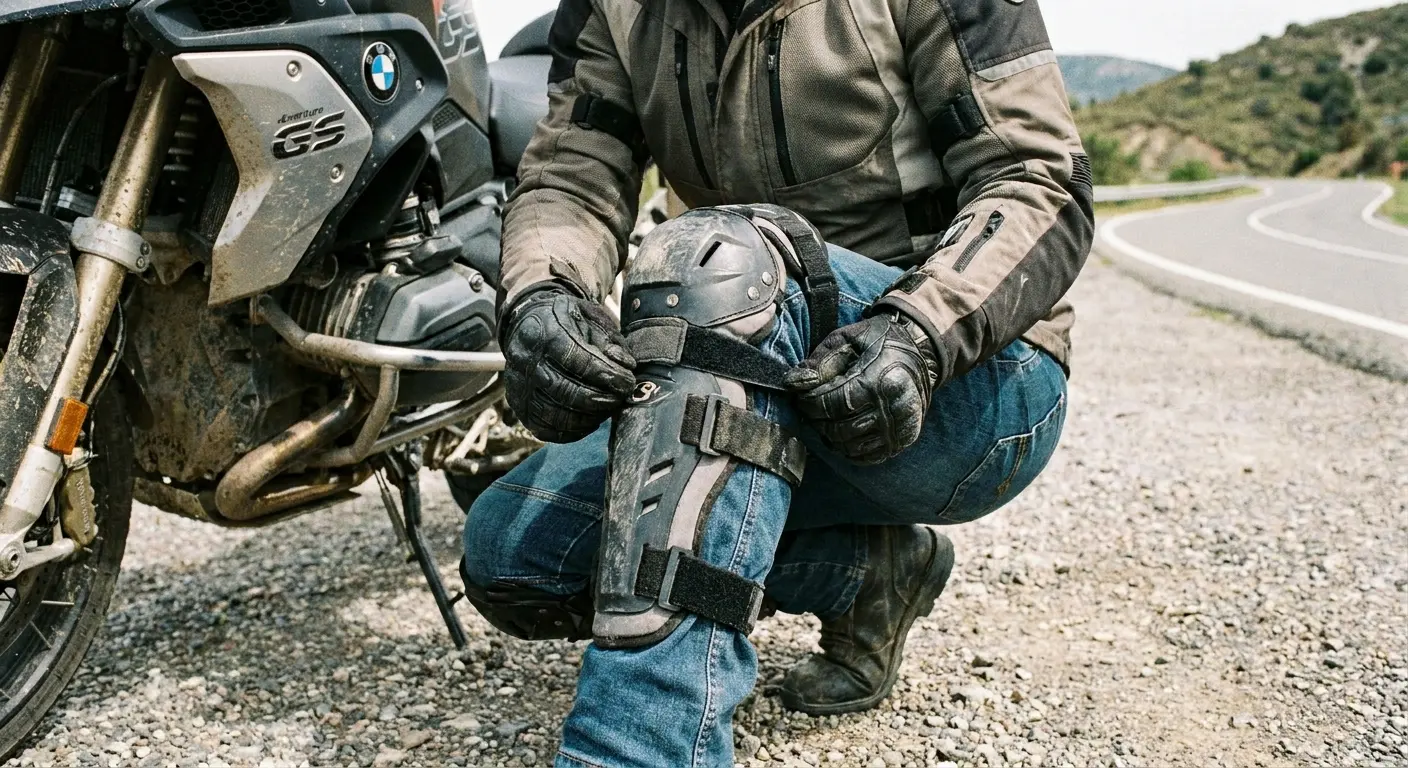
The sock construction requires accurate sizing. Too small and they're impossible to get on, too large and they slide down during riding. Check the size chart carefully before ordering.
11. Acerbis X-Strong
Polypropylene shell, lighter than traditional plastic, extends lower than most designs. Good for over-pants wear. Straps are too long. You'll be tucking excess material. Next.
12. Mobius X8
Mobius builds these with a frame construction that distributes impact force across the entire structure rather than concentrating it at the point of contact. The knee hinge includes a stop mechanism that prevents hyperextension, adding a layer of protection for riders with previous knee injuries. The shin section uses a dual-layer design with a hard outer shell and impact-absorbing foam underneath.
These are the bulkiest option in this category. You're wearing them over pants or not at all. The frame construction makes them nearly impossible to wear out. The plastic frame outlasts the padding and straps, but replacement parts are available for everything except the main frame.
The hyperextension protection is valuable if you've dealt with knee injuries before. That stop mechanism prevents your knee from bending beyond its natural range, which can prevent re-injury during crashes or awkward dismounts. At over $200, they're expensive but worth it if you're racing or riding at speeds where crashes are more severe.
Armor That Doesn't Quit When Conditions Get Messy
Ever finish a muddy ride with knee pads that weigh 10 pounds each and smell like a swamp? Yeah, materials matter. Here's what actually holds up when conditions suck.
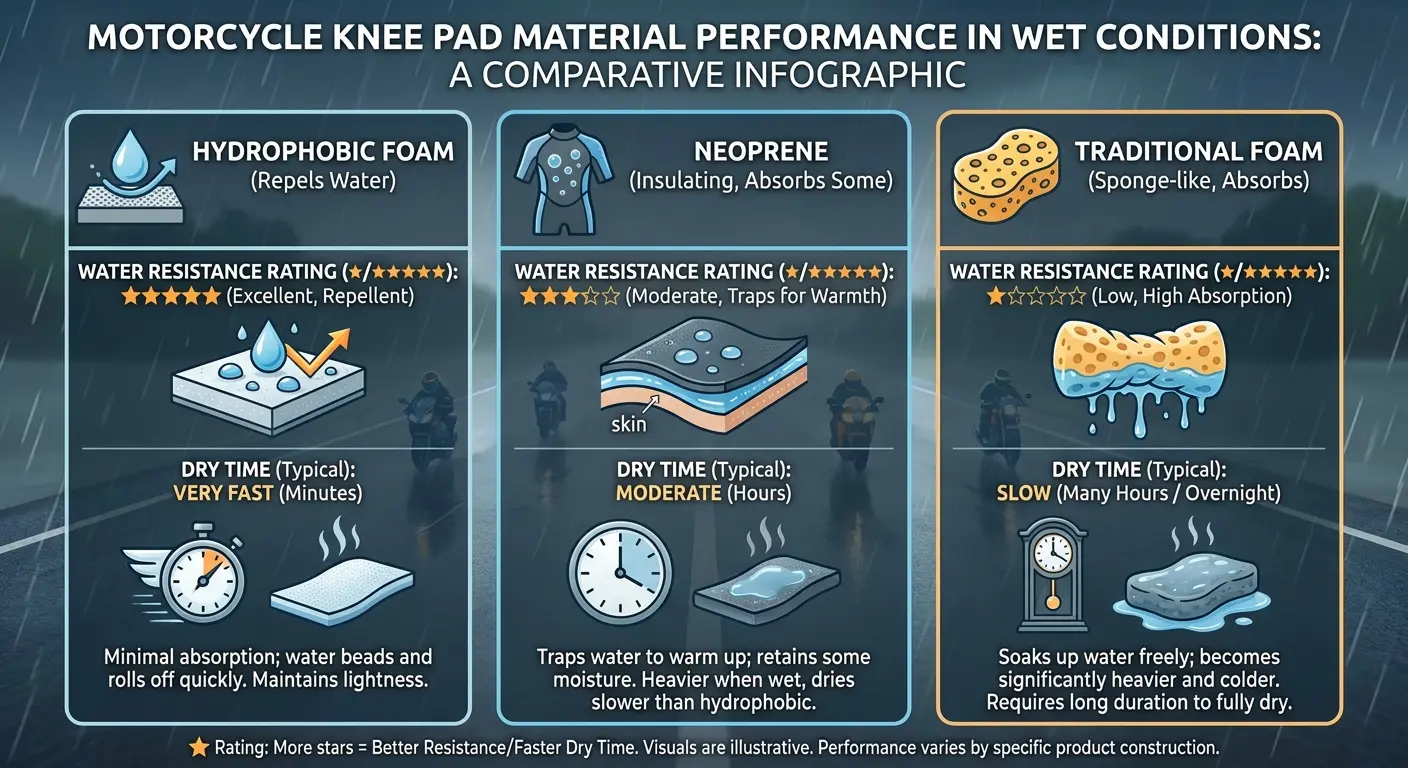
Moisture management beats waterproofing. Your motorcycle knee protection will get wet, that's unavoidable. The question is how the materials perform when saturated and how quickly they dry afterward. Traditional foam absorbs water and takes hours to dry, creating a breeding ground for bacteria and odors. Hydrophobic materials repel water, drying quickly and resisting odor buildup.
Temperature extremes affect both materials and fit. Some designs become stiff in cold weather, losing flexibility when you need it most. Others trap excessive heat in warm conditions, creating discomfort that makes you want to remove them entirely. The best options maintain consistent performance across a wide temperature range.
Material Type |
Wet Performance |
Dry Time |
Odor Resistance |
Best Use Case |
|---|---|---|---|---|
Hydrophobic Foam |
Doesn't absorb water |
1-2 hours |
Excellent |
Humid climates, water crossings |
Traditional Foam |
Absorbs and retains moisture |
8-12 hours |
Poor after repeated use |
Dry conditions only |
Neoprene |
Maintains compression when wet |
3-4 hours |
Good with treatment |
Variable temperatures |
Hard Shell + Sealed Foam |
Prevents water between layers |
2-3 hours |
Excellent |
Mud, roost, mixed conditions |
Open-Cell Foam |
Compresses wet, recovers dry |
4-6 hours |
Moderate |
Multi-day rides with drying time |
13. Leatt 3DF Hybrid
The 3DF foam is hydrophobic, meaning it doesn't absorb water like a sponge. When these get wet (and they will get wet if you ride in anything other than perfect conditions), they dry in maybe an hour or two instead of staying damp overnight. I rode through a creek crossing in Tennessee last summer. Water up to my knees. An hour later, the pads felt dry. My buddy's traditional foam pads were still soggy when we stopped for lunch three hours later.
The hybrid construction combines soft foam in low-impact areas with harder inserts at the knee cap, giving you protection without unnecessary stiffness everywhere. The fabric sleeve uses an anti-microbial treatment that actually works, unlike most "odor-resistant" marketing claims that wear off after three washes.
These maintain their compression even when saturated, which matters more than you'd think because some materials loosen up when wet and start sliding down your leg. Riders in humid climates or those who frequently encounter water crossings notice the difference immediately.
14. Fox Racing Titan Race
Fox uses an injection-molded shell that's sealed against the foam backing, preventing mud and water from getting between the layers where it can cause chafing. The hinge mechanism is exposed but designed with large clearances that don't clog with debris. The straps use a rubberized backing that grips better when wet, improving security in muddy conditions.
The padding includes drainage channels that move water away from your skin instead of trapping it against your leg. These are built for motocross conditions where you're dealing with roost, mud, and sweat simultaneously.
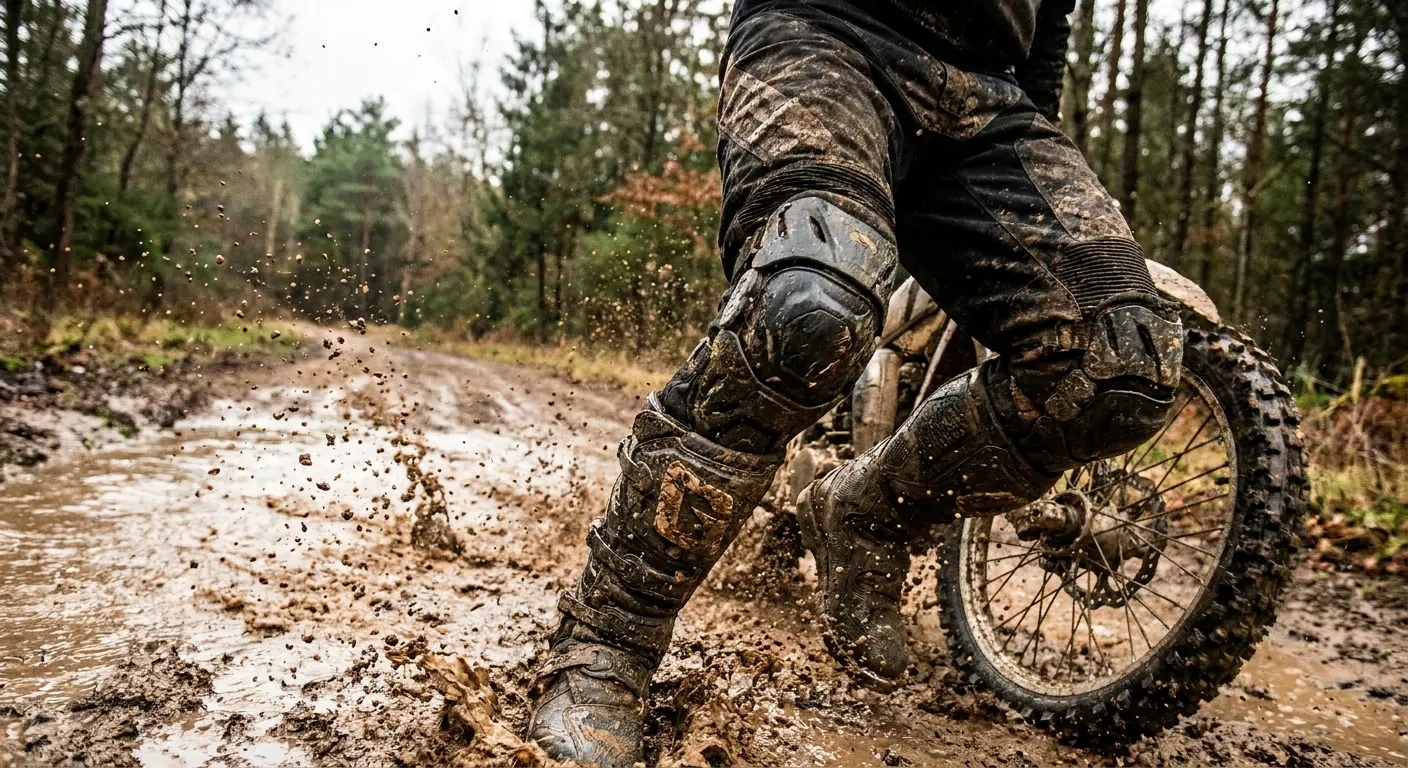
Weight increases noticeably when they're saturated with mud, but the secure fit prevents them from sliding down your leg. Cleaning them is straightforward: hose them off and they're ready for the next ride. I've crashed in these three times this season. Once on pavement, twice on rocks. The shells have some scratches but no cracks. My knees are fine.
15. Alpinestars Vapor Pro
The Vapor Pro uses perforated neoprene construction that provides compression while allowing air and moisture to move through the material. The knee cap is vented with functional airflow channels, not just cosmetic holes. These remain comfortable in temperatures ranging from 40 to 90 degrees, a wider range than most designs handle well.
The neoprene resists degradation from repeated exposure to sweat and sunlight, common failure points for other materials. The trade-off is less impact protection compared to hard-shell designs. These are better for riders prioritizing comfort and breathability over maximum knee armor.
Flexibility is their strength. They move naturally with your leg and don't restrict range of motion, making them ideal for riders who need mobility more than maximum protection.
16. Thor Force XP
Thor's construction uses a moisture-wicking liner that pulls sweat away from your skin and moves it to the outer layer where it can evaporate. The knee cup includes a replaceable impact pad that you can swap out when it compresses. Most pads lose protective value as the foam breaks down, but this system extends the life of the entire guard.
The straps are wider than most designs, distributing pressure across a larger area and preventing the digging sensation that develops during long rides. These work well in hot conditions but the moisture-wicking system becomes less effective when humidity is high. The moisture has nowhere to evaporate to when the air is already saturated.
17. Shift WHIT3 Label
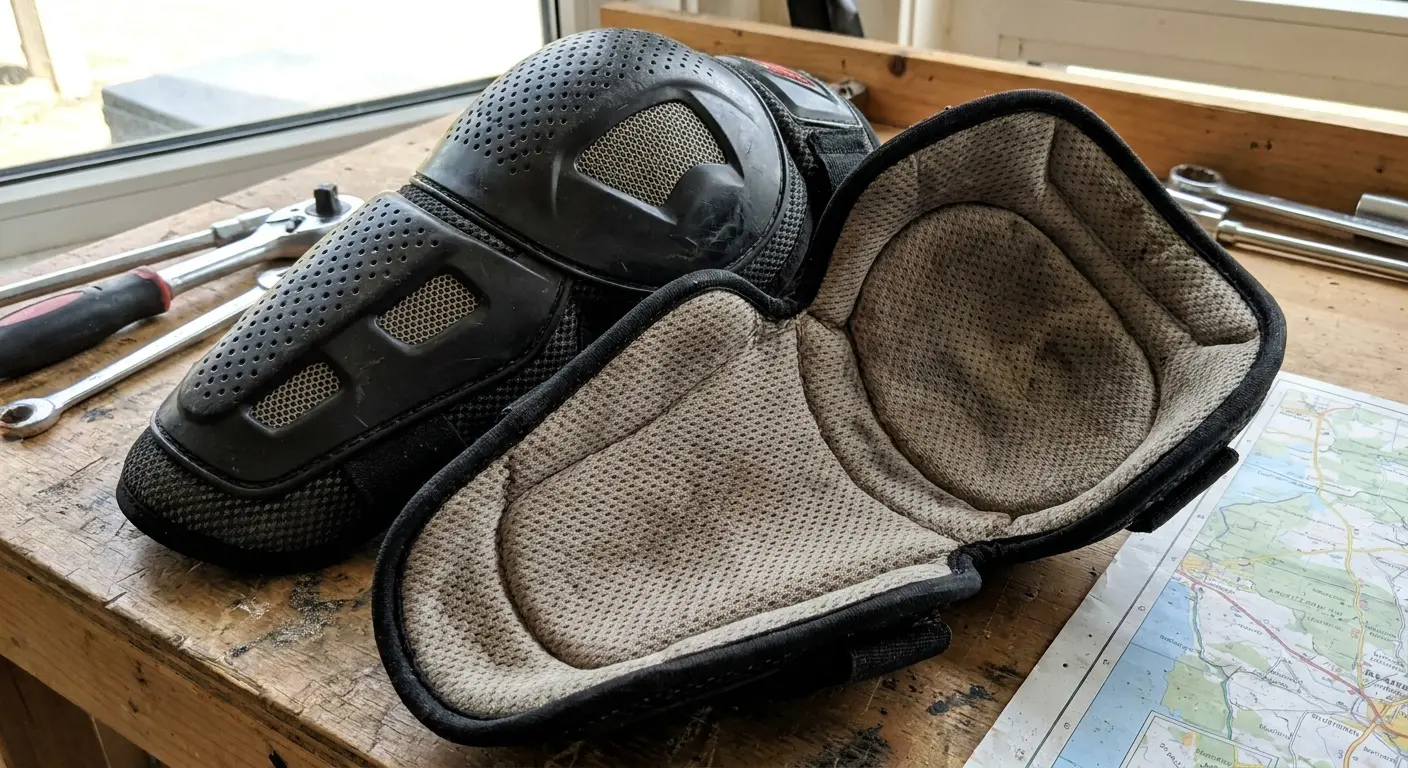
Shift designed these with a minimalist approach, using less material overall but placing it strategically where impacts are most likely. The reduced bulk improves ventilation considerably. You're not wrapping your entire leg in foam and plastic.
The knee cup uses a hard insert surrounded by softer foam, giving you impact protection at the critical point without stiffness everywhere else. These are the lightest option in this category, which matters during multi-hour rides when every ounce of gear contributes to fatigue.
The minimal coverage means you're accepting less protection in exchange for comfort and breathability. That's a conscious trade-off some riders make willingly, particularly those who ride in consistently hot climates where heat exhaustion poses a greater risk than knee injury. The Shift WHIT3 Label pads are so minimal, you might forget you're wearing them. Which is great until you crash and remember why you bought knee pads in the first place. The honest risk picture sits in how dangerous is riding a motorcycle.
18. 661 Recon Advanced
661 uses a combination of hard-shell and soft-shell protection, with rigid plates at the knee cap and shin, and flexible padding everywhere else. The shell sections include a textured surface that sheds mud instead of letting it build up. Smooth shells tend to collect debris.
The padding uses open-cell foam that compresses when wet but returns to its original shape when dry, maintaining protection through multiple wet/dry cycles. The compression sleeve fit eliminates straps entirely, removing potential failure points and areas where mud can accumulate.
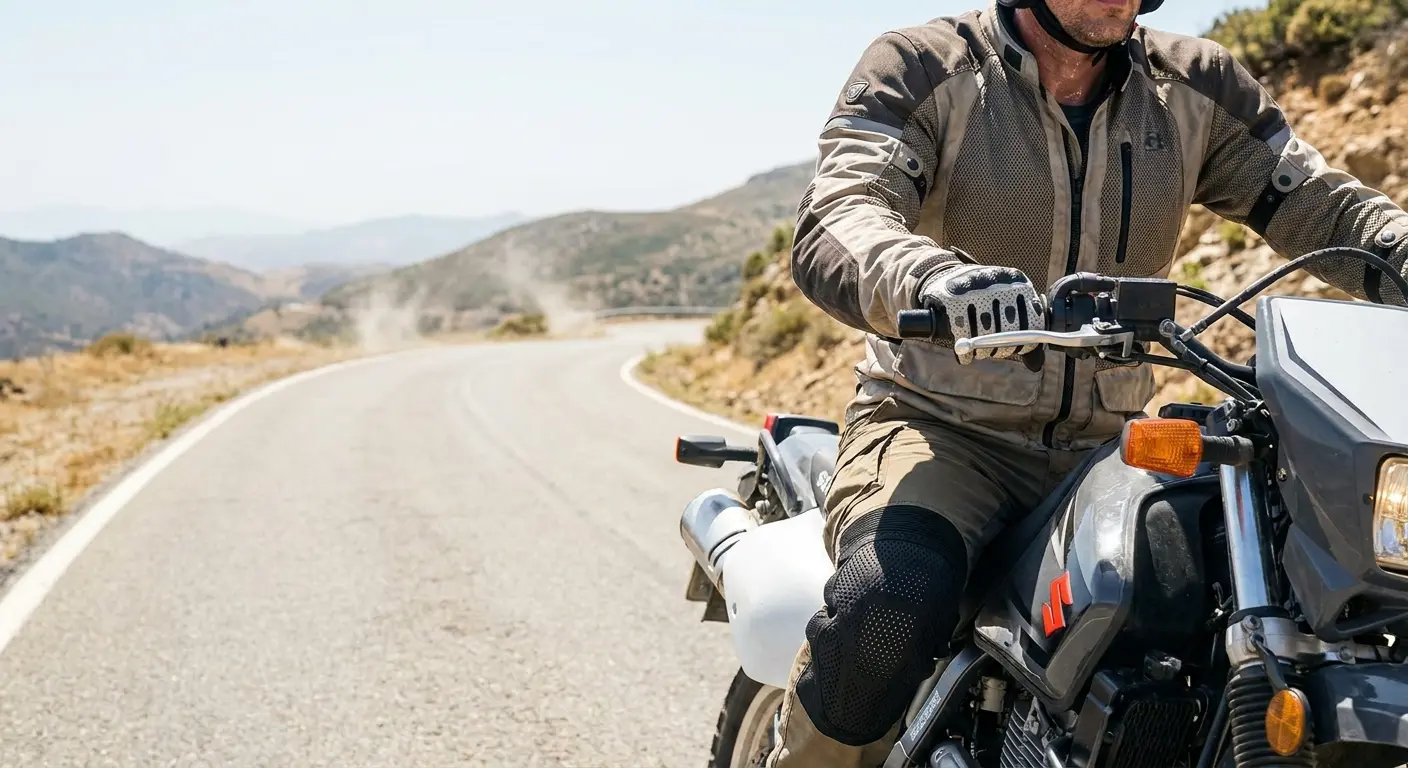
These run small, particularly through the calf. Sizing up is necessary for most riders. Full disclosure: I've only worn the 661 Recon a handful of times, so take my review with a grain of salt.
My Top Picks
After two seasons testing 18 different knee pads, here's what I recommend:
Best Overall: Fox Racing Launch Pro D3O. Articulates well, stays put, reasonable price around $120. This is what I reach for most often.
Best for Hot Weather: Shift WHIT3 Label. Minimal coverage, maximum ventilation. Won't cook your legs in summer heat.
Best Full Coverage: EVS TP199. If you need knee-to-boot protection, these are it. Built tough for aggressive riding.
Best Budget: G-Form Pro-X at around $50. Cheap, low-profile, good enough for street riding and commuting.
Best Weather Resistance: Leatt 3DF Hybrid. Dries fast, handles moisture better than anything else I've tested.
Skip These: The IXS Flow Zip would be great if the zipper didn't fail after six months. And it will fail. The Acerbis X-Strong are just too bulky for what they offer.
Climate Considerations
Hot Weather (80°F+): Go minimal. The Shift WHIT3 Label or G-Form Pro-X won't cook your legs. Full coverage options will make you miserable.
Cold Weather (Below 40°F): Neoprene options like POC Joint VPD 2.0 provide insulation. Hard shells get stiff in extreme cold.
Wet/Muddy: Hydrophobic foam (Leatt 3DF) or sealed designs (Fox Titan Race) that don't absorb water and dry fast.
Variable/All-Season: Fox Launch Pro D3O or Alpinestars Sequence handle a wide temp range without being great at any extreme.
Match Your Riding Style
Street/Commuting: G-Form Pro-X, Dainese Oak Pro (low-profile, comfortable)
Sport/Track: Fox Launch Pro, Alpinestars Sequence (articulated, secure fit)
Off-Road/Trail: Leatt Dual Axis, POC Joint VPD 2.0 (flexible, impact protection)
Motocross/Enduro: EVS TP199, Mobius X8 (full coverage, maximum protection)
Adventure/Dual-Sport: Troy Lee Speed, Fly Barricade (versatile, good ventilation)
Common Problems and How to Fix Them
They keep sliding down: Your straps aren't tight enough, or the silicone grippers are worn out. Try tightening the top strap more than you think you need to.
They smell like death: Spray them with Lysol after every ride and let them dry in the sun. Or buy hydrophobic foam designs that don't retain moisture.
They dig into the back of your knee: They're either too small or not positioned right. The pad should sit slightly above your kneecap, not directly on it.
Can't tell what size to order: Measure your thigh circumference 6 inches above your kneecap. Check the manufacturer's size chart. When in doubt, size up because you can always tighten straps.
Care and Maintenance
Cleaning: Hose them off after muddy rides. Hand wash with mild soap for deep cleaning. Don't machine wash because it breaks down foam.
Drying: Air dry only. Never put them in a dryer or leave them in a hot car. Sunlight helps kill bacteria.
Storage: Don't leave them compressed. Hang them or lay them flat so foam can recover.
Replacement: After a hard crash, replace them even if they look fine. Foam compresses permanently. Also replace when straps fray or shells crack.
Expected Lifespan:
Light use (street riding): 3-5 years
Moderate use (weekend warrior): 2-3 years
Heavy use (regular off-road): 1-2 years
Racing: Replace annually or after hard crashes
Before You Buy
Try them on if possible: Local shops let you test fit. Worth the trip even if you buy online later.
Order from places with good return policies: RevZilla, Amazon, and most manufacturers allow returns. You need to wear them around the house to know if they'll work.
Test at home: Wear them for an hour. Sit, stand, squat, walk stairs. If they're uncomfortable in your living room, they'll be unbearable on the bike.
Check for pressure points: Behind the knee, top of shin, where straps cross. These will get worse during riding, not better.
Final Thoughts
After two seasons testing 18 different knee pads, here's what I've learned: the best protection is the gear you'll actually wear. That Fox Racing Launch Pro sitting in your garage because it's uncomfortable? It's not protecting anything.
Start with your riding style. Motocross and enduro guys need full coverage with shin protection. Street riders can get away with low-profile options. Track day warriors want maximum protection with articulation for aggressive body positioning.
Then prioritize fit over features. Wear them around your house for an hour before you ride. If they're digging into your skin, restricting your movement, or sliding down your leg while you're walking around, they'll be unbearable on the bike.
Your knees don't heal like they used to. Protect them.

