


Table of Contents
Why We Keep Treating the Wound Instead of Preventing the Fall
The Hidden Costs Nobody Talks About When Your Screen Cracks
What Actually Happens to Your Phone After Impact
The Repair Industry's Best-Kept Secret About "Like New" Screens
How Drop Height Became the Most Misleading Metric in Phone Protection
The Real Reason Most Cases Fail at Their Only Job
What Military-Grade Actually Means (And Why It Matters)
Why Your Next Phone Needs Protection Before You Leave the Store
How Rokform Solves the Protection Problem Most Cases Ignore
Final Thoughts
TL;DR
Screen repair fixes damage after it happens, but the real problem is why phones keep breaking in the first place. Aftermarket screen replacements mess with your phone's structural integrity, water resistance, and touch sensitivity in ways most repair shops won't tell you about. Drop height ratings? Basically meaningless because they don't account for real-world impact angles, different surfaces, or repeated drops. Most phone cases care more about looking good than actually protecting your phone, using materials that can't absorb shock or leaving screen edges vulnerable. Military-grade certification (MIL-STD-810G) actually means something specific, with testing protocols that separate real protection from marketing BS. Preventing the first crack costs way less than any repair and keeps your phone's original performance, resale value, and warranty intact.
Why We Keep Treating the Wound Instead of Preventing the Fall
Stop. You're doing this wrong.
Right now, you're probably comparing repair shop prices, reading Google reviews, maybe looking at mail-in services. You're researching whether the Apple Store's $279 quote is worth it compared to the mall kiosk's $129 special. That's the wrong rabbit hole.
The entire screen repair industry exists because we've all just... accepted that phones will break. We treat shattered screens like they're inevitable, budgeting for repairs the same way we budget for oil changes. But phones don't need to break. And that acceptance costs you way more than just repair fees.
Search "phone screen repair near me" and you'll find hundreds of shops within a ten-mile radius of almost anywhere in the US. The market wouldn't be this saturated if the problem wasn't this common. Repair shops processed over 160 million cracked screen repairs in 2023 alone.
160 million. In one year. In the US alone.
That's not a statistic about fragile phones. It's a statistic about inadequate protection.
We've been conditioned to view repairs as the solution when they're actually evidence of a much larger failure. Every repair represents a moment when protection failed, whether that protection was a case, a screen protector, or just the assumption that you'd be careful enough to avoid drops.
You've Stopped Noticing the Cracks
Walk through any coffee shop, college campus, or subway car. Count how many cracked screens you see in five minutes.
The number will surprise you, not because it's high, but because you've stopped noticing. Cracked screens have become background noise. We've adapted our behavior around them, adjusting typing patterns to avoid sharp edges, cranking up brightness to see through the damage, ignoring the occasional screen glitch. This adaptation masks the core issue: your phone shouldn't break from a waist-height drop onto concrete.
According to Allstate Protection Plans' 2024 Mobile Mythconceptions Survey, damaged screens account for 67% of all smartphone accidents and malfunctions, making it the most frequent type of device damage reported by American smartphone owners.
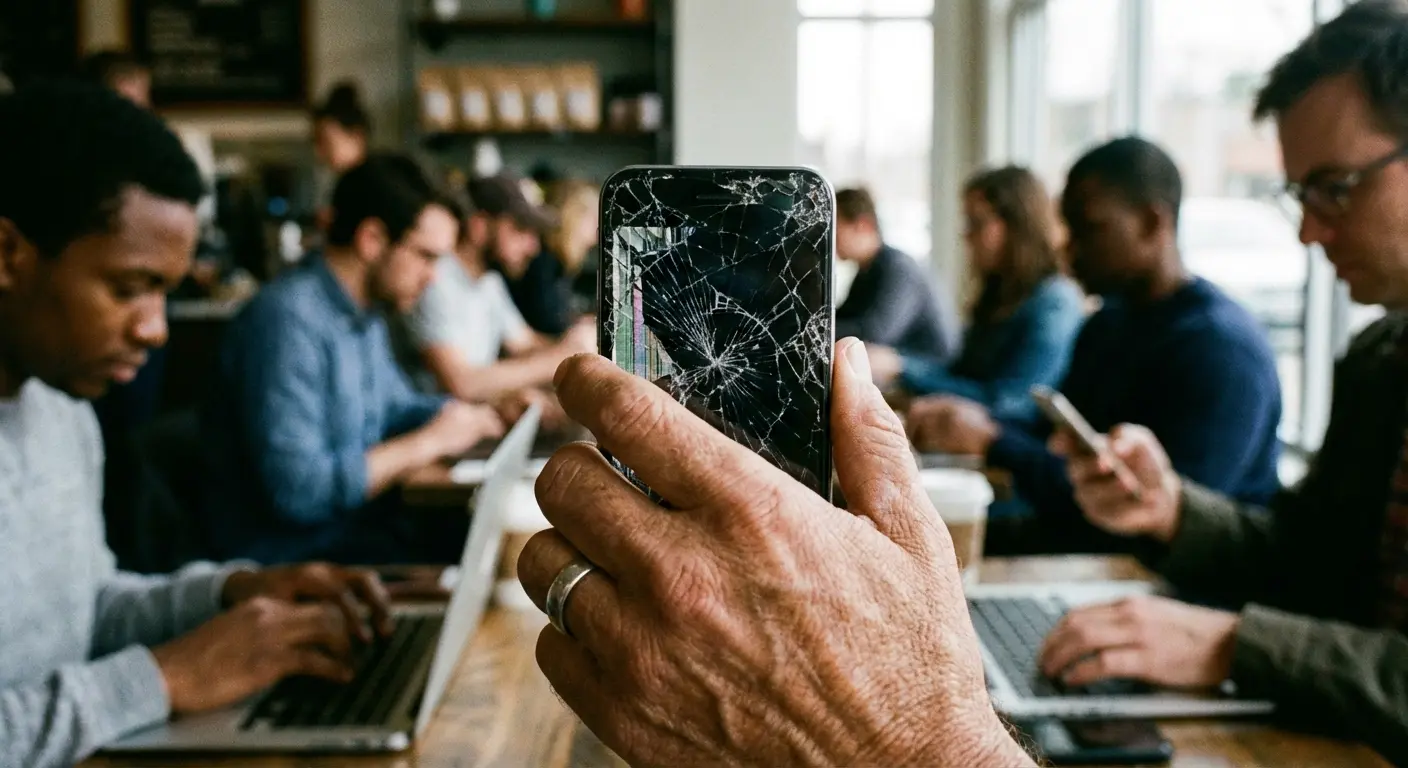
Picture this. It's Tuesday morning, you're late. You're juggling a coffee cup, your bag, and your phone while trying to catch the train. Your phone slips from your hand as you reach for the door, falls three feet onto the platform concrete, and the screen shatters. You spend the rest of your commute researching repair shops on that same cracked screen, accepting this as just "one of those things that happens" rather than questioning why a $1,000 device can't survive a fall that wouldn't damage a $20 calculator.
Phone makers have been improving glass strength for years. Ceramic Shield, Gorilla Glass Victus, all that stuff. They love to brag about their new scratch-resistant technology and improved performance in controlled drop tests. Yet repair shops aren't closing. They're expanding.
Maybe the glass isn't the real problem.
Economic Incentives Keep You in the Repair Cycle
The repair industry generated $4.2 billion in revenue last year. (And yeah, that's just repairs. The insurance side is a whole other racket we won't even get into.) Insurance companies profit from monthly premiums and deductibles. Manufacturers benefit from out-of-warranty repair fees that can reach $379 for a single screen replacement.
Nobody in this ecosystem profits from phones that don't break. You're the only one who benefits from prevention, which explains why the conversation always steers toward repair options rather than protection strategies.
Third-party repair shops offer competitive pricing to undercut manufacturer rates, creating an illusion of savings. You'll pay $129 instead of $279 and feel like you've won. But you haven't addressed why the screen cracked in the first place, and you've introduced new problems we'll explore in the next section.
The Hidden Costs Nobody Talks About When Your Screen Cracks
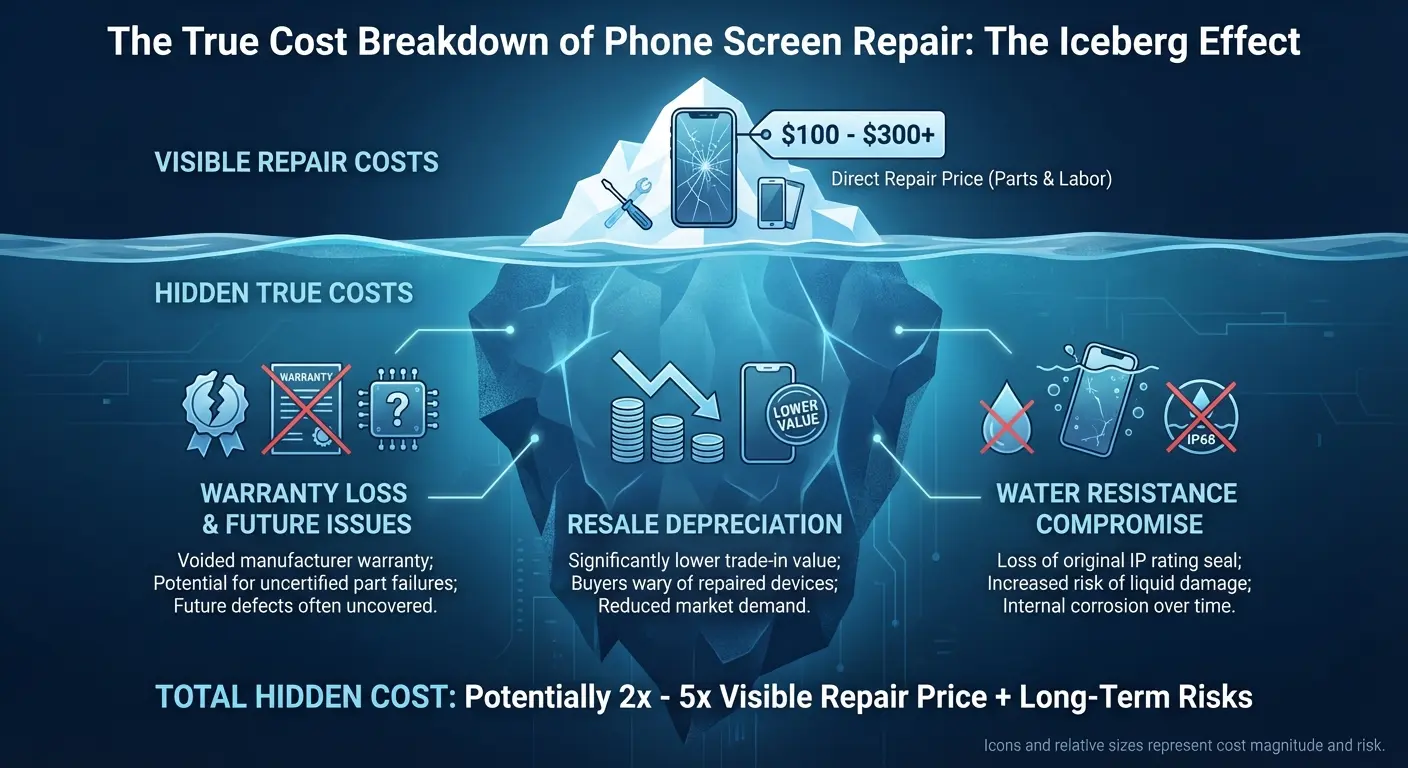
Your screen cracks. You get it repaired for $150. Done deal?
Not even close. You just triggered a cascade of issues that'll haunt this phone until you replace it.
The money spent on screen repairs has surged dramatically, reaching $8.3 billion in 2023, nearly tripling the $3.4 billion spent in 2018, according to research by Allstate Protection Plans. That's not just inflation. That's evidence of a worsening problem.
Structural Integrity Degradation
Original phone screens bond to the frame using precise adhesives applied in controlled manufacturing environments. This bond serves multiple functions beyond holding the screen in place. It maintains water resistance ratings, distributes impact force across the frame, and prevents dust infiltration into internal components.
Repair shops cannot replicate these conditions. They use aftermarket adhesives that approximate the original bond but fall short in ways you'll notice. Your IP68 water resistance rating? Gone. The phone might survive a brief splash, but the 30-minute submersion in 6 feet of water that the rating promises is no longer guaranteed.
Even manufacturer-authorized repairs don't always restore original specs. Apple's own repair documentation acknowledges that water resistance "may diminish" after screen replacement. That's corporate speak for "you're on your own if water gets in."
Touch Sensitivity and Display Quality Take a Hit
Aftermarket screens use different digitizers than original equipment. The difference isn't immediately obvious, but you'll notice it in specific scenarios: reduced sensitivity in cold weather, phantom touches near the edges, slight color temperature shifts, and decreased brightness at maximum settings.
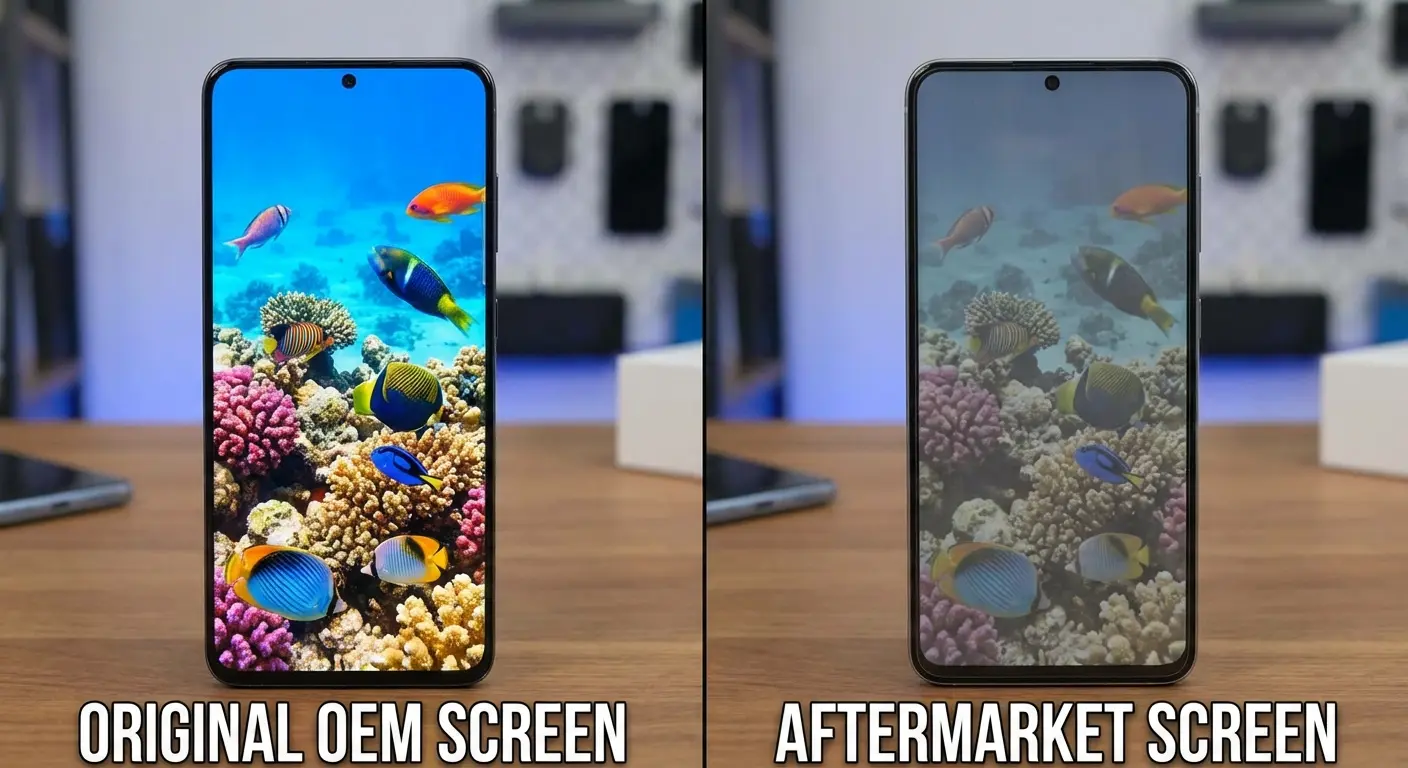
These aren't defects. They're built-in limitations of non-OEM parts. The repair shop isn't lying when they say the screen is "like new." They're working with parts that were never designed to match original performance specs.
You'll adapt to these changes (humans are remarkably good at adapting to degraded experiences), but you're using a worse phone than you were before the crack. That adaptation comes with mental energy you don't consciously register but experience nonetheless.
The Resale Value Cliff
A phone with a repaired screen sells for 23% less than an identical phone with an original screen, according to recent market analysis of secondhand phone sales. Buyers know that repairs introduce variables they can't fully assess, so they discount accordingly.
That $150 cell phone screen fix just cost you an additional $140 in lost resale value on a phone you might have sold for $600. Your true repair cost was $290, not $150. Multiple repairs compound this effect exponentially.
Cost Component |
Visible Cost |
Hidden Cost |
True Total |
|---|---|---|---|
Third-party screen repair |
$150 |
$0 |
$150 |
Lost resale value (23% reduction) |
$0 |
$140 |
$140 |
Voided warranty coverage |
$0 |
$200 (avg. value) |
$200 |
Reduced water resistance risk |
$0 |
$50-300 (potential damage) |
$175 (avg.) |
Touch sensitivity degradation |
$0 |
Unmeasured quality of life cost |
- |
Combined True Cost |
$150 |
$490-640 |
$665 |
Warranty Implications Most Repair Shops Won't Mention
Third-party repairs void most manufacturer warranties, even for unrelated issues. Your camera stops focusing six months after a screen repair? Manufacturer warranty won't cover it because the device has been opened by an unauthorized service provider.
AppleCare+ and similar insurance programs become worthless the moment you choose a third-party repair to save money on the deductible. You've paid for coverage you can no longer use, adding another hidden cost to that "cheap" screen fix.
What Actually Happens to Your Phone After Impact
You drop your phone. It falls for about half a second from waist height. It hits concrete. The screen shatters.
This sequence feels instantaneous, but understanding what happens during those 500 milliseconds reveals why most protection fails and why you need a phone screen repair service in the first place.
Impact Force Distribution
A phone falling from 4 feet reaches a velocity of 11 mph when it hits the ground. Doesn't sound fast, right? But here's the thing: when the phone stops moving in about 0.01 seconds upon impact, it experiences forces between 50 and 100 Gs depending on the surface hardness.
For reference, fighter pilots experience 9 Gs during extreme maneuvers. Your phone experiences 5 to 10 times that force every time it hits pavement.
This force has to go somewhere. In an unprotected phone, it transfers directly to the most fragile component: the glass screen. Modern phone glass can handle significant pressure when distributed evenly (you can place hundreds of pounds on a phone lying flat without damage), but it fails catastrophically when force concentrates on a small area, particularly edges and corners.
Why Corner Impacts Destroy Screens
Drop your phone flat on its face and it might survive. Drop it on a corner and you're almost guaranteed a crack. The physics explain why.
Corner impacts concentrate all impact force into a point measuring less than 2mm in diameter. The glass has no ability to distribute this force, and the frame (typically aluminum) deforms slightly on impact, which increases stress on the glass rather than absorbing it.
Think about the difference between slapping a frozen lake with your palm versus striking it with an ice pick. The total force might be similar, but the ice pick concentrates that force into a tiny point, easily penetrating the ice. When your phone hits corner-first on concrete, that corner acts as an ice pick against your screen, concentrating 50-100 Gs of force into a 2mm contact point.
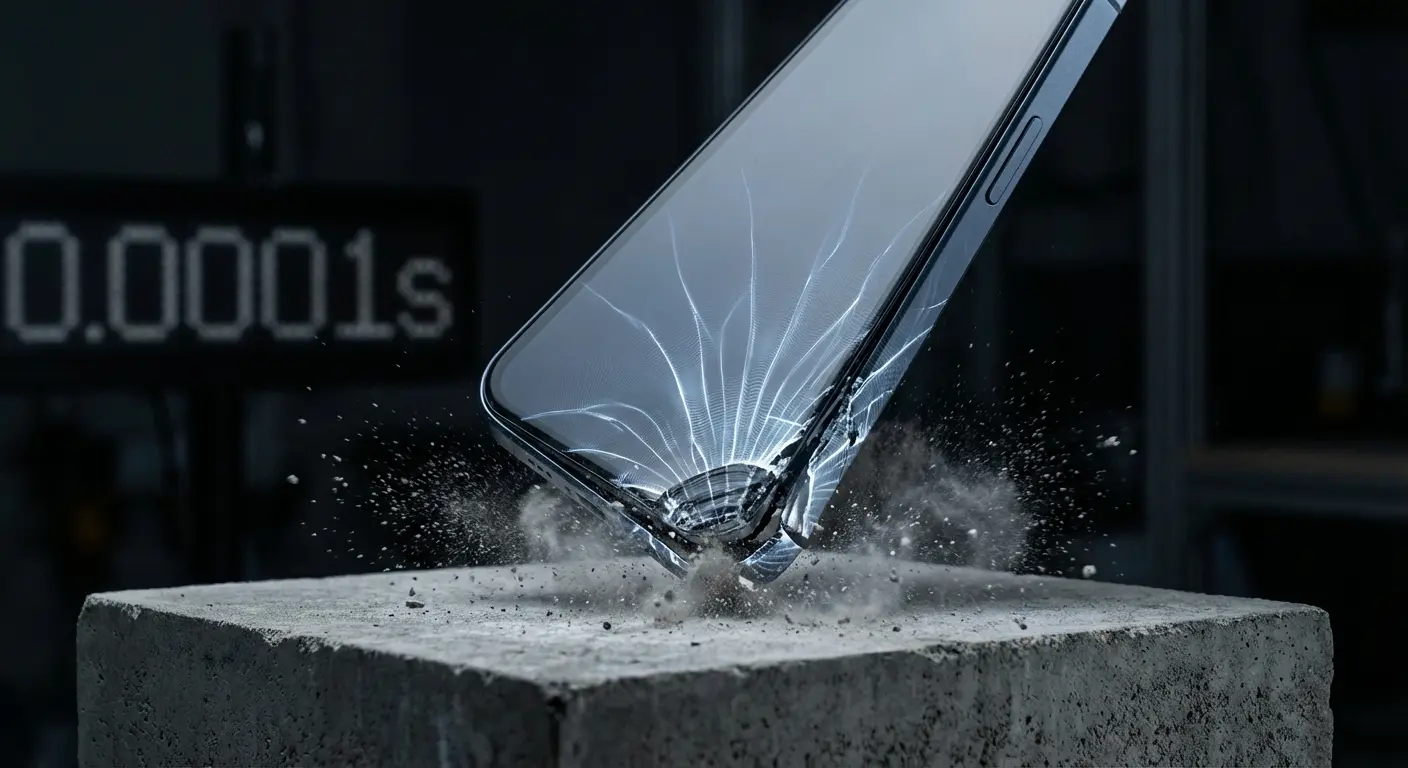
The crack typically originates at the impact point and propagates outward at speeds exceeding 3,000 mph. You don't see the crack form. You see the aftermath of a fracture event that completed in microseconds.
3,000 mph. The crack spreads at THREE THOUSAND MILES PER HOUR. By the time you see it, the damage happened faster than you can blink.
The Screen Edge Vulnerability
Manufacturers have made screens increasingly edge-to-edge to maximize display area. This design choice creates a structural weakness that no amount of improved glass technology can overcome.
Edges lack the internal support structure present in the center of the screen. When impact force reaches the edge, there's nothing behind the glass to support it. The glass flexes, exceeds its flex tolerance, and cracks.
You'll notice that most screen cracks either originate at corners or edges, even when the impact occurs elsewhere on the phone. Force travels through the frame and concentrates at these weak points regardless of initial impact location.
Most Repair Shops Are Hiding Something About "Like New" Screens
Repair shops describe their replacement screens using reassuring language: "OEM quality," "premium grade," "A+ stock." These terms sound official. They're marketing language designed to obscure a complicated reality about parts quality.
Samsung has recently begun using an advanced screen repair method for its foldable phones that replaces only necessary components instead of the entire display unit, according to SamMobile. The method has saved consumers about $5.4 million since 2024, though it requires specialized equipment and takes roughly twice as long as full display replacement. This component-level repair approach is currently available at 160 of Samsung's 169 service centers in South Korea, highlighting how even manufacturers acknowledge that full screen replacements often exceed what's necessary for many repairs.
The Aftermarket Parts Hierarchy
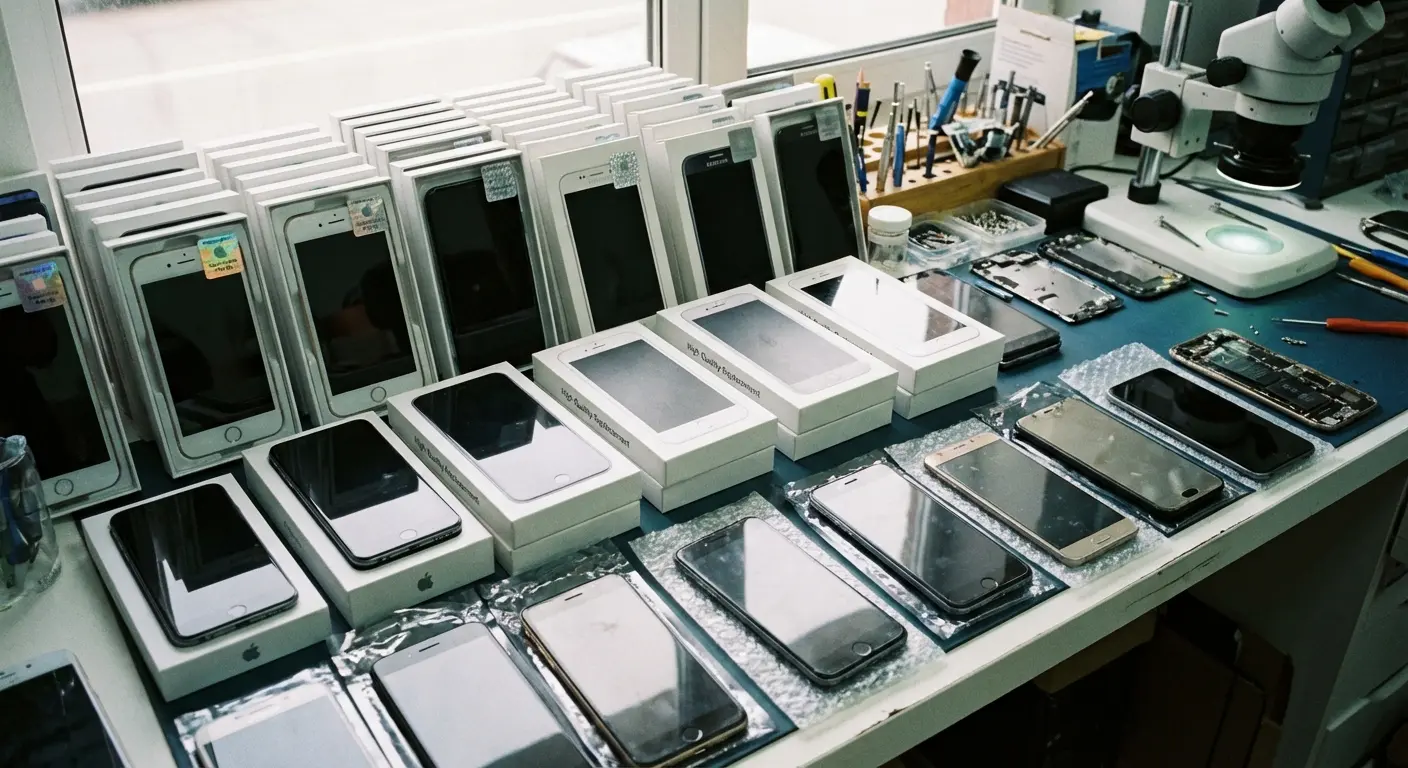
Replacement screens exist on a quality spectrum with more tiers than most people realize. At the top, you have genuine OEM pulls (screens harvested from phones with other damage). These match original specs because they are original parts, but supply is limited and prices approach manufacturer repair costs.
Below that, you find "refurbished original" screens, which are damaged OEM screens that have been repaired and restored. Quality varies wildly depending on the refurbishment process, and most shops can't verify the history of these parts.
Then comes "OEM equivalent" or "premium aftermarket" screens. These use different glass, different digitizers, and different manufacturing processes than original equipment. They're designed to fit your phone and function adequately, but they're not equivalent regardless of marketing claims.
At the bottom, you have economy aftermarket screens with visible quality compromises : lower resolution, poor color accuracy, reduced brightness, and shorter lifespans.
Most repair shops stock multiple tiers but default to mid-range options unless you specifically request (and pay significantly more for) top-tier parts. The screen you get often depends on which parts the shop has in stock that day, not which parts best match your phone's original specs.
Questions to Ask Before Authorizing Any Phone Screen Repair:
Look, repair shops really don't want you asking these questions. But you should anyway:
Is this a genuine OEM part, OEM pull, refurbished original, or aftermarket equivalent?
What specific warranty do you provide on the replacement screen (not labor, but the part itself)?
Will this repair affect my phone's water resistance rating?
Can you provide documentation that this repair won't void my manufacturer warranty?
What is the expected lifespan of this replacement screen compared to the original?
Do you test touch sensitivity across the entire screen before returning the device?
Will the screen's brightness, color accuracy, or refresh rate differ from the original?
What happens if the replacement screen fails within 90 days? Six months? One year?
Manufacturing Process Differences
Original phone screens go through quality control processes that aftermarket manufacturers can't economically replicate. Each screen is tested for touch sensitivity across hundreds of points, color calibrated to specific standards, and verified for proper adhesion before installation.
Aftermarket manufacturers test samples from production batches, not individual screens. Your replacement screen might be perfect, or it might have issues that weren't caught during quality control. You won't know until it's installed, and by then you've paid for the repair.
The Longevity Question
Original screens are designed to last the expected lifespan of the phone (typically 3-5 years of daily use). Aftermarket screens have no such design requirement. Many begin showing degradation (burn-in, dead pixels, touch sensitivity issues) within 12-18 months of installation.
Repair shops rarely warranty screens beyond 90 days because they know failure rates increase significantly after that period. You're statistically likely to need another phone screen repair before you would have needed one had you prevented the original crack.
And here's what really gets me: repair shops KNOW the aftermarket screens degrade faster. They know you'll be back in 18 months. That's not a bug in their business model. It's the entire point.
Drop Height Is Marketing BS (Here's Why)
Case manufacturers plaster "10-foot drop protection" and similar claims across their packaging. These numbers sound impressive and scientific. They're also nearly meaningless for predicting whether your phone will survive the drops that happen in your actual life.
The Testing Condition Gap
Drop testing happens in controlled laboratory environments. The phone (in its case) drops onto a flat steel surface from a specified height. It falls in a predetermined orientation, usually corner-down, which is the most damaging angle, so credit where it's due. Temperature is controlled. Humidity is controlled. The surface is perfectly flat and level.
Your drops happen onto concrete with aggregate texture that concentrates impact force. They happen onto tile floors with grout lines that create uneven surfaces. They happen onto asphalt with random pebbles that act as impact points. They happen when it's 15 degrees outside and the case material has lost flexibility due to cold.
Testing conditions eliminate variables that define real-world impacts. A case that passes a 10-foot drop test in the lab might fail a 3-foot drop onto your driveway because your driveway introduces variables the test didn't account for.
The Repeated Drop Problem
Drop tests typically involve dropping a phone once from each angle (corner, face, back, side). Your phone doesn't get dropped once. It gets dropped dozens of times over its lifespan.
Materials degrade with each impact. Foam absorbers compress and don't fully recover. Plastic deforms slightly. Adhesives weaken. The case that protected your phone from the first drop might not protect it from the fifteenth, even if that fifteenth drop is less severe than the first.
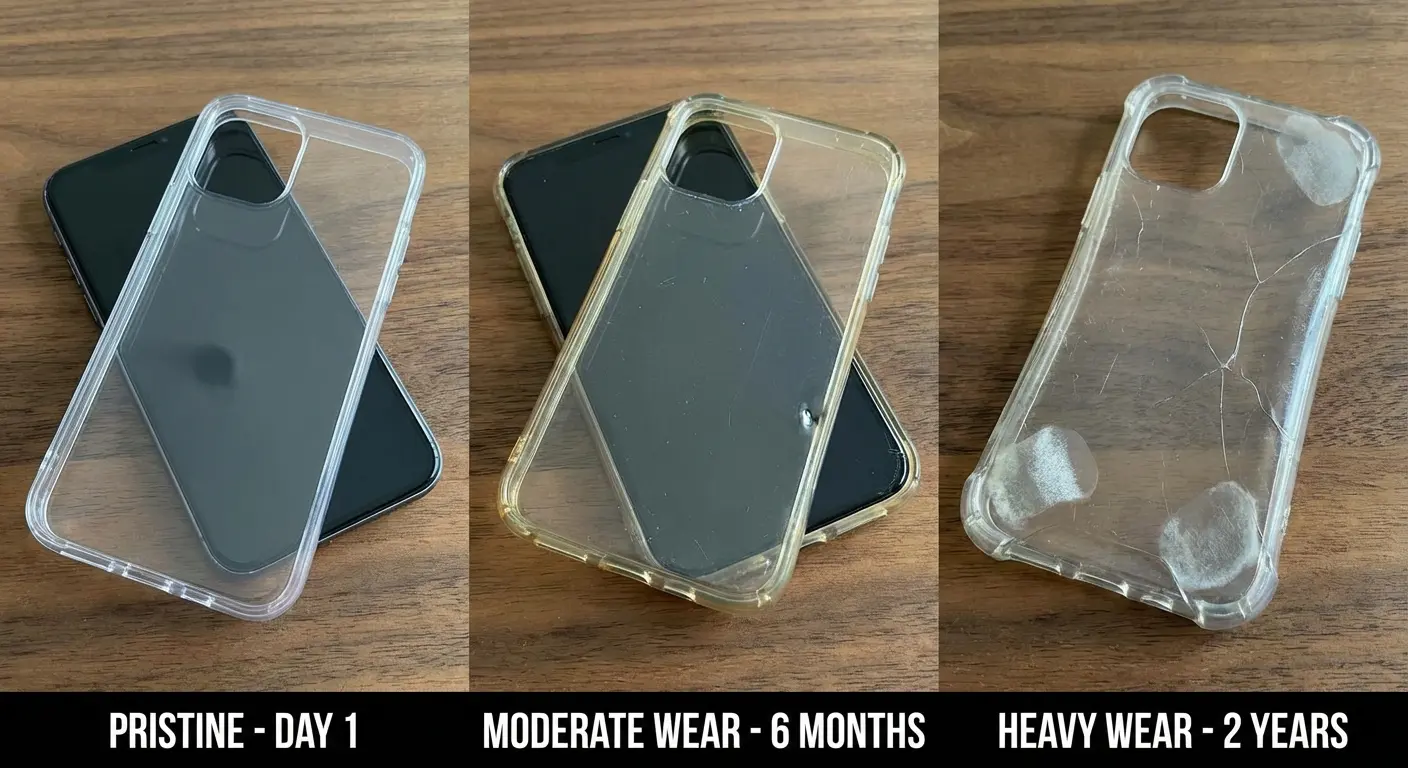
No manufacturer tests for cumulative impact damage because it would require destructive testing that makes the product unsellable. You're beta testing the case's long-term protective capability with your phone.
What Actually Predicts Protection
Drop height matters less than impact force management. A case could theoretically protect from 20-foot drops if it managed impact force effectively, while another case might fail at 4 feet if it doesn't.
The metrics that actually predict protection aren't typically reported: material hardness measured in Shore durometer, compression set resistance (how well materials recover after impact), edge lip height measuring how much the case extends beyond the screen, and corner reinforcement geometry.
You won't find these specs on most case packaging because they're not marketing-friendly numbers. "Shore 60A durometer with 8% compression set" doesn't sell cases to average consumers the way "10-foot drop protection" does, even though the former tells you more about protective capability.
Marketing Claim |
What It Actually Tests |
What It Doesn't Account For |
Real-World Relevance |
|---|---|---|---|
"10-foot drop protection" |
Single drop onto flat steel in controlled lab |
Surface texture, temperature, repeated impacts, angle variation |
Low to moderate |
"Military-grade" (without certification) |
Nothing verified; marketing term only |
Everything |
None |
"Shock-absorbing materials" |
Material exists in the case |
Material thickness, placement, compression recovery |
Varies widely |
"Raised edges for screen protection" |
Edge exists above screen |
Actual lip height measurement, uniformity around entire perimeter |
Moderate if >2mm |
"MIL-STD-810G certified" |
26 drops from 4 feet, multiple angles, functional after all drops |
Extreme temperatures, surface variations, long-term degradation |
High |
Most Cases Are Designed to Sell, Not Protect
Cases have one job: protect your phone from damage. Most cases on the market fail at this job while succeeding at a different, unstated goal: looking good while providing the illusion of protection.
The Aesthetics vs. Protection Tradeoff
Consumers say they want protection, but purchasing behavior reveals different priorities. Slim cases outsell rugged cases by substantial margins. Color options and design patterns influence purchasing decisions more than drop ratings or material specs.
Manufacturers respond to these revealed preferences by designing cases that prioritize appearance over protection. They use thinner materials, reduce edge lips to maintain sleek profiles, and choose materials based on feel and appearance rather than impact absorption capability.
You can't blame manufacturers for giving customers what they buy. But you should understand that the slim, attractive case you chose is protecting your phone significantly less than the bulkier case you rejected for aesthetic reasons.
They know you'll buy the pretty case even though it won't save your phone. And they're right.
Material Selection Failures
Effective impact protection requires materials that absorb and dissipate energy. This typically means soft, flexible materials (TPU or silicone) combined with rigid materials like polycarbonate that prevent deformation. The combination matters more than either material alone.
Hard plastic cases look protective but transfer impact force directly to the phone. They don't compress on impact, which means they don't absorb energy. Your phone experiences nearly the same force as it would without a case, just with scratches prevented.
Soft silicone cases absorb impact but lack structural rigidity. They compress effectively but allow the phone to flex inside the case, which can cause screen damage even when the case itself survives impact.
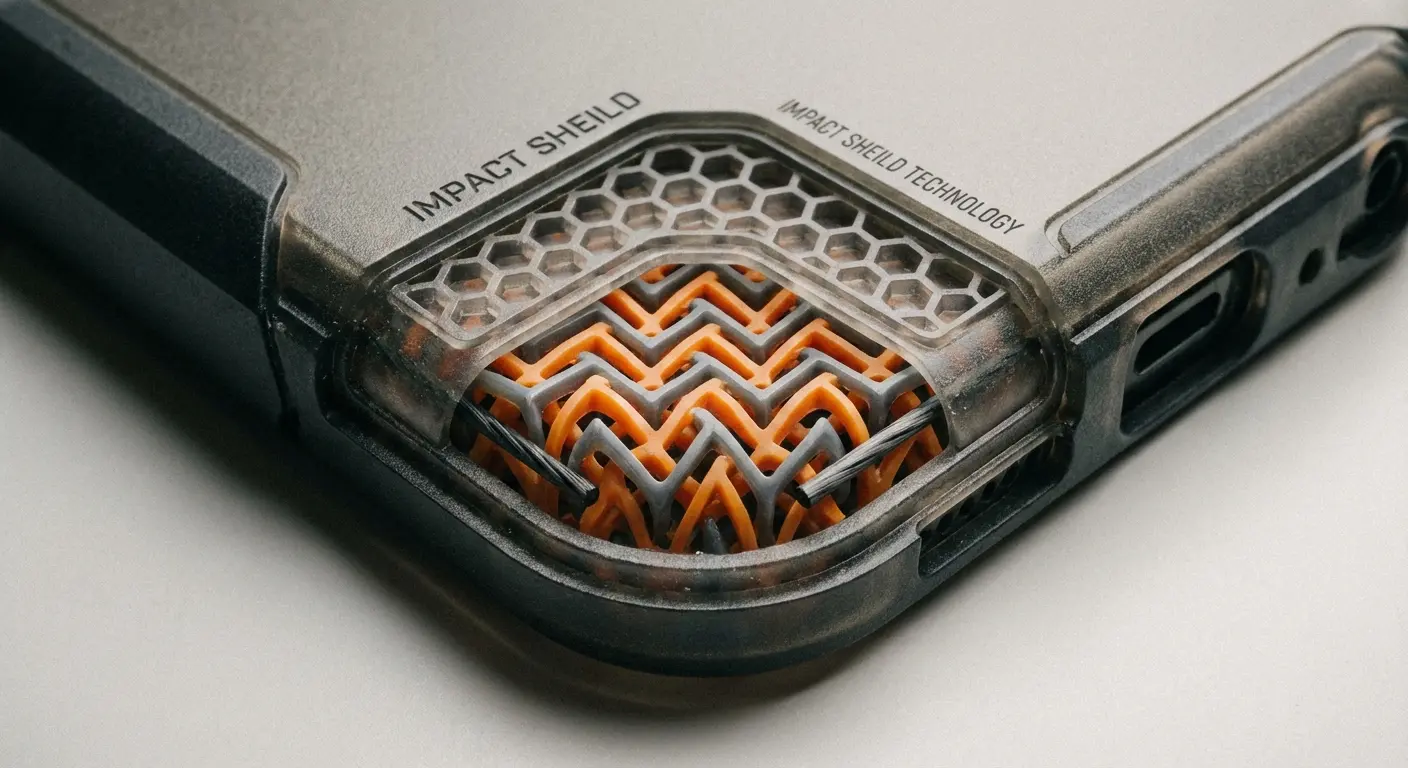
Cases that provide genuine protection use layered construction: a soft inner layer that contacts the phone and absorbs initial impact, a rigid outer shell that maintains structure and prevents excessive flex, and reinforced corners where impact force concentrates.
The Edge Lip Oversight
Your screen needs a raised edge (called a lip or bezel) that extends beyond the glass surface. When the phone lands face-down, this lip should contact the ground first, preventing the screen from touching the impact surface.
Most cases provide inadequate lip height. They offer 0.5mm to 1mm of screen protection, which sounds reasonable until you consider that concrete isn't perfectly flat. A small pebble or surface irregularity can bridge that gap and contact the screen directly.
Genuinely protective cases provide 2mm or more of raised edge protection. This looks less sleek (you'll notice the lip when swiping from screen edges), but it creates clearance between your screen and impact surfaces.
Imagine placing a picture frame face-down on a table. If the frame's edge extends 1mm beyond the glass, any grain of sand or crumb on that table can still contact and scratch the glass. Now imagine the frame extends 3mm beyond the glass. Suddenly, minor surface irregularities can't reach the glass at all. Your phone case's lip height works the same way, except instead of preventing scratches, it's preventing the catastrophic impact that shatters screens.
Corner Reinforcement Geometry
Remember that corner impacts concentrate force into the smallest possible area? Cases need additional material thickness and reinforcement specifically at corners to manage this concentrated force.
Budget cases use uniform thickness throughout. Premium protective cases use corner reinforcement structures (sometimes visible as bumpers or geometric patterns) that increase material volume exactly where impact force peaks.
This isn't about total case thickness. You can have a relatively slim case with strategically reinforced corners that outperforms a uniformly thick case without corner-specific engineering.
"Military-Grade" Is Marketing Horseshit 90% of the Time
You've seen "military-grade protection" stamped across case packaging and wondered if it means anything beyond marketing hyperbole. Let me explain the 10% where it actually means something.
MIL-STD-810G/H Explained
MIL-STD-810 is a US military testing standard that defines procedures for evaluating equipment performance under various environmental conditions. The "G" and "H" designations refer to specific revisions of the standard, with H being newer.
For phone cases, the relevant test is Method 516, which specifies drop testing protocols. The standard requires 26 drops from 4 feet onto plywood over concrete, with drops distributed across all edges, corners, and faces of the device.
This differs from typical manufacturer drop testing in important ways. The number of drops is higher (26 versus typically 1-3). The surface is specified and consistent. The test requires the device to remain functional after all drops, not just survive a single drop without visible damage.
The Certification vs. Claim Distinction
Okay, so here's where it gets tricky: "military-grade" and "MIL-STD-810G certified" mean different things.
Any manufacturer can claim their case is "military-grade" without independent verification. It's marketing language with no legal definition or testing requirement. The case might be tough, or the manufacturer might just like how the phrase sounds.
"MIL-STD-810G certified" or "MIL-STD-810G compliant" means the case has been tested according to the standard's protocols, typically by a third-party testing lab. The manufacturer should be able to provide test reports documenting compliance.
Always look for the specific standard citation and certification claim, not just "military-grade" language. Better yet, check if the manufacturer publishes test reports or lab certifications on their website.
Why This Standard Matters More Than Drop Height
MIL-STD-810 testing addresses the repeated drop problem we discussed earlier. Your case has proven it can protect through multiple impacts, not just one. It's been tested on a consistent surface, which removes some (not all) of the variability in real-world drops.
Cases that meet this standard cost more because testing is expensive and achieving compliance requires better materials and engineering. You're paying for verified protection rather than marketing claims.
That said, even MIL-STD-810 certified cases can fail in real-world conditions the standard doesn't address. Certification is a floor, not a ceiling. It tells you the case meets minimum protection requirements, not that it's indestructible.
Your Next Phone Needs Protection Before You Leave the Store
The most common time to damage a phone is within the first 30 days of ownership. You're still learning its size and weight. You're excited and distracted. You haven't developed muscle memory for its dimensions. And you probably don't have adequate protection yet.
According to Mark Spark Solutions' analysis of the U.S. smartphone repair market, the average cost for repairs and replacements has reached $302, with the nation's collective repair and replacement expenses totaling $149 billion.
The "I'll Be Careful" Myth
Look, I get it. You've been careful with phones before. You've gone months or even years without dropping your device. This history creates false confidence that you'll be equally careful with your next phone.
Statistics don't support this confidence. About 68% of smartphone owners have cracked their screen at least once. The average smartphone gets dropped four times per year. Being careful reduces risk but doesn't eliminate it, and you only need one drop at the wrong angle onto the wrong surface to destroy your screen.
The question isn't whether you'll drop your phone. It's whether you'll have adequate protection when you do.
The Cost-Benefit Math
A genuinely protective case costs between $40 and $80. A single phone screen repair costs between $129 and $379 depending on your phone model and whether you use manufacturer or third-party repair.
Protection pays for itself by preventing a single screen crack. Every additional prevented crack is pure savings, not to mention the preserved resale value, maintained warranty coverage, and avoided inconvenience of being without your phone during repair.
You might argue that you'll be careful and avoid drops entirely, saving both the case cost and repair cost. That's possible. It's also a bet with asymmetric risk. If you're right, you save $60. If you're wrong, you lose $300 plus all the hidden costs we discussed earlier (remember that $665 true cost?).
New Phone Protection Checklist
Do this before you even leave the parking lot:
Purchase a case with MIL-STD-810G certification or verified drop testing documentation
Verify the case has a raised lip of at least 2mm extending beyond the screen
Confirm corner reinforcement is present (visible bumpers or thicker material at corners)
Check that case materials include both rigid outer shell and soft inner layer
Install the case immediately, before leaving the store or taking the phone out of the box
Consider a tempered glass screen protector for additional scratch resistance
Identify high-risk scenarios in your routine (commuting, exercise, work environment)
Purchase or install magnetic mounting systems for car/bike if applicable
Document your phone's condition with photos for future resale or warranty claims
Register for manufacturer warranty and understand what voids coverage
No, seriously, install it NOW. Not when you get home.
The Immediate Protection Advantage
Your new phone is most vulnerable during the first few weeks of ownership, which is exactly when most people delay getting protection. You tell yourself you'll order a case online to save money versus buying one at the store. The case arrives in 3-5 business days. You drop the phone on day two.
This pattern repeats constantly. Repair shops report a surge in recent-model phone repairs during the weeks following major phone launches. These aren't defective phones. They're unprotected phones being used by owners who intended to get protection but hadn't yet.
Your phone needs protection before its first exposure to drop risk, not after. That means before you leave the store, before you start your commute home, before you set it down on a hard surface for the first time.
Protection as Value Preservation
Think about protection as preserving the investment you just made rather than as an additional expense. You spent $800 to $1,200 on a phone. You're protecting that investment with $60 worth of case.
Without protection, your phone begins depreciating faster the moment you start using it. Every micro-scratch, every ding, every close call with a drop reduces its condition and therefore its value. With proper protection, you maintain the phone in near-original condition throughout your ownership, which preserves resale value and gives you more flexibility when you're ready to upgrade.
You're not spending money on a case. You're preventing the loss of money you've already spent on the phone.
The cost stakes have risen dramatically with new foldable technology. For Samsung's Galaxy Z TriFold, repair costs for the folding screen range between $1,123 to $1,243 in Korea (FindArticles), nearly equivalent to purchasing another Galaxy S25 Ultra. Even with Samsung's one-time 50% discount promotion, owners still pay flagship-level prices for a single repair mistake, making upfront protection more critical than ever for premium and foldable devices.
How Rokform Solves the Protection Problem Most Cases Ignore
Okay, full disclosure time: I work for Rokform, and I'm about to tell you why our cases are different. But stick with me because after everything we just covered, this will actually make sense.
We've spent this entire article examining why phones break and why most protection fails. You're probably wondering if any case actually solves these problems rather than just claiming to.
Rokform cases address protection from a different angle than most manufacturers. Instead of asking "how can we make a protective case that people will buy," we asked "what causes phone damage and how do we prevent it."
Engineering for Real-World Impacts
Rokform cases use a polycarbonate shell with TPE (thermoplastic elastomer) corners and edges. This isn't revolutionary material science, but the implementation matters. The TPE at corners is significantly thicker than the polycarbonate shell, creating dedicated impact zones exactly where force concentrates during corner drops.
Remember that corner-impact problem we talked about earlier? This solves it.
The raised edge extends 2.5mm beyond the screen surface. That's enough clearance to protect against most surface irregularities while still allowing edge swipes for gesture controls. You'll notice the lip, but you'll also notice your screen stays intact when the phone lands face-down.
These cases meet MIL-STD-810G certification with documented third-party testing. That means verified protection through 26 drops from 4 feet, not marketing claims about drop height without testing documentation. We don't just talk about military-grade protection. We prove it.
The Mounting System That Prevents Drops
Here's where Rokform diverges from conventional case design. Every Rokform case includes integrated magnets that work with our mounting systems for cars, motorcycles, bikes, and other activities.
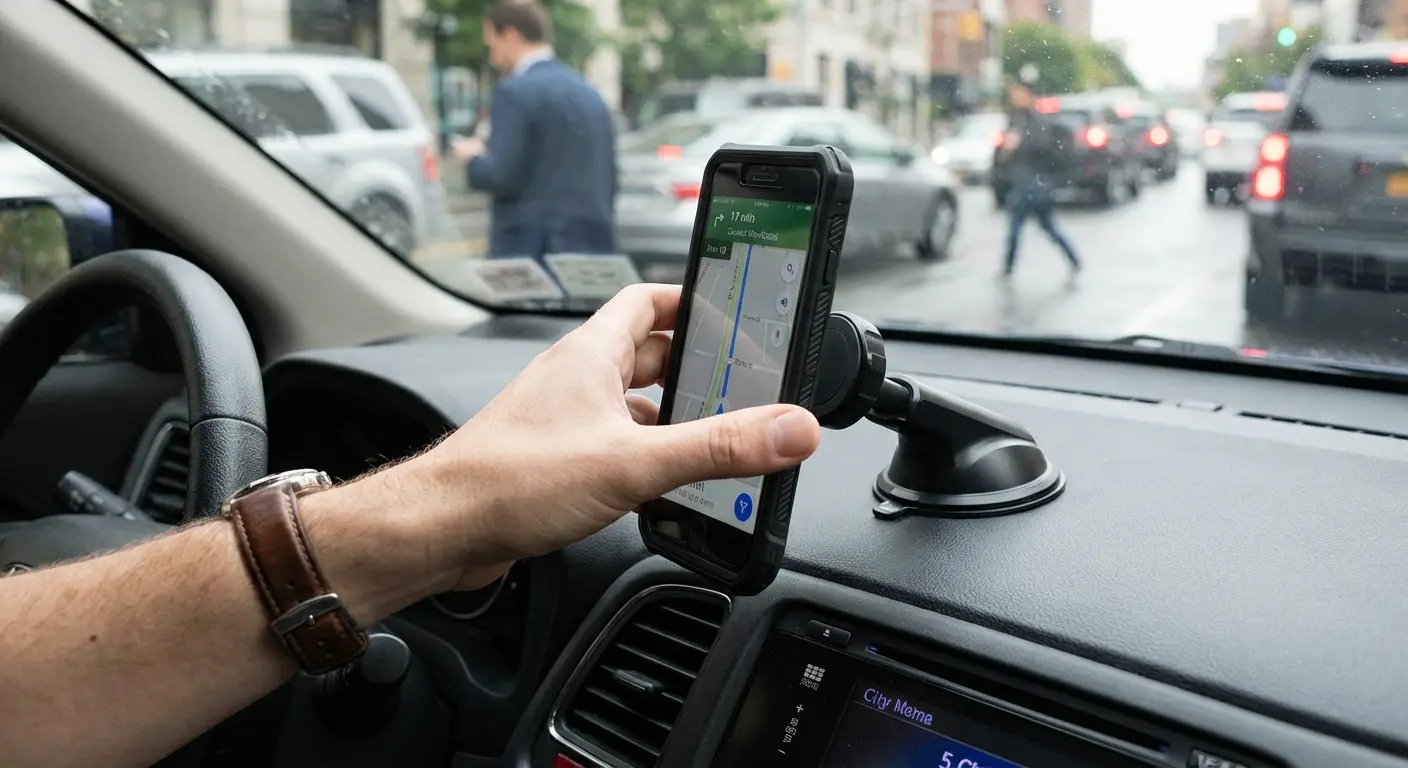
This matters for protection because the most common drop scenarios involve fumbling with your phone while doing something else: driving, biking, working out, or cooking. Rokform's magnetic mounts eliminate the fumble. Your phone locks into place instantly and stays there until you deliberately remove it.
You're not just protecting against drops. You're preventing drops from happening in situations where you're distracted or using your phone one-handed while managing other tasks. Prevention beats protection, and prevention plus protection beats either alone.
The Wallet Integration Advantage
Rokform's Fuzion wallet attaches magnetically to compatible cases, giving you phone and essential cards in one unit. This reduces the number of items you're juggling, which reduces drop risk.
You're not pulling out your phone and wallet separately. You're not setting your phone down on a precarious surface while you dig for a card. You're managing one object instead of two, which means fewer opportunities for drops and fewer moments of distraction when drops typically happen.
This isn't about features. It's about understanding that phone damage often happens during moments of divided attention, and reducing complexity during those moments reduces risk.
What Makes Rokform Different
We've engineered every aspect of our cases to address the specific failure points we've discussed throughout this article. While other manufacturers chase aesthetics or cut corners on materials, we've stayed focused on one goal: keeping your phone intact through the drops that will inevitably happen.
Our corner reinforcement isn't decorative. It's strategically designed geometry that distributes impact force away from your phone's most vulnerable points. The layered construction combines materials in ways that maximize both shock absorption and structural integrity. And our 2.5mm raised lip isn't a compromise. It's the minimum height we determined necessary to protect screens from real-world surface irregularities.
But what truly sets Rokform apart is our integrated approach to drop prevention. Other cases wait for the drop to happen, then hope their materials perform. Our magnetic mounting ecosystem prevents drops in the first place by securing your phone during the exact moments when you're most likely to fumble it (while driving, exercising, or multitasking).
We've combined MIL-STD-810G certified drop protection with a mounting system that eliminates the most common drop scenarios. That's not just better protection. That's smarter protection.
Explore Rokform's protective cases and magnetic mounting systems at rokform.com. Your phone's survival might depend on protection that works when you need it.
Final Thoughts
Phone screen repair exists because protection fails or doesn't exist at all. Every repair shop, every insurance policy, every "cracked screen" search query represents a moment when prevention could have worked but didn't.
You have more control over your phone's survival than the repair industry wants you to believe. Phones don't break because they're fragile (though they are). They break because the protection fails or because we've convinced ourselves that being careful is enough protection on its own.
The next time you're researching phone screen repair options, ask yourself why you're in that position. Was your case genuinely protective or just decorative? Did you have adequate protection at all? Were you using your phone in a situation where a mounting system would have prevented the drop entirely?
Repair is always an option. It's just the most expensive, most inconvenient, and least effective option compared to prevention. Your phone's screen is designed to last as long as the phone itself. The only question is whether you'll protect it well enough to make that happen.
We've normalized cracked screens to the point where we don't question why a $1,000 device can't survive a 3-foot fall. That normalization serves everyone except you (the person who pays for repairs, loses resale value, and uses a degraded device after every fix).
Breaking that cycle starts with understanding that screen damage isn't inevitable. It's preventable. And prevention costs a fraction of what you'll spend on repairs over your phone's lifespan.
So here's where you're at: You can spend $60 now on a case that actually works, or you can spend $300 later on a repair that makes your phone worse. You can keep feeding the repair industry, or you can starve it.
Your phone. Your call.
Just stop pretending cracked screens are inevitable. They're not inevitable. They're profitable. And the only person losing money is you.

