


Look, I used to roll my eyes at mobile gaming. Then a delayed flight and Dead Cells happened, and six hours disappeared. Now? My iPhone's basically replaced my Switch for most gaming sessions. And I'm not alone iOS games pulled in over $64 billion last year according to AppFigures' latest data, which is... kind of insane.
The App Store has like 500,000 games, and 95% of them are garbage. Trust me, I've wasted way too many Saturday mornings finding this out. Some promise console-quality experiences but deliver laggy gameplay and predatory monetization that'll make your wallet cry. Others look simple but hide incredible depth that'll consume your life.
I've tested hundreds of iOS games to put together this guide. You'll find out what separates exceptional mobile games from forgettable trash, discover 20 titles across six distinct categories, and learn how to protect your device during those intense gaming sessions that turn your iPhone into a portable heater.
Table of Contents
What Makes an iPhone Game Worth Your Time and Storage
Performance and Optimization
Monetization Models That Don't Feel Exploitative
Gameplay Depth vs. Quick Sessions
Storage Requirements and Management
Online vs. Offline Capabilities
Controller Support Options
Social Features and Multiplayer
Regular Updates and Developer Support
Action & Shooter Games
Puzzle & Strategy Games
RPG & Adventure Games
Racing & Sports Games
Casual & Hyper-Casual Games
Card & Board Games
Protecting Your Gaming Investment
Final Thoughts
TL;DR
Performance optimization matters way more than graphics. Smooth framerates and minimal battery drain separate great games from the ones you'll delete after 20 minutes
Monetization models range from fair free-to-play to premium purchases. Understanding how games make money helps you avoid the predatory BS
Storage requirements vary wildly (50MB to 20GB+). Check your available space before downloading or you'll be deleting photos at 2am
Offline capability is clutch for commuters and travelers who game without reliable internet
Controller support transforms many games from good to exceptional, especially for action and racing titles
Apple Arcade ($6.99/month) gives you access to premium games without ads or in-app purchases
Different game categories serve different needs. Quick puzzle sessions vs. deep RPG experiences that'll consume your weekend
Heat management during extended gaming sessions protects your device and keeps performance from tanking
What Makes an iPhone Game Worth Your Time and Storage
The App Store hosts over 500,000 games, but most aren't worth the download time. Knowing what to look for saves you from wasting storage space and experiencing buyer's remorse on premium titles. When evaluating the best game apps for iPhone, focus on factors that actually impact your daily gaming experience rather than whatever marketing promises are in the App Store description.
Before investing hours into a mobile game, you need to evaluate several critical factors that determine whether it'll provide genuine entertainment or become another forgotten app taking up space. Understanding these criteria helps you make informed decisions about which games deserve a spot on your device and which ones to skip, regardless of how impressive their screenshots look.
Evaluation Factor |
What to Look For |
Red Flags to Avoid |
|---|---|---|
Performance |
Steady 30-60 FPS, minimal heating, 2+ hours battery life |
Frequent stuttering, excessive heat generation, <90 min battery |
Monetization |
Optional ads, cosmetic purchases, fair progression |
Forced ads every 2-3 minutes, pay-to-win mechanics, artificial barriers |
Storage |
Reasonable size for content provided, optional downloads |
Excessive bloat, mandatory HD packs, poor compression |
Updates |
Monthly content/fixes, iOS compatibility maintained |
6+ months without updates, broken on new iOS versions |
Controls |
Responsive touch/controller support, customizable layouts |
Unresponsive inputs, forced control schemes, poor button mapping |
Performance and Optimization
Your iPhone model determines what you can realistically play. Games optimized for the A15 Bionic chip and newer will struggle on older devices, while some developers prioritize broad compatibility over cutting-edge graphics.
Here's the thing about performance: I'd rather have a steady 30 FPS than a game that bounces between buttery smooth and slideshow. Those stutters during boss fights? Yeah, that's how controllers end up through walls. A game that maintains consistent framerates beats one that fluctuates between 60 and 20 FPS every time.
Battery drain varies wildly between titles. Graphically intensive games like Genshin Impact can deplete your battery in 90 minutes, while puzzle games might give you 8+ hours of playtime. Consider when and where you'll be gaming. Long commutes require different games than home sessions near a charger.
Real-World Battery Performance: During testing, I played Genshin Impact on an iPhone 14 Pro at maximum graphics settings for exactly 94 minutes before hitting 5% battery from a full charge. The device became noticeably warm after 30 minutes. Switching to medium graphics extended playtime to 142 minutes with significantly less heating. For comparison, Monument Valley 3 ran for 6 hours and 18 minutes on the same device with minimal warmth, demonstrating how dramatically optimization and graphical demands affect real-world gaming sessions.
Heat generation becomes a real problem during extended sessions. Your iPhone throttles performance when it overheats, creating this frustrating cycle where demanding games cause heating, which reduces performance, which extends the time needed to complete tasks. Quality cases with proper heat dissipation help, but some games will always run hot.
Load times add up quick. Games that take 30+ seconds to launch or require frequent loading screens between menus get tedious fast. The best mobile games respect your time with quick launches and minimal interruptions.
Monetization Models That Don't Feel Exploitative
Free-to-play dominates mobile gaming, but implementation quality varies dramatically. Fair F2P games let you progress meaningfully without spending money, using purchases for convenience or cosmetics rather than competitive advantages. Predatory F2P creates artificial barriers that practically force spending.
Watch for pay-to-win mechanics. If paying players gain significant competitive advantages over free players in multiplayer games, the experience becomes frustrating unless you're willing to spend consistently. Games that separate paying and free players or keep purchases cosmetic maintain healthier communities.
Ad implementation matters tremendously. Optional ads that provide bonuses feel fair you choose to watch for rewards. Forced ads interrupting gameplay every few minutes destroy pacing and immersion. The worst offenders show ads after every death or level completion, turning 5-minute sessions into 10-minute ad marathons.
Premium games ($4.99-$14.99) provide complete experiences without additional costs. You pay once and own everything, which often proves cheaper than F2P games where small purchases accumulate. Premium pricing filters out casual players, sometimes creating more dedicated communities.
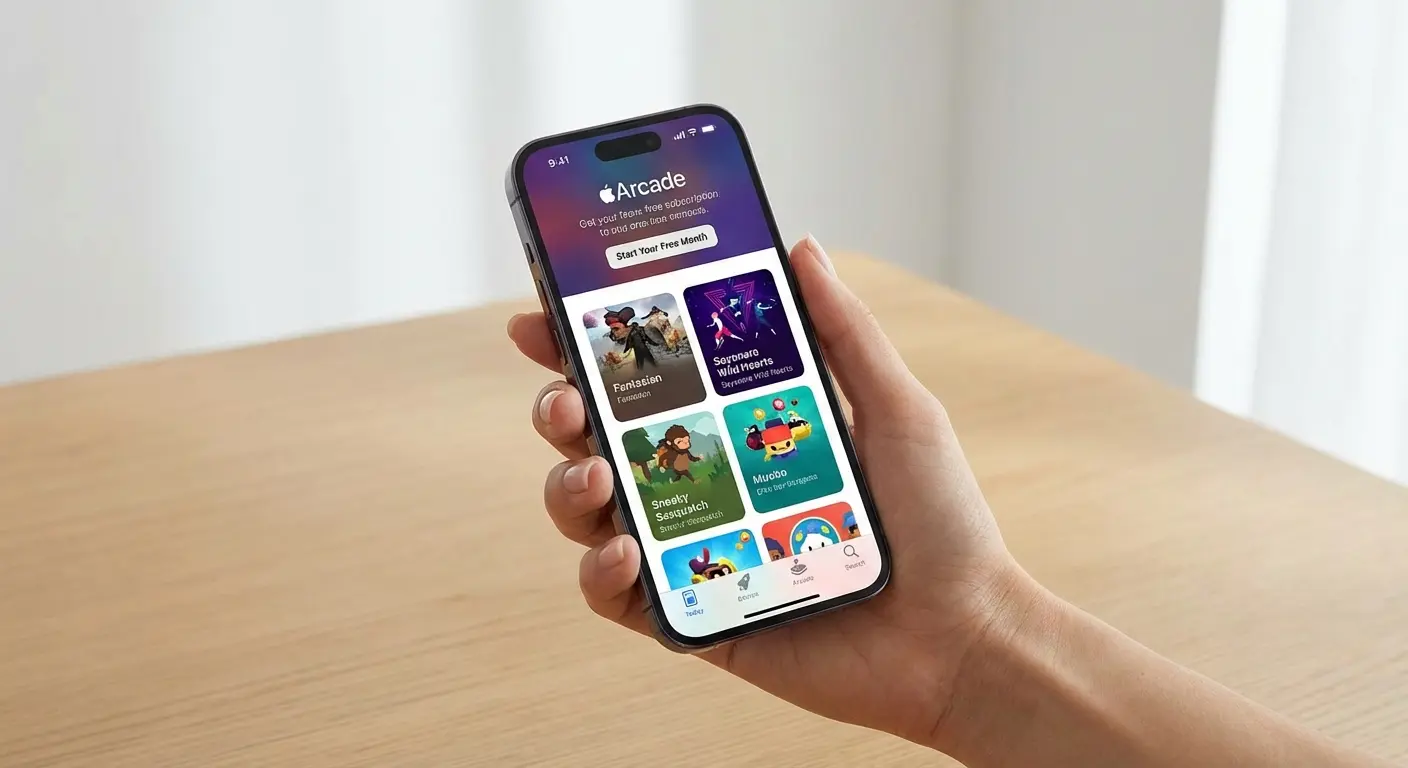
Apple Arcade ($6.99/month) offers a middle ground. Access to 200+ premium games without ads or in-app purchases. If you play multiple games monthly, the subscription pays for itself while supporting developers directly.
Season passes and battle passes ($5-$15) have become standard in competitive games. These typically offer fair value if you play regularly, providing cosmetics and progression boosts over several weeks. They create FOMO (fear of missing out) by design, so evaluate whether you'll actually complete them before purchasing.
Gameplay Depth vs. Quick Sessions
Deep, engaging gameplay keeps you returning for months or years. Games with complex systems, meaningful progression, and high skill ceilings reward investment. You'll spend time learning mechanics, optimizing strategies, and mastering techniques. These games become hobbies rather than casual entertainment.
Quick, satisfying sessions serve different needs. Puzzle games you can complete in 5 minutes, endless runners with instant restarts, or card games with 3-minute matches fit perfectly into brief breaks. They don't demand sustained attention or long-term memory of complex systems.
Some games successfully bridge both approaches. Roguelikes offer quick individual runs (15-30 minutes) while building long-term progression and mastery. Match-3 puzzle games provide bite-sized levels but string them into extended campaigns.
Consider your typical gaming windows. Commuters need games that pause instantly when you reach your stop. Home gamers can commit to longer sessions without interruption. Matching games to your lifestyle prevents frustration from forced quits or feeling rushed through content meant to be savored.
Replayability extends value significantly. Procedurally generated content, multiple character classes, or competitive multiplayer provide fresh experiences beyond initial completion. Games you'll play for 100+ hours justify larger downloads and higher prices than 5-hour linear experiences.
Storage Requirements and Management
Storage sizes vary absurdly. Wordle takes 50MB while Genshin Impact demands 20GB+. That single game could replace 400 puzzle games or thousands of photos. Always check storage requirements before downloading, especially on 64GB or 128GB iPhones.
Additional downloads after installation catch people off guard. Some games download 500MB initially, then require 3GB of additional assets before you can play. Others download content packs for specific modes or regions as needed, letting you manage what you keep installed.
Storage Tier |
Recommended Game Mix |
What to Avoid |
|---|---|---|
64GB iPhone |
2-3 medium games (2-4GB each) + 5-8 small games (<500MB) |
Multiple 10GB+ titles, games with frequent large updates |
128GB iPhone |
1-2 large games (10GB+) + 4-5 medium games + 10+ small games |
More than 3 massive titles simultaneously |
256GB+ iPhone |
Unlimited mix - download freely based on interest |
Still monitor growth from updates over time |
Cloud Gaming Alternative |
Stream unlimited games with zero local storage |
Latency-sensitive competitive games |
Updates accumulate over time. A game that launched at 2GB might grow to 4GB after a year of content additions. Developers rarely optimize old content, so file sizes bloat. Factor in growth potential for iPhone games you'll keep long-term.
Offloading unused apps helps manage space. iOS can automatically remove apps you haven't opened recently while preserving their data. You can reinstall quickly when you want to play again, though you'll need to redownload those multi-gigabyte files.
Cloud gaming services (Xbox Cloud Gaming, GeForce NOW) bypass storage limitations entirely by streaming games from remote servers. You need strong internet connections, but storage becomes irrelevant. This works better for some game types than others. Latency-sensitive competitive games suffer while turn-based games work fine.
Online vs. Offline Capabilities
Fully offline games work anywhere, anytime. You're not dependent on server availability, connection quality, or data plans. These games shine during flights, international travel (avoiding roaming charges), or areas with spotty coverage. Single-player experiences typically work offline, though some still require initial authentication.
Always-online requirements frustrate mobile gamers. Competitive multiplayer games need connections by nature, but single-player games that require constant server checks feel unnecessarily restrictive. Server outages or maintenance windows make your games unplayable despite being installed on your device.
Hybrid approaches offer flexibility. Games with offline story modes and optional online multiplayer let you choose based on your situation. Some download content for offline play while requiring connections for competitive modes or social features.
Data usage matters on cellular connections. Streaming assets or constant server communication can consume gigabytes monthly. Competitive games with real-time multiplayer use surprisingly little data (often under 50MB per hour), while games streaming high-quality assets burn through allowances quickly.
Connection quality affects gameplay. Laggy connections in real-time games cause missed inputs, teleporting enemies, and frustrating deaths. Turn-based games handle poor connections gracefully since timing doesn't matter. Consider your typical connection quality when choosing competitive games.
Controller Support Options
MagSafe-compatible controllers attach directly to your iPhone, creating a Switch-like experience. These purpose-built controllers (Backbone One, Razer Kishi) provide excellent ergonomics and zero latency since they connect via Lightning or USB-C. They're pricey ($100+) but transform your iPhone into a dedicated gaming device.
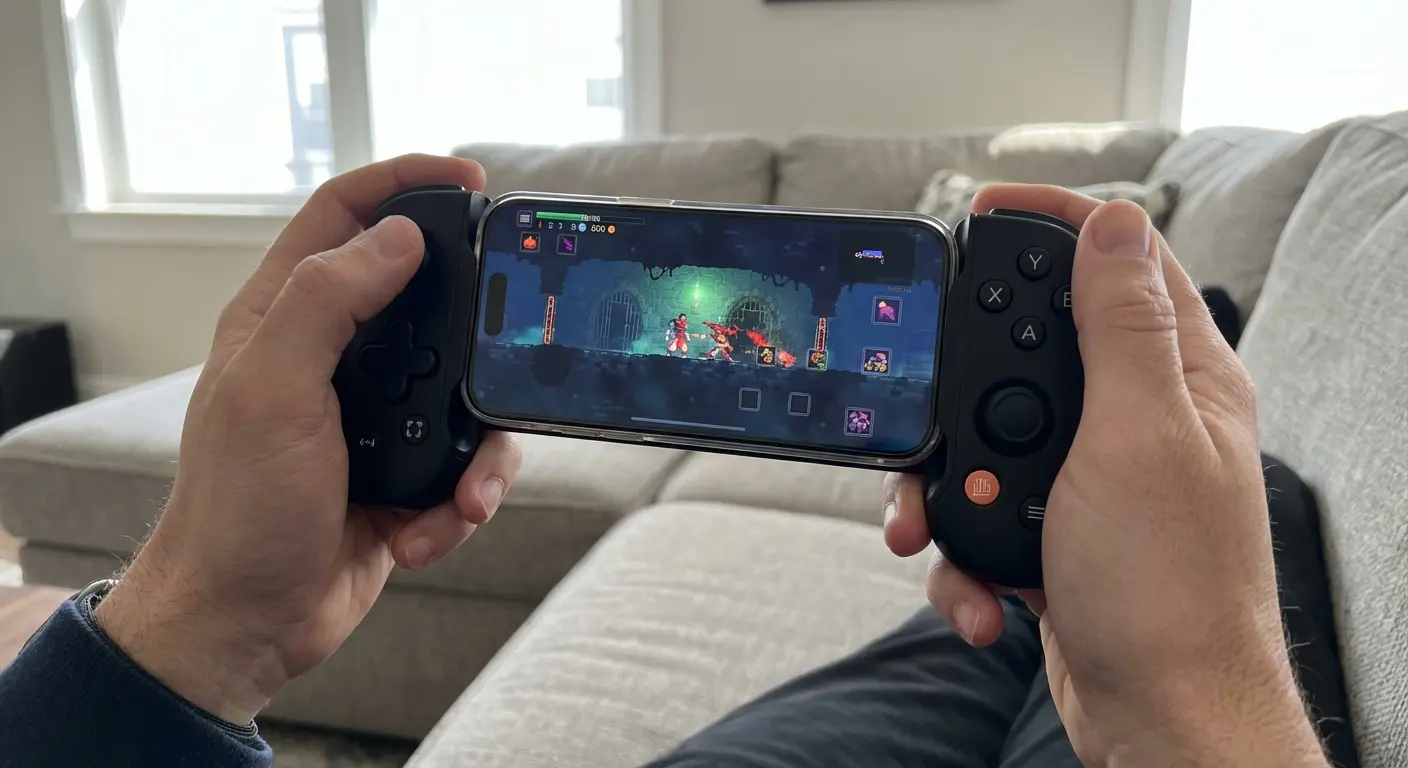
PlayStation DualSense and Xbox controllers connect via Bluetooth, offering familiar layouts if you already own consoles. Latency is slightly higher than wired controllers but imperceptible in most games. You'll need a separate phone stand or mount since these controllers don't attach to your device.
Not all games support controllers despite iOS having system-level support. Developers must implement controller mapping, and many mobile-first games don't bother. Check each game's description or reviews for controller compatibility before assuming it'll work.
Some games play way better with controllers while others work fine on touchscreen. Action games, platformers, and racing games benefit enormously from physical buttons and analog sticks. Puzzle games, card games, and strategy titles often work better with direct touch input since you're selecting specific screen elements.
Button mapping quality varies. Well-implemented controller support feels natural with intuitive layouts. Poor implementations create awkward button combinations or fail to map all functions, forcing you to touch the screen occasionally. This breaks immersion and defeats the purpose of using a controller.
Social Features and Multiplayer
Multiplayer modes range from casual to intensely competitive. Asynchronous multiplayer (taking turns over hours or days) works perfectly for mobile gaming. You play when convenient without coordinating schedules. Real-time multiplayer requires simultaneous play but creates more dynamic, engaging experiences.
Friend systems let you play with people you know rather than random strangers. Some games make this seamless with social media integration or friend codes. Others bury friend features so deeply you'll struggle to find and add people, defeating the purpose.
Guild/clan systems create persistent communities. You'll join groups of players working toward shared goals, participating in clan wars, or simply chatting. These features dramatically extend engagement for social players but mean nothing if you prefer solo experiences.
Leaderboards and rankings drive competition. Global leaderboards show how you stack up against millions of players (usually discouraging unless you're elite). Friend leaderboards create manageable competition among people you know. Seasonal resets give everyone fresh starts periodically.
Voice chat integration matters for team-based games. Built-in voice chat works but often sounds worse than Discord or FaceTime. Games that let you mute toxic players or report harassment create healthier communities.
Spectator modes and replays let you learn from better players or share your best moments. These features seem minor but significantly enhance competitive games by facilitating improvement and creating shareable content.
Regular Updates and Developer Support
Update frequency indicates developer commitment. Games receiving monthly updates with new content, balance changes, and bug fixes show active development. Games that haven't updated in six months or more are likely abandoned, meaning bugs won't be fixed and iOS compatibility issues will arise with future updates.
New iOS version compatibility is crucial. When Apple releases major iOS updates, games need patches to maintain compatibility. Developers who quickly update their games show they're invested in the player experience. Games that break on new iOS versions and stay broken for months (or forever) waste your money and time.
Content roadmaps and communication matter. Developers who share their plans and engage with communities build trust. You'll know what's coming and can decide whether future content interests you. Silent developers leave you guessing whether the game will improve or stagnate.
Bug fix responsiveness separates good developers from great ones. Every game launches with issues, but how quickly developers address them reveals their priorities. Games with game-breaking bugs that persist for weeks frustrate players who've invested time or money.
Community feedback integration shows developers care about player experience. Games that evolve based on player suggestions feel collaborative. Developers who ignore feedback or make unpopular changes without explanation lose player trust.
Live service games require ongoing support. If a game depends on servers, events, and seasonal content, developer abandonment kills the experience entirely. Check how long similar games from the developer have been supported before investing heavily in live service titles.
Action & Shooter Games
Look, competitive shooters on phones used to be a joke. Not anymore. These best iPhone games will drain your battery, heat up your phone like a space heater, and make you miss your subway stop. Worth it though.
1. Call of Duty: Mobile
Activision actually pulled this off. Real Call of Duty on your phone, not some watered-down garbage.
Graphics & Performance: If you've got an iPhone 15 or 16, crank everything to max and prepare for your phone to get toasty. Older phones? Drop those settings unless you enjoy watching slideshows. I'm running an iPhone 14 Pro and keep it on medium for ranked matches because sweaty hands + lag = instant death.
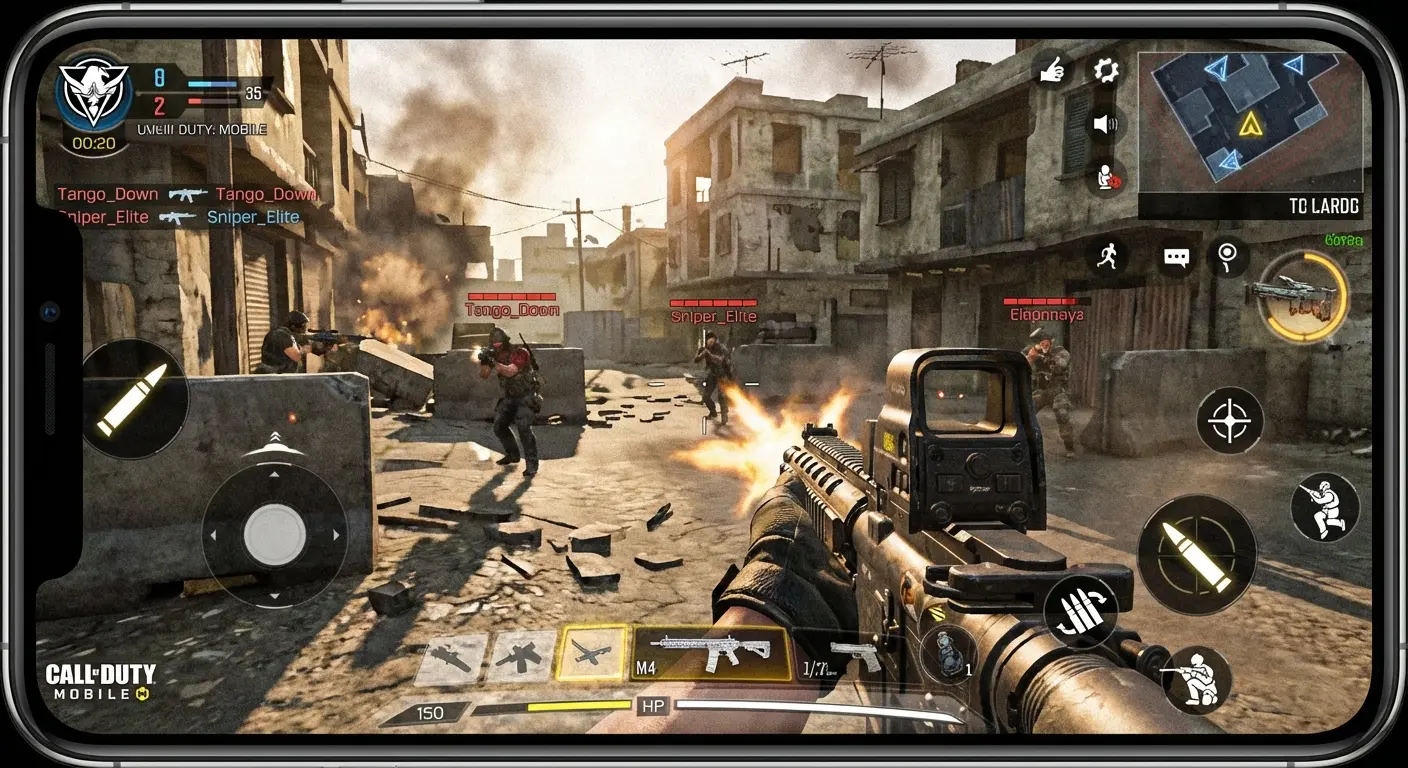
Gameplay Modes: Team Deathmatch is your standard CoD chaos. Battle Royale is... fine? It's there if you're into that. The objective modes (Domination, Search and Destroy) are where this iOS game shines because they actually require teamwork instead of just running around like a maniac.
Monetization: Battle pass is ten bucks and honestly pretty fair. All the actual weapons are free you're just paying for skins that make you look cool while getting destroyed by some 14-year-old in Taiwan. I've spent maybe $30 total and never felt forced to.
Storage: 3.5-4GB initial download with additional map packs that download automatically. You can manage which maps stay installed to save space, though this limits which modes you can play.
Controller Support: Get one. Seriously. Touch controls work, but controller players will destroy you in ranked. The game tries to separate inputs, but... yeah.
Why It Works: The game respects Call of Duty's legacy while adapting intelligently for mobile. Matches are shorter than console versions (typically 5-10 minutes), perfect for mobile sessions. The ranked system provides long-term progression, while casual modes let you experiment without pressure.
Real talk: Battery drain is brutal. Maybe 90 minutes if you're lucky. Your phone will get hot enough to fry an egg after 30 minutes on max settings. And forget playing without WiFi this thing needs constant connection or you're screwed.
2. Dead Cells+
This is the game that converted me to mobile gaming. Brutally hard, incredibly satisfying, and exclusive to Apple Arcade.
Gameplay Mechanics: You're gonna die. A lot. Like, embarrassingly often. But each death teaches you something, and the permanent upgrades mean you're actually progressing even when you suck. Combat rewards aggression play scared and you'll get wrecked. You'll collect cells from defeated enemies to unlock permanent upgrades, weapons, and abilities between runs. The variety of weapons and builds keeps gameplay fresh across hundreds of runs.
Graphics: Gorgeous pixel art with fluid 60 FPS animation optimized for iPhone's OLED displays. The rich colors and deep blacks create stunning visual moments, especially during boss fights with screen-filling attacks and particle effects.
Progression System: The unlock system is chef's kiss. New weapons, abilities, and build options keep opening up. I'm 200 hours in and still finding new combos. Multiple difficulty levels and alternate endings provide goals for skilled players.
Monetization: Apple Arcade subscription. $7/month. No other BS. No ads, no in-app purchases, no artificial barriers. You're getting the complete experience that originally launched on PC and consoles.
Storage: 1.2GB, reasonable for the amount of content provided.
Why It Works: Runs take 30-60 minutes (or 5 minutes when you die early, which happens). Perfect for commutes. Works offline. And yeah, get a controller the precision required for higher difficulties is rough on touchscreen.
Real talk: Even on iPhone 11 it runs smooth. Battery drain is moderate. The difficulty is brutal but fair, which somehow makes it more addictive? I've thrown my phone exactly once. Caught it mid-air. We're good.
3. PUBG Mobile
The OG mobile battle royale. Still relevant because they keep updating it and the gunplay actually feels good.
Game Modes: Classic 100-player battle royale across multiple maps (Erangel, Miramar, Sanhok, Vikendi) offers the full PUBG experience. Arena mode for quick warmups. The limited-time events are hit or miss some are genuinely fun, others are... why?
Tactical Depth: Vehicles matter. Sound matters. Positioning matters. This isn't just "shoot the guy" you need actual strategy. The ballistics model means long-range shots require leading targets and accounting for drop. It's satisfying when you nail it.
Competitive Scene: Ranked system is addictive if you're into that. I peaked at Diamond III before realizing I don't have time for this lifestyle. Esports integration means you're playing the same game as professional tournaments. Clan tournaments provide organized competition for groups.
Graphics & Performance: Excellent optimization with adjustable graphics settings. You can prioritize framerates or visual quality based on your device and preferences. The game runs smoothly on iPhone 11 and newer, though battery drain is significant during matches.
Storage: 2.5-3GB with optional HD resource packs that improve textures and effects. You can manage which maps and resources stay installed.
Monetization: Free-to-play with purely cosmetic purchases. Weapon skins, character outfits, and emotes have zero gameplay impact. The competitive environment is completely fair. Skill determines outcomes, not spending.
Why It Works: Matches balance intensity with downtime. You'll have quiet looting phases punctuated by intense firefights. The game respects different playstyles, whether you prefer aggressive hot-dropping or cautious edge-playing. Squad play with friends creates memorable moments and hilarious failures.
Real talk: Matches are 25-35 minutes, so clear your schedule. Voice chat is essential for squad coordination. Landed Pochinki last week, coordinated through voice, won the firefight. Without comms we'd have been picked off like idiots. The learning curve is steep and you'll die to people you never even saw for the first 50 matches. That's normal.
Puzzle & Strategy Games
These prove your phone can make you think instead of just giving you carpal tunnel.
4. Monument Valley 3
Interactive art disguised as a puzzle game. Seriously gorgeous.
Art Direction: M.C. Escher meets minimalist architecture. Every level is screenshot-worthy. The OLED blacks make this game pop in ways that'll make you stop and just... look at it. Color palettes change between chapters, creating distinct emotional tones.
Puzzle Design: You're manipulating impossible geometry to create paths. It's clever without being frustrating. The new two-character mechanic (controlling two characters simultaneously) adds complexity but never feels cheap. New mechanics include time-manipulation elements that add layers without frustration.
Audio Design: Award-winning dynamic soundtrack responds to your actions. Music swells when you solve puzzles and shifts when you manipulate the environment. Sound effects provide subtle feedback that guides you toward solutions without explicit hints.
Narrative: Wordless storytelling through environmental design and character animation. The game explores themes of connection, loss, and discovery without dialogue, letting you interpret meaning personally.
Storage: 850MB, reasonable for the visual quality delivered.
Monetization: Premium purchase ($9.99) with no additional costs. You're getting the complete experience with no ads or in-app purchases interrupting the carefully crafted atmosphere.
Why It Works: Puzzles are challenging enough to feel satisfying but never frustrating. The game provides subtle hints through visual design rather than explicit tutorials. Each level takes 10-20 minutes, making it perfect for playing in chapters rather than requiring marathon sessions.
Real talk: Runs flawlessly on all recent iPhones with minimal battery drain. Fully playable offline, perfect for flights or commutes. The 8-12 hour runtime might feel short for the price, but the experience is memorable enough to justify the cost. Additional challenge modes extend playtime for completionists.
5. Slay the Spire
This game has consumed 300+ hours of my life. Deck-building roguelike that's perfectly suited for mobile.
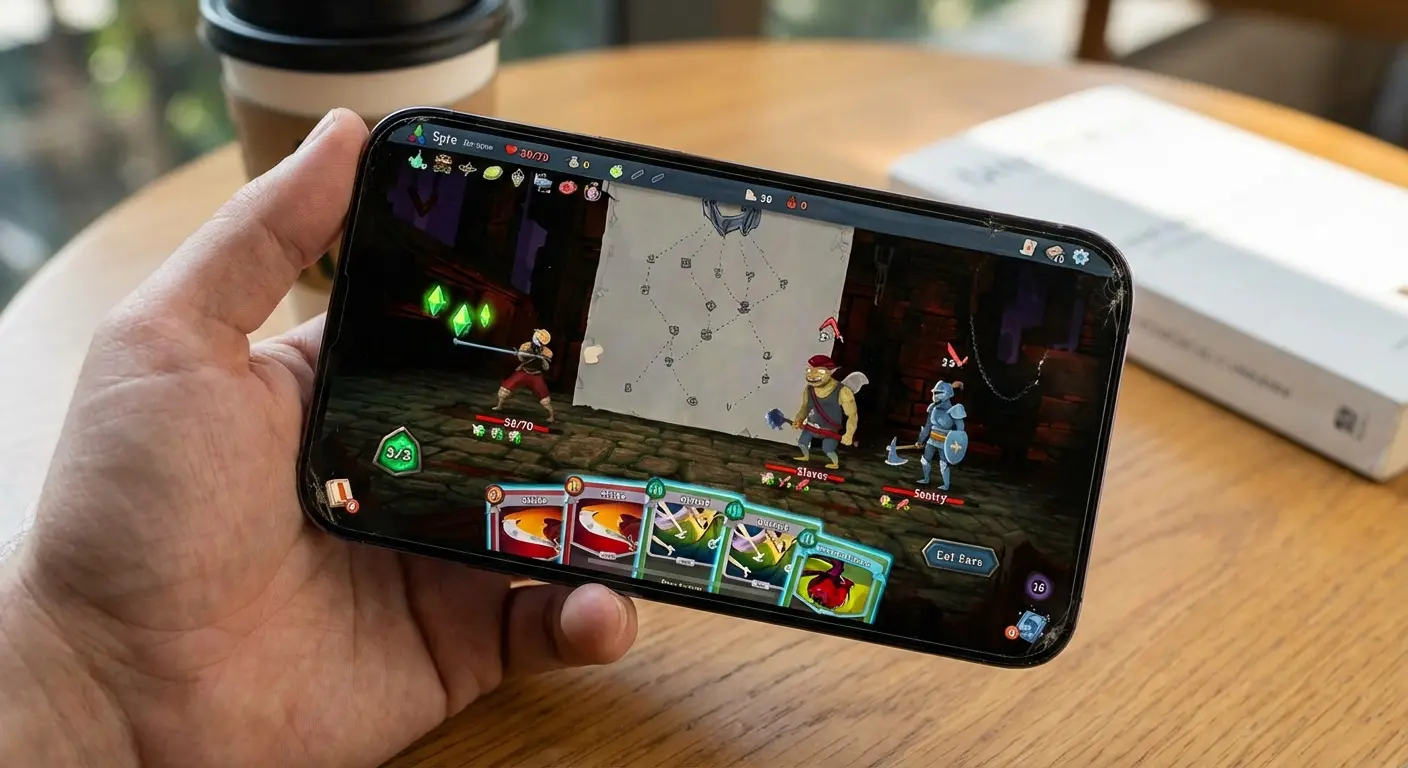
Strategic Depth: Three distinct characters (Ironclad, Silent, Watcher) each have unique card pools and playstyles. The Ironclad focuses on strength scaling and exhausting cards. The Silent emphasizes poison and card draw. The Watcher manipulates stances for explosive damage. A fourth character (Defect) unlocks after initial completion, adding orb-based mechanics.
Deck Building: Sometimes removing cards is better than adding them. Keeping your deck tight increases consistency. Relics change everything one relic can enable an entire strategy you couldn't do before. You'll draft cards after each combat, choosing between immediate power and long-term synergies.
Progression: Unlockable cards and relics expand strategic options. Ascension levels (20 difficulty modifiers) provide virtually endless challenge. I'm stuck on Ascension 15 and it's kicking my ass, but I keep coming back. Each ascension level adds new enemy behaviors, stronger opponents, or restrictions that force you to adapt strategies.
Interface: Perfectly adapted for touchscreen with intuitive drag-and-drop mechanics. Card text is readable, targeting is clear, and the game pauses whenever you need to think. You can play one-handed comfortably during commutes.
Storage: 650MB, tiny for the amount of content.
Monetization: Premium purchase ($9.99) with no additional costs. You're getting the complete PC experience with all updates and content.
Why It Works: Runs take 45-90 minutes, perfect for extended mobile sessions. The "one more run" appeal is real. Losses feel instructive rather than punishing. Procedural generation ensures no two runs are identical, even after hundreds of hours.
Real talk: Minimal system requirements mean excellent battery efficiency. Fully offline gameplay. The learning curve is brutal expect to lose your first 10+ runs while figuring out what cards actually synergize. That's the game, not you being bad. No controller support needed. The game was designed for mouse input and translates perfectly to touch.
6. Clash Royale
Supercell's real-time strategy game. Still relevant after all these years because the core gameplay loop is addictive.
Gameplay: Deploy troops, spells, and defenses from your 8-card deck to destroy opponent towers. Elixir generates automatically, creating resource management decisions. Do you defend efficiently or push aggressively? Matches last exactly 3 minutes (plus overtime if tied), making them perfect for mobile gaming.
Deck Building: Constructing effective decks requires understanding card synergies, elixir costs, and meta-game trends. You'll need win conditions (cards that reliably damage towers), defensive options, and spells for specific situations. The 8-card limit forces difficult choices about what to include.
Competitive Structure: Trophy-based ranking system determines matchmaking. Seasonal leagues reset trophies partially, giving everyone fresh starts. Special challenge modes with unique rules (draft mode, triple elixir, mirror matches) are honestly more fun than regular ladder.
Clan System: Join clans for friendly battles, card trading (request cards you need, donate cards you have extras of), and clan wars. Clan wars are multi-day events requiring coordination and strategy across multiple battles.
Progression: Level up cards by collecting duplicates. Higher card levels provide stat advantages, creating the game's primary pay-to-win element. However, certain modes (challenges, tournaments) use tournament-standard levels, equalizing competition.
Storage: 450MB, impressively small for the content.
Monetization: Free-to-play with optional purchases for chests (containing random cards) and progression acceleration. The Gold Pass ($4.99/month) provides significant value if you play regularly. Progression as free-to-play is slow but possible. Expect months to build competitive decks.
Why It Works: 3-minute matches fit perfectly into brief gaming windows. The game is easy to learn but takes years to master, with complex interactions between 100+ cards. Regular balance updates and new card releases keep the meta-game evolving.
Real talk: Optimized for smooth gameplay even on older devices. Requires internet connection for all modes. The pay-to-win elements are real you'll face maxed accounts in mid-ladder and it sucks. The emote system is either hilarious or toxic depending on who you're playing. You can mute opponents. I do this approximately 80% of the time because people are the worst.
7. The Room: Old Sins
Intricate puzzle boxes inside a creepy dollhouse. If you like feeling smart, this is your game.
Puzzle Complexity: Incredibly detailed 3D environments with interactive objects everywhere. You'll manipulate physical mechanisms, turning gears, sliding panels, finding hidden compartments, and assembling complex devices. The supernatural eyepiece reveals hidden messages and alternate dimensions, adding layers to puzzles.
Puzzle Design Philosophy: Each room is a self-contained puzzle box with multiple interconnected mechanisms. Solving one puzzle often reveals components needed for another, creating satisfying chains of discovery. The game provides subtle hints through visual design and audio cues without explicit tutorials.
Atmosphere: Dark, mysterious, genuinely creepy sometimes. You're investigating the disappearance of an engineer and his wife, uncovering their secrets through the dollhouse rooms. Outstanding audio design creates tension. Creaking wood, mechanical clicks, and ambient sounds immerse you in the mystery.
Touch Interface: Specifically designed for touchscreen interaction. Pinching to zoom, rotating objects, and manipulating mechanisms feels natural and satisfying. The tactile feedback (haptics on supported devices) enhances the sense of physically interacting with puzzle boxes.
Graphics: High-quality 3D rendering with detailed textures and lighting. The game showcases iPhone display quality with rich colors and deep shadows. Each room has distinct visual themes: Victorian study, nautical observatory, Egyptian tomb, keeping environments fresh.
Storage: 1.5GB, larger due to high-quality 3D assets.
Monetization: Premium purchase ($4.99) with no additional costs. Complete experience included.
Why It Works: Puzzles are challenging enough to feel rewarding but include hint systems for when you're stuck. The 4-6 hour runtime is perfectly paced, long enough to feel substantial but not padded with filler. The game respects your intelligence, trusting you to figure out solutions without hand-holding.
Real talk: Runs smoothly with impressive graphics on iPhone 11 and newer. Fully offline experience, perfect for travel. The game is best played with headphones to appreciate the audio design. Some puzzles require precise manipulation that can be finicky on smaller iPhone screens (SE models). No replay value once you've solved everything, but the initial experience is memorable.
RPG & Adventure Games
These games demand serious time commitments but reward you with rich worlds, character development, and stories that stick with you long after completion. When searching for the best game apps for iPhone in the RPG category, expect substantial downloads and gameplay sessions measured in dozens of hours rather than minutes.
Game |
Playtime |
Storage |
Best For |
Avoid If You |
|---|---|---|---|---|
Genshin Impact |
200+ hours |
20GB+ |
Open-world exploration, anime aesthetics, gacha collectors |
Have limited storage, dislike gacha mechanics, want quick sessions |
Baldur's Gate EE |
40-60 hours |
3.5GB |
Classic CRPG fans, D&D enthusiasts, tactical combat lovers |
Prefer action combat, dislike reading, want modern graphics |
Stardew Valley |
Infinite |
500MB |
Relaxation, farming sims, creative freedom |
Need competitive elements, want action-focused gameplay |
Fantasian |
40-60 hours |
5GB |
JRPG fans, turn-based combat, unique visuals |
Dislike random encounters, prefer open-world freedom |
8. Genshin Impact
An open-world action RPG that rivals console games in scope and production value. You're exploring the fantasy world of Teyvat, collecting characters with unique abilities, and uncovering an epic storyline that continues expanding.
World Design: Seven distinct regions inspired by real-world cultures: Mondstadt (Germany), Liyue (China), Inazuma (Japan), Sumeru (Middle East/South Asia), Fontaine (France), Natlan (Latin America), and the upcoming Snezhnaya (Russia). Each region has unique aesthetics, music, environmental puzzles, and gameplay mechanics. The world is massive and densely packed with secrets, treasure chests, and side quests. I've spent 200+ hours and still find new stuff.
Character System: Gacha-based character collection with 80+ playable characters. Each has unique elemental abilities (Pyro, Hydro, Electro, Cryo, Anemo, Geo, Dendro) that combine for powerful elemental reactions. Team building involves creating synergies between four characters you can switch between during combat. The gacha rates are brutal (0.6% for 5-stars), but you can earn enough free currency to guarantee specific characters every few months if you're selective. Whales spend thousands. Don't be a whale.
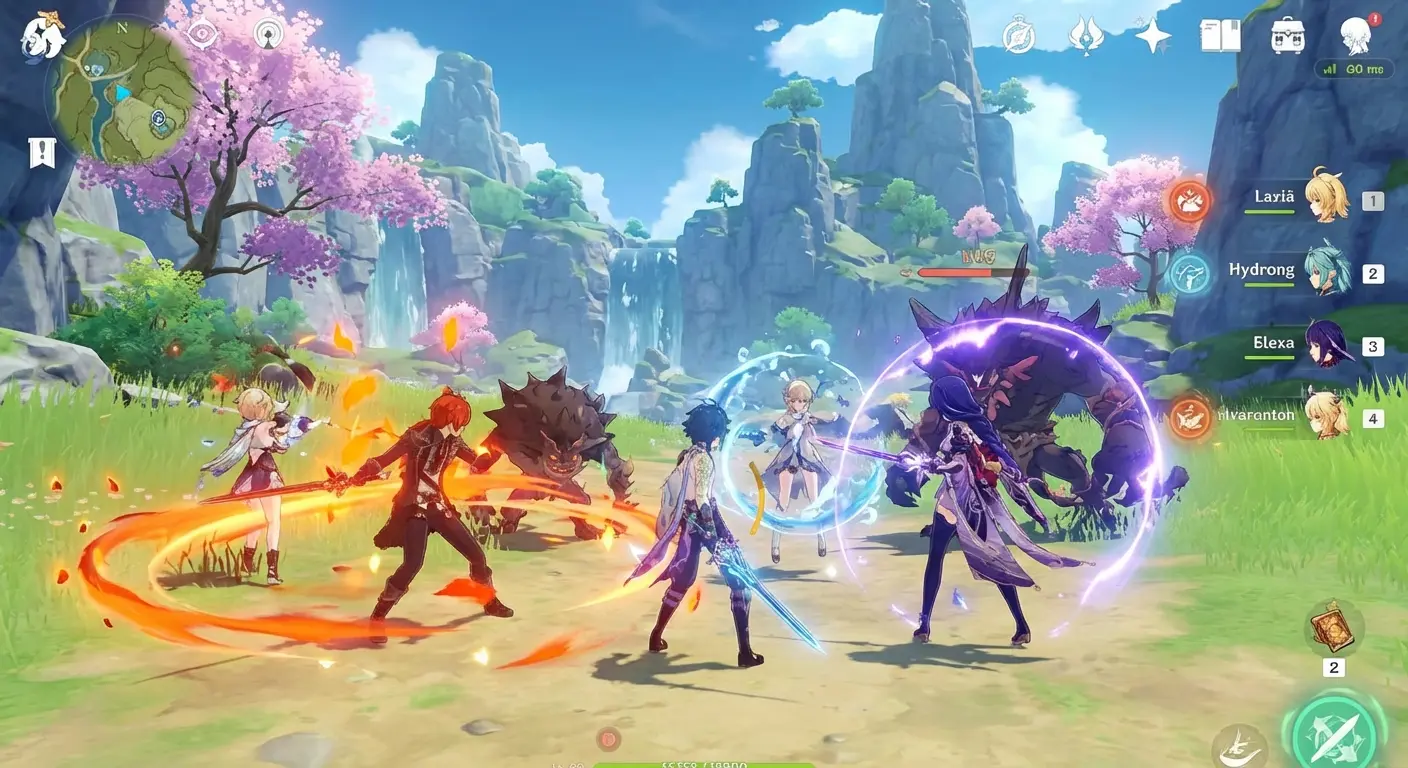
Combat: Real-time action combat requiring character switching and elemental strategy. Boss fights demand pattern recognition and team synergy. The combat system has surprising depth. Animation canceling, energy management, and reaction optimization separate casual players from skilled ones. Button mashing works until it doesn't.
Progression: Adventure Rank gates story progress and world difficulty. Character progression involves leveling, ascending (using materials farmed from bosses), upgrading talents, and equipping artifacts (gear with randomized stats). The endgame revolves around optimizing character builds for challenging content.
Content Updates: Major updates every 6 weeks add new story chapters, characters, events, and regions. The consistent content schedule keeps players engaged long-term.
Storage: 20GB+ (largest on this list by far). You'll need significant free space, and the game downloads additional resources as you explore new regions.
Monetization: Free-to-play with gacha mechanics for characters and weapons. The game is generous with free currency. You can earn enough to guarantee specific characters every few months. However, gacha rates are low (0.6% for 5-star characters), and "whales" who want every character will spend thousands. The game is fully enjoyable without spending if you're selective about which characters you pursue.
Why It Works: The production value is absurd for a free mobile game. Voice acting in four languages, orchestral soundtrack, and graphics that push iPhone hardware to its limits. The story is genuinely engaging with well-developed characters. Exploration feels rewarding with secrets hidden everywhere.
Real talk: Demanding. Requires iPhone 11 or newer for optimal experience. Significant battery drain (90-120 minutes per charge) and heating during intensive sessions. You can play story content solo offline, but many features (events, co-op, gacha pulls) require internet connection. The daily commission system creates FOMO if you miss days. Resin (energy system) limits how much you can farm daily, which some players find frustrating.
9. Baldur's Gate: Enhanced Edition
The classic PC RPG remastered for iOS offers one of the deepest role-playing experiences available on mobile. This is old-school CRPG gaming with all its complexity and jank.
Gameplay: Traditional CRPG with real-time-with-pause combat. Battles play out in real-time, but you can pause anytime to issue commands, assess situations, and coordinate party actions. Combat uses Advanced Dungeons & Dragons 2nd Edition rules: THAC0, saving throws, spell slots, and all the complexity that entails. If you know what those mean, you'll love this. If not... there's a learning curve.
Character Creation: Choose from multiple races (human, elf, dwarf, halfling, gnome, half-elf, half-orc) and classes (fighter, mage, cleric, thief, ranger, paladin, druid, bard, plus multiclass combinations). Your choices affect dialogue options, quest solutions, and party composition. The character system has incredible depth for players who enjoy optimization.
Story: Epic fantasy narrative spanning 40-60 hours. You're investigating iron shortages and political tensions while uncovering your mysterious heritage. The story features meaningful choices affecting outcomes and companion relationships. Six party members accompany you, each with personal quests and distinct personalities. The writing is excellent.
Interface Adaptation: Redesigned UI for touchscreen while maintaining the depth of the original. Zoom functionality helps with precise clicking on smaller screens. The interface takes time to learn but becomes intuitive once you understand the systems.
Graphics: Enhanced from the 1998 original with improved textures and UI, though the isometric perspective and pre-rendered backgrounds show their age. The art style has charm, but this isn't a graphical showcase.
Storage: 3.5GB, substantial but justified by content volume.
Monetization: Premium purchase ($9.99) with optional DLC expansions (Siege of Dragonspear adds 25+ hours). Fair pricing for the amount of content.
Why It Works: This is a complete, uncompromised RPG experience on mobile. The writing is excellent, the world is rich with lore, and the tactical combat rewards planning and strategy. High replayability due to class/race choices and different party compositions.
Real talk: Runs well on modern iPhones with occasional slowdown in particle-heavy battles. Completely offline. Controller support is highly recommended for extended play sessions. Touchscreen works but feels clunky for combat. The learning curve is steep if you're unfamiliar with D&D rules. Text-heavy with extensive dialogue and item descriptions (not ideal for playing on smaller screens). Save frequently. The game doesn't auto-save, and deaths can cost significant progress.
10. Stardew Valley
A farming simulation RPG that's consumed 200+ hours of my life. You're inheriting your grandfather's old farm and building it into whatever you want. There's no wrong way to play and that's beautiful.
Gameplay Loop: Plant crops, raise animals, mine for resources, fish, forage, and socialize with townspeople. Each in-game day lasts 13-20 real minutes depending on how efficiently you work. Seasons change every 28 days, affecting which crops grow and what fish are available.
Content Depth: Farming is just the beginning. Explore caves filled with monsters and resources. Complete community center bundles that unlock new areas and features. Romance and marry one of twelve eligible villagers. Participate in seasonal festivals. Discover secrets hidden throughout the valley. The game constantly introduces new systems and goals.
Progression: Your farm evolves from overgrown mess to efficient operation. Unlock new tools, buildings, and automation (sprinklers, auto-feeders) that reduce daily chores. Skill leveling in farming, mining, fishing, foraging, and combat provides tangible benefits and new crafting recipes.
Multiplayer: Co-op farming with up to three friends (added in updates). Share a farm, divide responsibilities, and work together toward goals. Multiplayer adds new dynamics but isn't necessary for a complete experience.
Freedom: No energy systems, timers, or pressure. Play at your own pace. Focus on whatever aspects you enjoy. Some players optimize crop profits, others prioritize relationships, some spend most time fishing. The game accommodates all playstyles. Min-max profits or just vibe. Both are valid.
Storage: 500MB, tiny for the content provided.
Monetization: Premium purchase ($4.99). All updates free, including massive content additions (1.5 and 1.6 updates added dozens of hours of new content).
Why It Works: The game is incredibly relaxing yet engaging. There's always something to do, but nothing feels mandatory. The pixel art style is charming, and the soundtrack is soothing. Character writing is surprisingly good. Villagers have depth and development arcs.
Real talk: Excellent performance. Runs on virtually any iPhone with minimal battery impact. Fully playable offline (online required only for multiplayer). Potentially infinite playtime. Many players report 200+ hours. Multiple farm layouts provide different challenges. The game can feel overwhelming initially with so many systems, but you'll naturally learn through playing. Touch controls work well, though controller support is available.
11. Fantasian
From Final Fantasy creator Hironobu Sakaguchi, Fantasian combines handcrafted diorama environments with modern JRPG mechanics for a unique experience exclusive to Apple Arcade.
Visual Style: Unique aesthetic using physical dioramas photographed and digitized. Environments have a tangible, miniature quality unlike any other iOS game. The attention to detail in each diorama is remarkable. You can see individual textures and imperfections that make the world feel real.
Battle System: Turn-based combat with the innovative "Dimengeon" system. Random encounters can be stored in a separate dimension to fight later in bulk. This is genius because it reduces interruptions during exploration while maintaining traditional JRPG combat. Boss fights are excluded from Dimengeon, maintaining their importance.
Combat Mechanics: Aim-based attacks let you target multiple enemies if positioned correctly. Skill trajectories matter. Some attacks hit in lines, others in arcs or curves. This adds spatial strategy to traditional turn-based combat.
Story: Classic JRPG narrative about memory, identity, and saving multiple worlds. The story spans two parts (40-60 hours total) with well-developed characters and emotional moments. The writing quality is high, though the plot follows familiar JRPG tropes.
Progression: Character growth through leveling and equipment. Skill trees provide customization options. The difficulty curve is balanced, challenging without being frustrating, with adjustable difficulty settings.
Music: Nobuo Uematsu (Final Fantasy composer) created the soundtrack. The orchestral score enhances emotional moments and creates atmosphere during exploration.
Storage: 5GB, large but justified by the visual quality and content volume.
Monetization: Apple Arcade exclusive ($6.99/month). No additional costs beyond the subscription.
Why It Works: The diorama aesthetic creates a distinctive visual identity. The Dimengeon system respects your time by letting you control when you engage with random battles. The story is engaging with memorable characters. Production values are exceptional for a mobile-exclusive game.
Real talk: Optimized for iPhone with beautiful graphics that don't cause excessive heating. Fully playable offline after download. The 40-60 hour runtime is substantial. This is a commitment. Turn-based combat won't appeal to everyone, especially if you prefer action-oriented gameplay. The game is linear with limited exploration freedom compared to open-world RPGs.
Racing & Sports Games
These games prove that iPhone can deliver compelling racing and sports experiences, whether you want arcade fun or simulation depth.
12. Mario Kart Tour
Nintendo's iconic kart racer adapted for mobile with one-handed portrait mode controls. The game simplifies Mario Kart for touchscreens while maintaining the series' chaotic charm.
Racing Mechanics: Simplified steering with automatic acceleration. Swipe to drift, tap to use items. The controls are accessible but have depth. Mastering drift timing and item usage separates skilled players from casual ones. You can switch to manual drift for more control.
Content: Rotating two-week tours featuring themed tracks from throughout Mario Kart history (N64, GameCube, Wii, DS tracks) plus new city-based courses (Tokyo, Paris, London, New York). Each tour introduces new characters, karts, and gliders through the gacha system.
Multiplayer: Real-time races against players worldwide. Matchmaking is based on player level and tier. Multiplayer can be chaotic and fun, though connection issues occasionally cause lag.
Progression: Level up characters, karts, and gliders to increase performance on specific tracks. Each item has favored courses where they provide bonuses. This creates strategic decisions about which items to invest resources into.
Gold Pass: Monthly subscription ($4.99) provides 200cc mode (faster racing), exclusive rewards, and additional rubies (premium currency). The pass provides significant advantages but isn't mandatory.
Storage: 250MB, impressively small for the content.
Monetization: Free-to-play with Gold Pass subscription and gacha pulls for characters/items. The gacha can be expensive if you want specific items. Spotlight items have higher pull rates during their tours.
Why It Works: Excellent optimization delivers smooth 60 FPS on recent iPhones. Races are quick (2-3 minutes), perfect for mobile sessions. The game captures Mario Kart's fun despite simplified controls. Regular content updates keep things fresh.
Real talk: Playable free but Gold Pass provides significant advantages in competitive modes. Most features require internet connection. The game has less depth than console Mario Kart. Hardcore fans might find it too simplified. Auto-steering helps beginners but limits advanced techniques. Gacha mechanics can be frustrating when you don't pull desired items.
13. Real Racing 3
A simulation-focused racing game featuring officially licensed cars from manufacturers like Porsche, Lamborghini, Ferrari, and McLaren across real-world tracks.
Driving Model: Realistic physics and handling. Cars feel weighted with distinct characteristics. Different vehicle classes (GT3, Formula, NASCAR, touring cars) require different driving approaches. Assists can be adjusted for accessibility. Full assists make the game approachable, while turning them off creates a challenging simulation.
Career Mode: Extensive single-player campaign with hundreds of events across multiple racing series. Progress through tiers, unlocking faster cars and more challenging races. Time-shifted multiplayer (TSM) lets you race against friends' ghost data recorded from their actual races, creating asynchronous competition.
Graphics: Stunning visuals with detailed car models, dynamic lighting, and weather effects. The game showcases iPhone display quality with reflections, shadows, and particle effects. Damage modeling shows cosmetic damage to vehicles during races.

Customization: Upgrade cars with performance parts (engine, suspension, brakes, tires). Visual customization includes paint colors and liveries. Tuning options let you adjust handling characteristics for different tracks.
Controls: Touch controls with tilt steering or virtual buttons. Controller support dramatically improves the experience. Analog triggers for precise throttle and brake control make the simulation feel authentic.
Storage: 3.5GB with additional downloads for specific tracks and cars.
Monetization: Free-to-play with car purchases and time-skip options. The game uses a repair system. Cars take damage during races and require time to repair (or premium currency to skip). This is the worst part it artificially limits playtime and it's annoying AF. Car prices are high, and grinding for currency is slow.
Why It Works: The driving feels authentic with realistic physics. The variety of cars and tracks provides hundreds of hours of content. Graphics are impressive, especially on newer iPhones. The game respects racing simulation fans with adjustable difficulty and assists.
Real talk: Demanding. Best on iPhone 12 and newer for optimal graphics and performance. Battery drain is significant during races. Most career events are playable offline, though some features require connection. The repair timer system is predatory and frustrating. Controller support is highly recommended for the best experience.
14. NBA 2K Mobile Basketball
The mobile version of the premier basketball simulation franchise features current NBA rosters, authentic teams, and multiple game modes adapted for touchscreens.
Gameplay: Simplified controls adapted for touchscreen. Swipe to shoot, tap for passes, virtual joystick for movement. The game captures the essence of NBA 2K's gameplay despite control limitations. Timing matters for shots, and defensive positioning affects outcomes. The simulation feels authentic with realistic player movements and animations.
MyTEAM Mode: Collect player cards to build your ultimate lineup. Cards have different tiers (bronze, silver, gold, emerald, sapphire, ruby, amethyst, diamond, pink diamond, galaxy opal) with higher tiers providing better stats. Compete in season-long campaigns, limited-time events, and head-to-head matches against other players' teams.
Season Mode: Play through NBA seasons with your favorite team. Manage rotations, make trades, and guide your team to championships. The mode provides a traditional sports game experience.
Presentation: Official NBA broadcast presentation with commentary, realistic player models, and authentic arena atmospheres. Player likenesses are impressive, and signature animations make stars recognizable. The game captures the NBA's visual style effectively.
Progression: Level up players through training and gameplay. Unlock new moves, improve attributes, and evolve cards to higher tiers. Building competitive teams requires significant time investment or money.
Storage: 4.2GB, substantial with additional updates throughout NBA seasons.
Monetization: Free-to-play with card packs and virtual currency (VC) purchases. The game has heavy pay-to-win elements. Building competitive teams for online modes takes significant time or money. Card pack odds are low for top-tier players, and the best cards are often locked behind expensive packs or limited-time events.
Why It Works: The gameplay feels authentic despite touchscreen controls. Official licensing means real teams, players, and arenas. Regular roster updates reflect real NBA transactions. The presentation quality rivals console sports games.
Real talk: Requires iPhone 11 or newer for best experience. The game can cause heating during extended sessions. Most modes require internet connection. Heavy pay-to-win elements frustrate competitive players. You'll face teams with significantly better cards unless you spend money or grind extensively. The game is enjoyable casually but becomes frustrating if you want to compete seriously without spending. Storage requirements are large with frequent updates during NBA season.
Casual & Hyper-Casual Games
These games prove that simple concepts executed well can be engaging. Perfect for quick sessions when you have five minutes to spare.
15. Wordle (Official NYT)
The word puzzle phenomenon that took over the world. One puzzle per day keeps it special.
Gameplay: Six attempts to guess a five-letter word with color-coded feedback. Green letters are correct and in the right position. Yellow letters are in the word but wrong position. Gray letters aren't in the word. Simple concept with surprising depth as you develop strategies for optimal starting words and elimination patterns.
Daily Structure: One puzzle per day creates anticipation and prevents burnout. You can't binge-play, which maintains the game's special feeling. Archive access (with NYT Games subscription) lets you play previous puzzles you missed.
Strategy Development: Everyone develops their own approach. I use STARE every time because I'm boring and it works. Some people vary based on previous results. Optimal play involves maximizing information from each guess, using words that eliminate or confirm multiple letters.
Social Integration: Built-in sharing creates daily conversations. The emoji grid shows your solving pattern without spoiling the answer. This creates community experiences where everyone's solving the same puzzle.
Variants: The app includes additional word games (Spelling Bee, Letter Boxed, Tiles) for subscribers, expanding beyond the core Wordle experience. Word game fans get their own list in my word game apps roundup.
Storage: 50MB, minimal footprint.
Monetization: Free with optional NYT Games subscription ($6.99/month) for statistics tracking, archive access, and additional games. The core daily Wordle remains free.
Why It Works: The daily limit makes each puzzle feel special rather than disposable. The difficulty is balanced, challenging enough to feel rewarding but rarely impossible. The sharing mechanism creates social experiences without spoilers. Five-letter words hit the sweet spot between too easy and too difficult.
Real talk: Minimal resource usage. Runs on any iPhone without battery concerns. Requires internet connection to load the daily puzzle. The game takes 5-10 minutes daily, making it perfect for morning routines or coffee breaks. No replay value beyond the daily puzzle (unless you subscribe for archives). The simplicity means limited long-term depth, but that's intentional design. Yesterday I got CRANE in three tries using my elimination strategy felt like a genius for approximately 12 seconds.
16. Crossy Road
An endless arcade hopper that modernizes Frogger with voxel art, collectible characters, and addictive gameplay that's consumed countless hours of my commutes.
Mechanics: Tap to hop forward, swipe to move sideways. Navigate through traffic, rivers, and trains while collecting coins. The controls are instantly understandable, but mastering timing (especially with faster-moving obstacles) takes practice. The game gradually increases difficulty the further you progress.
Character Collection: 300+ unlockable characters, each with unique themed environments and obstacles. The default chicken plays on roads and rivers. The astronaut navigates space stations. The pigeon flies through cities. Each character transforms the visual experience while maintaining core gameplay.
Unlocking Characters: Earn coins during runs to unlock random characters from the prize machine (100 coins per pull). Some characters unlock through specific achievements (hop on 50 lily pads, get hit by a train, etc.). Secret characters require discovering specific conditions.
Multiplayer: Local multiplayer on the same device lets two players compete simultaneously. Online co-op modes add collaborative challenges. These modes are fun additions but not the primary appeal.
Visual Style: Charming voxel art with bright colors and smooth animations. The simple aesthetic runs flawlessly on any iPhone while maintaining visual appeal. Different characters and environments keep the game visually fresh.
Storage: 150MB, tiny for the content variety.
Monetization: Free-to-play with optional character purchases ($0.99-$1.99) and ad removal ($2.99). Ads are optional. You can watch them for coin bonuses or ignore them entirely. Characters are unlockable through gameplay, making purchases purely for convenience or supporting developers.
Why It Works: Flawless performance on all devices with minimal battery drain. The "one more try" appeal is real. Runs last 1-3 minutes, making it easy to squeeze in attempts. High score chasing provides endless replayability. The game is suitable for all ages with no violence or inappropriate content.
Real talk: Fully playable offline, perfect for flights or areas without service. Easy to pick up but difficult to master. Your first attempts will end quickly, but you'll gradually improve. The game can become repetitive since core gameplay never changes, but character variety and high score chasing maintain interest. No complex systems or progression beyond unlocking characters. This is pure arcade gaming.
17. Alto's Odyssey
A zen-like endless sandboarding game that combines beautiful visuals, atmospheric audio, and meditative gameplay. This is gaming as relaxation.
Visual Design: Procedurally generated desert landscapes with dynamic lighting that transitions through sunrise, day, sunset, and night. Each lighting condition creates different moods and visual experiences. Weather effects like sandstorms add variety and challenge. The minimalist art style is gorgeous, with silhouetted characters against vibrant skies.
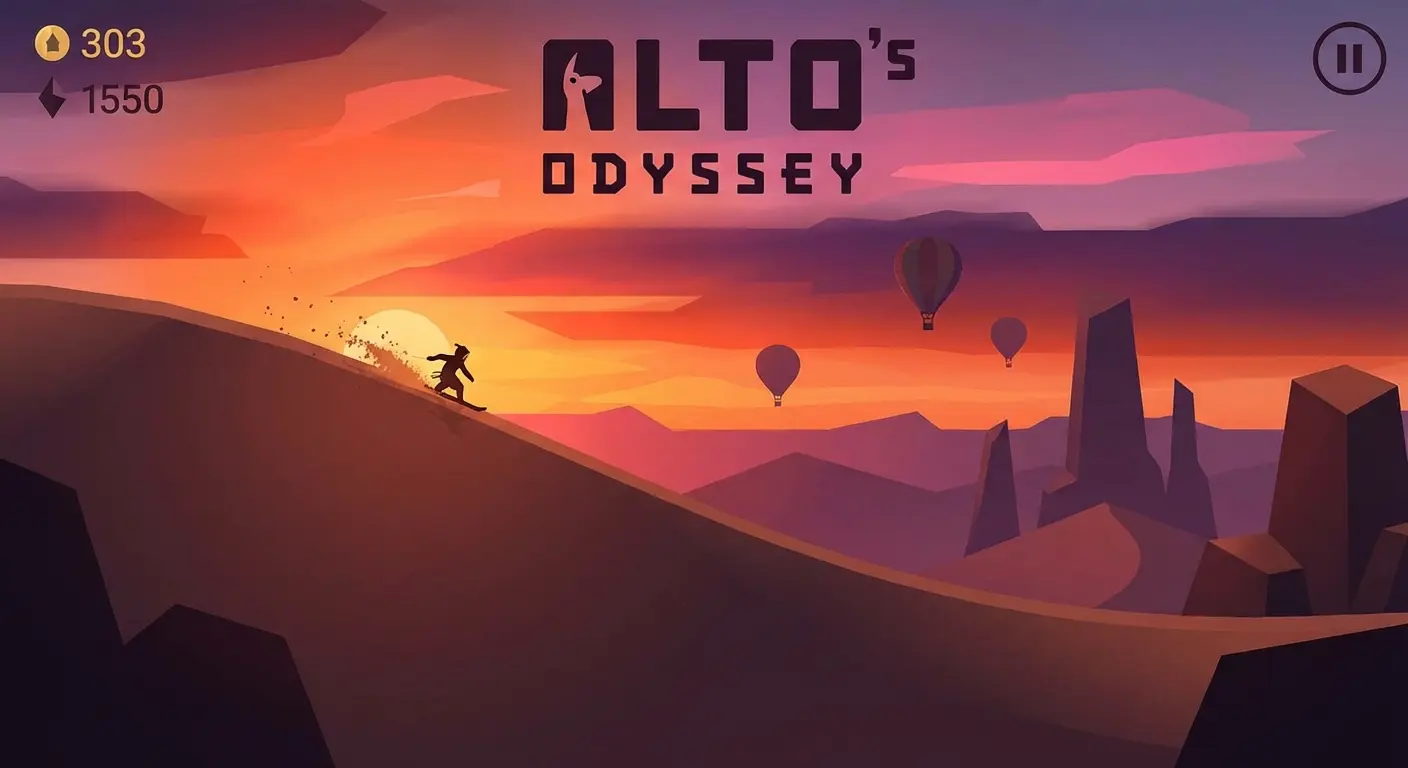
Gameplay: One-touch controls. Hold to flip, release to land. Chain tricks (backflips, grinds, wall rides) for combos while completing objectives. The gameplay is simple but has depth. Timing your flips to land smoothly while maintaining speed requires practice.
Biomes: Multiple biomes with unique features. Canyons have walls for grinding and bouncing. Temples contain ancient structures to navigate. Dunes provide massive jumps for extended air time. Each biome introduces new challenges and visual variety.
Objectives: Complete goals across multiple levels (grind 1000 meters, perform 5 backflips in one run, bounce off 3 balloons). Objectives provide structure and progression without feeling mandatory. You can ignore them and enjoy the experience.
Zen Mode: Endless mode with no objectives, crashes, or game-overs. Pure sandboarding through beautiful landscapes with soothing music. This mode is perfect for relaxation and stress relief.
Audio: Dynamic soundtrack by Luminary responds to your actions and the environment. Music swells during successful trick chains and shifts with lighting changes. The audio design is as important as the visuals in creating the game's meditative atmosphere.
Storage: 200MB, reasonable for the quality delivered.
Monetization: Premium purchase ($4.99) with no additional costs. Complete experience included.
Why It Works: Smooth 60 FPS with excellent battery efficiency. The game is incredibly relaxing yet engaging. Procedural generation ensures unique runs every time. The combination of visuals and audio creates an almost therapeutic experience.
Real talk: Fully offline gameplay. Runs last as long as you survive (typically 3-10 minutes), making it perfect for quick sessions or extended play. The game has surprising depth despite simple controls. Mastering trick timing and combo chains takes practice. No violence or stress. This is pure relaxation. The game works equally well for goal-oriented players (completing objectives) and those who want to unwind (zen mode).
18. Threes!
An elegant number puzzle game that inspired countless imitators (including 2048). Slide numbered tiles on a 4x4 grid to combine them into higher numbers.
Puzzle Mechanics: Combine 1s and 2s to make 3s. Combine matching numbers (3+3=6, 6+6=12, 12+12=24, etc.). Tiles slide as far as possible in the chosen direction, and a new tile appears after each move. The game ends when the grid fills and no moves remain. Simple rules create complex strategic situations.
Strategic Depth: Optimal play requires planning several moves ahead. You need to manage space efficiently, position tiles for future combinations, and avoid filling the grid prematurely. The game shows you the next tile that will appear, letting you plan accordingly.
Character Design: Each number has personality with charming animations and voice clips. The 1s and 2s have distinct personalities that combine into 3s. Higher numbers have unique designs and sounds. This adds charm to abstract gameplay.
Scoring: Your score is the sum of all tiles on the board when the game ends. Higher tiles are exponentially more valuable, so creating large numbers is crucial. The game tracks your highest tile achieved and best scores.
Replayability: Infinite replayability chasing high scores. Each game takes 10-20 minutes, making it perfect for quick sessions. The randomness of tile spawns means no two games are identical, but skill determines long-term success.
Storage: 75MB, minimal footprint.
Monetization: Premium purchase ($5.99) with no additional costs. Complete game included.
Why It Works: Minimal requirements mean perfect performance on any iPhone. The game is easy to understand but takes a lifetime to master. The character design adds charm to puzzle gameplay. Touch controls are perfect. Swiping to slide tiles feels natural and responsive.
Real talk: Completely offline gameplay. Perfect for quick 5-minute sessions or extended puzzling. The game can be frustrating when bad tile spawns ruin promising runs, but that's part of the challenge. No progression system beyond high scores. The game doesn't unlock new features or modes. This is pure puzzle gaming focused on mastery rather than content unlocks. The difficulty is high. Your first games will end quickly, but you'll gradually improve your strategic thinking.
Card & Board Games
These games prove that traditional card and board games work beautifully on mobile, often with enhancements impossible in physical versions.
19. Marvel Snap
A fast-paced card battler from former Hearthstone director Ben Brode. Six-turn matches across three locations make it the perfect mobile card game: quick, strategic, and addictive.
Game Structure: Each match lasts 3-5 minutes. Play cards to three random locations with unique effects that change how you approach each game. Highest total power at each location wins that location. Win two of three locations to win the match. The speed eliminates downtime. You're constantly making decisions.
Snap Mechanic: Double the stakes when you're confident in your position. Your opponent can snap too, and either player can retreat to minimize losses. This adds psychological warfare. Do you snap to pressure opponents into retreating, or wait to see their strategy? Reading opponents and managing risk becomes as important as deck building.
Collection System: Unlock cards through progression rather than random packs. You earn collection levels by upgrading cards cosmetically, which unlocks new cards at specific milestones. This system ensures steady progression without the frustration of duplicate cards or bad pack luck.
Deck Building: Construct 12-card decks from your collection. The small deck size means every card matters, and you'll draw most of your deck each game. Synergies between cards and adapting to random locations create strategic depth despite simple rules.
Locations: Random locations with unique effects fundamentally change strategies. Some locations boost power, others restrict what you can play, some move cards around. Learning how to leverage or counter location effects separates good players from great ones.
Cosmetic Variants: Cards have multiple visual variants (different art, animations, effects) that you can collect and upgrade. These provide collectibility and personalization without affecting gameplay balance. Whales can spend thousands on variants, but they provide zero competitive advantage.
Storage: 1.5GB, reasonable for the visual quality.
Monetization: Free-to-play with season pass ($9.99) and cosmetic purchases. The progression system is fair. You'll unlock cards steadily through playing. The season pass provides faster progression and exclusive variants but isn't necessary for competitive play. Cosmetics can be expensive, but they're purely optional.
Why It Works: Optimized for quick loading and smooth animations. Matches are short enough to play anywhere: waiting in line, during breaks, or commuting. The strategic depth is surprising given the simple rules. Deck building has a thriving meta-game with constant innovation.
Real talk: Requires internet connection for matches. The quick match length is perfect for mobile. You can complete several games in 15 minutes. The game respects your time without energy systems or artificial wait times. The collection system means new players face opponents with more cards, but matchmaking attempts to pair similar collection levels. The meta-game evolves constantly, so decks that work today might struggle next week.
20. Chess.com
The definitive chess experience on iOS with millions of players, comprehensive learning tools, and multiple game modes. This is chess perfected for mobile.
Game Modes: Live chess with various time controls (bullet, blitz, rapid, classical) lets you choose how much time you want per game. Daily correspondence games let you make moves when convenient over hours or days. Puzzles provide tactical training. Lessons teach strategies and concepts. Computer opponents at all skill levels let you practice offline.
Learning Tools: Extensive tutorial library covers everything from basic rules to advanced strategies. Grandmaster analysis breaks down professional games move-by-move. Opening explorer shows popular opening lines with statistics on success rates. Post-game analysis highlights mistakes and suggests better moves, helping you understand where you went wrong.
Puzzles: Daily puzzles and puzzle rush (solve as many as possible in limited time) sharpen tactical vision. Puzzles are rated by difficulty, letting you practice at appropriate levels. The puzzle database contains thousands of positions from real games.
Social Features: Join clubs based on interests, skill levels, or regions. Participate in tournaments ranging from casual to serious competition. Watch live grandmaster games with commentary and engine analysis. Track your rating progression across different time controls.
Analysis Board: Study positions, try different variations, and use the engine to evaluate moves. This feature is invaluable for improving. You can analyze your games to understand mistakes and explore alternative strategies.
Rating System: Elo ratings track your skill level across different time controls. Watching your rating improve provides tangible evidence of skill development. The system matches you with similarly skilled opponents for balanced games.
Storage: 250MB, lightweight for the features provided.
Monetization: Free with premium membership ($6.99/month or $49.99/year) for advanced features. Free accounts can play unlimited games, solve puzzles, and access basic lessons. Premium adds unlimited puzzles, advanced analysis, video lessons, and removes ads. The free version is generous. You can genuinely improve without paying.
Why It Works: Lightweight and efficient performance. The interface is clean and intuitive with customizable board themes and piece sets. Matchmaking is quick. You'll find opponents within seconds at any time of day. The learning resources genuinely help you improve if you engage with them.
Real talk: Play against computer offline; online required for human opponents. Games range from 1-minute bullet (complete game in under 2 minutes) to correspondence (days per game), accommodating any schedule. The learning curve is steep. Chess is infinitely deep, and you'll lose frequently while learning. This is expected and part of the improvement process. The community is generally respectful, though you'll occasionally encounter unsportsmanlike behavior (premature resignation offers, excessive time-wasting). Premium membership provides significant value if you're serious about improvement, but free accounts are fully functional for casual play.
Protecting Your Gaming Investment: The Rokform Advantage
Alright, you've got 20 games that'll wreck your free time. Now let's talk about not wrecking your thousand-dollar gaming device.
The Hidden Cost of Mobile Gaming
Intensive iOS games push your iPhone to its limits. Genshin Impact makes my phone hot enough to cook on. Batteries drain in 90 minutes during COD Mobile marathons. And drops happen sweaty palms during clutch PUBG moments are real.
Your iPhone is basically a portable console worth over a grand. Regular cases protect against normal drops but don't address gaming-specific problems.

Why Gamers Choose Rokform
Heat Dissipation During Extended Play Sessions
Rokform's polycarbonate cases are engineered for optimal heat management. Cheap cases trap heat against your device, causing thermal throttling that reduces performance exactly when you need it most. Our design allows better airflow while maintaining military-grade drop protection (tested to 6-foot drops).
When you're deep into a ranked Clash Royale match or exploring Teyvat in Genshin Impact, your iPhone stays cooler and performs better. Lower temperatures mean sustained framerates, longer battery life, and extended device longevity.
Secure Mounting for Every Gaming Scenario
The best game apps for iPhone are even better with proper mounting. Rokform's magnetic mounting system creates versatile gaming setups:
Car gaming for backseat entertainment during road trips. Mount your iPhone securely for kids playing Mario Kart Tour or Monument Valley 3 while you drive.
Desktop setup lets you mount your iPhone for streaming gameplay or following walkthroughs hands-free. The RokLock™ system provides rock-solid stability whether you're watching strategy guides or sharing your Marvel Snap matches.
Horizontal gaming creates the perfect viewing angle for landscape-mode games without awkward hand positioning. Magnetic mounting holds your device securely while you use a controller for Real Racing 3 or Dead Cells+.
Never Miss a Gaming Moment
Rokform's MagSafe-compatible accessories keep your iPhone charged during marathon sessions. The magnetic wireless charging stand positions your device perfectly whether you're grinding in RPGs or waiting for daily resets in gacha games. You'll never face the frustration of dying to a boss because your battery hit 1%.
Protection When Gaming Gets Intense
We've all experienced it. Adrenaline spikes during clutch moments cause grips to loosen and phones to drop. Rokform cases feature:
360° protection with reinforced corners that absorb impact. Raised bezels protect your screen and cameras when your iPhone lands face-down. Military-grade materials trusted by first responders who need devices that survive harsh conditions. A 2-year warranty backing every case because we stand behind our products.
The Perfect Gaming Accessories
Sport Ring with Stand props your iPhone at the perfect angle for strategy games while keeping one hand free. Watch Slay the Spire streams while playing, or follow Chess.com tutorials without holding your device.
Belt Clip keeps your iPhone secure during outdoor gaming sessions. Playing Alto's Odyssey at the park? Your device stays protected and accessible.
FUZION Wallet carries your iPhone and payment cards in one slim package, perfect for mobile gaming on the go. Head to coffee shops for Wordle sessions without carrying a separate wallet.
Built for the Mobile Gaming Lifestyle
Whether you're commuting with Monument Valley 3, competing in Marvel Snap tournaments, or exploring massive open worlds in Genshin Impact, Rokform cases are designed for how you actually use your iPhone. The combination of protection, functionality, and sleek design means you never choose between keeping your device safe and enjoying the best iOS games.
Your iPhone is the gateway to thousands of incredible gaming experiences. Protect it like the premium gaming device it is with Rokform's industry-leading cases and accessories.
Check out our full lineup of iPhone cases and gaming accessories designed specifically for mobile gamers who demand the best protection without compromising functionality.
Final Thoughts
The iPhone has become a legit gaming platform that fits in your pocket. These 20 best iPhone games prove mobile gaming offers everything from quick puzzle hits to hundred-hour RPG epics. You're not settling for inferior console ports. You're getting experiences designed specifically for mobile that often work better than big-screen versions.
Knowing what makes iPhone games worth your time helps navigate the App Store's overwhelming selection. Performance optimization, fair monetization, appropriate storage, offline capability these matter as much as gameplay. The best mobile games respect your time, money, and device limitations while delivering genuinely engaging experiences.
Different games serve different needs. COD Mobile and PUBG provide competitive intensity when you want adrenaline. Monument Valley and Alto's Odyssey offer relaxation after stressful days. Baldur's Gate and Genshin deliver deep experiences for weekend gaming sessions. Wordle and Crossy Road fill brief moments throughout your day. Building a diverse game library ensures you always have something appropriate for your mood and available time.
These games represent a fraction of quality iOS titles available. Apple Arcade alone provides 200+ premium games without ads or in-app purchases, making the $6.99 monthly subscription worthwhile for players who regularly try new games. The mobile gaming landscape constantly evolves with new releases, updates to existing games, and emerging genres that push what's possible on smartphones.
Your iPhone is a powerful gaming device deserving protection matching its capabilities. Cases designed specifically for mobile gamers address challenges that standard protection ignores: heat management during intensive sessions, secure mounting for various gaming scenarios, and military-grade drop protection for those intense moments when accidents happen.
Mobile gaming isn't the future it's the present. With billions in annual revenue and millions of daily players, iOS gaming has proven itself as a legitimate platform deserving the same respect as consoles and PCs. The games on your iPhone provide experiences you'll remember, communities you'll join, and skills you'll develop. Treat your device right, and it'll provide thousands of hours of entertainment.

