


Look, I'm not proud of this, but I spent 20 minutes of a Zoom meeting last month pretending to take notes while actually playing a match-3 game. And apparently I'm not alone. Mobile puzzle games pulled in over $3 billion in August 2025, with Royal Match alone making $104.5 million that month according to AppMagic data.
Here's what that really tells us: mobile puzzle games have gotten weirdly good at fitting into our fractured attention spans. Whether you're waiting for your coffee order, pretending to listen during your commute, or genuinely trying to wind down before bed, the right puzzle app transforms dead time into something that actually feels worthwhile.
The problem isn't finding puzzle games. There are thousands. Finding ones worth keeping on your phone past the first week? That's the actual puzzle. I've tested, played, and evaluated dozens of options to bring you the 20 best puzzle game apps that deliver on their promises without the usual mobile gaming nonsense.
Table of Contents
-
What Makes a Puzzle Game App Worth Your Time (And Storage Space)
Gameplay That Respects Your Intelligence
The Money Question Nobody Wants to Ask
Offline Play Isn't Optional Anymore
Performance Issues That'll Make You Rage-Quit
Content That Lasts Beyond the First Weekend
Visual Design That Actually Matters
Social Features (When You Want Them)
Developer Support That Shows They Care
-
The 20 Best Puzzle Game Apps for 2026
Match-3 and Color-Matching Puzzles
Word and Language Puzzles
Physics and Logic Puzzles
Strategic and Number Puzzles
Escape Room and Mystery Puzzles
How These Apps Stack Up Against What Matters
Protecting Your Puzzle Gaming Investment
Final Thoughts
TL;DR - The Actually Useful Version
Pay $5 once = no ads, no waiting, no BS. But you'll finish the game eventually.
Free games = unlimited content, unlimited annoyance. Pick your poison.
Wordle is free and perfect. Just play Wordle.
The Room series is the best mobile puzzle gaming gets. Period.
Match-3 games make billions but word puzzles are less annoying to actually play.
If your phone is old, stick with Sudoku and 2048.
Daily puzzle games (Wordle, Spelling Bee) prevent burnout by only giving you one puzzle per day, which is weirdly genius.
Physics puzzles and escape room games are best when you've got actual time to focus.
Check when the app was last updated. If it's been 2+ years, it's probably broken on newer phones.
What Makes a Puzzle Game App Worth Your Time (And Storage Space)
Here's the thing: your phone has limited storage, and most puzzle games aren't worth keeping past day three. So let's talk about what actually matters when you're deciding what stays and what gets deleted.
I've identified eight things that separate genuinely excellent puzzle apps from forgettable downloads. These cover both the immediate experience (does this game respect my intelligence?) and long-term value (will I still be playing this next month?). This applies whether you're looking for quick five-minute diversions or deep puzzle experiences that demand your full attention.
Gameplay That Respects Your Intelligence
Good puzzle design walks a tightrope. Too easy and you're bored within minutes. Too hard and you're uninstalling before finishing the tutorial.
The best puzzle game apps understand this balance instinctively. They introduce mechanics gradually, building on what you've already learned rather than throwing everything at you simultaneously. You'll notice quality games make you feel clever when you solve puzzles, not lucky or frustrated.
Difficulty progression matters more than initial complexity. A puzzle game that starts simple but introduces new mechanics every few levels keeps your brain engaged far longer than one that maintains static difficulty. Some modern puzzle apps even use adaptive AI to adjust challenge levels based on your performance, which sounds fancy but really just means you're neither overwhelmed nor underwhelmed.
Multiple difficulty modes extend an app's lifespan significantly. When you can choose between casual play and expert challenges, the same game serves different needs depending on your mood or available mental bandwidth.
Take Monument Valley 2. The first level lets you rotate a single structure with obvious visual cues showing where the character needs to go. By level five, you're rotating multiple interconnected structures while managing two characters simultaneously, but the progression felt so natural you barely noticed the complexity increase. Compare this to a poorly designed puzzle app that dumps ten different mechanics in the tutorial, leaving you confused about which tool solves which problem.
The Money Question Nobody Wants to Ask
How a puzzle app monetizes directly impacts your experience, yet most people don't think about this until they're already invested.
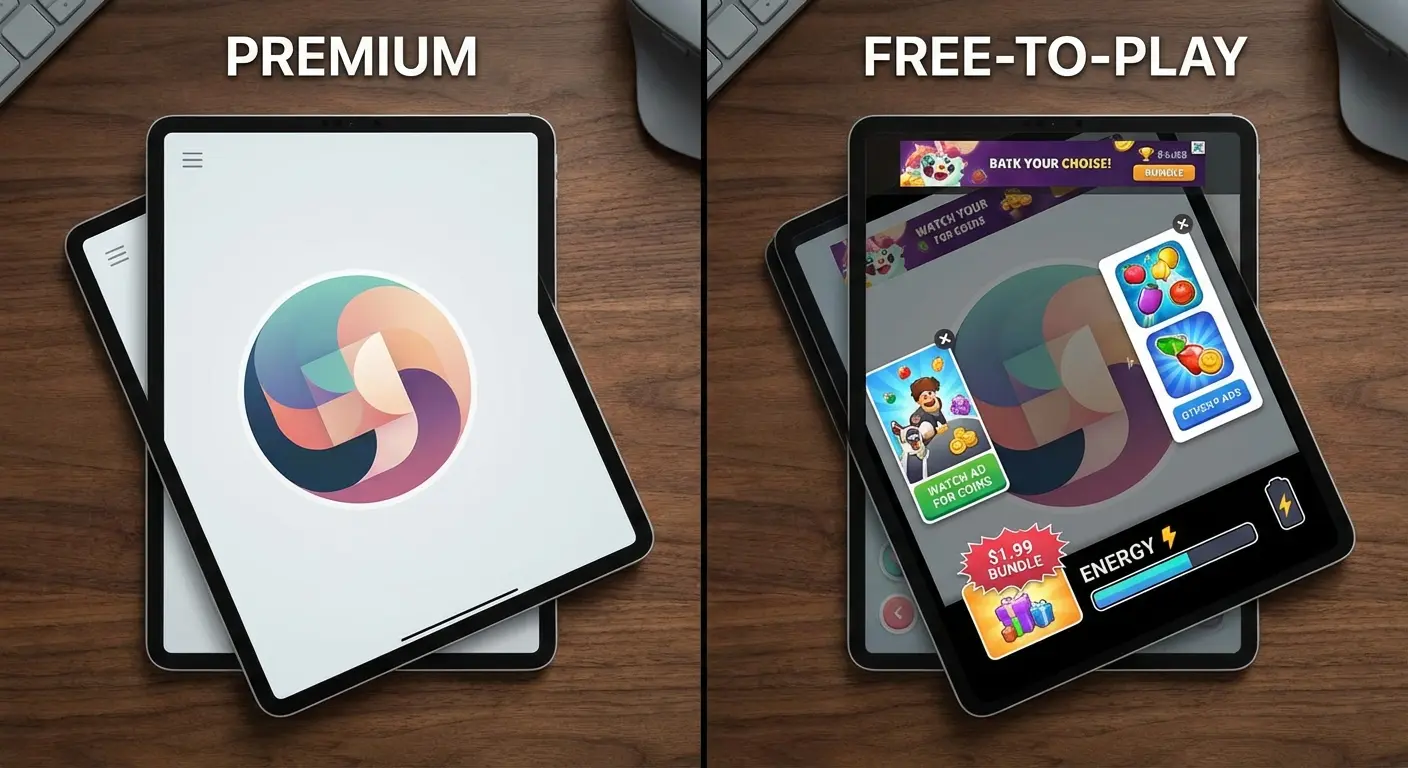
Free-to-play games dominate the puzzle category, but "free" comes with strings attached. Some apps interrupt gameplay every few minutes with video ads. Others implement energy systems that limit how much you can play without waiting or paying. The most aggressive use "pay-to-win" mechanics where progressing past certain points requires purchases rather than skill.
Premium apps hit you with that $4.99 price tag right away, which honestly makes me hesitate every time. But here's what you get: no ads interrupting you every thirty seconds, no waiting for "lives" to regenerate, no guilt-tripping you into watching videos for extra moves. Sometimes paying upfront is just better.
The middle ground includes free apps with optional ad removal purchases. These let you test before committing money, though the free experience might be deliberately degraded to encourage purchasing. Watch for games that gate content behind purchases after you've invested hours building progress. That's when "free" becomes expensive fast.
Monetization Model |
Typical Cost |
Advantages |
Disadvantages |
Best For |
|---|---|---|---|---|
Premium (Pay Once) |
$4.99-$5.99 |
No ads, complete experience, no energy limits, predictable cost |
Higher upfront barrier, shorter content duration |
Players wanting uninterrupted experiences, those who value their time over money |
Free-to-Play (Ads) |
Free + optional $2.99 ad removal |
Try before buying, unlimited content, accessible to everyone |
Frequent interruptions, deliberately frustrating design, privacy concerns |
Budget-conscious players, casual samplers, those with high ad tolerance |
Freemium (IAP) |
Free + $0.99-$99.99 purchases |
Accessible entry, optional spending, regular new content |
Manipulative design, unlimited spending potential, pay-to-win mechanics |
Players with strong self-control, those seeking endless content |
Subscription |
$5.99-$9.99/month |
Access to multiple games, regular updates, premium experience |
Ongoing cost, content locked behind paywall, commitment required |
Puzzle enthusiasts playing multiple games daily, NYT Games subscribers |
Offline Play Isn't Optional Anymore
Your commute goes through a dead zone. Your flight just took off. Your data plan is nearly maxed for the month.
Puzzle games should work in all these scenarios, yet many require constant internet connectivity for no legitimate reason. The best puzzle game apps download necessary content upfront, then function completely offline. This matters more than you'd think until you're stuck somewhere without service, staring at a "No Connection" error screen.
Some games need periodic online check-ins for daily challenges or leaderboard updates, which is reasonable. But if a single-player puzzle game refuses to let you play offline, that's a red flag about the developer's priorities (usually it's about serving ads or preventing piracy at your expense).
Check reviews specifically mentioning offline functionality before downloading, especially if you plan to play during travel or in areas with spotty coverage.
Performance Issues That'll Make You Rage-Quit
Nothing kills puzzle game enjoyment faster than lag, crashes, or battery drain that turns your phone into a hand warmer.
Responsive input is non-negotiable for puzzle games. When you tap, swipe, or drag, the game should react instantly. Even slight delays disrupt the flow state that makes puzzle games satisfying. This becomes critical in timed puzzles or games requiring precise movements.
Battery efficiency varies wildly between puzzle apps. Simple 2D games should barely impact battery life, while 3D puzzle adventures naturally consume more power. But some poorly optimized apps drain batteries far beyond what their graphics justify.
Storage requirements creep up over time as games add content. Fair warning: that innocent 50MB download? Give it a few months and it'll somehow balloon to half a gigabyte. I don't know what they're adding, but my phone storage knows.
Device compatibility matters more than you'd expect. A game running beautifully on the latest iPhone might be nearly unplayable on a three-year-old Android device.
I loaded Homescapes on my iPhone 15 and my old Galaxy A52 (the one I keep meaning to trade in but haven't). On the iPhone? Smooth as butter, levels loaded in under two seconds with perfect animations. On the Galaxy? I aged three years waiting for levels to load, with noticeable frame drops during cascade animations. Both devices supposedly met the "minimum requirements," which apparently means different things to different people. Always check device-specific reviews before downloading graphics-intensive puzzle games.
Content That Lasts Beyond the First Weekend
You've found a puzzle app you love. How long until you've exhausted everything it offers?
Match-3 games and number puzzles typically provide near-infinite content through level generation or procedural creation. You'll likely get bored before running out of puzzles. Word games with daily challenges maintain engagement through regular new content without overwhelming you.
Narrative puzzle games (escape rooms, adventure puzzles) offer finite but curated experiences. You might complete them in 4-8 hours, but the quality of those hours often exceeds hundreds of levels in more repetitive games. Replayability depends on puzzle type. Story-driven games lose appeal once you know solutions, while abstract puzzles (Sudoku, 2048) remain engaging through repeated plays because each session differs.
Consider your playing style when evaluating content volume. If you play 10 minutes daily, a game with 500 levels lasts months. If you binge puzzle games on weekends, you'll burn through that same content in weeks.
Visual Design That Actually Matters
Puzzle games live or die by interface clarity. When you're solving complex puzzles, visual noise becomes mental noise.
Clean interfaces prioritize information hierarchy. Important elements stand out while decorative elements recede. You shouldn't need to squint or search for critical puzzle components.
Aesthetic appeal enhances the experience without overwhelming functionality. Monument Valley's gorgeous impossible architecture serves the gameplay. Candy Crush's bright colors make matching intuitive. The Room's photorealistic textures create atmosphere that deepens immersion.
Accessibility features separate thoughtful developers from those checking boxes. Colorblind modes, adjustable text sizes, high-contrast options, and customizable themes make games playable for more people. If you have specific accessibility needs, check whether apps accommodate them before investing time. Theme customization (dark mode, alternate color schemes) extends an app's appeal. What looks great in bright daylight might strain your eyes during late-night puzzle sessions.
Social Features (When You Want Them)
Some people puzzle alone. Others thrive on competition.
Leaderboards and competitive modes add motivation for achievement-oriented players. Seeing your name climb global rankings or beating friends' scores provides goals beyond puzzle completion. Daily challenges create shared experiences where everyone tackles the same puzzle.
Multiplayer puzzle modes (head-to-head matches, cooperative solving) transform traditionally solitary activities into social experiences. These work best when matchmaking is quick and connections stable. Social sharing features let you celebrate achievements or seek help without being intrusive. The ability to share a Wordle result without spoiling the answer represents thoughtful social integration.
But forced social features annoy players seeking solitary experiences. The best puzzle game apps make social elements optional and easy to ignore if you prefer puzzling in peace.
Developer Support That Shows They Care
A puzzle app is only as good as its ongoing maintenance.
Regular updates indicate active development. Bug fixes, compatibility updates for new OS versions, and periodic new content show developers haven't abandoned their app. Check update history before downloading. If the last update was 18 months ago, expect problems on current devices.
Developer responsiveness to user feedback appears in review responses and update notes. Developers who acknowledge issues and explain fixes build trust. Those who ignore problems or respond defensively raise concerns.
Community engagement through forums, social media, or in-app communication channels creates feedback loops that improve games over time. The best puzzle game apps evolve based on player input rather than developer assumptions. Long-term support matters especially for premium apps. When you pay $4.99 upfront, you're trusting the developer to maintain compatibility as devices and operating systems evolve. Established developers with multiple successful titles offer more security than one-hit wonders.
The 20 Best Puzzle Game Apps for 2026
I've organized these 20 puzzle app recommendations into five categories based on core mechanics and gameplay styles. This helps you navigate directly to puzzle types matching your preferences rather than wading through irrelevant options.
Each category represents a different cognitive challenge and playing experience, from the satisfying cascades of match-3 games to the cerebral satisfaction of number puzzles. Within each category, I've ranked games based on overall quality, value proposition, and how well they execute their specific puzzle mechanics. Every recommendation includes detailed analysis across the eight criteria I mentioned earlier, giving you complete information to make informed decisions. Whether you're seeking casual time-fillers or deep puzzle experiences demanding full attention, you'll find thoroughly vetted options that deliver on their promises.
Match-3 and Color-Matching Puzzles
Match-3 games dominate mobile puzzle revenue for good reason. They're immediately intuitive (match three things, get points), visually satisfying (cascading combos and explosions), and endlessly expandable (just add more levels).
This category includes both pure match-3 mechanics and variations that add strategic depth through unique objectives or power-up systems. These games excel as casual time-fillers but can develop surprising strategic complexity at higher levels. The monetization in this category tends toward aggressive free-to-play models with energy systems and purchasable boosters, though the best examples balance accessibility with fairness. If you're seeking mobile puzzle games for short, repeated sessions throughout the day, match-3 games deliver consistent dopamine hits without requiring sustained concentration.
1. Candy Crush Saga
Candy Crush Saga. Your mom plays it. Your coworker plays it. That guy on the subway plays it. It's been around so long it feels weird calling it just a "game." It's more like a permanent fixture of smartphone existence at this point.
The core mechanic remains beautifully simple: swap adjacent candies to create matches of three or more. Larger matches create special candies with explosive effects. Combining special candies produces even more spectacular results. This cascading complexity from simple rules exemplifies excellent puzzle design.
Gameplay & Difficulty: The progression system deserves credit for keeping millions engaged. Early levels teach mechanics gently. Mid-game levels introduce obstacles (chocolate that spreads, licorice that blocks, portals that transport candies) that force strategic thinking. Late-game levels can be genuinely challenging, though some feel deliberately impossible without boosters.
The variety in level objectives prevents monotony. You're not just making matches. You're collecting ingredients, clearing jelly, reaching target scores within move limits, or racing against timers. Each objective type requires different strategies.
Monetization: Here's where Candy Crush shows its age and aggressive monetization roots. The five-life system (regenerating one life every 30 minutes) limits consecutive play unless you pay or wait. Difficult levels often feel designed to encourage booster purchases. However, patient players can progress entirely free by waiting for lives and using earned boosters strategically.
The game constantly prompts purchases through pop-ups and special offers. If you're easily tempted by microtransactions, this might drain your wallet. Disciplined players can ignore these prompts and enjoy thousands of levels without spending.
Offline Play: Once levels download, you can play offline. However, the game checks online periodically for new levels and events. Airplane mode works for already-downloaded content.
Performance: King has optimized Candy Crush extensively. It runs smoothly on budget Android phones and older iPhones, with minimal battery drain considering the colorful animations. The game loads quickly and rarely crashes.
Content Volume: Over 15,000 levels as of 2026, with 45 new levels added weekly. You'll never run out of content. The sheer volume means even dedicated players have months or years of gameplay available.
UI/Visual Design: Bright, cheerful graphics with satisfying particle effects when candies explode. The colorblind mode helps players who struggle with standard color schemes. Animations are smooth and provide clear visual feedback for every action.
Social Features: Facebook integration lets you compete with friends, compare progress, and send/receive lives. The social pressure to advance further than friends adds motivation (or anxiety, depending on your personality).
Developer Support: King maintains Candy Crush as a flagship title with regular updates, seasonal events, and new features. The game receives more attention than most mobile titles.
2. Homescapes
Let's get the annoying part out of the way first: Homescapes wants your money. Bad. You'll get five lives that drain fast, levels that feel impossible without boosters, and pop-ups that won't quit. It's the kind of aggressive monetization that makes you wonder if the developers respect you at all.
But here's the weird thing: people keep playing anyway. Why? Because underneath all that nonsense, there's actually a decent match-3 game wrapped in a home renovation story that's more engaging than it has any right to be.
You play match-3 levels to earn stars, which you spend on renovation tasks in Austin the butler's family mansion. Each completed task advances the story through dialogue and cutscenes. This meta-progression system gives purpose to puzzle-solving beyond high scores.
Gameplay & Difficulty: The match-3 mechanics include unique objectives such as collecting items by matching adjacent to them or defeating obstacles that require multiple hits. Power-ups (rockets, bombs, disco balls) create satisfying chain reactions.
The difficulty though? It spikes sharply and seemingly arbitrarily. You'll breeze through ten levels, then hit one that takes 20+ attempts. This feels intentionally designed to encourage booster purchases or ad-watching for extra moves.
Monetization: Homescapes employs aggressive free-to-play tactics. Limited lives restrict play sessions. Difficult levels tempt you with purchasable boosters. Pop-ups constantly offer special deals. The game also includes a "piggy bank" that fills with coins as you play but requires payment to access.
You can watch ads for extra moves or boosters, which helps free players but interrupts flow. The monetization feels more intrusive than Candy Crush, though the renovation meta-game provides additional motivation to push through.
Offline Play: Requires internet connection for most features, including accessing the renovation storyline. You can complete downloaded levels offline, but the game nags about reconnecting.
Performance: Runs smoothly but demands significant storage (1GB+) due to story content and animations. Battery drain is moderate. Occasional crashes reported on older devices.
Content Volume: Thousands of levels with regular additions. The renovation storyline provides hundreds of hours of content if you're invested in the narrative.
UI/Visual Design: Charming graphics with detailed renovation reveals that provide satisfying payoff for completing level clusters. Character animations during story segments are expressive, though they repeat frequently enough to become annoying.
Social Features: Team competitions where you join groups to complete collective goals and earn rewards. The team system adds engagement but also creates obligation to play regularly.
Developer Support: Playrix maintains active development with weekly content updates, seasonal events, and regular bug fixes.
3. Toon Blast
Toon Blast breaks from traditional match-3 conventions in a way that feels refreshing rather than gimmicky.
Instead of swapping adjacent pieces, you tap groups of two or more matching blocks to clear them. This seemingly small change creates entirely different strategic considerations. You're constantly scanning for the largest groups rather than planning swap sequences.
Gameplay & Difficulty: The tap-to-clear mechanic rewards patience and planning. Larger groups create power-ups (rockets that clear rows, bombs that explode areas, disco balls that clear all blocks of one color). Combining power-ups produces spectacular effects that feel genuinely rewarding.
Objectives vary from collecting specific block counts to clearing obstacles or bringing items to the bottom of the board. The difficulty progression feels more balanced than Homescapes, with challenging levels that still seem beatable through skill rather than luck. (Yeah, I'm calling out Homescapes again.)
Monetization: Free-to-play with a lives system, but less aggressive than competitors. You get five lives that regenerate over time. The game offers purchasable coin packs and boosters, but doesn't constantly pressure you to buy them.
Team participation earns free rewards, and daily bonuses provide boosters without watching ads. The monetization feels fair for a free game.
Offline Play: Fully playable offline once downloaded. You can puzzle during flights or in dead zones without issues.
Performance: Lightweight and responsive. The game runs smoothly on budget devices and older phones. Battery drain is minimal, and storage requirements stay reasonable even after updates.
Content Volume: Over 10,000 levels with regular weekly additions. Peak Games consistently adds content, ensuring you won't exhaust available puzzles.
UI/Visual Design: Colorful cartoon graphics that appeal across age groups without feeling childish. The animations are bouncy and satisfying without being overwhelming. Clear visual hierarchy makes puzzle elements easy to distinguish.
Social Features: Team-based competitions where you collaborate with other players to complete collective goals and earn rewards. The team system adds social motivation without requiring direct interaction with other players.
Developer Support: Peak Games (now owned by Zynga) maintains consistent updates with bug fixes and new content. The game receives regular seasonal events and limited-time challenges.
4. Bejeweled Stars
Bejeweled pioneered match-3 gaming, and Stars represents the franchise's modern evolution while maintaining the core appeal that made the original addictive.
You swap adjacent gems to create matches of three or more, with special gems created through larger matches or specific patterns. SkyGems (special powerful gems) create spectacular cascading effects that feel more satisfying than most competitors.
Gameplay & Difficulty: The refined match-3 mechanics benefit from years of iteration. The physics feel perfect, with gems falling and settling in predictable ways that let you plan multi-move strategies. Special gem combinations produce effects that are powerful without feeling overpowered.
Multiple game modes provide variety. Classic mode offers traditional progression through levels. Zen mode removes timers and pressure for relaxed play. Sky Castle mode adds meta-progression similar to Homescapes but less intrusive.
Difficulty progression feels smoother than most match-3 games. Challenging levels exist, but they rarely feel impossible or deliberately unfair.
Monetization: Free-to-play but notably more generous than competitors. Lives regenerate faster, and the game provides more free boosters through daily bonuses and achievements. In-app purchases exist but feel optional rather than necessary.
The lack of aggressive monetization makes Bejeweled Stars feel more respectful of your time and wallet.
Offline Play: Completely playable offline. Download the game and puzzle anywhere without connectivity concerns.
Performance: Excellent optimization with beautiful particle effects that don't compromise performance. The game runs flawlessly on mid-range and older devices while still looking gorgeous on flagship phones.
Battery drain is minimal despite the visual polish. Storage requirements stay reasonable.
Content Volume: Hundreds of levels across multiple game modes. While not as extensive as Candy Crush's 15,000+ levels, the quality and variety compensate for smaller quantity.
UI/Visual Design: Polished, premium aesthetic with stunning gem designs and satisfying visual effects. The interface feels clean and uncluttered. Multiple theme options let you customize the visual experience.
Social Features: Leaderboards for comparing scores with friends and global players. The ability to send gifts adds light social interaction without being intrusive.
Developer Support: PopCap (owned by EA) maintains Bejeweled as a flagship franchise with regular updates, new content, and compatibility fixes for new devices and OS versions.
Word and Language Puzzles
Word puzzles engage different cognitive muscles than visual matching games, challenging vocabulary, spelling, pattern recognition, and linguistic creativity. This category ranges from the cultural phenomenon of daily word guessing to relaxing anagram-solving experiences.
Word games typically feature cleaner interfaces and less aggressive monetization than match-3 titles, making them appealing for players seeking cerebral challenges without constant purchase prompts. These apps work exceptionally well for short sessions (solving a single Wordle takes 2-5 minutes) or extended play (working through dozens of Wordscapes levels). The best puzzle game apps in this category make you feel smart when you solve them and provide that satisfying "aha!" moment when you spot a word you'd overlooked. If you enjoy crosswords, Scrabble, or word searches, these apps translate those pleasures into mobile-optimized experiences. Tabletop fans get their own list in my board game apps roundup.
5. Wordle (Official App)
Wordle became a cultural phenomenon by doing something radical: limiting you to one puzzle per day.
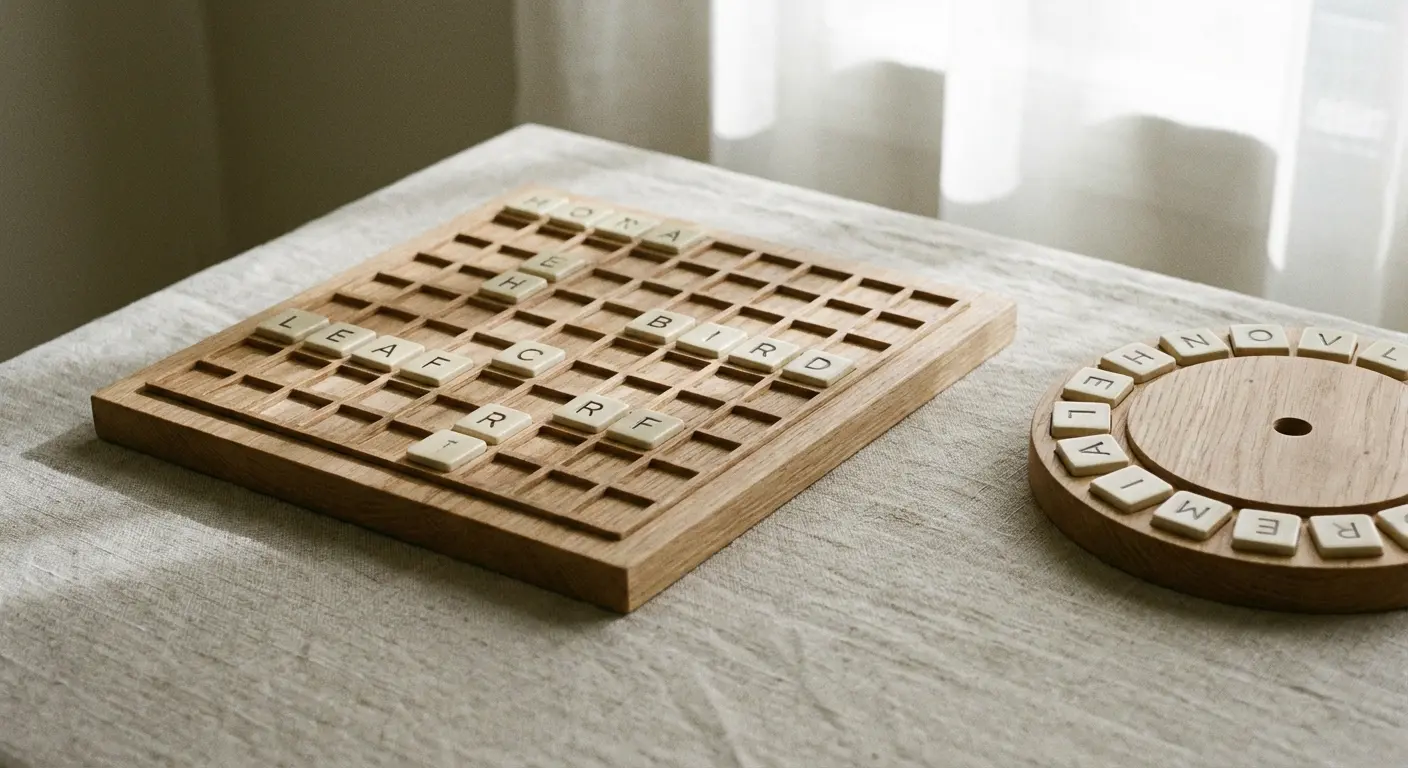
The concept is elegantly simple. Guess a five-letter word in six attempts. After each guess, tiles change color: green means correct letter in correct position, yellow means correct letter in wrong position, gray means the letter isn't in the word. Use this feedback to narrow possibilities until you solve it (or don't).
Gameplay & Difficulty: The genius lies in the constraint. One puzzle daily means you can't binge until you're sick of it. The difficulty varies naturally since some words are obscure while others are common, but the six-guess limit provides consistent challenge.
The shared daily puzzle creates communal experience. Everyone worldwide solves the same word, enabling spoiler-free result sharing and water-cooler conversations.
Monetization: Free with optional New York Times Games subscription ($5.99/month or $39.99/year) that unlocks the archive of past puzzles and access to other NYT word games. The daily puzzle remains free forever.
No ads. No energy systems. No purchase prompts. Just a clean puzzle experience.
Offline Play: Download the daily puzzle while connected, then solve it offline. The game requires connection to fetch new puzzles but not to complete them.
Performance: Minimal resource usage. The game is essentially a web app that works flawlessly on any device. No lag, no crashes, no battery drain.
Content Volume: One puzzle daily, which is simultaneously a limitation and a strength. You can't exhaust it, but you also can't binge it. The subscription unlocks archives if you want more.
UI/Visual Design: Minimalist perfection. Clean typography, simple color coding, no visual clutter. High-contrast mode and colorblind-friendly options ensure accessibility.
The interface focuses entirely on the puzzle without distractions.
Social Features: Built-in sharing creates spoiler-free result grids showing your solving pattern without revealing the word. This simple feature drove Wordle's viral growth.
Developer Support: The New York Times maintains daily puzzles with occasional feature updates. The game receives professional support befitting NYT's reputation.
6. Wordscapes
Wordscapes blends word search with crossword mechanics, creating a relaxing yet engaging puzzle experience.
You're presented with a circle of letters. Swipe to form words using those letters. Words you find fill into a crossword-style grid. The puzzle is complete when you've filled all spaces.
Gameplay & Difficulty: The anagram-style gameplay exercises different skills than traditional word games. You're not searching for hidden words in a grid. You're creating words from available letters and determining which ones fit the crossword structure.
Early puzzles use 3-4 letters and simple words. Later levels include 6-7 letters with more obscure vocabulary. The difficulty progression feels natural and rewarding.
Bonus words (valid words not in the crossword) earn coins, encouraging vocabulary exploration beyond minimum requirements.
Monetization: Free with ads appearing between puzzles. The ads aren't excessive (typically 5-15 seconds every few levels), but they interrupt flow. Ad removal costs around $2.99.
Coins purchase hints when you're stuck. You earn coins through gameplay, but can buy more if needed. The monetization feels reasonable for a free game.
Offline Play: Completely playable offline after initial download. Perfect for flights, commutes, or anywhere without connectivity.
Performance: Lightweight with minimal resource usage. The game runs smoothly on any device with negligible battery drain.
Content Volume: Over 6,000 levels with regular additions. You'll have months or years of content depending on play frequency.
UI/Visual Design: Relaxing nature backgrounds (beaches, mountains, forests) change as you progress through level packs. The calming aesthetic creates a zen-like puzzle experience.
Letter circles and crossword grids are clean and easy to read. The visual design promotes relaxation rather than excitement.
Social Features: Daily puzzles and tournaments let you compete with other players for rankings and rewards. These features add motivation without being intrusive.
Developer Support: P eopleFun maintains consistent updates with new levels, seasonal events, and bug fixes. The game receives regular attention.
7. Spelling Bee (NYT Games)
Spelling Bee takes a simple premise and extracts surprising depth from it.
Seven letters arranged in a honeycomb. Create words using these letters (the center letter must appear in every word). Words must be at least four letters long. Find as many words as possible, including the "pangram" that uses all seven letters.
Gameplay & Difficulty: The constraint of using only seven letters creates fascinating challenges. You'll stare at the same letters for minutes, then suddenly spot five words you'd missed. The ranking system (Beginner to Queen Bee based on points earned) provides clear progression goals.
Each puzzle has a maximum possible score, but reaching Queen Bee rank requires finding most words. This creates satisfying challenge without requiring perfection.
Monetization: Requires NYT Games subscription ($5.99/month or $39.99/year). No ads, no additional purchases, just clean puzzle access.
The subscription includes Wordle archives, Spelling Bee, Crossword, and other NYT puzzle games, making it reasonable value for puzzle enthusiasts.
Offline Play: Download the daily puzzle while connected, then solve offline. Requires periodic connection for new puzzles.
Performance: Minimal resource usage. The game is lightweight and responsive with no performance issues.
Content Volume: One puzzle daily. The subscription model means you're paying for ongoing daily content rather than a fixed puzzle library.
UI/Visual Design: Clean, newspaper-inspired design with excellent typography and readability. The honeycomb interface is intuitive and visually appealing.
High-contrast mode and accessibility features ensure usability for all players.
Social Features: Community forums and the ability to compare scores with friends. The shared daily puzzle creates communal solving experiences.
Developer Support: Professional NYT support ensures daily puzzles arrive reliably with rare technical issues.
8. Word Cookies
Word Cookies presents word puzzles with a bakery theme that's charming without being cloying.
Letters appear in a "cookie tray" at the bottom. Swipe to connect letters and form words. Found words fill blank spaces above. Complete all spaces to finish the level.
Gameplay & Difficulty: The anagram-style gameplay starts gently and builds complexity gradually. Early levels use 3-4 letters. Later levels include 7+ letters with more obscure vocabulary.
Bonus words (valid words not required for level completion) earn extra coins, rewarding vocabulary exploration. This encourages finding creative words beyond the minimum.
Monetization: Free with ads between levels. The ads are brief (5-15 seconds) and not overly frequent. Coins purchase hints when stuck, and you earn coins through gameplay or can buy more.
The monetization feels fair and unobtrusive compared to more aggressive free-to-play games.
Offline Play: Fully playable offline. Download and puzzle anywhere without connectivity requirements.
Performance: Runs smoothly on older devices with minimal battery impact. The 2D graphics and simple mechanics ensure compatibility across device ranges.
Content Volume: Thousands of levels organized into themed "bakery" packs (Butter, Flour, Sugar, etc.). Regular updates add new packs.
UI/Visual Design: Cute bakery theme with cookie and pastry graphics. The aesthetic is pleasant without being overly childish. Clean letter presentation ensures readability.
Social Features: Basic leaderboards and daily challenges for competitive players. The social features exist but don't dominate the experience.
Developer Support: BitMango regularly releases new content packs and maintains compatibility with new devices and OS versions.
Physics and Logic Puzzles
Physics and logic puzzles challenge spatial reasoning, cause-and-effect understanding, and problem-solving through environmental manipulation. This category includes some of mobile gaming's most critically acclaimed titles, offering experiences that rival console and PC puzzle games in quality and sophistication.
These apps typically feature premium pricing models with complete experiences included upfront, reflecting their higher production values and curated content. Physics puzzles reward experimentation and creative thinking, while logic puzzles demand careful observation and deduction. If you prefer mobile puzzle games that feel like complete artistic experiences rather than endless level progression, this category delivers mobile gaming at its finest. The shorter content duration (4-8 hours typically) is offset by memorable experiences that justify their premium prices.
9. The Room Series (The Room: Old Sins)
The Room series represents mobile puzzle gaming's artistic peak, delivering experiences that rival anything on console or PC.
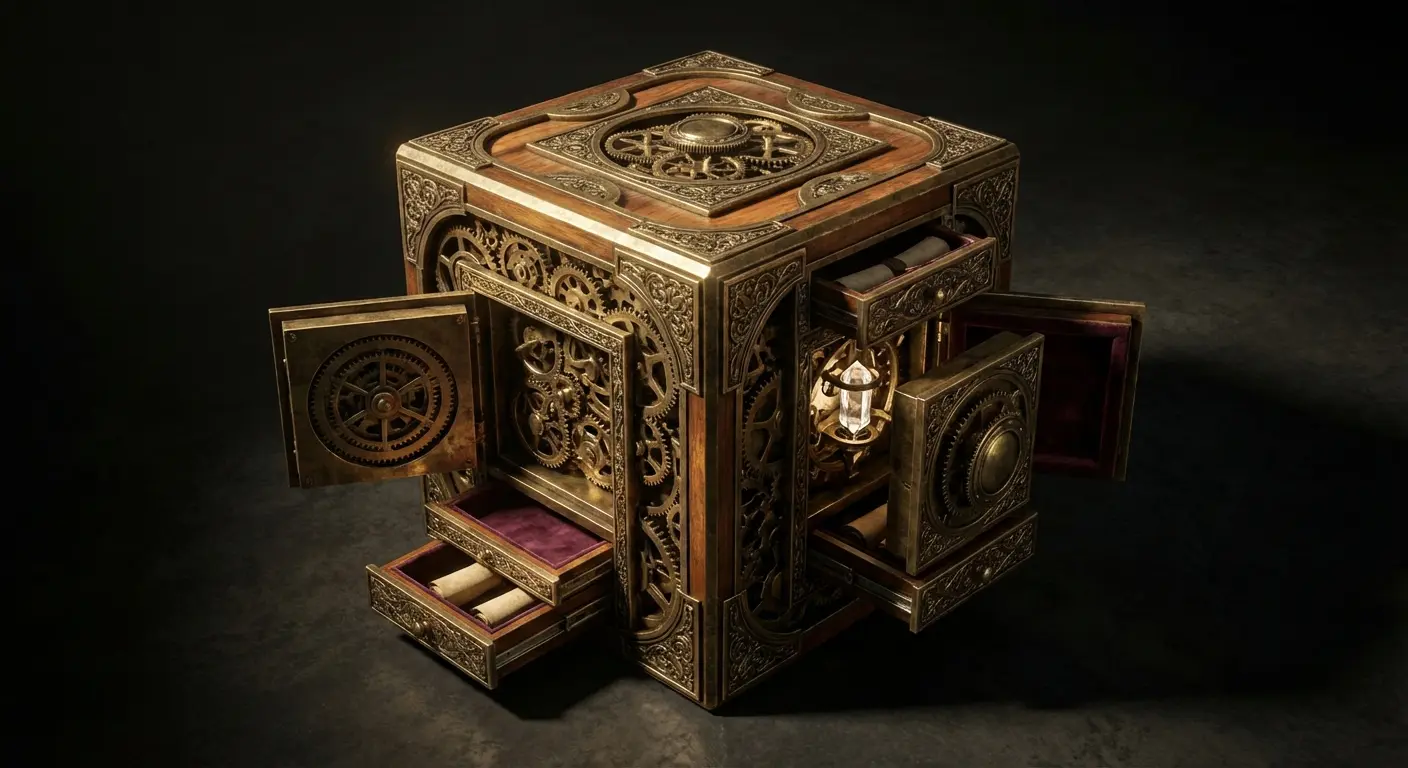
Old Sins places you in a mysterious dollhouse where you solve intricate mechanical puzzles by examining, rotating, and manipulating beautifully rendered 3D objects. Each puzzle box contains hidden compartments, secret mechanisms, and supernatural elements revealed through a special eyepiece that shows hidden details.
Gameplay & Difficulty: The puzzle design is masterful. Solutions feel logical in retrospect, but discovering them requires careful observation and experimentation. You'll examine objects from every angle, looking for hidden switches, rotating mechanisms, and secret compartments.
The difficulty balances perfectly between challenging and fair. Visual cues guide you without holding your hand. When you're stuck, it's usually because you haven't examined something closely enough rather than because the solution is arbitrary. A hint system provides graduated assistance (subtle nudges to explicit solutions) if you're truly stuck, but the game design rarely requires it.
Monetization: Premium app at $4.99 with the complete experience included. No ads, no in-app purchases, no energy systems. You pay once and own the entire game.
This pricing model feels refreshing in the free-to-play dominated mobile market.
Offline Play: Completely offline. Download once and play anywhere without connectivity requirements.
Performance: Stunning photorealistic graphics that somehow run smoothly on mid-range devices. Fireproof Games has optimized extensively, ensuring the beautiful visuals don't compromise performance.
The game works on both phones and tablets, with tablet play offering even more immersive experiences due to larger screens.
Content Volume: 4-6 hours of gameplay, which might seem short compared to match-3 games with thousands of levels. However, the quality and memorability of those hours justify the price.
Each puzzle feels handcrafted and meaningful rather than procedurally generated filler.
UI/Visual Design: Photorealistic graphics with atmospheric lighting create genuine immersion. The sound design (creaking wood, clicking mechanisms, ambient music) enhances the mysterious atmosphere.
The tactile feel of manipulating objects makes puzzle-solving satisfying on a visceral level.
Social Features: None. This is intentionally a solitary, contemplative experience focused on you and the puzzles.
Developer Support: Fireproof Games has supported The Room series across multiple titles with updates for new devices and OS versions. The studio's commitment to quality extends to long-term maintenance.
10. Monument Valley 2
Monument Valley 2 costs $5, which initially felt steep for a mobile game. Then I played it. Okay, fine. It's worth it.
You guide a mother and child through impossible geometry inspired by M.C. Escher's optical illusions. Rotate structures, manipulate perspective, and exploit visual tricks to create walkable paths where none seemed to exist.
Gameplay & Difficulty: The puzzles prioritize beauty and emotional journey over challenge. Solutions often reveal themselves through experimentation and observation. The game wants you to succeed and experience the story rather than struggle.
This gentle difficulty makes Monument Valley 2 more meditative than frustrating. You're exploring impossible spaces and experiencing a touching narrative about parenthood and growth.
Monument Valley 2's Chapter 7 perfectly demonstrates the game's philosophy. You're navigating a structure where walkways only exist when viewed from specific angles. Rotate the architecture 90 degrees and a path appears. Rotate again and it vanishes, replaced by a different route. The puzzle isn't difficult (the solution becomes obvious within a minute) but the experience of discovering it, watching the impossible geometry shift and reform, creates a moment of pure wonder that stays with you long after completion.
Monetization: Premium app at $4.99 with all content included. No ads, no additional purchases, no compromises.
Offline Play: Fully offline. Download and play anywhere.
Performance: Runs beautifully on any device with elegant animations and no performance issues. The minimalist art style ensures smooth performance even on older phones.
Content Volume: 14 chapters providing 3-4 hours of gameplay. The experience is brief but memorable, prioritizing quality over quantity. The whole thing only lasts about 3 hours, which normally would annoy me, but every minute of those 3 hours is gorgeous and memorable. It's the kind of game you'll actually remember playing six months later.
UI/Visual Design: Absolutely gorgeous minimalist art with a distinctive color palette. The game has won multiple design awards and belongs in museums as much as app stores.
Each level is a moving architectural sculpture that you interact with and explore.
Social Features: None. The focus is entirely on personal experience and emotional journey.
Developer Support: Ustwo Games maintains compatibility updates and has occasionally added bonus content. The studio's commitment to craft shows in ongoing support.
11. Cut the Rope 2
Cut the Rope 2 combines physics simulation with adorable character design to create puzzles that are immediately intuitive yet increasingly complex.
Your goal is simple: deliver candy to Om Nom, the adorable green creature, by cutting ropes at the right moments and using various tools. The candy swings on ropes, affected by gravity and momentum. You must time your cuts perfectly while collecting three stars per level.
Gameplay & Difficulty: The physics feel natural and predictable, letting you plan solutions rather than relying on luck. New mechanics introduce themselves gradually: balloons that lift the candy upward, air cushions that bounce it, portals that teleport it, and characters that interact with the candy in unique ways.
The three-star rating system encourages replaying levels. Getting the candy to Om Nom is one challenge. Collecting all three stars requires more precise solutions.
Monetization: Free-to-play with optional purchases for hints and character customization. Ads appear between levels but aren't excessive. You can progress entirely free with patience.
Offline Play: Playable offline after downloading level packs.
Performance: Smooth physics simulation on most devices. The cartoon graphics aren't demanding, ensuring compatibility with older phones.
Content Volume: Hundreds of levels across multiple themed worlds. ZeptoLab regularly adds new content through updates.
UI/Visual Design: Charming cartoon graphics with personality-filled animations. Om Nom's reactions to success and failure add character to the puzzle-solving.
Social Features: Leaderboards for comparing scores and the ability to share particularly clever solutions.
Developer Support: ZeptoLab continues supporting Cut the Rope 2 with new levels, seasonal events, and compatibility updates.
12. Where's My Water? 2
Where's My Water? 2 challenges you to guide water through underground caverns to Swampy the alligator's shower by digging paths through dirt and manipulating environmental elements.
The fluid physics simulation creates puzzles where you're not just finding paths but managing water flow, avoiding hazards, and collecting rubber ducks along the way.
Gameplay & Difficulty: The physics-based gameplay rewards experimentation. You'll dig channels, trigger mechanisms, and use various elements (steam vents, ice, toxic ooze) that change water's properties.
Collecting all three rubber ducks per level provides optional challenges beyond simply getting water to Swampy. This adds replayability for completionists.
Monetization: Free with an energy system limiting consecutive plays. You can watch ads for extra energy or purchase unlimited energy. The monetization is present but not as aggressive as some competitors.
Offline Play: Requires occasional online check-ins but mostly playable offline.
Performance: Well-optimized fluid simulation that doesn't overtax devices. The cartoon graphics ensure smooth performance across device ranges.
Content Volume: Hundreds of developer-created levels plus user-generated content that extends playability significantly.
UI/Visual Design: Colorful, family-friendly graphics with expressive character animations. The underground environments are detailed without being cluttered.
Social Features: Level sharing lets players create and share custom puzzles. Community challenges add competitive elements.
Developer Support: Disney maintains the game with periodic updates and seasonal content.
Strategic and Number Puzzles
Number and strategy puzzles engage mathematical thinking and logical planning, offering cerebral challenges that reward careful consideration over quick reflexes. This category includes both classic puzzles (Sudoku) and modern innovations (2048, Threes!) that have achieved viral success through elegant design.
These apps typically feature minimal graphics and straightforward interfaces, prioritizing puzzle mechanics over visual spectacle. The best puzzle game apps in the number puzzle category create "flow state" experiences where you lose track of time while solving, and they offer near-infinite replayability through procedural generation or vast puzzle libraries. If you enjoy chess, logic problems, or mathematical challenges, these apps provide mentally stimulating experiences without the visual noise or aggressive monetization common in other categories.

13. Sudoku.com
Sudoku.com delivers the definitive mobile Sudoku experience with thousands of puzzles and helpful features that enhance rather than replace the solving experience.
The classic 9×9 grid puzzle challenges you to fill cells with numbers 1-9 so that each row, column, and 3×3 box contains each number exactly once. Simple rules create profound strategic depth.
Gameplay & Difficulty: Six difficulty levels (Easy to Expert) ensure appropriate challenges for beginners and veterans. The progression feels natural, with each difficulty level introducing patterns and techniques that build on previous knowledge.
The smart hint system teaches solving strategies rather than just revealing answers. When you request a hint, the game explains why a particular number goes in a cell, helping you learn techniques for future puzzles.
Note-taking features let you mark possible numbers in cells, mimicking pencil marks on paper Sudoku. Auto-check options highlight errors immediately or let you discover them yourself.
Monetization: Free with ads between puzzles, or premium version ($4.99) removes ads and unlocks additional features such as unlimited hints and statistics tracking.
The free version provides full puzzle access, making the premium purchase optional rather than necessary.
Offline Play: Completely offline. Download the app and solve puzzles anywhere without connectivity requirements.
Performance: Minimal resource usage with instant input response. The simple grid interface ensures flawless performance on any device.
Battery drain is negligible, making Sudoku.com perfect for long flights or commutes.
Content Volume: Unlimited puzzles with new daily challenges. The procedural generation ensures you'll never exhaust available content.
UI/Visual Design: Clean, customizable interface with multiple themes including dark mode. Number visibility is excellent with adjustable sizes for readability.
The interface focuses entirely on the puzzle without distractions or unnecessary animations.
Social Features: Global leaderboards and daily challenge competitions let you compare solving times with other players.
Developer Support: Easybrain provides regular updates and maintains an active community. The app receives consistent attention and improvements.
14. 2048
2048 is stupid simple. Slide numbered tiles on a 4×4 grid, merge matching numbers, reach 2048. That's it. No story, no graphics to speak of, no "collect three stars" nonsense.
And yet I've lost entire afternoons to this thing. There's something about the clean simplicity that just works. It's like Tetris. You don't need fancy graphics when the core gameplay loop is this satisfying.
When two tiles with the same number touch, they merge into their sum (2+2=4, 4+4=8, etc.). Each move slides all tiles in one direction, and a new tile (2 or 4) appears randomly. The game ends when the grid fills and no moves remain.
Gameplay & Difficulty: The rules take seconds to learn but mastering them requires strategic thinking. You'll develop techniques for keeping your highest tile in one corner, managing board space, and planning several moves ahead.
A full game takes maybe 10 minutes if you're playing casually, 3 minutes if you're speed-running it during your coffee break before a meeting.
Fair warning though: you'll convince yourself "just one more game" approximately 47 times before you actually stop playing.
Monetization: Many free versions exist with minimal ads. The original by Gabriele Cirulli is completely free and open-source.
Offline Play: Fully offline across all versions.
Performance: Extremely lightweight. The game runs flawlessly on any device, even years-old budget phones.
Content Volume: Endless replayability through procedurally generated tile placement. Each game plays differently based on where new tiles appear.
UI/Visual Design: Minimalist design with satisfying tile-merging animations. Various color themes available in different versions.
The clean interface ensures focus remains on the puzzle.
Social Features: High score sharing and leaderboards in some versions. The competitive element adds motivation for improving strategies.
Developer Support: The original is open-source, leading to many quality clones and variations. Most versions receive updates for compatibility.
15. Flow Free
Flow Free presents deceptively simple puzzles: connect colored dots with pipes without crossing or overlapping, filling the entire grid.
The challenge comes from managing limited space. Early solutions might work until the final pair of dots, requiring you to rethink your entire approach.
Gameplay & Difficulty: The puzzle concept is immediately intuitive. Draw lines between matching colored dots. The grid is solved when completely filled with pipes.
Difficulty scales through grid size (5×5 to 14×14) and the number of color pairs. Larger grids with more colors create genuinely challenging spatial reasoning puzzles.
Time trial modes add pressure for players seeking additional challenge beyond standard puzzle-solving.
Monetization: Free with ads, or premium puzzle packs available for purchase (typically $0.99-$2.99). The free version includes hundreds of puzzles, making purchases optional.
Offline Play: Fully offline after downloading puzzle packs.
Performance: Minimal resource usage with smooth line-drawing mechanics. The simple graphics ensure compatibility across all devices.
Content Volume: Thousands of puzzles across various pack sizes. Regular updates add new puzzle collections.
UI/Visual Design: Clean, colorful interface with satisfying completion animations. The grid-based design is clear and easy to read.
Social Features: Time-based leaderboards for competitive players who enjoy racing against others' solving speeds.
Developer Support: Big Duck Games regularly releases new puzzle packs and maintains compatibility with new devices.
16. Threes!
Threes! is the original sliding number puzzle that inspired 2048, featuring more nuanced mechanics and significantly more charm.
On a 4×4 grid, combine 1s and 2s to make 3s, then combine matching numbers (3+3=6, 6+6=12, 12+12=24, etc.). The game ends when the grid fills and no valid moves remain.
Gameplay & Difficulty: The mechanics are more complex than 2048's doubling system. You can't combine 1s with 1s or 2s with 2s, only 1+2=3. This creates different strategic considerations.
The "next tile" preview shows what's coming, letting you plan ahead. The tile generation feels fairer and more balanced than 2048's random system.
Each numbered card has personality with unique character designs and voice clips, adding charm to the mathematical puzzle.
Monetization: Premium app at $5.99 with no ads or in-app purchases. You pay once for the complete experience.
Offline Play: Completely offline.
Performance: Flawless performance with delightful animations and sound effects. The polished presentation doesn't compromise the lightweight nature.
Content Volume: Endless gameplay with increasing score potential. The strategic depth ensures long-term engagement despite the simple concept.
UI/Visual Design: Charming character design for each number with personality and voice. The polished, award-winning aesthetics elevate the puzzle experience.
Social Features: Leaderboards and replay sharing for comparing strategies with friends.
Developer Support: Sirvo LLC maintains compatibility updates and has added features over time, showing commitment to the game years after release.
Puzzle Type |
Best for Battery Life |
Best for Offline Play |
Best for Quick Sessions |
Best for Long Sessions |
Easiest on Storage |
|---|---|---|---|---|---|
Match-3 Games |
Bejeweled Stars |
Toon Blast |
Candy Crush Saga |
Homescapes |
Candy Crush Saga |
Word Puzzles |
Wordle |
Wordscapes |
Wordle |
Word Cookies |
Spelling Bee |
Physics Puzzles |
Cut the Rope 2 |
Monument Valley 2 |
Cut the Rope 2 |
The Room: Old Sins |
Where's My Water? 2 |
Number Puzzles |
2048 |
Sudoku.com |
2048 |
Flow Free |
2048 |
Escape Room |
Agent A |
Machinarium |
Escape Game: 50 Rooms |
The House of Da Vinci 2 |
Agent A |
Escape Room and Mystery Puzzles
Escape room and mystery puzzles combine multiple puzzle types within narrative frameworks, creating immersive experiences that feel more like interactive stories than traditional puzzle games.
This category emphasizes environmental exploration, item collection, pattern recognition, and logical deduction within themed settings. These apps typically feature premium pricing with complete stories included, reflecting their higher production values and curated content. The puzzles integrate into narratives rather than existing as isolated challenges, making solutions feel meaningful within the story context. If you enjoy point-and-click adventures, detective games, or physical escape rooms, these apps translate those experiences into mobile-optimized formats that respect your intelligence while providing satisfying "aha!" moments when you crack particularly clever puzzles.

17. The House of Da Vinci 2
The House of Da Vinci 2 follows The Room's formula while carving its own identity through Renaissance-era settings and historical theming.
You play as Da Vinci's apprentice, solving intricate mechanical puzzles by exploring detailed environments, manipulating complex devices, and using special lenses to reveal hidden mechanisms.
Gameplay & Difficulty: The puzzles require observation and logical thinking. You'll examine objects from multiple angles, discover hidden compartments, and piece together how mechanisms work.
The integrated hint system provides graduated assistance without spoiling solutions. Hints range from subtle nudges ("examine this area more closely") to explicit solutions if you're truly stuck.
Monetization: Premium app at $4.99 with complete content included. No ads, no additional purchases.
Offline Play: Fully offline.
Performance: Impressive 3D graphics optimized for mobile devices. The game runs smoothly on mid-range phones, though older devices might struggle with the detailed environments.
Content Volume: 6-8 hours of gameplay across multiple chapters. The experience is finite but memorable.
UI/Visual Design: Detailed Renaissance environments with realistic lighting and textures. The historical accuracy adds educational value alongside entertainment.
The tactile feel of manipulating period-appropriate mechanisms creates immersion.
Social Features: None. The focus is entirely on single-player puzzle-solving and story experience.
Developer Support: Blue Brain Games provides updates and has released multiple titles in the series, showing commitment to the franchise.
18. Agent A: A Puzzle in Disguise
Agent A delivers stylish spy-themed puzzle adventure with 1960s-inspired aesthetics and clever environmental puzzles.
You infiltrate enemy spy Ruby La Rouge's hideout, exploring rooms, collecting items, and solving puzzles to progress through the story. The game emphasizes observation and item combination with humor throughout.
Gameplay & Difficulty: Point-and-click adventure mechanics with logical puzzle solutions. You'll examine environments for hidden items, combine objects in your inventory, and solve environmental puzzles.
The difficulty is moderate with occasional head-scratchers that require creative thinking. Solutions feel fair in retrospect, rewarding observation and experimentation.
Monetization: First chapter free, full game unlocked via $4.99 purchase. The free chapter lets you test the gameplay before committing money.
Offline Play: Completely offline.
Performance: Stylized 2D graphics run smoothly on all devices. The art style prioritizes aesthetic appeal over technical demands.
Content Volume: 5 chapters providing 4-5 hours of gameplay. The story has a definitive ending with all chapters now released.
UI/Visual Design: Gorgeous retro-spy aesthetic with vibrant colors and smooth animations. The distinctive art style creates memorable visual identity.
Social Features: Achievement system but no multiplayer elements. The experience is purely single-player.
Developer Support: Yak & Co has completed the series with all chapters released and supported. The finished story means no waiting for future content.
19. Machinarium
Machinarium is an award-winning point-and-click adventure following robot Josef through a steampunk city.
You solve environmental puzzles, mini-games, and logic challenges while uncovering the story through visual storytelling (no dialogue). Each screen presents unique puzzles integrated into hand-drawn environments.
Gameplay & Difficulty: The puzzles require experimentation and observation. You'll click on objects to interact, combine items, and solve mini-games ranging from simple to genuinely challenging.
The built-in hint system provides gradual assistance. The first hint shows where to focus attention. The second provides a walkthrough comic if you're still stuck.
Monetization: Premium app at $4.99 with the full game included.
Offline Play: Fully offline.
Performance: Hand-drawn 2D art runs flawlessly on most devices. The artistic style doesn't demand high-end hardware.
Content Volume: 4-6 hours of gameplay with high replay value for experiencing the story and art again.
UI/Visual Design: Absolutely stunning hand-drawn art with incredible attention to detail. Every screen is a work of art worth examining closely.
The original soundtrack enhances the atmospheric experience.
Social Features: None. This is purely a single-player artistic experience.
Developer Support: Amanita Design maintains compatibility and has ported Machinarium to multiple platforms, showing commitment to preserving the game.
20. Escape Game: 50 Rooms
Escape Game: 50 Rooms delivers exactly what the title promises: 50 themed rooms where you must find objects, solve puzzles, and discover exits.
Each room features unique mechanics from mathematical puzzles to pattern recognition, item combination, and hidden object discovery.
Gameplay & Difficulty: Variable difficulty across rooms. Some solve quickly while others require significant thought and experimentation.
The hint system provides assistance when you're stuck, though hints are limited and regenerate slowly (or can be purchased).
Monetization: Free with ads between rooms, or ad removal available for purchase. The ads are present but not excessive.
Offline Play: Fully playable offline.
Performance: Lightweight 2D graphics ensure smooth performance on any device.
Content Volume: 50 rooms with multiple puzzle types per room. The developer has released several sequels (50 Rooms II, III, etc.) with additional content.
UI/Visual Design: Functional rather than beautiful. The graphics prioritize puzzle mechanics over aesthetic appeal.
The interface is clear and easy to navigate.
Social Features: None, though players share solutions and tips online through communities.
Developer Support: BusColdApp releases new room collections regularly, maintaining the series with fresh content.

How These Apps Stack Up Against What Matters
Evaluating these 20 puzzle app recommendations against the criteria I mentioned earlier reveals patterns that help you make informed decisions based on your priorities.
Premium titles consistently deliver uninterrupted experiences without energy systems or aggressive monetization, while free-to-play options provide accessible entry points with varying levels of intrusion. Offline capability separates truly mobile-friendly games from those requiring constant connectivity, with traditional puzzle types (Sudoku, word games, number puzzles) generally offering better offline support than socially-integrated options. Content longevity varies dramatically, with match-3 games and number puzzles providing near-infinite content through level generation while narrative puzzle games offer shorter but more curated experiences.
Premium vs. Free-to-Play Trade-offs:
The pricing model fundamentally shapes your experience. Premium titles (The Room series at $4.99, Monument Valley 2 at $4.99, Threes! at $5.99) eliminate interruptions entirely. You pay once and receive complete experiences without ads, energy systems, or purchase prompts.
Free-to-play games (Candy Crush, Homescapes, Wordscapes) provide accessible entry without upfront costs but monetize through ads, limited lives, or purchasable boosters. The aggression varies significantly. Candy Crush and Homescapes employ manipulative tactics with deliberate difficulty spikes encouraging purchases. Toon Blast and Bejeweled Stars show more restraint with fairer progression.
Word games generally feature less aggressive monetization than match-3 titles. Wordle remains completely free for daily puzzles. Wordscapes includes ads but doesn't gate progress behind payments.
Offline Capability Patterns:
Traditional puzzle types work best offline. Sudoku.com, 2048, Flow Free, and single-player word games function completely without connectivity after initial download.
Games with daily challenges (Wordle, Spelling Bee) require periodic connections to fetch new puzzles but work offline once downloaded. This represents reasonable compromise between fresh content and offline functionality.
Socially-integrated games (Homescapes with team features, multiplayer puzzle modes) demand constant connectivity. If offline play matters for your commute or travel, avoid these options.
Content Longevity Considerations:
Match-3 games and number puzzles provide near-infinite content. Candy Crush's 15,000+ levels, Sudoku's unlimited procedurally-generated puzzles, and 2048's endless replayability mean you'll never exhaust content.
Narrative puzzle games (The Room series, Monument Valley 2, Agent A) offer 4-8 hours of curated content. You'll complete them relatively quickly, but the quality and memorability justify premium prices. These games prioritize crafted experiences over endless progression.
Word games fall between these extremes. Wordscapes offers 6,000+ levels. Wordle provides one daily puzzle indefinitely. Your playing style determines which approach suits you better.
Device Performance Requirements:
Simple puzzle apps (word games, number puzzles, basic match-3 games) run flawlessly on budget devices and older phones. Sudoku.com, 2048, and Wordle demand minimal resources.
3D puzzle adventures (The Room series, The House of Da Vinci 2) require more powerful hardware but are generally well-optimized. Mid-range phones from the past 3-4 years handle them smoothly.
Storage requirements vary dramatically. Wordle uses negligible space. Homescapes demands 1GB+. If you're managing limited storage, check current install sizes in reviews rather than trusting initial download sizes.
A typical user scenario illustrates these trade-offs perfectly. Sarah commutes 45 minutes daily on a subway with spotty service. She tried Homescapes first because it was trending, but the constant "reconnecting" messages frustrated her. She switched to Wordscapes, which works completely offline and doesn't require lives. She can play her entire commute without interruption. Meanwhile, her friend Jake has unlimited data and plays during short breaks at work. Candy Crush's five-life system works for him because he naturally plays 10-15 minutes at a time, and lives regenerate before his next break. The "best" app depends entirely on your specific usage pattern.
Social Features: Optional vs. Intrusive:
The best puzzle game apps make social features optional. Bejeweled Stars includes leaderboards and friend connections but doesn't force interaction. You can ignore these features entirely without compromising the experience.
Team-based games (Toon Blast, Homescapes) integrate social elements more deeply. You'll receive notifications about team activities and collective goals. If you prefer solitary puzzling, these interruptions become annoying.
Daily challenge games (Wordle, Spelling Bee) create communal experiences through shared puzzles without requiring direct interaction. This represents ideal social integration for many players.
Developer Support Indicators:
Established developers with multiple successful titles (Fireproof Games with The Room series, Ustwo with Monument Valley, PopCap/EA with Bejeweled) provide reliable long-term support. These companies maintain compatibility as devices and operating systems evolve.
Single-title developers present more risk. If their one game fails commercially, support ends. Check update history before purchasing premium apps from unknown developers.
Active update schedules indicate ongoing commitment. Games receiving monthly or quarterly updates with new content, bug fixes, and compatibility improvements will likely remain playable for years.
App Name |
Price Model |
Offline Play |
Est. Content Hours |
Storage Size |
Best Device Age |
Monetization Aggression (1-10) |
|
|---|---|---|---|---|---|---|---|
Candy Crush Saga |
Free + IAP |
Partial |
500+ |
200MB |
Any |
8 |
|
Homescapes |
Free + IAP |
Requires connection |
300+ |
1GB+ |
2-3 years |
9 |
|
Toon Blast |
Free + IAP |
Full |
400+ |
150MB |
Any |
5 |
|
Bejeweled Stars |
Free + IAP |
Full |
100+ |
180MB |
Any |
4 |
|
Wordle |
Free/Sub |
Partial |
Unlimited (daily) |
10MB |
Any |
1 |
|
Wordscapes |
Free + IAP |
Full |
200+ |
120MB |
Any |
4 |
|
Spelling Bee |
Subscription |
Partial |
Unlimited (daily) |
15MB |
Any |
2 |
|
Word Cookies |
Free + IAP |
Full |
150+ |
100MB |
Any |
3 |
|
The Room: Old Sins |
$4.99 |
Full |
5-6 |
600MB |
2-3 years |
0 |
|
Monument Valley 2 |
$4.99 |
Full |
3-4 |
250MB |
Any |
0 |
|
Cut the Rope 2 |
Free + IAP |
Full |
50+ |
140MB |
Any |
5 |
|
Where's My Water? 2 |
Free + IAP |
Partial |
60+ |
180MB |
Any |
6 |
|
Sudoku.com |
Free/Premium |
Full |
Unlimited |
50MB |
Any |
3 |
|
2048 |
Free |
Full |
Unlimited |
5MB |
Any |
1 |
|
Flow Free |
Free + IAP |
Full |
100+ |
80MB |
Any |
2 |
|
Threes! |
$5.99 |
Full |
Unlimited |
45MB |
Any |
0 |
|
The House of Da Vinci 2 |
$4.99 |
Full |
6-8 |
700MB |
2-3 years |
0 |
|
Agent A |
$4.99 |
Full |
4-5 |
300MB |
Any |
0 |
|
Machinarium |
$4.99 |
Full |
4-6 |
350MB |
Any |
0 |
|
Escape Game: 50 Rooms |
Free + IAP |
Full |
30+ |
90MB |
Any |
4 |
Protecting Your Puzzle Gaming Investment
Real talk for a second: I've dropped my phone while playing puzzle games more times than I want to admit. Mid-Wordle guess on the subway? Dropped it. Trying to beat a tough Room puzzle while walking? Dropped it. Getting too excited about finally clearing that impossible Candy Crush level? You guessed it.
Your smartphone serves as your portal to these puzzle experiences, but the more you rely on it for entertainment, the more vulnerable it becomes to daily hazards. Mobile puzzle games are designed for on-the-go play during commutes, breaks, and idle moments, which are precisely when your phone faces the greatest risk of drops, impacts, and damage.
You've invested time building progress in Homescapes. You've achieved impressive streaks in Wordle. You've purchased premium puzzle apps such as The Room series.
One drop could compromise everything.
Mobile puzzle games thrive during those in-between moments: waiting for coffee, riding public transit, relaxing in the park. These are also the moments when your phone faces the greatest risk. A sudden jolt on the subway while you're mid-Wordle guess. A slippery grip while achieving a new high score in 2048. The distraction of solving that final Room puzzle while walking.
Rokform's Protection Philosophy:
We understand that your smartphone isn't just a device. It's your entertainment hub, your mental workout partner, and your connection to thousands of puzzle challenges.
Our rugged cases provide military-grade protection without the bulk that makes other protective cases feel unwieldy. You get security without sacrificing the sleek feel that makes mobile gaming comfortable during extended sessions.
The Magnetic Mounting Advantage:
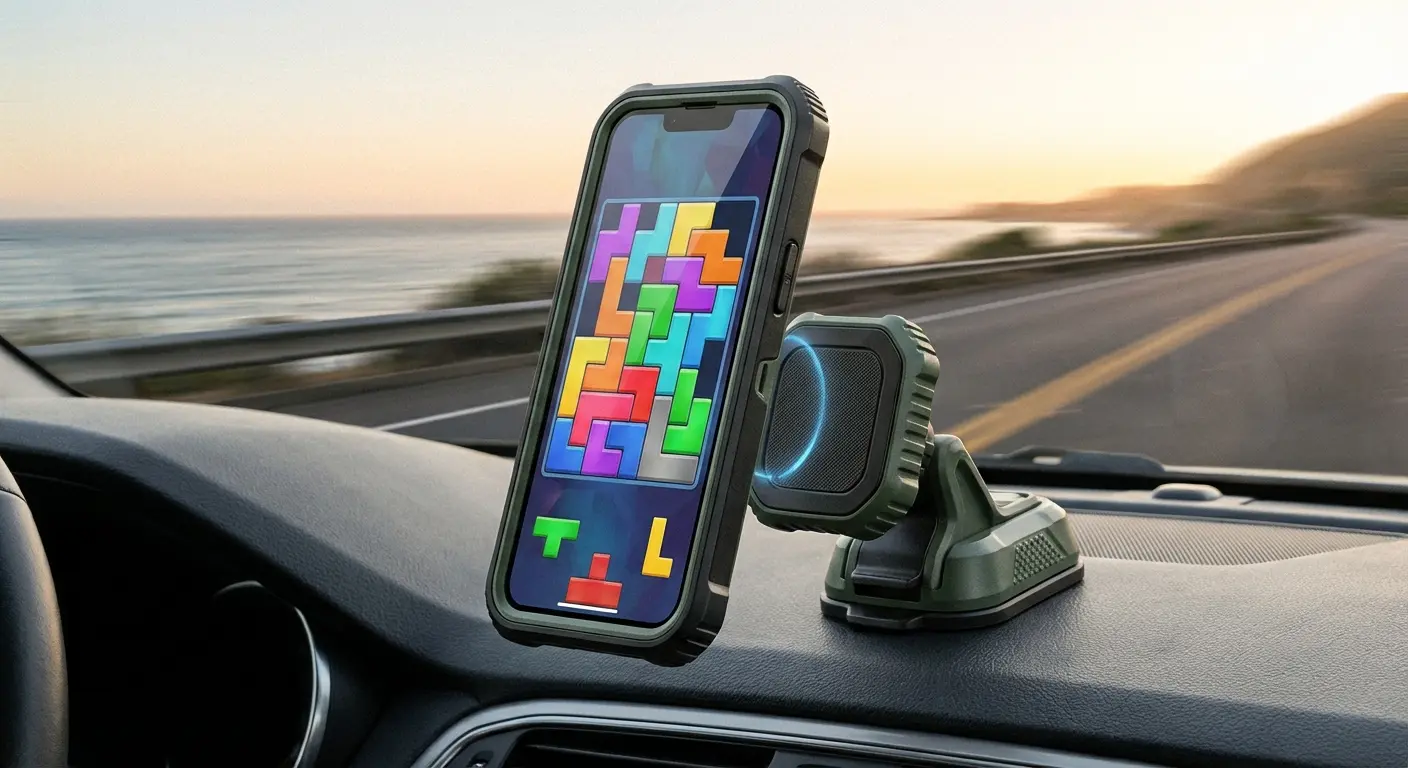
Rokform's magnetic mounting system changes how you experience puzzle games. Mount your phone on your car dashboard for passenger-seat puzzle sessions during road trips. Attach it to gym equipment for workout entertainment. Use the magnetic wireless charging stand for the perfect viewing angle during extended gaming sessions.
The RokLock™ mounting system keeps your device secure and accessible wherever you puzzle.
Built for Mobile Gaming Reality:
Textured edges and ergonomic design prevent drops during intense puzzle sessions when you're focused on solving rather than gripping. Raised bezels protect your display from face-down falls, which is crucial when that screen is your puzzle interface.
Wireless charging compatibility means you can keep playing while charging with Rokform's magnetic wireless charging stand. The universal mounting system lets you position your phone perfectly for comfortable puzzle gaming anywhere.
Real-World Gaming Protection:
Consider the actual cost of device damage. You've built progress across multiple games. You've purchased premium apps. You've invested time developing skills and strategies.
A single drop could compromise not just your device, but your entire gaming investment. Rokform's protection ensures that whether you're solving puzzles on a bumpy bus ride or relaxing at home, your device and your gaming progress stay safe.
Visit Rokform.com to find the perfect case for your puzzle gaming lifestyle. The only thing that should be challenging is the puzzle itself, not keeping your phone safe while you play.
Final Thoughts
Look, there are literally thousands of puzzle games out there. Most of them are garbage designed to extract money from you as efficiently as possible. The 20 I've listed here are the ones that actually respect your time and intelligence, or at least do a better job of hiding their money-grabbing than the rest.
The puzzle game landscape in 2026 offers something for everyone, from casual match-3 players seeking five-minute diversions to dedicated puzzle enthusiasts wanting deep, immersive experiences. The apps I've covered represent the best puzzle game apps across five distinct categories, each excelling in different ways.
Premium puzzle games deliver uncompromised experiences worth their $4.99-$5.99 price tags. The Room series , Monument Valley 2, and Threes! prove that mobile gaming can rival console and PC experiences when developers prioritize craft over monetization. These games respect your time and intelligence, offering complete experiences without interruption.
Free-to-play options provide accessible entry points, though the quality of that experience varies dramatically. Candy Crush and Homescapes dominate revenue charts through aggressive monetization that can feel manipulative. Is Candy Crush manipulative? Absolutely. Will you play it anyway? Probably. Toon Blast and Bejeweled Stars show that free games can balance accessibility with fairness. Word games generally treat players more respectfully than match-3 titles, with Wordle representing the gold standard for free puzzle gaming.
Your priorities should guide your choices. If offline play matters for your commute, prioritize traditional puzzle types (Sudoku, number puzzles, single-player word games) over socially-integrated options. If you're managing limited storage, avoid games such as Homescapes that balloon to 1GB+ in favor of lightweight options such as 2048 or Wordle. If you have older devices, stick with 2D puzzle games rather than 3D adventures that demand more processing power.
Quick reference for the "just tell me what to download" crowd:
If your phone is old and slow: Stick with 2048, Wordle, or Sudoku. They'll run on a potato.
If you've got 20 minutes to kill: Candy Crush, Cut the Rope 2, or Toon Blast.
If you want something you can actually finish: The Room series, Monument Valley 2, Agent A. Beat them and move on.
If you're broke: Wordle is completely free and honestly better than most paid options.
If you hate ads more than anything: Just pay the $5 for a premium game. Your sanity is worth a latte.
The best puzzle app isn't the one with the most downloads or highest revenue. It's the one that matches your specific needs, respects your time, and delivers consistent engagement without manipulation. Whether that's Wordle's daily ritual, The Room's immersive exploration, or Sudoku's endless logical challenges depends entirely on what you value in puzzle gaming.
Download a few options from different categories. Test them during your actual usage scenarios (commutes, breaks, evening relaxation). Keep the ones that genuinely enhance those moments rather than just filling time. Delete the rest without guilt, regardless of how much others praise them.
Your phone's storage is limited. Your attention is valuable. Life's too short for mediocre puzzle games.

