


Table of Contents
The Overlooked Angle: Why Most Rain Gear Reviews Skip Real-World Failure Points
-
Full-Body Protection: Rain Suits Built for Multi-Hour Rides
Frogg Toggs All-Sport Rain Suit
Alpinestars Hurricane Rain Suit
Nelson-Rigg Stormrider Rain Suit
Tourmaster Elite 3 Rain Suit
Joe Rocket RS-2 Two-Piece Rain Suit
FirstGear Sierra Rain Suit
-
Modular Essentials: Jackets, Pants, and Boots You Can Mix
Rev'It Nitric 2 H2O Rain Jacket
Klim Forecast Jacket
Olympia Horizon Rain Pants
Bilt Tornado Waterproof Over Pants
TCX Baja Mid Waterproof Boots
Alpinestars Corozal Adventure Drystar Boots
Forma Adventure Low Boots
-
Quick Deploy Gear: What to Stash When Weather Turns Without Warning
Held Wet Tour Rain Gloves
Frogg Toggs Ultra-Lite2 Poncho
Oxford Rainseal Over Gloves
Seal Skinz All Weather Cycle Gloves
How Rokform Solves the Phone Access Problem in Rain
Final Thoughts
TL;DR
Look, I've been soaked enough times to know most rain gear reviews are useless. Here's what actually matters: sealed seams beat waterproof ratings every time, your phone becomes worthless in rain (learned that one the hard way), and those $30 Frogg Toggs sometimes outlast $300 "premium" suits. Full-body rain suits need planning since you have to stop and gear up before things get bad. Separate pieces give you flexibility when weather changes mid-ride. Quick-deploy stuff fits in your bag and saves your ass when forecasts lie. Read on if you want to know what works when you're two hours into a downpour with no exit strategy.
The Overlooked Angle: Why Most Rain Gear Reviews Skip Real-World Failure Points
Here's what pisses me off about rain gear reviews: they test stuff for maybe 30 minutes in light rain, then write 2,000 words about "waterproof breathability ratings."
Useless.
You don't learn what fails until you're two hours into a storm, doing 70mph on the interstate, with semis spraying road water at you like fire hoses. That's when you discover your "premium" jacket leaks at the zipper. When you find out those adjustable cuffs rode up and now rain is pouring down your arms. When you realize the jacket tail is too short and water's been running down your back for the last hour.
Water doesn't just hit you from above during a motorcycle ride. It sprays up from the road, seeps through zippers after sustained exposure, and pools wherever fabric bunches up. These failures happen gradually, which is exactly why most reviews miss them. The reviewer rides for 30 minutes in light drizzle, declares everything waterproof, and calls it a day.
I've been that soaked, miserable rider. Multiple times. Learned expensive lessons about what actually works versus what just looks good in product photos. When you're searching for the best motorcycle rain gear, you need to look past marketing claims and focus on real-world durability.
The difference between staying functional and becoming a drenched mess often comes down to details other guides gloss over. Zippers become weak points. Seams that looked solid in the store start weeping water. Cuffs that felt snug at the shop ride up and create channels for rain to pour down your arms.
I've tested this gear during multi-hour rides in sustained rain. The kind where you start questioning your life choices and wondering if you should have just stayed home. That's when you discover what works and what's just marketing copy. Having reliable motorcycle accessories for navigation becomes critical when you need real-time weather updates to decide whether to push through or find shelter.
This list is everything that held up when I needed it to. Not in controlled conditions. In the kind of rain that makes you question why you ride motorcycles at all.
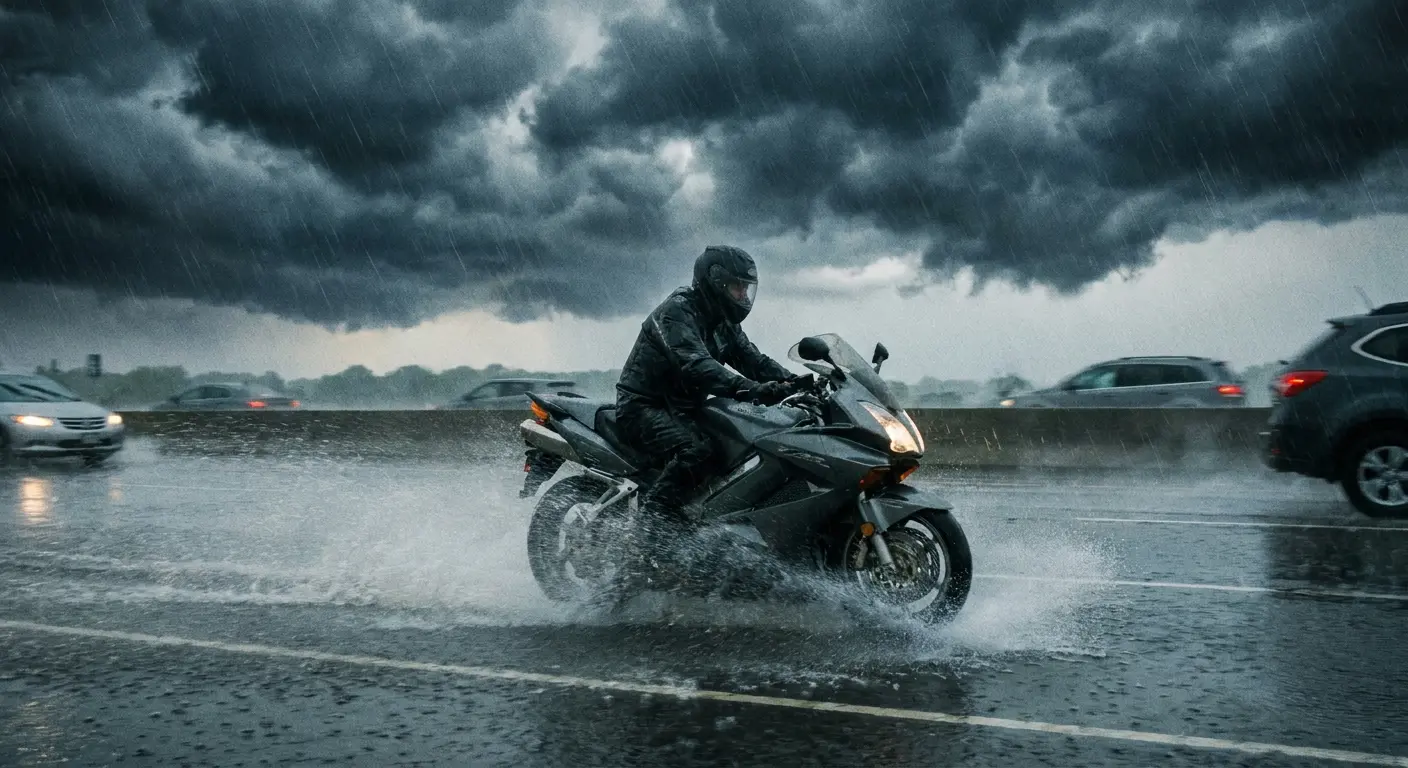
Full-Body Protection: Rain Suits Built for Multi-Hour Rides
Rain suits give you complete coverage in a coordinated system, which matters more than you'd think. Separate pieces leave gaps where jacket meets pants, creating entry points for water during aggressive riding positions. These suits eliminate that vulnerability while offering features designed specifically for motorcycle ergonomics.
You're looking at options that account for reach positions, sitting posture, and the constant wind pressure that finds every weakness in poorly designed rainwear. The suits in this category proved themselves during sustained rain exposure, not just passing showers. A proper rain suit for motorcycle use addresses the unique challenges of staying dry while maintaining control of your bike.
The coordination between jacket and pants means no exposed belt line, no gap when you lean forward, and no water running down your back because the jacket rode up. This integrated approach to motorcycle rain gear changes everything during extended exposure.
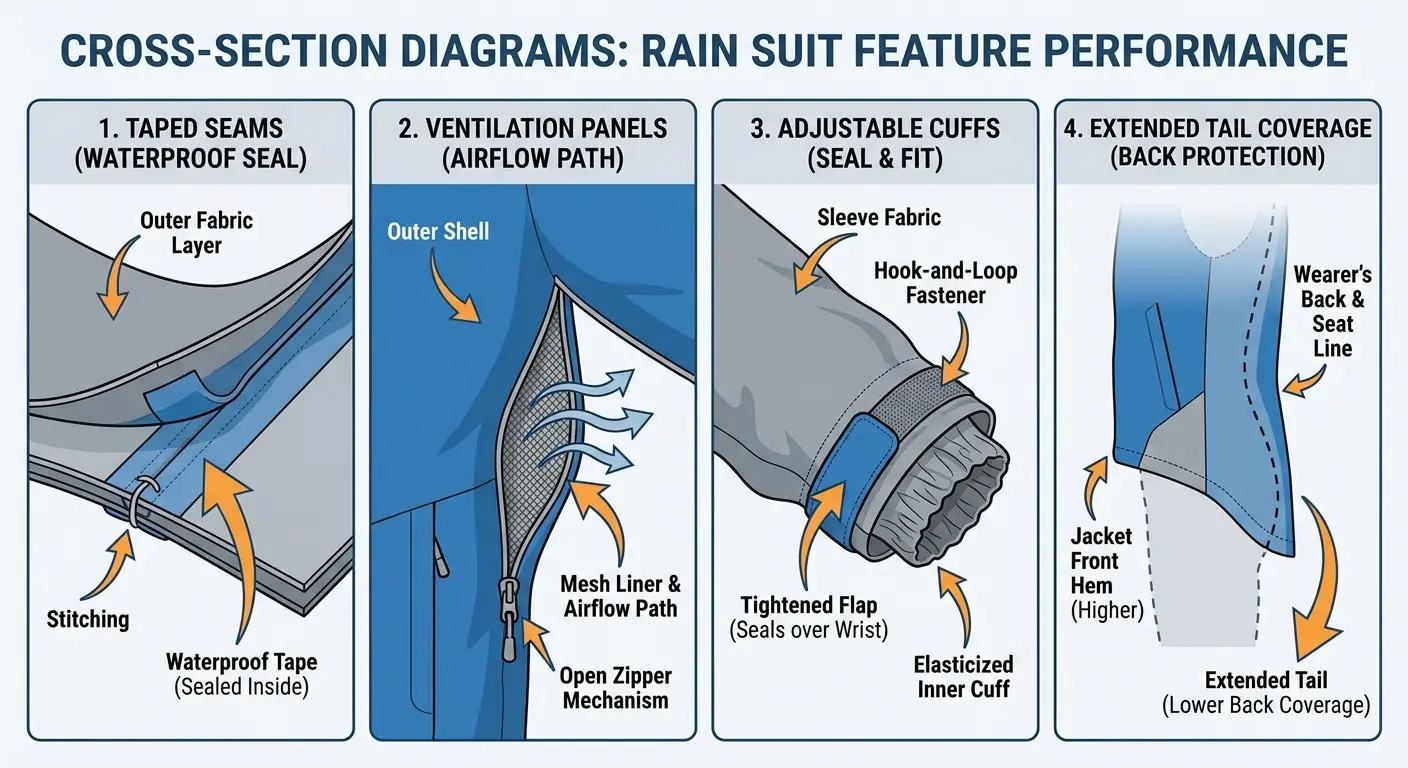
What Actually Fails First (And How to Spot It)
Seams: After about an hour of heavy rain, water finds microscopic gaps where fabric pieces meet. Check that seams are taped or welded, not just stitched.
Cuffs: Water runs down your arms and pools at your wrists. Adjustable closures that you can tighten with gloves on = essential. Elastic-only = prepare for wet hands.
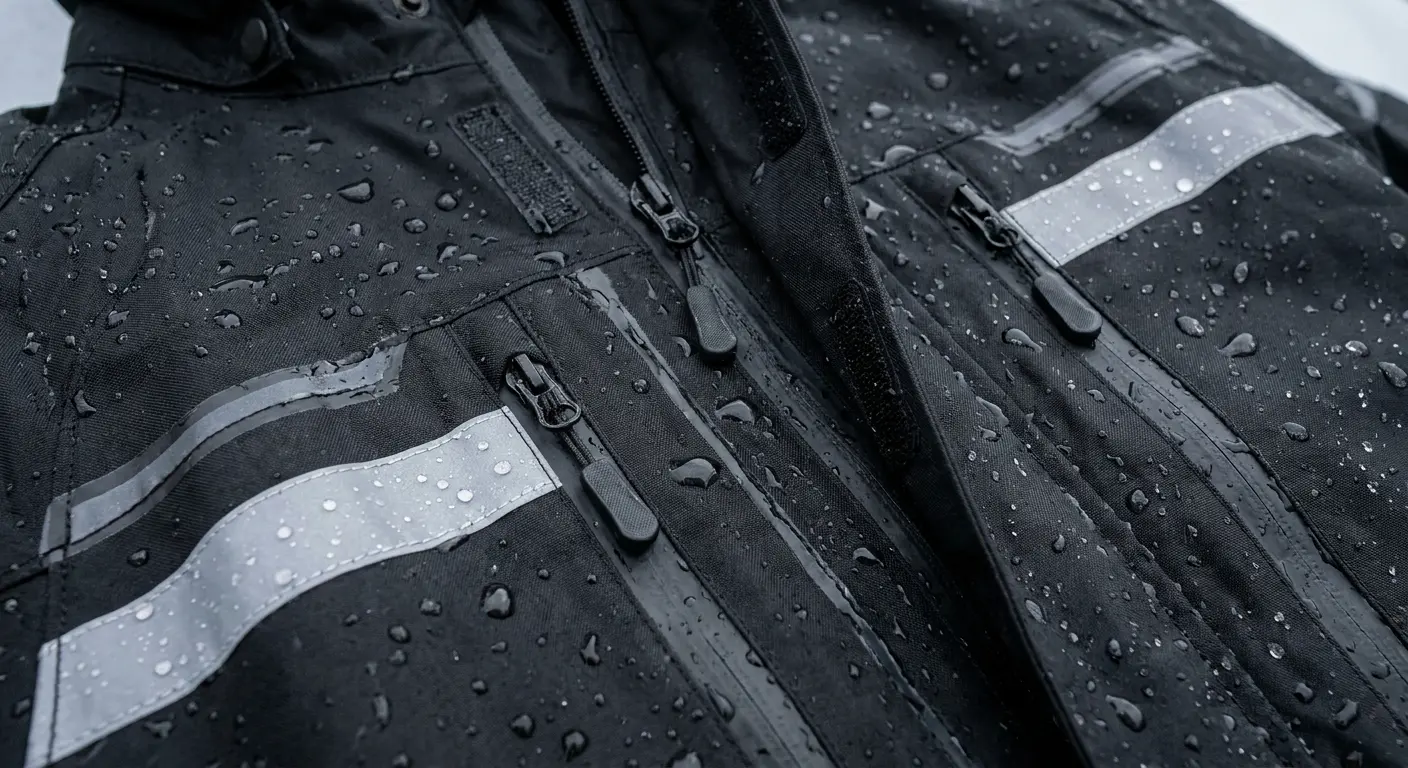
Zippers: The main zipper is where most jackets die. Look for storm flaps that actually cover the zipper, not just decorative strips of fabric.
Tail length: Standard jackets leave a gap when you're leaned forward. Water pours in. Get something with an extended back panel.
Ventilation: No vents = you're swimming in sweat within an hour. But vents also let rain in if they're poorly designed. This is the hardest balance to get right.
1. Frogg Toggs All-Sport Rain Suit
This is the answer for most riders. Thirty bucks. Actually waterproof. Packs reasonably small. Lasts 1-2 seasons of regular use, longer if you're careful.
The material uses a non-breathable membrane that sounds terrible until you realize you're on a motorcycle generating your own heat anyway. Yeah, you'll sweat in warm weather. But you'll be dry from rain, which is the whole point.
The fit works over layering without becoming bulky. I've watched riding buddies use the same suit for three full seasons. The elastic cuffs seal well enough to prevent water intrusion at highway speeds, and the stuff sack makes it easy to carry as backup gear.
Among motorcycle rain suits at this price point, this delivers exceptional value. I've seen riders keep these packed on their bikes for years, pulling them out when forecasts turn ugly and never being disappointed. The Frogg Toggs has a cult following in budget motorcycle forums for a reason.
2. Alpinestars Hurricane Rain Suit
Bought this after my third rain suit failed at the seams. I was tired of "waterproof" gear that leaked after an hour, tired of reflective strips that were invisible in actual low-light conditions, tired of stuff sacks that weren't actually waterproof (why?).
The Hurricane costs about $180, which felt steep until I actually used it. The seam sealing is legitimately better than cheaper suits. Water sheets off instead of finding entry points. I've tested this through some genuinely miserable conditions: four-hour rides in sustained rain, highway speeds with semis spraying road water, cold rain at altitude where temps dropped into the 40s. Stayed dry through all of it.
The reflective panels are integrated into the fabric, not just sewn-on strips. Found this out riding at 5am in fog outside Portland. Cars actually saw me. The extended tail prevents water from running down your back when you're leaned forward, which is where most rain jackets fail if you ride anything sportier than a cruiser.
The jacket includes features that work in real riding positions. Pants have reinforced knees and seat areas that hold up against abrasion from your bike's surfaces. The storage bag is waterproof, which matters when you're packing wet gear after a storm passes.
This motorcycle rain suit handles extended exposure better than most competing options. The reflective elements aren't just strips sewn on as an afterthought. They're woven into the design, making you visible from multiple angles when visibility drops to nearly nothing.
3. Nelson-Rigg Stormrider Rain Suit
This suit addresses the phone access problem better than most rain gear. The chest pocket is both waterproof and touch-sensitive, allowing you to check navigation without exposing your device. Sounds gimmicky, but it's actually brilliant for checking navigation without stopping.
(Side note: I've seen riders use Ziploc bags for their phones. Don't. The condensation will kill your phone faster than rain will. Ask me how I know.)
Adjustable cuffs use hook-and-loop closures that you can operate with gloves on, which sounds minor until you're trying to seal up while rain is already falling. The material is thicker than typical rain suits, giving you some wind resistance beyond just water protection.
Riders doing regular commutes in variable weather find this suit hits the sweet spot between packability and durability. It won't compress as small as ultralight options, but it also won't tear the first time you brush against a sharp edge.
As a rain suit for motorcycles, it balances protection with practical features. The pocket placement makes sense for riders who need quick access to phones, wallets, or other essentials without stopping and digging through layers of gear. I've tested this through multiple seasons and the construction holds up impressively well.
4. Tourmaster Elite 3 Rain Suit
Tourmaster added features that matter during actual emergencies. Reflective piping covers more surface area than competing suits, making you visible from multiple angles. The collar design prevents water from running down your neck, which is where most suits fail first.
Elastic waistband on the pants keeps them positioned correctly without constant adjustment. This suit includes a removable liner that adds warmth in cold rain situations, giving you seasonal versatility. The build quality shows in details like reinforced stress points and double-stitched seams.
You're paying more than budget options, but the suit lasts proportionally longer. The removable liner transforms this from a summer rain solution into something you can use when temperatures drop and rain turns cold. That versatility matters when you're trying to minimize what you pack for multi-day trips.
One weird flaw: the velcro on the cuffs catches on everything. My jacket, my gloves, itself when you're trying to adjust it. Annoying but not a dealbreaker.
5. Joe Rocket RS-2 Two-Piece Rain Suit
Joe Rocket focused on quick deployment with this design. The jacket and pants pack into attached stuff sacks that clip to your bike or bag, eliminating the fumbling that happens when you're trying to separate pieces during an unexpected downpour.
Zippered vents on the jacket provide airflow without compromising water protection, addressing the condensation problem that builds during extended wear. The pants use snap closures at the ankles that work over boots without requiring you to remove them first. This saves critical time when weather turns suddenly.
Material is lightweight but hasn't shown the tearing issues common in similar-weight competitors. The venting system deserves special mention because it solves the sweat problem without creating new water entry points. You can open vents when rain lightens up, then seal everything when conditions worsen again.
The stuff sacks are too small, though. You can barely get the suit back in after you've used it. I ended up buying a larger stuff sack separately.
6. FirstGear Sierra Rain Suit
FirstGear designed this suit for riders who need durability over multiple seasons. The fabric weight is noticeably heavier than economy options, which translates to better wind resistance and longer lifespan. Articulated elbows and knees maintain comfort during long rides without restricting movement.
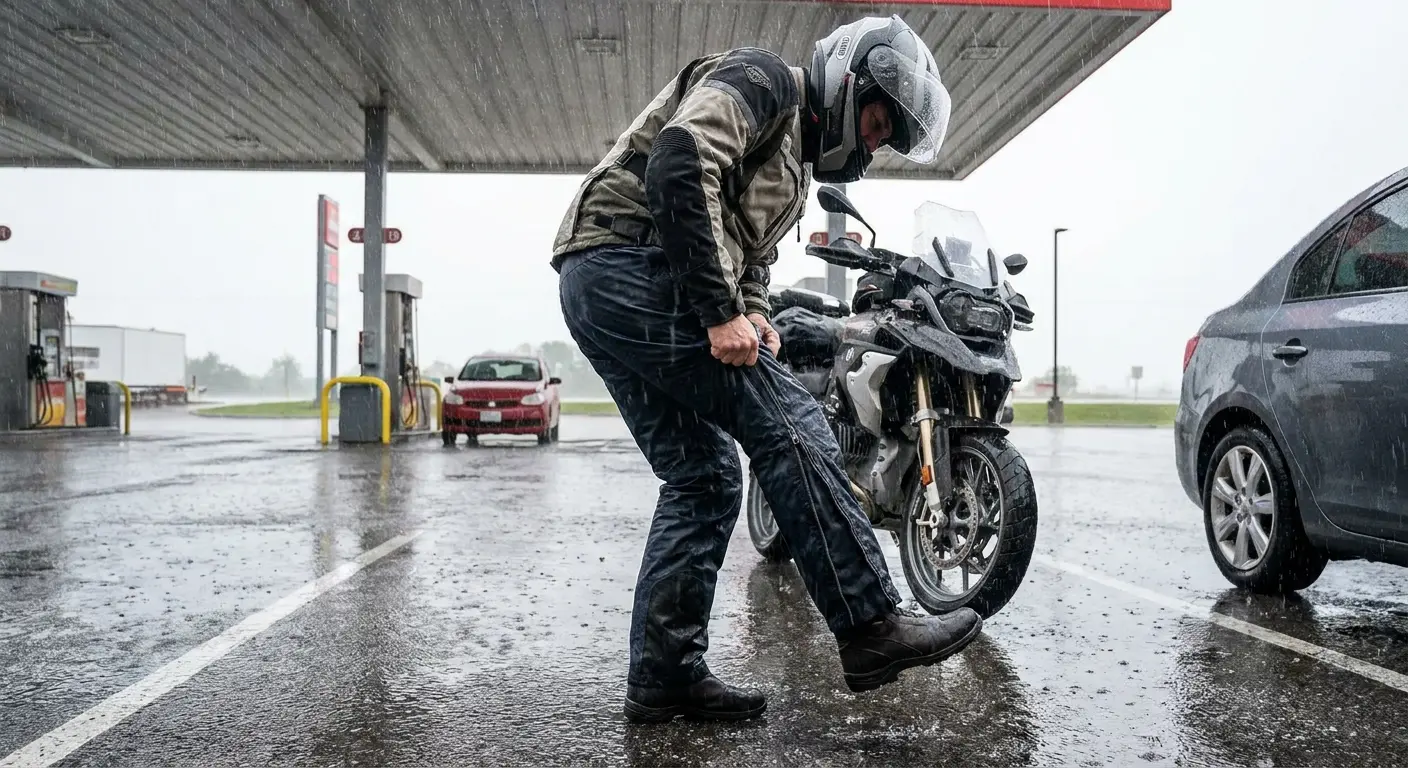
The jacket's storm flap covers the main zipper completely, preventing the water intrusion that happens when zippers become the weak point. Pants include full-length side zippers that make them easy to put on over boots and gear.
You'll appreciate this feature when you're suiting up in a gas station parking lot while rain is already falling. The suit's cut is generous enough to fit over armored riding gear without becoming restrictively tight. I've watched this suit handle everything from light drizzle to torrential downpours without showing wear. After two seasons of regular use, mine still looks nearly new.
Modular Essentials: Jackets, Pants, and Boots You Can Mix
Here's the thing about full rain suits: they're all or nothing. Either you're wearing the whole setup or you're not. But weather doesn't work that way.
Last month I left Seattle in drizzle, hit sunshine in the mountains, then rode into a storm on the other side. A full suit would've meant sweating through the sunny section or scrambling to suit up when the storm hit. Separate pieces let me adapt. Jacket for the drizzle, added pants when the storm rolled in, stripped down to regular gear when sun came back.
The trade-off? You need to think about how pieces work together. Does your jacket tail overlap with your pants waist? Do your boots fit under your rain pants or do the pants go over them? Will your gloves seal with your jacket cuffs?
More moving parts, more potential gaps. But way more flexibility.
Boots deserve special attention because wet feet destroy ride quality faster than any other factor. Wet feet end rides. I don't care how good your jacket and pants are. If your feet are soaked, you're miserable.
Modular motorcycle rain gear offers the adaptability that serious riders need when conditions change mid-route. Understanding which pieces of rain gear for motorcycle use work together ensures you're prepared without over-packing. You can layer protection as conditions demand rather than sweating in a full suit when you only need partial coverage. These essential motorcycle riding tips help you make better decisions about gear selection based on conditions.
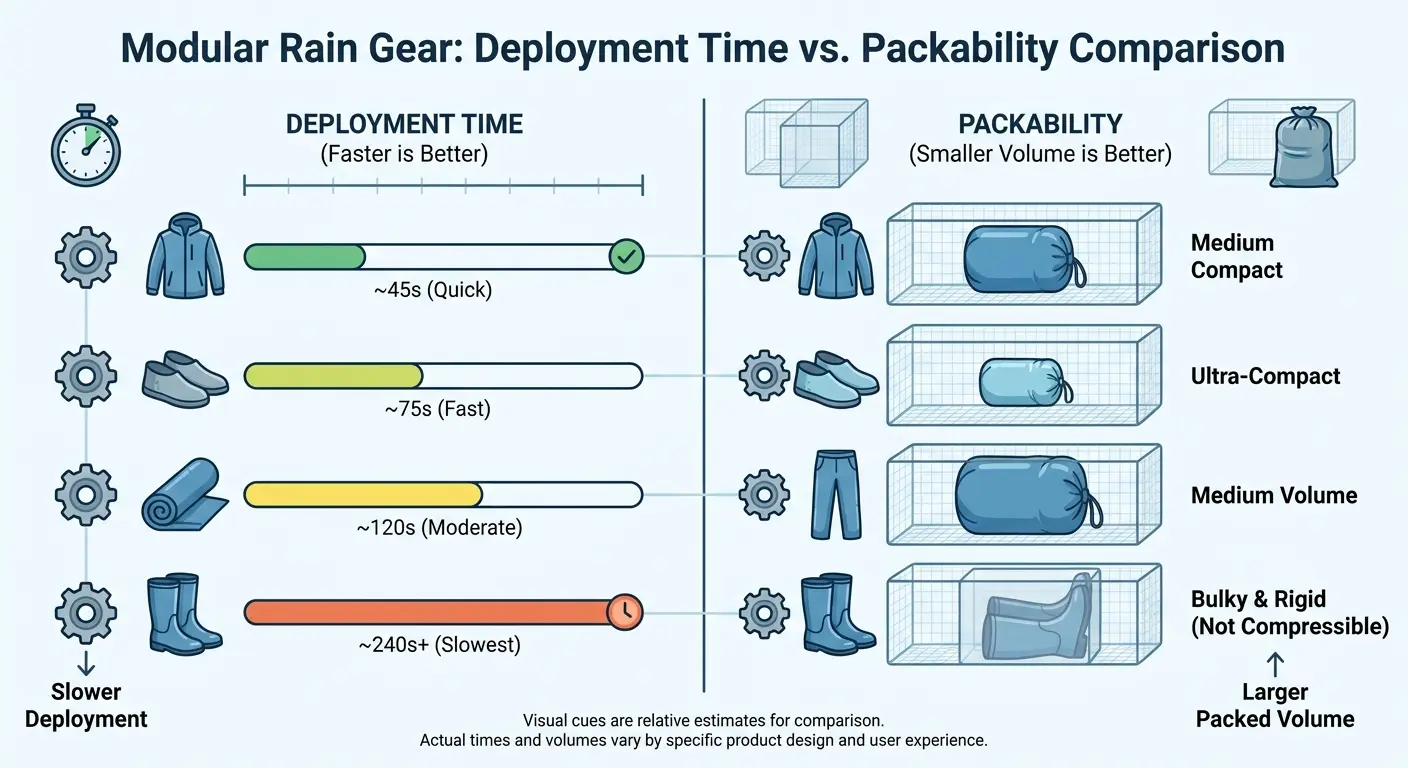
7. Rev'It Nitric 2 H2O Rain Jacket
This jacket costs about $150 and performs like jackets that cost $250. I don't know how Rev'It is pulling this off, but I'm not complaining.
The cut works over motorcycle gear. Extended sleeves that don't ride up when you reach for the bars, long enough tail to cover your lower back in sport bike position. Ventilation panels are positioned smart: upper back and underarms, not chest or shoulders where rain hits directly. You get airflow without creating new leak points.
Collar's high enough to block water running down your neck. Not so high you can't check your blind spot. Cuffs adjust with one hand, even with gloves on. Learned to appreciate this while trying to seal up as rain started falling.
The reflective elements are woven into the fabric, not just sewn-on strips. Means they don't peel off after a season of use. I've had mine for 18 months. Still looks new, still reflects.
This motorcycle rain jacket delivers premium protection without the premium price. The sleeve length accounts for the forward lean of sport bikes and the upright position of cruisers, making it versatile across riding styles. Best value in the mid-range category.
8. Klim Forecast Jacket
Four hundred dollars for a rain jacket. I know.
I resisted buying this for two years. Then I did a winter of daily commuting in Seattle rain and accepted that I needed something better than emergency gear. The Klim breathes well enough to wear for hours without fighting condensation. It's trim enough to not billow at highway speeds. It packs into its own pocket.
The Gore-Tex construction means it's waterproof but still breathes. You're not swimming in your own sweat after an hour. The breathability makes a real difference during active riding. You're not fighting condensation buildup that leaves you feeling damp even though the rain isn't getting through.
The fit eliminates the billowing that creates drag at highway speeds. Pockets are positioned to remain accessible while riding, with waterproof zippers that don't require storm flaps. The jacket packs into its own pocket for storage, though it's bulkier than dedicated rain shells.
Is it worth $400? Only if you ride in rain regularly. Like, multiple times per week. If you're a weekend rider who hits rain occasionally, get the Rev'It Nitric 2 for $150 and save your money.
But if rain is part of your regular riding life, this jacket earns its cost. I'm on my second season with it. Still looks new. Still performs like day one.
9. Olympia Horizon Rain Pants
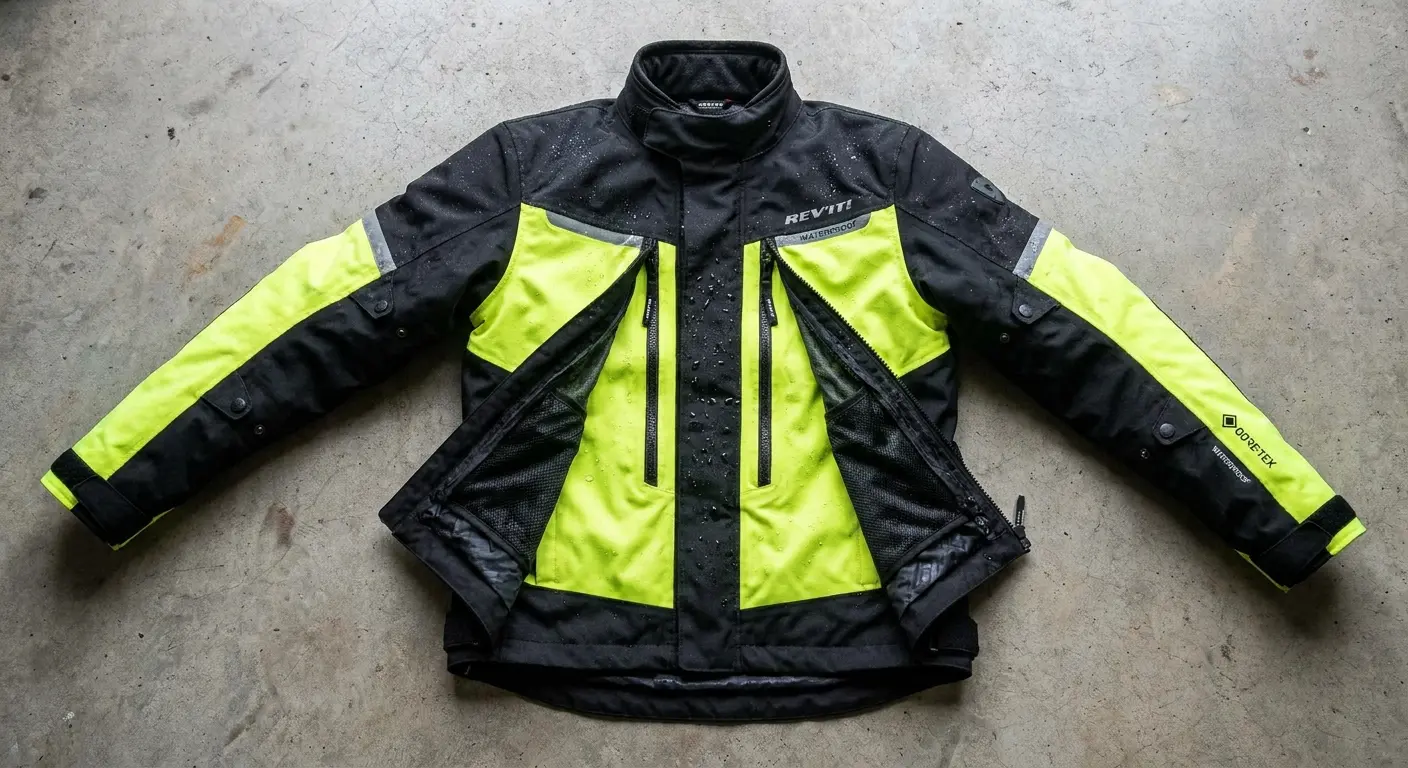
These pants solve the over-boot problem better than most options. The ankle zippers extend far enough up the leg that you can put them on without removing boots, saving time during sudden weather changes.
The waist uses both elastic and adjustable straps, keeping the pants positioned correctly without constant attention. Seat and knee areas use reinforced fabric that resists the abrasion from your bike's surfaces. The cut is generous enough to fit over riding jeans without binding, but not so loose that excess material flaps in the wind.
My buddy Jake commutes year-round in Seattle. He's on his third season with these pants and they're still solid. The reinforcement in high-wear areas means they don't develop holes or thin spots where you contact the bike most frequently.
10. Bilt Tornado Waterproof Over Pants
These are fine. Not great, not terrible. Fine.
Bilt designed these pants for riders who need budget-friendly reliability. The material is thicker than economy rain pants, giving you better wind resistance and durability. Full-length side zippers with storm flaps make them easy to put on in parking lots or gas stations.
The elastic waist adjusts to fit over different gear configurations without requiring precise sizing. Ankle closures use snap buttons that work with gloves on, eliminating the frustration of trying to operate small fasteners in rain.
These pants won't compress as small as ultralight options, but they also won't tear the first time you swing your leg over the bike. The trade-off makes sense for riders who prioritize durability over packability. The extra material weight translates to longer lifespan, which offsets the initial savings when you're not replacing them every season.
They're thick, which means durable but also bulky. The full-length zippers are convenient until one of them catches on the fabric (happened to me twice). If you can swing another $40, the Olympia Horizon pants are noticeably better.
11. TCX Baja Mid Waterproof Boots
I've owned these for 18 months and worn them through two Pacific Northwest winters. Still waterproof. The membrane extends higher than most boots, which matters when you're riding through puddles you can't avoid.
TCX built these boots with a waterproof membrane that extends above typical puddle height. The closure system uses a combination of laces and velcro straps that you can adjust quickly, even with wet hands. Sole grip remains reliable on wet surfaces, which matters more than riders realize until they're trying to put a foot down at a stoplight in the rain.
The boots are comfortable enough for all-day wear, eliminating the need to carry separate rain boots. Break-in period is minimal compared to traditional motorcycle boots. The ankle support is substantial without restricting the movement needed for gear shifts and brake application.
I've worn these through entire days of wet riding without the interior moisture problems that plague cheaper waterproof boots. The membrane breathes well enough that your feet don't end up soaked from sweat instead of rain.
Rode for two years without waterproof boots because I didn't want to spend the money. Stupid. Wet feet ruined more rides than I can count. The TCX boots cost $180. Should have bought them on day one.
12. Alpinestars Corozal Adventure Drystar Boots
Alpinestars uses their Drystar membrane in these boots, giving you waterproofing without the stiffness of traditional rain boots. The closure system combines speed laces with a secure strap, allowing quick adjustments when you need to tighten up before riding in rain.
The sole pattern channels water away effectively, maintaining traction on wet pavement and slick surfaces. These boots work well for both on-bike and off-bike activities, which matters when you're doing more than just riding.
The internal construction includes drainage points that allow water to escape if it does get in, preventing the sloshing feeling that ruins ride quality. Riders doing multi-day trips in variable weather report these boots maintaining comfort and protection throughout extended exposure. The drainage system is clever because it acknowledges that no boot is completely impervious forever, so it plans for the inevitable.
Before I bought the TCX Baja boots, I tried these and the Forma Adventure. The Alpinestars were too narrow for my feet. Great boots if they fit you, but sizing matters here.
13. Forma Adventure Low Boots
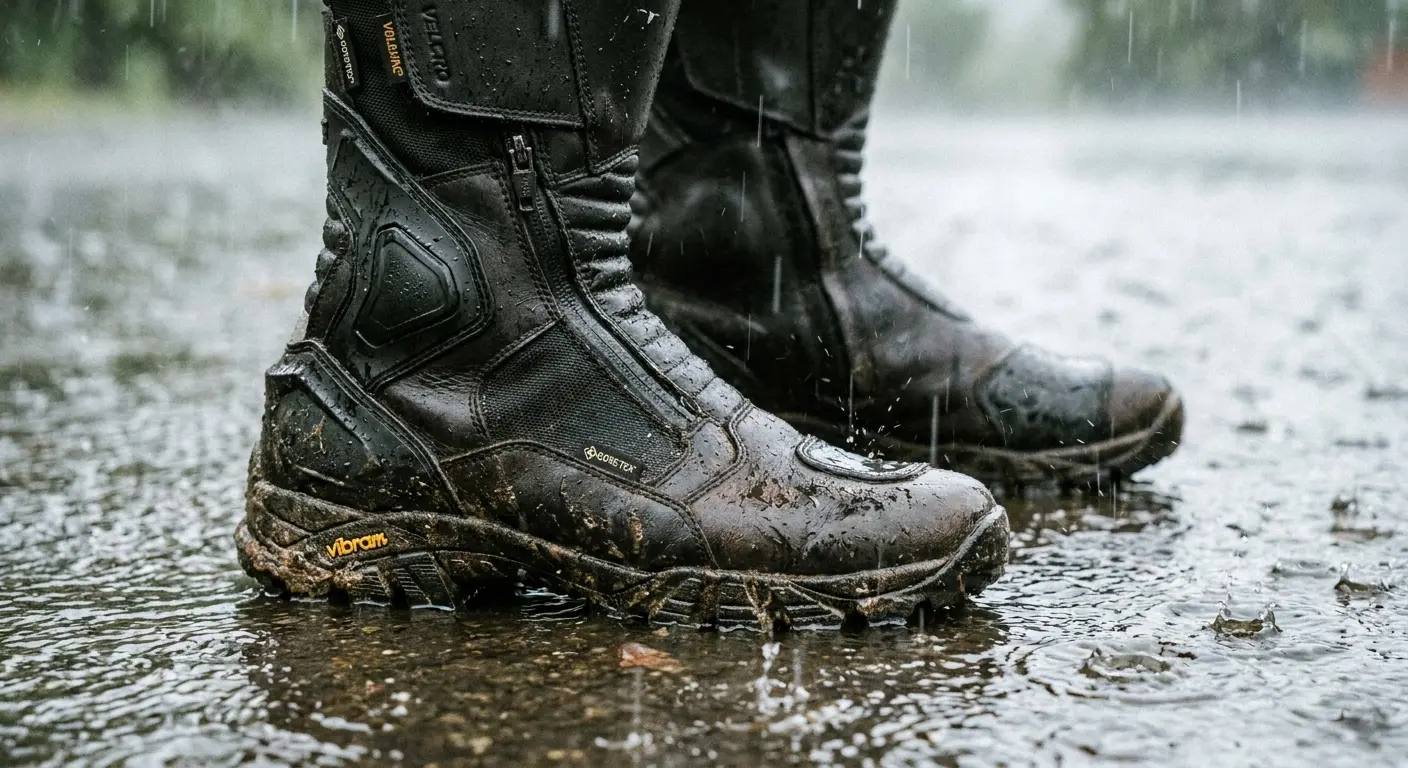
Forma designed these boots for riders who want waterproof protection without the height of traditional adventure boots. The lower cut makes them more comfortable for everyday riding while still providing ankle support and weather protection.
The waterproof membrane is integrated into the boot construction rather than added as a liner, improving durability and reducing break-in time. Toe and heel reinforcements protect against abrasion while maintaining flexibility for control inputs.
The sole uses a compound that maintains grip in wet conditions without becoming too soft for riding. These boots pack smaller than mid-height options, making them practical for riders with limited storage space. The lower profile also means they work better with regular jeans when you're off the bike, giving them versatility beyond pure riding applications.
Quick Deploy Gear: What to Stash When Weather Turns Without Warning
Forecasts lie, and weather changes faster than route planning accounts for. Quick-deploy gear fits in bags or under seats, giving you protection when you didn't expect to need it. These pieces prioritize packability and deployment speed over maximum comfort, filling the gap between being caught unprepared and carrying full rain suits everywhere.
The gear in this category proved reliable during unexpected storms while remaining small enough that riders actually carry it rather than leaving it home. Compact motorcycle rain gear saves rides when conditions deteriorate without warning, making these pieces essential for any serious rider's kit.
Weather apps show clear skies, then an hour into your ride, dark clouds roll in from nowhere. Having emergency protection that deploys in under a minute means the difference between continuing your ride and seeking shelter for hours. Understanding proper long-distance motorcycle planning includes accounting for weather variables that change faster than forecasts predict.
14. Held Wet Tour Rain Gloves
Held built these gloves to go on over your regular riding gloves, preserving the grip and control you're used to. The material is thin enough to maintain bar feel while blocking water completely. Wrist closures are long enough to tuck under jacket sleeves, preventing water from running down your arms into the gloves.
The gloves pack into a pouch the size of a wallet, making them practical to carry on every ride. Touch-screen compatible fingertips work well enough for quick phone checks, though precision is limited.
These gloves won't keep your hands warm in cold rain, but they prevent the complete loss of dexterity that happens when regular gloves become waterlogged. The over-glove design means you don't sacrifice the fit and feel you've spent time perfecting with your primary riding gloves.
15. Frogg Toggs Ultra-Lite2 Poncho
This poncho works on a motorcycle. The cut is long enough to cover your legs while riding, and the material is durable enough to handle highway wind without shredding.
It's a poncho. You'll look ridiculous. But when a storm rolls in and you're 50 miles from shelter, looking cool drops pretty far down your priority list. This thing packs smaller than a burrito and costs about the same.
Snap closures at the sides prevent the poncho from billowing excessively, reducing drag and improving visibility. The hood fits over most helmets, keeping rain off your visor. This poncho packs into a pouch smaller than a soda can, making it practical to keep in a jacket pocket or tank bag.
You're not going to use this for planned rain riding, but it saves rides when unexpected weather hits. The poncho also works as an emergency ground cover or gear protector when you need to stop and make repairs. I've pulled this out more times than I expected, always grateful it was there when conditions turned ugly without warning.
Keep one in your bag and forget about it until you desperately need it.
16. Oxford Rainseal Over Gloves
Twenty bucks. Fit over your regular gloves. Work.
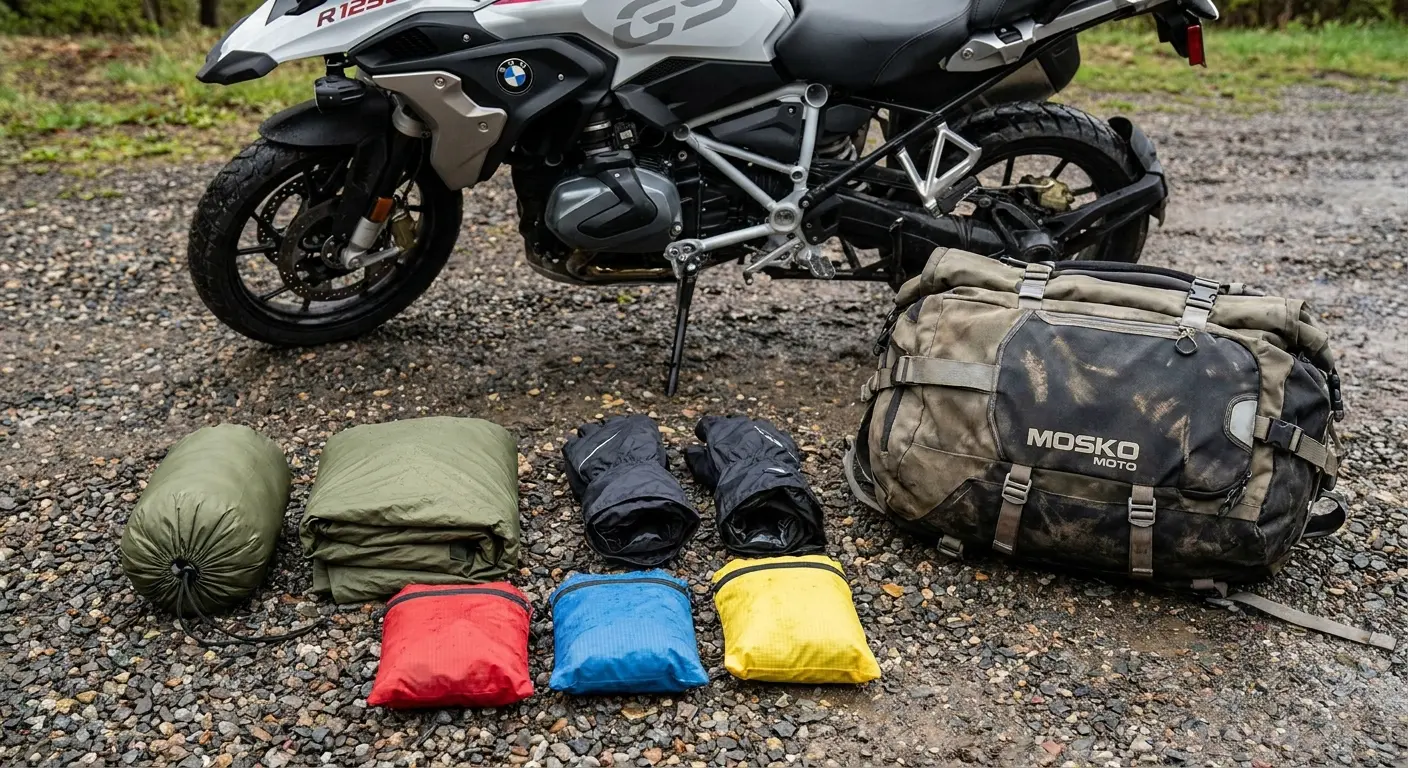
Oxford designed these gloves for riders who need waterproof protection without changing their regular gloves. The gauntlet length extends well past your wrists, creating an overlap with jacket sleeves that prevents water intrusion.
The material uses a thin membrane that maintains tactile feedback for controls while blocking moisture completely. Velcro closures are positioned to tighten easily, even when you're already wearing them. These gloves include a storage pouch that clips to your bike or bag, ensuring you carry them rather than leaving them home.
The main limitation is durability in extended use, but they excel as emergency gear that deploys in seconds. The ability to keep your primary gloves dry means your hands stay comfortable once the rain passes, rather than dealing with soggy leather or textile for the rest of your ride.
17. Seal Skinz All Weather Cycle Gloves
Seal Skinz built these gloves as standalone waterproof protection rather than over-gloves. The three-layer construction gives you waterproofing, insulation, and durability in a single piece. Palm grip remains reliable in wet conditions, maintaining control feel during rain riding.
"Cycle gloves" sounds wrong for motorcycles, but whatever. They work.
The gloves are thin enough to fit under jacket sleeves without bunching, creating a good seal against water intrusion. Touch-screen compatibility works on all fingers (not just the index finger like some sadistic designs), allowing full phone operation without removing the gloves.
These pack smaller than traditional winter gloves while providing similar warmth in cold rain situations. You'll pay more than basic rain gloves, but they function as year-round riding gloves rather than single-purpose emergency gear. The versatility means they earn their place in your gear rotation beyond just emergency rain protection.
Bought cheap rain gloves three times before I accepted that the $60 Seal Skinz were worth it. Math: 3 x $20 = $60, except the cheap ones all failed within a month. Sometimes budget options make sense. Sometimes they don't.
How Rokform Solves the Phone Access Problem in Rain
Quick aside that matters: your phone becomes useless in rain exactly when you need it most.
I've pulled over in downpours, trying to check radar with wet gloves, phone buried in a tank bag, water pooling on the screen. Missed turn-offs because I couldn't see navigation. Rode into worse weather because I couldn't check updated forecasts. It's infuriating.
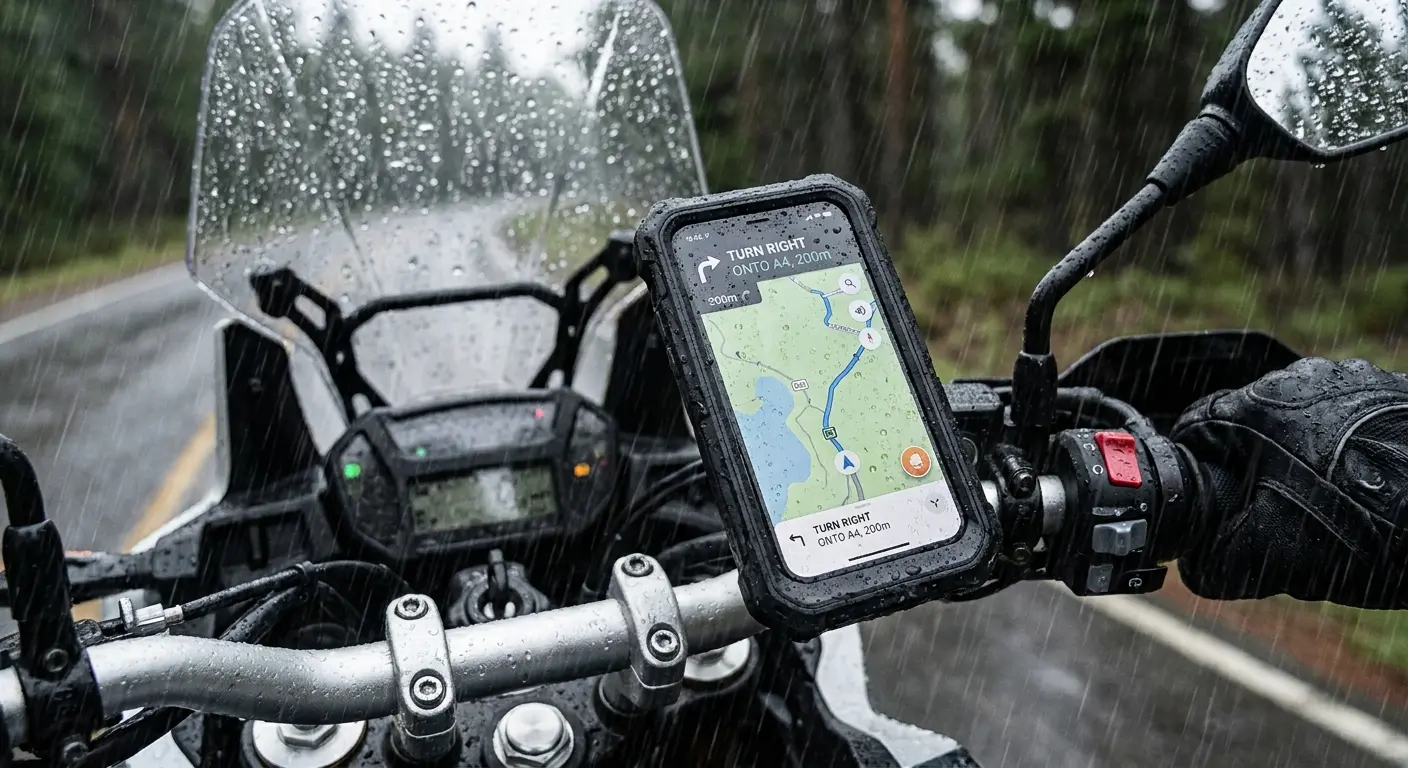
Full disclosure: Rokform sponsors some of my content, but I actually use their mounts because they solve this specific problem. Rain makes your phone simultaneously more critical and harder to use. You need navigation updates, weather radar checks, and communication access precisely when water makes touchscreens unresponsive and threatens your device.
Waterproof cases create their own problems by blocking touch sensitivity or requiring you to remove your phone for every interaction. The magnetic mounting system keeps your phone visible and accessible without requiring you to stop and dig through waterproof bags. When weather turns and you need to check radar or reroute around storms, your phone stays protected and functional.
This matters more than riders realize until they're pulled over in rain, trying to operate a phone with wet gloves while water pools on the screen. The handlebar phone mounts lock securely enough to handle highway speeds and rough roads, eliminating the anxiety about your device flying off during aggressive riding.
You're already dealing with reduced visibility and traction in rain. Your navigation system shouldn't add to the stress. The Rokform Perch Motorcycle Mount provides quick-release functionality that works even with wet hands, giving you options when you need to check detailed route information or make calls.
I've tried the "phone in a Ziploc bag" approach. Don't. The condensation will kill your phone. I've tried waterproof cases. They work until you need to actually use your phone, then you're fighting with the case while rain is falling.
The Rokform mount locks securely enough for highway speeds and rough roads. Quick-release works with wet hands. Not cheap, but neither is replacing a phone that got soaked because you had no good way to access it.
Even the best motorcycle rain gear can't protect your ride if you can't access critical information when conditions deteriorate. I've seen too many riders miss weather warnings or navigation updates because their phones were buried in waterproof bags, inaccessible when they needed them most. The mounting solution becomes as essential as the rain gear itself.
Final Thoughts
Rain gear decisions come down to understanding your riding patterns rather than preparing for worst-case scenarios. Commuters need different solutions than weekend riders, and tour riders face different challenges than both.
The gear that works is the gear you'll carry and deploy when conditions demand it. I've seen too many riders invest in premium rain suits that stay home because they're too bulky to pack, or buy ultralight options that fail during the first serious storm.
Here's why this matters: getting caught in rain without proper gear doesn't just make you uncomfortable. It makes you unsafe. Cold, wet hands lose dexterity. You can't operate controls as precisely. Wet feet mean you're thinking about how miserable you are instead of focusing on the road. Fogged visor plus rain plus reduced visibility equals genuinely dangerous riding conditions.
I've pulled over and waited out storms because I wasn't prepared. I've also pushed through because I had the right gear and knew I could do it safely. The difference is huge, not just for comfort, but for safety and confidence.
Your phone remains a critical tool during rain riding, providing weather updates and route adjustments that can mean the difference between pushing through manageable conditions and riding into dangerous situations. The best motorcycle rain gear is the combination that matches your riding style, fits your storage capacity, and gets used when weather turns.
Rain doesn't have to end rides or create miserable experiences. It requires the right preparation and gear that performs when conditions get real. Investing in quality motorcycle rainwear means the difference between arriving safely at your destination or cutting rides short when storms roll in.
I've spent about $1,200 on rain gear over 5 years of riding, including stuff that failed and got returned or replaced. That's real money invested in figuring out what works. This list represents expensive lessons learned.
Your choice depends on how often you ride in rain, how much storage space you have, and whether you prioritize packability or maximum protection. Mix and match from these categories to build a system that covers your specific needs without carrying redundant gear.
If you're in a hurry, here's what matters most: Frogg Toggs for emergency backup ($30), Alpinestars Hurricane for regular rain riding ($180), TCX Baja boots because wet feet suck ($180), and any over-gloves that fit your budget ($20-60). Everything else is optimization. Those four items will handle 90% of rain riding scenarios.
What rain gear has worked for you? What failed spectacularly? I'm always looking for gear to test and real-world experiences to learn from.
Stay dry out there.

