


Table of Contents
Why Your Phone Mount Matters More Than You Think on Long Tours
-
Machines That Earn Their Keep Over 50,000 Miles
BMW R 1250 RT
Yamaha FJR1300ES
Honda NT1100
Kawasaki Concours 14 ABS
Ducati Multistrada V4 S
-
The Overlooked Middle Ground: Sport Tourers That Don't Compromise
Kawasaki Ninja 1000SX
BMW F 900 XR
Yamaha Tracer 9 GT
Triumph Tiger Sport 660
Suzuki GSX-S1000GT
Honda CB500X
-
Pure Sport Bikes That Actually Work for Multi-Day Rides
BMW S 1000 XR
Aprilia Tuono 660
KTM 890 Duke
Yamaha MT-09 SP
Kawasaki Z900
Making Your Sport Tourer Actually Work for Long Rides
Final Thoughts
TL;DR
Full touring bikes give you unmatched comfort for serious mileage, but you'll hate them in parking lots and tight corners
Mid-weight sport tourers hit the sweet spot: comfortable enough for long days without feeling like you're piloting a cruise ship
Sport bikes can tour if you're willing to sacrifice comfort for handling that'll make every corner memorable
Electronics matter more than you think when you're eight hours deep into a ride
Your phone is your lifeline on tours, so don't cheap out on how you mount it
Why Your Phone Mount Matters More Than You Think on Long Tours
Mile 340 of a 600-mile day, somewhere in Nevada. My phone mount cracked in half. The phone hit the pavement at 75 mph.
That was my GPS, my hotel reservation, my emergency contact, and my ego, all destroyed in two seconds. Cost me $800 and a night sleeping in my gear at a rest stop.
This is why I'm starting with phone mounts instead of motorcycles. Because the bike doesn't matter if your navigation system is scattered across I-80.
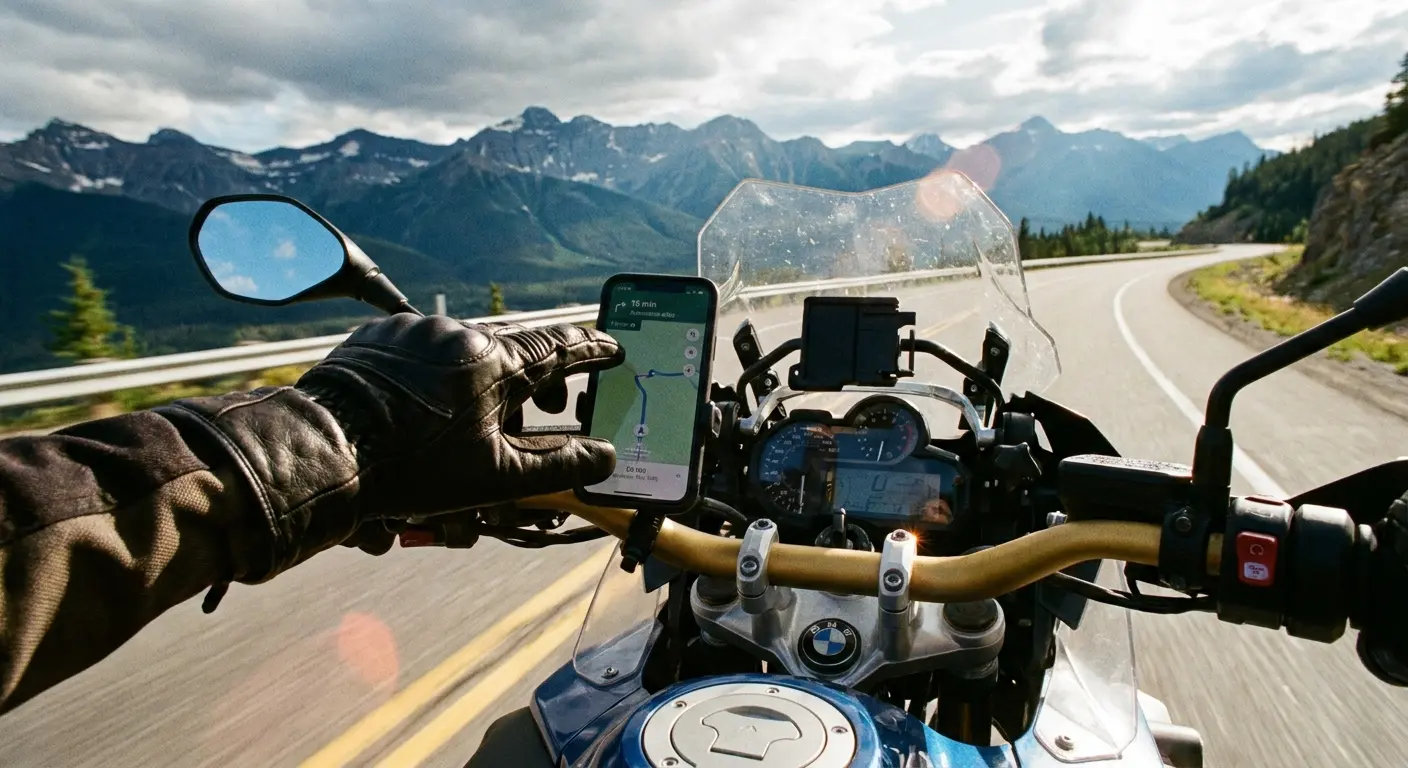
Your phone handles everything on multi-day rides. Navigation, weather updates, hotel bookings, emergency contacts, music control. When you're 400 miles from home and your cheap mount fails, you're not just inconvenienced. You're potentially lost, disconnected, and scrambling.
I've destroyed three phones on tours. All from cheap mounts failing. You'll spend thousands on a bike but often cheap out on the accessories that determine whether a trip succeeds or becomes a nightmare. Reliable motorcycle phone mounts keep your navigation and communication working when it matters.
The difference between a $15 mount and a quality system shows up at the worst possible moment. Hitting a pothole at 70 mph on an unfamiliar highway. Your phone vibrating loose during a long gravel section you didn't plan for. The mount cracks in cold weather, the adhesive fails in heat, or the whole assembly just gives up after a few hundred miles of vibration.
Your navigation disappears mid-route. Your communication lifeline drops onto the asphalt. Every component matters on long-distance riding, not just the motorcycle itself.
Machines That Earn Their Keep Over 50,000 Miles
Full-dress touring motorcycles eat miles for breakfast.
These aren't weekend warriors. They're the bikes you see at Iron Butt rallies and parked outside hotels with license plates from three states away. I'm focusing on models that prove their worth through long-term durability, comfort that holds up past hour six, and features that matter when dealing with changing weather, varying road conditions, and mental fatigue.
What breaks? What holds up? Which features get used versus which ones sound good in a brochure?
These questions matter more than spec sheets when you're choosing a bike for serious distance work. Each one here gets evaluated on maintenance intervals, parts availability, and whether the electronics work reliably after 30,000 miles of vibration and weather exposure. These have been proven by riders who cover 15,000+ miles annually, not by marketing departments.
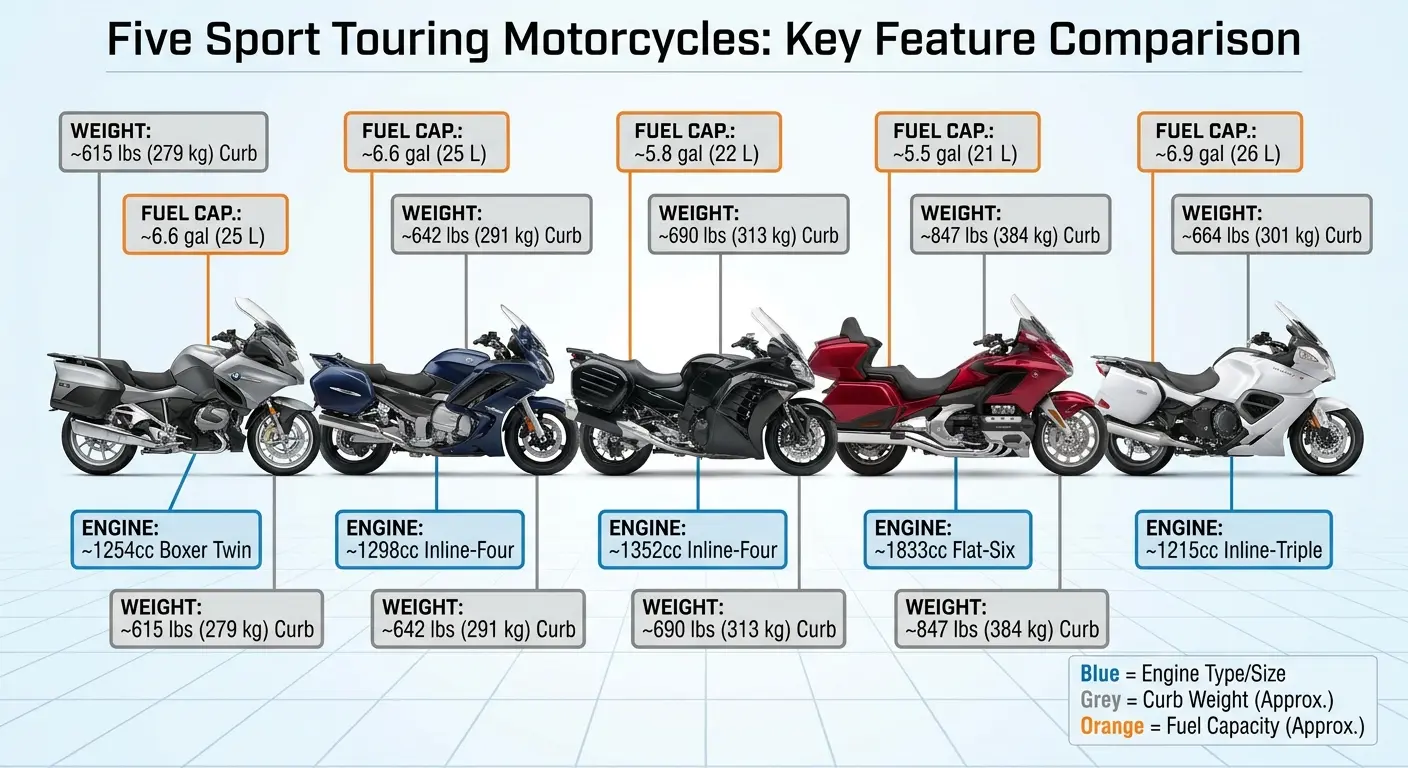
Feature |
BMW R 1250 RT |
Yamaha FJR1300ES |
Honda NT1100 |
Kawasaki Concours 14 |
Ducati Multistrada V4 S |
|---|---|---|---|---|---|
Engine |
1254cc boxer |
1298cc inline-four |
1084cc parallel-twin |
1352cc inline-four |
1158cc V4 |
Horsepower |
136 hp |
146 hp |
102 hp |
158 hp |
170 hp |
Wet Weight |
573 lbs |
639 lbs |
545 lbs |
690 lbs |
549 lbs |
Fuel Capacity |
6.6 gal |
6.6 gal |
5.3 gal |
5.8 gal |
5.8 gal |
Range (est.) |
200+ miles |
200+ miles |
200 miles |
180 miles |
230 miles |
Pannier Capacity |
49L combined |
Integrated |
33L combined |
Integrated |
Optional |
Electronic Suspension |
Yes |
Yes (ES model) |
No |
No |
Yes (Skyhook) |
Cruise Control |
Standard |
Standard |
Standard |
No |
Standard |
Oil Change Interval |
10,000 miles |
4,000 miles |
8,000 miles |
7,500 miles |
Variable |
1. BMW R 1250 RT
Twenty thousand dollars for a motorcycle.
Let that number sit for a minute.
You could buy a decent used car. You could buy two Ninja 1000SXs. You could buy a nice vacation. So why would anyone spend $20k on the R 1250 RT?
Because after 50,000 miles, it makes sense. Maybe not financial sense, but practical sense.
The boxer engine makes 136 hp, but that's not why you buy it. You buy it because the torque curve is flat from 2,000 rpm to redline. You never need to downshift. Ever. Passing on the highway is a wrist flick.
The adaptive headlights adjust through corners. Sounds gimmicky until you're on an unfamiliar mountain road at night and you can actually see where you're going. Then it's a safety feature you can't live without.
Electronic suspension adjusts automatically based on load and riding mode. I rode two-up with luggage from Denver to Seattle. Never touched the suspension settings. It just worked.
The wind protection is exceptional up to 80 mph. Push past that and you get buffeting. Stay at 75 and you're in a quiet bubble for hours.
Here's what sucks: it weighs 573 pounds. In parking lots, you'll hate it. My wife can't handle it at walking speed. If you're under 5'8" or not strong, this bike will intimidate you.
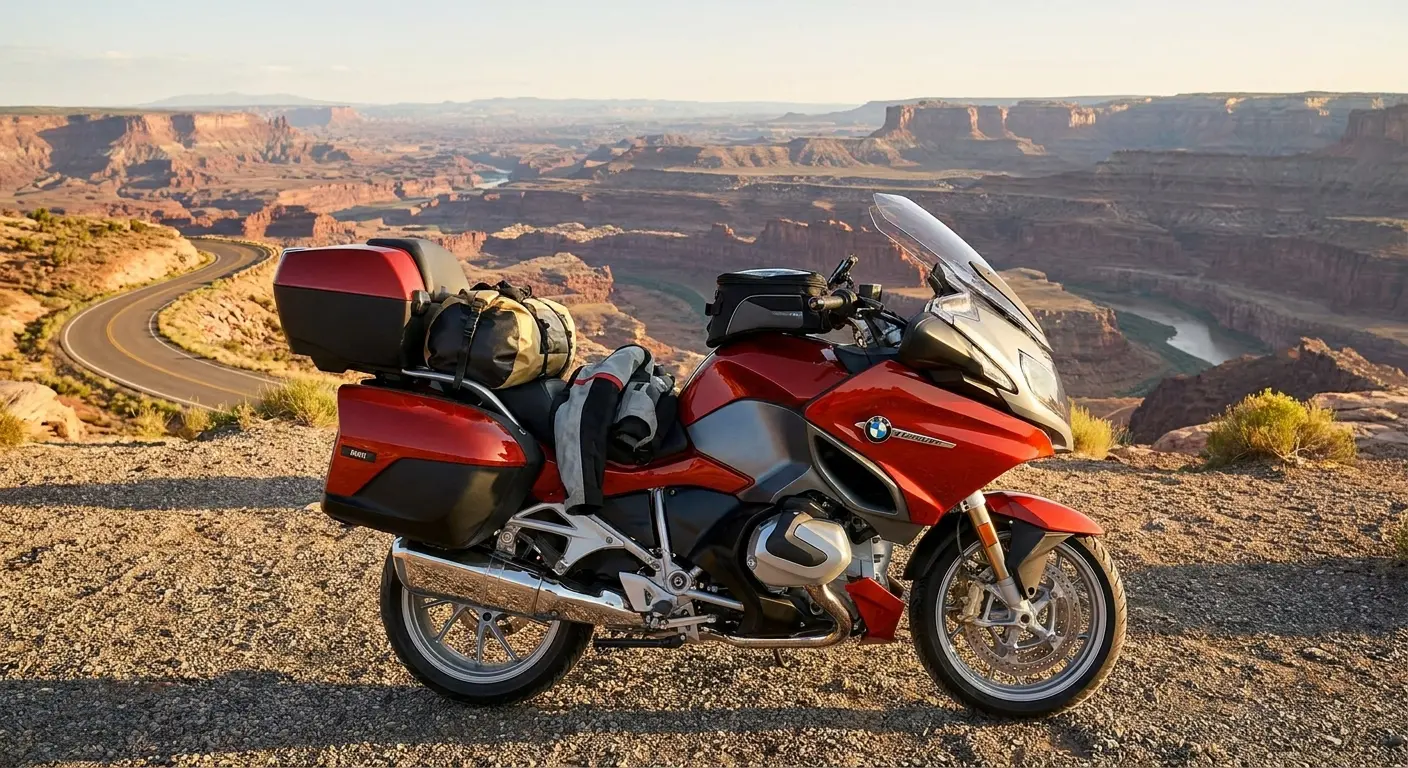
The panniers hold 49 liters. That's two weeks of gear if you pack smart, or one week if you pack like my wife. The mounting system is brilliant. Remove them in 30 seconds, reinstall just as fast.
Maintenance is expensive but infrequent. Oil changes every 10,000 miles. Valve checks at 30,000. The shaft drive means no chain maintenance. Ever. Factor that into your cost calculations.
Is it worth $20,000? If you're doing 15,000+ miles a year and half of that is touring, yes. If you're doing 5,000 miles a year with occasional weekend trips, no. Be honest about your riding.
I've owned two. I'll probably buy a third.
That tells you something.
2. Yamaha FJR1300ES
There's an FJR on ADVrider forums with 287,000 miles.
Original engine. That's not a typo. Same guy, same bike, since 2003.
That tells you everything.
Yamaha's FJR1300ES has been refining the same basic platform since 2001. They've worked out the bugs that plague newer designs. The 1298cc inline-four cranks out 146 hp with a focus on mid-range torque that makes it easy to ride all day without constantly working the gearbox.
The ES model adds electronically adjustable suspension you can modify on the fly. Six-speed transmission feels notchy when cold but smooths out after a few miles. The adjustable windscreen offers a wide range of height adjustment via a handlebar switch.
Integrated panniers are narrower than the BMW's but still practical for extended trips. The seat gets uncomfortable after about 200 miles. Most riders swap it out. The FJR forums have a saying: "First mod, always the seat." They're not wrong.
Traction control and ABS are standard but the electronics package is less sophisticated than newer competitors. No fancy modes, no cornering ABS, no IMU magic. Just traction control and regular ABS. For some riders, that's a feature.
Fuel capacity hits 6.6 gallons with a realistic 45 mpg average. Maintenance intervals are conservative at 4,000 miles for oil, but valve checks don't come due until 26,000 miles. Parts availability is excellent and prices are reasonable compared to European brands.
The bike weighs 639 lbs fueled. It's heavy. You'll feel it in parking lots. But you'll forget about it on the highway.
Old guys love this bike. Not an insult, I'm getting old too. They want reliable, not fancy. The FJR delivers.
3. Honda NT1100
Honda released the NT1100 in 2022 using the Africa Twin's 1084cc parallel-twin engine. It makes 102 hp, which sounds modest until you ride it and realize the power delivery is perfectly matched to touring needs.
The DCT (Dual Clutch Transmission) option eliminates clutch work in traffic. Motorcyclists hate automatic transmissions. It's unnatural. It's wrong. It's actually pretty good on the NT1100. I can't believe I'm saying this.
Three riding modes adjust throttle response and traction control intervention. The windscreen adjusts through a wide range but requires tools. Annoying. In 2024. When every competitor has electric or tool-free adjustment. Honda, what are you doing?
Standard panniers hold 33 liters combined. Good enough but not generous. The TFT display is clear in direct sunlight and pairs easily with smartphones. Cruise control is standard. The seat is comfortable for 300+ miles, which is rare. I can do 300 miles before my ass complains. That's unheard of on a stock seat. Most bikes, I'm squirming at 150. Honda nailed this.
Honda's build quality means things don't rattle loose or break after a season of hard use. Fuel tank holds 5.3 gallons, giving you about 200 miles between fills. The bike weighs 545 lbs wet, making it the lightest full tourer here. Maintenance intervals are 8,000 miles for oil, 16,000 for valves. The parallel-twin engine creates more vibration than inline-fours or boxers, noticeable at highway speeds.
4. Kawasaki Concours 14 ABS
Kawasaki's Concours 14 packs serious performance into a touring package. The 1352cc inline-four puts out 158 hp, making it the most powerful bike in this category. The engine pulls hard from any rpm, which makes it fun on twisty roads but can be tiring in stop-and-go traffic.
The monocoque frame uses the engine as a stressed member, creating a rigid platform that handles better than its 690 lb weight suggests. Variable valve timing adjusts power delivery across the rpm range.
Integrated panniers are spacious but the mounting system feels less refined than competitors. The windscreen adjusts electrically but the range isn't as wide as you'd want. ABS and traction control are standard but there are no riding modes or electronic suspension.
Why doesn't the Concours have cruise control in 2024? It's a $15,000 touring bike. My Honda Civic has cruise control. Come on, Kawasaki.
The seat works well for 200 miles before you start shifting around. Fuel capacity of 5.8 gallons combined with thirsty performance (38 mpg average) means you're stopping every 180 miles. Maintenance intervals are 7,500 miles for oil, 15,000 for valve checks.
Parts availability is good and costs are reasonable. The bike hasn't been significantly updated since 2015, which means it lacks modern electronics but also means it's a known quantity with predictable reliability.
At 690 pounds, this thing is a beast. You'll hate it in parking lots. You'll forget about it on the highway. That's the deal.
At 690 pounds, this thing is a beast. You'll hate it in parking lots. You'll forget about it on the highway. That's the deal.
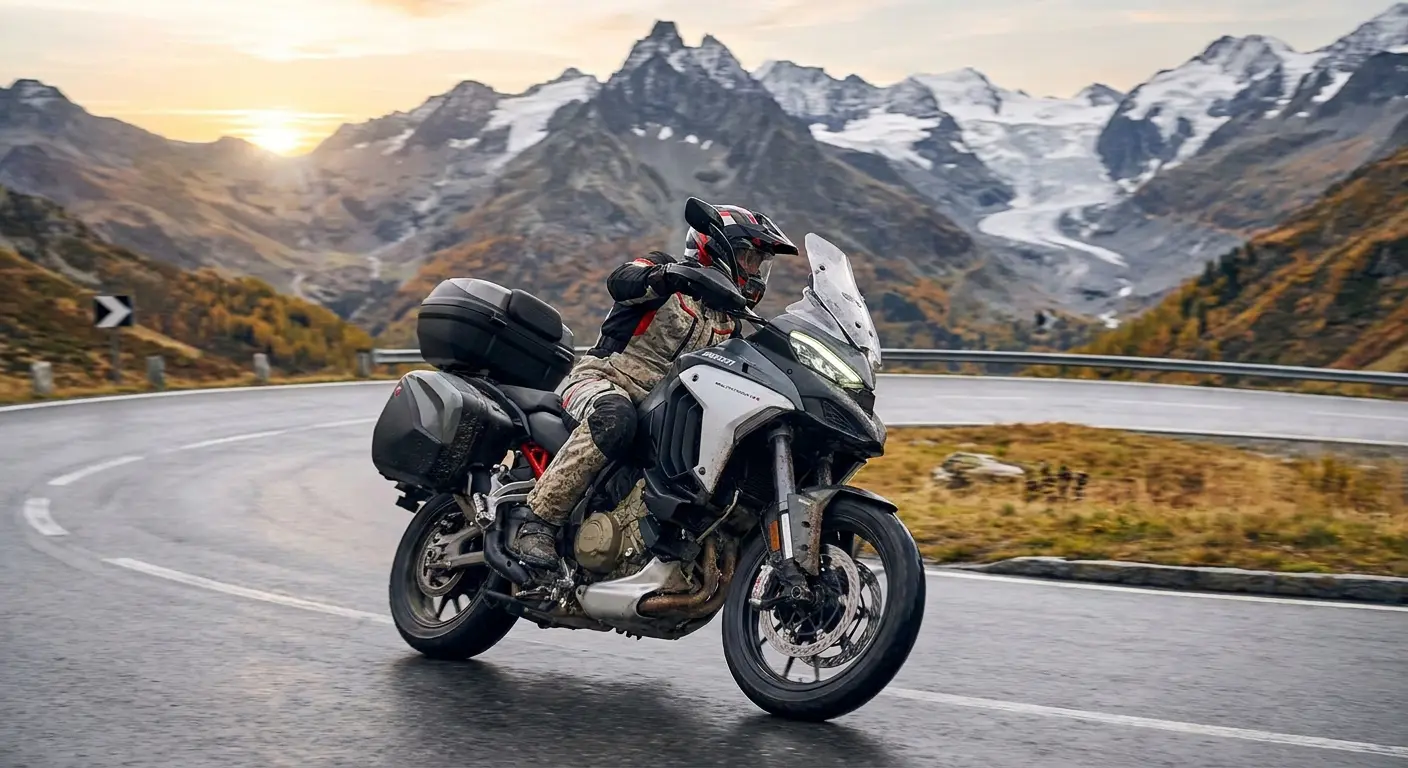
5. Ducati Multistrada V4 S
Ducati reliability is an oxymoron, right?
Tell that to the guy I met in Colorado with 75,000 miles on his Multistrada V2. Original owner. Zero major issues. The world is changing.
The Multistrada V4 S blurs the line between sport touring and adventure bikes. The 1158cc V4 cranks out 170 hp with a soundtrack that makes every ride feel special. The electronics package is the most sophisticated here: cornering ABS, traction control, wheelie control, and cruise control that works in curves.
Skyhook electronic suspension adjusts damping 1,000 times per second based on road conditions and riding style. Four riding modes (Sport, Touring, Urban, Enduro) transform the bike's character. The TFT display is massive and includes turn-by-turn navigation.
Panniers are optional and expensive but well-designed. The seat is adjustable for height and surprisingly comfortable for 250+ miles. Fuel capacity of 5.8 gallons with 45 mpg average gives you about 230 miles of range.
The bike weighs 549 lbs wet, impressive given the features. Maintenance costs are higher than Japanese competitors, and valve service intervals are 15,000 miles but expensive when they come due. The Ducati's valve service cost me $1,200. The BMW's cost $800. The FJR's cost $400. All at 30,000 miles. Factor this into your total cost of ownership calculations. I didn't. I should have.
The radar-assisted adaptive cruise control (available on V4 Rally model) is witchcraft. It tracks the car ahead, adjusts speed automatically, even in curves. This is Star Trek stuff on a motorcycle.
Wind protection is decent but not exceptional. Here's what reviews never mention: heat. The Multistrada cooks your legs in traffic. This matters in summer. Nobody tells you this.
The Multistrada V4 is better than the BMW R 1250 RT. There, I said it. The BMW guys will hate me. I don't care. The Ducati is more capable, more fun, and surprisingly reliable.
Fight me.
The Overlooked Middle Ground: Sport Tourers That Don't Compromise
Full tourers are overkill for most riders.
There, I said it.
You're not doing 600-mile days every weekend. You're doing 200-300 mile trips with occasional longer rides. For that, you don't need 690 pounds of motorcycle and a $20,000 price tag.
These mid-weight bikes do 90% of what the big tourers do while weighing 100 pounds less and costing $10,000 less. That's not a compromise. That's smart.
They're lighter, more affordable, easier to maintain, and more versatile for mixed-use riding. Manufacturers market these as compromises, but they're optimized for how most people ride. You're not doing Iron Butt rallies. You're taking long weekends, week-long trips, and occasional day rides where handling matters.
These bikes acknowledge that touring isn't just about the destination. The ride itself should be engaging. I'm evaluating each model on how well it handles the transition from highway slabs to mountain roads, how it performs in urban environments, and whether the ergonomics work for riders of different sizes.
Modern designs prioritize usability over spec sheet bragging rights. A motorcycle handlebar mount keeps your device accessible without compromising handling on these nimbler machines.
6. Kawasaki Ninja 1000SX
If you forced me to choose one bike from this list? The Ninja 1000SX.
Not the most comfortable. Not the most powerful. Not the most prestigious. But it's the one I'd actually buy with my own money.
That tells you something.
The Ninja 1000SX takes Kawasaki's sport bike DNA and adapts it for real-world touring. The 1043cc inline-four makes 142 hp with a linear power delivery that's easy to modulate. Upright ergonomics put less weight on your wrists than pure sport bikes while maintaining enough forward lean to feel connected.
The windscreen adjusts through a decent range without tools. Panniers are optional but the mounting system is integrated into the design. Electronics include traction control, ABS, and two power modes (Full and Low). The TFT display is clear and includes smartphone connectivity.
Cruise control is standard on recent models. The suspension is fully adjustable but not electronic, which means you set it once and leave it. The seat is comfortable for 200 miles before you need a break.
Fuel capacity of 4.9 gallons with 45 mpg average gives you about 200 miles of range. The bike weighs 518 lbs wet, light enough to feel nimble in corners but stable on the highway. Maintenance intervals are 7,500 miles for oil, 15,000 for valve checks.
The handling is sharp when you push it. Take it through some switchbacks and you'll forget it's a tourer. Where heavier bikes feel ponderous, this thing carves.
I parked one next to a Multistrada at a hotel once. The Ducati owner looked at my bike, then at his, then at me. "Yours was $15,000 cheaper, wasn't it?"
Yeah.
"Does everything mine does?"
Most things.
He nodded slowly. I could see him doing math.
7. BMW F 900 XR
BMW's F 900 XR uses an 895cc parallel-twin making 105 hp. The engine character is more interesting than the spec suggests, with a torquey mid-range that makes the bike feel faster than it is.
Three riding modes (Rain, Road, Dynamic) adjust throttle response and traction control. The electronics package includes cornering ABS and optional dynamic traction control. The windscreen adjusts electrically through a wide range. The upright seating position works well for riders from 5'7" to 6'2".
Panniers are optional and expensive (typical BMW) but well-designed. The TFT display is excellent and includes navigation if you pay for the premium package. The suspension is manually adjustable, fine for most riders but not sophisticated.
The seat is comfortable for 250+ miles. Fuel capacity of 3.5 gallons is the limiting factor, giving you only 150 miles of range with a 45 mpg average. The bike weighs 466 lbs wet, making it one of the lightest options here.
Maintenance intervals are 6,000 miles for oil, 12,000 for valves. The parallel-twin creates noticeable vibration at highway speeds. Hit a decreasing-radius turn at 80 and the suspension loads progressively. No pogo stick action. It sticks.
Handling is sharp and confidence-inspiring. This bike is fun on back roads where heavier bikes struggle.
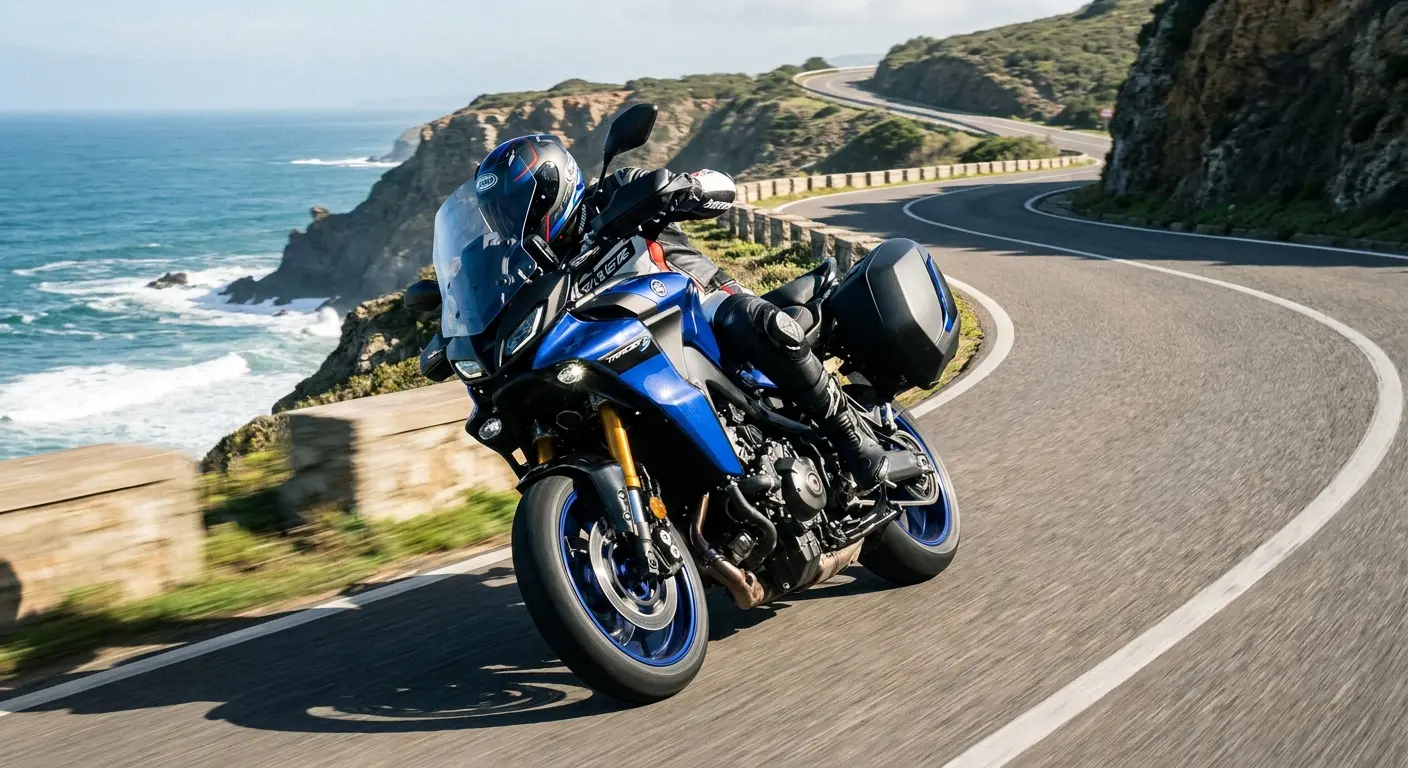
8. Yamaha Tracer 9 GT
I thought the Tracer 9 would be perfect. Triple engine, good price, Yamaha reliability.
I was wrong.
The aggressive ergonomics killed my wrists after 200 miles. Sold it after six months. Sometimes the spec sheet lies.
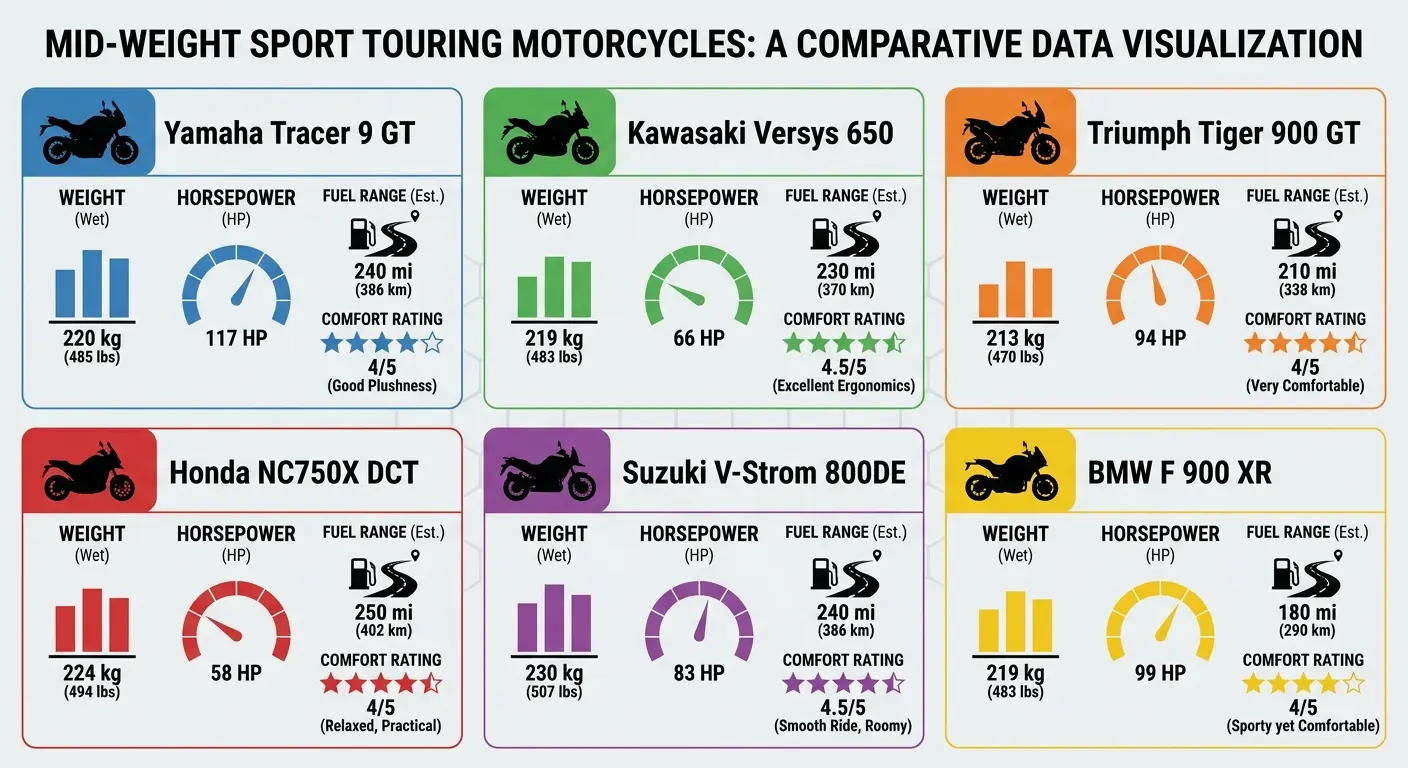
The Tracer 9 GT uses Yamaha's 890cc CP3 triple-cylinder engine making 117 hp. The triple's character is unique: smoother than a parallel-twin, more characterful than an inline-four. Power delivery is aggressive in the upper rev range, which takes some getting used to for relaxed touring.
Six-axis IMU enables cornering ABS and traction control that works well. Four riding modes adjust power delivery and electronics intervention. The quickshifter (standard on GT) works both up and down, making it easy to maintain momentum through corners.
The windscreen adjusts through a decent range. The GT model includes heated grips, cruise control, and integrated panniers. The TFT display is clear and includes smartphone connectivity.
The seat is comfortable for about 200 miles. Fuel capacity of 4.9 gallons with 47 mpg average gives you 220+ miles of range. The bike weighs 463 lbs wet, light for a sport tourer.
Maintenance intervals are 6,000 miles for oil, 24,000 for valves. The suspension is manually adjustable and works well for spirited riding but Michigan roads will rattle your fillings loose. The suspension transmits every expansion joint straight to your spine.
The riding position is aggressive with significant weight on your wrists. This bike rewards active riding and feels less comfortable when you're just droning along highways.
9. Triumph Tiger Sport 660
Triumph's Tiger Sport 660 uses a 660cc inline-triple making 81 hp. The power output sounds modest but the bike weighs only 452 lbs wet, creating a power-to-weight ratio that feels fine for everything except aggressive highway passing.
The triple engine is smooth and characterful with a distinctive sound. Electronics include switchable ABS and traction control, but there are no riding modes or sophisticated IMU-based systems. The windscreen adjusts through a limited range.
Panniers are optional and reasonably priced. The TFT display is clear and includes Bluetooth connectivity. No cruise control, which you'll miss on long highway stretches. The seat is surprisingly comfortable for 200+ miles.
Fuel capacity of 4.4 gallons with 55 mpg average gives you 220+ miles of range. Maintenance intervals are 10,000 miles for oil, 20,000 for valves. The suspension is basic but works, with limited adjustability.
This bike excels on twisty roads where its light weight and agile handling shine. It feels less capable on highways where wind protection is marginal and the engine runs out of steam above 80 mph.
I wanted to love the Tiger Sport 660. Perfect size, great price, Triumph character. But 81 hp isn't enough for highway touring in America. I tried to convince myself otherwise for 2,000 miles. Couldn't do it.
The price point makes it accessible for riders stepping up from smaller bikes.
10. Suzuki GSX-S1000GT
Suzuki's GSX-S1000GT uses a 999cc inline-four derived from the GSX-R1000, making 152 hp. The engine has been detuned for mid-range torque but still rips when you want it.
Electronics include three-mode traction control, ABS, and three power modes. The bi-directional quickshifter is standard and works smoothly. The windscreen adjusts through a wide range. Panniers are optional and the mounting system is well-integrated.
The TFT display is clear but not as sophisticated as competitors. Cruise control is standard. The seat is comfortable for 200 miles before you start shifting around. Fuel capacity of 5.0 gallons with 42 mpg average gives you about 190 miles of range.
The bike weighs 519 lbs wet. Maintenance intervals are 6,000 miles for oil, 14,500 for valve checks. The suspension is fully adjustable but not electronic, offering a good balance between comfort and sport riding.
Wind protection is excellent up to 75 mph. The bike handles well for its size but doesn't feel as sharp as lighter competitors. The value proposition is strong, offering features similar to bikes costing significantly more.
You get premium features at a mid-range price point. Hard to beat that.
11. Honda CB500X
The CB500X has no business being on this list.
47 hp. Basic everything. But I've seen these bikes at rallies with 100,000+ miles. They just work. Sometimes boring wins.
The CB500X uses a 471cc parallel-twin making 47 hp, which makes it the least powerful bike on this list. The engine is smooth and efficient, cranking out 65+ mpg. Power delivery is linear and predictable, making the bike easy to ride for newer touring riders.
Electronics are basic: two-channel ABS and that's it. No traction control, no riding modes, no sophisticated features. The windscreen adjusts through a limited range. Panniers are optional and affordable.
The LCD display is functional but dated. No cruise control or smartphone connectivity. The seat is comfortable for 250+ miles, which is impressive given the bike's budget-friendly price point.
Fuel capacity of 4.7 gallons with 65 mpg average gives you 280+ miles of range, the best here. The bike weighs 430 lbs wet, making it the lightest and most manageable option for shorter riders or those new to touring.
Maintenance intervals are 8,000 miles for oil, 16,000 for valves. The suspension is basic and non-adjustable but works for most riding.
47 hp sounds pathetic compared to everything else on this list. The CB500X will lose every stoplight drag race. Badly.
But here's what it wins: fuel economy (65+ mpg), insurance costs (cheap), maintenance costs (cheaper), and reliability (bulletproof). You can tour the country on $40/day in gas.
Is it slow? Yes. Does it matter when you're cruising through Utah at 75 mph, paying half what the BMW rider is paying for gas?
You tell me.
Even affordable bikes benefit from quality motorcycle mounts that protect your navigation device.
Bike Model |
Engine Size |
Horsepower |
Wet Weight |
Fuel Range |
Seat Comfort (miles) |
Best For |
|
|---|---|---|---|---|---|---|---|
Kawasaki Ninja 1000SX |
1043cc |
142 hp |
518 lbs |
200 miles |
200 |
Balanced sport/touring |
|
BMW F 900 XR |
895cc |
105 hp |
466 lbs |
150 miles |
250+ |
Agile handling |
|
Yamaha Tracer 9 GT |
890cc |
117 hp |
463 lbs |
220+ miles |
200 |
Active riding |
|
Triumph Tiger Sport 660 |
660cc |
81 hp |
452 lbs |
220+ miles |
200+ |
Budget- |
Budget-friendly |
Suzuki GSX-S1000GT |
999cc |
152 hp |
519 lbs |
190 miles |
200 |
Value proposition |
|
Honda CB500X |
471cc |
47 hp |
430 lbs |
280+ miles |
250+ |
New tourers/economy |
Pure Sport Bikes That Actually Work for Multi-Day Rides
Can you tour on a sport bike?
Yes.
Should you?
Depends on your tolerance for pain.
I've done 500-mile days on an MT-09. My wrists hurt for three days after. But the handling through mountain roads made it worth it. Your priorities may vary.
These bikes force you to pack lighter, stop more frequently, and accept more aggressive ergonomics. The payoff: you get precision handling that makes every corner memorable, power delivery that never gets boring, and a riding experience that stays engaging even after 400 miles.
I'm not pretending these are comfortable in the traditional sense. But comfort isn't just about plush seats and wind protection. It's also about riding a bike that makes you want to take the long way home, that rewards your inputs, and that doesn't feel like a chore when the road gets interesting.
Each bike here has been proven by riders who've racked up serious miles, not just weekend canyon runs. Can you fit enough gear? Does the tank range work? Will your wrists survive? Does the bike have enough weather protection to handle unexpected rain?
These bikes prove that touring capability doesn't require a full fairing and saddlebags. Riders who've adapted sport bikes for touring understand that engagement can compensate for missing amenities.
A quality motorcycle mount dampener protects your phone from constant vibration damage on these more aggressive machines.
12. BMW S 1000 XR
First time I pinned the throttle on the S 1000 XR, I laughed out loud in my helmet. 165 hp in a "sport tourer." It's absurd. It's unnecessary.
I love it.
The S 1000 XR uses BMW's 999cc inline-four from the S 1000 RR superbike, making 165 hp. The engine rips with a top-end rush that feels out of place on a sport tourer until you hit a mountain road and realize why it matters.
Electronics are comprehensive: Rain, Road, Dynamic, and Dynamic Pro riding modes, plus cornering ABS, dynamic traction control, and wheelie control. The quickshifter works flawlessly both directions.
The windscreen adjusts electrically but the range is limited. Panniers are optional and expensive. The TFT display is excellent with full navigation integration. Cruise control is standard and works well.
The seat is firm and gets uncomfortable after 150 miles. Fuel capacity of 5.3 gallons with 40 mpg average gives you about 180 miles of range. The bike weighs 504 lbs wet.
Maintenance costs are high, with 6,000 mile oil changes and expensive valve services at 12,000 miles. The riding position is more aggressive than other bikes in the middle category but more relaxed than pure sport bikes. Wind protection is decent at highway speeds.
The suspension is electronically adjustable and works brilliantly, adapting to road conditions in real time. This bike tours best when the route includes serious twisty sections where its sport bike DNA justifies the compromises.
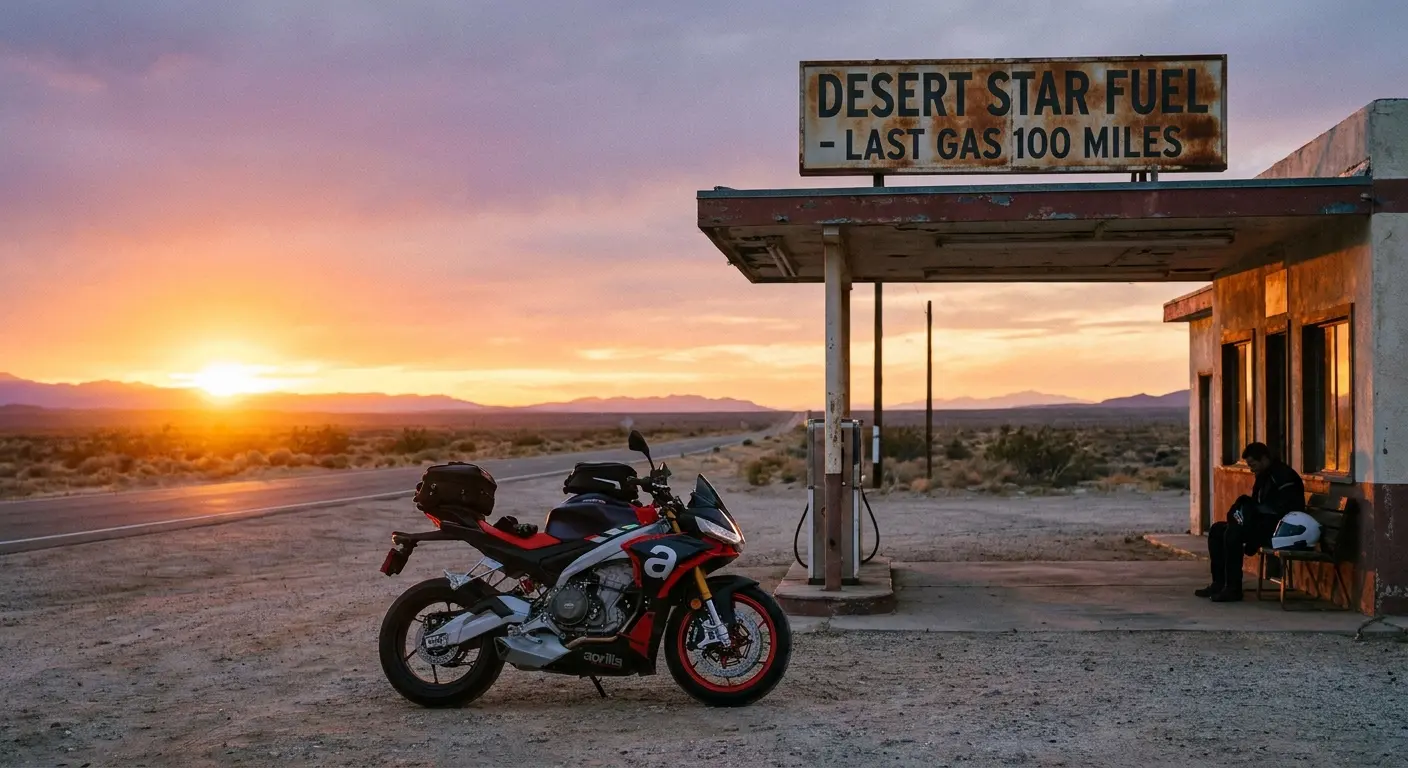
13. Aprilia Tuono 660
Aprilia's Tuono 660 uses a 659cc parallel-twin making 95 hp. The engine is characterful with a strong mid-range and a willingness to rev that makes it fun to ride hard.
Electronics include five riding modes, cornering ABS, traction control, wheelie control, and engine braking control. The quickshifter is standard and works smoothly. The TFT display is clear and includes smartphone connectivity.
No cruise control, which becomes tiring on long highway sections. The windscreen is minimal, providing almost no protection above 70 mph. Above 70 mph, you're a human sail. Panniers require aftermarket solutions since Aprilia doesn't offer integrated options.
The seat is thin and becomes painful after 100 miles. Most touring riders immediately replace it. Fuel capacity of 3.9 gallons with 50 mpg average gives you about 175 miles of range. The bike weighs 403 lbs wet, making it nimble and easy to maneuver.
Maintenance intervals are 9,000 miles for oil, 18,000 for valves. The suspension is fully adjustable and works well for spirited riding but feels harsh on rough pavement. The riding position is aggressive with significant weight on your wrists.
This bike tours best on shorter trips where the route prioritizes twisty roads over highway miles. You'll arrive tired but grinning.
14. KTM 890 Duke
KTM's 890 Duke uses an 889cc parallel-twin making 115 hp with a torque curve that peaks at 6,500 rpm, making it easy to ride fast without constantly chasing redline.
Electronics include cornering ABS, traction control, and three riding modes (Street, Sport, Rain). The quickshifter is optional but worth adding. The TFT display is excellent with full smartphone connectivity.
No cruise control or windscreen, which makes highway riding tiring. Panniers require aftermarket solutions and the bike wasn't designed with mounting points for luggage. The seat is uncomfortable after 80 miles.
Fuel capacity of 3.7 gallons with 47 mpg average gives you only 160 miles of range. The bike weighs 366 lbs dry (about 395 lbs wet), making it one of the lightest bikes here.
Maintenance intervals are 9,300 miles for oil, 18,600 for valves. The suspension is high-quality WP components with full adjustability. The riding position is upright but the pegs are high, creating a cramped position for taller riders on long rides.
This bike wasn't designed for touring and it shows. But riders who value handling above everything else have proven you can tour on it if you pack minimally, plan fuel stops carefully, and accept that comfort isn't the priority. The reward is a bike that handles like a supermoto and makes every road feel like a playground.
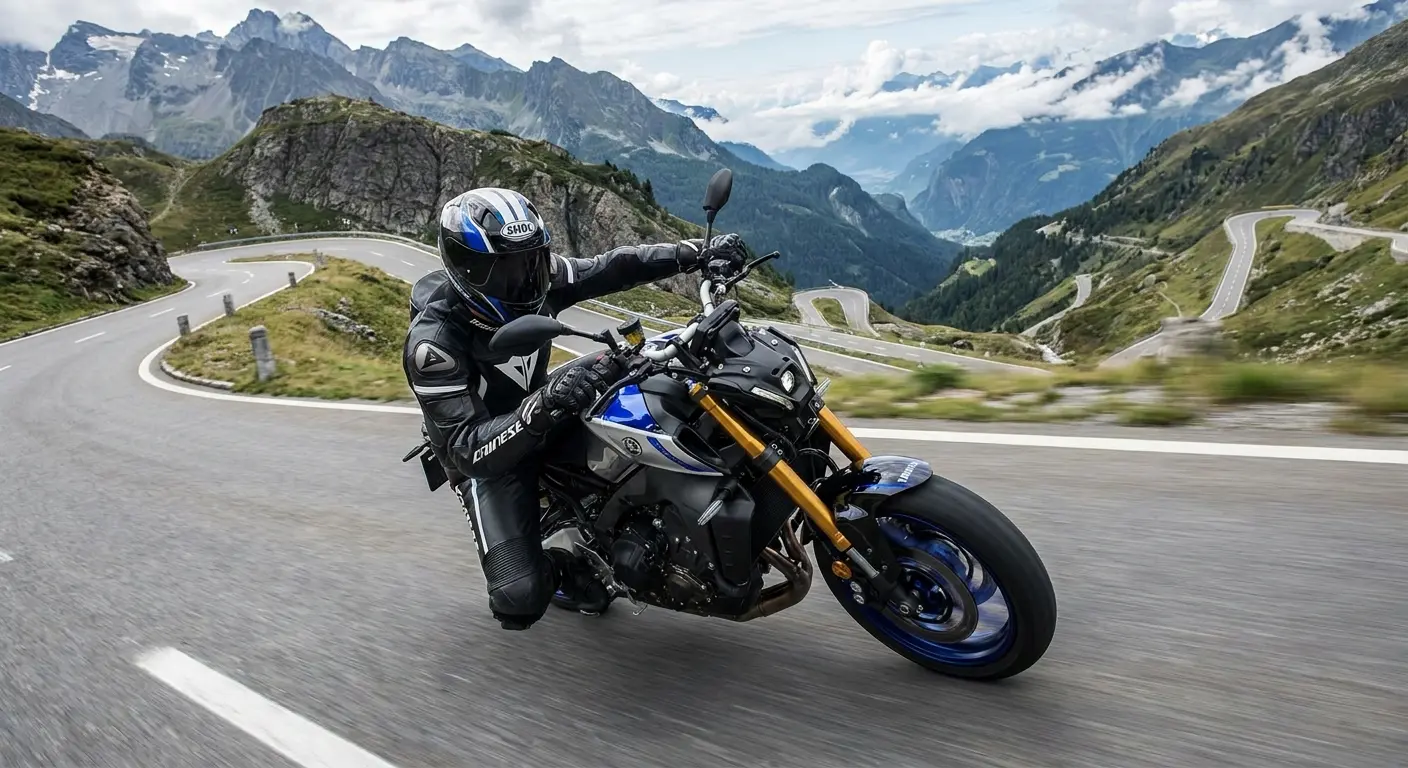
15. Yamaha MT-09 SP
The MT-09 SP uses Yamaha's 890cc CP3 triple making 117 hp. The triple's character is addictive, with a throaty sound and power delivery that feels more exciting than the numbers suggest.
Electronics include six-axis IMU enabling cornering ABS, traction control, slide control, and lift control. Four riding modes adjust power delivery and electronics intervention. The quickshifter is standard and works well.
The TFT display is clear with smartphone connectivity. No cruise control. The windscreen is a small flyscreen providing minimal protection. Panniers require aftermarket solutions.
The seat is basic and uncomfortable after 100 miles. Fuel capacity of 3.7 gallons with 47 mpg average gives you about 160 miles of range. The bike weighs 407 lbs wet.
Maintenance intervals are 6,000 miles for oil, 24,000 for valves. The SP model includes Öhlins electronic suspension that adjusts automatically, a feature typically found on bikes costing twice as much.
The riding position is upright and comfortable for shorter rides but the lack of wind protection becomes exhausting on highways. This bike tours best when you're covering 200-300 miles per day on roads where the triple's character and the chassis's agility matter more than comfort. Pure long-haul machines are a different breed, covered in my touring motorcycle guide.
Riders who've toured on the MT-09 consistently mention that the bike's personality makes up for its practical shortcomings.
16. Kawasaki Z900
Kawasaki's Z900 uses a 948cc inline-four making 125 hp with a smooth, linear power delivery. The engine pulls cleanly from low rpm and builds to a satisfying top-end.
Electronics are basic: ABS, traction control, and two power modes. No quickshifter, no cornering ABS, no sophisticated IMU-based systems. The LCD display is functional but dated.
No cruise control or smartphone connectivity. The windscreen is minimal. Panniers require aftermarket solutions and the subframe isn't designed for heavy loads. The seat is comfortable for about 120 miles.
Fuel capacity of 4.5 gallons with 45 mpg average gives you about 180 miles of range. The bike weighs 463 lbs wet. Maintenance intervals are 7,500 miles for oil, 15,000 for valves.
The suspension is adjustable and works well for mixed riding. The riding position is upright and comfortable compared to pure sport bikes.
This bike makes the list because riders have proven it's viable for touring despite not being designed for it. The inline-four's smoothness reduces fatigue compared to twins, the upright position works for longer rides than you'd expect, and the bike's reliability means it won't leave you stranded.
You'll need to add a windscreen, replace the seat, and figure out luggage solutions. But the reward is a bike that costs less than dedicated sport tourers while handling and performing in ways that make every mile engaging.
Making Your Sport Tourer Actually Work for Long Rides
Most reviews ignore a critical reality: the bike is only part of the equation.
You need reliable navigation, communication capability, and quick access to your phone for weather updates, hotel bookings, and emergency contacts.
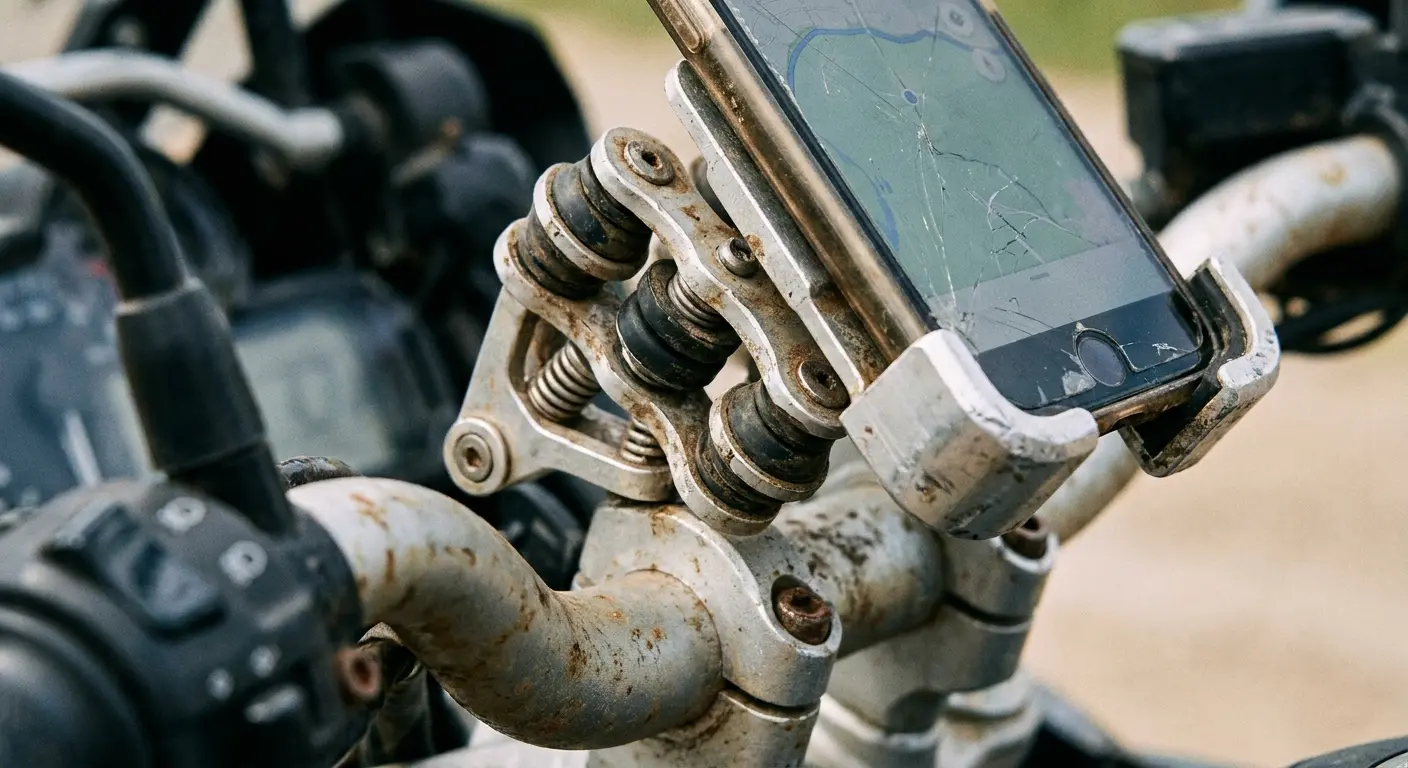
Cheap phone mounts fail at the worst possible times, usually when you're 300 miles from home on unfamiliar roads. I've seen mounts vibrate loose on rough pavement, crack in cold weather, and simply let go when you hit a pothole.
Your phone is your lifeline on long tours. Rokform builds motorcycle phone mounts that survive real-world conditions. Their mounts use a magnetic and twist-lock system that holds your phone secure through everything from highway speeds to rough gravel roads.
The cases are protective (not just decorative), and the mounting system integrates cleanly with your bike's cockpit. You can remove your phone with one hand at gas stops, then reinstall it just as quickly.
When you're planning routes, checking weather, or finding the nearest hotel after a long day, you need your phone accessible and secure. I'm not saying you need Rokform specifically, but I am saying that cheaping out on your phone mount is a mistake you'll regret when it matters most.
The Pro Ball Mount offers universal adjustment for perfect viewing angles on any bike.
Final Thoughts
Here's the truth: most people buy the wrong bike.
They buy for the 5% of riding they imagine doing instead of the 95% they actually do. Cross-country trips, mountain passes, adventure. Then they commute on it Tuesday through Thursday and do a 200-mile loop on Saturday and call it "touring."
For that riding, you don't need a $25,000 Multistrada. You need a Ninja 1000SX or a Tracer 9. Save $10,000. Take a better trip.
Be honest about how you actually ride. Buy that bike.
Full tourers make sense if you're regularly covering 500+ miles per day and prioritize comfort above everything else. Mid-weight sport tourers are the sweet spot for most riders, offering enough comfort for long days while maintaining the agility that makes riding fun. Sport bikes adapted for touring work if you're willing to sacrifice comfort for handling precision and you're not covering massive daily distances.
The bikes on this list represent proven options across different priorities and budgets. I've focused on real-world considerations: what breaks, what holds up, and what features you'll use versus ones that sound good in a brochure.
Test ride multiple bikes if possible, paying attention to ergonomics, wind protection, and whether the engine character suits your riding style. Consider the total cost of ownership, not just purchase price. Factor in maintenance costs, insurance, fuel consumption, and whether you'll need to immediately replace the seat or add accessories.
Most importantly, choose a bike you'll want to ride. The right bike is the one that makes you take the long way home, that makes you plan trips instead of just thinking about them, and that still feels engaging after 50,000 miles.
Stop optimizing. Stop researching. Pick something and go ride. You'll learn more in 1,000 miles than in 1,000 hours of forum reading.
The road doesn't care about your spec sheet.

