


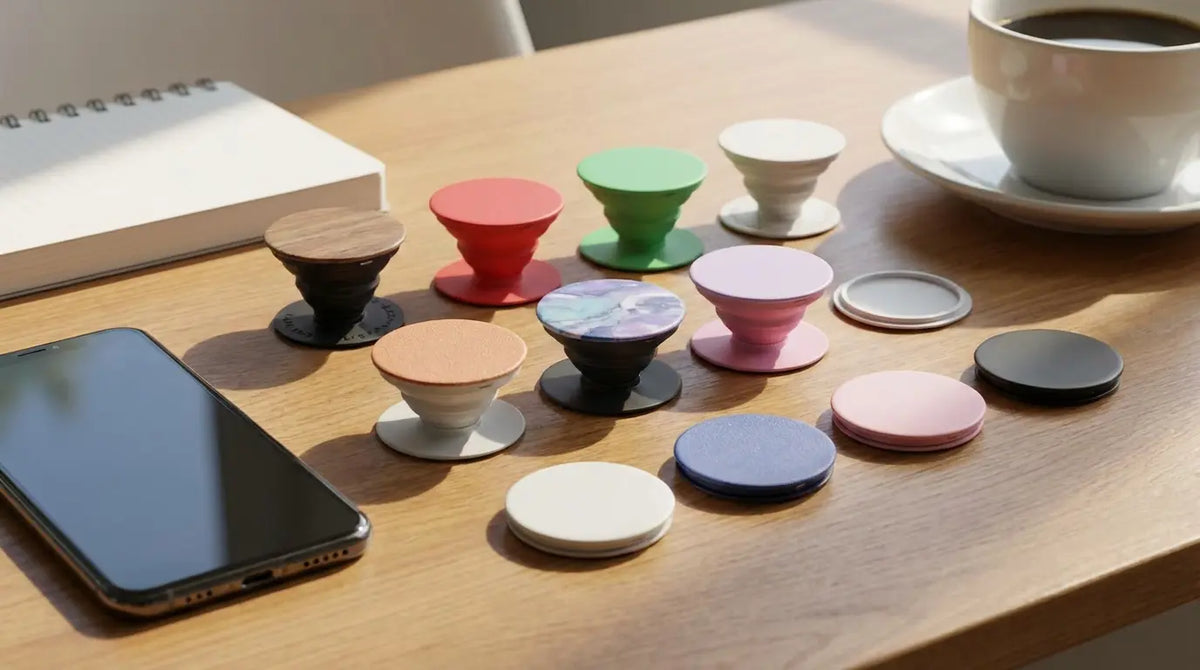
Look, I've been testing phone grips for about three years now, and we need to talk.
Every company is obsessed with the same thing: how flat their grip collapses.
"Only 3mm when compressed!"
"Slimmest profile on the market!"
"Barely adds any bulk!"
Cool. But when was the last time you thought, "You know what my problem is? My phone is 3 millimeters too thick"?
Never? Yeah, me neither.
The short version:
Phone grips that collapse flat are optimizing for a problem nobody actually has. Meanwhile, the real issues (like whether you can use the damn thing with your car mount) get completely ignored. This post is about why the entire category is backwards, and what actually matters when you're picking one.
Why Compactness Is a Trap
Smaller = better. We've been trained to think this way.
So collapsible grips made their whole identity about getting flat. Pop it out when you need it, collapse it when you don't. Clean. Simple.
Except...
The phone grip market is apparently heading toward $2.7 billion by 2032 (up from $1.2B in 2023, if you trust market research). That's a lot of people buying these things. But are they actually getting what they need?
I don't think so.
Here's what nobody mentions: collapsibility solves a problem that doesn't really exist anymore. Phone cases have gotten bulkier anyway. Most of us carry our devices in bags, purses, cup holders. The whole "I need my phone to be absolutely flat" argument falls apart when you actually think about how you use your phone throughout the day.
What actually matters? Whether your grip compresses to 3mm or 5mm, or whether it can support your phone during a video call without tipping over. Whether it fits in your pocket perfectly, or whether it works with your car mount when you're trying to follow directions on a road trip you're already running late for.
(I learned that one the hard way.)
That Collapsing Mechanism Is The First Thing That Breaks
The accordion-style design that lets it compress? That's also where it fails. Every time.
Those expanding and contracting parts create weak points where plastic gets brittle, adhesive loosens, or the pop-out action just stops working right.
My friend Sarah (freelance photographer) bought one of those accordion-style grips last spring. Four months in, the thing started sticking. Like, you'd try to pop it out and it'd just... resist. She'd have to use both hands to pry it open, which defeats the entire purpose of a one-handed grip.
By summer she'd replaced it twice.
Twice!
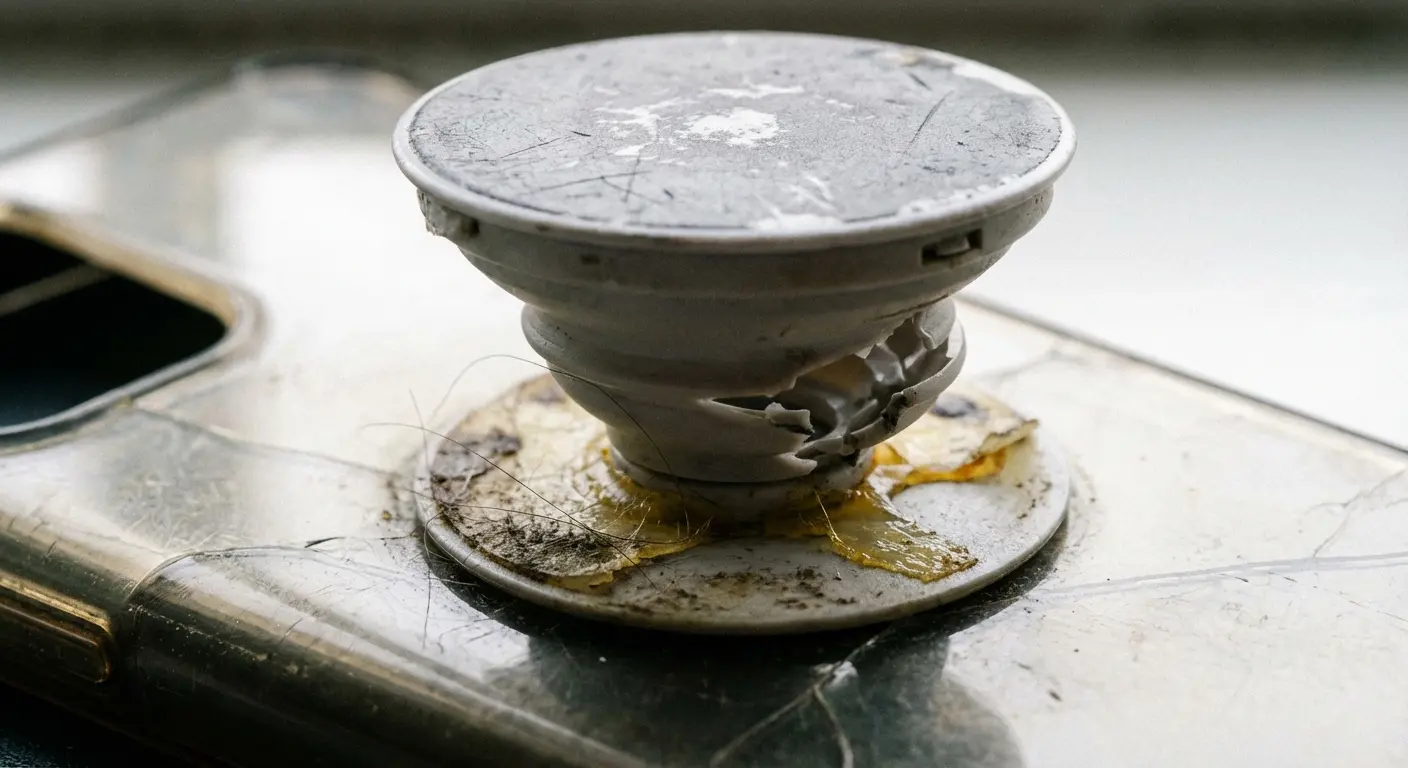
You're sacrificing long-term reliability for a feature you might not even need. How often are you really in a situation where those extra millimeters make or break your experience? Compare that to how often you need your grip to hold firm when you're taking a photo one-handed or reading while walking.
The question shouldn't be "how flat can we make this?"
It should be "how many genuine use cases can this accessory support without requiring the user to compromise?"
The Adhesive Problem Nobody Talks About
Adhesive grips sell themselves on convenience. Peel the backing, stick it on, boom. Done in thirty seconds.
Except you're not done. You're locked in.
That "strong adhesive" they brag about? That's a commitment, not a feature.
Want to reposition it because you stuck it slightly off-center? Good luck. Planning to upgrade your case when you find one you like better? You'll need to buy another grip. Got a new phone and want to transfer your grip? Not happening without damaging it.
Every Adhesive Grip Is a Permanent Decision
Companies don't frame it this way because permanence doesn't sell as well as convenience. But that's exactly what you're signing up for.
Think about how often your needs change. You buy a slim case for everyday use, then realize you want something more protective for a hiking trip. You start a new job that requires a more professional-looking phone setup. You simply get bored with your current aesthetic and want to switch things up.
With an adhesive grip, each of these changes means either living with a setup that no longer works for you or eating the cost of a replacement. The grip that seemed like a $15 investment becomes a recurring expense every time your circumstances shift.
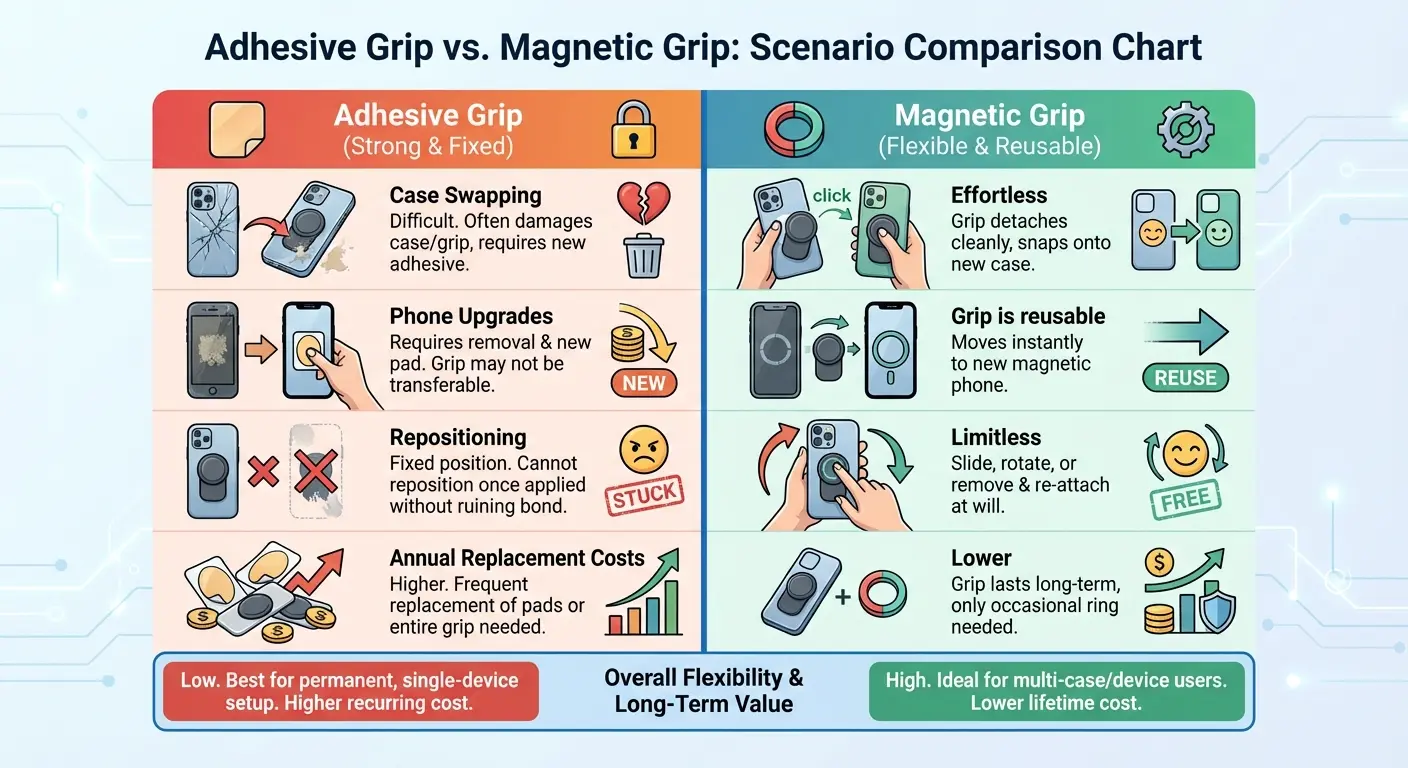
I know a realtor (let's call her Jen) who went through this exact nightmare. She bought a grip for easier texting between showings, then discovered it blocked her car mount. Bought three different mounts trying to fix it. Spent like $75 before finding one that worked, and even then the viewing angles were limited.
When she started biking to appointments? Same problem all over again.
Your Situation |
With Adhesive |
With Magnetic |
|---|---|---|
Swapping cases |
Buy new grip or damage case |
Remove and reattach instantly |
New phone |
Can't transfer, buy another |
Move it to new device |
Repositioning |
Adhesive weakens, probably need replacement |
Reposition unlimited times |
Wireless charging |
Remove entire grip or forget charging |
Pop it off, charge, snap back on |
Yearly cost (if you swap twice) |
$30-40 |
$0 after initial purchase |
Removing Adhesive Grips Is Never Clean
The marketing materials show pristine removal. Reality involves sticky residue, potential case damage, and way more effort than they let on.
Some adhesives are so strong they'll take the case finish with them. Others leave behind a tacky mess that requires rubbing alcohol and patience to fully clean. Even the "removable" options lose their stickiness after one or two repositions.
You're not just paying for the grip itself. You're paying for the inflexibility it introduces, the replacement costs when you need to change something, and the time spent dealing with removal and cleanup.
When Your Grip Can't Keep Up With Real Life
Collapsible grips work great when you're sitting at a desk, casually scrolling through social media, watching a short video while your phone rests on a table.
Real life doesn't stay that predictable.
You're holding your phone while standing on a crowded train. You're trying to photograph something quickly before the moment passes. You're propping your phone up on an uneven surface because that's what's available.
The Mechanism Degrades Faster Than You'd Think
Repeated expansion and compression creates stress on materials that aren't designed to handle thousands of cycles. Plastic becomes brittle, silicone loses elasticity, and the smooth pop-out action you enjoyed when new turns sticky and unreliable.
You'll notice it gradually. The grip doesn't extend as far as it used to. It won't stay collapsed without extra pressure. The adhesive starts peeling at the edges because the constant movement has worked it loose.
Within six months of regular use, most collapsible grips have degraded enough that they're annoying rather than helpful. But you keep using them because you paid for them and they're still technically functional.
My buddy Marcus drives for UPS. Ten-hour days, phone constantly in his hand for navigation and package scanning. He grabbed one of these collapsible grips thinking it'd help him juggle packages while checking addresses.
Worked great for maybe three months? Then the pop-out mechanism started getting sticky. By month four he's having to push it closed with both hands, and the whole thing's rotating on the adhesive. The grip that was supposed to save him time was costing him 30 seconds between every delivery, which adds up when you're doing 150+ stops a day.
He ditched it. Went back to just holding his phone normally.

The Stability Issue
Prop your phone up with a typical collapsible grip and you'll discover its limitations fast.
The collapsed-then-extended design creates a narrow base that's fine for light devices at conservative angles but struggles with anything demanding. Newer phones are heavier. Cases add weight. You want to position your screen at a steeper angle for better visibility.
Suddenly that grip that seemed stable enough is tipping over.
Stability isn't just about whether your phone stays upright. It's about whether you can trust it to stay upright when you're in the middle of a video call, following a recipe while cooking, or watching something while working out. Unreliable stability means constant monitoring and readjustment.
Which isn't really hands-free at all.
Before you buy any grip, test these things:
Will it hold your phone upright at a steep angle without tipping?
Does it work on uneven surfaces? (Because your kitchen counter is never actually clear)
Can you grab your phone from the standing position without the whole thing collapsing?
Does it stay stable when your phone vibrates from notifications?
Don't just trust the product photos.
Magnetic vs. Adhesive (The Debate Nobody's Having)
The phone grip conversation has centered almost exclusively on adhesive attachment because that's what dominated the market first. Stick it on, use it, done.
Magnetic attachment barely registers in most buyers' consideration, if they're even aware it exists as an option.
This is the oversight that costs users the most flexibility. According to market data, magnetic grips are gaining traction as people discover the advantages of reversible attachment systems. But they're still niche because they require a slightly different approach to phone setup.
Reversibility Changes Everything
Magnetic grips attach and detach without commitment. You can remove them when you don't need the extra bulk, swap them between cases, or upgrade your grip without replacing your entire setup.
This reversibility seems minor until you've lived with adhesive's permanence.
Want to use a different case for a formal event? Remove the magnetic grip, swap cases, reattach if needed. Trying out a new grip design? Your case isn't locked into the old one. Selling your phone? Remove all magnetic accessories and transfer them to your new device.
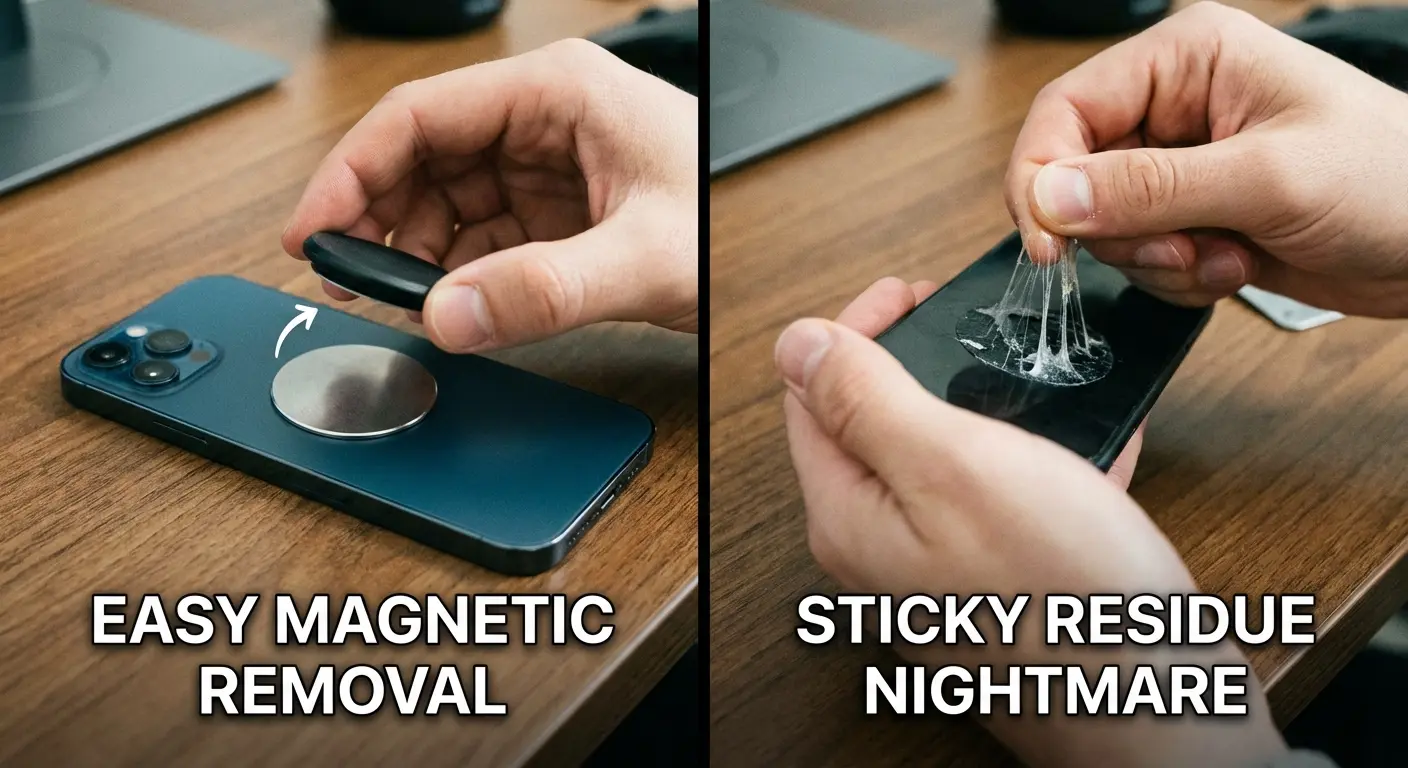
The flexibility compounds over time. Each instance where you'd need to buy a new adhesive grip or live with a suboptimal setup becomes a non-issue with magnetic attachment. You're not locked into decisions made months ago when your needs were different.
MagSafe Changed The Game
MagSafe compatibility opened up magnetic attachment to mainstream users, but its implications go beyond just wireless charging.
A MagSafe-compatible grip integrates with an entire ecosystem of magnetic accessories that adhesive grips can't touch. Your grip becomes part of a system rather than an isolated accessory. The same magnetic interface that holds your grip also works with car mounts, wireless chargers, wallet attachments, and bike holders.
You're not managing separate attachment methods for each accessory type.
This is where magnetic systems pull decisively ahead. Adhesive grips do one thing: they grip. Magnetic grips do that too, but they also serve as your connection point to every other magnetic accessory you use throughout the day.
Yeah, There Are Requirements
Magnetic attachment isn't without setup needs. Your case needs to be MagSafe compatible, either built-in or through an adapter ring. The magnetic connection needs to be strong enough to hold securely but not so strong that removal becomes difficult.
You're also working with slightly different physics. Magnetic grips need proper alignment to attach correctly. The strength of hold depends on magnet quality and case compatibility. Cheap magnetic systems can be frustratingly weak, which leads people to dismiss the entire category based on poor implementations.
But these are one-time setup issues, not ongoing compromises. Get the right components once, and you have a flexible system that adapts to your changing needs.
Compare that to adhesive's ongoing costs and limitations, and the initial investment in proper magnetic components looks increasingly smart.
The Mounting Problem Everyone Ignores
You buy a phone grip to make holding your phone easier. Makes sense.
What doesn't make sense is that this purchase creates new problems with all the other ways you use your phone throughout the day.
Car mounts are the most obvious example. You've got a grip stuck to your phone or case, and now it doesn't fit properly in your dashboard mount. The grip creates interference, prevents magnetic attachment, or makes the mounting clip unable to close.
You're solving one problem (holding your phone) while creating another (mounting it when driving).
Phone Accessories Don't Talk To Each Other
Grips are almost never designed with ecosystem integration in mind. They're created as standalone products meant to excel at one specific function: providing a finger loop or stand.
Everything else is someone else's problem.
This siloed approach doesn't match how you actually use your phone. Throughout a single day, you might need to hold it securely, mount it in your car, prop it up on your desk, attach it to your bike handlebars, and stick it to your gym equipment.
Each scenario requires a different solution, and traditional collapsible grips only address one.
The result? You're managing multiple accessories that don't work together, making compromises about which scenarios matter most, or constantly attaching and removing things based on your immediate needs.
It's friction disguised as convenience.

When Your Grip Blocks Your Mount
When your grip doesn't work with your car mount, you have limited options:
Remove the grip every time you drive (annoying). Buy a different car mount that accommodates the grip (more money). Stop using the grip (wasted purchase). Or just deal with a suboptimal mounting situation (safety risk).
None of these options are good.
Each represents a failure of the grip to integrate with your broader phone usage patterns. You bought an accessory to make your life easier, and instead it created a daily decision point about trade-offs and workarounds.
Multiply this across all the mounting scenarios in your life, and the true cost of a non-integrated grip becomes clear. It's not just the purchase price. It's the ongoing friction, the additional accessories needed to work around its limitations, and the compromises you make because full integration isn't possible.
What Integration Actually Looks Like
Integrated systems start with a common attachment method. Whether that's MagSafe, a proprietary magnetic system, or another universal standard, the key is that your grip uses the same interface as your mounts.
This means your phone goes from hand to car mount to desk stand to bike holder without requiring different cases, adapters, or removal of accessories. The grip you use for holding becomes the attachment point for mounting.
One system. Multiple use cases. Zero friction.
You're not managing separate ecosystems for gripping and mounting. You're using one cohesive setup that adapts to whatever scenario you're in.
Which is how phone accessories should have worked from the beginning.
How Collapsible Grips Have (and Haven't) Changed
The first generation introduced the core concept: a disc that expands to create a grip and collapses to reduce profile. Since then, we've seen countless variations on this theme, each claiming to be revolutionary while delivering mostly incremental changes.
Materials have improved. Early grips used cheaper plastics that cracked easily. Modern versions incorporate better polymers, reinforced adhesives, and more durable accordion mechanisms.
These aren't trivial improvements, but they're refinements rather than reimaginings.
What's Actually Better
Adhesive technology has genuinely advanced. Current grips stick more reliably and last longer before peeling. Some can even be removed and repositioned a few times without completely losing effectiveness (though this capability is often oversold).
Aesthetic options have exploded. You can find grips in virtually any color, pattern, or finish you want. Customization services let you add photos, logos, or designs. If visual personalization matters to you, the current market delivers. Anyone who wants their own artwork on it should see my custom phone grip guide.
Slimmer profiles when collapsed represent real progress. First-generation grips added significant bulk even when not in use. Today's versions get much closer to flush, making the collapsed state genuinely less intrusive.
Wild example: Huda Beauty made a phone grip with a built-in makeup compact. Launched in February 2026, sold out in hours. TikTok went crazy for it. Which is cool and all, but it's still using the same collapsible mechanism with the same adhesive problems.
What Hasn't Changed (Despite The Marketing)
The fundamental limitations remain.
Collapsible grips still rely primarily on adhesive attachment. They still exist as isolated accessories rather than ecosystem components. They still prioritize compactness over versatility.
Durability has improved but not transformed. You'll get more cycles out of a modern grip than an old one, but the collapsing mechanism remains a point of eventual failure. The question is when, not if.
Integration with other accessories hasn't meaningfully advanced in most product lines. Some grips now claim to work with certain mounts, but this compatibility is usually an afterthought rather than a core design principle. You're still managing separate systems that happen to coexist rather than truly integrate.
The Innovation That Didn't Happen
We haven't seen grips that fundamentally rethink what a phone grip should do.
The industry has spent years perfecting the collapsible disc format instead of questioning whether that format best serves users' needs.
What if grips prioritized mounting compatibility from day one? What if they were designed as part of a larger accessory ecosystem rather than standalone products? What if durability and versatility mattered more than achieving the absolute thinnest collapsed profile?
These questions remain largely unexplored by mainstream manufacturers. Innovation has meant making the existing concept slightly better rather than asking whether we're optimizing for the right outcomes.
Why Integration Beats Isolation
Your phone isn't an isolated device. It connects to your car, your computer, your smart home, your wireless headphones. You've built an ecosystem of technology that works together.
Your accessories should follow the same logic.
Phone grips have resisted this integration, remaining stubbornly focused on doing one thing independently rather than multiple things as part of a system. This made sense when phone accessories were simpler, but it's increasingly out of step with how we actually use our devices.
System Thinking vs. Product Thinking
Product thinking asks: how can we make the best possible grip?
System thinking asks: how can we make a grip that enhances your entire phone usage experience?
The difference plays out in design decisions.
A product-focused grip optimizes for grip performance alone. A system-focused grip considers how it affects wireless charging, mounting, case compatibility, and integration with other accessories you already own or might want.
You benefit from system thinking every time you don't have to make a compromise. Your grip works with your charger. Your charger works with your mount. Your mount works with your case. Everything connects seamlessly because the components were designed with the whole system in mind.
The Compounding Value of Integration
Each integrated component makes every other component more valuable.
Your magnetic grip becomes more useful when you add a magnetic car mount. That car mount becomes more valuable when you add a magnetic desk stand. The desk stand's value increases when you realize you can swap between all these scenarios without changing cases or removing accessories.
This compounding value is what isolated products can't deliver. An adhesive grip might be excellent at gripping, but it doesn't make your other accessories better. It doesn't create new usage possibilities. It just does its one thing, and you're left to figure out everything else separately.
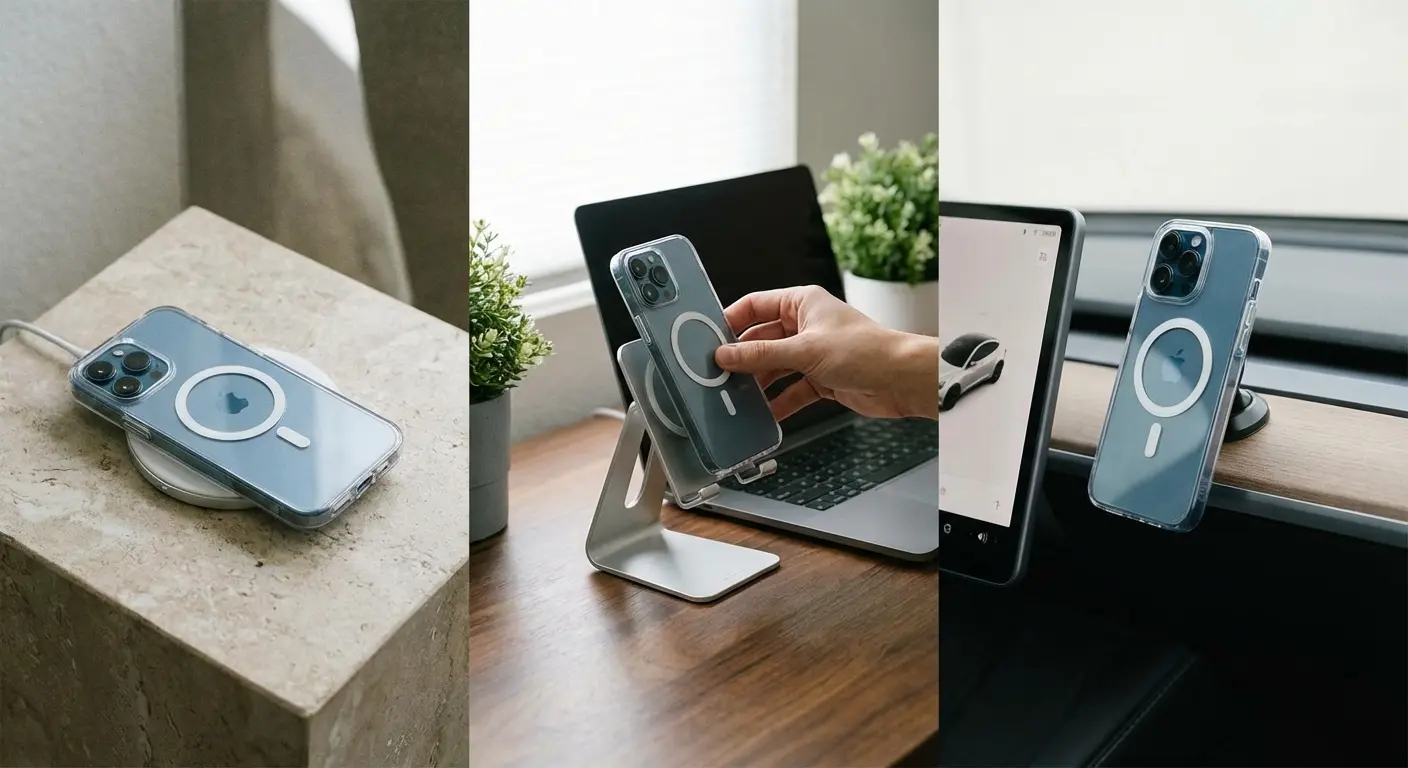
Over time, integrated systems save you money, reduce frustration, and expand what's possible with your phone. You're not constantly buying new accessories to work around limitations of old ones. You're building a cohesive setup that grows more capable with each addition.
Your Phone Grip Shouldn't Just Grip
The name "phone grip" sets limited expectations. It grips your phone. Job done.
But this narrow framing ignores all the other moments throughout your day when you need your phone to do something other than sit in your hand.
You need it to stand upright for video calls. Mount securely in your car. Attach to your bike for navigation. Prop at the right angle for reading recipes. Stick to your gym mirror for workout videos.
A grip that only grips forces you to buy separate accessories for each of these scenarios.
Multi-Functionality Should Be Standard
There's no technical reason a grip can't also be a stand, a mounting point, and a kickstand. The only barrier is design philosophy: whether manufacturers see their product as a single-purpose tool or a multi-functional component.
Multi-functional grips cost barely more to produce than single-purpose ones. The materials are similar, the manufacturing processes comparable. What's different is the thinking that goes into making one component serve multiple needs effectively.
You shouldn't have to pay premium prices for basic versatility. A grip that stands should be the baseline, not a special feature. One that works with mounting systems should be expected, not exceptional.
With Asia Pacific expected to witness the highest growth rate at over 11% CAGR during the forecast period, driven by increasing mobile gaming, social media usage, and content creation, users need grips that support diverse activities beyond simple holding. A grip that only grips can't keep pace with how people actually use their phones throughout the day.
When Stand Functions Actually Work
Most grips that claim to function as stands do so poorly. They'll prop your phone up, technically, but at an angle that's too steep or too shallow for comfortable viewing. The base is too narrow for stability. The mechanism is too weak to hold heavier phones reliably.
A stand function that works means you can trust your phone to stay put at a viewing angle that makes sense for what you're doing. Reading requires a different angle than video watching. Video calls need more vertical orientation than movie viewing.
Your grip should accommodate these variations, not force you into one compromised position.
This isn't asking for much. It's expecting that if a product claims to do something, it should do that thing well enough to actually use regularly, not just well enough to mention in marketing copy.
According to Android Central's 2025 roundup of the best phone grips, the market now includes options like the UAG Magnetic Ring Stand (built entirely of metal for superior durability), the CLCKR Phone Grip with dual portrait and landscape kickstand functionality, and even hybrid solutions like the Sinjimoru Sinji Pouch B-Grip that combines card storage with grip functionality. These products demonstrate that multi-functionality is possible and increasingly expected by informed consumers.
Mounting Integration (Again, Because It Matters)
Your grip is already attached to your phone. It's already positioned where you hold your device.
Making it the mounting point for other accessories is the most logical design decision possible.
Yet most grips ignore this opportunity entirely. They grip, maybe they stand, and that's where their usefulness ends. You're left figuring out mounting separately, usually with accessories that don't acknowledge the grip's existence.
Grips that integrate mounting don't just add a feature. They eliminate the need for separate mounting accessories, reduce bulk, and create a cleaner overall setup. One component does multiple jobs.
Which is how good design should work.
The Rokform Difference (Full Disclosure Time)
Okay, so here's where I tell you about our product. But hear me out.
You've probably experienced the frustration of accessories that almost work. The grip that's great until you need to mount your phone. The mount that's perfect except it doesn't fit with your case. The stand that's fine for light use but tips over when you need it.
Look, full disclosure: we make the Magnetic Sport Ring With Stand. Built it specifically because I was tired of dealing with this exact problem. Grips that don't mount, mounts that don't grip, everything requiring different cases.
You shouldn't have to choose between a good grip and a functional mounting system. You shouldn't have to remove accessories every time you want to use your phone differently.
Magnetic Flexibility Meets Actual Durability
The Sport Ring uses MagSafe compatibility as its foundation, which means it works with your existing magnetic ecosystem right out of the box. Car mount, desk stand, wireless charger (it doesn't block charging), whatever magnetic accessories you already use or want to add later.
But magnetic attachment alone isn't enough. The ring itself is built from materials that can handle real use, not just look good in product photos. Daily wear, repeated mounting and unmounting, the kind of stress that breaks cheaper grips within months.
You can remove it when you don't need the extra bulk, swap it between MagSafe cases, or transfer it to your next phone without buying a replacement. That flexibility compounds over time into real savings and zero frustration.
Stand Function That Doesn't Compromise
The integrated stand isn't an afterthought. It's designed to hold your phone at multiple angles depending on what you're doing. Video calls, recipe following, movie watching. Each gets the viewing angle it needs for comfortable use.
Stability comes from proper engineering, not just adding more material. The base is wide enough to support heavier phones and cases. The mechanism is strong enough to hold position without constant readjustment. It works in portrait or landscape orientation.
Because you shouldn't have to choose.
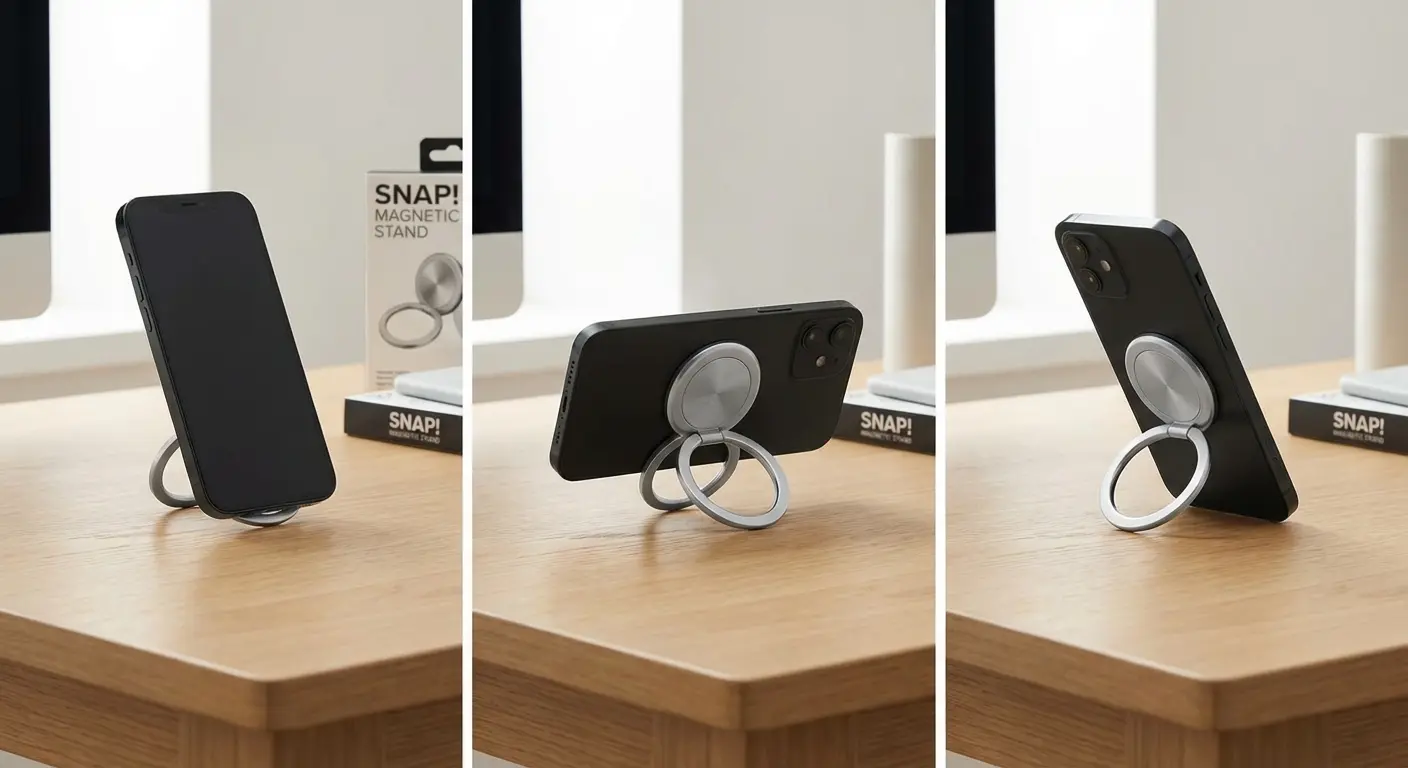
This is what I mean by function meeting system. The stand isn't just a feature we added to check a box. It's designed to replace your need for separate phone stands, which means one less thing to carry, buy, or manage.
One Component, Multiple Scenarios
Throughout your day, the Sport Ring adapts.
Holding your phone securely while walking. Mounting magnetically in your car for navigation. Standing on your desk during work calls. Attaching to your gym equipment for workout videos.
Each scenario uses the same component differently, which is exactly how versatile accessories should work.
You're not managing separate solutions for each use case. You're not making compromises about which scenarios matter most. You've got one system that handles everything.
And that's the difference between an accessory and a solution.
If you're tired of this grip/mount incompatibility nonsense, check out the Magnetic Sport Ring With Stand. We built it to work the way you actually use your phone, not the way marketing departments think you should.
Here's The Thing
Collapsible grips aren't terrible products.
They're just optimizing for the wrong stuff.
That extra millimeter of flatness? Nobody cares. Whether it works with your car mount? That actually matters.
The future of phone grips isn't about getting flatter. It's about getting smarter, more integrated, more capable of handling the multiple ways you use your phone throughout the day. It's about accessories that work together instead of existing in isolation.
When you're evaluating grips, ask better questions:
Does this work with my mounting systems? Can I remove it when needed without damaging my case? Will it still function reliably in six months? Does it create new capabilities or just add bulk?
These questions reveal more about real value than any marketing claim about collapsed thickness.
Your phone is the center of your daily technology ecosystem. Your accessories should enhance that ecosystem, not fragment it. Grips that only grip, mounts that only mount, stands that only stand (each sold separately, each requiring different attachment methods) represent old thinking that doesn't match modern needs.
We've spent too long accepting limitations because that's what was available. Adhesive permanence, single-purpose accessories, isolation instead of integration. None of these are inevitable. They're just what happens when manufacturers optimize for the wrong outcomes.
You deserve accessories that adapt to your life rather than forcing your life to adapt around them.
That starts with expecting more than collapsibility and demanding actual versatility, real durability, and genuine integration from the products you buy.

