


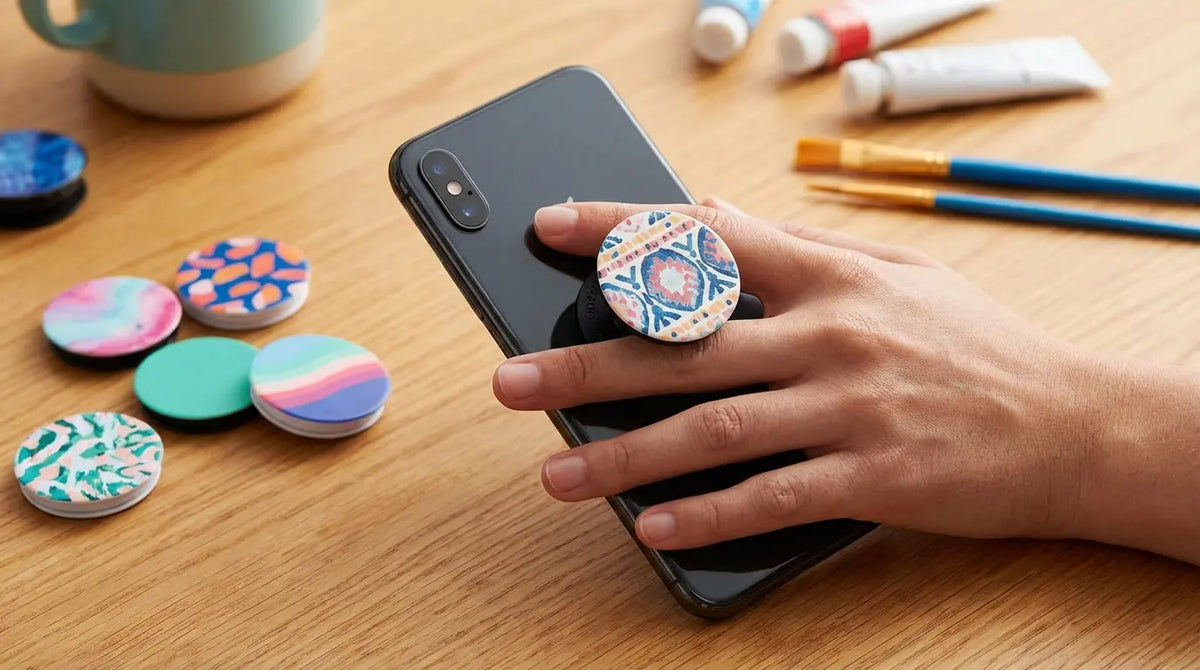
I watched my $18 phone grip fall off in a Costco parking lot last Tuesday. Just popped right off, sent my phone skittering across the asphalt. The grip? I'd had it for six weeks. Six weeks of careful use, and the adhesive just gave up.
That's when I started actually paying attention to how often this happens. Turns out, pretty much everyone I know has a phone grip story. Usually involving concrete.
According to 4imprint's promotional products catalog, custom phone grips are now available in minimum order quantities as low as 50 units, which tells you something about how massive the demand is for these things. But here's what I've learned after testing way too many phone grips over the past two years: what you think you want (a phone that looks unique) and what you actually need (a phone that works reliably) are two very different things.
I'm not here to judge your aesthetic choices. I'm here to tell you that most custom phone grips are kind of a scam, and I can prove it.
Table of Contents
Why Most Phone Grips Miss the Point Entirely
The Hidden Cost of "Customization" Nobody Talks About
What Your Phone Grip Should Actually Do (Beyond Looking Good)
The Magnetic Shift That Changes Everything
Function Over Fashion: When Personalization Becomes a Liability
How to Choose a Grip That Won't Let You Down
The Universal Solution You Probably Haven't Considered
TL;DR
Custom grips look good for like six weeks, then the print fades and adhesive weakens
"Custom" should mean it adapts to your life, not just has your face on it
Magnetic systems actually last (I've had mine for two years) and work with everything
The best grip isn't the one that looks perfect on day one but the one that still works on day 300
Stop buying the same failing product over and over
Why Most Phone Grips Miss the Point Entirely
You've seen them everywhere. Custom phone grips plastered with pet photos, vacation snapshots, motivational quotes, or brand logos. The pitch sounds compelling: express yourself, make your phone uniquely yours, stand out from the crowd.
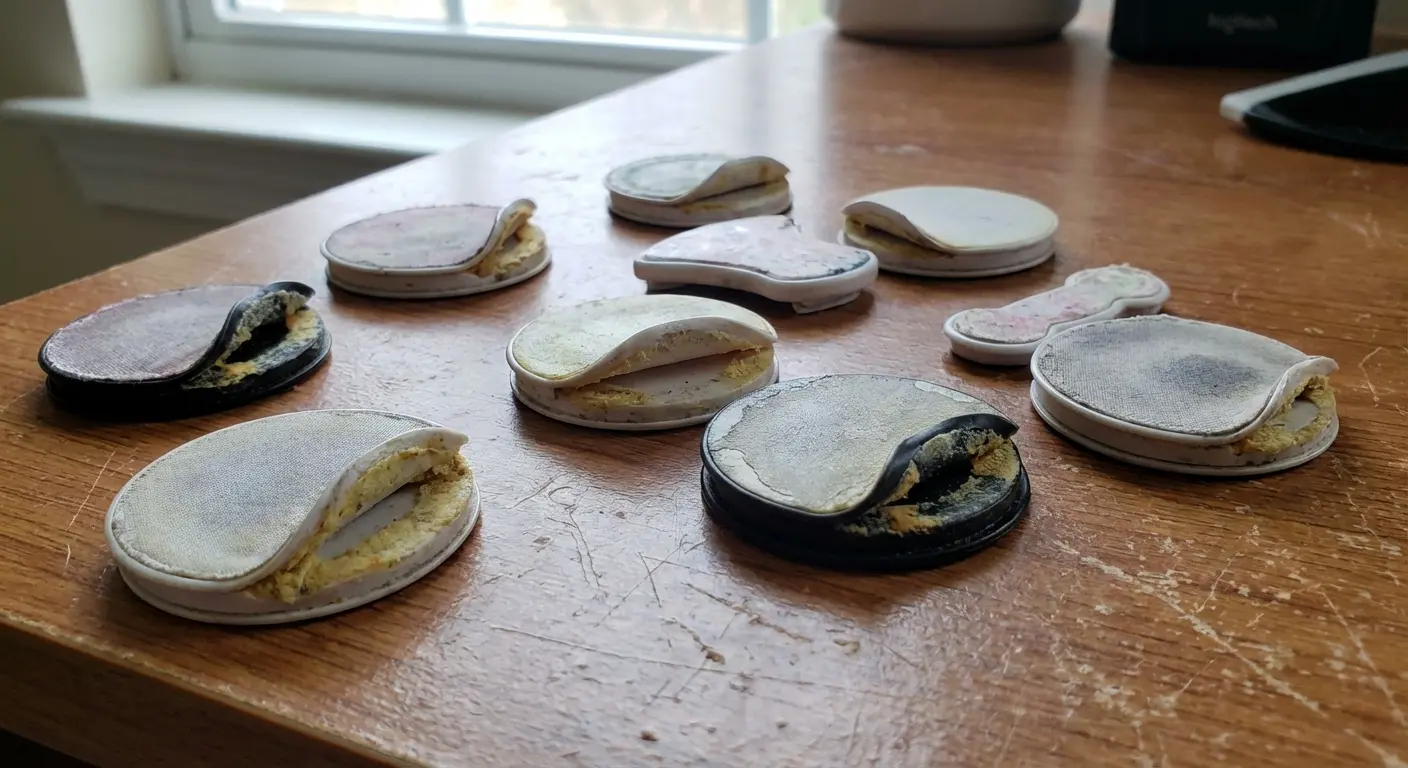
The box doesn't tell you this, but that custom printed image you're so excited about? It's going to fade. The vibrant colors will dull after a few months of hand oils, UV exposure, and daily friction. Your dog's face will become a ghostly blur. That inspirational quote will turn into an illegible smudge.
I've seen this happen to literally everyone I know who's bought one. Someone orders a custom phone grip, loves it for six weeks, then gradually stops noticing it as the print quality degrades. They don't replace it (because who wants to pay for the same design twice?), so they're stuck with a worn-out accessory that no longer serves its original purpose.
My coworker Sarah got custom grips with our company logo for a conference. Three months later, the logo was so faded people kept asking what company she worked for. She had to order new ones. Spent $44 total for something that was supposed to be a one-time purchase. When she finally switched to a magnetic ring system, it lasted through two phone upgrades and still looks identical to the day she bought it.
The Personalization Trap We've All Fallen Into
Companies want you to think "custom" means putting your face on something. That's not custom. That's just printing.
Real customization? That means a product adapts to your specific use case, environment, and habits. It means choosing how your phone mounts in your car, whether it works with your bike setup, if it props up for video calls, and how it integrates with your desk stand.
That's not what you get with a custom printed grip. You get a static image on a one-trick accessory.
What "Custom" Should Mean
The word custom has been hijacked by print-on-demand services. They've built entire businesses around the idea that putting your face on something makes it personalized. But that's decoration, not customization.
When I talk about true customization, I mean adaptability. A grip that works with your morning commute, your afternoon workout, your evening video calls, and your weekend adventures. One that works with whatever case you prefer, whatever phone you upgrade to next, whatever mounting situation you encounter. Custom phone grips can't do any of that. They're frozen in time from the moment they're printed, locked into a single aesthetic that will fade long before the adhesive gives out.
The Hidden Cost of "Customization" Nobody Talks About
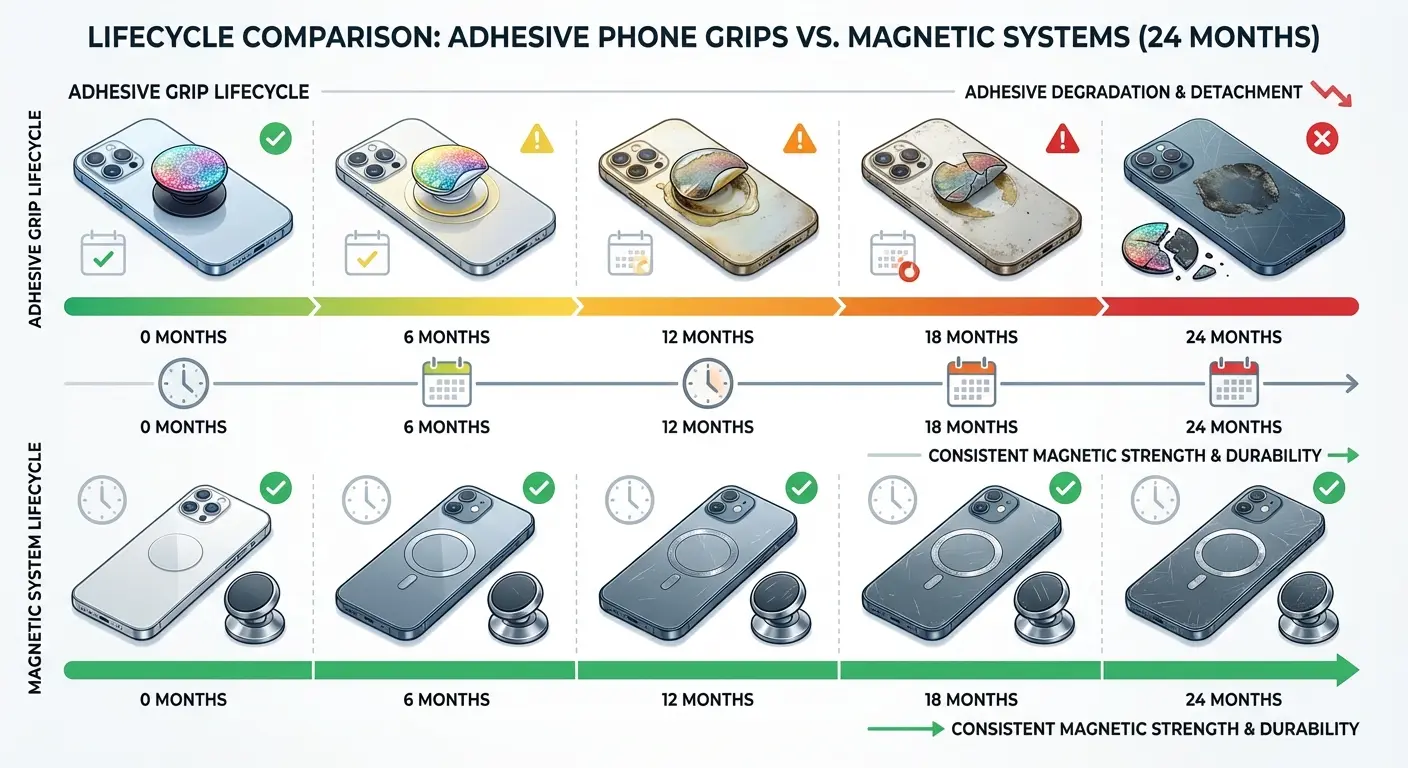
Phone grips rely on adhesive to stay attached to your case or phone. That adhesive has a shelf life, and it's shorter than you think.
Heat degrades it. Cold makes it brittle. Humidity weakens the bond. Every time you slide your phone in and out of your pocket, you're creating micro-movements that stress the adhesive layer. Custom printed grips typically use lower-grade adhesive because higher-quality options would eat into already thin profit margins on personalized products.
Adhesive Failure Is Almost Guaranteed
You'll notice it starting to lift at the edges first. Then one day, usually when you're gripping your phone over concrete, it'll just pop off entirely. And because it's a custom phone grip, you can't buy a replacement from a store. You have to reorder, wait for production, and pay shipping again.
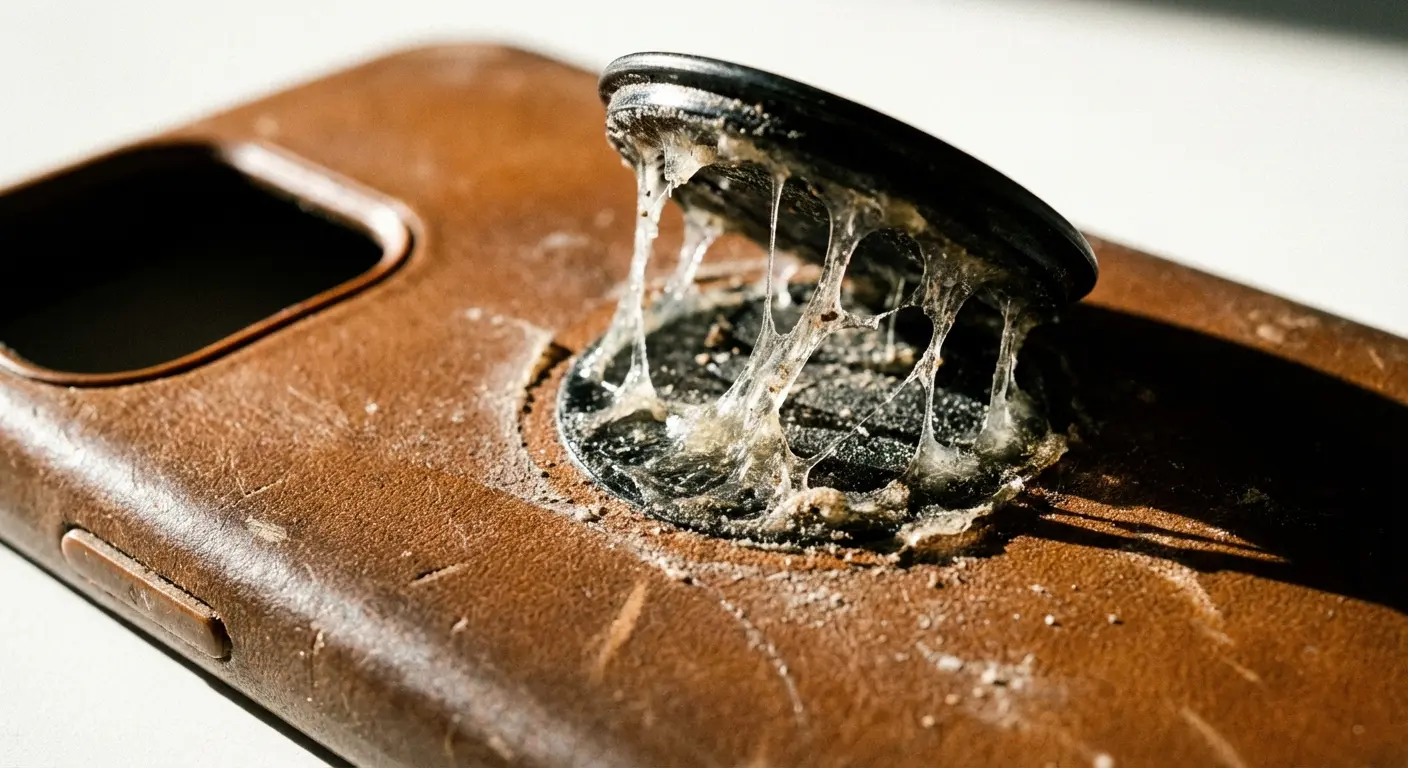
Here's what happens in practice:
First month, you won't notice anything. Maybe some slight dulling around the edges where your fingers grip it most. By month three, the edges start lifting. The print is noticeably faded. You find yourself repositioning it more often. Month six? It's barely hanging on. The whole thing looks washed out, and you're basically waiting for it to fall off completely. After that, it's a crapshoot. Could last another month. Could fall off tomorrow.
I've tested dozens of custom phone grips (yes, I'm that person), and the pattern holds across brands and price points. The adhesive simply isn't designed for long-term performance.
The Disposable Product Model Nobody Asked For
Custom phone grips are designed to be disposable. The business model depends on repeat orders, not product longevity.
When was the last time you saw a custom phone grip company talk about durability metrics, adhesive strength testing, or long-term performance data? They don't, because those numbers would undermine the entire value proposition. You're essentially paying $15 to $25 for a product with a three-to-six-month functional lifespan. That's not customization. That's planned obsolescence with a personal photo attached.
The economics work beautifully for manufacturers. Low production costs, high perceived value, and a built-in replacement cycle. For consumers? You're stuck in a loop of buying the same product over and over, each time hoping it'll last longer than the previous one.
Environmental Impact You're Not Considering
Every custom phone grip that fails and gets tossed is another piece of plastic in a landfill. The print layer often contains materials that don't break down easily. The adhesive residue creates recycling complications.
Because these products are made-to-order, there's no incentive to use sustainable materials or design for recyclability. The focus is on fast production and cheap shipping, not environmental responsibility.
Look, I'm not trying to guilt you. But if you're someone who thinks about the lifecycle of your purchases, custom printed grips should give you pause.

I've gone through four grips in two years, and I'm not even rough on my stuff. Multiply that by millions of users, and you're looking at a staggering amount of waste generated by products that could have been designed better from the start.
What Your Phone Grip Should Actually Do (Beyond Looking Good)
The primary job of any phone grip is preventing drops. Not making you smile when you look at your phone. Not expressing your personality.
Preventing the $1,200 device in your hand from shattering on pavement.
Custom printed grips often sacrifice grip texture for print quality. Smooth surfaces photograph better and showcase designs more clearly, but they're also more slippery. The phone grip popsocket-style collapsible grips create a single point of failure (that adhesive problem again) between your phone and the ground.
What you need is a grip system that distributes force, provides multiple holding options, and stays attached under stress. Texture matters. Material composition matters. Attachment method matters.
Drop Prevention That Works
Before buying any phone grip, ask yourself:
Will this thing actually prevent drops, or just look good in photos? Does it work when my hands are sweaty or wet? Can it handle being dropped from four feet without the adhesive failing? Will it still be attached to my phone in six months? Does it work as a stand, or is it just a grip?
Most custom phone grips fail at least half of these. Usually more.
They're designed around aesthetic placement (centered on the back for maximum visual impact) rather than ergonomic placement (positioned where your fingers actually need support).
One-Handed Operation in Real Scenarios
You're not always using your phone with both hands in perfect conditions. You're texting while carrying groceries. You're checking directions while holding a coffee. You're taking photos while your other hand steadies you on a hike. Anyone who prefers a loop over a knob should see my phone grip strap picks.
A functional phone grip needs to enable secure one-handed operation across these varied scenarios. That means considering finger positioning, weight distribution, and how the grip affects your natural hand mechanics.
I talked to an occupational therapist who mentioned that grips positioned in the center of the phone force users to hyperextend their thumb to reach the top corners of the screen. This contributes to thumb joint stress during extended use. Ergonomically positioned grips (typically in the lower third of the phone back) let your thumb operate within its natural range of motion. Yet most custom printed grips prioritize centered placement because it showcases the design better in product photos.
You end up with a pretty accessory that doesn't meaningfully improve usability. Worse, you might be creating ergonomic problems you didn't have before.
Mounting Versatility You Didn't Know You Needed
Your phone doesn't live in your hand all day. It needs to mount in your car, prop up on your desk, attach to your bike, or stick to your gym equipment.
Traditional custom phone grips can't do any of that.
They're passive accessories that only function when you're actively holding your phone. The moment you need hands-free functionality, they become useless.
This is where the entire concept of "custom" falls apart. You don't need a custom image. You need custom functionality that adapts to your daily patterns. A grip that works in your car during your morning commute, on your desk during work hours, at the gym during your workout, and on your bike during weekend rides.
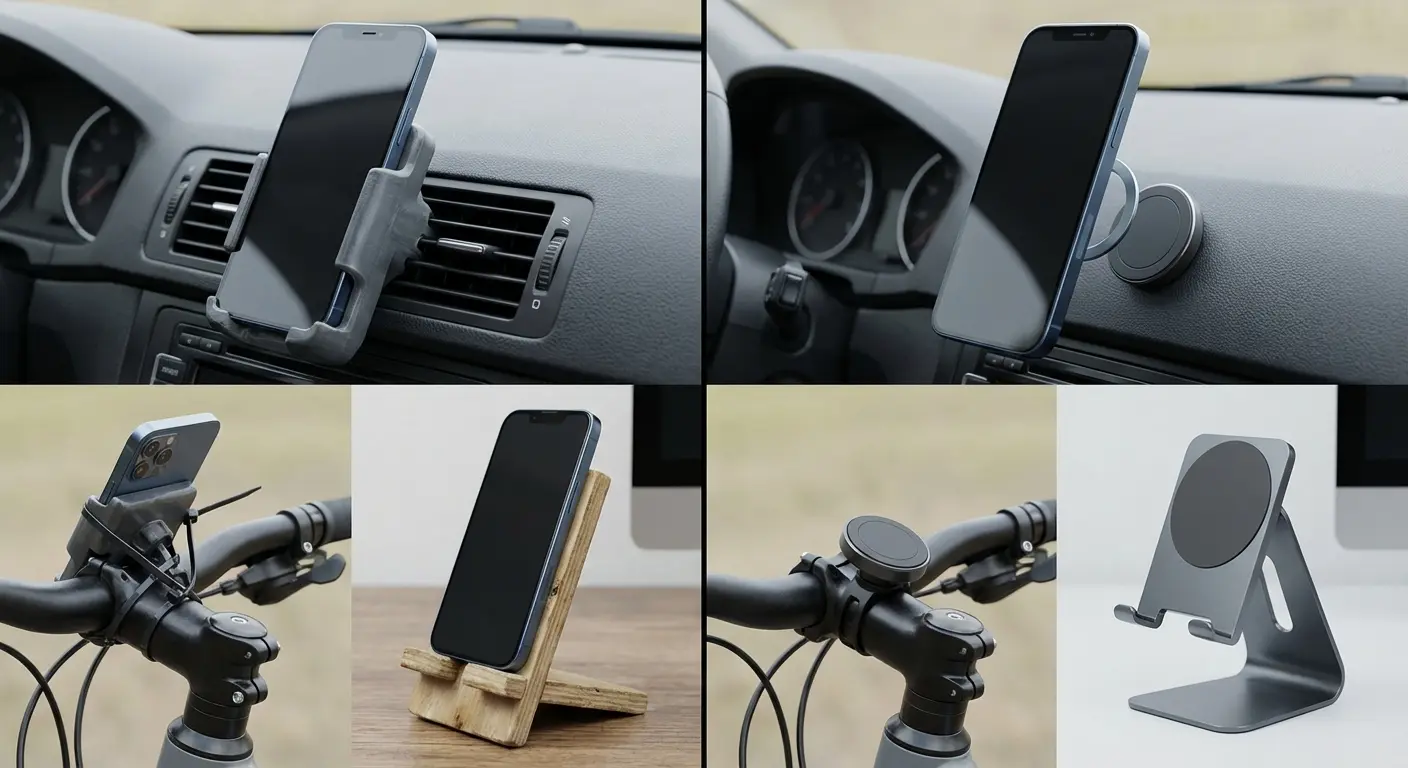
Custom printed grips lock you into a single use case. Functional grips unlock dozens.
The Magnetic Shift That Changes Everything
Magnets.
That's the answer.
Magnetic phone systems eliminate the weakest link in traditional grips: adhesive failure. Instead of relying on a sticky pad that degrades over time, magnets create a mechanical connection that doesn't weaken with use.
The attachment point (whether it's a magnetic case or a magnetic ring) stays secure because it's not fighting gravity through chemistry alone. The magnetic force is consistent, predictable, and doesn't degrade from temperature changes or humidity.
You can remove and reattach magnetic accessories thousands of times without performance loss. Try that with an adhesive custom phone grip.
Why Magnets Solve the Adhesive Problem
The shift toward magnetic phone accessories gained significant mainstream validation when Apple released a MagSafe-compatible phone grip designed by artist Bailey Hikawa in collaboration with their accessibility initiatives. The $70 accessory, designed specifically for users with limited hand strength or dexterity, sold out within days of its release.
According to Trendwatching's analysis, the rapid sellout demonstrates that accessibility-focused design often solves problems affecting far more users than initially assumed. In this case, the universal challenge of maintaining a secure grip on increasingly large, slippery smartphones.
I've been testing magnetic systems for two years now, and the performance difference is dramatic. Where adhesive grips start showing wear within weeks, magnetic attachments maintain consistent hold force indefinitely. The magnetic connection doesn't care about temperature swings, humidity levels, or how many times you've removed and reattached it.
Universal Compatibility Changes the Game
A magnetic system isn't tied to a specific phone model or case design. Any magnetic-compatible case works with any magnetic accessory in the ecosystem.
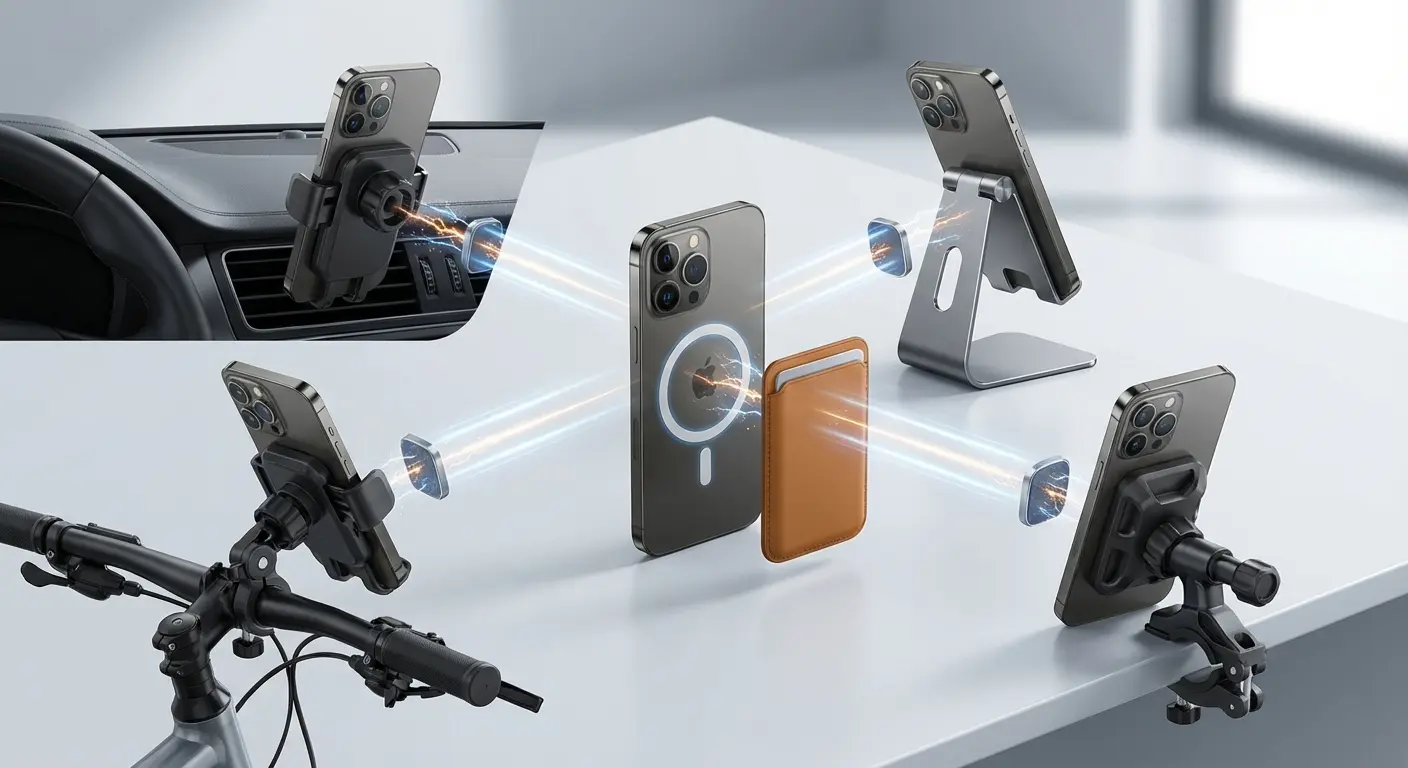
You're not locked into a custom design that only works with one case or one phone generation. When you upgrade your phone, your entire accessory ecosystem upgrades with you. The magnetic ring, the car mount, the desk stand, the bike mount all continue working.
This is what universal customization looks like. You're customizing your setup based on function, not decorating a single component with a static image. Your investment in mounting accessories carries forward through multiple phone generations, multiple cases, and multiple use scenarios.
Interchangeable Functionality Nobody Else Offers
Magnetic systems enable something custom printed grips can't: true modularity. You can swap between a ring stand, a wallet attachment, a car mount, or a tripod adapter in seconds.
Your phone transforms based on context. Heading to the gym? Attach it to your equipment. Driving somewhere new? Mount it in your car. Working at your desk? Prop it up for video calls. Hiking? Secure it to your pack strap.
One magnetic attachment point unlocks dozens of use cases. One custom phone grip unlocks zero additional functionality.
Feature |
Custom Printed Grip |
Magnetic Ring System |
|
|---|---|---|---|
Attachment method |
Adhesive (degrades over time) |
Magnetic (consistent force) |
|
Lifespan |
3-6 months typical |
2+ years typical |
|
Phone upgrade compatibility |
Must repurchase |
Transfers to new device |
|
Mounting ecosystem |
None (standalone only) |
Car, bike, desk, wall, tripod |
|
Interchangeable accessories |
No |
Yes (wallet, stands, mounts) |
|
One-handed removal |
Difficult/damages adhesive |
Instant snap-off |
|
Professional appearance |
Varies (often distracting) |
Neutral, minimal |
|
Cost per year of use |
$40-80 |
$15-30 |
The growing demand for modular phone accessories reflects broader consumer trends. As noted in SlashGear's recent coverage of phone accessories, "Mobile phones aren't just for making calls anymore; they're universal devices that can help keep track of your fitness progress, control multiple devices, and play games." The article highlights how modern users expect their phone accessories to serve multiple functions across different contexts, from gaming controllers that attach directly to phones to magnetic mounts that work seamlessly across vehicles, desks, and exercise equipment. According to SlashGear, this shift toward ecosystem thinking represents a fundamental change in how consumers evaluate phone accessories, prioritizing versatility over single-purpose designs.
Function Over Fashion: When Personalization Becomes a Liability
You're not the same person you were six months ago. Your aesthetic preferences evolve. That design you loved in January might feel cringey by July.
But you're stuck with it.
That custom phone grip isn't going to magically update itself to match your current vibe. You're either living with a design that no longer represents you, or you're buying a replacement and contributing to the disposable product cycle I talked about earlier.
Your Taste Will Change Faster Than Your Phone
Neutral, functional accessories don't have this problem. They work with your current taste, whatever that happens to be, because they're not trying to make a visual statement. They fade into the background while doing their job flawlessly.
I've heard from dozens of people who regretted their custom phone grip choices within months. The sunset photo that seemed beautiful in March feels boring by summer. The band logo you loved becomes embarrassing when your music taste shifts. The company branding becomes awkward after you change jobs.
These aren't hypothetical scenarios. They're the predictable outcome of permanently attaching temporary preferences to a device you use hundreds of times per day.
Professional Settings Don't Care About Your Dog's Face
Your dog is cute. Your phone grip is still going to fail in three months.
But also, there are contexts where a phone covered in personal imagery reads as unprofessional or immature. Client meetings. Job interviews. Professional conferences. Formal presentations.
I know someone who brought her "Wine Not?" phone grip to a client meeting. The client made a comment about it. It was awkward. She switched to a neutral magnetic ring the next week.
Take your meme phone grip to a job interview and watch how seriously people take you. You could swap cases or remove the grip, but that defeats the entire purpose of having a grip in the first place. A functional, understated grip system works in every context without drawing unwanted attention.

Visual Clutter Creates Mental Clutter
Your phone is already a source of constant stimulation. Notifications, messages, emails, social media, news alerts. Adding another layer of visual information (even if it's a photo you chose) contributes to cognitive load.
Minimalist design isn't just an aesthetic trend. It's a recognition that our attention is finite and valuable. Every visual element competes for mental processing power.
A clean, functional grip system reduces visual noise rather than adding to it. Your phone becomes a tool again, not a billboard for your personality. That might sound harsh, but consider how many times per day you unlock your phone. Do you really need another visual element demanding your attention each time?
How to Choose a Grip That Won't Let You Down
Not all phone grips are created equal, and material composition tells you most of what you need to know about longevity.
Look for grips made from durable polymers or metals, not cheap plastics that feel hollow or flimsy. The material should have some texture (not glass-smooth) for grip performance. If it's a ring-style grip, the hinge mechanism should feel solid and move without wobbling.
Material Quality Indicators You Can Spot
Weight can be a useful indicator. Ultra-light grips often use cheaper materials to cut costs. A bit of heft suggests more substantial construction (though obviously there's a balance here. You don't want a grip that makes your phone feel like a brick).
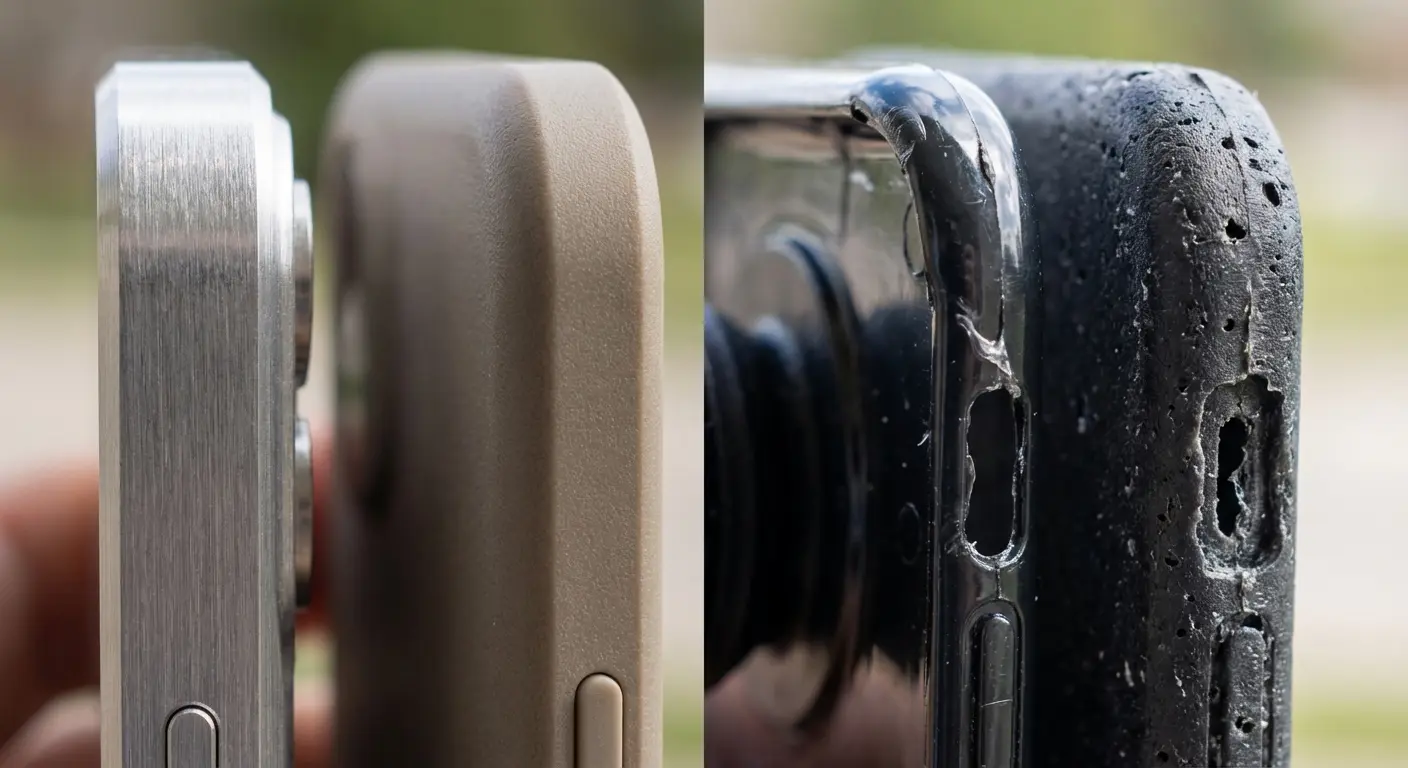
Check what it's made of. If it feels cheap and hollow, it is. Look for actual texture. Smooth grips are useless when your hands are sweaty. And for god's sake, make sure they tell you what kind of adhesive they're using. If the product page doesn't mention adhesive specs, that's a red flag.
Ask yourself: Does this feel substantial? Is there texture where my fingers will grip? Can I find any information about how long it's supposed to last? Does it come with any kind of warranty?
If you can't answer these questions, keep looking.
Attachment Method Matters More Than Design
I've hammered on adhesive failure already, but it's worth being specific about what to look for.
If you're going with an adhesive grip, it should use 3M VHB (Very High Bond) tape or equivalent. The adhesive should be thick (1mm+), not a thin film. The product description should mention adhesive strength specifications, not just "strong adhesive."
Better yet, look for grips that integrate with your case or use mechanical attachment methods. When evaluating different mounting solutions, understanding magnetic phone grip technology helps you make an informed decision about long-term reliability. These eliminate adhesive as a failure point entirely.
Ecosystem Compatibility Is the Hidden Value
A standalone grip is just one accessory. A grip that's part of a larger ecosystem is an investment in long-term functionality.
Does the grip work with mounts for your car, bike, or desk? Can you add a wallet or other accessories? Will it continue working when you upgrade your phone?
These questions reveal whether you're buying a single-purpose decoration or a foundation for a modular accessory system. The latter costs more upfront but delivers exponentially more value over time.
The Universal Solution You Probably Haven't Considered
Look, I use the Rokform magnetic ring. Have for two years now. It's not cheap (I think I paid $35), but I haven't replaced it once. Meanwhile my friend is on her fifth $15 custom grip this year.
The Rokform Magnetic Sport Ring With Stand is universal, meaning it works with any magnetic phone case (MagSafe compatible), so you're not locked into a specific brand or phone model. It's a ring stand that props your phone at multiple angles, provides a secure grip, and integrates with an entire ecosystem of magnetic mounts.
When Universal Beats Custom Every Time
You can move it between cases, between phones, between family members' devices. It doesn't fade, peel, or lose adhesion because it's magnetically attached. When you need hands-free functionality, it works with car mounts, bike mounts, desk stands, and more.
This is what customization should mean: adapting to your life, not decorating your phone.
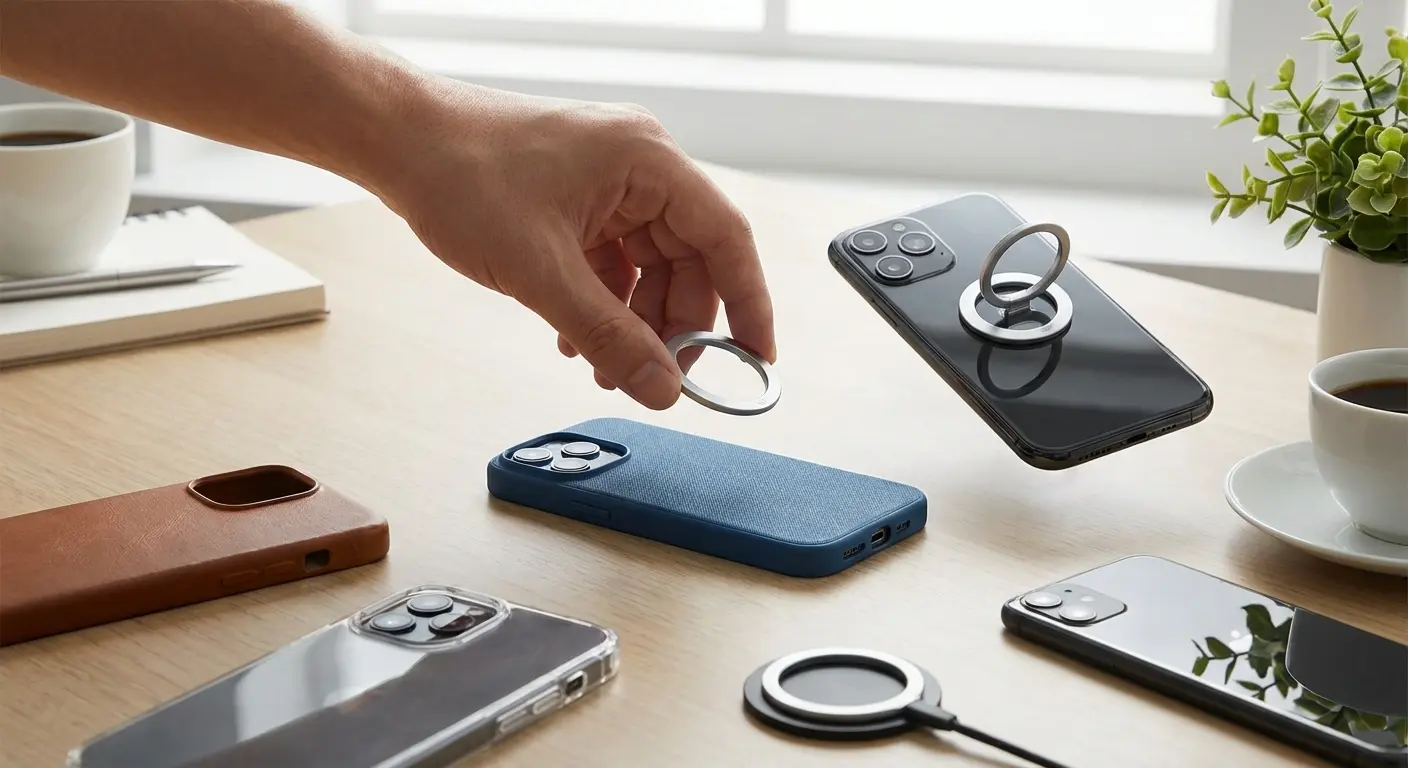
The Magnetic Sport Ring With Stand represents a fundamentally different approach. Instead of committing to a printed design that will fade and fail, you're investing in a system that grows with you. The ring itself is built from aircraft-grade materials designed to withstand years of daily use. The magnetic connection is rated for thousands of attach/detach cycles without degradation.
More importantly, it's compatible with the entire Rokform mounting ecosystem. The same ring that helps you grip your phone securely also lets you mount it in your car, on your motorcycle, at your desk, or on your bike. You're not buying a grip. You're buying versatility.
The Math That Matters
Yeah, I did the math. I'm that person.
$20 every six months equals $40 a year on grips that keep failing. Or $35 once for a magnetic ring that's lasted two years so far. I'm not great at math, but even I can see which one makes sense.
And I'm not even factoring in the value of mounting versatility, which would require buying separate accessories (car mount, desk stand, etc.) if you went the custom phone grip route. When you add up the total cost of ownership over two years, the magnetic system wins by a significant margin.
Final Thoughts
Custom phone grips aren't inherently bad. They serve a purpose for people who prioritize aesthetic expression above all else. But for most of us, they're solving the wrong problem.
You don't need your phone to look unique. You need it to work reliably across the dozen different contexts you encounter every day. You need accessories that last, that adapt, that don't create more problems than they solve.
The shift from decorative customization to functional modularity isn't about buying better products. It's about recognizing what matters when you're using a device that's become central to how you work, communicate, and move through the world.
I've been conditioned to think personalization means putting my stamp on things visually. But the phones we carry aren't picture frames or fashion statements (even though the marketing wants us to believe otherwise). They're tools that need to perform under pressure, in multiple environments, without constant babysitting or replacement.
The custom phone grip industry has thrived on selling emotional satisfaction that fades faster than the printed designs themselves. What you're left with is a worn-out accessory and the nagging feeling that you should probably replace it, starting the cycle over again.
Breaking that cycle means asking different questions before you buy. Not "does this look cool?" but "will this still work in six months?" Not "does this express my personality?" but "does this solve problems I encounter daily?"
Your phone grip should be the most boring, reliable piece of your setup. It should fade into the background functionally while doing its job flawlessly. It should work with your next phone, your next case, your next car, your next bike.
That's not what custom printed grips deliver. They deliver a brief moment of aesthetic satisfaction followed by months of declining performance and eventual failure.
You deserve better than that. Your phone deserves better than that. And honestly, the planet deserves better than another piece of disposable plastic with your pet's face slowly fading into oblivion.
Stop buying the same failing product over and over. Get a magnetic ring. It costs more upfront, but it actually works.
That's it. That's the whole article.

