


I need to tell you something that's going to piss off every repair shop in America: most screen repairs don't actually fix your phone.
Yeah, the glass gets replaced. Your screen lights up again. Those spiderweb cracks disappear. But the real damage? Still there.
I work for Rokform (we make phone cases), so take this with whatever grain of salt you want. But I've also watched the repair industry explode from $3.4 billion in 2018 to $8.3 billion in 2023, according to Allstate Protection Plans. That's nearly triple in five years. And I'm pretty sure I know why: people keep coming back for the same repair, over and over, because nobody's telling them what's actually broken.
They think fixing the glass fixes the phone.
Wrong.
The real problem isn't the shattered screen you're staring at right now. It's the structural damage you can't see, the vulnerabilities that stick around after repair, and the cycle of recurring breaks that keeps repair shops in business. Every time you drop your phone, you're not just risking a cracked screen. You're compromising the entire device in ways that no amount of glass replacement can reverse.
Table of Contents
What Repair Shops Won't Tell You About "Quick Fixes"
Why Screen Protectors Don't Actually Protect Against Drops
When DIY Kits Make Everything Worse
Why Your Phone Keeps Breaking (It's Not Bad Luck)
The Case for Prevention Over Repair
Final Thoughts
TL;DR
Screen repairs don't fix the frame damage that makes your phone keep breaking. You're paying $200-400 to replace glass while the real problem gets worse. A $70 case prevents all of this, which is why I'm writing this (I work for a case company, so yeah, there's that). Most repair solutions actually weaken your phone's structural integrity, even when the screen looks perfect. DIY kits usually void warranties and create invisible micro-fractures. Prevention through proper case engineering costs less than a single professional screen replacement, and the repair industry profits from repeat customers, not permanent solutions.
What Repair Shops Won't Tell You About "Quick Fixes"
Research shows that 27% of American smartphone owners say they would initiate screen repairs within a day because phones are basically life support devices now. But this urgency to fix the visible damage blinds us to the invisible structural problems that develop at the same time.
You've probably researched cracked phone screen repair costs, compared shop ratings, calculated whether your deductible makes sense. But here's what nobody mentions: fixing that spiderweb of cracks doesn't fix your phone.
The glass gets replaced, sure. Your screen responds to touch again. Those jagged lines disappear.
What doesn't get addressed? The impact that shattered your screen also compromised your phone's frame, weakened the adhesive seals, and created stress points in the aluminum or steel housing that you can't see.
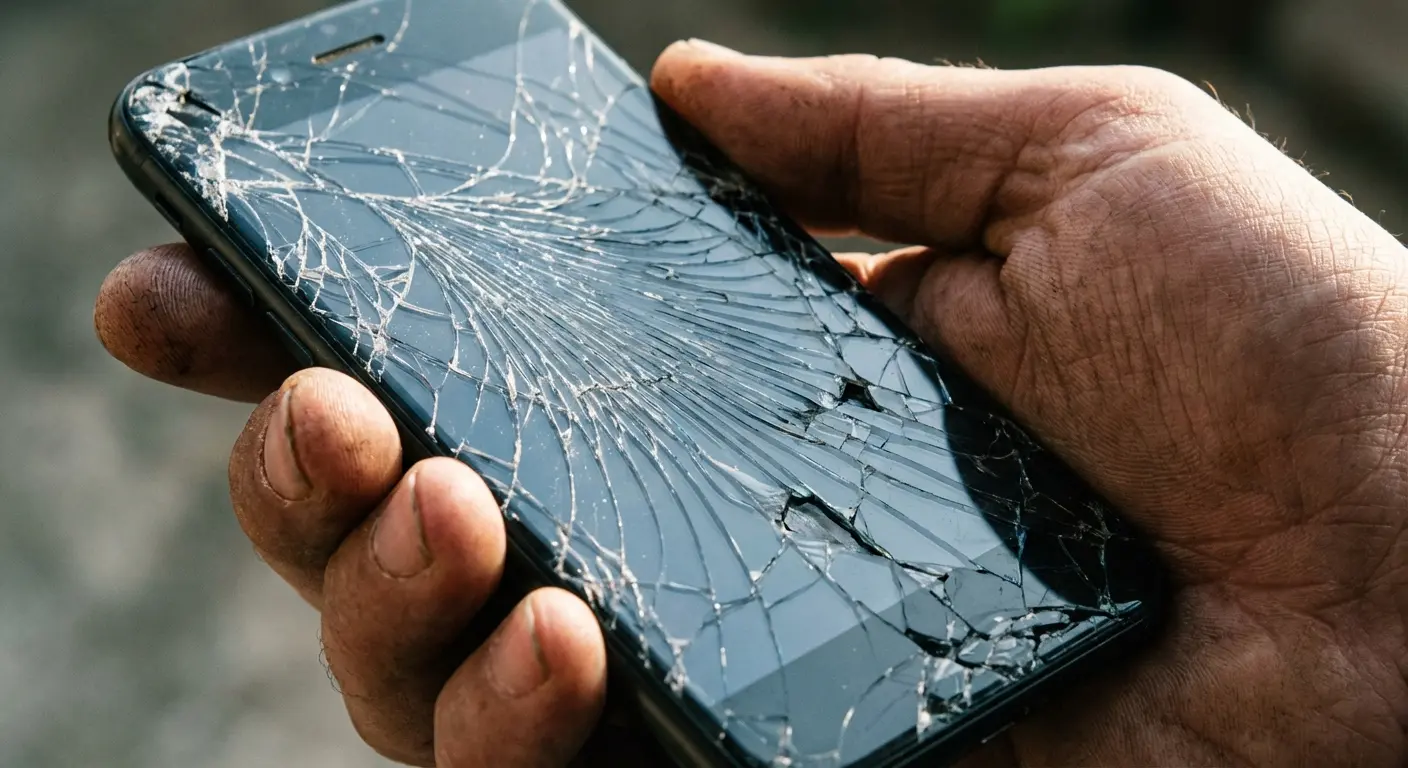
Think about what happens during a drop. Your screen cracks because it absorbed kinetic energy, but that energy doesn't stop at the glass. It travels through the entire device, flexing the frame (even if just microscopically), potentially loosening internal connections, and creating points of weakness that make your next drop way more likely to cause damage.
At Rokform, I've watched customers come back three, four, five times for cracked phone screen repair on the same device. That's not bad luck. That's physics.
Frame Damage You Can't See (But Definitely Exists)
Your phone's frame is engineered with specific tolerances. Drop it once, and those tolerances shift.
The frame might bow outward by fractions of a millimeter. Completely invisible without precision tools. But that tiny change means your next screen installation won't seal quite as tightly. Dust gets in easier. Moisture finds new entry points.
Repair shops don't have the equipment to measure frame integrity. They're replacing glass, not reverse-engineering the structural damage from your original impact. You're paying for cosmetic restoration while the underlying vulnerability remains.
This one customer came in with an iPhone 13 Pro for its third screen replacement in eight months. I remember him because he was wearing a Patagonia vest and got really argumentative when I tried to explain what was happening. Each repair looked perfect when completed, but when I actually measured the frame with calipers, I found a 0.3mm variance. Doesn't sound like much, right? But phones are engineered with tolerances so tight that 0.3mm actually matters. It's like baking, where a quarter teaspoon can ruin a cake. Except your cake costs $1,000.
The third impact (a fall from just two feet onto carpet) shattered not only the screen but also cracked the back glass and damaged the camera module. What started as a $279 screen repair became a $650 multi-component replacement, all because the frame damage from drop one was never addressed.
I told him this would probably happen again, and he got pissed, like I was trying to upsell him or something. He paid the $650 (screen, back glass, camera module), and I haven't seen him since. Either he finally got a case or he switched to Android out of spite.
The Adhesive Problem Nobody Mentions
Factory adhesive is applied in controlled environments with specific pressure, temperature, and curing times. Your repair shop? They're using aftermarket adhesive strips or liquid adhesive that approximates (but doesn't match) the original bond strength.
This matters more than you'd think. Weaker adhesive means your screen is more likely to separate slightly during your next impact, which increases the chance of shattering because the glass flexes differently when it's not perfectly bonded to the frame.
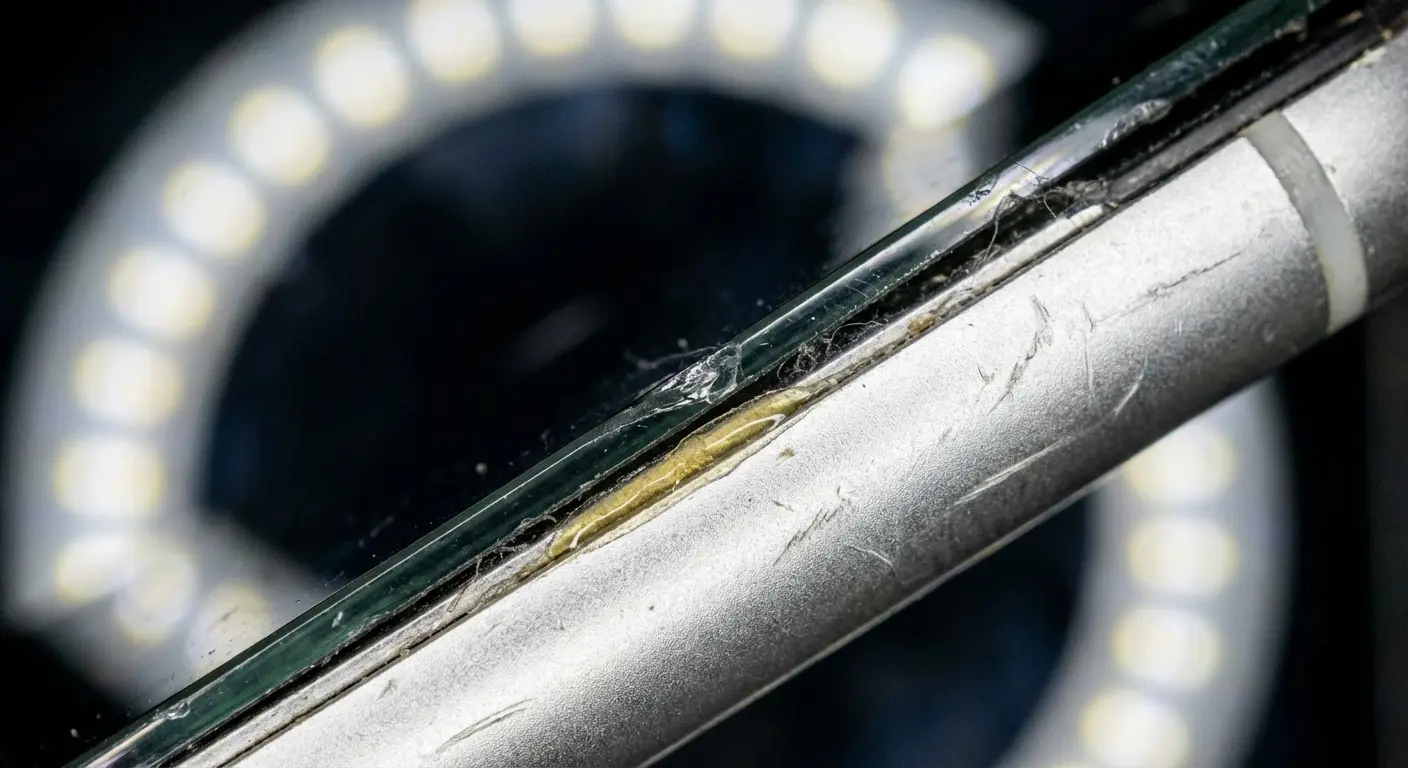
You'll notice this if you've ever had a repair where the screen feels slightly "softer" when you press it, or if you can see a tiny gap along the edges in certain light. Sometimes that's sloppy work (and yeah, it definitely can be). But mostly that's just the reality of trying to recreate factory conditions in a strip mall kiosk.
The Parts Quality Lottery
The repair landscape is evolving. iFixit recently launched an AI-powered chatbot called FixBot to help users navigate repairs, but even this tech can't solve the fundamental problem: AI can guide you through replacing glass, but it can't reverse the structural damage that occurred during the initial impact.
The repair industry operates on volume. Techs get paid per device, not per hour, which creates interesting incentives. Faster repairs mean more money, and the fastest repairs don't always involve the most careful work.
You're quoted a price based on parts and labor, but what you're not told is whether those parts are genuine OEM (original equipment manufacturer), refurbished OEM, or third-party components manufactured to lower specifications. All three exist in the market, and all three get labeled as "high quality" or "premium" by shops trying to justify their pricing.
Replacement screens come in tiers that most customers never hear about.
You've got genuine Apple (or Samsung, Google, whatever) parts that are identical to what shipped with your phone. Then you've got refurbished genuine parts, where the LCD or OLED panel is original but the glass is new. Below that, you've got "copy" screens manufactured by third parties to approximate the original specifications.
That last category is where things get sketchy. Some copy screens are decent. Others have lower touch sensitivity, worse color accuracy, reduced brightness, or they fail within months. Your repair shop might not even know which tier they're installing because their supplier doesn't always disclose it.
Ask specifically what you're getting. If the tech can't tell you the manufacturer or part number, you're gambling.
Screen Part Tier |
Quality Level |
Typical Lifespan |
Cost Range |
What You're Getting |
|---|---|---|---|---|
Genuine OEM |
Factory identical |
3-5+ years |
$250-$450 |
Exact manufacturer specs, full warranty compatibility |
Refurbished OEM |
Original panel, new glass |
2-4 years |
$150-$300 |
Mixed components, potential calibration issues |
Premium Copy |
High-quality third-party |
1-3 years |
$100-$200 |
Good specs, may have color/brightness variance |
Standard Copy |
Budget third-party |
6-18 months |
$50-$120 |
Noticeable quality reduction, early failure common |
Economy Copy |
Lowest-tier third-party |
3-12 months |
$30-$80 |
Poor touch response, significant quality issues |
These price ranges are rough, by the way. I've seen economy screens go for $20 and premium copies hit $250 depending on the model.
Warranty Voids and Insurance Complications
Third-party repairs often void your manufacturer warranty, even if you've got months remaining. Apple's strict as hell about this. You bring your phone in for an unrelated issue (battery, camera, whatever), and they scan the serial numbers of your components. If the screen doesn't match their records, they can refuse service or charge you out-of-warranty rates for everything.
Insurance gets complicated too. Some carriers and third-party insurance providers won't honor claims if they detect previous unauthorized repairs. You think you're saving money skipping the deductible, but you might be sacrificing future coverage worth way more than the repair cost.
A Galaxy S23 owner saved $150 by choosing a third-party repair over Samsung's authorized service. Four months later, the phone developed a battery swelling issue (a legitimate warranty claim). Samsung detected the non-OEM screen during diagnostics and voided the entire warranty. The battery replacement, which would have been free under warranty, cost $189. The camera module that failed two weeks later? Another $220 out of pocket. The initial $150 savings resulted in $409 in additional costs that warranty would have covered.
Why Screen Protectors Don't Actually Protect Against Drops
Screen protectors stop scratches. They're excellent at that. Keys in your pocket, sand at the beach, the zipper on your jacket. A good tempered glass protector handles all of it.
Drops? That's a completely different physics problem, and it's one that screen protectors aren't engineered to solve.
Tempered Glass Is Designed to Break
You've probably seen it happen: your phone falls, you pick it up, and the screen protector is shattered but the screen underneath is fine. You feel relieved. The protector "did its job."
But here's what actually happened: the protector absorbed some impact energy by fracturing, but it was going to fracture anyway because tempered glass is brittle by design. It's hard (scratch-resistant) but not tough (impact-resistant). Those are different material properties, and you can't maximize both in a thin sheet of glass.
The protector might have helped, or your screen might have survived that particular drop regardless. There's no way to know, which is why people keep buying them. Confirmation bias tells us they work every time they break.
The Edge Impact Problem
Most drops don't land screen-first on a perfectly flat surface. They hit at an angle, often corner or edge-first.
Your screen protector doesn't extend over the edges (it can't, or it would peel off constantly), which means the most common impact points are completely unprotected.
That corner hit transfers energy directly into the frame and then into the screen from behind, shattering it from the inside out. Your pristine screen protector stays intact while the display underneath spiderwebs.
Drop Scenario |
Screen Protector Coverage |
Protection Level |
Why It Fails |
|---|---|---|---|
Flat face-down on smooth surface |
100% of screen surface |
Moderate (30-50% effective) |
Protector may absorb some energy through fracturing |
Corner/edge impact |
0% of impact zone |
Minimal (5-15% effective) |
Force bypasses protector entirely, hits frame first |
Angled impact on rough surface |
Partial (center only) |
Low (10-25% effective) |
Point impact concentrates force, protector can't distribute |
Pocket/purse scratches |
100% of screen surface |
High (85-95% effective) |
This is what it's designed for |
Drop onto screen with object between |
Variable |
Negligible (0-10% effective) |
Object punctures through protector and screen |
Oleophobic Coating Degradation
Even if your screen protector prevents cracks, you're sacrificing the oleophobic (oil-resistant) coating that makes your screen smooth and fingerprint-resistant. Factory coatings are applied at the molecular level. Screen protectors approximate this with topical treatments that wear off within weeks.
You'll notice your screen feels stickier, fingerprints show up more prominently, and swiping isn't as smooth. Small annoyances, sure, but they accumulate over the two or three years you're using the device.
When DIY Kits Make Everything Worse
Popular Mechanics has DIY repair guides with step-by-step instructions, and the right-to-repair movement has expanded access to parts and information. But there's a massive gap between having instructions and having the skills to execute them properly. And that gap gets expensive when things go wrong.
YouTube makes cracked phone screen repair look straightforward. Thirty-minute videos show you every step. Kits on Amazon cost $40 instead of $200 at a repair shop. You've got a weekend afternoon free. Why not try it?
Because you're about to learn why repair techs charge what they charge, and the lesson's going to cost you more than the kit.
Tools You Don't Have (And Shouldn't Buy)
Professional repairs require specialized tools: heat guns calibrated to specific temperatures, suction cups with precise pressure ratings, spudgers made from materials that won't scratch internal components, and adhesive removers that don't damage surrounding parts.
Your DIY kit includes plastic pry tools and maybe a basic suction cup. That's like trying to rebuild an engine with a screwdriver and optimism.
You'll get the screen off eventually (probably), but you'll scratch the frame, damage the ribbon cables, or crack the replacement screen during installation. I've seen all of it. Last month alone, three people came in trying to fix their DIY attempts.
Calibration and Touch Sensitivity Issues
Screens aren't plug-and-play. They require calibration to match your specific device's touch sensitivity settings. Professional repair equipment includes software that recalibrates the digitizer after installation.
Your DIY kit? It's hardware only. You're hoping the replacement screen's default settings happen to match your phone's requirements. Sometimes they do. Often they don't, and you end up with a screen that registers phantom touches, misses deliberate inputs, or has dead zones that weren't there before.
The Ribbon Cable Disaster
Phone ribbon cables are fragile. They're designed to be connected and disconnected a specific number of times under controlled conditions. Forcing them, bending them at wrong angles, or failing to seat them properly can create intermittent connection issues that are nearly impossible to diagnose.
You might complete your repair, and everything works fine for a week. Then your display starts flickering. Or your touch response becomes erratic. Or your screen goes black randomly. These are ribbon cable issues, and fixing them requires another disassembly, which risks creating new problems.
Permanent Damage You Can't Undo
The worst DIY outcome isn't a failed repair you can take to a professional. It's a failed repair that makes professional repair impossible or crazy expensive.
Strip the screws trying to open the case? You'll need a specialized extraction tool. Crack the frame prying too aggressively? The frame might need replacement, which costs more than the screen. Damage the logic board with static electricity or by shorting a connection? You're looking at data recovery costs and possibly a total loss.
Repair shops can usually tell when someone's attempted a DIY repair first. Some will refuse to work on it. Others will charge you more because they're fixing your mistakes on top of the original problem.
A Pixel 7 owner watched a 15-minute YouTube tutorial and ordered a $45 screen replacement kit. During disassembly, he applied too much heat to loosen the adhesive and warped the plastic frame around the charging port. He also tore the digitizer ribbon cable trying to disconnect it without releasing the locking tab first. When he brought it to a professional shop, they quoted $380: $120 for the screen, $85 for the charging port assembly, $95 for the digitizer cable, and $80 in additional labor to fix the frame damage and remove the broken screw he'd stripped. The original professional cracked phone screen repair would have cost $195.
Why Your Phone Keeps Breaking (It's Not Bad Luck)
Damaged screens account for 67% of all smartphone accidents and malfunctions, making it the most frequent type of phone damage. But what these statistics don't reveal is that the visible screen crack is often accompanied by hidden structural damage that compounds with each subsequent drop.
And this is what pisses me off about the repair industry: they know this. They know you're coming back. They're counting on it. That's their business model: repeat customers who think they're unlucky when really they're just getting a Band-Aid on a broken bone.
Phones don't break because they're fragile. They break because physics is unforgiving and device design prioritizes other factors over drop resistance.
You're carrying a device that's 75% glass and aluminum, weighs about six ounces, and falls from an average height of four to five feet. That's kinetic energy that has to go somewhere when the device stops moving.
Why Corner Drops Are So Much Worse
Drop your phone flat on its face, and the impact distributes across the entire screen surface. That's the best-case scenario (assuming you've got some kind of protection). The force spreads out, and while you might crack the screen, you're less likely to cause internal damage.
Corner drops concentrate all that energy into a single point, usually the frame edge. The frame bends or dents, which transfers energy directly into the screen from the side. This is how you get the classic corner-impact crack pattern that radiates out from the impact point.
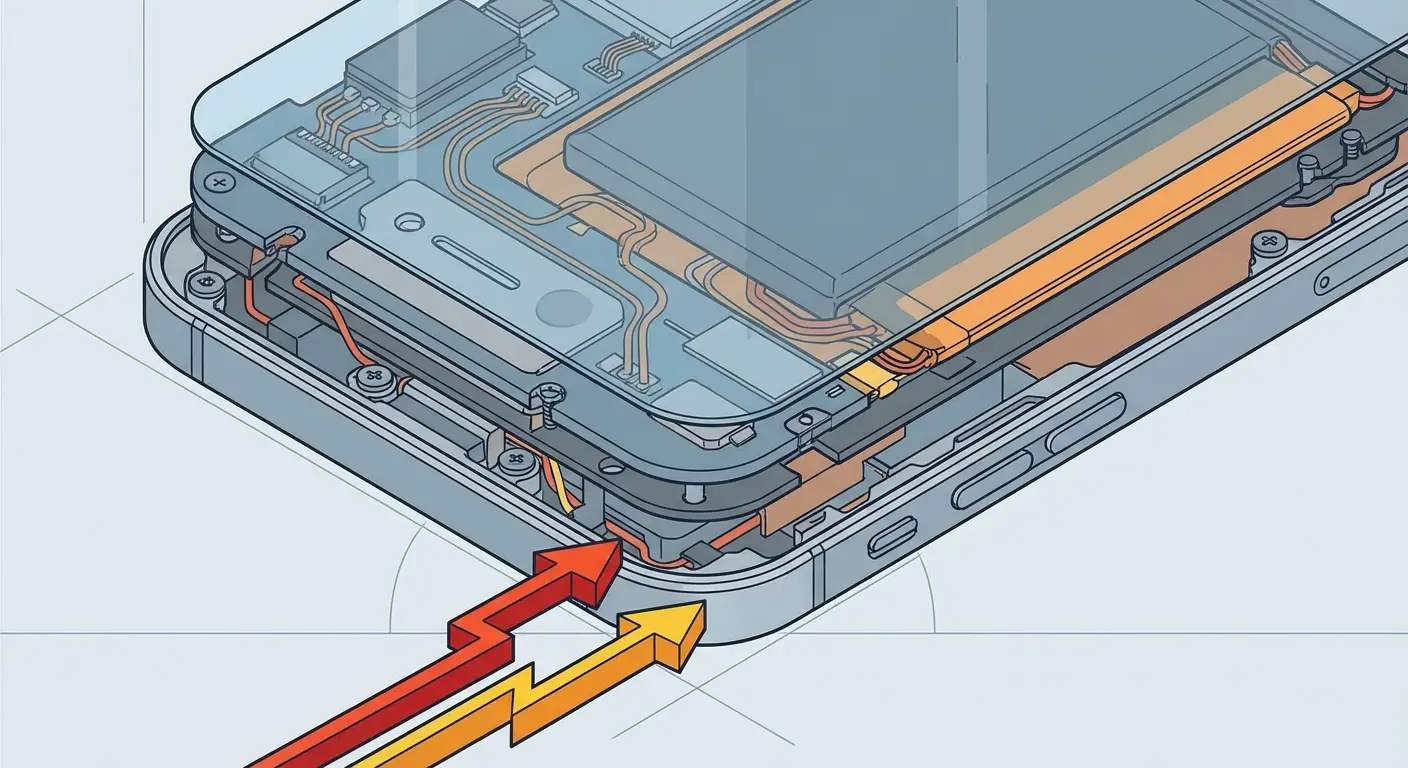
That concentrated force also travels through the frame to internal components. I've seen corner drops that cracked screens, bent frames, and dislodged battery connections at the same time. Three repair issues from one impact.
The Thinness Trade-off
Manufacturers could build phones that survive almost any drop. They'd be thicker, heavier, and less aesthetically appealing. Consumers say they want durability, but sales data shows we buy the thinnest, lightest option available.
This creates a durability floor below which manufacturers won't go, but it's not a particularly high floor. Your phone is engineered to survive average use cases, not worst-case scenarios. That's why cases exist: to raise the durability ceiling without forcing manufacturers to compromise on design.
Internal Shock Mounting (Or the Lack of It)
Some components inside your phone are shock-mounted or isolated to protect them from impacts. Others aren't because the space constraints don't allow it. Your camera module, for example, is often one of the least protected components despite being one of the most expensive.
A drop that cracks your screen might also jar your camera hard enough to misalign the lens elements or damage the optical image stabilization system. You won't notice this immediately. Your camera still opens, still takes photos. But image quality degrades, autofocus becomes slower, or you get that weird rattle when you shake the phone.
Screen repair doesn't address any of this. You're fixing the visible damage while secondary issues develop silently.
Repeated Impact Stress
Your phone's first drop is almost never its last. Each subsequent impact compounds the damage from previous ones, even if those previous drops didn't result in visible cracks.
There's a term for this: fatigue failure. Basically, it means your phone is slowly dying from repeated impacts. The frame develops micro-cracks that grow with each stress cycle. Adhesive bonds weaken bit by bit. Internal solder joints develop hairline fractures that eventually separate completely.
You can't reset this damage with a screen replacement. The structural degradation persists, which is why phones often seem to fall apart all at once after months of working fine post-repair. Battery swells, charging port fails, screen separates again. These aren't coincidences. They're cumulative damage finally reaching failure thresholds.
The Case for Prevention Over Repair
Repair is reactive. You're responding to damage that's already occurred, trying to restore functionality you've lost. Prevention is proactive, and it's way cheaper when you calculate total cost of ownership.
A quality protective case costs $50-80. Professional cracked phone screen repair costs $200-400 depending on your device. You'd need to prevent exactly one screen break over your phone's lifetime to come out ahead financially, and most people drop their phones multiple times per year.
Look, I know what this sounds like: case company tells you to buy cases. Shocking. But the math actually works here, and I'll show you.
What Actually Protects Your Phone
Protection isn't about wrapping your phone in rubber (though impact-absorbing materials help). It's about managing how force distributes during an impact and preventing direct contact between vulnerable surfaces and hard objects.
You need raised edges that keep your screen off the ground when the phone lands face-down. You need corner reinforcement that absorbs and disperses energy from the most common impact angle. You need a back that protects your camera lenses, which stick out on modern phones and are absurdly vulnerable.
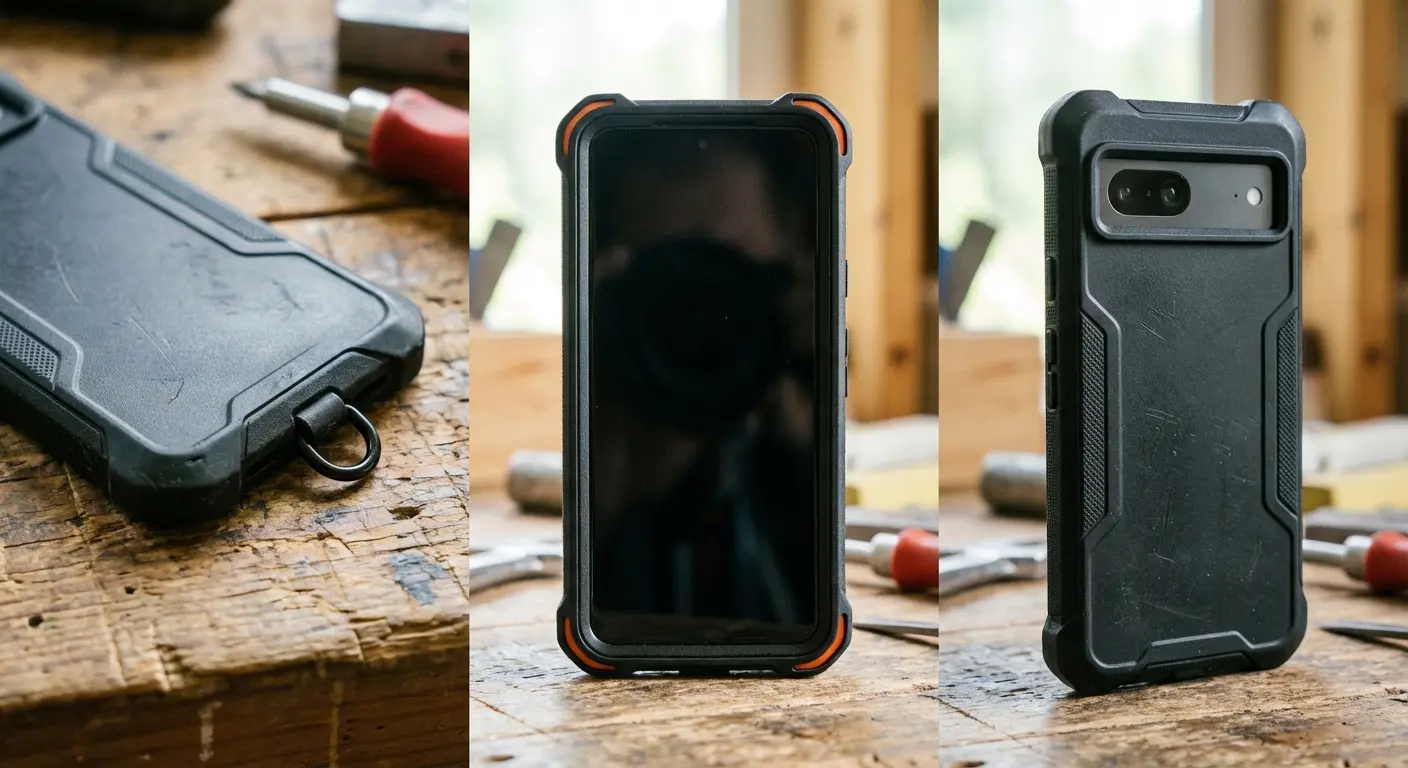
Material choice matters too. TPU (thermoplastic polyurethane) absorbs shock better than hard plastic. Polycarbonate provides structural rigidity that prevents frame flex. The best cases combine materials strategically rather than using a single material throughout.
The Magnetic Mount Advantage
Here's something most people don't consider: how you carry and use your phone affects drop frequency more than clumsiness does.
Fumbling for your phone in a cup holder, trying to prop it up on your dashboard, or holding it awkwardly while driving create drops.
Secure mounting eliminates an entire category of drop scenarios. We've engineered our Rokform cases with integrated magnetic systems that lock your phone to mounts in your car, on your bike, at your desk, wherever you need hands-free access. The magnets are strong enough (we're talking over 45 pounds of hold force on some mounts) that your phone isn't going anywhere, even on rough terrain or sudden stops.
You're not just protecting against drops. You're preventing them entirely in the situations where they're most likely to occur. That's a different approach than hoping a case will save you when physics takes over.
Drop Protection That Actually Means Something
"Military-grade" gets thrown around carelessly in case marketing, but it refers to specific testing standards (MIL-STD-810G, typically). Our cases meet and exceed these standards, which means they've survived repeated drops from six feet onto concrete without transmitting damaging force to the device inside.
That's not marketing speak. That's repeatable, testable performance.
Your phone's frame doesn't flex, your screen doesn't crack, and your internal components don't get jarred loose because the case is doing exactly what it's engineered to do: absorb impact energy and distribute it away from vulnerable points.
You're investing in engineering, not hoping that thick rubber will somehow defy physics. There's a difference, and it shows up the first time you drop your phone and pick it up completely unscathed.
What makes Rokform different comes down to our obsessive focus on real-world performance. We don't design cases based on what looks good in product photos. We design them based on drop test data, impact physics, and feedback from users who depend on their phones in extreme conditions: military personnel, first responders, outdoor athletes, construction workers.
Our RokLock™ twist-lock mounting system provides security that friction mounts and magnetic competitors can't match. The dual-material construction combines rigid polycarbonate with shock-absorbing TPU at precise stress points identified through testing. Raised bezels extend 2mm beyond your screen and camera, creating a protective buffer zone that keeps glass off surfaces during face-down drops.
We've tested our cases through thousands of drop cycles. Six feet onto concrete. Repeated corner impacts. Extreme temperature variations. The cases that make it to production have proven they can handle abuse that destroys unprotected phones in seconds.
Check out our full lineup of protective cases designed specifically for your device, because repairing your screen addresses yesterday's problem while proper protection prevents tomorrow's.
Resale Value Protection
Phones depreciate rapidly, but condition dramatically affects how much value they retain. A phone in pristine condition with no screen damage, no frame scratches, and no signs of repair can command 40-60% higher resale or trade-in value than the same model with visible damage.
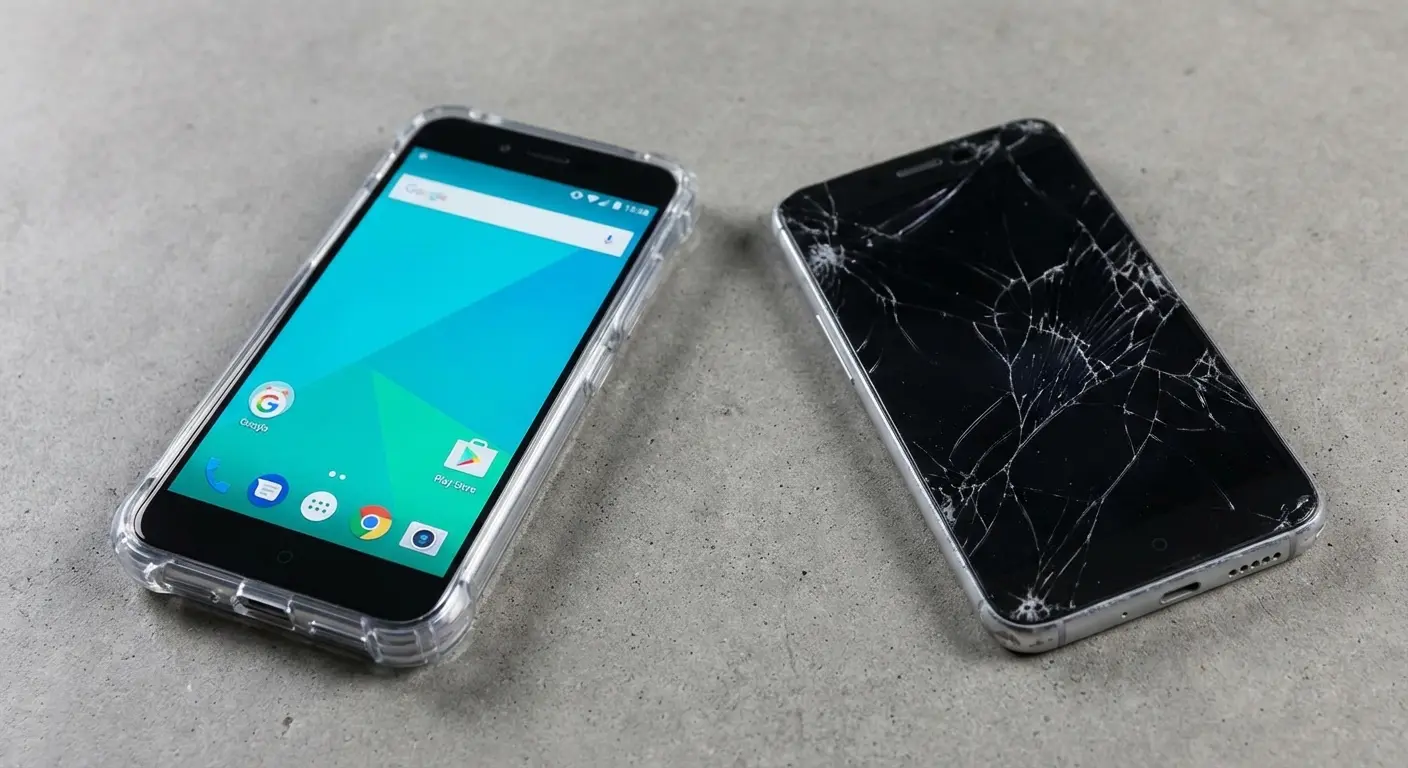
You're protecting your investment, not just your device. That $70 case might return $150-200 in preserved resale value, making it one of the better financial decisions you can make as a phone owner.
The Psychological Value of Confidence
There's an intangible benefit to knowing your phone is protected: you use it differently.
You're not paranoid about setting it down, you don't baby it constantly, and you don't experience that stomach-drop panic every time it slips from your hand.
This isn't about being careless. It's about using a tool the way it's designed to be used without constant anxiety about damage. Your phone is supposed to make your life easier. Worrying about breaking it does the opposite.
Final Thoughts
The cracked phone screen repair industry generates billions annually, which tells you everything you need to know about how we approach phone protection. We're spending enormous amounts of money fixing problems that proper prevention would eliminate.
Repairs don't restore your phone to its original condition. They can't reverse frame damage, they don't address internal component stress, and they often introduce new problems through parts quality issues or installation errors. You're paying for cosmetic improvement while the underlying vulnerabilities persist and worsen.
I'm not saying all repair shops are scamming you. Some genuinely don't know about frame damage, or they know but figure it's not their job to explain metallurgy to every customer. I get it. But the end result is the same: you're spending money on a solution that doesn't solve the problem.
Prevention costs less, works better, and eliminates the downtime, data risk, and frustration that repairs require. You're making a one-time investment that protects you for the entire time you own the device, rather than playing repair roulette every time you drop your phone.
The question isn't whether you can afford proper protection. It's whether you can afford not to have it, given what you now know about how inadequate repairs are.
Your phone is too expensive and too essential to leave its survival to chance.
Protect it properly from day one, or plan on getting very familiar with your local repair shop. Those are your options, and only one of them actually solves the problem.

