


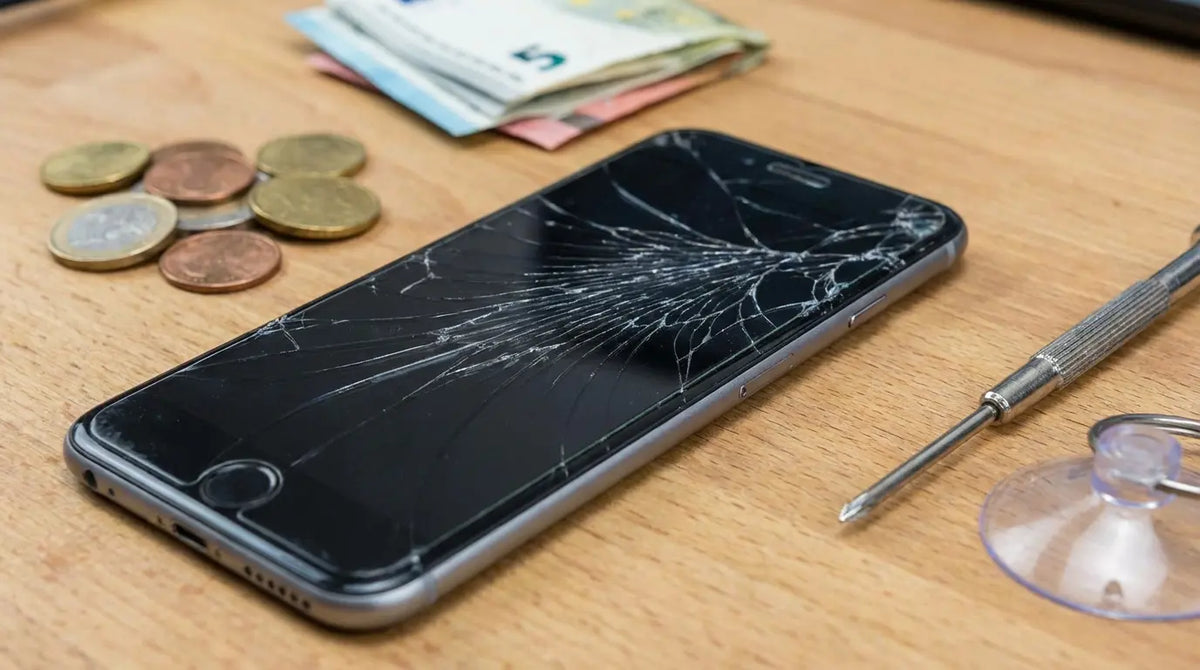
Look, I watched someone drop $279 on an iPhone screen repair last month. Three months later? Cracked it again. Now they're $558 deep on a phone worth maybe $400 used.
And they still think they're just unlucky.
Table of Contents
The Real Price You're Paying (It's Not What's on the Receipt)
Why Your Insurance Deductible Doesn't Make Sense Anymore
The Hidden Costs Most People Miss After Screen Repair
What Repair Shops Don't Tell You About "OEM" Parts
How Many Repairs Until You're Underwater?
The Math Nobody Wants You to Do
Prevention vs. Repair: The ROI Nobody Calculates
What Makes a Case Actually Protective (Not Just Marketing)
The Rokform Difference: Engineering That Prevents the Problem
The Short Version
Screen repairs run $129-579 depending on your model. But that's not what you're actually paying. Factor in the downtime, the lost resale value, the features that never work quite right again... you're looking at 2-3x that receipt.
Insurance? Mostly a scam. You'll pay almost as much in premiums and deductibles as you would out of pocket.
Third-party repairs? They kill Face ID, True Tone, and water resistance. Even when shops swear they're using "OEM parts."
And here's the fun part: most people crack their second screen within 18 months. So you get to do this whole dance again, except now you're underwater on a phone that's worth less every time you fix it.
A decent case costs $130. Once. Do the math.
The Real Price You're Paying (It's Not What's on the Receipt)
The Invoice Is Just the Starting Point
$279 for an iPhone 14 Pro screen. $329 for the newer model. Maybe $429 for the Pro Max.
That number sticks because it's concrete. It's what hits your credit card. But it's also the smallest part of what you're about to lose.
According to Allstate Protection Plans research, Americans spent $8.3 billion on screen repairs in 2023. That's nearly triple what we spent in 2018. The average repair now costs $302, and we're collectively hemorrhaging $149 billion on phone repairs and replacements.
These aren't just big numbers. They're showing you something: this is a systemic problem, not bad luck.
Think about the three days your phone's in the shop. You're juggling some backup device that doesn't have your authenticator apps. Your payment methods are gone. That one password you definitely saved somewhere? Good luck.
You're missing texts from clients. Explaining to everyone why you're suddenly unreachable. And if you bill hourly, you can actually calculate what this costs you.
My friend Sarah (freelance designer, always on deadline) cracked her iPhone 13 Pro on a Tuesday morning. The repair was $279. But she lost two full workdays because she couldn't access her Adobe login on the backup phone, couldn't respond to client proofs, couldn't use her actual design setup. At her $75/hour rate, that's $1,200 in billable hours she'll never get back.
Her "simple" cracked screen cost $1,479.
She could've bought a premium case every month for three years for less than that.

What Breaks Beyond the Glass
Your cracked screen isn't just ugly. It's a vulnerability.
Every swipe risks glass splinters in your fingertip. You're second-guessing whether to answer calls because the screen might not register. You're avoiding certain apps because the crack runs right through the interface you need.
And data security? That crack compromises the oleophobic coating, making your fingerprint patterns visible on the glass. If it's deep enough to affect the digitizer, your touch inputs might register wrong, potentially exposing passwords or PINs.
Then there's the stress cost. You know that low-grade anxiety every time you pull your phone out? That mental calculation of "can I afford to make this worse before I get it fixed?"
That's a tax you're paying daily.
The Resale Value Nobody Mentions Upfront
Even after you pay for the repair, your phone is worth less.
A device with repair history sells for 15-30% less than one with a clean record. Buyers know. They ask. And even if you got the screen replaced with genuine parts, the repair shows up in diagnostics.
You're paying $300 to fix a problem that'll still cost you another $150-300 when you sell or trade in.
The financial hit is permanent. You're just paying for it on an installment plan.
Why Your Insurance Deductible Doesn't Make Sense Anymore
Running the Numbers on "Coverage"
AppleCare+ costs $199 upfront (or $9.99/month). Screen repair deductible? $29.
Sounds reasonable until you realize you're paying $199 for the privilege of paying $29. You break even only if you crack your screen exactly once and nothing else goes wrong.
You've saved $51. Over two years. While adding complexity to your life.
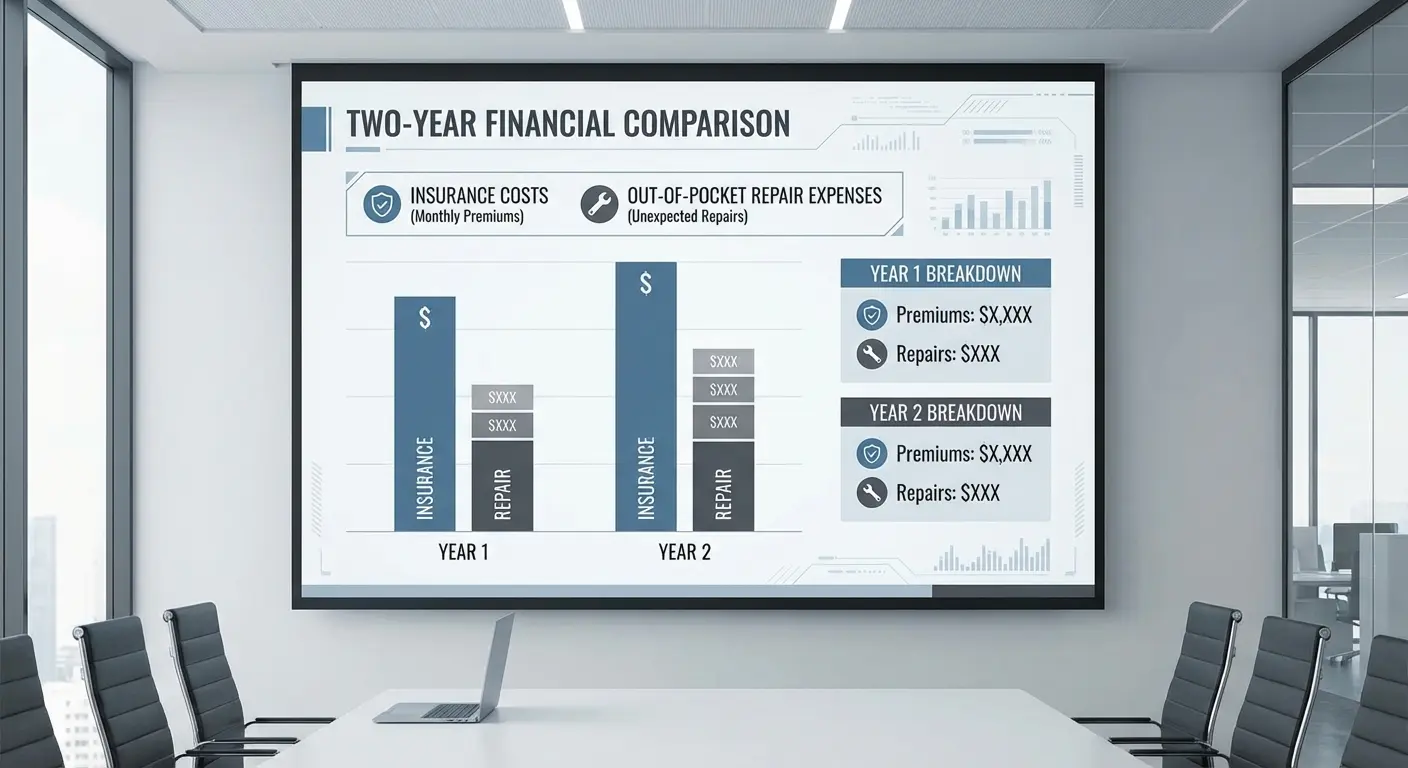
Carrier insurance is worse. You're paying $12-18 monthly (that's $288-432 over two years) for deductibles that still run $99-249. The math doesn't work unless you're breaking multiple screens per year, and at that point we need to talk about your relationship with gravity.
Insurance Type |
Upfront/Monthly Cost |
Screen Repair Deductible |
2-Year Total Cost |
Out-of-Pocket Repair |
Savings (1 Repair) |
|---|---|---|---|---|---|
AppleCare+ (Upfront) |
$199 |
$29 |
$228 |
$279 |
$51 |
AppleCare+ (Monthly) |
$9.99/mo |
$29 |
$269 |
$279 |
$10 |
Carrier Insurance (Average) |
$15/mo |
$150 |
$510 |
$279 |
-$231 |
No Insurance |
$0 |
N/A |
$279 |
$279 |
$0 |
That negative $231 on carrier insurance? That's you paying extra for the privilege of filing a claim.
The Claims That Come Back to Haunt You
Filing isn't free, even when you're "covered."
Some carriers limit you to 2-3 claims per year. Others jack up your premiums after claims (yes, phone insurance works like car insurance now). You might not see the rate hike immediately, but it's coming at renewal.
Third-party plans often cap total lifetime claims. You might have $2,500 in coverage. Sounds generous until you file two screen repairs and one battery replacement. Now you're at $800 of your lifetime limit with years of ownership ahead.
And the replacement device gamble. Many insurance claims don't repair your phone. They send a refurb. You lose your data if you didn't back up. You get a device with unknown history. And you're hoping the refurb doesn't have its own issues.
Spoiler: sometimes it does.
What You're Insuring Against
Insurance makes sense for catastrophic loss. Theft. Total device failure. Water damage that bricks everything.
For screen repairs? You're prepaying for a discount that might never materialize.
The insurance model works when risk is unpredictable and cost is devastating. Screen damage is neither. It's common enough to prevent, and the repair cost, while annoying, won't bankrupt most people.
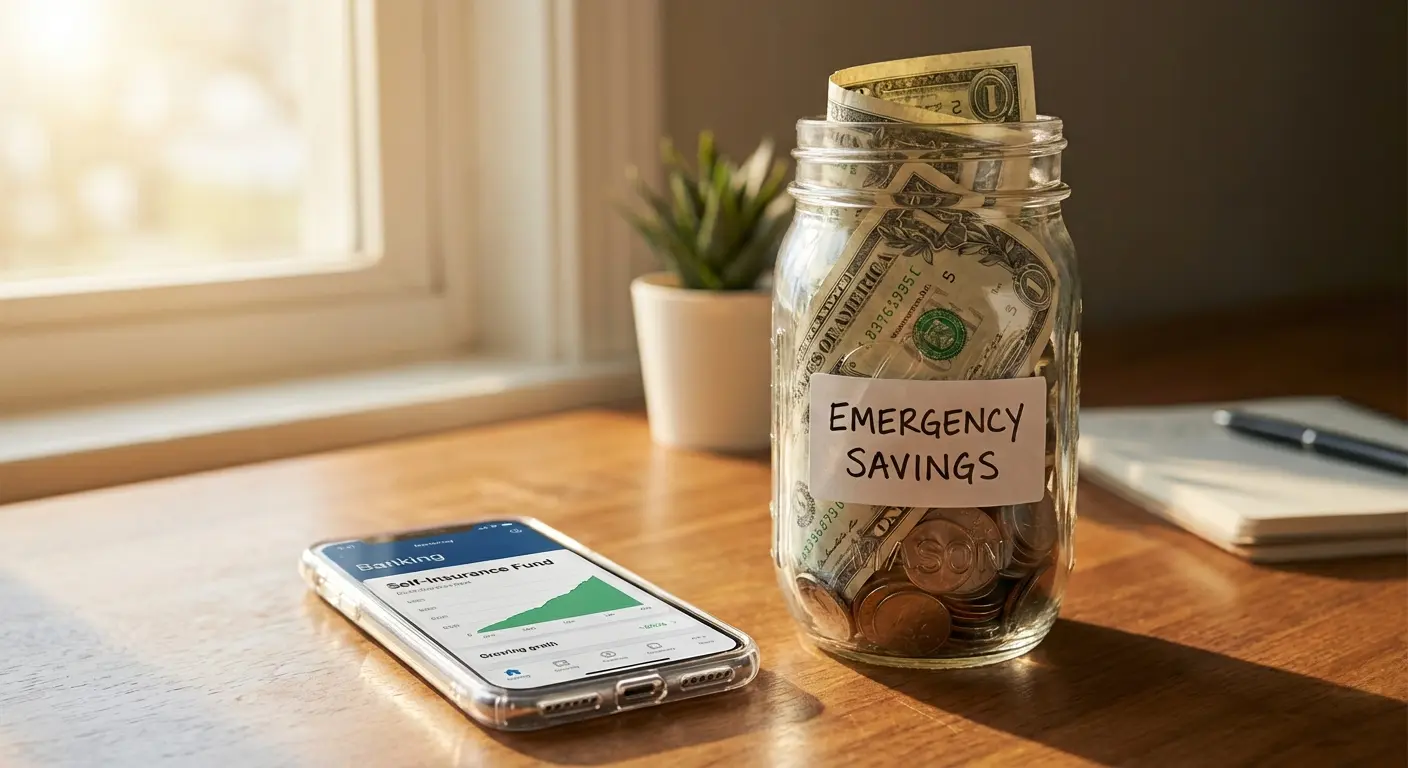
Just put that monthly premium in a savings account. After 12 months of not breaking your screen, you've got $120-216 saved. That's half your repair cost already covered with no deductibles, no claim limits, no strings.
The Hidden Costs Most People Miss After Screen Repair
Features That Don't Come Back
You get your phone back. The crack is gone. Everything looks perfect.
Then Face ID starts acting weird. It works, but slower. Fails more often in certain lighting. The repair shop didn't mention that replacing the screen can mess with the TrueDepth camera, especially if the replacement wasn't calibrated right.
True Tone might be completely gone. That feature that adjusts your display's color temperature based on ambient light? It requires specific calibration data tied to your original screen. Third-party replacements can't replicate it. Even some authorized repairs lose this if the technician doesn't have the right equipment.
Your water resistance? Compromised. That IP68 rating required factory-level precision (seals, adhesives, controlled environments). Repair shops try their best, but they're not replicating that. Light rain? Probably fine. Drop it in a pool? You're gambling now.
Post-Repair Feature Verification Checklist
After getting your screen repaired, test these features within the warranty period:
Face ID recognition speed and accuracy in various lighting conditions
True Tone display functionality (Settings > Display & Brightness)
Touch sensitivity across all screen areas, especially corners
Haptic feedback strength and consistency
Proximity sensor during phone calls
3D Touch or Haptic Touch responsiveness
Screen brightness uniformity (test with white background)
Oleophobic coating effectiveness (water beading test)
Edge seal integrity (inspect for gaps or dust intrusion)
Diagnostic check for genuine parts warning messages
The Touch Experience You Can't Quite Place
Something feels off, but you can't articulate it.
The touch response is slightly delayed. Or overly sensitive in one corner. Or it ghost-touches occasionally, registering inputs you didn't make. These issues come from digitizer calibration problems or slight misalignment during installation.
Haptic feedback might feel different. The Taptic Engine relies on precise spacing with the display. If the replacement screen sits even fractionally different, vibrations feel weaker or less defined.
You probably won't return to the shop for these issues because they're not "broken" enough to justify another trip.
But you'll live with a degraded experience for the entire remaining life of your device.
That's a cost you're paying daily. Just not in dollars.
The Follow-Up Appointments Nobody Plans For
Optimistically, you budget for one repair visit.
Reality is messier.
Maybe the replacement screen has a dead pixel the shop didn't catch. Maybe the adhesive wasn't applied evenly and dust is getting in along the edges. Maybe the proximity sensor doesn't work right and your screen stays on during calls, leading to accidental face-button-presses.
Each follow-up costs you time. You're driving back, waiting while they troubleshoot, potentially leaving your phone again.
Some issues don't appear immediately. That touch sensitivity problem might not show up until two weeks later. By then, you're questioning whether it's worth going back or if you should just live with it.
The phone screen repair cost extends way beyond that initial invoice. It bleeds into your time, your patience, your daily device experience.
What Repair Shops Don't Tell You About "OEM" Parts
The OEM Label Doesn't Mean What You Think
Repair shops love saying "OEM quality" because it sounds official without promising anything legally binding.
Genuine OEM parts come directly from the manufacturer (Apple, Samsung, etc.) through authorized channels. They're identical to what's in your phone from the factory. They're also expensive and tightly controlled. Most independent shops can't access them.
What they call "OEM" is usually one of three things: refurbished screens pulled from broken phones, aftermarket parts made to "similar specs," or gray-market components that fell off a truck somewhere.
Quality? Total lottery.
According to iFixit's screen repair data, their Screen Fix Kits for iPhone 12 and newer average $184, while kits for iPhone 11 and older run about $81. You can save $170 compared to Apple's service with their "hard" OLED option, or $200 with LCD replacements.
Those price differences? They're quality differences. And most repair shops don't explain which tier you're actually getting when they quote "OEM quality." Doing it yourself changes the math, and I listed the phone repair tools you would need.
Refurbished screens might have micro-scratches, weakened digitizers, reduced brightness. Aftermarket parts might use cheaper materials that yellow over time. Gray-market parts might be perfect, or they might be factory rejects that didn't pass quality control.
You won't know until months later when things start failing.

Parts Pairing and the Repair Trap
Apple's been aggressive about parts pairing since iPhone 12. Many components are cryptographically paired to your phone's logic board.
Replace the screen with a non-paired part? You'll get persistent warnings in settings. Some features get disabled entirely. Even if you use a genuine Apple screen from another iPhone, it won't work right without Apple's proprietary software to complete the pairing.
Independent shops are stuck. They can install the part, but your phone knows it's not the original. You'll see "Unable to verify this iPhone has a genuine Apple display" every time you unlock.
Some people ignore this. Others find it maddening enough to pay the premium for authorized repair just to make the notification disappear.
The pairing system is Apple's way of controlling the repair ecosystem (and the revenue). But it also serves a security function by preventing malicious actors from installing compromised components that could intercept data.
Whether you see this as consumer protection or vendor lock-in depends on your perspective. Either way, it affects your options.
Longevity Questions Nobody Can Answer
What repair shops can't tell you: how long will this replacement screen last?
Factory screens are tested for specific durability standards. They're designed to last 3-5 years. Replacement parts? Anyone's guess.
Some aftermarket screens fail within six months. The oleophobic coating wears off faster. The backlight develops uneven brightness. The digitizer becomes less responsive.
You're potentially looking at a second repair sooner than you'd expect, compounding your costs.
Even high-quality replacements might not match the original's longevity. You're downgrading your device's expected lifespan, which affects total cost of ownership even if you can't see it in the immediate repair bill.
How Many Repairs Until You're Underwater?
The Second Crack Is Statistically Likely
Research from Allstate Protection Plans shows 31% of smartphone owners damaged their phone in the past year. Damaged screens account for 67% of all phone accidents by far the most common type of damage. The study also found that 27% of American smartphone owners would initiate screen repairs within a day, demonstrating how critical these devices have become.
But here's what matters: people who crack their screen once are way more likely to crack it again. Within 18 months, about 40% of people who've had one screen repair will need another.
This isn't about carelessness. It's about behavior patterns that don't change. If you cracked your screen because you frequently use your phone while walking, you're probably still doing that. If you broke it because you set it on your lap and forgot when you stood up, that habit likely persists.
First repair: $279. Second repair: another $279. You're now $558 deep into a device worth maybe $400-500 on the resale market.
You've spent more repairing it than it's worth to anyone else.
Diminishing Returns on Repeat Repairs
The first screen replacement compromises water resistance. The second stresses the frame and adhesive points even more. By the third repair, you're rebuilding a phone from parts, and structural integrity is questionable.
Features degrade incrementally. True Tone was lost in repair one. Face ID got slower after repair two. By repair three, you're dealing with multiple compromised functions, and the experience is noticeably worse than a device that's never been opened.
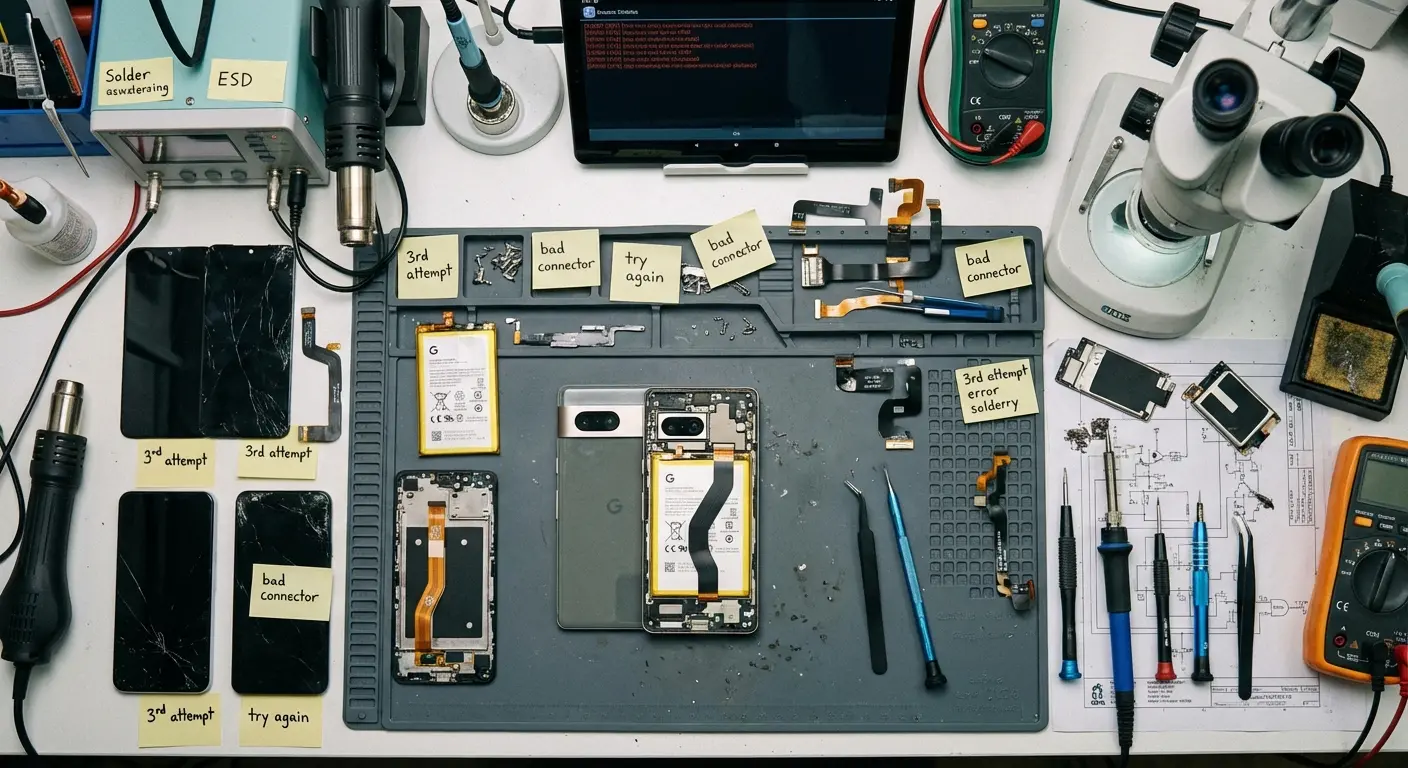
You're also facing increased failure risk. Each time the device is disassembled, there's a chance of damaging other components. A tech might accidentally disconnect a cable, crack the back glass, strip a screw. These complications add cost and time, and they're more likely with each subsequent repair.
Mike kept his iPhone 12 Pro for three years. Cracked the screen twice ($279 each time). Total repair spending: $558. When he went to trade it in, they offered $320. A pristine 12 Pro would've fetched $450-500.
His actual cost: $558 in repairs + $130-180 in lost resale value = $688-738.
He could've bought a new mid-range phone for that.
The Upgrade Math You're Avoiding
At some point, you're better off upgrading.
If your phone is worth $500 and you've spent $558 on repairs, you're underwater. You could've put that money toward a newer device with better features, longer software support, and no damage history.
The break-even calculation is simple: total repair costs + current device value vs. cost of replacement device. Once your repairs exceed about 50% of your phone's current value, you're in questionable territory financially.
Most people don't do this math until they're already too deep. They think of each repair as an isolated incident rather than part of cumulative cost. By the time they realize they're underwater, they've already spent money they can't recover.
The Math Nobody Wants You to Do
The Five-Year Device Ownership Model
You buy a flagship phone for $1,000. You plan to keep it 3-5 years.
Most people stop their financial planning right there. They've accounted for the purchase price, maybe a monthly carrier payment. Everything else is "unexpected" even though screen damage affects 29% of users annually.
So what does it actually look like over five years?
You crack your screen once (conservative estimate). That's $279. Your resale value drops 20% because of repair history. On a phone that would've sold for $350, you're losing $70. Total cost of that single crack: $349.
Now run it with two cracks over five years (more realistic). You're at $558 in repairs plus $70 in lost resale value. That's $628 in damage costs on top of your original $1,000.
Your actual cost of ownership isn't $1,000. It's $1,628.
And you've been using a compromised device for significant portions of that timeframe.
Ownership Scenario |
Device Cost |
Repair Costs |
Lost Resale Value |
Total 5-Year Cost |
Cost Per Year |
|---|---|---|---|---|---|
No Protection, 0 Cracks |
$1,000 |
$0 |
$0 |
$1,000 |
$200 |
No Protection, 1 Crack |
$1,000 |
$279 |
$70 |
$1,349 |
$270 |
No Protection, 2 Cracks |
$1,000 |
$558 |
$70 |
$1,628 |
$326 |
Premium Case ($130), 0 Cracks |
$1,000 |
$0 |
$0 |
$1,130 |
$226 |
Premium Case ($130), 1 Prevented Crack |
$1,000 |
$0 |
$0 |
$1,130 |
$226 |
Protection Investment vs. Repair Spending
A quality case costs $50-100. Screen protectors run $10-30.
You invest $130 upfront for comprehensive protection. That case prevents the first screen crack. You've already broken even compared to the $279 repair you didn't need.
But the savings compound. Your phone maintains water resistance. Face ID keeps working perfectly. True Tone stays calibrated. Your resale value remains 20% higher. When you sell after five years, that's an extra $70 in your pocket.
Total financial benefit of the $130 protection investment: $279 (avoided repair) + $70 (preserved resale value) = $349.
ROI: 268%.
Even if you're skeptical about preventing 100% of damage, the math still works. If your case prevents just one of two potential cracks, you're still ahead financially. And you're using a fully functional device the entire time instead of dealing with degraded features post-repair.
The "I'll Just Be Careful" Fallacy
We've all said it. We all mean it.
The data shows it doesn't work.
Being careful reduces risk but doesn't eliminate it. You can't control every variable. Someone bumps into you while you're holding your phone. It slides off a table because of vibration. Falls out of your pocket getting out of a car.
The confidence that you'll be the exception is expensive. You're self-insuring based on optimism rather than probability. That's not a financial strategy. That's hope dressed up as planning.
Even if you're more careful than average, you're still exposed to environmental factors beyond your control. One moment of distraction, one unexpected jostle, one slippery surface, and you're facing a $279 bill you convinced yourself you wouldn't need to pay.
Time Value of Money (The Part Everyone Ignores)
That $130 you spend on protection today costs less than the $279 you'll spend on repair 18 months from now.
Inflation alone means future dollars are worth less. If you're carrying credit card debt, that repair charge accrues interest. If you have emergency savings, pulling $279 out for a repair means that money isn't earning returns elsewhere.
The opportunity cost of repair spending is real. That $279 could've been invested, saved, or used for something that improves your life rather than restoring your phone to the condition it should've been in all along.
Protection spending is a one-time investment that prevents ongoing financial leakage. Repair spending is reactive, usually unexpected, and often happens at inconvenient times when you're less able to absorb the cost.
Prevention vs. Repair: The ROI Nobody Calculates
When you're thinking about the total value of prevention, understanding how phone cases protect your phone helps you evaluate whether your current protection strategy delivers real value.
What You're Buying With Protection
Prevention isn't about avoiding repair costs. It's about maintaining the device experience you paid for.
Your phone's features work as designed for its entire lifespan. Face ID responds instantly. True Tone adjusts naturally. Water resistance stays intact. You're getting the full value of your original purchase instead of accepting a degraded version after repair.
You're also buying time. No appointments to schedule. No backup and restore processes. No days without your primary device. No follow-up visits when something isn't quite right.
And there's the psychological benefit. You're not treating your phone like a fragile artifact. You can use it fully without constant anxiety about damage. You can hand it to someone else without worry. You can set it down without calculating whether the surface is safe enough.
Resale Value Preservation as Investment Return
A phone in pristine condition with no repair history commands premium pricing in the secondary market. Buyers pay more because they're getting a device with verifiable integrity and full functionality.
The difference between "good condition" and "excellent condition" in resale listings is typically 15-25%. On a $400 resale value, that's $60-100. On a $600 device, it's $90-150.
If you upgrade every two years, this matters. Over a decade of ownership cycles (five devices), the cumulative resale value difference could be $300-500. That's real money that directly offsets your protection investment across multiple devices.
Protection also expands your selling options. You can sell privately for top dollar instead of accepting lowball trade-in values from carriers who factor in refurbishment costs. That flexibility has monetary value that's hard to quantify but easy to appreciate when you're negotiating.
The Downtime Cost in Professional Context
If you use your phone for work, damage isn't an inconvenience. It's lost income.
You're potentially missing client calls. Can't access two-factor authentication for critical accounts. Unable to process mobile payments. Out of sync with your calendar and communication systems.
For freelancers, contractors, or anyone who bills clients, this is directly measurable lost income. For salaried employees, it's reduced productivity that affects performance reviews and advancement.
Even if you have a backup device, you're operating at reduced capacity. You don't have all your apps configured. Your muscle memory is off. You're spending mental energy on workarounds instead of focusing on your work.
The repair appointment itself costs work time. You're either taking time off or trying to squeeze it into lunch breaks, adding stress to an already frustrating situation.
Total Cost of Screen Damage Calculator
Use this framework to calculate your true exposure:
Direct Costs:
Screen repair quote: $______
Travel to/from repair shop (mileage + time): $______
Replacement device rental/purchase (if needed): $______
Indirect Costs:
Lost productivity (hours × hourly value): $______
Missed business opportunities: $______
Data recovery services (if needed): $______
Long-Term Costs:
Reduced resale value (15-30% of current value): $______
Compromised features value (estimate annual): $______
Follow-up repair visits: $______
Total Actual Cost: $______
Compare to:
Premium protective case investment: $______
Potential savings: $______
Device Longevity and Environmental Impact
Protected phones last longer. This isn't just financial, it's environmental.
Manufacturing a new smartphone requires rare earth minerals, energy-intensive production processes, global shipping networks. Extending your device's usable life by even one year reduces your environmental footprint measurably.
You're also avoiding the e-waste generated by premature upgrades. Phones replaced due to damage (rather than obsolescence) contribute to the 50+ million tons of electronic waste generated globally each year.
This might not affect your personal ROI calculation, but it's part of the total value equation. If environmental impact matters to you, protection becomes an investment in sustainability, not just device preservation.
What Makes a Case Actually Protective (Not Just Marketing)
For those evaluating protective options, exploring the most protective phone cases on the market helps you understand what engineering features prevent damage versus what's marketing language.
The stakes for screen protection have never been higher, especially for foldable devices. According to recent reporting on Samsung's Galaxy Z TriFold (Find Articles), repairing the main folding screen in Korea costs between 1.657 million and 1.834 million won (approximately $1,123 to $1,243), nearly the equivalent of purchasing a new Galaxy S25 Ultra. Even with Samsung's one-time 50% discount, owners are still paying flagship-level money for a single repair. This extreme cost reality makes protective engineering not just smart, but financially essential for anyone investing in premium devices.
Impact Physics and Material Science
Drop protection isn't about thickness. It's about energy dissipation.
When your phone hits the ground, impact generates force that needs to go somewhere. A protective case works by absorbing and distributing that energy across a larger area and longer timeframe, reducing peak force that reaches your device.
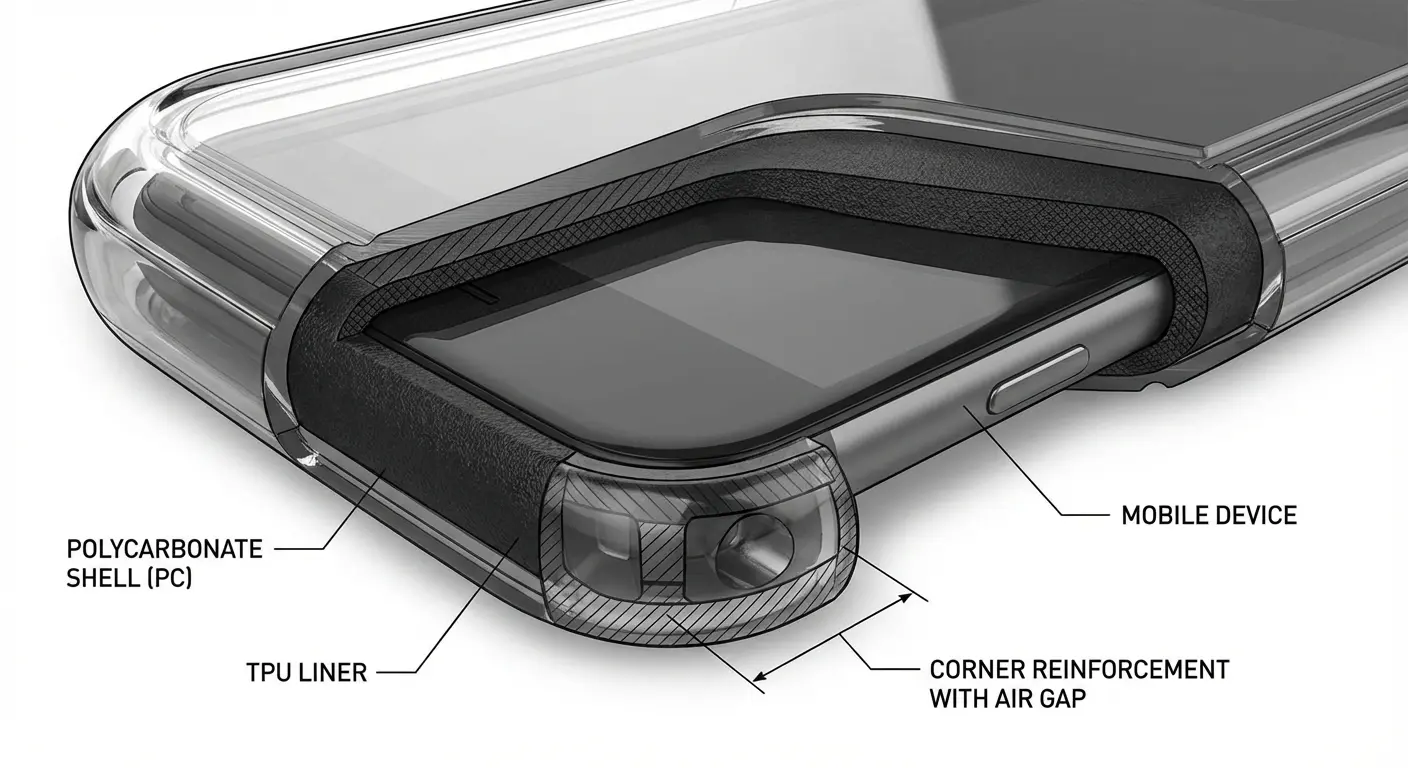
Materials matter enormously. TPU (thermoplastic polyurethane) flexes on impact, absorbing energy through deformation. Polycarbonate provides rigid structure that prevents case collapse. The best cases use multiple materials in strategic layers, each serving a specific function in energy management.
Air gaps between case and phone create cushioning space. Ribbing and texturing on the interior increase the distance impact force must travel. Corner reinforcements target the impact points that matter most (corners hit first in about 70% of drops).
Military Drop Standards vs. Marketing Claims
You'll see "military-grade protection" everywhere. Most of it means nothing.
The actual military standard (MIL-STD-810G) requires devices to survive 26 drops from four feet onto concrete at different angles. That's a specific, repeatable test protocol with pass/fail criteria.
Many cases claim military-grade protection without being tested to this standard. They're using the language for marketing without engineering to back it up. Real certification costs money and requires documentation. Companies that have it usually provide test details. Those that don't rely on vague language and impressive-sounding numbers.
Drop height matters less than you think. A case that survives six feet onto carpet isn't necessarily better than one tested at four feet onto concrete. Surface hardness and angle of impact affect outcomes more than height alone.
The Features That Matter
Raised bezels around screen and camera are non-negotiable.
Your screen needs at least 1-2mm of clearance so it doesn't contact surfaces when face-down. Camera lenses need similar protection. Without these raised edges, you're relying on perfect flat surfaces and luck.
Port covers seem annoying until you need them. They prevent dust, lint, and moisture intrusion. They maintain your phone's water resistance by sealing potential entry points. The minor inconvenience of flipping open a port cover is nothing compared to dealing with charging port failures.
Grip texture reduces the primary cause of drops: slipping out of your hand. Smooth cases look sleek but offer minimal friction. Textured surfaces, especially on sides and back, improve retention during normal use.
Button responsiveness separates good cases from cheap ones. Buttons should provide tactile feedback without requiring excessive force. Mushy buttons or overly stiff ones degrade user experience and make you less likely to keep the case on.
The Rokform Difference: Engineering That Prevents the Problem
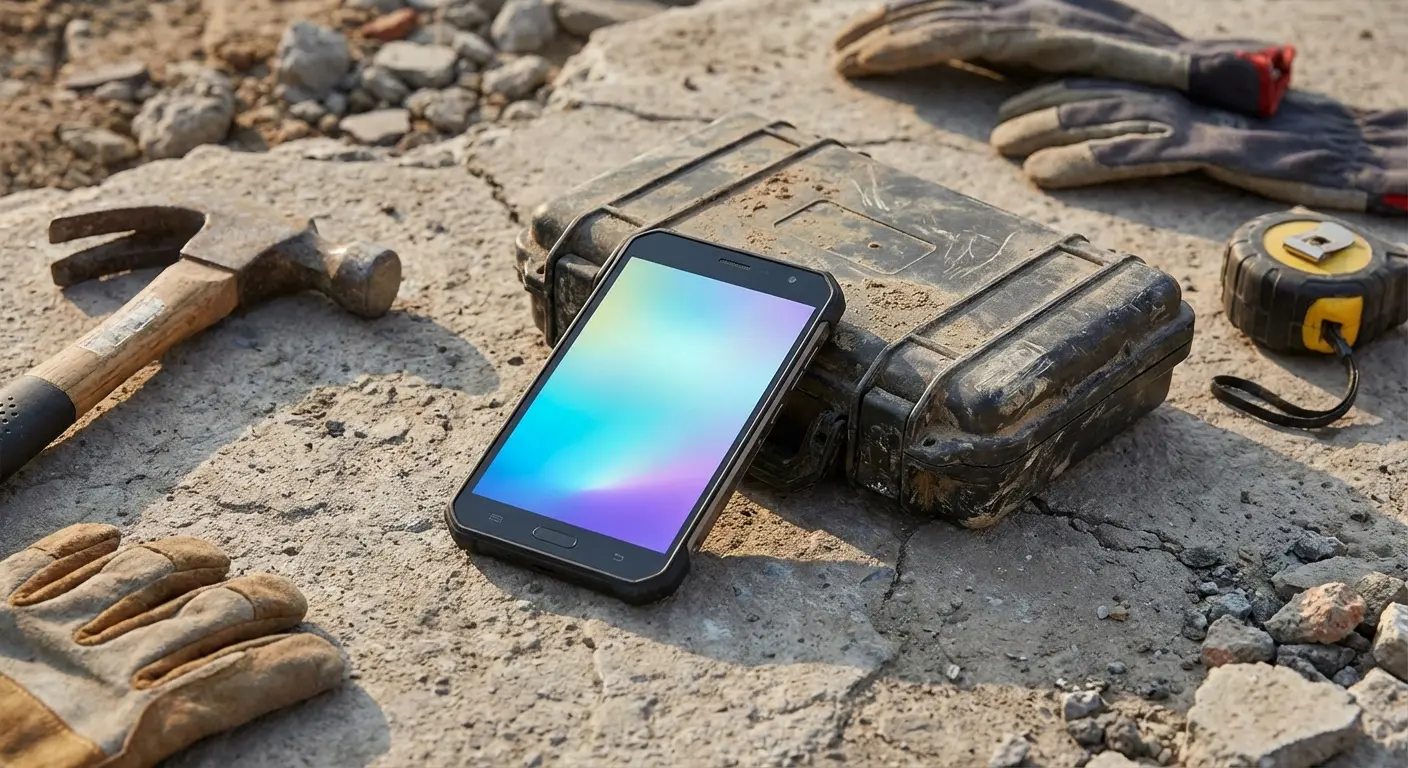
For professionals who need reliable protection in demanding environments, our guide to the best phone cases for construction workers demonstrates how Rokform's engineering meets real-world challenges.
Screen repair economics are shifting globally, with some manufacturers attempting to make repairs more accessible. Samsung recently revealed spare part costs for the Galaxy S26 series in India (SammyGuru), showing screen repair prices that are lower than the Galaxy S24 series. The Galaxy S26 Ultra screen repair costs approximately INR 14,760 (~$160), while the S26 and S26+ cost INR 10,340 (~$112) and INR 7,640 (~$83) respectively. While these prices don't include taxes or service charges and vary by region, the trend suggests manufacturers recognize the repair cost burden. However, even "reduced" repair costs of $100-160 still exceed the one-time investment in premium protection that prevents the damage entirely.
Multi-Layer Protection Architecture
We've spent 2,000 words talking about why screen repair costs more than you think and why prevention is the only math that makes sense.
Rokform cases are engineered around that exact principle. The Rugged series uses three-layer construction: a polycarbonate shell for structural rigidity, a TPU liner for impact absorption, and reinforced corners with additional cushioning at the most vulnerable points.
This isn't marketing language. It's materials engineering applied to the specific problem of drop protection. The polycarbonate prevents case deformation that would allow impact force to reach your device. The TPU layer flexes and absorbs energy. The corner reinforcements handle the 70% of drops that hit corners first.
Every Rokform case is tested to MIL-STD-810G (the actual military standard, not the marketing version). That means 26 drops from four feet onto concrete. Documented. Repeatable. Verified.
James, a construction supervisor, dropped his iPhone 14 Pro from scaffolding (a 12-foot fall onto concrete). His Rokform Rugged case absorbed the impact through its multi-layer system: the polycarbonate shell distributed the initial force, the TPU liner flexed to extend deceleration time, and the reinforced corners took the brunt of ground contact. His phone emerged without a scratch. The repair he avoided: $329 for the screen, plus potential internal damage that could've added another $200-400. His $89 case paid for itself in one catastrophic drop, and he's still using the same phone two years later with zero repair history and full resale value intact.
The Magnetic Mounting System That Prevents Drops
Most case manufacturers miss this: the best protection is preventing the drop entirely.
Rokform's integrated magnetic mounting system means your phone locks securely to mounts in your car, on your bike, at your desk, or anywhere you've installed a Rokform mount. Your phone isn't sitting loose on a surface where vibration or movement can knock it off. It's magnetically secured.
This matters more than people realize. How many screens break because phones slide off car seats during turns? Or fall off gym equipment during workouts? Or get knocked off tables by pets, kids, or elbows?
The magnetic system eliminates an entire category of drop scenarios. Your phone stays where you put it until you deliberately remove it. That's prevention engineering, not just damage mitigation.
Protection That Doesn't Compromise Functionality
The problem with most ultra-protective cases is they turn your phone into a brick.
Rokform cases maintain slim profiles despite serious protection. Buttons remain responsive. Ports are accessible. Wireless charging works (the magnets are specifically designed not to interfere). You're not sacrificing usability for protection.
The cases are designed for real-world use. Textured grip surfaces keep the phone in your hand. Precise cutouts ensure your camera captures photos without case interference. Raised bezels protect your screen without making edge swipes difficult.
You're getting the device experience you paid for, with protection that prevents the $279+ repair costs we've been dissecting.
If you're tired of the repair cycle, if you've done the math and realized prevention is the only strategy that makes financial sense, explore Rokform's protective cases here. The investment pays for itself the first time you drop your phone and walk away without a crack.
Final Thoughts
You've been thinking about phone screen repair cost wrong.
The invoice isn't the cost. The lost features, the compromised resale value, the downtime, the follow-up appointments, the second and third repairs... that's the actual cost. And it's way higher than the number on the repair shop receipt.
Insurance doesn't solve this. It spreads cost across monthly payments while adding deductibles and restrictions. Being careful isn't a strategy. It's optimism masquerading as financial planning.
The only approach that makes mathematical sense is preventing the damage entirely. Quality protection costs $50-130 upfront and delivers 200-300% ROI by avoiding even a single repair. It preserves your device's functionality, maintains resale value, and eliminates the stress and time costs of damage management.
You're going to protect your investment or pay to repair it. The choice is whether you spend $130 once or $279+ repeatedly.
The math is clear. Your call.

