


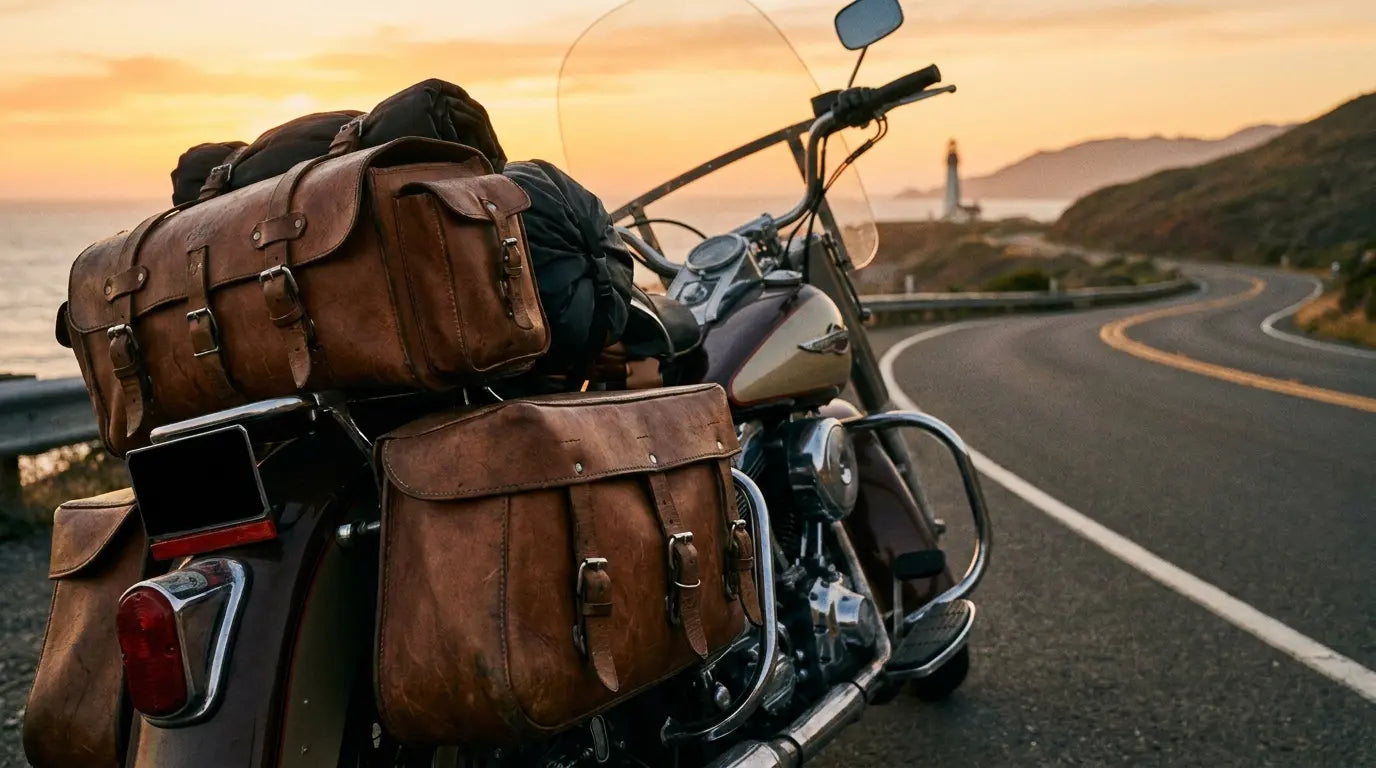
I've been riding for over a decade, owned six bikes, and tested way too many saddlebag systems trying to find ones that don't suck. First time I hit 85 mph with throw-over bags, they started bouncing like they were trying to escape. Tightened the straps. Bounced again twenty miles later. That's when I switched to hard-mount and learned that not all saddlebags are created equal.
This breakdown covers 17 options that solve real problems: hard-mount bags for stability, quick-release for flexibility, weatherproof for commuting in actual weather. Each section covers different mounting styles because what works for a Harley Touring bike doesn't work for a sport bike, and what works for weekend rides doesn't work for daily commuting.
I've grouped these by mounting style and use case, not by brand or price. If you know you need hard-mount stability, start there. If you're switching between bikes, jump to quick-release. If you ride year-round in the rain, go straight to weatherproof options.
Table of Contents
-
Hard-Mount Bags (The Permanent Option)
Viking Bags Large Motorcycle Saddlebags
Harley-Davidson Leather Saddlebags
Indian Motorcycle Thunder Stroke Hard Bags
Dowco Iron Rider Saddlebags
Willie & Max Revolution Series
Saddlemen Cruis'n Slant Saddlebags
-
Quick-Release: For Multi-Bike Owners
SW-MOTECH Legend Gear System
Givi EA101B Easy-T Range
Nelson-Rigg CL-950 Deluxe
Kemimoto Universal Throw-Over Bags
Dowco Rally Pack Saddlebags
Viking Bags Quick Release System
-
Weatherproof Bags You Can Actually Trust
Kriega Saddlebag Duo System
Wolfman Enduro Dry Saddlebags
Mosko Moto Reckless 40L
Ortlieb Motorcycle Panniers
Giant Loop Siskiyou Panniers
TL;DR
Hard-mount bags don't move. That's the whole point. But you're drilling into your bike's frame and adding permanent hardware.
Quick-release makes sense if you've got multiple bikes or you're pulling bags off every time you park. Installation is easier, removal is faster, but they're not as stable at speed.
Weatherproof matters more than capacity if you commute year-round. Water-resistant isn't waterproof. Learn the difference before your laptop gets soaked.
"Universal fit" usually means extra hardware and zip ties. Leather needs maintenance or it cracks. Soft bags with internal frames beat purely soft bags every time.
Mounting height changes handling more than weight does. Hard bags are harder to steal but heavy. That's the trade.
Hard-Mount Bags (The Permanent Option)
Look, you need storage that actually stays put when you're doing 80. No swaying in corners, no stopping every twenty miles to tighten straps. Hard-mount systems solve this problem completely, but you're also committing to permanent mounting hardware on your bike.
If you've dealt with the alternative, you know why these exist. Bags that shift mid-ride, straps that loosen, gear that scrapes against exhaust pipes because something moved. Hard-mount eliminates all of that.
The table below breaks down what you're signing up for with different mounting styles. Installation times are rough estimates. Your first time will take longer, especially if you're like me and lose the instructions immediately.
Mounting Style |
Installation Time |
Removal Speed |
Best For |
Typical Weight (Empty, Per Bag) |
|---|---|---|---|---|
Permanent Hard-Mount |
2-4 hours |
Under a minute with quick-disconnect |
Single-bike owners prioritizing stability |
12-15 lbs |
Quick-Release Brackets |
1-2 hours (one-time) |
5-10 seconds |
Multi-bike households |
8-12 lbs |
Throw-Over with Support Brackets |
30-45 minutes |
15-30 seconds |
Riders wanting flexibility with added stability |
6-9 lbs |
Pure Throw-Over |
2-5 minutes |
Under 30 seconds |
Occasional use or bike sharing |
4-7 lbs |
1. Viking Bags Large Motorcycle Saddlebags
Viking makes hard bags that fit most cruisers without custom brackets. Around 36 liters per side, enough for a weekend trip. Price is reasonable compared to OEM options, which is half the appeal.
The shock-cutout design keeps the bags clear of your rear suspension. Sounds minor, but if they make contact, you'll wear through the bag material in a few thousand miles. Seen it happen. The mounting brackets bolt on once and stay there. The bags themselves? Pop off in about five seconds with the quick-disconnect system.
Works great if you don't want to broadcast to every parking lot that you've got stuff worth stealing. Mount the brackets, remove the bags when you park, done.
I ran these on my Shadow for two years. The synthetic leather held up fine in rain, better than real leather would have without constant conditioning. It doesn't develop that worn patina some people love, but it also doesn't crack and split after one wet winter.
"Universal fit" still means checking your specific bike. You might need longer bolts or spacers. Most cruisers work fine, but verify before you order.
2. Harley-Davidson Leather Saddlebags (The OEM Standard)
These are expensive. Got that out of the way. But they're built for Harleys, so they fit right, clear your exhaust, and use your existing mounting points. The leather is actually good leather. If you condition it regularly, it'll last. If you don't, you'll watch it crack and fade within two years, especially in wet climates.
The quick-release works with one hand, which matters more than you think. Try getting your bag off with a helmet tucked under one arm, keys in your teeth, and your phone ringing. That's when you'll appreciate the one-hand release.
Capacity is 20-25 liters per side. Not huge, but enough for weekend trips. The internal stiffeners prevent sagging when loaded, and the design clears exhaust heat without melting or warping. Long-haul planning goes well beyond luggage, which I covered in motorcycle touring.
Real talk: leather absorbs water unless you treat it. One season of neglect in a wet climate and you're looking at cracks and stiffness. At that point, you're buying new bags. If you're the type who'll actually condition it every few months, it'll last. If you're not (no judgment), buy synthetic and save yourself the heartbreak.
3. Indian Motorcycle Thunder Stroke Hard Bags
Indian's hard bags are bike-specific for Scout and Chief models. ABS plastic, paint-matched to your bike, locks that use your ignition key. About 30 liters per side. Enough depth to fit a full-face helmet if you pull the interior padding.
The downside? Weight. These add roughly 15 pounds per bag empty, which you'll feel on lighter bikes. And they only fit Indians, so if you switch bikes, you're buying new bags.
They're maintenance-free beyond washing them occasionally. No conditioning, no weather treatment, no babying. The rigid construction means they won't expand like soft bags, so what you see is what you get for space.
For Indian riders who want security and zero maintenance, these make sense. The locking mechanisms share your ignition key, which is convenient. The mounting system is bike-specific, so installation is straightforward if you've got the right model.
4. Dowco Iron Rider Saddlebags
Dowco uses leather over a plastic shell. The internal plastic framework maintains shape under load while the leather exterior gives you that classic cruiser appearance. These mount via bolt-on brackets that attach to your saddlebag supports, and the bags use a slide-lock system for removal.
Capacity ranges from 28-34 liters depending on which size you choose. The design includes built-in rain channels that direct water away from the lid seams. Works better than the simple overlap closures on cheaper leather bags.
You're still dealing with leather maintenance requirements, but the plastic backing prevents the sagging and stretching that ruins pure leather bags over time. The mounting hardware fits most metric cruisers without modification, though you'll want to check your specific model's compatibility.
These sit in the middle ground between full hard bags and traditional leather. You get some benefits of both, which also means you get some of the downsides of both. That's the compromise.
5. Willie & Max Revolution Series
Willie & Max builds these with a rigid internal frame covered in synthetic leather. Each bag holds about 22 liters and mounts via throw-over design with additional support brackets that bolt to your fender struts.
The internal frame prevents contact with your wheel and exhaust, solving the most common failure point of soft motorcycle saddlebags. The synthetic material is UV-resistant and won't crack in direct sunlight, which matters if you park outside regularly. If your bike sits in the sun all day at work, this matters. I've seen cheaper bags crack after one summer.
These include lockable zippers and reinforced mounting points that won't tear out when loaded. The throw-over installation means you can swap these between bikes, but you'll need to buy separate support brackets for each motorcycle. They're lighter than hard cases (around 8 lbs per bag empty) while still providing enough rigidity to prevent bouncing at highway speeds.
The trade-off is reduced capacity compared to full-size hard bags. Is 22 liters enough? Probably not for a week-long trip, but for groceries and a jacket, yeah.
6. Saddlemen Cruis'n Slant Saddlebags
The slanted opening on these angles toward you for easier access while riding. Sounds gimmicky, right? Try digging through a top-loading bag at a red light and you'll get it. These use semi-rigid construction with internal support panels and mount via quick-disconnect brackets.
Capacity is modest at 18 liters per side, making these better for daily commuting than multi-day trips. The synthetic leather exterior includes reflective piping for visibility, and the lid design creates a water-resistant seal without requiring separate rain covers.
The mounting system works with most cruiser saddlebag supports and includes adjustable struts to dial in the perfect distance from your exhaust. These weigh about 6 lbs per bag empty, keeping the added weight minimal.
The slanted design does reduce total capacity compared to rectangular bags of the same external dimensions. But the improved accessibility might be worth that trade-off if you're frequently accessing your gear while out. The reflective piping actually works. I noticed cars giving me more space at night. Might be coincidence, might not.
Quick-Release: For Multi-Bike Owners
You own more than one bike, or you need to pull your bags off every time you park, or you're just not ready to commit to permanent mounting hardware. Quick-release motorcycle saddlebags address these scenarios without forcing you into soft bags that sway and bounce.
Or you're parking downtown and you don't want to leave bags on your bike advertising that there might be something worth stealing. Quick-release makes sense there too.
This category covers six systems that prioritize easy removal while maintaining enough structure to handle highway speeds. The mounting approaches vary from magnetic systems to cam-lock mechanisms, each with specific advantages depending on your bike's frame design and how often you need to remove the bags.
I said these release in 30 seconds. That's if you've done it a few times. First time? You'll fumble with the buckles for two minutes and feel like an idiot. Everyone does.
7. SW-MOTECH Legend Gear System (Best Modular Option)
SW-MOTECH's system uses bike-specific mounting racks with bags that click on and off via a rotating cam mechanism. You install the racks once (they're powder-coated steel designed for your specific bike model), then the bags lock into place with a quarter-turn motion.
Each bag holds 13-20 liters depending on which size you choose. Yes, I know 13 liters doesn't sound like much. It's enough for daily commuting. It's not enough for touring. Know the difference. They're constructed from waterproof tarpaulin with internal stiffening panels.
Here's the thing about these: the adapter plate system lets you mount multiple accessories (tail bags, tank bags, phone mounts) using the same mounting points. The bags include shoulder straps for carrying them off the bike, which matters more than you think when you're hauling groceries or work gear. I cover motorcycle tank bags in their own guide.
The mounting racks do add permanent hardware to your bike, but they're low-profile enough that your bike doesn't look incomplete when the bags are off. These work particularly well on sport bikes and adventure bikes where traditional saddlebag supports aren't available.
8. Givi EA101B Easy-T Range
Givi's Easy-T bags use a tunnel mounting system that slides onto purpose-built racks and locks with a key-operated mechanism. The bags are semi-rigid with waterproof construction and hold 25 liters per side.
What's different: the thermal-molded bottom protects contents from road vibration and prevents sagging when loaded. The mounting system allows the bags to sit further from the bike than traditional throw-over designs, giving you more clearance for exhaust systems and reducing heat transfer to your gear.
You can remove both bags in about 20 seconds once you've practiced the motion a few times. The racks themselves are bike-specific, so you'll need to verify compatibility before ordering. These include reflective inserts and attachment points for additional cargo nets.
The rigid bottom panel adds weight (around 10 lbs per bag empty) but prevents the bag from deforming under heavy loads. Between these and cheaper throw-over options? You're paying for the thermal-molded bottom and better mounting system. Worth it if you're carrying fragile stuff regularly.
9. Nelson-Rigg CL-950 Deluxe
Nelson-Rigg takes a different approach with a throw-over design that includes rigid side panels and a quick-release mounting system. These motorcycle bags connect to your bike via adjustable straps with quick-disconnect buckles, plus you get additional stability straps that attach to your turn signals or frame.
Total capacity is about 45 liters split between both sides. The rigid panels prevent wheel contact and maintain bag shape, while the textile exterior is fully waterproof without requiring separate covers. You can remove these in under a minute by releasing four buckles, making them practical for daily removal.
The throw-over design means they'll fit almost any bike, though you'll need to adjust strap lengths for optimal positioning. These work best on bikes with passenger pegs or frame points where you can secure the stability straps. Without those secondary attachment points, the bags will shift more than hard-mounted options.
The textile construction is more durable than leather in wet conditions but won't develop the same aesthetic over time. The bags are fine. Not amazing, not terrible. Fine. Sometimes that's exactly what you need.
10. Kemimoto Universal Throw-Over Bags
Kemimoto offers budget-friendly universal motorcycle saddlebags with internal support frames and a simple throw-over installation. Each side holds about 18 liters, and the bags include multiple external pockets for organizing smaller items.
The mounting system uses adjustable straps with quick-release buckles, plus anti-slip padding on the contact surfaces to reduce movement. These are fully synthetic with water-resistant (not waterproof) construction, so you'll want rain covers for extended wet riding. The internal frames are removable, which helps when you need to pack the bags flat for storage but reduces their effectiveness at preventing wheel contact when removed.
Installation takes about two minutes, removal is under 30 seconds. The universal fit means they'll physically mount to most bikes, but you'll need to verify exhaust clearance and ensure your passenger seat provides enough surface area for stable mounting.
These excel as occasional-use motorcycle bags or for riders who want to test saddlebag functionality before investing in permanent systems. I know, I know, another "universal fit" claim. But these actually do fit most bikes, assuming your exhaust isn't in some weird place.
11. Dowco Rally Pack Saddlebags
Dowco's Rally Packs use a hybrid mounting system with throw-over installation plus bolt-on support brackets for added stability. The bags are constructed from UV-resistant synthetic material with internal stiffening panels, holding 20 liters per side.
What makes these interesting is the modular expansion system: each bag includes zipper-accessible expansion panels that add 30% more capacity when needed. The support brackets bolt to your passenger peg mounts or frame, and the bags attach to these brackets via quick-release clips. You can leave the brackets installed and remove just the bags in about 15 seconds.
The synthetic material is waterproof and includes welded seams rather than stitched, eliminating common leak points. These weigh around 7 lbs per bag empty, keeping them lighter than hard cases while providing better structure than pure soft bags.
The expansion system works well for day trips where you might pick up extra items, though the bags look slightly awkward when fully expanded. The modular thing sounds gimmicky until you're doing a day ride and only need minimal capacity, or you're loaded for a weekend and need both. Then it makes sense.
12. Viking Bags Quick Release System
Viking's quick-release motorcycle hard saddlebags use a lever-operated mounting mechanism that locks into bike-specific brackets. The bags themselves are rigid plastic construction with synthetic leather covering, holding 32 liters per side.
You install the mounting brackets once (they bolt to your saddlebag supports or frame), then the bags slide onto these brackets and lock with a lever mechanism. Release takes about 5 seconds per bag once you're familiar with the motion.
The rigid construction provides better security than soft bags, and the integrated lock system uses your bike's key profile. These include internal organizational pockets and LED marker lights that wire into your bike's electrical system. The mounting brackets stay visible when bags are removed, which some riders dislike aesthetically.
The bags add about 12 lbs per side when empty, noticeably more than soft options but less than full touring hard cases. These work best for riders who remove bags frequently but want the security and weather resistance of hard construction. Are these overpriced? Probably. Do they work really well? Also yes. You're paying for convenience and quality control.
Weatherproof Bags You Can Actually Trust
If you've ever opened your saddlebag after a rainstorm and found everything soaked, you know why this section exists. Water-resistant isn't waterproof, and most bags lie about which one they are.
Weather kills gear faster than miles do. Rain's the obvious one, but road salt in winter? That'll destroy bags in one season if they're not built right. You need welded seams, not stitched. Roll-top closures that actually seal. Materials that can handle salt without falling apart.
This section focuses on five saddlebag options engineered for weather resistance, not bags that just claim to be "water-resistant" in the marketing copy. These bags prioritize keeping your contents dry over aesthetic concerns, though several manage to accomplish both.
I've seen stitched seams fail after one season of wet riding. The thread absorbs water, weakens, and pulls apart. Welded seams don't have thread to fail.
For riders who need complete weather protection for their electronics, pairing these saddle bags for motorcycle with our motorcycle perch mount ensures your phone stays accessible and protected from the elements.
Here's what different waterproofing methods actually deliver. These durability estimates assume you don't leave them in direct sun 24/7 and you're not deliberately abusing them
Waterproofing Method |
Effectiveness |
Durability |
Maintenance Required |
Best Use Case |
|---|---|---|---|---|
Welded Seams with Roll-Top Closure |
Submersible (IP67 equivalent) |
5+ years, maybe longer if you baby them |
Minimal, occasional cleaning |
Heavy rain, water crossings, if you ride in the PNW or cross streams |
Dual-Layer (Outer + Inner Dry Bag) |
High, redundant protection |
4-6 years |
Moderate, inspect seals annually |
Multi-day tours in unpredictable weather |
TPU-Coated Fabric with Taped Seams |
Very High |
3-5 years |
Low, check tape integrity |
Daily commuting in wet climates |
PVC-Coated Material |
Complete waterproofing |
6-8 years |
Very low, wipe clean |
Marine environments, extreme wet conditions |
Water-Resistant Coating |
Depends how much you abuse them |
2-3 years |
Reapply coating annually |
Light rain, occasional wet riding |
13. Kriega Saddlebag Duo System (Actually Waterproof)
Kriega's bags are fully welded, no stitching to fail when you're three hours into a rainstorm. Roll-top closure actually seals. The bags mount via a universal fit system using adjustable straps and quick-release buckles, with additional stability provided by under-seat mounting straps.
Each bag holds 28 liters and uses a tapered design that prevents wheel contact without requiring rigid internal frames. The material is 420D nylon with TPU coating. Actually waterproof, not water-resistant marketing BS. You could dunk these in a river.
The mounting system distributes weight across multiple attachment points, reducing stress on any single connection and improving stability at speed. You can remove these in under a minute, and they include shoulder straps for off-bike carrying.
The tapered shape costs you some packing space. You can't Tetris your gear as efficiently. But they don't catch wind like rectangular bags do, so pick your priority. These excel in wet climates where rain is frequent and heavy. The welded seams won't fail like stitched seams do after repeated wet/dry cycles.
Kriega costs more than budget options. You're looking at $300+ for the pair. You're paying for welded seams instead of stitched, and TPU coating instead of basic waterproof fabric. Worth it if you ride in heavy rain regularly. Not worth it if you're mostly fair-weather riding.
14. Wolfman Enduro Dry Saddlebags (Dual-Layer Protection)
Wolfman went with redundancy: waterproof outer bag, then a separate dry bag inside. Overkill? Maybe. But your stuff stays dry even if the outer bag fails. Total capacity is 40 liters split between both sides.
Zipper fails? Water gets in through the strap openings? Doesn't matter, inner bag has you covered. The outer bags include external pockets for items you need quick access to, accepting that these pockets won't be waterproof.
The mounting system includes exhaust heat shields and anti-slip panels to prevent movement. You can remove the inner dry bags and use them separately, which works well for organizing gear or carrying items off the bike.
The outer bags are 1000D Cordura with UV-resistant coating, designed to handle abrasion from thrown rocks and road debris. These weigh about 9 lbs per side empty, heavier than single-layer bags but justified by the dual-protection system. The throw-over design works on most bikes, though you'll need to verify exhaust clearance on bikes with high-mounted pipes.
Is it annoying to deal with two bags? Yeah, sometimes. Worth it when you open them after riding through a storm and everything's bone dry? Also yeah.
15. Mosko Moto Reckless 40L (The Modular Beast)
Here's what's cool about the Mosko Moto Reckless: it's a 40-liter bag that splits into two 20-liter panniers. One bag, two configurations. The construction is fully waterproof with welded seams and roll-top closures, using 500D Cordura with TPU lamination.
The mounting's different. There's a spine that runs across your passenger seat instead of traditional supports. Connects to your frame with adjustable struts. Works on bikes that don't have conventional mounting points, which is the whole point.
You can configure the system as a single 40L bag for maximum capacity or split it into two panniers for better weight distribution. The bags include compression straps that reduce volume when partially loaded, improving aerodynamics. Removal takes about 45 seconds once you've practiced the strap system.
These excel on adventure bikes and dual-sports where traditional hard bags are too heavy and soft bags lack sufficient weather protection. The modular design adds complexity to the mounting process compared to simple throw-over bags. The mounting system is unnecessarily complicated. Once it's installed it works great, but that first installation will make you question your life choices.
At $400, the Mosko Moto system costs more than basic throw-overs. You're paying for the modular design and bombproof construction.
16. Ortlieb Motorcycle Panniers
Ortlieb applies their bicycle pannier technology to motorcycle saddlebags, resulting in completely waterproof bags with a simple mounting system. These use a hook-and-rail system that requires you to install mounting rails on your bike, then the bags clip on and off in seconds.
Each bag holds 25 liters and uses PVC-coated polyester with welded seams and roll-top closures. The material is the same stuff used in whitewater rafting gear. Submersible and designed for constant water exposure.
The mounting rails are low-profile aluminum that bolt to your passenger peg mounts or frame points. The bags include reflective logos and attachment points for lights or additional cargo. These are lighter than most options at around 5 lbs per bag empty, making them ideal for bikes where weight matters.
The downside is limited internal organization. They're basically waterproof stuff sacks. And the PVC material can be slippery when wet, making it harder to strap additional items on top. The mounting system works best on bikes with existing peg mounts or frame points at the right height.
The manufacturer claims "submersible." I haven't tested that and I'm not about to dunk $400 bags in a lake to find out, but the welded seams look legit.
17. Giant Loop Siskiyou Panniers
Giant Loop builds these for adventure and dual-sport riders who need waterproof storage that can handle off-road abuse. The bags use a roll-top design with welded seams and TPU-coated fabric, holding 25 liters per side.
The mounting system is a proprietary rack that bolts to your bike's subframe, designed to keep the bags high and tight to prevent contact with obstacles on technical terrain. The bags attach to this rack via compression straps and quick-release buckles, allowing removal in under 30 seconds.
What's different: the reinforced bottom panel protects against rock strikes and the internal stiffener prevents the bag from collapsing when partially loaded. The material is 420D nylon with abrasion-resistant panels in high-wear areas. These include external lash points for securing additional gear and internal mesh pockets for organization.
The rack system is bike-specific, so you'll need to verify compatibility. These are designed for riders who encounter water crossings, heavy rain, and rough terrain where typical motorcycle side bag options would fail. The mounting height keeps weight centered, improving handling on technical sections.
One thing: these add noticeable weight when loaded. Not bad, just different. Don't be surprised when your first corner feels weird after installation.
Securing Your Gear Beyond the Bags
Saddlebags are one thing. But you still need to figure out where your phone goes, where your tools live, and how to keep everything from rattling loose.
I run Rokform mounts on my bikes. Magnetic system with a mechanical lock. Hasn't failed yet, even on track days. Our Rokform motorcycle phone mounts use a magnetic and mechanical lock system that's survived everything from track days to off-road adventures. The system integrates with your bike's existing mounting points without requiring permanent modifications, and you can swap your phone between your bike and car using the same case.
The mount uses magnets plus a twist-lock. One-handed operation, which matters when you're trying to grab your phone at a light. If you're investing in quality saddlebags, it makes sense to apply the same thinking to how you carry your phone and navigation gear.
Quick plug: if you're sorting out saddlebags, you probably need a phone mount too. The twist-lock mechanism is one-handed, which matters when you're trying to check directions quickly. Worth checking out.
Common Mistakes People Make with Saddlebags
Buying based on capacity alone. A 40-liter bag that bounces and sways is worse than a stable 25-liter bag.
Assuming "waterproof" means the same thing across brands. It doesn't. Check for welded seams and roll-top closures if you actually need waterproof.
Not measuring exhaust clearance before ordering. I've seen people mount bags that melted from exhaust heat within a week.
Skipping the support brackets on throw-over bags. Yeah, they're optional. They're also the difference between stable and disaster.
Thinking quick-release means you can remove bags while they're loaded. You can't. Well, you can, but you'll drop 40 pounds of gear on your foot.
"Universal fit" is marketing code for "we think this'll work on most bikes but you're going to need zip ties and creativity." Sometimes they're right. Sometimes you're drilling new holes.
What You Should Expect to Pay
Basic throw-over soft bags: $80-150
Soft bags with internal frames: $150-250
Quick-release hard bags: $250-400
Premium waterproof systems: $300-500
OEM hard bags (Harley, Indian, etc.): $500-800
If you see hard bags for $60, they're garbage. If you see soft bags for $600, you're paying for a brand name or specialized features.
The sweet spot for most riders is $200-300. You get decent construction, real mounting systems, and bags that'll last more than one season.
If You're Still Overwhelmed
Daily commuter, one bike, park in secure areas? Hard-mount bags, synthetic material.
Daily commuter, street parking, theft concerns? Quick-release hard bags.
Weekend rider, fair weather only? Throw-over soft bags with support brackets.
Multi-bike owner? Quick-release system, invest in brackets for each bike.
Year-round rider, any weather? Waterproof bags with welded seams, no exceptions.
Adventure/dual-sport rider? Waterproof soft bags with reinforced bottoms.
Long-distance tourer? Hard-mount bags with maximum capacity.
Your situation probably fits one of these. Start there.
Final Thoughts
Buy bags that match how you actually ride, not how you think you ride. I used to think hard bags were overkill. Then I spent a summer with soft bags that wouldn't stay put, and I changed my mind fast.
Hard-mount if you're on one bike and want zero compromises. Quick-release if you're not. Weatherproof construction matters if you commute year-round or tour in unpredictable climates, where the difference between water-resistant and waterproof becomes obvious after your first heavy rain.
The best motorcycle saddle bags for your situation depend on your specific bike, riding style, and how often you need to access or remove your gear. Between Viking and Harley bags? Viking gives you more capacity for less money. Harley gives you better leather and perfect fitment. If you're on a Harley and can afford it, get the OEM bags. If you're on anything else or watching your budget, Viking makes more sense.
Seventeen options is a lot. But there's no one-size-fits-all here, so you needed the range. Consider how each bag's mounting system integrates with your bike's existing hardware and whether you're willing to install permanent brackets.
The right bags will last years if you buy for your actual needs instead of what sounds cool. Don't overthink it. Hard-mount for stability, quick-release for flexibility, waterproof if you commute in rain. Match the mounting system to your bike's hardware and you're done.
Side note: if you're installing these yourself, get some blue Loctite. The vibration will loosen bolts over time. Ask me how I know.

