


Table of Contents
What's in here:
Mental stuff (why your brain tries to sabotage you) • Body stuff (what hurts and why) • Gear stuff (what breaks and how to fix it) • Road stuff (practical shit they don't tell you)
TL;DR
Too long? Here's what matters: Your brain will quit before your body does. Your hands will betray you first. Your phone mount will fail. Small towns beat cities every time. Your bike's range is a lie. Everything else is details.
The Mental Game
Mile 340 outside Durango, my brain started suggesting increasingly creative reasons to stop. The gas station I'd passed twenty miles back suddenly seemed like it had the world's best coffee. That scenic overlook? Probably amazing. My legs? They could use a stretch. None of this was true, but my brain didn't care.
This is what touring does. It breaks you mentally before it touches your body. The physical challenges? Those are predictable. Trainable. Manageable. The mental game? That's where tours fall apart.
1. Your Brain Will Fight You at Mile 200
It creeps up on you. Mile 180, you're fine. Mile 210, you've checked the time four times in ten minutes and you don't even know why.
Look, you're not weak. Your brain's just doing its job. It thinks you're in danger and wants you to stop. Problem is, it can't tell the difference between actual danger and just being uncomfortable on a bike for three hours.
Around mile 200, most riders hit this wall. The novelty of the ride has worn off, but you're nowhere near your destination. My Yamaha FJR1300 can make this worse because the aggressive riding position demands constant engagement, or it can help push through it by keeping you physically involved.
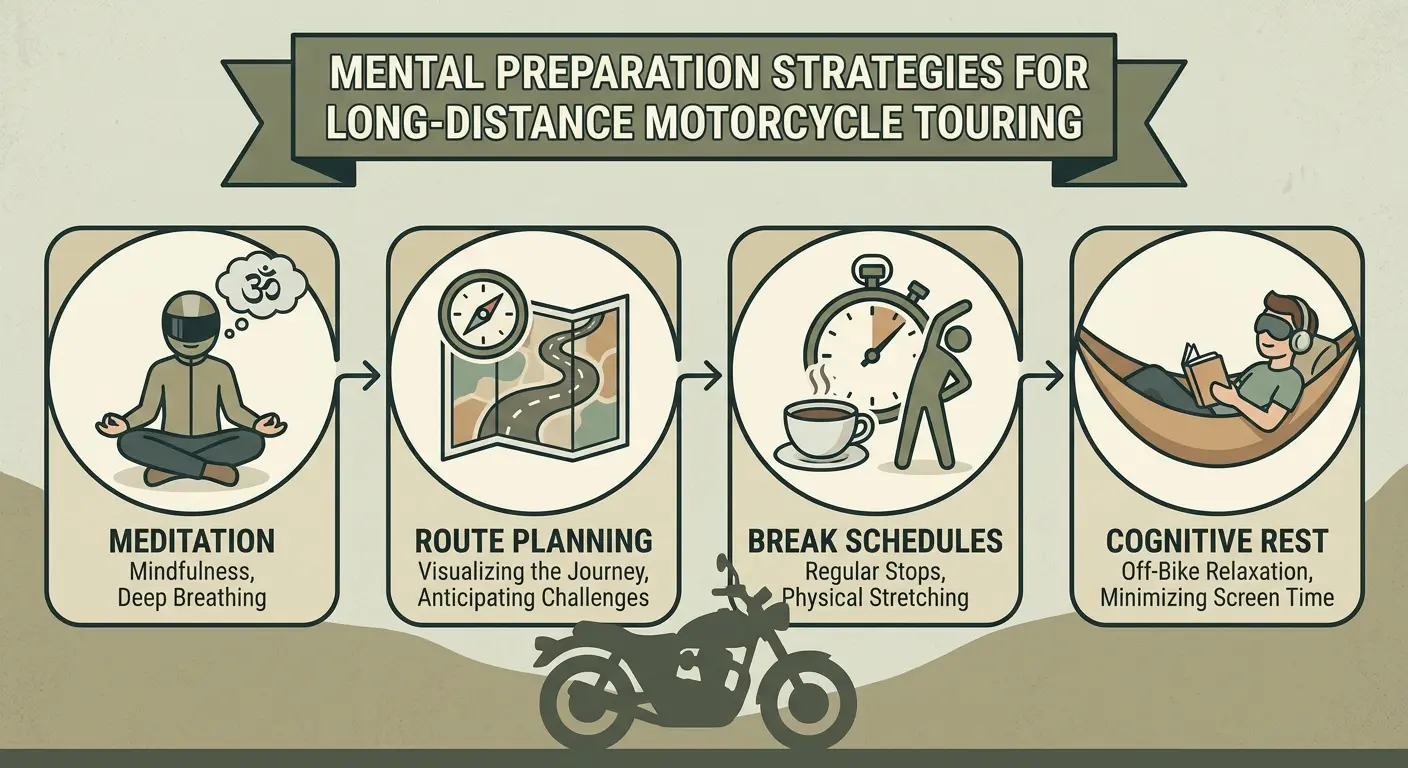
Breaking the ride into 75-mile mental chunks works better than focusing on the total distance. Each chunk gets its own micro-goal: a specific landmark, a planned stop, a route change. Your brain handles three 75-mile segments way better than one 225-mile slog.
The difference between mental noise and genuine fatigue signals takes practice to identify. Genuine fatigue affects your reaction time, decision quality, and physical coordination. Mental resistance just wants you to stop being uncomfortable. One is dangerous. The other is manageable.
2. Decision Fatigue Hits Harder Than Wind Resistance
Every single mile demands micro-decisions. Lane position adjusts for road debris. Speed modulates for traffic patterns. Route confirmation happens at every intersection. Hazard assessment runs constantly in the background.
Your brain runs out of gas faster than the physical act of riding depletes your body. I've watched skilled riders make increasingly poor choices as the day progresses, not because their skills degraded, but because their decision-making capacity got exhausted.
By hour six of riding, you're making choices with a brain that's already processed thousands of decisions. The quality degrades. Risk assessment gets sloppy. That gap in traffic that seemed too tight at mile 50 looks acceptable at mile 350, not because it got bigger, but because your judgment got tired.
Establish default protocols for common scenarios. Always take the right lane unless passing. Always check mirrors every 8 seconds. Always maintain a two-second following distance. These automated responses free up mental bandwidth for decisions that actually require evaluation.
I map fuel stops before leaving, identify backup routes for major highways, and set predetermined daily mileage limits. When decision fatigue hits, I'm not trying to figure out basic logistics with a depleted brain.
The most dangerous moment? When you don't recognize your decision quality has degraded. You feel fine, just a bit tired. Meanwhile, you're making choices you'd never make fresh. Experience doesn't protect you from cognitive depletion.
Watch for these: you're second-guessing decisions you already made, simple navigation requires more concentration than usual, or you're getting irritated by minor inconveniences. These signal that your decision-making capacity needs a reset, not just a stretch break.
3. Solitude Becomes a Skill You Have to Learn
Day six of my first solo tour. Motel 6 in Rawlins, Wyoming. Middle of nowhere. Nobody to talk to. Nothing to do. Just me, a shitty motel room, and the realization that I had four more days of this.
Called my wife. Told her I might come home early. She said I'd regret quitting. She was right, but in that moment, I genuinely didn't know if I could handle three more days alone.
Extended time alone on a bike hits different than you expect. Group rides provide constant social feedback. Daily life offers regular human interaction. Multi-day solo tours? You're alone with your thoughts for hours at a time, and not everyone handles that well.
I've seen riders who thrive in group settings struggle with the silence of solo touring. The isolation amplifies every doubt, magnifies minor discomforts, and removes the social motivation that keeps you pushing forward. Some riders discover they genuinely enjoy the mental space. Others find it oppressive.
The skill of productive solitude requires practice on shorter rides before committing to a week-long journey. Being alone works when you actually use the headspace for something other than spiraling into doubt.
Stopping at every opportunity to chat with other riders, taking detours to crowded tourist spots, or cutting the day short just to hang out in a hotel lobby all indicate you need a social reset. There's no shame in this. Some riders need more human interaction than others.
I build in planned social stops: breakfast at a busy local diner, coffee at a popular rider hangout, or camping at sites where other travelers gather. These planned interactions prevent the desperate social seeking that leads to poor decisions.
Before embarking on solo tours, make sure you've covered the basics with a comprehensive motorcycle maintenance guide so mechanical concerns don't compound mental stress. I wish I'd understood more about my bike's normal sounds and behaviors before that first solo tour. Every weird noise sent me into a panic spiral.
Went to the local diner in Rawlins. Struck up a conversation with a truck driver. Talked for an hour. Reset my head. Finished the tour.
Solo touring isn't for everyone. Took me three solo tours to figure out my rhythm, how much alone time I can handle before I need to find people.
4. Route Obsession Will Steal Your Present Moment
GPS dependency and perfectionist route optimization turn touring into an anxious checklist exercise faster than anything else. You're so focused on hitting every "must-ride" road that you miss the actual experience of riding.
Here's the weird part: over-planning routes to maximize the experience actually minimizes it. You're constantly evaluating whether you're on the "best" road, second-guessing your choices, and feeling FOMO about routes you didn't take.
Roadrunner magazine culture and social media have amplified this by creating endless content about specific routes you "have to" ride. The implication? If you're not on these exact roads, you're doing it wrong. This is nonsense, but it's persuasive nonsense.
Having a general direction and a few key stops works better than a minute-by-minute itinerary. I've found this out the hard way after planning three tours down to 15-minute increments and spending the entire time stressed about staying on schedule.
Route anxiety shows up as constant map checking, frequent stops to optimize the next segment, and inability to just commit to a direction and ride. When you catch yourself doing this, you've crossed from helpful planning into counterproductive obsession.
Building in intentional "decision-free" segments helps. Pick a direction, commit to it for 100 miles, and stop optimizing. You might miss a slightly better road. You'll definitely have a better experience by being present for the road you're on.
I plan fuel stops, overnight locations, and major direction changes while leaving the specific roads flexible. This framework provides enough structure to feel secure without creating a rigid schedule that generates anxiety.
The fear of missing "the best road" is a trap. Every region has dozens of excellent roads. You'll never ride them all in one tour. Pick good roads and actually experience them instead of constantly wondering if you should be somewhere else.
The Body Under Load
Your body will tell you what your bike can't. These physical realities surface on every tour, regardless of your fitness level or bike choice.
5. Your Hands Will Betray You First
Your hands will quit on you before anything else. I don't care how fit you are. By hour four, you'll have that weird tingly numbness that makes you wonder if you're having a stroke.
Death grip. That's the problem. You're strangling those bars like they owe you money, and you don't even realize it until your forearms are screaming.
Vibration transmission through the bars accelerates hand problems. Different bike styles handle vibration differently. My FJR transmits more vibration through clip-ons than upright bikes do through standard bars, but riding position affects how much weight you're putting on your hands.
The early warning signs appear before numbness becomes dangerous. Tingling in your fingers, difficulty with fine motor control, or forearms that feel pumped indicate you need to address hand loading immediately. Waiting until full numbness sets in means you've already compromised safety.
Adjusting bar position and lever reach makes more difference than most riders realize. Even small changes to reach distance affect how much weight your hands support and how much tension you carry in your forearms.
Glove choice matters beyond just protection. Gloves that restrict circulation, create pressure points, or don't fit properly amplify hand fatigue exponentially over a full day of riding. Investing in the best motorcycle gloves designed for extended touring can significantly reduce hand fatigue and numbness. My first tour, I used $40 summer gloves. Hands were destroyed by day two. Upgraded to proper touring gloves with gel palms and better wrist support. Different world. Worth every penny of the $120 I paid.
Gas stop exercises restore circulation and reduce nerve compression. Shake your hands vigorously for 30 seconds. Open and close your fists 20 times. Rotate your wrists in both directions. These simple movements prevent minor hand fatigue from becoming a tour-ending problem.
I check my grip pressure every 15 minutes. The reminder alone reduces death grip by making me conscious of tension I'm carrying unconsciously. Your hands should rest on the bars, not clamp them.
6. Core Strength Matters More Than Arm Strength
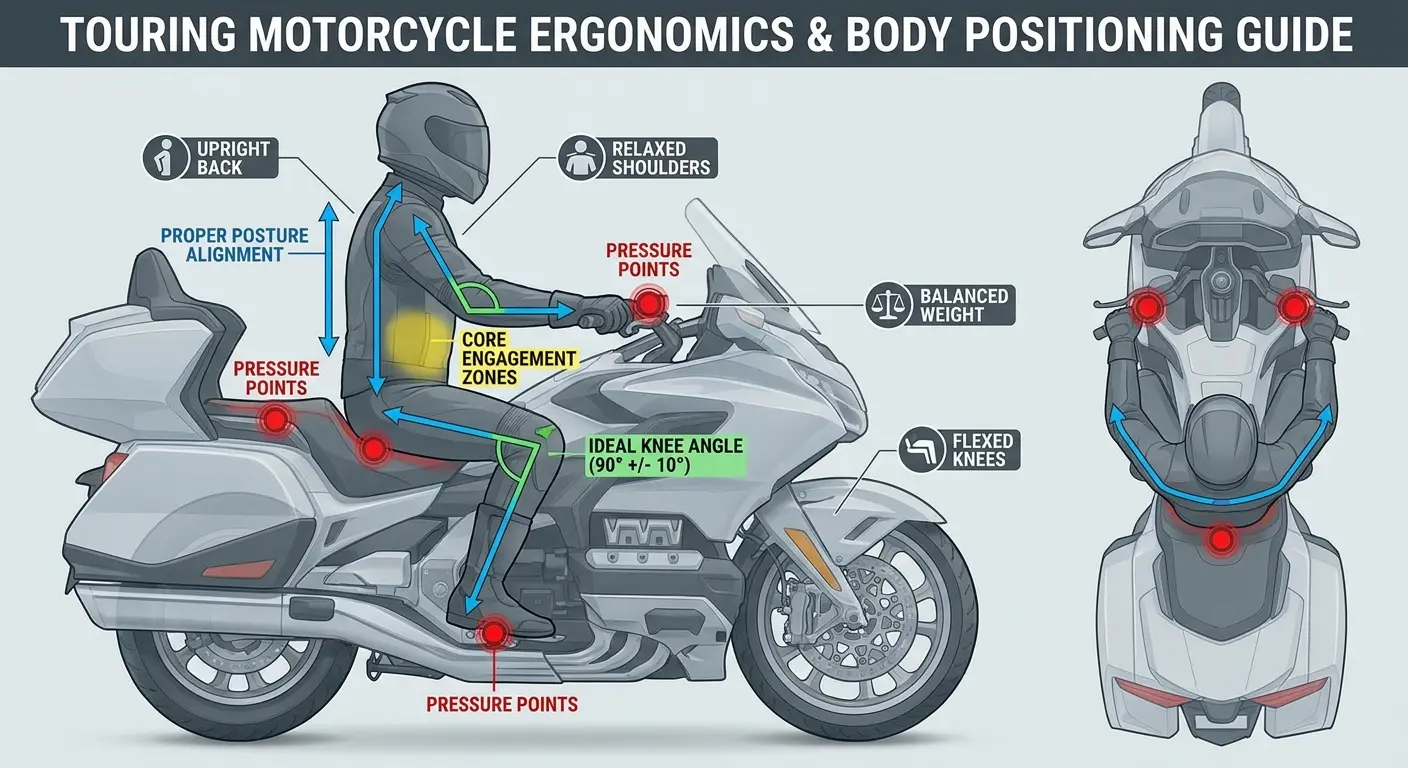
Upper body strength seems like the obvious physical requirement for long-distance riding. This assumption is wrong. Core stability determines whether you're fighting the bike or moving with it.
Weak core? Your arms do all the work.
You're basically hanging off the handlebars, using arm strength to hold yourself up. By hour three, your shoulders are screaming, your forearms are pumped, your hands are numb. Meanwhile your core is just along for the ride, doing nothing.
Wrong muscles doing all the work. That's the problem.
Core engagement while riding feels different than core work at the gym. You're not doing crunches. You're maintaining stability through constant small adjustments, using your core to anchor your upper body so your arms stay relaxed.
Different riding positions on various bike styles demand different core activation patterns. An upright touring bike requires less core engagement than a sport touring position, but both benefit from core strength that most riders don't develop.
The test is simple: if your arms and hands are tired but your core feels fresh after a long day, your core isn't doing its job. You're compensating with upper body strength, which works for a while but fails over extended tours.
Off-bike exercises that translate to touring comfort focus on stability rather than strength. Planks, dead bugs, and bird dogs build the endurance-based core stability that matters for riding. You don't need gym equipment or complex routines.
I practice core engagement techniques while riding by periodically checking whether I can relax my grip while maintaining stability. If relaxing your hands makes you feel unstable, your core isn't engaged properly.
Building relevant core strength doesn't require months of training. Two weeks of consistent core work produces noticeable improvements in riding comfort. The riders who skip this preparation pay for it starting around day three of a tour.
7. Hydration Timing Beats Hydration Volume
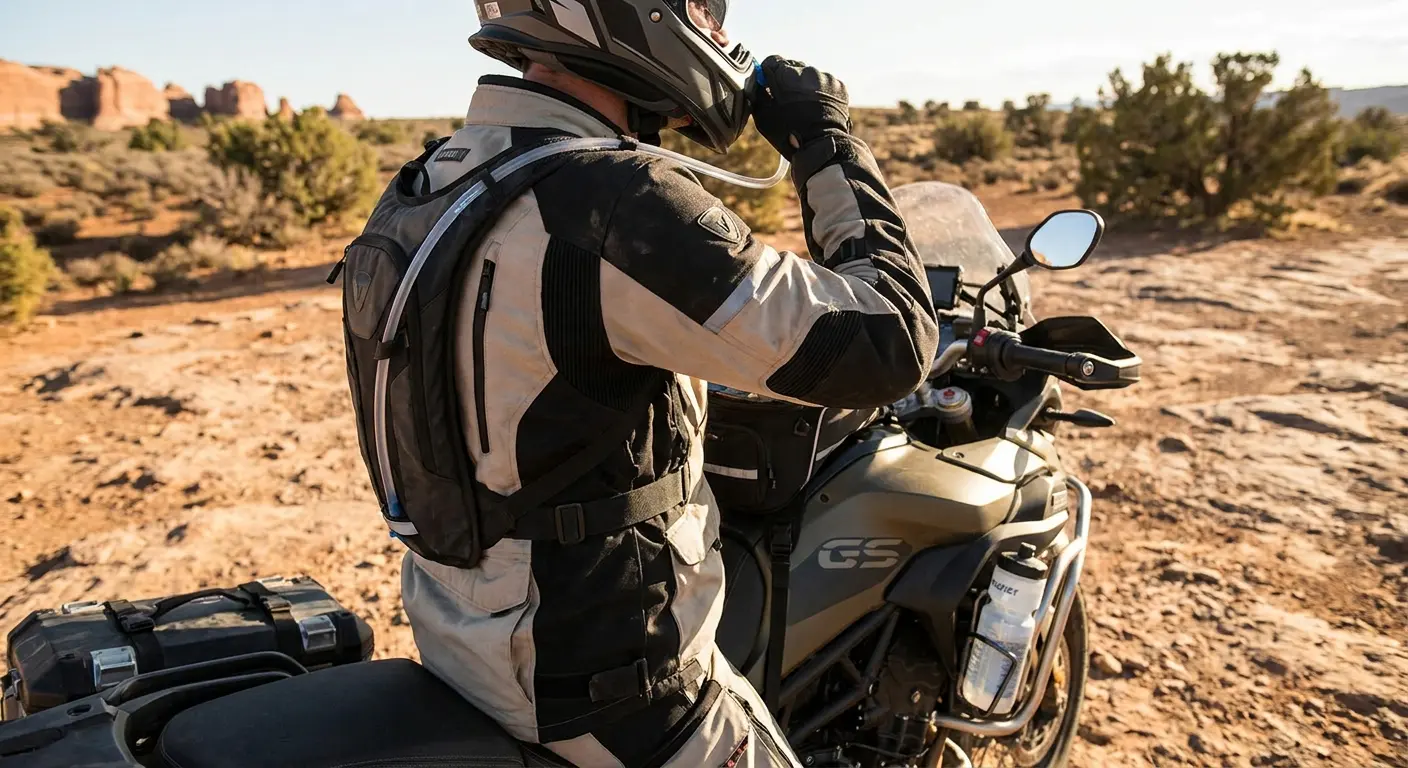
Drinking large amounts at stops is less effective than consistent small intake throughout the day. This timing strategy matters more than total volume because your body processes steady hydration better than intermittent flooding.
The challenge is balancing hydration needs with bathroom stop frequency. Drink too much at once, and you're stopping every hour. Under-hydrate to reduce stops, and your decision-making and reaction time degrade without you noticing.
Here's the sneaky part about dehydration on a bike: you don't feel it coming.
You're not obviously sweating. The wind keeps you cool. You're focused on riding, so you miss the subtle signs. Then suddenly you've got a headache, you're irritable for no reason, and that decision you just made was really stupid.
By the time you actually feel thirsty? You're already dehydrated. Been there for an hour.
Heat, altitude, and exertion levels change fluid needs in ways that aren't intuitive. A cool morning at sea level requires different hydration than an afternoon in desert heat at 7,000 feet. I adjust intake based on conditions rather than following a fixed schedule.
Hydration pack systems solve the timing problem by enabling small, frequent sips without stopping. The constant availability means you drink when you think about it rather than waiting for the next stop. I've found this approach maintains better hydration with fewer bathroom stops than the chug-at-stops method.
The connection between hydration and decision-making surprises riders who don't realize their poor choices late in the day stem from dehydration rather than just fatigue. Even mild dehydration affects cognitive function in measurable ways.
Bottle placement matters for systems without hydration packs. Tank bag pockets work better than saddlebag storage because accessibility determines whether you'll actually drink. If accessing water requires pulling over, you won't drink enough.
8. Sleep Debt Compounds Like Interest
Day five of a nine-day tour through the Southwest. I'd been averaging five hours of sleep because I was too wired to sleep properly. Felt fine. Thought I was handling it.
Then I nearly ran off the road on a straight section of highway because I microslepted for about two seconds. Scared the shit out of me. Pulled over, took a three-hour nap in a rest area, and reset my entire plan to include actual rest days.
You don't feel how impaired you are until you almost crash.
A single short night affects performance for days afterward. The cumulative effect of inadequate sleep over multi-day touring compounds faster than most riders expect.
The excitement of touring, unfamiliar sleeping environments, and physical discomfort conspire to reduce sleep quality even when duration seems adequate. You might get seven hours in bed but only five hours of actual restorative sleep.
Sleep debt affects risk assessment and reaction time in ways that aren't immediately obvious. You don't feel dramatically impaired. You just feel a bit tired. Meanwhile, your actual performance has degraded significantly.
Here's what the numbers look like in real terms:
Eight-plus hours? You're good. Performance stays solid through the tour.
Six to seven hours? Day one feels manageable. Day three gets rough. Day five you're struggling hard. Need two to three full nights to recover.
Five to six hours? Day one you're already slightly impaired. Day three is pretty rough. Day five becomes dangerous. Need four to five full nights to recover.
Under five hours? You're already impaired on day one. Seriously impaired by day three. Pull over now on day five because you're a hazard to yourself and others. Need a full week-plus to recover.
Adrenaline masks sleep deprivation temporarily. The excitement of riding, new scenery, and constant stimulation keep you feeling alert. This false sense of capability leads riders to push through when they should be resting.
Choosing accommodations that support actual rest matters more than finding the cheapest room. Noise levels, bed quality, temperature control, and light blocking all determine whether you get restorative sleep. I've learned to prioritize sleep quality over saving $30 on a room.
Managing the adrenaline that prevents sleep after a long riding day requires deliberate wind-down routines. Your body is tired, but your mind is still processing the day's experiences. Screens make this worse by providing stimulation when you need calm.
The early signs of dangerous fatigue include microsleeps, difficulty focusing on the road ahead, and delayed reactions to hazards. When these appear, you're past the point where pushing through makes sense. Taking a rest day saves the tour instead of ending it.
9. Your Knees Will Redefine "Stiff"
Knee stiffness and pain during extended touring catches even fit riders off guard. The transition from riding position to standing and walking at stops reveals just how much load your knees have been managing.
Knees bear unexpected load during riding through constant small adjustments. You're using your legs to stabilize your body, grip the tank, and support weight that isn't going through your core. Different bike ergonomics affect knee angle and stress patterns dramatically.
Age and previous injuries amplify knee issues, but young riders with healthy knees still experience significant stiffness after six hours in the saddle. The fixed position combined with vibration and load creates problems that surprise people who run or cycle without issues.
The specific challenge comes from the limited range of motion while riding. Your knees stay in a relatively fixed angle for hours, and the surrounding muscles and connective tissue adapt to that position. Standing up requires forcing everything back into a different configuration.
Stretches and movements at stops maintain knee mobility before stiffness sets in. Simple knee circles, gentle squats, and walking for five minutes before refueling make the difference between manageable stiffness and painful joints.
Modifications to riding position that reduce knee strain often involve footpeg position and seat height. Even small adjustments to the angle your knee holds affect how it feels after hours of riding. I've seen riders solve chronic knee pain by moving footpegs forward an inch.
Quality motorcycle knee pads provide both protection and support that can reduce joint stress during long touring days. Never wore knee pads until my knees started giving me serious problems around day four of tours. Added compression knee sleeves with padding. Helped more than I expected, not just protection, but actual support that reduced inflammation.
When stiffness crosses from normal to concerning depends on recovery time. Stiffness that resolves within 30 minutes of stopping is normal. Pain that persists into the evening or affects your riding the next day indicates a problem that needs addressing.
Recovery time between riding days matters for multi-week tours. Your knees need time to process inflammation and repair tissue stress. Back-to-back 400-mile days create cumulative damage that rest days prevent.
The Gear Truth
Gear failures follow predictable patterns. Understanding these patterns before you're 300 miles from help changes everything about how you prepare.
10. Luggage Placement Changes Your Bike's Personality
First time I loaded my bike for a real tour, I put all the heavy stuff in the top case because it was convenient. Made sense, right? Everything accessible.
Hit the first sweeper at 50mph and the bike felt like it wanted to swap ends. Front end was light, back end was wallowing, and I was fighting to keep it in the lane. Scared the hell out of me.
Pulled over, moved everything around. Heavy stuff low and centered. Light stuff in the top case. Different motorcycle. Stable, predictable, confidence-inspiring.
Weight distribution from luggage fundamentally alters handling characteristics. The changes surprise even experienced riders who understand the physics but haven't felt the reality.
Load up your bike with 60 pounds of gear and it becomes a different machine. Not slightly different. Completely different.
I've watched guys with twenty years of experience nearly lose it in the first sweeper because they forgot about the weight. Understanding physics doesn't prepare you for the reality of your bike suddenly handling like it's wearing a backpack full of bricks.
A fully loaded bike handles nothing like an empty one. Acceleration is slower, braking distances increase, and the bike resists direction changes. Wind catches loaded bikes differently, and crosswinds that were manageable become significant challenges.
Testing handling in a safe environment before committing to highway speeds reveals how your specific bike responds to weight. Empty parking lot figure-eights with full luggage show you exactly what changed and how to adapt your riding style.
Weight bias affects stability at speed in ways that aren't obvious until you're doing 75 mph in gusty conditions. Rear-heavy loading makes the front end light and reduces steering precision. Front-heavy loading can cause tank-slapper wobbles if weight isn't secured properly.
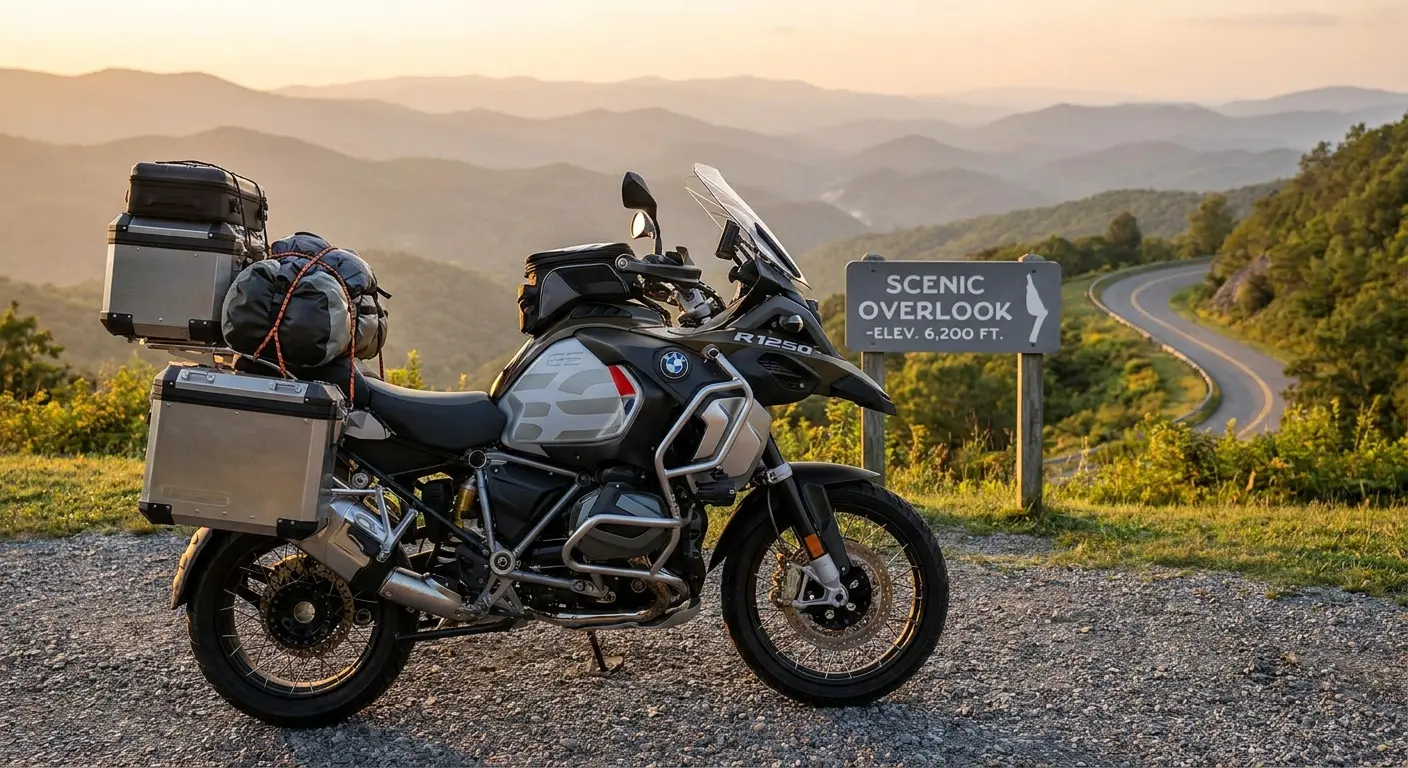
Different luggage systems create different handling personalities. Hard bags with low mounting points behave differently than tall soft bags strapped to a rear rack. Tank bags affect steering feel more than riders expect because the weight is so close to the steering axis. I ranked the best motorcycle saddlebags separately.
Loading strategy matters beyond just weight distribution. Heavy items go low and centered. Light items can go high or to the sides. I've seen riders create dangerous handling by putting heavy tools in top cases while leaving lower bags half-empty.
What works on one bike may not work on another. Sport bikes with luggage become top-heavy quickly. Cruisers with low-mounted bags handle weight better but have less ground clearance. Adventure bikes tolerate poor loading better than any other style, but they're not immune to bad weight distribution.
11. Rain Gear Lives or Dies by Its Venting
Waterproofing is only half the equation. Inadequate ventilation often makes riders wetter from internal condensation than they would be from rain itself.
Spent $400 on "premium" rain gear with all the marketing buzzwords. Waterproof, breathable, adventure-ready, all that shit.
First real rain test, riding through Oregon in 50-degree rain for six hours. Stayed dry from the outside. Completely soaked from the inside because the vents didn't actually work and I was basically wearing a sauna suit.
Cheaper rain gear with functional vents would've been better. Learned that expensive doesn't mean effective.
The physics of moisture management during active riding work against you. Your body generates heat and moisture. Waterproof rain gear traps it. Without functional venting, you're essentially wearing a sauna suit while exercising.
Temperature and exertion level affect condensation rates dramatically. Cool rain with minimal exertion produces less internal moisture. Warm rain while riding aggressively creates a sweat bath inside supposedly waterproof gear.
Expensive rain gear still fails if venting strategy is wrong. Those vents need to be opened, closed, and adjusted based on conditions. Many riders never touch the vents after putting the gear on, which defeats the entire system.
Choosing rain gear with functional vents rather than decorative ones requires understanding where vents actually work. Chest vents do nothing when you're leaned forward on a sport bike. Pit zips matter more than most riders realize because they vent high-heat areas effectively.
Managing vents is an art form you learn by getting it wrong.
Light rain? Open everything up. Heavy rain? Close most vents, accept you'll get a little sweaty. Conditions change every twenty minutes and you're constantly adjusting.
There's no perfect setting. You're always choosing between wet from rain or wet from sweat.
The specific challenges of rain gear on touring bikes stem from wind speed and duration. You're not walking through rain for 20 minutes. You're riding through it for hours at 60 mph. Every design flaw gets amplified exponentially.
Layering under rain gear affects moisture management as much as the rain gear itself. Cotton base layers trap moisture. Synthetic or wool layers wick it away from skin. The wrong base layer turns good rain gear into a miserable experience.
Managing the transition between rain and dry conditions requires stopping to adjust gear. I've learned to pull over when rain stops and open all vents immediately. Riding in sealed rain gear after the rain stops guarantees you'll be soaked from sweat.
Selecting the best motorcycle rain gear with proper venting can make the difference between comfort and misery during multi-day tours.
12. Your Phone Mount Is Your Weakest Link
Let me tell you about the two iPhones I killed before I got smart about mounts.
First one: $20 Amazon mount. Looked solid. Reviews were good. Held the phone great on test rides around town. Three days into a Colorado tour, I'm taking photos at a rest stop and notice the camera won't focus right. By day five, the camera was completely destroyed. Internal stabilization system shaken to death by vibration. $800 repair quote. The mount was still holding the phone just fine. It just vibrated it to death.
Second one: Upgraded to a $40 mount with "premium vibration dampening." Better, right? Wrong. Day two through Wyoming, hit some rough pavement at 75mph. Watched in my mirror as my phone ejected itself from the mount, bounced once off the pavement, and exploded into about fifty pieces. That was an iPhone 13 Pro. $1,200 replacement.
$2,000 in destroyed phones taught me that phone mounts aren't an area to cheap out on.
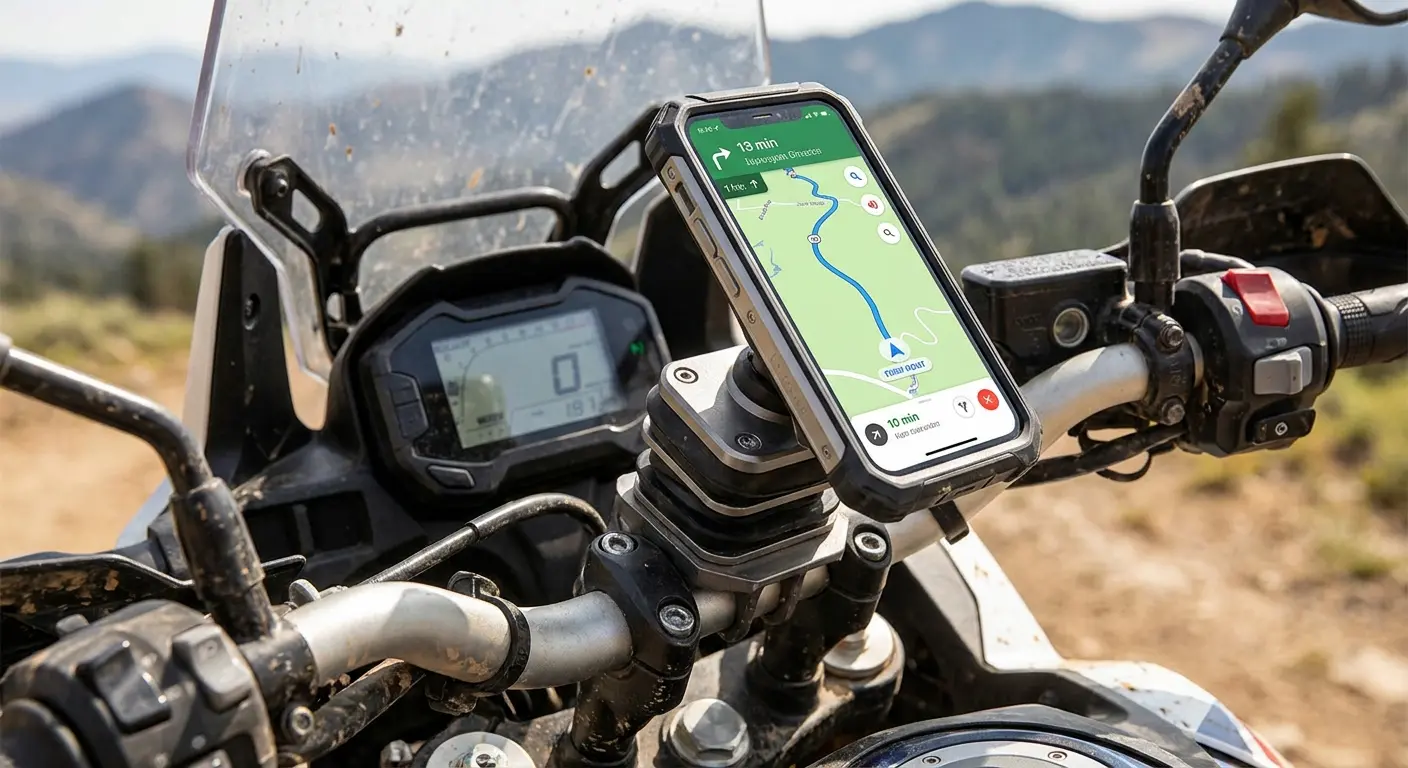
Phones are simultaneously essential and fragile for navigation. You need the screen visible, the device secure, and access to controls without stopping. Most mounts fail at least one of these requirements under real touring conditions.
Vibration can damage phone cameras and internal components even when the mount holds the phone securely. I've seen riders finish tours with phones that no longer focus properly because camera stabilization systems failed from constant vibration.
Mount failure at the wrong moment can derail an entire day. Your navigation disappears mid-route in an area with no cell service, and suddenly you're navigating by sun position and gas station clerks. This scenario happens more often than it should because riders trust mounts that aren't designed for sustained touring use.
The difference between casual-use mounts and true touring-grade systems comes down to engineering and materials. Cheap mounts use friction and plastic clips. Quality systems use mechanical locks and vibration dampening. The price difference is $30. The capability difference is massive.
Backup navigation strategies matter when technology fails. Paper maps as backup seem old-fashioned until your phone dies or your mount breaks. I carry a basic road atlas and have offline maps downloaded. This redundancy has saved multiple tours.
When your navigation disappears mid-route in an area with no cell service, you realize how much you've relied on that screen. I've seen too many riders lose expensive phones to inadequate mounts or deal with navigation failures that turn a good day into a survival exercise.
I run Rokform now. Yeah, they're $79. Yeah, that seemed expensive until I did the math on destroyed phones. The magnetic system with twist-lock actually works. More importantly, they dampen vibration instead of transmitting it straight into your phone's guts. My current phone has 15,000 miles on a Rokform mount and the camera still works perfectly.
Is this an endorsement? Yeah. Because I've literally paid $2,000 to learn this lesson and I don't want you to repeat my mistake. Get a real mount or accept that you're gambling with a $1,000 device every time you ride.
Your choice.
You can find the right setup at Rokform's motorcycle mount collection. This isn't about convenience, it's about not being stranded because a $15 mount failed.
13. Layering Systems Fail Without a Real Plan
My first layering system was a disaster. Six different layers, all from different manufacturers, none of them designed to work together.
The base layer didn't wick. The mid-layer didn't breathe. The shell didn't vent. Adjusting required complete stops and ten minutes of gear tetris.
Temperature swings meant I was constantly too hot or too cold. Spent more time managing layers than actually riding.
Now I run three pieces that actually work together. Cost half as much, works twice as well.
Theoretical layering knowledge breaks down in practice during temperature swings, weather changes, and varying exertion levels. What works for hiking or skiing doesn't translate directly to riding.
Common mistakes with layering include too many layers that can't be adjusted without complete stops, wrong materials that don't work together, and inadequate adjustment opportunities for changing conditions.
Building a layering system that can be adjusted without complete stops requires thinking through the actual mechanics of adding or removing layers while wearing full gear. If you need to remove your jacket to access a mid-layer, your system has failed.
Choosing materials that work together rather than fighting each other means understanding how different fabrics interact. A waterproof shell over a non-breathable mid-layer traps moisture. Synthetic base layers under wool mid-layers work better than cotton under fleece.
The challenge of packing space versus temperature range forces strategic choices. You can't carry layers for every possible temperature. I focus on versatile pieces that cover wide temperature ranges rather than specialized layers for narrow conditions.
Real-world scenarios test layering systems in ways you don't anticipate. Morning starts at 45 degrees, afternoon hits 85, and evening drops to 50. Your layering system needs to handle that 40-degree swing without requiring complete gear changes at every stop.
Everything fails in sequence when you're not paying attention.
Day three: Rain gear zipper broke. Didn't seem like a big deal.
Day four: Got caught in rain. Soaked through the broken zipper. Everything in my bag got wet.
Day five: Wet gear meant I was cold all day. Made poor decisions because I was cold and miserable. Took a wrong turn that added two hours.
Day six: Sleep-deprived from being cold at night. Nearly missed a deer in the road because my reaction time was shot.
One broken zipper nearly ended the tour. Everything compounds. Fix small problems immediately.
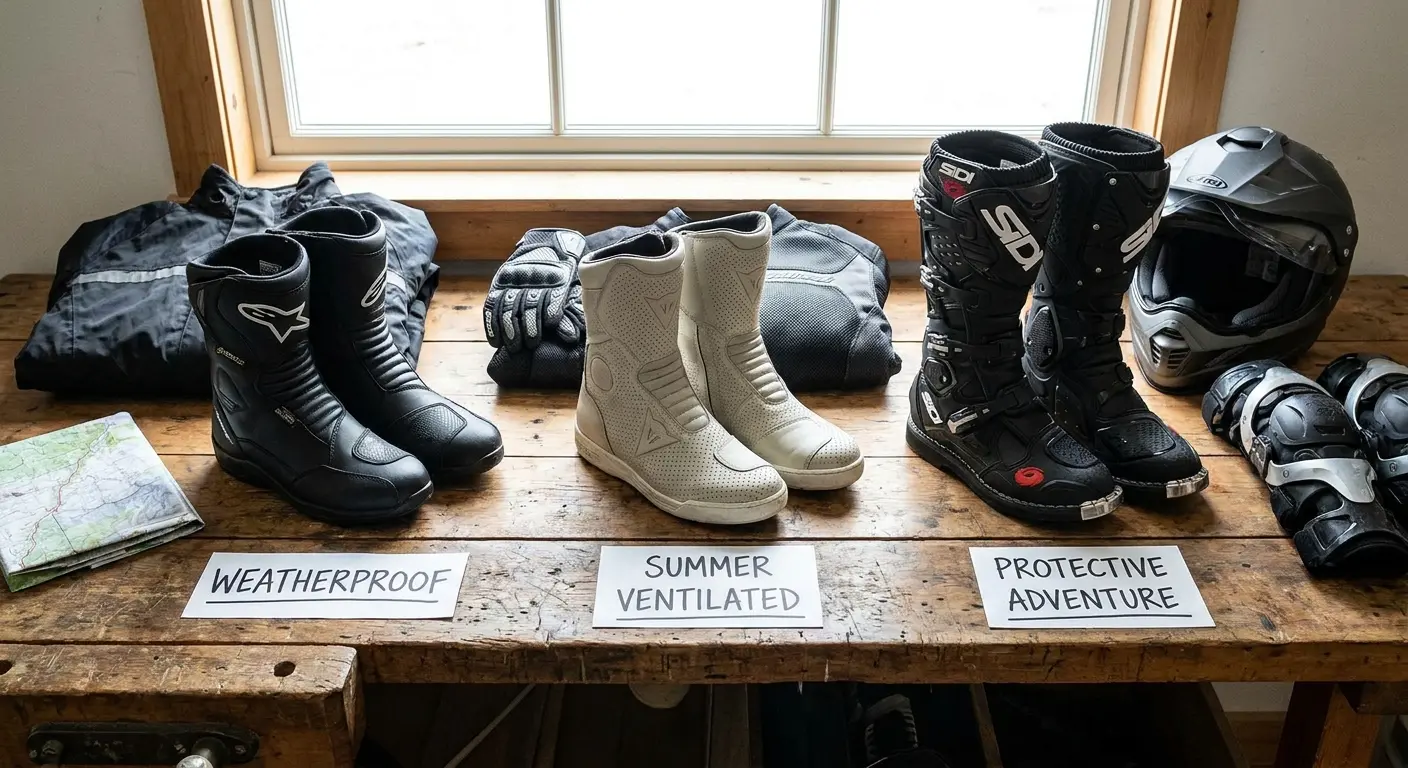
14. Boot Choice Dictates Comfort More Than Seat Choice
Wore my track boots on my first tour because they were my "good " boots. Full ankle protection, thick sole, great for riding.
Absolute torture for walking. Every gas stop, every meal, every time I had to walk more than 50 feet, my feet were screaming. By day three, I had blisters on my heels and couldn't put weight on my left foot properly.
Limped through the rest of the tour. Bought touring boots the day I got home. Spent $300. Worth every penny.
Seat upgrades get all the attention, but boot choice affects overall comfort during extended touring in ways that radiate through your entire body. Feet are your foundation, and problems there create issues everywhere else.
Boots affect foot position, ankle flexibility, heat management, and walking comfort during stops. Compromising on boots to save weight or money creates problems that compound over days of riding.
Evaluating boots for touring versus other riding styles requires different criteria. Track boots prioritize protection over comfort. Casual riding boots work for short rides but fail on multi-day tours. Touring-specific boots balance protection, comfort, and walkability.
Understanding the tradeoffs between protection and comfort means accepting that maximum protection comes with weight and stiffness penalties. The question is finding the right balance for your risk tolerance and riding style.
The specific demands that touring places on boots include all-day wear, varied terrain at stops, and temperature extremes. You need boots that protect in a crash, support your feet for 10 hours, and don't cripple you when walking around towns.
Casual riding boots often fail on multi-day tours because they're designed for short rides with minimal walking. The support isn't there for extended use, heat management is inadequate, and comfort degrades after the first few hours.
Break-in periods matter more for touring boots than casual boots. Stiff touring boots need at least 40 hours of wear before a major tour. Starting a tour in new boots guarantees blisters and hot spots.
Knowing when to replace boots before a tour prevents mid-tour failures. Worn soles affect grip on pegs. Degraded waterproofing leaves you with wet feet. Compressed insoles stop providing support. These issues don't improve during a tour.
Managing hot spots before they become blisters requires catching them early and addressing them immediately. I carry moleskin and blister prevention tape specifically for this. A small hot spot on day one becomes a painful blister by day three if ignored.
The Road Reality
These practical challenges determine whether your touring adventure succeeds or becomes an endurance test. Experience teaches them, but you can learn them now and skip the hard lessons.
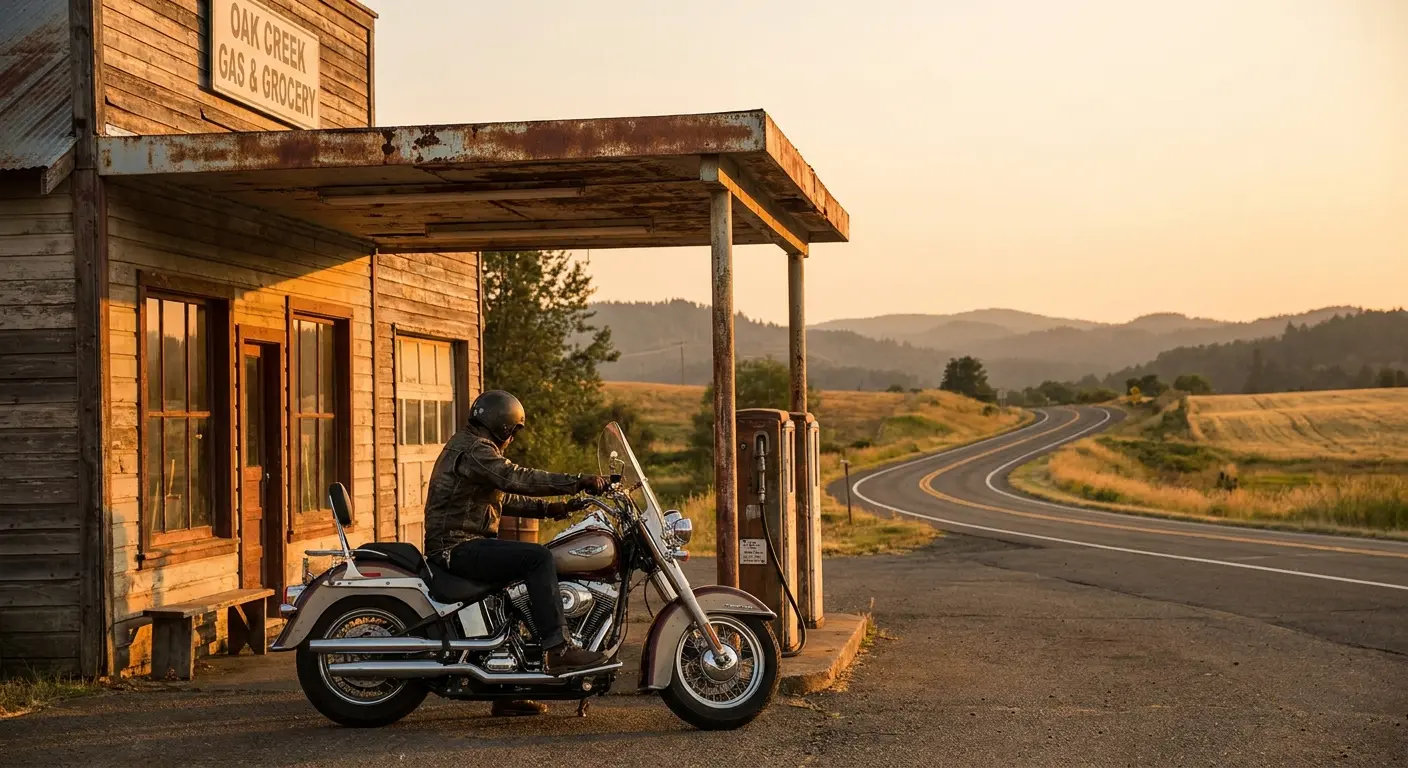
15. Gas Station Timing Is a Strategic Skill
Fuel stops during touring require tactical thinking beyond simple range calculation. Traffic patterns, meal timing, weather windows, and mental breaks all factor into when you stop for gas.
Filling up at three-quarters instead of running to reserve makes sense when you consider what else fuel stops provide. They're natural break points for physical recovery, mental resets, and route evaluation.
Evaluating gas station locations for safety and amenities changes which stations you choose. A well-lit station with clean bathrooms and decent food beats a sketchy pump that's 20 miles closer. The time difference is negligible. The experience difference is significant.
Fuel stop timing affects everything from daily mileage to sleep schedule. Stop too frequently and you waste time. Push too far between stops and you arrive exhausted. The sweet spot varies by rider, bike, and conditions.
I combine fuel with meals, use stops for weather assessment, and time stops to coincide with peak traffic periods in cities I'm bypassing.
Recognizing when to stop early versus pushing to the next station requires reading your own state accurately. If you're already tired, the extra 30 miles to a slightly better station isn't worth it. Stop now and reset.
Understanding how your bike's range changes with load, wind, and riding style prevents the anxiety of watching your fuel gauge drop faster than expected. A fully loaded bike fighting headwinds gets 20% worse fuel economy than the same bike empty in calm conditions.
The specific challenges of fuel planning in remote areas mean you can't always wait until three-quarters empty. When stations are 100 miles apart, you fill up whenever you see a pump, regardless of how much is in the tank.
I've developed intuition about when to fill up based on factors beyond just fuel level. Time of day matters. Station quality matters. Weather forecasts matter. This tactical thinking becomes automatic after enough tours.
Using fuel stops as natural break points for physical and mental recovery transforms them from necessary interruptions into strategic advantages. I use every stop productively rather than rushing through them.
16. Weather Apps Lie in Mountain Passes
Got caught in a thunderstorm on Trail Ridge Road in Rocky Mountain National Park. Weather app said clear skies. I'm at 12,000 feet, temperature dropped 30 degrees in ten minutes, visibility went to shit, and lightning is hitting peaks close enough that I could smell ozone.
Couldn't turn around. Road behind me was worse. Couldn't stop. No shelter and getting hit by lightning on a motorcycle seems like a bad way to go. Just had to ride through it, doing 25mph, white-knuckling it through every turn, praying I'd drop below the storm.
Made it down. Pulled into the first gas station and sat there shaking for twenty minutes.
Weather apps don't know shit about mountains. Local knowledge or direct observation only.
Standard weather forecasting fails in mountainous terrain. Apps average conditions over large areas, missing the rapid changes that happen with elevation and aspect.
Valley forecasts don't predict pass conditions. The valley might be sunny and 75 degrees while the pass 3,000 feet above is socked in with fog and 45 degrees. Weather apps show you the valley forecast because that's where the weather station sits.
How rapidly weather changes with elevation and aspect catches riders unprepared even when they know to expect differences. A 15-mile climb can take you from sunshine to rain to snow, then back to sunshine on the other side. Apps can't capture this granularity.
Interpreting weather data more accurately requires using multiple sources to triangulate likely conditions. I check local weather, mountain-specific forecasts, and current conditions from webcams or recent rider reports. No single source tells the complete story.
Visual cues indicate changing weather better than apps in mountain environments. Lenticular clouds signal high winds aloft. Dark bases on clouds suggest rain. Temperature drops of 10 degrees in a mile warn you something significant is ahead.
Trusting local knowledge over apps makes sense when you can find it. Gas station attendants and local riders know what conditions typically do in their mountains. A local telling you the pass is socked in carries more weight than an app showing clear skies.
Building in weather contingency time means not planning to cross a questionable pass at the end of a long day when you're tired and losing light. Cross it in the morning when you're fresh and have options if conditions deteriorate.
Making go or no-go decisions about crossing passes in uncertain conditions requires honest assessment of your skill level, bike capability, and risk tolerance. Turning back isn't failure. It's good judgment.
Information sources that actually help include mountain pass condition hotlines, local rider forums, and real-time reports from other travelers. These ground-truth sources beat predictive apps every time.
17. Small Towns Save Tours More Than Big Cities
Cortez, Colorado. Day four of a tour. Bike developed a weird electrical issue. Lights flickering, dash acting strange.
Pulled into a motel, asked the clerk if she knew a mechanic. She called her cousin without hesitation. He showed up twenty minutes later with a multimeter and a full toolbox.
Diagnosed the problem in the parking lot. Corroded ground wire. Fixed it on the spot. Refused to take more than $40. Said he was happy to help a traveler.
His wife brought us both coffee while he worked. We talked about riding, about the area, about where I was headed. Spent an hour in that parking lot and left with a fixed bike, good conversation, and restored faith in people.
Try getting that in Denver.
Small-town stops during touring provide better rider-specific services, more genuine interactions, easier navigation, and lower stress than urban areas. This challenges the assumption that cities offer superior resources.
Why small towns often welcome riders while cities barely notice them comes down to scale. You're a novelty in a small town, a regular customer cities take for granted. That difference affects how you're treated and what help you can access.
Identifying small towns that welcome riders versus those that don't requires reading the vibe quickly. Towns on popular riding routes usually have at least one rider-friendly establishment. Towns off the beaten path might view motorcycles with suspicion.
Amenities that actually matter for touring support include accessible mechanics who'll squeeze you in for urgent repairs, restaurants that serve food past 8 PM, and accommodations that don't require advance reservations. Small towns either have these or they don't, with little middle ground.
The specific advantages for mechanical issues shine in small towns with longtime residents who know everyone. The hotel clerk can tell you which mechanic to call, who has the best chance of finding your part, and whether the shop will actually be open despite what Google says.
Finding local knowledge happens naturally in small towns where conversations start easily. The guy at the gas pump has ridden these roads for 30 years and knows which ones to avoid after rain. That information doesn't exist in any app.
Authentic regional experience comes from small-town diners, local bars, and conversations with people who actually live in the places you're riding through. Cities give you tourist experiences. Small towns give you real ones.
The pace of small towns aids recovery better than city energy. You can actually rest, think, and reset without constant stimulation demanding your attention. After eight hours of riding, that calm is exactly what you need.
I've had better conversations in small-town gas stations than I've had in most cities. The guy filling up his truck has ridden these roads his whole life and knows things Google Maps will never tell you. Which roads are torn up. Where the speed traps are. Which diner actually has good pie.
Cities have resources. Small towns have people. On a long tour, people matter more.
18. Your Bike's Range Isn't What the Manual Says
Manufacturer range specifications come from testing conditions that don't match real-world touring. Load, wind, elevation changes, riding style, and temperature affect fuel consumption in ways standard testing doesn't capture.
How load affects fuel economy surprises riders who've only calculated range with an empty bike. Add 60 pounds of luggage and a full tank of gas, and your fuel economy drops 15-20%. The engine works harder to move more weight, simple physics.
Wind impact on range varies from negligible to catastrophic depending on direction and speed. A 20 mph headwind for 200 miles can cut your range by 25%. Tailwinds provide the opposite benefit, but you can't count on favorable winds.
Elevation changes drain fuel faster than flat riding because you're fighting gravity on climbs. Descents don't fully compensate because you're not using zero fuel downhill, just less than normal. Net result: mountainous routes always get worse mileage than flat ones.
Riding style makes a massive difference. Aggressive acceleration and high speeds kill range. Smooth throttle inputs and moderate speeds maximize it. The difference between riding 75 mph and 65 mph can be 30 miles of range on some bikes.
Temperature affects fuel economy through engine efficiency and air density. Cold engines run rich until they warm up. Dense cold air provides more oxygen, requiring more fuel. Hot weather reduces air density but can cause vapor lock issues. Neither extreme helps range.
Your bike's range isn't fixed. It's a moving target based on about ten different variables.
Fully loaded, fighting a headwind, doing 80mph? You just lost 25% of your range compared to riding empty in calm conditions at 65. The fuel gauge drops way faster than you expect and suddenly that 150-mile range is 110.
Ask me how I know.
Indian touring motorcycles and other large-displacement touring bikes typically advertise 150-200 mile ranges. Real-world touring with luggage, wind, and varied terrain often reduces that to 120-150 miles. Planning fuel stops based on advertised range leaves no safety margin.
Understanding your specific bike's real-world range requires tracking fuel consumption over various conditions. I log every fill-up with notes about conditions, load, and riding style. After a few tanks, patterns emerge that let you predict range accurately.
Building safety margin into fuel planning means stopping with at least a gallon in reserve. Running low on fuel adds stress you don't need and puts you at risk if you miss a station or find one closed.
I run a fuel economy app that updates in real-time. Tells me exactly what my current range is based on actual consumption, not the bike's optimistic estimate.
Only works if your phone stays mounted and visible. Which brings us back to the mount question. You need one that actually works. A reliable motorcycle phone mount lets you track real-time fuel economy apps and adjust your range calculations on the fly. This real-time data beats manufacturer estimates every time.
Recognizing when conditions are killing your range faster than expected requires paying attention to your fuel gauge and trip computer. If you're burning fuel faster than normal, you need to adjust your stop strategy before you're running on fumes.
The gap between what the manual promises and what you'll actually get isn't dishonesty from manufacturers. It's the difference between controlled testing and real-world variables that touring throws at you constantly. Plan for reality, not specifications.
What They Don't Tell You
The motorcycle magazines show you perfect roads at golden hour. Instagram shows you the hero shots at overlooks. YouTube shows the highlight reels.
Nobody shows you sitting in a Motel 6 parking lot in Wyoming at 6 AM, knees too stiff to bend, hands too numb to grip the bars properly, wondering why the hell you're doing this.
That's touring.
It's incredible. It's also harder than anyone admits. Your first real tour, not a weekend, but a proper week-plus journey, will teach you more about yourself than about riding. You'll learn your physical limits. You'll discover if you actually like being alone with your thoughts. You'll find out if you can make good decisions when you're tired, uncomfortable, and 400 miles from anyone who cares.
Some of this you can prepare for. The gear matters. Get a real phone mount. I've killed two iPhones learning this. Get boots that actually fit. Test your rain gear before you need it. The physical stuff you can train for. Core strength, hand exercises, basic endurance work.
But the mental game? That you just have to live through.
The first time your brain starts whining at mile 200, you'll understand. The first time you make a stupid decision because you're six hours into a riding day and your judgment is shot, you'll get it. The first time you're alone in a random town with nothing but your thoughts and a long day ahead, you'll know if this is actually for you.
Is it worth it?
Yeah. Absolutely.
But go in with your eyes open. This isn't a vacation. It's an endurance event that happens to involve a motorcycle. It'll break you down and build you back up. You'll have moments of transcendent joy on perfect roads and moments of genuine misery in gas station parking lots.
Both are part of it.
The riders who make it through the first tour and come back for more? They've figured out that the hard parts are part of the experience, not obstacles to it. The discomfort, the fatigue, the moments of doubt, they're what make the good parts matter.
Or maybe I'm just rationalizing my poor life choices. Either way, I 'll be out there next season doing it again.
See you on the road.

