


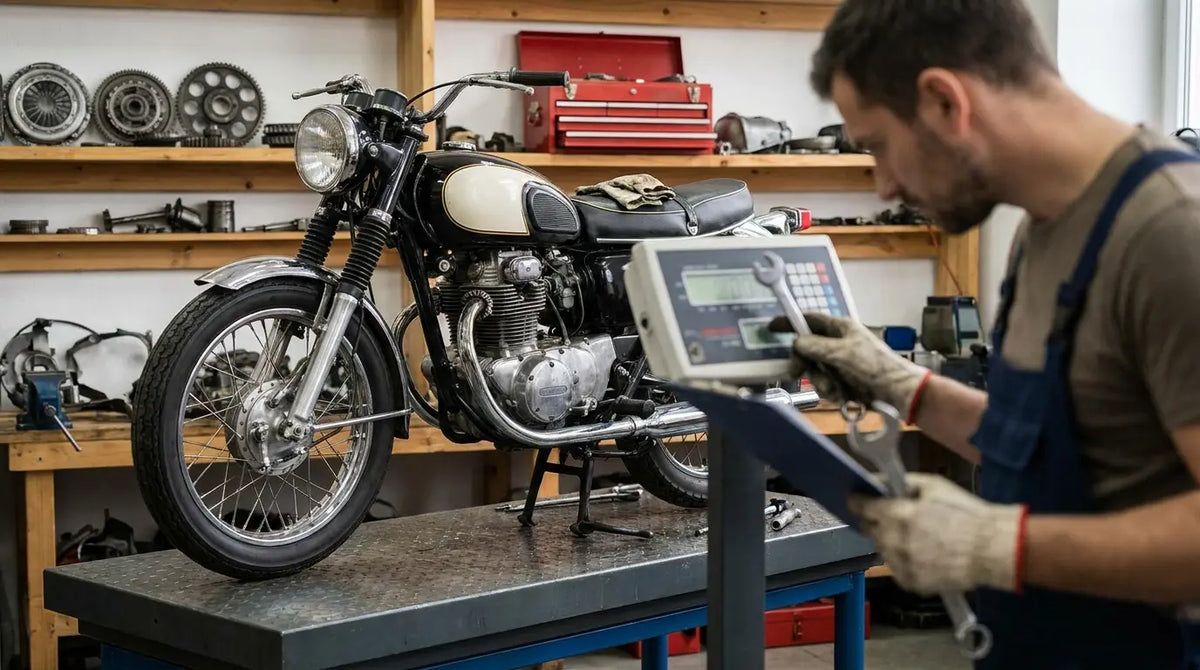
I watched a 140-pound woman flick her 500-pound adventure bike through a parking lot like it was a bicycle, while a 200-pound guy next to her struggled with his "lightweight" 400-pound sportbike. Same parking lot, similar weights, completely different experiences. That's when it hit me: we've been obsessing over the wrong numbers.
Weight matters on a bike. You already know that. But here's what most riders miss: it's not about how much your motorcycle weighs. Where that weight lives during the moments that count? That's what actually matters. We're talking about weight distribution during acceleration, braking, cornering, and the split-second transitions between all three. The industry obsesses over curb weight specs while ignoring the dynamic reality of mass in motion.
According to MCN's long-term testing of the BMW R1200RT, the bike's 270kg-plus weight feels way lighter once moving due to its low center of gravity, demonstrating how weight distribution matters more than total mass for real-world handling characteristics.
Table of Contents
Why Static Weight Specs Are Misleading Your Bike Choice
The Center of Gravity Problem Most Manufacturers Won't Discuss
How Rider Weight and Gear Placement Rewrite Your Bike's Physics
Weight Transfer During Hard Braking: The Forgotten Safety Factor
Cornering Dynamics and the Mass Distribution You Can Actually Control
Electric Motorcycles and the Battery Placement Revolution
Your Phone Mount's Impact on High-Speed Stability
Practical Weight Management for Real-World Riding
TL;DR
Look, if you only remember a few things: your weight matters more than the bike's, brake like you understand physics, and for the love of god, stop using backpacks on long rides. Static curb weight tells you almost nothing about how a motorcycle actually handles in motion. Center of gravity location matters more than total weight for stability and control. Rider weight typically adds 25-40% to a bike's total mass, completely changing its behavior. Weight transfer during braking can shift 70% of total mass to the front wheel. Proper gear placement (including phone mounts) affects high-speed stability more than most riders realize. Electric motorcycles are forcing manufacturers to rethink weight distribution from the ground up. You can manipulate weight distribution through riding position, gear placement, and equipment choices.
Why Static Weight Specs Are Misleading Your Bike Choice
Manufacturers love listing curb weight because it's simple. One number, easy to compare, looks good on a spec sheet. Riders compare these numbers religiously when shopping for bikes. And riders eat it up, comparing bikes like they're shopping for laptops.
But that curb weight? It's measured with a full tank, all fluids topped off, bike sitting perfectly level on a scale. You know, the exact conditions you'll never experience while actually riding.
The second you throw a leg over that seat, add your gear, and twist the throttle, every assumption built on that curb weight number falls apart.
Two bikes can share identical motorcycle weights yet handle like they're from different planets. A sportbike and a cruiser both weighing 500 pounds will behave nothing alike because their mass gets distributed across completely different geometries. The sportbike concentrates weight low and forward. The cruiser spreads it out long and low, with a ton of mass behind the rear axle.
I've ridden both a Yamaha MT-07 and a Harley-Davidson Sportster Iron 883. Both claim around 400 pounds wet. The MT-07 feels like a mountain bike with a motor. The Sportster feels like you're wrestling a shopping cart with a stuck wheel. Same weight on paper, completely different planets in practice.
The MT-07 flicks into corners with minimal effort because its weight sits centralized between the wheels and low in the frame. The Sportster requires deliberate handlebar input and more physical effort because its weight distribution favors the rear, with a longer wheelbase spreading that mass out.
Weight distribution percentages matter more than total weight. A bike with 52% of its weight on the front wheel will turn in faster than one with 48% up front, assuming similar geometry. But manufacturers rarely publish these figures. You're left guessing or relying on subjective reviews that use vague terms about how a bike "feels."
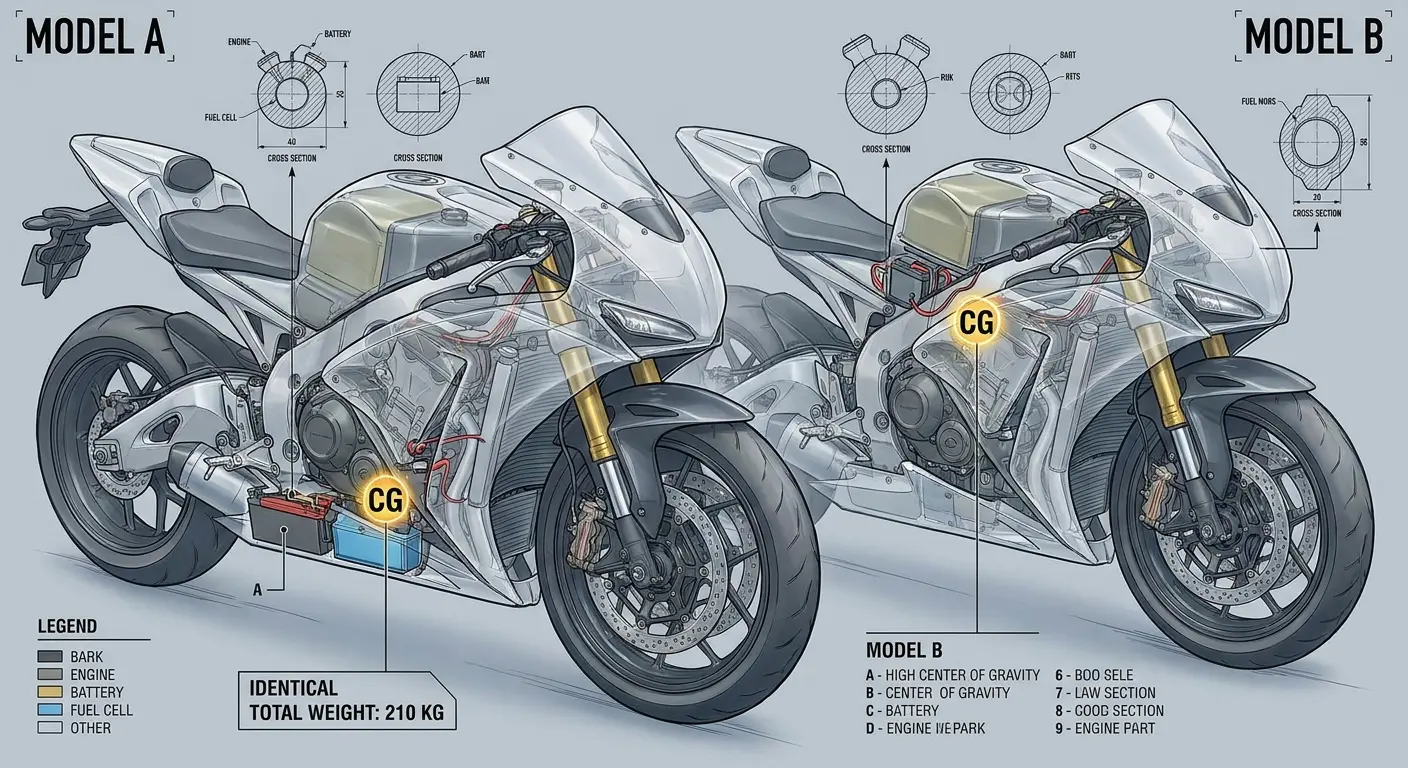
The fuel tank location alone can shift handling characteristics as you burn through a tank. Start your ride with 4 gallons sitting high and forward on a sportbike, and by the time you're on fumes, you're riding a different machine. The center of gravity has dropped and moved rearward. Your bike turns quicker, feels lighter, and responds differently to steering inputs.
Add a passenger, and you've added 150-200 pounds several inches higher than the bike's designed center of gravity. That's not an addition. It's leverage working against your control inputs. The bike becomes harder to flick into corners, takes longer to respond to steering, and demands more effort to hold a line through a turn.
The Center of Gravity Problem Most Manufacturers Won't Discuss
Vertical CG Placement and Its Real-World Consequences
Center of gravity height determines how stable your bike feels at a stoplight and how confidently it carves through a canyon. Lower is generally better for most riders, but the tradeoffs aren't always obvious.
Cruisers nail the low CG approach. They sit close to the ground with engines, fuel tanks, and batteries positioned as low as the frame allows. This makes them easy to handle at parking lot speeds and gives shorter riders confidence at stops. But that low CG comes with ground clearance sacrifices. Lean too far in a corner, and you're scraping hard parts before you've reached the tire's limits.
Honestly? That ground clearance sacrifice sucks if you actually like corners. You'll be scraping pegs before your tires are even working hard.
Adventure bikes go the opposite direction by necessity. They need ground clearance for off-road capability, which means raising everything. The result? A high CG that makes these bikes feel top-heavy at low speeds and intimidating in parking lots, especially for newer riders. Once you're moving at speed, that high CG becomes less noticeable because gyroscopic forces from the wheels provide stability.
Sportbikes split the difference with a moderate CG height optimized for cornering. They position the engine low but keep the fuel tank up high and forward to aid weight transfer during braking. This creates a CG that's low enough for stability but positioned to work with the bike's aggressive geometry.
Bike Category |
Typical CG Height |
Primary Advantage |
Key Compromise |
|---|---|---|---|
Cruiser |
Very Low |
Easy low-speed handling, confidence at stops |
Limited ground clearance, early peg scraping |
Sportbike |
Medium-Low |
Optimized cornering, balanced weight transfer |
Moderate low-speed maneuverability |
Adventure |
High |
Ground clearance, off-road capability |
Top-heavy feel at parking lot speeds |
Touring |
Medium |
All-day comfort, stable highway cruising |
Less agile in tight technical sections |
Manufacturers rarely publish CG measurements. You can't comparison shop for this crucial specification because the data doesn't exist in consumer-facing materials. You're forced to rely on subjective impressions during test rides, which don't always reveal how a bike behaves at the limits.
Fore-Aft Balance and the Wheelbase Equation
Front-to-rear weight distribution gets less attention than it deserves. Most riders assume 50/50 is ideal, but that's rarely the case for real-world riding.
Sportbikes typically run 51-53% of their weight on the front wheel. This forward bias improves front tire grip during hard braking and helps the bike turn in aggressively. The tradeoff? Less weight on the rear wheel means easier wheelies under hard acceleration and potential traction issues when powering out of corners.
Cruisers often sit at 45-48% front weight distribution. That rearward bias keeps the front wheel light, which contributes to their easy steering at low speeds. But it also means the front tire has less grip available during emergency braking, and the bike wants to push wide in corners when you're on the throttle.
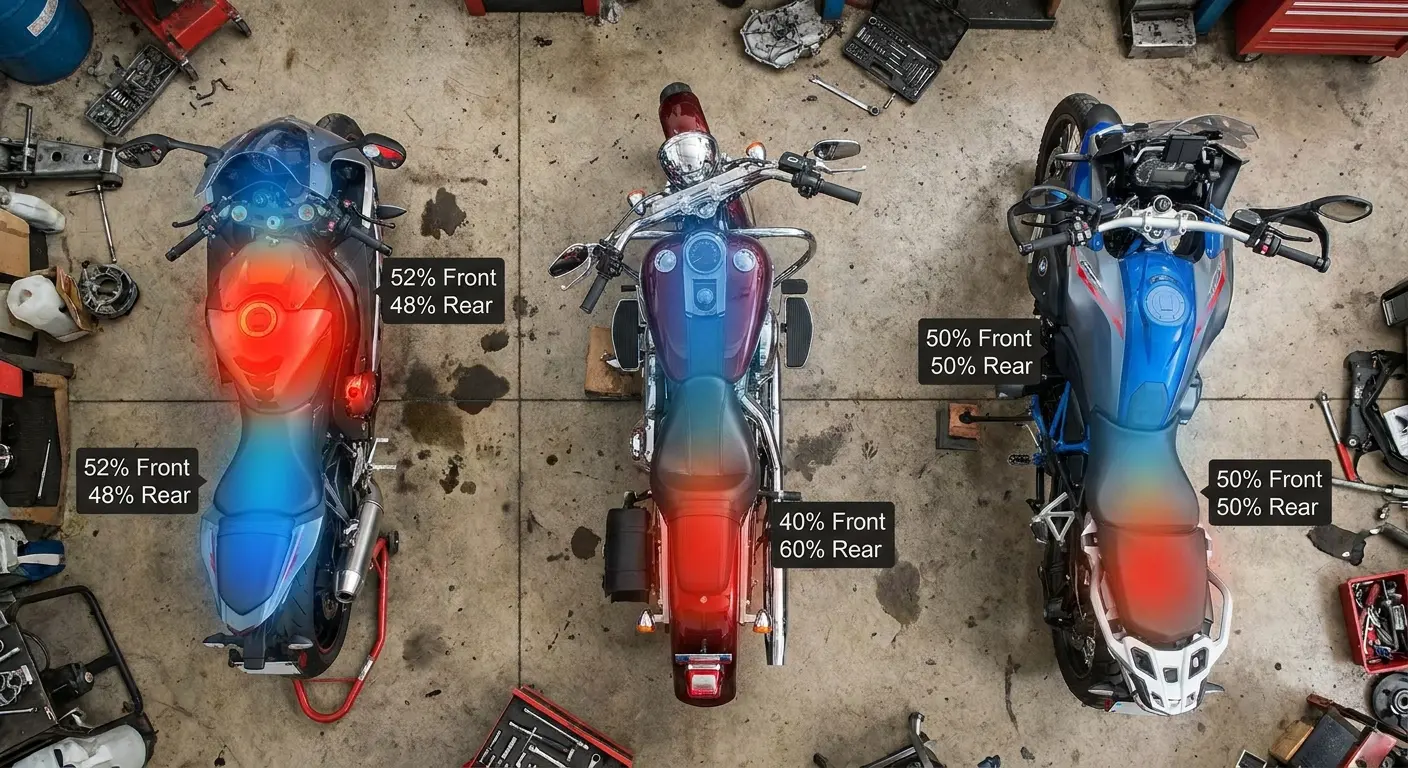
Adventure bikes vary wildly depending on fuel load and luggage. An unladen adventure bike might sit at 50/50, but load it up with 10 gallons of fuel, camping gear, and luggage, and you could be looking at 40/60 or worse. This is why these bikes handle so differently when fully loaded versus stripped down for a day ride.
Wheelbase length interacts with weight distribution in ways that affect stability and agility. A longer wheelbase with rearward weight bias creates a stable platform for highway cruising but makes the bike feel sluggish in tight corners. A short wheelbase with forward weight bias gives you a flickable canyon carver that feels nervous at interstate speeds.
Electric motorcycles are rewriting these rules because battery placement offers unprecedented flexibility. You can position hundreds of pounds of batteries exactly where you want them, creating weight distributions that would be impossible with a traditional engine and fuel tank arrangement.
How Rider Weight and Gear Placement Rewrite Your Bike's Physics
The Percentage Problem Nobody Calculates
Here's the math nobody does: you're not adding your weight to the bike. You're creating a whole new machine.
A 180-pound rider on a 400-pound motorcycle represents 45% of the total mass. That rider's position, movements, and gear placement have massive influence over how the bike behaves. The same rider on a 700-pound cruiser represents just 26% of total mass. The heavier bike's behavior stays closer to its designed characteristics because the rider's influence is proportionally smaller.
Put a 150-pound rider on a 350-pound bike, and they're 43% of the total system. Put a 220-pound rider on the same bike, and suddenly they're 61% of what's moving down the road. That's not the same motorcycle anymore. The heavier rider is basically piloting a different vehicle.
Lightweight bikes get marketed as beginner-friendly, but they're more sensitive to rider weight and movement than heavy bikes. A 150-pound rider and a 220-pound rider will experience completely different handling on a 350-pound bike. The lighter rider sits at 43% of total mass; the heavier rider at 61%.
Just remember this: if you're more than 35-40% of your bike's total weight, YOU are the dominant factor in how it handles. The bike's design intentions? They're suggestions now.
Rider Weight Impact Calculator:
Determine your total riding weight (body + gear + accessories)
Add bike's curb weight
Calculate rider percentage: (Rider Weight ÷ Total System Weight) × 100
-
Evaluate impact:
Below 25%: Bike's designed characteristics dominate
25-35%: Moderate rider influence on handling
35-45%: Major rider influence, bike feels different than designed
Above 45%: Rider weight overwhelms bike's design intentions
Gear weight compounds the issue. A full-face helmet (3-4 pounds), riding jacket (4-6 pounds), boots (4-5 pounds), gloves (under a pound), and pants (3-4 pounds) add 15-20 pounds positioned high on your body. That's 15-20 pounds raising the combined system's center of gravity above where the bike's engineers designed it to be.
Backpacks make this worse. Just don't. Anything over 10-15 pounds on your back raises the center of gravity and creates a pendulum effect. Your back will hurt, your bike will handle worse, and you'll look like a turtle.
A 10-pound backpack sitting on your shoulders raises the CG even higher and adds leverage that works against your control inputs. When you lean into a corner, that backpack wants to stay upright, forcing you to push harder to get the bike to turn. It's extra mass in the worst possible location.
Tank bags and tail bags position weight better. A tank bag keeps weight low and centered between the axles. A tail bag adds weight behind the rear axle, which can improve front-end feel by lightening the steering, though it also extends the effective wheelbase and slows steering response.
Passenger Weight as a Handling Modifier
Passengers sit higher and farther back than riders. This creates two problems happening at once: raised center of gravity and rearward weight shift.
A 150-pound passenger on a 500-pound bike with a 180-pound rider creates a 830-pound system. But more importantly, that passenger sits 6-8 inches higher than the bike's designed CG and 12-18 inches behind it. The leverage effect is substantial.
The bike becomes harder to turn because you're fighting that elevated mass. You need more handlebar input to initiate a lean, and the bike takes longer to respond. Once leaned over, the bike wants to stand up more aggressively, requiring constant pressure to hold your line.
Braking behavior changes when you're carrying a passenger. The added weight increases stopping distances, but the rearward weight distribution helps by keeping more weight on the rear tire. You're less likely to lift the rear wheel during hard braking, though you still need to account for the increased momentum.
Some bikes handle passengers better than others based on their suspension setup and geometry. Touring bikes get designed with two-up riding as a primary use case. Their suspension rates, geometry, and weight distribution account for passenger weight. Sportbikes and lightweight bikes often feel overwhelmed by a passenger because they're optimized for solo riding.
Ride a Kawasaki Ninja 400 solo and it's a nimble, responsive machine that changes direction with minimal input. Add a 160-pound passenger and the transformation is night and day. The bike's 366-pound curb weight becomes 706 pounds total, with the passenger's weight positioned high and rear. Steering inputs that produced instant response solo now require deliberate effort. The bike takes noticeably longer to tip into corners, and holding a line through a sweeper demands constant bar pressure. The suspension, tuned for a solo rider, now sits deep in its travel, reducing available compression for bumps and making the bike feel harsh over rough pavement.
Your riding style must adapt when carrying a passenger. Smoother inputs, earlier braking, wider corner entry speeds, and more gradual lean angles become necessary. The bike's limits haven't changed, but the system's limits have dropped considerably.
Weight Transfer During Hard Braking: The Forgotten Safety Factor
The 70/30 Split Under Maximum Braking
Here's something most riders don't think about: under hard braking, roughly 70% of your bike's total weight moves to the front wheel. That's why your front brake does most of the work. Physics is literally pushing the front tire into the pavement.
Weight transfer is everything.
The weight transfer happens because braking creates a deceleration force at the tire contact patches while the center of gravity sits several feet above the ground. This creates a moment (rotational force) that tries to rotate the bike forward around the front axle. The front suspension compresses while the rear suspension extends, sometimes lifting the rear wheel completely off the ground.
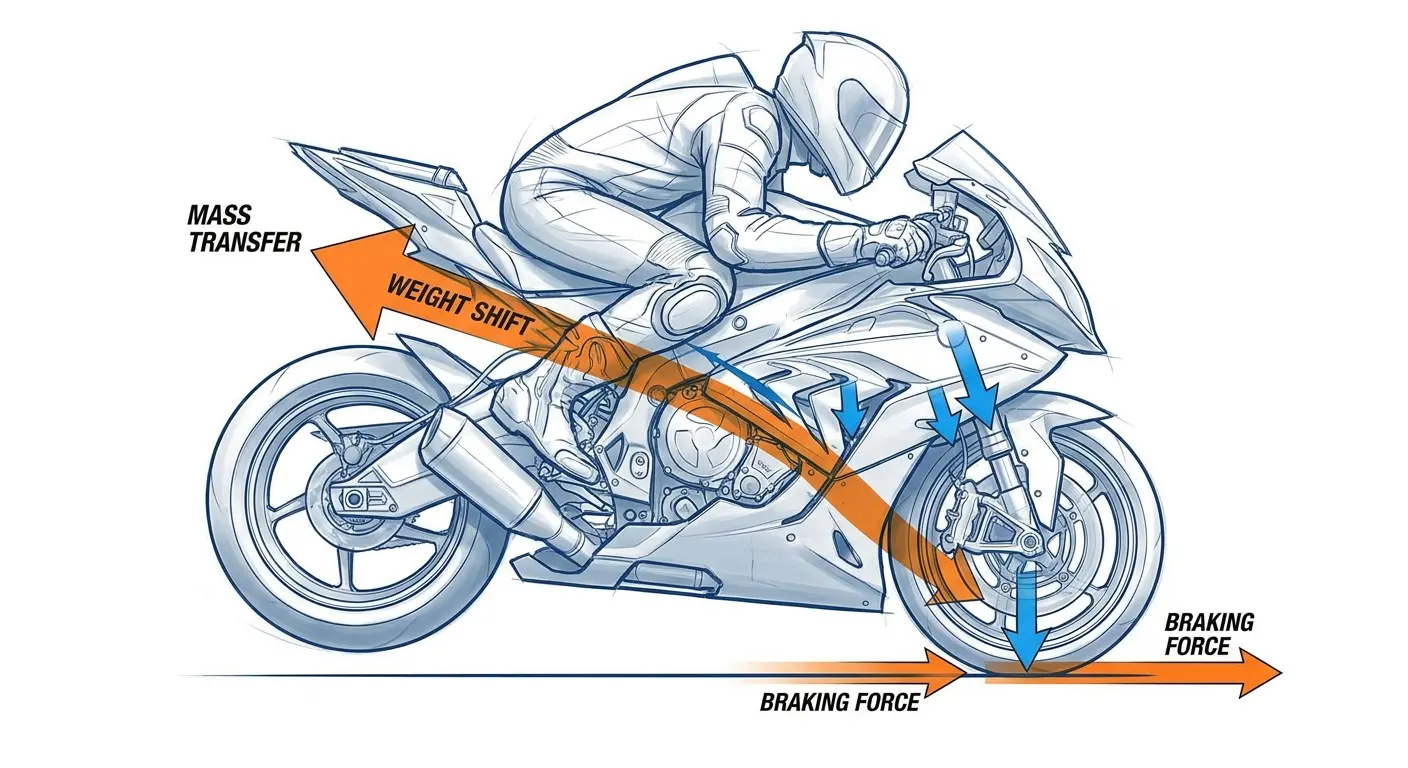
This weight transfer is why the front brake is so powerful and why the rear brake contributes so little during hard stops. The front tire's contact patch is being pressed into the pavement with tremendous force, creating huge amounts of available grip. Meanwhile, the rear tire is being unloaded, reducing its grip to almost nothing.
I learned this the hard way (don't we all?) by being scared of the front brake for my first year of riding. Used mostly rear brake because it felt safer. Then I took a track day course and the instructor watched me brake for turn one.
"You're leaving about 60% of your stopping power unused."
He made me practice front brake-only stops in the parking lot. Felt terrifying at first with the fork diving and the rear end getting light. But the bike stopped SO much faster. Changed everything about how I ride.
Riders who don't understand this often make two mistakes. First, they under-use the front brake because it feels scary or aggressive. They're leaving massive amounts of stopping power unused, resulting in longer stopping distances. Second, they over-use the rear brake, which can lock up easily once weight transfers forward, creating a skid without contributing meaningful stopping power.
Modern sportbikes have enormous front brake rotors (often dual 320mm discs) and relatively small rear rotors (usually a single 220mm disc) because the engineers understand weight transfer. They're putting braking power where the grip exists during hard stops. Understanding braking dynamics is crucial for safety, which is why many riders invest in secure motorcycle phone mounts to keep navigation visible without compromising their grip on the handlebars during critical braking moments.
Want to brake properly? Feel it, don't count it.
Start gentle. Just squeeze the lever, feel the fork start to dive. That compression is weight moving forward, pressing your front tire into the pavement. Now you have more grip than you did a second ago, so you can squeeze harder. Keep building pressure as the fork compresses. The bike is literally telling you how much grip you have by how much the suspension compresses.
The rear brake? Yeah, use it at first, but ease off as weight transfers forward. Once you're braking hard, that rear tire is barely touching the ground anyway. You're just wasting lever pressure.
I've seen riders lock their rear wheel under hard braking and not even notice because it's contributing almost nothing to stopping power at that point. All the action is happening up front.
The danger zone exists during the first moment of brake application before weight has fully transferred forward. Both tires have relatively equal grip, but if you grab too much front brake too quickly, you can overwhelm the front tire before weight transfer has loaded it up. This is why smooth, progressive brake application matters. You need to build brake pressure as weight transfers forward, matching your braking force to available grip as it increases.
Suspension Setup and Weight Transfer Management
Your suspension doesn't just absorb bumps. It controls how quickly and how much weight transfers during braking, acceleration, and cornering.
Stiffer front suspension slows down weight transfer during braking. The fork compresses less and more slowly, which can reduce front tire grip initially because weight isn't loading the tire as quickly. But it also prevents the fork from diving so deep that you run out of suspension travel or bottom out over bumps mid-corner.
Softer front suspension allows faster weight transfer and more compression. This loads the front tire quickly during braking, which can increase grip and shorten stopping distances. But it also means more dive, which can feel unstable and uses up suspension travel that you might need for bumps.
Rear suspension preload affects how much the rear end squats under acceleration and extends under braking. More preload keeps the rear end higher, which reduces squat under power but also means the rear tire unloads more during braking. Less preload allows more squat, which can help keep the rear tire loaded during acceleration but makes the bike sit lower overall.
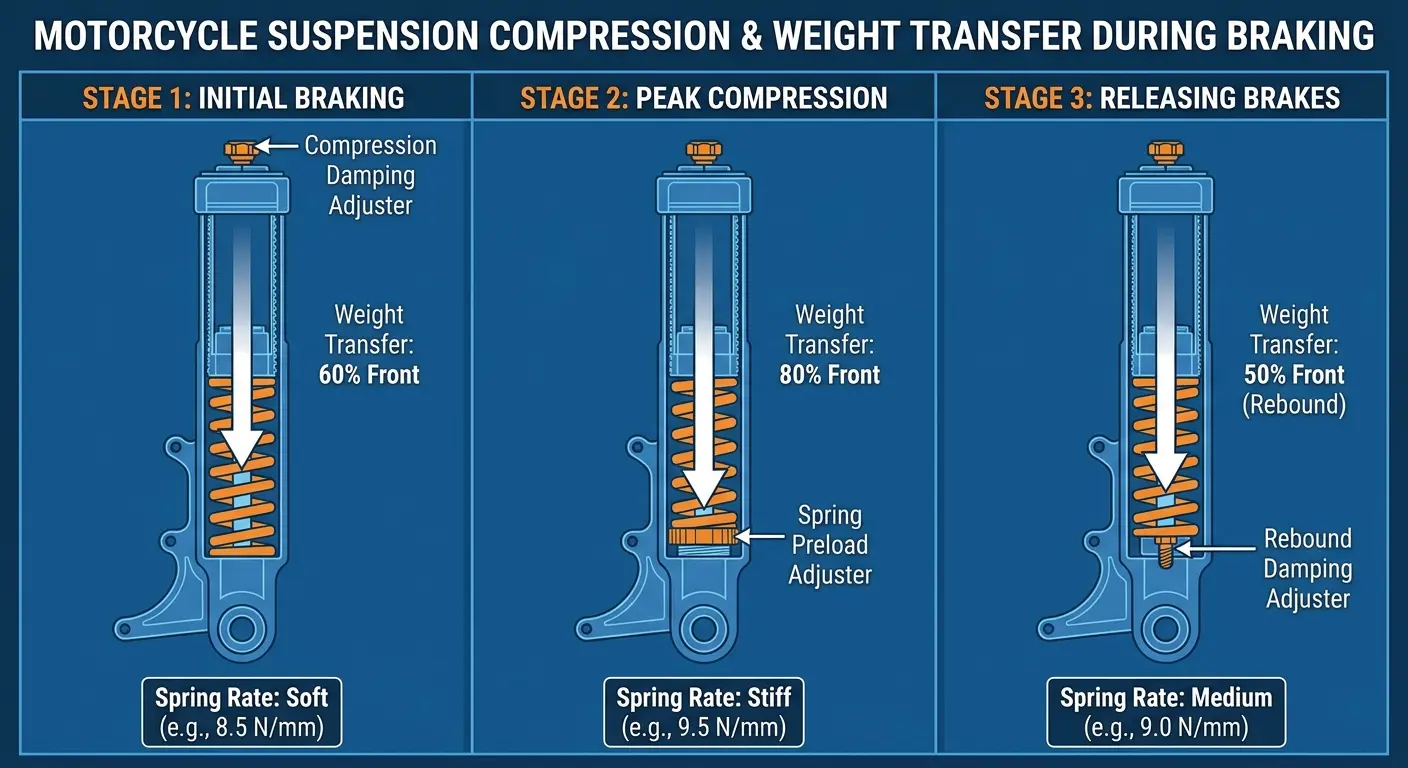
Most riders run suspension settings that are too soft for their combined weight (rider plus gear plus passenger). The bike sits too low in its travel, which means it uses up suspension range supporting static weight. When dynamic forces add to that, the suspension runs out of travel and either bottoms out or becomes harsh.
Proper suspension setup for your weight creates a platform that manages weight transfer smoothly. The bike should sit at about one-third of its total suspension travel under static load. This leaves room for compression during braking and cornering while maintaining enough extension capability for acceleration and bumps.
Cornering Dynamics and the Mass Distribution You Can Actually Control
Body Position as a Weight Distribution Tool
Your body position during cornering isn't about style or comfort. It's a tool for manipulating the combined center of gravity of the rider-bike system.
Hanging off the inside of the bike during a corner moves the combined CG inward and downward. This allows the bike to maintain the same corner radius at a lower lean angle, which keeps more tire contact patch on the ground and provides more available grip. The bike doesn't need to lean as far because the system's CG has moved inward.
The amount you hang off determines how much effect you create. A subtle weight shift (moving your butt one cheek off the seat) might reduce required lean angle by 2-3 degrees. A full racing hang-off position (inside butt cheek completely off the seat, upper body low and inside) can reduce required lean angle by 8-10 degrees or more.
This matters because tires have maximum lean angles before they run out of grip. Anything you can do to reduce required lean angle for a given corner speed increases your safety margin. You're operating farther from the tire's limits, which means you have more grip available for mid-corner corrections, braking, or acceleration.
Weighting the outside footpeg during cornering loads the outside of the bike and helps drive the tire into the pavement. This creates a more stable platform and can increase available grip by loading the contact patch more effectively. You're using your weight to press the bike into the ground rather than sitting passively on top of it.
Upper body position affects high-speed stability. Tucking low behind the windscreen reduces aerodynamic drag but also lowers your CG, which can make the bike feel more planted at speed. Sitting upright raises the CG and increases wind resistance, which can make the bike feel lighter and more flickable but less stable at high speeds.
Counter-weighting (leaning your body opposite to the bike's lean angle) gets used in slow-speed maneuvers and off-road riding. You keep the bike more upright while your body leans into the turn. This works because at low speeds, you're not generating enough cornering force to require big lean angle. Keeping the bike upright maintains more ground clearance and makes it easier to put a foot down if needed.
Cornering Lines and Weight Distribution Through the Turn
Let's break down a corner the way it actually happens.
Rolling off the gas, starting to brake: Weight's dumping forward, maybe 65-70% on the front tire now. This is good. You WANT that front tire loaded because you're about to ask it to turn. Trail that brake into the turn. Keep weight on the front.
Mid-corner, steady throttle: Most neutral weight distribution you'll get. Both tires are working. This is your highest-grip moment. Don't screw it up by chopping the throttle (everyone's favorite panic move).
Powering out: Weight's going backward now, loading the rear tire. This is why you can spin the rear on exit but almost never on entry. Stand the bike up as you accelerate. Trying to put down power while still leaned over is how you lowside or highside.
Corner Phase |
Weight Distribution |
Primary Grip Tire |
Technique Focus |
Common Error |
|---|---|---|---|---|
Entry (Braking) |
65-70% Front |
Front |
Trail braking, smooth turn-in |
Grabbing too much front brake |
Mid-Corner (Maintenance) |
50-55% Front |
Both tires equally |
Steady throttle, body position |
Chopping throttle mid-corner |
Exit (Acceleration) |
40-45% Front |
Rear |
Progressive throttle, stand bike up |
Too much throttle while leaned |
Your line choice through the corner affects how much these weight shifts occur. A late apex line (turning in later and getting the bike stood up sooner) allows you to get on the throttle earlier and harder because you're pointing straighter when you accelerate. Weight transfers to the rear while the bike is more upright, which is a more stable configuration.
An early apex line (turning in sooner and carrying more mid-corner speed) means you're still leaned over when you start accelerating. Weight is transferring to the rear while the bike is at a big lean angle, which can overwhelm the rear tire's available grip. This is how you get corner-exit slides or highsides.
Tight corners with elevation changes add another variable. Uphill corners load the rear tire naturally, which can help with traction under acceleration but makes the front end want to push wide. Downhill corners load the front tire, which improves turn-in but makes the rear end feel light and potentially unstable.
Electric Motorcycles and the Battery Placement Revolution
Rethinking Weight Distribution from a Clean Slate
Electric bikes are cheating at weight distribution.
Electric motorcycles don't have engines, transmissions, exhaust systems, or fuel tanks. They have battery packs that can be shaped and positioned with far more flexibility than traditional powertrain components.
No engine that has to sit in a specific spot. No fuel tank that has to be up high. No exhaust running along the side. Just batteries, and you can shape those however you want and stick them wherever makes sense.
Manufacturers are positioning batteries low and centralized, creating centers of gravity that would be impossible with internal combustion engines. Some electric bikes have their batteries arranged in a skateboard-style layout along the bottom of the frame, keeping weight as low as physically possible while maintaining ground clearance.
This low, centralized weight creates handling that surprises riders coming from traditional bikes. Electric bikes often feel lighter than their curb weight suggests because the mass is positioned so well. A 500-pound electric bike can feel more flickable than a 450-pound gas bike if its CG is lower and more centralized.
The weight distribution can stay more consistent throughout a ride. Gas bikes lose 20-30 pounds of fuel weight as you ride, and that weight comes from a high, forward position (the fuel tank). Electric bikes maintain the same weight distribution from full charge to empty because batteries don't get lighter as they discharge.
The Megamo Reason with DJI's Avinox motor system shows how electric mountain bikes are hiding 800Wh batteries in surprisingly compact frames, with the battery extending from near the bottom bracket all the way up to the headtube. This longer, skinnier battery design allows for more normal-sized downtubes compared to the chunkier Bosch 800Wh battery, creating better-looking bikes while still maintaining weight distribution low and central to the frame.
Some electric motorcycles use battery placement to achieve near-perfect 50/50 weight distribution, something that's difficult with conventional engines. The engine in a gas bike has to sit in a specific location based on frame geometry, chain alignment, and cooling requirements. Batteries need electrical connections alone, giving designers far more freedom.
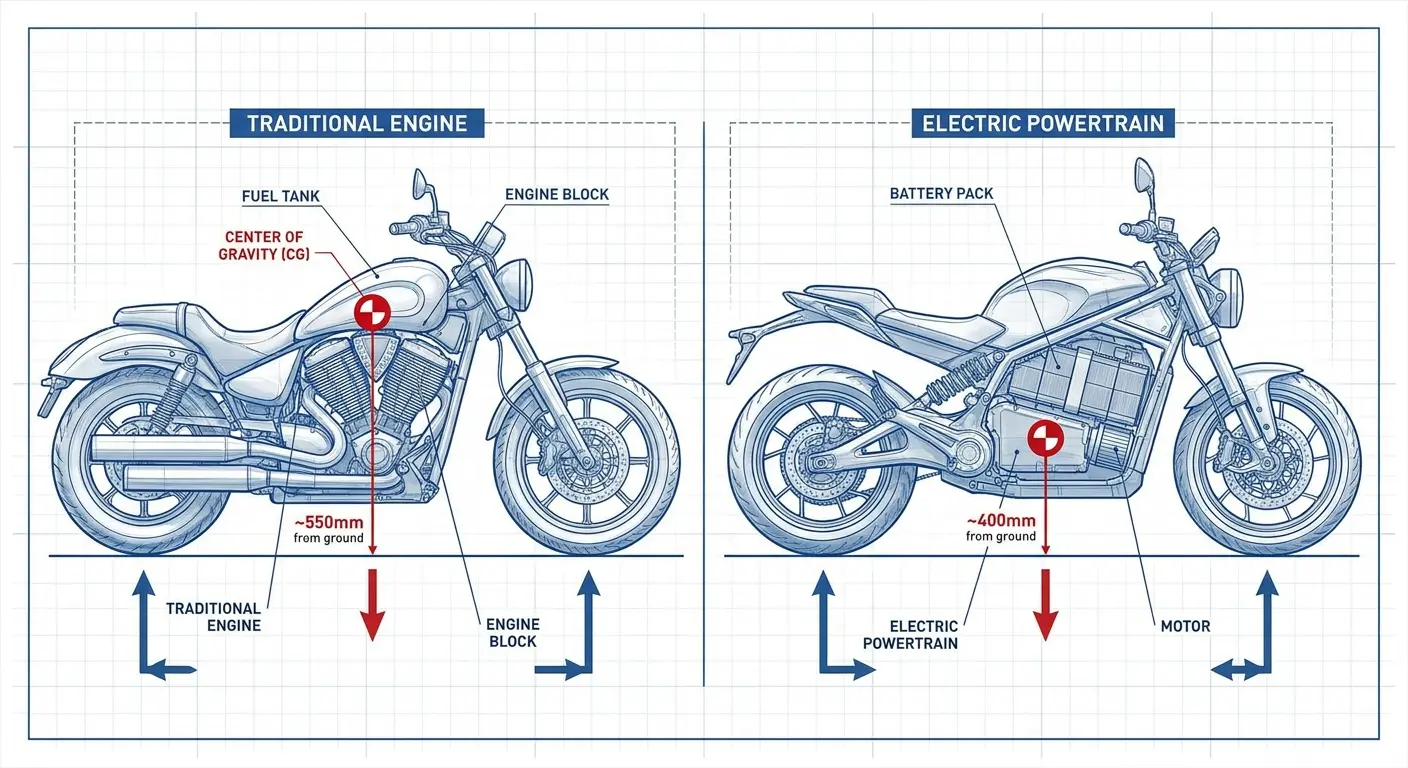
The downside? Batteries are heavy. Electric motorcycles often weigh 100-150 pounds more than comparable gas bikes because battery energy density is still far below gasoline. That extra weight is positioned well, but it's still extra weight that affects acceleration, braking distances, and tire wear.
Fast charging creates a new consideration. Some riders want to swap depleted batteries for fresh ones rather than waiting for charging. This means the batteries need to be accessible and removable, which limits placement options. You can't bury them deep in the frame if they need to come out every 100 miles.
The Torque Delivery Difference and Weight Transfer
Electric motors deliver maximum torque instantly from zero RPM. Gas engines need to build RPM to reach peak torque. This difference changes weight transfer during acceleration.
Twist the throttle on an electric bike, and weight transfers to the rear tire immediately and violently. There's no gradual build-up as the engine climbs through its rev range. It's instant force trying to rotate the bike backward around the rear axle. This makes wheelies easier and traction management more critical.
The aggressive weight transfer under acceleration can help rear tire grip if you're smooth with the throttle. Weight loads onto the rear contact patch quickly, increasing available grip right when you're asking the tire to put power down. But if you're abrupt with throttle inputs, you can overwhelm the tire before weight has fully transferred, breaking traction.
Regenerative braking adds another weight transfer scenario that doesn't exist on gas bikes. When you roll off the throttle on an electric bike with aggressive regen settings, the motor creates braking force at the rear wheel. This slows the bike while keeping weight distribution more neutral than conventional braking because you're not loading the front tire as heavily.
Some riders use regen as their primary braking method for normal stops, only using the friction brakes for hard stops. This changes weight transfer patterns throughout a ride and can extend front tire life because you're using the front brake less frequently.
The combination of instant acceleration and regen braking creates more frequent weight transfers than traditional riding. The bike is constantly shifting weight forward and backward as you modulate throttle and regen. This can make electric bikes feel more active and engaging, though it also requires more attention to weight management.
Your Phone Mount's Impact on High-Speed Stability
Real talk about phone mounts, because this matters more than the half-pound weight suggests.
Your phone weighs 6-8 ounces. The mount adds another 2-4 ounces. That's half a pound or more sitting somewhere on your handlebars or triple clamp. At parking lot speeds, it's irrelevant. At highway speeds, it matters more than you think.
Handlebar-mounted phones sit 3-4 feet above the ground and 2-3 feet forward of the bike's center of gravity. This creates leverage that affects steering feel and high-speed stability. The weight isn't much in absolute terms, but its position amplifies its effect.
High-speed wobbles (also called tank slappers) occur when the front end oscillates rapidly side to side. These get triggered by various factors, but any weight mounted to the handlebars or fork assembly can either dampen or amplify these oscillations. A poorly secured phone mount can contribute to wobble by adding mass that oscillates with the handlebars.
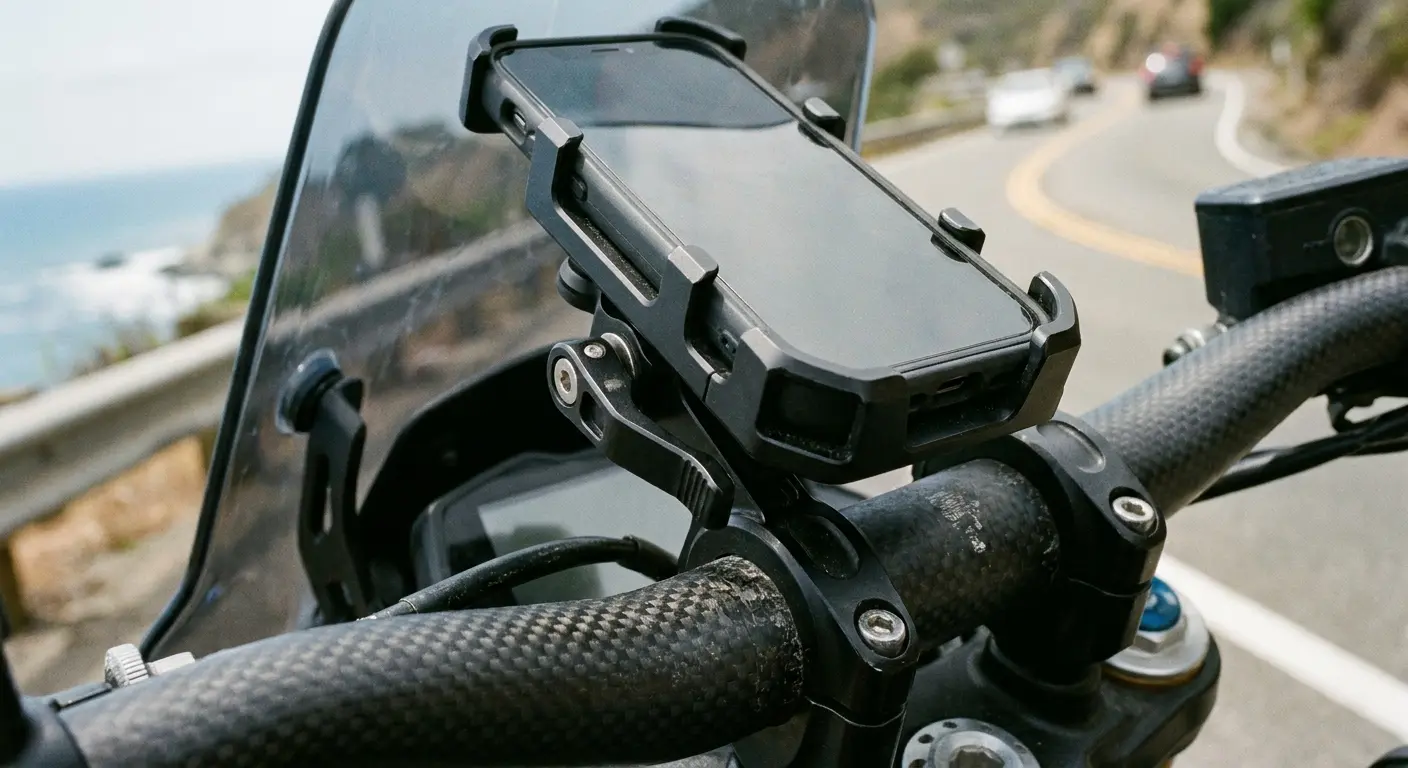
Riders seeking reliable navigation solutions should explore motorcycle mounts designed specifically to minimize handling impact while maintaining secure phone access. Rokform's mounting systems address this through low-profile designs and secure attachment points that minimize the lever arm effect. Their mounts position phones as close to the handlebar centerline as possible, reducing the moment created by the phone's mass. The magnetic attachment system keeps the phone locked in place without the wobble-inducing flex that cheaper mounts allow.
Wind resistance from your phone creates another issue. That flat rectangle catches air at highway speeds, creating a force that tries to rotate the handlebars. On bikes with light steering effort, you can feel this as a constant pressure requiring correction. Proper mount positioning can minimize wind exposure by tucking the phone behind the windscreen or keeping it in the aerodynamic shadow of the instrument cluster.
The phone's weight also affects handlebar vibration. More mass on the bars can either dampen vibration (if it's secured rigidly) or amplify it (if the mount allows any flex). This is why mount quality matters beyond keeping your phone attached. A solid mount integrates the phone's mass with the handlebar assembly. A flexible mount creates a secondary vibration system that resonates at different frequencies.
I ran a cheap Amazon mount for a year. Worked fine around town. Then I did a highway trip and around 85 mph, my bars developed this weird buzz that wasn't there before. Thought it was the bike. Swapped to a solid mount (Rokform, since we're being specific), positioned the phone closer to the centerline, and the buzz disappeared.
Not saying you need that exact brand, but the principle is real: get your phone as close to the handlebar centerline as possible, and make sure the mount doesn't flex. Flexing creates harmonic vibration. Harmonic vibration at 80 mph sucks.
For riders who track their bikes or ride aggressively, phone placement becomes a performance consideration. Some riders move their phones to tank bags or tail sections for track days specifically because they don't want any extra weight affecting handlebar feel. But for street riding where you need navigation access, finding the right mounting solution balances accessibility with minimal handling impact.
Rokform's rugged cases and mounts get designed for motorcycle use, which means they account for vibration, weather exposure, and the security needed to keep expensive devices attached during aggressive riding. Their products solve a real problem: keeping your phone accessible without compromising the bike's handling or risking a $1000 device on a sketchy mount.
Practical Weight Management for Real-World Riding
Luggage Placement Strategy
Where you put your stuff matters as much as how much stuff you bring. Weight positioned correctly barely affects handling. Weight positioned poorly turns your bike into a different machine.
Luggage placement is simple: low and centered beats everything else.
Tank bags: Best option. Weight stays low, sits between your axles, barely affects handling. Put your heavy stuff here: tools, spare parts, that stupid heavy chain you're paranoid about.
Saddlebags: Pretty good. Low weight, though a bit wide. Hard bags scrape in corners before soft bags, so if you actually lean your bike over, soft bags are better.
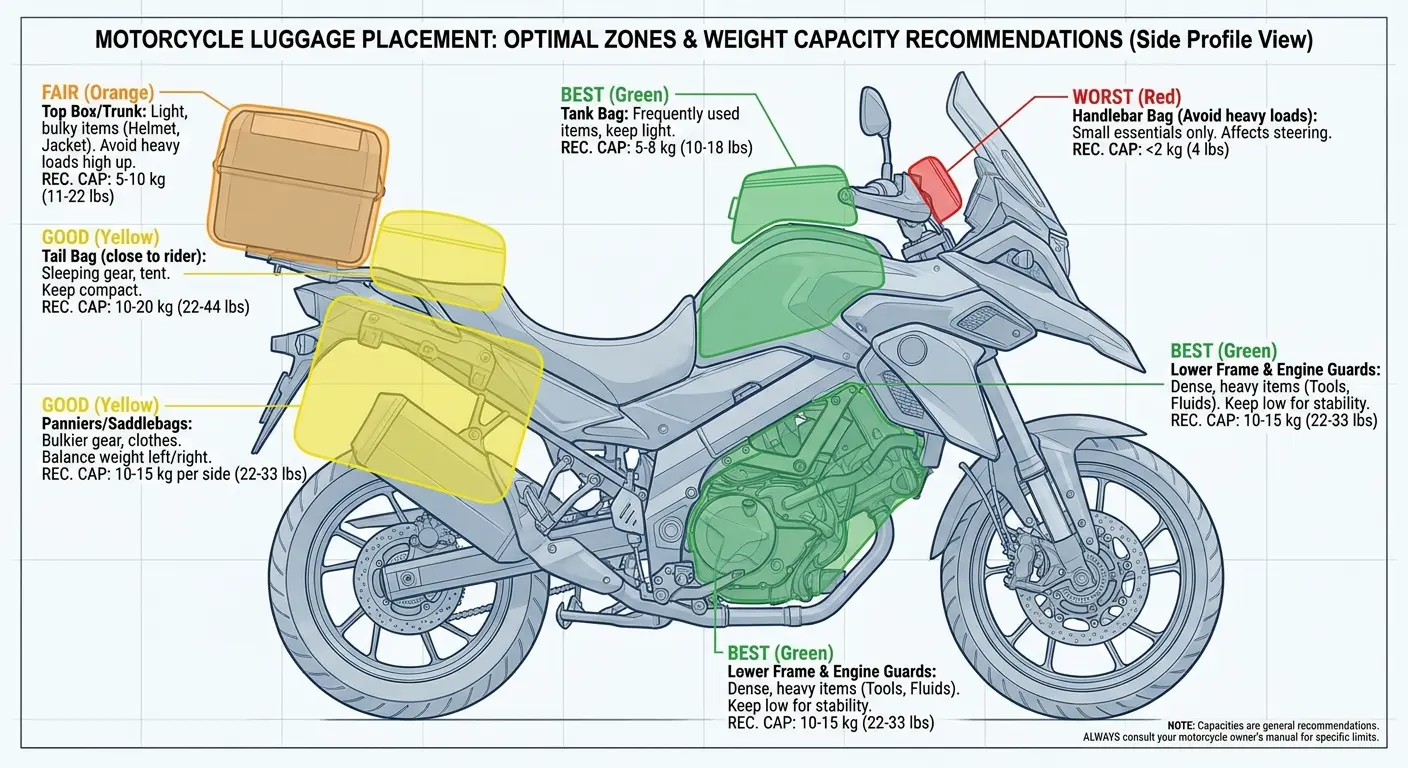
Top cases: Convenient but terrible for handling. You're stacking weight 18 inches behind your rear axle, up high. Lightens the front end, makes steering feel twitchy. Fine for commuting, questionable for spirited riding.
Tail bags and top cases add weight behind the rear axle. This lightens the front end, which can make steering feel quicker but also less stable at speed. It's acceptable for moderate loads but becomes problematic with heavy luggage. A 30-pound top case sitting 18 inches behind the rear axle creates leverage that affects weight distribution.
Backpacks are the worst option for weight distribution. They sit high on your body, raising the combined system's CG. They also add weight that moves independently from the bike, creating a pendulum effect during acceleration, braking, and cornering. Anything over 10-15 pounds in a backpack noticeably affects handling.
I learned this the hard way with a 30-pound backpack on a 500-mile day. By hour three, my lower back was screaming and the bike felt unstable in corners. Moved everything to saddlebags for the ride home. Night and day difference.
For multi-day trips, distribute weight across multiple mounting points rather than loading everything in one location. Split your gear between a tank bag, saddlebags, and a small tail bag rather than filling a large top case. This keeps the CG lower and more centralized.
Heavy items go low and forward. Put your tools, spare parts, and other dense objects in the bottom of your saddlebags or in a tank bag. Light, bulky items (clothing, sleeping bag) can go higher and farther back because they don't create as much leverage.
Seasonal and Trip-Specific Considerations
Daily commuting requires minimal gear, which means weight management is straightforward. Your body weight and riding gear are the main variables. Keep your phone mounted securely (Rokform's motorcycle handlebar mounts handle daily vibration and weather exposure without degrading), and avoid heavy backpacks if possible. A small tail bag or tank bag handles most commuting needs without affecting handling.
Weekend sport riding prioritizes handling over carrying capacity. Strip off any unnecessary weight. Remove passenger pegs if you're riding solo. Skip the luggage entirely or use a minimal tail bag for a rain jacket and basic tools. Your goal is keeping the bike as close to its designed weight and weight distribution as possible.
Long-distance touring requires carrying real weight, which means you need strategy. Plan your packing around weight distribution, not convenience alone. Use all available mounting points to spread weight across the bike. Consider upgrading suspension to handle the added load, either through preload adjustments or aftermarket springs and dampers rated for touring weight. I also put together a motorcycle road trip guide for planning the miles.
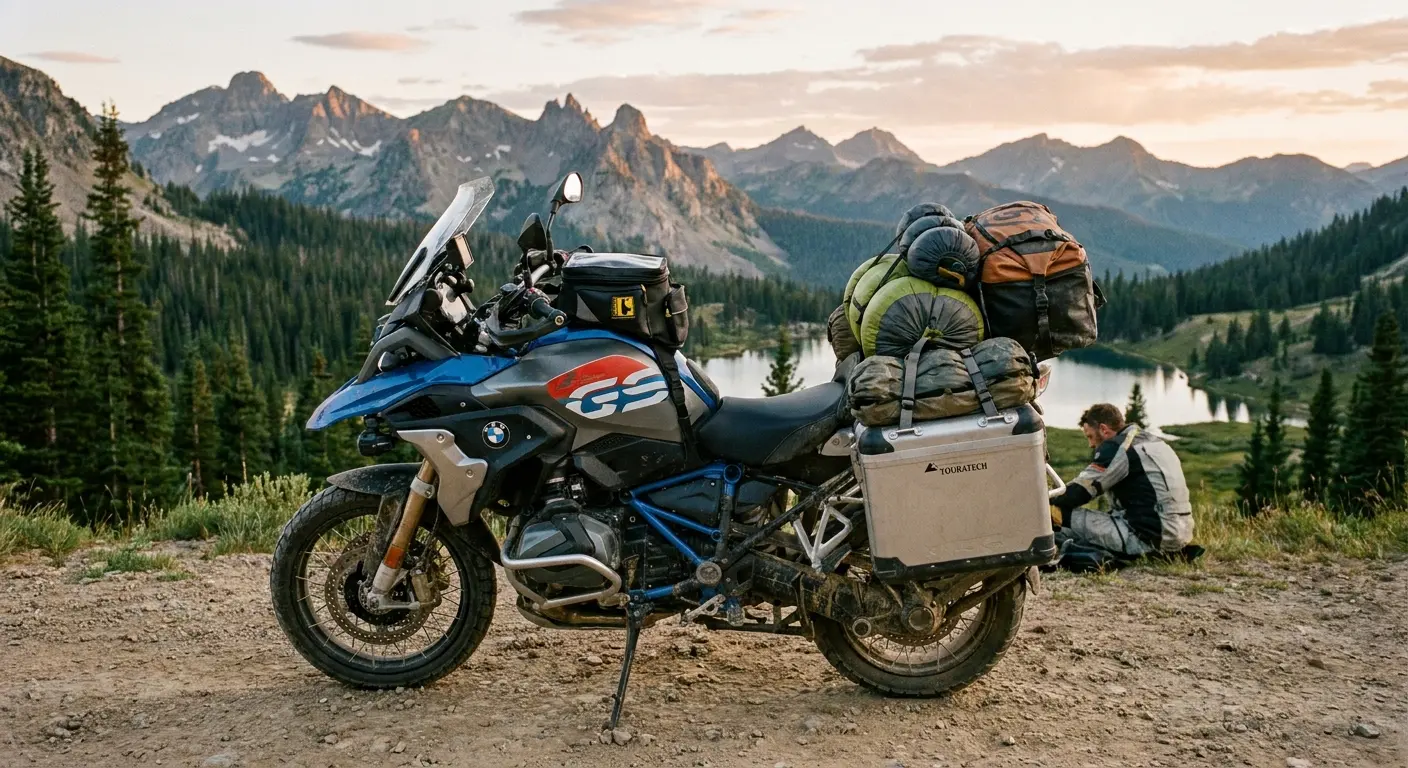
Off-road and adventure riding creates unique challenges because weight affects ground clearance and bike control on loose surfaces. Keep weight as low and centralized as possible. Hard luggage that sticks out wide will catch on obstacles and affect balance when you need to paddle the bike with your feet. Soft luggage that hugs the bike works better for technical terrain.
Winter riding adds weight through extra clothing layers and potentially heated gear with battery packs. This weight sits high on your body, raising the CG. You can't avoid it, but you can compensate by being more deliberate with other weight additions. Skip the backpack and use bike-mounted luggage for anything you need to carry.
Track days require the opposite approach: remove everything possible. Some track organizations require removing mirrors, license plates, and lights to reduce loose parts in case of a crash. This also reduces weight and improves handling. Serious track riders weigh their bikes and calculate weight distribution changes from different modifications.
Modifications That Affect Weight Distribution
Exhaust systems get swapped frequently, and they change weight distribution. Stock exhausts are heavy and positioned far back on the bike. An aftermarket exhaust can save 15-30 pounds, and that weight comes off the rear of the bike. This shifts weight distribution forward, which can improve front-end feel and turn-in response.
Wheels are unsprung weight, which means they affect suspension performance more than sprung weight (everything the suspension supports). Lighter wheels improve suspension compliance and reduce rotational inertia, making the bike accelerate and brake more responsively. Carbon fiber wheels can save 10-15 pounds of unsprung weight, though they cost thousands of dollars.
Battery upgrades (lithium batteries replacing lead-acid) save 5-10 pounds from a high, forward position on most bikes. This lowers the CG slightly and shifts weight distribution rearward. It's a small change, but it's weight savings from a good location.
Aftermarket seats can add or remove weight depending on design. Comfort seats with extra padding add weight high on the bike. Lightweight racing seats remove padding to save weight. The difference might only be 2-3 pounds, but it's positioned exactly where you sit, making it part of the combined rider-bike CG.
Crash protection (sliders, bars, guards) adds weight in various locations. Frame sliders add a pound or two low on the bike. Engine guards add 5-10 pounds low and forward. Crash bars can add 15-20 pounds depending on design. This weight is generally positioned well (low and centralized), so the handling impact is minimal, but it's still added mass.
Fuel range modifications (larger tanks, auxiliary tanks) add weight high and forward when full. A larger tank might add 10 pounds empty plus another 20-30 pounds of additional fuel capacity. This changes weight distribution and handling, especially on smaller bikes where the added weight represents a larger percentage of total mass.
Windscreen and fairing modifications affect aerodynamics more than weight, but larger windscreens do add a pound or two positioned high and forward. The aerodynamic benefits usually outweigh the minor weight penalty, but it's worth considering for bikes where every pound matters.
Final Thoughts
Weight distribution shapes every aspect of how your motorcycle behaves. The curb weight number in the spec sheet tells you almost nothing about real-world handling because it ignores where that weight lives and how it moves during riding.
You control more variables than you probably realize. Body position, luggage placement, gear choices, and even your phone mount contribute to the combined system's weight distribution. Each decision either works with your bike's designed characteristics or fights against them.
Understanding weight transfer during braking, acceleration, and cornering gives you a framework for improving your riding. You can't change physics, but you can work with it instead of against it. Smoother inputs, strategic body positioning, and awareness of how weight shifts through different riding scenarios make you a more effective rider.
The BMW R1200RT's continued popularity in the used market shows how proper weight distribution creates lasting value. Despite weighing 270kg-plus, the bike's low center of gravity and optimized mass placement make it feel lighter than expected once moving, with owners praising its handling even after years of ownership. This proves that where weight sits matters more than the total number on the scale.
Electric motorcycles are proving that weight distribution matters more than total weight. Their optimized battery placement creates handling that defies their curb weight numbers. This is the clearest evidence that where weight sits determines how a bike feels and performs.
The industry needs to publish weight distribution data alongside curb weight specs. Riders deserve to know front/rear weight split and center of gravity height before they buy. These numbers affect real-world handling more than horsepower figures or torque curves, yet they remain hidden in engineering documents rather than marketing materials.
Your bike's weight distribution isn't fixed. Every ride, you're creating a new combined system with different characteristics based on fuel level, gear load, passenger presence, and riding position. The riders who understand this and adapt their technique accordingly get more performance, safety, and enjoyment from the same machine.
Weight matters. But it's not about the number on the scale. It's about where that weight lives during the moments when you're asking your bike to perform.

