


Table of Contents
-
The Physics-First Approach: Grips Built Around Hand Mechanics
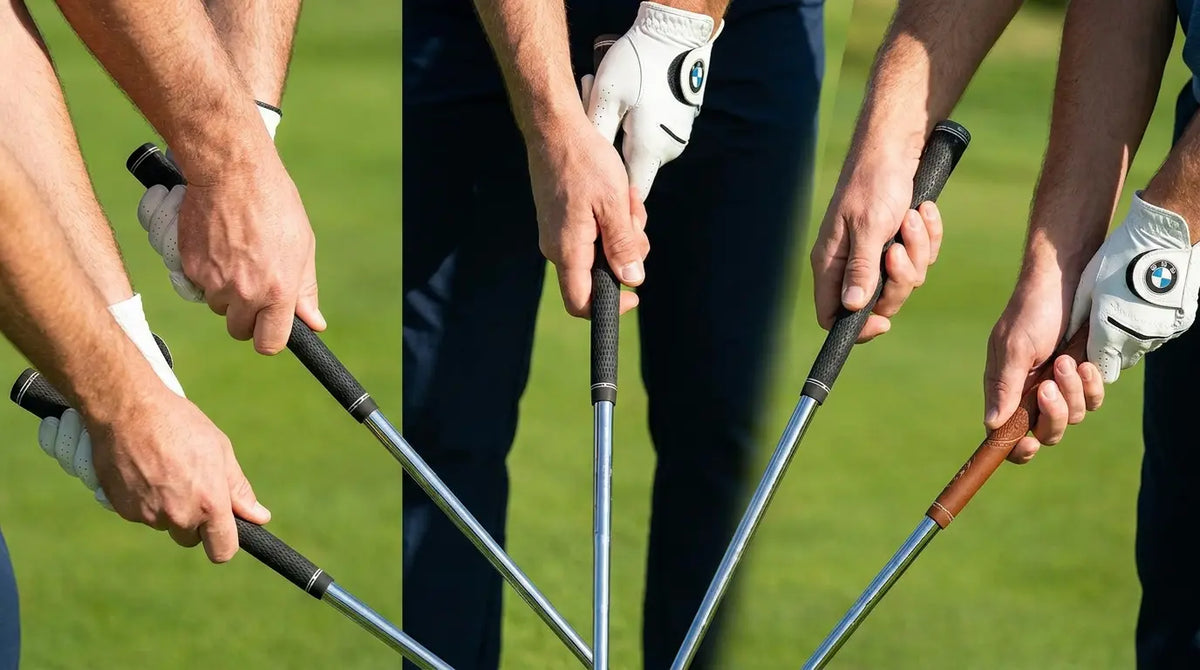
Interlocking Grip
Overlapping Grip (Vardon Grip)
Ten-Finger Grip (Baseball Grip)
Reverse Overlap Grip
-
Pressure Point Manipulation: Where Your Hands Connect With Intent
Strong Grip
Weak Grip
Neutral Grip
Cross-Handed Grip (Left-Hand Low)
The Claw Grip
-
Specialty Configurations for Specific Shot Demands
Split-Hand Grip
Arm Lock Grip
Saw Grip
Prayer Grip
Pencil Grip
-
Material and Texture Choices That Respond to Real Conditions
Corded Grips
Rubber Compound Grips
Wrap-Style Grips
How Rokform Supports Your Game Beyond the Course
Final Thoughts
TL;DR
Your grip controls your clubface. Your clubface controls where the ball goes. Most people never change their grip from what they learned first. That's a mistake. Strong/weak/neutral refers to hand rotation, not how tight you squeeze. Different grips fix specific problems. Specialty putting grips exist because normal ones don't work for everyone. Grip material matters in rain and humidity. Give new grips at least three range sessions before judging them. Changing your grip makes you worse before it makes you better. Equipment choices off the course affect grip strength and hand fatigue.
The Physics-First Approach: Grips Built Around Hand Mechanics
Let's start with the basic grips because they affect literally everything else in your swing. These aren't beginner or advanced options. They're just different ways your hands can work together when you swing. Some will click for your hands, some won't.
Most teachers show you what grips look like. I'm more interested in what they actually do to your ball flight. The three basic hand positions (interlocking, overlapping, and ten-finger) each solve different problems related to how your hands stay connected, how freely your wrists can move, and how much power you can generate.
Your choice between them shouldn't be based on what your first instructor showed you 20 years ago. It should be based on how your hands physically function when you're swinging at 90 mph and trying not to launch the ball into the next county.
Grip Type |
Best For Hand Size |
Primary Advantage |
Control vs. Speed Trade-off |
|---|---|---|---|
Interlocking |
Small to medium |
Maximum hand unity, prevents separation |
High control, moderate speed |
Overlapping (Vardon) |
Medium to large |
Wrist hinge freedom, natural connection |
Moderate control, high speed |
Ten-Finger (Baseball) |
Any (especially limited strength) |
Maximum surface contact, power generation |
Lower control, high speed potential |
Reverse Overlap |
Any (putting only) |
Wrist restriction, lead hand passivity |
Maximum stability, minimal speed variance |
1. Interlocking Grip
The interlocking grip connects your hands by weaving the pinky finger of your trailing hand between the index and middle fingers of your lead hand. This locks your hands together so they can't come apart during your swing.
I switched to the interlock after watching my hands separate at the top of my backswing for the hundredth time. Felt weird for about two weeks. Then I stopped thinking about it, and my contact got way more consistent. Turns out when your hands can't come apart, the club doesn't twist.
Players with shorter fingers or smaller hands find this grip prevents that separation during the transition phase. The locked connection reduces the chance of the club twisting in your hands at impact, but it also limits your ability to make micro-adjustments mid-swing. You'll see this grip dominate among tour players who prioritize consistency over shot-shaping versatility.
It'll either feel like your hands are locked in perfectly, or like someone zip-tied your fingers together. Most people don't feel in-between about it. If you've ever felt the club slip slightly at the top of your backswing, this connection addresses that specific failure point. The interlock forces your hands to work as a single unit, which means any breakdown in one hand immediately affects the other.
2. Overlapping Grip (Vardon Grip)
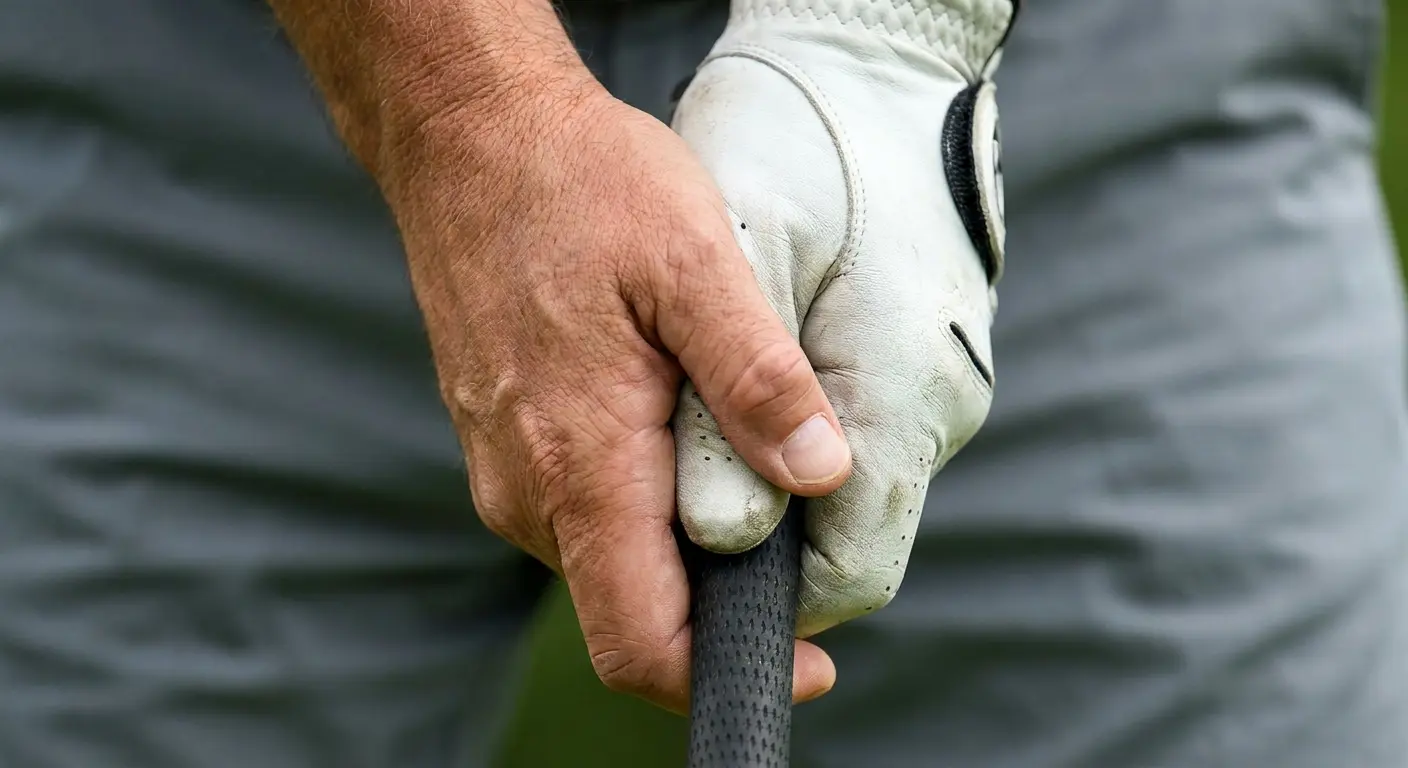
Named after Harry Vardon, this grip places your trailing hand's pinky finger on top of the gap between your lead hand's index and middle fingers. The overlap creates connection without the full commitment of interlocking.
Players with longer fingers or larger hands typically find this more comfortable because it doesn't force fingers into cramped positions. The slightly looser connection (compared to interlocking) allows for more wrist hinge and clubhead speed generation. You sacrifice a small amount of control for increased swing velocity.
This matters most on driver swings where clubhead speed directly translates to distance. The overlap still unifies your hands but permits fractionally more independent movement. If you generate plenty of clubhead speed but struggle with directional control, this might be working against you. The freedom it provides in wrist action can be either an advantage or a liability depending on your swing characteristics.
If you've got small hands like Rory McIlroy, the interlock keeps everything connected. Try the overlap and your pinky's just floating out there doing nothing.
3. Ten-Finger Grip (Baseball Grip)
Every finger contacts the club with no overlap or interlock. This grip maximizes surface area contact and distributes pressure across all ten fingers.
Golf snobs hate the baseball grip. They'll tell you it's for beginners or people who don't know better. Meanwhile, my buddy's 68-year-old dad uses it and shoots in the 70s. He's got arthritis and can't interlock his fingers without pain. The baseball grip lets him play.
If it works, it works. I don't care what tradition says.
Beginners often start here because it feels natural, but it's also the preferred choice for players with hand injuries, arthritis, or limited finger strength. The increased contact points can generate more clubhead speed for players who lack the strength to compress the ball with other grips.
The tradeoff shows up in consistency. Without the unified hand connection, the club can twist more easily at impact, especially on off-center strikes. You'll also see more variation in clubface angle because each hand can move slightly independently.
Junior golfers and seniors often perform better with this grip than they do fighting against the physical demands of overlapping or interlocking. Your hands working independently isn't always a disadvantage if you lack the strength to control the club with fewer contact points.
4. Reverse Overlap Grip
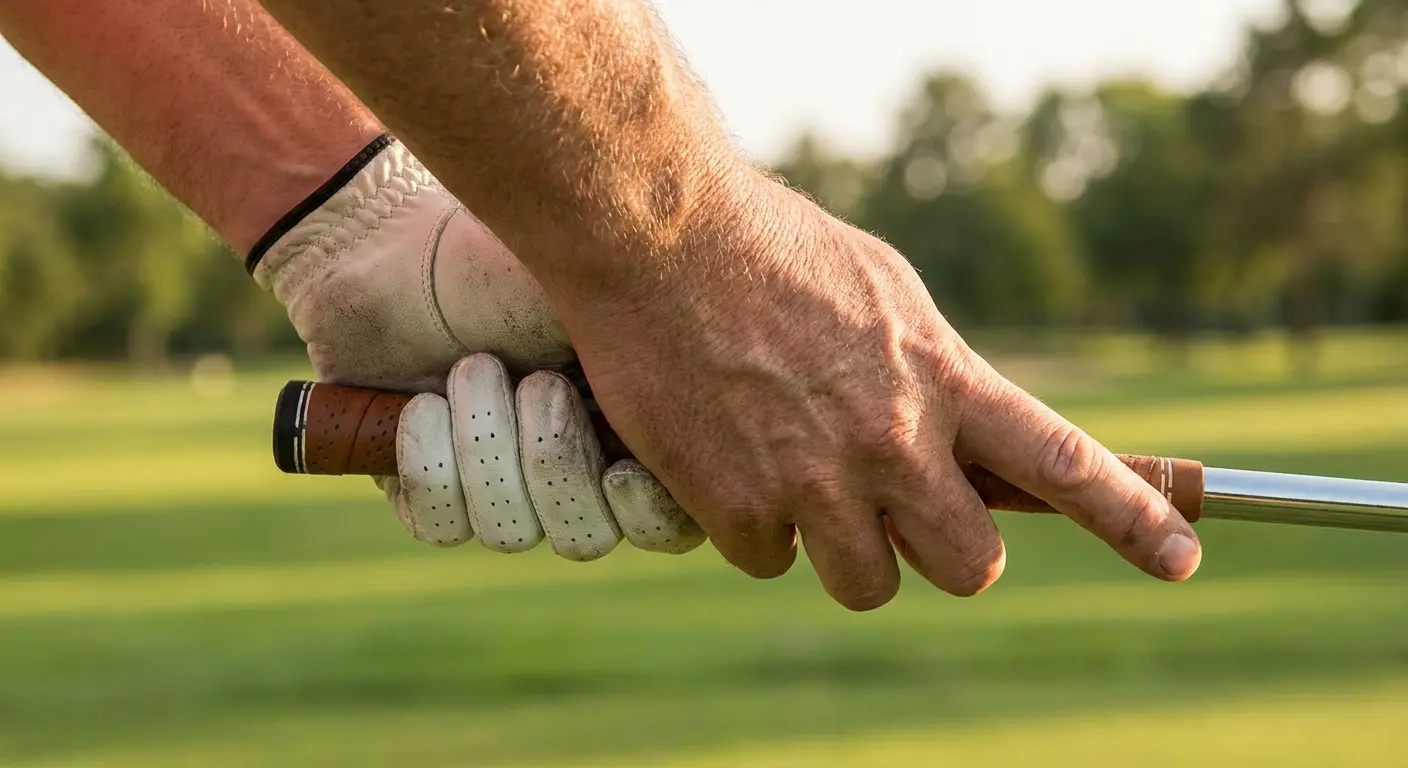
This grip inverts the standard overlap by placing your lead hand's index finger over the fingers of your trailing hand. It's almost exclusively used for putting, though some players adopt it for chip shots.
The configuration reduces wrist action by locking the lead hand into a more passive role. Your trailing hand becomes the primary speed and direction controller. This solves a specific putting problem: too much lead wrist breakdown through impact.
If you've ever pulled short putts left (for right-handed golfers), excessive lead wrist movement is often the culprit. The reverse overlap physically restricts that motion. The grip feels awkward for full swings because it removes the lead hand's ability to guide the club, but for the minimal motion of putting, it creates the stability most players need. You're removing a variable that causes inconsistency on the greens. I break down the types of golf balls the same way.
Pressure Point Manipulation: Where Your Hands Connect With Intent
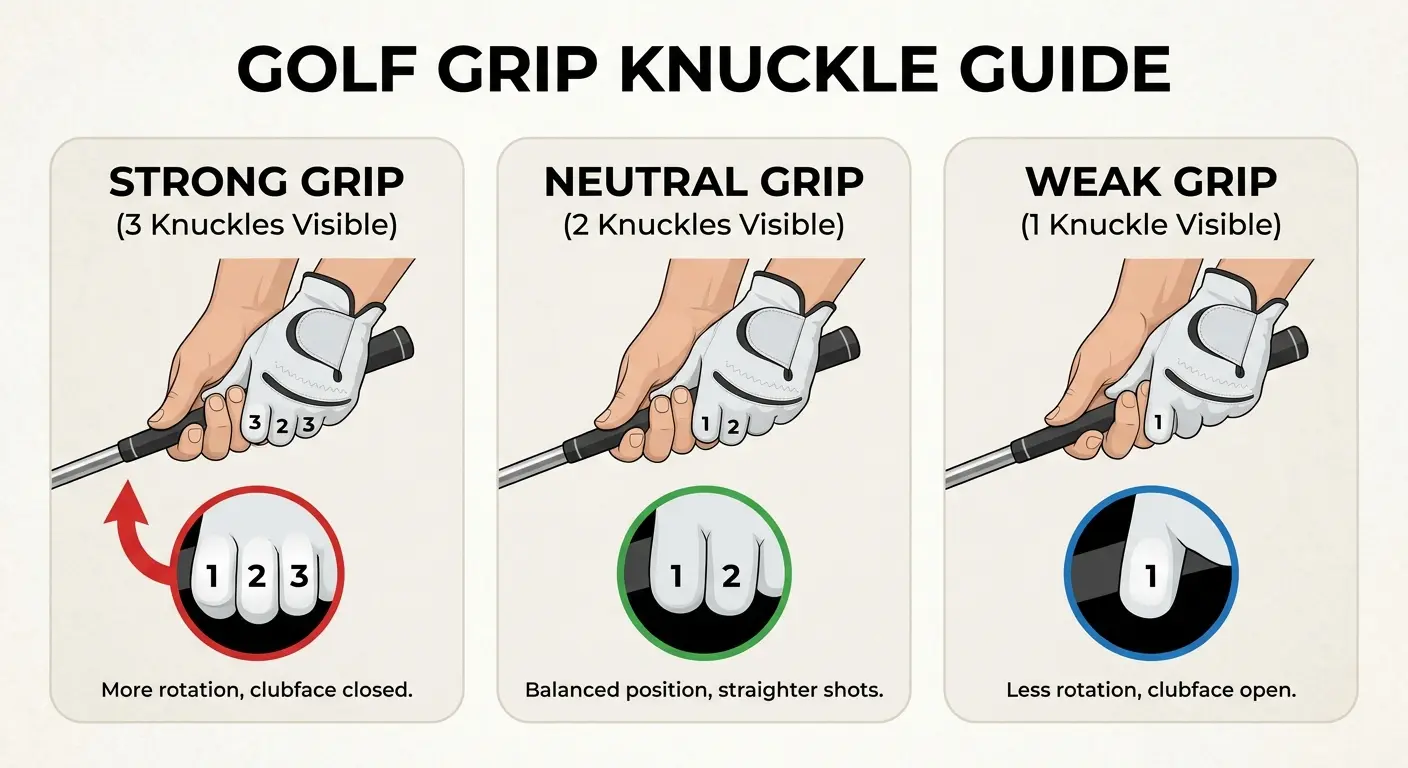
Now let's talk about something different: it's not just how your fingers link up, it's how your entire hands sit on the club. Strong, weak, and neutral grips aren't about how tightly you hold the club (that's grip pressure, a completely different concept).
They describe the rotational position of your hands and how many knuckles you see when you look down at address. These rotational differences change the clubface angle throughout your swing without any conscious manipulation on your part.
We're also covering unconventional hand positions that specifically address putting inconsistencies. These grips solve problems that occur after the ball is struck, which is why they're often overlooked in instruction that focuses only on setup positions.
Grip Rotation Type |
Lead Hand Knuckles Visible |
Clubface Tendency |
Ideal Ball Flight Pattern |
Common Problem It Solves |
|---|---|---|---|---|
Strong |
3 or more |
Closed throughout swing |
Draw/reduced fade |
Slice, weak compression |
Neutral |
2 to 2.5 |
Square (requires rotation) |
Versatile, controllable |
None (requires sound mechanics) |
Weak |
1 or fewer |
Open throughout swing |
Fade/controlled trajectory |
Hook, low ball flight |
Cross-Handed |
N/A (hand position inverted) |
Stabilized, reduced rotation |
Straight (putting) |
Trailing hand dominance, pushes |
Claw |
N/A (trailing hand modified) |
Passive trailing hand |
Straight (putting) |
Yips, excess tension |
5. Strong Grip
A strong grip rotates both hands clockwise on the club (for right-handed players), showing three or more knuckles on your lead hand at address. This closes your clubface before you even start your swing.
I fought a slice for two years before someone showed me a strong grip. Fixed it in one range session. The clubface stays more closed throughout the swing, promoting a draw or reducing a fade.
With a strong grip, you don't have to rotate your hands as much to square the clubface. It's already most of the way there. Players who slice the ball or struggle to compress irons often benefit immediately from this adjustment.
The downside appears in versatility. Hitting controlled fades becomes harder, and if you already hook the ball, a strong grip exaggerates that pattern.
The strong grip also flattens your swing plane. That might help you or hurt you, depending on what your swing already looks like. You're building in a compensation that happens automatically. The closed clubface position at address translates directly to a closed position at impact, assuming you maintain your grip throughout the swing.
6. Weak Grip
A weak grip rotates both hands counterclockwise, showing one or fewer knuckles on your lead hand. This opens the clubface relative to neutral throughout the swing.
Players who hook the ball or need to hit controlled fades prefer this position. The open clubface position requires more forearm rotation through impact to square the face, which demands better timing and coordination. That's why you see this grip less frequently among recreational players.
Where this grip helps is shot shaping and controlling your ball flight. A weak grip naturally produces higher ball flights and left-to-right shot shapes (for right-handed players). If you're fighting a hook or need to work the ball around obstacles regularly, the weak grip provides the foundation for those shots.
Your misses will be uglier with a weak grip. But when you catch it pure, you've got way more control over where it goes. You're trading forgiveness for precision, which makes sense for skilled players but can be frustrating for those still developing consistent mechanics.
7. Neutral Grip
The neutral grip positions your hands so you see approximately two knuckles on your lead hand at address. Both palms face each other and align roughly parallel to the clubface.
Most instructors tell beginners to start with a neutral grip. That's backwards.
Beginners have swing flaws. Everyone does. A neutral grip doesn't fix anything. It just exposes all your problems. A strong grip at least helps with the slice that 80% of beginners have.
Learn a neutral grip later, after your swing is decent. Start with what helps you hit it straighter right now.
This position requires the most forearm rotation during the swing to square the clubface, but it also provides the most versatility for shot shaping. You're not pre-setting any directional bias. The neutral grip works best for players with consistent swing mechanics who want maximum control over ball flight.
It's the most technically demanding because you can't rely on the grip itself to fix directional issues. Your swing has to be sound.
8. Cross-Handed Grip (Left-Hand Low)
This putting grip reverses the standard hand position, placing your lead hand below your trailing hand on the club. Flipping your hands switches which one controls the putter.
Your lead hand (now lower on the club) becomes the primary guide, while your trailing hand stabilizes. This solves a specific putting fault: trailing hand dominance that causes pushes and inconsistent contact. Players who feel their trailing hand takes over during the stroke find immediate improvement with this grip.
The cross-handed position also promotes better shoulder alignment and reduces wrist breakdown. The learning curve is steep because it feels completely unnatural at first, but the physical advantages for certain stroke types are undeniable.
You'll see this grip more frequently among players who've tried everything else for their putting struggles. The reversal of hand positions fundamentally changes the power dynamics in your stroke, often eliminating compensations you didn't even know you were making.
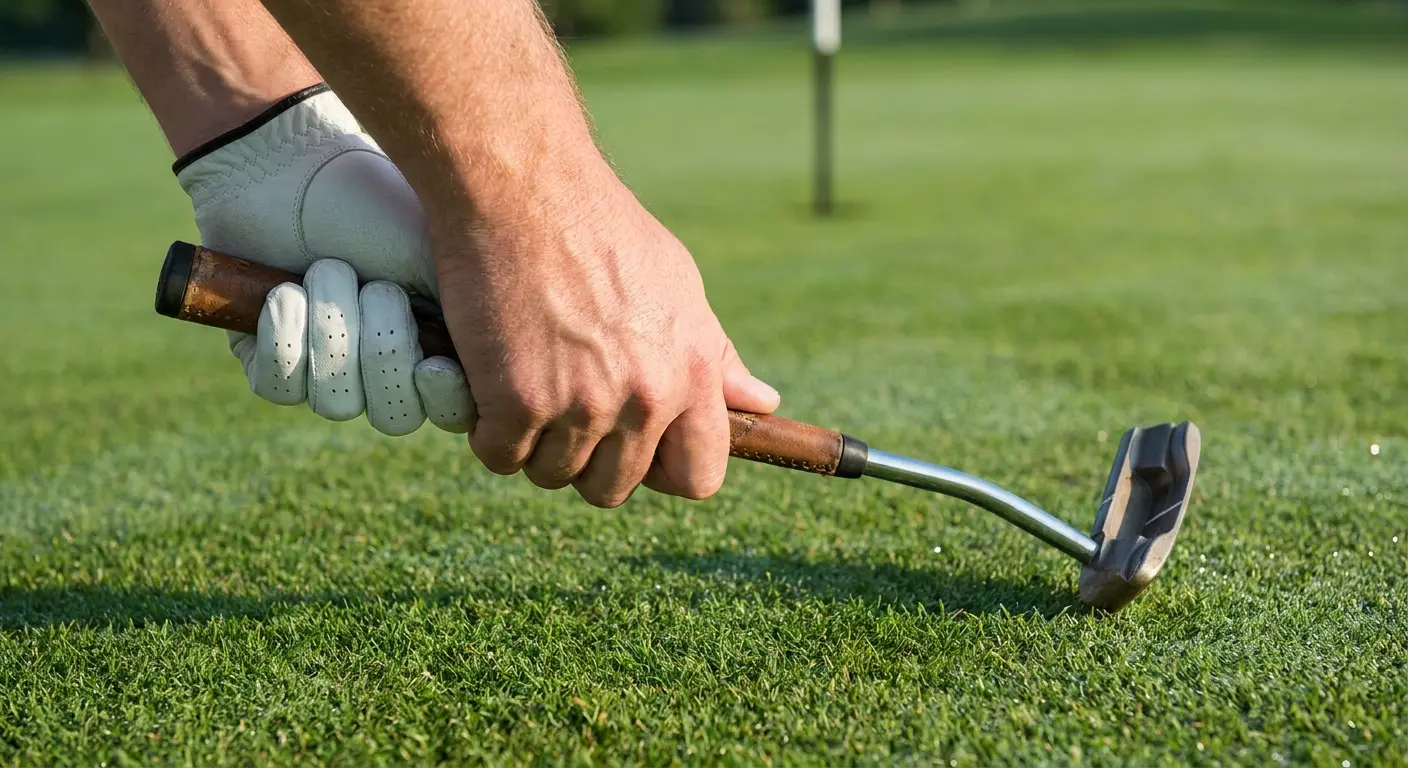
9. The Claw Grip
The claw grip maintains a conventional lead hand position but dramatically changes how the trailing hand contacts the club. Instead of wrapping around the grip, your trailing hand's fingers extend down the shaft with the club resting against your palm or lifeline.
The first time I saw someone use the claw grip, I genuinely thought something was wrong with their hand. It looks that weird.
But the guy made eight putts in a row from inside ten feet. Still looked weird. Didn't matter.
Your back hand can't mess with the putter face anymore. Players who suffer from the yips or excessive hand tension during putting adopt this grip out of necessity. It looks unusual, but it physically prevents the small muscle spasms and tension that cause missed short putts.
The claw works by taking fine motor control out of the equation. Your trailing hand becomes a passive guide rather than an active participant. This grip won't improve your distance control or green reading, but it can eliminate the involuntary jerks that ruin otherwise solid strokes.
Specialty Configurations for Specific Shot Demands
Look, you're probably never using most of these. But for the sake of being thorough, here are the grips that exist outside standard instruction. They address niche problems or specific shot requirements that come up less frequently.
Some of these grips have emerged from players experimenting to overcome physical limitations or putting struggles that conventional grips couldn't fix. They represent creative problem-solving rather than traditional technique.
10. Split-Hand Grip
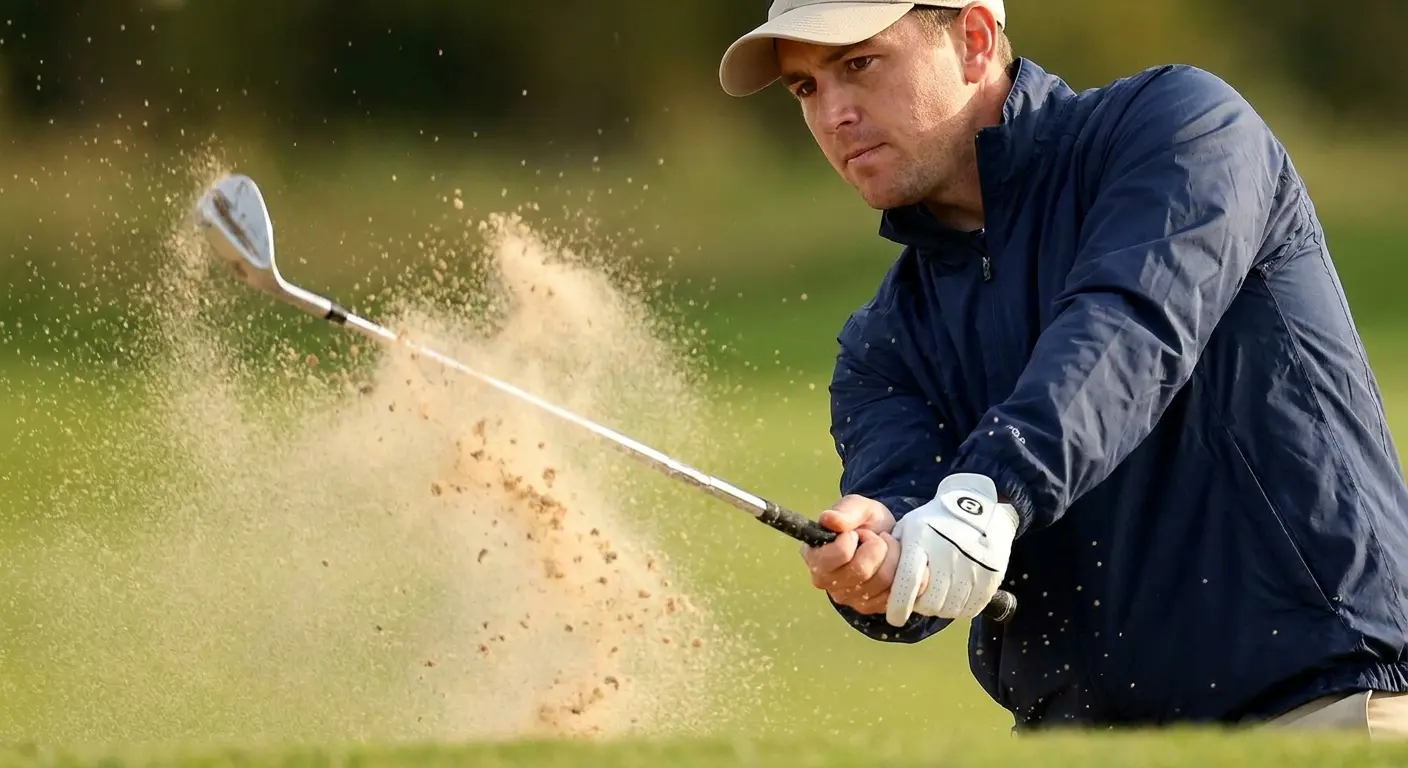
The split-hand grip separates your hands on the club with a gap of several inches between them. You'll basically only use this in bunkers or for weird short-game shots.
Separating your hands shortens the effective club length and increases your control over the clubface angle. You'll use this when you need to hit a high, soft shot from sand or rough where precision matters more than distance.
The split-hand position also reduces clubhead speed, which is exactly what you want when you're trying to land the ball softly on the green. This feels terrible for full swings because you've got no leverage. But around the greens, that's exactly what you want. Less leverage means more control.
11. Arm Lock Grip
This putting grip extends the club up your lead forearm, creating a connection point between the grip and your arm. The club shaft becomes an extension of your lead arm, eliminating wrist hinge completely.
Players who struggle with distance control or wrist breakdown through impact find this grip creates unprecedented consistency. The arm lock position requires a longer putter (typically 38-42 inches instead of the standard 33-35 inches).
Here's why it works: you've eliminated your wrists completely. Fewer moving parts mean fewer variables. The downside is adaptability. You can't easily adjust for different green speeds or slopes because your stroke becomes very repetitive.
This grip works best on consistent, fast greens where repeatability matters more than touch. You're trading feel for consistency, which makes sense when you're struggling with the yips or distance control issues that stem from inconsistent wrist action.
12. Saw Grip
The saw grip positions your trailing hand with the palm facing up toward the sky rather than toward the target. This extreme rotation creates a stroke that moves through an unusual plane.
This is usually a last-resort grip when nothing else works. The saw grip prevents the trailing hand from rotating the putter face through impact, similar to the claw but with a different approach.
It looks even more unusual than the claw and requires significant practice to develop any consistency. You're relearning how to putt from scratch. The players who stick with this grip do so because nothing else solved their specific putting problems. The unconventional hand position feels wrong at first, but for some players, it's the only position that eliminates the involuntary movements causing their misses.
13. Prayer Grip
Both hands press together in a prayer position on the sides of a specialized putter grip. This configuration eliminates all wrist hinge and creates a pure shoulder-driven stroke.
The prayer grip requires a putter with a thick, flat-sided grip designed specifically for this hand position. Players who want to remove all hand and wrist action from their putting stroke use this setup. The appeal is simple. Your hands are locked together, so they can't twist the putter face.
The challenge is finding a putter that accommodates this grip and developing the shoulder motion needed to control distance. This grip has gained some popularity among players who've studied biomechanics and want to reduce variables, but it remains relatively rare. Your entire stroke becomes driven by shoulder rotation, which either feels liberating or overly restrictive depending on your natural putting motion.
The prayer grip looks absolutely ridiculous. Like you're asking the golf gods for forgiveness before you three-putt.

14. Pencil Grip
The pencil grip holds the putter with just your fingers, similar to how you'd hold a pencil. Your palms don't contact the grip at all.
This creates maximum feel and touch for short putts but provides minimal stability for longer putts. Players with exceptional hand-eye coordination sometimes prefer this grip for its sensitivity to subtle green contours. The light grip pressure (almost required with this finger-only hold) can improve distance control for players who tend to grip too tightly.
The obvious weakness is consistency. Without palm contact, the putter can twist more easily, especially on off-center strikes. You'll also see more variation in clubface angle because each hand can move slightly independently.
You won't see tour players using this. But if you care more about feel than mechanics, it works great on short putts. The delicate hold forces you to trust your hands rather than trying to control every aspect of the stroke.
Material and Texture Choices That Respond to Real Conditions
Grip material affects performance in ways most players never consider until they're struggling in specific conditions. Different rubber compounds, cord integration, and surface textures respond differently to moisture, temperature, and hand perspiration.
This isn't about brand preference or aesthetics. Different materials provide measurably different traction levels, and those differences become critical in rain, humidity, or when your hands sweat under pressure.
The grip material you choose should match the conditions you play in most frequently, but most golfers use whatever came stock on their clubs. That's a mistake when you consider how much performance varies between materials in different weather conditions.
15. Corded Grips
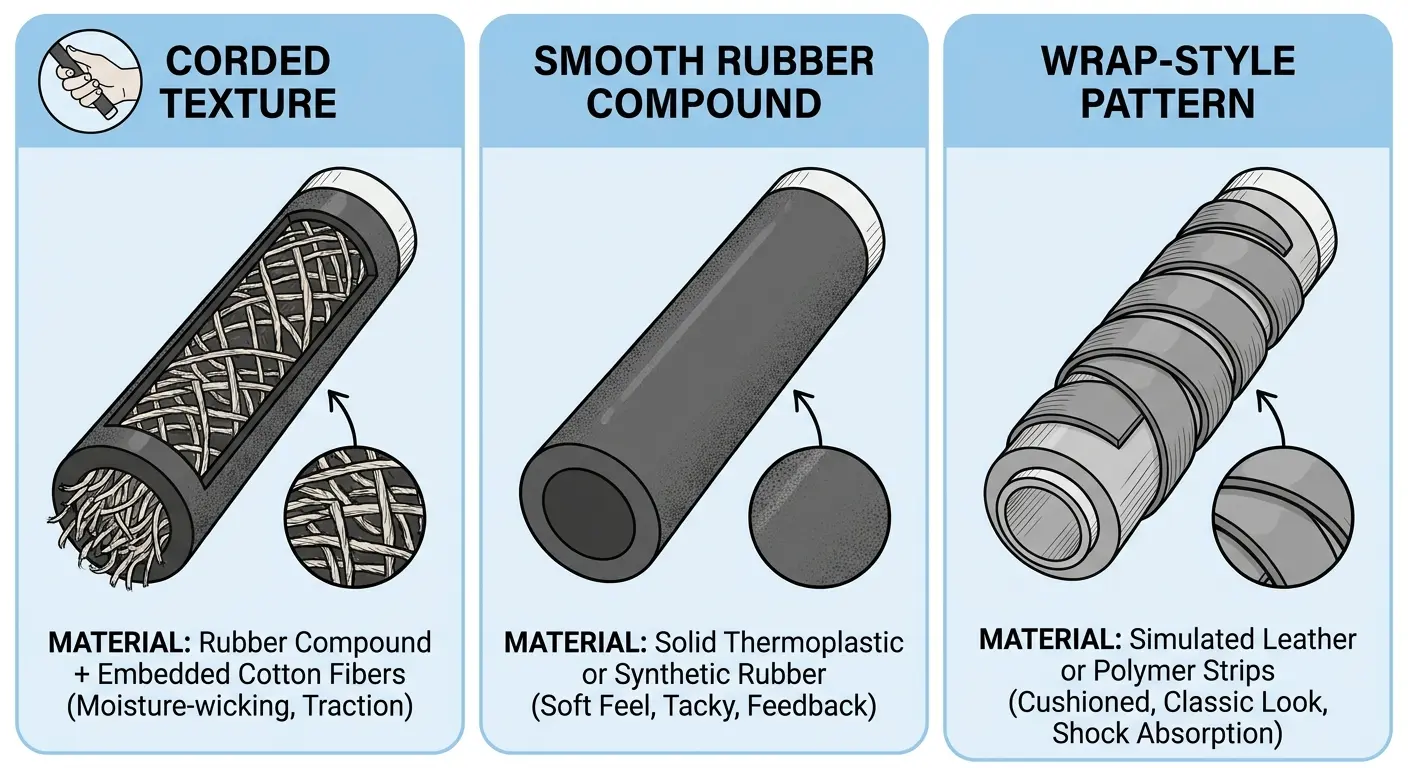
Corded grips integrate cotton or synthetic thread into the rubber compound, creating a rougher texture. The cord provides traction even when wet, which is why you'll see these grips dominate in humid climates or among players with sweaty hands.
Better traction means you can grip lighter. That usually means more speed and less tension. The downside is comfort. Corded grips feel like sandpaper. Long practice sessions will tear up your hands.
Some players only put cord on their lead hand and leave regular rubber on the other. That's the hand that slips more. The performance advantage in wet conditions is undeniable, but you're trading comfort for control.
If you play in humid places, cord makes sense. Simple as that.
16. Rubber Compound Grips
Standard rubber grips use various synthetic compounds designed to balance traction, durability, and comfort. Different manufacturers use proprietary blends, but they're all trying to do the same thing: give you good grip in dry weather without feeling harsh like cord.
These grips work well in moderate climates and for players who don't struggle with excessive hand perspiration. The softer feel reduces hand fatigue during long practice sessions or multi-round tournaments.
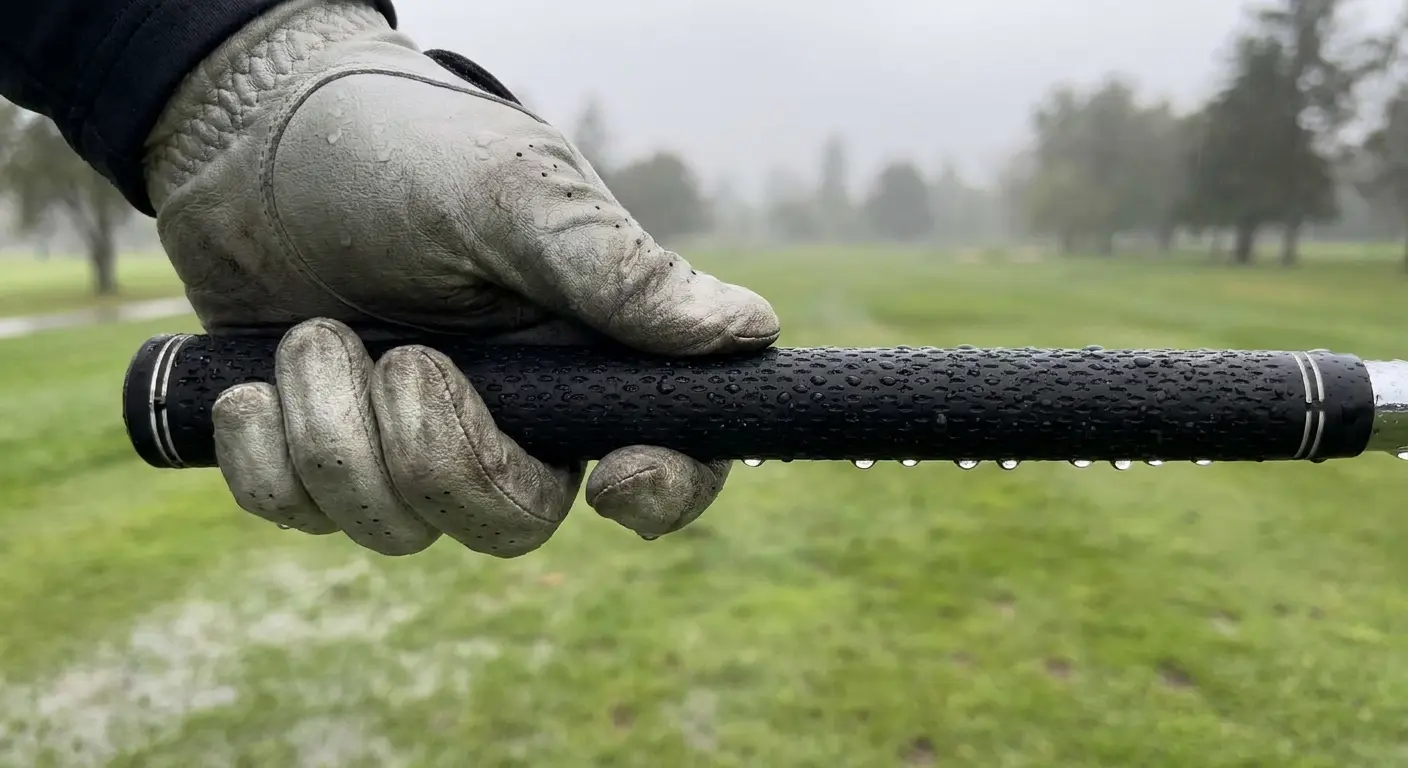
The limitation appears in wet conditions. Standard rubber becomes slippery when moisture is present, requiring you to grip tighter to maintain control. That increased grip pressure creates tension that travels up your arms and affects your swing mechanics. You're fighting the equipment instead of trusting it.
Rubber grips are popular because they work in most conditions. But they're really made for dry weather. If you play frequently in rain or high humidity, you're compromising performance by sticking with standard rubber.
17. Wrap-Style Grips
Wrap-style grips feature a spiraled pattern that mimics the look and feel of leather wrapping. The texture provides multiple contact points for your fingers and creates a tacky feel in dry conditions.
These grips excel in comfort and vibration dampening. Players who struggle with hand fatigue or joint pain often prefer wrap-style grips for their cushioning effect. The spiral pattern also helps you put your hands in the same spot every time because you can feel the ridges.
The weakness shows up in durability and wet-weather performance. Wrap-style grips wear faster than solid rubber compounds, and the textured surface can become slippery when wet. They're ideal for players in dry climates who prioritize comfort and feedback over all-weather performance. The tactile feedback from the spiral pattern gives you more awareness of where your hands are positioned, which can improve consistency if you struggle with hand placement at address.
How Rokform Supports Your Game Beyond the Course
Random thing that actually matters: your phone is wrecking your golf grip.
Sounds stupid, but think about it. How many times do you pull out your phone during a round? Checking the GPS, looking at your scorecard app, taking a swing video. Every time you're death-gripping it so you don't drop it. That tension builds up in your hands over 18 holes in the exact same muscles you need for your golf swing.
That's why I started using Rokform mounts. The magnetic mounting system means you're not holding your phone. It just sticks there, in your cart, on the range, wherever.
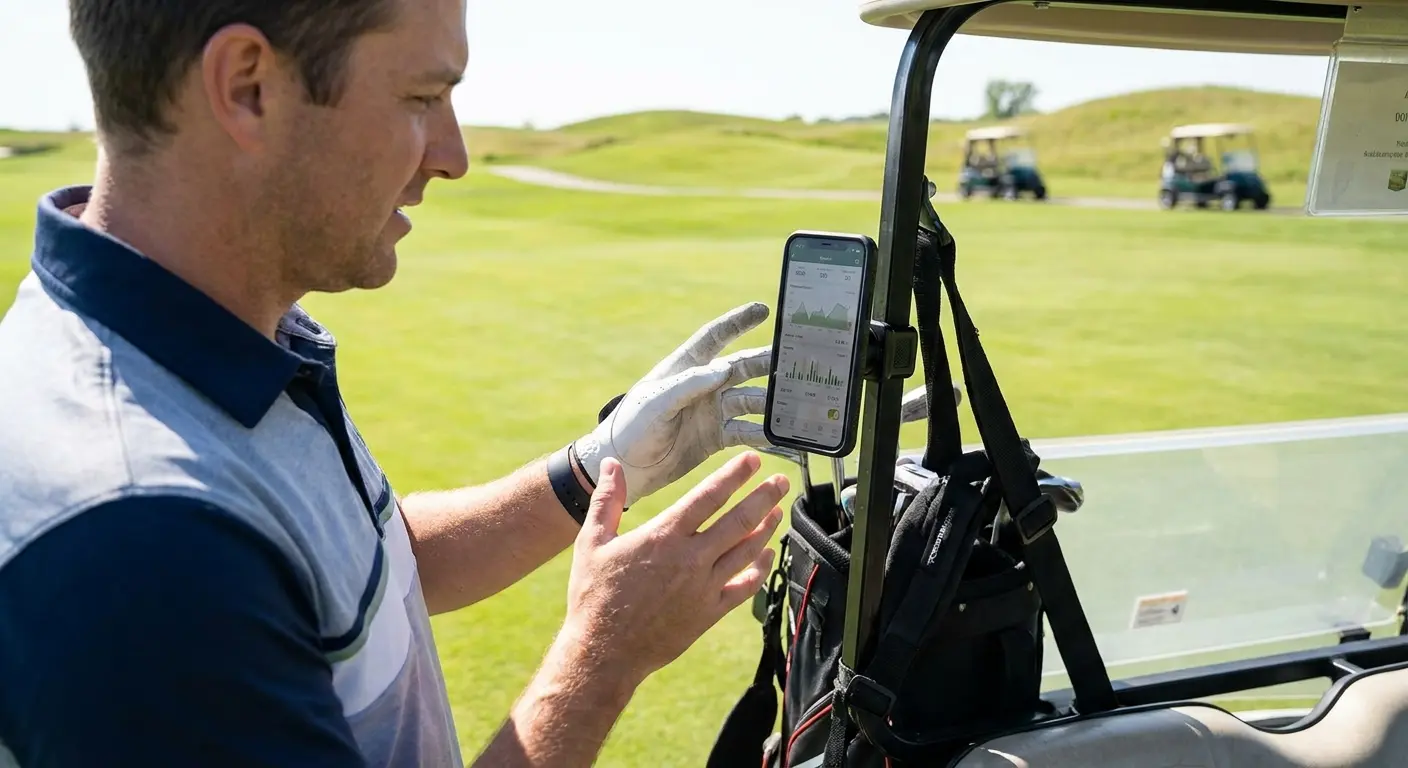
The RokLock system works the same way on mounts throughout your daily routine (car, bike, gym). You're reducing cumulative grip fatigue that affects everything from your ability to maintain consistent grip pressure to your hand's responsiveness during the swing.
I've watched people play better on the back nine just because their hands weren't tired from gripping their phone all day. The magnetic connection is strong enough to hold your phone securely on bumpy cart paths but releases instantly when you need it.
Think about how many times you pull out your phone during a round. Every time you're gripping it to prevent drops, you're creating micro-fatigue in the same muscles responsible for controlling your club. That adds up over 18 holes, especially in the later stages of your round when fatigue already affects performance.
Final Thoughts
Here's the truth most golfers don't want to hear: your grip is probably wrong for you.
Not "technically incorrect" wrong. Wrong for YOUR hands and YOUR problems.
You learned one grip when you started playing. Maybe from your dad, maybe from your first lesson, maybe from a YouTube video. You've used it ever since. You've never questioned it.
Meanwhile, you've bought new clubs, new balls, new shoes. You've taken lessons. You've tried new swing thoughts. You've blamed your swing path, your tempo, your alignment, your ball position. You've blamed everything except the one thing that actually controls your clubface.
Your grip sets your clubface angle before you even move the club. That angle determines about 75% of where your ball starts. But sure, keep buying new drivers.
Here's what to do:
If you slice, try a strong grip. Just rotate both hands clockwise on the club. Give it three range sessions before you decide it doesn't work.
If you hook, try a weak grip. Rotate both hands counterclockwise. It'll feel wrong. Do it anyway.
If you can't putt, try something weird. Cross-handed, claw, arm lock. Pick one and stick with it for a month. Normal grips aren't working, so stop doing normal things.
If you have small hands, use an interlock. If you have big hands, use an overlap. If you have hand problems, use a baseball grip and ignore anyone who tells you it's wrong.
If you play in humidity, get corded grips. Stop fighting slippery rubber.
Side note: Golf instruction is obsessed with what tour pros do. "Rory uses an interlock, so you should too." That's dumb. Rory has completely different hands than you, a completely different swing than you, and completely different problems than you. What works for him might be terrible for you.
One more thing:
Changing your grip will make you worse before it makes you better. Your hands have muscle memory from doing the same thing for years. That doesn't go away in twenty swings.
Give it time. Three range sessions minimum. Preferably a month. Your hands need to forget the old pattern and learn the new one.
Most golfers try a new grip for half a bucket, hit a few bad shots, and switch back. Then they complain that nothing works. That's not the grip failing. That's you not giving it a real chance.
Your grip is free to change. It doesn't require new equipment or expensive lessons. It just requires being willing to feel uncomfortable for a few weeks while your hands adjust.
Doesn't matter if you're playing Pebble Beach or the local muni. The right grip changes how you hit the ball. The clubface position at impact is what matters, and your grip sets that position before you swing.
Whether you're exploring best golf courses in Florida or best golf courses in New Jersey, understanding how different grip materials respond to humidity gives you an edge.
There's no "right" grip. There's the grip that works for your hands and fixes your problems.
Most golfers won't do it. They'll keep using the same grip that's been giving them the same problems for years.
Don't be most golfers.

