


Table of Contents
Where You Ride Matters More Than What You Ride
Road Slicks
Gravel Tires
Mud Tires
Sand Tires
Snow Tires
All-Terrain Tires
Construction Types (Or: Why Your Tires Keep Failing)
Clincher Tires
Tubeless Tires
Tubular Tires
Solid Tires
Plus-Size Tires
What Are You Actually Doing With This Bike?
Commuter Tires
Touring Tires
Racing Tires
E-Bike Tires
Cargo Bike Tires
TL;DR
You're probably riding the wrong tires. I did for years. Most of us just stick with whatever came on the bike, which is like wearing the same shoes for running, hiking, and going to weddings.
Width matters more than tread pattern. Construction matters more than brand. And matching your tire to Tuesday morning's actual ride beats optimizing for the Saturday adventure you take twice a year.
The tire industry uses three different measurement systems that don't align. You'll see 700c, 29 inches, and 622mm all referring to roughly the same thing. It's a mess. I'll explain the parts that actually matter.
Your phone mount shouldn't be more secure than your tire choice. We'll get to that.
Why I Kept Buying the Wrong Tires
Last month I watched a guy at my local shop buy $120 racing tires for his commuter bike. "They look fast," he said. Two weeks later he was back with his third flat, cursing at the mechanic like it was the tire's fault for being exactly what it claimed to be.
We all do this. I've done it. You've probably done it.
I spent $300 on three different sets of tires in six months before I figured out what I actually needed. First were the racing slicks because I wanted to be fast. Got my first flat two days later hitting a pothole on my commute. Then I bought heavy-duty commuter tires that felt like riding through mud. Finally grabbed some middle-ground all-terrain tires that worked but weren't great at anything.
Here's what nobody tells you about bike tires: honest assessment beats aspiration every time. Where do you actually ride? Not where you want to ride. Where you rode last Tuesday and will ride next Tuesday.
The sizing thing makes this worse. I once ordered 700x28c tires that didn't fit my bike because I didn't understand that my frame could only clear 25mm. Returned them. Paid shipping both ways. Felt like an idiot.
Stop buying what looks cool. I'm serious. That aggressive tread pattern might look like you're ready to tackle mountains, but if you're riding paved bike paths, you're just making noise and going slower.
Where You Ride Matters More Than What You Ride
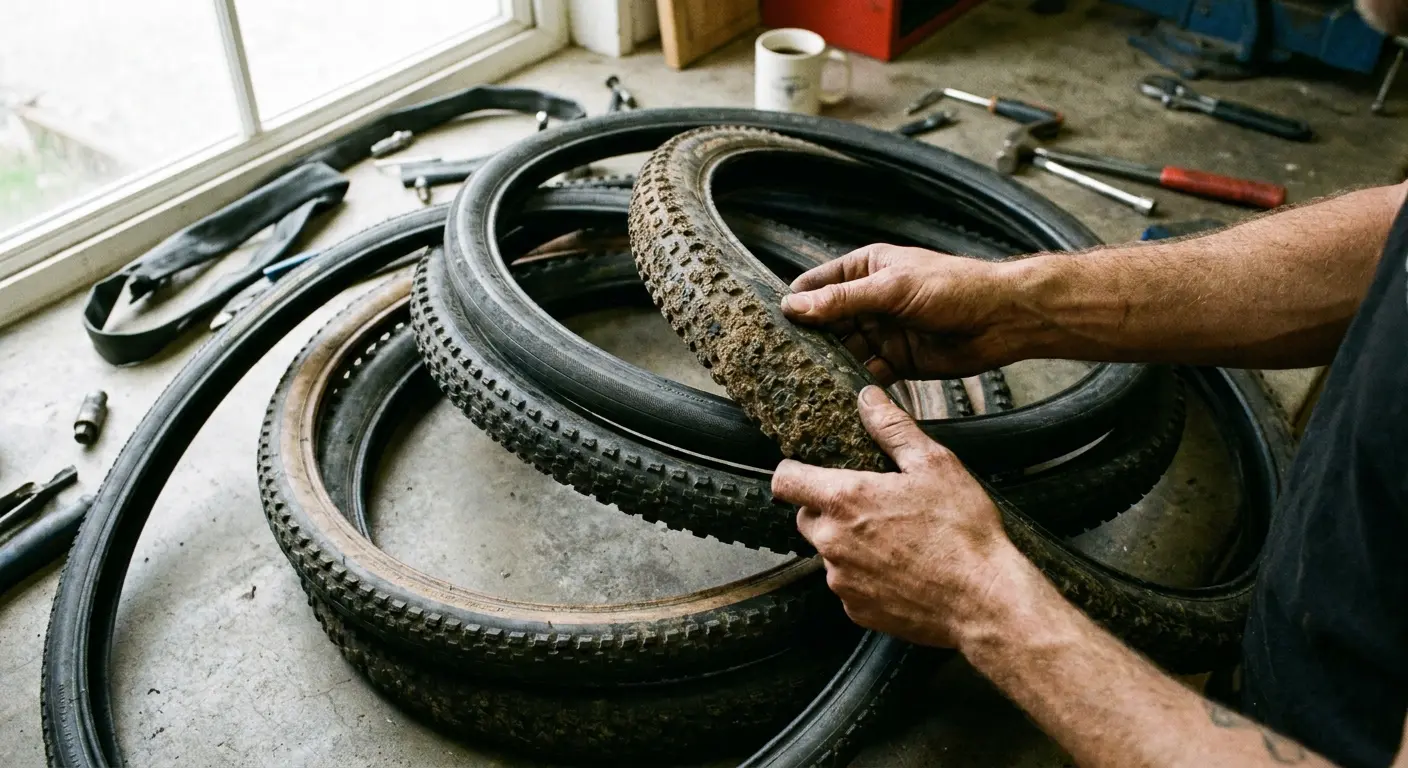
I'm going to be honest about something. Tread patterns get way too much attention. Casing construction and width matter more for most riders.
But terrain still matters. A lot.
My buddy Dave rides the same knobbly mountain bike tires year-round. Pavement, gravel, whatever. Then he complains his bike feels slow. Dave, your tires sound like a swarm of angry bees on the road. That's not aerodynamics. That's friction.
Most of us would save money and ride better if we swapped tires seasonally. I know that sounds like extra work. It is extra work. But 30 minutes twice a year beats suffering through every ride on the wrong rubber.
1. Road Slicks
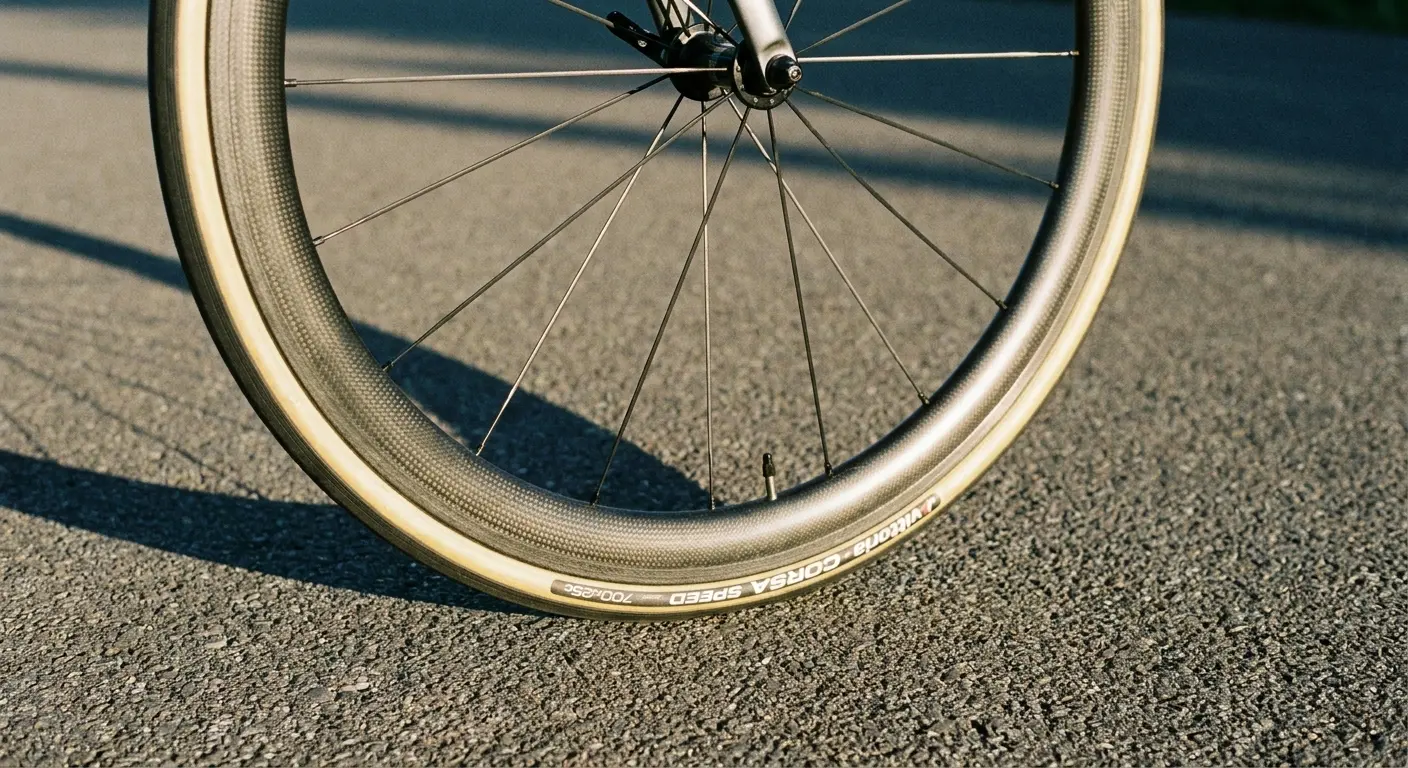
Road slicks are smooth. Completely smooth.
This freaks people out because smooth equals slippery, right? Wrong. On dry pavement, that smooth surface actually grips better than treaded tires. More rubber touching the road. Physics, not intuition.
I argued with a guy at a bike shop about this for ten minutes before he made me look it up on my phone. He was right. I was wrong. The contact patch on a slick is bigger than a treaded tire where only the knob tips touch down.
Slicks run anywhere from 23mm to 32mm wide. Five years ago, everyone ran 23mm. Now 28mm is standard. Turns out we were all wrong about narrower being faster. Wider tires at lower pressure roll better on real-world pavement that isn't perfectly smooth.
Frame clearance will limit you here. Measure your current setup before ordering 32mm tires that won't fit through your fork crown. I learned this the expensive way.
When do slicks become dangerous? Wet conditions with painted road markings. Metal grates. Any debris. The lack of tread means nothing channels water away or bites into loose stuff. I've gone down hard on wet paint. It's not fun. You slide forever.
Check for small cuts every week or so. Slicks show damage more obviously than treaded tires, which means you can catch problems before they become roadside disasters. I ignored a small cut for two weeks. "It's fine," I kept saying. Then it blew out at 30mph on a descent. Now I check my tires every ride like a paranoid parent.
Width Range |
Best For |
Pressure Range |
Speed vs Comfort |
|---|---|---|---|
23-25mm |
Racing, smooth roads |
90-120 PSI |
Maximum speed, harsh ride |
28mm |
Performance road riding |
80-100 PSI |
Balanced speed and comfort |
30-32mm |
Endurance riding, rough pavement |
70-90 PSI |
Prioritizes comfort, minimal speed loss |
2. Gravel Tires
Gravel tires run 35mm to 50mm wide with moderate tread that works on hardpack and loose surfaces. These have become the most versatile option for riders who split time between pavement and dirt roads.
I run 42mm Panaracer Gravel Kings on my all-road bike. They're fine. Not great, not terrible. Fine. That's kind of the point.
Tread pattern variations actually matter here. File tread centers with aggressive side knobs roll fast but still corner well. Other designs use uniform small knobs that sacrifice some pavement speed for better all-around traction.
Tire pressure becomes critical with gravel tires. I run mine at 40 PSI, which is way lower than the road riders think makes sense. Too high and you bounce off every rock and lose traction on loose corners. Too low and you risk pinch flats or burping air if you're running tubeless.
The tubeless cult will tell you that you need tubeless for gravel. They're not entirely wrong, but they're also annoying about it.
Gravel tires represent a compromise. They won't be as fast as slicks on pure road rides. They won't handle technical singletrack as well as mountain bike tires with taller knobs. But they handle mixed conditions better than specialized options, which makes them perfect for riders who don't know exactly what they'll encounter.
That's me most days. I leave my house planning to ride pavement and somehow end up on a dirt road wondering how I got there.
3. Mud Tires
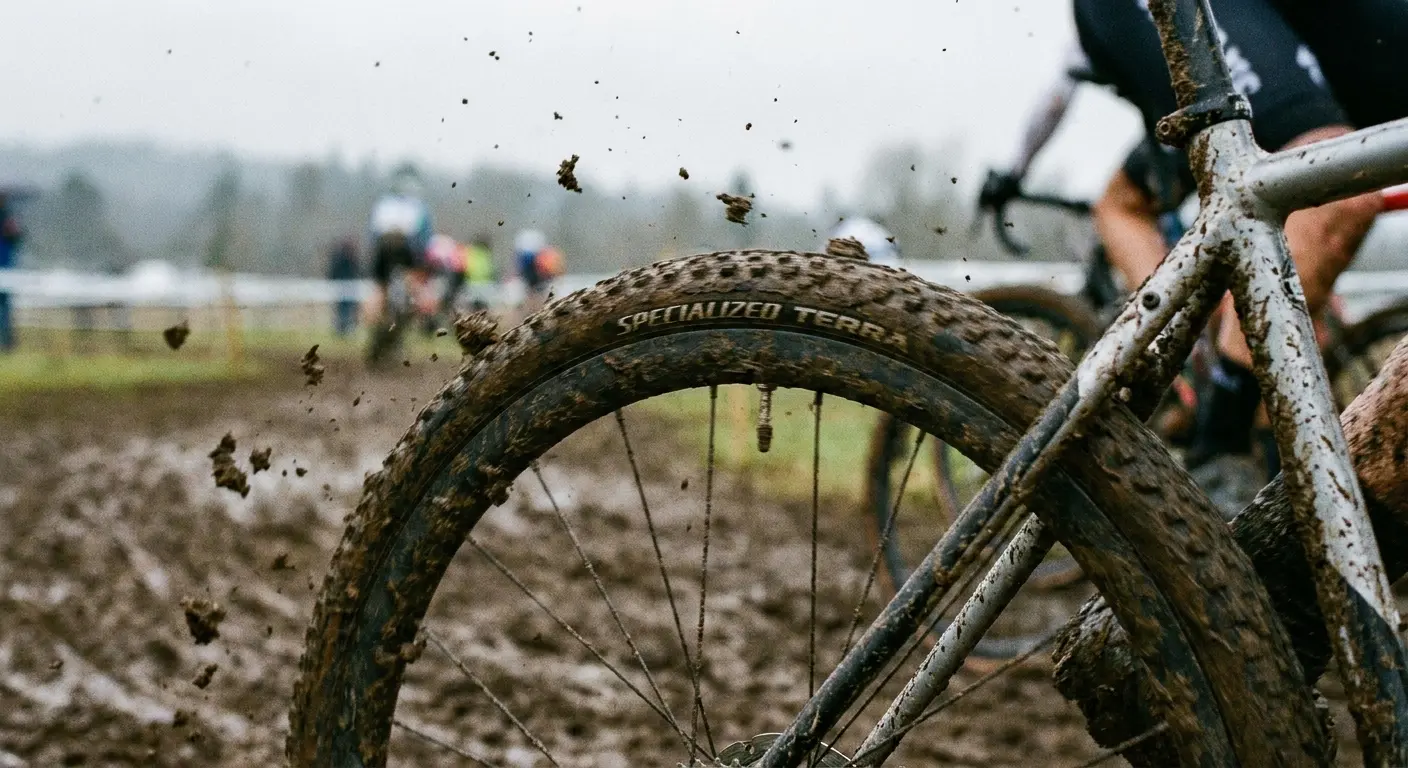
Mud tires feature tall, widely-spaced knobs designed to shed sticky soil and maintain traction when the ground turns to soup. Tread height runs 4mm to 7mm, with spacing patterns that prevent mud from packing between knobs.
These are terrible on hardpack. They squirm under cornering forces and slow you down on anything that isn't actively trying to suck your wheels into the earth.
But for wet trail riding or cyclocross racing? Essential.
I race cyclocross in the fall. Well, "race" is generous. I participate in cyclocross in the fall. My mud tires make an absurd difference when it's wet. The wide spacing is what makes them work. When each knob stands alone, mud can't build up and turn your tire into a slick. The tall height means the knobs dig through the muck to find something solid underneath.
They wear out fast though. Those tall knobs flex under load and generate heat. I've burned through a set in a single muddy season. At $60 per tire, this gets expensive.
Most riders don't need mud-specific tires. If you're riding hardpack with occasional muddy sections, you're better off with a less aggressive tread that doesn't punish you on the dry stuff. Save the mud tires for when conditions actually require them.
4. Sand Tires
Sand tires use extreme width (often 4 inches or more on fat bikes) and low pressure to float over loose surfaces rather than digging in.
I tried riding regular mountain bike tires on a beach once. Made it maybe 20 feet before bogging down completely. Traditional tires are too narrow. They cut into the surface like knives.
Flotation comes from surface area. More tire touching the ground means weight gets distributed across a larger patch. You don't sink. Simple physics that feels weird when you're doing it.
Tire pressure drops as low as 5-8 PSI. This felt completely wrong the first time I tried it. I was convinced the tire would roll off the rim or I'd pinch flat immediately. Neither happened. That low pressure allows the tire to deform and spread out even more, maximizing the contact patch.
Tread pattern matters less than tire volume. You'll see everything from minimal tread to aggressive knobs, and they all work reasonably well on sand. What doesn't work is trying to run normal tires at normal pressure.
Sand tires work surprisingly well on snow too. Same flotation principle whether you're on a beach or a snowfield. Makes them useful for coastal riders who also deal with winter.
5. Snow Tires
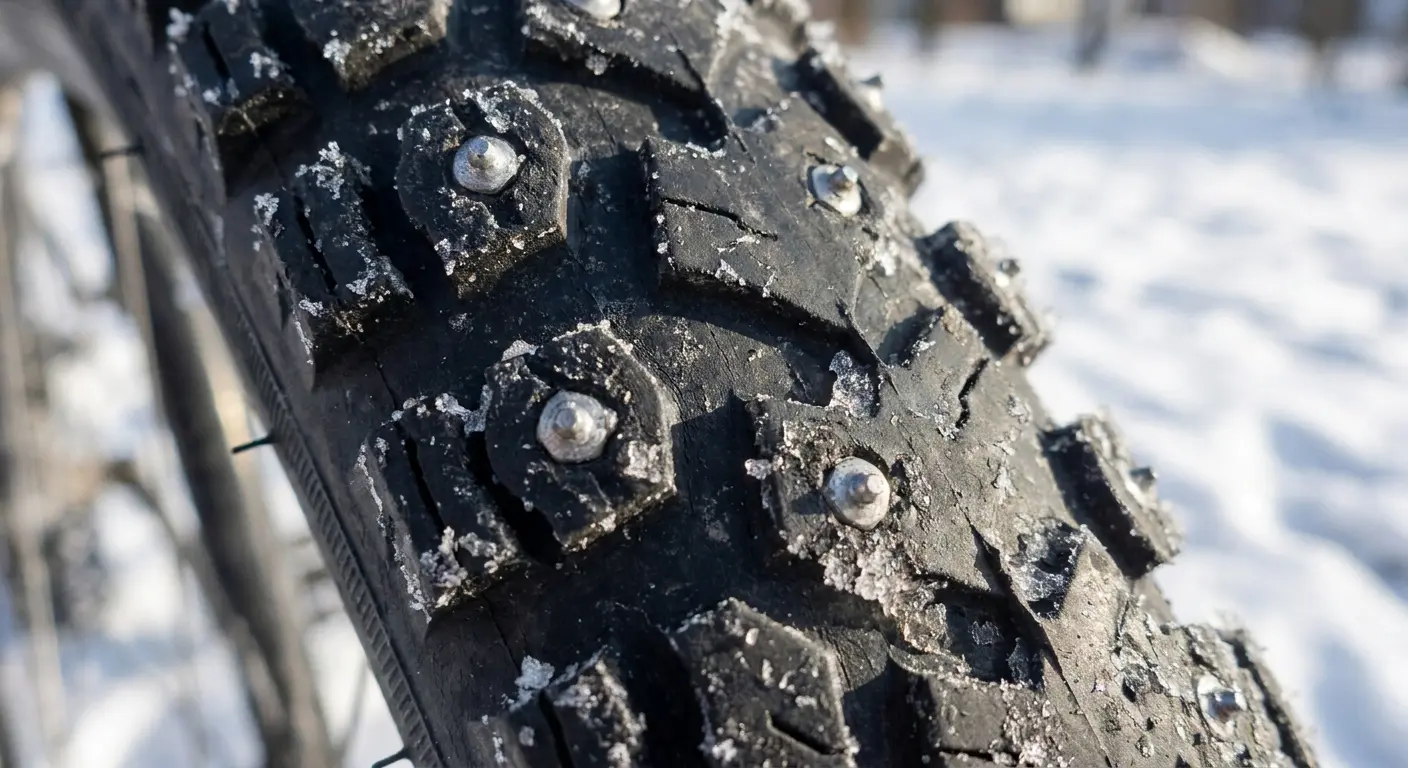
Snow tires for bikes come in two forms: studded versions for ice and packed snow, and non-studded fat bike tires for powder.
Studded tires have 200-400 carbide studs that bite into ice. They sound like you're riding a swarm of angry wasps. That constant buzzing on pavement? That's every watt you're producing getting eaten up. Your legs will feel it.
I run studded tires on my winter commuter from December through March. They're slow. They're loud. They're also the only reason I haven't died on black ice at 6am riding to work.
Stud placement matters. Center studs help with braking and acceleration. Shoulder studs improve cornering grip. Some tires use studs only on the shoulders, assuming you'll encounter ice mainly while turning.
When do studded tires become necessary versus overkill? If you're dealing with consistent ice or hard-packed snow on your commute, they're worth the hassle. If you see ice once or twice a winter, you're better off walking your bike those days.
Installation comes with a weird requirement most riders don't expect. Studs need a break-in period where you ride gently for the first 25-50 miles to let them seat properly in the tire casing. Skip this and you'll lose studs prematurely. I learned this by losing about 30 studs in my first week because I didn't read the instructions.
Check local regulations too. Some bike paths prohibit studded tires because they damage paved surfaces. Beyond studded tires, you might want to check out the best gear for winter bike commuting because tires alone won't save you when it's 15 degrees outside.
6. All-Terrain Tires
All-terrain tires attempt to handle multiple surface types through moderate tread depth, durable casings, and mid-range widths.
The compromises are real and unavoidable. You'll be slower on pavement than slicks. You'll have less grip on trails than dedicated mountain bike tires. The question is whether versatility outweighs specialized performance.
For most commuters and touring riders? Yes. For everyone else? Maybe not.
I ran Schwalbe Marathon Supremes (all-terrain style) for about 3,000 miles on my commuter. They were fine on pavement. Fine on gravel paths. Fine on the occasional dirt road. Never great at anything, never terrible at anything. That's the whole point.
Width runs 32mm to 45mm, splitting the difference between road and mountain bike dimensions. Tread patterns do the same thing. Enough knobs to bite on dirt but not so many that they create excessive drag on pavement.
If you genuinely encounter varied terrain, all-terrain tires make sense. If you mostly ride one surface type with occasional detours, specialized tires for your primary surface will serve you better.
I eventually switched back to slicks for my commuter because 90% of my riding is paved. That 10% on gravel? I just go slower. Worth it for the speed gain the rest of the time.
Construction Types (Or: Why Your Tires Keep Failing)
Construction method affects whether you get flats, how the ride feels, and whether you'll be cursing during installation.
This matters more than most riders realize. You can have the perfect tread for your terrain and still suffer constant punctures if the casing can't handle the abuse.
7. Clincher Tires
Clincher tires use a bead that hooks onto the rim and require an inner tube. These remain the most common type because they're easier to install, cheaper to replace, and simpler to repair on the road.
Bead types come in wire or folding varieties. Wire beads are cheaper and heavier. Folding beads use Kevlar, allowing you to fold the tire for easier storage. The bead type doesn't affect performance once installed, only convenience and weight.
I can change a clincher flat in about three minutes now. Used to take me fifteen. Practice helps, but also clinchers are just straightforward. Tire off, tube out, new tube in , tire on, inflate. Done.
Tire pressure affects bead security. Run pressure too low and you risk the tire rolling off the rim during hard cornering. Too high and you increase the chance of blowouts, especially on hot days when pressure rises from heat expansion.
Clinchers are more prone to pinch flats than other construction methods. When you hit a sharp edge hard enough, the tube gets pinched between the rim and the obstacle. You get the characteristic double puncture that riders call a snake bite. I've had maybe a dozen of these over the years. They're annoying but fixable.
Rim tape. Boring, right? Until it's the reason you're walking home. Damaged or improperly installed rim tape exposes spoke holes that can puncture your tube from the inside. Check it when you're changing tires. Make sure it's centered and not torn.
8. Tubeless Tires
Tubeless tires seal directly to the rim using sealant, eliminating the inner tube.
The benefits are real. Lower rolling resistance, ability to run lower pressures without pinch flats, and self-sealing for small punctures.
The headaches are equally real.
Installation is messier than anything else you'll do to your bike. You need specific rims, proper rim tape, and sealant that needs refreshing every few months. Some tire and rim combinations refuse to seat properly no matter how much you curse at them.
I spent two hours one Saturday trying to get a tubeless tire to seat. Two hours. The tire would inflate partway, then burp all the air out one side. I added more sealant. Tried different techniques. Watched YouTube videos. Nothing worked. Finally took it to the shop and the mechanic got it in five minutes because he had a high-volume compressor. I was furious.
Tubeless has become standard in mountain biking. Mountain bikers appreciated the lower pressures and flat protection immediately. Road riders took longer to accept the installation complexity and weight penalty of sealant.
I run tubeless on my mountain bike and gravel bike. Tubes on my road bike and commuter. This seems to be the sweet spot for my tolerance of mess and maintenance.
Sealant types vary wildly. Some dry out in three months. Others last six months or longer. Climate affects this. Hot, dry environments require more frequent refreshing than cool, humid ones. I refresh mine every four months because I live in a place with actual seasons.
The importance of proper rim tape can't be overstated. One small gap or wrinkle and your tire won't hold air. I've seen riders spend hours troubleshooting leaks only to discover the rim tape was installed poorly from the start. Tubeless setups pair well with other mountain bike must-have accessories that enhance trail performance.
Construction Type |
Installation Difficulty |
Flat Resistance |
Maintenance |
Best Use Case |
|---|---|---|---|---|
Clincher |
Easy |
Moderate |
Low (tube replacement) |
General riding, easy roadside repairs |
Tubeless |
Moderate to Hard |
High |
Moderate (sealant refresh every 3-6 months) |
Performance riding, rough terrain |
Tubular |
Very Hard |
Moderate |
High (gluing, replacement) |
Professional racing only |
Solid |
Easy |
Complete |
None |
Urban commuting with frequent puncture issues |
9. Tubular Tires
Tubular tires are sewn around an inner tube and glued to special rims, creating a single unit.
I'm not covering these in depth because you don't need them. Nobody reading this needs them.
These are now mostly limited to professional racing despite offering excellent ride quality. Installation is tedious and expensive. You need to apply glue or tape to the rim, stretch the tire into place, and wait for proper adhesion. You can't fix a flat roadside. When a tubular punctures, you're done unless you carry a spare tire and can install it properly.
Professional mechanics handle installation and replacement, so racers get the benefits without the hassle. The performance benefits include lighter weight, ability to run very low pressure without risk of rolling the tire off the rim, and better cornering feel.
Unless you're racing at a level where your team has mechanics, ignore this category entirely.
10. Solid Tires
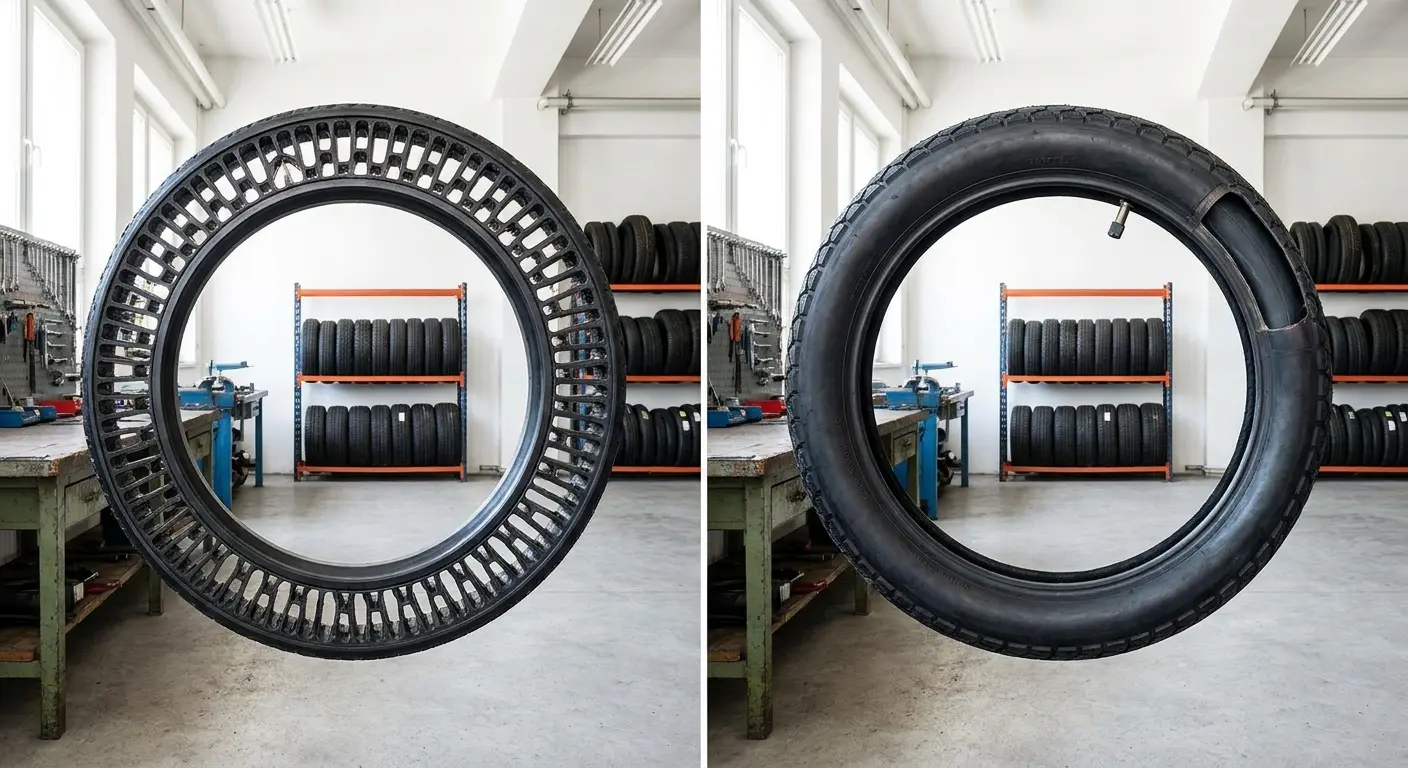
Solid tires eliminate flats entirely by using dense foam or solid rubber construction.
Most riders hate them after one ride.
The ride quality is harsh. You feel every crack and pebble because there's no air cushion to absorb impacts. Traction suffers because the tire can't deform to match surface irregularities. Weight is higher than pneumatic alternatives.
I tried solid tires once on a beater bike. Made it two weeks before switching back. Every ride felt like I was pedaling a shopping cart over cobblestones.
Airless tire technology has improved. Some newer designs use honeycomb structures or other approaches to reduce weight and improve compliance. But even the best solid tires can't match the performance of properly inflated pneumatic tires.
Situations where solid tires make sense include bike share programs and delivery riders in glass-covered cities. When constant flats cost more in downtime than the performance penalty matters, solid tires become viable.
There's a delivery rider in my neighborhood who runs them. I asked him about it once. He said he was getting two flats a day before switching. Now he gets zero. He doesn't care that his bike rides like a brick. Makes sense for him.
11. Plus-Size Tires
Plus-size tires measure 2.8 to 3.2 inches wide, sitting between standard mountain bike tires and fat bike tires.
These work best for trail riding where technical terrain demands grip but you don't need sand or snow flotation. The extra width provides a larger contact patch. More rubber gripping rocks, roots, and loose dirt.
Frame clearance requirements limit who can run plus-size options. Not all mountain bikes accept these wider profiles. Check your fork and rear triangle before ordering. Returns are annoying and expensive. I know because I've done it.
Plus-size tires changed how I approach rocky sections. The added volume allows lower pressures that let the tire deform around obstacles rather than bouncing off them. You can roll over stuff that would have stopped you on narrower rubber.
The rolling resistance tradeoff is real though. More tire touching the ground creates more friction. You'll work harder on climbs and flat sections. I run plus-size tires on my trail bike and standard width on my cross-country bike. Different tools for different jobs.
Plus-size represents a sweet spot for many riders but requires specific frame compatibility. These won't fit bikes designed around 2.3-inch or narrower tires.
What Are You Actually Doing With This Bike?
Purpose matters as much as terrain. Carrying capacity, speed priorities, durability needs, and typical ride duration all factor in.
A tire that's perfect for racing will be terrible for commuting. A tire that's great for touring will feel slow for everything else.
12. Commuter Tires
Commuter tires prioritize puncture protection and longevity over speed.
These tires feel slow compared to racing rubber but save you from walking your bike home in work clothes. I've walked home in work clothes. It's not fun. Especially in dress shoes.
Flat protection technologies include Kevlar belts, thick rubber layers, and sometimes additional sub-tread puncture shields. The weight penalty is significant. My commuter tires weigh probably twice what my racing tires weigh. But I've had maybe two flats in three years of daily commuting.
Wider commuter tires, ranging from 32mm to 42mm, provide better pothole survival. More air volume means more cushioning when you hit an edge. I run 38mm Schwalbe Marathon Plus tires on my commuter. They're slow. They're heavy. They're also indestructible.
The tradeoff between weight and durability comes down to calculating whether expensive puncture-resistant tires pay for themselves. If you're fixing flats weekly, heavy-duty commuter tires will save you money within months.
I was spending about $8 per week on tubes and patches before I switched. That's $400 per year. My puncture-resistant tires cost $120 for the pair and have lasted three years. Math is easy here.
Reflective sidewalls improve visibility in low light conditions. Cars see the moving reflection of your tires before they see your frame or clothing. This matters more than most riders realize. I commute in the dark half the year. Reflective sidewalls have probably saved my life. Commuters can enhance their rides by pairing reliable tires with the best cycling apps for route planning and safety tracking.
13. Touring Tires
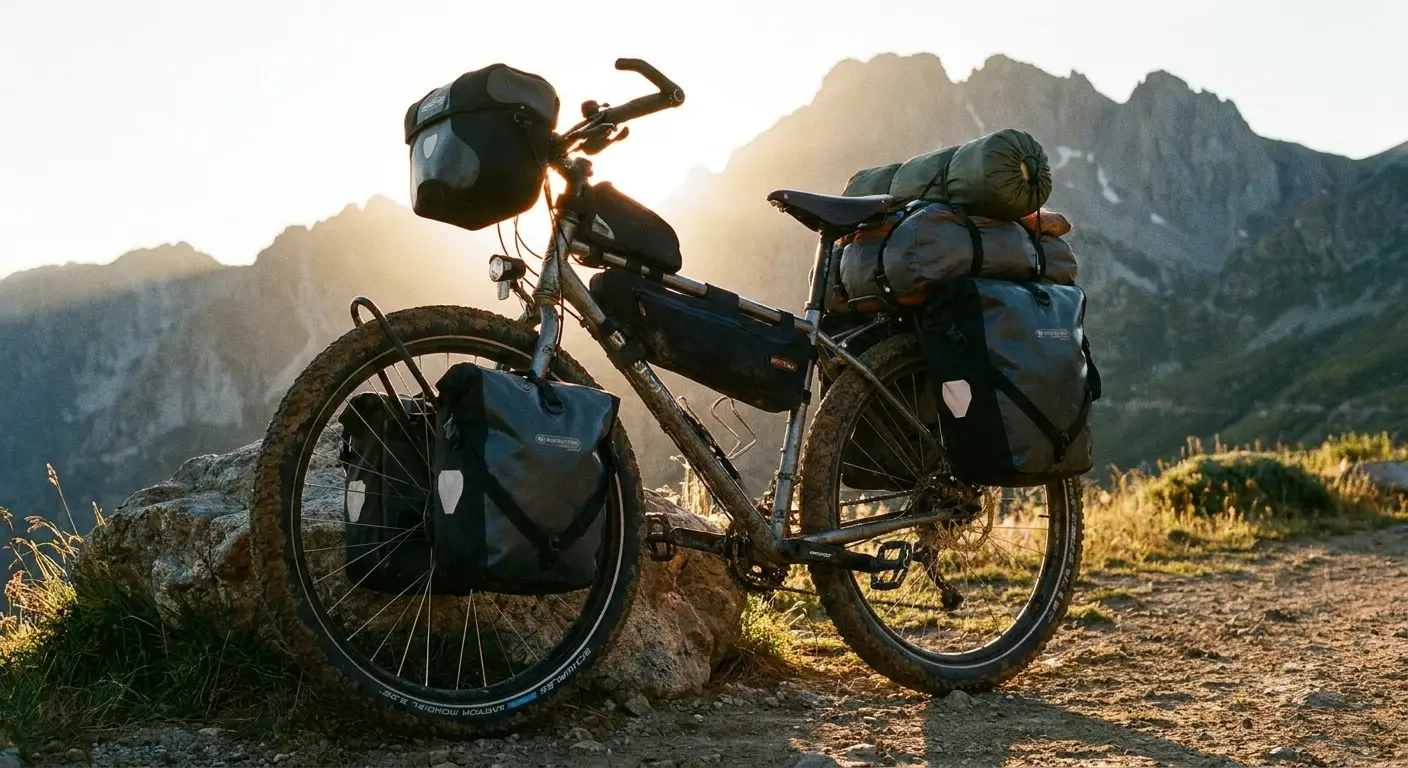
Touring tires are built for loaded bikes traveling long distances. Extreme durability, good traction on varied surfaces, and the ability to handle heavy loads without failure.
Reinforced sidewalls prevent cuts from rubbing against panniers. Thick tread resists wear when you're riding 60 miles daily for weeks. These are the workhorses of the tire world.
Width runs 40mm to 50mm to support the combined weight of rider, bike, and gear. Narrower tires flex too much under load, creating excessive rolling resistance and increasing failure risk.
I did a two-week tour last summer with about 40 pounds of gear. Ran 45mm Schwalbe Marathon Mondial tires at 55 PSI. They felt slow unloaded but perfect once I had the panniers on. The extra width distributed the weight well.
Tire availability matters more for touring than other disciplines. You need tires available internationally if you're traveling. Obscure tire sizes or brands might work great at home but leave you stranded when you can't find replacements in rural areas.
Stick with proven designs. Riders pick tires that have worked for decades rather than the latest tubeless carbon wonder tire. When you're 200 miles from the nearest bike shop, boring and dependable beats light and experimental.
Many touring tires look old-fashioned because they are. The designs haven't changed much because they don't need to. Wide, thick, treaded tires with strong casings work. Touring riders aren't interested in fixing what isn't broken.
14. Racing Tires
Racing tires minimize weight and rolling resistance, often sacrificing durability and puncture protection.
These make sense for competition but are terrible for training or commuting because they wear out fast, flat easily, and cost more.
I run Continental GP5000s on my road bike for group rides and the occasional race. They're 250 grams each, which is light. They're also $75 each and I've flatted three times this season. Worth it for the speed on race day. Not worth it for riding to the coffee shop.
Technologies that reduce rolling resistance include supple casings that flex easily, minimal tread that reduces energy loss, and lightweight compounds that grip well but wear quickly. Every gram saved and every watt of rolling resistance eliminated adds up over a race distance.
Tire pressure becomes critical with racing tires. I run mine at 85 PSI. Too low and the supple casing flexes excessively, creating drag. Too high and you lose the compliance that makes these tires fast on real-world pavement that isn't perfectly smooth.
The marginal gains philosophy justifies their existence. When races are won by seconds, the difference between a 250-gram tire and a 300-gram tire matters. The difference between 8 watts of rolling resistance and 12 watts matters.
For training? Use something cheaper and more durable. Save the race tires for races.
15. E-Bike Tires
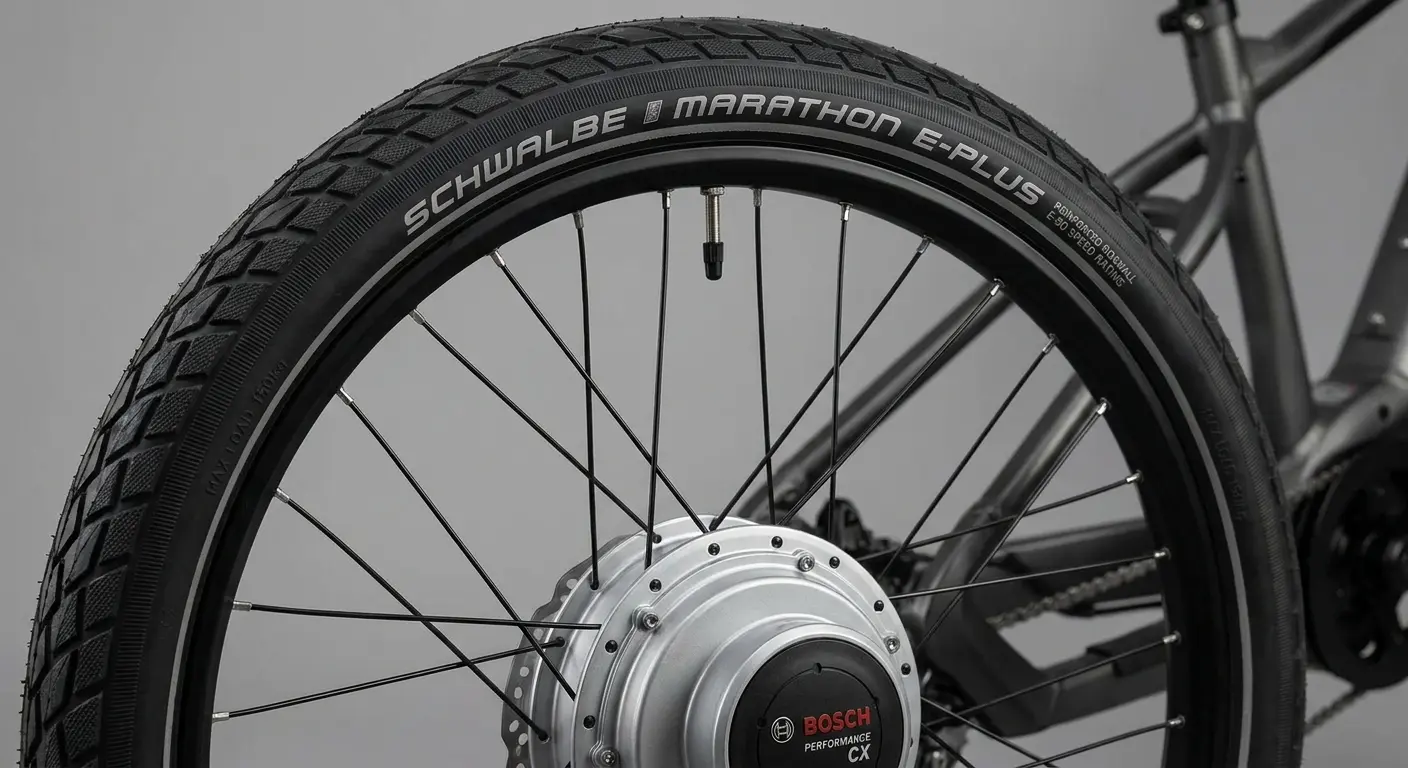
E-bike tires are reinforced to handle higher speeds and heavier bike weight, rated for 28mph or more.
Regular bike tires fail prematurely on e-bikes due to sidewall stress from weight and torque, plus faster wear from sustained speed. I learned this when I tried using regular tires on my e-bike. They lasted maybe 800 miles before the sidewalls started cracking.
What makes e-bike tires different? Stiffer casings resist the forces generated by motor-assisted acceleration. Compound formulations handle heat resistance better because you're maintaining higher speeds for longer periods.
Speed rating systems indicate the maximum safe speed for the tire. Using a tire rated for 15mph on an e-bike that assists to 28mph creates a safety hazard. The tire wasn't designed for those forces.
Puncture protection matters more on e-bikes because you're carrying more momentum when you flat. A 60-pound e-bike traveling at 25mph takes longer to stop and is harder to control when a tire suddenly deflates compared to a 20-pound road bike at the same speed.
Width ranges balance stability with efficiency. E-bike tires tend to run wider, around 40mm to 60mm, providing the contact patch needed to handle the additional weight while maintaining reasonable rolling resistance.
Check that replacement tires carry proper e-bike ratings. Using standard tires voids some bike warranties and creates genuine safety concerns. Proper tire selection complements other essential ebike accessories for safe, reliable electric cycling.
16. Cargo Bike Tires
Cargo bike tires are engineered for extreme loads. Reinforced casings, high pressure ratings, and durability that outlasts standard tires by significant margins.
These tires look overbuilt because they are. Trying to save weight here creates safety issues. When you're carrying 100 pounds of groceries or a couple of kids, tire failure isn't just inconvenient. It's dangerous.
Load ratings often specify 100+ pounds per tire. This isn't marketing exaggeration. Cargo bike manufacturers calculate the maximum weight their frames can handle, and tires need to match or exceed those numbers.
I helped a friend set up his cargo bike last year. He wanted to use regular touring tires to save money. I talked him out of it. Cargo tires cost more but they're designed for the loads he's carrying. Not worth the risk.
Wider isn't always better for cargo applications. Narrower tires at higher pressure sometimes carry loads more efficiently than wider tires at lower pressure. The key is matching tire volume and pressure to your typical load and riding conditions.
Tread patterns get optimized for urban environments where cargo bikes operate. You'll see designs that handle wet pavement, occasional gravel paths, and curb transitions without the aggressive knobs that would slow you down on mostly paved routes.
Cargo tires represent the most durable category but feel harsh when unladen. Riding an empty cargo bike with tires designed for heavy loads is an unpleasant experience. The stiff casings and high pressures that work great under load beat you up when you're just riding the bike home empty.
Using touring tires on a cargo bike or cargo tires on a touring bike means accepting compromises that could be avoided by matching rubber to application.
Keeping Your Ride Secure Beyond Tire Choice
Quick sidebar about phone mounts because I'm tired of watching phones fly off handlebars.
Choosing the right tire matters, but so does keeping your phone accessible during rides. I've seen too many phones bounce into traffic or disappear into bushes because someone trusted a cheap mount with a $1,000 device.
Rokform's bike mounts use the same RokLock system as their phone cases. Magnetic and twist-lock connection that holds through rough terrain, sudden stops, and the vibration that loosens other mounts. I've been running one for two years. Zero issues.
Whether you're running mud tires on singletrack or commuter tires through potholed city streets, you need navigation, music control, and communication access without worrying about your phone launching into traffic.
The V4 Pro Series bike mount delivers the same reliability you demand from your tires. It's engineered for riders who've learned that gear either works or it doesn't.
For riders seeking maximum compatibility, the Over the Top bike mount adapts to virtually any handlebar configuration. Different bikes demand different mounting solutions, just as different riding conditions demand different tires.
Tire choice gets you where you're going. A solid mount keeps you connected along the way.
Final Thoughts
Look, I've bought the wrong tires at least a dozen times. Probably more. Each time I convinced myself I was making a smart choice. I wasn't. I was making an aspirational choice.
The sixteen tire types covered here exist because riding conditions, construction priorities, and intended purposes create genuinely different requirements. Choosing the wrong tire isn't just about performance. It's about safety, cost, and whether you'll enjoy your rides.
Assess your real riding patterns, not your aspirational ones. If you ride paved bike paths 90% of the time with occasional gravel detours, stop pretending you need aggressive mountain bike tires. If you commute through glass-covered city streets, accept that heavy puncture-resistant tires will save you more time than lightweight racing rubber.
Consider seasonal tire swaps for varied climates. Running the same tires year-round when you deal with summer heat and winter ice means compromising performance in both seasons. Swapping between appropriate tires takes 30 minutes and transforms how your bike handles.
Prioritize the factors that matter most for your situation. Speed matters for racers. Durability matters for commuters. Versatility matters for riders who genuinely encounter mixed terrain. No tire excels at everything, which means choosing what to optimize for and what to sacrifice.
Now I buy tires for the rider I am on Tuesday mornings, not the rider I imagine being on Saturday afternoons. My bike is slower on paper. My rides are better in reality.
That's the whole thing.

