


Table of Contents
Tread Pattern First: Why Your Selection Method Is Backwards
-
Sport Compound Tires
Supersport Slicks
Track Day DOT Tires
Hypersport Radials
Sport Touring Radials
-
Weather and Surface Adaptation Tires
Full Knobby Off-Road Tires
Dual-Sport 50/50 Tires
Adventure 80/20 Tires
Scooter Rain Tires
-
Longevity and Load Tires
Cruiser Bias-Ply Tires
Touring Radial Tires
Heavy-Duty Truck Tires
Commuter High-Mileage Tires
-
Specialty Application Tires
Ice Racing Studded Tires
Sand Paddle Tires
Trials Competition Tires
Vintage Correct Tires
How Rokform Fits Into Your Tire Strategy
Final Thoughts
TL;DR
You're probably choosing tires wrong. Most people walk into a shop, say what bike they ride, and get handed whatever the dealer thinks matches. Three months later, they're either sliding around or burning through tread like crazy. The fix? Choose based on where you actually ride, not what the marketing says your bike needs. Sport tires are fast but die quick. Weather tires handle dirt and rain. Touring tires last forever but feel wooden. Specialty tires solve weird problems most of us don't have. Match the rubber to your real riding, not your fantasy riding.
Tread Pattern First: Why Your Selection Method Is Backwards
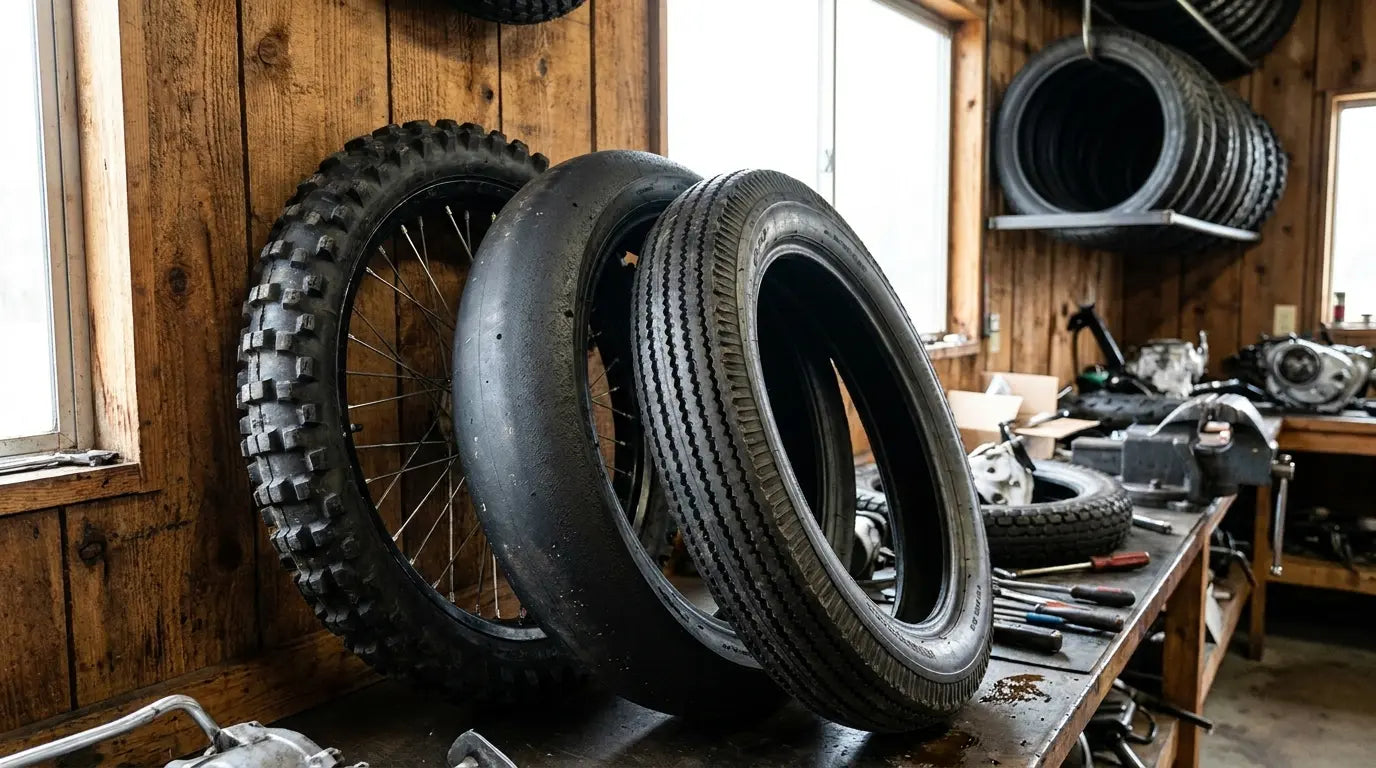
Here's what usually happens. You walk into the shop, tell them what bike you ride, and boom, they hand you the "correct" tires. Three thousand miles later, you're either sliding through corners on cold mornings or burning through tread faster than your wallet can handle.
I've wasted about $2,000 on wrong motorcycle tires. Not bad tires. Wrong tires. Sport compound on a bike I commuted on every day. Knobbies on an adventure bike that never left pavement. Every single one taught me an expensive lesson.
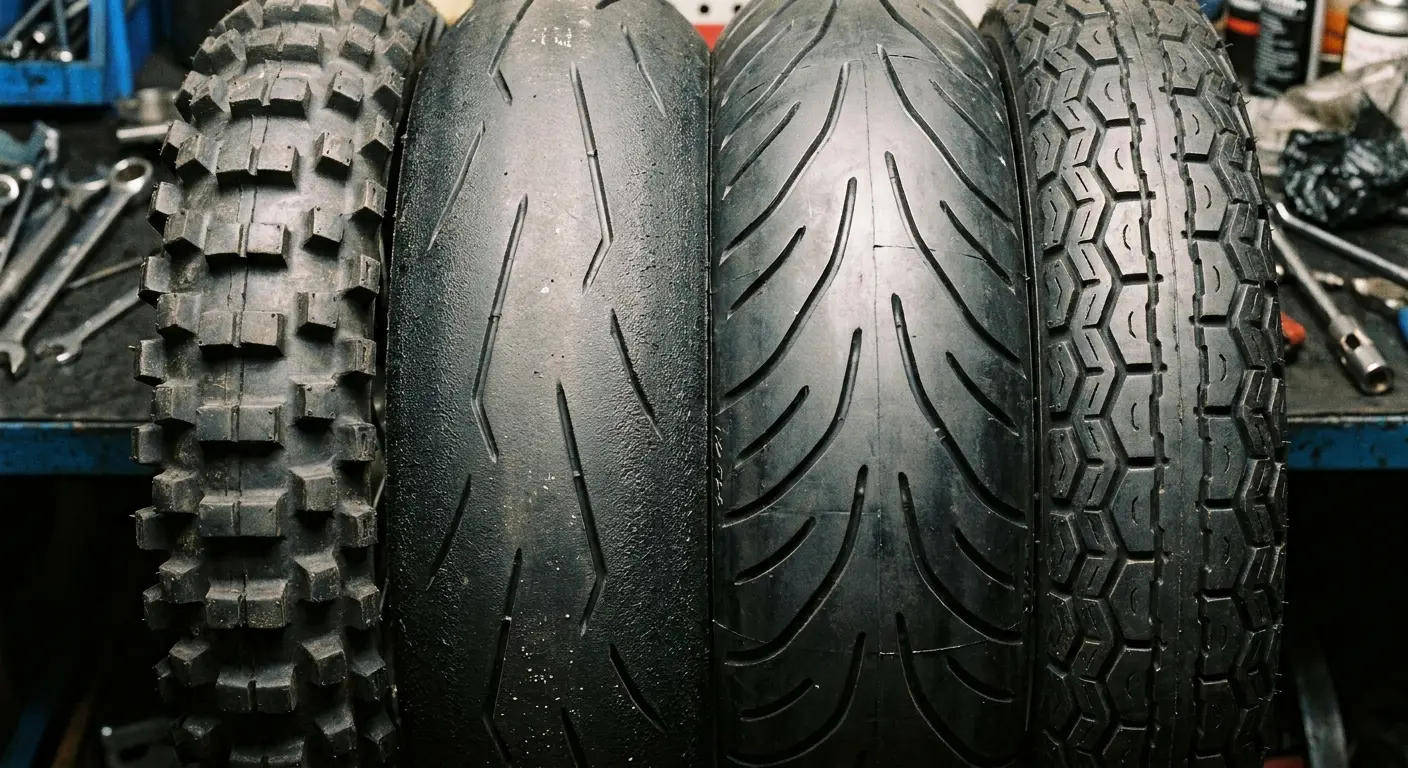
The problem isn't the tires themselves. It's how we pick them. We've been trained to match rubber to bike category when the real question should be: where are you actually riding and what's under your wheels?
Think about your real riding for a second. Not the riding you do in your head on Sunday mornings. Your actual riding. Commuting through rain-slicked city streets five days a week? Hitting canyon roads maybe twice a month? That adventure bike you bought because it looked cool, but honestly, when's the last time you took it off pavement?
The surface contact challenges you face matter way more than what the marketing department thinks your bike should wear. A sportbike can absolutely benefit from touring rubber if you're racking up highway miles. An adventure bike might need street-focused tread if you're honest about how rarely you venture onto dirt.
I'm organizing these 16 categories by their primary functional advantage instead of the usual marketing nonsense. Just like choosing the best motorcycle accessories depends on your specific riding style and needs, tire selection demands the same brutal honesty about how you actually use your machine.
The framework here prioritizes tread pattern characteristics first, then compound chemistry, then construction method. This reverses the typical selection process and produces results that match real-world performance instead of catalog descriptions that sound impressive but mean nothing on the road.
Sport Compound Tires
Sport tires are expensive in a way that sneaks up on you.
Sure, you pay $400 upfront. But the real cost? You're replacing them every 4,000 miles while your buddy on touring tires is still riding the same rubber at 15,000. The math gets brutal. But man, that grip when they're working right makes you understand why people keep buying them.
These motorcycle tire types sacrifice longevity for grip through softer rubber formulations and bigger contact patches. The chemistry is wild. Sport compounds need heat to activate their full potential, which creates this dangerous window for street riders. Cold tires offer maybe half their warm-weather capability, yet most of us never wait for proper operating temperature before twisting the throttle hard.
I've identified four variations within this category, each calibrated for different heat cycles and performance windows. Understanding where you fit prevents both wasted money and potential crashes.
Tire Type |
Typical Lifespan |
Operating Temp Range |
Primary Use Case |
Wet Weather Capability |
|---|---|---|---|---|
Supersport Slicks |
15-20 heat cycles |
180-220°F |
Closed-course racing |
None (illegal in rain) |
Track Day DOT |
2,000 miles street / 15-20 heat cycles |
160-200°F |
Track days with street ride-in |
Minimal (dangerous) |
Hypersport Radials |
4,000-6,000 miles |
140-180°F |
Aggressive street/canyon |
Moderate |
Sport Touring Radials |
8,000-12,000 miles |
120-160°F |
Mixed commuting/spirited riding |
Good |
1. Supersport Slicks
Racing slicks are the tire equivalent of a Formula 1 car. Incredible at what they do, completely useless everywhere else.
No tread. None. Just smooth rubber that grips like Velcro when it's hot and slides like soap when it's cold. The complete absence of tread grooves maximizes contact patch, but renders these tires illegal for street use and suicidal in wet conditions.
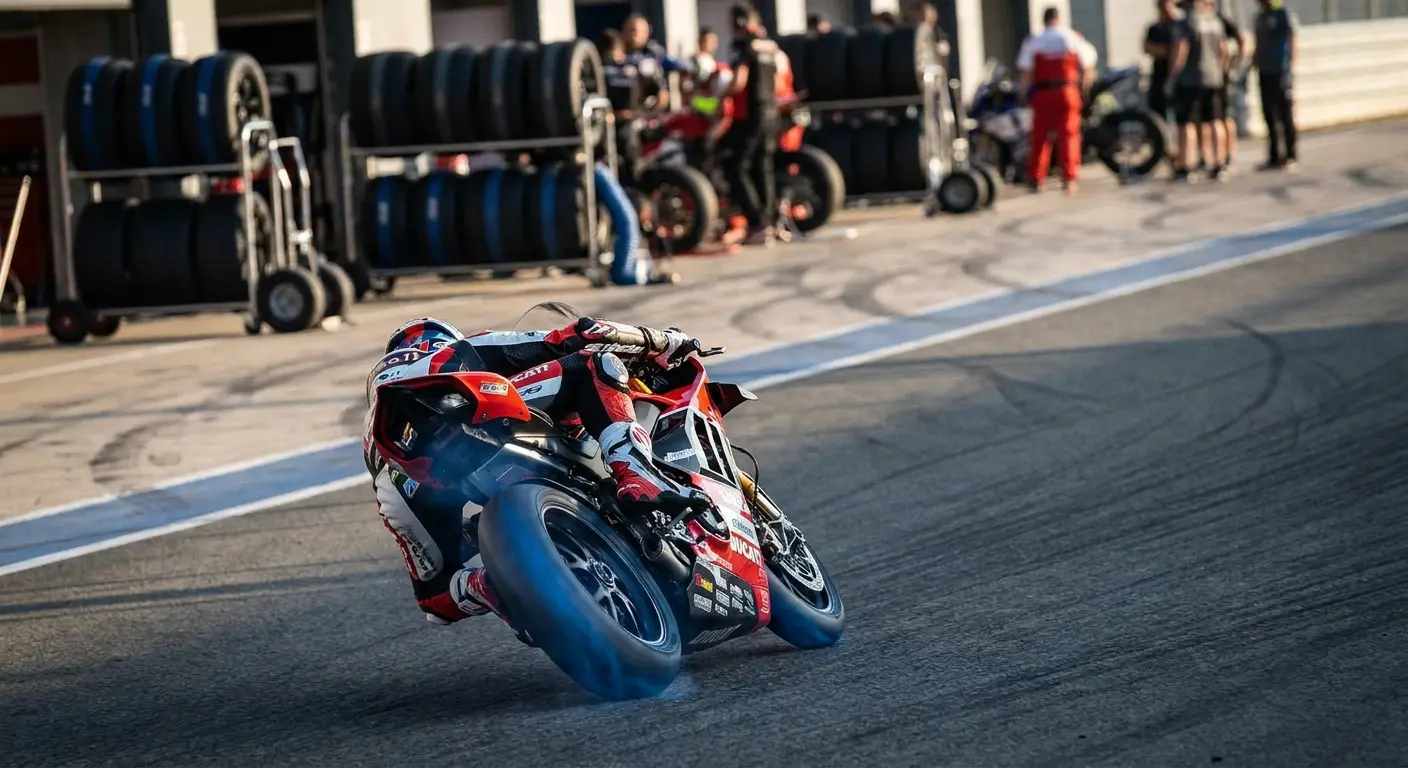
Operating temperatures run from 180-220°F, which means tire warmers become mandatory equipment rather than optional luxury. Without pre-heating, these tires offer less grip than budget all-season rubber. I've watched this catch out more than a few overconfident riders on their first track day. They show up with cold slicks, try to push in the first session, and end up in the gravel trap before lunch.
Compound choices matter here. Soft, medium, and hard options exist not for longevity differences, but to match ambient track temperature and session length. A soft compound on a cool morning provides incredible grip for qualifying laps but may overheat and grain during a full race distance.
Here's the thing most track day riders won't admit. Unless you're running consistent 1:30s at your local track, you're leaving performance on the table with your riding, not your tires. Last track day at Thunderhill, I counted seven guys on slicks who couldn't break 1:50. Meanwhile, the fast guy in intermediate group was running 1:42s on Michelin Road 6s. The tires weren't his problem.
2. Track Day DOT Tires
The minimal-tread compromise satisfies Department of Transportation requirements while delivering near-slick performance for riders who want to ride their bike to the track.
Here's the trap. You buy track DOT tires thinking you'll ride them to the track, do a few sessions, ride home. Save money on a second wheelset, right? Wrong.
Tread depth measures 1-2mm, just enough to pass legal requirements but nowhere near adequate for rain. These tires are genuinely dangerous in wet conditions, offering less water evacuation than a worn-out street tire. The first time I tried track DOTs on the street, I nearly lowsided pulling out of my neighborhood. 55 degrees, cold tires, slightly damp road. Learned that lesson at 15 mph, thank god. When discussing the need to monitor tire wear and heat cycles, riders can use motorcycle phone mounts to track tire data apps during rides.
Street lifespan averages around 2,000 miles, though aggressive riders burn through them faster. The bigger limitation comes from heat cycling. Most DOT track tires are finished after 15-20 heat cycles, regardless of remaining tread depth. The compound hardens with repeated heating and cooling, progressively losing grip until they're slower than quality street rubber.
You'll nurse them through 60 miles of highway, stress about every cold patch of pavement, then get maybe 15 good track sessions before the compound hardens from heat cycling. Meanwhile, the tread still looks fine, so you keep using them even though they're slower than street tires now.
Just buy the wheelset. I fought this for two years. The wheelset wins every time. Swapping wheels takes ten minutes and eliminates the stress of nursing expensive rubber through highway miles. Plus, you can mount fresh track rubber without throwing away perfectly good street tread.
3. Hypersport Radials
Street-focused sport tires walk the tightrope between canyon performance and wet weather safety. Radial construction provides handling precision that bias-ply designs can't match, with stiffer sidewalls that resist flex during hard cornering.
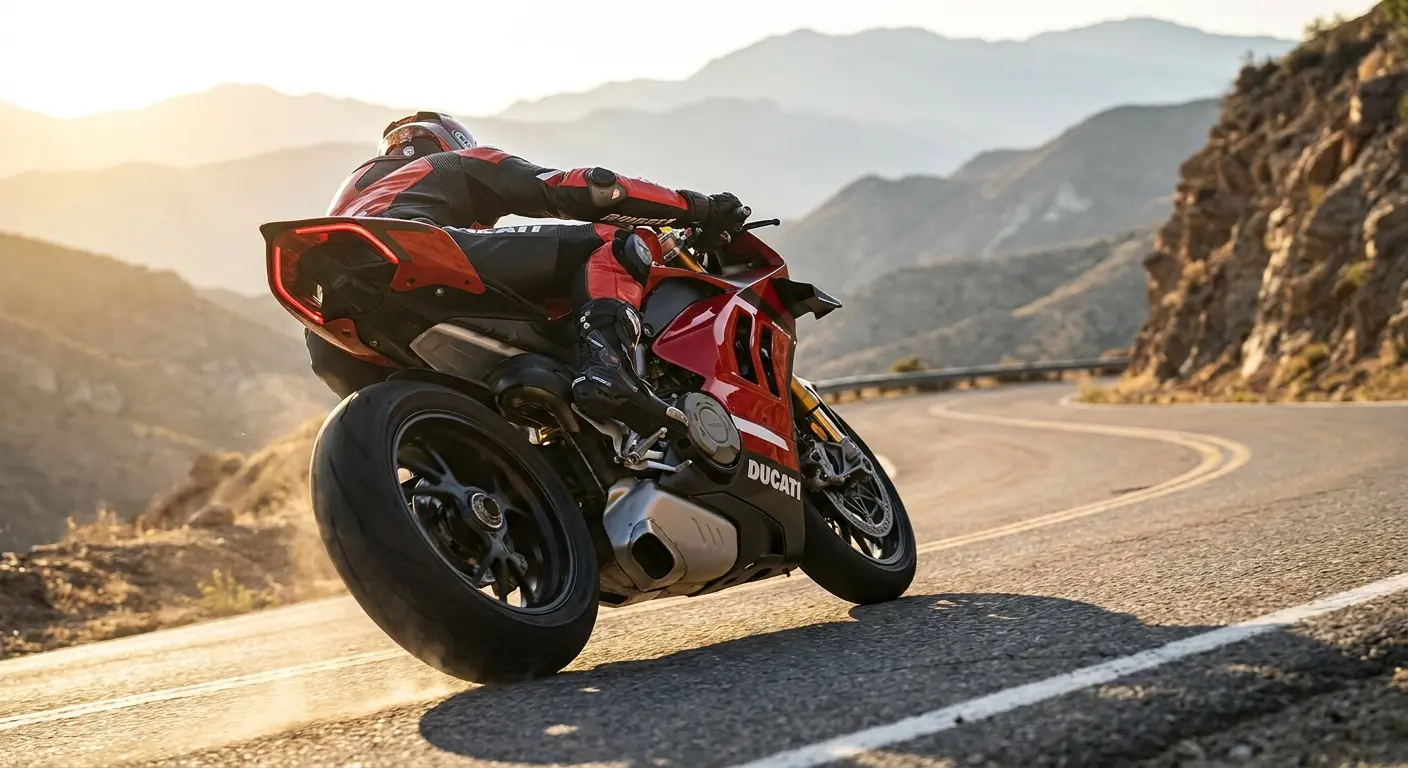
Lifespan runs somewhere between 4,000-6,000 miles, maybe. Depends on whether you're smooth or ham-fisted with the throttle, whether your roads are glass-smooth or pothole nightmares, and how much you weigh. I got 5,200 miles on my last set. My buddy got 3,800 on the same tires because he rides like he's late for his own funeral.
The limiting factor for morning commutes remains cold-tire grip. Cold sport tires feel like riding on hockey pucks. You can feel the rubber chattering and skipping over pavement texture instead of gripping it. These compounds need heat to perform, which means the first five miles of your ride operate in a performance deficit. Smooth inputs matter more than ultimate grip limits when the rubber hasn't reached operating temperature.
Break-in requirements are real, not marketing fiction. The first 100 miles require restraint while manufacturing mold release agents wear off and the compound scrubs in. Fresh tire smell is real too. That sharp rubber scent when you first mount new tires? That's mold release agent and uncured compounds. It goes away after fifty miles and a few heat cycles.
I've seen riders crash within the first 50 miles because they assumed new meant maximum grip. Don't be that person.
Performance degrades in the final 20% of tread life as wear indicators approach. The shoulders thin first from cornering loads, reducing edge grip before the center tread looks worn. Smart riders replace these tires early rather than extracting every last mile. You're riding on worn-out grip for the last 2,000 miles trying to "get your money's worth." False economy. Tires are cheaper than skin grafts.
4. Sport Touring Radials
The longevity compromise within sport compounds targets riders who want responsive handling without constant replacement intervals.
I used to think sport-touring tires were a waste. Too slow for sport, too sporty for touring. Then I actually tried them for a season. I was completely wrong. They're the goldilocks option for most street riding.
Dual-compound construction places harder rubber down the center stripe where acceleration and braking occur, with softer shoulders for cornering grip. This engineering extends lifespan to 8,000-12,000 miles while maintaining performance where it matters most.
Wet weather performance improves drastically compared to pure sport options. Deeper tread grooves and siping channel water more effectively, providing confidence when weather turns ugly mid-ride. You can actually ride in the rain without your life flashing before your eyes.
The performance gap compared to hypersport tires is real but overstated. For street riding within legal speed limits, these tires offer more capability than most riders will explore. Track day use reveals their limitations, with reduced edge grip and less precise feedback at the limit. But honestly? Unless you're dragging knee on public roads (don't), you won't notice the difference.
I recommend these for riders who split time between commuting and weekend rides. The value proposition makes sense when you're not replacing rubber every season, and the safety margin in mixed conditions outweighs the theoretical performance you'll rarely access.
Weather and Surface Adaptation Tires
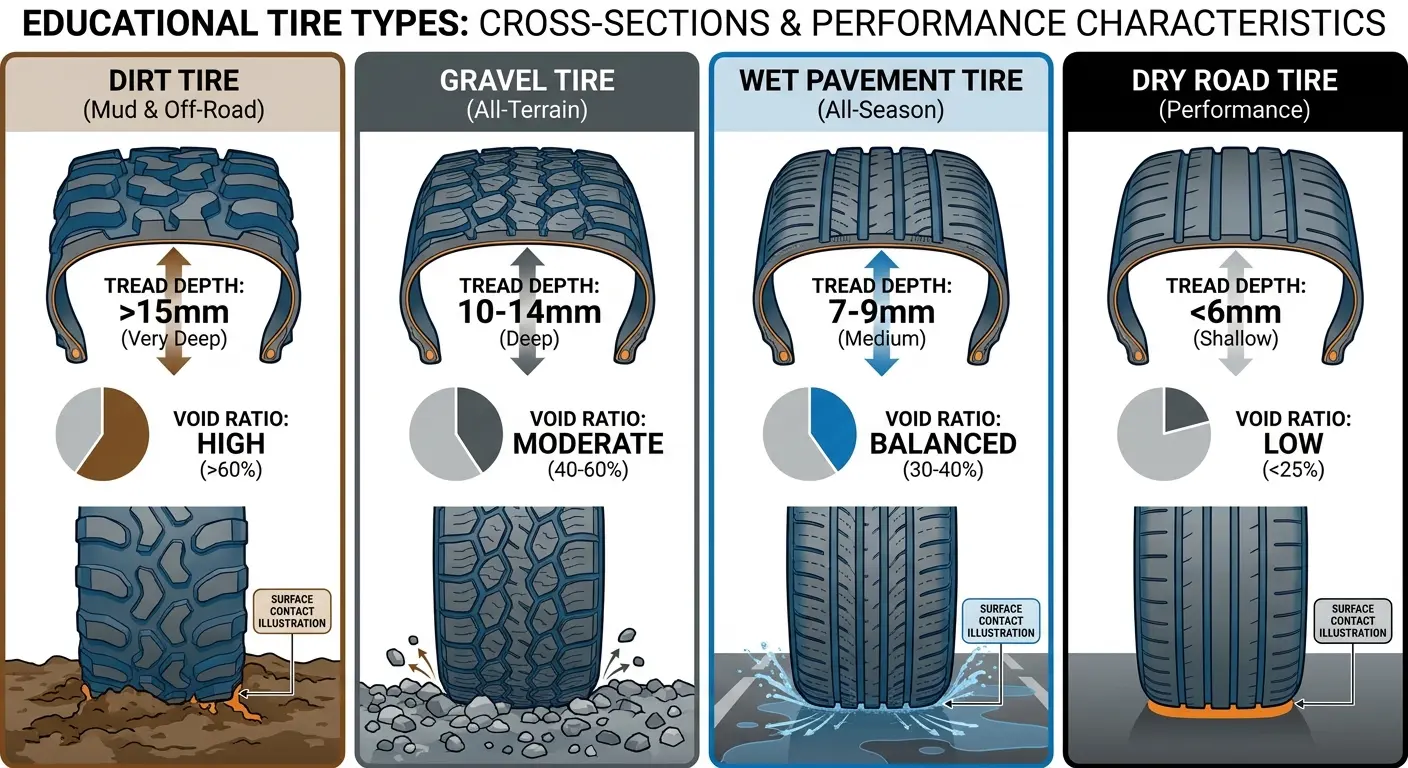
Tread pattern depth and void ratio determine surface versatility more than any other factor. These types of motorcycle tires prioritize traction across varied conditions over outright performance, with designs ranging from dirt-focused knobbies to rain-optimized street compounds.
Surface contact area and self-cleaning tread matter here. Compound softness takes a back seat to mechanical grip from tread block design and spacing.
5. Full Knobby Off-Road Tires
True dirt bike tires feature tall, widely-spaced lugs designed to penetrate loose surfaces and self-clear mud. These excel in their intended environment but become miserable on pavement.
The minimal contact patch creates excessive noise, harsh vibration, and rapid wear on hard surfaces. The sound of knobbies on the highway is like riding inside a drum. Constant drone at 70 mph that makes you want to stuff earplugs in after twenty minutes. Lifespan on pavement might measure in hundreds of miles rather than thousands. Off-road use extends this to 2,000-3,000 miles depending on terrain and riding style.
Lower air pressures are critical for traction. Most dirt riders run 12-15 psi to increase contact patch and allow the tire to conform to obstacles. This same pressure on pavement would cause dangerous handling and accelerated wear. Carrying a portable compressor eliminates the hassle of finding air at trailheads.
DOT versus non-DOT versions create confusion for dual-sport applications. When discussing off-road riding conditions, riders need to secure their navigation devices with reliable motorcycle handlebar mounts that can withstand rough terrain. DOT-approved knobbies meet minimum tread depth and construction standards for street legality, though they still perform poorly on pavement. Non-DOT versions optimize purely for dirt performance without legal constraints.
6. Dual-Sport 50/50 Tires
The compromise tire for equal street and dirt use features moderate knob height and tighter spacing than full knobbies.
Unpopular opinion: Dual-sport 50/50 tires are kind of a marketing scam. They're mediocre at pavement and mediocre at dirt. Just buy two wheelsets with proper tires for each surface, or commit to one or the other. The compromise helps nobody.
"50/50" is marketing fiction. These tires actually favor either street or dirt depending on model, running closer to 60/40 in either direction. Reading between the marketing lines requires looking at actual knob height, spacing, and compound hardness.
Lifespan with mixed use reaches 6,000-8,000 miles. Pure street use extends this, while aggressive off-road riding cuts it short. The tread blocks wear unevenly based on surface type, creating a visual mess that still functions adequately.
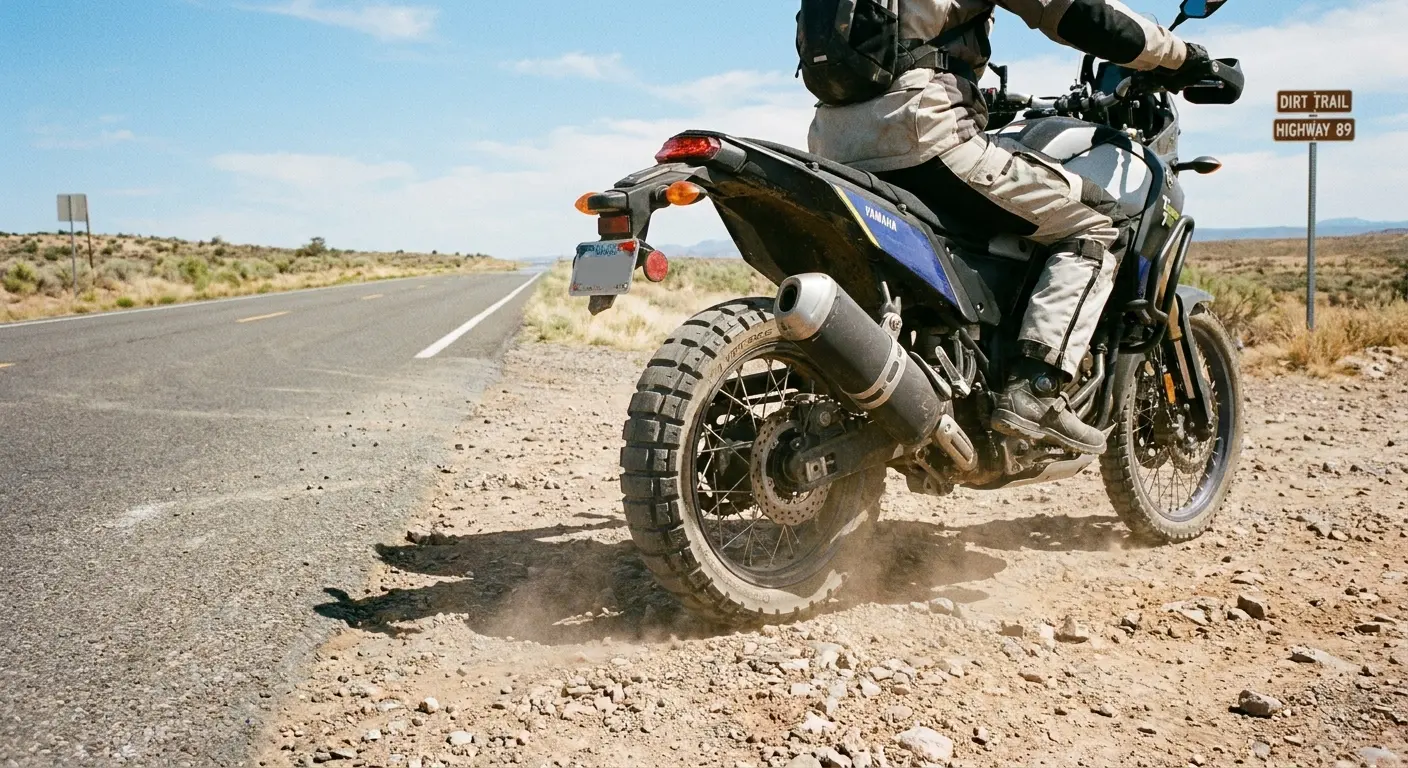
Handling quirks on pavement stem from knob squirm. The tall tread blocks flex under cornering loads, creating vague feedback and reduced confidence at lean angles. This isn't dangerous, just disconcerting for riders accustomed to sport tire precision.
Air pressure adjustment strategies matter when transitioning between surfaces. I run 32-36 psi for street riding, then drop to 18-22 psi for dirt. You need that compressor I mentioned earlier.
7. Adventure 80/20 Tires
Street-biased adventure rubber features shallow tread blocks that handle pavement confidently while maintaining fire road capability.
Be honest about your actual riding. My buddy bought an Africa Twin and immediately threw on 50/50 tires because "adventure bike." Three years later, those tires have seen his driveway, the freeway to work, Starbucks parking lots, and one gravel road that one time. He's replaced them twice. Still running 50/50s. Still never goes off-road. Don't be that guy.
These represent the practical choice for adventure bikes that rarely see single-track. Most adventure riders spend 90% of their time on pavement despite fantasies about remote exploration. Tire choice should match reality, not aspiration.
Lifespan runs 10,000-15,000 miles depending on load and road surface. Heavy adventure bikes with luggage accelerate wear, while solo riding on smooth pavement maximizes mileage.
Wet weather performance improves drastically compared to 50/50 options. The tighter tread pattern and increased contact patch provide confidence in rain without sacrificing dirt capability for the occasional gravel road.
Dirt performance limitations become apparent on challenging terrain. Loose sand, deep mud, and rocky climbs expose the inadequate knob height and spacing. Serious off-road riders swap to knobbies for trail-focused trips rather than compromising everywhere.
8. Scooter Rain Tires
Small-diameter tires optimized for wet urban conditions represent an overlooked safety category.
Deep sipe patterns channel water aggressively, critical for the small contact patches that make scooters vulnerable to hydroplaning. Compound formulations grip in cold temperatures better than sport bike rubber, addressing the reality that scooter riders commute year-round regardless of weather.
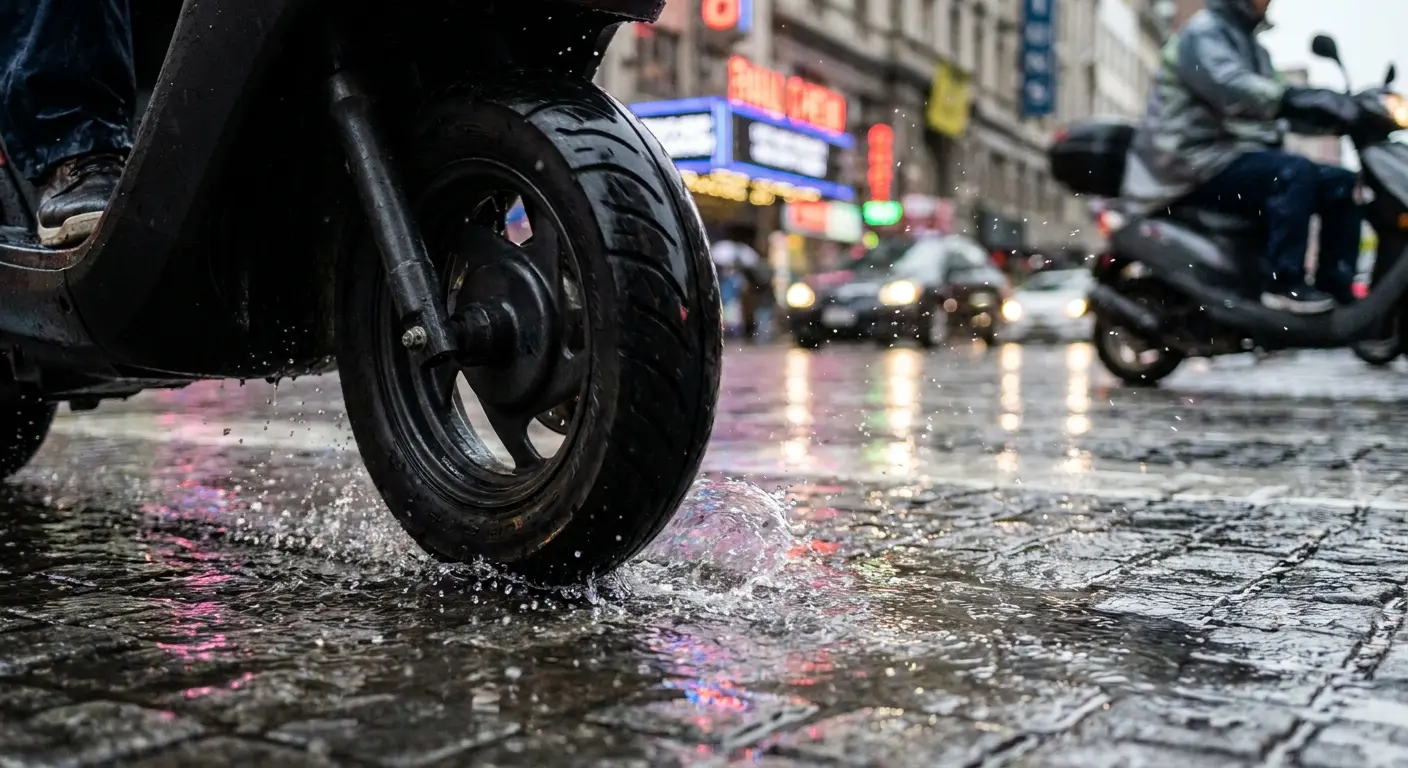
Lifespan reaches 5,000-8,000 miles, shorter than motorcycle tires but adequate for the urban commuting these vehicles serve. The softer compounds wear faster but provide the grip necessary for emergency stops in traffic.
Many scooter owners run inadequate all-season tires that compromise safety. The cost savings of cheap rubber pale compared to the consequences of a wet-weather crash. I recommend rain-specific tires for any scooter used for daily commuting in climates with regular precipitation.
Longevity and Load Tires
Construction method and load rating determine durability and weight capacity more than compound chemistry. These motorcycle tire types prioritize mileage and stability under load over handling precision, making them essential for touring, cruiser, and commercial applications.
Understanding load index and speed rating matters here. Running underrated tires with heavy luggage or a passenger creates dangerous failure risk that most riders never consider until it's too late.
Construction Type |
Load Capacity Advantage |
Typical Mileage Range |
Ride Quality |
Best Application |
|---|---|---|---|---|
Bias-Ply |
Higher per tire weight rating |
12,000-18,000 miles |
Softer, more compliant |
Cruisers, vintage bikes, heavy loads |
Touring Radial |
Moderate with reinforcement |
15,000-25,000 miles |
Firmer, more stable |
Long-distance touring, sport-touring |
Heavy-Duty Truck |
Maximum (1,000+ lbs/tire) |
20,000+ miles |
Stiff, utility-focused |
Three-wheelers, cargo applications |
High-Mileage Commuter |
Standard load rating |
15,000-20,000 miles |
Budget-oriented compromise |
Daily urban commuting |
9. Cruiser Bias-Ply Tires
Traditional bias-ply construction features crisscrossed internal plies that create a fundamentally different structure than radial designs.
Bias-ply versus radial is like the difference between a modern building and an old one. Bias-ply tires have crisscrossed layers that flex more, which feels cushy but vague when you're pushing. Radials have steel belts running perpendicular to the direction of travel, think of them as support beams. This makes the sidewalls stiffer, so when you lean hard into a corner, the tire holds its shape instead of squishing around.
Cruiser manufacturers still spec this "outdated" design for good reasons. The softer ride quality absorbs road imperfections better than stiff radials, creating the comfortable cruise that cruiser riders expect. Load-carrying capacity exceeds radials of similar size, critical for bikes designed around passenger and luggage capability.
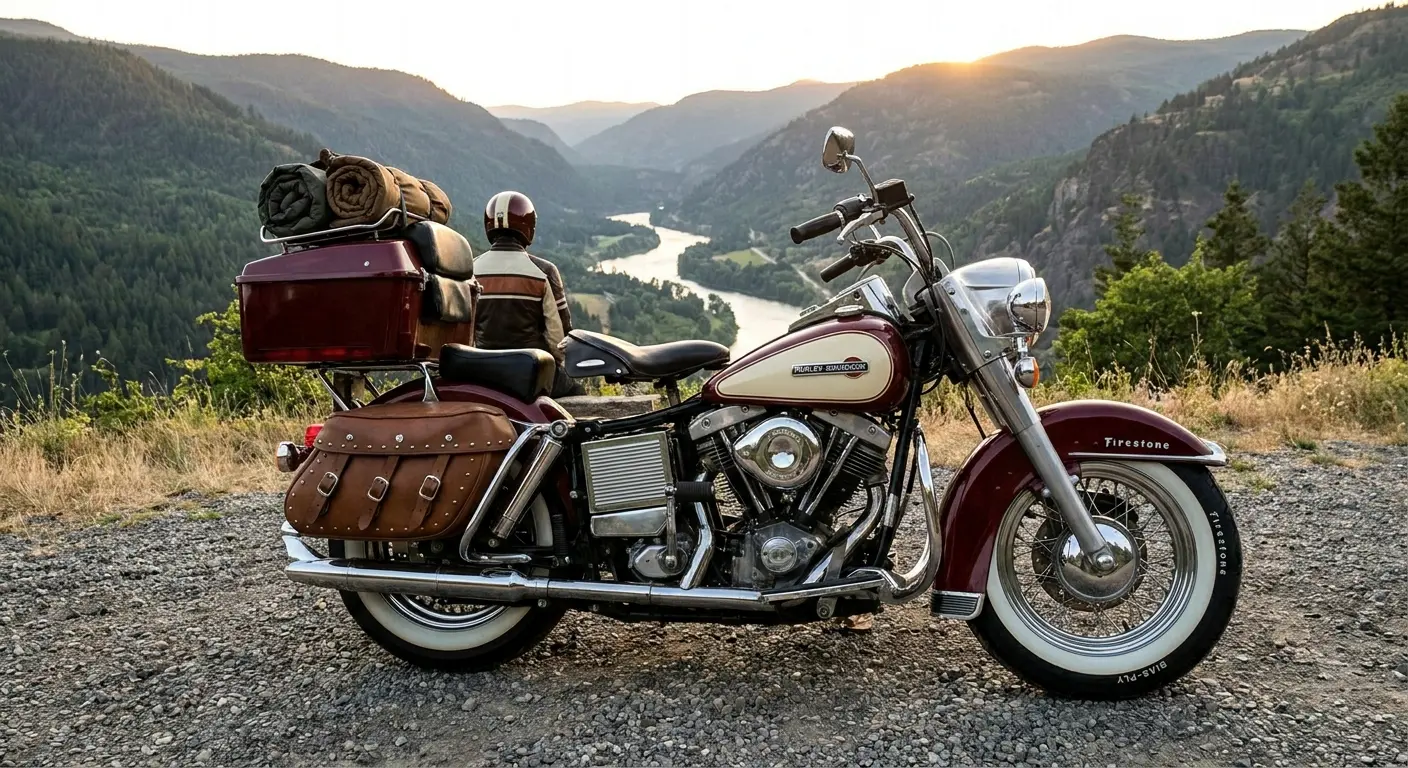
The aesthetic appeal of wide whitewall or vintage tread patterns matters to cruiser owners in ways sport bike riders don't understand. These bikes are rolling statements, and period-correct rubber completes the visual package.
Handling limitations compared to radials become apparent in aggressive cornering. The flexible sidewalls squirm under hard lean angles, creating vague feedback that discourages pushing limits. For the typical cruiser riding style, this never becomes an issue.
Lifespan runs 12,000-18,000 miles depending on weight and riding habits. Solo riders on smooth highways maximize mileage, while two-up touring with full luggage accelerates wear.
10. Touring Radial Tires
Long-distance radial engineering targets 15,000-25,000 mile lifespans without sacrificing wet weather grip.
Multi-compound construction places harder rubber in high-wear zones while maintaining softer compounds where cornering grip matters. Reinforced sidewalls handle luggage weight without the flex that plagues standard tires under load.
These tires feel "wooden" compared to sport options, a complaint I hear constantly from riders switching categories. The stiff construction that enables 20,000-mile lifespan also reduces road feel and feedback. When discussing long-distance touring and the need to track mileage, motorcycle perch mounts keep tire monitoring apps accessible during extended rides.
Break-in periods matter here too. The first 500 miles require gentle cornering while the release agents wear off and the compound scrubs in properly. Rushing this process compromises both safety and ultimate tire performance.
Many touring riders never explore their tires' performance limits. These are engineered for loaded two-up riding through mountain passes, yet most see highway slabs and moderate cornering. The safety margin built into touring rubber exceeds what typical use demands.
11. Heavy-Duty Truck Tires
Specialized rubber for three-wheelers, cargo bikes, and motorcycle-based utility vehicles occupies a tiny market niche.
Extreme load ratings often exceed 1,000 lbs per tire, necessary for vehicles carrying commercial cargo or multiple passengers. Reinforced carcass construction uses additional plies and stiffer compounds to prevent sidewall collapse under weight.
Handling takes a distant back seat to durability. These tires feel agricultural compared to performance rubber, with slow steering response and minimal feedback. The riders using them care about reliability and load capacity, not lap times.
Limited selection in this niche forces compromises. You take what's available rather than optimizing for specific conditions. Manufacturers produce these in small batches, and availability can be spotty.
Lifespan exceeds 20,000 miles when properly maintained. The hard compounds and reinforced construction resist wear, though improper inflation or overloading can destroy them prematurely.
12. Commuter High-Mileage Tires
Budget-focused rubber prioritizes maximum tread life for urban riders using motorcycles as primary transportation.
Hard compound formulations extend lifespan to 15,000-20,000 miles, though at a cost. Conservative tread patterns and stiff construction reduce performance across the board.
Performance compromises include longer stopping distances, reduced grip in cold or wet conditions, and vague handling feedback. These aren't dangerous for cautious riding, but they lack the safety margins of premium rubber.
The economic reality for commuters makes these appealing. Replacing tires every 15,000 miles instead of every 6,000 miles cuts annual transportation costs dramatically. When your bike is a tool rather than a toy, the math matters.
I recommend these for riders doing predictable urban commuting in good weather. If your route includes aggressive cornering, frequent rain, or high-speed highway sections, spend more on better rubber.
Specialty Application Tires
Niche solutions for extreme conditions or specific competitive requirements often require specialized knowledge to use safely. These types of motorcycle tires may perform dangerously outside their intended application.
I'm going to blow through the specialty tires fast because 95% of you will never need them.
13. Ice Racing Studded Tires
Extreme-condition rubber features hundreds of carbide studs protruding from the tread for frozen surface grip.
Carbide spikes for frozen lakes. Cool as hell, useless unless you live in Minnesota and hate your joints.
Stud length regulations typically limit protrusion to 15-20mm, though amateur racing may allow more aggressive configurations. These studs destroy any non-ice surface instantly, tearing up asphalt, concrete, or dirt with equal efficiency.
Specialized rim locks prevent tire spin on the wheel, critical when studs create enormous rotational forces during acceleration and braking. Standard wheel setups would allow the tire to rotate independently, shearing valve stems and creating dangerous blowouts.
The niche racing community using these is small but passionate. Ice racing events draw dedicated competitors willing to invest in equipment that works one season per year in specific geographic regions.
Street legality doesn't exist for these in most jurisdictions. The studs pose obvious danger to other vehicles and road surfaces, making them exclusively track-only equipment.
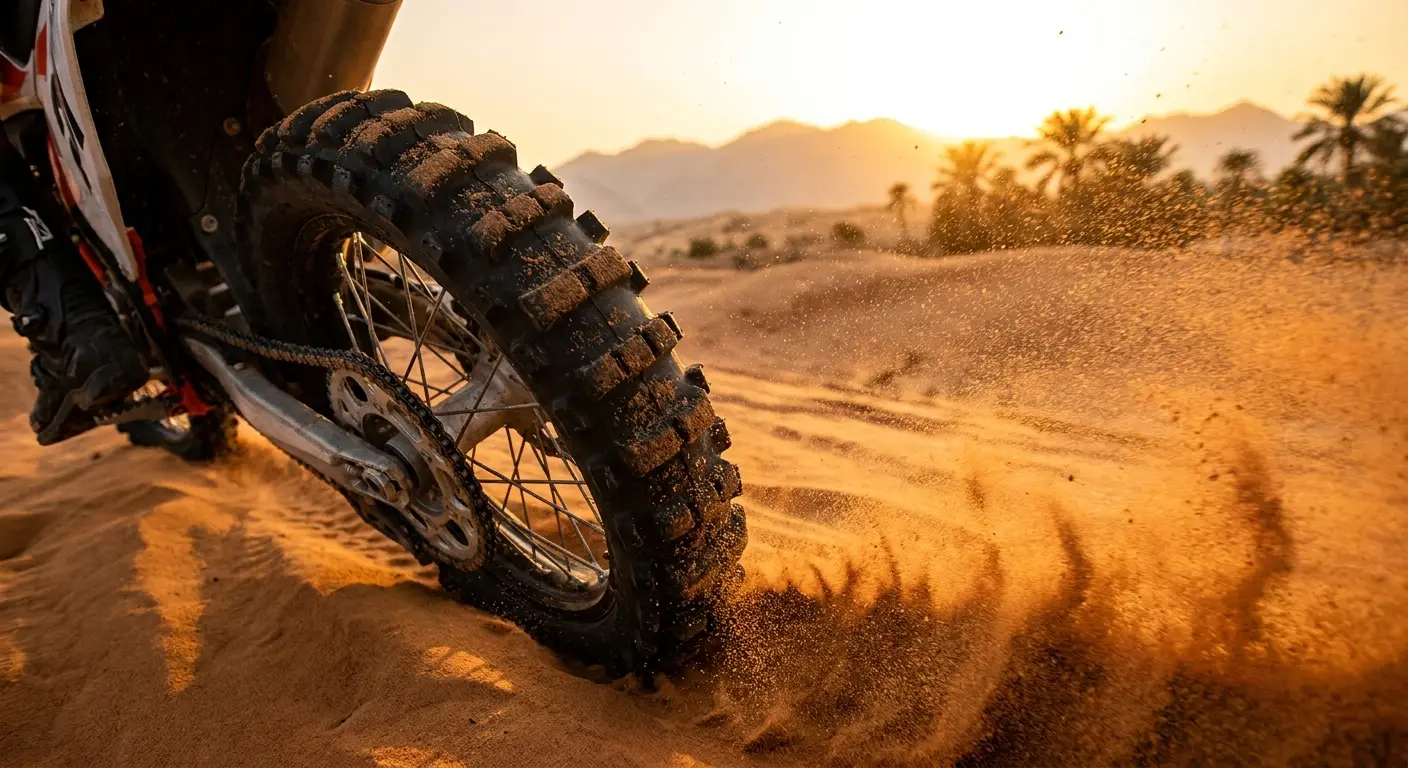
14. Sand Paddle Tires
Desert-specific rear tires feature molded paddles instead of traditional tread blocks, designed to scoop sand for forward thrust.
Rear tire that looks like a riverboat wheel. Dunes only. Will literally flip your bike on pavement.
These only work on loose surfaces. Pavement contact would be catastrophic, with the paddles gripping and potentially flipping the bike. Even hard-packed dirt creates dangerous handling.
Dune bikes and sand drags represent the primary applications. Riders attacking massive sand hills need the specialized traction these provide, while traditional knobbies would simply dig and bog down.
Paddle count matching to engine power matters. Too few paddles with high horsepower creates wheelspin, while too many paddles with limited power bogs the engine. Getting this ratio right requires experience or expert guidance.
Front tires remain traditional knobbies since steering requires different traction characteristics than propulsion. The combination of knobby front and paddle rear creates the handling balance necessary for sand riding.
15. Trials Competition Tires
Ultra-soft, low-pressure rubber designed for maximum grip on rocks, logs, and obstacles at walking speeds occupies another tiny niche.
Gummy, 3-5 psi, wear out in hours. Competition only.
The gummy compound wears rapidly on any hard surface, sometimes measuring lifespan in hours rather than miles. These are competition-only equipment, replaced frequently as part of the sport's cost structure.
Operating pressures run 3-5 psi, far below what any street tire would tolerate. The specialized bead design prevents tire roll-off the rim despite these extremely low pressures, using reinforced bead cores and specific rim profiles.
The market for these is minuscule, served by a handful of manufacturers worldwide. Trials riders are meticulous about tire selection, understanding that the wrong compound or pressure costs points in competition.
I see riders try to use these for casual trail riding, then wonder why they're replacing tires monthly. Competition equipment demands competition budgets and purpose-specific use.
16. Vintage Correct Tires
Reproduction rubber matching original tread patterns and sidewall markings serves classic motorcycles and concours judging.
You pay triple for worse performance because authenticity.
Period-correct rubber becomes mandatory for serious judging. Modern tires in classic sizes lose points, sometimes enough to drop from trophy contention to participation awards.
The performance gap compared to modern compounds is substantial. Vintage tread patterns and rubber formulations offer less grip, longer stopping distances, and reduced wet weather capability. Riders need to adjust expectations and riding style accordingly.
Limited manufacturers serve this market, with production runs often measured in hundreds rather than thousands. Availability can be spotty, and discontinued sizes may never return.
Cost premiums run 2-3x modern equivalents in similar sizes. You're paying for small production runs, specialized molds, and niche market economics.
Some vintage riders compromise with modern tires in classic sizes, accepting the judging penalty for improved safety and performance. The decision depends on whether you're showing or riding your classic machine.
How Rokform Fits Into Your Tire Strategy
Tracking tire pressure, mileage, and replacement intervals across different types of motorcycle tires creates a maintenance challenge most riders handle poorly.
We forget to check pressures, lose track of mileage, and ride on worn rubber longer than we should. The consequences range from reduced performance to dangerous blowouts.
Real talk: I'm supposed to mention Rokform mounts here because this is their blog. But actually, this makes sense. I track tire mileage with an app because I'm terrible at remembering when I installed tires. My phone mount keeps that info visible, which means I actually check it instead of riding on worn tires until my wife notices the cords showing.
Rokform's motorcycle phone mounts keep tire monitoring apps accessible during rides, solving the tracking problem through constant visibility. The magnetic mounting system survives vibration that kills other mounts, a critical distinction for reliability.
Modern tire pressure monitoring apps provide real-time data, historical tracking, and replacement reminders. When discussing tire maintenance and monitoring, motorcycle mount dampeners protect your phone and tire tracking apps from vibration damage during rides. These tools only work if your phone stays mounted and visible, which is where most solutions fail.
The Pro Series Motorcycle Mount is purpose-built for this application. Magnetic attachment allows one-handed mounting and removal, while the locking mechanism prevents theft at gas stops. Adjustable viewing angles keep your screen visible in varying light conditions.
Is it essential? No. Is it useful? Yeah, actually. Especially if you run different tire types and need to track different replacement intervals. Your investment in quality tires deserves proper maintenance. Making monitoring effortless through reliable mounting eliminates the excuses that lead to premature wear and safety compromises.
Final Thoughts
Figure out where you actually ride. It'll save you money and maybe your skin.
Tread pattern and compound choice should match actual riding conditions rather than bike category. This insight drives better tire selection than any dealer recommendation based on what you ride.
Understanding these 16 types of motorcycle tires empowers you to question conventional wisdom and select based on real-world performance needs. The dealer wants to move inventory, while you need rubber that matches where and how you actually ride.
Your riding patterns change over time. The aggressive sport riding of your twenties may give way to touring in your forties, or vice versa. Revisit your tire choices as your priorities shift rather than defaulting to what you've always run. Proper equipment extends beyond tires to include essential motorcycle accessories that enhance safety and performance.
Hot take: Most riders on supersport bikes should be running sport-touring tires. Yeah, I said it. You're not fast enough to need hypersport grip, and you're definitely not smooth enough to keep them in the operating temperature range on the street. Sport-touring tires will make you faster because you'll actually trust them in the cold morning commute.
We've covered everything from racing slicks to vintage reproductions, each solving specific problems for specific riders. Your job is matching the solution to your actual needs rather than perceived requirements.
The right different types of motorcycle tires transform your riding experience. The wrong ones create frustration, expense, and safety risks that no amount of skill can fully compensate for.
Choose based on tread pattern first, compound second, and marketing claims last. Your riding will improve, your wallet will thank you, and you'll finally stop wondering why your tires aren't performing as expected.

