


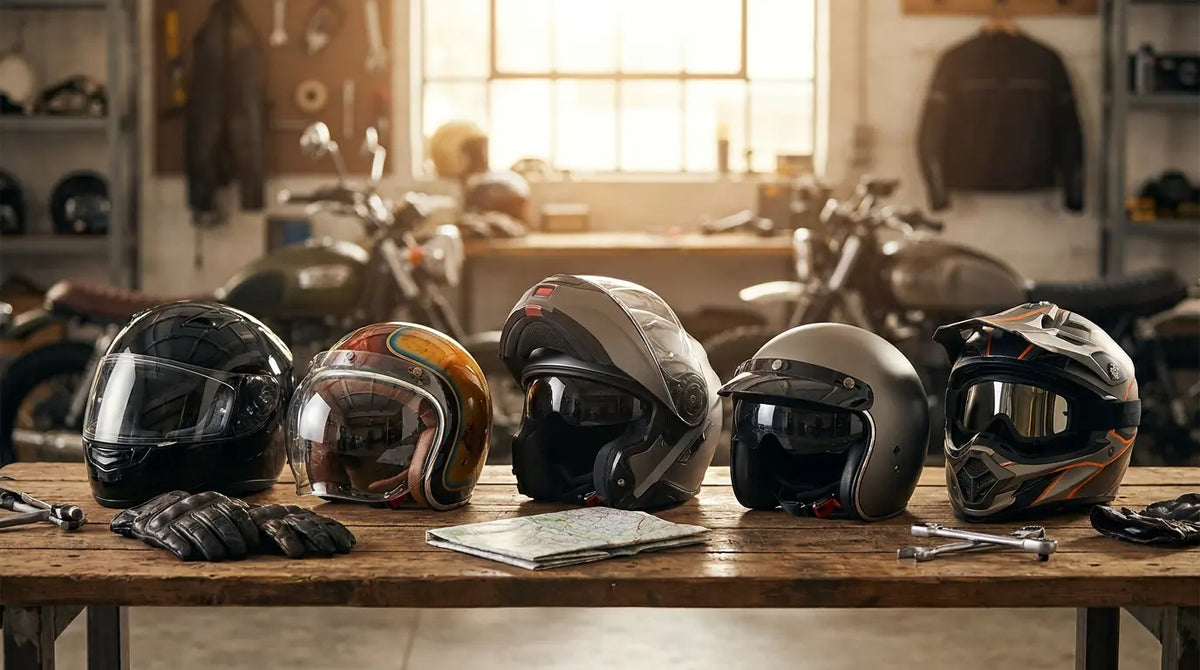
Look, full-face helmets are the gold standard for protection. Everyone knows that. But modular helmets? They've gotten so good that you can flip up the chin bar at a stoplight without actually giving up safety. That's a game-changer if you've ever tried to drink water with a full-face on.
Off-road helmets solve completely different problems than street designs. You need maximum ventilation, compatibility with goggles, and a form factor that works with chest protectors and neck braces. The peak visor and extended chin bar aren't just for looks.
Minimalist helmets trade coverage for comfort and freedom. I'm not your dad, so wear what you want. But let's be real: in any crash above 20 mph, you're getting facial injuries with a half helmet. That's not fear-mongering, it's physics.
Sport and race helmets use aerodynamic shells that reduce neck fatigue at highway speeds. The elongated tail section? It's there for a reason. Adventure and dual-sport designs bridge multiple riding environments with adjustable features that actually work.
Vintage-style helmets blend retro aesthetics with modern safety standards when you choose certified models. Winter-specific helmets solve fog and cold-weather breathing issues that standard helmets can't touch. Electric bike helmets account for different impact patterns and urban riding scenarios.
Your helmet type matters less than proper fit and certification, but matching your helmet to your riding style prevents frustration. A $200 helmet that fits perfectly will protect you better than a $600 helmet that shifts around.
Built for the Road: Street-Focused Helmets
Street helmets dominate the market because most of us spend our time on pavement. These designs prioritize aerodynamics, noise reduction, and features that matter during sustained highway speeds.
Each helmet in this category addresses different pain points you'll encounter on public roads. The differences between them determine whether you arrive refreshed or exhausted after a long ride.
1. Full-Face Helmets
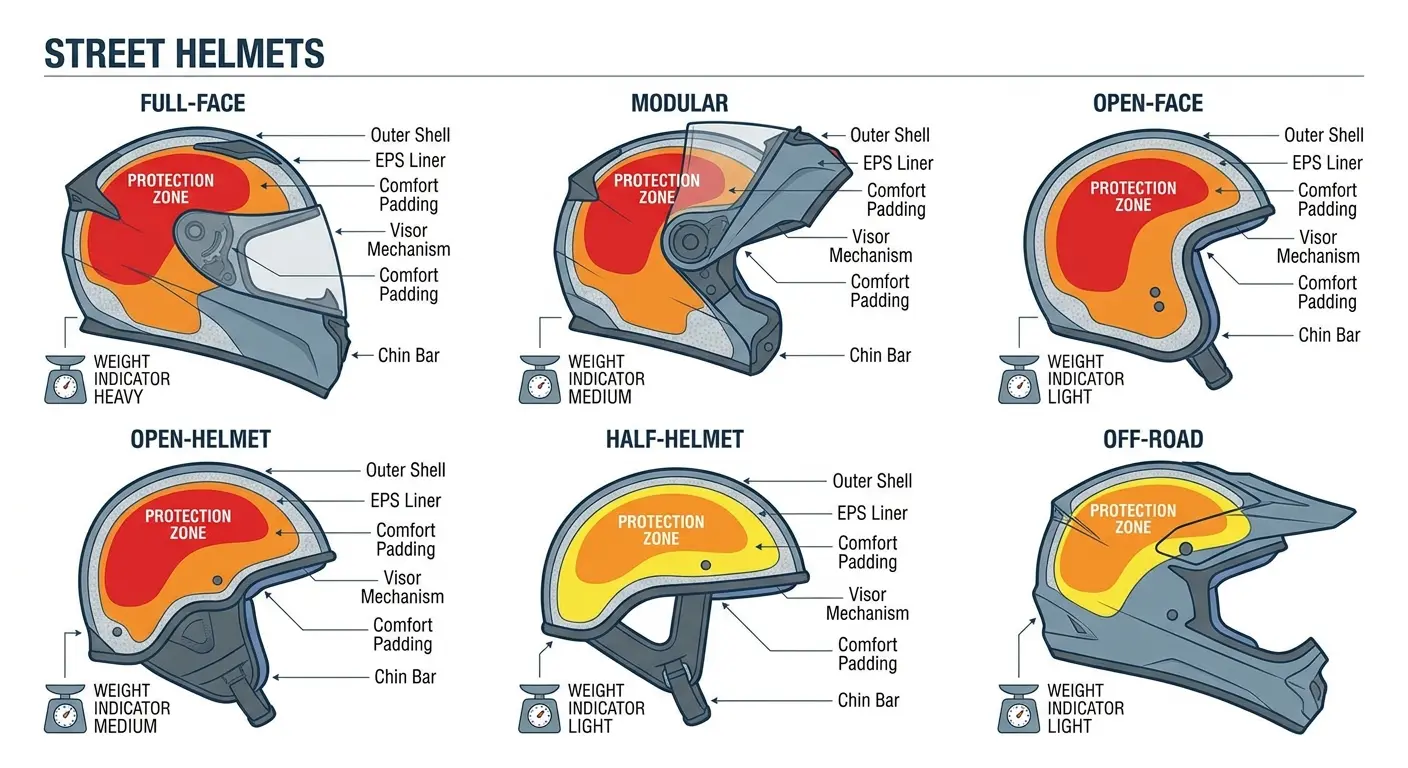
Full-face helmets provide complete head and jaw protection. The chin bar adds structural integrity that other helmets can't match, and modern ventilation systems have eliminated most of the claustrophobic feeling older riders remember.
Full-face helmets run anywhere from $80 to $800, and honestly, the differences aren't always obvious until you're actually riding. The real differences show up in shell materials, liner quality, and how well the helmet manages wind noise above 60 mph. My current helmet weighs 3.6 pounds. My last one was 3.8. My buddy's carbon fiber Shoei is 2.9. Weight distribution matters more than total weight.
Try helmets with different shell shapes because your head's geometry determines comfort more than brand reputation. DOT certification is mandatory, but ECE and Snell ratings indicate higher impact standards if you're willing to invest more.
Here's what shops won't tell you: that "break-in period" everyone mentions? It's real, but only for the cheek pads. The shell doesn't change. If the helmet hurts your forehead after 10 minutes, it'll hurt your forehead forever. Return it.
When you're commuting daily or heading out for extended rides, proper gear extends beyond your helmet. Random but important: get a decent phone mount. I spent two years using those garbage RAM mounts that vibrate your camera into oblivion. Rokform's magnetic system actually works. You can slap your phone on there with gloves, and it stays put. Worth mentioning because navigating with a full-face helmet is already annoying enough.
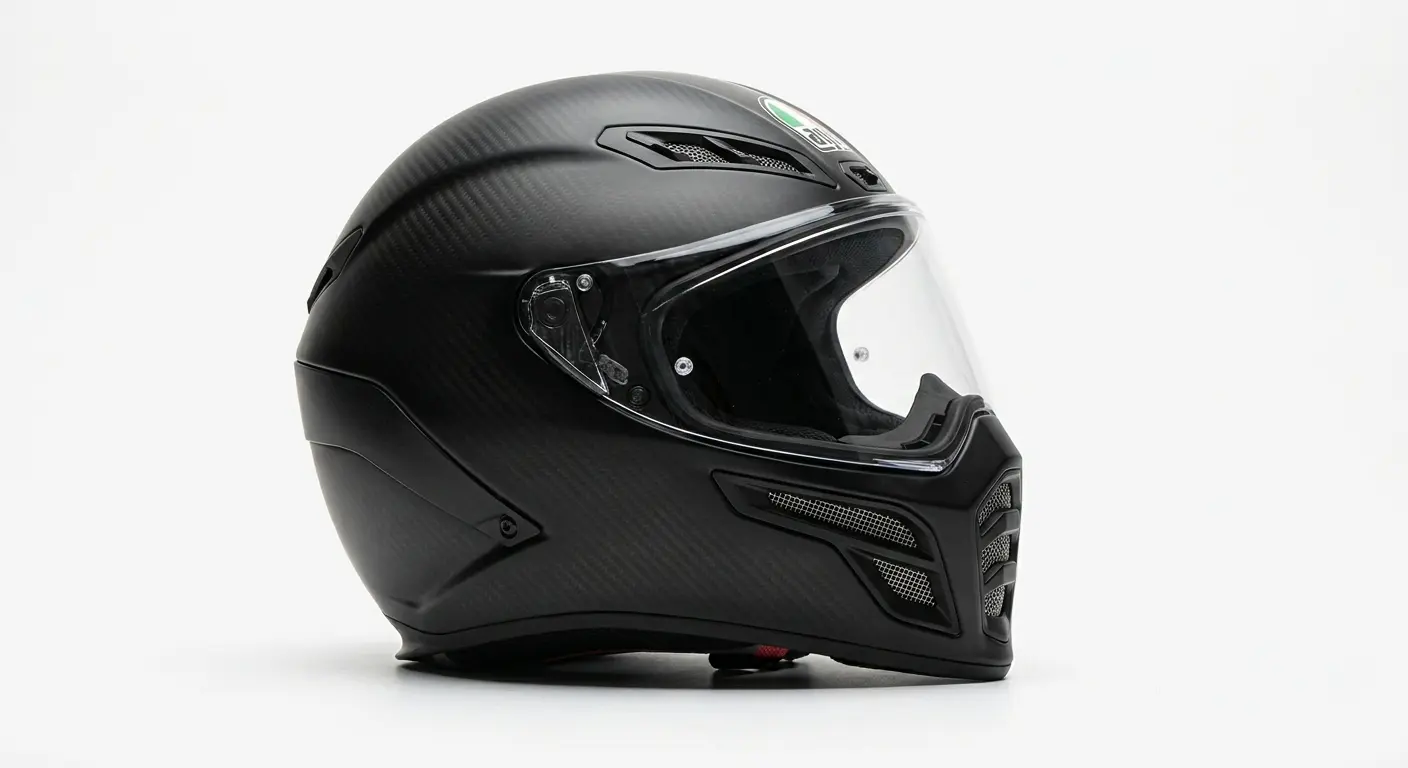
2. Modular Helmets
Modular helmets used to be garbage. I'm talking hinges breaking, chin bars popping open in crashes. Total disasters. But something changed in the last five years. The good ones now? They pass the same tests as regular full-face helmets, and that flip-up feature is addictive once you get used to it.
Early modular designs failed safety tests left and right. I remember reading about this in a Cycle World article back in like 2008? Maybe 2009. Point is, they were sketchy. Then around 2015, Schuberth and Shoei figured out how to make the hinges not suck, and suddenly everyone started making good ones.
The added mechanism does increase weight. We're talking 3.5 to 4.5 pounds typically. You're paying a premium for the convenience.
Modulars excel for riders who wear glasses, need to communicate frequently during rides, or want to grab water without removing their helmet entirely. Gas station? Flip up. Talking to someone? Flip up. Drink water? Flip up. It becomes muscle memory.
The flip-up feature isn't meant for riding with the chin bar open, despite what you'll see some riders doing. Check the certification fine print because some modulars only meet safety standards in the closed position.
Oh, and one more thing about modulars. The mechanism adds complexity, which means more stuff that can break. I've had two different chin bar latches get sticky after a few years. Not dangerous, just annoying. Keep them clean.
3. Sport Helmets
Sport helmets optimize aerodynamics for aggressive riding positions and high speeds. That elongated tail section reduces buffeting when you're tucked behind a windscreen.
These helmets use more aggressive ventilation placement because sport riders generate more body heat during spirited riding. The visors are designed for a head-down position, which means they can feel awkward if you're sitting upright on a cruiser or standard bike. Sport helmets typically feature quick-release visor systems and pinlock-ready shields because fogging becomes dangerous when you're carrying speed through corners.
The snug fit that works perfectly at 80 mph can feel restrictive during slow parking lot maneuvers. Don't buy a sport helmet for your cruiser. You'll look ridiculous and feel worse.
Sport helmets have quick-release visors, which sounds cool until you realize you're paying $50 for replacement visors that you'll swap... never. It's a track-day feature that 90% of buyers don't need but pay for anyway.
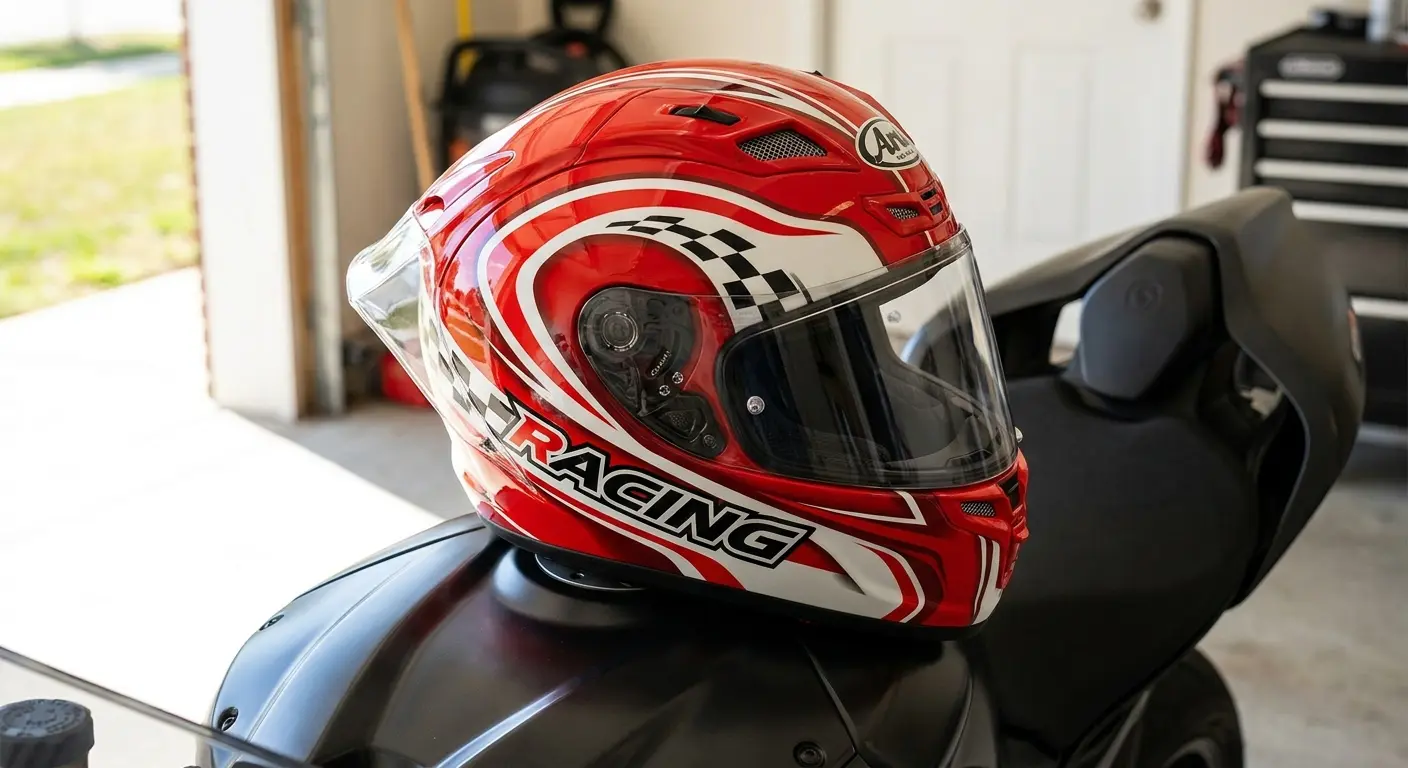
4. Touring Helmets
Touring helmets are heavy as hell. We're talking 4+ pounds, sometimes more. But here's why that doesn't matter: the acoustic padding actually works. I rode from Chicago to Denver in a cheap sport helmet once, and by Wyoming I wanted to drive into a ditch just to make the wind noise stop.
Next trip? Schuberth C4 Pro. Quieter than my car at 80 mph. Yeah, it cost $600. Yeah, my neck was tired the first week. Worth every penny.
These helmets prioritize all-day comfort over outright performance. Superior noise insulation, accommodations for communication systems, and ventilation designed for upright riding positions. The extra bulk pays dividends when you're riding 300+ miles and wind roar can end your day early.
The drop-down sun visor thing seems gimmicky until you use it. Then you'll wonder why every helmet doesn't have one. The wider eye port improves peripheral vision, and the more relaxed fit reduces hot spots during extended wear.
Touring designs sacrifice some aerodynamic efficiency, so you might notice more head buffeting at triple-digit speeds compared to sport-focused options. Long-distance riders know that proper gear extends beyond your helmet. Understanding motorcycle maintenance ensures your bike stays reliable across those multi-day trips.
Helmet Type |
Primary Use |
Weight Range |
Key Feature |
Best For |
|---|---|---|---|---|
Full-Face |
All-purpose street |
3-4 lbs |
Complete protection |
Daily riding, commuting |
Modular |
Versatile street |
3.5-4.5 lbs |
Flip-up chin bar |
Glasses wearers, frequent stops (honestly most people once they try one) |
Sport |
Aggressive riding |
3-3.5 lbs |
Aerodynamic shell |
Track days, spirited riding (most people never use these right) |
Touring |
Long-distance |
4+ lbs |
Noise reduction |
Multi-day trips, highway miles |
Dual-Sport |
Mixed terrain |
3-4 lbs |
Peak visor |
Adventure bikes, gravel roads |
*Weight ranges are approximate. My Shoei RF-1400 weighs 3.6 lbs but my old Arai was closer to 4. Your mileage will vary.
5. Dual-Sport Helmets
Dual-sport helmets bridge street and off-road riding with a peak visor, extended chin bar, and larger eye port. This helmet works for adventure bikes and riders who split time between pavement and gravel roads.
The peak helps deflect sun, rain, and roost from the rider ahead, but it creates lift at highway speeds. You'll feel the helmet trying to pull backward once you hit 65-70 mph. Most dual-sport helmets accommodate goggles and feature more aggressive ventilation than pure street helmets. The trade-off comes in noise levels because the design prioritizes airflow over acoustic comfort.
You can remove the peak on many models, which improves highway manners but defeats the purpose of choosing a dual-sport helmet in the first place. These work brilliantly for riders who actually use their adventure bikes off-pavement but feel excessive for purely street-oriented riding.
Actually, before I forget: dual-sport helmets in winter are miserable. That peak catches wind, your goggles fog, and you'll hate everything about riding. Just needed to mention that.
Designed for Dirt: Off-Road Specialists
Off-road helmets solve completely different problems than street designs. Trail riding demands maximum ventilation, compatibility with goggles, and a form factor that works with chest protectors and neck braces.
These helmets look aggressive because function dictates every design element. You won't find visors or noise insulation because off-road riders prioritize cooling and visibility over comfort at sustained speeds.
6. Motocross Helmets
Motocross helmets feature the most aggressive ventilation of any helmet because MX riding generates intense physical exertion. The extended chin bar and peak visor are signature elements, but they serve specific purposes beyond aesthetics.
The chin bar provides space for heavy breathing during racing, and the peak deflects roost while helping you track the rider ahead through dusty conditions. These helmets require goggles because the large eye port can't accommodate a visor.
The lighter weight compared to street helmets (typically 2.5 to 3.5 pounds) makes sense because motocross designs eliminate acoustic padding and aerodynamic features. The aggressive ventilation that keeps you cool on the track becomes painfully cold during any street riding. I've seen riders try to use MX helmets for dual-sport riding, but the neck strain from wind resistance makes it miserable above 45 mph.
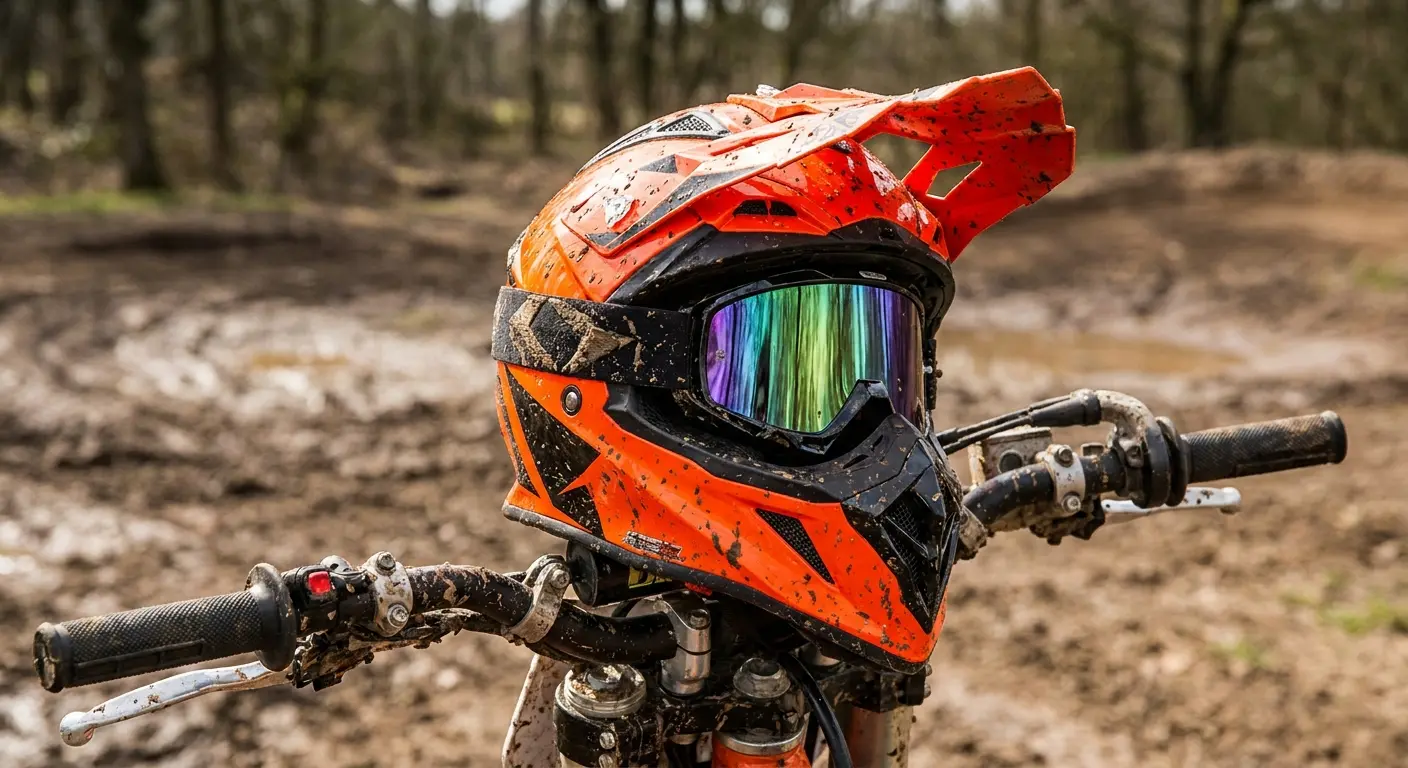
7. Enduro Helmets
Enduro helmets dial back the extreme ventilation of MX designs while maintaining off-road functionality. This helmet works for longer rides where you need some wind protection but still require goggle compatibility and a peak visor.
The eye port is slightly smaller than pure motocross helmets, and some models include a removable visor so you can run goggles or a shield depending on conditions. Enduro helmets weigh slightly more than MX options (3 to 3.5 pounds) because they add modest padding for comfort during all-day rides. The chin bar design still prioritizes breathing room over aerodynamics.
These helmets make sense for trail riders, dual-sport enthusiasts, and anyone who spends significant time at moderate speeds on unpaved surfaces.
8. Trials Helmets
Look, trials helmets are super niche. Unless you're doing trials riding, skip this section.
Still here? Trials helmets strip away everything unnecessary for technical, low-speed riding. Minimal ventilation, a smaller profile, and a significantly lighter build (often under 2 pounds) compared to other off-road helmets.
The reduced chin bar and compact shape improve visibility for the precise throttle and balance work that trials riding demands. These helmets work exclusively for trials competition and practice. Okay, "exclusively" is too strong. Some people use them for slow technical trail riding too, but that's about it. They lack the impact protection and coverage needed for any riding involving speed or jumps.
9. Adventure Helmets
Adventure helmets are the Swiss Army knife of off-road helmets. They include a peak visor, but the eye port accommodates both goggles and a flip-down shield. You can adjust ventilation for different conditions, and the fit works with or without goggles.
These helmets weigh more than dedicated off-road options (3.5 to 4.5 pounds) because they incorporate features from both street and dirt designs. The versatility comes at a cost because adventure helmets don't excel at any single application.
They're adequate for highway riding but noisier than touring helmets. They work off-road but don't ventilate as effectively as motocross helmets.
Adventure helmets are for people who actually ride dirt. If you've got an adventure bike that's never left pavement, save your money. Get a regular street helmet and stop pretending.
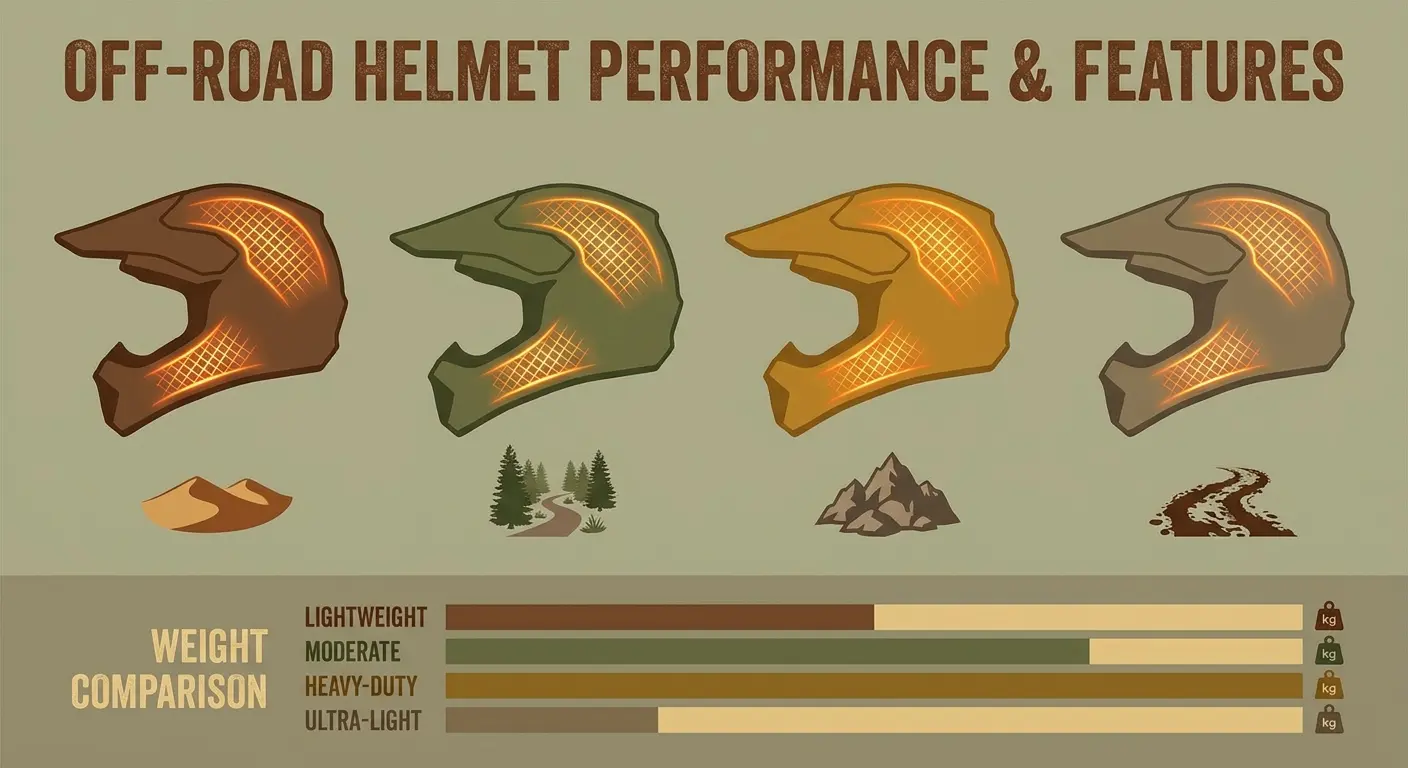
Helmet Type Weight Ventilation Level Goggle Compatible Primary Terrain Speed Range Motocross 2.5-3.5 lbs Maximum Required MX tracks, jumps Low-moderate Enduro 3-3.5 lbs High Yes Trails, mixed Low-moderate Trials Under 2 lbs Minimal Optional Technical sections Very low Adventure 3.5-4.5 l
Helmet Type |
Weight |
Ventilation Level |
Goggle Compatible |
Primary Terrain |
Speed Range |
|---|---|---|---|---|---|
Motocross |
2.5-3.5 lbs |
Maximum |
Required |
MX tracks, jumps |
Low-moderate |
Enduro |
3-3.5 lbs |
High |
Yes |
Trails, mixed |
Low-moderate |
Trials |
Under 2 lbs |
Minimal |
Optional |
Technical sections |
Very low |
Adventure |
3.5-4.5 lbs |
Adjustable |
Yes |
Mixed on/off-road |
All speeds |
Stripped Down: Minimalist Options
Minimalist helmets prioritize freedom and simplicity over maximum protection. I'm going to judge your risk tolerance a little bit here. Half helmets are legal, popular, and objectively worse at protecting your head. If you're okay with that trade-off, cool. But let's be honest about what you're trading.
They're legal in most states, popular in certain riding communities, and genuinely more comfortable in specific conditions. The protection gap compared to full-face designs is significant and worth acknowledging before you make a decision.
10. Half Helmets
Half helmets (brain buckets in common parlance) cover the top of your head and nothing else. This helmet meets DOT requirements with minimal material, typically weighing under 2 pounds.
You get maximum airflow, unobstructed visibility, and the ability to wear sunglasses without interference. The lack of face and jaw protection means you're accepting substantial risk in any crash involving forward motion.
Half helmets meet DOT requirements the same way a smart car meets crash test standards. Technically, yes, but you're not fooling anyone.
Half helmets work for low-speed cruising, short trips, and riders who prioritize the experience over maximum safety. The retention system matters more on half helmets because the minimal coverage means any shifting during impact eliminates what little protection exists. That tiny shell better stay put.
Shorty versions provide even less coverage in exchange for a lower profile. Cruiser riders choosing minimalist helmets often prefer classic bikes. Check out the best Harley Davidson models that pair perfectly with this riding style.
11. Three-Quarter Helmets
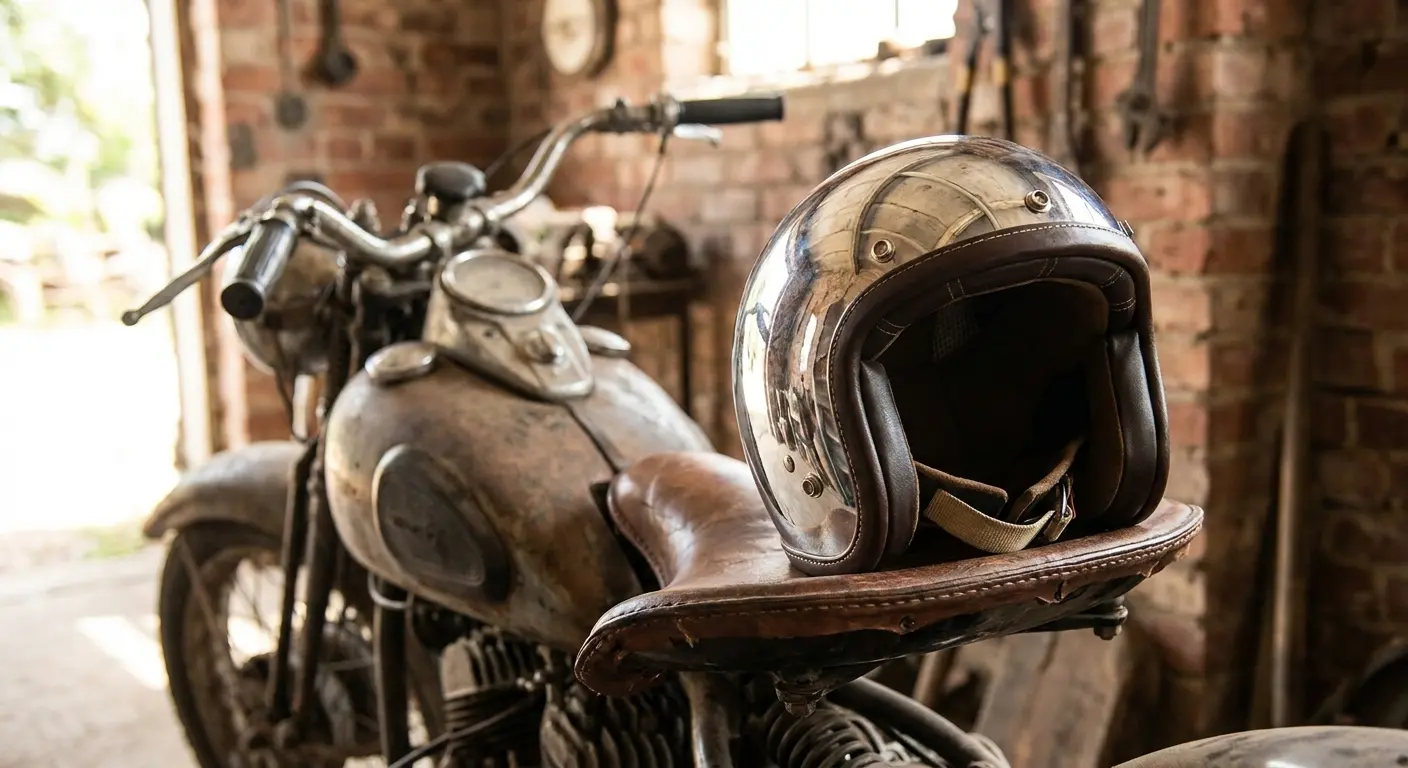
Three-quarter helmets (also called open-face helmets with extended coverage) protect your head and ears while leaving your face exposed. This helmet offers more coverage than half helmets without the enclosed feeling of full-face designs.
Popular among scooter riders, vintage bike enthusiasts, and urban commuters who want more protection than a half helmet provides. The extended shell protects your temples and the back of your head better than half helmets, but your face remains completely vulnerable.
Many three-quarter helmets include a visor or face shield, which helps with wind and debris but provides zero impact protection for your jaw or chin. These helmets typically weigh 2.5 to 3 pounds and offer reasonable ventilation without the extreme exposure of half helmets.
12. Open-Face Helmets
Open-face helmets provide full head coverage with no chin bar or face protection. This helmet dominated the market decades ago and remains popular for cruiser riding and vintage applications.
You get solid protection for the skull and sides of your head while maintaining the open feeling that full-face helmets eliminate. The lack of chin protection is the obvious vulnerability, and crash statistics consistently show facial injuries are common with open-face designs.
Modern open-face helmets include retro styling, flip-down visors, and comfort features that weren't available in classic designs. They work well for low-speed riding, short distances, and situations where you want more protection than a half helmet without committing to full-face coverage. The weight sits between half helmets and full-face options (typically 2.5 to 3.5 pounds).
13. Shorty Helmets
Shorty helmets are stupid. There, I said it. They exist purely for legal compliance, and if that's your priority, maybe reconsider the whole motorcycle thing.
These helmets are the absolute minimum that still qualifies for DOT certification. Barely clearing the legal threshold, covering just enough of your skull to meet requirements.
They weigh as little as 1.5 pounds with minimal padding and the thinnest shells legally permissible. Shorty helmets appeal to riders who want the legal freedom to ride without the bulk of traditional helmets. The protection is minimal by design, and you're essentially wearing the helmet for legal compliance rather than meaningful safety. I also spelled out how old you have to be to ride a motorcycle.
Make sure any shorty helmet you consider actually carries DOT certification because the market includes plenty of novelty helmets that look similar but offer zero legal or protective value. Some are literally just plastic shells with foam inside. They won't protect you, and they won't keep you legal.
Purpose-Built: Niche Applications
Okay, we're getting deep into helmet nerd territory here. If you just want a basic street helmet, you can bail now. The first section covered it.
Still here? Cool. Let's talk about the weird stuff.
Some helmets address specific needs that mainstream designs ignore. From track-focused designs to cold-weather specialists, these helmets demonstrate how far helmet technology has evolved beyond basic protection.
14. Race Replica Helmets
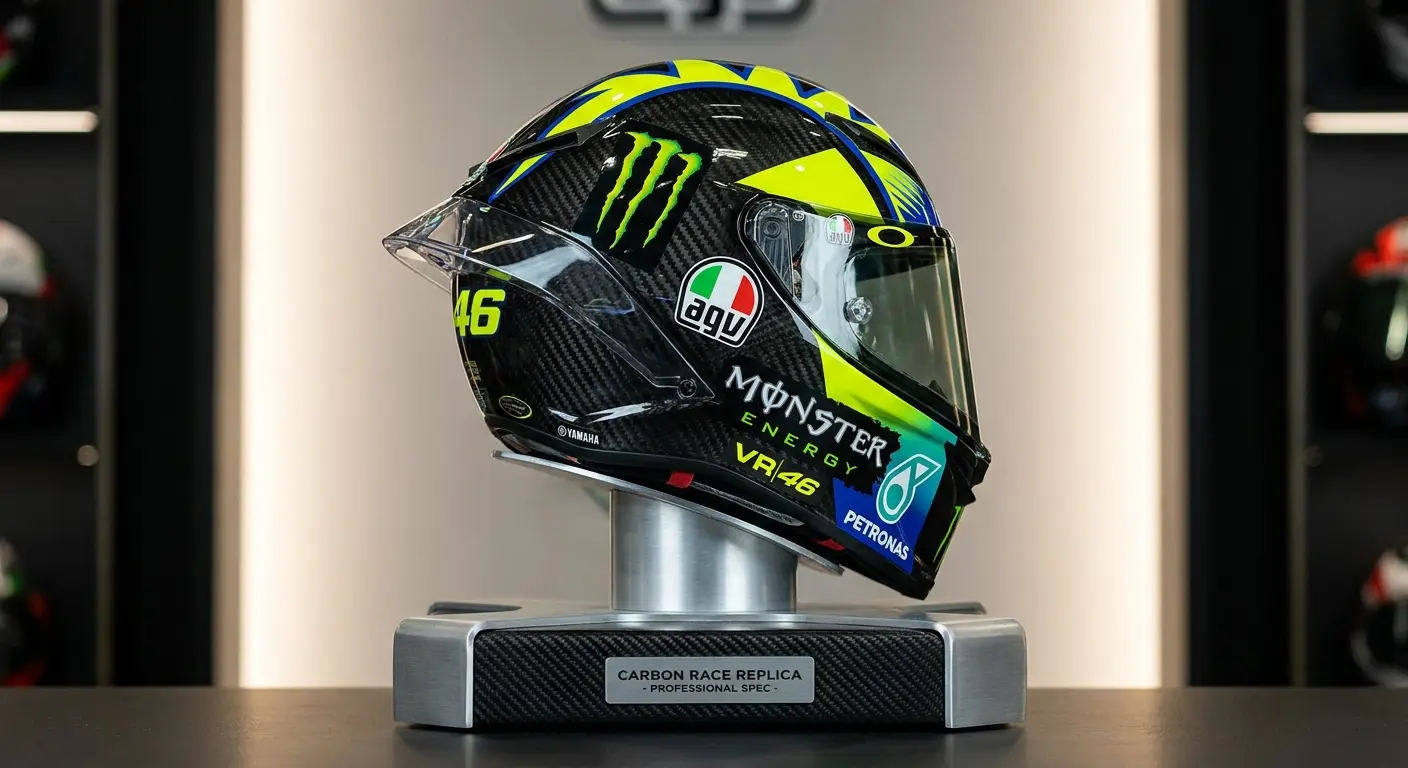
Race replica helmets on the street are cosplay. I said it. Unless you're doing track days monthly, you're paying $800 to look fast while going 45 mph to Starbucks.
But here's the thing about race replica helmets. They're expensive. We're talking $600-1,200 for a legitimate one. The carbon fiber shell saves maybe half a pound compared to a $300 helmet. The aerodynamics matter at 150+ mph, which you'll never actually hit on the street. The emergency release system is designed for track medical staff who know how to use it.
So why do people buy them? Because they're awesome. That's it. That's the reason.
These helmets copy the exact specifications used by professional racers, bringing track-level technology to the street. You're paying for advanced materials (carbon fiber shells, multi-density EPS liners), aggressive aerodynamics tested in wind tunnels, and features that only matter at sustained high speeds.
Race replicas include emergency release systems for medical personnel, aerodynamic spoilers that reduce lift above 100 mph, and visor mechanisms designed for quick changes between sessions. The fit is uncompromising because race helmets prioritize performance over all-day comfort.
The weight savings (premium race replicas often weigh under 3 pounds) and the superior ventilation are noticeable, but the aggressive fit and track-focused features make them excessive for street riding. Track riders pushing performance limits should explore motorcycle riding tips that translate racing techniques to real-world situations.
I spent $700 on a carbon fiber race replica helmet for my 650cc standard bike. The helmet is capable of 200 mph. My bike tops out at 115. I am not a smart man.
15. Vintage-Style Helmets
The vintage helmet market exploded around 2018 when the cafe racer trend hit. Now you can't throw a rock at a motorcycle show without hitting someone in a Bell Bullitt.
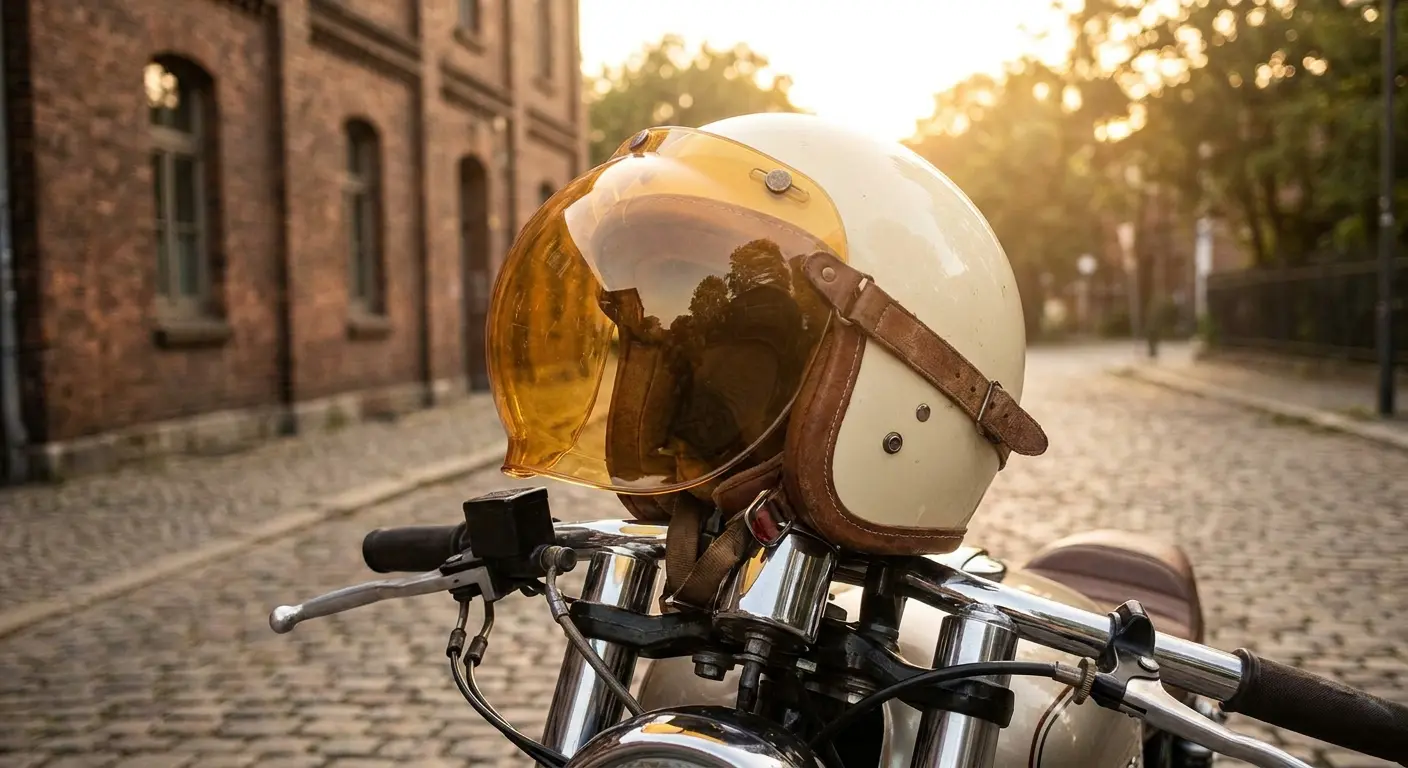
Vintage-style helmets blend retro aesthetics with modern safety standards. This helmet has exploded in popularity alongside the custom and cafe racer movements. You can find vintage-styled helmets in open-face, three-quarter, and even full-face configurations, all designed to complement classic bikes while meeting current certification requirements.
The challenge is separating legitimate safety-certified helmets from purely decorative novelty items. Genuine vintage-style helmets from reputable manufacturers include DOT (and sometimes ECE) certification while maintaining period-correct appearances.
They typically sacrifice some ventilation and weight savings to achieve the look, but you're not compromising safety for style when you choose properly certified options. The market includes everything from accurate reproductions of 1960s designs to modern interpretations of classic styling.
The vintage helmet trend is 90% Instagram aesthetic, 10% actual riding. Those Bell Bullitts look amazing in photos and feel like wearing a bowling ball after 30 minutes.
Verify certification before purchasing because vintage styling attracts manufacturers who prioritize appearance over protection.
16. Electric Bike Helmets
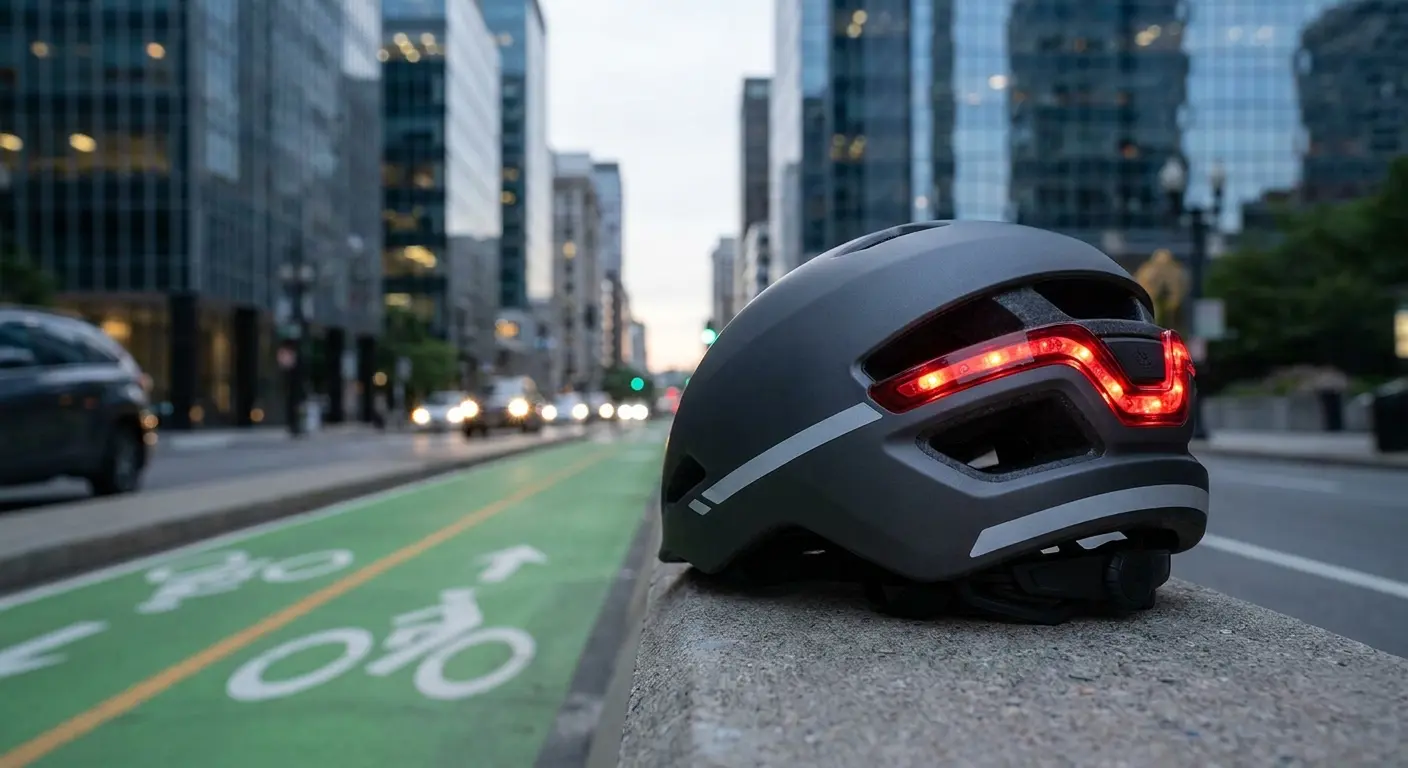
Electric bike helmets address the unique characteristics of e-bike and electric motorcycle riding. These helmets account for different crash dynamics (e-bikes involve more urban obstacles and lower speeds than traditional motorcycles), improved visibility for city riding, and integration with the tech that electric riders typically carry.
Enhanced rear visibility features, integrated lights, and accommodation for the cameras and communication devices that e-bike riders use. The protection standards differ from traditional motorcycle helmets because the impact scenarios differ.
Some electric bike helmets meet bicycle safety standards (CPSC) while others achieve motorcycle certification (DOT/ECE) depending on the vehicle's speed capabilities. The weight tends toward the lighter end (2 to 3 pounds) because these helmets optimize for urban commuting rather than highway riding.
Match your helmet certification to your vehicle's performance rather than assuming all electric bikes need the same protection level.
17. Winter-Specific Helmets
I know this article is already way too long, but winter helmets deserve their own section because riding in cold weather is miserable with the wrong gear.
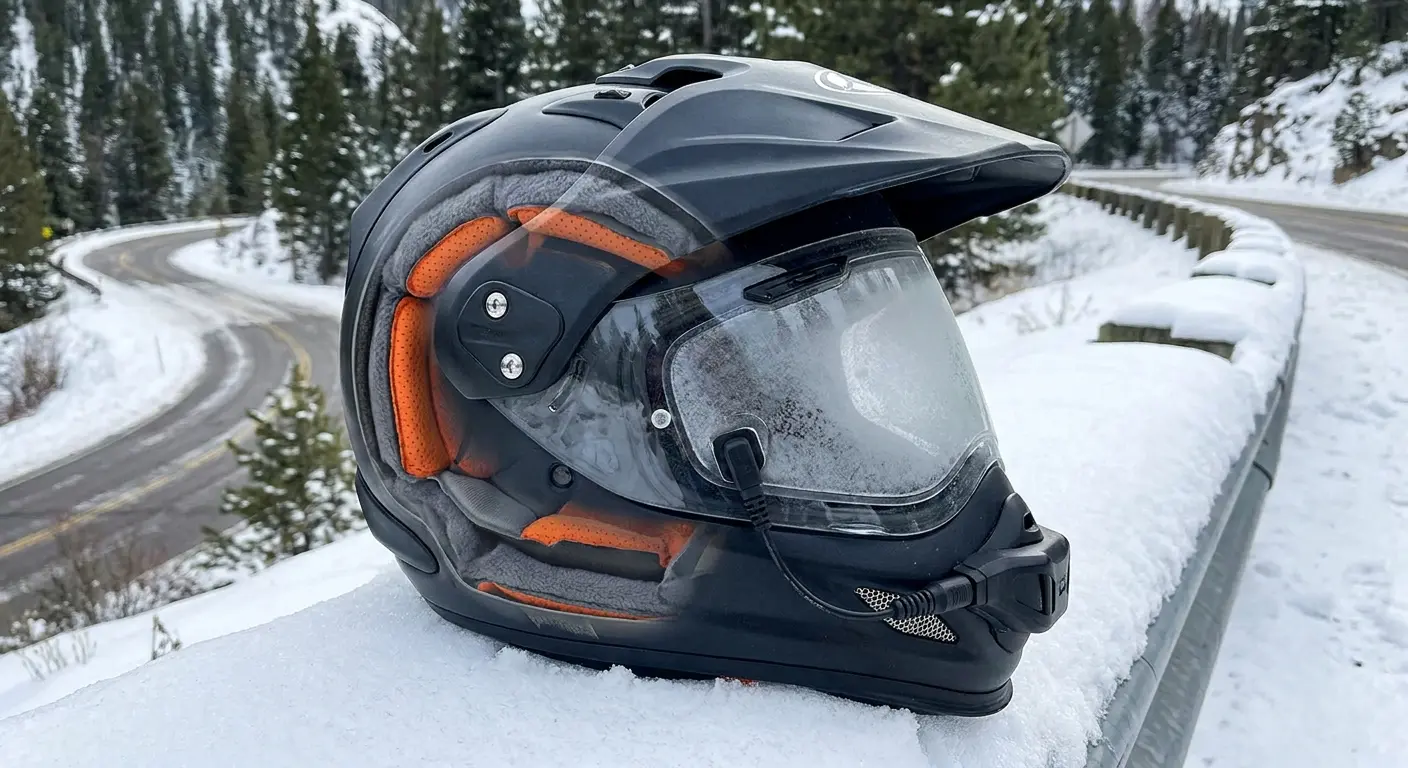
Winter-specific helmets solve the unique problems of cold-weather riding that standard helmets can't address. You're dealing with breath fog, frozen visors, and the need to maintain warmth without sacrificing visibility.
These specialized helmets include heated shields, breath deflectors designed for sub-freezing temperatures, and insulation that doesn't compress like standard padding. The breath box systems channel moisture away from the visor, and some models integrate with heated gear systems to maintain consistent temperature regulation.
Heated shields are borderline magic. I didn't believe they were worth it until I rode in 25-degree weather without fogging once. Now I'm a believer. Expensive? Yes. Worth it if you ride in winter? Absolutely.
Winter helmets weigh slightly more than standard options (adding 0.3 to 0.5 pounds) because of the additional insulation and heating elements. The ventilation systems close more completely than summer helmets, which prevents the airflow that causes windchill but can feel stifling during temperature swings.
These helmets make sense for year-round riders in cold climates and anyone who's experienced the frustration of a fogged visor at 30 degrees. The investment pays off quickly when you're not pulling over every 15 minutes to clear your shield or dealing with the safety hazard of reduced visibility in winter conditions.
Summer riding in a full-face helmet sucks. You're basically wearing an insulated box on your head. Crack the vents, flip up at stoplights if you have a modular, and accept that you'll arrive sweaty. Winter? Same helmet is amazing. All that insulation you hated in July keeps your head warm in January.
Mounting your phone securely becomes critical when you're managing navigation, music, and communication while dealing with winter weather conditions. Rokform's motorcycle phone mounts use RokLock technology that keeps your device accessible regardless of temperature or road conditions.
The magnetic mounting system works through gloves, which matters when you can't afford to remove hand protection in freezing weather. You can check your route, adjust your heated gear settings, or take a call without fumbling with your phone. The mount attaches to handlebars, mirrors, or any solid mounting point, and the case protection adds a layer of security for your device during winter rides when a dropped phone in snow or slush typically means a ruined device.
For riders who need charging capability during long winter rides, the motorcycle perch mount provides a secure mounting solution that integrates seamlessly with your bike's controls.
Final Thoughts
Remember at the beginning when I said I've crashed in both a full-face and a half helmet? The full-face crash: walked away with a headache. The half helmet crash: facial reconstruction surgery, six weeks of liquid food, permanent scars.
Same speed (about 35 mph). Same type of crash (low-sided in gravel). Wildly different outcomes.
I'm not telling you this to scare you into a specific helmet type, though if it does, good. I'm telling you because helmet choice matters more than brand, more than price, more than how cool you look.
If you've read this far and feel more confused than when you started, that's normal. Seventeen helmet types is overwhelming. Here's the cheat sheet:
Street riding only: Full-face or modular
Off-road only: Motocross or enduro
Both: Adventure or dual-sport
Don't care about protection: Half helmet (but seriously, reconsider)
Everything else is optimization. Start with the category, then worry about brands and features.
Choosing the right helmet starts with honest assessment of how you actually ride rather than how you imagine riding. Your helmet should match your bike, your typical riding conditions, and your personal risk tolerance. A $600 race replica helmet doesn't make sense for 20-minute commutes any more than a half helmet works for highway touring.
Focus on proper fit first because even the most advanced helmet provides inadequate protection if it doesn't sit correctly on your head. Try multiple brands within your chosen category because head shapes vary and manufacturers design around different geometries.
Here's the truth: no helmet does everything well. Touring helmets are quiet but heavy. Sport helmets are light but loud. Modulars are convenient but expensive. You're always trading something. Figure out what matters most (comfort, weight, noise, price, features) and accept that you'll sacrifice something else. Perfect helmets don't exist.
A $200 helmet that fits is worth more than a $600 helmet that doesn't.
Verify certification regardless of price point or brand reputation. DOT certification is self-certified, meaning manufacturers test their own helmets and pinky-promise they pass. No joke. That's why you see $40 "DOT approved" helmets next to $400 ones. ECE requires independent testing. Snell is even stricter but some people think they test for unrealistic impacts. I run ECE-certified helmets and sleep fine.
Replace your helmet after any impact, every five years maximum, or whenever the fit changes due to padding compression. Motorcycle helmets are single-impact designed (unlike bicycle helmets which are multi-impact for minor hits). One crash equals replace the helmet, even if it looks fine. The foam compresses and doesn't fully recover. The shell can have micro-cracks. The glue can separate. You won't see the damage, but it's there.
The right helmet becomes invisible during rides because it solves your specific problems without creating new ones.
Get something certified. Get something that fits. Get something you'll actually wear. Everything else is details.
Beyond helmets, riders should understand comprehensive motorcycle safety through exploring best Bluetooth motorcycle helmets that enhance communication without compromising protection. Storage considerations matter too. Discover motorcycle camping gear solutions that work with your helmet choice for multi-day adventures.

