


Table of Contents
Why Most Golfers Overthink Ball Selection
-
Balls Built for Maximum Distance
Two-Piece Balls (The Ones Most of You Should Play)
Low-Compression: Finally, a Ball for Your Actual Swing Speed
Aerodynamic Long-Flight Models
High-Energy Core Rockets
Straight-Flight Distance Balls
-
Balls Engineered for Control and Feel
Urethane Covers: Expensive, Soft, and Probably Not Worth It for You
Multi-Layer Spin Masters
Soft-Feel Approach Specialists
Wedge-Optimized High-Spin Balls
Greenside Control Champions
-
Balls Designed for Specific Conditions
Cold-Weather Performance Balls
Wind-Resistant Flight Stabilizers
Wet-Condition Grip Enhancers
High-Altitude Optimized Models
-
Balls for Real-World Golfer Needs
Budget-Friendly Consistency Balls
Visibility-Enhanced Locator Balls
Durable Practice Range Balls
Lake Balls: Don't Be a Snob, They Work Fine
Personalized Custom-Stamped Balls
TL;DR
The Short Version (Because You're Probably Reading This in the Pro Shop)
Two-piece balls give you more distance if you swing under 95 mph, which is most of you
That $50 urethane ball? Wasted money unless you're a single-digit handicap who hits 12+ greens per round
Playing in cold weather, wind, or altitude? You actually need different balls (yes, this matters)
Lose 3+ balls a round? Buy the cheap ones and stop feeling guilty about it
Compression ratings matter more than any other spec, but manufacturers don't standardize them, so comparing across brands is basically useless
Visibility often beats performance specs when you're spending 10 minutes per round searching in the rough
Why Most Golfers Overthink Ball Selection
I watched a guy spend 20 minutes in the pro shop last week comparing compression ratings on his phone. He bought the most expensive ball they had. First hole? Sliced it into the pond. That $5 ball lasted exactly one swing.
Look, you use the same ball for every single shot. Every. Single. One. Your driver? Maybe 14 times a round. Your putter? Probably 32 times if you're having a decent day. But your ball? Somewhere between 70 and 100 times, depending on how things are going.
MyGolfSpy did this massive robot test in 2025. They literally hit thousands of balls, measured everything. Their finding? According to MyGolfSpy's 2025 golf ball test, balls differ more than clubs do when you look at the complete picture of speed, flight, and spin.
Read that again.
Your ball choice matters MORE than your driver choice.
Nobody talks about this because TaylorMade can't charge you $600 for a dozen golf balls. But I've seen the data. The performance gap between the right ball and wrong ball for your game is bigger than the gap between a $300 driver and a $600 driver.
Here's what actually happens when you walk into that pro shop. You're facing a wall of options, each package screaming about proprietary core technology and revolutionary dimple patterns. Tour-proven this, maximum distance that. It's designed to confuse you. Your frustration is completely justified.
I've been playing golf for 22 years, currently sitting at a 12 handicap, and I've tested probably 40+ different ball models over the last three seasons. My wife makes fun of my spreadsheet. I have a problem and refuse to get help for it.
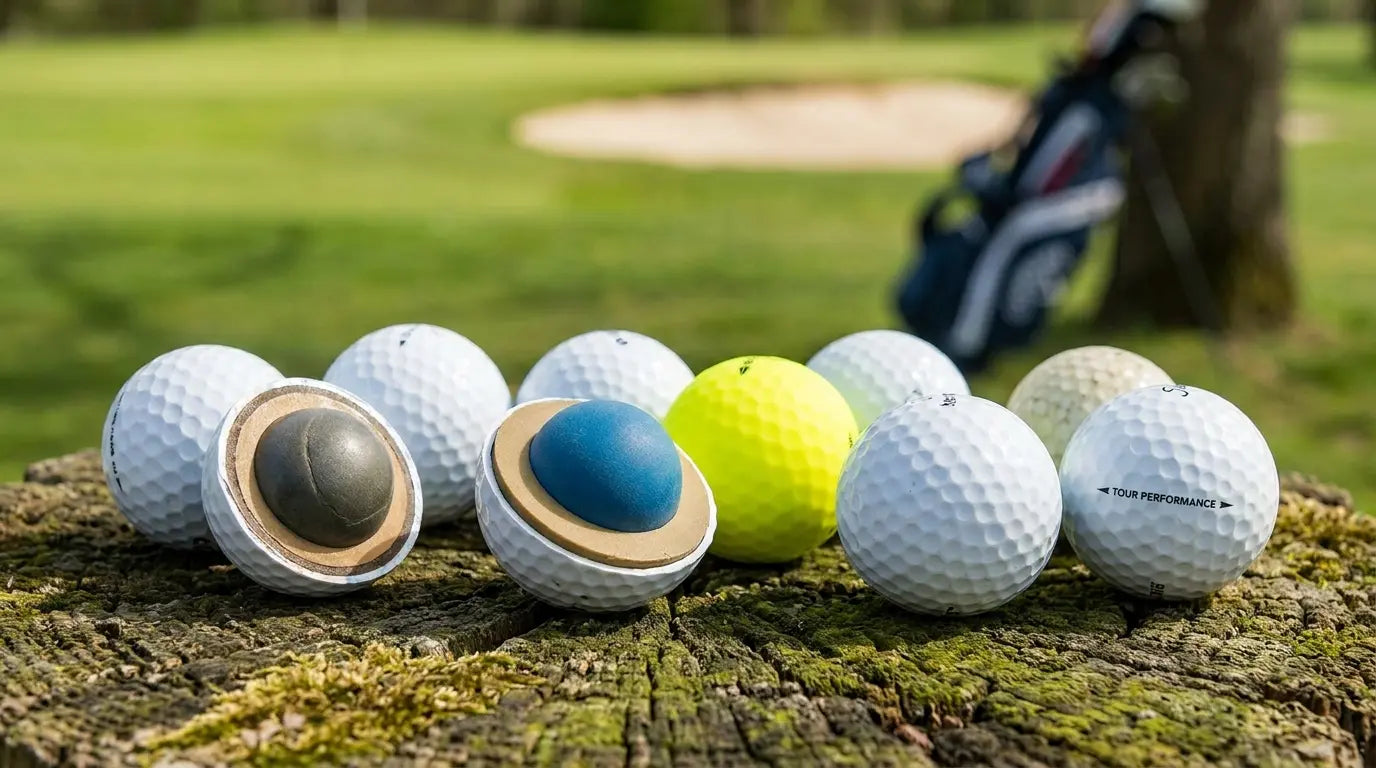
The various types of golf balls exist because we face different challenges. Some of us need distance. Others need control. Many of us just need our ball to survive more than three holes without ending up in someone's backyard.
Balls Built for Maximum Distance
Distance frustration is real. When you're hitting 7-iron into greens where your playing partners are hitting 9-iron, you're not just losing yards off the tee. You're losing scoring opportunities. You're losing confidence. And honestly, it's demoralizing as hell.
Construction matters here. Not brand names, not tour endorsements, not the guy at the pro shop telling you what Rory plays. How the ball is built determines how it responds to YOUR swing.
1. Two-Piece Balls (The Ones Most of You Should Play)
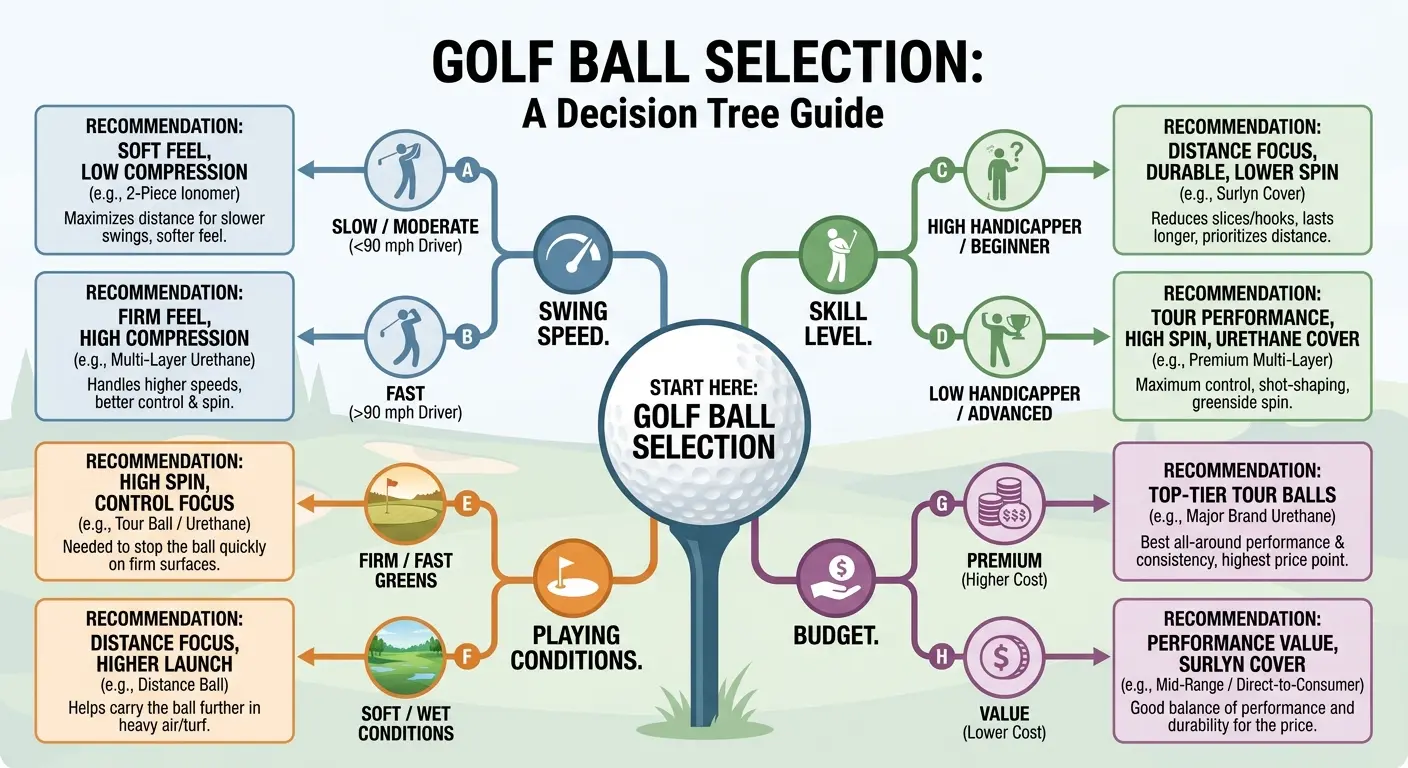
Two-piece balls are dead simple. Rubber core, plastic cover, done.
And you know what? That simplicity is exactly why they work for most of you.
Here's the thing about energy transfer that nobody explains properly: when you hit a ball, you're compressing it. The ball squishes, then springs back. That spring-back is what launches it. Two-piece balls compress easily, even with your 87 mph swing, so you get maximum spring-back.
Tour balls? Too hard for your swing. You're not compressing them enough, so energy gets wasted. It's like trying to squeeze a tennis ball with one hand. You just don't have the force.
I played Pro V1s for two years before I figured this out. Wasted probably $400 on balls I couldn't properly compress. Don't be me.
The physics work in your favor if you swing under 95 mph. Higher swing speeds can compress tour-level balls effectively, but you can't. A two-piece ball compresses easily, getting the ball airborne without requiring tour-level swing mechanics you don't have.
You'll notice a firmer feel at impact compared to premium balls. Some guys find this jarring initially. Mostly older guys who've been playing Titleist since 1987. But the distance gains are real. We're talking 10-15 yards on well-struck drives for golfers who've been playing balls designed for swing speeds they don't possess.
The reduced spin also keeps your ball in play more consistently. When you catch one thin or off the heel, a low-spin ball won't magnify that mistake into a 40-yard slice. It minimizes the penalty.
Ball Construction |
Typical Compression |
Best For Swing Speed |
Primary Benefit |
Trade-off |
|---|---|---|---|---|
Two-Piece |
80-100 |
Under 95 mph |
Maximum distance, durability |
Reduced greenside spin |
Three-Piece |
70-90 |
85-100 mph |
Balanced performance |
Moderate cost |
Four-Piece |
85-95 |
95-105 mph |
Tour-level control |
Higher price point |
Five-Piece |
90-100 |
105+ mph |
Complete performance optimization |
Premium pricing |
2. Low-Compression: Finally, a Ball for Your Actual Swing Speed
Okay, compression. Everyone gets this wrong.
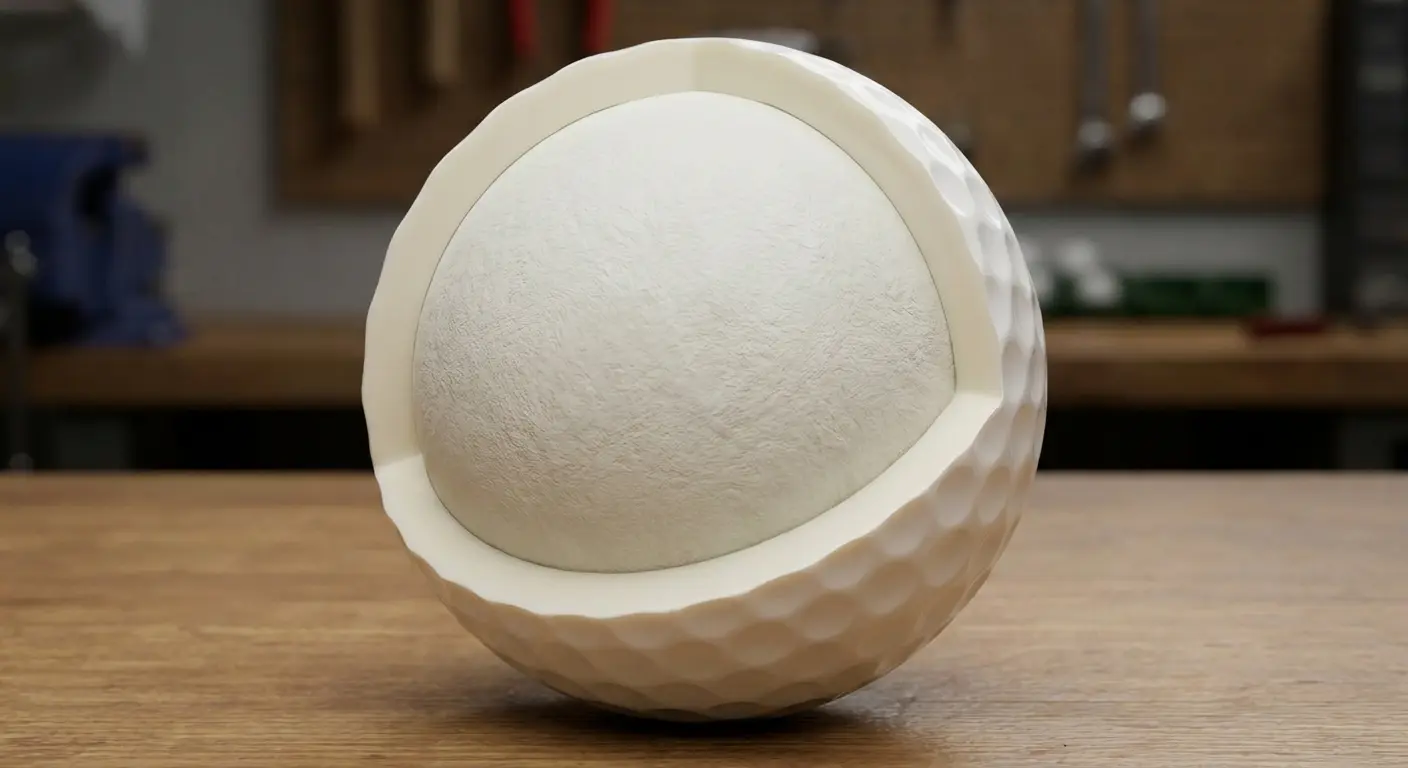
You probably think low compression equals soft, high compression equals hard. Sort of true, but that's not what compression actually measures. It measures deformation resistance. How much the ball fights back when you hit it.
Why does this matter? Because if the ball is too hard for your swing speed, it's like punching a wall. The wall doesn't move, your hand hurts, energy goes nowhere. If it's too soft? Like punching a pillow. It moves, but inefficiently.
You need the Goldilocks ball. Just right for YOUR swing speed. Not Rory's. Yours.
Balls with compression ratings between 60-80 deform more easily, which benefits slower swing speeds by maximizing energy transfer. When you swing under 85 mph, a high-compression tour ball doesn't compress fully at impact. You're leaving distance on the table because the ball isn't working with your swing, it's resisting it.
Modern low-compression balls have eliminated the performance gap that once existed. Ten years ago, low-compression meant garbage. Soft, sure, but they flew like marshmallows and felt dead off the putter. Today's low-compression balls are completely different. The materials science has caught up. You're not sacrificing performance anymore.
The biggest gains show up for golfers swinging between 75-85 mph. You'll see improved launch conditions, better carry distance, and more consistent ball flight. The ball compresses fully, creating the energy transfer that faster swingers achieve with higher-compression balls.
If you swing under 85 mph, you need a compression rating between 60-80. Period. Now let me explain the physics, because it's actually interesting.
3. Aerodynamic Long-Flight Models
Dimple patterns determine how air flows around your ball during flight. Different patterns equal different flight characteristics. That's all you need to know, really.
Well, that's the simplified version. The science of dimple patterns gets incredibly complex. We're talking fluid dynamics and boundary layer physics that I barely understand and you definitely don't care about.
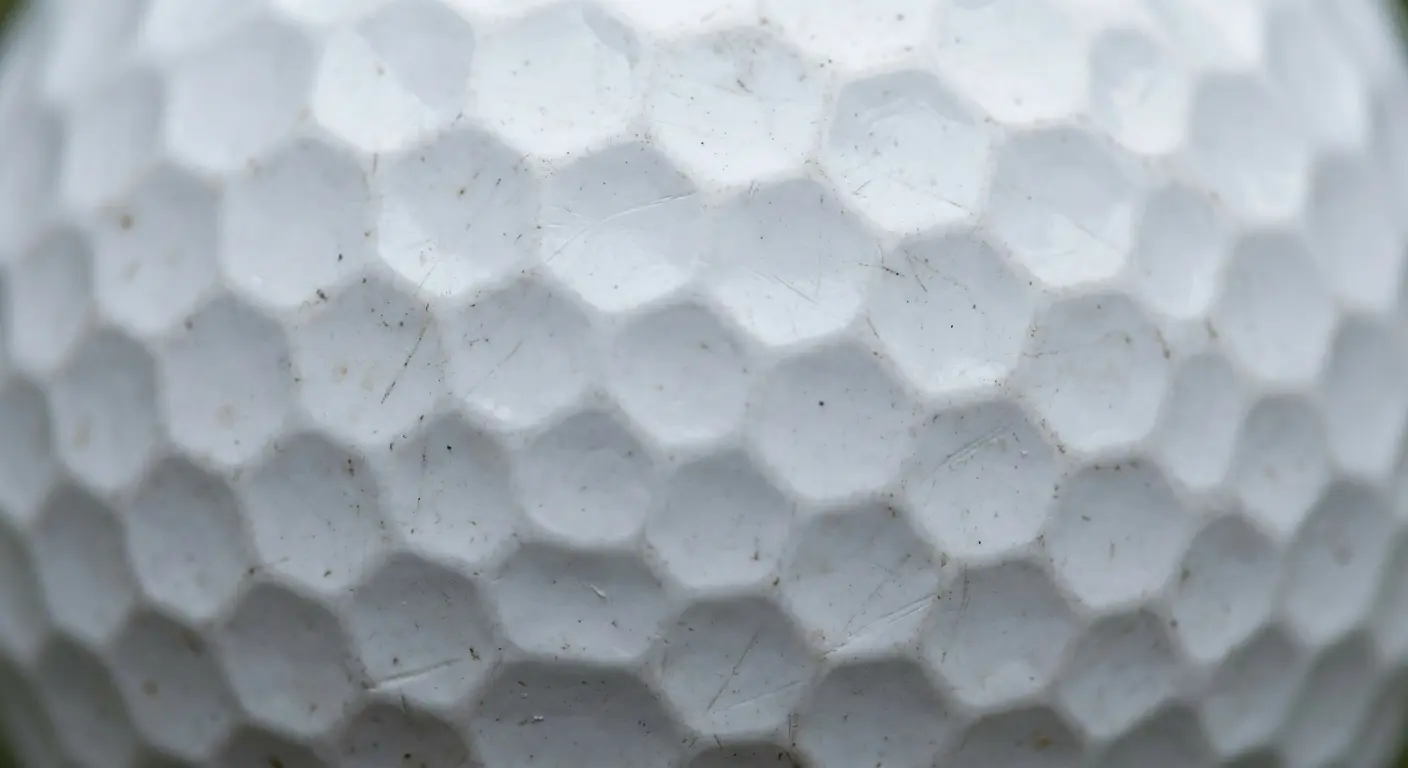
These balls feature proprietary dimple designs built specifically for reduced air resistance and stable flight paths. Deeper dimples, shallower dimples, hexagonal patterns, traditional circular patterns. Each configuration affects how the ball penetrates air and how long it stays airborne.
The aerodynamic benefits become more pronounced in windy conditions where standard balls lose significant yardage. A well-designed dimple pattern helps your ball hold its line better and maintain distance even when facing headwinds that would knock down conventional designs.
You'll get the most value from these balls if you already generate good clubhead speed but want to squeeze out extra carry distance. Slower swing speeds benefit less because the ball isn't traveling fast enough to create the aerodynamic advantages these designs provide.
4. High-Energy Core Rockets
Premium cores infused with reactive compounds or dual-core systems store and release energy more efficiently than standard rubber cores. Think of these as springs that convert your swing energy into ball speed with minimal loss during the compression and decompression cycle.
The technology benefits all swing speeds, but shows the most dramatic results for players between 90-105 mph who can fully activate the core's reactive properties. Below that threshold, you might not compress the core enough to justify the premium price point.
We're talking about 5-10 yards of additional distance compared to standard cores. Sounds modest until you realize that's the difference between reaching a par 5 in two or laying up, between hitting a comfortable 8-iron or stretching for a 6-iron.
The cost is real, though. These balls typically retail for $45-55 per dozen. For TWELVE BALLS. I know, it's insane. That makes them among the longest-flying options but also among the most expensive. You need to decide whether those extra yards justify doubling your ball cost, especially if you're still losing multiple balls per round.
5. Straight-Flight Distance Balls
Anti-slice technology built into core and cover alignment helps minimize sidespin that turns drives into disasters. Weight distribution variations and cover thickness differences reduce the spin that sends balls careening into trouble.
These balls won't fix your swing flaws. If you're coming over the top with an open clubface, you're still going to slice. Let me be clear about that. But they do minimize the penalty for common mishits, typically reducing curve by 10-15 yards on slices and hooks.
High-handicap golfers lose more strokes to wayward drives than to approach shots. Finding the fairway with a ball that flies 10 yards shorter beats losing a ball in the woods with a longer-flying option that magnifies your miss.
The construction usually features alignment aids and asymmetric core designs that resist sidespin. Some golfers report these balls feel different, which makes sense given the non-traditional weight distribution. The question is whether you value straighter flight over traditional feel and maximum distance potential.
I'll be honest: if you're slicing balls 40 yards offline, you need lessons, not a different ball. But if you're fighting a 15-yard fade that occasionally becomes a 25-yard slice? These can help keep you in play.
Balls Engineered for Control and Feel
Distance gets attention, but scoring happens around the greens. If you're hitting 12-14 greens in regulation, you need a ball that responds predictably on approach shots, checks up on chips, and provides feedback on putts.
Quick reality check: are you actually hitting 12+ greens per round? Be honest. If the answer is no, skip to the distance section. This isn't for you. Not yet. Maybe not ever, and that's fine.
The construction differences that enable spin control and soft feel require premium materials and complex manufacturing. You're paying for urethane covers, multiple mantle layers, and engineering that separates distance performance from spin control.
6. Urethane Covers: Are You Good Enough to Notice?
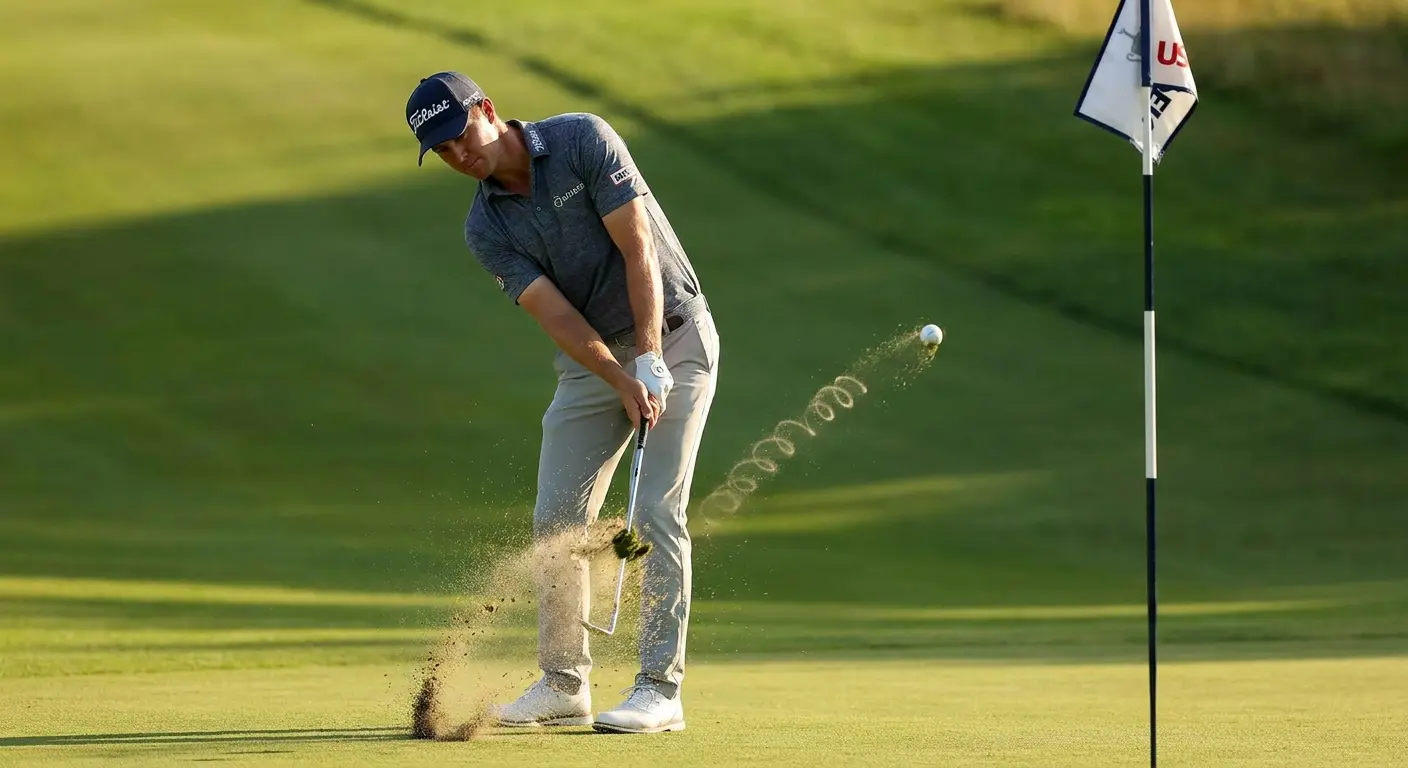
Urethane provides the softest feel and highest spin rates available. The material grips club grooves more effectively than ionomer covers, creating the backspin tour players rely on to stop balls quickly on greens. When you watch pros spinning balls back 10 feet on television, they're using urethane-covered balls.
But here's what the marketing won't tell you: the performance comes with requirements.
You need swing speeds above 95 mph to compress these balls properly and justify the premium price. Below that threshold, you're paying for performance characteristics you can't fully access. It's like buying a Ferrari to drive in rush hour traffic. Technically superior? Sure. Useful for your situation? Not even a little bit.
Durability is the honest tradeoff. Urethane scuffs and cuts more easily than ionomer, making these impractical if you're still losing multiple balls per round or frequently hitting cart paths and trees. A $50 dozen doesn't make economic sense when you're going through six balls per 18 holes.
Testing from Today's Golfer's 2025 robot test revealed that the highest-spinning golf ball around the green generated 6,343rpm. The spiniest ball they tested generated over 6,000 rpm on greenside shots. The best non-urethane ball? Not even close. That gap is the difference between a ball that checks up three feet from where it lands versus one that releases ten feet. On fast greens, that's the difference between a tap-in and a three-putt.
But if you're not hitting greens consistently, that spin advantage means nothing.
7. Multi-Layer Spin Masters
Three, four, or five-layer constructions separate distance performance from spin control by having each layer activate at different swing speeds. The core layers provide driver distance while outer mantle layers enhance wedge spin without sacrificing ball speed on full swings.
This is sophisticated engineering designed for single-digit handicappers who can exploit the spin differences between clubs. When you're hitting controlled fades with your 6-iron and expecting specific spin rates on your 56-degree wedge, these balls deliver predictable performance across your bag.
Most mid-handicappers won't notice enough difference to justify the complexity and cost. The performance benefits become apparent when you have consistent swing mechanics and can repeat impact conditions. Random contact patterns and varying swing speeds negate the advantages of layer-specific activation.
Five-piece balls? Unless you're a scratch golfer, you're wasting money. FIVE LAYERS. For what? So you can theoretically optimize performance on three different shot types you probably can't execute consistently anyway? It's engineering masturbation. Impressive, expensive, and completely unnecessary for anyone who doesn't play golf for a living.
8. Soft-Feel Approach Specialists
Soft feel doesn't automatically mean better control, but these models do provide enhanced feedback at impact that helps you gauge distance on finesse shots. The construction typically features a low-compression core (70-80) with a thin, responsive cover that transmits feel without sacrificing too much distance.
These balls excel on shots inside 100 yards where touch matters more than ball speed. When you're hitting half-wedges and trying to land balls within a 10-foot circle, the feedback at impact helps you calibrate swing length and tempo.
The question is whether feel benefits translate to measurable scoring improvements. Some golfers swear by the enhanced feedback, while others find no correlation between how a ball feels and how they score. You'll need to test this yourself because feel preference is highly individual and kind of personal.
Most effective for golfers who rely on touch around greens and struggle with distance control on partial wedges. If you're frequently short or long with your scoring clubs, a ball that provides better feedback might help you dial in those critical yardages.
9. Wedge-Optimized High-Spin Balls
Cover formulations and dimple patterns designed specifically to maximize friction with wedge grooves generate spin rates above 8,000 RPM on properly struck chips and pitches. These balls help aggressive players attack pins and recover from trouble around greens.
The performance requires clean grooves and proper technique. If your wedges are worn or you're not compressing the ball correctly, you're paying for spin potential you can't access. The ball can only grip grooves that are sharp enough to grab the cover material.
These balls favor players who hit down on the ball and create the descending blow that generates maximum spin. Sweepers who pick the ball clean won't see the same spin rates because they're not creating the friction needed to activate the high-spin cover.
You'll sacrifice some distance off the tee because the cover that grips wedge grooves also creates more spin with the driver. That's the tradeoff: maximum greenside control for slightly reduced distance on full swings.
10. Greenside Control Champions
Firmer covers and specific dimple patterns reduce skid on landing, helping balls check quickly without excessive spin that can be hard to control. The construction also enhances putting feel and roll consistency for golfers who prioritize performance from 15 feet and in.
These balls are built for players who hit most greens in regulation and want to optimize their scoring opportunities. When you're facing 12-15 birdie putts per round, putting feel and predictable roll become more important than maximizing driver distance.
The greenside performance comes from reduced initial skid when the ball lands. Standard balls skid forward before the spin grabs, making it harder to predict exactly where the ball will stop. Control-focused balls minimize that skid, providing more predictable stopping distances.
Track your performance improvements with precision using our comprehensive guide to GPS golf apps that help you make smarter club selections.
Balls Designed for Specific Conditions
Standard balls are optimized for 70-degree temperatures at sea level. If you're playing in different conditions, you're using compromised equipment. Environmental factors dramatically affect ball performance, and ignoring them costs you strokes that proper ball selection would prevent.
I used to think this was overkill. Like, how much could temperature really matter? Turns out, a lot. I lost probably 20 yards off the tee playing in 45-degree weather with my summer balls before I figured this out.
11. Cold-Weather Performance Balls
Rubber compounds that maintain elasticity below 50 degrees prevent the distance loss that standard balls suffer in cold conditions. Normal balls lose 2-4 yards per 10-degree temperature drop because the core hardens and transfers energy less efficiently. Cold-weather formulations use softer baseline compression and specialized materials that resist this hardening effect.
The performance difference is measurable and significant. When temperatures dip into the 40s, you're potentially losing 10-15 yards on drives with standard balls. Cold-weather balls minimize this loss by maintaining core responsiveness even when the thermometer drops.
Most effective for golfers in northern climates who play year-round or push their season into early spring and late fall. The investment makes sense if you're regularly playing in temperatures below 55 degrees. Above that threshold, these balls feel too soft and you'll lose the benefits they provide in cold conditions.
You can't use these year-round. In warm weather, they compress too easily and you'll sacrifice distance and control. They're single-season options designed for specific temperature ranges, which means storing two different ball types if you play in varying conditions.
I rotate balls by season now. Spring and fall when temps are 50-65? Low-compression. Summer heat when balls fly forever anyway? I go cheaper because I'm losing them in thick rough. Winter golf below 50 degrees? Cold-weather balls or I'm not playing.

12. Wind-Resistant Flight Stabilizers
Lower flight trajectories and dimple patterns engineered to minimize wind drift keep balls on target when crosswinds would blow standard balls 20-30 yards offline. Deeper dimples and specific patterns create a more penetrating ball flight that holds its line better.
The lower launch angle sacrifices some carry distance in calm conditions. You're trading maximum distance for consistency, which makes sense for coastal golfers or anyone playing regularly in windy environments. Finding the fairway 15 yards shorter beats bombing one into the adjacent fairway.
These balls require swing adjustments to maximize their benefits. You'll need to account for the lower trajectory when hitting into greens, and the reduced height might cost you some stopping power on approach shots. The ball won't balloon in the wind, but it also won't land as softly.
Wind affects every shot you hit, not just drives. Approach shots, chips, even putts can be influenced by strong gusts. A ball designed to resist wind drift provides more predictable performance across your entire round when conditions get blustery.
If you play coastal courses where wind is constant, these make sense. I played Bandon Dunes last year with standard balls and got absolutely destroyed. Balls were moving 30 yards offline on approach shots. Switched to wind-resistant balls the next day and suddenly I could control my ball flight again.
13. Wet-Condition Grip Enhancers
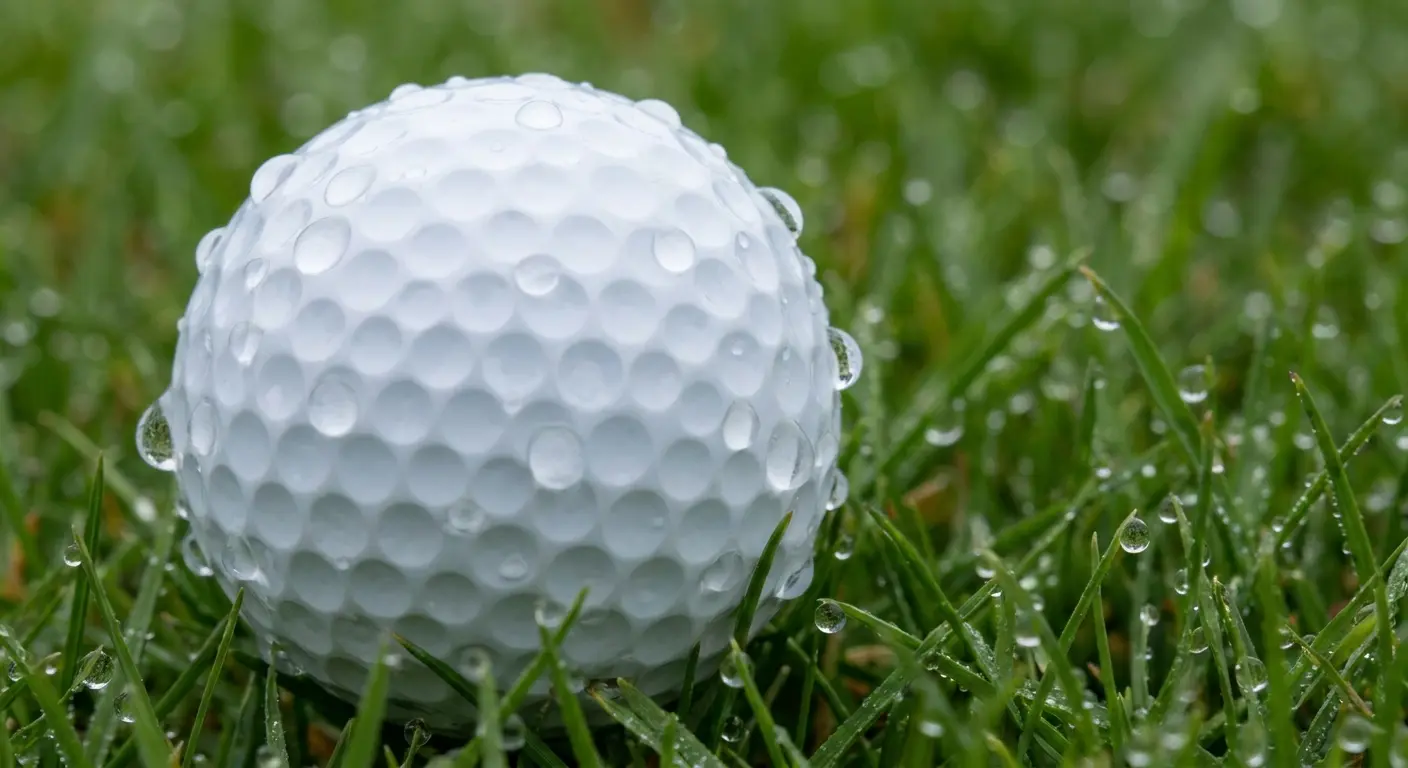
Moisture between clubface and ball reduces friction by up to 30%, killing spin and causing fliers that wreck distance control. Hydrophobic covers or textured surfaces channel water away from the impact zone, maintaining more consistent spin rates when grass and ball are wet.
The technology helps minimize performance loss in rain or heavy dew, but we need to be realistic about limitations. No ball completely solves wet-condition challenges. Physics still applies, and water still reduces friction. These balls just reduce the penalty rather than eliminate it.
You'll see the biggest benefits on approach shots and greenside play where spin control matters most. Fliers from wet rough become less extreme, and you can trust your wedges to generate closer to normal spin rates even in damp conditions.
Morning dew creates wet-condition problems even on sunny days. If you're an early-morning golfer, you're dealing with moisture issues for the first six holes of most rounds. A ball that maintains better grip in those conditions provides value beyond rainy-day rounds.
14. High-Altitude Optimized Models
Reduced air density above 4,000 feet makes standard balls fly 5-10% farther but with less spin and control. High-altitude balls use firmer compression and modified dimple patterns to restore spin rates and provide more predictable flight in thin air.
The engineering addresses a specific problem: at altitude, balls fly farther but become harder to control. Approach shots that normally spin and stop will release more, and you'll struggle with distance control because your normal yardages no longer apply.
Most relevant for golfers in Colorado, New Mexico, or other elevated regions who need consistent performance where they actually play. If you're traveling to altitude for a golf trip, bringing high-altitude balls can save you several strokes by restoring familiar ball flight characteristics.
Using these balls at sea level creates opposite problems. They're engineered for thin air, so they'll spin too much and fly shorter in normal conditions. These are location-specific investments that only make sense if you regularly play at elevation.
Full disclosure: I've never played in serious altitude. I live in Florida. We're basically at sea level. Everything I know about high-altitude balls comes from research and talking to golfers in Colorado. Take that section with a grain of salt. I'm trusting their experience, not mine.
Understanding how to choose the right putter is just as important as selecting the proper ball for your playing conditions.
Balls for Real-World Golfer Needs
Marketing materials ignore practical considerations that significantly impact your actual golf experience. Cost, visibility, durability, and personalization often matter more than fractional performance gains that disappear when you're hunting for your ball in the woods.
This is where we get real. Forget the tour-level specs for a minute. Can you actually find your ball? Can you afford to lose it? Will it survive contact with a cart path?
15. Budget-Friendly Consistency Balls
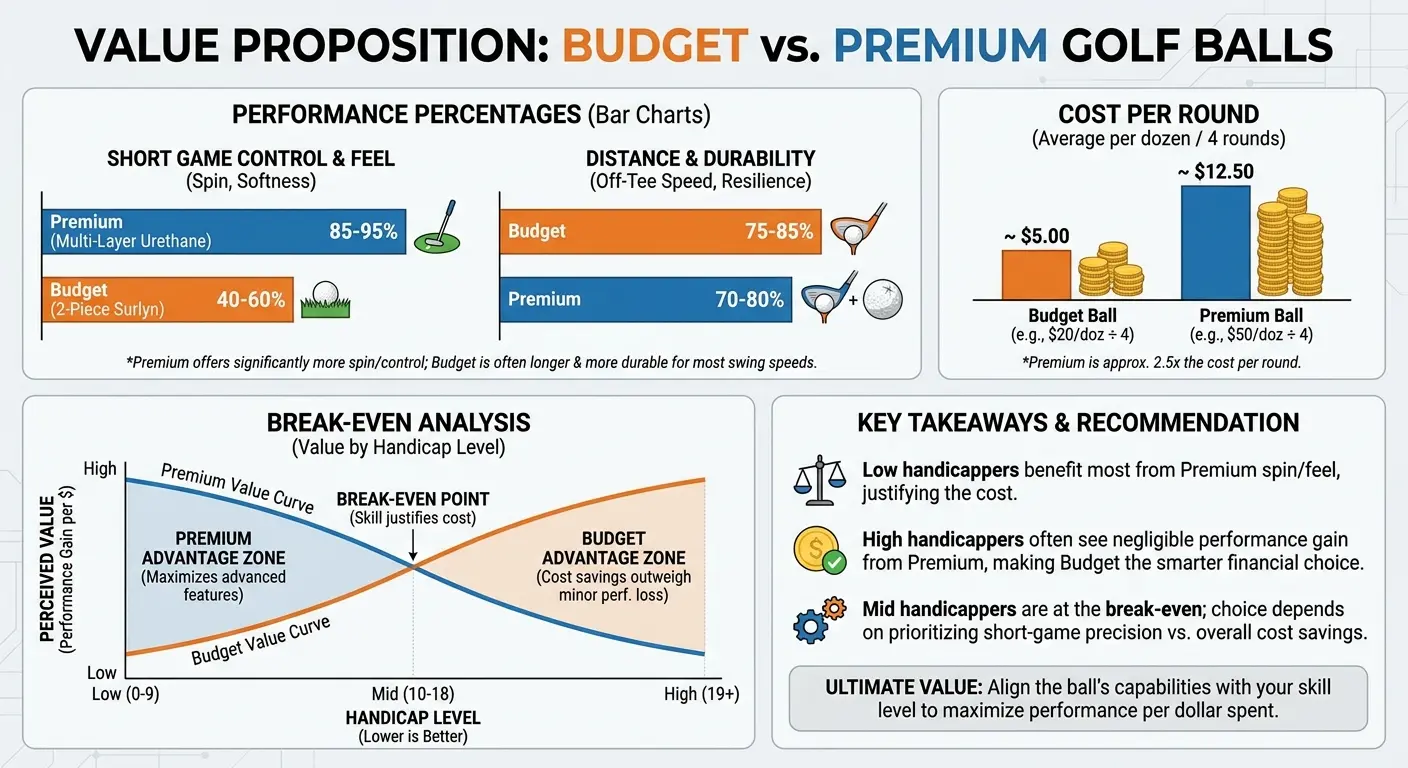
Quality two-piece balls priced between $15-25 per dozen provide consistent performance without premium features you might not use. These often come from the same manufacturers as tour-level options but with simpler construction and less marketing overhead.
The performance gap has narrowed significantly. Budget balls now offer maybe 90% of the distance and 70% of the spin control of premium options, which is more than adequate for most golfers. The differences that remain matter primarily to single-digit handicappers who can exploit tour-level characteristics.
Most cost-effective for golfers above 15 handicap who lose balls regularly and don't have the swing speed to exploit tour-level features. When you're going through six balls per round, spending $50 per dozen makes no economic sense. You're literally throwing money into the woods.
These represent some of the best balls for improving golfers because they remove the psychological pressure of playing expensive balls you can't afford to lose. You'll swing more freely when you're not worried about dunking a $4 ball in the water.
Walk into any public course and watch what people actually play. It's not Pro V1s. It's Callaway Supersoft, Bridgestone e6, TaylorMade Distance+. The $20-25 range. Because most golfers figured out what the marketing won't tell you: expensive balls don't survive contact with trees, water, and cart paths any better than cheap ones.
Price Range |
Construction Type |
Typical Performance |
Best For |
Balls Per Round Loss |
|---|---|---|---|---|
$15-25 |
Two-piece ionomer |
90% distance, 70% spin |
15+ handicap |
3+ balls |
$25-35 |
Three-piece hybrid |
95% distance, 80% spin |
10-15 handicap |
2-3 balls |
$35-45 |
Multi-layer urethane |
98% distance, 90% spin |
5-10 handicap |
1-2 balls |
$45-55+ |
Tour-level premium |
100% optimized performance |
Single-digit handicap |
0-1 balls |
16. Visibility-Enhanced Locator Balls
High-visibility colors (yellow, orange, green) and matte finishes reduce time spent searching and balls lost in rough or fall leaves. Matte finishes actually improve visibility in bright conditions compared to glossy white balls by reducing glare that makes tracking difficult.
The performance is typically identical to standard white versions from the same manufacturer. You're getting the same core, cover, and dimple pattern in a different color. The only difference is visibility, which saves strokes simply by keeping balls in play that you'd otherwise declare lost.
These make practical sense for anyone playing in conditions where white balls disappear. Autumn rounds in leaf-covered rough, courses with thick fescue, or simply aging eyes that struggle to track white balls against cloudy skies all benefit from enhanced visibility.
Color doesn't affect putting alignment for most golfers, despite what traditionalists claim. If you can see your ball better in the fairway and rough, that advantage outweighs any minor aesthetic preferences for traditional white.
Show up at your country club playing neon yellow balls and you'll get looks from the guys in their pressed polos. Who cares? You'll find your ball in the rough while they're still searching for their pristine white Pro V1 that disappeared into the leaves.
Just like high-visibility balls help you find your shot, our golf speakers ensure you never lose track of your entertainment on the course.
17. Durable Practice Range Balls
Extra-thick covers designed to withstand repeated iron strikes and range-picker abuse make these perfect for practice sessions where you're hitting multiple buckets and don't want to sacrifice performance balls. The durability comes from harder ionomer blends that resist scuffing and cracking.
These aren't optimal for on-course play, but serious practice sessions benefit from using balls that respond similarly to your on-course choice. Random range balls with unknown compression and construction don't provide reliable feedback on your swing changes.
The investment makes sense if you practice regularly. Buying durable practice balls and keeping your premium balls for actual rounds extends the life of your expensive on-course options while still providing quality practice feedback.
You'll notice these feel firmer than your playing balls, which is the tradeoff for durability. The core construction is designed to survive hundreds of impacts, not to provide tour-level feel. That's acceptable for range work where you're focused on mechanics rather than shot-making.
18. Lake Balls: Don't Be a Snob, They Work Fine
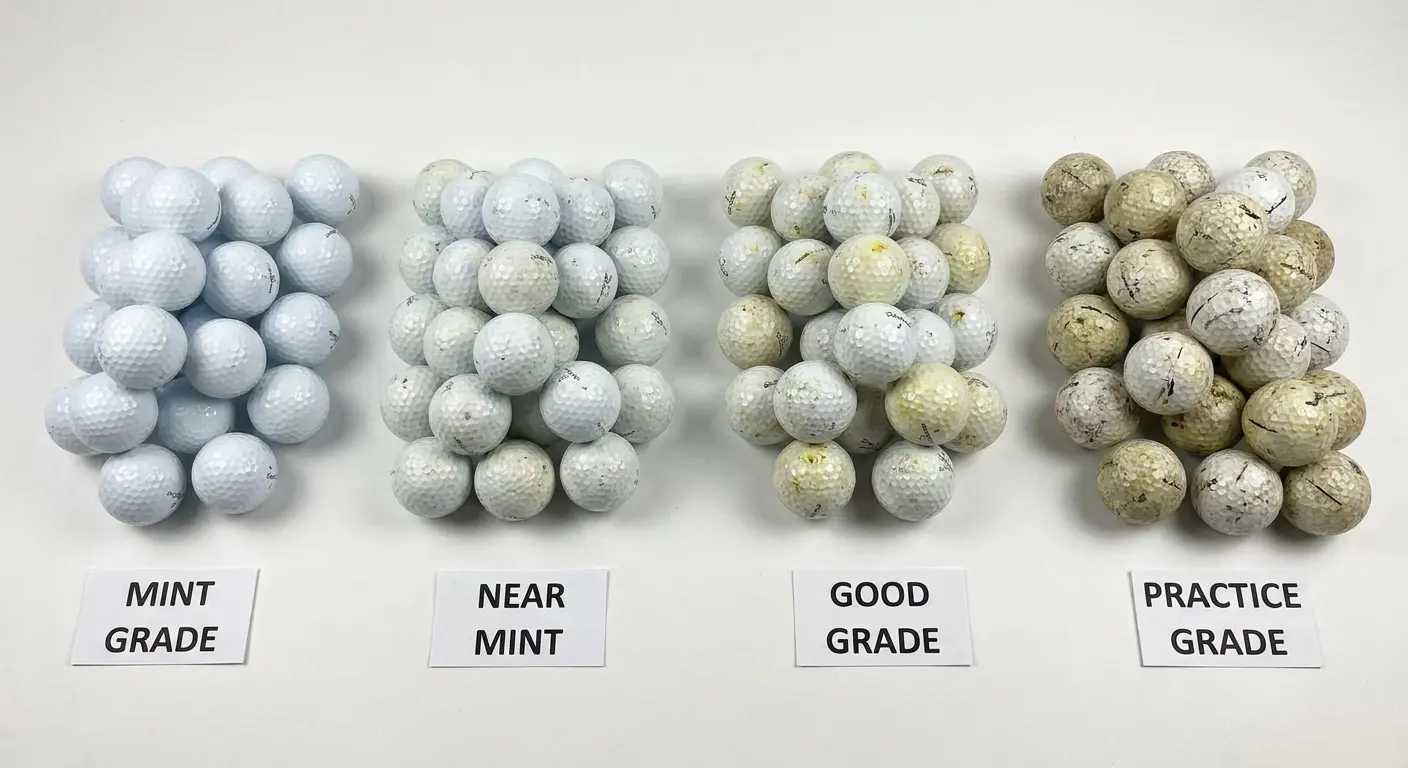
Recovered balls cleaned and graded for resale at 30-70% discounts provide environmental benefits and cost savings for high-handicappers and anyone learning the game. "Mint" and "near mint" lake balls perform nearly identically to new balls if they haven't been submerged long-term.
Lower grades show cosmetic damage but still work fine for casual rounds. You're not competing in tournaments, and a ball with minor scuffing plays the same as a pristine one for most recreational purposes.
What to look for when buying: avoid balls with visible cracks or significant discoloration, which indicates water damage that affects core integrity. Stick with reputable sellers who properly grade their inventory rather than random bags from unknown sources.
Premium brands hold up better after water exposure. Balls with quality covers and sealed construction resist water penetration longer, making them better candidates for lake ball purchases. Budget balls often show more water damage because they lack the same protective engineering.
It's okay to play lake balls. Seriously. Nobody cares except you. Your playing partners aren't checking what you're playing. And if they are? They're idiots. Play what works for your game and your budget.
Maximize your practice time and course performance with our guide to golf accessories for accuracy that complement your ball selection.
19. Personalized Custom-Stamped Balls
Custom logos, text, or images serve both practical (easy identification) and personal (gifts, team branding) purposes. Customization doesn't affect performance since it's just surface printing on standard ball models from major manufacturers.
The practical benefit is immediate identification in groups where multiple players use the same ball model. You'll eliminate confusion and potential penalties when everyone's playing the same white Pro V1. Your custom stamp makes identification instant.
Custom balls make thoughtful gifts for golf enthusiasts. Personalized balls with someone's name, a special date, or an inside joke show more thought than generic golf gifts. They're functional and personal, which is rare in golf equipment.
Minimum order quantities typically start at one or two dozen, with turnaround times of 1-2 weeks. The personalization premium runs $10-15 per dozen over standard pricing, which is reasonable if the identification benefits or gift value justify the cost.
Keep Your Gear Protected While You Play
You're pulling your phone out constantly during rounds to track scores, check distances, and capture moments on the course. Standard pockets and flimsy cases don't cut it when you're bending, swinging, and moving around a cart. One awkward twist and your phone's on the ground or sliding out of your pocket.
Side note: I keep my phone on a magnetic mount on my cart because I'm checking distances constantly. We've solved this with magnetic mounting systems that keep your device secure and accessible. Our RokLock twist-lock system works with golf cart bars and bags, giving you hands-free access without worrying about drops or damage. The protective cases handle the inevitable bumps and weather exposure that come with 18 holes.
You've invested time finding the right ball for your game. Protect the tech that helps you play it better. Check out our golf cart phone mounts and rugged phone cases designed specifically for the course.
Final Thoughts
Here's what I learned after testing all these balls: the ball matters less than I thought, but more than most people think. That sounds contradictory, but it's true.
The difference between the perfect ball and a decent ball for your game? Maybe 3-5 strokes per round. The difference between the right ball and the completely wrong ball? 10+ strokes. So yes, it matters. No, you shouldn't obsess over it.
Matching ball type to your actual game conditions and skill level matters more than chasing tour-level specs that don't apply to your swing. The 19 types we've covered represent real solutions to specific problems you face on the course, from environmental challenges to budget constraints.
Stop reading and go do this: Buy one sleeve each of a low-compression ball, a mid-compression ball, and whatever you're playing now. Mark them differently. Play nine holes rotating through them. Holes 1-3 with ball A, 4-6 with ball B, 7-9 with ball C. Track your drives and approach shots. You'll know in two hours which ball actually works for your swing. That's worth more than reading 50 articles.
Find the ball that matches how you play, where you play, and what you can afford to lose. Everything else is marketing.
Biggest Mistake I See: Golfers matching their ball to their aspirational game instead of their actual game. You want to be a 5-handicap who shapes shots and spins wedges. Cool. But you're actually a 17 who needs to find the fairway and stop losing balls. Play the ball for who you are, not who you want to be.
Here's How to Actually Choose:
What's your swing speed? Under 85 equals low compression. 85-95 equals medium. 95+ equals you have options.
How many balls do you lose per round? More than 2 equals budget balls only.
Do you hit 10+ greens in regulation? No equals distance balls. Yes equals consider control balls.
Can you intentionally shape shots? No equals don't pay for spin you can't use.
Golf season is starting. Don't make the same mistake you made last year, playing the wrong ball for 30 rounds before finally switching. Test balls NOW, so you've got your choice dialed in before your club championship or that buddy trip to Myrtle Beach.
Here's what happens if you keep playing the wrong ball: You lose 10-15 yards you'll never get back. You waste $200+ per year on balls that don't fit your swing. You shoot 3-5 strokes higher than necessary. And worst of all, you'll never know how much better you could've played. That's the real cost. Not knowing your actual potential.
As you refine your equipment choices, explore our complete golf accessories collection to elevate every aspect of your game.
Look, I just wrote 3,000 words about golf balls, which is insane. But here's the truth: find a ball that matches your swing speed, doesn't break the bank, and doesn't slice 40 yards when you miss the center. Everything else is just guys in marketing departments justifying their jobs.
Play what works, ignore the hype, and spend the money you save on range balls so you actually get better.

