



Table of Contents
Material: What Your Shaft Is Made From
Steel Shafts
Graphite Shafts
Multi-Material Hybrid Shafts
Nanofuse Carbon Shafts
Titanium-Reinforced Shafts
Composite Layered Shafts
Flex: The Rating Everyone Gets Wrong
Extra Stiff (X-Flex) Shafts
Stiff (S-Flex) Shafts
Regular (R-Flex) Shafts
Senior (A-Flex) Shafts
Ladies (L-Flex) Shafts
Dual-Flex Variable Shafts
Performance Features That Actually Work
Low Kick Point Shafts
Mid Kick Point Shafts
High Kick Point Shafts
Counterbalanced Shafts
Lightweight Tour Shafts
Adjustable Weight Distribution Shafts
TL;DR
Your shaft matters more than your club head (seriously)
Flex charts lie. Test everything with a launch monitor
Most people use shafts that are too stiff (ego problem)
Steel gives you feedback, graphite gives you speed. Pick your priority
Kick point changes launch more than loft does
Fitting costs $100. Wrong shafts cost you strokes every round. Do the math
Multi-material hybrids combine steel stability with graphite feedback in ways pure materials can't
Why Nobody Talks About Shafts (And Why That's Costing You Distance)
Let me guess. You know your driver's MOI, the loft, the face technology. Ask you what shaft you're using? "Uh... the stock one?"
Nobody makes sexy commercials about shafts. Manufacturers love showing you slow-mo footage of a driver face compressing a ball. Looks cool. Doesn't tell you anything useful. Meanwhile, a $40 shaft change could add 15 yards to your 7-iron, but they're not making commercials about that.
The reality? Your shaft controls everything before impact. Which means it controls everything.
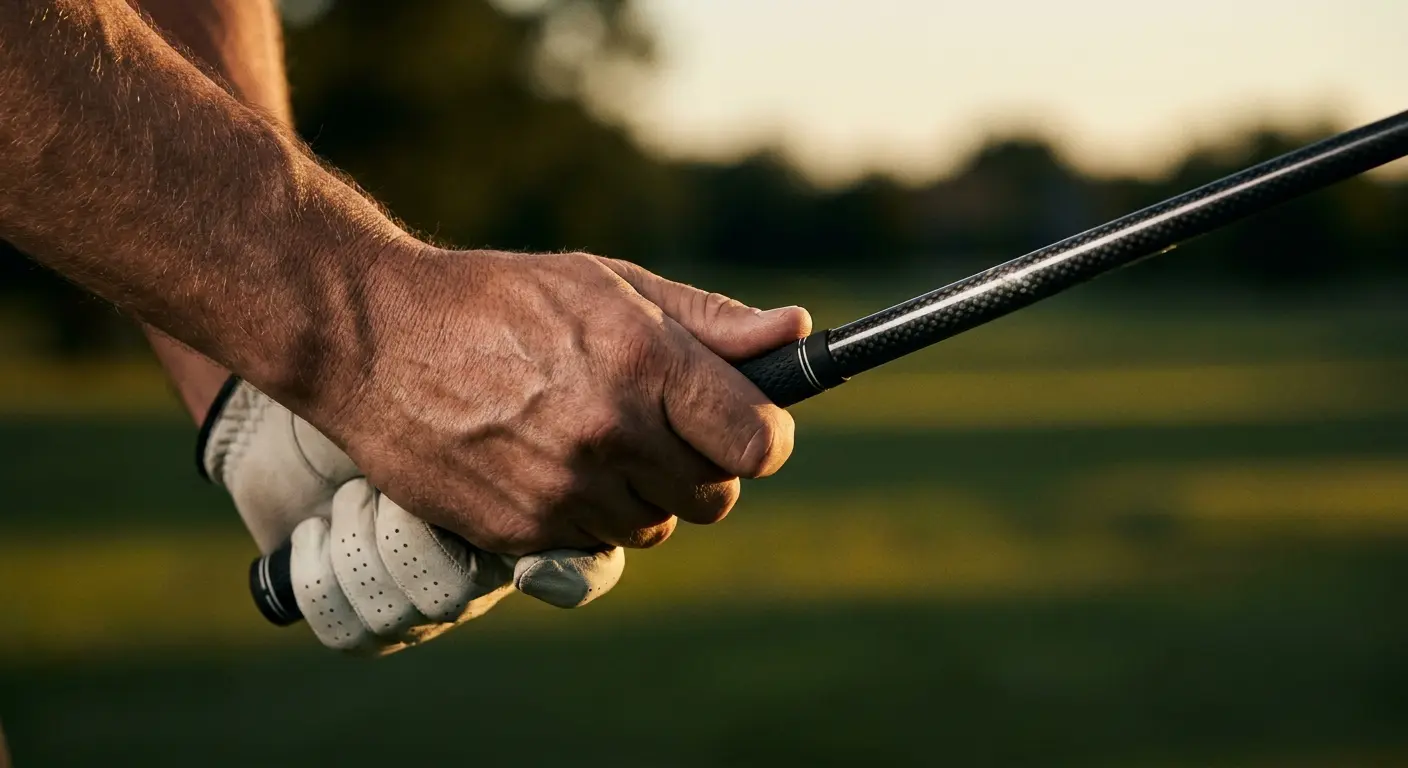
I'm going to explain these shafts based on what they actually feel like when you swing them, not what some spec sheet says. No engineering degrees required, just practical differences that change how the club loads, releases, and delivers energy to the ball.
Material: What Your Shaft Is Made From
1. Steel Shafts
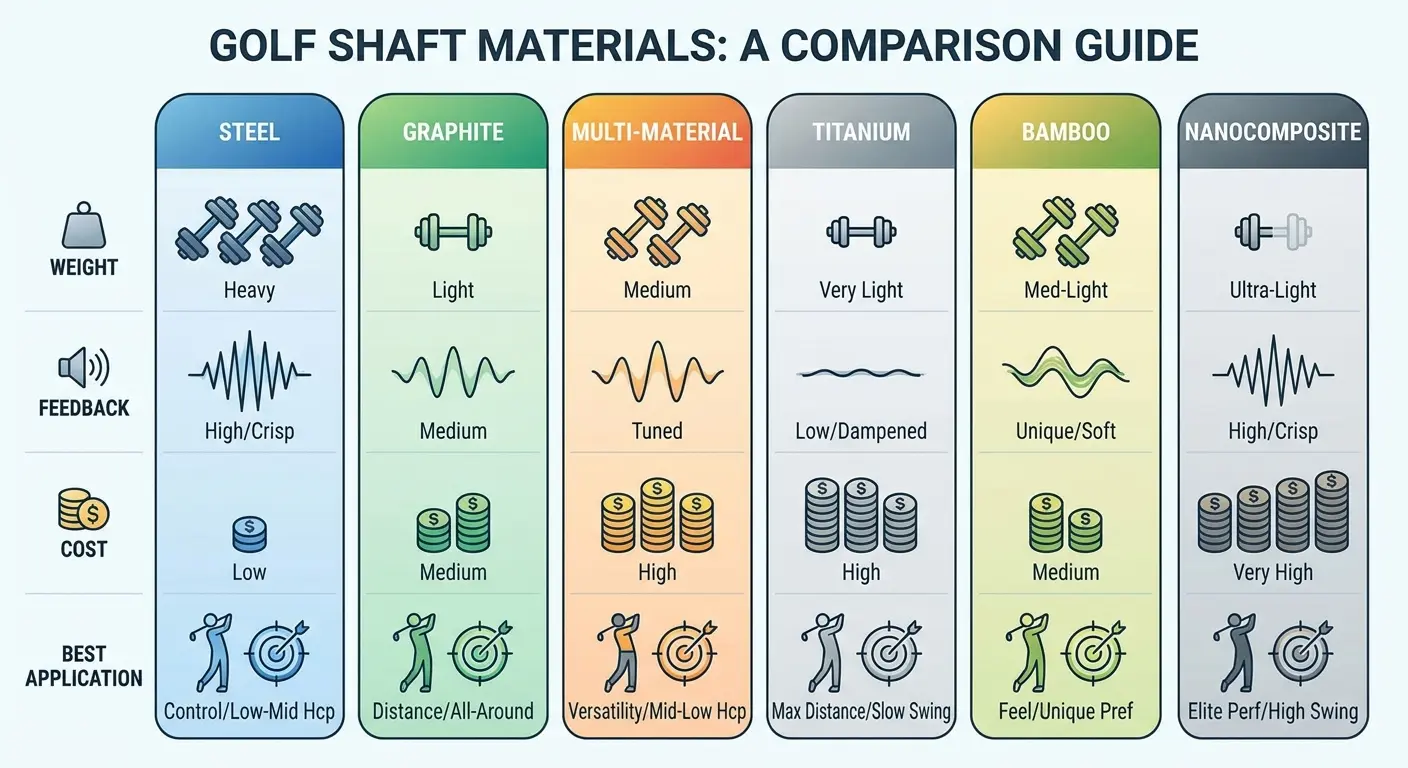
Steel tells you everything. Where you hit it, how you hit it, whether you took a divot or caught it clean.
That 120-gram steel shaft in your 6-iron creates a consistent swing weight that helps you repeat the same motion. You'll give up some clubhead speed compared to graphite, but you'll gain predictability in where you're making contact.
Tour players use steel in their scoring clubs because mishits need to feel different from pure strikes. Graphite dampens that feedback, which sounds great until you're trying to dial in yardages and can't tell if you're consistently catching it on the toe. Hit a steel-shafted 7-iron off the toe and your hands will sting for the next three shots. Graphite? You might not even realize you missed it.
You know that tuning fork vibration when you catch one thin? That's steel telling you exactly what happened. Some guys hate that feedback. I love it.
2. Graphite Shafts
Here's where things get interesting. Engineers can make graphite stiff at the top, whippy in the middle, then stiff again at the bottom. Try doing that with steel. You can't.
You're looking at 40-50 grams less weight than comparable steel, which matters more as you age or if you're dealing with elbow or wrist issues. That weight savings translates directly to clubhead speed if your swing can handle the different feel.
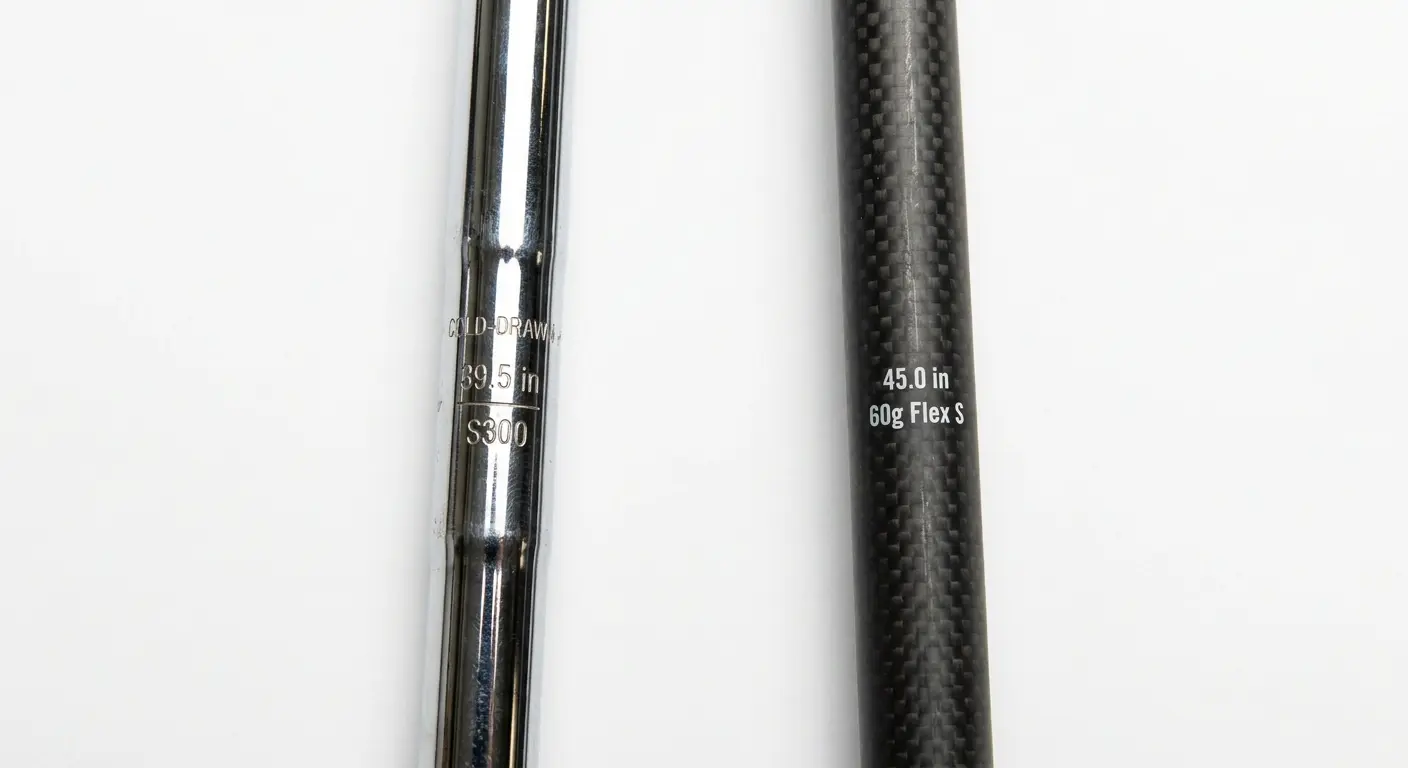
Graphite feels dead in your hands compared to steel. Not bad-dead. Just... quiet. The smoothness works against you in wedges. You need to feel where the clubface is. But in a driver? Who cares about feedback when you're bombing it off the tee? That dampening reduces the harsh shock of off-center hits without sacrificing ball speed.
3. Multi-Material Hybrid Shafts
Hybrid shafts put steel where you need stability (the tip section near the clubhead) and graphite where you want weight savings (the butt and mid-sections). You get steel's feedback without carrying steel's full weight penalty.
The spot where steel meets graphite? That's where cheap hybrids fall apart. Literally. Bad manufacturing leaves a dead zone that makes the shaft feel weird. You'll load it up on the backswing and then it just... doesn't release right. You can feel it, even if you can't explain it.
Good hybrids cost more because nailing that transition takes serious engineering. Worth it if you need what hybrids offer, but test before you buy.
These work exceptionally well in driving irons and utility clubs where you want the control of steel but need help generating speed. The steel tip keeps the face stable through impact while the graphite body lets you swing faster without fighting extra mass.
4. Nanofuse Carbon Shafts
Nanofuse basically fills in the tiny gaps between carbon fibers with even tinier carbon particles. The result? The shaft bends more consistently.
You're paying for consistency here. Two nanofuse shafts from the same production run will perform nearly identically, while standard graphite shafts can vary enough to affect spin rates and launch angles.
Nanofuse shafts run $200-300 vs $60-80 for standard graphite. That 3-4x markup only makes sense if you're a single-digit handicap who can actually use that consistency. If you're still working on path and face control, spend your money on lessons instead.
5. Titanium-Reinforced Shafts
Titanium fibers woven into graphite construction let manufacturers build thinner, lighter shafts that don't twist under high torque loads. Same weight as standard graphite with way better torsional stability.
These are for guys who break graphite shafts. If that's not you, skip it.
The feel stays closer to pure graphite than you'd expect. Titanium doesn't deaden feedback the way steel does, so you maintain that smooth graphite sensation while gaining durability that handles aggressive tempo.
6. Composite Layered Shafts
Composite layering stacks different materials in specific orientations to control exactly how the shaft bends, twists, and recovers. You might have a high-modulus carbon outer layer for snap, a softer mid-layer for feel, and a torque-resistant inner layer for stability.
How they layer the fibers matters as much as what the fibers are made of. Fibers running straight up and down keep the shaft from bending. Fibers wrapped at an angle stop it from twisting.
You'll find these in high-end custom fitting operations where the fitter can specify layer composition based on your swing data. Off-the-rack composite shafts exist, but you're not getting the full benefit without proper fitting to match the shaft's design intent to your swing characteristics.
Material |
Weight |
Where It Works |
Why You'd Use It |
Cost |
|---|---|---|---|---|
Steel |
90-130g |
Irons, wedges |
You'll feel everything (good and bad) |
Cheap ($20-50) |
Graphite |
50-80g |
Woods, hybrids, irons |
Weight savings, more speed |
$60-150 |
Multi-Material Hybrid |
70-100g |
Driving irons, utility clubs |
Balanced feedback and weight |
$100-200 |
Nanofuse Carbon |
50-75g |
Full set for low handicaps |
Tightest tolerances available |
$200-300 |
Titanium-Reinforced |
55-80g |
Aggressive swing transitions |
Won't break under high torque |
$150-250 |
Composite Layered |
55-85g |
Custom fitting applications |
Precise flex and torque control |
$200-400 |
These are ballpark ranges. Your mileage will vary based on manufacturer and whether you're buying stock or custom.
Flex: The Rating Everyone Gets Wrong
7. Extra Stiff (X-Flex) Shafts
Don't. Seriously.
Unless you're swinging 110+ mph with an aggressive transition, you're costing yourself distance. I see this constantly. Guys thinking they need X-flex because they're strong. You're not too strong for stiff flex. Your ego is too big for your swing speed.
Too stiff costs you distance. The shaft won't store and release energy efficiently if you can't bend it during your downswing. You'll hit low, spinny shots that feel solid but don't carry because you're fighting the shaft instead of using it.
Look, I get it. X-flex sounds badass. But you know what's actually badass? Hitting it 15 yards farther with stiff flex because you're not fighting equipment that's too stiff for your swing.
I've fitted maybe 200 players who thought they needed X-flex. Know how many actually did? Maybe 20. The rest picked up 10-15 yards when we dropped them to stiff. Every. Single. Time.
8. Stiff (S-Flex) Shafts
Stiff flex handles the widest range of swing profiles, which makes it both the most popular and most frequently misapplied option. Designed for 95 mph driver speed with a moderately aggressive transition.
The problem with stiff as a default recommendation? It assumes your tempo matches the average player's loading pattern.
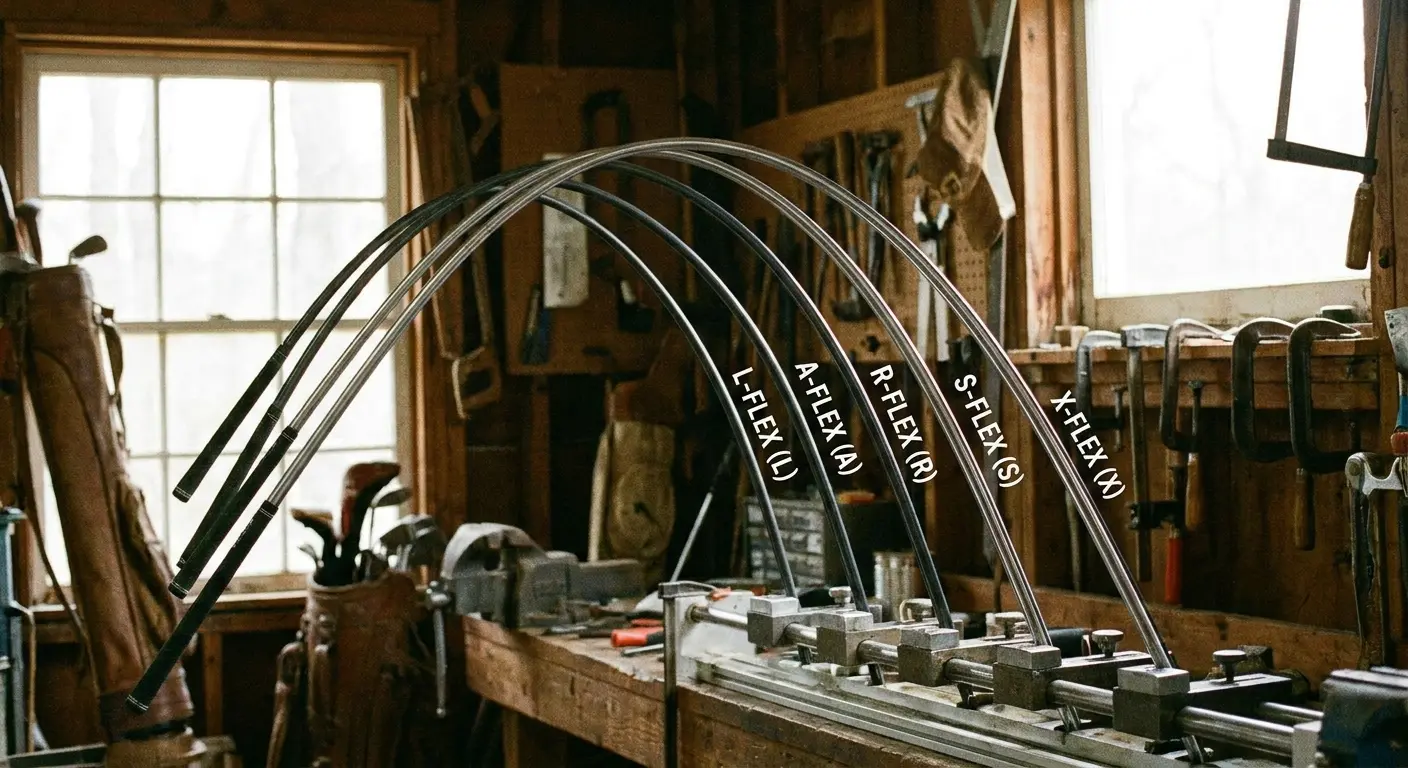
If you have a smooth, syrupy tempo even with good speed, stiff flex won't load enough to optimize your launch conditions. A smooth 110 mph swing might perform better with stiff flex than a violent 105 mph transition needs X-flex. I know a guy who swings 110 mph smooth as butter. Regular flex works better for him than his buddy who swings 105 but jerks it from the top like he's trying to kill a snake. That second guy needs X-flex.
Consider using different flexes through your bag. Your driver swing and your 7-iron swing have different tempo characteristics. There's no rule requiring uniform flex across all clubs. Stiff in woods and regular in irons often produces better results than forcing stiff throughout.
9. Regular (R-Flex) Shafts
Regular flex gets treated like a concession to age or declining ability. Completely backward. R-flex optimizes energy transfer for the swing speed most golfers actually produce, not the speed they wish they had.
You'll see higher launch, better carry distance, and tighter dispersion with properly matched regular flex if your driver speed sits below 93 mph. The shaft loads and releases in sync with your swing instead of staying too rigid to contribute to clubhead speed.
Pay attention to your strike pattern. If you're consistently catching it low on the face or hitting weak fades with stiff shafts, try regular flex before you rebuild your swing. The equipment might be forcing compensations that disappear with appropriate flex.
The difference often shows up most dramatically in your mid and long irons, where the additional loading helps you achieve proper launch angles that stiff flex simply can't provide at moderate speeds.
10. Senior (A-Flex) Shafts
A-flex gives you the flexibility needed to load the shaft when your swing speed drops below 85 mph. The name "senior" is stupid and outdated, but physics doesn't care about your feelings. If you swing under 85 mph, this is your shaft. Period.
The increased flex helps you generate clubhead speed through better shaft loading rather than fighting a shaft that won't bend enough to contribute energy. You're also getting higher launch angles that maximize carry distance when ball speed decreases.
Switching to A-flex before you absolutely need it maintains your distance instead of watching it gradually disappear. If your regular flex clubs feel heavier than they used to or you're noticing lower ball flight, test senior flex before you accept that distance loss as inevitable.
Don't let pride keep you in stiff flex. A-flex will get you more distance than trying to muscle through a shaft that's too stiff.
11. Ladies (L-Flex) Shafts
L-flex provides maximum flexibility for swing speeds under 70 mph, helping generate clubhead speed when you can't produce it through swing mechanics alone. The gendered naming is outdated and keeps players from using the flex that would improve their game.
These shafts typically run 10-20 grams lighter than senior flex in the same model, reducing the total weight you're swinging. That weight reduction matters more at lower swing speeds where every bit of clubhead speed contributes meaningfully to distance.
If standard L-flex still feels too stiff, custom ultra-flexible options exist that provide even more loading. You're better off with a shaft that bends appropriately than forcing yourself to swing harder to compensate for too much stiffness.
12. Dual-Flex Variable Shafts
Variable flex shafts change stiffness along their length, creating loading patterns that uniform flex can't replicate. You might have a stiff butt section that resists your hands getting too active, transitioning to a softer tip that helps you launch the ball higher.
The flex profile creates a specific sequence of loading and release that matches your swing's timing. The transition between flex zones determines how the shaft feels. Abrupt changes create a noticeable hinge point that some players love and others find inconsistent.
Who needs variable flex? Players stuck between two standard flexes. If stiff is too stiff but regular is too whippy, variable flex might split the difference. Might. No guarantees.
I've found that players with inconsistent tempo benefit most from variable flex designs because the shaft adapts to slight variations in their loading sequence. The complexity adds cost, so make sure you're solving a specific problem rather than chasing technology for its own sake.
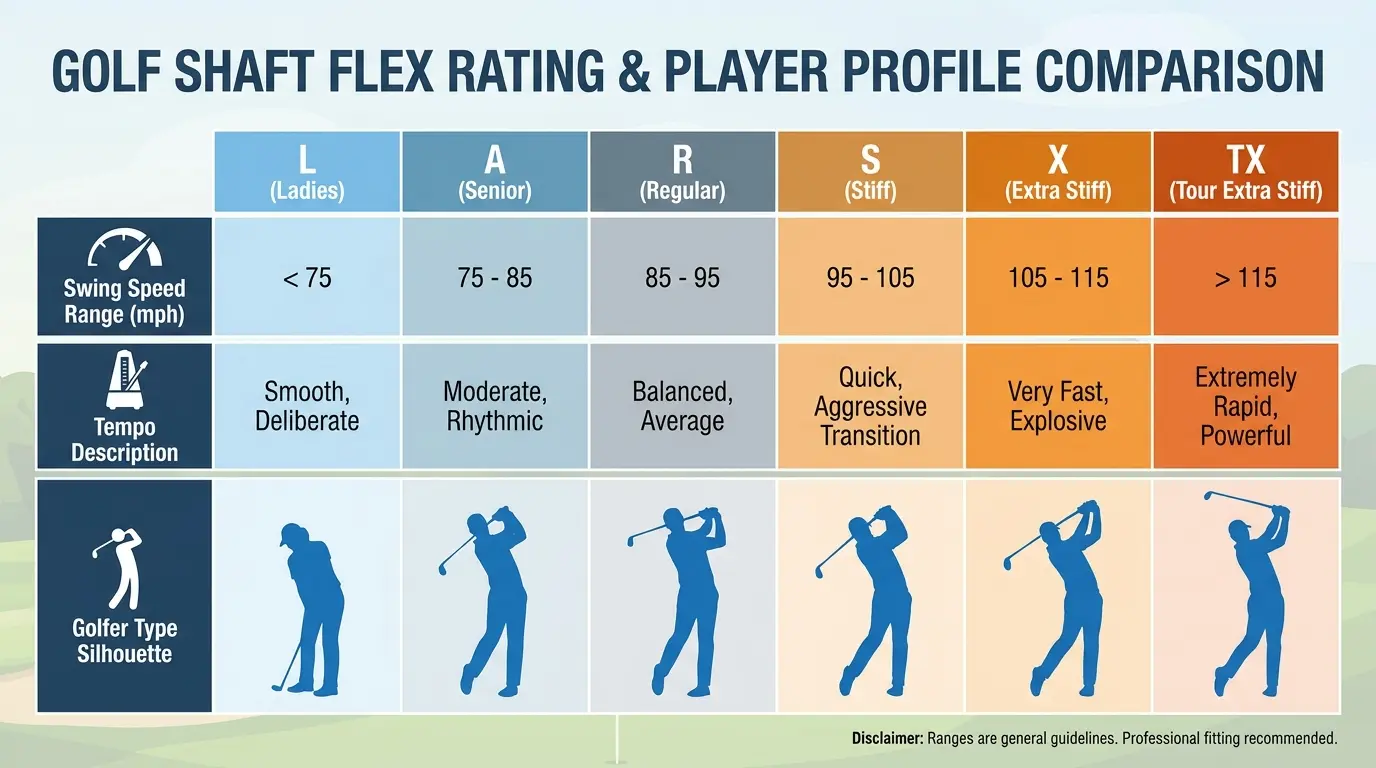
Flex Rating |
Swing Speed Range |
Tempo Profile |
Common Misconception |
Who Actually Needs It |
|---|---|---|---|---|
Extra Stiff (X) |
105+ mph |
Aggressive transition |
Only for pros |
Fast, aggressive transitioners |
Stiff (S) |
90-105 mph |
Moderate to aggressive |
Default for all good players |
Players with 95+ mph and firm tempo |
Regular (R) |
80-95 mph |
Moderate |
Sign of weakness |
Most recreational golfers |
Senior (A) |
70-85 mph |
Smooth to moderate |
Only for elderly players |
Anyone 70-85 mph (ignore the name) |
Ladies (L) |
Under 70 mph |
Smooth |
Gender-specific |
Any player under 70 mph |
Dual-Flex Variable |
Varies |
Inconsistent or evolving |
Marketing gimmick |
Players between standard flexes |
Here's what nobody tells you about flex ratings.
They're not standardized. At all. One company's stiff is another company's regular. The letter on the shaft means almost nothing until you test it with a launch monitor. I've seen guys perfectly happy with regular flex from one manufacturer struggle with stiff from another, even though the stiff was actually softer.
Test everything.
Performance Features That Actually Work
13. Low Kick Point Shafts
Low kick point shafts bend near the clubhead, creating a whipping action through impact that launches the ball higher with more spin. You're adding dynamic loft without changing your club's static loft number.
These help players who struggle getting the ball up, particularly with longer irons and fairway woods. The shaft does some of the launch work for you, which matters when you don't generate enough speed to optimize launch conditions through swing mechanics alone.
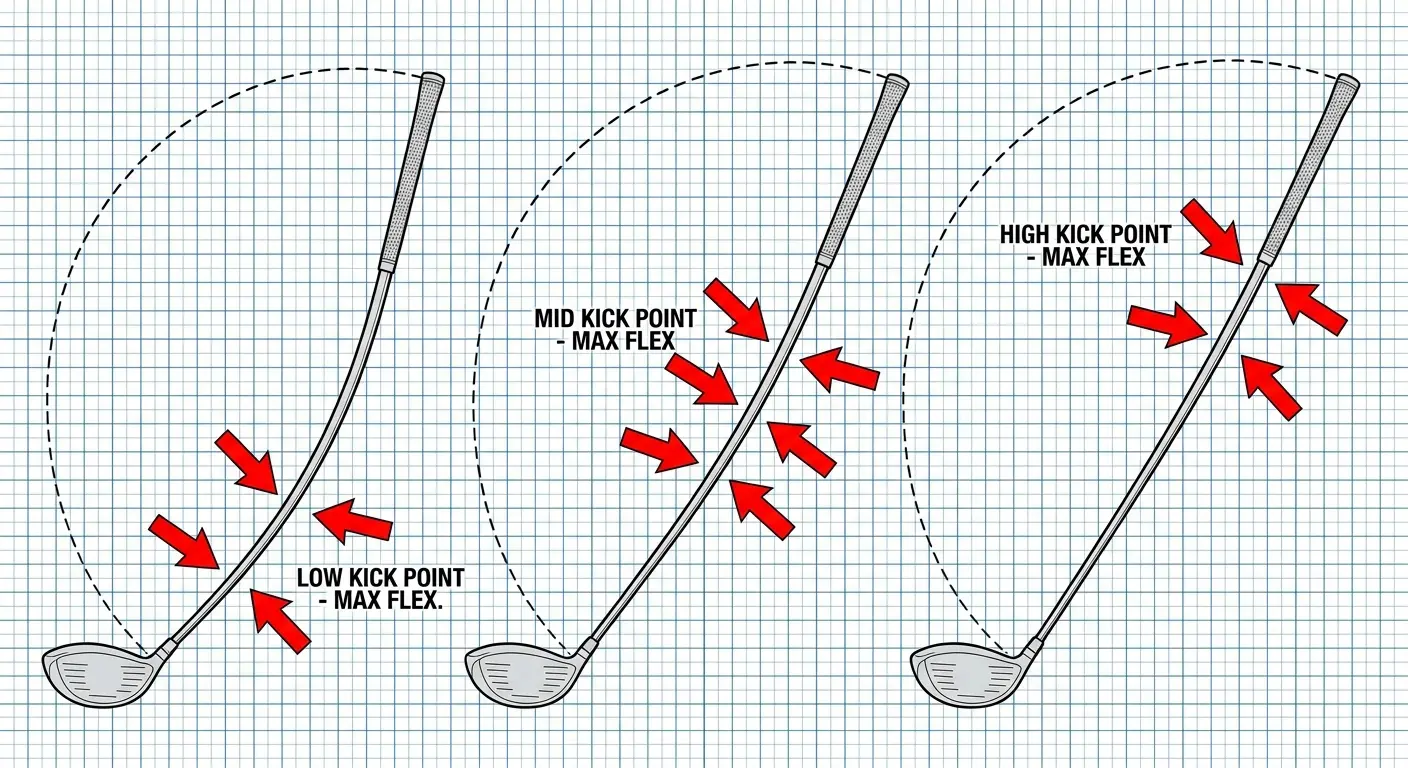
The downside shows up in control. That extra whip can make it harder to manage your dispersion if you already hit it high or if your swing path varies significantly. You might gain height but lose the ability to work the ball or control your landing angle on approach shots.
Players with steep attack angles sometimes find low kick points make their ballooning tendency worse, turning what should be controlled approaches into shots that land soft but short of their target.
14. Mid Kick Point Shafts
What's a mid kick point good for? Being safe. Not great at anything, not terrible at anything. It's the shaft equivalent of ordering chicken at a restaurant. You know what you're getting, but you're not excited about it.
Mid kick point shafts flex in the center, providing moderate launch and spin that works for most swing profiles without excelling at anything specific.
Manufacturers use mid kick points in stock shafts because they won't hurt anyone's performance, even if they're not perfect for your swing. That makes them safe choices for off-the-rack clubs where the manufacturer doesn't know your launch characteristics.
Should you use one? Maybe. If your ball flight is already good and you just need something that won't mess it up, mid kick works fine. But if you're trying to fix a problem? Look elsewhere.
15. High Kick Point Shafts
High kick point shafts bend near the grip, keeping the tip section stable through impact for lower launch and less spin. You're looking at a penetrating ball flight that holds up better in wind and rolls out more after landing.
These suit players who generate plenty of speed and struggle with ballooning shots or excessive spin that costs distance. The stable tip section reduces dynamic loft addition, letting you control trajectory without delofting your club at address.
You need clubhead speed to make high kick points work. Below 95 mph, you'll struggle to get the ball airborne and lose carry distance to shots that land short and don't have enough energy to roll. The ball flight looks controlled until you realize you're 20 yards short of where you should be landing.
High kick points reward speed and punish anything less, making them a precision tool rather than a universal solution.
16. Counterbalanced Shafts
Counterbalanced shafts put extra weight in the butt section, moving the balance point up toward your hands. This lets you use a heavier clubhead without increasing swing weight, giving you more mass at impact while maintaining control.
The physics work in your favor if you tend to get quick from the top or struggle with tempo. The weight in your hands slows down your transition naturally, helping you load the shaft properly instead of throwing the clubhead from the top.
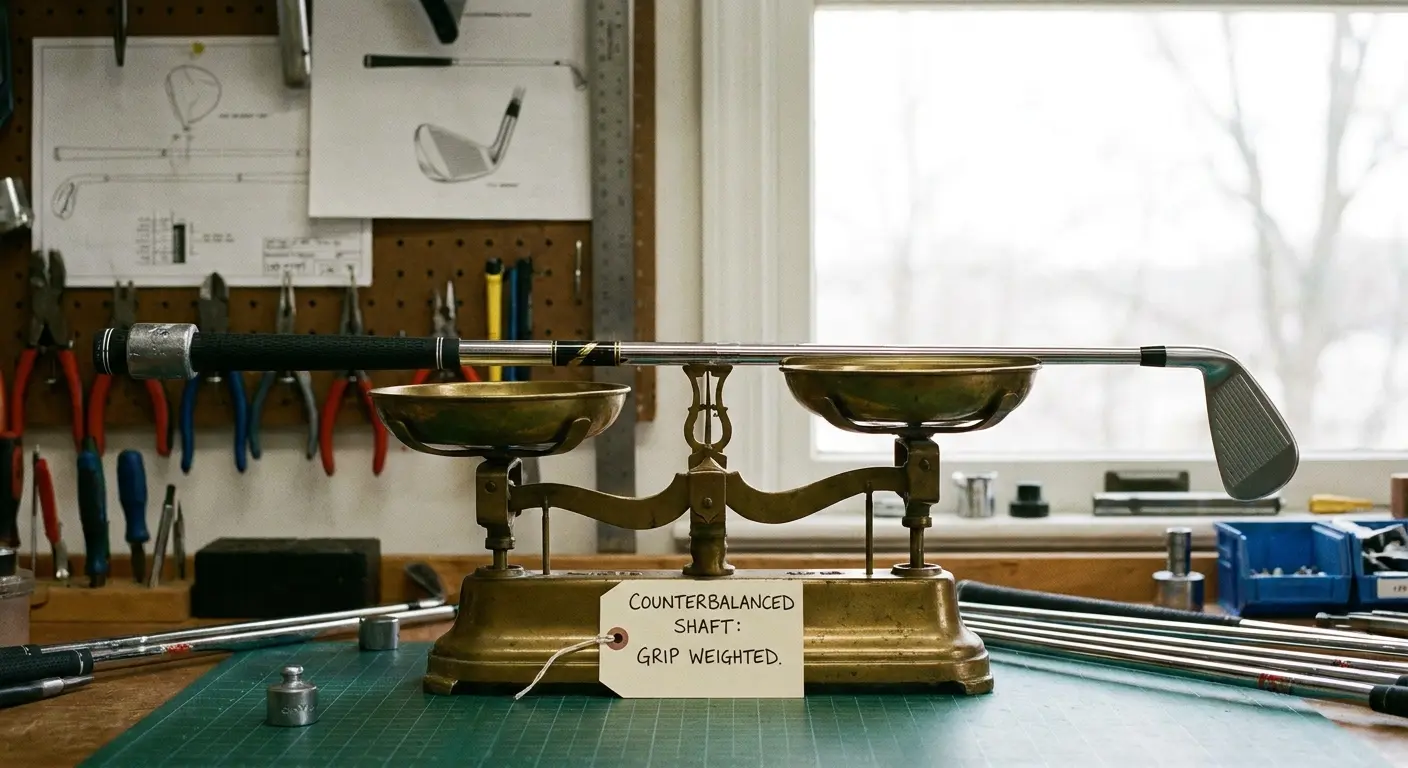
You'll feel more connected to the clubhead throughout your swing. Some players describe it as the club swinging itself rather than them having to manipulate it. That sensation helps if you fight inconsistent release timing or if your hands get too active through impact.
I think counterbalanced shafts are underrated. Most people dismiss them without testing. Their loss.
17. Lightweight Tour Shafts
Lightweight tour shafts drop into the 50-60 gram range while maintaining the tight tolerances and consistent feel that tour-level shafts require. You're getting the speed benefits of lightweight graphite without the inconsistency that plagued early ultralight designs.
These work for players who have solid mechanics but need more clubhead speed to optimize their distance. The weight reduction translates directly to speed if your swing doesn't fall apart when the club gets lighter.
The challenge comes with tempo. Some players need shaft weight to maintain their rhythm and timing. If you get quick when the club feels too light, you'll hit it farther but less consistently.
Test these on a launch monitor across multiple sessions before committing, because the speed gains only matter if you can still find the center of the face.
18. Adjustable Weight Distribution Shafts
Adjustable weight shafts let you add or remove weights at specific points, changing the balance and swing weight without replacing the entire shaft. You can experiment with different configurations to find what works for your swing without buying multiple shafts.
The adjustment mechanism adds weight and complexity that might outweigh the benefits unless you're actively experimenting. Most players find a configuration they prefer and never adjust it again, which makes a fixed-weight shaft in that same spec a better choice.
These make sense if you're between specifications or if your swing is evolving and you need flexibility as you improve. Just don't get caught in the trap of constant tinkering when your swing needs work more than your equipment does.
What Your Ball Flight Is Telling You About Your Shaft
Hitting it low and spinny? Your shaft is probably too stiff. It's not loading enough to help you launch it.
Ballooning everything? Too much flex or too low kick point. The shaft is adding loft you don't need.
Inconsistent contact? Could be too light. You need more shaft weight to feel where the clubhead is.
Losing distance as you get tired? Too heavy or too stiff. You're fighting it instead of using it.
Can't feel the clubface? Probably graphite in a club where you need steel feedback.
Hands hurt after 18 holes? Either too stiff (fighting it) or too much steel (vibration). Try graphite or softer flex.
How to Actually Get Fitted (Without Getting Screwed)
Most fittings are too short. Five minutes per club isn't enough to see patterns. You need 10-15 swings minimum per shaft to see what's consistent vs what's a fluke.
Find a fitter with a real launch monitor. Not a swing speed reader. An actual Trackman, Foresight, GC Quad, something that measures ball flight and spin. Swing speed alone tells you nothing useful.
Bring your current clubs. You need baseline data. How else will you know if the new shaft is better or just different?
Watch the numbers, not how it feels. I've seen guys fall in love with a shaft that felt amazing while the launch monitor showed they were losing 15 yards and adding 500 rpm of spin. Feel lies. Numbers don't.
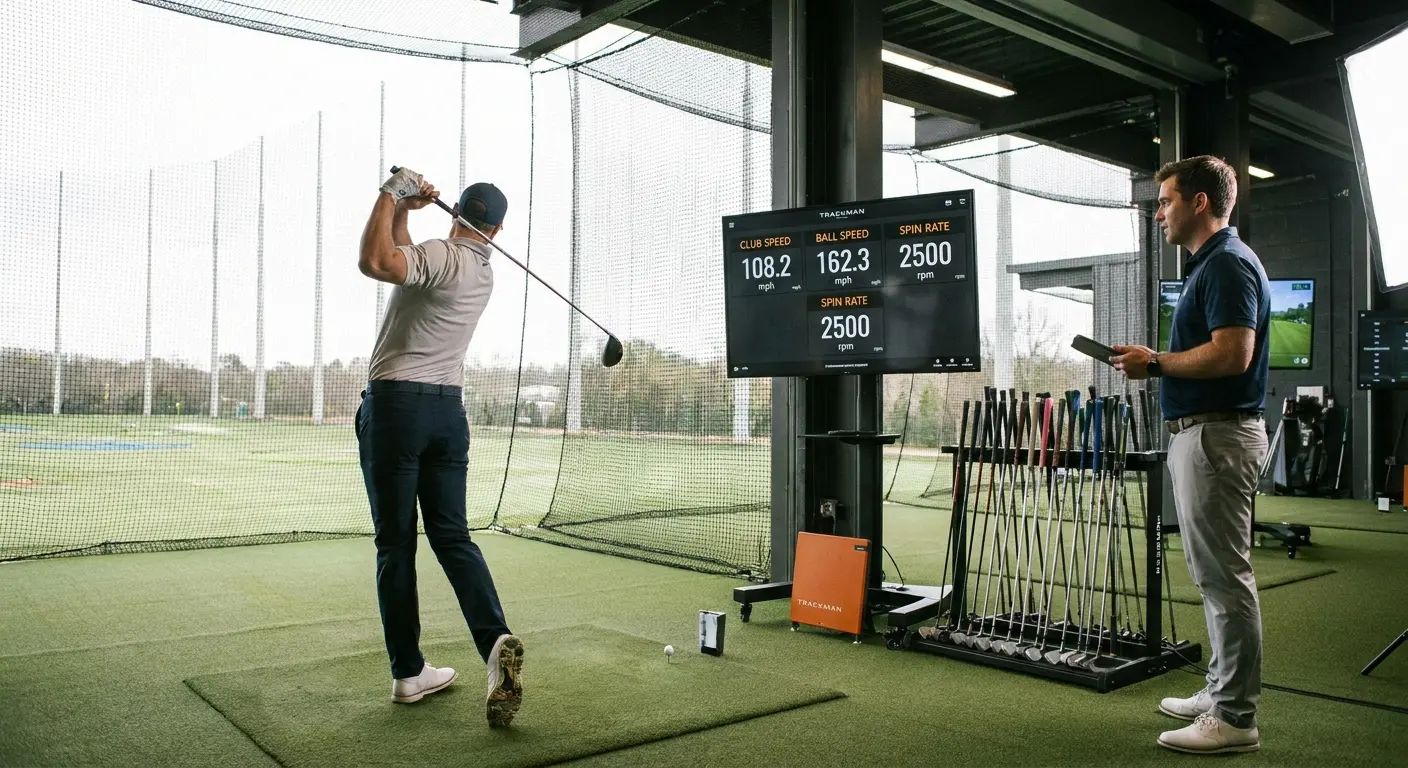
Record everything. Take photos of the launch monitor screen. You'll want to compare data later when you're deciding between two options.
Don't buy same-day. Sleep on it. Come back if you're unsure.
Cost? Expect $75-150 for a good fitting. Worth every penny if it keeps you from buying the wrong $400 shaft.
The shaft flex chart you found online gives you a starting point, not a final answer. Flex ratings aren't standardized across manufacturers, so a stiff shaft from one company might perform like regular from another. You need to test the actual shaft, not rely on the label.
This is why buying clubs online based on what some guy in a forum told you worked for him is basically gambling. You might get lucky. You probably won't. His swing isn't your swing.
Recording your fitting session helps you review the data later and make informed decisions. If you're filming your swing for comparison, which you should be, get a mount that doesn't shake. I got tired of wobbly footage and picked up a Golf Phone Mount from ROKFORM because it actually stays attached to the cart. Makes it simple to capture swings from multiple perspectives without needing a training partner.
The fitting process works best when you bring clubs you currently use for comparison. Hitting your familiar shafts first establishes a baseline that makes it easier to evaluate whether new options genuinely improve your performance or just feel different. Different doesn't always mean better, and having reference data prevents you from making changes based on novelty rather than results.
Mistakes Everyone Makes (Including Me)
Buying based on brand loyalty. "I play Titleist, so I need a Titleist shaft." Shaft companies are separate from club companies. The best shaft for you might be from a brand you've never heard of.
Trusting the swing speed chart. Those charts assume your tempo is average. It's probably not. I've seen 95 mph swingers need senior flex because they're smooth. Charts can't account for that.
Using the same flex throughout the bag. Your driver swing and your 8-iron swing are different. Why would they need the same flex? I play stiff in woods, regular in irons. Works better.
Skipping the fitting because "I'm not good enough yet." Backwards. Bad players need good fits more than good players. Good players can compensate for wrong equipment. You can't.
Buying online without testing. I get it. It's cheaper. But you're gambling. That $50 you saved might cost you 15 yards and consistent ball striking.
I used to think swing speed was everything for flex selection. I was wrong. Tempo matters more. Spent two years chasing that mistake before the data changed my mind.
Bottom Line
Your shaft controls everything before impact. Get it wrong and you're fighting your equipment every swing.
Most of you are using the wrong flex. I know it, you probably know it, but nobody wants to admit they should drop from stiff to regular. Get over it.
Get fitted. Properly. With a launch monitor, not a swing speed chart. Test 5-6 different options minimum. Record the data. Buy what the numbers say, not what feels good for five minutes.
Stop buying clubs online without testing them. That $50 you saved might cost you 15 yards and three strokes per round.
The difference between okay shafts and the right shaft? Usually 10-15 yards and tighter dispersion. That's multiple strokes per round. Over a season, that's the difference between breaking 80 and shooting 85.
Honestly? If you're shooting over 100, your shaft isn't your biggest problem. Fix your swing path first, worry about shaft fitting later. Don't spend $300 on a custom shaft if you're still slicing it 40 yards offline. Equipment can't fix fundamental swing issues.
But if you're a mid-handicapper trying to get better? This is where shaft fitting matters most. You're good enough to feel the difference but not good enough to compensate for wrong equipment.
Golf club shafts deserve the same attention you give to club heads, maybe more. The shaft influences every aspect of your ball flight from launch to landing, yet most players spend minimal time understanding how different shaft types affect their game.
Your best move? Find a qualified fitter who uses launch monitor data to guide recommendations rather than relying on feel or swing speed charts alone. The right shaft makes the game easier by complementing your natural swing tendencies instead of forcing you to compensate for equipment mismatches.
Get fitted. You'll thank me later.

