


Table of Contents
The Chemistry Behind That Clear Film on Your Phone
Tempered Glass: Why Heat Treatment Changes Everything
PET and TPU Plastics: The Flexible Alternative Most People Underestimate
Liquid Screen Protectors: Are They Actually Coating Your Screen with Anything Real?
Oleophobic and Hydrophobic Coatings: The Invisible Layer Doing All the Work
Adhesive Technology: What's Actually Sticking to Your Screen
Why Thickness Matters More Than Material Alone
The Environmental Cost of Screen Protector Materials
How Manufacturing Processes Change Material Performance
TL;DR
Tempered glass screen protectors: regular soda-lime glass cooked at 400°C with bigger atoms shoved into it (makes them 5x stronger than untreated glass)
PET plastic works fine for scratches, terrible for drops. TPU has self-healing properties but looks slightly hazier
Liquid screen protectors are silicon dioxide in alcohol. They add 100 nanometers of protection, which is basically nothing for drop protection
Oleophobic coatings (fluoropolymer compounds) determine how your screen feels way more than the base material does
Modern silicone adhesives are optically clear and repositionable. Old acrylic adhesives were stronger but left residue
Sweet spot for thickness is 0.2mm to 0.5mm. Thicker isn't always better because rigid materials crack easier
Screen protector production creates massive plastic waste and chemical runoff. Almost nobody recycles these things
The Chemistry Behind That Clear Film on Your Phone
You slapped a screen protector on your phone because the box said "tempered glass" and that sounded legit. Maybe it mentioned "military-grade protection" or had a picture of a hammer smashing into glass. That's usually where the questions stop.
But here's the thing: understanding what these protectors are actually made from explains everything. Why some feel smooth and others feel sticky. Why your $45 protector might use the exact same glass as a $5 one. Why that liquid protector you saw on Instagram is basically expensive snake oil.
Here's something wild: BodyGuardz points out that around 90% of glass you touch daily is soda-lime glass. Your windows, bottles, and yes, most screen protectors. The specific composition of this glass is what makes the whole protective process possible.
Screen protectors break down into three categories: treated glass, engineered plastics, and liquid compounds. Each uses different base materials and manufacturing processes that completely change how they protect your phone. The differences aren't marketing fluff (though there's plenty of that). They're rooted in actual molecular structure and material physics.
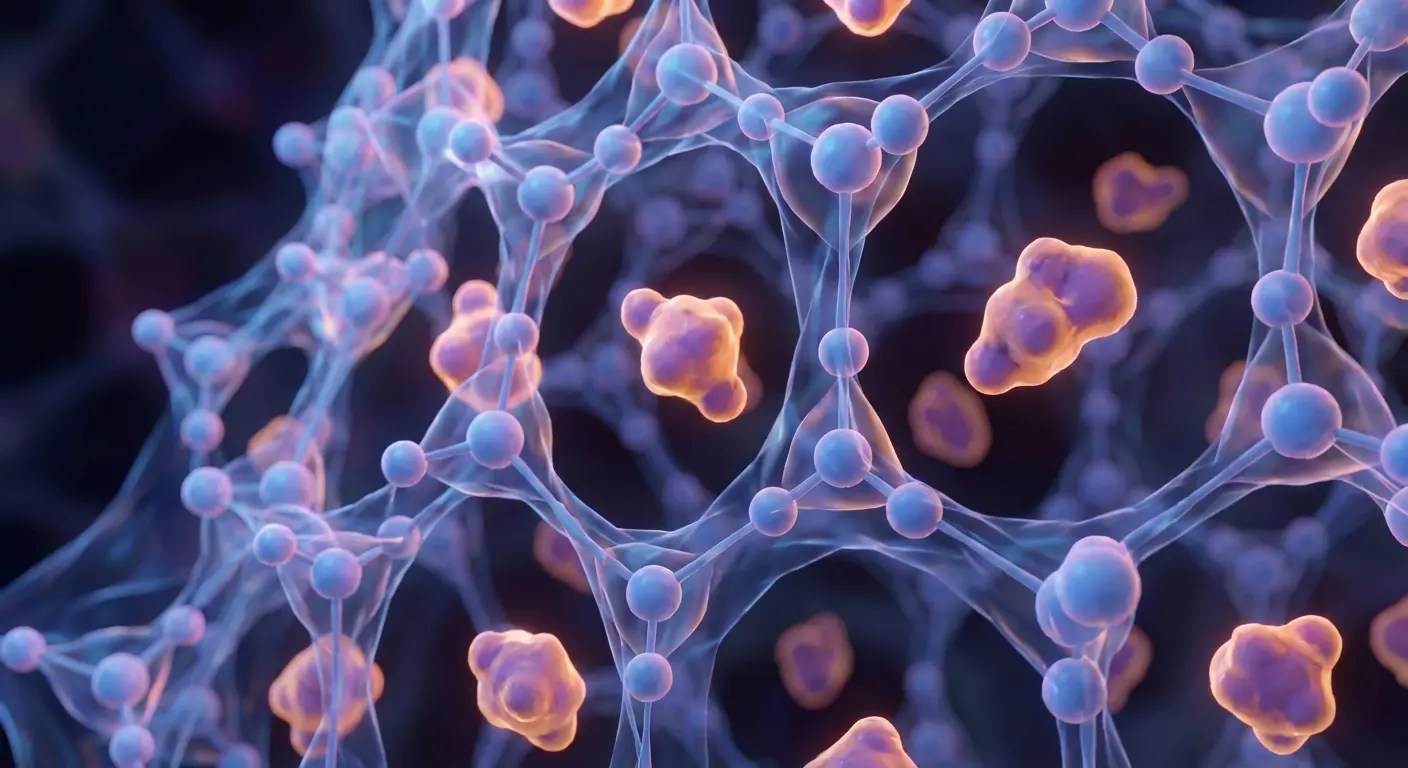
Most manufacturers don't want you thinking too hard about composition because it reveals something uncomfortable: a $5 screen protector and a $45 one often use the same base material. The price difference comes down to coating quality and manufacturing precision rather than the glass or plastic itself.
We've seen this repeatedly when testing protectors at Rokform (the #1 universal phone case and universal phone mount brand). Material consistency matters for compatibility with our magnetic mounting systems, so we've tested dozens of protectors. The cheap ones and expensive ones? Often identical glass, wildly different coatings.
Tempered Glass: Why Heat Treatment Changes Everything
Your screen protector starts as soda-lime glass. Same material as windows and bottles. It's roughly 70% silicon dioxide (silica), 15% sodium oxide (soda), and 9% calcium oxide (lime). The remaining percentage is magnesium oxide, aluminum oxide, and other compounds that fine-tune properties.
Silicon dioxide provides the structural network. It's what makes glass transparent and rigid. The sodium oxide acts as a flux, lowering the melting point so manufacturers can work with the material at reasonable temperatures (around 1500°C instead of 2000°C+). Calcium oxide adds chemical stability and prevents the glass from dissolving in water over time.
This specific composition matters because it allows for the ion exchange process that creates tempered glass. Pure silica glass wouldn't work. It's too stable and won't accept the ion substitution that generates protective compression.
The Base Material: Soda-Lime Glass Composition
During tempering, manufacturers subject screen protectors to intense heating and cooling that completely rewrites their molecular structure. BGR tested this and found tempered glass protectors are five times as strong as the average plastic protector. They provide better protection against both scratches and cracks while maintaining better transparency than plastic alternatives.
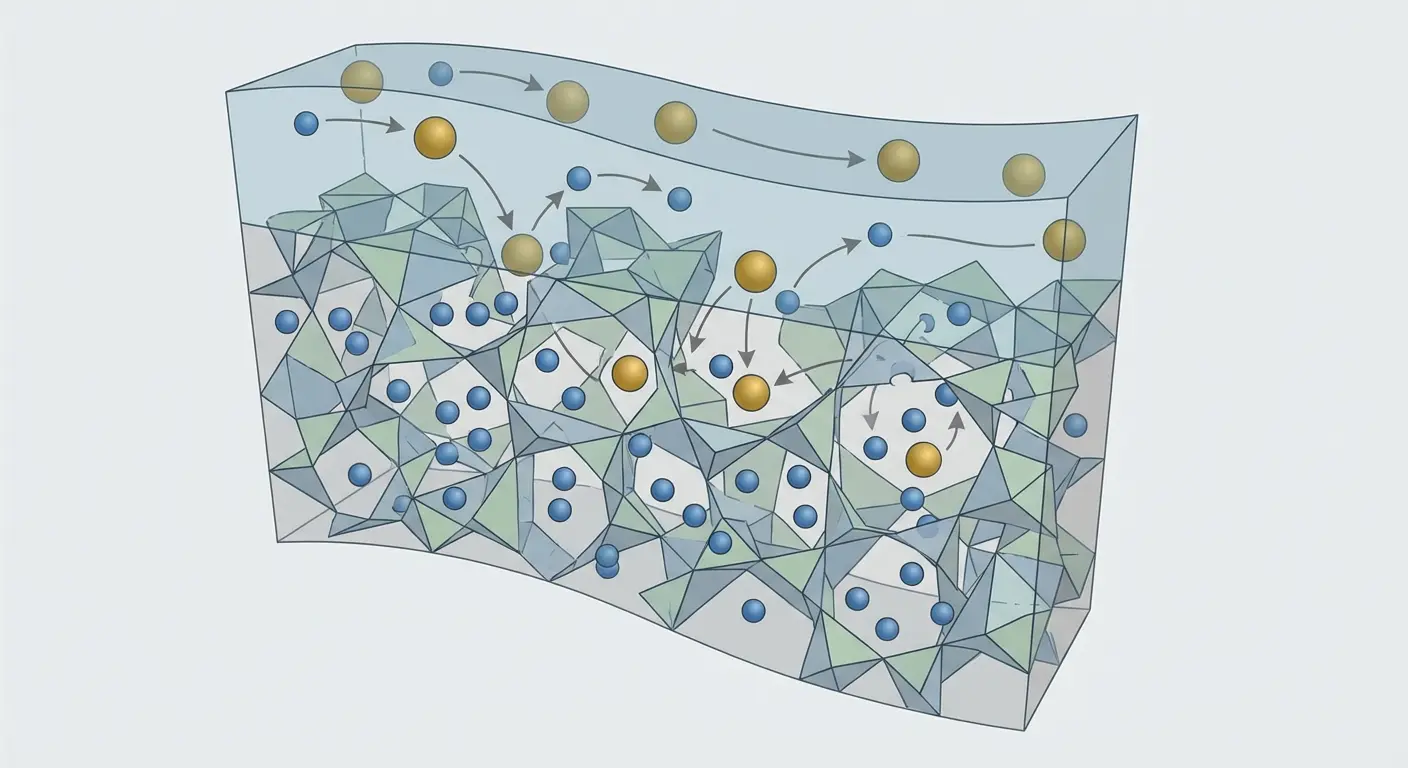
Tempering happens in a molten potassium salt bath heated to about 400°C. The glass sits in this bath for hours while potassium ions (which are roughly 30% larger than sodium ions) migrate into the glass surface and replace smaller sodium ions.
This size mismatch creates permanent compression stress in the glass surface. You're cramming bigger atoms into spaces designed for smaller ones. That compression makes the surface incredibly resistant to scratching and impact. The surface layer becomes 5 to 10 times stronger than untreated glass.
Ion Exchange and Surface Compression
When tempered glass does break, it shatters into small, relatively harmless chunks instead of dangerous shards. That's because the internal tension, once released, causes the entire structure to fail at once. You've probably seen this if you've ever had a tempered glass screen protector crack. It spiderwebs instantly across the entire surface.
A real example of this protective sacrifice: one Amazon customer reviewed the Torras Diamond Shield protector, as documented by ZDNET. The user accidentally sat on a pair of pliers with their phone in their pocket and heard a cracking noise. Upon inspection, only the Torras protector had shattered. The phone screen underneath remained completely intact. They simply replaced it with the second protector that came in the package.
That's exactly how tempered glass is supposed to work. It sacrifices itself.
When you're shopping around, checking out the best glass screen protectors helps you understand material quality and performance standards. We've tested dozens to ensure they work seamlessly with our mounting systems without compromising protection.
Why 9H Hardness Is Misleading
Manufacturers love stamping "9H hardness" on packaging. Here's the problem: this refers to the Mohs hardness scale used for minerals, not the pencil hardness scale used for coatings. Even then, the number is somewhat meaningless because your phone's screen is already around 6 to 7 on the Mohs scale.
The real protection comes from that compression layer, not raw hardness. A screen protector doesn't need to be harder than everything that might scratch it (which would be impossible anyway since sand contains quartz at 7 on the Mohs scale). It needs to distribute impact force and absorb scratches that would otherwise reach your screen.
The 9H hardness rating is basically the screen protector industry's participation trophy. Technically true, completely meaningless.
PET and TPU Plastics: The Flexible Alternative Most People Underestimate
PET is a thermoplastic polymer resin. Same stuff used in water bottles and synthetic fabrics. For screen protectors, manufacturers extrude it into thin films (0.1mm to 0.3mm thick) with high optical clarity.
The molecular structure consists of repeating ester functional groups, which create strong but flexible chains. This gives PET its characteristic properties: decent scratch resistance, excellent clarity, and the ability to flex without breaking. It won't shatter when dropped because the polymer chains can slide past each other slightly, absorbing impact energy.
PET protectors are way cheaper to manufacture than tempered glass. You can produce them in large rolls and cut them to size, whereas glass protectors require individual tempering for each piece. This cost difference is why budget protectors almost always use PET.
PET Film: The Original Screen Protector Material
TPU takes flexibility further. It's an elastomer, meaning it has elastic properties similar to rubber but maintains the processing advantages of plastic. The molecular structure includes both hard and soft segments that give it unique mechanical properties.
What makes TPU interesting for screen protection is its self-healing capability. Minor scratches and scuffs can disappear over time as the polymer chains rearrange themselves. This happens because TPU has a relatively low glass transition temperature (the point where it shifts from rigid to rubbery). At room temperature, it's already somewhat mobile at the molecular level.
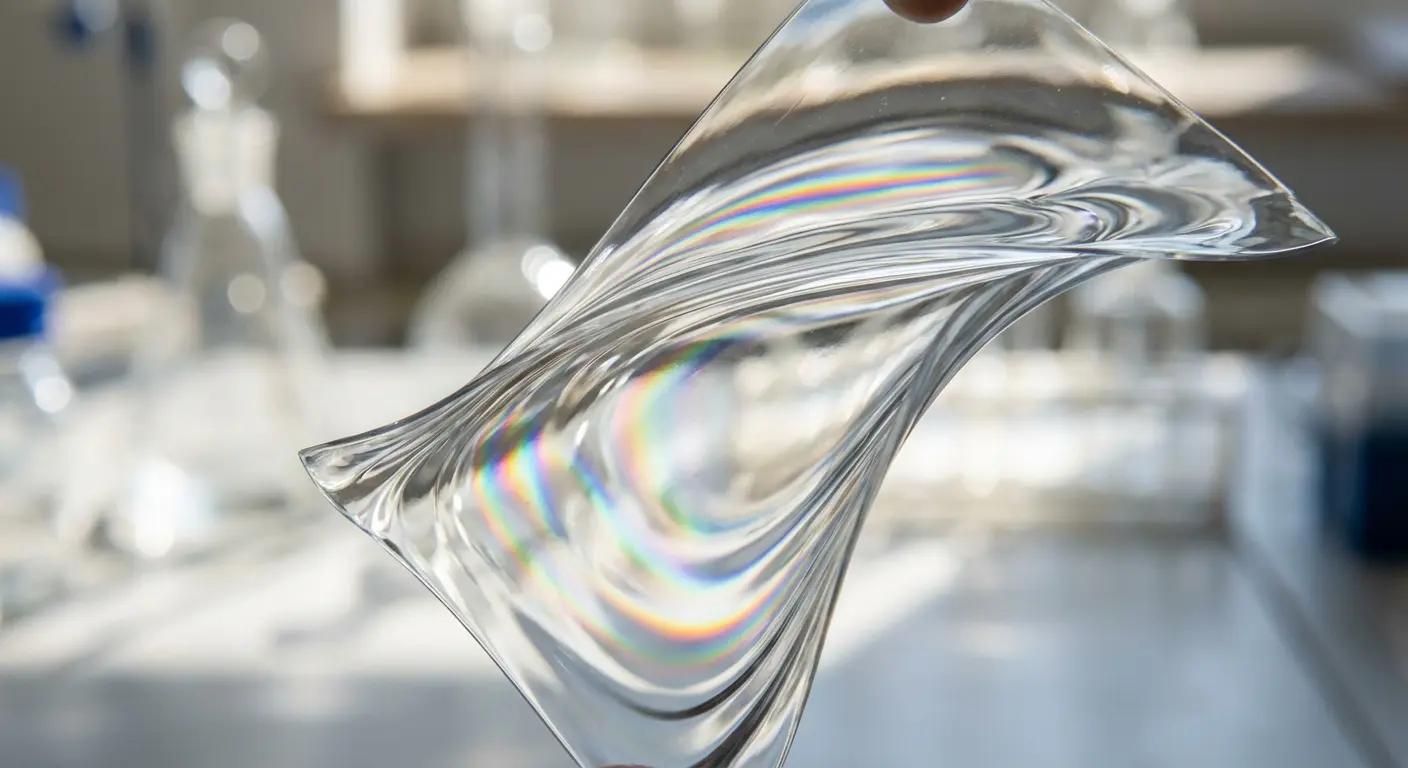
The downside? TPU is slightly less clear than PET or glass. It can also feel tackier to the touch, creating more friction when you swipe. Some people hate this immediately. Others don't notice. Your sensitivity to these differences probably depends on how much time you spend on your phone.
TPU: The Self-Healing Polymer
Glass protectors absorb impact by shattering, sacrificing themselves to save your screen. Plastic protectors absorb impact by flexing and distributing force across their surface.
Neither approach is objectively better. They're just different failure modes.
If you drop your phone directly onto a corner, a glass protector might not help much because the impact force concentrates at a single point. A flexible plastic protector can deform slightly, spreading that force over a larger area. But plastic won't protect as well against sharp, focused impacts (keys in your pocket) because it's softer than glass.
Understanding what screen protectors are made of helps you match material properties to your specific needs. If you're dropping your phone in concrete dust and rebar, you need different protection than someone whose biggest risk is a coffee shop table.
Material Property |
PET (Polyethylene Terephthalate) |
TPU (Thermoplastic Polyurethane) |
Tempered Glass |
|---|---|---|---|
Typical Thickness |
0.1mm to 0.3mm |
0.2mm to 0.4mm |
0.3mm to 0.5mm |
Flexibility |
Moderate, bends without breaking |
High, rubber-like elasticity |
Low, rigid structure |
Self-Healing |
None |
Yes, minor scratches disappear |
None |
Optical Clarity |
Excellent (95%+) |
Good (90-93%) |
Excellent (99%+) |
Impact Absorption |
Flexes to distribute force |
Deforms and absorbs energy |
Shatters to absorb impact |
Manufacturing Cost |
Low, roll production |
Medium, specialized extrusion |
High, individual tempering |
Scratch Resistance |
Moderate |
Low to moderate |
High (9H hardness) |
Touch Sensitivity |
Excellent |
Good (slightly tacky feel) |
Excellent |
Why Plastic Protectors Handle Drops Differently
We've tested plastic protectors extensively with our Rokform cases and mounting systems. The flexibility that makes them less protective against scratches can be an advantage during drops, especially when combined with a rugged case that distributes impact force.
The material choice depends on your risk profile and how you use your phone.
Liquid Screen Protectors: Are They Actually Coating Your Screen with Anything Real?
Liquid screen protectors sound futuristic. You wipe a solution across your screen, and it supposedly creates an invisible protective layer at the molecular level. The marketing claims are bold: "nano-coating," "9H hardness," "shatterproof protection."
The product is silicon dioxide (SiO₂) nanoparticles suspended in isopropyl alcohol or a similar solvent. When you apply it, the alcohol evaporates and leaves behind a thin layer of silicon dioxide that bonds with the glass surface. This layer is 100 to 500 nanometers thick. For reference, a human hair is about 75,000 nanometers thick.
Does this provide protection? Marginally. The silicon dioxide layer can fill in microscopic imperfections in your screen, making it slightly smoother and potentially more scratch-resistant. But we're talking about a coating measured in nanometers trying to protect against impacts measured in joules of energy.
The physics don't add up to the marketing claims.
How Silicon Dioxide Bonds to Glass
Silicon dioxide is chemically similar to the glass on your phone screen (which is also primarily silicon dioxide). When you apply liquid protector, the nanoparticles form siloxane bonds (Si-O-Si) with the existing glass surface. This is molecular bonding, not just a film sitting on top.
The bonding process takes time, usually 24 to 48 hours for full curing. During this period, the silicon dioxide particles rearrange themselves to maximize surface coverage and bond strength. Manufacturers tell you not to use your phone immediately after application, though most people ignore this advice.
The resulting layer is permanent in the sense that it won't wipe off with a cloth, but it will gradually wear away with normal use. Expect about six months of effectiveness before you need to reapply.
Why the Protection Claims Don't Hold Up
A 100-nanometer coating cannot prevent your screen from shattering when you drop it. The energy from a drop is distributed through the entire thickness of your screen glass (usually 0.5mm to 1mm). A coating that's 10,000 times thinner isn't going to change the outcome.
What liquid protectors can do is provide some scratch resistance and make your screen more oleophobic (oil-rep elling). If you're someone who doesn't use a case and wants minimal bulk, they might make sense.
But calling them a replacement for tempered glass or plastic protectors? That's just a lie.
Real Talk About Liquid Protectors:
Before you buy one of these, ask yourself:
Are you primarily concerned about minor scratches rather than drop protection?
Do you prefer absolutely zero added thickness over maximum protection?
Are you willing to reapply the coating every 4 to 6 months?
Have you verified the product contains silicon dioxide (SiO₂) rather than just cleaning solution?
Do you understand this won't prevent screen shattering from drops?
Are you comfortable with the fact that you can't remove this coating once applied?
Have you checked whether this will void your phone's warranty?
If you answered "no" to more than two of these questions, a traditional tempered glass or plastic protector is likely a better choice for your needs.
Oleophobic and Hydrophobic Coatings: The Invisible Layer Doing All the Work
The material that determines how your screen protector feels isn't the glass or plastic. It's the nanometer-thin coating applied to the surface. This coating is why some protectors feel smooth and slick while others feel sticky and grab your finger.
Most premium screen protectors use oleophobic coatings made from fluoropolymer compounds. These are molecules with fluorine atoms bonded to a carbon chain, creating a surface that repels both water and oils. The fluorine atoms have a low surface energy, meaning other substances don't want to stick to them.
Why Fingerprints Are an Oil Problem
Your fingerprints leave behind sebum, a mixture of fatty acids, wax esters, and squalene produced by your skin. Without an oleophobic coating, these oils spread across your screen and create visible smudges that catch light and reduce clarity.
An oleophobic coating causes these oils to bead up instead of spreading. The oils still transfer from your finger, but they sit in discrete droplets that are easier to wipe away and less visible. A new screen protector feels so much better than one you've been using for six months because the coating wears off gradually with use.
The coating also reduces friction. Your finger slides more easily across a fluoropolymer surface because there's less molecular interaction between your skin oils and the screen. This is purely a feel thing, but it dramatically affects how responsive your phone seems.
Why These Coatings Degrade Quickly
Fluoropolymer coatings are incredibly thin, usually 5 to 10 nanometers. Every time you swipe your finger across the screen, you're mechanically abrading this coating. Skin oils, cleaning solutions, and even the microfiber cloth you use to wipe your screen all contribute to wearing it away.
Most coatings last three to six months with normal use before they're noticeably degraded. You'll know it's happening when your screen starts feeling stickier and fingerprints become more visible . This is why expensive screen protectors don't necessarily last longer than cheap ones. The base material might be more durable, but the coating degrades at roughly the same rate regardless of price.
Consider the experience reported by The Shortcut regarding the Nintendo Switch 2's screen. The glossy display became so reflective during dark game scenes in Hollow Knight: Silksong that the reviewer could see ceiling lights and their own face reflected back. After applying a JSAUX matte tempered glass screen protector with anti-fingerprint coating, not only did reflections disappear, but fingerprints and smudges were greatly reduced.
The coating transformed the user experience more dramatically than the base glass material ever could. Those invisible nanometer-thin layers matter more than the millimeters of glass underneath.
Adhesive Technology: What's Actually Sticking to Your Screen
The adhesive layer is probably the most overlooked component of screen protector construction, but it's critical for both protection and user experience. A bad adhesive creates bubbles, reduces clarity, and can leave residue on your screen when you remove the protector.
Silicone vs. Acrylic Adhesives
Modern screen protectors almost exclusively use silicone-based adhesives. These are polymers with a silicon-oxygen backbone that gives them unique properties: they're optically clear, they bond well to glass, and they can be formulated to be repositionable during installation.
Older screen protectors (and some very cheap current ones) used acrylic adhesives. These are stronger but less forgiving. Once you set an acrylic-bonded protector down, you're committed. They also tend to yellow over time and can leave residue when removed.
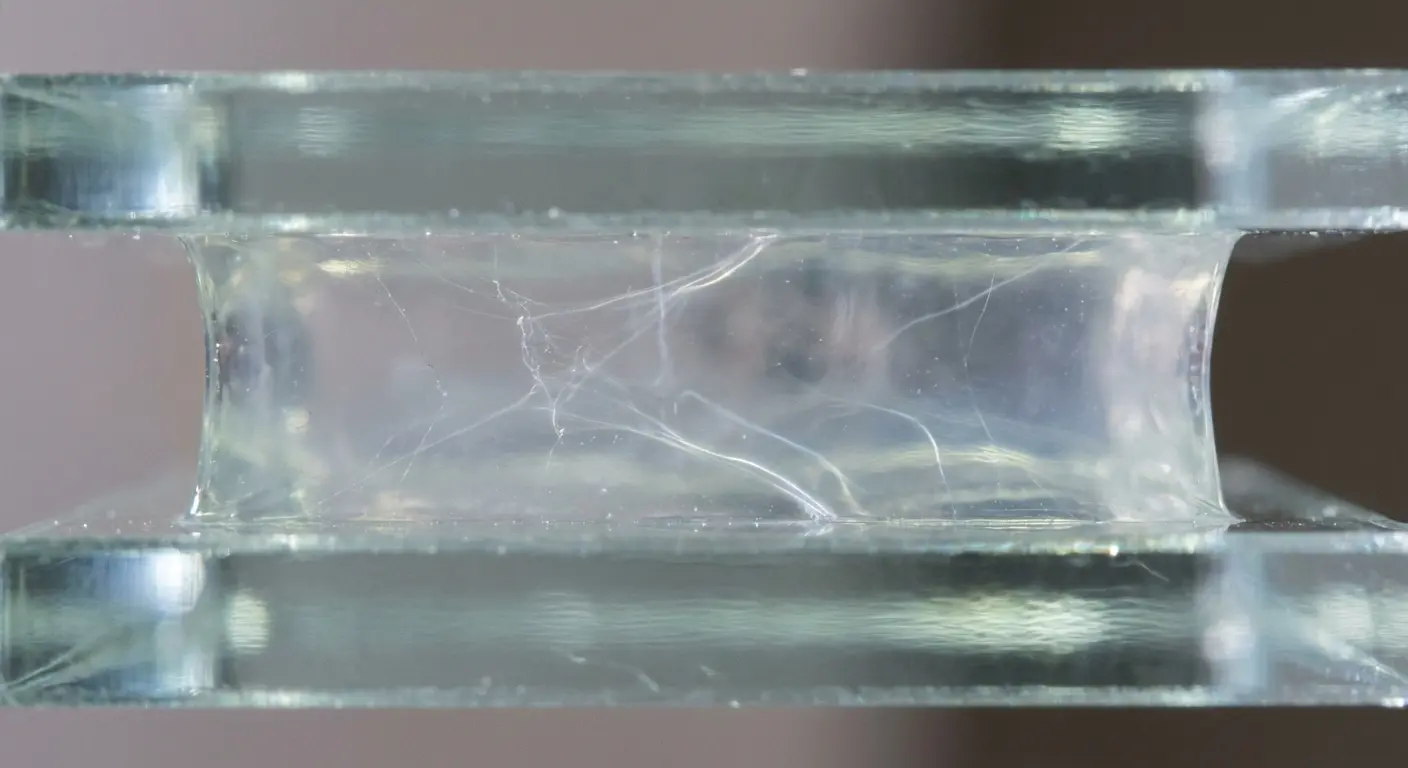
Silicone adhesives work through van der Waals forces rather than chemical bonding. This means they're attracted to the screen surface at the molecular level but don't form permanent bonds. You can peel them off cleanly, and they won't leave residue behind (assuming the formulation is decent).
How Bubble-Free Installation Works
Premium screen protectors use what's called "full adhesive" coverage, where the entire back surface has a uniform layer of silicone. When you apply the protector, air gets pushed out from the center toward the edges as the silicone makes contact with the screen.
Cheaper protectors sometimes use "dot matrix" adhesive, where only certain points have adhesive and the rest of the protector is held away from the screen by surface tension. This creates a slight air gap that can reduce clarity and touch sensitivity. You'll sometimes see this marketed as "case-friendly" because the edges aren't adhered, but it's really a cost-saving measure.
The silicone formulation matters too. It needs to be viscous enough to stay in place but fluid enough to allow air to escape. Getting this balance right is harder than it sounds, which is why installation quality varies so much between brands.
Why Thickness Matters More Than Material Alone
Screen protector thickness ranges from 0.1mm for thin plastic films to 0.5mm for thick tempered glass. This might not sound like much variation, but it has huge implications for how the protector performs and feels.
The Physics of Impact Absorption
Thicker materials can absorb more impact energy before failing, but only up to a point. Once you exceed about 0.4mm, you start hitting diminishing returns because the material becomes too rigid to flex effectively. It's more likely to crack from the stress of impact rather than absorb the energy.
The sweet spot for tempered glass sits around 0.3mm to 0.33mm. This provides enough material to distribute impact force while maintaining the flexibility needed to handle drops without immediately shattering. Thinner glass (0.2mm) feels better but sacrifices protection. Thicker glass (0.5mm) protects marginally better but feels clunky and can interfere with edge gestures.
Plastic protectors follow different rules because they're flexible. A 0.2mm TPU protector can absorb more impact than a 0.5mm glass one because it deforms rather than cracks. The material properties matter more than raw thickness.
Touch Sensitivity and Screen Responsiveness
Your phone's capacitive touchscreen works by detecting changes in electrical charge when your finger (which is conductive) approaches the screen. Adding material between your finger and the screen reduces sensitivity, but modern phones compensate for this pretty well.
You'll notice a difference with very thick protectors, especially if you're doing precise tasks or using a stylus. The phone has to work harder to detect your input through 0.5mm of glass than through 0.2mm. Some people swear they can feel a difference in touch response after installing a screen protector. They're not imagining it.
Screen protector manufacturers can improve touch sensitivity by using materials with higher dielectric constants, which allow more electrical field penetration. But this gets into specialized material engineering that most budget protectors don't bother with.
The Case Compatibility Problem
Thicker screen protectors create a raised edge that can interfere with phone cases, especially those with raised bezels designed to protect the screen. You end up with a gap between the case and the protector, or the case pushes on the protector edges and causes lifting.
"Case-friendly" is marketed as a feature. It usually means the protector is slightly undersized or uses a dot matrix adhesive that doesn't extend to the edges. You're trading full coverage for compatibility, which may or may not be worth it depending on your case.
For users who need maximum protection in demanding environments, exploring the most protective phone cases alongside quality screen protectors ensures comprehensive device safety. At Rokform, we design our screen protectors to work seamlessly with our rugged cases and magnetic mounting systems, eliminating the compatibility issues that plague many combinations.
Thickness Range |
Material Type |
Impact Protection |
Touch Sensitivity |
Case Compatibility |
Best Use Case |
|---|---|---|---|---|---|
0.1mm to 0.15mm |
PET Plastic |
Low, scratches only |
Excellent, barely noticeable |
Perfect, no interference |
Minimal protection, maximum feel |
0.2mm to 0.25mm |
TPU or thin glass |
Moderate, flexes on impact |
Very Good, slight detection lag |
Excellent, works with most cases |
Daily use, moderate risk |
0.3mm to 0.33mm |
Tempered glass |
High, optimal strength/flex ratio |
Good, compensated by most phones |
Good, may require case-friendly design |
Recommended sweet spot for most users |
0.4mm to 0.5mm |
Thick tempered glass |
High, but rigid failure risk |
Fair, noticeable input delay |
Poor, often causes case lifting |
Heavy-duty/construction environments |
The Environmental Cost of Screen Protector Materials
Nobody thinks about what happens to their old screen protector after they peel it off and toss it in the trash. But with billions of smartphones in use globally and many users replacing protectors annually (or more often), we're generating a substantial waste stream that almost nobody is addressing.
The Plastic Problem
PET and TPU screen protectors are technically recyclable, but they almost never get recycled in practice. They're too thin and lightweight to sort effectively in standard recycling facilities, and they're usually contaminated with adhesive residue. They end up in landfills where they'll persist for decades (PET) or centuries (TPU, depending on formulation).
Glass protectors aren't much better. Tempered glass can't be recycled with standard glass because the tempering process changes its melting point and chemical properties. You'd need specialized recycling that separates the glass from the adhesive layer and silicone coatings, which doesn't exist at commercial scale.
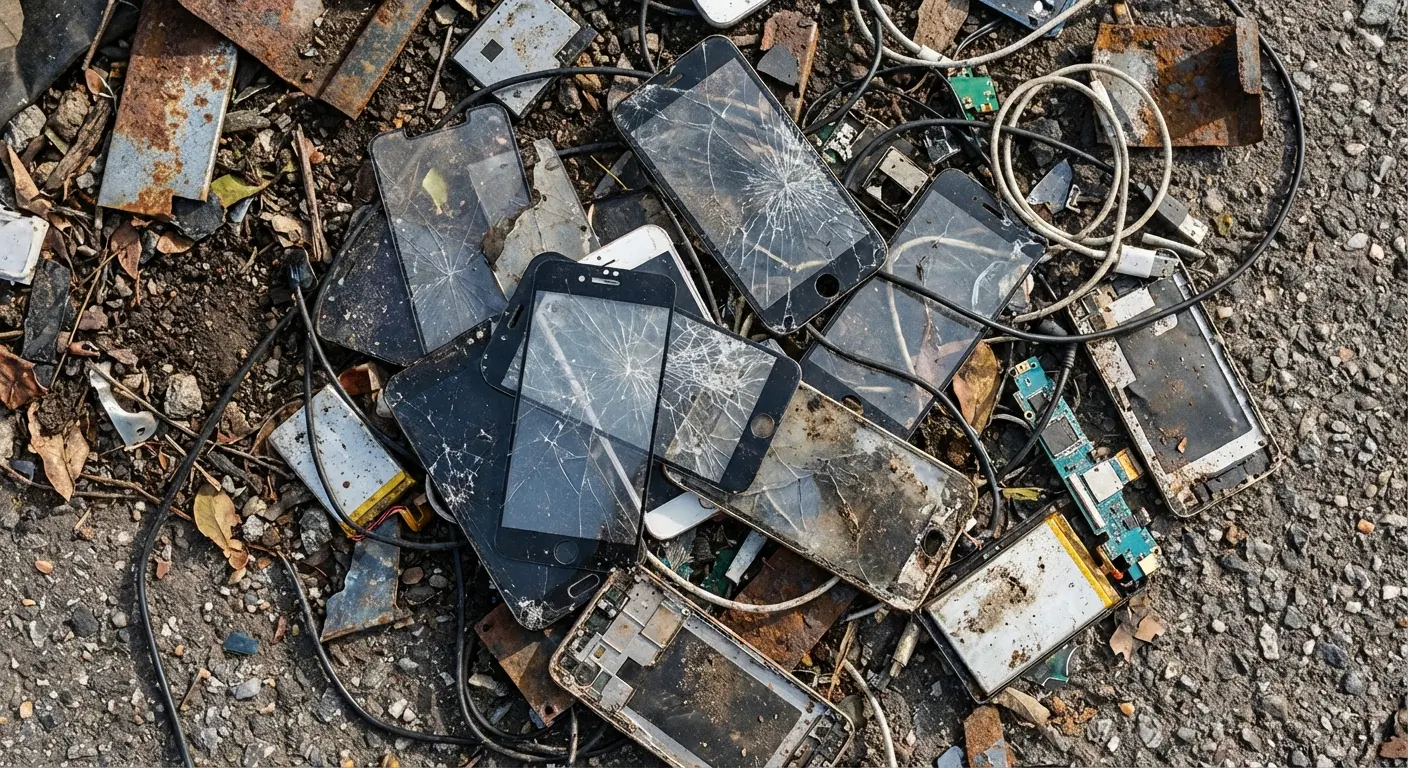
The packaging is often worse than the product itself. Many screen protectors come in rigid plastic clamshells or elaborate boxes with multiple layers of protective film. This packaging often exceeds the protector's mass and uses materials that are definitely not recyclable.
Some manufacturers are beginning to address sustainability concerns. ZDNET's 2025 review notes that the Zagg InvisibleShield Glass XTR3 is now made with 30% recycled glass, representing one of the first major attempts by a screen protector manufacturer to incorporate recycled materials into production. While this is a step forward, it still doesn't address the end-of-life disposal problem or the environmental impact of coatings and adhesives.
Manufacturing Chemical Waste
The ion exchange process for tempering glass generates chemical waste from the molten salt baths. These baths need periodic replacement, and the spent salts contain various contaminants from the glass. Proper disposal is expensive, and enforcement varies wildly depending on where manufacturing happens.
Oleophobic coatings use fluoropolymers, which are related to PFAS (per- and polyfluoroalkyl substances, the "forever chemicals" you've been hearing about). Not all fluoropolymers are problematic, but the manufacturing processes can generate PFAS byproducts that contaminate water supplies if not handled properly. Most screen protector manufacturers don't disclose their coating chemistry or manufacturing practices.
What Would Help
The industry needs standardized take-back programs where you can return old protectors for proper recycling or disposal. Some electronics retailers have started accepting screen protectors, but participation is minimal. Manufacturers could also design protectors with separable layers (adhesive, base material, coating) to make recycling more feasible.
Alternatively, we could focus on making protectors that last longer. A protector that stays functional for two years instead of six months cuts waste in half, regardless of material. This means better coating durability, stronger adhesives that don't lift at the edges, and more impact-resistant base materials.
Sustainable Screen Protector Selection Checklist:
Reduce your environmental impact by evaluating these factors before purchase:
Longevity over price: Does the protector have a warranty or guarantee suggesting it's built to last?
Coating durability: Look for products that specify coating lifespan (6+ months minimum)
Multi-pack value: Does buying a 2-pack reduce packaging waste per unit compared to single purchases?
Recycled content: Does the manufacturer disclose any recycled materials in the product?
Minimal packaging: Avoid products with excessive plastic clamshells or multiple protective layers
Take-back program: Does the brand or retailer offer a recycling program for old protectors?
Coating transparency: Does the manufacturer disclose what chemicals are used in oleophobic coatings?
Realistic expectations: Am I choosing appropriate protection for my risk level, or over-buying?
How Manufacturing Processes Change Material Performance
Two screen protectors can list identical materials on their packaging and perform completely differently. The manufacturing process matters as much as material selection, sometimes more.
Precision Cutting and Edge Quality
Glass screen protectors need precise cutting to match your phone's screen dimensions. We're talking tolerances of 0.1mm or less. If the protector is even slightly oversized, it won't adhere properly at the edges. If it's undersized, you lose coverage and expose your screen to impacts.
The cutting process also affects edge quality. Cheap protectors often have rough edges with microscopic chips that create stress concentration points. These become crack initiation sites when you drop your phone. Premium protectors use diamond cutting tools and polish the edges to create smooth, chamfered surfaces that distribute stress more evenly.
You can sometimes feel the difference by running your finger along the edge. A rough edge catches slightly, while a polished edge feels smooth and uniform.
Coating Application Consistency
Oleophobic coatings need to be applied uniformly across the entire surface. This happens through vapor deposition, where the coating material is vaporized and condenses on the protector surface in a vacuum chamber. The process requires precise temperature and pressure control.
Budget manufacturers sometimes skip the vacuum chamber and use spray application instead. This is cheaper but creates an uneven coating with thin spots and thick spots. You'll notice this as areas of your screen that feel different or where fingerprints show up more prominently.
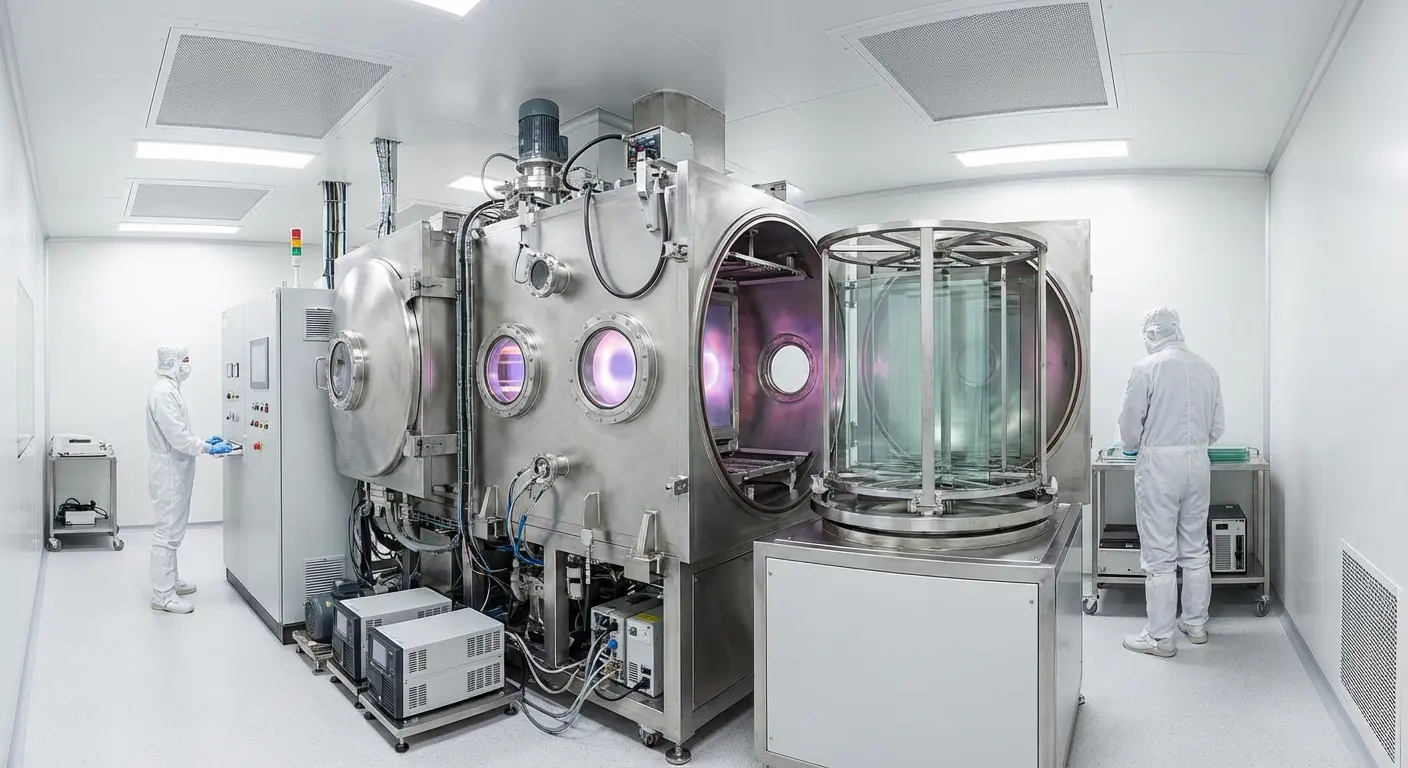
The coating also needs proper curing time after application. Rushing this step (to increase manufacturing throughput) results in coatings that degrade faster or don't bond properly to the base material.
Why Quality Control Matters
Premium manufacturers test samples from each production batch for adhesion strength, impact resistance, and optical clarity. They reject batches that don't meet specifications. Budget manufacturers often skip this step entirely or use minimal testing.
This is why you'll sometimes get a screen protector that works perfectly and then buy the "same" one a few months later and it's garbage. Manufacturing quality varies batch to batch, and without quality control, you're gambling on whether you got a good one.
The Role of Clean Room Environments
Dust is the enemy of screen protector manufacturing. A single dust particle trapped between the protector and your screen creates a bubble. A particle on the surface during coating application creates a defect that spreads over time.
Quality manufacturers use clean room environments with filtered air and strict contamination protocols. Workers wear protective gear, and materials are cleaned multiple times during production. This adds cost but dramatically improves the final product.
Cheap protectors are sometimes manufactured in standard factory environments where dust control is minimal. You'll know this if you've ever installed a protector and found mysterious particles already trapped under the adhesive layer despite careful installation.
Making Screen Protection Work for Real-World Use
Understanding material science helps you match protective properties to how you use your phone. Someone who works construction needs different protection than someone who works in an office, and the chemistry explains why.
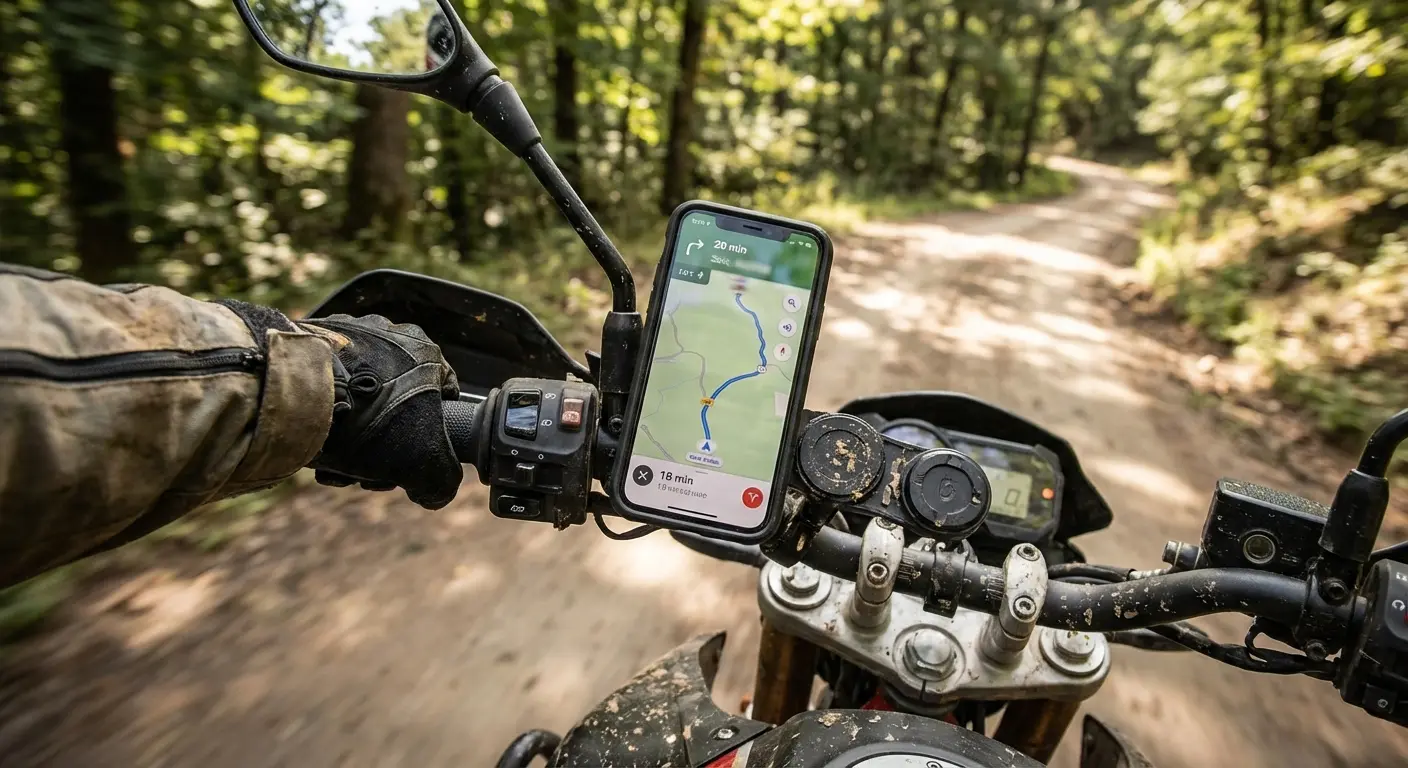
If you're using mounting systems (for your car, bike, or motorcycle), you need a protector that can handle repeated attachment and detachment forces without lifting at the edges. This means full-adhesive silicone bonding and slightly thicker materials that won't flex excessively during mounting. At Rokform, we've engineered our screen protectors specifically to work with our magnetic mounting technology. The adhesive withstands the forces involved in mounting and dismounting your phone dozens of times daily.
When selecting protection for specific use cases, checking out options like phone cases for construction workers demonstrates how material choices adapt to extreme conditions and demanding environments. The same principles that guide case material selection apply to screen protectors. Match the protection level to your actual risk exposure.
Final Thoughts
You probably weren't expecting a deep dive into ion exchange chemistry and polymer science when you wondered what your screen protector was made of. But these materials and processes directly determine whether that thin layer protects your phone or just adds bulk without benefit.
The next time you're shopping for a screen protector, you'll know that "tempered glass" means something specific (ion-exchanged soda-lime glass with surface compression), that thickness matters but only within a certain range, and that the coating determines feel more than the base material. You'll recognize when marketing claims don't align with material reality.
Looking at you, liquid screen protectors claiming shatter protection.
Material science isn't academic theory. It's the difference between a protector that survives a drop and one that shatters uselessly. It's why some protectors feel smooth after months of use while others get sticky after weeks. It's why your fingerprints show up more on some screens than others.
The material composition directly impacts real-world performance in ways most consumers never consider. OtterBox points out that tempered glass screen protectors offer superior scratch and impact resistance compared to plastic alternatives, and they're easier to install with fewer air bubbles due to their increased rigidity. These factors stem directly from the ion exchange manufacturing process and material density differences we've explored throughout this article.
We're still generating too much waste and using too many questionable chemicals in manufacturing. The industry could do better. But understanding what screen protectors are made of gives you the knowledge to demand better and choose options that balance protection, usability, and (hopefully) environmental responsibility.
Bottom line: Spend $20 to $30 on a tempered glass protector with a good oleophobic coating. Skip the $5 ones (bad adhesive) and the $50 ones (you're paying for marketing). Replace it when the coating wears off, usually 6 to 8 months.
Liquid protectors? Save your money. PET plastic? Fine if you're on a budget. TPU? Only if you drop your phone constantly.
And yeah, we're all creating a ton of waste with these things. Until someone figures out recycling, at least buy ones that last longer.
Your screen costs $300 to replace. A good protector costs $25. Do the math.
