


Table of Contents
Why I Stopped Buying Whatever Was On Sale
-
Racing Oils for When You're Pinning It
Maxima Castor 927
Motul 800 2T Factory Line
Bel-Ray H1R Racing Synthetic Ester
Silkolene Pro 2 SX
Motorex Cross Power 2T
-
Solid Oils That Won't Break You
Yamalube 2S Semi-Synthetic
Castrol Power 1 Racing 2T
Lucas Oil Semi-Synthetic 2-Cycle
Klotz Super TechniPlate
Maxima Super M
-
Clean-Burning Stuff for Trail Riders Who Hate Maintenance
Amsoil Dominator Synthetic 2-Stroke Oil
Red Line Two-Stroke Racing Oil
Bel-Ray Si-7 Synthetic 2T Engine Oil
Spectro Golden 2 Semi-Synthetic
VP Racing Small Engine Fuel 2-Cycle Oil
-
Old-School Castor Oils for Vintage Builds
Bel-Ray Benol 2T Mineral Racing Oil
Maxima Super M Injector
Castrol A747 2T Racing Oil
PJ1 Goldfire Pro 2-Cycle Oil
Why I'm Talking About Phone Mounts in an Oil Article
Now Go Ride
Quick Version
Your racing oil isn't your trail oil. Buy for how you ride, not what's on sale.
Synthetics cost more but burn cleaner. Worth it if you hate scraping carbon off power valves every weekend.
Castor oil smells like movie popcorn mixed with race gas and works great in old bikes. Leaves a mess in new ones.
Whatever mix ratio the bottle says? That's a starting point. Your jetting, altitude, and how hard you pin it all matter more than what some label tells you.
I calculate cost per tank, not per bottle. Changes everything when you're mixing at 32:1 versus 50:1.
Most oils look great on paper but fall apart when you're dealing with temperature swings, questionable pump gas, and mixing ratios that aren't exactly precise.
Castor oils smell incredible but you'll be cleaning more. A lot more.
Ester synthetics cost three times what mineral oils cost, but I've stretched rebuild intervals from 35 hours to 48 hours. The math works out.
Why I Stopped Buying Whatever Was On Sale
I've seized three pistons because I was cheap about oil. The last one happened at the top of a hill climb at Hollister, and I had to push my bike down in front of about forty people. After that, I stopped buying whatever was on sale at the auto parts store.
Here's what I learned: the oil that keeps your buddy's bike alive might kill yours. Not because one's better. Because you don't ride the same way he does.
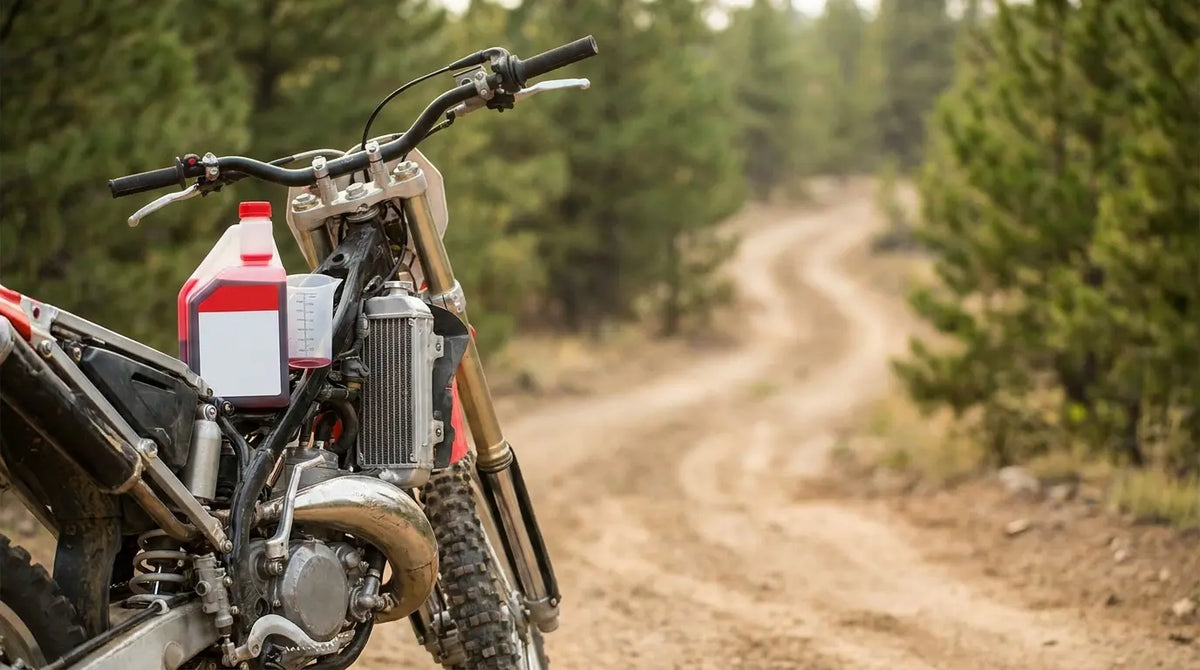
The oil running through your premix isn't just lubrication. It's managing how hot things get in there, keeping your rings from welding themselves to the cylinder, protecting bearings when you're on the gas hard, and either keeping your exhaust clean or turning it into a tar pit.
Pick the wrong formula for how you ride, and you'll either foul plugs every other ride or cook your top end way before rebuild time.
Most oil guides are useless because they ignore how you actually ride. High-RPM motocross demands different chemistry than single-track trail riding. Your elevation, fuel quality, jetting, and even how long premix sits in your garage all affect which oil actually protects your engine.
I've picked 19 oils that actually work across different riding styles. I'm not ranking them against each other because that's stupid. A $40 racing oil isn't "better" than a $15 trail oil if you're putting around fire roads at 30% throttle.
Here's the thing about mix ratios that nobody tells you: the 50:1 or 32:1 recommendation on the bottle is a starting point. If you're riding at 8,000 feet in July, pinning it through sand washes, you need more oil than someone putting around at sea level in October. Your jetting tells you what your engine needs, not the label.
When choosing the best 2 stroke oil for dirt bike applications, you're really picking which chemistry matches how you operate your machine. Temperature ranges, how much you vary throttle position, and how often you wrench all factor into which formula protects your specific setup.
Oil Type |
Best For |
Mix Ratio I Run |
When It Gets Hot |
How Often You'll Wrench |
|---|---|---|---|---|
Synthetic Ester |
Racing, sustained WOT |
40:1 to 60:1 |
Handles stupid heat |
Less (burns clean) |
Semi-Synthetic |
Trail riding, practice |
32:1 to 40:1 |
Good enough |
Average |
Castor-Based |
Vintage bikes, air-cooled |
20:1 to 32:1 |
Lower temps |
More (leaves residue) |
Clean-Burning Synthetic |
Enduro, varied throttle |
40:1 to 50:1 |
Whatever you throw at it |
Less (minimal carbon) |
Racing Oils for When You're Pinning It
These are for riders who hold their bikes wide open for extended periods. Motocross, desert racing, or aggressive single-track where you're constantly in the powerband. The ester chemistry in these oils doesn't turn into water when temperatures hit 400 degrees.
Serious racers who push their equipment to the limit also need rugged phone cases that can withstand the same punishment their bikes take. Your equipment should match your intensity.
1. Maxima Castor 927
People say castor oil is old-school. They're right, but that doesn't make it wrong.
Maxima 927 is what I run when I'm racing. The smell alone is worth the price. Like someone's burning movie popcorn mixed with race gas. Your neighbors will hate you, but you'll love it.
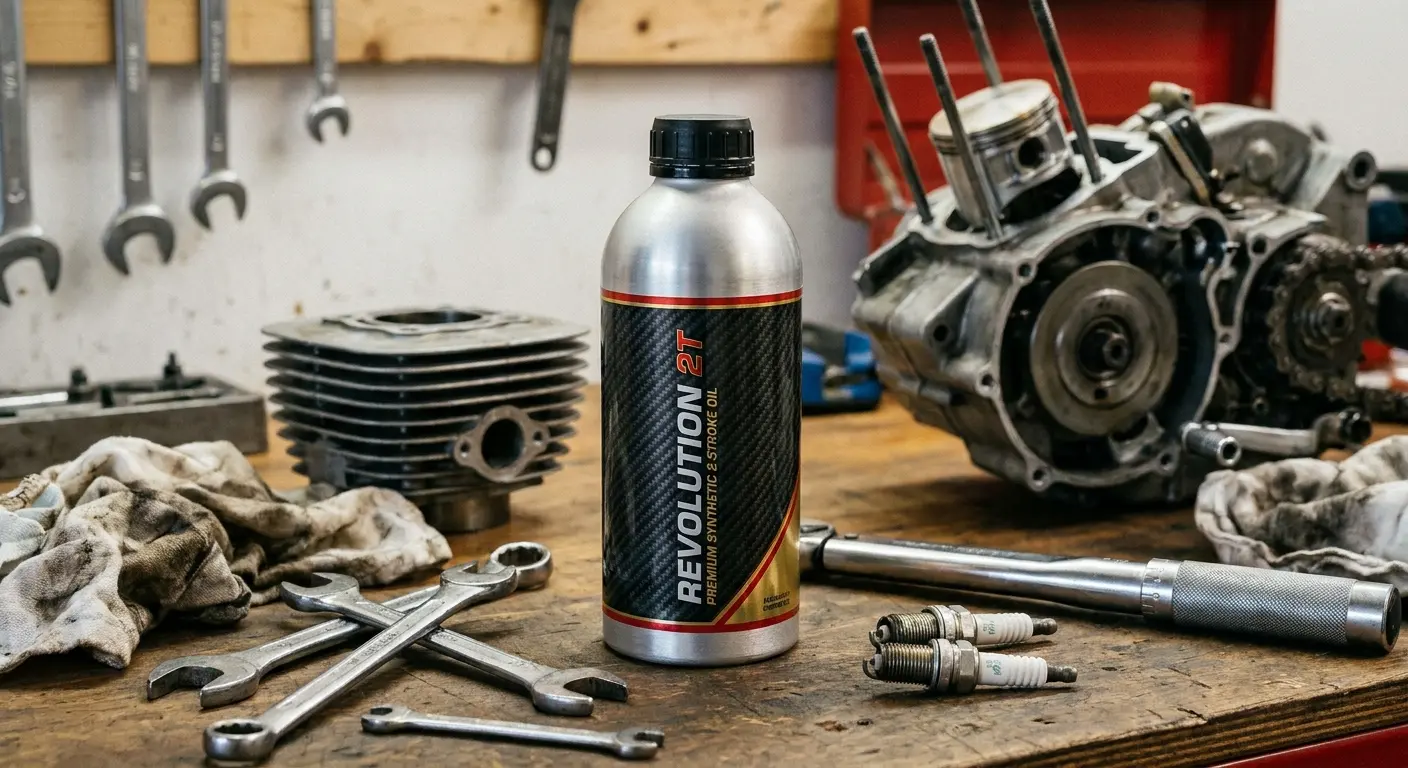
Your bike will smoke more than with synthetics, and you'll be cleaning your power valve more often. I pull mine every three rides instead of every five.
But here's the thing: I've never cooked a top end running 927. Not once. I've run it lean, hot, in 95-degree desert races, and it's never let me down. The castor base creates this film on everything that synthetic oil just doesn't match.
Mix it at 32:1. I know the bottle says 40:1. Mix it at 32:1.
It mixes cleanly with pump gas but can separate if you let premix sit for weeks in your garage during temperature swings.
2. Motul 800 2T Factory Line
I switched to Motul 800 after grenading a top end at hour 38. Expensive as hell (like $40 a bottle), but I made it to 52 hours on the next rebuild. The math worked out.
This ester-based formula burns cleaner than any castor blend while maintaining film strength under load. When choosing the best 2-stroke oil for dirt bike racing applications, this one keeps showing up in people's race bikes for a reason.
The 800 2T handles lean jetting better than most oils in this category. If you're tuned for maximum power and running on the edge of detonation, the ester chemistry provides a safety margin that mineral oils can't offer.
You're mixing at 50:1 or even 60:1 in some applications, which stretches your cost per tank. The clean-burning properties mean fewer plug changes and way less frequent exhaust cleaning.
3. Bel-Ray H1R Racing Synthetic Ester
H1R is for riders who need maximum protection without the castor residue. The 100% synthetic ester formula stays stable across a wider temperature range than blended oils, which matters if you're racing in varying conditions throughout a season.
Power delivery feels crisper with H1R compared to heavier castor blends. You're not fighting as much drag from oil residue in the crankcase and on clutch plates.
Some riders report slightly higher peak RPMs. I can't tell you if this oil makes more horsepower. I don't have a dyno, and anyone who says they can feel 0.3 HP on a dirt bike is lying.
Mix ratios from 40:1 to 50:1 work well depending on your jetting and riding intensity. It mixes instantly even in cold fuel, which is a small but appreciated detail when you're prepping bikes in freezing temperatures.
4. Silkolene Pro 2 SX
This UK-made formula doesn't get the attention it deserves in the U.S. market. The ester chemistry includes friction modifiers that reduce internal drag without sacrificing film strength, which translates to slightly better throttle response.
Pro 2 SX burns exceptionally clean. Minimal spooge, cleaner exhaust packing, and power valves that stay operational longer between services. If you're running a bike with complex power valve systems (like KTM's or Husqvarna's setups), this oil keeps those mechanisms functioning properly.
It's pricey and sometimes hard to source, but the performance justifies the hunt. Mix at 50:1 for most applications, 40:1 if you're racing in high-temperature conditions.
5. Motorex Cross Power 2T
Motorex builds this oil for motocross applications where you're cycling between full throttle and engine braking repeatedly. The synthetic ester base handles those temperature swings without breaking down or creating excessive smoke.
Cross Power 2T provides excellent cold-start protection, which matters more than people realize. That first kick after your bike has been sitting creates significant wear if your oil doesn't flow properly at ambient temperature.
The formula includes detergent additives that actively clean combustion chamber deposits. You'll notice cleaner piston crowns and ring grooves at rebuild time. Mix at 50:1 for racing, 60:1 for practice days when you're not pushing as hard.
Solid Oils That Won't Break You
You don't need a $40 oil if you're trail riding or running a play bike. These formulas provide solid protection for riders who maintain proper jetting, don't abuse their engines, and rebuild on schedule. Riders who split time between dirt and pavement should look at my dual sport bikes roundup.
Just like choosing the right oil, selecting affordable motorcycle accessories that don't compromise on quality makes financial sense. Your budget shouldn't force you into inferior protection.
Oil Name |
What's In It |
What It Costs |
Cost Per Tank (32:1) |
What I Use It For |
|---|---|---|---|---|
Yamalube 2S |
Semi-Synthetic |
$12-15/qt |
Around $1.50 |
Trail riding, Yamaha engines |
Castrol Power 1 |
Semi-Synthetic |
$14-18/qt |
Around $1.75 |
Amateur racing, practice |
Lucas Semi-Synthetic |
Semi-Synthetic |
$10-13/qt |
Around $1.25 |
Play bikes, varied conditions |
Klotz Super TechniPlate |
Synthetic blend |
$16-20/qt |
Around $2.00 |
Trail riding, cold starts |
Maxima Super M |
Mineral |
$11-14/qt |
Around $1.40 |
Recreational riding, stock bikes |
6. Yamalube 2S Semi-Synthetic
Yamaha's house brand oil gets overlooked because it's not marketed aggressively, but it's formulated for their engine tolerances and porting designs. If you're running a Yamaha two-stroke, this oil works exceptionally well at half the cost of premium synthetics.
The semi-synthetic formula balances protection with clean burning. You'll get some exhaust residue, but nothing excessive if you're jetted properly. It handles moderate temperature ranges well and mixes cleanly with pump gas.
Mix at 40:1 for trail riding, 32:1 if you're pushing harder. The cost savings let you run richer ratios without breaking your budget, which provides extra protection margin.
7. Castrol Power 1 Racing 2T
Castrol's racing formula uses a semi-synthetic base that performs well above its price point. I've seen riders run this oil in amateur racing applications with good results, though it doesn't handle sustained high temperatures as well as full synthetics.
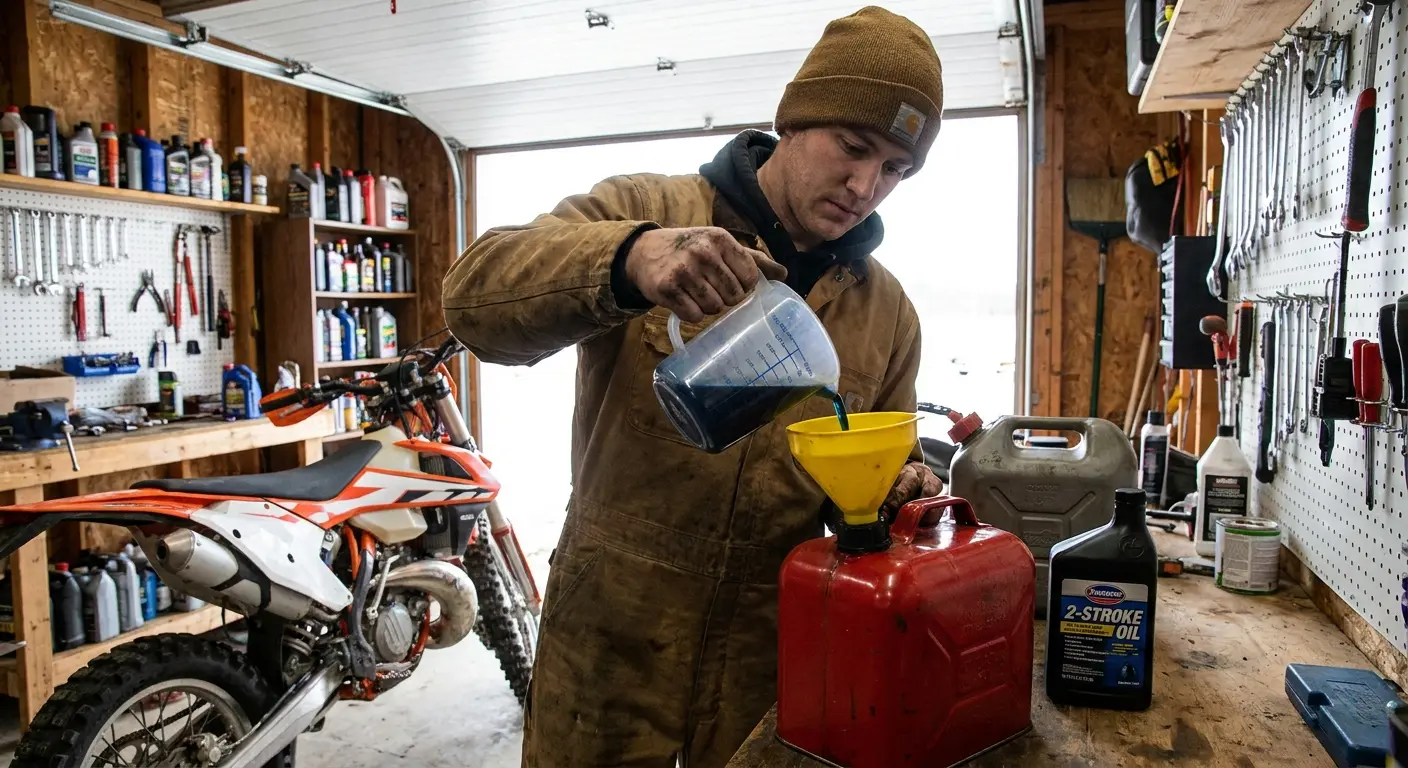
Power 1 provides strong film strength during acceleration and under load. Where it falls short is extended wide-open throttle operation in high ambient temperatures. For trail riding, enduro, or casual motocross practice, it delivers reliable protection.
It leaves moderate deposits compared to premium synthetics but nothing problematic if you're servicing your bike regularly. Mix at 40:1 for general use, 32:1 for harder riding.
8. Lucas Oil Semi-Synthetic 2-Cycle
Lucas builds this formula for varied applications (chainsaws, outboards, dirt bikes), which means it's designed to perform across different operating conditions. The semi-synthetic base includes detergent additives that help control carbon buildup.
I've found it works well in air-cooled applications or older bikes where you're not pushing modern performance limits.
The viscosity stays stable in moderate temperature ranges, and it mixes easily even in cold conditions.
The price point makes it attractive for riders who go through significant amounts of premix. Mix at 40:1 for most applications, adjust based on your jetting and riding style.
9. Klotz Super TechniPlate
Klotz oils have a cult following, and Super TechniPlate delivers solid performance at a mid-range price. The formula includes tackiness additives that help oil cling to cylinder walls and bearings, which provides extra protection during cold starts and low-RPM operation.
You'll get more smoke and exhaust residue compared to clean-burning synthetics. That's the trade-off for the film strength properties. If you're riding trails where you're constantly on and off the throttle, the extra protection during deceleration and engine braking is worth the additional smoke.
Mix at 32:1 to 40:1 depending on conditions. The oil has a distinct smell. Some love it, some hate it. The protection is legitimate either way.
10. Maxima Super M
Super M is Maxima's budget offering, but it's still formulated with quality base stocks and additives. The mineral oil base doesn't handle extreme temperatures like their 927 formula, but it provides reliable protection for recreational riding.
This best 2-stroke oil option works well in bikes that aren't jetted aggressively or modified for maximum performance. If you're running stock jetting and riding at moderate pace, Super M delivers consistent protection at a price that makes sense.
It leaves moderate deposits and requires proper jetting to avoid plug fouling. Mix at 32:1 for trail riding, 40:1 for less demanding conditions.
Clean-Burning Stuff for Trail Riders Who Hate Maintenance
Trail and enduro riding creates unique demands. You're idling through technical sections, lugging the engine at low RPM, then hitting occasional wide-open sections. You need oil that burns clean at partial throttle without sacrificing protection when you're on it.
Enduro riders who navigate challenging terrain rely on secure bike phone mounts to keep their navigation accessible when they need it most. Your phone shouldn't be another thing to worry about on technical trails.
11. Amsoil Dominator Synthetic 2-Stroke Oil
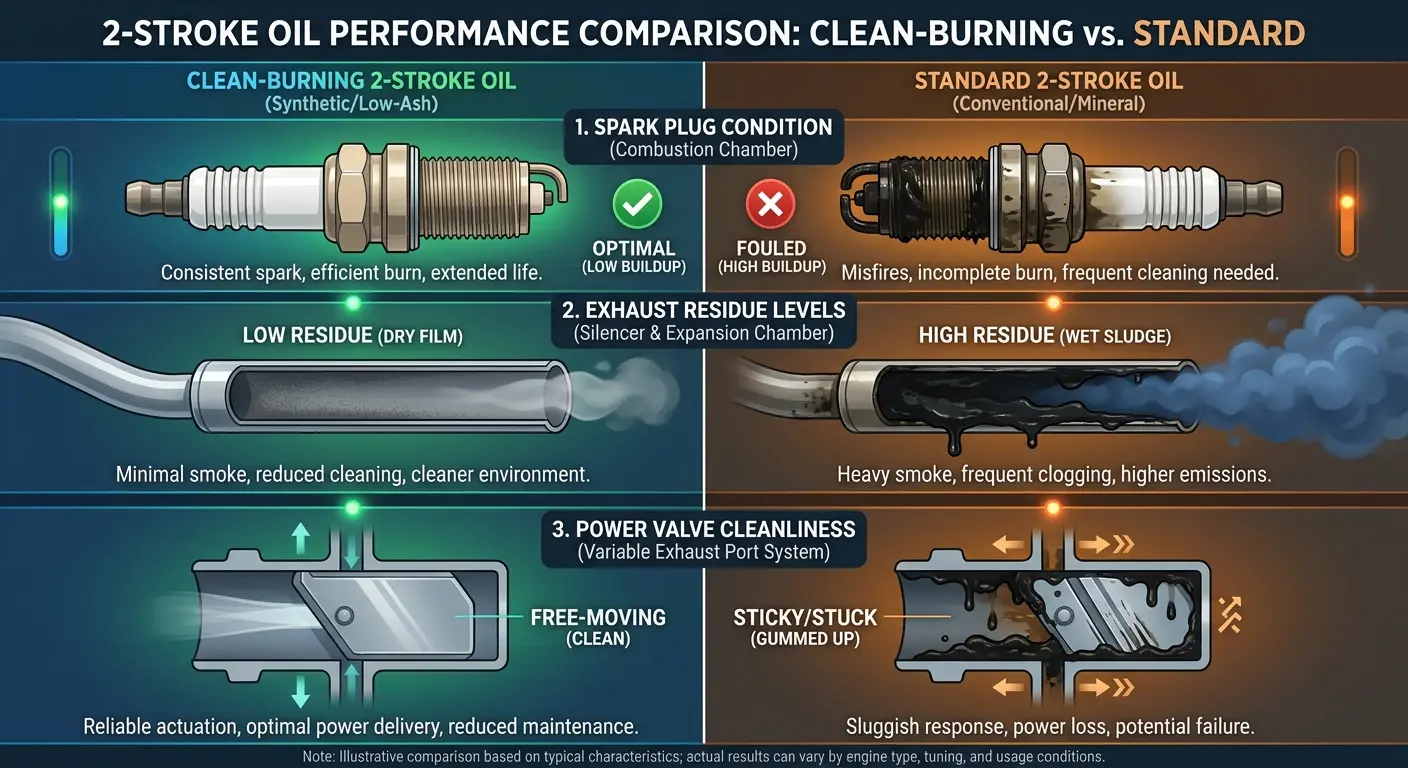
Dominator is formulated to minimize smoke and residue across varying throttle positions. The synthetic base burns cleanly at low RPM and partial throttle, which means fewer fouled plugs during technical trail sections.
I've found it works well in bikes with complex power valve systems. The clean-burning properties keep valves operating smoothly without constant cleaning. You'll notice cleaner exhaust packing and less spooge dripping from your silencer.
The film strength holds up well during occasional hard riding, though it's not designed for sustained racing pace. Mix at 50:1 for trail riding, 40:1 if you're riding aggressively or in high temperatures.
12. Red Line Two-Stroke Racing Oil
Red Line's formula uses polyol ester base stocks that provide excellent detergency and clean burning. This two-stroke racing oil actively cleans combustion chamber deposits while protecting under load, which is ideal for riders who vary their pace significantly.
The ester chemistry maintains viscosity across temperature swings better than mineral-based oils. If you're riding trails that climb several thousand feet in elevation, Red Line handles those varying conditions without breaking down or creating excessive smoke.
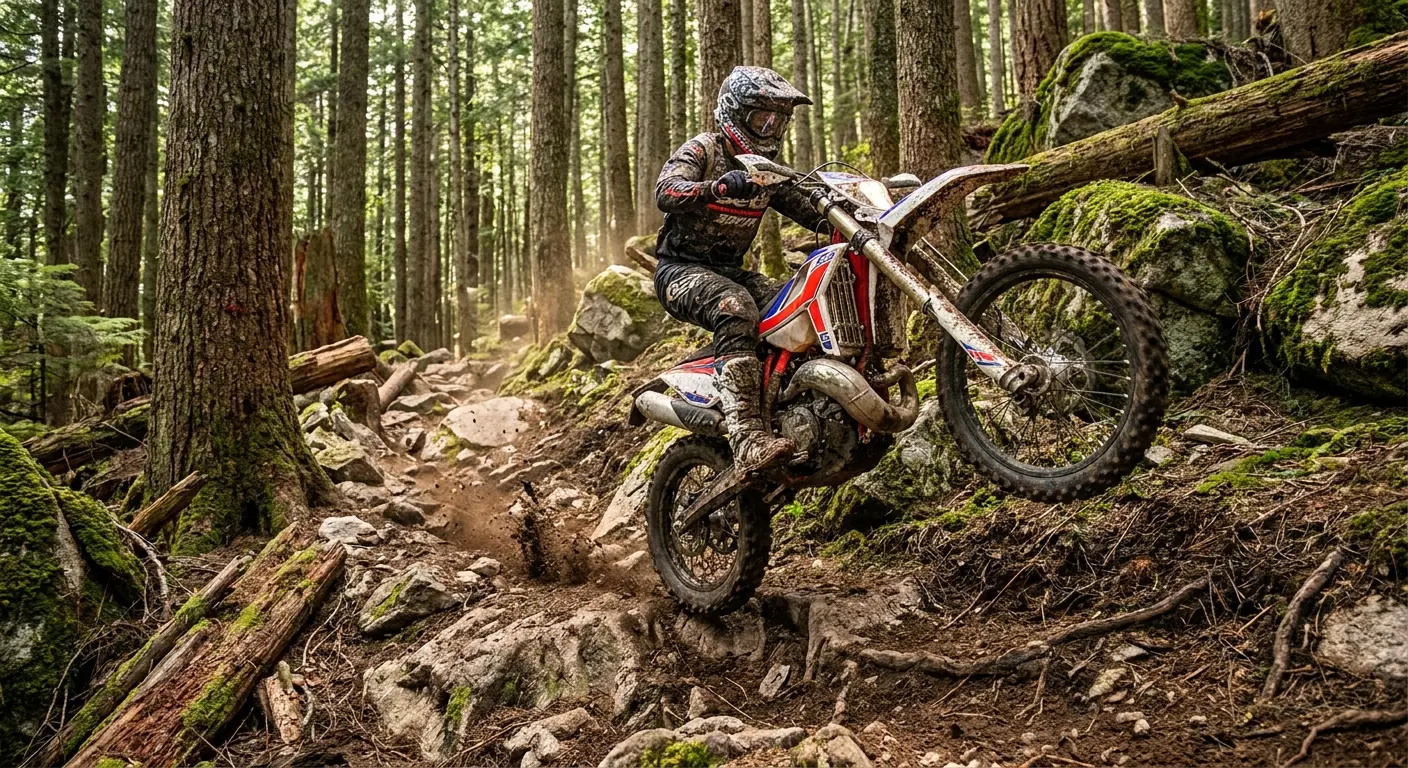
It's expensive but performs exceptionally well for enduro applications. Mix at 50:1 for general trail riding, 40:1 for harder riding or racing.
13. Bel-Ray Si-7 Synthetic 2T Engine Oil
Si-7 targets riders who need clean burning without premium pricing. The synthetic formula includes detergent additives that control carbon buildup while providing solid protection during varied riding conditions.
This oil handles partial throttle operation better than most in its price range. You'll get minimal smoke during technical sections and clean power delivery when you crack the throttle open. The synthetic base maintains film strength during temperature variations better than semi-synthetics.
Si-7 works well in both liquid-cooled and air-cooled applications. Mix at 50:1 for trail riding, 40:1 for more demanding conditions or higher ambient temperatures.
14. Spectro Golden 2 Semi-Synthetic
Spectro's Golden 2 formula balances clean burning with strong film protection. The semi-synthetic base includes friction modifiers that reduce internal drag, which translates to crisper throttle response during technical riding.
I've found it works well for riders who spend significant time at low RPM. The oil flows well at lower temperatures and maintains lubrication during engine braking and deceleration, which matters when you're descending technical terrain.
It leaves minimal deposits compared to full mineral oils but doesn't burn quite as clean as premium synthetics. The price point makes it attractive for riders who go through significant amounts of premix during long trail rides. Mix at 40:1 for general use.
15. VP Racing Small Engine Fuel 2-Cycle Oil
VP's formula is designed to work with their pre-mixed fuels, but it performs well as a standalone oil for trail applications. The synthetic blend burns exceptionally clean and includes stabilizers that keep premix fresh longer.
If you mix fuel in larger quantities and it sits between rides, this oil maintains its protective properties better than formulas without stabilizers. The clean-burning characteristics mean fewer plug changes and less exhaust maintenance.
It's pricier than some options in this category, but the extended premix shelf life and clean combustion justify the cost for riders who don't burn through fuel quickly. Mix at 50:1 for most applications.
Old-School Castor Oils for Vintage Builds
Modern synthetics are formulated for tight tolerances and liquid cooling. Vintage and air-cooled engines need different chemistry. Castor-based oils provide film strength characteristics that work better in older builds with looser tolerances and different metallurgy.
Vintage enthusiasts who restore and maintain classic machines also appreciate durable phone accessories that match the reliability of their builds. Quality matters across every component.
16. Bel-Ray Benol 2T Mineral Racing Oil
Benol is a castor-based mineral oil that's been protecting vintage two-strokes for decades. The castor content provides exceptional film strength at lower operating temperatures, which matters for air-cooled engines that don't reach the sustained temps of modern liquid-cooled bikes.
This oil excels in bikes with looser tolerances and more blow-by. The thick film characteristics seal better and protect against the increased wear that comes with vintage engine designs. You'll smell the distinctive castor scent, and you'll need to clean more frequently.
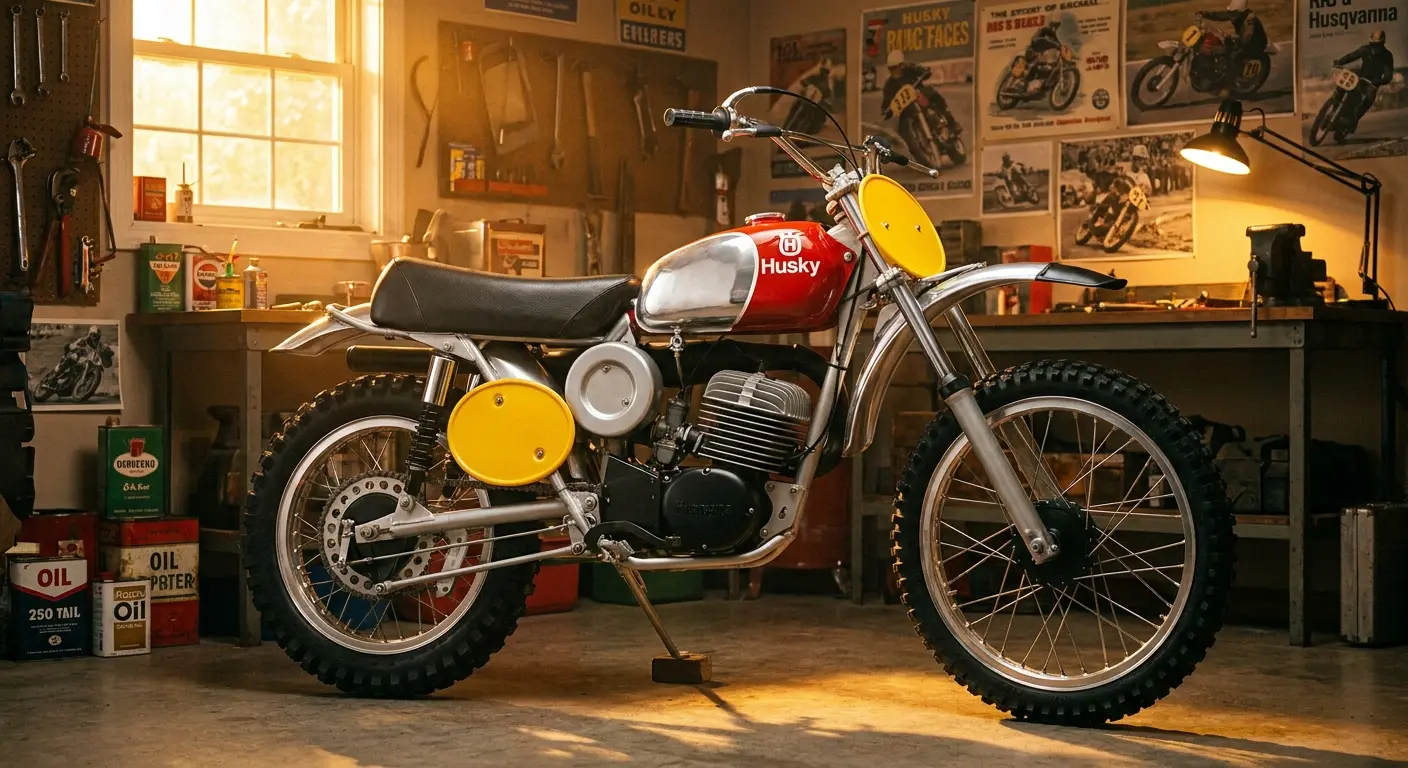
Benol works particularly well in pre-1980s bikes and air-cooled applications. Mix at 20:1 to 32:1 depending on your engine's condition and tolerances.
17. Maxima Super M Injector
Super M Injector is formulated for oil injection systems, but it works exceptionally well in vintage premix applications. The mineral base with castor additives provides strong protection in engines that weren't designed for modern synthetic chemistry.
I've found it works well in older Yamaha and Suzuki air-cooled bikes. The viscosity characteristics match what those engines were designed around, and the castor content provides extra protection margin in engines with worn rings or cylinders.
It leaves significant residue compared to modern oils, but that's expected with castor-based formulas. Mix at 24:1 to 32:1 depending on engine condition.
18. Castrol A747 2T Racing Oil
A747 is a castor-based racing oil that's become increasingly hard to find but remains popular among vintage racing enthusiasts. The high castor content provides film strength that modern synthetics can't replicate, which matters in engines running high compression with vintage metallurgy.
This oil is designed for engines that operate at sustained high RPM but don't reach the extreme temperatures of modern liquid-cooled race bikes.
If you're racing a vintage motocrosser or running a classic air-cooled build, A747 provides period-correct protection with modern refining quality.
Expect significant residue and frequent cleaning requirements. Mix at 20:1 to 32:1 depending on application and engine condition.
19. PJ1 Goldfire Pro 2-Cycle Oil
Goldfire Pro blends castor with synthetic additives to provide vintage-appropriate protection with slightly cleaner burning than pure castor formulas. The formula works well in air-cooled engines and vintage builds while reducing some of the maintenance burden of traditional castor oils.
I've seen good results using this oil in 1970s and 1980s air-cooled bikes. It provides the film strength characteristics those engines need without quite as much residue as pure castor formulas. The gold color makes it easy to verify proper mixing.
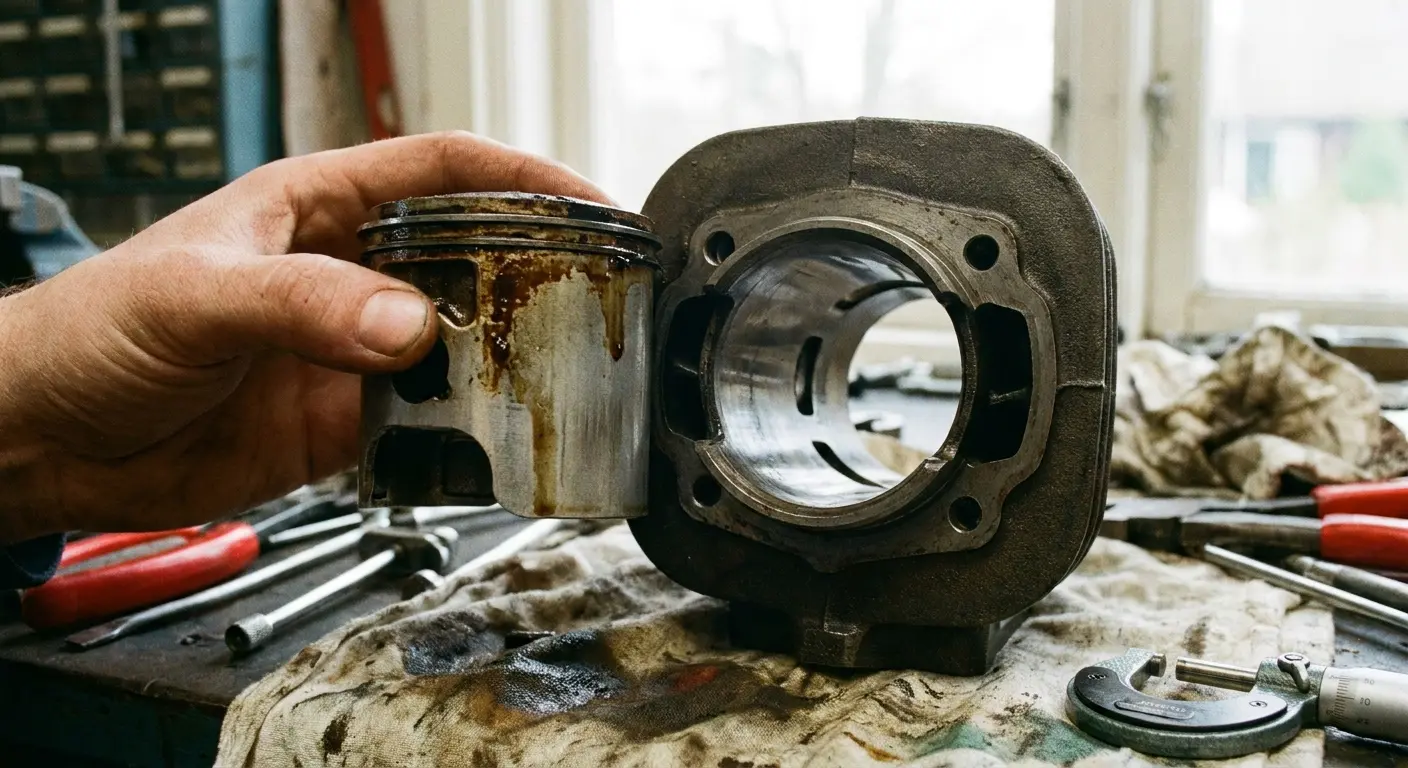
It's a compromise formula that bridges vintage requirements with modern convenience. Mix at 24:1 to 32:1 for most vintage applications, adjusting based on engine condition and riding intensity.
Why I'm Talking About Phone Mounts in an Oil Article
Quick aside: Rokform sponsors this blog, which is why I'm mentioning their phone mounts. But I actually do use one, because I got tired of my phone ejecting itself on whoops sections. The magnetic mount is strong enough that I've forgotten to take my phone off before hosing down my bike. Twice.
You've spent time dialing in the perfect oil for your riding style, jetting your carb precisely, and maintaining your bike to maximize performance. Then you stuff your phone in your jersey pocket or tank bag and hope it survives the ride.
I've seen too many riders crack screens, lose phones on trails, or miss capturing their best rides because their phone wasn't secure. Rokform's motorcycle phone mounts use RokLock twist-lock technology that keeps your device locked in place through whoops, jumps, and rough terrain. The magnetic system is strong enough to handle vibration and impacts without letting your phone bounce loose.

If you're running a phone for trail maps, tracking ride data, or filming your sessions, you need mounting that matches the durability standards you apply to your bike setup. Rokform's rugged phone cases are built to handle the same abuse your dirt bike takes, with military-grade drop protection and mounting systems that don't fail when you're miles from the trailhead.
Now Go Ride
You're going to buy whatever oil your buddy runs or whatever's on sale at Rocky Mountain. I get it. I did that for years.
But if you're serious about keeping your bike alive, especially if you're racing or you've got a $3,000 rebuild sitting in your garage, spend the extra $15 per bottle. Match the oil to how you actually ride, not to what some chart says.
The premium synthetic that protects your race bike at redline might foul plugs on trail rides. The budget mineral oil that works fine for play riding will break down during sustained racing.
Match your oil chemistry to your actual riding conditions, your bike's cooling system, your jetting, and your maintenance schedule. A $15 oil that you mix at 32:1 and change frequently can provide better protection than a $40 oil mixed lean and run too long between services.
Pay attention to how your bike responds. Excessive smoke, plug fouling, or spooge indicate your oil isn't burning cleanly for your application. Hard starting, loss of power, or unusual engine noise suggest inadequate protection. Your bike tells you what it needs if you're paying attention.
The best 2 stroke oil for dirt bike performance isn't about finding one universal solution. It's about understanding which chemical properties align with how you ride, where you ride, and what you demand from your machine.
The oil you choose matters, but it's one component in a system that includes proper jetting, quality fuel, correct mix ratios, and consistent maintenance. Get all those elements right, and your two-stroke will deliver the performance and reliability you're chasing.
And for the love of god, jet your bike properly. The best oil in the world can't save you from running lean at elevation.

