


Table of Contents
Built for Speed and Distance
1. Road Racing Bikes
2. Endurance Road Bikes
3. Triathlon/Time Trial Bikes
4. Gravel Bikes
5. Cyclocross Bikes
Designed for Dirt and Technical Terrain
6. Cross-Country Mountain Bikes
7. Trail Mountain Bikes
8. Enduro Mountain Bikes
9. Downhill Mountain Bikes
10. Fat Bikes
Made for Getting Around
11. Commuter Bikes
12. Hybrid Bikes
13. Folding Bikes
14. Electric Bikes (E-Bikes)
15. Cargo Bikes
Specialized for Specific Styles
16. BMX Bikes
17. Touring Bikes
18. Track Bikes
19. Recumbent Bikes
TL;DR - What Actually Matters
Skip to the bike type you think you need, but here's what I wish someone had told me before I bought my first three bikes (all wrong choices, expensive lessons):
Geometry affects how a bike feels more than price, weight, or brand name. A $1,000 bike with geometry that matches your riding beats a $5,000 bike with the wrong setup.
Most people buy too much bike. Too aggressive, too specialized, too expensive for the riding they actually do.
Tire width matters more than you think. Wider is usually more comfortable and often faster on real-world surfaces.
E-bikes aren't cheating, they're practical. They get people riding who otherwise wouldn't.
Used bikes are 50-70% cheaper and often barely used because people quit cycling after two rides.
Professional bike fit costs $200 and matters more than upgrading to carbon wheels.
Suspension design (or lack of it) defines what terrain the bike can handle, period.
Weight matters differently depending on what you're doing. Critical for climbing, irrelevant for commuting.
Handlebar shape influences everything from aerodynamics to comfort to how much control you have.
The best bike is the one you'll actually ride, which usually means choosing comfort over looking fast.
If you just want me to tell you what to buy without reading 4,000 words:
Casual riding/commuting: Hybrid or commuter bike, $400-800 used
Fitness/weekend rides: Endurance road or gravel bike, $1,000-2,000
Trail riding: Trail mountain bike, $1,500-3,000
Long commute or hills: E-bike, $2,000-4,000
Everything else: You probably already know what you need
Built for Speed and Distance
Road bikes aren't just road bikes anymore, and that's both great and deeply annoying.
Twenty years ago, you walked into a shop and bought "a road bike." Now you need to choose between race bikes, endurance bikes, aero bikes, gravel bikes, and about six other subcategories that didn't exist in 2010. The industry loves creating new categories (more categories means more bikes to sell), but some of these distinctions actually matter.
A bike built for criterium racing will absolutely wreck you on a century ride. A bike designed for gravel won't keep up on a fast road ride. An aero bike optimized for time trials handles like a shopping cart in a group ride.
With over 51 million Americans cycling each year, you're part of a massive group of people trying to figure this out. According to cycling industry data, the global bicycle market is worth $69 billion and projected to hit $138 billion by 2032. That's a lot of money being spent to convince you that you need the latest thing. You probably don't, but the marketing is very good.
Here's what actually separates these categories and which one matches how you ride, not how you imagine riding on Instagram.
1. Road Racing Bikes (Uncomfortable But Fast)
You know those riders bent over their handlebars like they're trying to make themselves as small as possible, grimacing on every climb? Race bikes.
These things are purpose-built misery machines, and I mean that as a compliment.
I've raced crits for five years. The first time I rode a proper race bike after years on a hybrid, I thought something was broken. It felt twitchy, harsh, and uncomfortable. Then I took my first corner at 25 mph and understood. This thing wants to go fast, and it gets pissed if you don't let it.
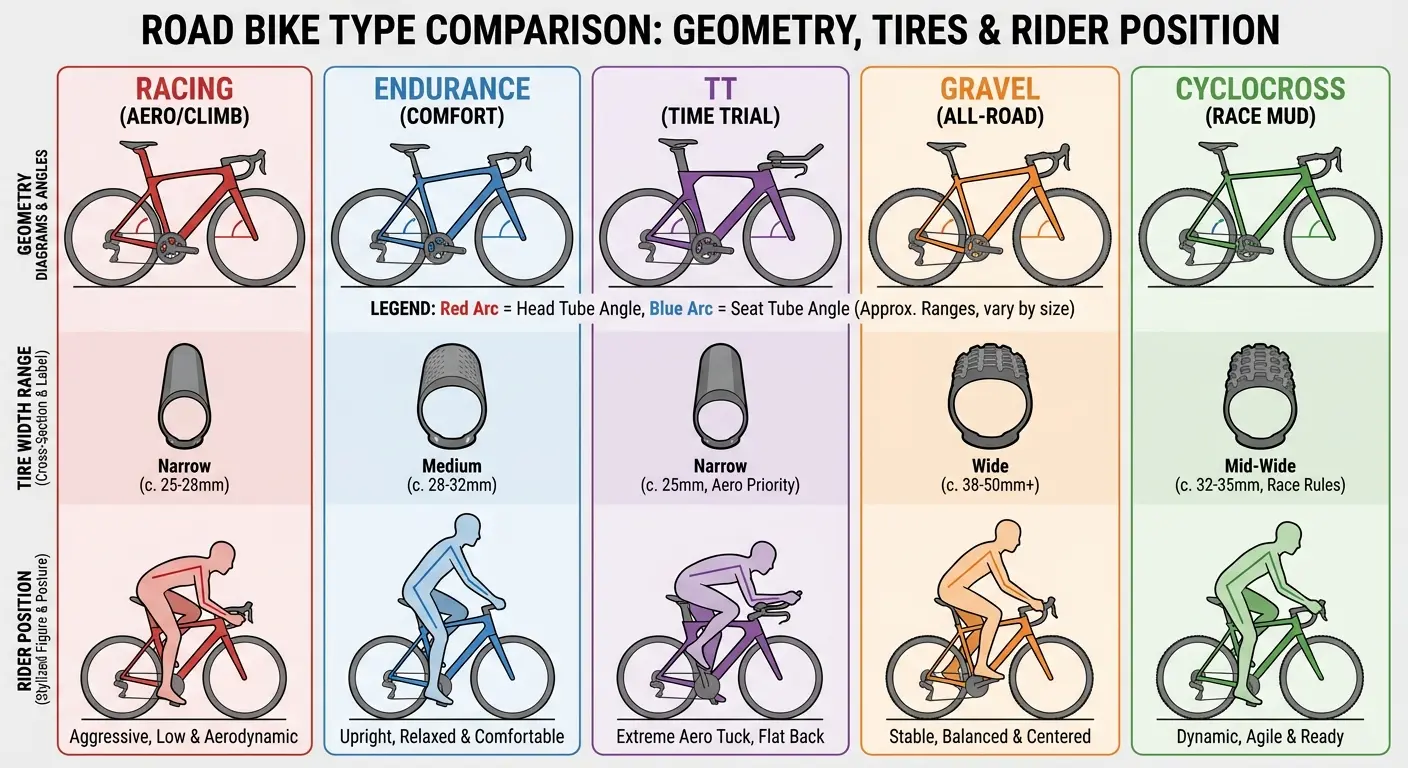
The geometry is aggressive. Steep head tube angle, short wheelbase, which means the bike responds instantly when you throw power at it. You're folded over into an aero position not because it's comfortable but because it's fast. The frame is stiff as hell (usually carbon at higher price points) so every watt you put into the pedals goes into forward motion instead of flexing the frame.
You'll see narrow tires, 23-28mm, and gearing that assumes you're either going fast or going home. Weight becomes critical here because every gram matters when you're climbing or accelerating out of corners. The first time you ride one, you'll notice the sound before anything else. The high-pitched whir of narrow tires on pavement, the mechanical click of the drivetrain. Then you'll notice every. Single. Bump. These bikes don't absorb anything. You feel the road texture through the handlebars and saddle like you're reading braille at 20 mph.
These bikes excel at criteriums, road races, and making your friends work hard to keep up on group rides. They suck at literally everything else. The ride quality is harsh, the position is demanding, and the handling requires attention. But if you want a bike that feels alive under you when you're pushing hard, nothing else comes close.
Cyclist Skill Level |
Average Speed |
Terrain Capability |
Typical Use Case |
|---|---|---|---|
Beginner |
8-12 mph |
Flat to rolling |
Fitness rides, group rides |
Intermediate |
12-16 mph |
Varied terrain |
Club racing, centuries |
Advanced |
16-24 mph |
All terrain |
Competitive racing, fast group rides |
Professional |
>24 mph |
All terrain |
Elite racing, criteriums |
Look, I hate these kinds of charts because they oversimplify everything, but people keep asking "how fast should I be going?" so here's a rough guide. Take it with a massive grain of salt. Fitness matters way more than bike type. A pro on a hybrid would destroy a beginner on a race bike. The bike matters, but not as much as the engine.
2. Endurance Road Bikes (Fast-ish But Livable)
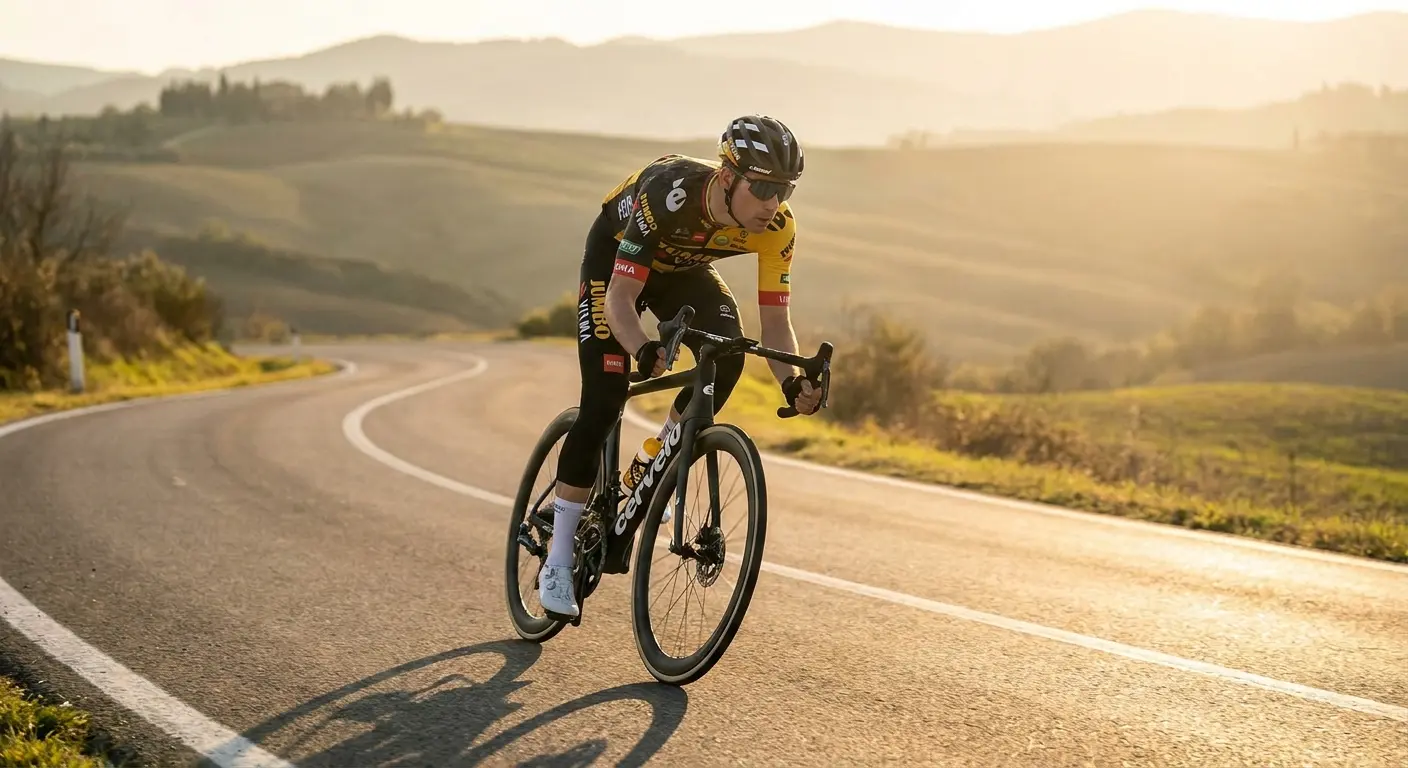
Okay, but what if you want to go fast without destroying your back? That's where endurance bikes come in.
The geometry relaxes slightly with a taller head tube and longer wheelbase, which translates to a more upright position and stable handling. You're still leaned forward compared to a hybrid, but your back and neck will thank you after five hours in the saddle.
Frame designers build some flex into the frame (through how they shape the tubes or layer the carbon, or even small suspension elements) so your fillings don't rattle out on chip-seal roads. You'll see clearance for wider tires, up to 32mm or more, which improves comfort and grip on imperfect pavement. The gearing often includes a compact crankset with lower gear ratios for sustained climbing without blowing up your legs.
I've ridden endurance geometry on everything from fast group rides to solo centuries, and it handles all of it without beating you up. The position still looks aggressive compared to a hybrid, but you can actually function the next day. These bikes work for gran fondos, charity rides, and people who want speed but need to maintain their day job.
The Specialized Roubaix basically defined this category. Trek's Domane, Giant's Defy, same idea. They're designed for real-world roads and real-world bodies that don't bend like professional cyclists.
3. Triathlon/Time Trial Bikes (Maximum Aero, Maximum Weird)
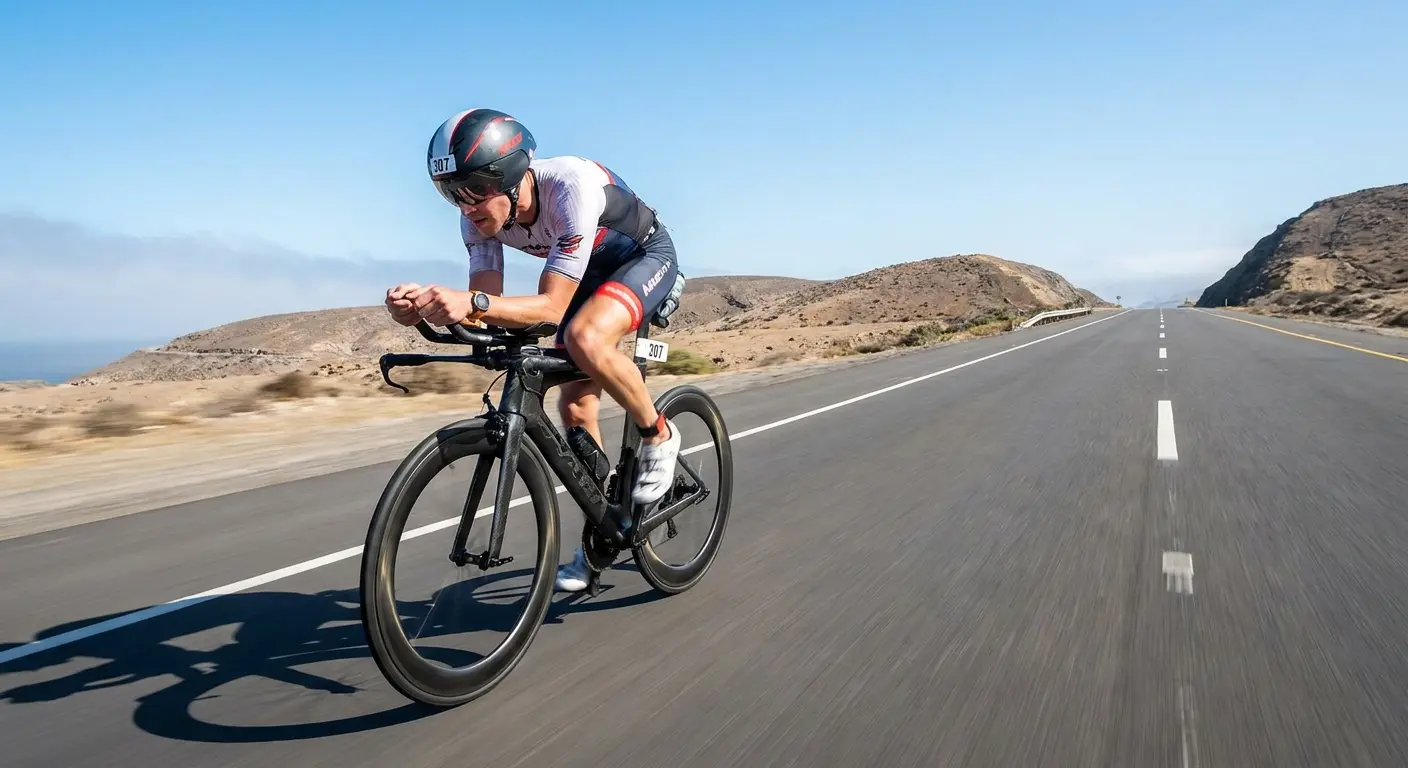
Triathlon and time trial bikes obsess over aerodynamics above everything else. And I mean everything.
The frame tubes are shaped to slice through wind, and the geometry positions you in an extremely forward, low stance supported by aero bars. You're trading handling and comfort for pure speed on flat to rolling terrain. The steep seat tube angle (often 78-80 degrees) shoves your hips forward into a position that feels wrong until you understand the logic. In a triathlon, you need to save your legs for the run, so the geometry opens your hip angle to use different muscles. In a time trial, it's all about power and aero, consequences be damned.
Braking and shifting systems integrate into the frame to reduce drag. Wheel choice matters enormously here, with deep-section rims or disc wheels common. You'll see bikes that look like they're from the future, with every tube shaped in a wind tunnel and every cable hidden inside the frame.
These bikes feel unstable at low speeds and handle poorly in groups, which is why they're banned from mass-start road races. They excel in one specific scenario: going fast alone against the clock. I tried riding one in a group ride once. Never again. Steering with your forearms on aero bars while surrounded by other riders is terrifying.
When you're racing against the watch on a bicycle designed purely for speed, nothing else comes close. For literally anything else, they're impractical and uncomfortable.
4. Gravel Bikes (The Industry's Favorite New Category)
Gravel bikes emerged as riders started taking road bikes onto unpaved surfaces and quickly hit the limits of what skinny tires and racing geometry could handle.
The gravel bike category is marketing genius and actual innovation in equal measure. Ten years ago, we called these "cyclocross bikes with bigger tires" and the industry told us we were wrong and needed to buy new bikes. They were kind of right, though. Modern gravel geometry is slacker and more stable than cyclocross, and the tire clearance opens up terrain that would destroy a traditional road bike.
These bikes feature relaxed geometry similar to endurance road bikes but with lower bottom brackets for stability on loose surfaces. Tire clearance expands dramatically, up to 45mm or wider, and the tread patterns range from file tread for hard-packed dirt to aggressive knobs for loose conditions. You'll find mounts for multiple water bottles, fenders, and racks because these bikes encourage exploration.
The gearing skews lower than traditional road bikes, often using a 1x drivetrain to simplify shifting and reduce maintenance. I've taken these bikes on everything from smooth pavement to chunky doubletrack, and they handle it all without complaint. Fire roads, singletrack, gravel paths, pavement, that weird in-between surface that's mostly dirt with some rocks. Gravel bikes just work.
The Specialized Diverge basically created this category, or at least convinced everyone they needed to buy into it. Now every brand makes one because they sell like crazy.
5. Cyclocross Bikes (Built for Racing, Not Exploring)
Cyclocross bikes look similar to gravel bikes but serve a different purpose. These machines are built for cyclocross racing, which involves short, intense efforts on mixed terrain with frequent dismounts to clear barriers or run up hills.
The geometry is more aggressive than a gravel bike, with a higher bottom bracket to clear obstacles and tighter handling for technical sections. Tire clearance maxes out around 33-35mm because UCI racing rules limit width. You'll notice cantilever or disc brakes with extra mud clearance, and the frame design focuses on stiffness for hard accelerations out of corners.
The ride position is lower and more forward than a gravel bike. These bikes excel at hour-long races on muddy courses but feel overly aggressive for all-day gravel rides. The distinction matters if you're racing versus exploring.
I bought a cyclocross bike thinking it would work for gravel riding. It did, technically, but it wasn't comfortable for anything over two hours. The aggressive position and limited tire clearance made long rides less enjoyable than they should have been. Sold it and bought a proper gravel bike. Learn from my expensive mistake.
When you need a bike that handles barrier jumps and muddy switchbacks in a competitive setting, cyclocross geometry delivers. For weekend adventures, get a gravel bike.
Designed for Dirt and Technical Terrain (From Smooth Trails to "Why Am I Doing This")
Okay, now we're getting into the good stuff. Mountain bikes are where the bike industry really goes nuts with specialization.
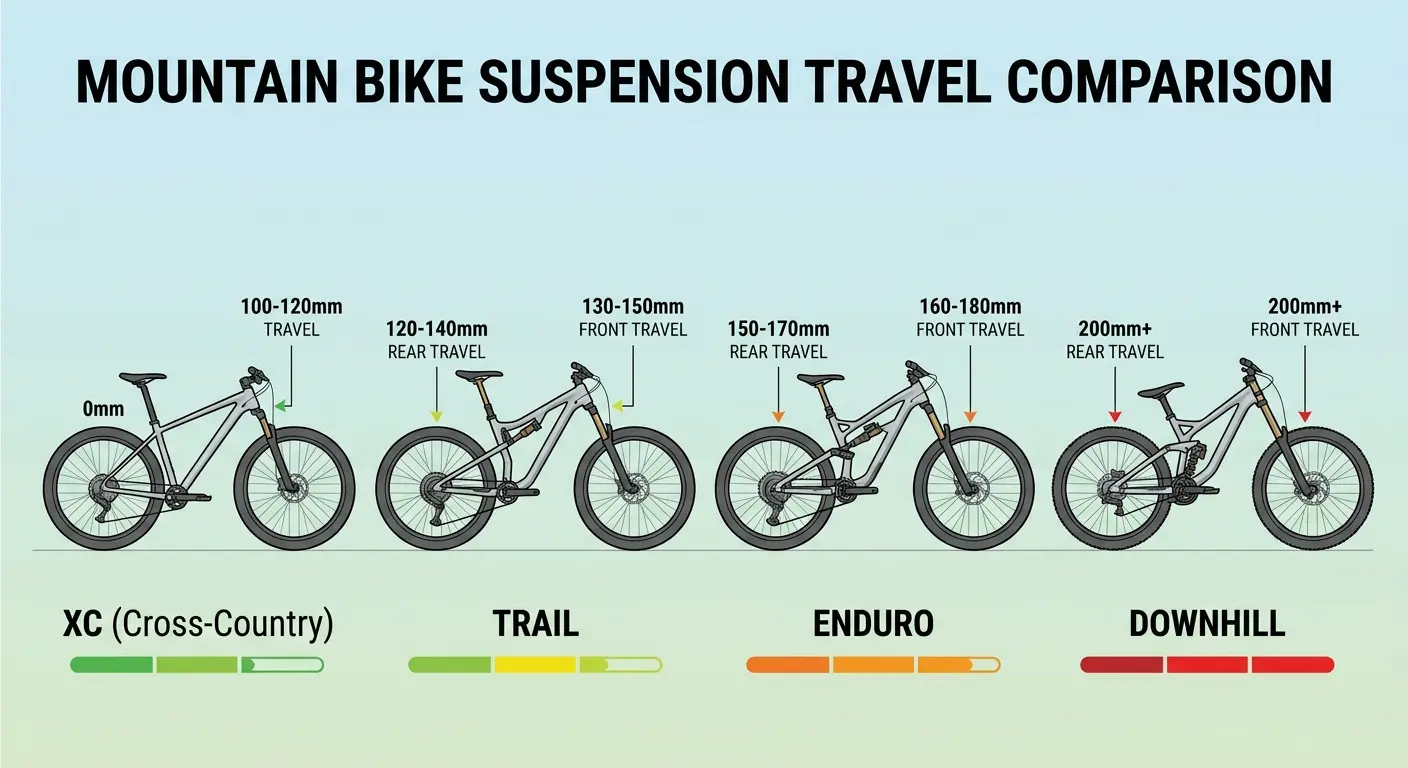
Mountain bikes split into categories based on suspension travel and intended terrain difficulty. The progression from cross-country to downhill represents a spectrum of specialization, with each category making specific tradeoffs between weight, durability, and technical capability.
How much suspension you have directly correlates to what terrain you can handle and how miserable you'll be climbing. An XC bike with 100mm of travel climbs efficiently but gets overwhelmed on rough descents. A downhill bike with 200mm of travel eats rock gardens for breakfast but pedaling it uphill is punishment.
Here's the thing: most people shopping for mountain bikes should start at trail bikes and work backward or forward from there. XC bikes are too specialized unless you're actually racing XC. Enduro and downhill bikes are overkill unless you have consistent access to serious terrain. Trail bikes do 80% of everything pretty well, which beats doing 100% of one thing and 0% of everything else.
6. Cross-Country Mountain Bikes (Climbs Great, Descends Nervously)
Cross-country (XC) mountain bikes focus on efficiency and climbing ability over descending prowess. Suspension travel ranges from 80-120mm front and rear, which is enough to smooth out roots and small rocks but not enough to save you on genuinely rough terrain.
The geometry is relatively steep with a focus on keeping weight over the front wheel during climbs. Frame materials lean toward carbon fiber at higher price points to minimize weight. You'll find 29-inch wheels on most modern XC bikes because they roll over obstacles efficiently and maintain momentum.
The components emphasize low weight over durability, with lightweight wheels, narrow handlebars, and efficient drivetrains. You'll feel big hits. Your hands will get tired on long descents. But you can actually pedal uphill without feeling like the suspension is eating all your effort. It's a compromise, and whether it's the right compromise depends on what you ride.
I've broken three derailleurs learning this the hard way: XC bikes have no business on black diamond downhills. The suspension bottoms out, the components aren't built for it, and you're white-knuckling the whole way down wondering why you didn't just walk. The bike was fine. I was just on the wrong tool for the job.
These bikes dominate XC racing and work well for riders who spend most of their time climbing fire roads and smooth singletrack. When you need a bike that climbs efficiently and covers ground fast, XC models deliver.
7. Trail Mountain Bikes (The Goldilocks Option)
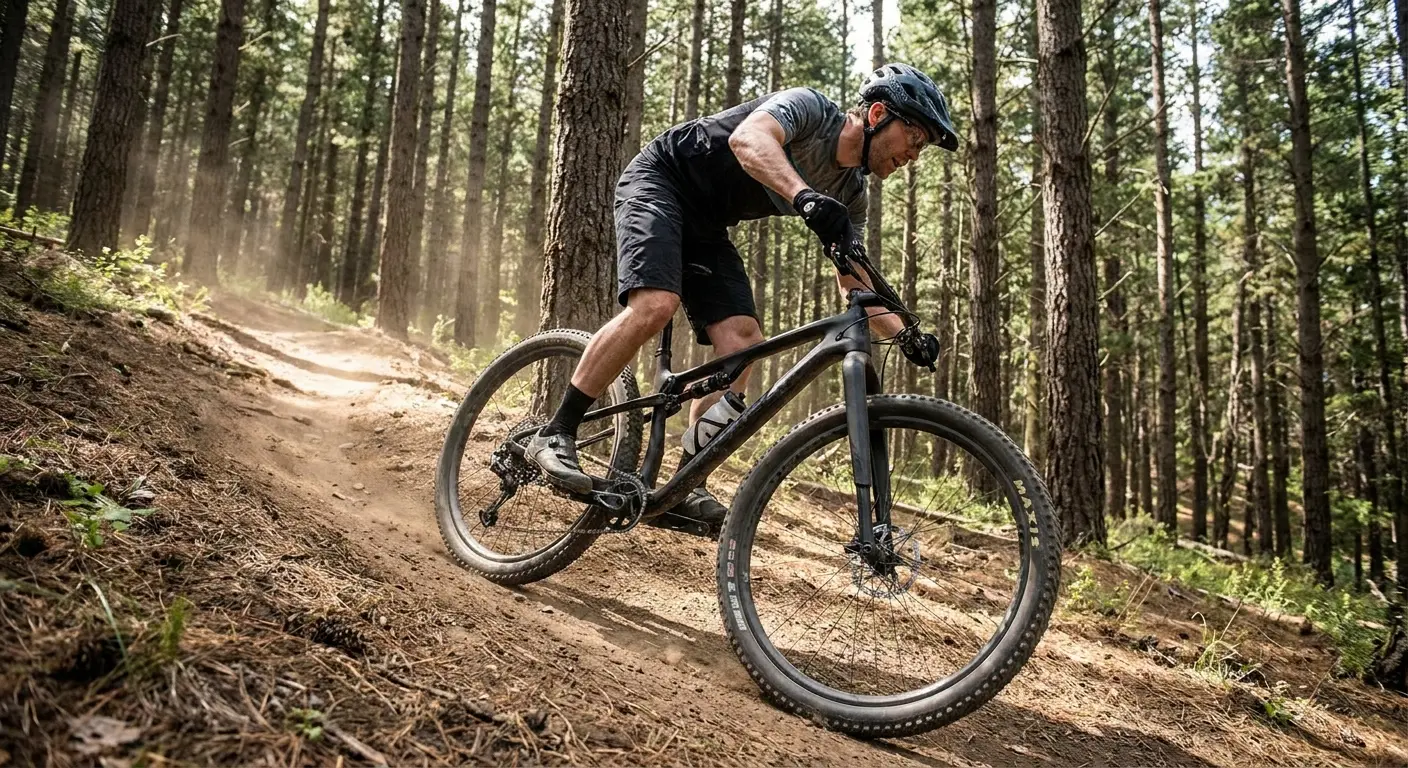
Trail bikes represent the most versatile category in mountain biking, and honestly, this is what most people should buy.
Suspension travel typically ranges from 130-150mm, which handles moderate to aggressive terrain without feeling like overkill on mellower trails. The geometry has slackened over the years, with longer reach measurements and slacker head tube angles (around 66-67 degrees) that improve stability at speed and on steep descents.
You'll see a mix of 27.5-inch and 29-inch wheel options, each with distinct handling characteristics. The Santa Cruz Hightower is the poster child for modern trail bikes: 130mm rear, 140mm front, slack enough to descend confidently but not so slack you're doing wheelies on every climb. The components balance durability and weight, with stronger wheels and burlier tires than XC bikes.
Trail bikes climb reasonably well, descend confidently, and handle the widest range of terrain types. They work for riders who want one bike that does everything competently rather than multiple specialized machines. I've ridden trail bikes on everything from smooth flow trails to technical rock gardens, and they just work without drama.
Different models in this category vary widely, from downcountry-leaning builds that prioritize climbing to more aggressive setups that blur the line with enduro bikes. Figure out whether you care more about going up or coming down, then choose accordingly.
8. Enduro Mountain Bikes (Descending First, Climbing Second)
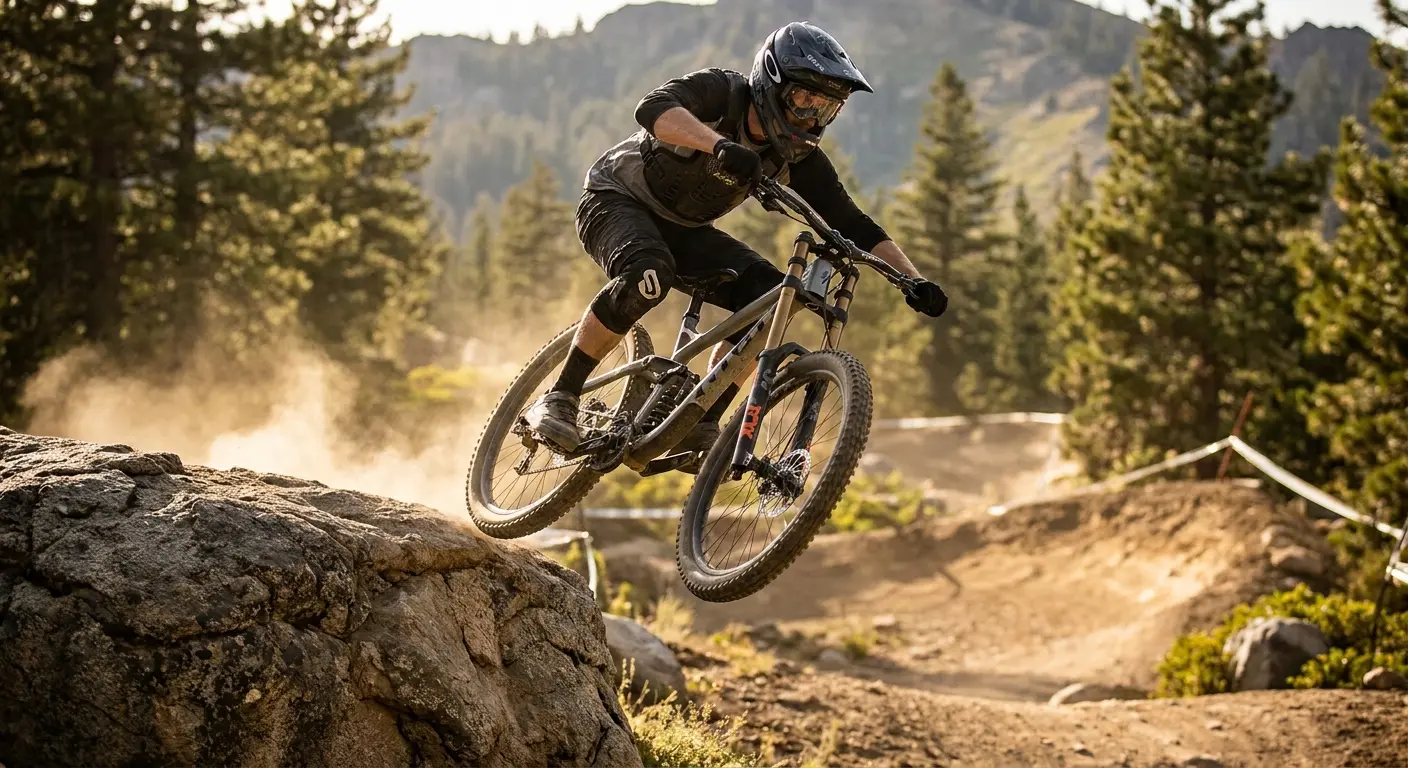
Enduro bikes push further into descending-focused territory with 160-180mm of suspension travel. The geometry gets aggressive with slack head tube angles (around 63-65 degrees), long wheelbases, and low bottom brackets for stability on steep, technical terrain.
Frame construction prioritizes strength over weight, with beefier tubes and reinforced areas around the shock mounts and linkages. You'll find burlier components throughout: stronger wheels, grippier tires with aggressive tread, and powerful brakes to handle sustained descents.
These bikes still climb (usually with a pedal platform or climb mode on the shock), but they shine when pointed downhill on rough, fast terrain. Enduro racing involves timed descents with untimed climbs, which perfectly captures what these bikes do best. They feel sluggish on mellow trails and overkill for anything that doesn't require serious suspension.
When you're hitting rough terrain at speed, you need everything locked down. Enduro riders tackling challenging descents need vibration dampeners to protect their phone mounts from constant impact. Standard mounts fail fast when you're bouncing through rock gardens. A bike built for this kind of punishment needs equally robust accessories.
9. Downhill Mountain Bikes (One Purpose Only)
Downhill bikes do one thing: get you down the mountain as fast as possible without dying.
That's it. That's the whole design brief.
Suspension travel is 180-220mm, nearly a foot of squish front and rear. Dual-crown forks like a motorcycle. Frame construction that could probably survive a car crash. The geometry is so slack (62-63 degree head tube angle) that the bike feels unstable at walking speed but planted as hell at 35 mph on a rock garden.
Downhill bikes sound angry. The suspension is constantly working, ka-chunk, ka-chunk, eating up impacts that would taco a wheel on any other bike. Your hands get tired from gripping the bars through the chatter. Everything is loud: the tires roaring over loose rock, the brakes screaming on long descents, your heart pounding in your ears.
Weight? Who cares. You're not pedaling this thing uphill. You're either shuttling, taking a lift, or you've made terrible life choices. Components are chosen for one criterion: will it survive repeated impacts at high speed? Heavy wheels. Thick tires with aggressive tread. Massive brakes with rotors the size of dinner plates. Simple drivetrains because you're either going fast or going faster.
These bikes cost as much as used cars and only work at bike parks or shuttle-accessed terrain.
Worth every penny if that's what you ride.
10. Fat Bikes (For Snow, Sand, and Looking Ridiculous)
Fat bikes look absurd. Tires as wide as your fist, proportions that seem wrong, the whole thing screaming "I make bad decisions."
And on snow or sand? They're magic.
These bikes feature massively oversized tires, typically 3.8 inches or wider, mounted on extra-wide rims. The huge tire volume allows you to run extremely low air pressure (sometimes under 10 psi), which increases traction and flotation on soft surfaces where normal mountain bikes sink and bog down.
The frame and fork are designed with extra clearance for the wide tires, and you'll often find rigid forks rather than suspension to save weight and reduce complexity. Some models include front suspension or even full suspension for riders who want cushioning on rough trails. Gearing is typically low to accommodate the increased rolling resistance.
I bought a fat bike thinking I'd ride all winter. Used it four times. They're slow, heavy, and unless you're actually riding snow or sand regularly, they sit in the garage looking ridiculous. Great for the specific conditions they're built for, completely impractical otherwise. Learn from my expensive mistake.
Fat bikes open up winter riding and beach riding that would be impossible on standard mountain bikes, but they feel slow and sluggish on normal trails. In Minnesota winters, they make sense. In Southern California, you're just making your life harder.
Made for Getting Around (Practical Bikes That Actually Get Used)
Let's talk about bikes that actually get used daily instead of just on weekends when the weather's perfect.
Urban and utility bikes prioritize practicality over performance. Design choices around gearing, frame geometry, and component selection create bikes that handle real-world transportation needs without requiring you to shower when you arrive.
These bikes accommodate cargo, fold for storage, integrate electric assist, or simply get you to work reliably. The focus shifts from speed and handling to durability, comfort, and functionality. When your bike needs to work as transportation rather than recreation, these categories deliver what you need.
11. Commuter Bikes (Built to Work Every Day)
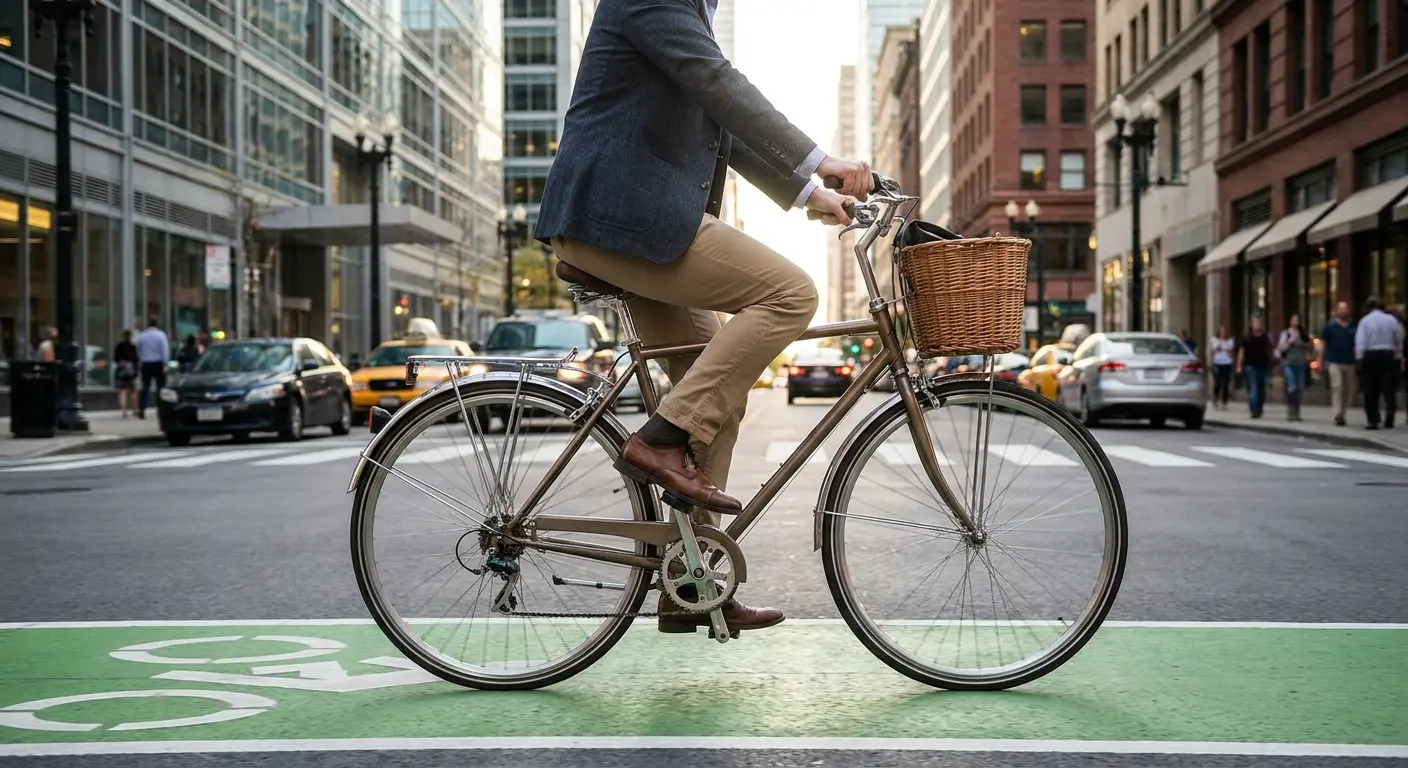
Commuter bikes are purpose-built for daily transportation in urban environments. Frame geometry is upright for visibility in traffic and comfort over extended periods.
You'll find practical features like fenders to keep road spray off your clothes, chain guards to protect your pants, lights integrated into the frame or easily mounted, and racks for carrying bags or panniers. Tires are wider (35-45mm) with puncture-resistant layers because fixing a flat in work clothes isn't fun.
Gearing systems often use internal hub gears (3-8 speeds) that require minimal maintenance and allow shifting while stopped at lights. Some models include belt drives instead of chains to eliminate grease and maintenance. Internal gear hubs are brilliant until they break, then they're expensive nightmares. Regular derailleurs you can fix with a YouTube video and $30 in parts. Internal hubs require special tools and expertise most shops don't have. Trade-off for never adjusting your gears in three years of daily riding? Probably worth it. But know what you're getting into.
These bikes aren't fast or exciting, but they start reliably, handle weather, and get you to work without drama. Around 870,000 Americans, or 0.6% of all employees in the US, bike to work, with that number jumping 21% in 2020. People are figuring out that showing up sweaty beats sitting in traffic.
When you need a bike that works every single day regardless of conditions, commuter-specific builds make sense.
12. Hybrid Bikes (Does Everything, Excels at Nothing)
Hybrid bikes blend characteristics from road bikes and mountain bikes to create a versatile option for casual riders.
Hybrids get a bad rap from cycling snobs who think you need to specialize. They're right that hybrids don't excel at anything specific. They're wrong that this matters for most riders. If you're doing 10-mile rides on mixed surfaces and you're not racing, a hybrid is probably perfect and costs half what a "proper" road or mountain bike costs. The snobbery is unearned.
The frame geometry is more upright than a road bike but more efficient than a mountain bike, with flat handlebars for control and comfort. You'll see 700c wheels with moderately wide tires (32-42mm) that handle pavement and light gravel. Suspension forks appear on some models (though they add weight and maintenance), and the gearing typically uses a wide-range cassette with a double or triple crankset.
These bikes work for fitness riding, light commuting, rail trails, and casual weekend rides. They don't excel at any specific task but handle multiple scenarios reasonably well. The upright position and stable handling appeal to riders who want comfort over performance.
When you need a bike that does a bit of everything without specializing in anything, hybrids fill that gap without apology.
13. Folding Bikes (Portability Over Everything)
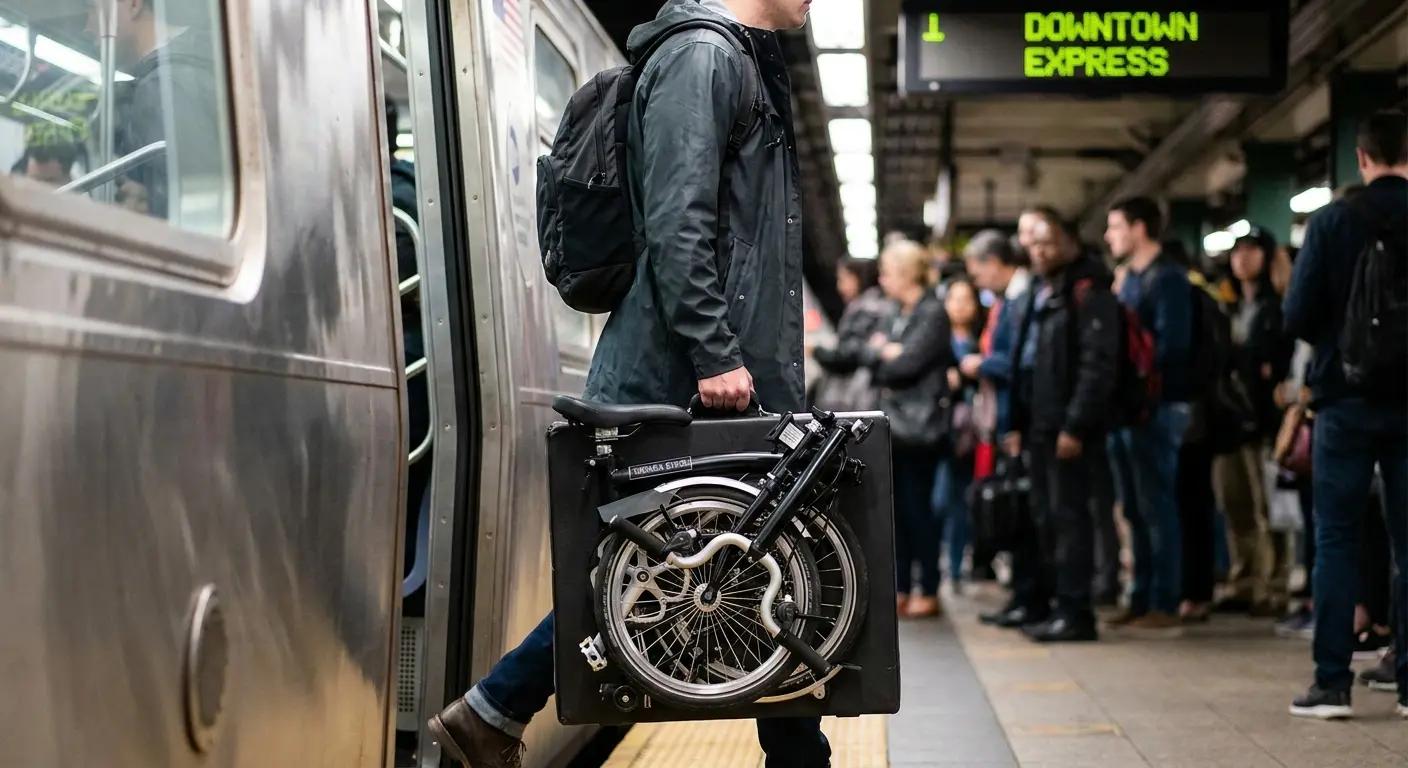
Folding bikes solve the storage and transportation problem through clever frame design that allows the bike to collapse into a compact package.
Wheel sizes are typically small (16-20 inches) to reduce folded dimensions, though this affects ride quality and efficiency. The folding mechanism varies by manufacturer, with some bikes folding in seconds and others requiring more time and effort. You'll find a range of quality levels from cheap folders with basic components to high-end models with sophisticated gearing and lightweight materials.
Fair warning: cheap folding bikes are absolute garbage. I'm talking about the $200 ones you see at big box stores. The hinges develop play, the small wheels make every crack feel like a canyon, and the ride quality is punishing. If you're going folding, budget for a Brompton or similar quality brand, or just don't bother.
These bikes work for commuters who need to combine cycling with public transportation, apartment dwellers with limited storage, or travelers who want a bike that fits in a car trunk or plane. The small wheels and unique geometry take getting used to, and they don't ride like full-size bikes, but the portability creates possibilities that standard bikes can't match.
14. Electric Bikes (Stop Calling Them Cheating)
Electric bikes integrate a motor and battery system that provides pedal assistance up to a certain speed, typically 20 or 28 mph depending on classification.
E-bikes are controversial in some cycling circles, which is stupid. "That's cheating!" No, Karen, commuting isn't a race. The person showing up to work on an e-bike instead of driving is doing more for cycling than your judgmental ass on a $10,000 race bike you only ride on weekends.
I used to think e-bikes were cheating. Then I rode one. Then I bought one. Turns out I was just being a snob. They're legitimately useful and they get people riding who otherwise wouldn't. I was wrong.
The motor placement varies (hub motors in the wheel or mid-drive motors at the cranks), with mid-drive systems offering better weight distribution and more natural feel. Battery capacity determines range, with most systems providing 20-80 miles depending on assist level, terrain, and rider input.
E-bikes expand the range and capability of riders who face long commutes, hilly terrain, physical limitations, or cargo hauling needs. The added weight (typically 40-70 pounds) makes them unwieldy without power, but the motor eliminates the barrier that keeps many people from cycling.
You'll find e-bike versions of nearly every bike category, from road to mountain to commuter setups. The technology has matured to the point where quality systems are reliable and powerful enough to genuinely transform transportation options.
E-bikes are expensive, though. Quality ones start at $2,000 and go up to $8,000 or more. This is the biggest barrier to adoption. But if you're replacing a car for commuting, even a $4,000 e-bike pays for itself in like two years. Still stings to drop that much on a bicycle though.
Bike Quality Level |
Average Price Range |
Typical Components |
Best For |
|---|---|---|---|
Low-end bikes |
Under $250 |
Basic parts, heavy frames |
Occasional use, short trips |
Entry-level recreation |
$250-$500 |
Reliable components, moderate weight |
Commuting, casual weekend rides |
Mid-range bikes |
$500-$750 |
Quality drivetrain, lighter frames |
Regular riding, fitness |
Performance bikes |
$750-$1,200 |
Higher-end components, stiff frames |
Serious training, racing entry |
Premium bikes |
Over $1,200 |
Top-tier parts, carbon frames |
Competitive racing, enthusiasts |
Bike pricing is all over the place, and the relationship between price and quality gets weird at the extremes. The sweet spot for most people is $750-1,500. Below that, you're compromising on durability. Above that, you're paying for performance gains that matter if you're racing but not if you're riding for fun or fitness.
15. Cargo Bikes (Replacing Car Trips)
I'll never forget watching a dad in Portland haul two kids, a week's worth of groceries, and a dog in a bakfiets-style cargo bike while I struggled to balance a single bag of takeout on my handlebars. That's when I got it.
Cargo bikes look ridiculous until you need one, then they're genius.
These things come in wildly different configurations. Longtail bikes extend the rear end and add a huge rack, basically a pickup truck bed behind your seat. Front-loaders (bakfiets style, Dutch design) put a giant box in front of you where you can pile kids, groceries, or a disturbing amount of beer. Three-wheeled trikes are the most stable but also the most car-like to maneuver.
Weight capacity hits 200-400 pounds depending on the design. And yeah, most people add electric assist because pedaling 300 pounds of kids and groceries up a hill on human power alone is technically possible but deeply unpleasant.
The learning curve is real, especially with front-loaders. The weight is in front of your steering axis, which means the bike handles completely differently when loaded versus empty. I've watched experienced cyclists wobble around parking lots like they've never ridden before. You get used to it, but your first few rides are humbling.
They're expensive (think $2,000-$6,000), huge, and heavy. You need somewhere to store them. But if you're replacing even one car trip per week, the math works out fast. And there's something deeply satisfying about passing cars stuck in traffic while you're hauling a week's worth of groceries and your kids are eating snacks in the box.
In the Netherlands, these are as common as SUVs in American suburbs. In the US, you still get looks. Worth it though.

Specialized for Specific Styles (Weird Bikes for Specific Weirdos)
If you're still reading, you either really love bike taxonomy or you're procrastinating something important. Either way, we're past the bikes most people actually need.
These bike categories serve specific riding disciplines that require unique frame designs and geometry. Bikes built for tricks, ultra-long-distance touring, velodrome racing, and alternative riding positions represent solutions to particular problems that mainstream bike categories can't adequately address.
Each represents highly specialized engineering focused on a narrow use case. I say "weirdos" with love, as someone who owns a recumbent. These are bikes that serve super specific purposes and make absolutely no sense for general riding.
16. BMX Bikes (Tricks, Jumps, and Broken Collarbones)
BMX bikes are what you rode as a kid, except now they cost $1,500 and adults do backflips on them.
These bikes feature small frames, typically 20-inch wheels, single-speed drivetrains, and robust construction for jumping, tricks, and racing. The geometry is compact with short chainstays and steep angles for quick handling and maneuverability.
Different subcategories exist within BMX: racing bikes are lighter with specific gearing for track racing, freestyle bikes are heavier with pegs and features for tricks, and dirt jump bikes fall somewhere between. Components prioritize strength over weight, with thick tires, strong wheels, and simple braking systems (or no brakes on some freestyle bikes, which is insane but whatever).
The riding position is upright and active, with riders constantly shifting weight and using body position for control. These bikes work for skate parks, pump tracks, dirt jumps, and BMX racing, but they're completely impractical for transportation or distance riding.
BMX culture is its own thing. Skatepark etiquette, session dynamics, the whole "one more try" mentality that leads to broken collar bones. It's younger, more aggressive, and less lycra-obsessed than road cycling. If you show up at a skatepark on a mountain bike, you'll get looks. BMX belongs there. Everything else is visiting.
When you need a bike for tricks and jumps, BMX-specific geometry and construction are non-negotiable.
17. Touring Bikes (Built for Crossing Continents)
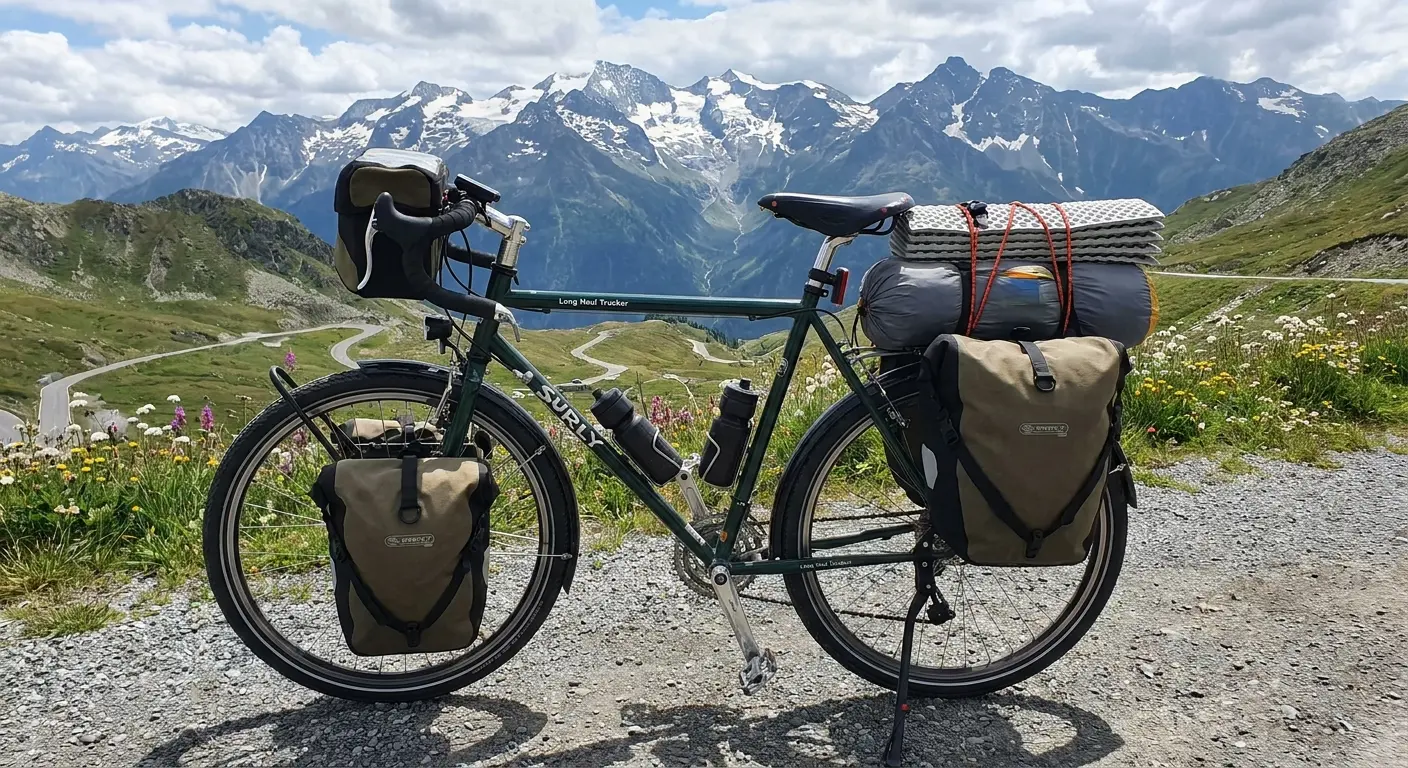
Touring bikes are built for self-supported long-distance travel with loaded panniers. Frame geometry is relaxed and stable, with longer wheelbases and lower bottom brackets to handle the weight of camping gear and supplies.
You'll find numerous mounting points for racks, fenders, water bottles, and accessories. The frame material is typically steel for its durability, repairability, and comfortable ride quality under load. Full disclosure: I love steel frames. They're heavier than carbon, less stiff than aluminum, and supposedly "outdated." I don't care. They ride smooth, they last forever, and they're repairable. This is personal preference, not objective fact.
Gearing systems use wide-range cassettes and often triple cranksets to handle steep climbs with 50 or more pounds of gear. Wheels are strong with 36 spokes and durable rims to handle rough roads and heavy loads.
These bikes aren't fast or exciting, but they're designed to carry you and your gear across continents reliably. The stable handling and comfortable geometry matter when you're spending eight hours a day in the saddle for weeks on end. When you need a bike for multi-week expeditions with full camping gear, touring-specific builds provide the strength and reliability required.
18. Track Bikes (No Brakes, Can't Coast, Velodrome Only)
Track bikes are insane. No brakes. Can't coast. Only for velodromes. And somehow people still ride them on city streets because cyclists are crazy.
These bikes are purpose-built for velodrome racing on banked wooden or concrete tracks. The defining characteristic is the fixed-gear drivetrain with no freewheel, meaning the pedals always turn when the bike is moving. You'll find no brakes (they're banned in track racing), aggressive geometry with steep angles for responsive handling, and extremely stiff frames for maximum power transfer.
The riding position is aerodynamic with drop bars positioned low. Wheel choice varies by event, with deep-section or disc wheels common for pursuit and time trial events. These bikes feel strange and dangerous on the road because you can't coast and you can't brake conventionally. You slow by resisting the pedals, which takes practice and strong legs.
Track bikes spawned an entire urban fixed-gear subculture in the 2000s. Bike messengers started riding track bikes on the street, then hipsters made it a whole aesthetic. No brakes, foot retention, skidding to stop. It looked cool and was genuinely dangerous. The trend has faded but you still see fixie riders in every major city, usually younger riders who value style as much as function.
They exist solely for track racing and require access to a velodrome. Some riders adapt track frames for street use as fixed-gear bikes, but that's a different subculture with its own modifications. When you need a bike for velodrome competition, track-specific geometry and drivetrain design are essential.
19. Recumbent Bikes (Comfortable, Aerodynamic, Embarrassing)
Recumbents are the Crocs of cycling. Objectively practical, subjectively embarrassing, and the people who ride them genuinely don't care what you think.
You're lying down while riding. It looks ridiculous. It's also more comfortable and aerodynamic than any traditional bike.
Recumbent bikes position the rider in a reclined, laid-back position rather than upright or forward-leaning. The design varies from low-slung racing recumbents to more upright touring models, with two-wheel and three-wheel (trike) configurations.
The reclined position reduces wind resistance and eliminates pressure on hands, wrists, and the perineal area, which appeals to riders with specific physical issues or those seeking maximum comfort. You'll find under-seat steering on some models and above-seat steering on others.
Gearing systems are similar to standard bikes but adapted for the unique frame design. Recumbents are fast on flat terrain (they hold numerous speed records) but climb poorly due to the inability to stand and use body weight. Visibility in traffic is a concern because you sit lower than car drivers expect.
Here's something weird: recumbent riders are some of the friendliest people in cycling. Maybe because they're already used to people thinking they're strange?
These bikes serve riders who can't tolerate standard bike positions or who prioritize comfort and aerodynamics for long-distance riding. When you need a bike that eliminates traditional pressure points, recumbent designs offer solutions that conventional geometry can't provide.
Keeping Your Phone Secure While You Ride
Your phone matters on rides for navigation, emergency contact, fitness tracking, and capturing moments. Standard phone mounts fail when you hit rough terrain, and keeping your phone in a pocket or bag means you can't access it when you need it.
I've seen riders lose phones on descents, miss turns because they couldn't check navigation, or fumble with their device at stoplights trying to change music or check a message. It's frustrating and sometimes dangerous.
Rokform's bike phone mount uses a magnetic and twist-lock system that keeps your phone secure through technical terrain, rough roads, and high-speed descents. The mount works across different types of bikes, from road to mountain to commuter setups, and positions your phone where you can actually see it without compromising handling.
You're not choosing between phone access and security anymore. Whether you're pushing through technical singletrack or navigating city streets on your commute, having your phone accessible and protected matters. We've also developed motorcycle phone mounts using the same technology, which demonstrates how well the system handles vibration and impact across different riding conditions.
If you're riding enduro or downhill, you need your phone locked down. Navigation, emergency contact, and Strava bragging rights all depend on it not bouncing off the bike. Get a real mount, not the garbage that comes loose on the first rock garden.
Final Thoughts (The Advice I Wish Someone Had Given Me)
Here's the truth nobody wants to hear: you probably don't need the bike you want.
You want the aggressive race bike because it looks fast and your cycling buddy has one. What you need is the endurance bike that won't destroy your back on your actual 30-mile Saturday rides.
You want the 160mm enduro bike because you watched too many YouTube videos. What you need is the trail bike that climbs well enough for the trails you actually access.
I've been working in bike shops for 12 years, selling, building, and fixing bikes for everyone from weekend warriors to Cat 1 racers. I've also made expensive mistakes buying the wrong bikes for myself, which turns out to be the best education. The happiest customers are the ones who bought for their reality, not their fantasy. The guy who bought the comfortable commuter and actually rides it every day is happier than the guy with the $8,000 race bike collecting dust because it's miserable for anything except racing.
Buy a bike that fits your actual riding, not your imagined riding. Maintain it. Ride it. Upgrade when you've genuinely outgrown it, not when the industry tells you to.
Here's my actual advice after all these years:
Rent before you buy if possible. A weekend rental costs $100 and might save you from a $2,000 mistake.
Buy used for your first bike in any new category. You don't know what you don't know yet. Facebook Marketplace and Craigslist are full of expensive bikes that people rode twice. The guy who bought a $3,000 mountain bike, used it once, and decided cycling wasn't for him? That's your opportunity.
Ignore your fastest friend's advice. They're optimized for their riding, not yours.
The bike shop's "entry-level" recommendation is usually spot-on. They've seen a thousand people like you and know what works.
Get a proper bike fit. A $1,000 bike that fits beats a $5,000 bike that doesn't. If you're buying a bike over $1,000, get a professional fit. It costs $150-300 and it's the difference between a bike you love and a bike you tolerate.
The best bike is the one you'll actually ride. I know that sounds like a cliché, but I've seen $10,000 bikes gathering dust and $400 hybrids with 5,000 miles on them. Guess which owner is happier?
Choose based on your typical ride, not your exceptional one. The bike that handles 90% of your riding well beats the bike that's perfect for the 10% you rarely do. Start with what you need, not what looks cool or what racing requires.
And for the love of god, wear a helmet.

