


Table of Contents
-
The Weekend Warriors
Wrangler Unlimited
Gladiator
Wrangler Rubicon
Wrangler 4xe
Wrangler Sport
-
The Daily Drivers
Grand Cherokee
Cherokee
Compass
Renegade
-
The Performance Seekers
Grand Cherokee Trackhawk
Wrangler 392
Grand Cherokee 4xe
Cherokee Trailhawk
-
The Specialty Builds
Wrangler Sahara
Grand Wagoneer
Wagoneer
Grand Cherokee L
Wrangler Willys
TL;DR
18 Jeeps. Four categories. Buy the one you'll actually use, not the one you daydream about
Wranglers own off-road but most sit in parking lots all week
Grand Cherokee is probably what you need even if you want a Wrangler
The Trackhawk is gloriously stupid and I want one
Specialty builds exist for people with specific needs or too much money
Be honest about whether you'll actually go off-road
Your phone will fly off the dash. Get a real mount
Your neighbor's Jeep and your other neighbor's Jeep probably have nothing in common except the logo. One cost $30k, the other $100k. One sees trails every weekend, the other sees Whole Foods parking lots. This is fine.
I'm breaking down every Jeep you can buy right now, organized by what people actually do with them instead of marketing nonsense.
The Weekend Warriors
These Jeeps exist for Saturday mornings when the pavement ends. Sure, they spend Monday through Friday in driveways, but they're built for getting into places where roads become suggestions. Each one serves a different type of person who thinks they need maximum capability.
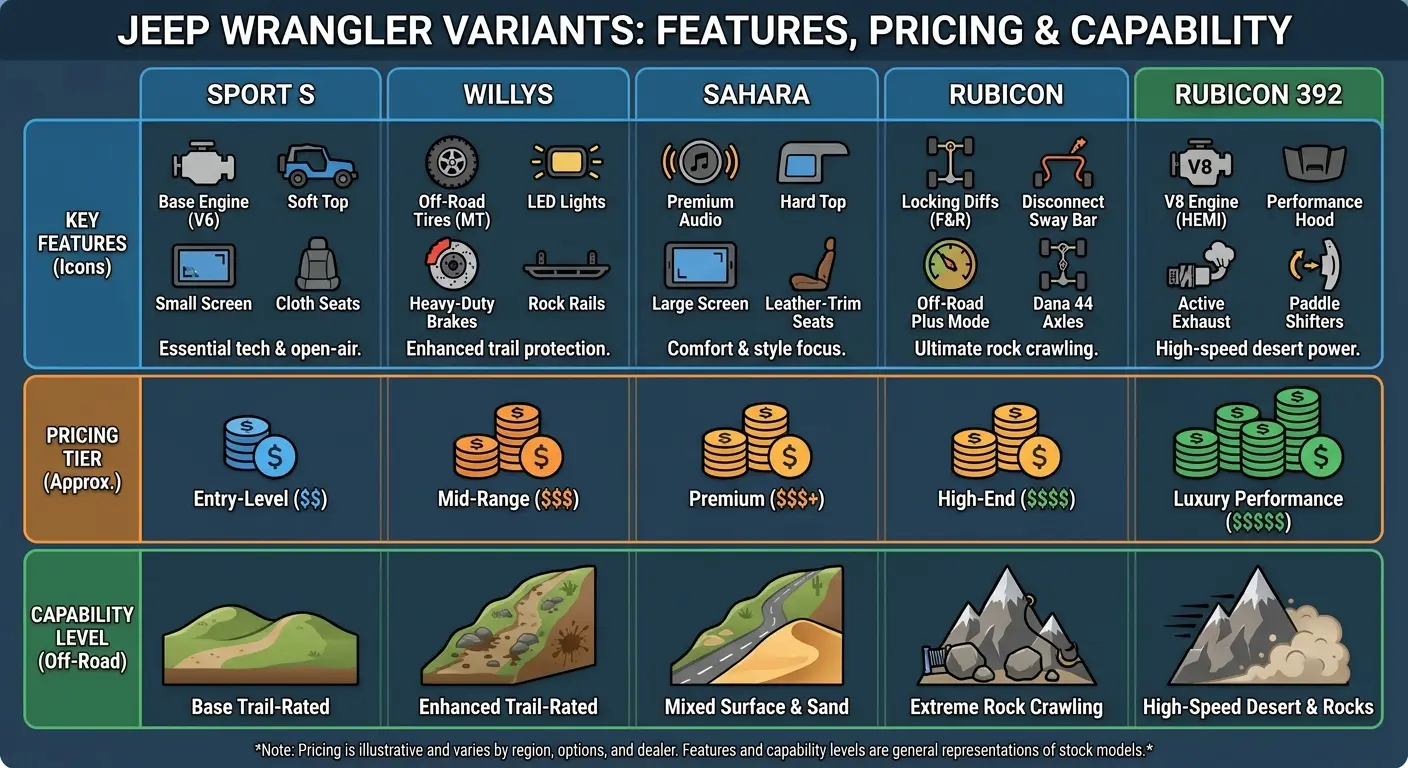
The Wrangler owns this space. Obviously. But the differences between Wrangler variants matter way more than most people realize when they're shopping.
Wrangler Variant |
Starting Price Range |
Key Off-Road Feature |
Best For |
|---|---|---|---|
Sport |
$30,000-$35,000 |
Standard 4WD system |
You'll modify it anyway |
Sahara |
$40,000-$45,000 |
Refined comfort with moderate capability |
Mostly pavement, some dirt |
Rubicon |
$45,000-$50,000 |
Electronic lockers, 4:1 transfer case |
Actually go off-road |
4xe |
$50,000-$55,000 |
Electric torque + 375 hp |
Want to feel less guilty about gas |
392 |
$75,000+ |
470 hp V8 engine |
All of it. Everything. |
1. Wrangler Unlimited
The four-door Wrangler outsells the two-door by a stupid margin. Probably because your friends won't hate you after the drive to the trailhead. Back seats that fit actual humans matter, turns out.
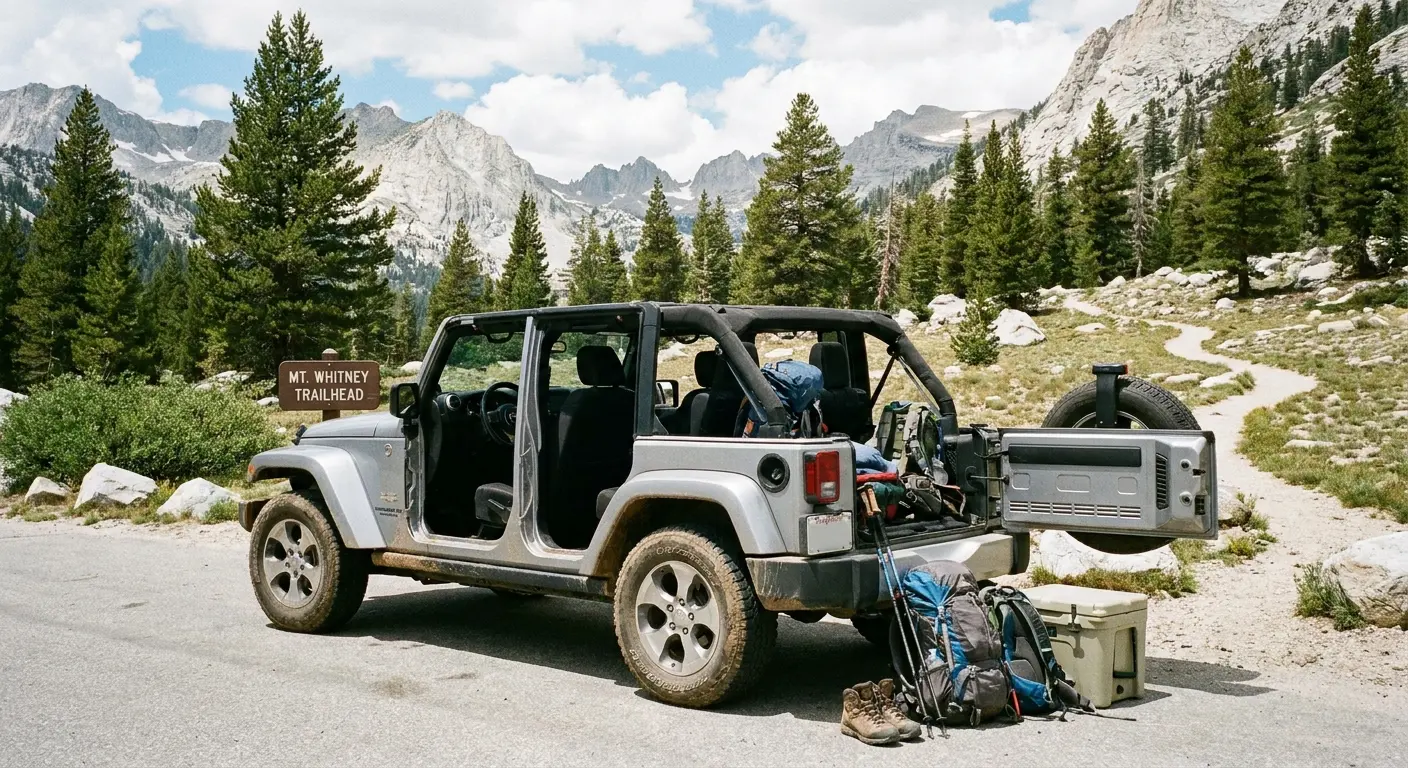
Cargo room doesn't require Tetris skills with your gear. You can pack like a normal person. Remove the doors and top when you feel like it, put them back on Sunday night when you remember you have work Monday. That part nobody mentions in the commercials. Still worth it.
The base engine? Forget highway merging when loaded. Especially loaded. You'll be that person everyone's cursing at on the onramp. The turbo four-cylinder fixes this, adds actual punch when you're climbing mountain passes with people and stuff. Fuel economy hits around 22 mpg combined. Terrible for a car, fine for a brick on wheels.
It rides like a truck. Because it is one. Your back will remind you on long highway trips.
2. Gladiator
It's a Wrangler with a truck bed. That's it. That's the whole thing. Except it's also somehow exactly what a bunch of people wanted without knowing it.
The five-foot bed hauls plywood and camping gear. Towing capacity reaches 7,700 pounds when properly equipped, so you can pull a boat or trailer without drama. The longer wheelbase drives better on highways. Way better. You give up some breakover angle, but unless you're actually rock crawling, who cares?
Every Gladiator I see has kayaks or bikes in back. Nobody's hauling drywall. These are weekend warriors who occasionally need to move something bigger than what fits in an SUV.
The back seat is identical to the Wrangler Unlimited. Adequate but not spacious. Costs more than a Tacoma. You're paying for the removable top and doors.
3. Wrangler Rubicon
The Rubicon is the serious off-road Wrangler. Comes with stuff that costs thousands to add later. Electronic locking diffs, sway bar disconnect, 33-inch tires, all factory. Upgraded axles and a 4:1 low-range transfer case. This setup handles trails that would wreck a base Wrangler.
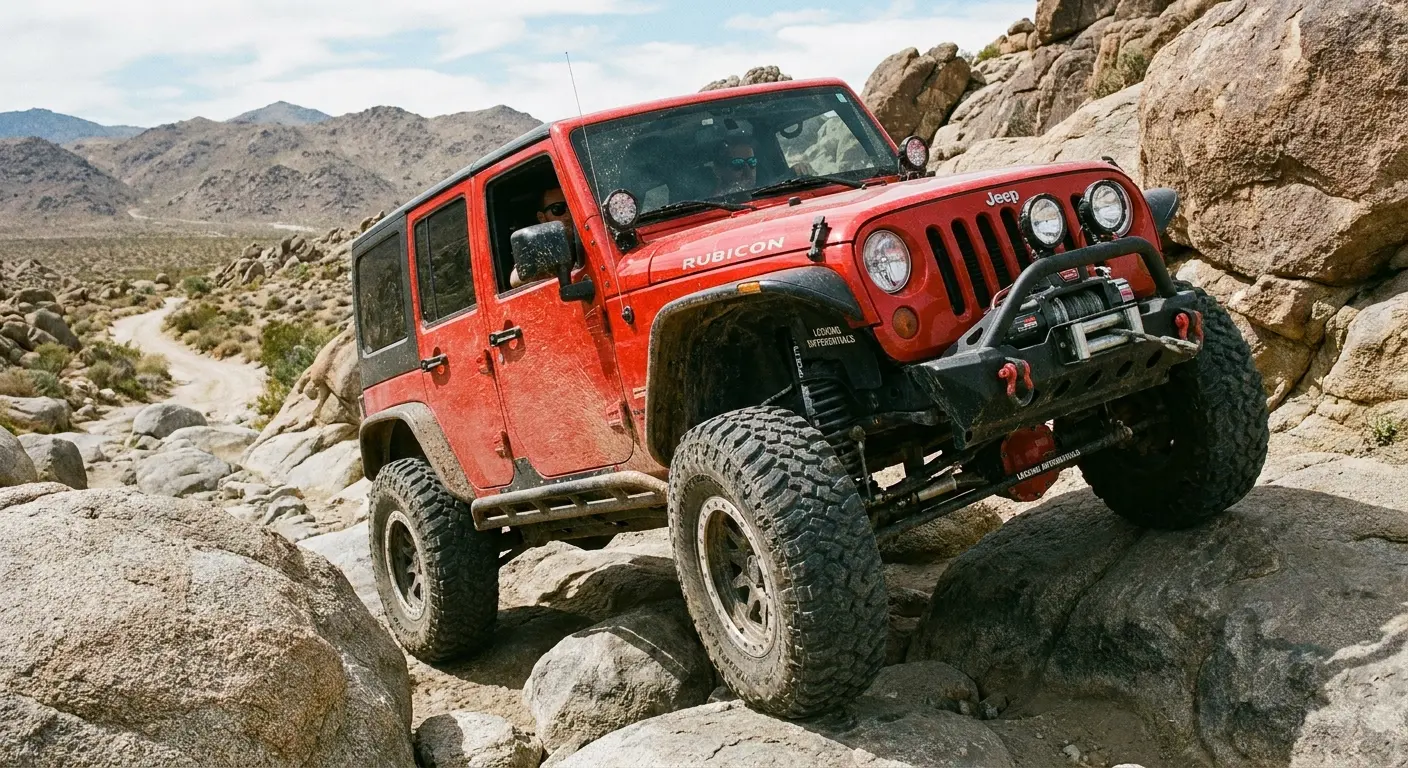
Eight grand more than base. Only worth it if you actually wheel hard. The Rubicon works for people who know they'll push limits, not for people who think they might someday. Rock rails protect the body. They'll get scratched anyway. That's the point.
The 33s are loud on the highway. You'll hear them constantly. I like the sound. Reminds me what I'm driving.
4. Wrangler 4xe
A plug-in hybrid Wrangler sounds weird. It works though. The electric motor adds instant torque that's perfect for rock crawling, where precise throttle control matters more than horsepower. You get roughly 21 miles of electric-only range. Enough for short commutes if you charge nightly.
Battery's under the rear seat. Cargo space stays the same. No idea how they pulled that off. Combined output reaches 375 horsepower, making this the quickest Wrangler until the 392 showed up. The $8,500 federal tax credit (when available) narrows the price gap with gas-only models.
800 pounds heavier. You'll feel it in corners and potentially on weight-sensitive trail obstacles. Charging infrastructure matters since you'll want to plug in regularly to justify the premium. Buy this if you want a Wrangler but feel guilty about gas.
5. Wrangler Sport
The Sport is the cheap Wrangler. No luxury stuff. Just the basics. You get the same removable doors and fold-down windshield as pricier trims, which is what matters to purists. The standard 3.6-liter V6 produces adequate power without the refinement of newer engines.
Cloth seats and manual windows (on some configurations) remind you this is a tool, not a luxury vehicle. The Sport handles moderate trails fine with its standard 4WD system, though you'll want aftermarket upgrades for serious rock crawling. Starting point for modders. Why pay for stuff you'll rip off?
Sport vs Sahara? Nicer interior, same off-road ability. If you're planning to upgrade suspension, tires, and armor anyway, start here and build from there.
The Daily Drivers
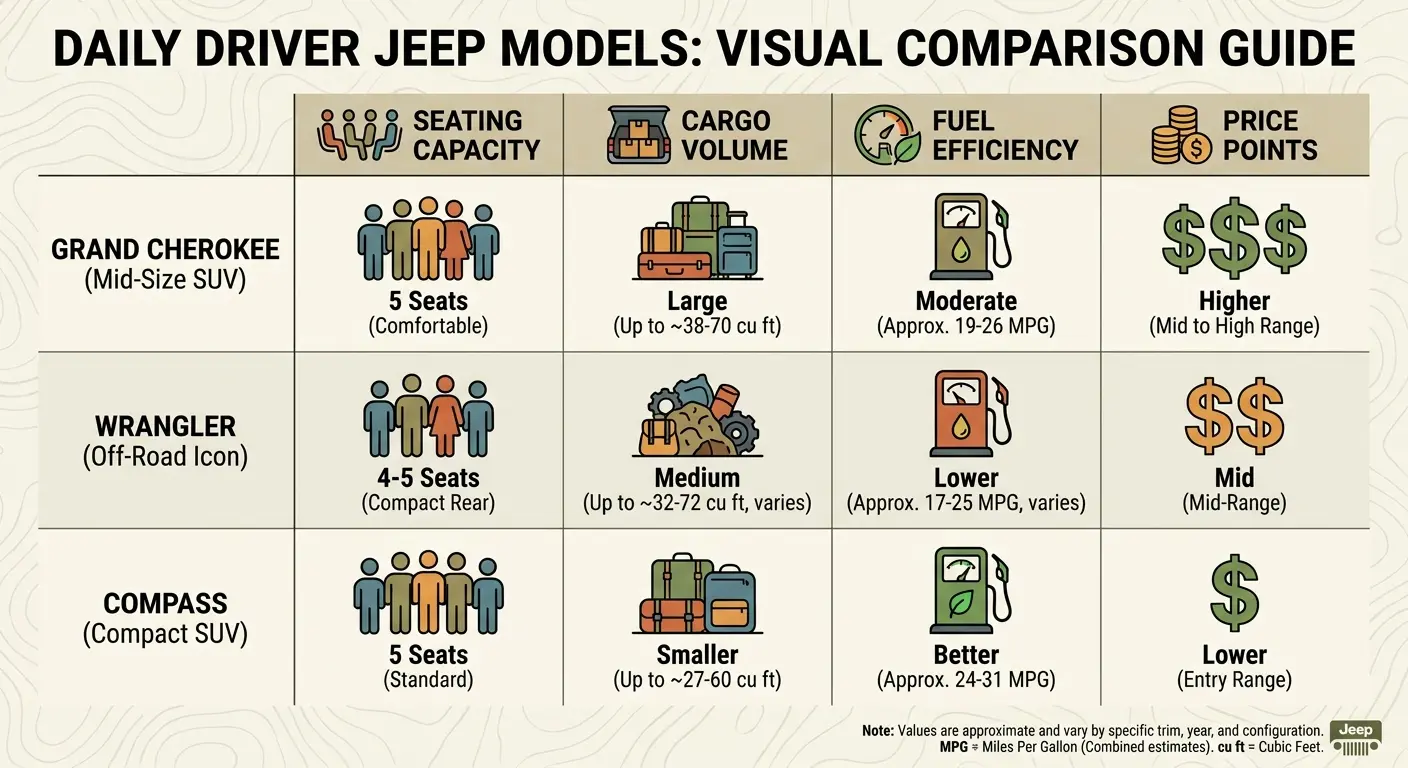
These are the Jeeps for people who don't actually go off-road. They dominate sales numbers because they fit real-world needs better than Wranglers for most buyers. Each one targets a different size and price segment.
Still more capable than a CR-V. Still a Jeep. But you're also not sacrificing ride quality or fuel economy to get it.
6. Grand Cherokee
The Grand Cherokee is the best all-around Jeep. There, I said it. Nice interior. Really nice. Handles snow and dirt roads fine. Quality materials that rival luxury brands, plus standard 4WD systems that work without drama.
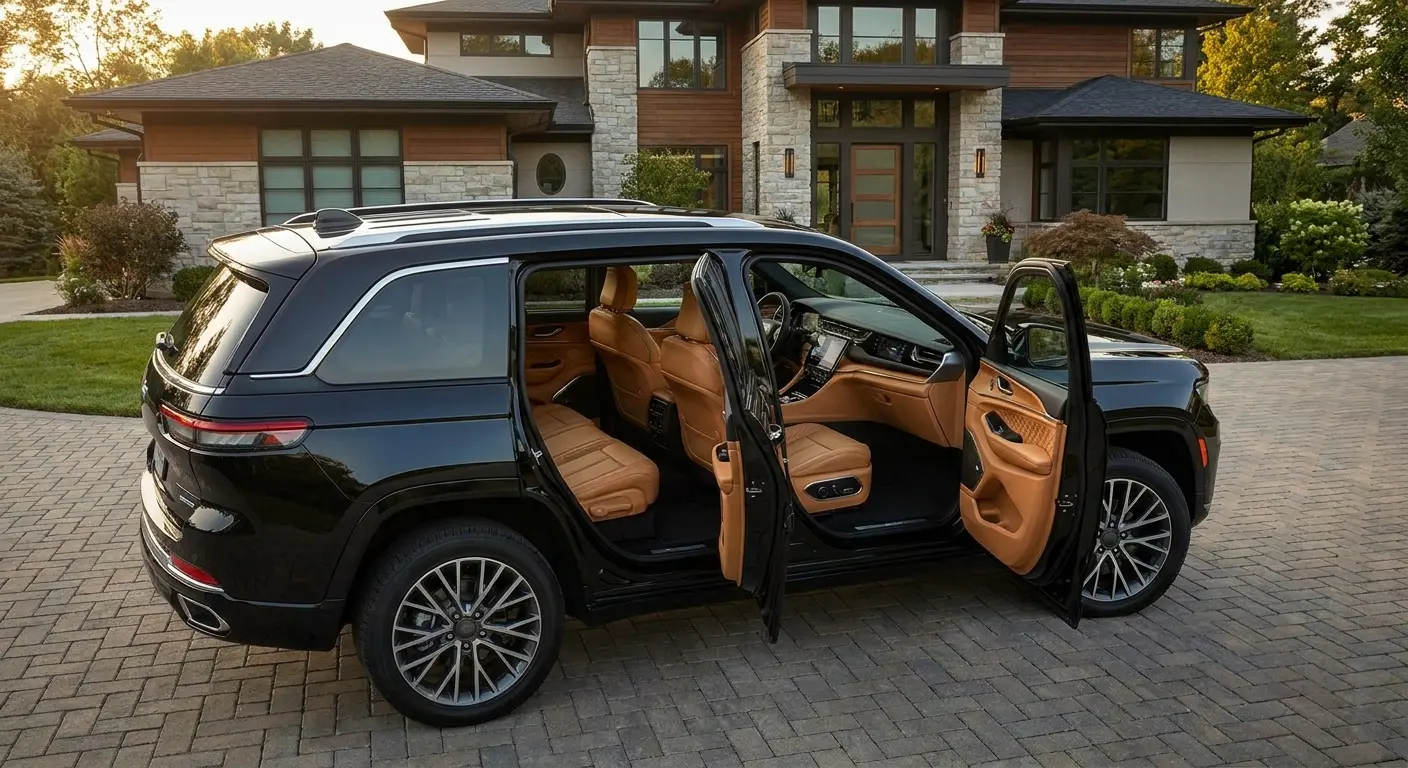
The base V6 has adequate power while achieving mid-20s mpg on highways. Available V8 options add muscle for towing or spirited driving. The Quadra-Lift air suspension (on upper trims) adjusts ride height for different conditions. Lowers for highway efficiency or raises for trail clearance.
For people who want a Jeep but not a Wrangler. The infotainment system actually works, something I can't say about all Jeep models. Rear seat space accommodates adults comfortably. Put 15k miles on one last year. It's good.
7. Cherokee
The mid-size Cherokee fills the gap between Compass and Grand Cherokee. The front-end design divides opinions sharply. Recent updates have softened the look, but it's still polarizing. You get more interior space than the Compass without Grand Cherokee pricing.
The available 2.0-liter turbo engine transforms this into a quick SUV, though fuel economy suffers. Trailhawk trims add real off-road hardware including skid plates and all-terrain tires. The Cherokee handles daily commutes fine while offering more cargo space than compact competitors.
Reliability improved from earlier model years, though resale values haven't caught up to that reality yet. Better deal than people think.
8. Compass
Jeep's compact SUV targets urban buyers who need maneuverability more than towing capacity. Fits tight parking spaces while offering higher seating positions than sedans. The base engine feels underpowered. You'll notice immediately on highway onramps.
Trailhawk trims add off-road features that seem excessive for the typical buyer but handle forest roads well. Interior quality improved dramatically in recent years, though it still trails Honda and Mazda competitors. Financial sense for first-time Jeep buyers or those downsizing from larger SUVs.
You get real 4WD capability in a package that's easy to live with daily. Fuel economy reaches the high 20s with front-wheel drive. Most efficient traditional Jeep in the lineup.
9. Renegade
The smallest Jeep brings quirky styling and surprising capability to the subcompact segment. Removable roof panels (on some trims) echo Wrangler DNA in a city-friendly package. Fits into parking spots that would challenge larger Jeeps while maintaining enough ground clearance for unpaved roads.
The turbocharged engine option has peppy acceleration that makes city driving enjoyable. Trailhawk variants include a proper 4WD system with a rear locking differential. Overkill for most buyers but appreciated by enthusiasts. Interior space feels tight for taller drivers. You'll notice on road trips.
Attracts younger buyers or urban dwellers who want Jeep capability without the size penalty. The Easter eggs hidden throughout the design (like the tiny Willys grille on the windshield) add character. Cute. Doesn't make it faster.
Daily Driver Model |
Seating Capacity |
Cargo Space (cu ft) |
Fuel Economy (Combined MPG) |
Starting Price |
|---|---|---|---|---|
Renegade |
5 |
50.8 |
27-29 |
$28,000 |
Compass |
5 |
59.8 |
25-28 |
$30,000 |
Cherokee |
5 |
54.9 |
23-26 |
$33,000 |
Grand Cherokee |
5 |
68.3 |
21-24 |
$40,000 |
Grand Cherokee L |
7 |
84.6 (behind 2nd row) |
19-21 |
$48,000 |
The Performance Seekers
Performance Jeeps? Yeah, that sounds fake. Until you drive a Trackhawk and realize Jeep's been holding out on us.
We're talking about Jeeps built for speed and handling without completely abandoning off-road roots. Each one takes a different approach to combining power with practicality. You're paying premiums for performance, but you're getting capability that justifies the cost if speed matters to you.
10. Grand Cherokee Trackhawk
The Trackhawk stuffs a supercharged Hellcat engine into the Grand Cherokee body. 707 horsepower. In an SUV. Zero to 60 mph happens in 3.5 seconds, faster than most sports cars and completely unnecessary for any practical purpose.
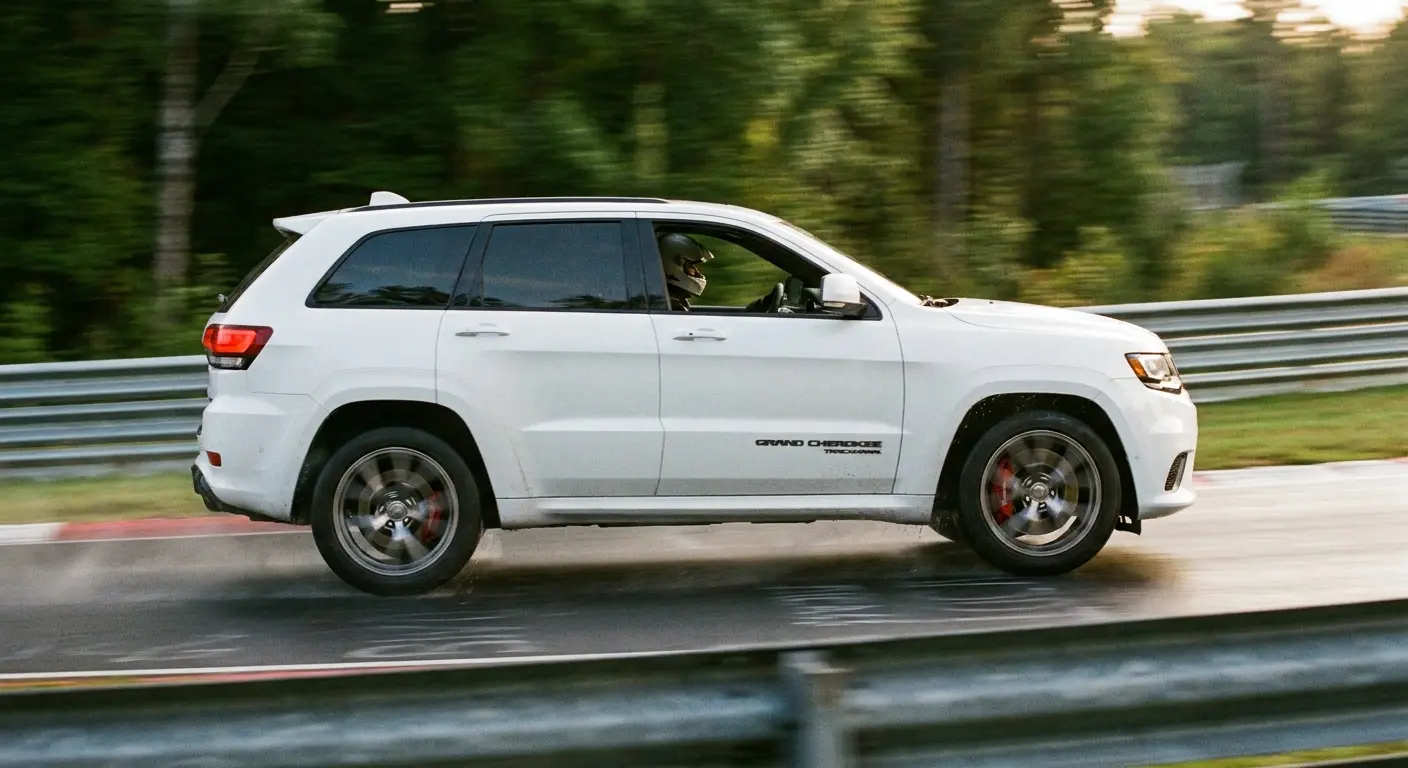
The performance is the point. Fuel economy drops into the low teens. Price you pay for supercharged entertainment. The Brembo brakes handle repeated high-speed stops without fade, critical when
The performance is the point. Fuel economy drops into the low teens. Price you pay for supercharged entertainment. The Brembo brakes handle repeated high-speed stops without fade, critical when you're pushing this hard.
Grand Cherokee comfort and space with performance that embarrasses vehicles costing twice as much. The exhaust note announces your presence in ways that annoy some people and delight others. I'm in the delight camp.
The Trackhawk is stupid. Gloriously, magnificently stupid. First time you floor it, you'll laugh. Second time, you'll start justifying the purchase. Don't ask me how I know.
Your phone mount needs to handle serious g-forces if you're using this performance. Off-roading breaks cheap phone mounts. So does flooring a Trackhawk. The Rokform phone cases integrate with mounting systems that survive what breaks lesser solutions.
11. Wrangler 392
Jeep installed a 6.4-liter Hemi V8 in the Wrangler because they could. 470 horsepower. Accelerates like a muscle car and crawls rocks like a Rubicon. This combination of speed and capability didn't exist before.
The V8 requires hood modifications that change the Wrangler's iconic profile slightly. Fuel economy averages around 13 mpg combined. A number that only matters if you care about such things.
Costs way more than a Rubicon but you can't replicate this with aftermarket mods. The sound of a V8 with the top off? Pure emotion. Zero logic. The 392 is the only Wrangler that matters. Fight me.
12. Grand Cherokee 4xe
The plug-in hybrid Grand Cherokee has quick acceleration through electric torque while maintaining respectable fuel economy. You get 25 miles of electric-only range. Enough for daily commutes if you charge regularly. Combined output reaches 375 horsepower, making this quicker than the base V6 while potentially using less fuel.
The battery placement doesn't compromise cargo space. Packaging achievement that matters for practical buyers. Starts around $60,000, but tax credits can reduce that depending on current incentives. Charging infrastructure matters since you're likely driving longer distances.
13. Cherokee Trailhawk
The Trailhawk trim transforms the Cherokee into a capable off-roader with upgrades that improve on-road handling too. The lifted suspension and all-terrain tires handle moderate trails confidently while maintaining decent highway manners.
Skid plates protect vital components from rock damage, though you're unlikely to push hard enough to need them. The available turbo engine adds punch that makes this feel quicker than standard Cherokees. Red tow hooks and Trailhawk badges signal capability to other enthusiasts. Worth? Probably nothing. Looks cool though.
More performance than most buyers will use but costs less than stepping up to a Grand Cherokee.
The Specialty Builds
These Jeeps serve specific buyer needs that don't fit neatly into other categories. Luxury haulers, heritage builds, and three-row family vehicles that prioritize different attributes. Each one targets a niche market with features that matter intensely to some buyers and not at all to others.
The pricing reflects specialized purposes, often exceeding mainstream alternatives. These are the Jeeps that solve particular problems rather than trying to be everything to everyone.
14. Wrangler Sahara
The Sahara splits the difference between base Sport utility and Rubicon capability. Body-color fenders and nicer interior materials make daily driving more pleasant. The standard 4WD system handles moderate trails and bad weather fine without Rubicon's rock-crawling focus.
Larger wheels and street -oriented tires improve highway manners at the expense of trail capability. Attracts buyers who want Wrangler style with more refinement, prioritizing comfort over extreme capability.
Costs several thousand less than a Rubicon while delivering features that matter more for daily use. A Wrangler that's easier to live with if you're honest about your trail usage.
15. Grand Wagoneer
Jeep's flagship luxury SUV competes with Range Rover and Escalade at price points that would buy two Grand Cherokees. The interior features premium materials and technology that justify the $90,000+ starting price, assuming luxury matters to you.
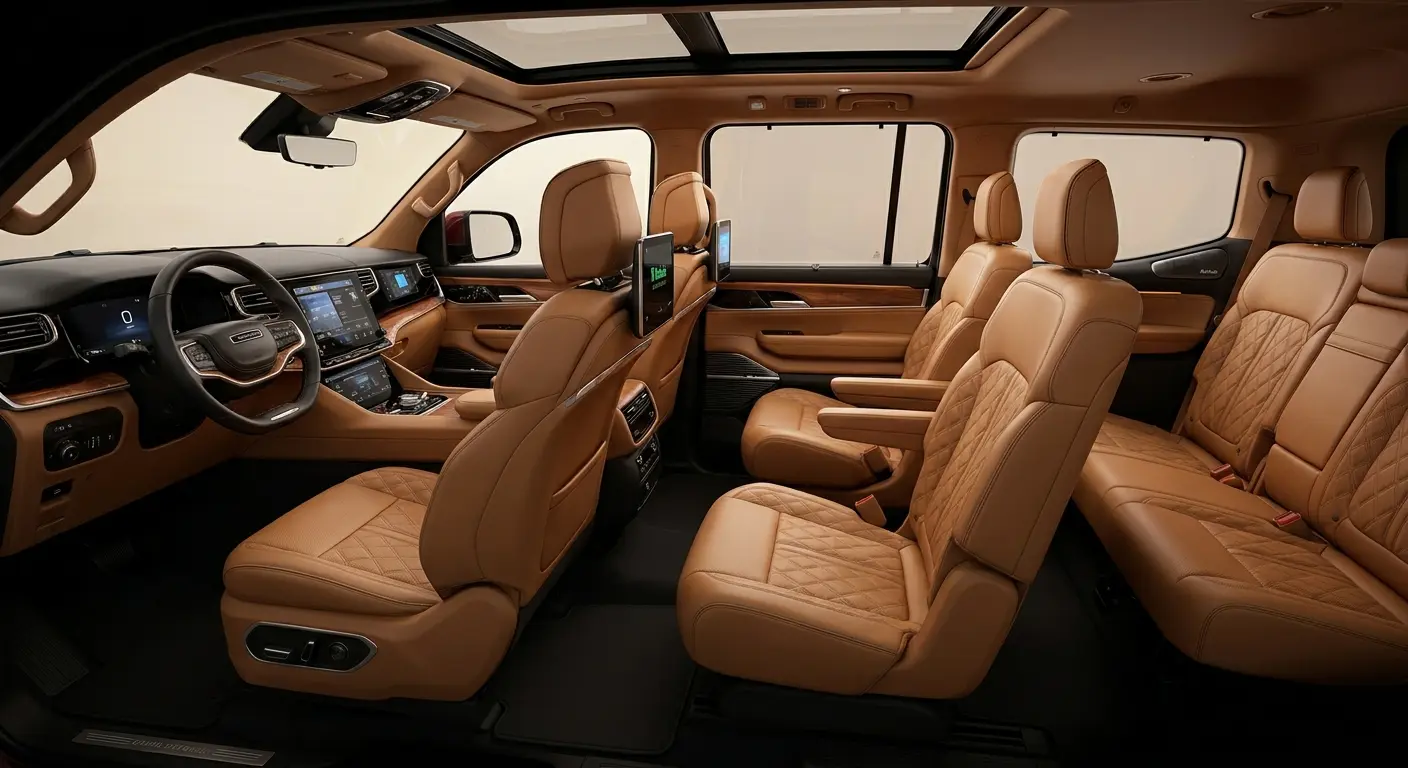
Three rows of seating with space that's actually comfortable for adults in the second row. The available 6.4-liter V8 provides effortless power for towing or highway passing. The McIntosh audio system delivers sound quality that exceeds most home systems.
Targets buyers who want Jeep capability wrapped in luxury. A combination that didn't exist at this level before. The Grand Wagoneer makes a statement about priorities, valuing comfort and prestige over value. Luxury SUV owners protecting premium interiors should explore the best car chargers that won't damage high-end dashboard materials.
16. Wagoneer
The standard Wagoneer has most of the Grand Wagoneer's space and capability at a lower price point. Same three-row layout with slightly less luxurious materials and fewer standard features. The price difference of roughly $20,000 buys you features that matter more to some buyers than others.
The available twin-turbo inline-six engine provides strong performance with better fuel economy than the V8. You need three-row space without flagship pricing? Here you go. The Wagoneer competes with Tahoe and Expedition on features while maintaining Jeep's off-road advantage.
Capability exceeds typical three-row SUVs without the luxury tax of the Grand Wagoneer.
17. Grand Cherokee L
The three-row Grand Cherokee extends the wheelbase to add a third row without creating an entirely new model. Grand Cherokee refinement with seating for seven. The third row fits kids or small adults comfortably, though it's tight for larger passengers on long trips.
Cargo space behind the third row is minimal. You'll notice when packing for family trips. The Grand Cherokee L costs less than a Wagoneer while delivering similar space in a more manageable package.
Attracts buyers who've outgrown two-row SUVs but don't need Wagoneer luxury. The available air suspension maintains Grand Cherokee ride quality despite the added length. Practical family space without stepping up to full-size SUV pricing.
18. Wrangler Willys
The Willys trim honors Jeep's military heritage while adding real off-road hardware at a price between Sport and Rubicon. Locking differentials, rock rails, and all-terrain tires improve trail capability significantly.
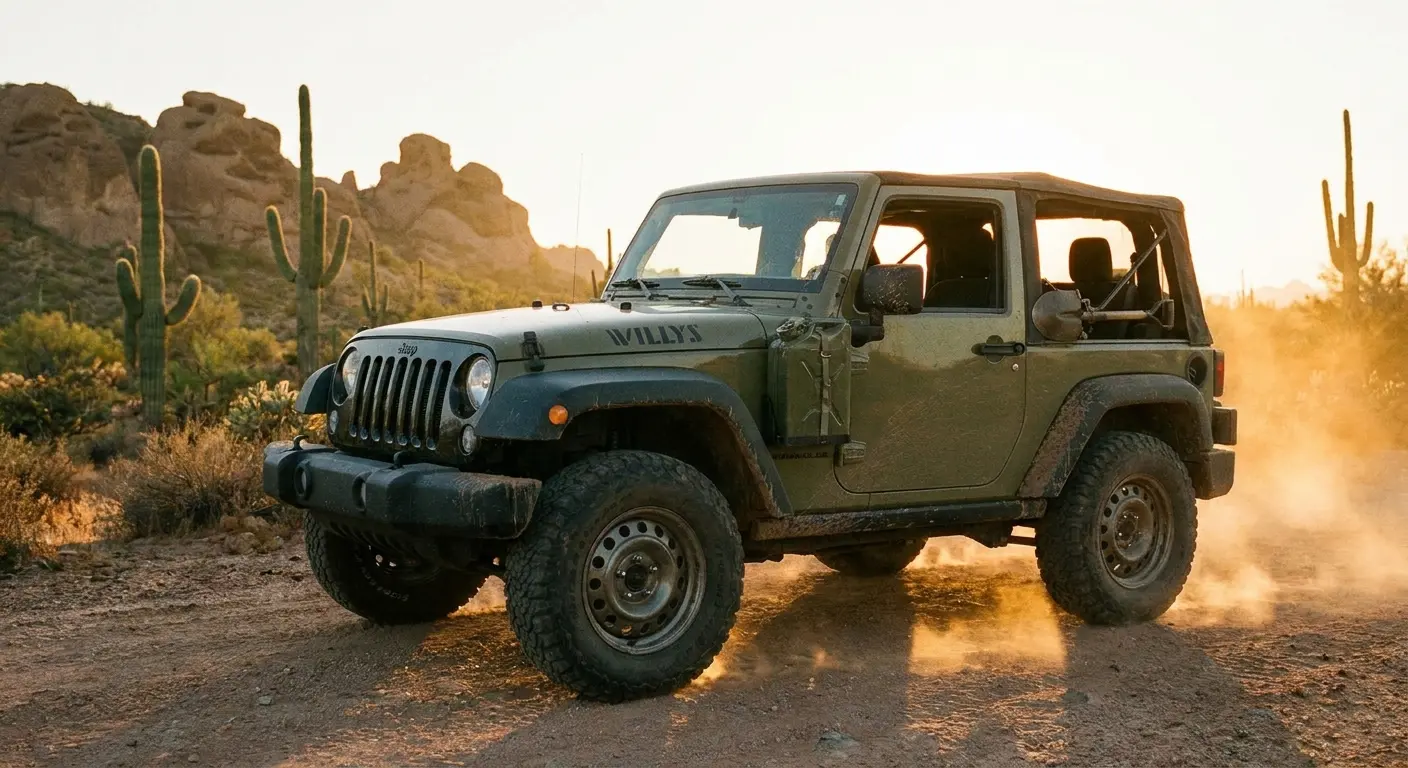
The hood decal and Willys badges signal heritage appreciation to enthusiasts who care about such things. You want more capability than Sport offers without Rubicon's premium pricing? The Willys has about 80% of Rubicon's capability for roughly 60% of the cost. Value play for serious trail users.
Functional upgrades rather than luxury features, which aligns with the heritage theme. Heritage enthusiasts documenting trail adventures need iPhone photography tips to capture the Willys in its natural environment.
Keeping Your Tech Secure When You're Pushing Limits
Your phone will fly off the dash. Regular mounts don't handle off-roading or hard acceleration. A bump that feels mild to you creates massive acceleration forces on your device.
You spent serious money on the Jeep. Don't cheap out on the phone mount. The Rokform mounting systems integrate with protective cases, creating a setup that survives what breaks lesser solutions.
I've tested countless mounting solutions across different types of terrain and driving conditions. The difference between adequate and excellent becomes obvious quickly.
Final Thoughts
Most people should buy a Grand Cherokee. It's comfortable, capable enough, and you won't hate driving it every day. The Wrangler's cooler, but be honest. When's the last time you went off-road?
If you actually wheel, get a Rubicon. If you just want to look like you do, get a Sport and save the money. The Trackhawk is stupid fast and I want one. The Gladiator makes no practical sense, which is why people love it.
I've driven most of these. Some multiple times. Here's what I'd buy:
Daily driver? Grand Cherokee. No question.
Weekend off-roading? Wrangler Unlimited Rubicon.
Stupid fun? Trackhawk, if I could afford the insurance.
Actually practical? Probably the Grand Cherokee again.
The Jeep you want and the Jeep you need are usually different. I wanted a Rubicon for years. Bought a Grand Cherokee. It was the right call. Still want the Rubicon though.
Eighteen models. Pick the one you'll actually use, not the one you daydream about. Or ignore this and get the Wrangler anyway. Most people do.

