


I’ve downloaded more language apps than I care to admit, usually at 2:00 AM after convincing myself that this is the week I finally become fluent. Three days later? The notifications get annoying, the guilt sets in, and the app gets deleted. I’m definitely not alone in this cycle. According to most language learners, picking the right tool is the difference between making steady progress and burning out by Friday.
The App Store is flooded with tools promising fluency in minutes. But here’s the reality: different apps do different jobs. You need a tool that actually matches your goal, whether that’s ordering tapas in Madrid without panicking or debating politics in Mexico City. We combed through the market to help you find the best app for your specific needs.
Let’s break down the top contenders, categorized by how they actually teach, so you can stop scrolling and start speaking.
Table of Contents
What to Consider Before You Download
Gamified & Casual: Building the Daily Habit
Structured & Grammar-Heavy: The Academic Approach
Audio & Immersion: Learning with Your Ears
Tutoring & Conversation Exchange: Speaking with Humans
Vocabulary & Flashcards: Expanding Your Word Bank
Content-Based & Niche Tools: Reading and Reference
Integrating Language Learning into "Life on the Go"
Final Thoughts
TL;DR
If you’re in a rush and just want the highlights, here is the quick breakdown:
Define your goal first: A casual traveler needs different tools than someone aiming for deep fluency.
Mix your methods: Don't rely on one app. Pair a grammar tool with a speaking tool for the best results.
Consistency is king: Ten minutes a day beats a once-a-week marathon session.
Don't neglect output: Passive listening is easy, but you have to open your mouth and speak to actually learn.
Protect your gear: If you learn while commuting or at the gym, make sure your phone is protected so a drop doesn't kill your streak.
What to Consider Before You Download
Let's be real: the "best" app is subjective. It depends entirely on your brain, your goals, and your schedule. As we head further into 2026, Spanish apps are getting smarter with AI, but they still generally fall into specific buckets.
Learning Goal (Fluency vs. Travel)
Are you looking for deep fluency, or do you just need to order food? Some apps drill into the heavy grammar, while others focus on survival phrases. If you pick a grammar-heavy textbook app when you just want to survive a weekend trip, you’re going to get frustrated. Conversely, a travel phrasebook app won't help you understand the subjunctive mood.
Methodology
Do you learn better by playing a game, listening to audio, or studying charts? You have to enjoy the process (at least a little bit) to stick with it. Here is a quick cheat sheet on which style suits which learner:
Learner Type |
What You Need |
Look For... |
|---|---|---|
The Gamer |
Points, leaderboards, and streaks to keep you hooked. |
Gamified & Casual |
The Academic |
Structure, grammar rules, and a clear path forward. |
Structured & Grammar-Heavy |
The Commuter |
Hands-free audio lessons (eyes on the road, ears on the lesson). |
Audio & Immersion |
The Extrovert |
Real-time conversation and social interaction. |
Tutoring & Exchange |
The Data Nerd |
Spaced repetition algorithms and efficiency. |
Vocabulary & Flashcards |
Input vs. Output
Beware the "False Fluency" trap. Imagine you’ve used an app for three months. You see the word biblioteca on your screen and instantly click "Library." You feel like a genius. But when you’re on a street in Barcelona and someone asks you where the library is, you freeze. Why? Because you practiced Input (recognition) but never practiced Output (recall and speaking). You need a tool that forces you to build sentences, not just tap buttons.
Time Commitment & Budget
Be honest about your schedule. "Micro-learning" apps only ask for 5–10 minutes a day, while rigorous programs might require a solid 45 minutes. Also, decide if you want a free resource or if you're willing to pay for a premium subscription. And if you plan to learn on the subway or a plane, offline mode is non-negotiable.
Gamified & Casual: Building the Daily Habit
Best for: Beginners who need motivation and people trying to build a daily habit.

1. Duolingo
Love it or hate it, Duolingo is the giant of the industry. It uses short, game-like lessons to teach vocabulary. In 2026, their AI "Roleplay" feature actually allows for decent text conversations. It’s great for keeping your streak alive, though it can sometimes feel a bit repetitive.
2. Memrise
Memrise uses a mix of mnemonics and video clips of actual locals speaking. It focuses on how people actually talk, slang and all. It’s fantastic for training your ear to hear real Spanish, not just robot voices.
3. Mondly
Mondly leans hard into tech with Augmented Reality (AR) and Virtual Reality (VR) features. You can have conversations with a virtual bot that corrects your pronunciation. It helps you get over the fear of speaking without the embarrassment of messing up in front of a human.
4. LingoDeer
Originally built for Asian languages, LingoDeer actually has a fantastic Spanish course. It explains the "why" behind grammar much better than Duolingo, while keeping the cute, gamified aesthetic.
5. Drops
Drops is pure visual vocabulary. You match icons to words for 5 minutes a day. It won't teach you grammar, but it’s a fun, fast way to expand your word bank while waiting for your coffee.
Structured & Grammar-Heavy: The Academic Approach
Best for: Serious learners who want to understand the mechanics of the language.

6. Babbel
Babbel feels like a digital textbook in the best way possible. It focuses on practical conversation skills through grammar lessons and dialogue. It’s structured, academic, but digestible.
7. Busuu
Busuu offers a structured course with a killer feature: a community where native speakers correct your writing exercises. It aligns with official language levels (A1–B2), making it great if you have a specific certification goal.
8. Rocket Languages
Rocket feels like a traditional classroom course. You get audio lessons, grammar text, and culture notes. It aims for a deep understanding of the language. It’s not the prettiest app, but the content is comprehensive.
9. Rosetta Stone
The veteran. Rosetta Stone uses "Dynamic Immersion"—meaning no English is spoken, ever. You learn by associating images with words and sounds. It forces you to think in Spanish without translating in your head first.
Feature |
Babbel |
Busuu |
Rosetta Stone |
|---|---|---|---|
Primary Focus |
Practical Conversation & Grammar |
Certification & Community Feedback |
Full Immersion (No English) |
Lesson Style |
Short, interactive drills |
Structured course + Peer review |
Image & Audio association |
Best For |
Travelers & Hobbyists |
Serious Students |
Visual Learners |
Audio & Immersion: Learning with Your Ears
Best for: Commuters, runners, and auditory learners.
10. Pimsleur
Pimsleur is an audio-only method that prompts you to speak aloud constantly. It uses "Graduated Interval Recall" to drill pronunciation into your brain. It takes about 30 minutes a day and works best if you actually say the words out loud (even if you look crazy in your car). I also picked the best brain game apps for training outside language.
11. Language Transfer
This is a completely free audio course that teaches you to deconstruct Spanish grammar based on its relationship to English. It’s often called a "lightbulb moment" app. Instead of memorizing lists, you learn the logic behind the language.
12. Mango Languages
Mango focuses on practical conversation. It has a color-coded interface that highlights grammatical patterns in sentences so you can see how the puzzle pieces fit together. Plus, it's often free through public libraries.
13. Michel Thomas (App Version)
This simulates a classroom environment where you listen to a teacher explaining the structure to two other students. You learn along with them, building sentences from scratch without taking notes.
Tutoring & Conversation Exchange: Speaking with Humans
Best for: Real-world practice and getting over the fear of speaking.
14. iTalki
iTalki connects you with 1-on-1 tutors. You can find professional teachers or community tutors for casual chat. It’s the closest thing to immersion without buying a plane ticket.
15. HelloTalk
HelloTalk is basically a social network for language exchange. You text, voice note, or call native Spanish speakers who want to learn English. It’s great for slang and making friends, just be ready to help them with their English in return.
16. Preply
Similar to iTalki, Preply helps you find structured tutor plans via 1-on-1 video lessons. It operates on a subscription model for lessons.
17. Tandem
Tandem is a sleek app for finding language exchange partners. It has built-in correction tools and translation features to keep the conversation flowing when you get stuck.
18. Baselang
Baselang is the heavy hitter: unlimited 1-on-1 tutoring via Zoom for a flat monthly fee. If you have the time to take a lesson every day, the value is insane. It’s designed for rapid fluency.
Vocabulary & Flashcards: Expanding Your Word Bank
Best for: Memorization and data nerds.
19. AnkiMobile / AnkiDroid
Anki is the gold standard for Spaced Repetition Systems (SRS). It’s a bare-bones, no-frills flashcard app. You can download pre-made decks or build your own. It’s not pretty, but it works incredibly well for long-term retention.
20. Clozemaster
Clozemaster uses "cloze" tests (fill-in-the-blank) for thousands of sentences. It teaches vocabulary in context, which is much more effective than learning isolated words. Great for intermediate learners.
21. MosaLingua
MosaLingua focuses on the most useful 3,000 words and phrases first. It cuts the fluff and uses audio and cultural tips to help you memorize efficiently.
22. Quizlet
The student favorite. You can create flashcards, play matching games, and use study sets created by other users. It’s perfect for cramming for a specific topic or test.
Content-Based & Niche Tools: Reading and Reference
Best for: Reading comprehension and specific grammar checks.

23. LingQ
LingQ is an immersive reader. You read texts and click words you don’t know to see translations. The app tracks your known vocabulary count. It’s a unique approach that focuses entirely on acquiring language through reading.
24. SpanishDict
More than just a dictionary, SpanishDict is a lifesaver for grammar guides, conjugation drills, and word-of-the-day features. It’s the ultimate reference tool.
25. Beelinguapp
Beelinguapp displays text in two languages side-by-side while playing an audiobook of the text. It’s like karaoke for reading comprehension.
Integrating Language Learning into "Life on the Go"
Here’s the thing about the "best" apps: they only work if you actually use them. Consistency is everything. In 2026, most of us are squeezing learning into the cracks of our day—commuting to work, hitting the gym, or traveling.
But using these apps in the real world puts your gear at risk. If you’re using Pimsleur in the car, trying to follow a Duolingo lesson on a hiking trail, or video chatting with a tutor on iTalki while setting up at the gym, your phone is vulnerable. Knowing how to protect your phone screen from cracking is just as important as the lesson itself, because a broken device means interrupted learning.
This is where Rokform fits into your routine.
To get the most out of these apps, you need a setup that allows for hands-free learning and serious protection.
For the Audio Learner (Commuters)
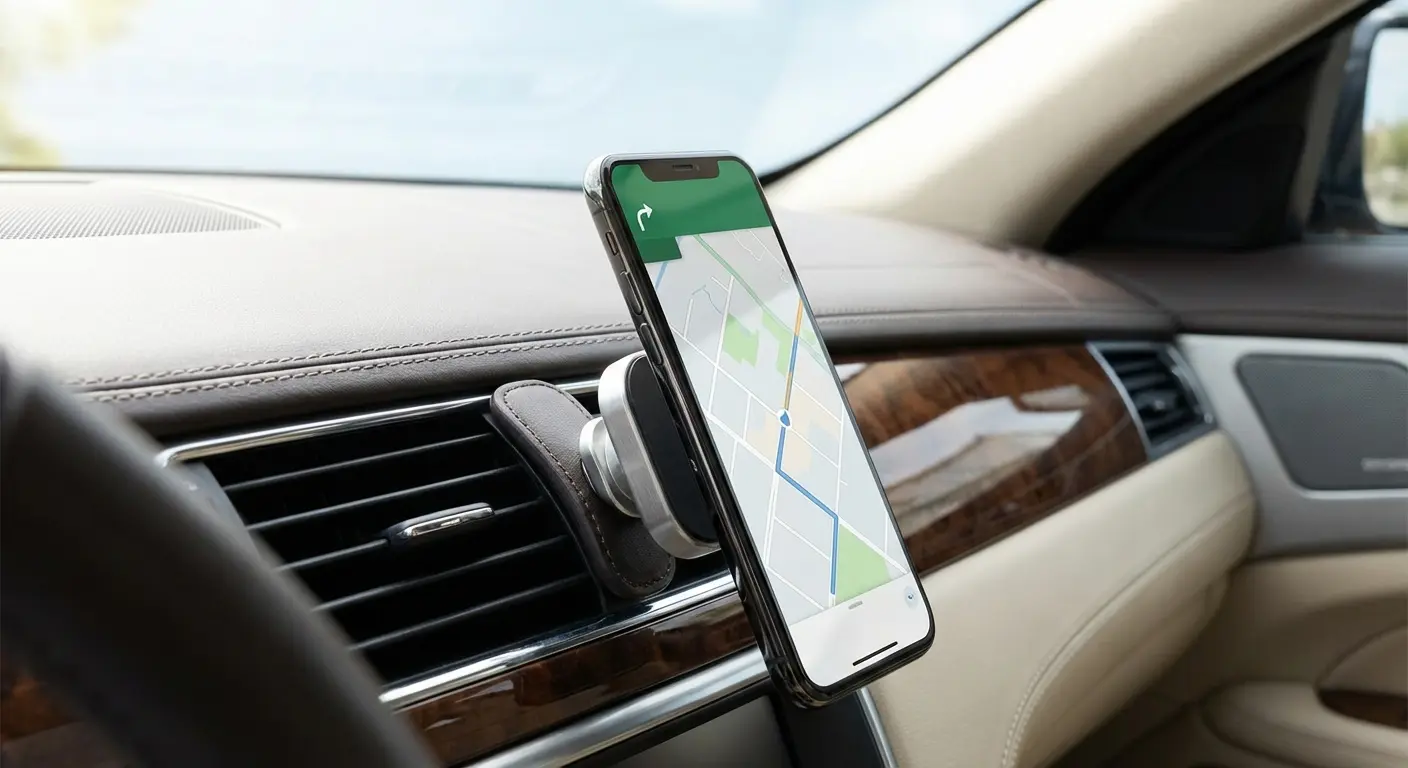
If you use audio apps like Pimsleur or Language Transfer, you need your phone mounted securely. Rokform’s Magnetic Wireless Charging Stand or car mounts use industrial-grade magnets to keep your phone at eye level. This keeps you safe while you practice your pronunciation, turning your commute into a mobile classroom.
For the Video Learner (Tutors)
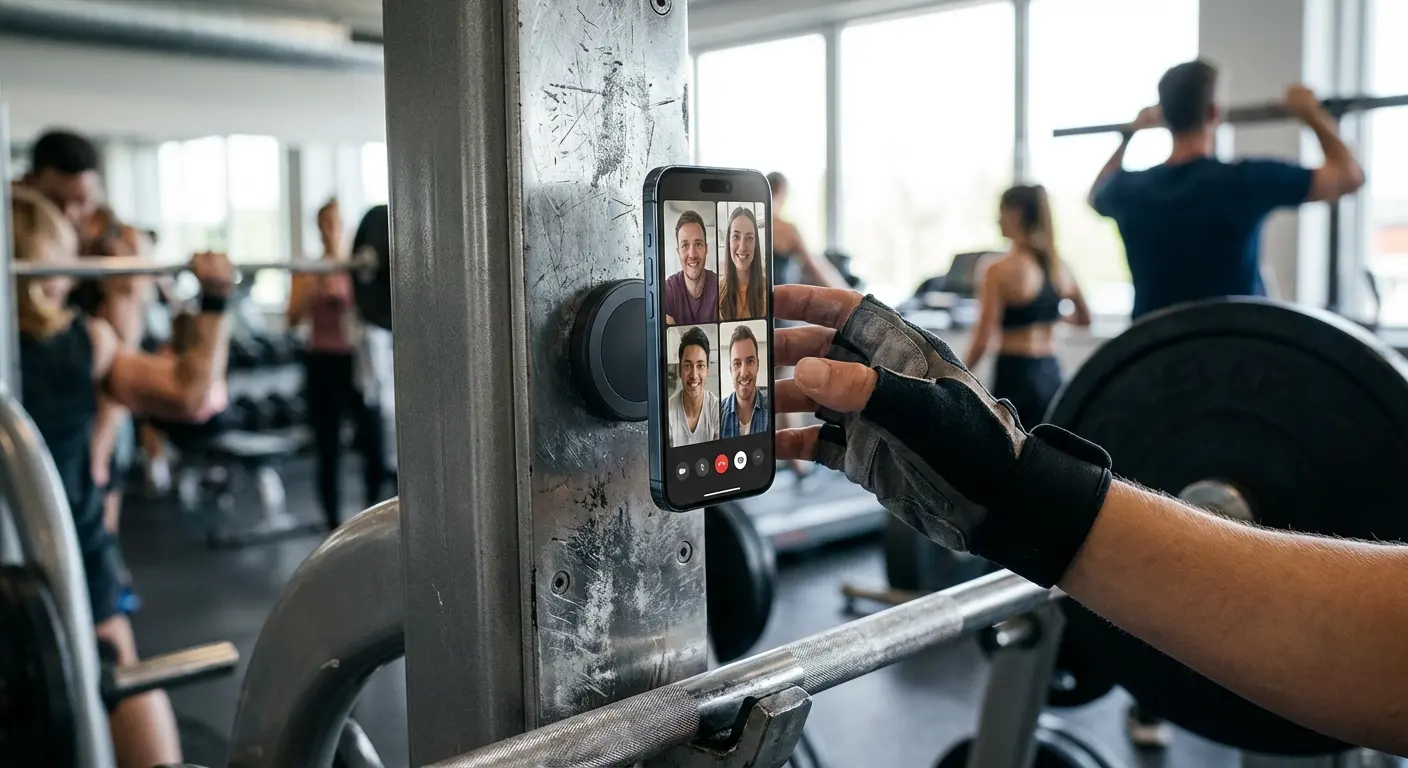
Taking a lesson on Baselang or Preply requires a steady screen. Rokform’s cases, compatible with MagSafe® accessories, allow you to stick your phone to any magnetic surface—a gym machine, a fridge, or a golf cart. Finding the best phone case for the gym isn't just about protection; it's about utility. You can stick your phone to the squat rack frame at eye level and chat with your tutor in Bogota between sets, keeping your hands free for the weights.
For the Traveler
If you are learning Spanish to travel, you’ll be navigating unfamiliar streets. Rokform’s Rugged Series cases offer military-grade protection. Whether you drop your phone on a cobblestone street in Barcelona or a rocky trail in the Andes, Rokform ensures your connection to the language survives the fall.
Learning Environment |
The Risk |
The Rokform Solution |
|---|---|---|
Car Commute |
Distracted driving / Phone sliding off seat |
Magnetic Car Dash Mount for eye-level safety |
Gym / Workout |
Dropping phone on weights / No place to set it |
MagSafe® Case sticking to metal equipment |
Adventure Travel |
Drops on concrete, rocks, or cobblestone |
Rugged Series Case (Military-Grade Protection) |
Don't let a broken screen or a dead battery stop your learning streak. Equip your phone with Rokform so you can learn Spanish anywhere your life takes you.
Final Thoughts
The best app is simply the one you open every day. My advice? Pick one main course app (like Babbel or Rocket) and pair it with a speaking tool (like iTalki or Pimsleur). Fluency is a marathon, not a sprint, but with the right tools in your pocket and the right protection on your phone, you’re well-equipped for the journey.
Start your first lesson today, stick with it, and good luck!

