

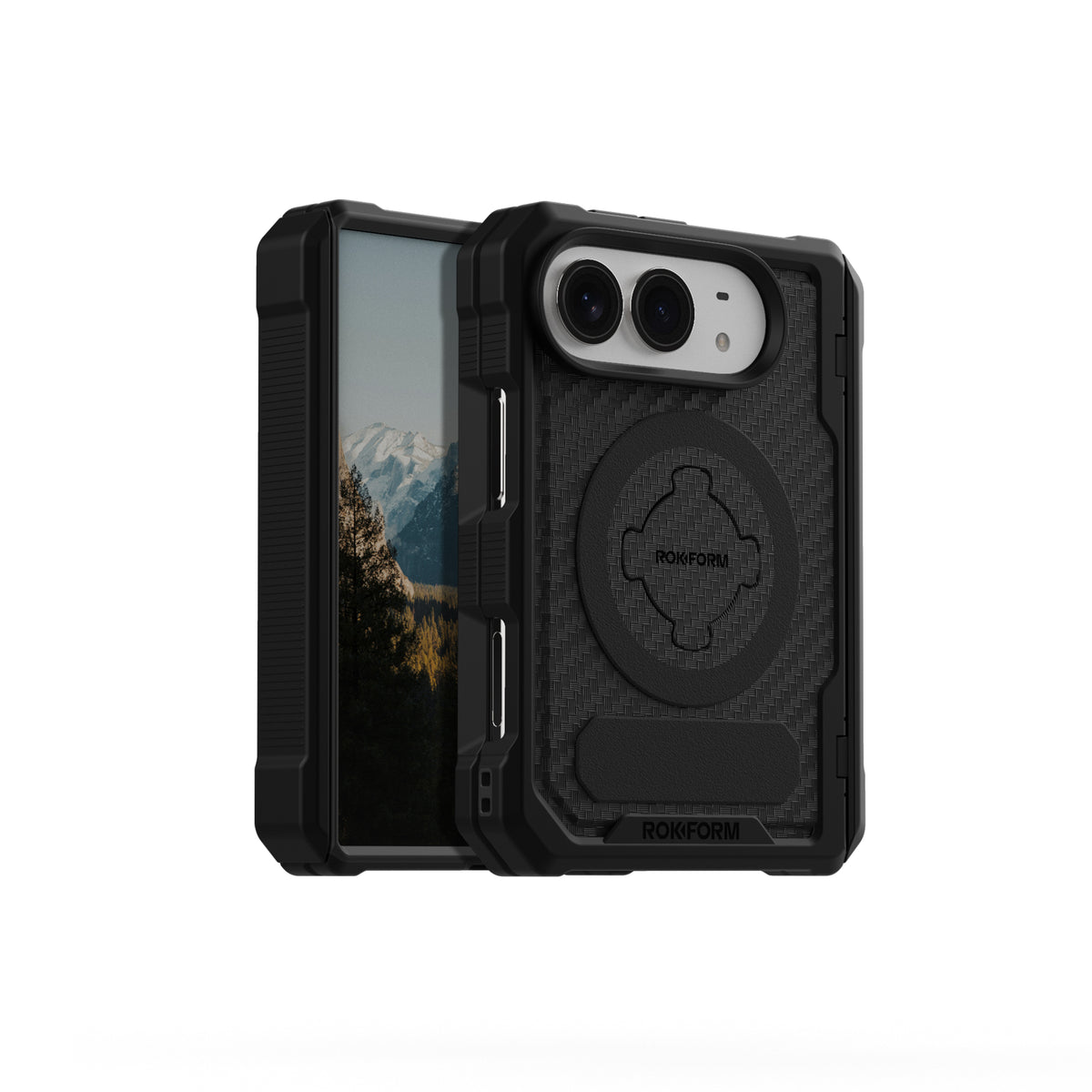


Rokform 18x: 8x to 18x zoom, out September.
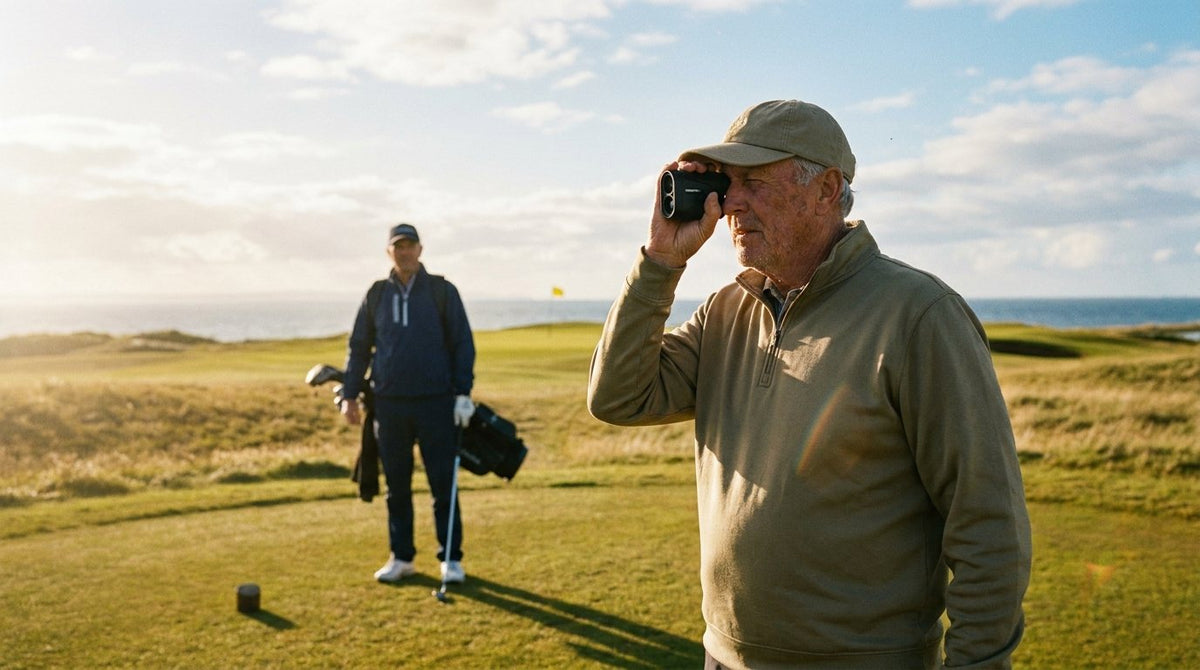
17 golf rangefinders for seniors ranked on eye relief, weight and one-handed use, the three specs that decide whether you keep using one.
Golfers 65 and over are 22% of on-course participants and 27% of total spend. They over-index on buying, and the coverage aimed at them is almost entirely affiliate content with no ergonomic data behind it.
Two numbers should drive this purchase and almost nobody mentions them. Roughly 90% of adults over 45 have presbyopia, which means correction, which means eye relief decides whether you can see the display at all. And essential tremor affects between 5.79% and 8% of adults over 65, rising above 20% in the nineties, which means steadiness is not a niche concern.
Our golf accessories every golfer needs list applies the same test to the rest of the bag. So I ranked 17 on eye relief, weight, display legibility and how many buttons you have to remember. Not on maximum range, which nobody needs.
Table of Contents
- The Three Specs That Actually Matter
- Best For Eyeglass Wearers
- Best For Unsteady Hands
- Best For Simplicity
- Best For Reading The Number
- Why Compact Is The Wrong Direction
- What Rokform Is Bringing To This In September
- Final Thoughts
TL;DR
- Eye relief of 16mm is the practical floor for glasses. 18mm is better. Bushnell's flagship gives 15mm.
- Precision Pro publishes 18mm on a $199.99 model, matching Nikon's $499.95 flagship.
- Heavier is steadier. Mass damps tremor, and the lightest devices are the hardest to hold still.
- A smaller body means a smaller exit pupil, which means your eye placement has to be more precise.
- Callaway Screen View removes the eyepiece entirely, and almost no senior guide mentions it.
- The Rokform Golf Range Finder 18x lands September 2026 with 8x to 18x adjustable magnification.
The Three Specs That Actually Matter
Eye relief is the distance your eye can sit from the eyepiece and still see the full image. Wear glasses and you need more of it, because the lens holds your eye further back. Sixteen millimetres is the practical floor and eighteen is comfortable.
Weight works the opposite way to intuition. A heavier device damps a tremor, a lighter one transmits it, and two independent reviewers warned that the smallest rangefinder in golf is harder to hold still than its full-size siblings.
Button count decides whether you use the thing. A device that needs a mode sequence gets left in the bag by anyone who does not want to relearn it every round.

Who Publishes What
Three brands publish eye relief on their product pages. Nikon publishes a numeric diopter range and is nearly alone in doing so. Garmin, Blue Tees, Voice Caddie, TecTecTec, GOGOGO and Callaway publish neither.
Precision Pro publishes the longest eye relief in the industry at 18mm across the NX9, NX10 and Titan Elite, matching Nikon's stabilized flagship and beating every Bushnell. That is a $199.99 device tying a $499.95 one on the spec that most affects whether you can see the number. Our best golf rangefinders guide covers the field more broadly.
| Model | Eye relief | Diopter | Weight |
|---|---|---|---|
| Precision Pro NX9, NX10, Titan Elite | 18 mm | Not published | 284 to 397 g |
| Nikon Coolshot ProIII Stabilized | 18 mm | Yes | 205 g |
| Nikon Coolshot 50i | 17 mm | ±3° | 176 g |
| Nikon Coolshot 20 GII, 20i GIII | 16.7 mm | ±4° | 130 g |
| Bushnell Tour V6, V7 Shift, Tour Hybrid | 16 mm | Not on page | 241 to 255 g |
| Bushnell A1-Slope | 16 mm | ±3.5 in manual | 145 g |
| Bushnell Pro X3+ LINK | 15 mm | Not published | 340 g |
Best For Eyeglass Wearers
Four devices with the eye relief to work over lenses.
1. Precision Pro NX10
$279.99, 6x, 18mm eye relief, 5 to 999 yards, 400 yard flag lock, three year warranty, and a red OLED that Precision Pro markets as sharp, dark, big numbers. That last phrase is the closest thing to a large-font display anywhere in golf.
The wide circular reticle forgives an imperfect hold, and testers report locking on without needing to be precise. This is the strongest all-round pick in this piece.
2. Precision Pro NX9
$199.99, 6x, 18mm eye relief, 284 grams, CR2 rather than rechargeable, same big red numbers. The same ergonomics for eighty dollars less, and a replaceable cell means no degradation worry.

3. Nikon Coolshot ProIII Stabilized
$499.95, 6x, 18mm eye relief, published diopter adjustment, and optical lens shift stabilization that steadies the image and the laser. Nikon quantified the previous generation at roughly 80% shake reduction.
If both glasses and tremor apply to you, this is the device, and the price reflects that it is doing two jobs.
4. Nikon Coolshot 50i
17mm eye relief with a published ±3 degree diopter range, 176 grams, roughly 13,000 actuations per CR2, strong built-in cart magnet. The value entry in Nikon's line and lighter than the flagship.

Best For Unsteady Hands
Four devices that address tremor, three by stabilizing and one by removing the problem.
5. Leupold GX-6c
6x, 450 yards to a flag, 8.0 ounces, and Leupold's own copy states it stabilizes both the image and the laser. MyGolfSpy's testing found it eliminated any shakiness and provided consistent results.
The three selectable reticles are the underrated feature. A large bracket or circle is far easier to hold on a flagstick than a fine crosshair, and Leupold is the only brand offering the choice.
6. Vortex Anarch+
$599.99, 6x with a 22mm objective, image stabilization with a menu toggle, magnets on both sides. The Hackers Paradise described targets looking like smooth video rather than micro-jerks after months of testing.
The unlimited lifetime transferable warranty needs no receipt and covers damage regardless of cause, which matters more with age than most people admit.

7. Garmin Approach Z82
$599.99, 6x with image stabilization, accuracy within 10 inches of the flag, and a confirmation that vibrates while the hole view map zooms to the green. The map gives you spatial context rather than a bare number, which is genuinely easier to interpret quickly.
Garmin publishes neither eye relief nor diopter, which is the gap on an otherwise excellent device.
8. Callaway Screen View
The genuine accessibility product almost no senior guide mentions. No eyepiece at all. You hold up an external OLED screen and read the number off it like a phone, which removes eye alignment, exit pupil and diopter from the equation entirely.
10x magnification, CR2, and Callaway's own copy targets people who struggle to hold a traditional laser still. Try one before you spend $500 on stabilization.
Best For Simplicity
Four devices you can operate without relearning a menu.

9. Shot Scope Pro L2
$149.99, x6, 700 yards. One button on top handles power and measurement. Press, aim, read. Golf Insider scored it 100% on accuracy and Plugged In Golf found it as fast as lasers three times the price.
The yardage stays on screen an extra couple of seconds after the lock so you can confirm what you read before it disappears, which is a small design decision that matters enormously.
10. Bushnell A1-Slope
$299.99, and a single button for ranging with the mode button reserved for setup. Press power and fire, aim, hold, read.
The catch is size, covered below, and it is a real one.

11. Nikon Coolshot 20 GII
$199.95 to $299.95 depending on variant, 6x, 130 grams, 16.7mm eye relief, ±4 degree diopter, and single button operation with mode reserved for switching units. Nikon's five year warranty is the longest term in golf.
12. Bushnell Pro X3+ LINK
$599.99, single button for ranging despite the feature count. 7x, IPX7, and Dual Display toggling between red and black readouts across four brightness steps, which is the only device in golf letting you match the display to the light.
The 15mm eye relief is the shortest of the majors, so try it with your glasses before committing.
Best For Reading The Number
Three devices where legibility was clearly considered.
13. Precision Pro Titan Elite
$399.99, 18mm eye relief, big red numbers, GPS distances in the viewfinder, Find My Precision Pro, three year warranty, no subscription. Publishes that Bluetooth cuts battery from 40 rounds to 10, which is unusual honesty.
14. Garmin Approach G12
$99.97, and not a laser at all. A clip-on GPS puck with 42,000-plus preloaded courses, 30 hours of battery, and a big-numbers mode that is the only named large-font option I found anywhere in this category.
No eyepiece, no aiming, no steadiness required. For anyone whose hands or eyes make a laser genuinely difficult, this is a better answer than a more expensive laser.
15. Bushnell Tour Hybrid
$499.99, 6x, 16mm eye relief, 247 grams, and laser plus GPS distances displayed together so a blind shot still produces a number.
16. Blue Tees Series 3 Max+
$199.98, 6x, and three separate display elements for distance, adjusted distance and slope angle read by position rather than colour, which works regardless of colour vision. Acquisition is the weakness, needing several attempts past 150 to 200 yards against a backdrop.
17. Bushnell Tour V6
$299.99, 6x, extra long 16mm eye relief in Bushnell's own words, 241 grams, BITE magnet, and PinSeeker with Visual JOLT pairing a red ring flash with vibration so the confirmation reaches you two ways.

Why Compact Is The Wrong Direction
The industry keeps shrinking these, and for this buyer that is backwards.
Exit pupil is objective diameter divided by magnification, and it determines both brightness and how precisely you must place your eye. The Bushnell A1-Slope at 6x with an 18mm objective gives 3.0mm. A full-size Bushnell at 6x with 24mm gives 4.0mm, a third more.
Plugged In Golf was explicit: the smaller the exit pupil, the more precise your positioning needs to be, and they recommended trying the A1-Slope before buying if you sometimes struggle to find the numbers. Golfalot called it a little tricky to hold still and warned that anyone with eyesight issues or unsteady hands may struggle, concluding it was too small and lightweight for them.
| Body size | Exit pupil | Tremor damping | Eye placement |
|---|---|---|---|
| Compact, 18mm objective | 3.0 mm | Poor, too light | Must be precise |
| Standard, 22mm objective | 3.7 mm | Reasonable | Forgiving |
| Full size, 24mm objective | 4.0 mm | Good, mass helps | Most forgiving |

The Spec Sheet You Actually Want
Roughly 200 to 250 grams, a 24mm objective for a 4.0mm exit pupil, 16 to 18mm of eye relief, a published diopter adjustment, one button for ranging, and stabilization if tremor is a factor.
That is close to the opposite of what the compact trend is selling. Mass damps tremor, a bigger body gives you two-hand purchase, and a bigger exit pupil forgives imprecise eye placement. Our golf accessories comfort roundup applies the same thinking to the rest of the bag, and a few yoga stretches for golf help more with a shaky first tee than any spec.


Two Hands Beats Any Spec
Before spending on stabilization, try the free version. Both hands on the device, elbows tucked against your torso to make a triangle, and fire at the end of an exhale rather than mid-breath. Rest the unit on a cart rail, a bag or a shoulder for anything long.
That advice comes from coaching rather than any manufacturer, which is telling. A stabilized rangefinder corrects a tremor you cannot train away, and it does nothing about a grip nobody ever showed you. Our guide to aiming correctly covers the same principle for the shot itself.
Batteries Matter More Than You Think
A replaceable CR2 costs $2.30 in bulk and $8.44 in a retail two-pack, lasts roughly 50 rounds by Precision Pro's figure and up to 13,000 actuations by Nikon's, and never leaves you flat because you forgot to charge it.
A rechargeable removes a consumable and adds a chore, and Bushnell's own A1-Slope manual warns that storing the battery at 0% for over 80 days could cause permanent damage on a cell you cannot replace. Bushnell's warranty separately excludes batteries as a wear item. For a seasonal golfer who stores clubs over winter, a CR2 is the safer choice, and our winter golf courses list is exactly when that matters.
What Rokform Is Bringing To This In September
The Rokform Golf Range Finder 18x arrives September 2026, and its headline feature happens to be the one that matters most to older eyes.
8x to 18x adjustable magnification is a category first, and no other golf laser rangefinder offers that range. Every device on this page is locked at 6x or 7x. Being able to dial magnification up means a distant flag becomes genuinely larger in the view rather than merely closer, which is a different kind of help than stabilization offers and one nobody in golf has been able to provide until now.
Flag lock with vibration confirms the pin the moment you lock it, so you feel the confirmation rather than having to read it, which works regardless of eyesight, glare or colour vision. The 1,200 yard range reads anything visible on the course, the tournament-legal slope toggle covers practice and competition on one device, and IPX6 handles dew and rain delays.
Apple Find My and Android Find Hub tracking are built in, so it never gets left on a tee box. MagMax magnetic mounting snaps it to cart rails and any MagMax surface, running on the same system as our top golf cart accessories lineup. Two year warranty, 60 day money back, $499.99.
Reserve yours ahead of the September launch: Rokform Golf Range Finder 18x. Swing hard, make putts.
Final Thoughts
Handle one before you buy if you possibly can, because eye relief, weight and button layout decide whether a device lives in your hand or in the bottom of the bag, and none of the three are visible in a photograph.
If you cannot, buy on published eye relief and pick 18mm, which currently points at Precision Pro at $199.99 or Nikon at $499.95. Add stabilization only if tremor is genuinely the problem. And if a laser is a struggle at all, the best golf rangefinder for seniors may not be a laser: Callaway's screen-based unit and Garmin's big-numbers GPS both remove the eyepiece entirely and almost nobody writing about this mentions either. Our most common golf mistakes piece covers what costs strokes once you have the yardage.

