


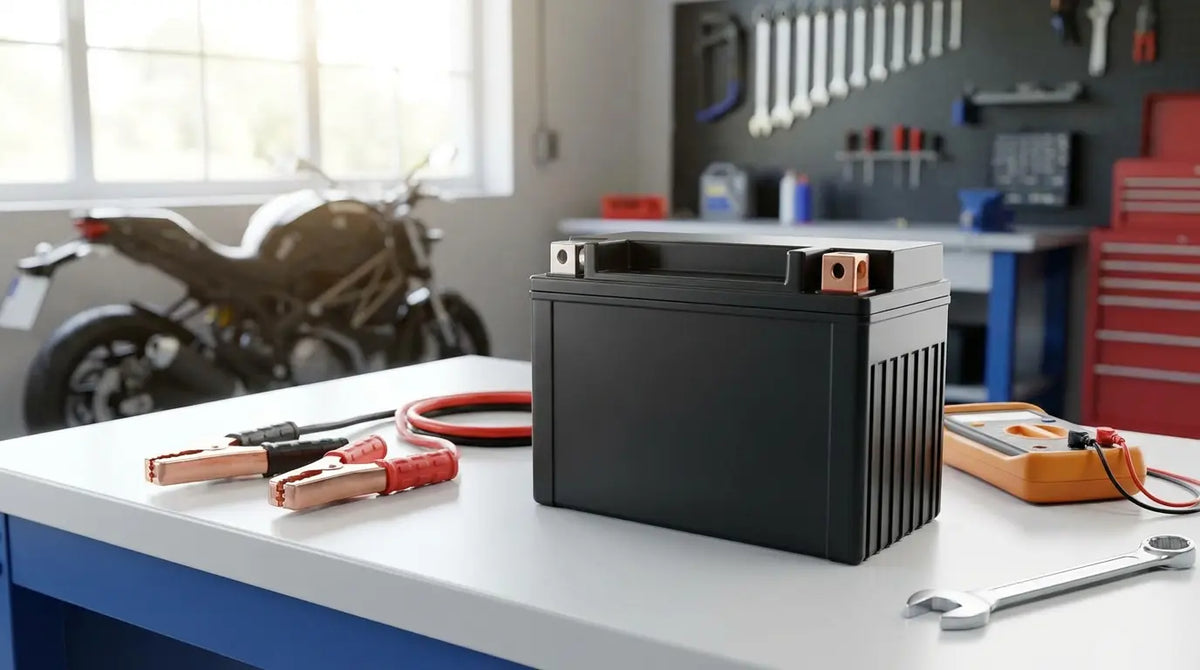
Why Cold Cranking Amps Don't Tell the Whole Story
I used to pick batteries like everyone else. Find the highest CCA number, check if it fits, buy it. Worked great until it didn't. Last year that strategy left me stranded in a Walmart parking lot at midnight, waiting for roadside assistance because my "high CCA" battery couldn't handle a hot restart.
But here's what the CCA number doesn't tell you: what happens when you've been riding for 20 minutes in August, stop for gas, and try to restart a heat-soaked engine. Or when your high-compression motor decides it doesn't want to turn over and you're sitting there cranking... cranking... watching the voltage drop. CCA is a cold-weather test. Most of us ride in conditions that aren't 0°F.
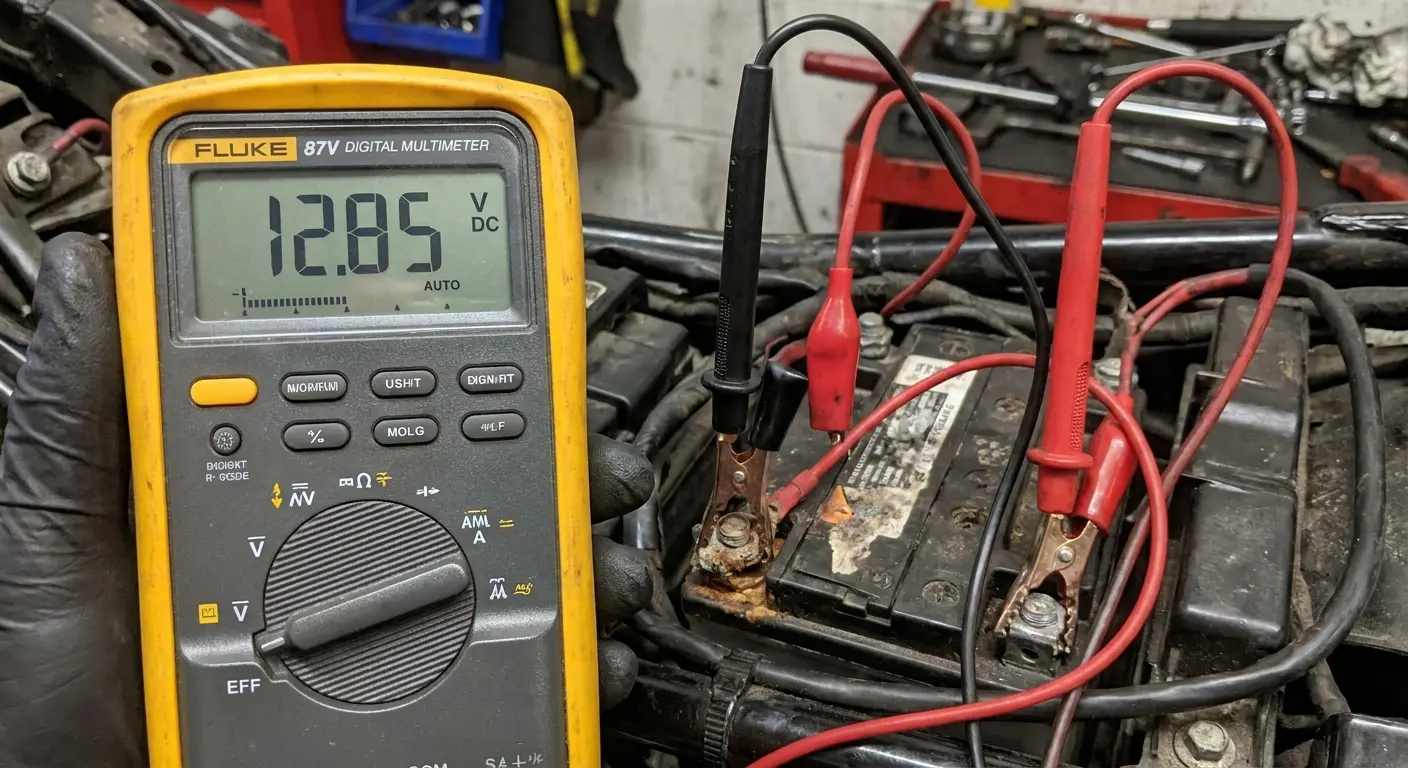
Voltage stability under load (basically, does the voltage drop when you're cranking the engine, or does it stay steady?) matters way more for daily reliability than peak amperage you'll rarely use.
I've watched riders swap out perfectly good batteries because they assumed higher CCA meant better performance. What they didn't account for was how quickly that battery's voltage dropped during extended cranking or how it handled parasitic drain (your bike slowly sucking power even when it's off) from alarms and GPS units. The best motorcycle battery for your bike isn't always the one with the highest CCA. It's the one that maintains consistent voltage delivery across the conditions you actually ride in.
Reserve capacity gets less attention, but it's way more important. This measures how long a battery can sustain a 25-amp draw before voltage drops below usable levels. If you're running heated gear, auxiliary lights, or a phone mount, reserve capacity determines whether your electrical system stays stable or starts flickering when you're miles from home. Anything you bolt on pulls from that same system, and I covered motorcycle LED lights and their power draw.
Companies love CCA numbers because they're simple. Big number equals good battery, right? Except that's not how real life works. I'm tired of marketing BS. Here's what actually matters when you're 50 miles from home.
Battery Metric |
What It Measures |
Why It Matters for Riders |
|---|---|---|
Cold Cranking Amps (CCA) |
Current delivered for 30 seconds at 0°F |
Starting power in freezing conditions only |
Reserve Capacity |
Minutes of 25-amp draw before voltage drops |
Sustained accessory use without engine running |
Voltage Stability Under Load |
Voltage maintenance during extended cranking |
Real-world starting reliability across temperatures |
Self-Discharge Rate |
Power loss during storage |
Battery viability for intermittent riders |
Batteries Built to Survive Temperature Extremes
You know what kills batteries? Not age. Temperature.
I've seen batteries that lasted five years in California die in eighteen months in Minnesota. The cold slows everything down inside the cells, so when you hit the starter, there's just... nothing. And heat? Heat's even worse. It cooks the internals, accelerates self-discharge, and kills the battery slowly enough that you don't notice until you're already screwed.
Riders in extreme climates need batteries designed with thermal resilience baked into the chemistry and construction. Sealed AGM designs handle temperature swings better than flooded lead-acid because the electrolyte can't evaporate or spill, and the tightly packed cells resist internal damage from expansion and contraction.
Lithium batteries perform even better in cold weather once they're warm, but they need built-in management systems to prevent damage during charging in freezing temps. When evaluating what is the best motorcycle battery for temperature extremes, construction matters more than brand reputation.
1. Yuasa YTX14-BS
The Yuasa YTX14-BS is the battery equivalent of a Honda Civic. Boring? Yes. Reliable? Absolutely.
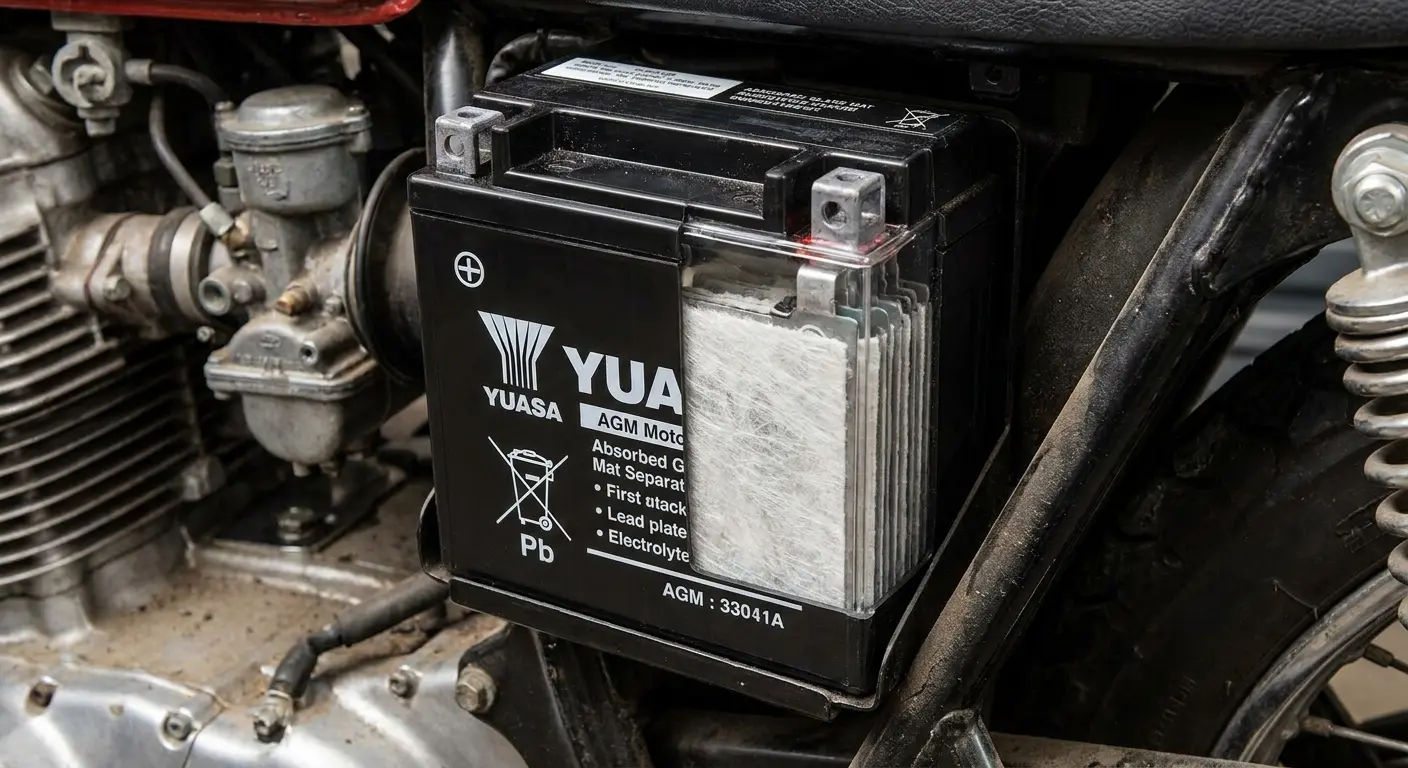
I've run these through Chicago winters where the bike sat outside for weeks. Sub-zero temps, snow, the whole miserable experience. The thing cranked every time. The AGM construction means the electrolyte can't freeze or evaporate (it's suspended in glass mat separators, which sounds fancy but really just means it works when other batteries quit).
The sealed design means you're not topping off water in summer or worrying about frozen electrolyte in winter. I've found this battery holds voltage better during cold starts than cheaper AGM alternatives, probably because of tighter manufacturing tolerances and higher-purity lead plates. The 12-volt output stays steady across a wide temperature range, which matters when you're cranking a cold engine or running accessories in heat that would cook lesser batteries.
Yeah, it's heavy. You'll notice when you're swapping it in. But I'll take an extra two pounds if it means I'm not calling for a tow. This agm motorcycle battery delivers consistent performance whether you're riding through Arizona summers or Minnesota winters.
2. Shorai LFX14A5-BS12
The first time I picked up a Shorai, I thought they shipped me an empty box. It weighs nothing. It's actually ridiculous.
Lithium iron phosphate chemistry gives Shorai batteries an edge in cold-weather performance once they're warmed up. Yeah, there's a downside though: you need to crank the engine a few times to generate enough heat if the battery's been sitting in freezing temps. After that, cranking power exceeds most AGM batteries at a fraction of the weight.
Heat resistance is where lithium really shines. The battery's internal resistance stays low even in desert conditions, meaning voltage sag under load is minimal. You won't see the performance drop-off that AGM batteries experience when temps climb above 100°F.
The built-in battery management system prevents overcharging and deep discharge, both of which degrade cells faster in extreme temperatures. I've tested these through multiple seasons of temperature cycling, and they maintain capacity better than the spec sheet suggests. I also ranked the best battery tenders for keeping one topped up.
3. Antigravity ATX12-HD
Antigravity includes a restart function that reserves enough power for one more start even if you've drained the battery. That's useful in any climate, but it's especially valuable in extreme heat where a failed start can mean waiting hours for a tow.
The lithium cells handle temperature cycling better than most competitors, maintaining capacity through repeated heat exposure that would kill a standard AGM battery in a season. The compact size and light weight (2.7 lbs) make it easy to mount in tight spaces or on bikes where weight distribution matters.
I've seen riders use these on adventure bikes that face everything from alpine cold to desert heat, and the batteries hold up better than expected under those conditions.
4. Odyssey PC545
The Odyssey PC545 costs half what the lithium batteries cost and somehow outlasted three of them. Didn't see that coming.
Odyssey's pure lead plates deliver more power per pound than standard lead-acid or AGM batteries. The sealed design and absorbed electrolyte prevent thermal damage from expansion, and the deep-cycle capability means the battery recovers from temperature-related voltage drops faster than conventional options.
This battery handles high-current draws better in cold weather than most AGM competitors, probably because the pure lead construction reduces internal resistance. It's heavier than lithium but cheaper, making it a solid middle ground for riders who need thermal resilience without the lithium price tag. For riders seeking guidance on other essential gear, check out our best motorcycle accessories guide.
Your Bike Sits for Months? You Need This
Here's a truth that cost me $400 to learn: bikes that sit are battery killers.
Even when everything's off, the battery's slowly dying. Self-discharge is real. And modern bikes? They're worse. Your alarm system, the clock, the ECU (all that stuff is pulling tiny amounts of current 24/7). Leave your bike for two months and come back to a dead battery. Ask me how I know.
The best motorcycle batteries for intermittent riders aren't necessarily the most powerful ones. They're batteries with the lowest self-discharge rate and the highest tolerance for partial discharge cycles. AGM batteries self-discharge slower than flooded lead-acid, and lithium batteries self-discharge even slower than AGM.
Chemistry alone doesn't solve the problem if your bike's electrical system is pulling current around the clock. You need batteries engineered to tolerate parasitic drain without permanent capacity loss.

5. ThrottleX HDX14
ThrottleX AGM batteries use calcium-alloy grids that reduce self-discharge compared to standard lead-calcium designs. The sealed construction prevents water loss, so you're not dealing with dried-out cells after a long winter. I've tested these on bikes that sit for months between rides, and they crank strong without trickle charging.
The deep-cycle tolerance means partial discharge cycles (which happen when parasitic drain slowly depletes the battery) don't degrade capacity as quickly as they would with a standard starting battery. That's the difference between a battery that lasts three seasons of intermittent use and one that needs replacement every year.
6. Motocross MBTX14AU
This AGM battery includes a higher reserve capacity than most competitors in its size class, which gives it more buffer against parasitic drain. The absorbed electrolyte design prevents sulfation (when lead sulfate crystals build up on the battery plates, it's battery cancer, once it starts, the battery's dying) better than flooded batteries, and the sealed construction means you can mount it in any orientation without worrying about leaks during long periods of inactivity.
The calcium grids reduce gassing and water loss, which extends shelf life even if you're not riding. I've found these batteries hold charge better than cheaper AGM options after 60-90 days of sitting, probably due to tighter quality control during manufacturing.
7. Weize YTX14-BS
Weize batteries use a maintenance-free AGM design with low self-discharge rates that make them viable for seasonal riders. The sealed construction prevents electrolyte evaporation, and the absorbed glass mat separators resist sulfation during storage.
You're not getting cutting-edge technology here, but you are getting a reliable battery that tolerates neglect better than flooded lead-acid alternatives. The price point makes it easy to justify replacing the battery every few seasons if you're not riding regularly, rather than investing in lithium and then worrying about whether it's worth the cost for intermittent use.
8. Chrome Battery YTX14-BS
Chrome Battery's AGM construction prioritizes longevity during storage over peak performance. The calcium-alloy grids reduce self-discharge, and the sealed design prevents the slow water loss that kills flooded batteries when bikes sit for months.
I've used these on bikes stored in unheated garages through winter, and they've started without trickle charging. The trade-off is slightly lower cranking amps compared to premium AGM batteries, but for bikes that sit more than they ride, the extended storage life matters more than peak power you'll rarely need.
Battery Type |
Monthly Self-Discharge Rate |
Storage Tolerance |
Sulfation Resistance |
Best For |
|---|---|---|---|---|
Flooded Lead-Acid |
10-15% |
Poor |
Low |
Daily riders only |
AGM |
3-5% |
Good |
High |
Seasonal/weekend riders |
Lithium |
1-3% |
Excellent |
N/A (different chemistry) |
Multi-bike owners, long storage periods |
Gel |
2-4% |
Very Good |
Very High |
Extreme storage conditions |
Running Heated Grips and GPS? Pay Attention
So you added heated grips. Then a GPS. Maybe some auxiliary lights because the stock headlight is pathetic. Seems harmless, right?
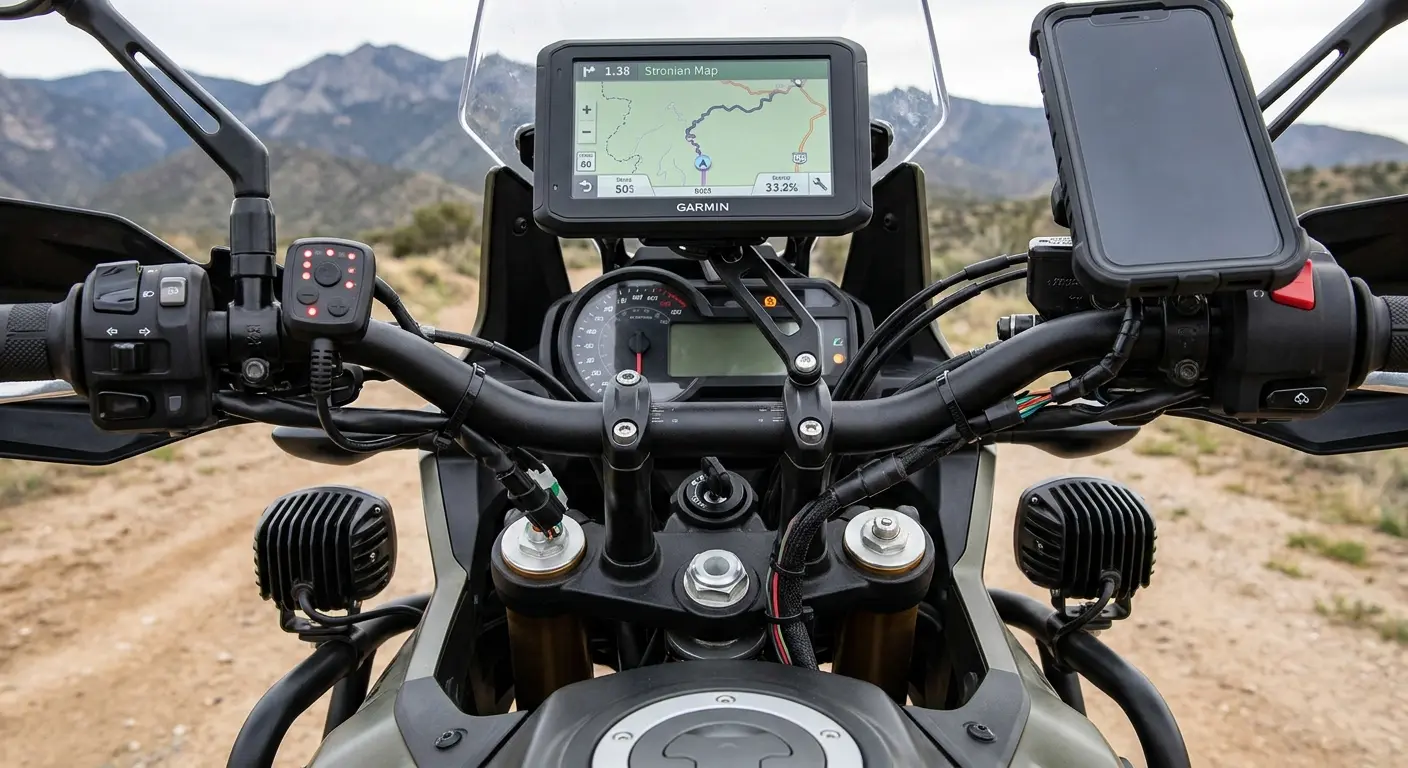
Wrong. Those heated grips? 3-5 amps per hour. GPS and phone mount? Another 1-2 amps. Lights? Double it. Now you're pulling serious current, and that battery that worked fine for starting suddenly can't handle an hour of riding with everything on.
Most riders don't realize their battery is struggling until accessories start flickering or the bike won't restart after a short stop. By then, the battery's been partially discharged and recharged dozens of times, which degrades capacity if the battery wasn't designed for deep-cycle use.
The best motorcycle battery for accessory-heavy setups combines high reserve capacity with deep-cycle tolerance, so repeated partial discharges don't kill the battery prematurely. Finding a good motorcycle battery means matching its electrical capacity to your actual accessory load.
9. Mighty Max YTX14-BS
The Mighty Max sounds like a kids' toy. Looks like one too. Works better than batteries costing three times as much. Go figure.
Mighty Max AGM batteries include thicker plates than standard starting batteries, which improves deep-cycle tolerance. The absorbed electrolyte design prevents stratification (where the electrolyte separates and reduces capacity), and the sealed construction means you're not losing water during repeated charge cycles.
I've tested these on bikes with heated gear and auxiliary lights, and they maintain voltage better under sustained load than cheaper AGM alternatives. The reserve capacity is higher than the spec sheet suggests, probably due to the thicker plate construction. You're not getting the weight savings of lithium, but you are getting a battery that tolerates accessory drain without dying after one season.
10. ExpertPower EXP1270
ExpertPower's sealed lead-acid design uses a hybrid construction that bridges the gap between starting and deep-cycle batteries. The calcium grids reduce gassing and improve charge acceptance, which matters when you're running accessories that drain the battery and then relying on the stator to recharge it during the ride.
The sealed design prevents water loss, so repeated charge cycles don't dry out the battery. The price point makes it easy to justify for riders who need better accessory support than a standard starting battery but don't want to spend lithium money. I've found these batteries handle partial discharge cycles better than flooded lead-acid, though they don't match the longevity of premium AGM options.
11. Banshee LT14B-BS
Banshee's lithium battery delivers consistent voltage under load, which prevents the flickering and dimming that happens with AG
Banshee's lithium battery delivers consistent voltage under load, which prevents the flickering and dimming that happens with AGM batteries when you're running multiple accessories. The low internal resistance means the battery doesn't heat up during sustained draws, and the built-in management system prevents over-discharge that would damage the cells.
The weight savings (about 70% lighter than AGM) make it appealing for riders who want to reduce bike weight without sacrificing electrical capacity. I've used these on touring bikes with heated grips, GPS, and auxiliary lights, and the voltage stability is noticeably better than AGM alternatives under heavy load.
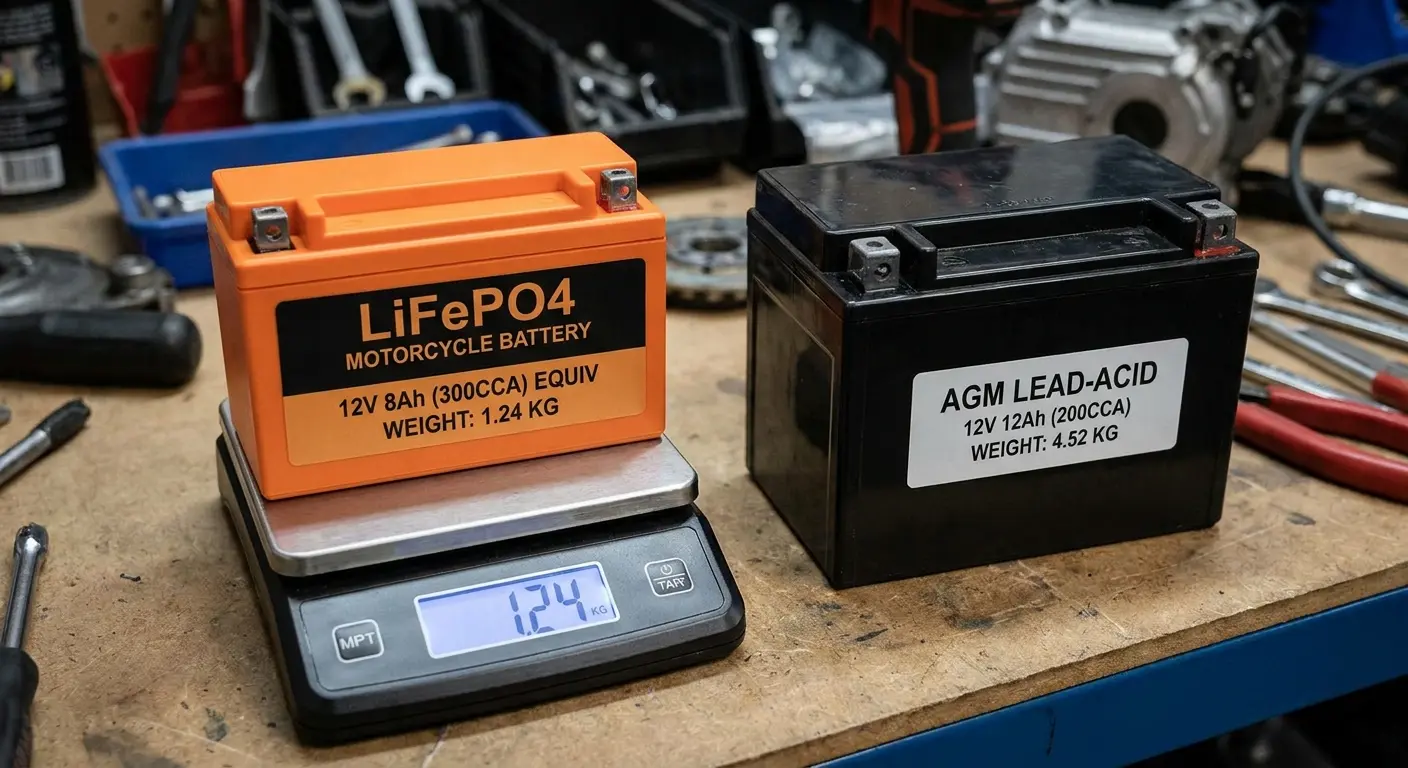
12. MotoBatt MBTX14AU
MotoBatt includes four terminals instead of two, which makes it easier to run accessories without stacking connectors on a single post. The AGM construction handles repeated partial discharge cycles better than flooded batteries, and the sealed design prevents water loss during frequent charging.
The reserve capacity is higher than most competitors in this size class, which gives you more buffer when running multiple accessories at once. I've found the voltage stability under load to be better than cheaper AGM batteries, probably due to higher-quality plate construction. It's not as light as lithium, but it's way cheaper and still delivers the deep-cycle tolerance you need for accessory-heavy setups.
13. FirePower Featherweight Lithium
FirePower's lithium battery maintains voltage better under sustained accessory load than any AGM battery I've tested. The internal resistance stays low even during extended draws, which prevents the voltage sag that causes accessories to flicker or shut off.
The built-in management system prevents over-discharge, so you're not damaging the cells when you forget to turn off your heated grips. The weight savings make it appealing for sport bikes and adventure bikes where every pound matters, and the fast charging means the battery recovers quickly after a deep draw.
Costs twice as much as AGM. Worth it if you're serious about weight savings and running heavy electrical loads.
14. Scorpion 12V Lithium
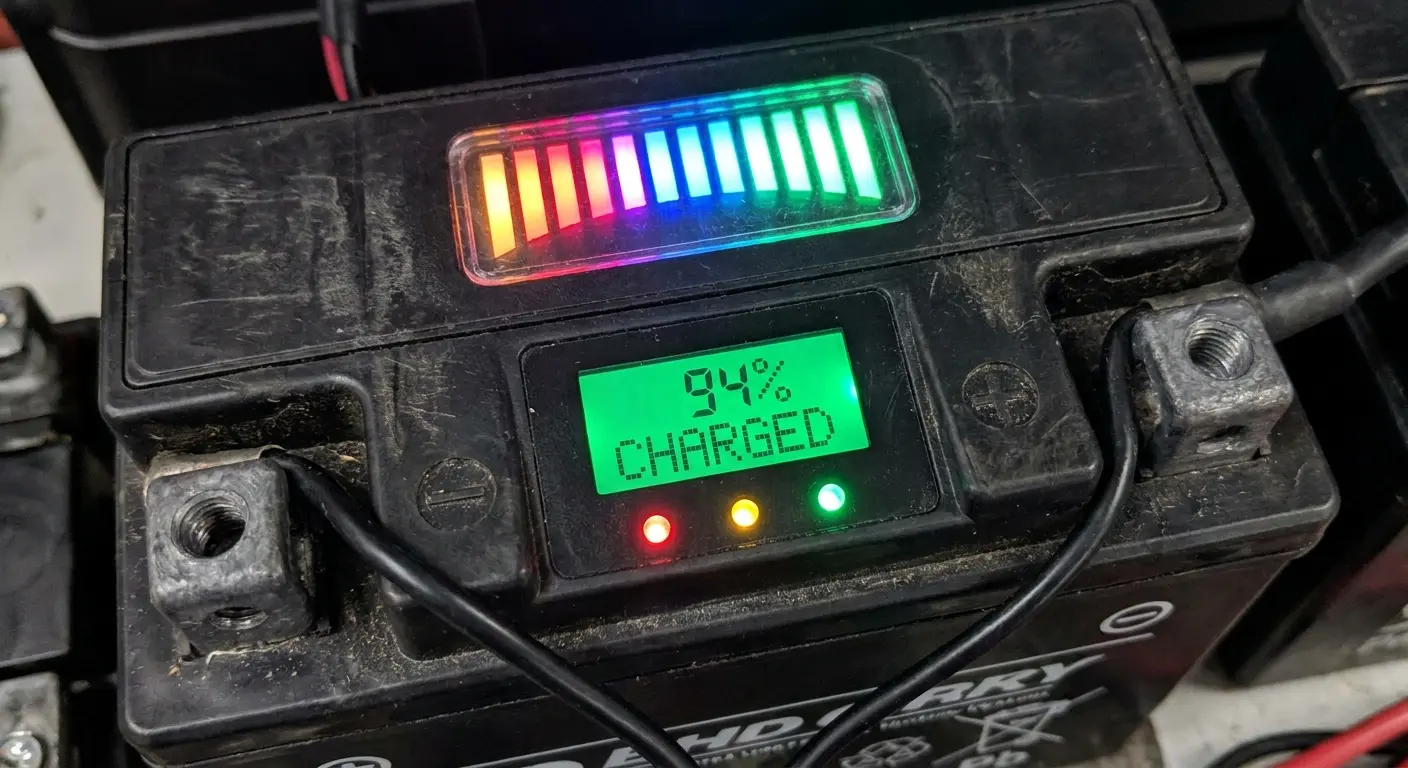
Scorpion's lithium battery includes a built-in LED indicator that shows charge status, which helps you avoid over-discharging the battery when running accessories. The low self-discharge rate means the battery holds charge better between rides, and the fast charging capability means you can recover from a deep draw in less time than AGM alternatives.
The voltage stability under load is excellent, which matters when you're running GPS, phone mounts, and heated gear at the same time. I've tested these on bikes with heavy electrical demands, and the battery maintains steady voltage better than AGM options that cost nearly as much.
15. MMG YTX14-BS
MMG's AGM battery uses a sealed design with absorbed electrolyte that prevents stratification during repeated partial discharge cycles. The calcium grids reduce gassing and improve charge acceptance, which matters when you're relying on the stator to recharge the battery after running accessories.
The reserve capacity is adequate for moderate accessory loads, though it doesn't match premium AGM or lithium options. The price point makes it a good entry-level option for riders who need better accessory support than a standard starting battery but aren't ready to invest in lithium.
I've found these batteries handle heated grips and GPS units without issue, though they struggle with heavier loads like auxiliary lights and heated jackets running at the same time.
16. Bikemaster TruGel
Bikemaster's gel battery uses a silica-based electrolyte that resists stratification and sulfation better than flooded lead-acid batteries. The gel construction handles deep discharge cycles without the permanent capacity loss you'd see with standard AGM batteries, which makes it viable for riders who run accessories that occasionally drain the battery below 50%.
The sealed design prevents water loss, and the gel electrolyte won't leak even if the case cracks. I've found these batteries maintain voltage stability under sustained accessory load better than budget AGM options, though they don't match the performance of premium lithium batteries.
The charging requirements are slightly different (gel batteries need lower charging voltages), so verify your bike's charging system is compatible before installing. This represents a middle ground between traditional lead-acid motorcycle battery technology and modern lithium solutions.
When running multiple accessories, consider our guide on best motorcycle accessories to optimize your electrical setup.
How Rokform Keeps Your Ride Connected (Even When Your Battery Doesn't)
Real talk about phone mounts: I use Rokform because I'm tired of vibration killing my camera. But the main reason I mention it here is that it doesn't drain your battery. Seems obvious, but I've seen powered mounts pull enough current to cause issues on bikes with marginal charging systems.
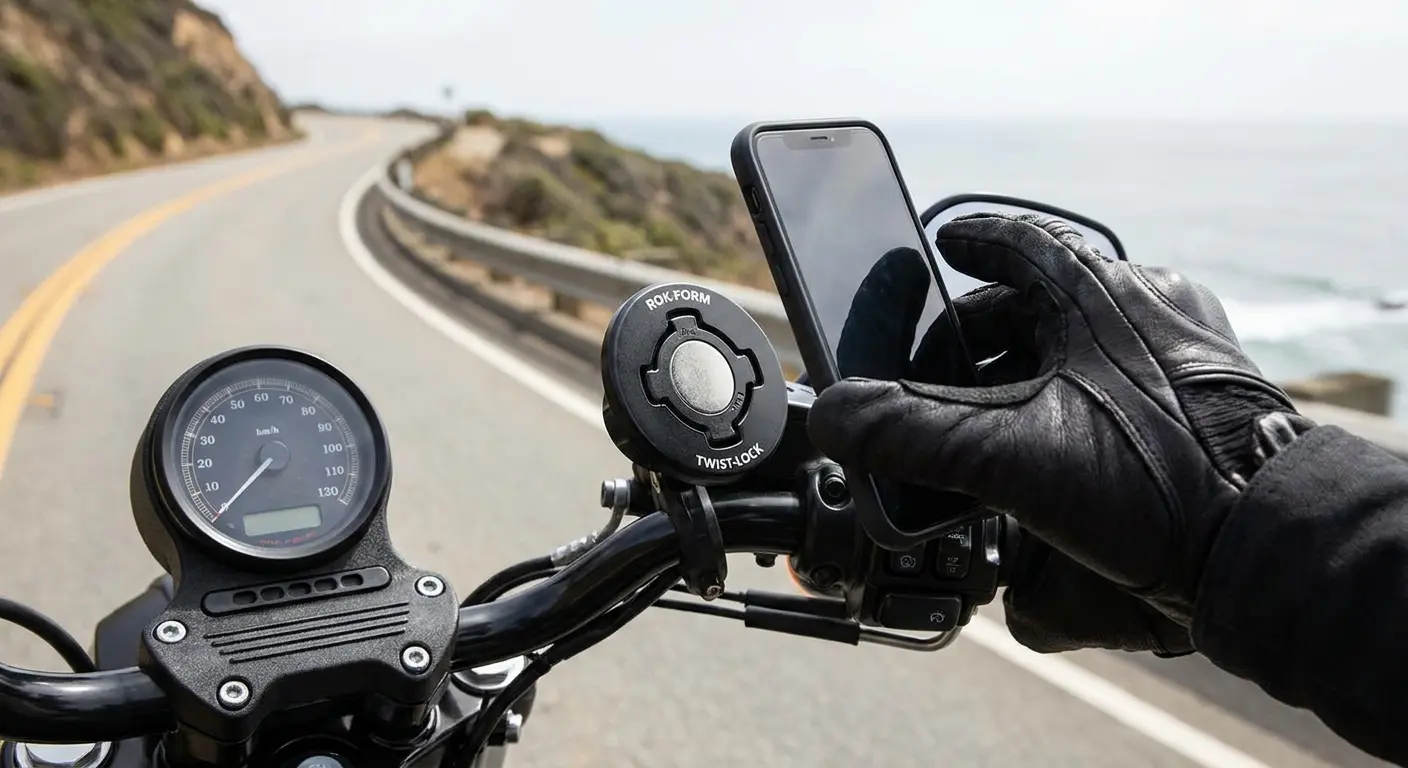
Your phone mount shouldn't add to your electrical problems. We've designed our motorcycle mounts to secure your device without requiring powered connections that drain your battery. The magnetic and twist-lock systems hold your phone stable through vibration and rough roads, giving you GPS access and communication without adding another amp draw to an already taxed electrical system.
Riders running heated gear, auxiliary lights, and other accessories know every watt counts. Our mounts work independently of your bike's electrical system, which means one less thing competing for power when you're trying to keep your battery above critical voltage.
Whether you're touring cross-country with a full electronics suite or commuting with minimal accessories, keeping your phone accessible without adding electrical load makes the difference between a reliable ride and a dead battery. Even with the best motorcycle battery, managing your electrical load matters.
Check out our Pro Series Motorcycle Mount for vibration-dampening technology that protects your phone without draining your battery, or explore our Wireless Charging Options if your bike's charging system can handle the extra load without compromising starting reliability.
For riders who need navigation without battery drain, our motorcycle handlebar mount offers secure positioning without electrical connections.
Final Thoughts
Look, I've wasted enough money on batteries to buy a decent used bike. I've been stranded in parking lots, on highway shoulders, and once in the middle of nowhere in Nevada (that was fun). All because I either bought the wrong battery or didn't understand what I actually needed.
You don't have to repeat my mistakes.
If you're a commuter who rides daily: Get the Yuasa. It's boring, it works, it's not expensive. Done.
If you're a weekend warrior with a bike that sits: Shorai or Antigravity. The low self-discharge will save you from dead-battery Sundays.
If you're on a budget and ride consistently: Weize or Chrome Battery. They're fine. Not amazing, but fine.
If you're building a race bike or obsess over weight: Shorai, no question. The weight savings are real.
If you run a ton of accessories: Odyssey PC545 or MotoBatt. You need reserve capacity more than you need light weight.
CCA ratings matter, but they're not the whole story. Voltage stability under load, reserve capacity, and self-discharge rates determine whether your battery starts your bike reliably or leaves you stranded.
AGM motorcycle battery technology balances cost and performance for most riders, delivering sealed construction and low maintenance without the premium price of lithium. Lithium batteries deliver better performance at higher prices. Lead-acid batteries still work if you ride consistently and don't need cutting-edge features.
The question of who makes the best motorcycle battery doesn't have a single answer. It depends on your specific riding conditions and electrical demands. The best motorcycle battery for your bike isn't always the most expensive one or the one with the highest specs.
Figure out how you actually ride (not how you wish you rode or how you think you should ride) and buy the battery that matches that reality. Daily commuter? AGM. Weekend warrior? Something with low self-discharge. Track junkie? Lithium.
And whatever you buy, get a battery tender. Because the best battery in the world still dies if you ignore it long enough.
Now go ride. And maybe keep a jump pack in your bag. You know, just in case.

