


Table of Contents
Why Most Riders Apply Chain Lube Wrong (And How the Right Product Fixes That)
Lubes Built for Riders Who Push Hard and Clean Less
Precision Formulas for Track Days and Canyon Runs
All-Weather Workhorses You Can Trust Year-Round
Final Thoughts
TL;DR
The lube matters way less than how you apply it (clean chain, warm it up, inside of links, let it soak)
Wax lubes mean a cleaner bike but you'll reapply more often
Wet lubes protect better but make a mess
Track riders need the expensive stuff. Commuters don't.
Apply every 300-500 miles or whenever your chain looks dry
One $15 can prevents a $300 replacement
Why Most Riders Apply Chain Lube Wrong (And How the Right Product Fixes That)
Look, I'm going to say something that'll piss off other reviewers: the lube you buy matters way less than how you actually use it. I've seen riders dump $25 premium lube on their chains and watch it spray off like confetti within five miles. The problem isn't always the product.
Here's what actually happens. You get home from work, remember your chain needs attention, and rush through it because you want to eat dinner. Maybe you skip cleaning because you're tired. You spray it on cold because heating the chain feels like overkill. These shortcuts doom even the best stuff to underperform.
I made every one of these mistakes five years ago. Bought the most expensive lube I could find, read all the reviews, joined forum debates. My chain still died at 9,000 miles. Know why? I was applying it like an idiot while obsessing over which brand to buy.
Modern formulas compensate for our lazy habits. Engineers figured out that creating perfect lube for laboratory conditions was pointless when most of us apply it in less-than-ideal circumstances. The best products now include features that forgive rushed applications, dirty chains, and inconsistent maintenance schedules.
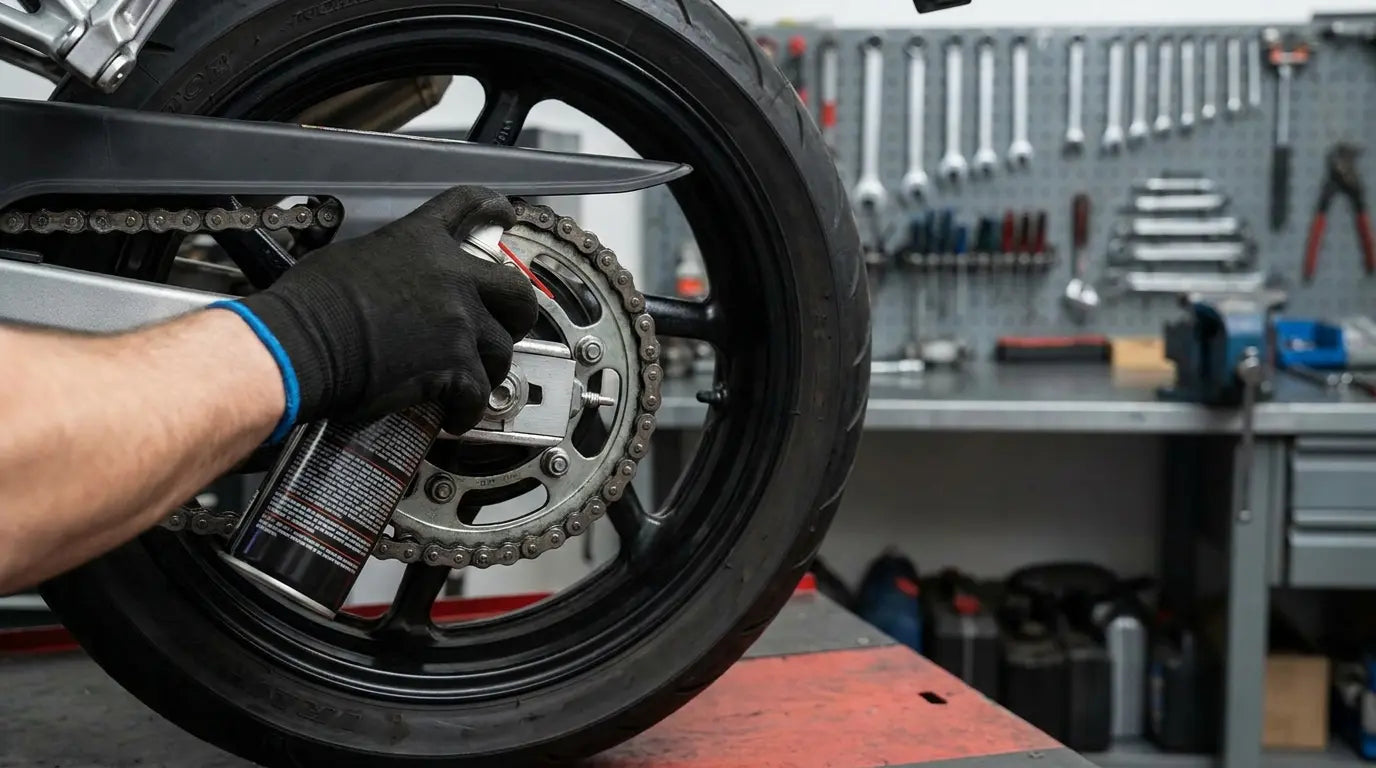
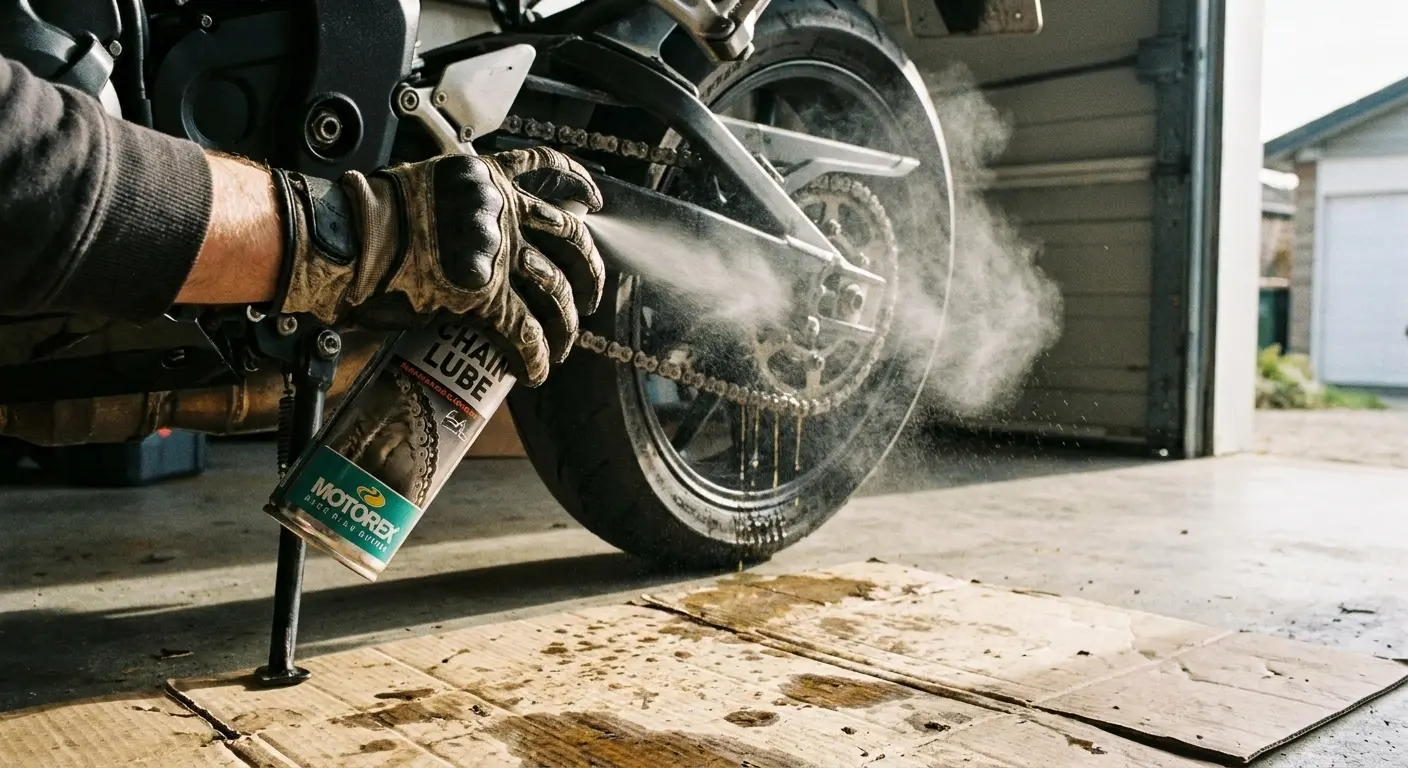
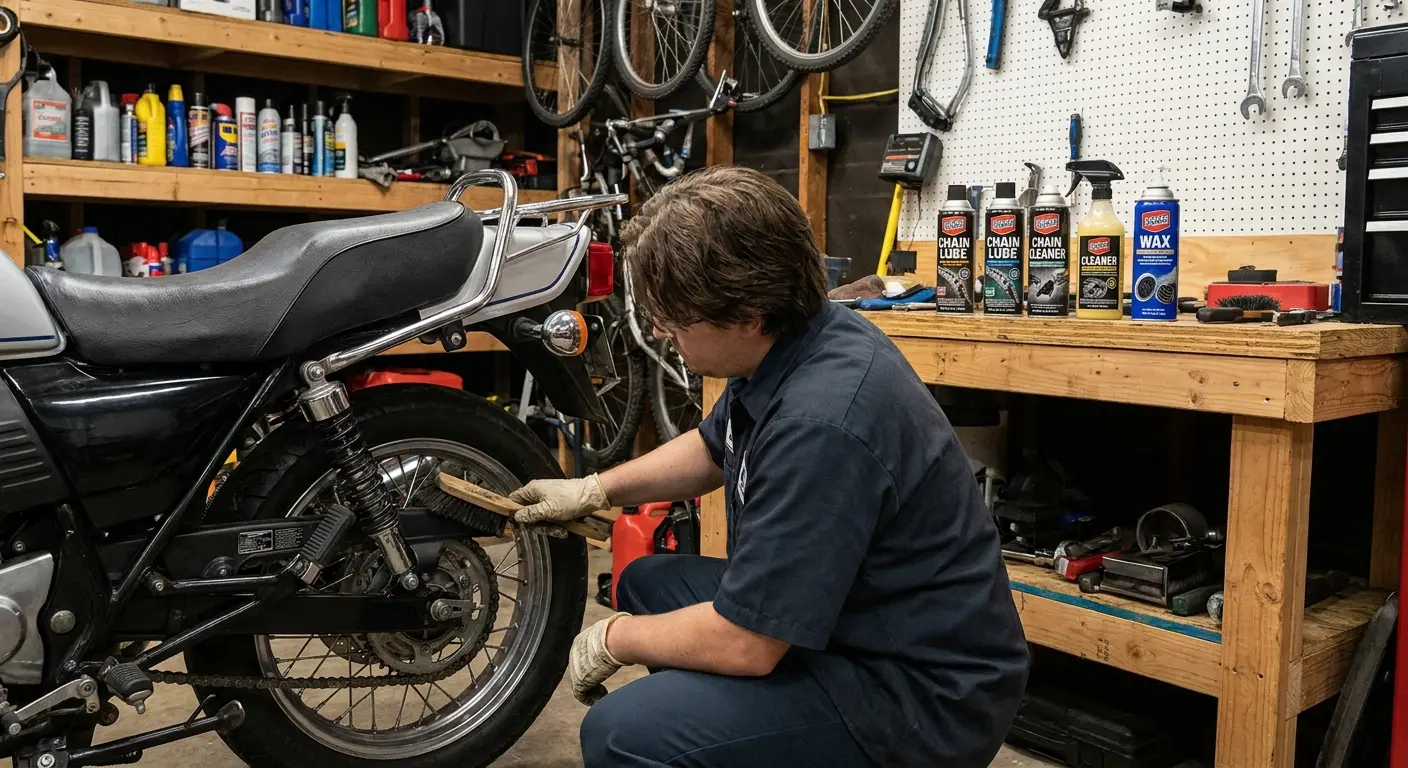
You're supposed to clean the chain first, warm it up, apply a thin coat to the inside of the links, let it penetrate for 10 minutes, then wipe off excess. When was the last time you followed every step? That's why viscosity profiles, penetration depth, and fling-off characteristics matter more than marketing claims about "advanced formulas."
The products that work best perform despite your mistakes. They penetrate even when applied to cold chains. They don't create sticky buildup when you inevitably overspray. They maintain film strength even when you forget to reapply for 700 miles instead of 500. Just like choosing the right motorcycle phone mount requires understanding how you actually ride, selecting chain lube should account for real-world behavior.
Application Mistake |
Why It Happens |
How Modern Formulas Compensate |
|---|---|---|
Over-spraying |
Aerosol convenience leads to trigger-happy application |
Low-tack formulas shed excess instead of creating buildup |
Applying to dirty chains |
Skipping the cleaning step saves time |
Self-cleaning additives shed contamination during riding |
Under-penetrating |
Rushing between links |
Aggressive solvent carriers force lube into O-rings |
Wrong chain temperature |
Applying to cold chains after work |
Wide viscosity ranges work across temperature extremes |
Riding immediately after application |
Impatience to get back on the road |
Fast-curing formulas set within 5-10 minutes |
Inconsistent intervals |
Forgetting mileage since last application |
Extended film strength protects through missed cycles |
Lubes Built for Riders Who Push Hard and Clean Less
Some of us view chain maintenance as a necessary interruption to riding, not a meditative ritual. I want products that forgive longer intervals between cleanings and resist breakdown when I'm pushing hard through corners or hammering down straightaways.
This category targets riders who maximize saddle time over garage time. These formulas handle abuse better than conventional options. They maintain film strength under high pressure, resist contamination buildup, and sometimes even shed dirt as you ride.
These won't win awards for cleanliness. You'll still see some buildup on your swingarm and wheel. But they'll protect your drivetrain through missed maintenance cycles and aggressive riding that would destroy chains lubricated with lesser products. That's the tradeoff, and for high-mileage riders or those who can't afford downtime, it's worth making.
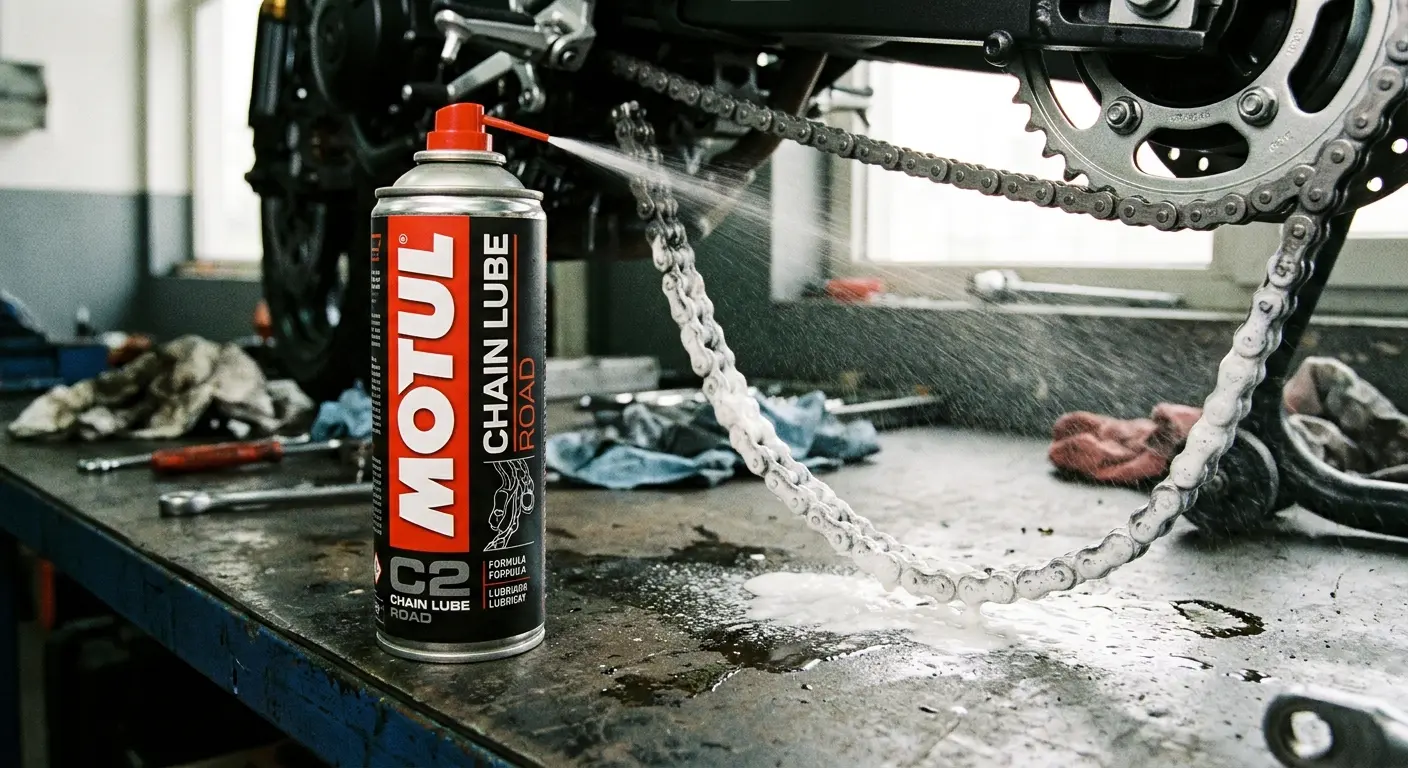
1. Motul C2 Chain Lube Road
Motul engineered this around a solvent carrier that penetrates deep before evaporating, leaving behind a tacky film that grips O-rings without excessive fling. The adhesive properties keep the lube in place through rain and sustained highway speeds where centrifugal force tries to throw it off.
Temperature stability impresses more than you'd expect at this price point. Cold morning rides don't turn it into molasses, and summer heat doesn't liquify it into a mess. The white color serves a practical purpose beyond aesthetics: you can see exactly where you've applied it, preventing both waste and missed spots that lead to uneven wear.
I've been running this for three years across 40,000 miles. My chain lasts about 20,000 before the O-rings give up. That's normal. The stuff works. It's not exciting, but chain lube shouldn't be exciting.
Expect 400-500 mile intervals between applications under normal conditions. The formula attracts moderate dust but doesn't cake up into that grinding paste that destroys chains. Costs about $12 a can, and each can lasts roughly 2,500 miles.
2. Maxima Chain Wax
Wax-based formulas prioritize cleanliness over maximum longevity, and this one executes that philosophy well. The paraffin base creates a dry surface that repels dirt and sand instead of binding it into abrasive paste. If you ride in dusty environments or you're tired of scrubbing black splatter off your swingarm every week, this changes your maintenance experience. I walk through how to wash a motorcycle step by step first.
Application requires a warm chain for proper penetration since wax doesn't flow as readily as oil-based lubes. You'll reapply more frequently (every 250-300 miles) but spend far less time cleaning. The tradeoff makes sense for street riders who park outside or anyone in sandy conditions.
Heavy rain breaks down the wax barrier faster than synthetic oils. If you ride in Seattle, skip this. If you're in Arizona or anywhere dusty, just buy it.
3. DuPont Teflon Chain-Saver
PTFE-infused formulas reduce friction more effectively than standard petroleum lubes, and DuPont's version translates that into slightly better fuel economy and less sprocket wear over time. The Teflon particles fill microscopic surface imperfections on chain links, creating a smoother interface between metal components.
This matters most on high-mileage bikes where chain and sprocket wear patterns have already developed. The aerosol delivery system offers convenience but wastes product (you'll burn through cans faster than brush-on alternatives). Works well in moderate climates but loses effectiveness below 40°F when the carrier fluid thickens.
A solid middle-ground choice for riders who want measurable performance gains without exotic pricing.
4. Bel-Ray Super Clean Chain Lube
Bel-Ray formulated this specifically for riders who rarely clean their chains between lube applications. The chemistry resists dirt accumulation better than most competitors, shedding contamination as you ride instead of binding it into a grinding paste.
This self-cleaning property comes from a lower-tack formula that doesn't grip particles as aggressively. The downside? You'll need to reapply every 300 miles since the lighter viscosity means faster depletion.
Perfect for commuters running the same route daily who can establish a predictable maintenance rhythm. The blue tint helps track coverage but fades quickly, so don't rely on it for long-term inspection.
5. PJ1 Blue Label Chain Lube
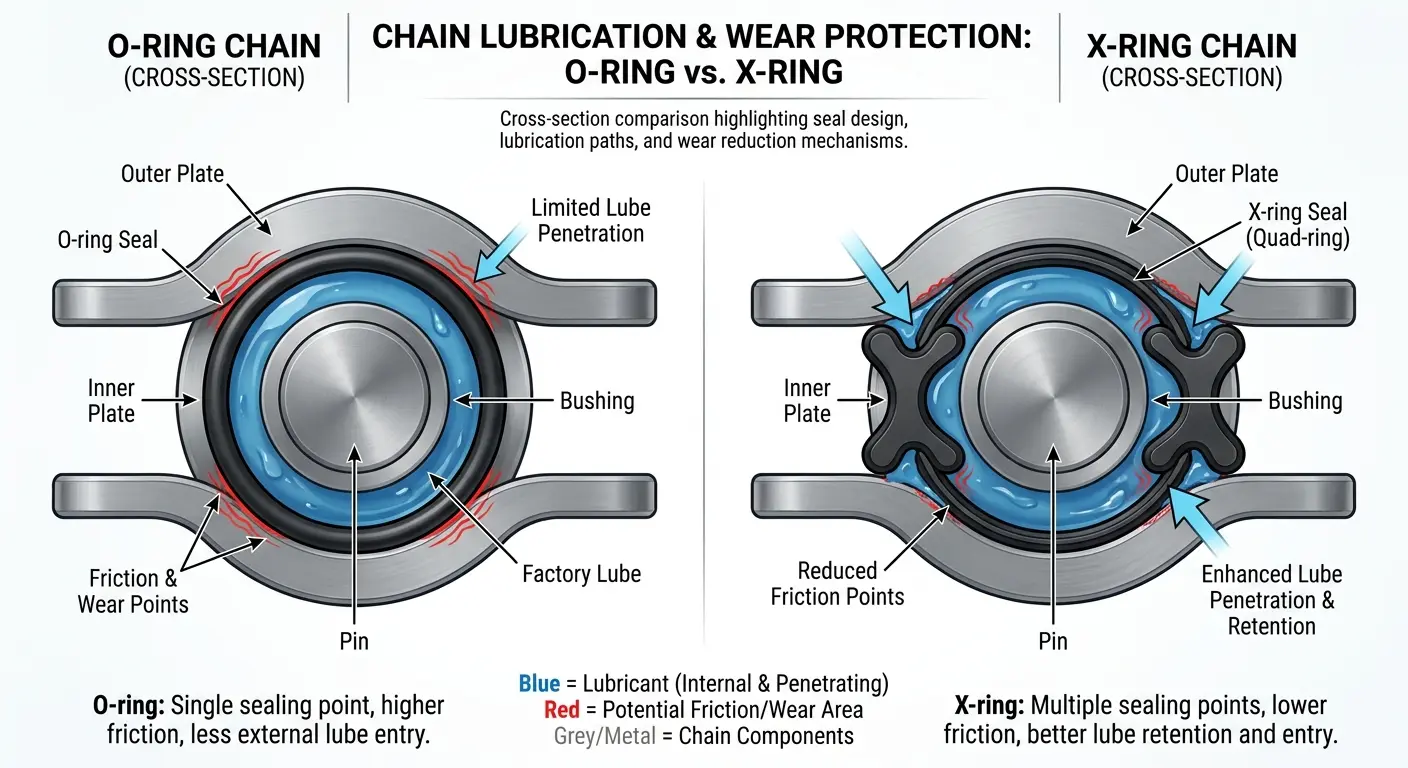
PJ1's Blue Label has earned loyalty among sport bike riders who prioritize performance over convenience. The formula penetrates O-rings and X-rings exceptionally well, protecting internal components where most wear occurs, not just the external surfaces you can see.
It creates minimal fling-off even at sustained highway speeds, keeping your bike cleaner between services. The viscosity sits in a sweet spot: thick enough to resist being thrown off by centrifugal force but thin enough to work into tight spaces between pins and rollers.
You'll get 500+ miles per application in dry conditions. Rain performance is adequate but not exceptional. Best for riders who understand that preventing wear costs less than replacing components.
6. Finish Line Wet Bike Lubricant
Originally designed for bicycles, this formula works surprisingly well on motorcycles in wet climates. The heavy-duty synthetic base repels water more effectively than most motorcycle-specific lubes, making it a go-to for Pacific Northwest riders or anyone who doesn't let rain cancel rides.
I used to swear by wax-based lubes because they're cleaner. Then I moved to Seattle and realized clean chains don't mean much if they're rusted. Now I run this October through March and deal with the mess.
The thick consistency means you'll deal with more fling-off than lighter formulas, so expect some cleanup on your rear wheel and swingarm. It attracts dirt in dry conditions, which limits its versatility. Application requires patience since the viscosity makes it harder to work into tight pin areas.
If you ride in persistent moisture, the tradeoff is worth it. Dry-climate riders should skip this one entirely.
Precision Formulas for Track Days and Canyon Runs
Performance riders demand more from their chain lube because the consequences of failure are more severe. When you're dragging knee through a canyon or hitting apex after apex on track, chain issues can be dangerous, not just inconvenient.
These lubes use advanced synthetic bases, ceramic additives, and engineered viscosity modifiers that maintain film strength under extreme loads and temperatures. They're overkill for commuting but essential for track use, aggressive canyon riding, or any scenario where you're pushing your bike's limits.
The products here cost 2-3x more than standard lubes but extend component life significantly and reduce power loss through the drivetrain. I'm focusing on measurable performance benefits rather than marketing hype, explaining which features matter when you're pushing your bike's limits.
Performance Feature |
What It Does |
When You Actually Need It |
Cost Premium |
|---|---|---|---|
Ceramic additives |
Reduce friction coefficient |
Track days, sustained triple-digit speeds |
2-3x base price |
Synthetic ester base |
Maintains viscosity from 20°F to 200°F+ |
Temperature extremes, hard braking zones |
1.5-2x base price |
High-pressure tackifiers |
Prevent squeeze-out under load spikes |
Hard acceleration, aggressive riding |
1.5x base price |
Advanced penetrants |
Force lube into X-ring/Z-ring internals |
High-performance chains with tight tolerances |
Minimal premium |
Corrosion inhibitors |
Protect during storage between track events |
Bikes that sit for weeks at a time |
Minimal premium |
7. Motorex Chain Lube 622
Swiss precision in a spray can sounds like marketing hyperbole until you use this. The fully synthetic ester base maintains viscosity across a wider temperature range than petroleum alternatives, staying effective from 20°F to 200°F. Track day chain temperatures spike from hard acceleration and braking, then cool rapidly in the paddock. This handles those swings.
The formula includes corrosion inhibitors that protect against salt and moisture without adding tackiness that attracts grit. Application is forgiving since the penetrating solvents evaporate slowly, giving you time to work the lube into each link properly.
Expect 600-700 miles between applications under aggressive riding. The price reflects Swiss quality standards, but you're paying for chemistry that works at the molecular level.
8. Motul C4 Chain Paste
This brush-on paste represents a different application philosophy. You apply it directly to the chain with the included brush, forcing it into O-rings and side plates through mechanical action rather than relying on solvents to carry it there.
The result is superior penetration and longer service intervals (up to 1,000 miles in dry conditions). The paste format eliminates overspray waste and gives you precise control over application thickness. It's messier and slower than aerosols, which is why most riders skip it despite the performance benefits.
Track riders and serious enthusiasts appreciate the extra effort since the film strength under load exceeds spray-on alternatives. The ceramic additives reduce friction measurably, translating to slightly better acceleration and reduced wear on sprockets.
Motul C4 paste smells like a tire shop and will stain your hands black for two days. Wear gloves. I learned this the hard way before a job interview.
9. Silkolene Pro Chain
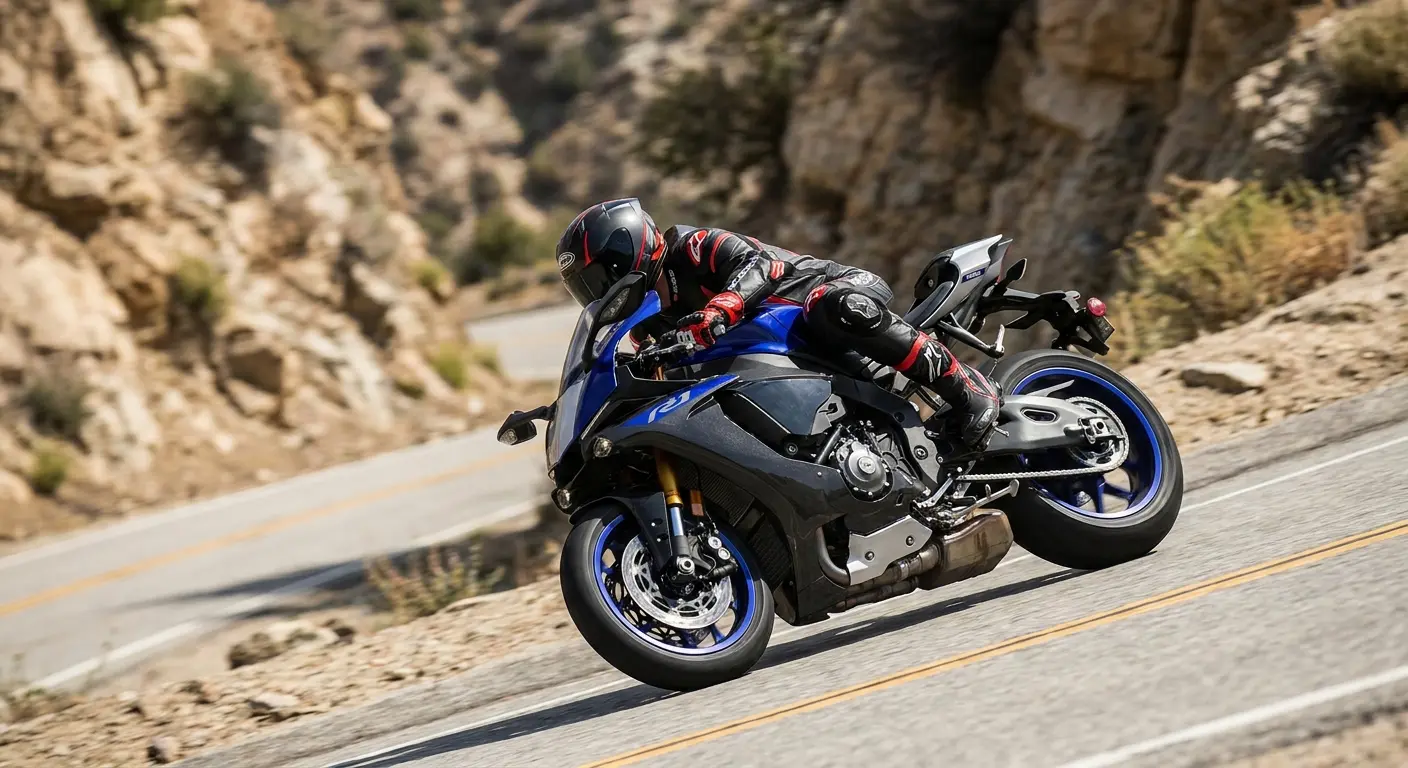
Silkolene engineered this for racing applications where chain failure means DNF. The synthetic base uses tackifiers that create an extremely adhesive film without the drawbacks of traditional sticky lubes (namely, attracting every piece of road debris within a mile radius).
The chemistry somehow manages to grip the chain while shedding contamination, a combination that seems contradictory until you experience it. Fling-off is nearly nonexistent even at track speeds. The formula works in wet conditions but truly excels in dry environments where dust and sand would destroy lesser lubes.
You'll pay premium pricing, but if you've ever had a chain let go mid-corner, the insurance is worth every penny.
10. Maxima Chain Guard
Chain Guard targets riders who want track-level protection with street-friendly convenience. The aerosol delivery system applies a thin, even coat that cures to a semi-dry finish within minutes. This cured layer resists water and contamination while maintaining flexibility through the chain's articulation.
The formula includes rust inhibitors that protect during storage, making it useful for riders who don't put miles on their bikes weekly. Reapplication intervals run shorter than wet lubes (every 300-400 miles) since the thin film depletes faster.
The semi-dry finish keeps your bike cleaner, which matters if you care about aesthetics. Performance under sustained high temperatures is adequate but not exceptional compared to paste formulas.
11. Ipone Chain Road
French engineering meets practical application in this synthetic lube. Ipone designed it specifically for sport bikes with high-performance chains, addressing the unique needs of modern X-ring and Z-ring designs. The viscosity profile matches the tighter tolerances of these advanced chains, penetrating without over-saturating or creating excess buildup.
The white color aids application visibility (you'll know immediately if you missed a section). It handles European weather conditions well, which means it'll work anywhere you're likely to ride. The formula resists fling-off through sustained triple-digit speeds, keeping your bike cleaner than most competitors.
Price sits in the premium range but below exotic brands, making it accessible for serious riders who want performance without breaking the bank.
12. Bel-Ray Blue Tac Chain Lube
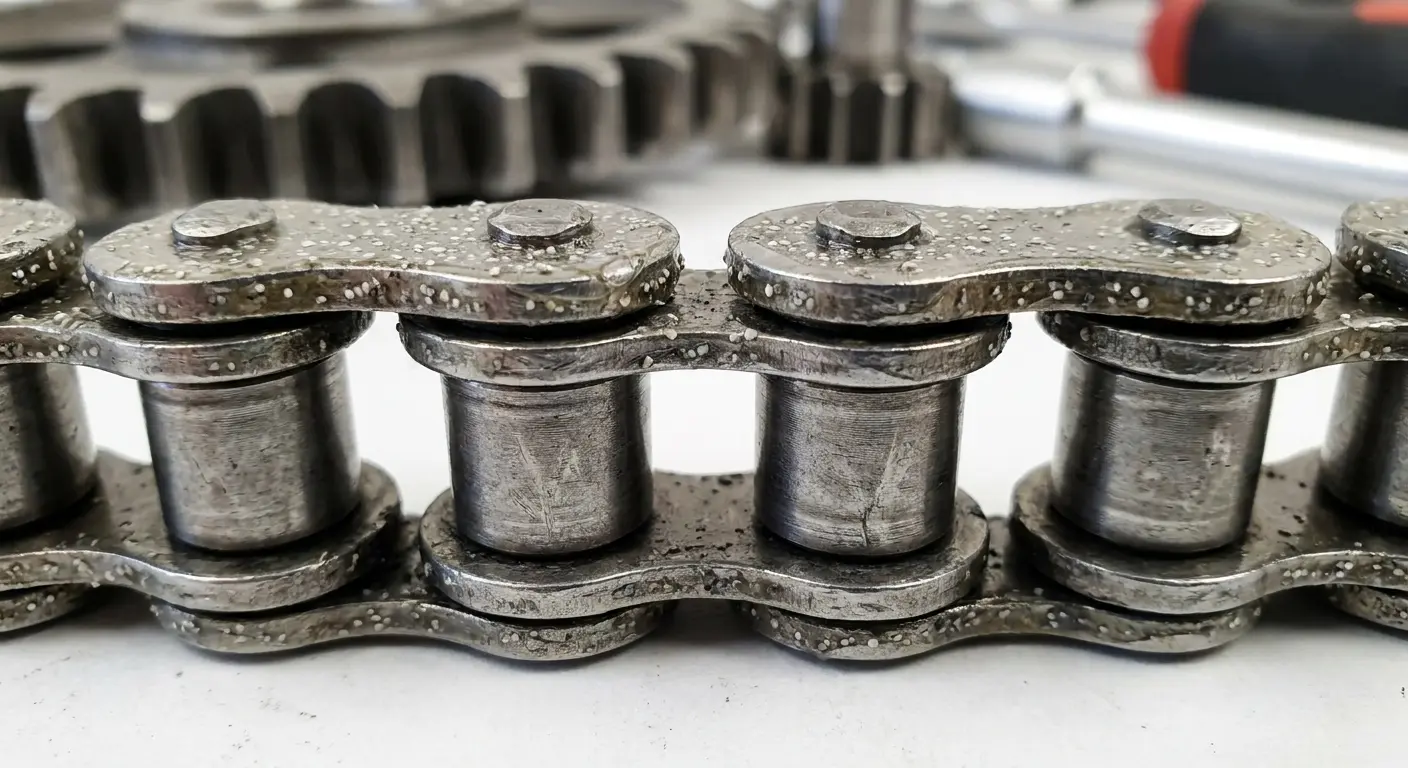
Blue Tac's claim to fame is its film strength under extreme pressure. The synthetic base incorporates additives that create a boundary layer between metal surfaces, preventing metal-to-metal contact even when the chain is under maximum load. Hard acceleration spikes chain tension and lesser lubes get squeezed out from between contact points. This doesn't.
The blue color provides application feedback but stains swingarms if you're not careful during cleanup. It attracts moderate dust in dry conditions, requiring more frequent cleaning than wax-based alternatives. Best for riders who prioritize protection over convenience and understand that preventing wear costs less than replacing components.
All-Weather Workhorses You Can Trust Year-Round
Switching products with the seasons sounds good in theory but becomes tedious in practice. Most of us want one formula that handles diverse conditions without requiring a different can for summer, winter, and everything in between.
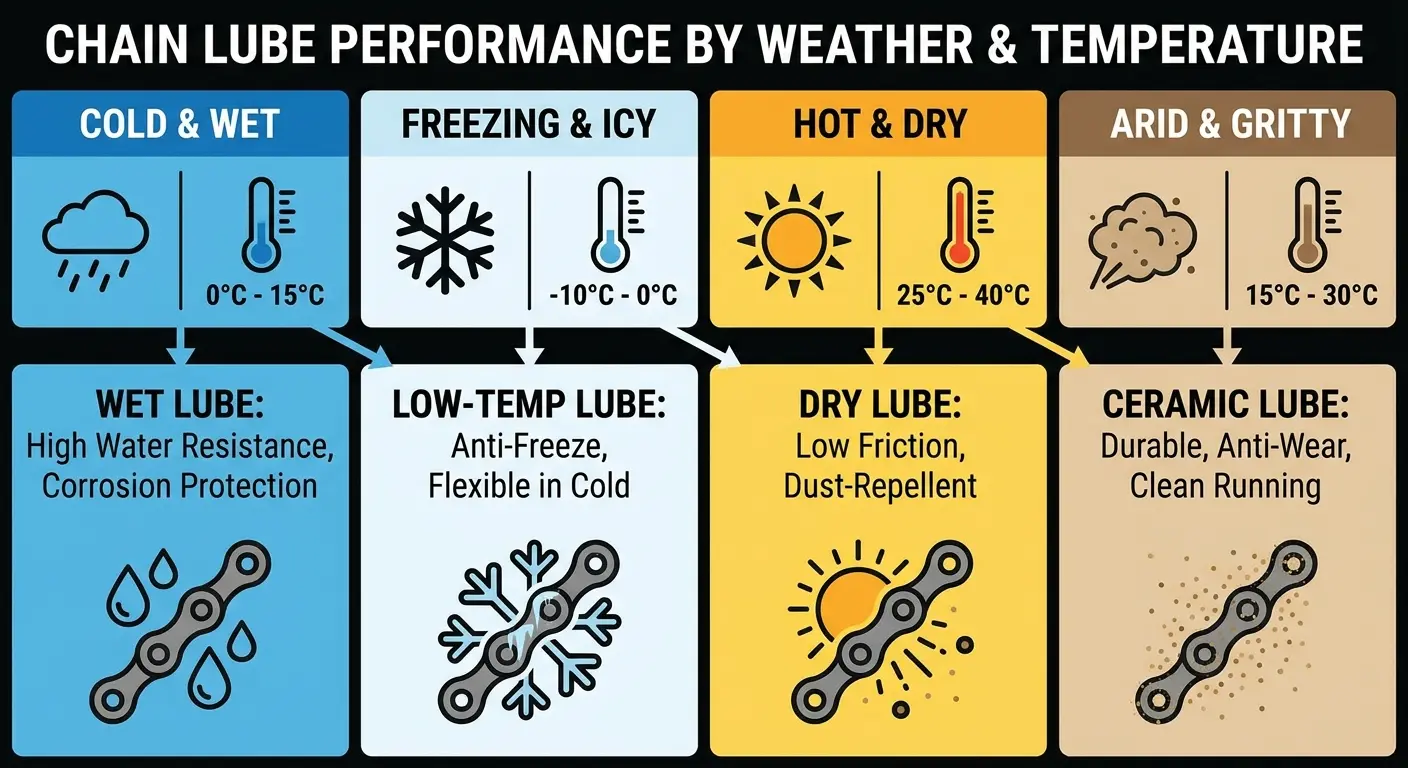
These versatile formulas balance water resistance, cold-weather performance, heat stability, and dust rejection well enough to serve as your only chain lube regardless of when or where you ride. They won't excel in any single condition but won't fail catastrophically either.
Perfect for riders in variable climates, those who tour across different regions, or anyone who wants to buy one product and forget about it. I'm focusing on consistency and reliability over peak performance, acknowledging that most riders value
13. WD-40 Specialist Motorcycle Chain Lube
WD-40 finally created a motorcycle-specific formula that doesn't share the shortcomings of their famous multi-purpose spray. This version uses a synthetic base that lubricates rather than just displacing moisture.
The formula penetrates well and creates moderate fling resistance. It's available everywhere, which matters when you're on a road trip and realize you forgot to pack chain lube. Performance is middle-of-the-road across all conditions: good enough in rain, adequate in dust, acceptable in heat.
You won't get premium results, but you won't experience failures either. The brand recognition means you can find it at any auto parts store, making it a reliable backup option.

14. Motul C3 Chain Lube Off Road
Despite the "Off Road" name, this formula works exceptionally well for street riders who encounter mud, gravel, or construction zones regularly. The chemistry resists abrasive contamination better than road-specific lubes, shedding particles before they can work into the chain's internals.
Perfect for adventure bike riders who split time between pavement and dirt, or urban commuters dealing with construction season debris. The tackiness level sits higher than pure street lubes, which means more cleaning but better protection in harsh conditions.
Water resistance is excellent. Cold weather performance is adequate down to about 30°F before viscosity becomes an issue.
15. Castrol Chain Lube OR
Castrol's OR (On-Road) formula represents solid engineering without marketing gimmicks. The petroleum base includes synthetic additives that extend its performance range beyond traditional mineral oils. It handles temperature swings from 25°F to 150°F effectively, making it suitable for year-round use in most climates.
The viscosity creates moderate fling-off at highway speeds but nothing excessive. Dust attraction is average, requiring standard cleaning intervals. The real advantage is consistency: it performs predictably across conditions, which helps you establish a reliable maintenance rhythm.
You won't get bragging rights about exotic chemistry, but your chain will last its full service life. The price point makes it accessible for budget-conscious riders who still want quality.
16. Maxima Synthetic Chain Guard
This synthetic version of Maxima's standard Chain Guard adds low-temperature performance for riders in northern climates. The formula remains pliable below freezing, continuing to protect when petroleum-based lubes thicken and stop penetrating properly.
Winter riding brings moisture and road salt that create corrosive conditions. The synthetic base also extends service intervals to 500+ miles in normal conditions. Fling-off resistance is good but not exceptional.
The semi-dry finish keeps your bike cleaner than wet lubes while providing better protection than pure wax formulas. It's a thoughtful middle ground for riders who want versatility without compromising protection. The higher price reflects the synthetic base but delivers value through longer intervals between applications.
17. DuPont Multi-Use Lubricant with Teflon
This multi-purpose formula works adequately on chains while serving other maintenance needs around your bike and garage. The PTFE content reduces friction better than plain petroleum lubes, and the versatility means you're not buying separate products for different jobs.
Performance on chains is acceptable but not exceptional: it penetrates reasonably well, resists water adequately, and handles moderate temperatures. You'll reapply more frequently than dedicated chain lubes (every 250-300 miles).
The real value comes from consolidation if you're trying to minimize the number of products in your garage. It won't win performance comparisons against specialized formulas, but it'll keep your chain functional while also lubricating cables, pivots, and other components.
Side note: if you're nerding out about chain maintenance, you probably care about your phone mount too. I use Rokform's magnetic system because it uses the same engineering-focused approach. The mounts handle vibrations and impacts without letting go, and the rugged cases protect against the elements you're already fighting with chain maintenance.
Final Thoughts
I've been riding for 12 years, put about 15,000 miles annually on my Speed Triple, and I've lived in three different climates. Here's what I've learned: the best chain lube is the one you'll actually use consistently.
That sounds dismissive, but it's the most important factor in chain longevity. A mediocre lube applied every 400 miles will outperform premium products applied sporadically or incorrectly.
Application frequency matters more than brand choice. Proper technique determines results as much as product selection: clean before lubing, apply to the inside of the chain where it contacts the sprockets, and let it penetrate before riding. These basics prevent more wear than switching between premium formulas ever will.
You'll know you waited too long when the chain starts making that dry clicking sound, like a playing card in bike spokes but angrier. That's metal-on-metal. You screwed up.
Chain maintenance is preventive insurance against expensive drivetrain replacements. The $15-30 spent on quality lube saves hundreds in sprocket and chain costs. I've seen riders nurse chains past 25,000 miles with consistent care, while others destroy them in 8,000 miles through neglect.
Pick a formula based on your riding style and conditions. Commuters in variable weather should grab an all-weather workhorse. Track riders need precision formulas that handle extreme loads. Riders who prioritize convenience over perfection should choose something from the low-maintenance category.
Commit to a regular maintenance schedule. Mark your calendar, set a phone reminder, or track mileage in a notebook. The method doesn't matter as long as you establish consistency.
Check chain tension every time you lube. Proper tension matters as much as lubrication for longevity. A loose chain will destroy itself and your sprockets regardless of which premium lube you use. A tight chain creates excessive load that squeezes out lubricant and accelerates wear.
I've been using Motul C2 for three years because it's available everywhere, works in Portland rain, and I can apply it half-drunk in my garage without screwing it up. Is it the absolute best? Who cares. It's good enough, I use it consistently, and my chain lasts 20,000 miles. That's the whole game.

