


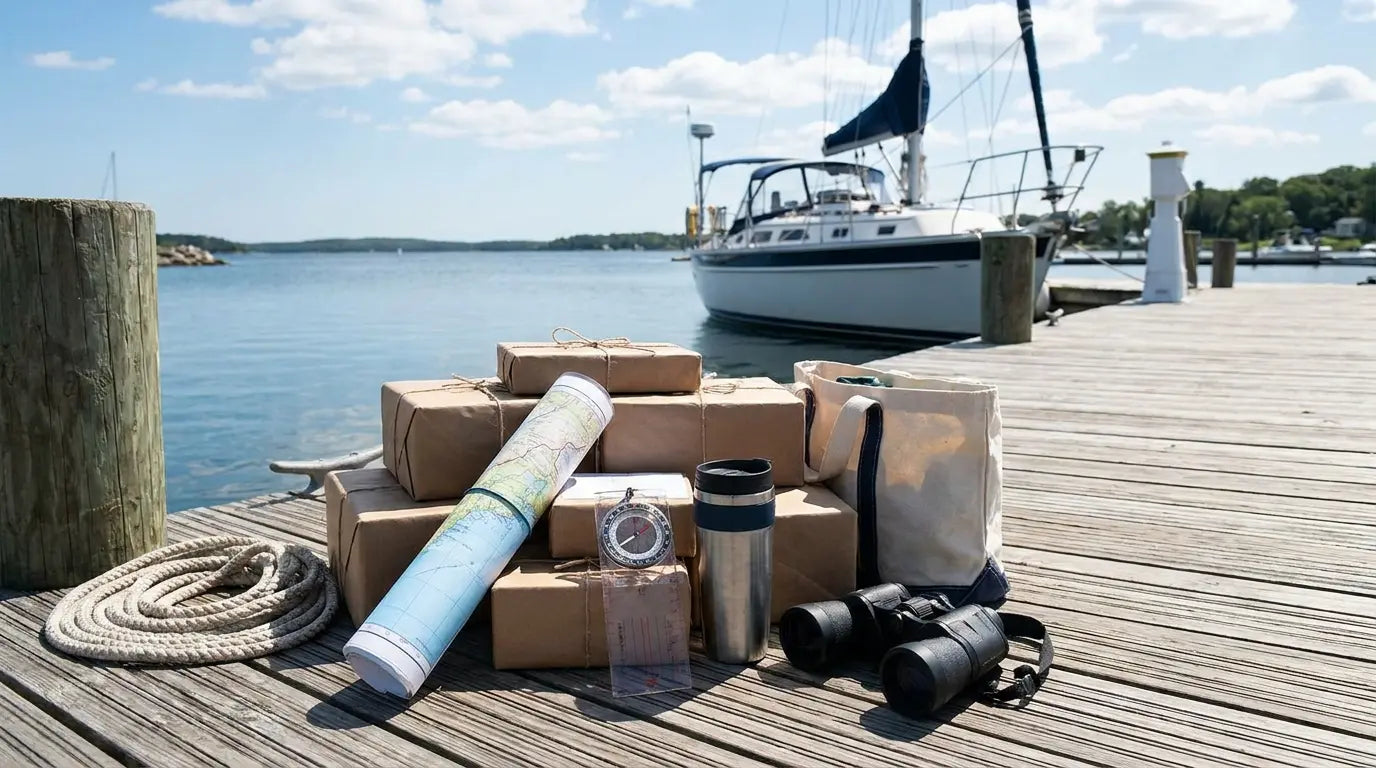
I've been gifted a lot of useless boat stuff over the years. A "marine" speaker that corroded after two months. A phone holder that launched my iPhone into the bay during a hard turn. A cooler that leaked from day one. Sunglasses that sank like stones.
Most people who don't boat don't understand what gear needs to survive out here. Salt corrodes everything. Nothing stays put when you're pounding through chop. And if it's not actually waterproof (not water-resistant, not splash-proof, but submersible), it's going to fail when you need it.
I've been boating for 15 years, from Florida to the Bahamas. I've also watched about $2,000 worth of gear corrode, break, or go overboard. So yeah, I'm picky about what stays on my boat.
This list is different. Everything here either solves a problem you've been living with: phones sliding, drinks tipping, gear corroding, or upgrades something you didn't know could be better. I use most of this stuff on my own boat. The rest is on my wish list because I haven't justified the cost yet.
Skip the dock store. Skip anything that says "marine-grade" but costs less than dinner. Get something that solves a real problem.
Stop Losing Stuff Overboard
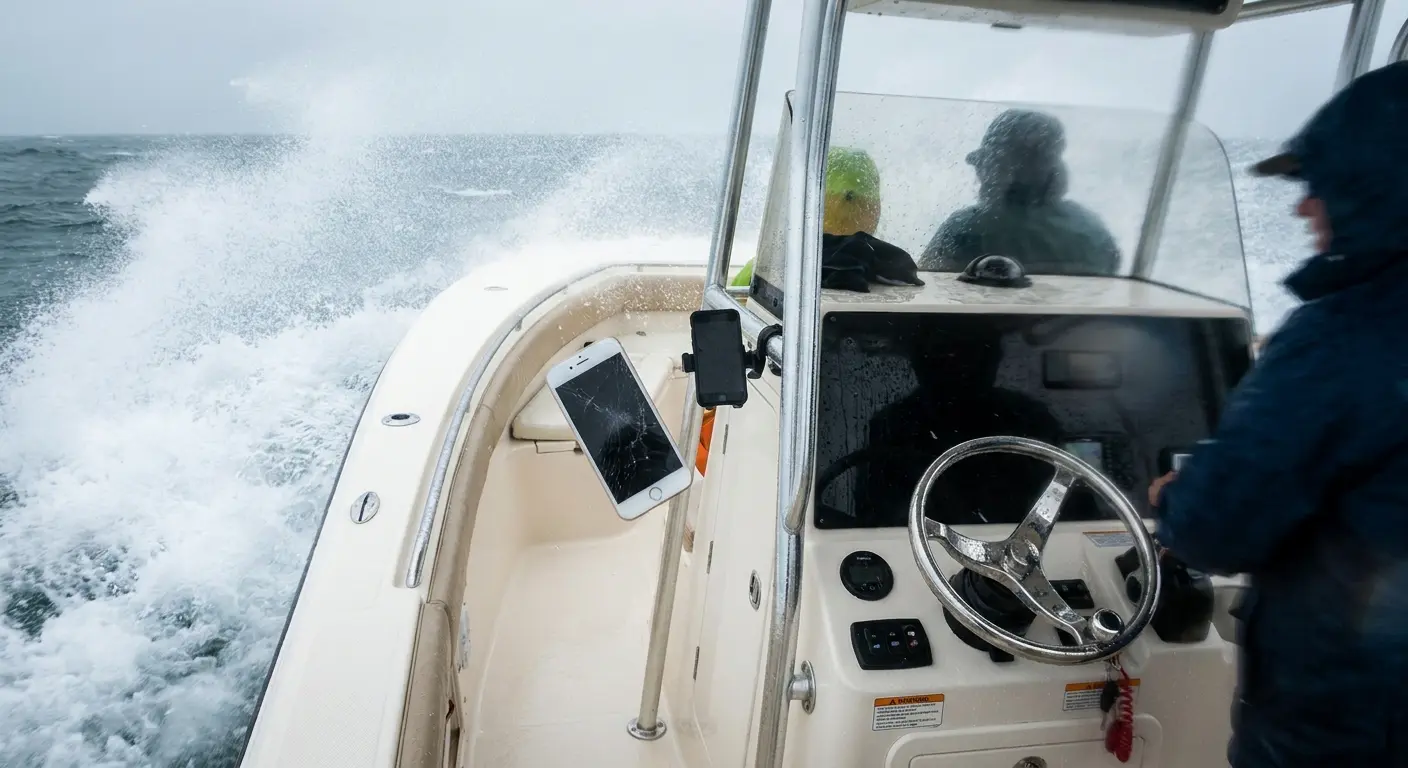
Everything becomes a projectile the second you leave flat water. I've had a coffee mug slide across the console and nail my first mate in the shin. Watched a friend's phone skitter across the deck and disappear over the side. If it's not secured, it's gone or it's broken.
The dock store sells plenty of "marine" accessories, but most of them end up in a storage locker after one season because they don't actually solve the problem. The gear below uses magnetic mounting systems, strategic weight distribution, and materials that grip instead of slide. You'll install them once and never remove them.
Look, here's why regular gear fails on boats:
Problem |
Why Regular Gear Fails |
What Actually Works |
|---|---|---|
Phone security |
Cases slide on wet surfaces, clips break |
Magnetic mounting with rugged case |
Drink stability |
Fixed cup holders in wrong spots |
Repositionable magnetic holders |
Deck traction |
Smooth soles slip, shoes hold water |
Drainage shoes with siped soles |
1. Rokform Rugged Phone Case
Your phone is your backup chartplotter, your camera, your weather station, and the thing you'll use to call TowBoatUS when something breaks. Keeping it from ending up in the water is harder than it sounds.
Standard phone cases weren't designed for boats. One good wave and your phone skitters across the deck or straight into the water. I've seen it happen more times than I can count.
Rokform's rugged case system uses military-grade protection combined with their RokLock magnetic mounting technology. The phone stays exactly where you put it, even in rough seas. The magnetic mount means no fumbling with clips when your hands are wet and you need to check coordinates. You just slap the phone on. It stays.
You can mount it to any metal surface on the boat or use their dedicated marine mounts. The case itself handles impacts, saltwater spray, and UV exposure without degrading.
I've dropped mine on fiberglass, had it soaked by spray, left it in direct sun for hours. Still works perfectly. The magnetic mount is strong enough that I've never had it come loose, even when we're pounding through chop.
If you want the full breakdown of what makes rugged cases actually protective (not just marketing BS), I wrote a detailed guide on protective phone cases that covers impact ratings, waterproof standards, and what actually matters.
Look, I know a $300 phone case sounds insane. I thought so too until I priced out my third iPhone replacement. The case adds bulk. If you're used to a slim phone, it'll feel chunky at first. But that bulk is protection. Your choice: slim and fragile or bulky and indestructible.
2. Magnetic Drink Holders
Drinks tip over constantly on boats. If you've never watched a full beer slide across the deck and explode against the gunwale, you haven't really been boating.
Cup holders are either in the wrong spot or they're designed for car-sized containers. And you can't move them, which matters when you're standing at the helm, then moving to the stern, then sitting on the bow.
Magnetic drink holders attach to any metal surface (railings, T-tops, console sides) and stay put through wake jumps and tight turns. Strong enough to hold a full can without sliding, easy enough to grab when you need a sip. Most are made from stainless steel or powder-coated aluminum that won't rust.
You can reposition them based on where you're sitting or standing. I keep mine on the console rail. My wife moves hers to wherever she's sitting. That's the whole point: they're repositionable.
This fixes one of those annoying little problems that adds up over a full day on the water.
3. Non-Slip Deck Shoes with Drainage Systems
Wet feet are a given on boats. Slipping isn't.
Most boat shoes either hold water (making them heavy and miserable) or they lack real grip on wet fiberglass. I've watched too many people try to make regular sneakers work. It doesn't end well.
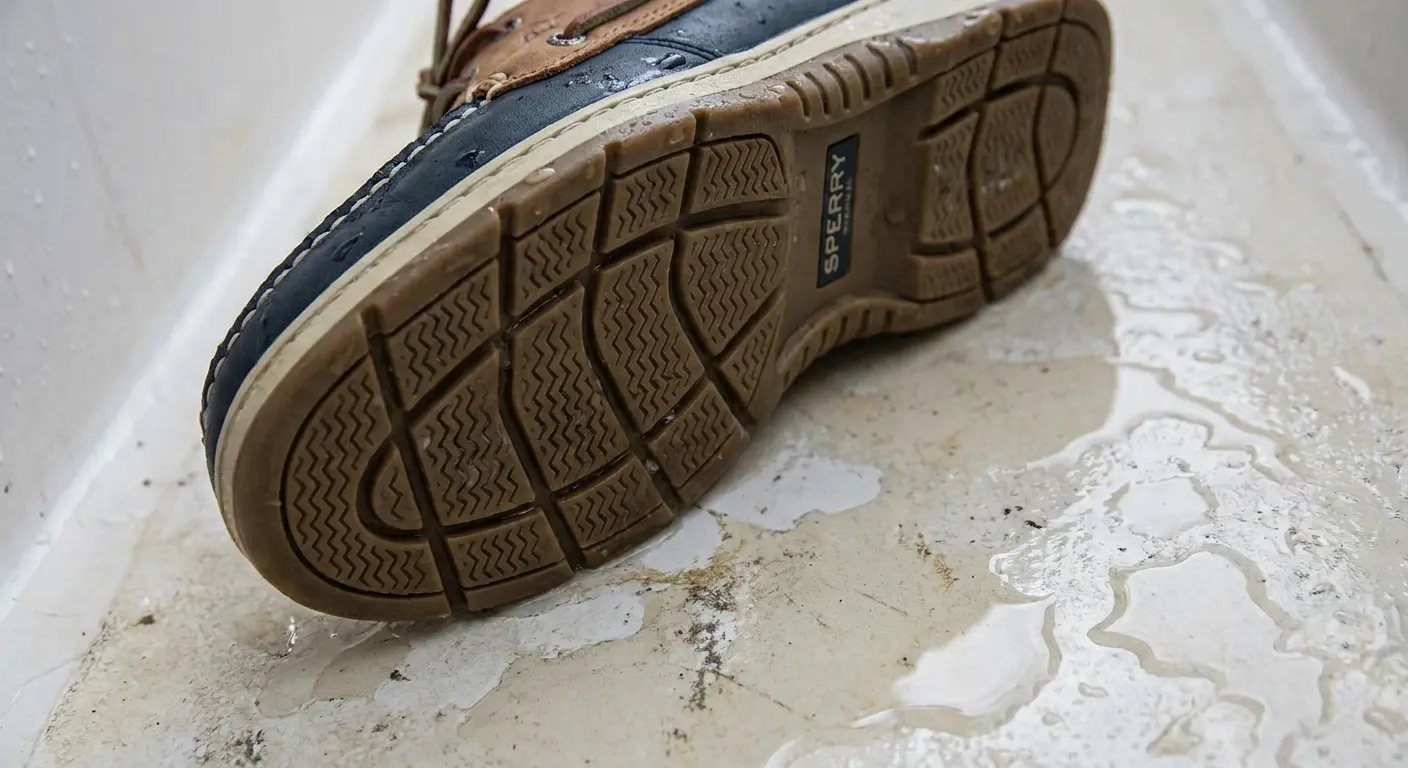
Quality marine footwear includes integrated drainage channels that let water escape while you're walking, combined with sole patterns specifically designed for wet, angled surfaces. Brands like Sperry, Xtratuf, and Gill have models with razor-siped soles that channel water away from the contact point.
The uppers are quick-dry mesh or treated leather that won't rot from constant saltwater exposure. These shoes matter during docking, anchoring, or any time losing your footing could mean going overboard. Or just looking like an idiot in front of everyone at the marina.
My first season, I bought cheap boat shoes from a department store. The soles were smooth as glass when wet. I ate it hard trying to step off at the dock. Embarrassing and painful. Now I only buy shoes with actual siped soles.
Quick note: rinse these with fresh water after every trip. Salt will break down the materials if you just throw them in a locker wet. I learned this the hard way.
4. Waterproof Action Camera with Mounting Kit
Phones capture moments; action cameras capture the stuff you'll want to watch later, like when your buddy face-plants trying to get back on the swim platform, or when you finally land that fish after a 20-minute fight. Anyone buying for a photographer should see my gifts for photographers list instead.
GoPros and similar devices are waterproof to significant depths, which means they can go overboard (intentionally or not) and survive. The mounting kit matters more than the camera itself. You need marine-specific adhesive mounts that can handle sun, salt, and constant vibration. Regular adhesive mounts fail, usually at the worst possible time.
I've got one mounted on the T-top that captures the view from the bow during good runs. The footage is stabilized, so it doesn't look like a shaky mess even when we're pounding through chop.
You can mount one on a boom, a bimini frame, or even a fishing rod to capture perspectives that phones can't manage. This is perfect for boaters who document their time on the water.
Electronics That Don't Die in Three Months
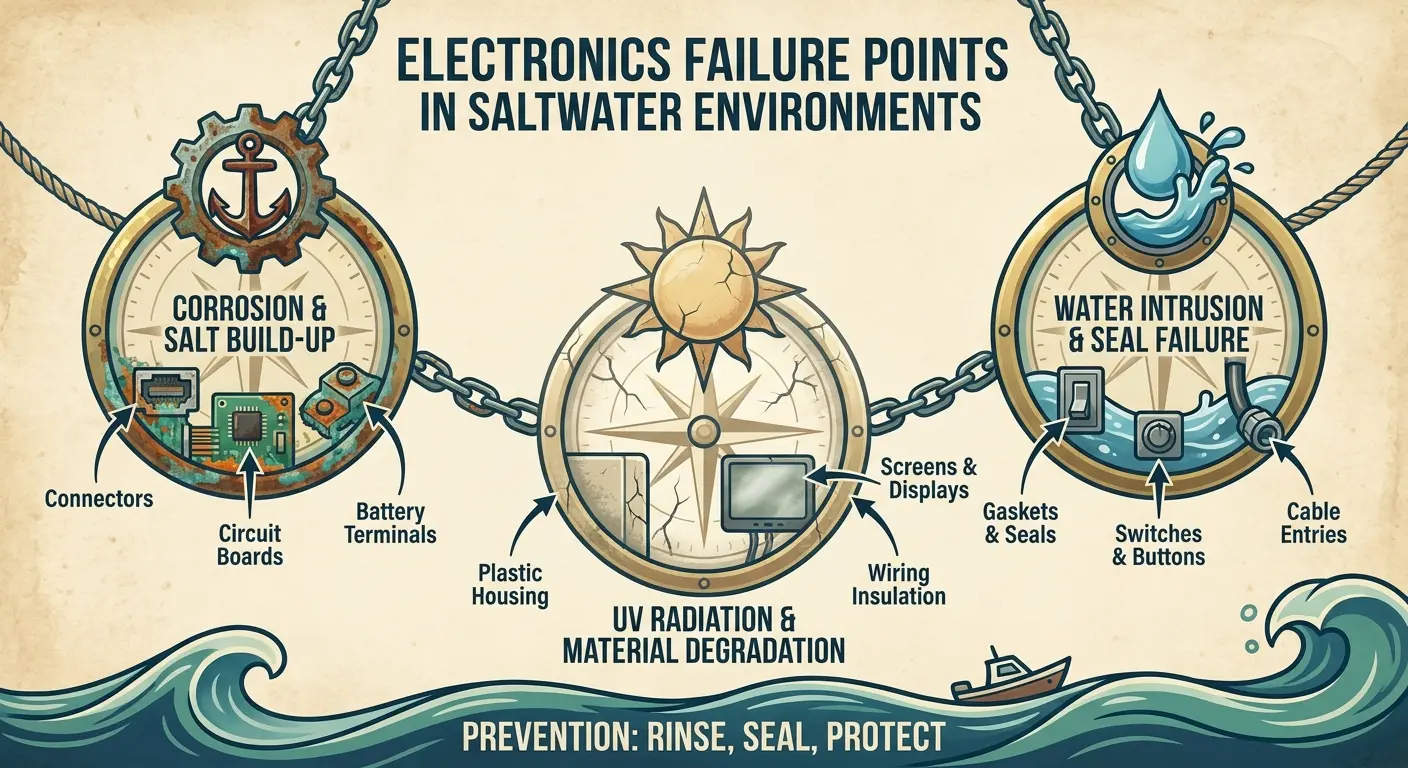
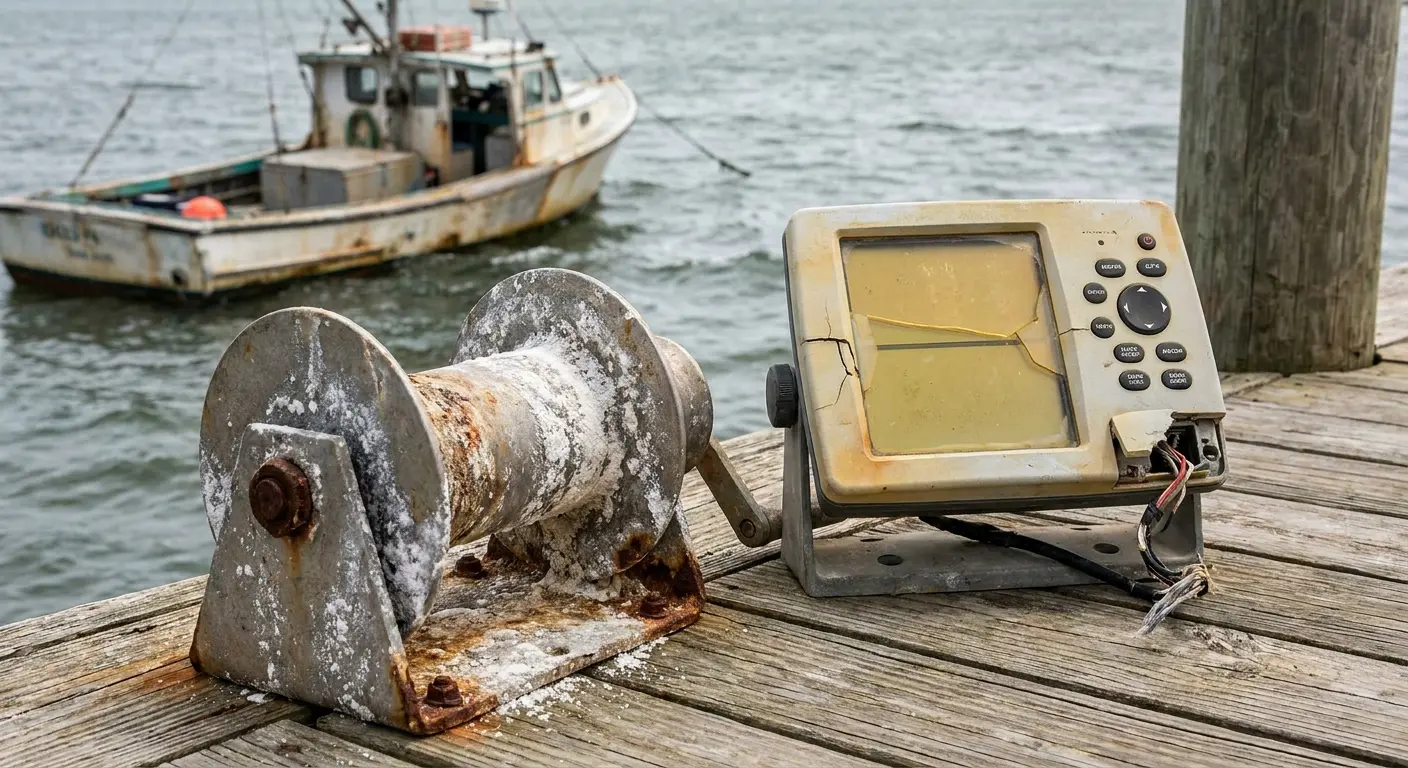
Marine electronics die in ways that would never happen on land. Saltwater corrodes connections overnight. UV turns plastic brittle. Humidity invades sealed compartments like it's a personal challenge.
The gear below was designed for this. Not consumer electronics with an IP rating slapped on, but actual marine tech that accounts for 12V power, constant vibration, and the reality that you can't just go inside when it rains.
Real marine tech isn't just regular electronics with a waterproof sticker. The stuff below was designed for boats from day one: 12V power systems, constant vibration, and the kind of humidity that makes your charts curl.
5. Solar-Powered Bluetooth Speaker
Music on the water is non-negotiable. But battery anxiety is real when you're anchored out for the day and your speaker dies at 2 PM.
Solar-powered speakers solve this by continuously charging while you're using them. Ecoxgear and Goal Zero make models that are actually waterproof (submersible, not just splash-resistant). They float if they go overboard and the sound quality is surprisingly good for something that fits in a backpack.
The solar panel is integrated into the top surface, so placing the speaker in the sun is automatic. Battery life extends from hours to days instead of dying halfway through your trip. That matters when you're anchored out for the weekend or rafted up with other boats and don't want to run the engine just to charge a speaker.
The Bluetooth range is better than consumer models because marine speakers account for interference from water and metal surfaces.
These aren't cheap. But replacing regular Bluetooth speakers every season because they die from moisture adds up fast. Ask me how I know.
Solar charging used to be gimmicky, barely enough power to matter. Current generation actually works. The panels are efficient enough to extend battery life significantly.
6. Handheld VHF Radio with Float Feature
Cell phones don't work offshore. I know you think yours might. It doesn't.
Fixed-mount VHF radios don't help when you're in the dinghy or, worst case, overboard.
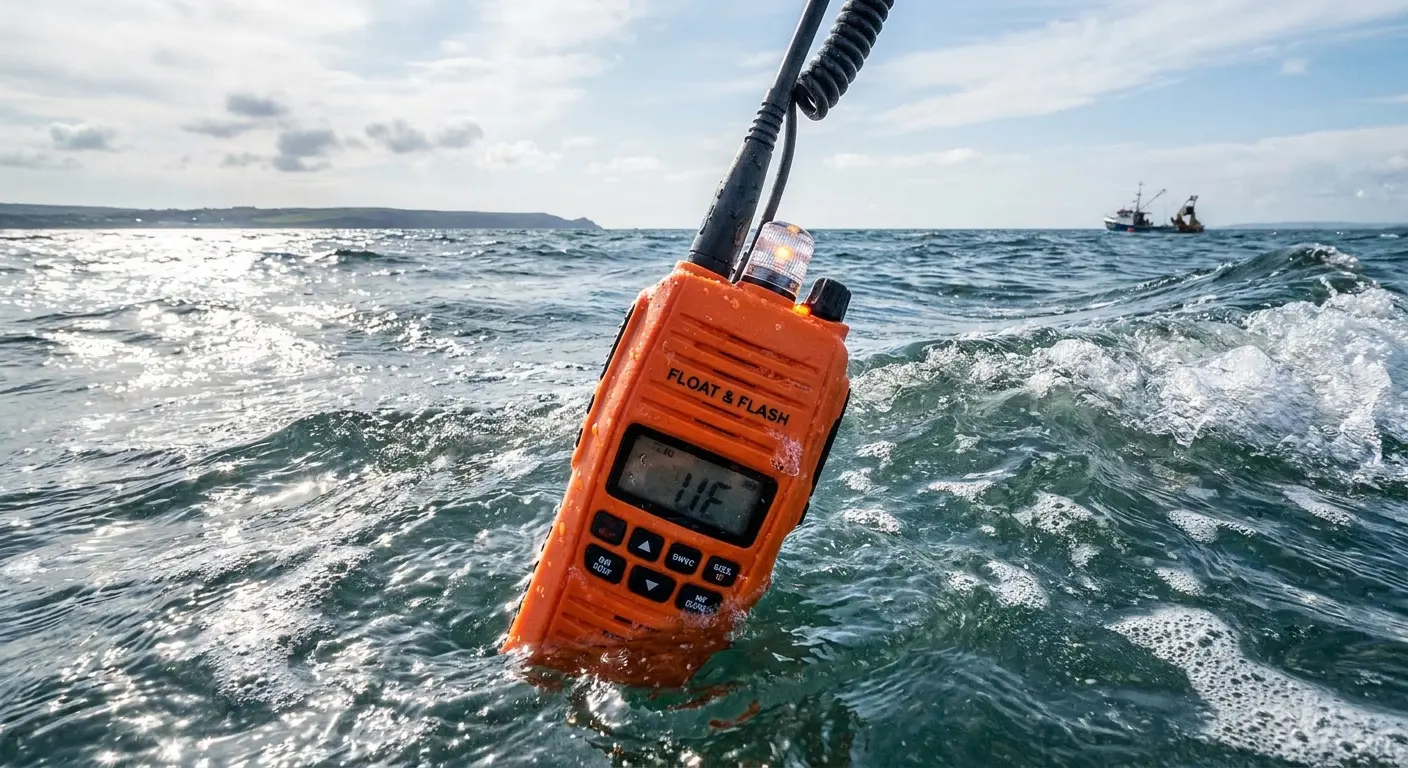
Handheld marine radios with built-in flotation and bright colors are findable if dropped in the water. Standard Horizon and Icom make models that are submersible, have integrated GPS for DSC distress calls, and include NOAA weather channels with alert functions.
The float feature uses foam integrated into the battery compartment, so the radio bobs antenna-up if it goes in the drink. These radios also serve as backup communication if your main system fails. Battery lasts days if you're just monitoring channels, hours if you're actually talking.
I once watched a guy try to call the Coast Guard on his cell phone 20 miles offshore. Spoiler alert: it didn't work. He had to wait for someone with a VHF to relay his call. Don't be that guy.
Every boater should have one. Most don't because they assume their phone or fixed radio is enough. Then something happens and they wish they had a backup.
7. Marine GPS Watch with Tide Tracking
Garmin's marine-specific watches (like the Quatix series) do more than track fitness. They display tide information, sunrise/sunset times, and can control compatible chartplotters and autopilots from your wrist.
The GPS is multi-band for accuracy in canyons and near structures. Battery life in GPS mode runs 20-30 hours depending on the model. The watch face is readable in direct sunlight. That matters more than you'd think when you're trying to check tide info while steering with one hand and holding your coffee with the other.
These watches also include man-overboard functions that mark your location and provide navigation back to that point. They're water-rated to depths that exceed recreational diving limits.
Some models include sailing-specific data like laylines and start timers if you race. I don't, so I mostly use mine for tide info and man-overboard marking. But having nav data on my wrist instead of running below deck to check the chartplotter saves time constantly.
The Quatix watches are expensive: $400-$800 depending on the model. That's a lot for a watch. But if you're on the water constantly and want nav data on your wrist, it's worth it. If you boat once a month, probably not.
Marine GPS watches are relatively new. Five years ago, you couldn't get tide data on your wrist. Now you can get that plus chartplotter control. The technology has caught up to what boaters actually need.
8. Waterproof Tablet Case with Lanyard System
Waterproof cases from LifeProof or Pelican turn your tablet into actual marine electronics instead of an expensive paperweight you're afraid to use.
The touchscreen remains fully functional through the case material. The lanyard system is what elevates this from a protective case to a practical tool because it means you can hang the tablet around your neck or secure it to a cleat while you're working with both hands.
These cases are drop-proof and submersible. Some float depending on the tablet weight. Check before you assume yours will.
I use mine for Navionics and weather radar. Having a bigger screen than my phone makes reading charts way easier, and the lanyard means I can hang it around my neck while I'm working with both hands.
Boaters use tablets for navigation apps like Navionics or Garmin ActiveCaptain, weather radar, and digital versions of cruising guides. The case makes the tablet functional in conditions where you'd never risk an unprotected device.
Quick Reality Check: What Not to Waste Money On
Before we continue, here's what doesn't work:
Cheap "marine" phone cases under $30. They leak. The magnets are weak. You'll end up buying a real one anyway.
Any Bluetooth speaker under $50 that claims to be waterproof. They're splash-resistant at best. They'll die from humidity within a season.
"Marine-grade" anything from Amazon that has zero reviews from actual boaters. If it's not a known brand, it's probably rebranded junk.
Boat shoes from department stores. The soles are wrong, the materials are wrong, and you'll slip. Just don't.
Some people swear by waterproof pouches for phones. I think they're garbage. Too much fumbling to access your phone, and I don't trust the seal.
Alright, back to the good stuff.
Comfort Stuff You Want But Won't Buy Yourself
Boaters spend money on stuff that keeps the boat running: maintenance, fuel, dockage, that through-hull fitting that's "probably fine" but might sink you. Comfort items feel like luxuries.
But here's the thing: sitting on scorching vinyl for six hours sucks. So does warm beer. And having nowhere comfortable to relax at anchor means you end up cutting trips short.
This stuff makes time on the water better in ways you'll notice every trip. Which is why it makes great gifts. Boaters want it but won't buy it themselves.
For more inspiration on thoughtful upgrades, check out our comprehensive Father's Day gift guide which features practical accessories that enhance outdoor experiences.
9. Quick-Dry Seat Cushions with UV Protection
Vinyl seats get scorching hot in direct sun. Like, burn-the-back-of-your-legs hot. And they stay wet for hours after rain or spray.
Marine seat cushions with closed-cell foam cores dry in minutes and provide insulation from heat. The fabric is UV-treated to prevent fading and degradation, with antimicrobial treatments to resist mold and mildew. These cushions have non-slip bottoms so they don't slide around during turns. They're available in sizes that fit standard boat seat dimensions: leaning posts, helm seats, bench seats.
The cushions compress for storage but provide real padding during long runs or while anchored. Colors stay vibrant for seasons instead of bleaching out after one summer.
I used to just throw towels on the seats. Then the towels would get soaked and stay wet. These cushions dry in minutes and actually provide padding. I don't know why I waited so long to get them.
This is one of those things you don't realize you need until you have it. Then you wonder how you ever sat on bare vinyl for six hours.
These matter most in summer when vinyl gets scorching hot. In cooler months, you might not bother. But having them aboard for those brutal July days is worth it.
10. Insulated Cooler Backpack
Soft-sided cooler backpacks keep ice for 24+ hours while being light enough to actually carry from your car to the dock to the boat. YETI's Hopper series or Pelican's Dayventure line are the gold standard.
The backpack format matters because it frees up both hands for carrying other gear or managing dock lines. These coolers are fully waterproof (you can hose them out), resistant to punctures and abrasion, and they don't take up permanent space on the boat.
The insulation is in the walls and the zipper, not just the body. Interior dimensions fit wine bottles upright or can hold lunch and drinks for a day trip. External pockets provide dry storage for keys, wallets, or phones.
If you're constantly loading and unloading gear, this is worth every penny. Hands free for dock lines, and you're not making multiple trips.
Here's the difference between a $30 cooler bag and one that actually works:
Feature |
Cheap Cooler Bag |
Marine-Grade Backpack |
Why It Matters |
|---|---|---|---|
Ice retention |
4-8 hours |
24-48 hours |
No ice runs during long days |
Waterproof |
Water-resistant only |
Fully submersible |
Can be rinsed, handles spray |
Portability |
Single strap |
Backpack straps |
Hands free for dock lines |
Durability |
Thin fabric |
Puncture-resistant |
Survives contact with cleats |
I've tested cheaper versions. They don't come close to the ice retention. Budget cooler bags keep ice for maybe 8 hours. These go 24-48 hours easy.
YETI vs. Pelican for cooler backpacks: both work. YETI has better name recognition. Pelican is slightly more durable. I went with YETI because I got it on sale. Either one will last for years.
Side note: The best part about these cooler backpacks is you can use them for other stuff too. Beach trips, camping, tailgating. My wife steals mine constantly for grocery runs because it keeps frozen stuff frozen on the drive home. Not what I bought it for, but whatever.
11. Polarized Floating Sunglasses
Sunglasses go overboard. It's not a matter of if, it's when.
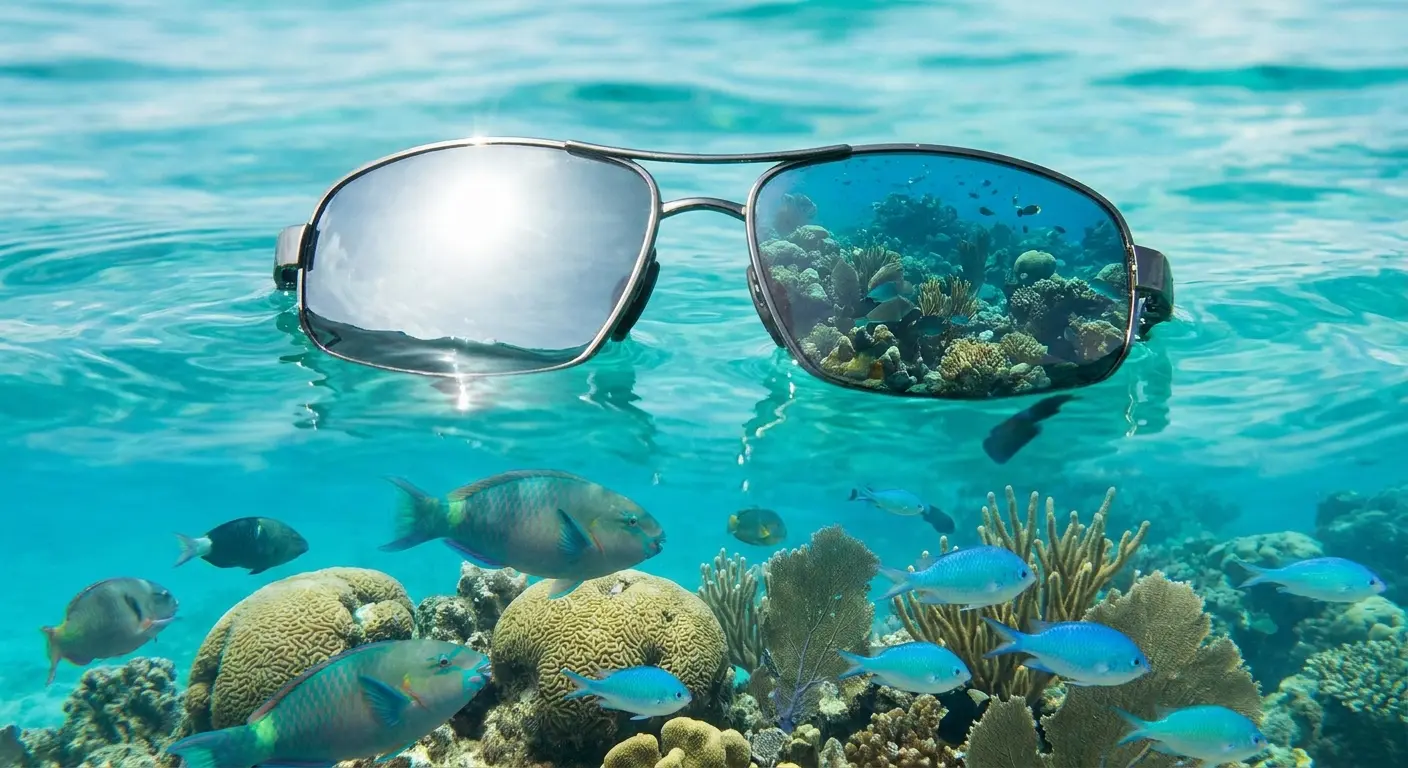
Floating sunglasses with polarized lenses solve half that problem (you can retrieve them) while improving visibility into the water. Polarization cuts glare. That's not just comfortable, it's functional. You can spot fish, rocks, or floating debris that you'd miss with regular sunglasses.
Brands like Costa, Maui Jim, and Rheos make frames with buoyant materials or detachable floats. The frames are flexible plastic or rubber that can take abuse without breaking. Lens coatings resist saltwater spotting and scratches. Some models include side shields for peripheral sun protection.
I've gone through four pairs of regular sunglasses. Lost two overboard, sat on one, stepped on another. Finally bought floating polarized ones three years ago. Haven't lost a pair since.
Costa vs. Maui Jim for polarized sunglasses: Costa has better glass lenses, Maui Jim is more comfortable. I prefer Costa for fishing, Maui Jim for casual boating. Both float if you get the right models.
If the sunglasses don't specifically say they float, they don't float. Marketing will say "water-ready" or "marine-friendly." That means they sink.
The foam inserts in the temples will degrade eventually, usually after 2-3 seasons of heavy use. Some brands sell replacement floats. Check before you buy.
12. Marine-Grade Hammock with Stainless Hardware
Most boats have nowhere comfortable to relax that isn't the captain's chair. Which is fine if you're running the boat, but not great for everyone else.
Marine hammocks with stainless steel carabiners and spreader bars install between rails, T-top legs, or davits. The fabric is quick-dry nylon or polyester that resists UV and mildew. Weight capacity exceeds 400 lbs for double hammocks. The installation is temporary (you can set it up and take it down in under a minute), which means it doesn't interfere with fishing or water sports.
Hammocks work best on catamarans or boats with wide beam. But I've seen people get creative with mounting points on almost any vessel. Mine's strung between the T-top legs. The gentle rocking motion of a boat amplifies the hammock experience.
This transforms downtime at anchor. Instead of sitting on hard surfaces or leaning against the console, you can actually relax. It's become the most popular spot on my boat.
This is an anchoring-only setup. You're not running anywhere with a hammock strung up. But for lazy afternoons at the sandbar, it's perfect.
Safety Gear You'll Actually Keep Within Reach
Look, I know nobody wants to think about safety gear until they need it. But here's the reality: the stuff that saves you is the stuff you can reach in three seconds. If it's buried in a locker, it's useless.
Traditional safety gear is bulky, orange, and gets stuffed in a compartment where it's forgotten until the Coast Guard asks to see it. The gear below is different. It's compact enough that you'll actually keep it within reach, and useful enough that you might use it even when nothing's wrong.
Nobody wants to think about emergencies, so nobody keeps this stuff accessible. The safety gear below doesn't look like safety gear. Which means you'll actually keep it accessible instead of buried in a locker.
13. Rechargeable LED Safety Lights
Visibility matters at night, during emergencies, or when you need to signal other vessels. These lights are bright enough to be seen for miles.
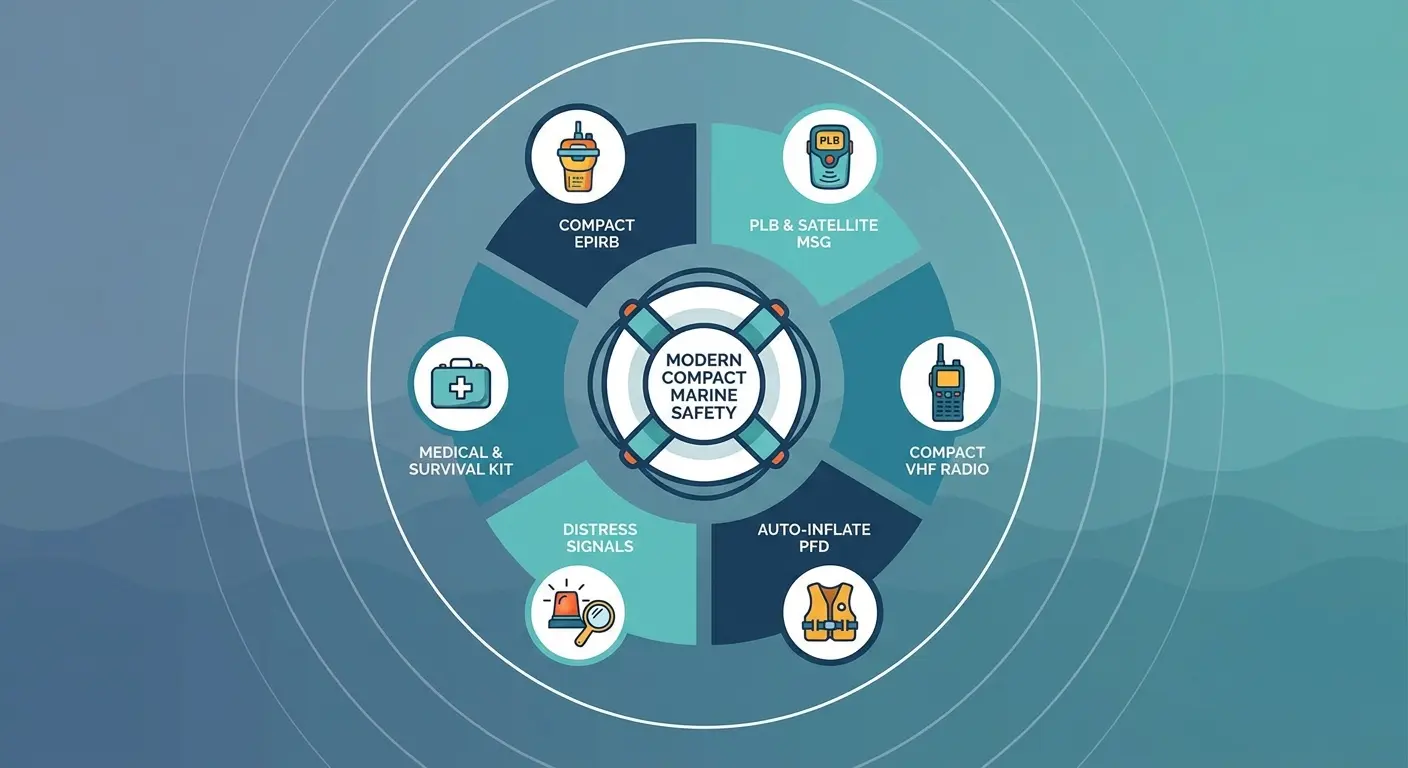
Rechargeable LED lights from companies like ACR or Exposure Marine are waterproof, float, and provide multiple flash patterns including SOS. They attach to life jackets, kayaks, or can be handheld. Battery life runs 10-20 hours depending on mode, and they recharge via USB.
Some models include white flood modes for task lighting (like working on deck at night) in addition to the colored emergency strobes. These lights are small enough to keep in a pocket or clipped to a PFD, which means they're actually available when needed.
They're also useful for marking your anchor rode at night, making the dinghy visible, or finding your boat in a crowded anchorage when everything looks the same in the dark.
I keep one clipped to my PFD and one in the dinghy. They're small enough that you forget they're there until you need them.
14. Compact Throwable Flotation Device
Ring buoys are required safety equipment. They're also awkward to store and hard to throw accurately, which is a problem when seconds matter.
Modern throwable flotation devices are compact foam cushions or bags that meet Coast Guard requirements while being easier to deploy. The Onyx Type IV cushion is grippable, floats high, and can be thrown farther than a traditional ring. Some models include reflective tape and attachment points for adding lights or strobes.
The compact size means you're more likely to keep them accessible rather than buried in a locker. These work for the situations that happen way more often than true emergencies: someone falls off the swim platform, a kid jumps in without warning, or someone gets tired swimming back from the sandbar.
I keep mine within arm's reach of the helm. Not buried in a locker where it's useless. Because when someone goes overboard, you have about three seconds to react.
Real talk: I'm harping on communication and safety gear because I've been in situations where my phone was useless and my fixed VHF was out of reach. It's not fun. Having backup communication isn't paranoia, it's basic seamanship.
15. Personal Locator Beacon (PLB)
PLBs are the last line of defense when everything else fails. ACR ResQLink or Ocean Signal rescueME devices are waterproof, float, and transmit distress signals directly to satellites monitored by search and rescue services worldwide.
They don't require cell service or subscription fees. Unlike satellite communicators that cost $15-30/month, PLBs are one-time purchases. The devices are compact enough to fit in a pocket or PFD. Battery life is 5-7 years without maintenance.
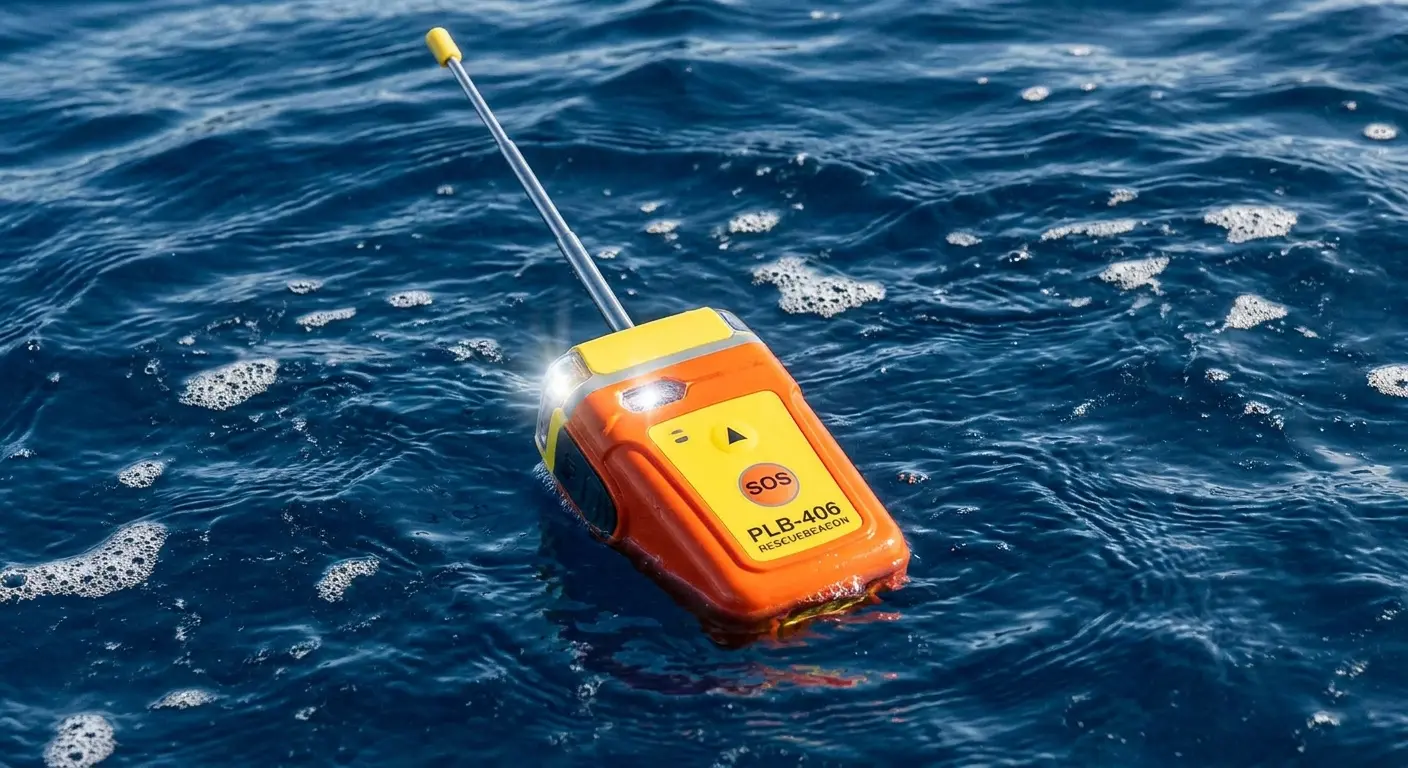
Activation is simple: deploy antenna, press button, wait for confirmation. GPS coordinates are transmitted with the distress signal.
You register it with your emergency contacts and vessel info. Then if you ever activate it, search and rescue knows who you are and what boat to look for.
If you stay within sight of land, you probably don't need this. If you go offshore, even occasionally, you need this. Period.
The PLB is $300. That's less than one tow back to the marina. And it might save your life.
These are for offshore boaters or anyone who pushes beyond VHF range. I hope you never need to use it. But having one aboard changes how confident you feel about pushing your range.
The PLB has been on my boat for three years. Never activated it. Hope I never do. Still glad it's there.
16. First Aid Kit in Waterproof Pelican Case
Standard first aid kits fall apart in marine environments. Contents get wet, packaging degrades, and medications expire fast in heat and humidity.
A marine first aid kit in a waterproof Pelican case stays organized and protected. The case is crushproof, floats, and has pressure relief valves for altitude or temperature changes.
Contents should include marine-specific items: seasickness medication, sunburn treatment, fishing hook removal tools, and supplies for treating cuts in saltwater environments.
Adventure Medical Kits makes marine-specific versions with illustrated guides for treating common boating injuries. Label it clearly and make sure everyone aboard knows where it is. A first aid kit doesn't help if nobody can find it when someone's bleeding.
I keep mine in a cockpit locker where it's accessible without going below. Because most injuries happen on deck, not in the cabin.
You can put together a marine first aid kit for less than buying a pre-made one in a Pelican case. But the Pelican case itself is worth the premium if you value organization and waterproof storage.
Look, I'm biased here. I use Rokform cases because I've destroyed enough phones to know what works. The magnetic mount system isn't just convenient. It's the difference between checking your charts quickly and fumbling with clips while trying to steer with wet hands.
The case handles real abuse: drops on fiberglass, saltwater spray, full sun for hours. And the phone stays exactly where you mount it, even in rough seas. That matters more than people realize until they've lost a phone overboard or cracked a screen on deck.
Rokform builds products that account for these realities because your phone isn't just a communication device on the water. It's a critical piece of safety and navigation equipment. Our magnetic mounting system keeps your device accessible and secure, whether you're running offshore or just trying to keep it from sliding across the console during a sharp turn.
Final Thoughts
Here's what I've learned about buying gifts for boaters: most people get it wrong because they don't understand what actually matters on the water.
Boaters accept that phones slide around, drinks tip over, and gear corrodes. They budget for maintenance, fuel, and dockage. They skip the upgrades that would actually make their time on the water better.
That's where good gift-giving makes a difference.
Everything on this list either improves safety, increases comfort, or eliminates an ongoing annoyance. Skip the novelty crap. Skip anything that says "marine-grade" but costs less than dinner. Get something that solves a real problem or makes time on the water less frustrating.
That's what stays aboard. That's what actually gets used.
And if you're still not sure? Start with the Rokform case and magnetic mounts. Everything else is bonus.

