


Table of Contents
Gear That Protects the Real Workflow
Rokform Rugged Phone Case
Weatherproof Lens Pouches with Quick Access
Shock-Absorbing Memory Card Wallet
All-Weather Notebook and Pencil Set
Protective Camera Strap with Load Distribution
Modular Cable Management Kit
Tools That Extend Creative Range
Portable LED Panel with Adjustable Color Temperature
Collapsible Reflector with Asymmetrical Shapes
Articulating Magic Arm with Multiple Mounting Points
Wireless Shutter Release with Programmable Intervals
Clip-On Macro Lens Set for Smartphones
Foldable Backdrop Stand That Fits in a Backpack
Comfort Essentials for Long Sessions
Insulated Water Bottle with Carabiner Clip
Padded Knee Guards for Ground-Level Shooting
Fingerless Gloves with Touchscreen Compatibility
Portable Lumbar Support Cushion
Anti-Fatigue Standing Mat for Studio Work
TL;DR
Stop buying photographers more gear. Their closets are already full of lenses they use twice a year.
What they actually need? The $30 thing that keeps their phone from shattering when they're juggling a camera, a reflector, and a bride who's running late. The knee pads that mean they don't spend Sunday night icing their joints after a wedding. The stuff that prevents disasters, not the stuff that looks cool on Instagram.
Protection matters more than upgrades when your phone is your second camera, your communication device, and your mobile editing suite. Comfort tools aren't luxuries when you're crouching for hours or standing through a full wedding day. We've focused on items that address real workflow problems rather than adding to an already overwhelming collection of gear that'll sit in a closet.
Gear That Protects the Real Workflow
You know what ends a photoshoot faster than a dead battery? A cracked phone screen.
Because your phone isn't just a phone anymore. It's your shot list, your weather radar, your client communication, your backup brain. I've watched photographers lose entire timelines because they dropped their phone between the ceremony and reception. That's not a phone problem. That's a business problem.
Workflow interruptions caused by damaged secondary equipment cost more time and money than people realize. A cracked screen means missed client calls and lost shot lists. A damaged memory card means hours of work disappearing instantly. These gifts prevent those interruptions before they happen, which makes them more valuable than another piece of gear collecting dust on a shelf.
Photographers need their entire system working smoothly, not just their main camera. When you're juggling client communication, location changes, lighting adjustments, and creative decisions simultaneously, every piece of equipment becomes critical to the final result.
1. Rokform Rugged Phone Case
Phones do heavy lifting during shoots. You're texting clients about arrival times, checking weather apps for golden hour timing, using your phone as a light meter, posting behind-the-scenes content, and backing up images to cloud storage between location changes.
Okay, full transparency time: I'm about to recommend our own product, and I know how that looks. But here's the thing. We made this case specifically because I kept watching photographer friends destroy their phones mid-shoot.
Not at parties. Not dropping them in parking lots. During actual paid work.
A cracked screen or water-damaged phone doesn't mean inconvenience. It means missed client calls, lost shot lists, and no way to share previews on location. We designed the Rokform Rugged Phone Case for people who use their phones as professional tools, combining military-grade drop protection with a magnetic mounting system that lets you attach your phone to tripods, car mounts, or metal surfaces for hands-free operation.
The twist-lock mechanism means you can mount and dismount quickly without fumbling with clips or adhesives. Need a time-lapse setup? Mount your phone to a tripod. Scouting locations? Attach it to your car vent for GPS navigation. Want a quick reference shot of your lighting setup? Stick it to any metal surface in seconds.
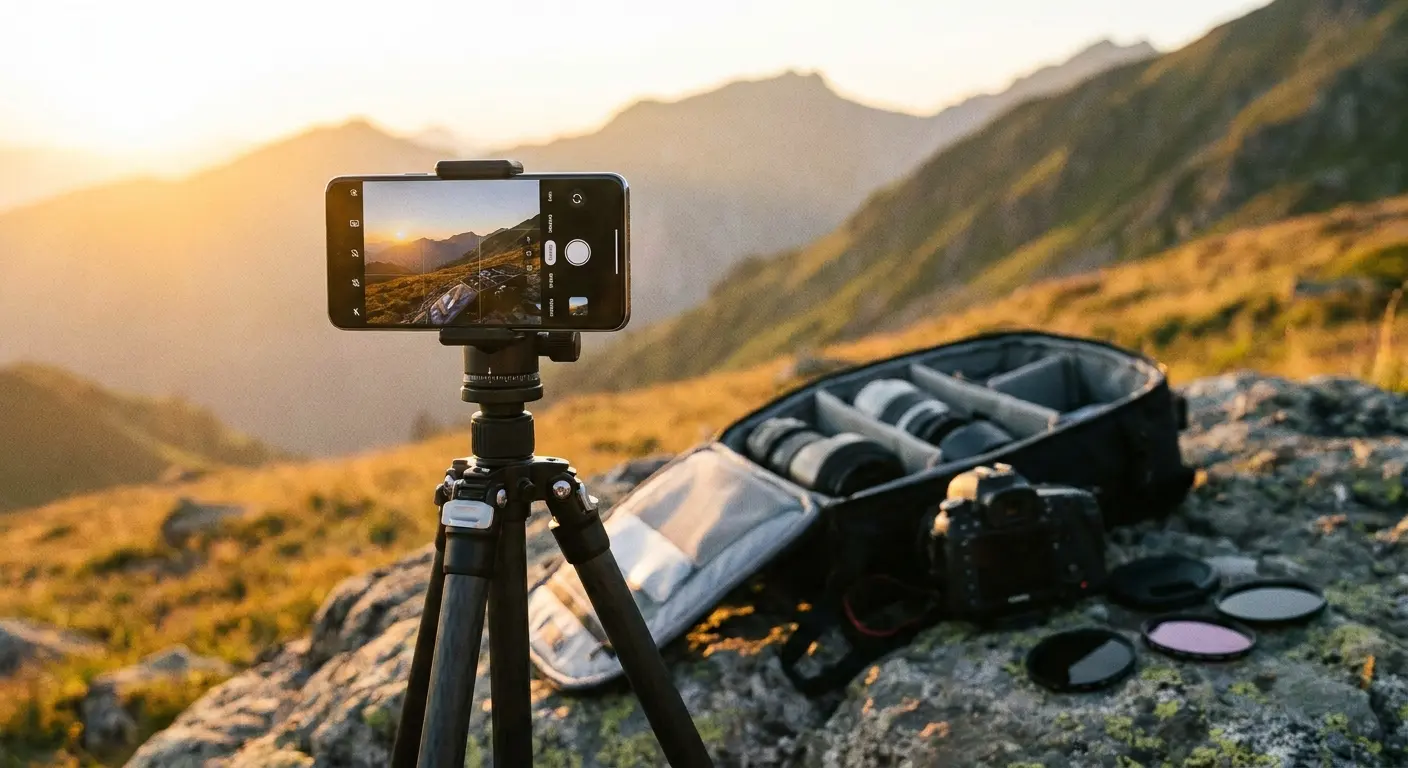
Your phone is part of your professional kit now. Protect it like you protect your camera body, or accept that you'll replace it every six months. For people juggling multiple tasks on location, this case protects the device that keeps the entire shoot organized while offering mounting versatility that most protective cases ignore.
I'm biased. Obviously. But I'm also right.
2. Weatherproof Lens Pouches with Quick Access
Changing lenses in unpredictable conditions creates anxiety about exposing glass and sensors to the elements. Light rain starts falling during an outdoor portrait session. Wind picks up dust at a beach wedding. You're shooting in a field and need to swap from a 50mm to an 85mm before the moment passes.
Standard lens cases require two hands and full attention to open and close safely. Weatherproof pouches with roll-top closures and belt loops let you swap lenses quickly without setting down your camera or digging through a bag.
What matters most? One-handed access combined with weather resistance, not just padding.
These pouches work for anyone shooting events, nature, or street photography where conditions change faster than you can pack up and find shelter. You're not always near your main bag when you need a different lens, and fumbling with zippers while trying to protect your sensor from rain wastes precious seconds. Seconds where the bride's veil catches perfect backlight, or the sun drops below the horizon, or your subject's genuine smile fades back into their camera face. Wildlife shots make great screens, and my elephant wallpapers for phone set proves it.
3. Shock-Absorbing Memory Card Wallet
Memory cards hold the entire value of a shoot. A wedding photographer carries thousands of dollars worth of irreplaceable moments on cards that fit in a pocket.
Yet most photographers carry them loose in jacket pockets or cheap plastic cases that crack on impact.
A shock-absorbing wallet with individual slots prevents cards from colliding with each other, which can cause data corruption over time. The wallet protects cards if you drop your bag, sit on your jacket, or accidentally knock it off a table during a shoot. Make sure it has RFID blocking and water-resistant zippers. The RFID protection matters less than the physical protection, but water resistance can save your entire shoot if you get caught in unexpected rain or accidentally set the wallet near a spilled drink.
This matters most for wedding and event photographers who can't afford to lose a single card. It shows you understand that data protection is as critical as lens protection, which most people outside the industry never consider.
4. All-Weather Notebook and Pencil Set
Digital tools fail at the worst possible moments. Phones die during long shoots. Apps crash when you're trying to reference a shot list. Touchscreens stop working in rain or extreme cold, leaving you unable to access critical information.
Sounds prehistoric, right?
Until your phone dies at 4pm during an 8-hour wedding and you can't remember which family photos the bride specifically requested. Or until you're shooting in February and touchscreens stop working because it's 20 degrees out.
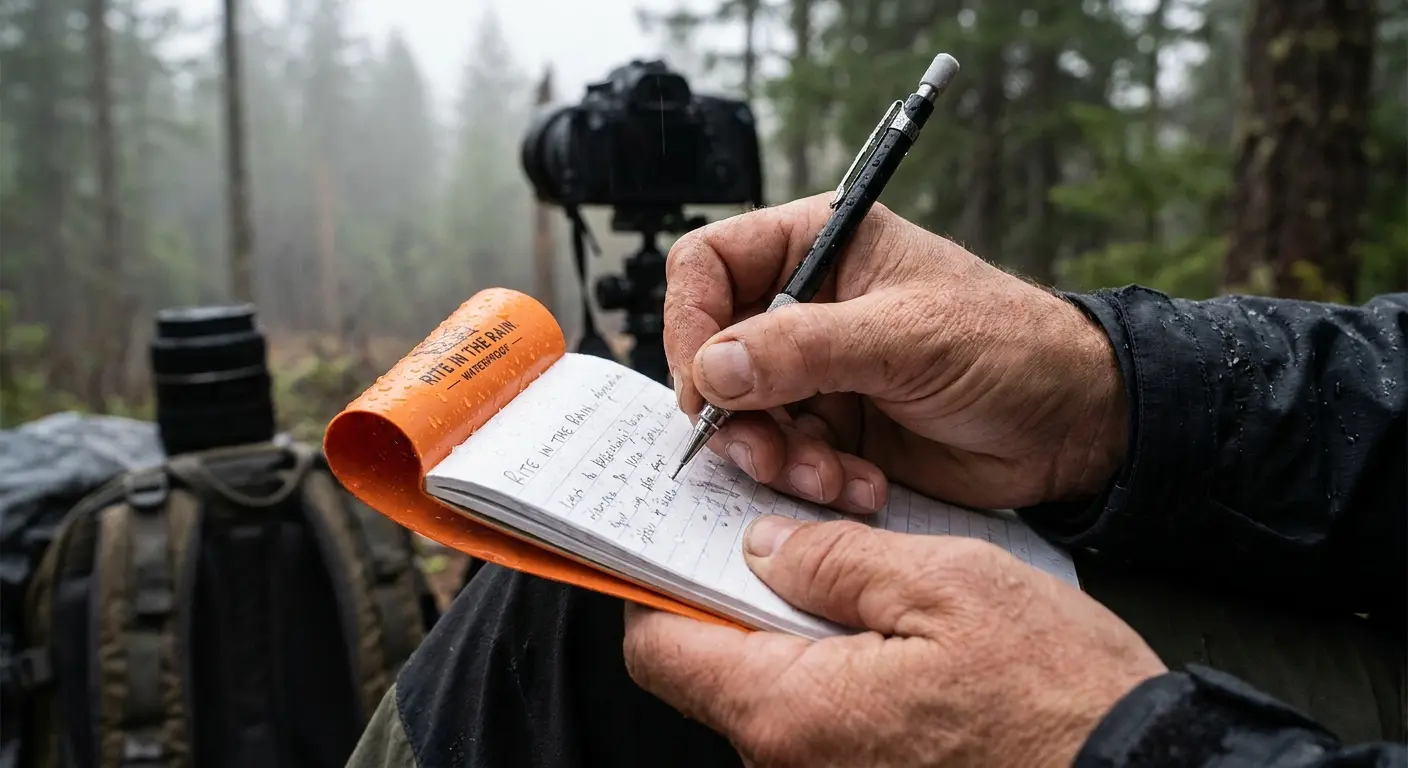
An all-weather notebook with waterproof pages and a pencil gives you a backup system for shot lists, lighting diagrams, client notes, and location details. I recommend pencils over pens because pens freeze in cold weather and smear when pages get wet.
Paper works when batteries don't. Pencils work when pens freeze. This isn't about being old-school. It's about having a backup for when technology fails at the worst possible moment. Which, if you shoot long enough, it will.
This works especially well if you scout locations days before a shoot. You can sketch lighting setups, note specific angles you want to capture, and record technical details about the space without worrying about battery life or connectivity. The notebook becomes a permanent reference that survives conditions that would destroy a phone or tablet.
5. Protective Camera Strap with Load Distribution
Standard camera straps dig into necks and shoulders during long shoots, and the pain compounds when you're carrying a heavy lens setup.
The discomfort builds gradually until you're adjusting the strap every few minutes instead of focusing on your shots. By hour six of a wedding, you're thinking more about your neck pain than about composition. That's a problem. Straps with load distribution feature wider padding, cross-body designs, or quick-release clips that reduce fatigue without adding bulk. The quick-release feature matters because you need to switch between handheld shooting and tripod work constantly, and fumbling with a tangled strap wastes time and creates missed moments.
Cross-body designs distribute weight across your torso rather than concentrating it on one side of your neck. Wider padding spreads the pressure over a larger surface area, preventing the deep grooves that standard straps leave in your skin after a full day of shooting. You know the ones. They're still visible the next morning.
If you shoot for more than an hour at a time and don't want to end the day with neck pain that lingers into tomorrow, this stops being optional.
6. Modular Cable Management Kit
Photographers carry multiple cables for tethering, charging, data transfer, and external monitors. These cables tangle in bags, fray at the ends from being pulled apart roughly, and disappear when you need them most.
A modular kit with velcro ties, labeled pouches, and color-coded bands keeps cables organized and accessible. But here's what actually matters: time saved during setup and teardown, especially for studio photographers or those who shoot tethered on location. You arrive at a client's office for a product shoot. Instead of digging through your bag for the right cable while the client watches and waits, you open the labeled pouch and pull out exactly what you need. Setup takes two minutes instead of ten, and you look professional rather than disorganized.
This gift shows you recognize that technical preparation is part of the creative process, not just an administrative task that happens before the "real work" begins.
Tools That Extend Creative Range
Alright, protection covered. Now we're talking about the stuff that expands what you can actually do with the gear you already own.
Because here's the thing about photographers. They don't need more cameras. They need more options.
Affordable tools let you achieve results you'd normally need expensive equipment or ideal conditions to create. These aren't about upgrading a photographer's primary kit; they expand what's possible with gear already owned. Items that offer this kind of flexibility appeal to people who want to experiment without committing to expensive specialty equipment they might only use occasionally.
You can't always schedule a session during golden hour. You can't always control the background. You can't always bring a lighting assistant. These tools compensate for those limitations.
Photographers can maximize iPhone photography tips to capture better content on the go, especially when paired with the right accessories that extend what smartphone cameras can accomplish.
Tool Type |
Primary Use Case |
Worth It? |
Best For |
|---|---|---|---|
Portable LED Panel |
Low-light and mixed lighting situations |
Yes, absolutely |
Portrait, product, and event photographers |
Collapsible Reflector |
Outdoor and natural light modification |
Yes |
Solo photographers shooting on location |
Magic Arm |
Multi-angle mounting for lights and monitors |
If you shoot products or video |
Product photographers and video creators |
Wireless Shutter Release |
Long exposures and time-lapse sequences |
Only if you shoot astro or time-lapses |
Night and astrophotography enthusiasts |
Clip-On Macro Lens |
Extreme close-up smartphone photography |
Maybe, depends on your social media game |
Social media content and BTS documentation |
Foldable Backdrop Stand |
Portable studio setups |
Yes if you shoot portraits on location |
Location-based portrait and product work |
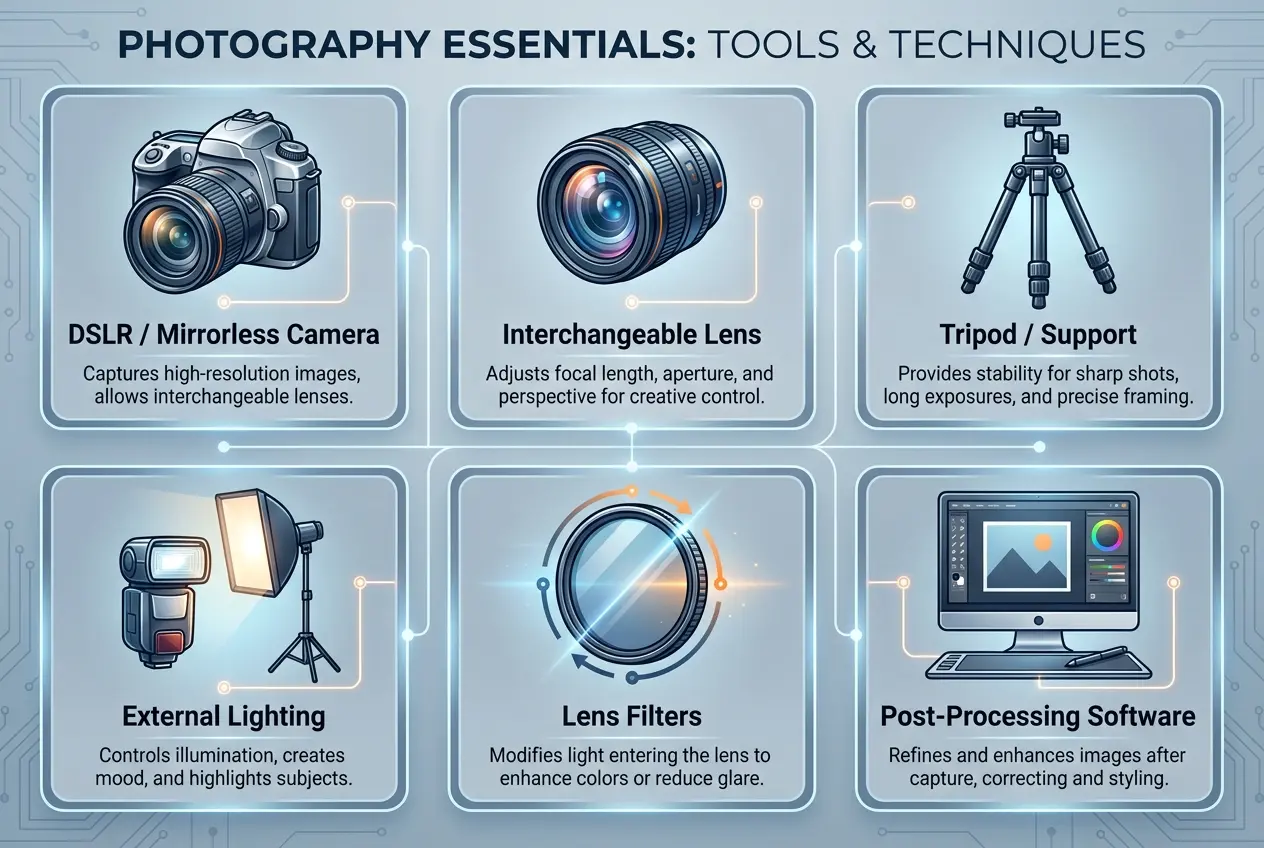
These items represent the difference between accepting limitations and working around them creatively. Professional results come from problem-solving as much as from expensive gear.
7. Portable LED Panel with Adjustable Color Temperature
Natural light disappears fast, and built-in camera flashes create harsh, unflattering results that scream "amateur" regardless of how expensive your camera is.
A portable LED panel with adjustable color temperature lets you add fill light, balance mixed lighting, or shoot in low-light conditions without carrying a full lighting kit. Color temperature (you know this already if you've shot indoors, but for everyone else): tungsten bulbs make everything orange, fluorescent makes it green, daylight is blue. When these mix in the same room, your photos look like a color-correction nightmare.
Adjustable color temperature, measured in Kelvin, lets you match the ambient light or intentionally contrast it for creative effect. Panels with rechargeable batteries eliminate the need for outlets, and magnetic mounts let you attach them to metal surfaces or light stands quickly.
For LED panels, the Aputure AL-M9 is the smallest one that doesn't suck. Anything cheaper will have terrible CRI (color rendering index), which means your skin tones will look weird even if the exposure is perfect.
You can throw one in your bag and forget about it until you need it. Which happens more often than you'd expect.
8. Collapsible Reflector with Asymmetrical Shapes
Standard round reflectors are bulky and awkward to position in tight spaces or windy conditions. They catch wind and flip around. They don't fit between furniture in cramped rooms. They're difficult to prop against surfaces at useful angles.
Asymmetrical reflectors with triangular or elongated shapes fold down smaller and offer more precise light direction.
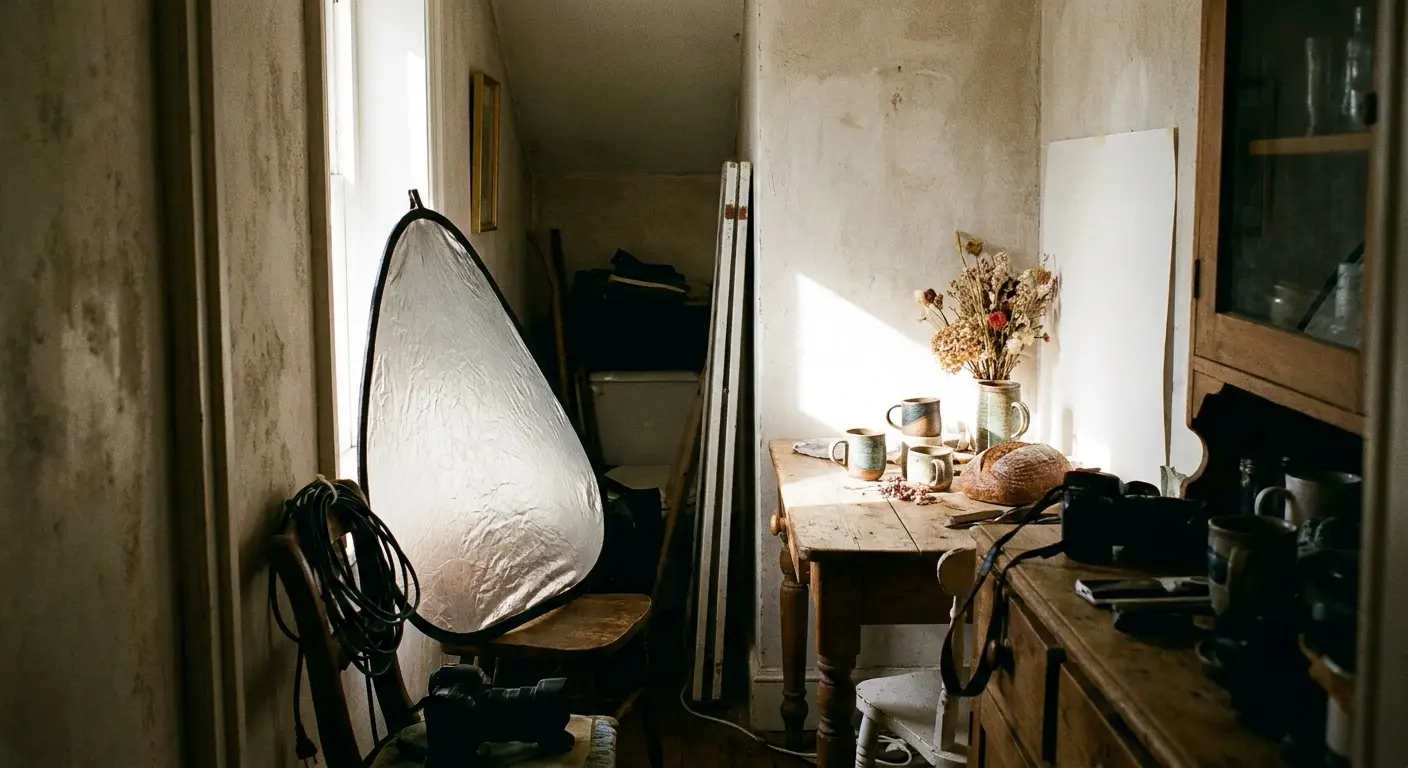
The different surfaces (silver, gold, white, black) let you bounce light, warm up skin tones, or subtract light from overexposed areas depending on what the scene needs. But here's the real advantage: portability combined with control. Photographers shooting on location without assistants can prop these against walls, chairs, or their own bags to modify light without ne eding a stand or a second pair of hands.
The asymmetrical shape means you can fit them into spaces where round reflectors simply won't work. Last fall I shot in a house where the mom collected porcelain clowns. Hundreds of them. You can't blur out that much nightmare fuel, so I brought a backdrop. The triangular reflector fit in the corner between her china cabinet and the wall. A round one? Forget it.
These solve problems that only become apparent when you're actually on location trying to make the light work. They're the kind of tool that seems unnecessary until you have one, and then you wonder how you managed without it.
9. Articulating Magic Arm with Multiple Mounting Points
Magic arms clamp onto rails, poles, tables, or tripod legs and hold small lights, monitors, or smartphones at any angle.
The articulating joints lock firmly but adjust quickly, which matters when you're working alone and need to reposition a light or reference screen between shots. These arms eliminate the need for additional stands: less gear to carry, faster setup times. You can clamp a light to a chair back, mount a monitor to your tripod leg, or attach your phone to a shelf for a high-angle shot without investing in specialty equipment for each scenario.
I bought a cheap magic arm first. $15 on Amazon, seemed like a deal. It lasted exactly two shoots before the joints stopped locking and it just slowly drooped under the weight of my phone. Ended up spending $45 on a Manfrotto arm that I should've bought initially.
Buy once, cry once.
Don't get the cheap ones. The clamps need to be strong enough that they won't slip under load, and the joints need to stay locked when tightened. Cheap magic arms drift slowly out of position, which defeats the entire purpose.
10. Wireless Shutter Release with Programmable Intervals
Okay, controversial take: I think wireless shutter releases are overrated for most photographers.
Yeah, they eliminate camera shake, but so does the 2-second timer that's already in your camera. Unless you're doing astrophotography or time-lapses, you probably don't need this.
That said, if you DO shoot astro or long exposures regularly, then this isn't optional. It's required. Just don't buy one because it seems like something a "real photographer" should have.
Models with programmable intervals unlock time-lapse photography and long-exposure sequences without expensive intervalometers. What matters most? Reliability. Cheap wireless triggers drop signals or drain batteries quickly, which means you set up a two-hour time-lapse and return to find it stopped after twenty minutes. Get one with a range of at least 100 feet and compatibility with multiple camera brands.
Programmable intervals mean you can set the camera to take a photo every five seconds for an hour, or one photo every minute for six hours, depending on what you're capturing. Even slight vibrations from pressing the shutter button can blur long exposures, so wireless operation prevents that issue entirely.
11. Clip-On Macro Lens Set for Smartphones
Smartphone cameras have improved dramatically, but they still struggle with extreme close-ups. The minimum focusing distance prevents you from getting close enough to capture tiny details sharply.
Clip-on macro lenses attach to phone cameras and enable detail shots of products, textures, or nature subjects without investing in dedicated macro equipment.
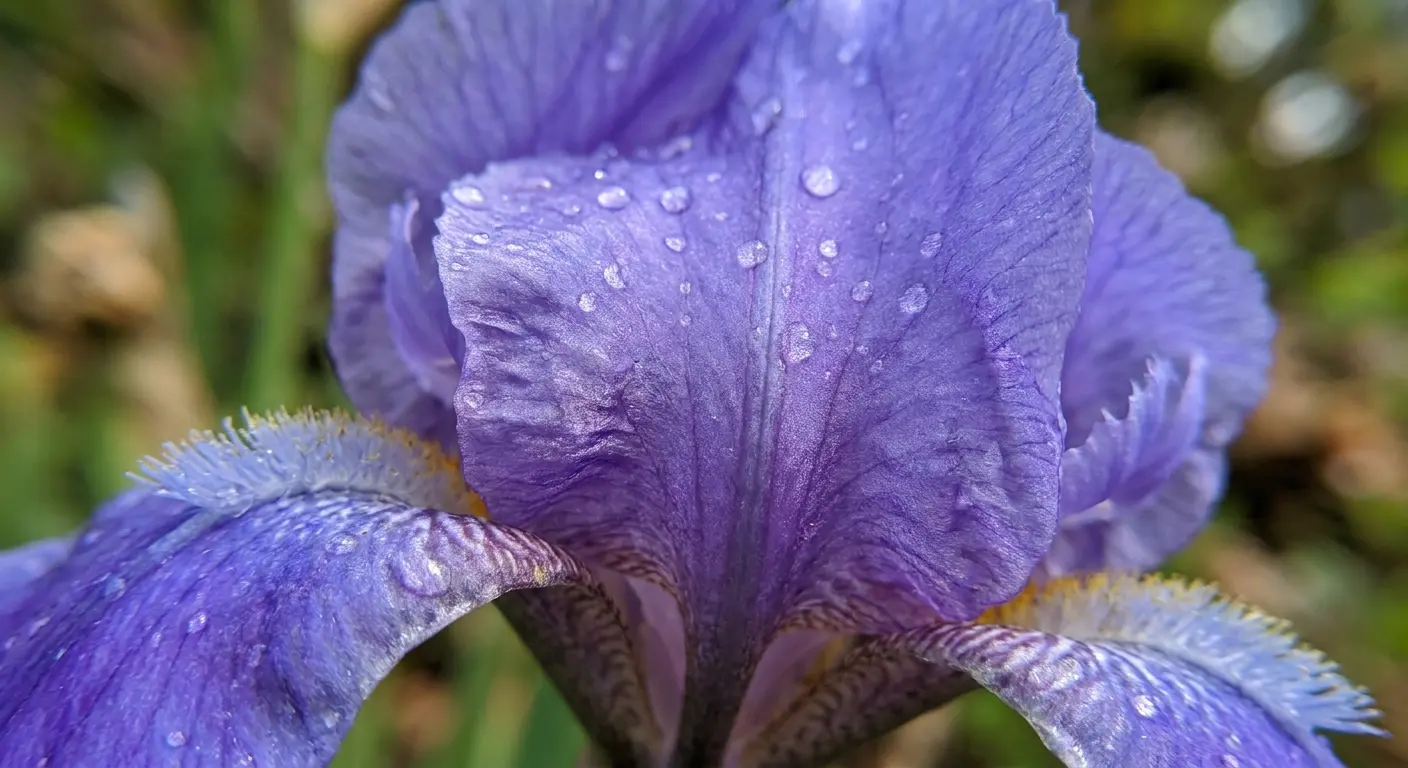
These lenses work for anyone using their phone for social media content, behind-the-scenes documentation, or quick product shots for clients. The clip design means you can attach and remove them in seconds without cases or adapters, which matters when you need to grab a quick shot between setups.
Quality varies wildly in this category. Get glass lenses rather than plastic, which distort images and scratch easily. Models with lens caps prevent scratches during storage and transport, extending the usable life significantly.
These bridge the gap between smartphone convenience and professional-quality close-up work. They're small enough to keep in your pocket and inexpensive enough that you won't worry about losing or damaging them.
12. Foldable Backdrop Stand That Fits in a Backpack
Traditional backdrop stands require vehicles to transport and dedicated studio space to use. They're heavy, bulky, and impractical for location work.
Foldable stands collapse to the size of a tripod and support fabric or paper backdrops up to six feet wide, which opens up portrait and product photography in client homes, outdoor locations, or temporary studio setups. The stands work with clamps or crossbars, and the best models include carrying cases with shoulder straps. You can carry one on public transportation, hike it to a remote location, or bring it to a client's office without needing a vehicle.
Setup takes minutes. Breakdown is just as fast.
This matters if you want to offer studio-quality results without maintaining a permanent studio space. Rent is expensive, and not every photographer needs or can afford dedicated square footage. Being able to create controlled backgrounds anywhere expands your service offerings without the overhead costs.
The stands also work when you shoot on location but need to control the background. A client's living room might have beautiful light but cluttered walls. A park might have perfect shade but distracting elements in the background. A portable backdrop solves these problems without limiting where you can work.
Comfort Essentials for Long Sessions
Photography takes a physical toll that non-photographers rarely consider.
Shooting involves hours of standing, crouching, kneeling, carrying heavy gear, and working in uncomfortable positions to get the right angle. Your body is part of your equipment, and protecting it matters just as much as protecting the camera.
Photographers who end each shoot exhausted or in pain can't maintain consistent quality or book as many sessions. These items prevent fatigue and injury rather than treating them afterward, which makes them smarter investments than most people realize.
We've selected items that address specific physical challenges rather than generic wellness products. A regular yoga mat won't help you in a studio. Standard gloves won't let you operate a camera. Generic knee pads restrict movement too much for active shooting.
Sustainability in this profession depends on taking care of your body as carefully as you maintain your gear. People who ignore physical strain end up with chronic pain that shortens careers or forces them to turn down certain types of work.
For photographers who spend extended time on location, explore additional active adventurer accessories that support mobility and endurance during demanding shoots.
Comfort Item |
Physical Challenge Addressed |
What Actually Matters |
Ideal Shooting Scenario |
|---|---|---|---|
Insulated Water Bottle |
Dehydration during active shooting |
Carabiner clip for hands-free carry |
Outdoor sessions and long events |
Padded Knee Guards |
Joint pain from ground-level angles |
Slim profile maintains mobility |
Wedding details and pet photography |
Fingerless Gloves |
Cold-induced hand stiffness |
Touchscreen-compatible fingertips |
Winter landscapes and outdoor events |
Lumbar Support Cushion |
Lower back strain from gear weight |
Portable compression without restriction |
8-12 hour event coverage |
Anti-Fatigue Mat |
Leg and back pain from prolonged standing |
3/4 inch cushioning with beveled edges |
Studio editing and setup work |
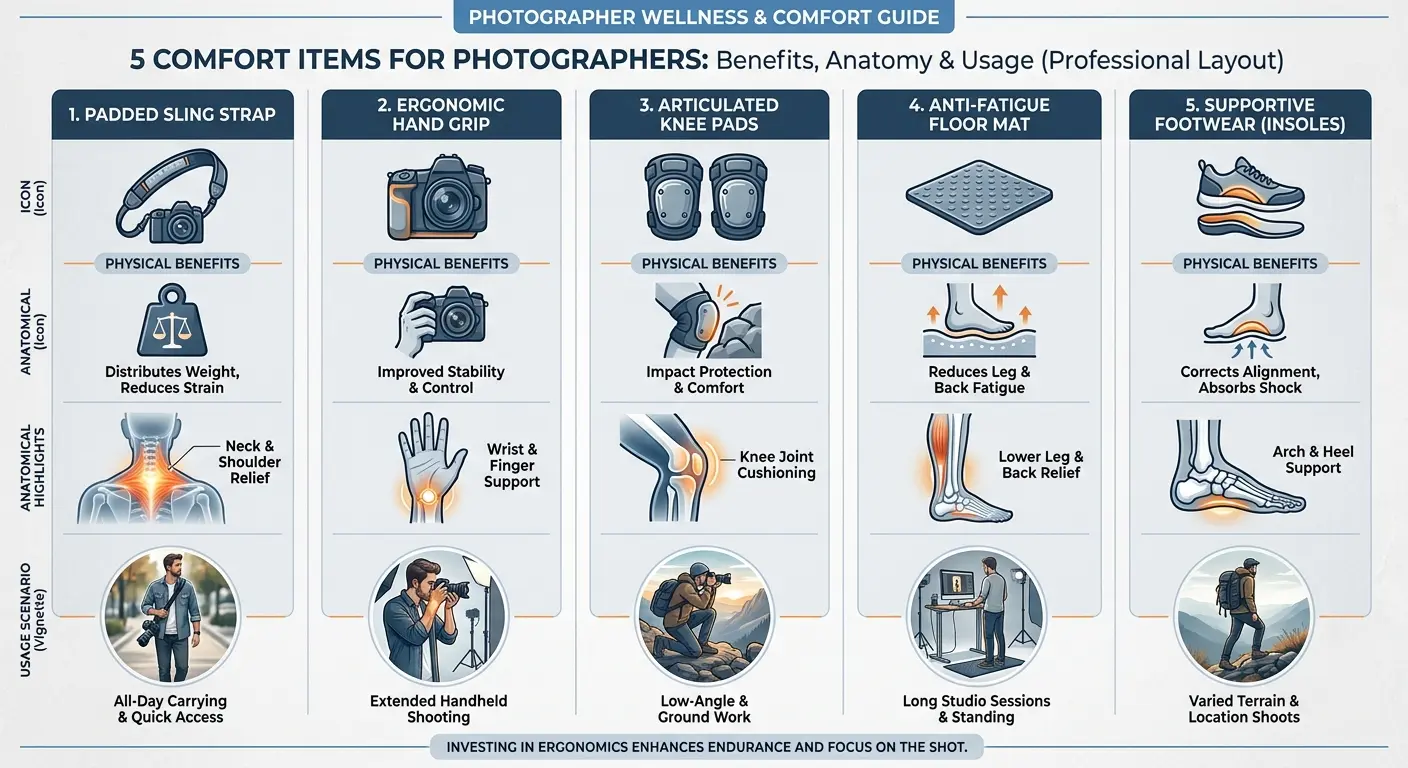
These gifts represent an understanding of the profession that goes beyond the romantic notion of capturing beautiful images. They acknowledge the unglamorous reality of physical discomfort that comes with the work.
13. Insulated Water Bottle with Carabiner Clip
Dehydration happens gradually during long shoots because stopping to drink means missing moments or breaking the flow with clients.
You're focused on composition, light, and interaction, and by the time you notice you're thirsty, you've been dehydrated for an hour. Hydration affects cognitive function, which affects creative decisions and technical execution. It's not just about comfort.
An insulated bottle with a carabiner clip attaches to camera bags or belt loops, keeping water accessible without requiring a hand or a table. The insulation maintains temperature for hours, which matters during summer outdoor shoots when cold water stays refreshing, or winter sessions where warm drinks prevent hands from going numb.
The carabiner needs to be sturdy enough to support a full bottle without bending or breaking. Cheap clips fail under weight or pop open unexpectedly, sending your bottle crashing to the ground mid-shoot. Get metal clips with locking mechanisms rather than plastic spring-loaded versions.
This works for any photographer who shoots on location and shows you understand the practical challenges of staying focused for hours at a time.
14. Padded Knee Guards for Ground-Level Shooting
Getting low angles means kneeling on concrete, gravel, grass, or sand repeatedly throughout a shoot.
Wedding photographers kneel dozens of times capturing ceremony details, ring shots, and dress details. Pet photographers work at animal eye level for hours. Product photographers arrange flat lays on hard floors.
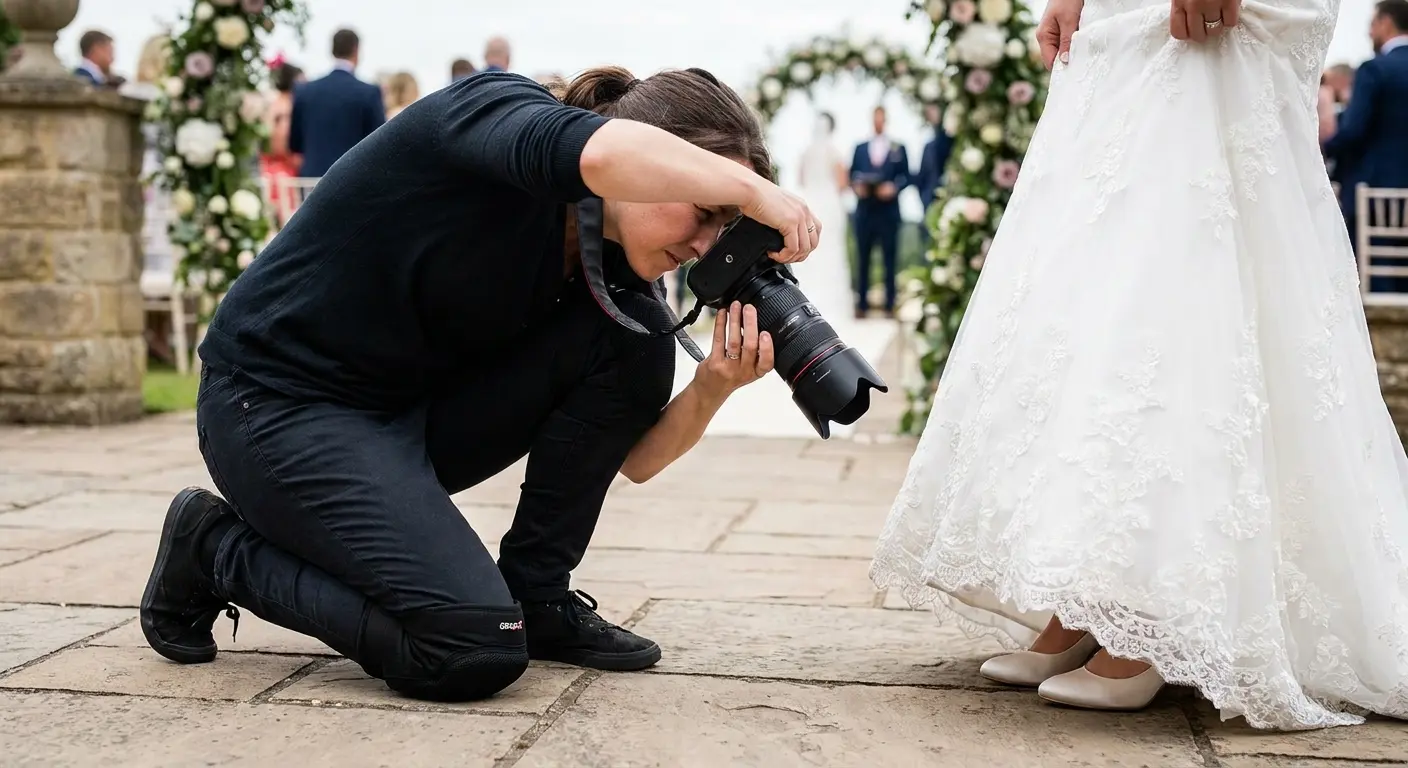
Standard knee pads designed for construction work are too bulky and restrict movement. You can't pivot smoothly or stand up quickly when you're wearing rigid protective gear designed for stationary work.
Slim, padded guards with stretchy sleeves stay in place without straps or buckles and provide just enough cushioning to prevent bruising and joint pain. They compress slightly when you kneel but maintain enough structure to protect against hard surfaces and sharp objects. The guards slip on and off quickly, so you can wear them only when needed without carrying extra gear or dealing with complicated fastening systems.
For knee pads, I use the McDavid Hex. They're actually designed for basketball but they're slim enough for photo work. The $40 ones marketed specifically for photographers are the same thing with a 300% markup.
These prevent cumulative joint damage that builds over years of professional work. Young photographers often ignore knee protection until the pain becomes chronic, making this a gift that provides value long before the recipient realizes how much they needed it.
15. Fingerless Gloves with Touchscreen Compatibility
Cold hands slow down shooting because fingers get stiff and touchscreens stop responding through regular gloves.
You're trying to adjust ISO in freezing temperatures, but your gloved fingers won't register on the LCD screen. You remove the glove, make the adjustment, and your hand goes numb within seconds.
God, I wish someone had told me about these gloves five years ago. I spent an entire winter wedding season with numb fingers, constantly choosing between protecting my hands and being able to adjust my camera settings. It was miserable.
Fingerless gloves with touchscreen-compatible fingertips let you adjust camera settings, check images on LCD screens, and use your phone without exposing your entire hands to cold. The fingerless design maintains dexterity for small buttons and dials while keeping palms and wrists warm.
Don't buy gloves without textured palms. Learned that the expensive way. Smooth fabric becomes slick when combined with cold-numbed fingers, increasing the risk of dropping expensive equipment. Textured palms provide friction that maintains control even when your hands lose some sensation.
These work if you shoot outdoor events, winter scenes, or early morning sessions where temperatures drop but full gloves would interfere with camera operation. The touchscreen compatibility extends to tablets and phones, which matters when you're using multiple devices to manage a shoot.
16. Portable Lumbar Support Cushion
Standing for hours while carrying camera gear strains lower backs, and the pain accumulates over multiple shoots.
A single wedding might not cause lasting damage, but shooting three weddings in one weekend creates chronic issues that compound over months and years.
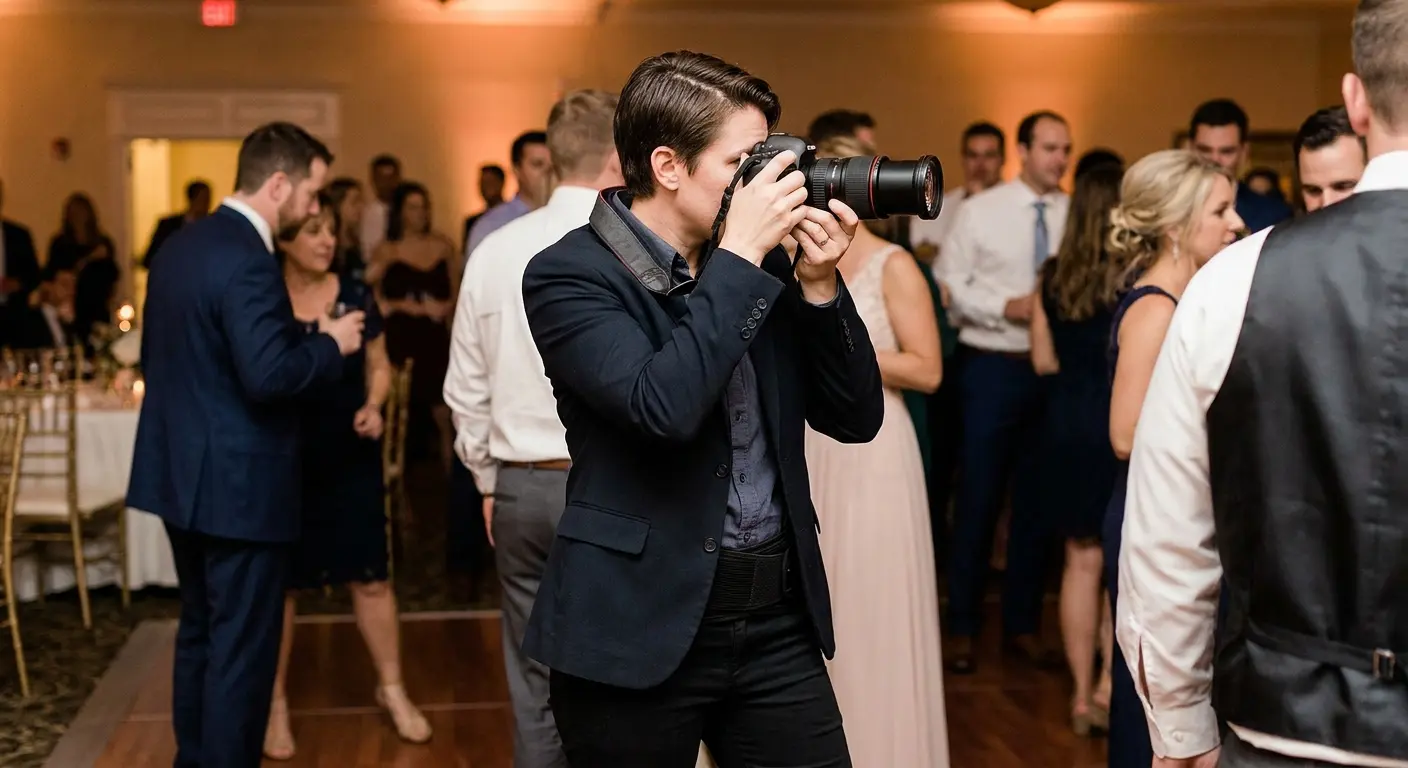
Portable lumbar cushions with adjustable straps provide support without the bulk of back braces or the commitment of ergonomic chairs. You can wear these under jackets during events or use them in cars between locations to prevent stiffness from setting in.
The cushions work through compression and posture correction rather than rigid support, so they don't restrict movement during active shooting. You maintain full range of motion while getting gentle support that reduces strain on lower back muscles and spine.
This matters most for event and wedding photographers who work 8-12 hour days and need to stay mobile while protecting their backs. The cushion prevents the kind of fatigue that forces you to cut shoots short or decline bookings because you're still recovering from the previous weekend.
These address long-term career sustainability rather than immediate comfort, which makes them thoughtful choices that demonstrate real understanding of the profession's physical demands.
17. Anti-Fatigue Standing Mat for Studio Work
Studio photographers spend hours standing on hard floors while editing, setting up shots, or working with clients.
Concrete and tile floors create fatigue that starts in your feet and radiates up through your legs and back, making the end of each day progressively more uncomfortable.
Anti-fatigue mats reduce leg and back pain by providing cushioned support that encourages subtle movement and improves circulation. The cushioning needs to be thick enough to make a difference (at least 3/4 inch) but firm enough that it doesn't create instability when you're pivoting or shifting weight.
Get mats with beveled edges to prevent tripping and non-slip backing to keep them in place on smooth floors. Mats that slide around defeat the purpose because you spend mental energy tracking where the mat is instead of focusing on your work.
This works if you have a dedicated studio space and shows you understand that the work doesn't end when the shoot does. Editing, client meetings, and administrative tasks all happen in the studio, often while standing at adjustable desks or workstations.
These improve daily quality of life in ways that might seem small but accumulate significantly over weeks and months of regular use. The difference between ending each day exhausted versus ending each day tired but functional determines how sustainable a photography career becomes long-term.
Why Your Phone Deserves the Same Protection as Your Camera
Throughout a shoot, you rely on your phone almost as much as your camera.
You're texting clients about arrival times, checking weather apps for golden hour timing, using your phone as a light meter or reference screen, posting behind-the-scenes content, and backing up images to cloud storage.
A damaged phone doesn't mean inconvenience. It means a disrupted workflow and potential lost income if you can't communicate with clients or access critical information stored on the device.
We designed our Rugged Phone Cases specifically for people who use their phones as professional tools, not just communication devices. The magnetic mounting system came directly from feedback from photographers who needed hands-free access without sacrificing protection.
You can mount your phone to a tripod for time-lapses, attach it to your car vent for GPS during location scouting, or stick it to any metal surface for quick reference shots. The case handles the drops, weather, and constant use that come with professional photography work.
Photographers who need reliable phone protection should explore the best phone cases for drop protection to understand what features matter most. The difference between consumer-grade protection and professional-grade durability becomes apparent after the first serious drop.
For those seeking versatile mounting solutions, check out our guide to magnetic phone mounts that work across multiple shooting scenarios. The mounting system isn't just about convenience. It's about having your phone positioned exactly where you need it without dedicating a hand to holding it.
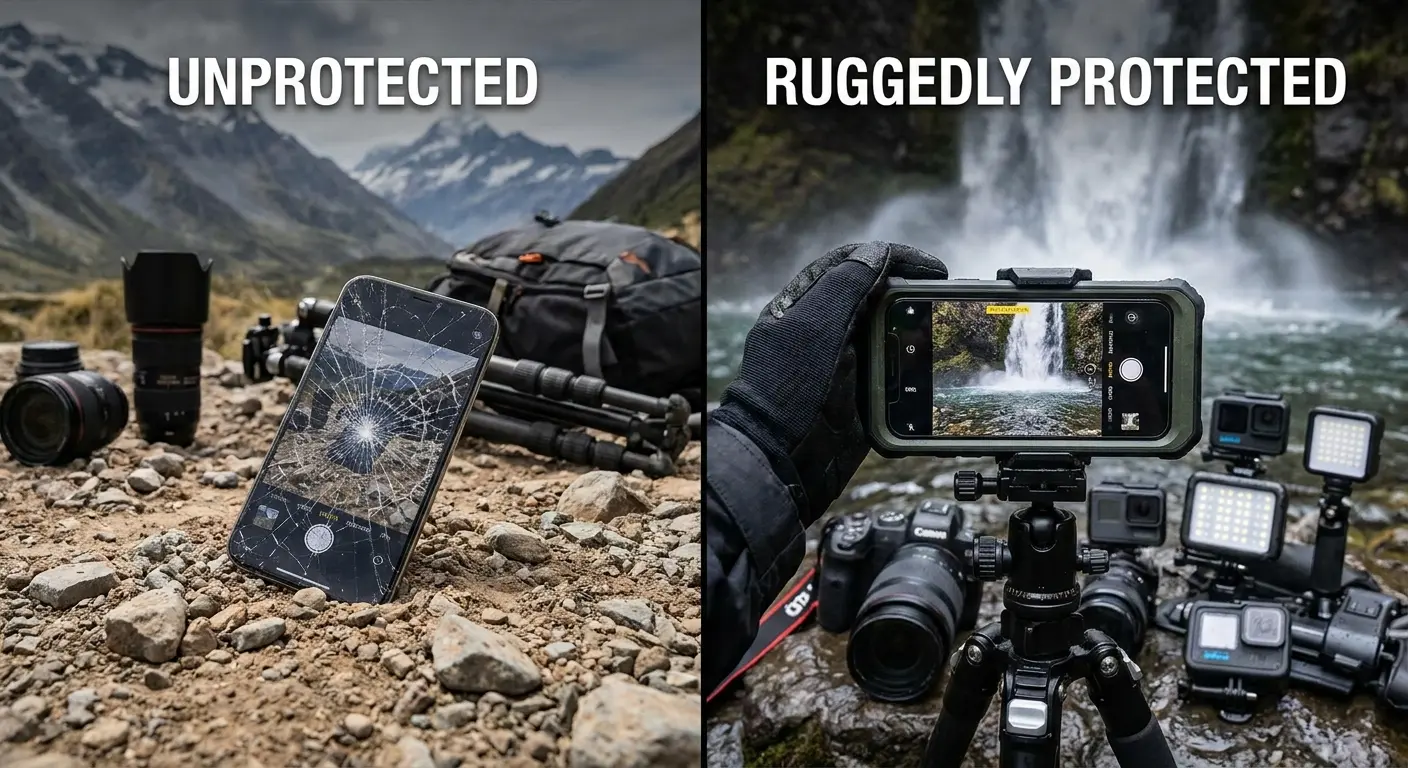
If you're investing in gifts that protect workflow, start with the device that keeps everything connected. People often overlook phone protection because they focus exclusively on camera gear, but the phone has become just as essential to completing professional work successfully.
These gifts acknowledge the integrated nature of modern photography workflows where phones, cameras, and computers all play critical roles in delivering final results to clients.
Final Thoughts
Here's what I want you to remember: photographers don't need more cameras. They need fewer headaches.
The $40 knee pads that prevent chronic pain are worth more than a $400 lens they'll use three times. The $25 phone case that survives a drop is more valuable than the $250 gadget that sits in a drawer.
Buy the stuff that solves problems, not the stuff that looks impressive. Buy the thing that makes them say "holy shit, where has this been?" on their third shoot with it, not the thing that makes them say "that's cool" once and forget about it.
I've shot about 150 weddings over the last eight years, and I've learned more from equipment failures than from anything that went right. These recommendations come from things breaking at the worst possible moments and me figuring out what actually holds up.
If you're on a tight budget, prioritize in this order:
Phone protection (you use it every shoot)
Knee pads (you can't replace your joints)
Memory card wallet (one lost card costs more than the wallet)
Everything else when you can afford it
Don't buy all this stuff at once. Get what solves your most painful problem first, then expand from there.
You know what drives me crazy? Photography gift guides that recommend $2,000 lenses. That's not a gift guide. That's a wish list. This is stuff you can actually afford to give that will actually get used.
What NOT to buy photographers: Another camera bag (they have opinions, and yours will be wrong), cheap tripods (they have good ones or they're saving for good ones), or anything with "professional photographer" printed on it (it's overpriced garbage).
For complete solutions, consider Father's Day gift bundles that combine multiple practical accessories photographers actually use. These bundles often provide better value than individual items while ensuring compatibility between components.
None of this stuff is expensive. Everything here is under $100, most under $50. But together? It's the difference between a sustainable photography career and chronic pain by age 40. And if you're a photographer reading this and thinking "I should actually get some of this stuff," yeah, you should. Your knees and your phone screen will thank you.
Look, here's the bottom line: buy the stuff that prevents problems, not the stuff that looks cool.
Knee pads aren't sexy. A phone case isn't exciting. A waterproof notebook seems prehistoric. But these are the things that keep you working when everything else fails.
Your photographer friend doesn't need another lens. They need fewer reasons to end the day in pain or panic. That's what makes a gift actually useful instead of just thoughtful.

