


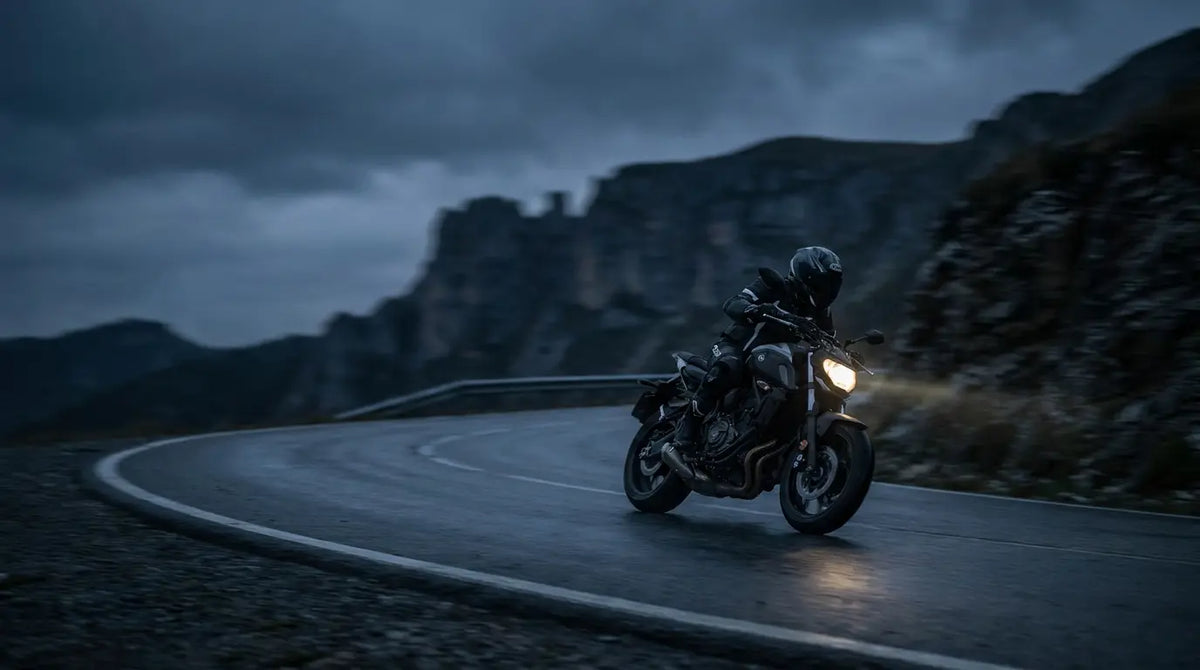
Look, I get it. You spent $800 on a jacket with CE Level 2 armor. Your helmet's got a 5-star SHARP rating. But your phone's wobbling in a $12 Amazon mount that's held together by hope and friction. We need to talk about this.
I'm not here to debate whether motorcycles are dangerous (they obviously are). What I want to talk about is how we're making them more dangerous without even realizing it. Your phone mount vibrates loose mid-turn. Your navigation cuts out when you need it most. The accessories you rely on become distractions, fumbles, and split-second risks that statistics never capture.
I've watched riders invest thousands in premium protective equipment while mounting their phones with cheap accessories that fail at highway speeds. Equipment failures aren't just annoying. They're how you end up in a ditch wondering what happened.
Table of Contents
The Distraction Data Nobody Tracks
Why "Protective" Gear Sometimes Makes Things Worse
That $15 Mount vs. Your Life (Do the Math)
Your Brain Can Only Handle So Much
Experienced Riders: You're Not Immune to This Stuff
Weather Doesn't Just Make Roads Slippery
Urban Riding Multiplies Everything
How Rokform Actually Solved This Problem
Final Thoughts
Here's What You Need to Know
Your gear's probably creating risks you don't even realize
Cheap phone mounts fail at the worst possible times (like mid-turn at 60mph)
Unreliable equipment eats up mental bandwidth you need for actual riding
Even experienced riders get overconfident with failing equipment
Weather doesn't just make roads slippery; it kills your equipment's reliability too
City riding turns small equipment failures into immediate problems
Magnetic mounting systems cut down on fumble time and keep your focus where it belongs
The Distraction Data Nobody Tracks
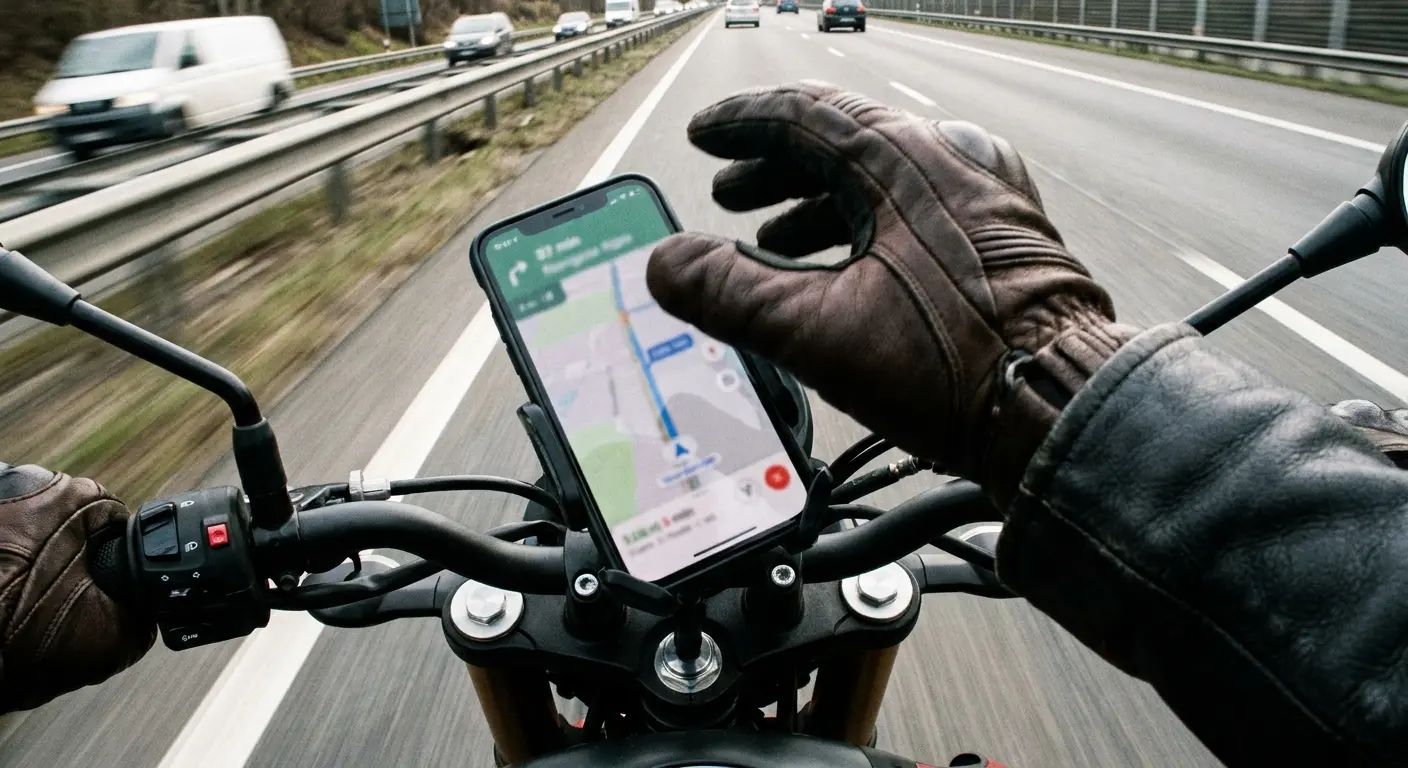
You know what's not in any crash report? The three seconds before impact when your phone mount gave up and you looked down to catch it.
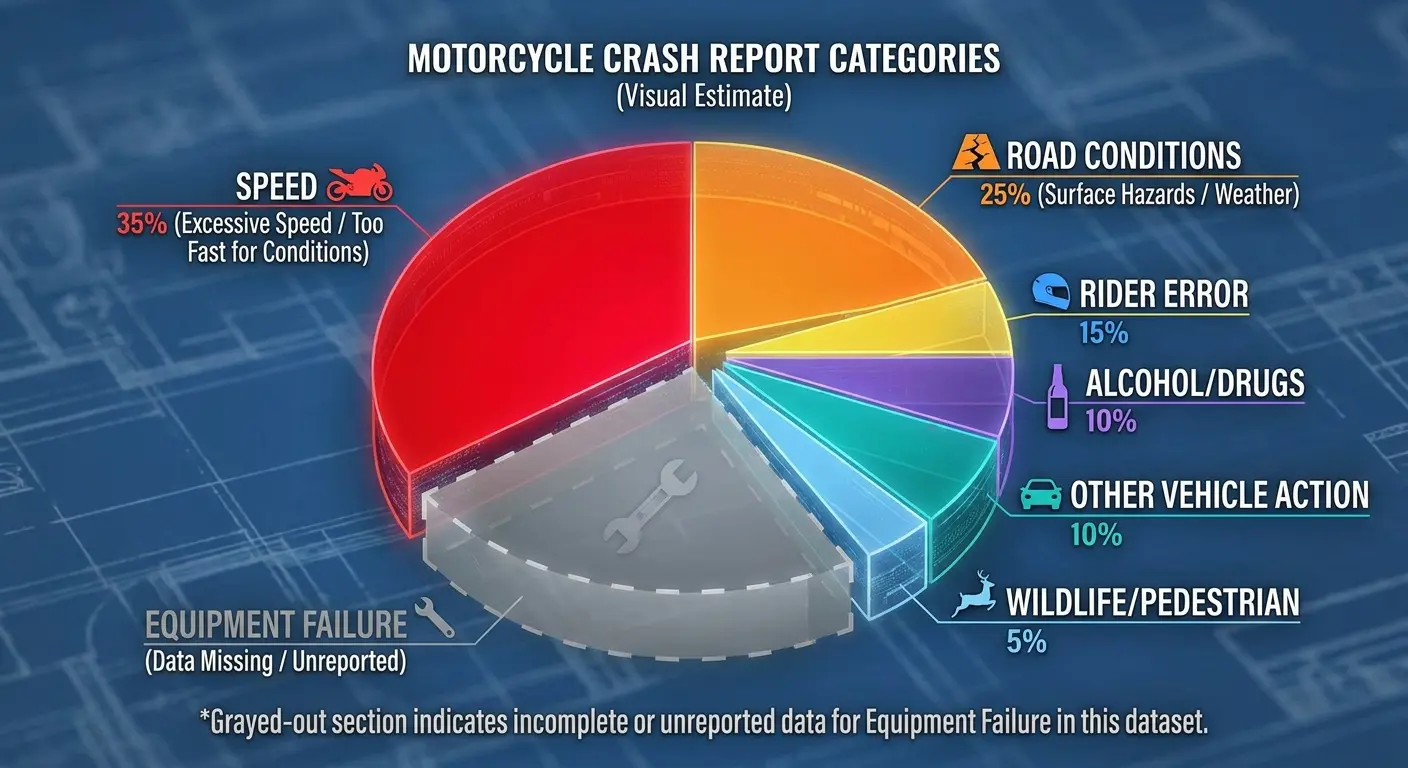
Standard motorcycle safety statistics focus on speed, alcohol, and protective clothing. They rarely account for the micro-distractions that precede crashes: a phone sliding in its mount, gloves too thick to operate a touchscreen, a GPS that freezes at a critical intersection.
These aren't dramatic failures. They're the two-second attention shifts that happen when your equipment doesn't work as promised. Research from Virginia Tech's Transportation Institute shows that any visual distraction lasting more than two seconds doubles crash risk, yet we don't measure how often motorcycle-specific gear causes exactly these delays.
The danger isn't always in the riding. Sometimes it's in the tools we trust to make riding safer.
Distraction Type |
Average Duration |
Crash Risk Multiplier |
Detection in Reports |
|---|---|---|---|
Phone mount adjustment |
3-5 seconds |
2.0x baseline |
Rarely documented |
GPS screen glare/unreadable |
4-6 seconds |
2.5x baseline |
Almost never cited |
Touchscreen operation with gloves |
5-8 seconds |
3.0x baseline |
Not tracked |
Loose equipment securing |
6-10 seconds |
3.5x baseline |
Absent from data |
Communication system troubleshooting |
8-12 seconds |
4.0x baseline |
Never recorded |
The Gap in Crash Analysis
Accident reports document rider error, road conditions, and vehicle defects. They don't capture the moment before impact when a rider glanced down because their phone mount failed. Insurance claims don't include a checkbox for "distracted by malfunctioning accessory."
We're measuring outcomes without understanding the equipment-related triggers that create them. This gap means riders keep buying gear that introduces risk while believing they're reducing it.
Every motorcycle accident report I've read follows the same pattern: speed listed, road conditions noted, protective equipment documented. What caused the rider to brake late or miss the hazard?
That part stays blank.
I heard about a rider navigating through Denver rush hour when his phone mount loosened on a pothole. He reached down to stabilize it while approaching an intersection, missing the car ahead that had stopped suddenly. The police report cited "following too closely" and "failure to maintain control." The mount failure that triggered the sequence never appeared in the official record, though the rider later posted about it in a motorcycle forum, warning others about the specific mount brand he'd been using.
We Can't Study What We Don't Measure
You can't easily study what happens in the three seconds before a near-miss. Riders don't report close calls caused by fumbling with a loose phone or struggling to see a rain-soaked screen. These incidents live in the space between safe riding and statistics.
What we do know: studies on automotive distraction show that manual tasks (like adjusting a device) increase motorcycle crash risk 3.6 times more than baseline driving. Motorcycles offer less margin for error, which means the multiplier is likely higher, not lower.
Why These Incidents Stay Hidden
Riders don't want to admit that their carefully chosen accessories contributed to a motorcycle accident or near-crash. There's an ego thing happening here. You spent money on what you believed was quality equipment. Acknowledging that your phone mount, communication system, or handlebar setup created a hazard feels like admitting poor judgment.
Crash reports get filled out by officers who note visible factors: speed, helmet use, road surface. They don't interview riders about whether their GPS froze or their phone fell out of its cradle ten seconds before impact.
The data stays invisible because we're not asking the right questions.
Companies that make subpar motorcycle accessories don't fund studies on how their products fail under real conditions. There's no incentive to highlight that their mounts can't handle sustained vibration or that their waterproofing fails after six months of use. We're left with anecdotal forum posts and Amazon reviews as our primary source of reliability information.
This isn't enough when equipment failure can mean the difference between arriving home and ending up in an ER.
Why "Protective" Gear Sometimes Makes Things Worse
We've created this ridiculous situation where the gear that protects you in a crash makes crashes more likely. And we just... accept it?
Heavy gloves improve crash protection but reduce touchscreen sensitivity. Bulky jackets restrict shoulder movement needed for aggressive lane changes. Full-face helmets limit peripheral vision at exactly the moments you need to spot threats.
We accept these trade-offs because the protective benefits outweigh the operational drawbacks, but we rarely optimize for both. The result is gear that keeps you safer in a crash while making crashes slightly more likely through reduced control and awareness.
This paradox doesn't mean you should skip protective equipment. It means you need to be strategic about which compromises you accept and which you engineer around. The question of how dangerous are motorcycles often centers on rider behavior and road conditions, but we ignore how our safety gear itself can introduce new vulnerabilities.
Before you ride, actually check this stuff:
Can you work your phone with gloves on, or are you gonna be that person taking gloves off at every stoplight?
Does your jacket allow full shoulder rotation for head checks and emergency maneuvers?
Can you reach all handlebar controls without adjusting your grip or body position?
Does your helmet's peripheral vision extend to at least 180 degrees?
Can you hear important audio cues (horns, sirens, engine changes) through your helmet?
Are you able to quickly remove and remount your phone with gloves on?
Does your gear allow natural body positioning without forcing awkward postures?
The Touchscreen Problem
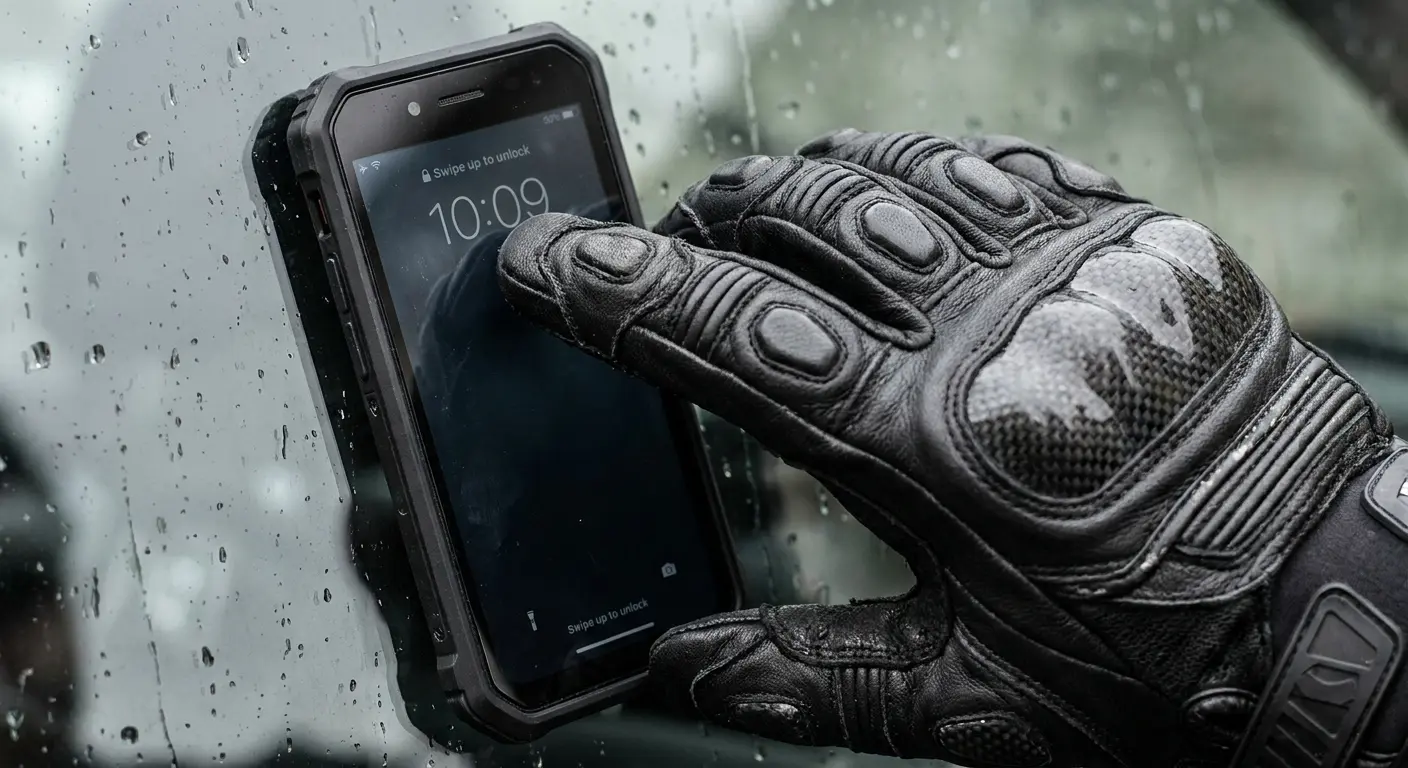
Modern motorcycles and accessories assume you'll interact with screens while riding. Your phone for navigation. Your bike's display for settings. Communication systems for adjusting volume. Standard motorcycle gloves make these interactions clumsy at best and impossible at worst.
Riders face a choice: wear proper gloves and struggle with controls, or compromise protection for functionality. Some pull over repeatedly to make adjustments. Others ride with inadequate hand protection.
Both options introduce risk that didn't exist before screens became essential riding tools.
When Bulk Limits Mobility
Armored jackets and pants provide important impact protection. They also add weight and restrict movement. This matters more than casual riders realize. Emergency maneuvers require full range of motion. You need to shift your weight quickly, turn your head without restriction, and move your arms freely.
Gear that's too bulky can slow your reaction time by fractions of a second. Those fractions matter when you're avoiding a car that just merged into your lane.
The goal isn't to skip protective gear but to choose options that balance motorcycle safety with mobility rather than maximizing one at the expense of the other.
A touring rider in the Pacific Northwest wore a heavily armored jacket rated for maximum protection. During a weekend trip through the Cascades, a deer jumped onto the road ahead. His attempt to swerve was delayed by the jacket's shoulder restriction, limiting how quickly he could lean into the turn. He managed to avoid the deer but ran wide into the shoulder, nearly losing control on loose gravel.
The jacket would have protected him excellently in a crash, but its bulk nearly caused one.
That $15 Mount vs. Your Life (Do the Math)
Your phone holds your navigation, communication, music controls, and emergency contact access. When the mount fails, you lose all of this simultaneously. Cheap mounts use friction or weak clips that can't handle sustained vibration. They work fine on smooth roads at moderate speeds.
They fail spectacularly on highways, rough pavement, or during aggressive riding.
The phone doesn't always fall completely. Sometimes it just rotates or slides, blocking your view or creating a visual distraction. You're now riding with divided attention, trying to secure your device while maintaining control of your motorcycle. This is exactly how dangerous are motorcycles when equipment meant to improve your ride makes it more dangerous.
Vibration Frequency and Mount Failure
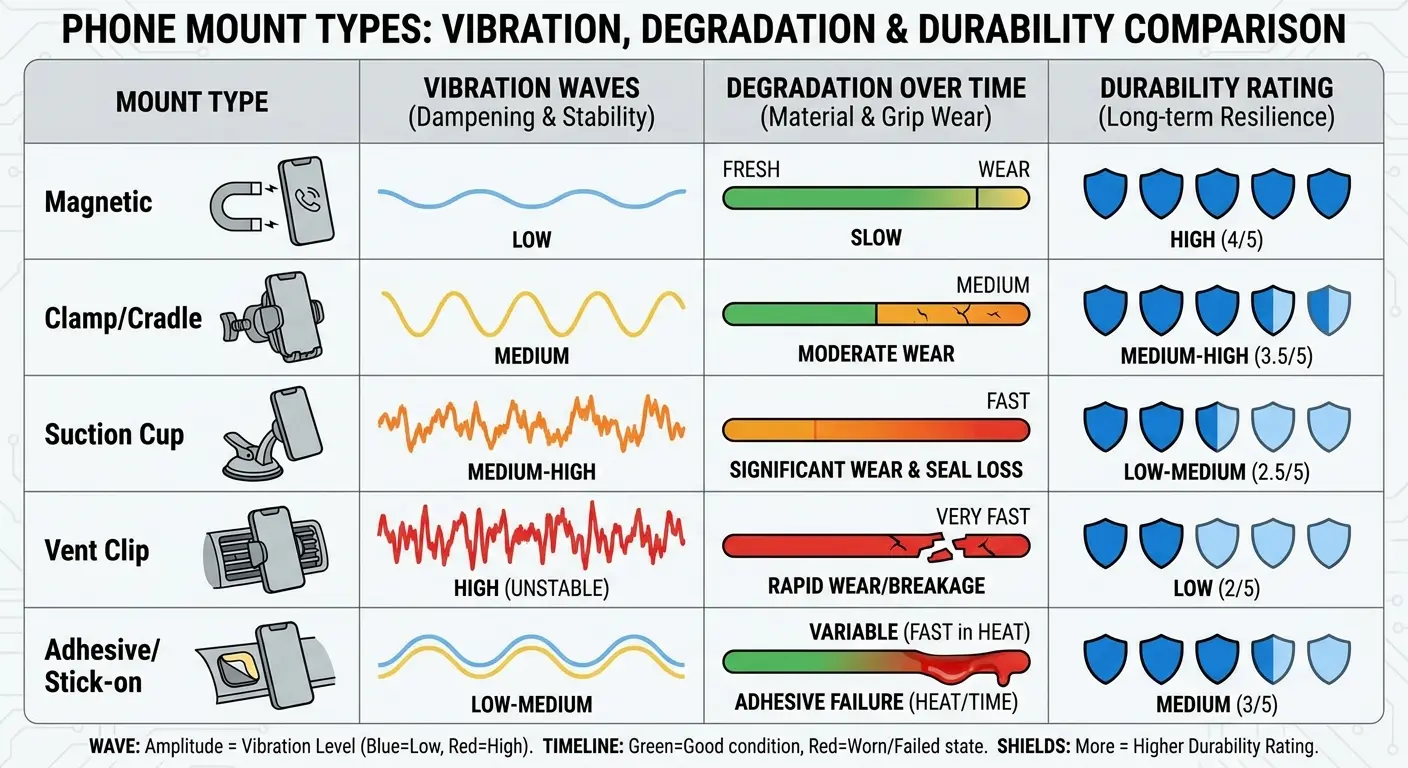
Motorcycles generate vibration frequencies that most consumer mounts weren't designed to handle. Car mounts face gentler conditions. Bicycle mounts deal with lower speeds. Motorcycle mounts need to withstand sustained high-frequency vibration while maintaining a secure grip.
Many don't.
The mount might hold initially, but over time the constant shaking loosens connections, degrades materials, and creates failure points. Riders often don't realize their mount is compromised until it fails at the worst possible moment.
A friction grip mount? You'll get maybe 500 miles before it's toast. Spring clamps do better, call it 1,000 miles. But magnetic systems? I've seen them go 5,000+ miles without losing grip.
What Happens When Your Mount Fails
When your phone starts to slip, you have limited options. Pull over immediately (losing time and momentum). Try to secure it while riding (dangerous). Ignore it and ride without navigation (potentially getting lost).
All three options are bad.
The first disrupts your journey. The second divides your attention during active riding. The third leaves you guessing at intersections and exits. A reliable mount eliminates this entire category of risk. An unreliable one creates it repeatedly throughout every ride, turning what should be a straightforward journey into a series of potential motorcycle accident scenarios.
Screen Visibility Under Real Conditions
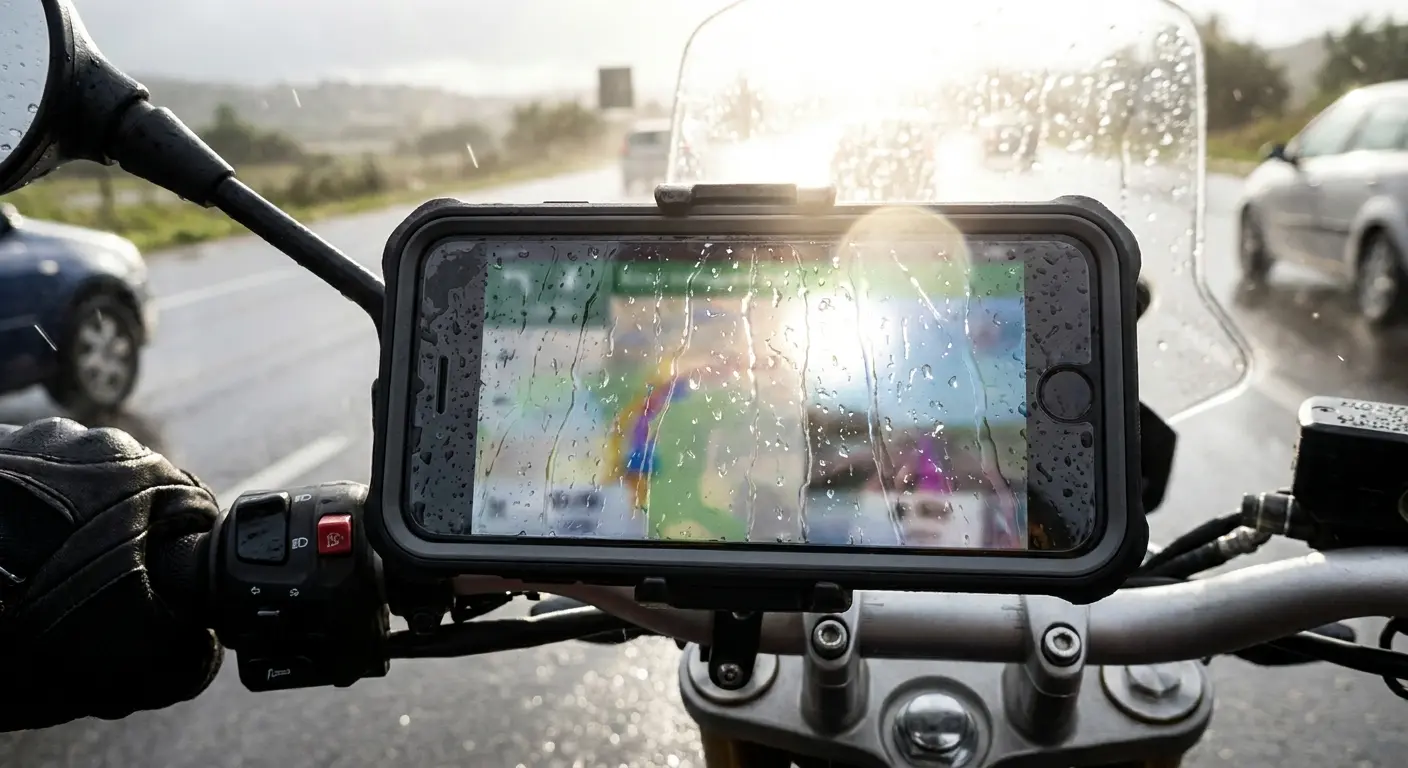
Sunlight, rain, and vibration all degrade screen visibility. Your phone's display wasn't optimized for outdoor use at 70 mph. Glare makes the screen unreadable at certain angles. Rain obscures the display even with water-resistant ratings. Vibration causes motion blur that makes text difficult to parse quickly.
You end up squinting at your navigation, holding your focus on the screen longer than safe, or missing turns because you couldn't read the display in time. These aren't edge cases. They're normal riding conditions that standard phone setups handle poorly.
Better mounting solutions improve viewing angles and stability, but many riders don't prioritize these features until after they've experienced the problem firsthand.
Set up your phone right before you ride:
Mounting Position:
Screen angle: 30-45 degrees from vertical for best viewing and minimal glare
Distance from eyes: 18-24 inches (arm's length with slight bend)
Position relative to instruments: Within 15-degree eye movement from road
Display Settings:
Brightness: Maximum (auto-brightness often insufficient in direct sun)
Screen timeout: Disabled or set to maximum duration
Navigation voice: Enabled and volume tested with helmet on
Text size: Large (minimum 16pt for glance-reading)
Backup Preparations:
Route reviewed and memorized for major turns
Alternative navigation method available (tank bag map, written directions)
Emergency contacts on speed dial
Mount security verified with firm shake test
Your Brain Can Only Handle So Much
Riding a motorcycle requires constant active attention. You're monitoring traffic, road surface, weather changes, your bike's performance, and your route simultaneously. Every unreliable piece of equipment adds another variable to track.
Is your phone still secure? Can you still see your navigation? Will your communication system cut out mid-conversation?
These background concerns consume mental resources that should be focused on riding.
Psychologists call this cognitive load, and research shows that as it increases, reaction time and decision quality decrease. You might not feel distracted, but your brain is processing more inputs than it can handle well. The result is slower responses to hazards and poorer judgment in key moments.
The Mental Cost of Equipment Uncertainty
Reliable gear becomes invisible. You stop thinking about it.
Unreliable gear demands constant monitoring.
You check your phone mount every few minutes. You adjust your GPS when it shifts. You fidget with your communication system when audio cuts out.
Each of these micro-tasks pulls focus from the road. Individually they seem trivial. Cumulatively they create a state of divided attention that persists throughout your ride. You're never fully present because part of your mind is always managing equipment that should be managing itself.
This divided attention is a factor in motorcycle safety that doesn't show up in crash reports. The motorcycle rider who rear-ends another vehicle wasn't necessarily speeding or reckless. Maybe their phone mount had been slowly rotating for the past ten miles, and they were glancing down more frequently to check their route. Solo riders should also look at crash alert apps.
Decision Fatigue at the Worst Times
Every equipment failure forces a decision. Do I pull over? Do I fix it while riding? Do I continue without it? These aren't casual choices when you're in traffic or on an unfamiliar route.
Decision fatigue is real. Research shows that the quality of our decisions degrades as we make more of them. Riders who spend their mental energy managing equipment failures have less capacity for the decisions that matter: when to brake, which lane to choose, how dangerous are motorcycles in this specific situation.
Your brain has a finite processing budget. Equipment problems spend it on the wrong things.
During a cross-country trip from Austin to Santa Fe, a rider's communication system began cutting in and out intermittently. Over six hours, he made dozens of small decisions: adjust the volume, check the connection, switch channels, restart the system. By the time he reached Albuquerque's evening traffic, his decision-making was noticeably slower. He missed an exit because he was second-guessing whether to pull over and fix the comm system or continue. What should have been a straightforward navigation choice became complicated by the accumulated mental fatigue from managing failing equipment all day.
The Attention Restoration Problem
Riding requires sustained attention over long periods. Your brain needs that attention to be available when threats appear. Frequent distractions (even minor ones) prevent your attention from fully restoring between demands.
You end up in a state of partial focus that feels normal but isn't. Studies on attention restoration theory show that constant low-level interruptions are more cognitively draining than occasional major ones. A phone that shifts slightly every ten minutes is worse for your attention than one that falls once and gets secured properly.
The constant micro-adjustments keep you from ever reaching full focus. This matters because motorcycle riding doesn't allow for partial attention.
The consequences of reduced focus aren't just mistakes. They're motorcycle accidents.
Experienced Riders: You're Not Immune to This Stuff
Experienced riders crash differently than beginners, but they still crash. The confidence that comes with thousands of miles can create its own risks. You trust your gear because it's worked before. You take routes that would intimidate a newer rider. You ride faster because you're comfortable at speed.
All of this is fine until your equipment fails at a moment when you've committed to a maneuver that assumes everything will work as expected. Your phone mount that's been fine for months finally gives out mid-turn. Your GPS freezes when you're navigating an unfamiliar city.
The gear you stopped actively monitoring becomes a liability exactly because you stopped monitoring it. This false sense of security contributes to how dangerous are motorcycles for experienced riders who assume their skills compensate for equipment shortcomings.
Overconfidence in Aging Equipment
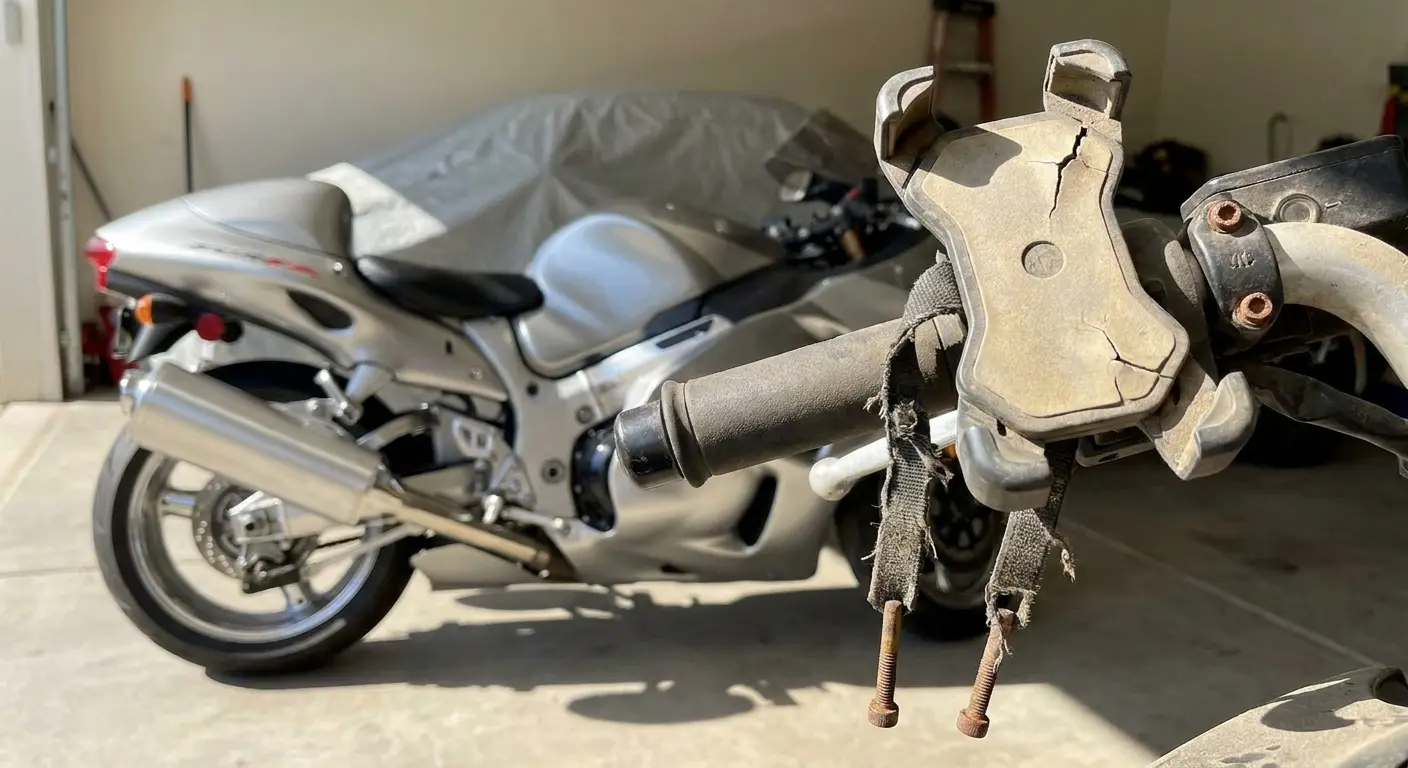
Gear degrades gradually. Mounts loosen over time. Waterproofing fails after repeated exposure. Materials fatigue under constant vibration. Experienced riders often keep using equipment past its reliable lifespan because it hasn't failed catastrophically yet.
You don't replace the mount that's "a little loose" because it's still holding. You don't upgrade the case that's "slightly cracked" because your phone hasn't fallen out. This incremental degradation is invisible until it isn't.
The failure, when it comes, feels sudden even though it was building for months.
Risk Compensation Behavior
When riders feel safer (better gear, more experience, familiar routes), they often take more risks. This isn't recklessness. It's a well-documented psychological phenomenon called risk compensation. You ride faster because you trust your skills. You take tighter lines because you're confident in your bike. You rely more heavily on your navigation because it's always worked before.
The problem emerges when your equipment introduces a variable you haven't accounted for. Your increased risk-taking assumed everything would function normally. When it doesn't, you're in a situation that's beyond your margin for error. This contributes to motorcycle deaths and motorcycle crash fatal statistics in ways that accident reports never capture.
Your Skill Level Doesn't Fix Bad Equipment
Your skill level doesn't make your phone mount more reliable. Experience helps you handle the consequences of equipment failure, but it doesn't prevent the failure itself. A veteran rider with a cheap mount faces the same vibration-induced loosening as a beginner with the same mount.
The difference is that the experienced rider might be going faster or pushing harder when it fails.
Yeah, I'm that guy who spent $200 on armored pants and $8 on a phone mount. I'm not proud of it. But I learned the hard way that experience just means you're in a more demanding situation when your gear lets you down, potentially contributing to a motorcycle fatality.
Weather Doesn't Just Make Roads Slippery
Rain doesn't just make roads slippery. It degrades equipment performance across the board. Touchscreens become unresponsive. Mounts that rely on friction lose grip. Waterproof ratings that seemed adequate in testing fail under sustained exposure.
Cold weather makes materials brittle. Heat causes adhesives to fail. Your gear faces conditions that most consumer electronics weren't designed to handle. Manufacturers test in controlled environments. Real riding happens in whatever conditions you encounter.
The gap between lab performance and field reliability is where danger lives, fundamentally affecting motorcycle safety in ways most riders don't anticipate.
Waterproofing vs. Water Resistance
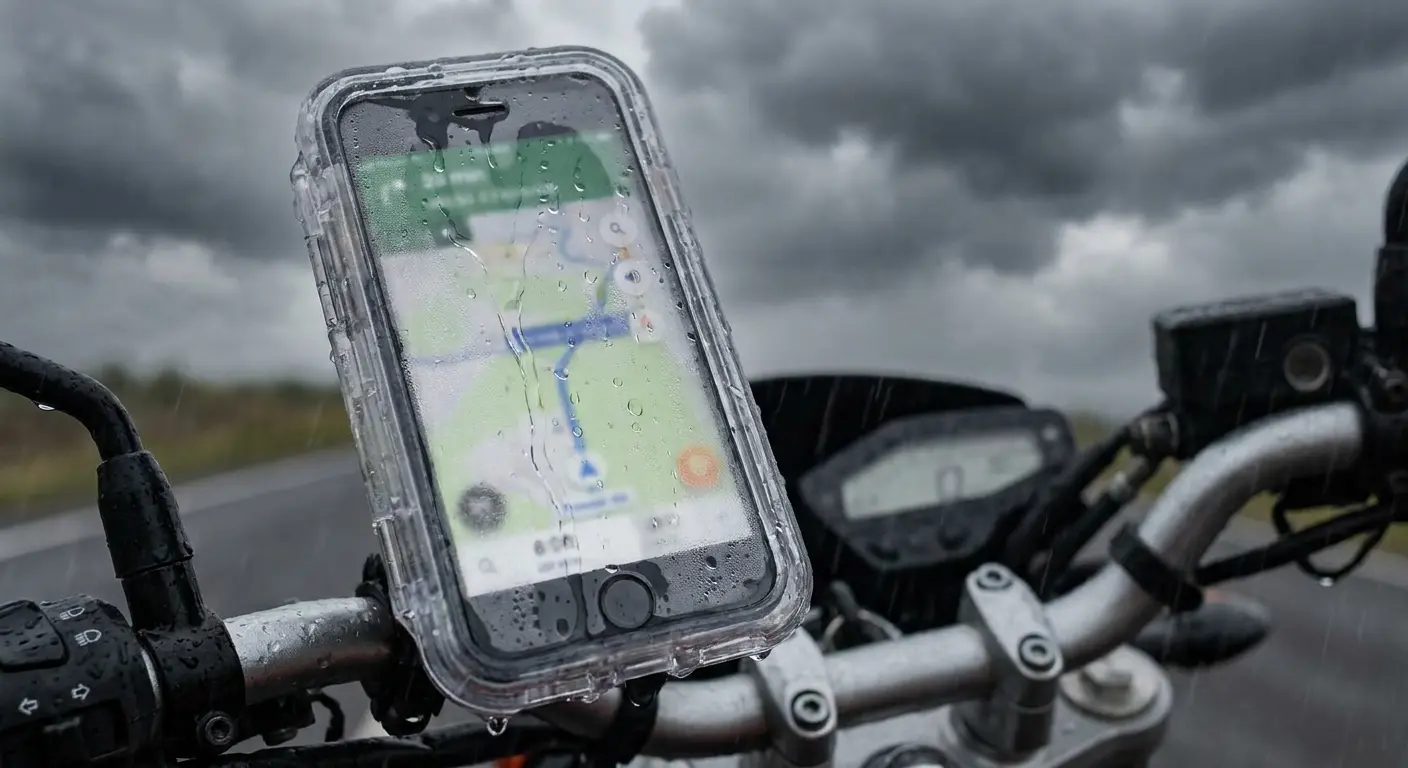
Most phone cases and mounts claim water resistance, not waterproofing. The difference matters. Water-resistant means it can handle light rain or splashes. Waterproof means it can survive submersion. Riding in heavy rain falls somewhere between these extremes.
Water doesn't just hit your phone. It's driven into seams and openings by wind pressure. It accumulates over time rather than running off immediately. Equipment that passes a splash test can still fail in sustained rain because the testing didn't replicate real conditions.
Riders discover this gap when their "water-resistant" setup fails twenty minutes into a storm.
Temperature Extremes and Material Failure
Plastic mounts become brittle in cold weather. Adhesive pads lose grip in heat. Rubber components degrade faster under UV exposure. These aren't theoretical problems. They're predictable material behaviors that affect equipment reliability.
A mount that works perfectly in moderate conditions can fail catastrophically at temperature extremes. Riders in hot climates deal with adhesive failure. Those in cold regions face brittle plastic that cracks under stress. The equipment that's supposed to be reliable across all your riding conditions often isn't, directly impacting how dangerous are motorcycles in various weather scenarios.
Visibility Degradation in Poor Conditions
Rain on your phone screen makes navigation nearly impossible. Glare from low sun angles turns your display into a mirror. Fog and mist create a layer of moisture that doesn't clear easily.
You need your navigation most when conditions are challenging, but that's exactly when screen visibility fails. Riders end up making dangerous choices: riding closer to their phone to see it better, taking their eyes off the road for longer periods, or guessing at turns because they can't read the display.
Better mounting angles help but don't solve the fundamental problem that phone screens weren't designed for these conditions.
Urban Riding Multiplies Everything
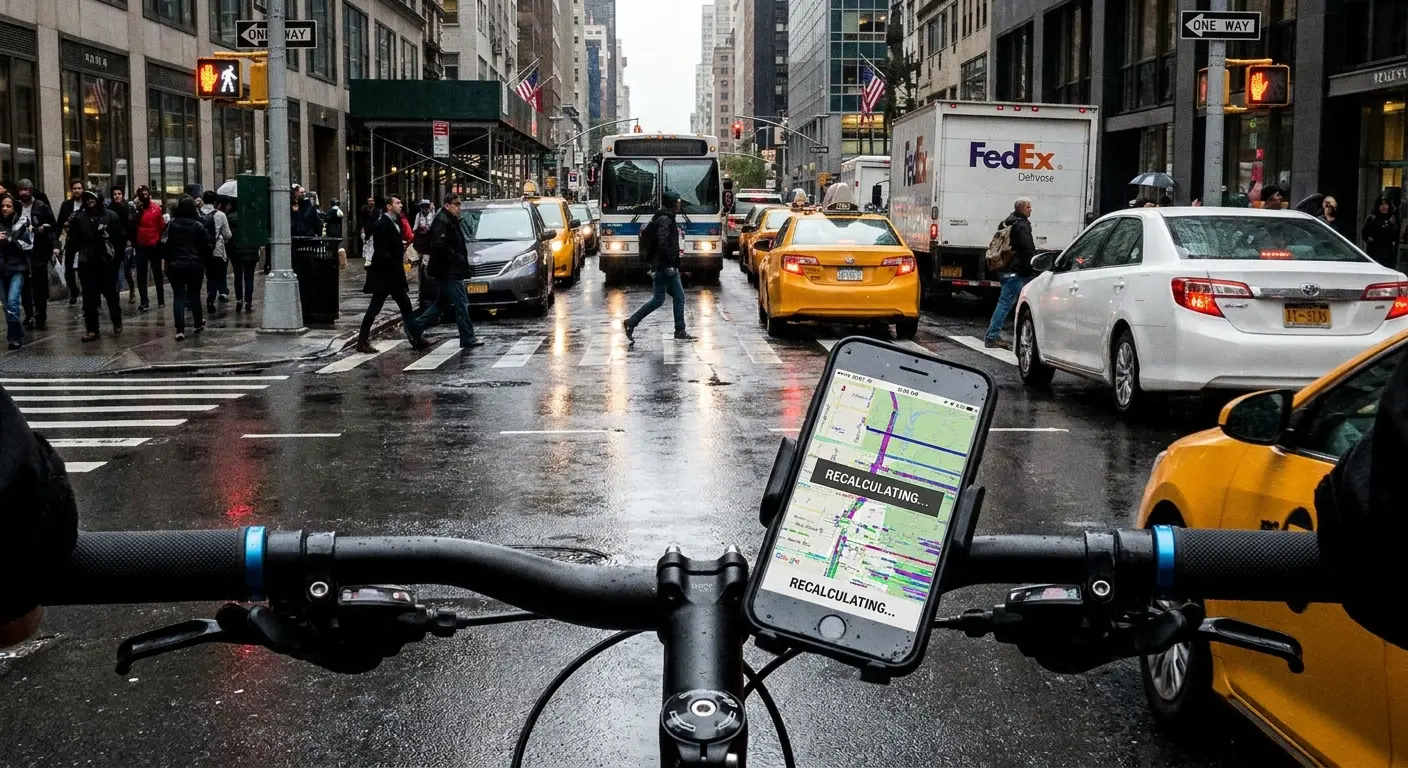
Cities concentrate the factors that make gear failures dangerous. You're navigating constantly (more reliance on GPS). Traffic is dense (less room for error). Speeds vary rapidly (more stress on mounts). Road surfaces are inconsistent (more vibration).
A phone mount that loosens on a highway gives you time to respond. The same failure at an urban intersection happens while you're managing traffic from four directions, pedestrians, and a turn you need to make in fifty feet.
The complexity of urban riding means equipment failures have immediate consequences rather than gradual ones, directly affecting motorcycle safety for the motorcycle driver navigating city streets.
Navigation Dependence in Unfamiliar Areas
Highway riding often follows predictable routes. Urban riding requires turn-by-turn navigation through grid patterns, one-way streets, and constantly changing traffic conditions. Your phone becomes essential rather than convenient.
When it fails, you can't just pull over and figure it out. You're in traffic. You're blocking a lane. Cars behind you are honking. The pressure to make quick decisions while managing an equipment problem creates exactly the conditions where mistakes happen.
Reliable gear doesn't eliminate urban riding challenges, but unreliable gear multiplies them.
Stop-and-Go Stress on Equipment
Urban riding means constant acceleration, braking, and vibration changes. Your phone mount experiences more varied stress than it would on a highway cruise. The repeated jolts and direction changes test mounting systems in ways that steady-state riding doesn't.
Mounts that seem secure can work loose over the course of urban riding because they're designed for consistent conditions rather than variable ones. You might not notice the degradation until your phone shifts during a key moment. The motorcycle rider navigating downtown traffic doesn't have the luxury of stopping every few blocks to check their mount.
Distraction Consequences at Low Speeds
We associate motorcycle danger with high speeds, but urban crashes happen at lower velocities with higher frequency. A moment of distraction at 30 mph can still put you in front of a turning car or cause you to miss a pedestrian stepping into a crosswalk.
The consequences might be less severe than a highway crash, but the frequency is higher. Equipment failures that cause brief distractions are more likely to result in incidents in urban environments because threats appear more rapidly and from more directions. Your reaction window is measured in fractions of a second.
A phone that slides in its mount at the wrong moment eliminates that window entirely, making how dangerous is riding a motorcycle significantly worse in congested areas.
How Rokform Actually Solved This Problem
Look, I'm gonna talk about Rokform here because they actually solved this problem, but this isn't a sponsored post. I just got tired of my phone trying to escape at 70mph.
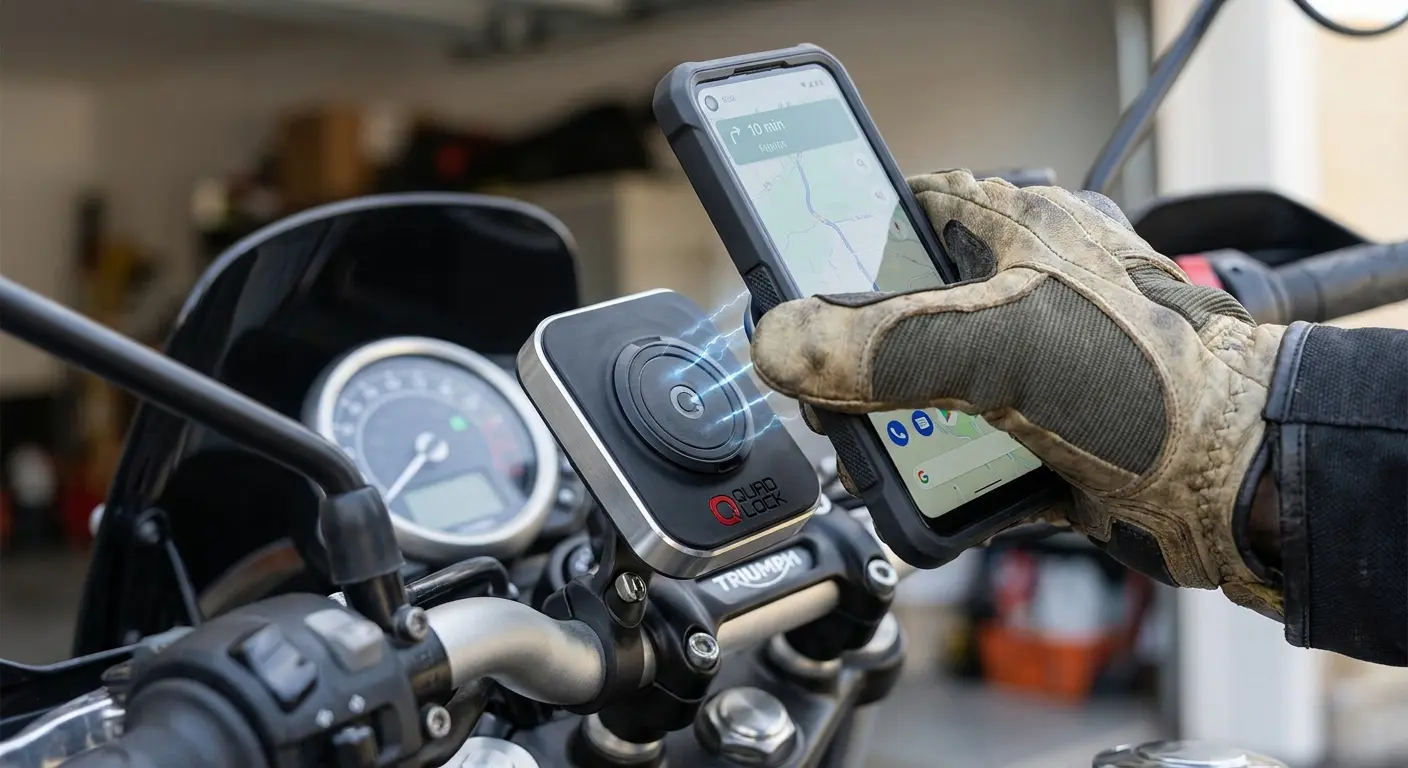
The mounting failures we've discussed aren't inevitable. Magnetic mounting systems solve the core problem: they maintain grip under sustained vibration while allowing quick attachment and removal. Rokform's approach uses rare-earth magnets paired with twist-lock mechanisms that handle the specific stress patterns motorcycles create.
This isn't about brand loyalty. It's about engineered motorcycle mounting solutions that match the actual conditions riders face. When your phone stays exactly where you mount it regardless of road surface or riding style, you eliminate an entire category of mid-ride distractions. The cognitive load drops. Your attention stays on riding rather than equipment management.
Magnetic Mounting Under Real Conditions
Traditional mounts rely on friction, clips, or clamps that degrade under vibration. Magnetic systems maintain consistent holding force because there's no mechanical wear on the primary attachment method. The magnets don't loosen over time. They don't require periodic tightening. They work the same on day one and day five hundred.
For riders dealing with rough pavement, long distances, or pro-level mounting systems for aggressive riding styles, this consistency matters. Your phone doesn't shift. Your screen stays at the right viewing angle. You stop checking whether your mount is still secure because you know it is.
Quick Access Without Fumbling
Emergency situations require fast phone access. Traditional mounts with complex release mechanisms force you to fumble with clips or levers while wearing gloves. Magnetic systems allow one-handed removal with a simple pull. You can grab your phone, make a call, and remount it in seconds rather than minutes.
This speed matters when you need to contact emergency services, check an urgent message, or verify a route change. The easier your gear is to use correctly, the less likely you are to use it incorrectly under pressure.
Case Integration and Protection
Rokform's complete motorcycle mounting systems pair cases with mounting hardware to create integrated solutions rather than forcing you to adapt consumer products to riding conditions. The cases include impact protection that matters when your bike goes down. The mounting interface is built into the case rather than added as an afterthought.
This integration means you're not choosing between protection and functionality. You get both because the system was designed for both from the start. The case protects your phone in a crash. The mount keeps it secure so you hopefully avoid the crash in the first place.
Final Thoughts
We've spent decades improving motorcycle safety through better helmets, protective clothing, and rider training. These advances matter and save lives. What we've overlooked is how the accessories we add to our bikes can undermine those safety gains.
A phone that falls mid-ride creates a distraction that no amount of protective gear can mitigate. A mount that fails forces attention-splitting decisions that training doesn't prepare you for. The danger isn't always in the riding itself but in the equipment failures that compromise our ability to ride well.
The statistics won't capture this. Crash reports will continue to cite rider error without noting that the error happened because a piece of gear failed at a key moment. We'll keep debating helmet laws and protective clothing requirements while ignoring that the phone mount rattling loose on the handlebars might be just as significant a risk factor.
You can't eliminate all motorcycle risks. The fundamental physics of two-wheeled vehicles mean you'll always be more vulnerable than someone in a car. What you can control is whether your gear adds to that risk or reduces it. Choose equipment that works under real conditions, not just ideal ones. Test your setup before you need to rely on it. Replace gear that's degrading before it fails completely.
The goal isn't perfect safety. That doesn't exist on a motorcycle.
The goal is reducing the preventable risks, the ones that come from equipment we chose and trusted. When your gear works reliably, you can focus on the actual challenges of riding: reading traffic, managing speed, responding to road conditions.
That focus is what keeps you safe. Everything else is just noise that pulls your attention where it doesn't belong.
Your bike doesn't care if you have a $5,000 helmet and a $5 phone mount. Physics doesn't grade on a curve. The weakest link in your setup is still a link, and it'll break at the worst possible time. Understanding how dangerous are motorcycles means recognizing that sometimes the greatest threats come from the accessories we trust most.
Fix it before it fixes you.

