


Table of Contents
Why Hybrid Motorcycles Are Still Misunderstood
-
Commuter-First Builds: Efficiency Without the Range Anxiety
Honda PCX Hybrid
Yamaha E01
Piaggio MP3 Hybrid
Suzuki Burgman Fuel Cell
Kawasaki Endeavour
-
Weekend Warriors: Power Meets Practicality
Kawasaki Ninja 7 Hybrid
Zero SR/F with Range Extender
BMW CE 04 Hybrid Concept
Harley-Davidson LiveWire S2 Del Mar
KTM Freeride E-XC Hybrid
Ducati E-Scrambler Prototype
-
Adventure-Ready Hybrids: Built for the Long Haul
Yamaha Ténéré 700 Hybrid
Honda Africa Twin Hybrid Prototype
Triumph Tiger 900 Rally Hybrid
BMW R 1250 GS Hybrid Concept
Royal Enfield Himalayan Electric Hybrid
How Rokform Fits Into Your Hybrid Setup
Final Thoughts
TL;DR
Here's what you actually need to know:
Hybrid motorcycles aren't compromises. They solve specific problems. If you commute through a city but take weekend trips beyond charging stations, they make sense. If you don't, buy a regular bike.
Most add 30-50 pounds. You'll notice it in parking lots. You might not notice it anywhere else.
The fuel economy gains are real. I'm talking 15-25% better than gas bikes. Whether that justifies the price premium depends on how much you ride.
Some use electric motors to boost performance. Others use them to save gas. Know which type you're buying before you drop $15,000.
Regenerative braking actually works. Your brake pads will last longer and you'll get free range back in stop-and-go traffic.
Match the bike to your actual riding patterns, not what you think you might do someday.
Why Hybrid Motorcycles Are Still Misunderstood
I've heard the "training wheels" comment at least fifty times. Usually from guys who've never ridden one. I used to agree with them.
Then I spent a summer on five different hybrid bikes. Now I think they're all wrong, but I also understand why they think that way.
The motorcycle industry dragged its feet on hybrid technology compared to cars, and for good reasons. Weight is critical on bikes. Packaging batteries and motors into compact frames creates engineering nightmares that don't exist in cars. Cost becomes a harder sell when your baseline vehicle starts at $8,000 instead of $30,000.
The problem is simple: charging stations still suck outside cities. I tried planning a trip from LA to Flagstaff on a pure electric bike. I'd need to stop four times, each stop taking 45 minutes minimum. Or I could ride a hybrid and stop once for gas. Five minutes.
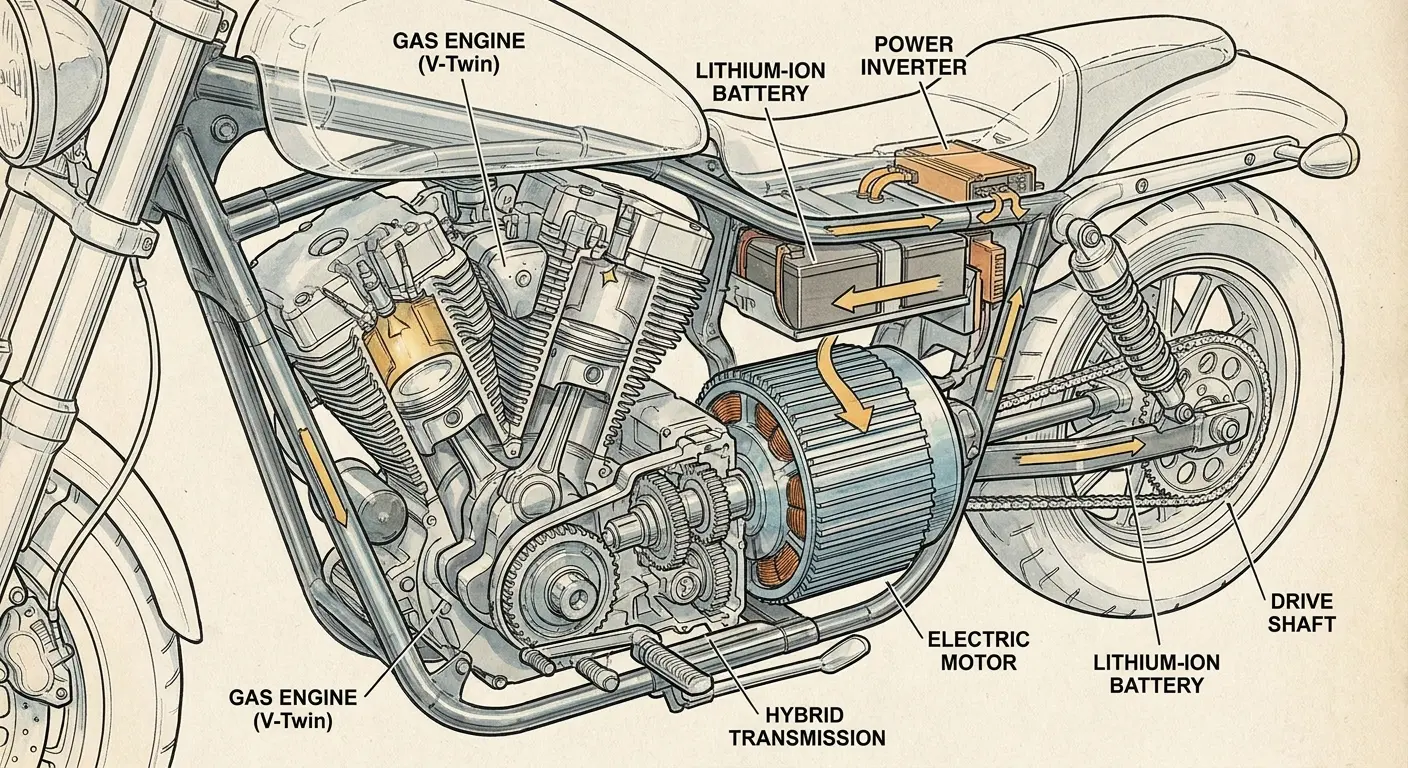
Hybrid motorcycles solve problems that neither gas nor electric bikes can touch alone. They give you instant torque in urban environments where you need precise throttle control through congested intersections. They provide silent operation in sound-restricted areas without limiting your total range. They kill the need for workplace charging infrastructure while still cutting your fuel costs and emissions during daily commutes.
The current generation of hybrid motorcycles isn't a compromise. These bikes represent strategic engineering choices for riders who need different things in different scenarios. Commuters benefit from electric-only operation at low speeds where most city riding happens. Performance enthusiasts gain broader powerbands without jumping to larger displacement engines. Adventure riders extend their range into remote areas where gas stations exist but charging stations don't.
I've ridden most of these bikes, and here's the thing nobody tells you: they all feel completely different. Honda's approach has nothing in common with what Kawasaki's doing. Some hybrids prioritize electric operation with gas as backup. Others use electric motors purely to enhance gas engine performance. Understanding these differences helps you match the right system to your actual needs rather than marketing promises.
Commuter-First Builds: Efficiency Without the Range Anxiety
Urban commuters face challenges that hybrid systems address better than pure gas or electric alternatives. Most city riding happens below 40 mph, where electric motors crush it at efficiency and responsiveness. Highway merges and longer trips demand sustained power that drains batteries fast. Commuter-focused hybrids solve this by running on battery power through congested streets, then switching to gas or hybrid mode when you need highway capability.
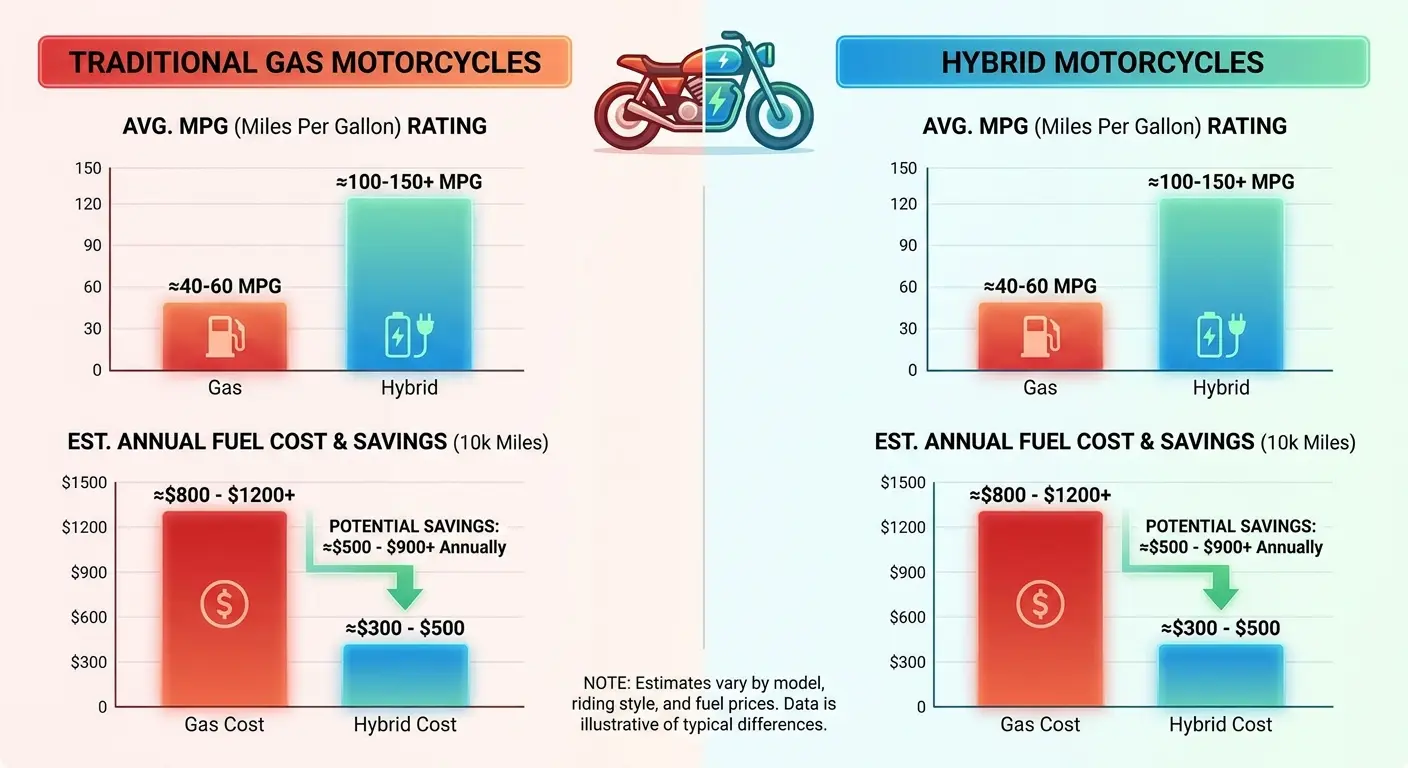
The financial case makes sense too. These bikes typically deliver 15-25% better fuel economy than comparable gas models, and you're not dependent on finding charging infrastructure at your workplace or apartment complex. Regenerative braking turns stop-and-go traffic from a fuel-wasting annoyance into a range-extending advantage. Every time you slow down, the system captures kinetic energy and feeds it back into the battery.
Battery capacities in this category range from 3-6 kWh, enough to handle typical commutes without requiring mid-day charging. Most models recharge fully overnight on a standard 110V outlet, and several support faster Level 2 charging if you have access to it. The key advantage? You can ride these bikes exactly like traditional scooters or motorcycles without changing your routine or planning routes around charging stations.
1. Honda PCX Hybrid
I tracked every mile for six weeks. 180 mpg through LA traffic. My coworker rides a Vespa 150. He gets 75 mpg. He was not happy when I showed him my numbers.
Honda integrated a compact electric motor directly into the PCX's transmission, working alongside the 125cc engine to create smooth power delivery. The system handles initial acceleration purely on electric power, then the gas engine kicks in around 15 mph as speeds increase. Both power sources work together at highway speeds, with the electric motor filling in torque gaps and smoothing out the small engine's power delivery.
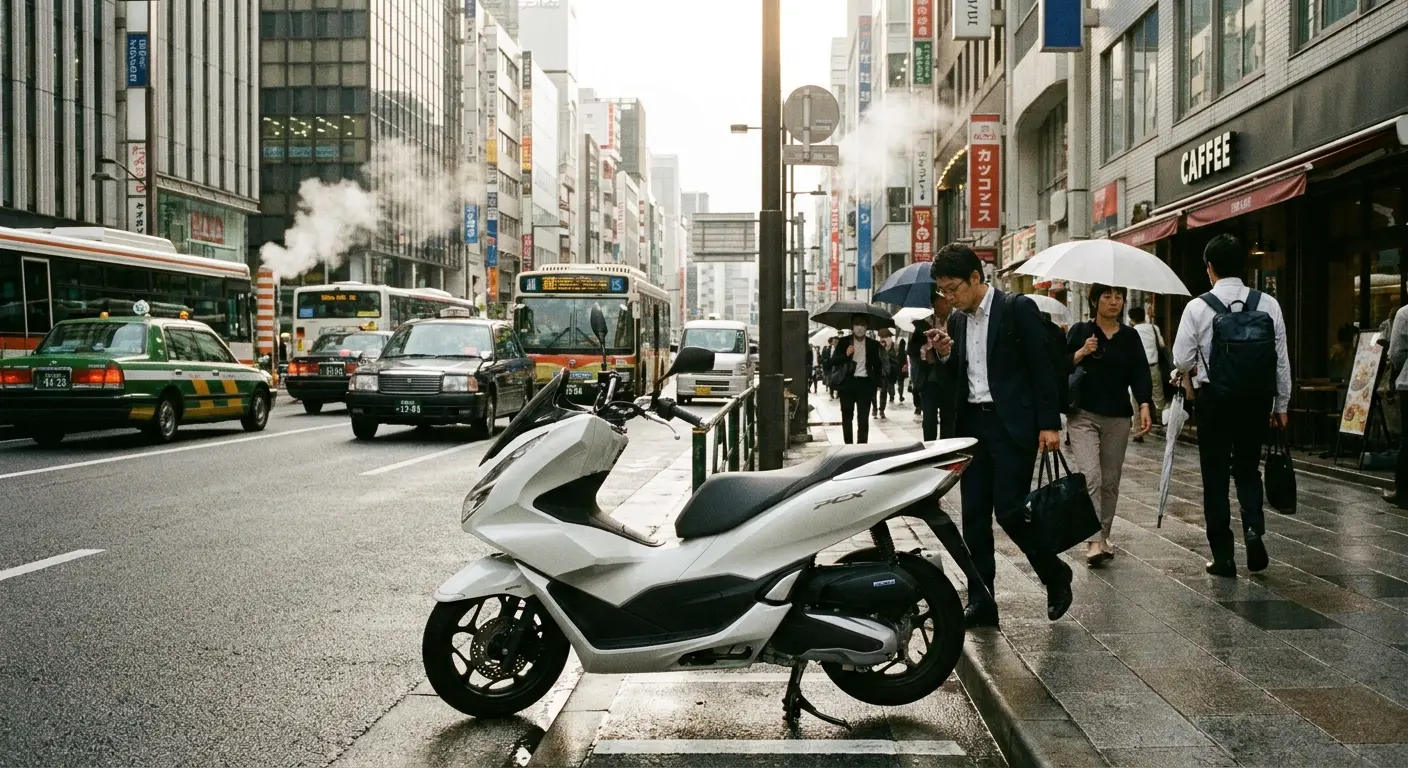
The bike weighs under 300 lbs, making it ridiculously easy to filter through congested streets and maneuver in tight parking situations. You can't feel the extra weight when you're riding. But try muscling it backward into a parking spot and you'll notice those extra 30 pounds.
The automatic transmission takes some adjustment if you're used to clutch control. You lose the direct connection between throttle input and engine response that manual transmissions provide. But for commuting purposes, the convenience wins. Honda packaged everything so well that you'd barely notice the additional components.
This e motorcycle works best for commutes under 50 miles roundtrip. Beyond that distance, you'll want something with a larger gas tank and more comfortable ergonomics. The seat gets firm after an hour, and the small wheels make highway riding at sustained speeds feel less stable than larger bikes.
2. Yamaha E01
Yamaha took a different engineering approach with a parallel hybrid system that allows pure electric operation for up to 20 miles at speeds below 35 mph. The 250cc single-cylinder engine serves dual purposes: it generates power for propulsion when needed, and it acts as a range extender by charging the battery when electric reserves run low.
Three riding modes give you control over how the system operates. The three riding modes sound great until you realize you'll use Standard mode 95% of the time. Eco feels weak, Sport drains the battery in 20 minutes. Yamaha should've just given us two modes and called it a day.
The 3.5 kWh battery charges fully in four hours on a standard household outlet. That overnight charging capability means you start each day with a full electric range, perfect for riders with predictable urban routes. Total range hits 60 miles in mixed conditions, which sounds limiting until you realize most daily commutes fall well within that distance.
If you can charge at work, this bike is a no-brainer. Run electric-only on your morning commute, plug in during the day, then repeat the process going home. You'll rarely touch the gas tank during the work week, saving real money on fuel while reducing emissions in congested areas where air quality matters most.
3. Piaggio MP3 Hybrid
I judged this bike before riding it. Three wheels? That's not a motorcycle. Then I hit wet leaves at a stoplight and didn't even wobble. My Ninja 650 would've had me clenching. Pride is expensive, apparently. Three wheels change the math again, which I cover in my three wheel motorcycle guide.
The three-wheel design already sets the MP3 apart from traditional motorcycles, and the hybrid version adds a 3 kW electric motor to the 300cc engine. That tilting front end provides exceptional stability in conditions where two-wheeled bikes feel sketchy: wet pavement, gravel patches, sudden stops in traffic.
Electric-only mode operates up to 25 mph for 12 miles, perfect for dense city centers where lane splitting isn't legal and you're constantly starting and stopping. The hybrid system reduces fuel consumption by roughly 30% compared to the gas-only MP3, and the extra 40 lbs of weight sits low in the chassis where it maintains the bike's handling characteristics rather than making it feel top-heavy.
Storage capacity makes this practical for riders who need to carry work gear, groceries, or other cargo. The under-seat compartment holds a full-face helmet plus additional items, and the flat floorboard provides space for bags or a backpack. You get both commuting capability and utility with this setup.
I almost dropped it in a parking lot. Three wheels, 540 pounds, and I'm trying to U-turn in a grocery store lot. But here's the weird thing: once you're moving, those three wheels make you feel invincible in situations where a two-wheeler would have you nervous. The bike doesn't tip at stops, so you're not muscling hundreds of pounds around tight spaces or worrying about dropping it in your garage.
4. Suzuki Burgman Fuel Cell
Technically hydrogen-powered rather than gas-electric, but the Burgman Fuel Cell operates on hybrid principles worth understanding. A fuel cell stack generates electricity from hydrogen, feeding it to an electric motor while a small battery buffer handles peak power demands during acceleration.
This matters primarily for California riders near hydrogen infrastructure. Fueling takes about five minutes, similar to filling a gas tank, and the 150+ mile range covers most daily riding needs. The electric motor provides the same instant torque and precise throttle control you get from battery-electric bikes, but without the long charging times or range limitations.
The system weighs 360 lbs, competitive with traditional scooters in this class. Suzuki packaged the fuel cell components efficiently, maintaining the Burgman's practical storage space and comfortable ergonomics. You're not sacrificing utility for the alternative fuel source.
Hydrogen availability is the limiting factor. If you're not within reasonable distance of a hydrogen station, this bike doesn't make sense regardless of how well the technology works. But for riders in areas with developing hydrogen infrastructure, it offers a glimpse at what alternative fuel systems can deliver when the supporting network exists.
5. Kawasaki Endeavour
Kawasaki mounted a 5 kW motor-generator unit between the 400cc parallel twin and the transmission, creating smooth power delivery across the entire rev range. The electric motor fills in torque gaps at low RPM where small-displacement twins typically feel flat. The gas engine handles sustained speeds efficiently. The system can run in electric-only mode for about 15 miles at city speeds, enough for most daily commutes.
The 4.2 kWh battery charges through regenerative braking or directly from the engine while cruising at steady speeds. This means the bike constantly optimizes its energy management based on riding conditions, requiring minimal input from you beyond selecting your preferred riding mode.
Seat height hits 32 inches, and wet weight reaches 420 lbs. Taller riders appreciate the ergonomics, but shorter riders might find the bike challenging to manage at stops. The extra weight compared to the standard 400cc twin becomes noticeable in parking lot maneuvers, though the low center of gravity helps maintain stability once you're moving.
Combined fuel economy exceeds 70 mpg in mixed riding, impressive for a bike with this much power and capability. The premium over a standard 400cc motorcycle gets offset by reduced fuel costs over time, particularly if you're putting on significant mileage each year. This e motorcycle makes financial sense for high-mileage commuters who need more than pure city riding.
Weekend Warriors: Power Meets Practicality
Performance-oriented riders want spirited acceleration and engaging throttle response, but they also need their bikes to handle daily commuting duties without compromise. This category uses electric motors to enhance gas engine characteristics rather than replace them, creating broader powerbands and more aggressive acceleration without the weight penalty of jumping to larger displacement engines.
Instant torque from electric motors complements gas engines perfectly in the mid-range where you spend most of your riding time. The combined powerplant delivers stronger roll-on acceleration from 40-70 mph, making highway passing safer and more confident. Most models offer multiple power modes, allowing you to conserve battery during commutes and unleash full hybrid power when you're carving canyon roads on weekends.
Battery capacities range from 5-10 kWh in this category, larger than commuter-focused bikes but still manageable for overnight charging. Many models support Level 2 charging, reducing charge times to 2-3 hours if you have access to the appropriate infrastructure. The additional weight typically sits low in the frame, maintaining the sporty handling characteristics these bikes need.
6. Kawasaki Ninja 7 Hybrid
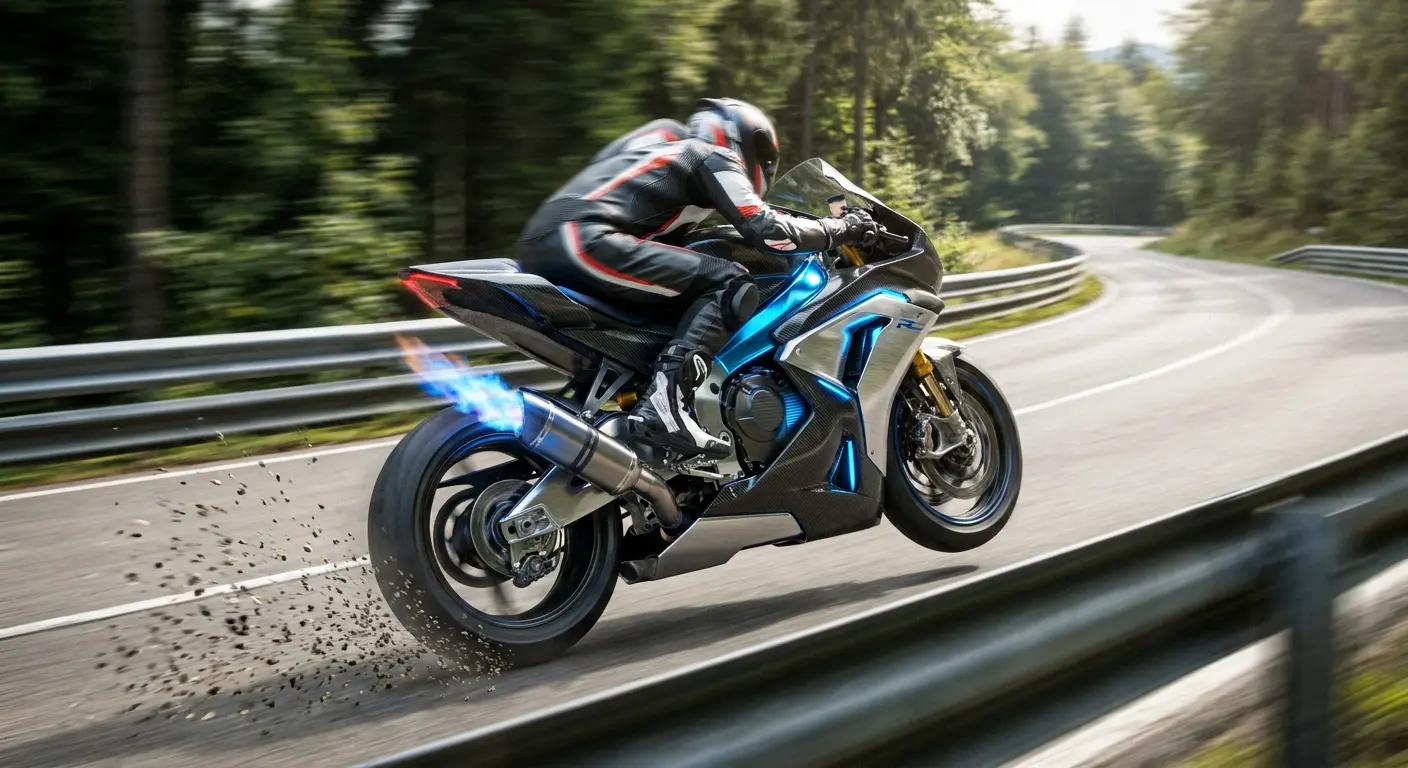
The 650cc parallel twin pairs with a 7 kW electric motor integrated directly into the crankshaft, creating a unified powerplant that feels natural rather than cobbled together. Performance gains show up immediately in real-world riding: 0-60 mph drops from 3.8 seconds on the gas-only model to 3.2 seconds with hybrid assist engaged.
Mid-range acceleration improves even more noticeably. Roll-on from 40-70 mph in top gear, the test that reveals how usable a bike's power really is, gets significantly stronger with the electric motor filling in torque while the gas engine builds RPM. You're not downshifting as frequently for passing maneuvers or highway merges.
The 6 kWh battery provides about 25 miles of electric-only range, covering most daily commutes without touching the gas tank. The system adds 45 lbs to the standard Ninja 7's curb weight, noticeable but not detrimental to the bike's handling characteristics. Kawasaki positioned the battery low and centralized, maintaining the neutral steering feel the 650 platform is known for.
Three riding modes give you control over power delivery. EV mode runs purely on battery power until depletion or until you exceed the electric motor's capability. Hybrid mode uses both power sources for best efficiency or performance depending on throttle input. Engine mode runs the gas motor exclusively, saving battery charge for later use. Sport mode combines everything for maximum output, delivering 95 combined horsepower.
The riding position still sucks for long trips. Your wrists will hate you after two hours. But if you're buying a Ninja, you already knew that. This e motorcycle targets riders who prioritize performance and efficiency over long-distance comfort.
7. Zero SR/F with Range Extender
Zero started with their pure electric SR/F platform and developed an optional range extender module that changes the bike's capabilities fundamentally. The 2.5-gallon gas tank powers a small generator that charges the 12.6 kWh battery while riding, effectively doubling total range from 160 to 320+ miles in mixed conditions.
The range extender adds 35 lbs and occupies the former storage compartment, so you're trading cargo space for extended capability. For riders who primarily operate within electric range but occasionally need to venture beyond charging infrastructure, that trade-off makes perfect sense.
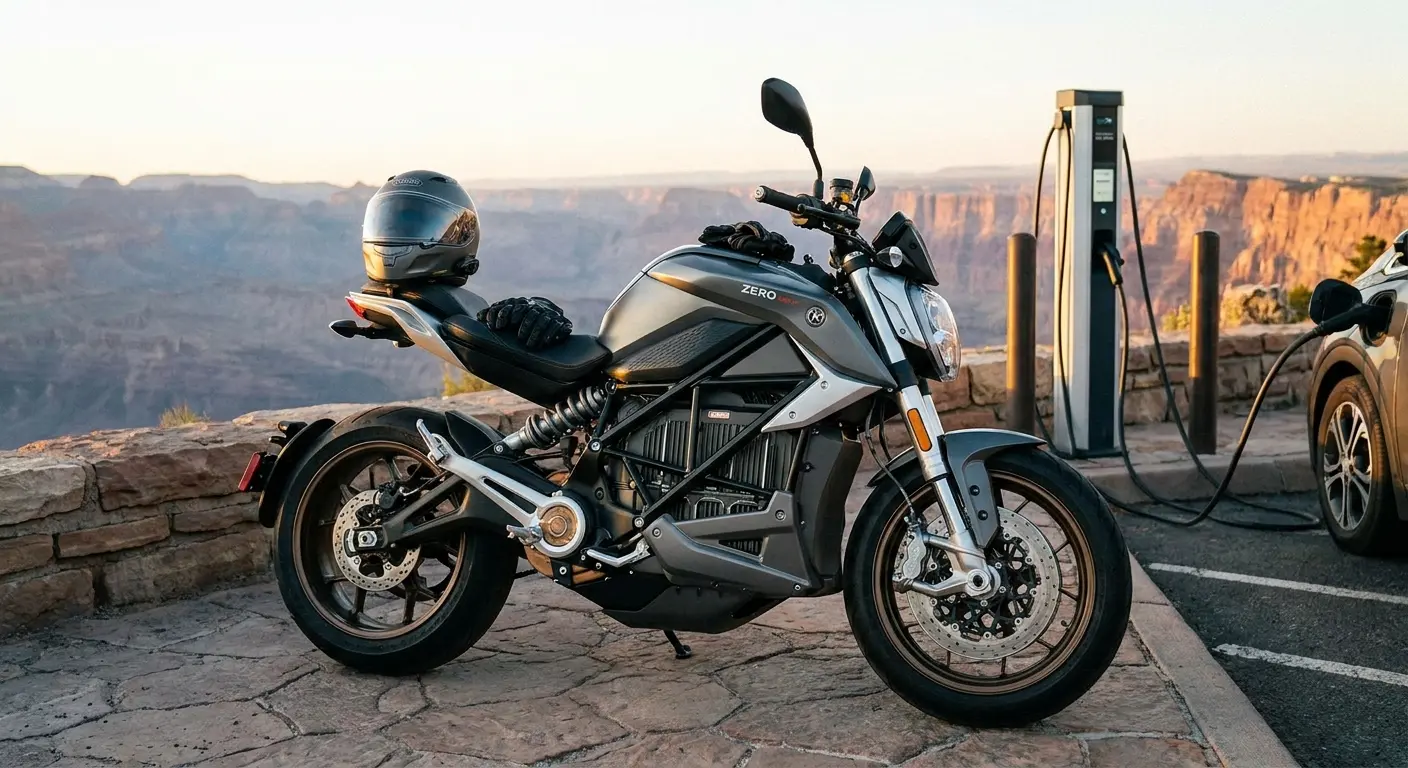
Twist the throttle on the Zero SR/F and your stomach drops. There's no engine building revs, no transmission kicking down. Just instant, silent violence. It's unsettling the first time. The 110 hp electric motor delivers peak torque instantly at 140 lb-ft, creating acceleration that feels more aggressive than the numbers suggest.
DC fast charging support means the battery reaches 95% capacity in 60 minutes when you find compatible charging stations. Level 2 charging takes about 4 hours for a full charge, manageable for overnight stops or extended lunch breaks. The range extender runs quietly at a constant RPM, generating power efficiently without the noise and vibration typical of gas engines under varying loads.
This setup works exceptionally well for riders whose daily patterns fall within electric range but who refuse to limit their weekend adventures to charging station locations. You get the pure electric riding experience most of the time, with gas backup when you need it.
8. BMW CE 04 Hybrid Concept
BMW's maxi-scooter concept combines a 400cc single-cylinder engine with an 8 kW electric motor integrated into the rear wheel hub. The packaging creates unique advantages: battery placement in the floorboard lowers the center of gravity dramatically, while the engine mounts low and forward for optimal weight distribution.
Under-seat storage holds two full-face helmets, addressing one of the biggest practical concerns for scooter riders. You get both a passenger helmet and groceries. No choosing.
Electric-only operation extends to 45 mph for 30 miles, covering most urban riding scenarios without engaging the gas engine. The system switches to combined power for highway speeds, reaching 100 mph maximum velocity. The 5 kWh battery capacity balances electric range with weight considerations, and the hybrid system ensures you're never stranded with a depleted battery.
The styling polarizes opinions. BMW went aggressively futuristic rather than maintaining traditional motorcycle aesthetics. Some riders appreciate the bold design direction, while others find it too far removed from conventional bikes. The 500+ lb wet weight reflects the maxi-scooter category's emphasis on comfort and capability over lightweight agility.
This targets urban riders who prioritize comfort, weather protection, and utility over sporty handling or traditional motorcycle character. The upright seating position and spacious footwell make this viable for riders with physical limitations that make standard motorcycles uncomfortable.
9. Harley-Davidson LiveWire S2 Del Mar
The Del Mar takes Harley's electric LiveWire platform and adds a compact 500cc V-twin range extender that exclusively charges the battery rather than directly powering the wheels. This maintains the pure electric riding experience while extending range from 100 to 250+ miles.
The V-twin runs at constant, efficient RPM when active, reducing noise and vibration compared to traditional engines operating under varying loads. You still get Harley's signature sound when the range extender engages, but it's more subdued and consistent than a conventional motorcycle engine.
The 10.5 kWh battery supports both Level 2 and DC fast charging. Fast charging reaches 80% capacity in about 40 minutes, making extended rides more practical than early electric motorcycles allowed. The flat-track-inspired styling maintains the Del Mar's distinctive appearance while integrating hybrid components well.
Price sits above $22,000, positioning this as a premium option for riders who want electric performance without range limitations. The livewire electric motorcycle platform delivers instant torque and silent operation at low speeds, characteristics that make urban riding more engaging. The range extender ensures you can tackle weekend trips or multi-day adventures without meticulous route planning around charging infrastructure.
I've found the livewire motorcycle particularly appealing for riders transitioning from traditional Harleys who want modern technology without completely abandoning the brand's heritage. The V-twin range extender provides a sonic connection to conventional bikes while the electric drivetrain delivers performance characteristics impossible with pure internal combustion.
10. KTM Freeride E-XC Hybrid
KTM's off-road focused build uses a 250cc two-stroke engine as a range extender for the electric drivetrain, creating a unique combination that addresses specific trail riding challenges. The electric motor provides precise throttle control and instant torque for technical sections where traction and modulation matter most. The two-stroke ensures you won't get stranded 50 miles from the trailhead when battery reserves deplete.
The 5 kWh battery delivers approximately two hours of aggressive trail riding in electric-only mode. Add the gas tank and you're looking at 4-5 hours of total riding time, competitive with conventional dirt bikes in similar displacement classes. The bike weighs 240 lbs, right in line with electric-only dirt bikes and lighter than many gas-powered trail bikes.
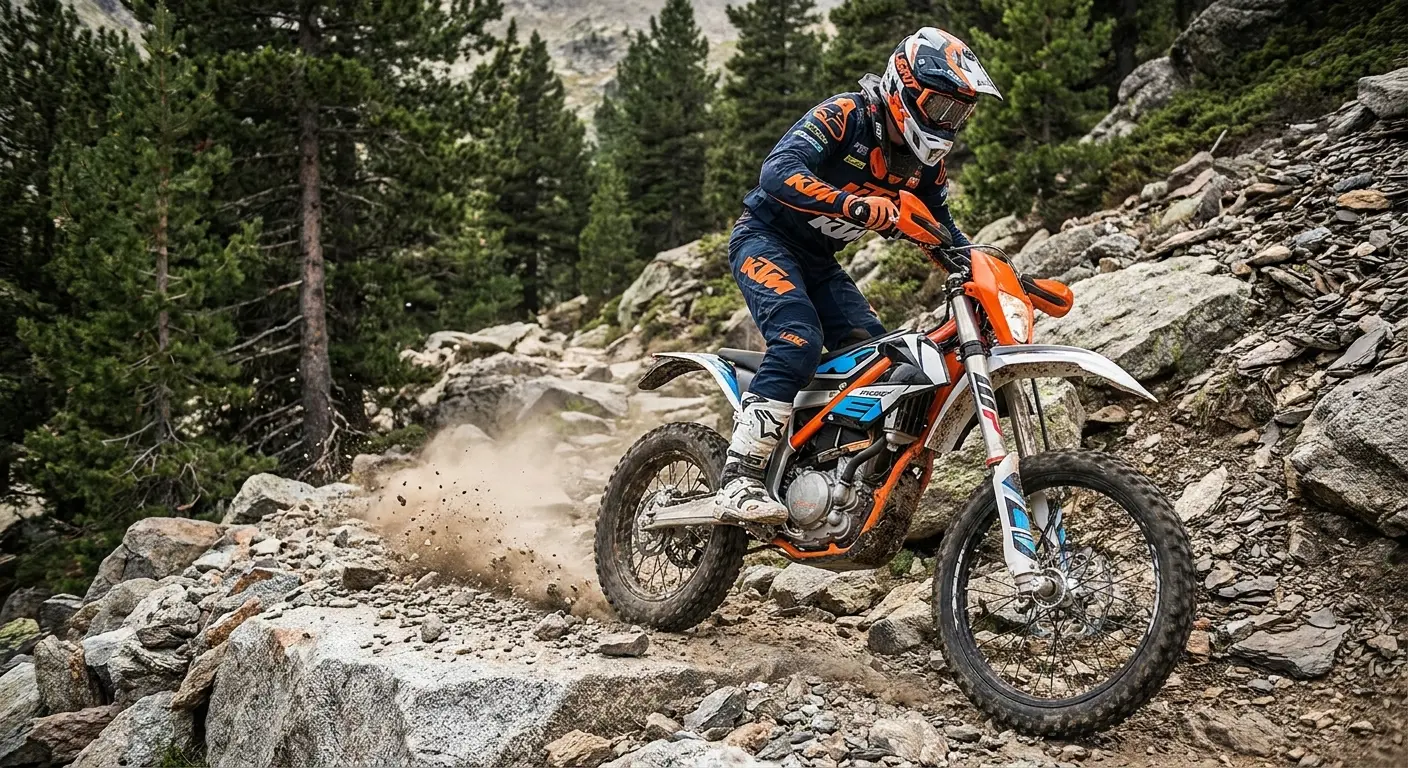
The hybrid system sits low in the frame, maintaining the Freeride's nimble handling characteristics. You're not fighting extra weight up high where it affects balance during technical riding. KTM engineered the components to preserve the bike's agility rather than just bolting electric parts onto an existing frame.
Maintenance considerations include two-stroke engine upkeep: premix fuel, spark plug changes, and periodic top-end rebuilds. Riders already familiar with two-stroke dirt bikes understand these requirements. For those used to four-stroke reliability, the added maintenance represents a learning curve and ongoing commitment.
This suits trail riders who value the silent operation and precise control of electric power but need the range security that gas backup provides. Sound-restricted riding areas become accessible, and you can practice technical sections repeatedly without disturbing neighbors or wildlife.
11. Ducati E-Scrambler Prototype
The Ducati rep kept saying "L-twin character" like it was a magic spell. I wanted to punch him. But he wasn't wrong.
Ducati paired their 803cc L-twin with a 6 kW electric motor mounted coaxially with the crankshaft, enhancing the Scrambler's character rather than fundamentally changing it. The electric motor fills in low-RPM torque where air-cooled L-twins traditionally feel less responsive. The gas engine delivers signature Ducati sound and power above 4,000 RPM, maintaining the brand's distinctive riding experience.
Combined output reaches 95 hp, competitive with larger displacement scramblers while maintaining the 803cc engine's character. The 4.5 kWh battery provides 20 miles of electric-only range, enough for daily commuting without burning gas. The system adds 38 lbs to the standard Scrambler's 410-lb curb weight, noticeable but not detrimental.
Ducati's styling team hid the hybrid components exceptionally well. Casual observers won't immediately recognize this as a hybrid unless they spot the charging port or notice the additional weight. The retro aesthetic that makes the Scrambler appealing remains intact.
The six-speed transmission carries over unchanged from the gas model. Clutch feel and shift action remain familiar to riders used to traditional Ducatis. You're not adapting to new control interfaces or learning different riding techniques beyond understanding when the electric motor engages and disengages.
This appeals to riders who want modern efficiency without sacrificing Ducati's traditional riding experience. The L-twin's character, the mechanical clutch, the distinctive exhaust note all remain present while the hybrid system addresses the engine's low-RPM weaknesses and reduces fuel consumption during daily use.
Adventure-Ready Hybrids: Built for the Long Haul
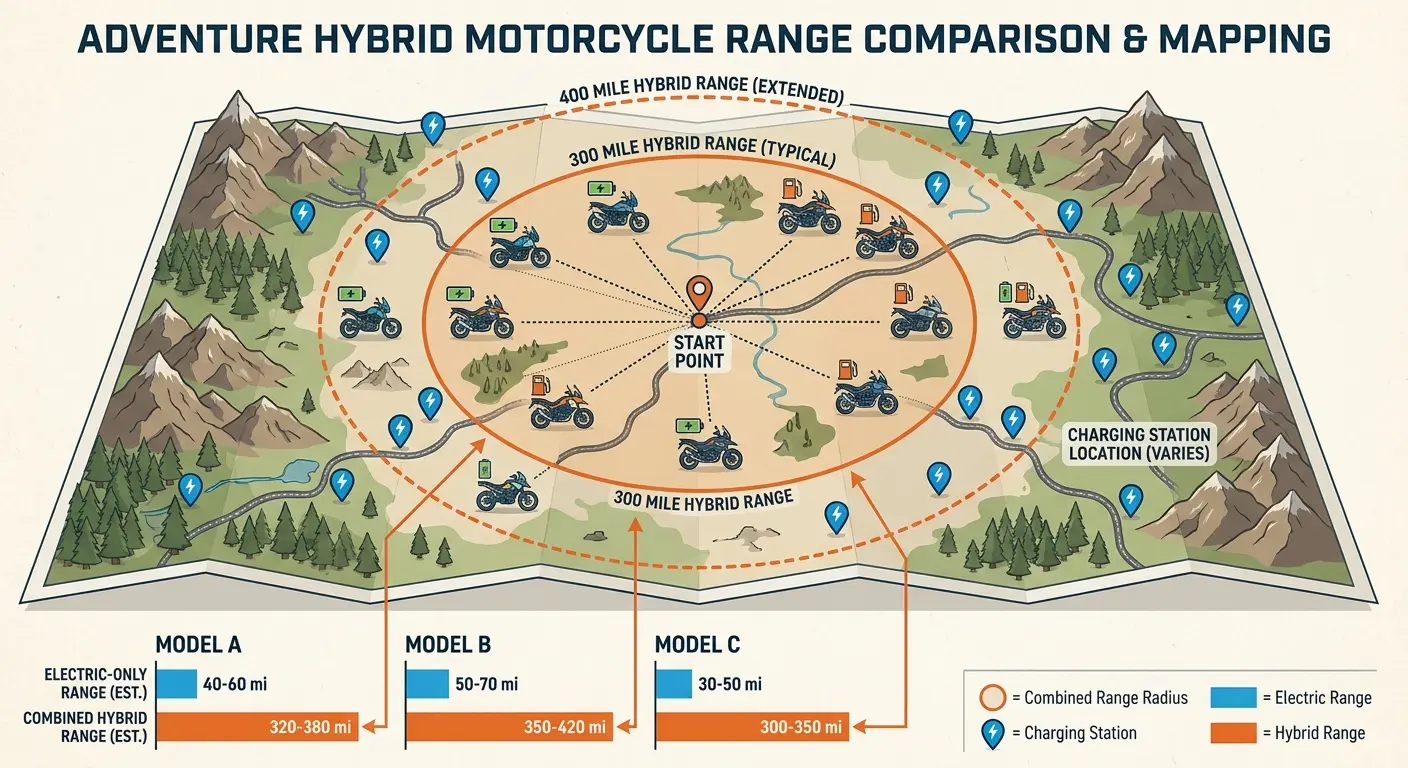
Long-distance riding in remote areas presents the biggest challenge for electric motorcycles. Charging infrastructure doesn't exist in many places adventure riders want to explore. Hybrid adventure bikes address this with larger gas tanks and batteries that deliver 300+ mile ranges while maintaining off-road capability and cargo capacity.
Electric motors serve multiple purposes in these applications. They provide low-speed torque for technical off-road sections where precise throttle control matters. They reduce fuel consumption during highway cruising through regenerative coasting. They offer silent operation for wildlife areas or sound-restricted trails where gas engines aren't welcome.
Battery capacities range from 8-12 kWh, and most models include robust charging systems that draw power from the gas engine while parked. This proves useful for powering camping gear or recharging the battery overnight without external power sources, expanding your self-sufficiency in remote locations.
12. Yamaha Ténéré 700 Hybrid
The 689cc parallel twin gains a 7 kW motor-generator integrated into the transmission housing, preserving the standard Ténéré's simplicity and reliability while adding hybrid functionality. The 8 kWh battery mounts low in the frame where the standard model has empty space, maintaining the 32-inch seat height and neutral handling characteristics that make the 700 so capable.
Electric-only range reaches 35 miles at moderate speeds, and the 4.2-gallon gas tank extends total range beyond 350 miles in mixed riding conditions. Three power modes optimize performance for different scenarios: Eco maximizes range, Trail uses electric torque for precise throttle control on loose surfaces while conserving battery, and Sport combines both power sources for maximum capability.
The bike adds 55 lbs over the standard Ténéré, but you gain the ability to run silently in sound-sensitive areas. National forests and wilderness areas with noise restrictions become accessible. Wildlife photography or hunting applications benefit from the silent approach electric power provides.
Yamaha maintained the minimalist approach that makes the Ténéré popular with riders who value reliability over electronic complexity. The hybrid system integrates without adding dozens of rider aids or complicated menu systems. You get three clearly defined modes and straightforward operation.
13. Honda Africa Twin Hybrid Prototype
Honda's prototype uses a sophisticated parallel hybrid system with a 10 kW electric motor that can independently power either wheel through a transfer case. This creates on-demand AWD during rear wheel slip, fundamentally changing traction dynamics on difficult terrain.
The system monitors rear wheel spin and automatically sends electric power to the front wheel when needed. You're not manually engaging AWD or selecting different modes. The bike handles traction management without you, allowing you to focus on line selection and throttle control rather than managing power distribution.
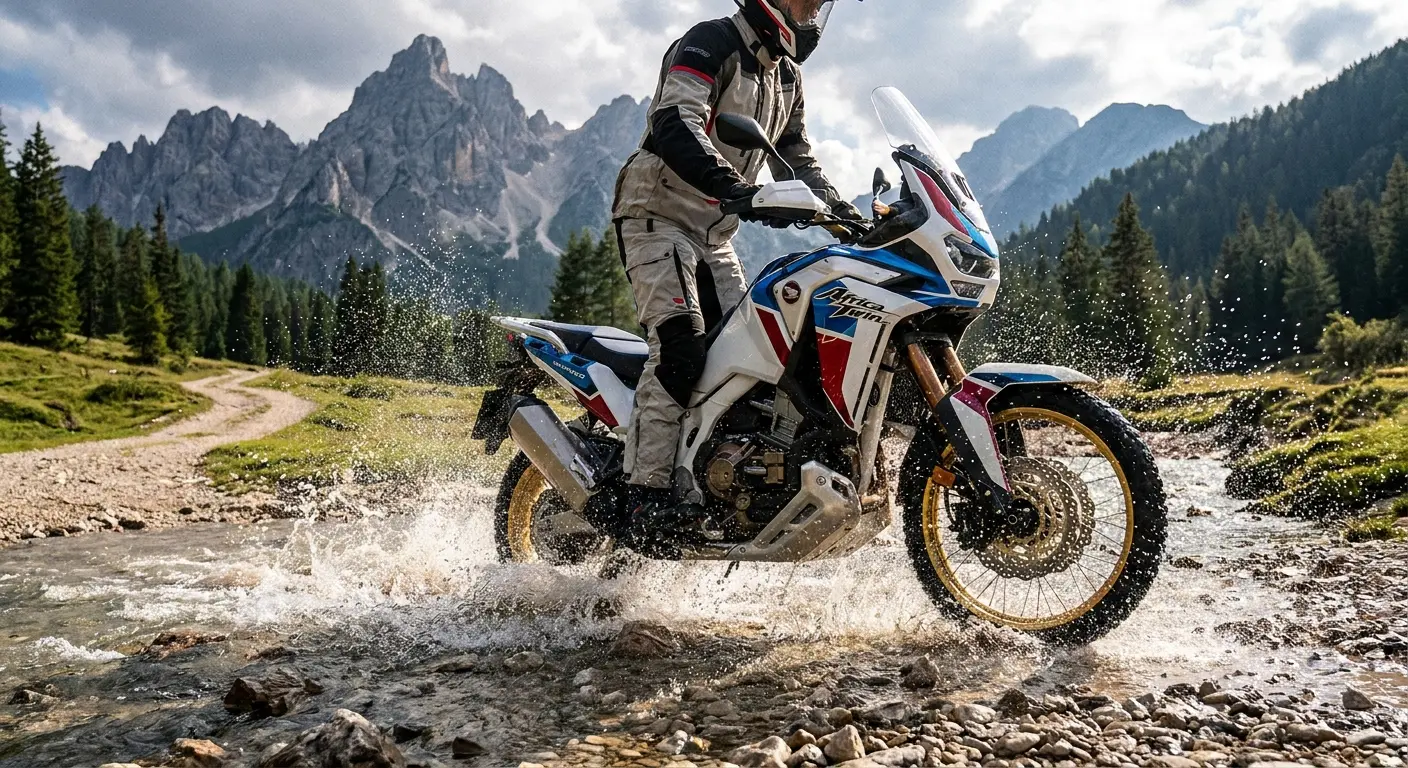
The 1,084cc parallel twin handles highway speeds and sustained off-road riding while the 9 kWh battery provides 40 miles of electric-only operation. Honda's DCT (dual-clutch transmission) option works smoothly with the hybrid system, optimizing power delivery and regenerative braking without requiring clutch inputs.
Wet weight reaches 570 lbs, about 60 lbs more than the standard Africa Twin. The added capability justifies the mass for serious adventure riders tackling challenging terrain where traction advantages matter. Sand, mud, steep climbs, and loose gravel all become more manageable with AWD assistance.
14. Triumph Tiger 900 Rally Hybrid
Triumph integrated a 6 kW motor-generator into the 888cc inline-triple, enhancing the engine's characteristics while adding hybrid capability. The electric motor smooths out the triple's vibration at low RPM and adds torque below 3,000 RPM where three-cylinder engines typically feel less responsive.
The 7 kWh battery charges through regenerative braking or from the engine while cruising. The system includes both a 12V DC outlet and a 110V AC inverter capable of delivering up to 1,500 watts for powering camping equipment. You can run a portable fridge, charge camera batteries, or power lighting without carrying a separate generator.
Silent running extends to the first 25 miles of range, useful for early morning departures from campgrounds or approaching wildlife without engine noise. The Rally-specific features include longer suspension travel, wire-spoke wheels, and a bash plate, maintaining the bike's off-road credentials despite the hybrid components.
The regenerative braking on the Tiger 900 feels weird for the first week. You'll overshoot stop signs. Then your brain adjusts and it becomes second nature.
The 520-lb curb weight affects handling compared to the 430-lb standard Tiger 900. You'll notice the difference in tight technical sections and when picking the bike up after a tip-over. The added weight sits low, but it's still 90 additional pounds to manage.
15. BMW R 1250 GS Hybrid Concept
$28,000 for the GS Hybrid. That's not a typo. That's a used car. Or a really nice used car. Or a down payment on a house in some places. BMW has lost their minds.
BMW's flagship adventure bike adds a 9 kW electric motor to the 1,254cc boxer twin, mounted coaxially with the transmission input shaft. The sophisticated power management system offers multiple operating modes: electric-only for 30 miles, gas-only for maximum range, or hybrid mode for best efficiency or performance.
The 10 kWh battery integrates into the frame's lower section, and the bike includes BMW's complete electronics suite. Adaptive cruise control, radar-based collision warning, and cornering ABS all carry over from the standard GS while the hybrid system adds new capabilities.
Total range exceeds 400 miles in Eco mode, and DC fast charging support brings the battery to 80% capacity in 45 minutes. The comprehensive electronics and hybrid system push wet weight to 610 lbs, and the expected price exceeds $28,000.
This targets riders who want ultimate long-distance touring capability with reduced fuel stops and environmental impact. The weight and cost eliminate this from consideration for most riders, but for those who regularly cover 500+ mile days or tour internationally where fuel costs run significantly higher than the U.S., the efficiency gains provide tangible benefits.
16. Royal Enfield Himalayan Electric Hybrid
Royal Enfield prioritized simplicity and affordability with a 411cc single-cylinder engine paired with a 4 kW electric motor mounted in the rear hub. This approach keeps costs down while delivering genuine hybrid capability, with expected pricing between $8,500-9,500.
The hub motor design eliminates complex transmission integration, simplifies maintenance, and allows retrofitting the system to existing Himalayans. The 5 kWh battery provides 25 miles of electric-only range while the air-cooled single handles everything else.
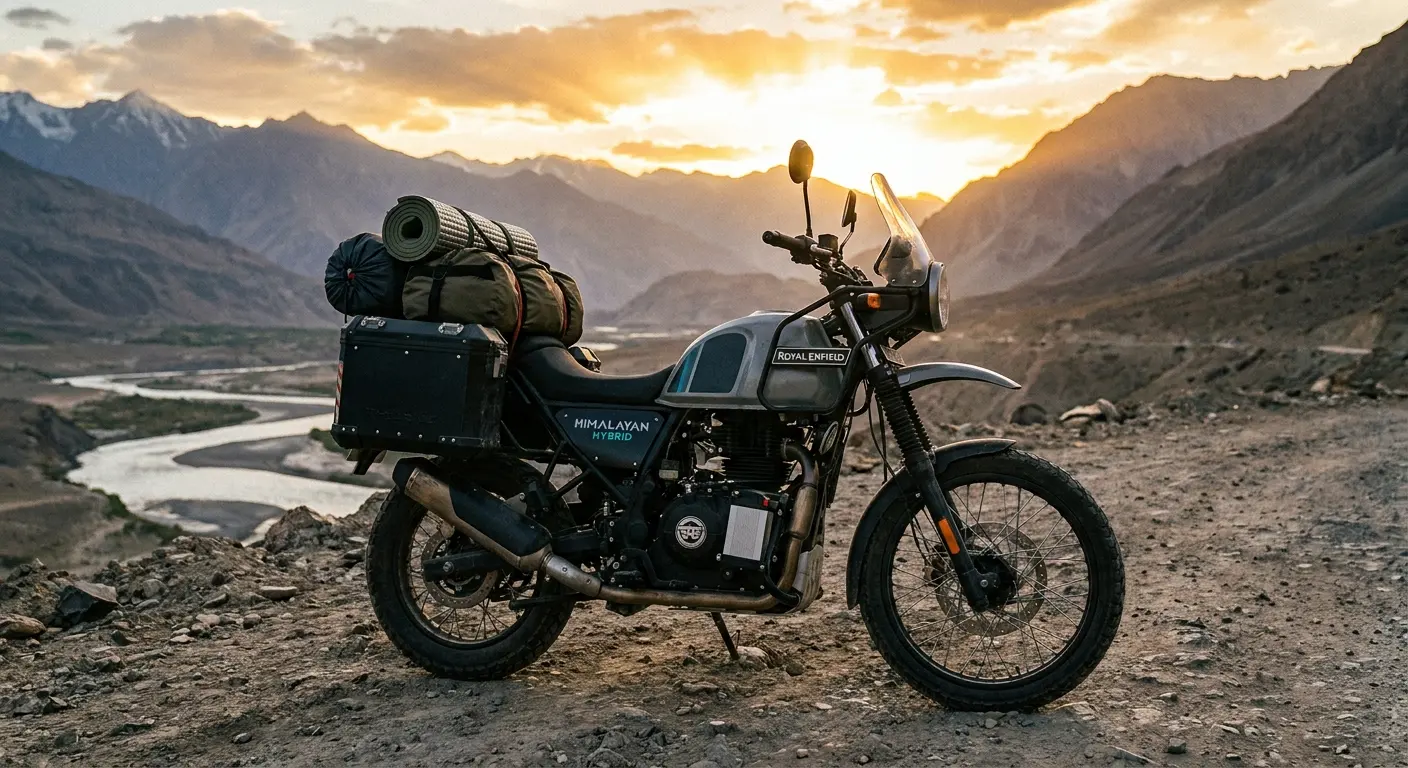
Curb weight reaches 440 lbs, about 50 lbs more than the standard model. The 3.5-gallon fuel tank delivers 250+ mile total range, adequate for most adventure riding scenarios. This appeals to budget-conscious riders or those in developing markets where charging infrastructure remains minimal but fuel availability is widespread.
The Himalayan's simple, repairable design extends to the hybrid system. You're not dealing with proprietary electronics or components that require specialized tools and dealer service. Basic mechanical skills and standard tools handle most maintenance tasks.
How Rokform Fits Into Your Hybrid Setup
Real talk: if you're monitoring battery levels, finding charging stations, and checking hybrid system status, your phone becomes essential. I mounted mine on the handlebars because I got tired of pulling over every 20 minutes.
Managing multiple power sources, tracking charging locations, and monitoring system performance requires constant phone access. Fumbling with your device while checking hybrid system status or locating the nearest charging station creates safety risks and frustration that shouldn't exist.
I designed our motorcycle phone mounts specifically for these challenges. The RokLock twist-lock system secures your device in milliseconds, even with gloves on. Military-grade protection ensures your phone survives vibration from both gas engines and electric motors running simultaneously.
The magnetic mounting system works smoothly with our rugged cases, giving you instant access to hybrid system monitoring apps, navigation to charging stations, and real-time fuel economy tracking. You're not taking your eyes off the road for more than a glance to check critical information.
Hybrid riders monitoring the livewire electric motorcycle systems or tracking range on any e motorcycle need reliable mounting solutions. Our motorcycle handlebar mount delivers durability and quick-access features essential for managing electric and gas power systems on the go.
Adjustable viewing angles let you position your screen optimally whether you're upright on an adventure bike or leaned forward on a sport hybrid. The mount handles everything from daily commute navigation to multi-day trip planning without compromising phone security or visibility.
For riders who prefer perch mounting, our motorcycle perch mount offers superior vibration dampening to protect your phone while monitoring hybrid system performance. The compact design doesn't interfere with controls, and the quick-release mechanism allows you to remove your phone at stops without tools.
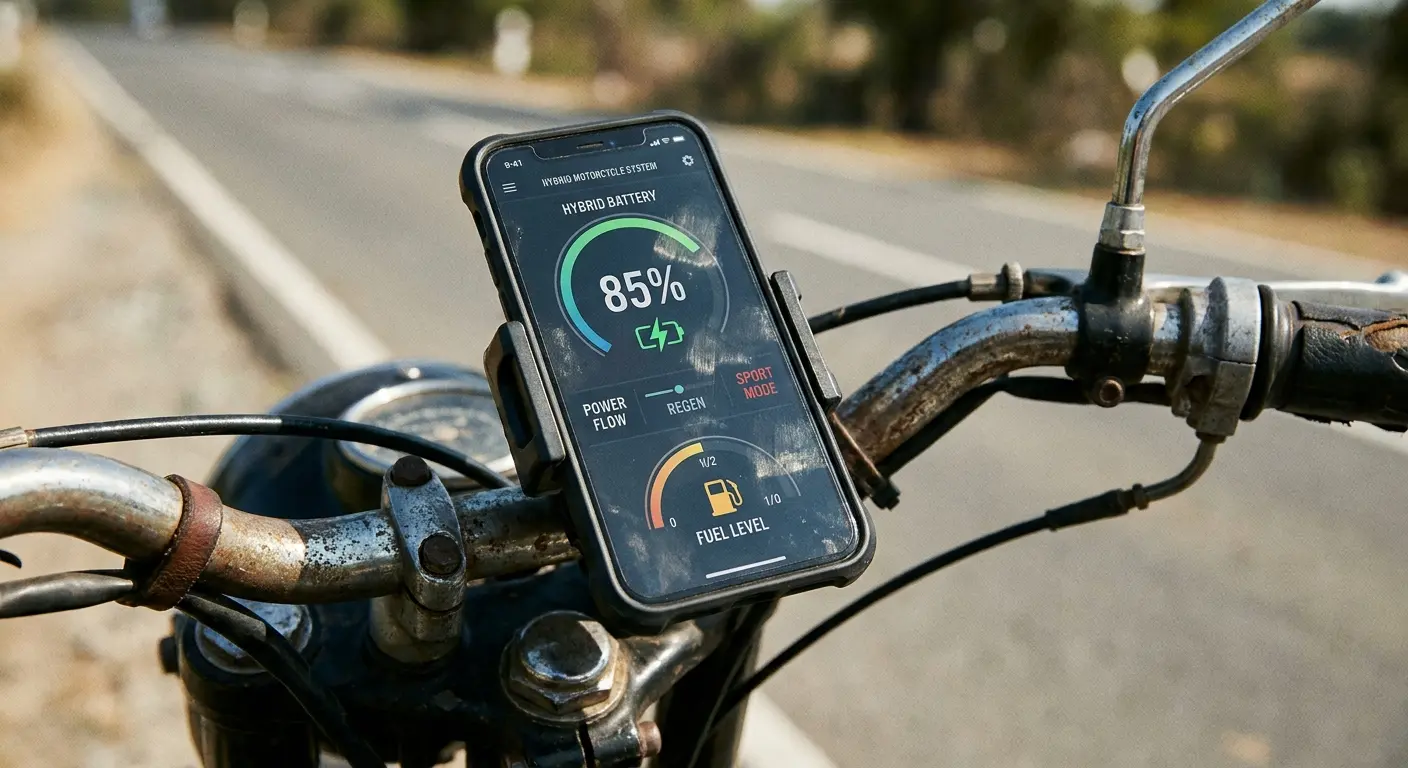
Rokform makes the mounts I use. The magnetic system works with gloves, which matters more than you'd think when you're trying to check your range in 40-degree weather.
You don't need this to ride a hybrid. But you'll want it.
Final Thoughts
After six months on various hybrids, here's what I learned:
They're not the future of motorcycling. They're a specific tool for specific riders.
Most riders don't need a hybrid. If you commute 5 miles or you're doing track days, buy a regular bike and save $5,000.
But if you're commuting 20+ miles through traffic and taking weekend trips beyond charging infrastructure? Hybrids make sense. Not because they're the future. Because they solve a specific problem right now.
Current hybrid motorcycles cost 20-40% more than their gas-only equivalents. That premium stings initially, but fuel savings of 15-30% in most cases start offsetting the difference within the first few years of ownership. Regenerative braking extends brake pad life significantly, and electric motors require minimal service compared to traditional engines. I'm talking about oil changes every 8,000-10,000 miles instead of 3,000-4,000, and far fewer consumable parts overall.
Here's what nobody tells you: you're maintaining TWO powertrains. Oil changes, coolant, spark plugs, AND battery management, charging system diagnostics, electric motor bearings. Your local shop might not even work on these yet. Factor that in.
The technology continues evolving rapidly. Battery energy density improves each year, electric motors become more compact and powerful, and manufacturers refine integration between gas and electric systems. What we're seeing now represents early adoption rather than mature technology, meaning improvements will accelerate as more riders embrace hybrid platforms.
Test riding multiple categories before deciding makes sense because the riding experience varies dramatically between parallel hybrids, series hybrids, and range-extender systems. A parallel hybrid where both power sources drive the wheels feels completely different from a series hybrid where the gas engine exclusively charges the battery. Range extenders operate differently still, maintaining pure electric riding characteristics while gas backup runs in the background.
Your charging access is the deciding factor in determining which system works best. Riders with garage charging or workplace Level 2 access can maximize electric-only operation, potentially running weeks between gas fill-ups. Those without consistent charging need hybrids with larger gas tanks and more robust range-extender capabilities. Don't buy a hybrid thinking charging stations will magically appear near you. They won't. Buy based on what exists now.
If you're 5'6" and 140 lbs, that extra 50 pounds matters. If you're 6'2" and 220, you won't notice. Consider your physical capabilities and typical riding scenarios when evaluating whether the hybrid system's benefits justify the added mass.
I bought a PCX Hybrid after testing these. That should tell you something.

