


Look, I'm going to save you some time here: that MagSafe grip you're about to buy? It matters way less than whether it'll actually work with your car mount, your charger, and everywhere else you stick your phone. Most people figure this out backwards and end up with a drawer full of incompatible accessories. I've seen it happen dozens of times, and it's always the same story.
Here's the thing nobody tells you upfront. Your grip choice determines every single mounting interaction you'll have for the next year. Maybe longer if you buy quality. That includes your car dashboard, your workout armband, your kitchen cabinet mount, your wireless charging stand. All of it. Each of these touchpoints requires magnetic alignment, pull strength, and weight distribution that actually works with your grip's design, not against it.
And yeah, weight distribution and magnetic pull strength create stress points on your phone's internal components that most manufacturers completely ignore. They're too busy making the grip look cool in product photos.
Cheap magnetic alignment? It'll slowly kill your MagSafe coils. Not immediately, which is actually worse because you won't realize until it's too late. And it messes with wireless charging efficiency over time.
The materials determine how fast the adhesive fails, how much heat transfers to your hand during charging, and whether the mount survives actual real-world conditions. Not lab conditions. Real life.
The best MagSafe phone grip is the one that works seamlessly with your car mount, desk stand, and wall charger without requiring adapter rings or workarounds. Period.
Why Most MagSafe Grips Solve the Wrong Problem
You're probably shopping for a magsafe phone grip because you want better one-handed control. Maybe you've dropped your phone one too many times, or your pinky finger has developed that weird dent from supporting your device's weight all day. (We all have it. It's fine. We're fine.)
Those are valid reasons. They're just not the most important ones.
The grip you choose determines every mounting interaction you'll have for the next year or longer. That includes your car dashboard, your workout armband, your kitchen cabinet mount, your wireless charging stand. Each of these touchpoints requires magnetic alignment, pull strength, and weight distribution that works with your grip's design.
Most people discover this backwards. They buy a grip they love, then realize it doesn't work with their existing car mount. Or it does work, but the phone slowly slides down during their commute because the combined weight exceeds what the magnetic field can support.
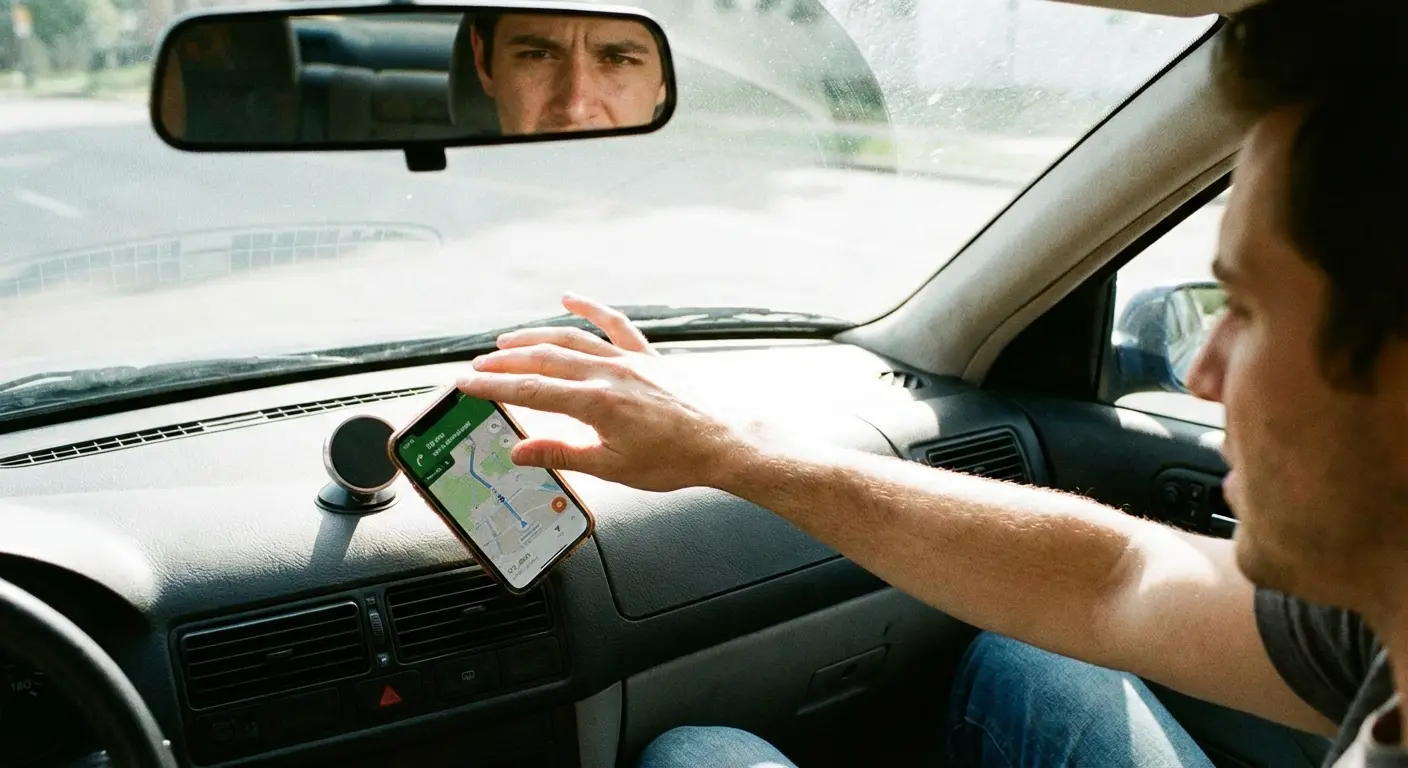
I've seen this pattern repeat itself across thousands of customer interactions. Someone buys based on color or shape, then contacts support asking why their "MagSafe compatible" accessories don't play nicely together.
The stuff that actually matters: magnetic field strength consistency, mounting surface compatibility, and whether the grip adds so much thickness that it creates distance between your phone's MagSafe coil and your charger's coil. That distance'll kill charging efficiency, by the way. Even 2mm can drop your wattage significantly.
The grip isn't the product. The ecosystem is the product.
My coworker Sarah bought this bright teal PopSocket knockoff from Amazon because it matched her case. Looked great. Three weeks later she's complaining in Slack that her phone keeps rotating on her vent mount during her commute to Pasadena. By the time she gets to work, her GPS is pointing at the floor mats. She ended up buying some $35 Belkin mount, which then didn't fit her MagSafe charging stand at home, and now she's just mad about the whole thing. You've now spent $60+ solving a problem that started with choosing a grip based on aesthetics rather than magnetic pull strength specifications.
Wired tested a bunch of these in 2025 and found that the market now offers options ranging from basic $17 models to premium $40 accessories. The sweet spot for most users falls in the $17-$30 range where you get solid build quality without premium pricing. But price alone doesn't tell you whether that best magsafe phone grip will work with your specific mounting needs.
The Mounting Ecosystem You're Actually Building
Okay, real question: where do you actually stick your phone? Like, map it out right now. Not just hold comfortably in your hand, but mount to a surface.
Your car's dashboard or vent gets the most obvious attention, but what about your gym locker door? The metal plate on your treadmill? Your garage wall when you're following a repair tutorial? Each surface presents different magnetic field interactions and different gravitational pulls depending on the angle.
Car mounts create the highest stress load. You're dealing with vibration, sudden stops, temperature fluctuations, and extended mounting duration. A magnetic phone grip that works fine for 30-second refrigerator mounting might fail completely during a 45-minute commute on rough roads. Trust me on this.
Fitness scenarios introduce sweat, impact, and rapid movement. If you're running with your phone mounted to your arm or bike, that grip needs to handle moisture and repetitive jarring without loosening. The adhesive backing faces different challenges here than it does in static mounting situations.
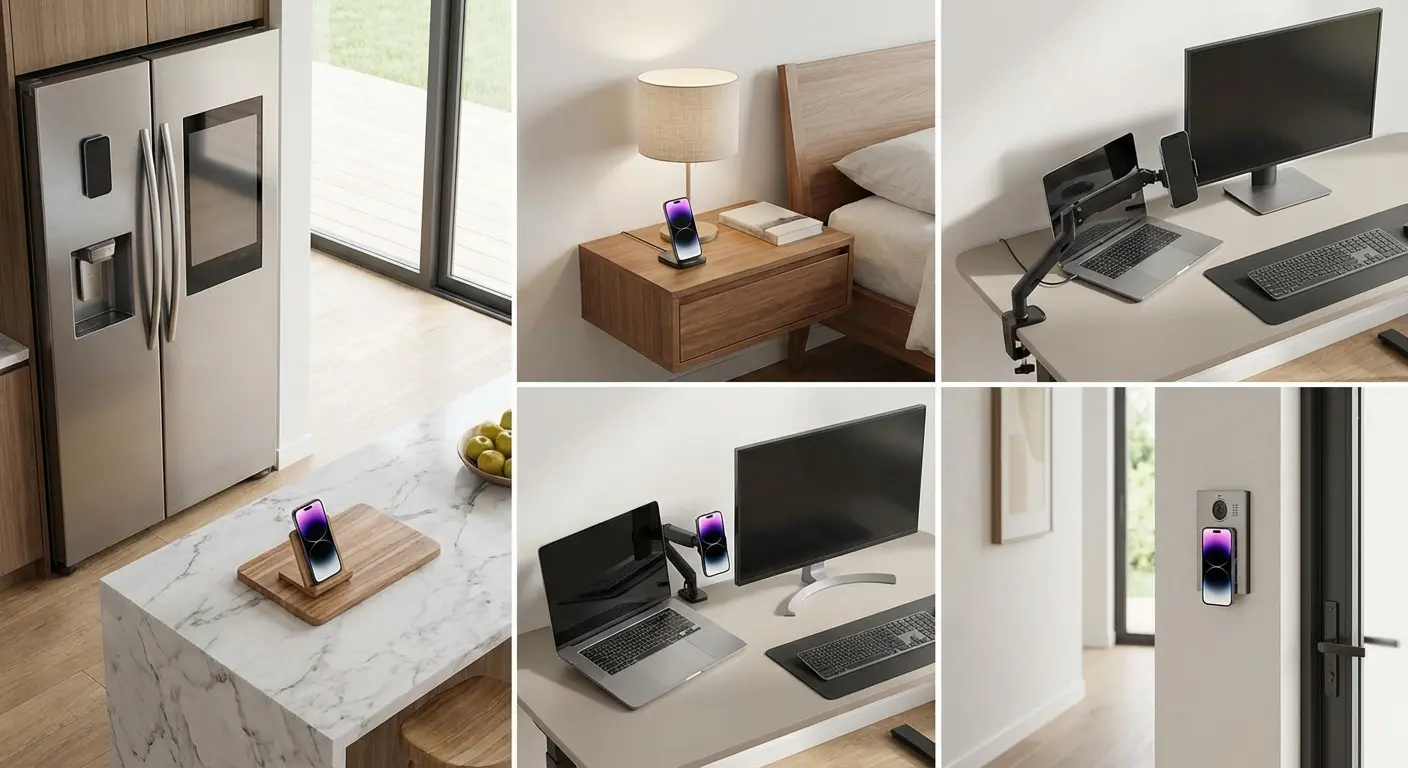
Home charging stations seem low-stakes until you realize you're mounting and unmounting multiple times per day. That repetitive stress tests the grip's structural integrity differently than leaving it mounted for hours. The constant attachment and detachment cycles reveal weak points in both magnetic alignment and material durability.
Work desk setups often involve landscape orientation for video calls or reference viewing. This changes the weight distribution entirely and can expose design flaws that aren't apparent when you're just holding the phone vertically.
You've gotta map out your usage before you buy anything. Write down every place you currently mount your phone or wish you could. Note the surface type, typical duration, environmental conditions, and phone orientation for each scenario. Be specific about how long it stays there and what kind of abuse it takes.
That list tells you what your grip needs to do. Comfort is maybe fifth on the priority list, not first.
Before you buy anything, think about:
Car/Vehicle Use: What kind of surface? Dashboard, vent, windshield? (Vent mounts are the worst for grip stress, by the way.) How long are your drives? Is your commute on smooth highway or are you hitting potholes every 30 seconds? What's the temperature like in your car during summer?
Fitness Scenarios: Are you running? Cycling? Just doing gym stuff? Because sweat is going to destroy cheap adhesive faster than you think. How much impact? How long are your sessions?
Home Charging: How many times a day do you actually mount and unmount your phone? If it's more than 5-6 times, that's a lot of stress on the adhesive. What kind of charging station? MagSafe puck, Qi pad, stand? Do you prefer landscape or portrait while charging?
Work Setup: Video calls all day? Landscape vs. portrait needs? What's your desk made of? How many hours per day is your phone just sitting there mounted?
Other Environments: Kitchen use for recipes, bathroom for tutorials, garage for repair videos, travel scenarios. Write it all down.
Mounting Scenario |
Primary Stress Factor |
Minimum Magnetic Hold Needed |
Critical Grip Feature |
|---|---|---|---|
Car Dashboard/Vent |
Vibration + sudden stops |
3-5 lbs pull force |
Wide magnetic surface area |
Fitness/Running |
Impact + moisture |
4-5 lbs pull force |
Water-resistant adhesive |
Desk Stand (Video Calls) |
Extended duration in landscape |
2-3 lbs pull force |
Dual-angle kickstand capability |
Kitchen/Refrigerator |
Frequent attach/detach cycles |
2-3 lbs pull force |
Durable hinge mechanism |
Wireless Charging Stand |
Heat exposure + daily cycles |
1-2 lbs pull force |
Thin profile (less than 6mm) for coil proximity |
Weight Distribution Physics That Nobody Talks About
Adding any grip to your phone shifts its center of mass. That shift matters more than you'd think, especially when your phone is mounted rather than handheld.
Your phone's MagSafe coil is glued to the back glass at a few specific spots. When you stick your phone to something with a grip attached, you're basically turning it into a tiny lever. Physics teachers would call this a cantilever situation, but whatever. That leverage is pulling on those attachment points way harder than you'd think.
Ring-style grips concentrate this stress differently than pad-style grips. A ring creates a single point of leverage that can amplify rotational forces, particularly if you mount your phone at an angle. Pad-style grips distribute weight across a larger surface area but add more overall mass, which increases the total force the magnetic connection needs to resist.
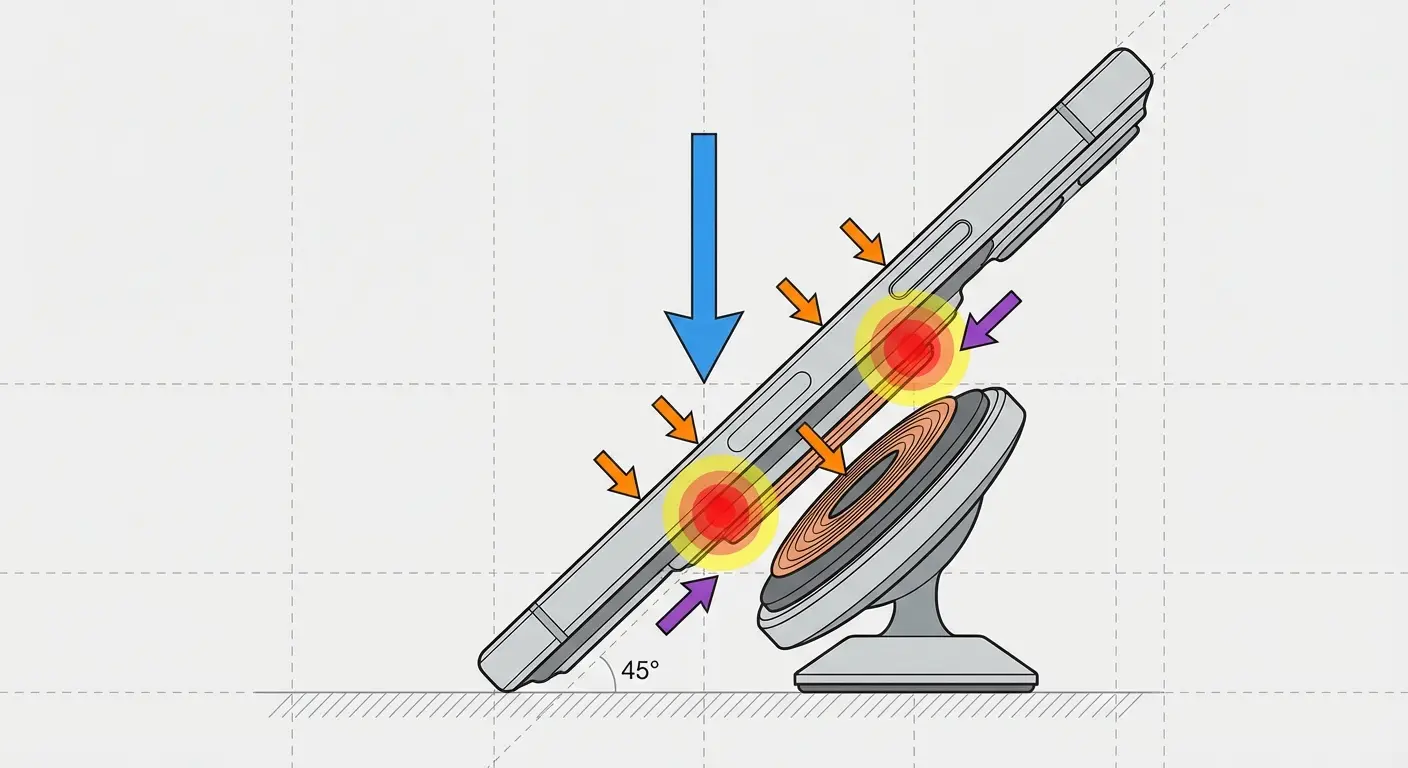
This is the part that'll cost you money if you ignore it. The adhesive bond between grip and phone case experiences shear stress and peel stress simultaneously when mounted. Shear stress tries to slide the grip across the surface. Peel stress tries to lift one edge away from the surface. Cheap adhesives fail under peel stress first, usually starting at the corners where stress concentration is highest.
The phone's internal components also feel this stress. Your MagSafe coil connects to a flex cable that routes to the logic board. Repeated mounting and dismounting with heavy grips can fatigue that flex cable over time. I've seen phones develop wireless charging issues not because the coil failed, but because the cable connection loosened from repeated stress cycles. It happens.
Temperature changes make this worse. Adhesives soften in heat and become brittle in cold. If you're mounting your phone in a hot car or taking it skiing, those temperature swings accelerate adhesive degradation. The grip might feel secure at room temperature... but then you take it outside in January and suddenly it's sliding off everything.
Material selection for the grip body matters too. Rigid plastics transfer shock directly to the adhesive bond. Slightly flexible materials can absorb some impact energy, reducing stress on the attachment point. But too much flexibility creates wobble during mounting, which feels unstable even if it's technically more durable.
PITAKA claims their MagEZ Grip provides magnetic strength of up to 1.2kg (approximately 2.6 lbs) to allow users to carry their device with just a finger while ensuring the phone won't slip or drop. This specification represents the minimum threshold for reliable magsafe phone grip performance across varied mounting scenarios. Anything less and you're gonna have problems.
How Grip Design Affects Your Phone's Longevity
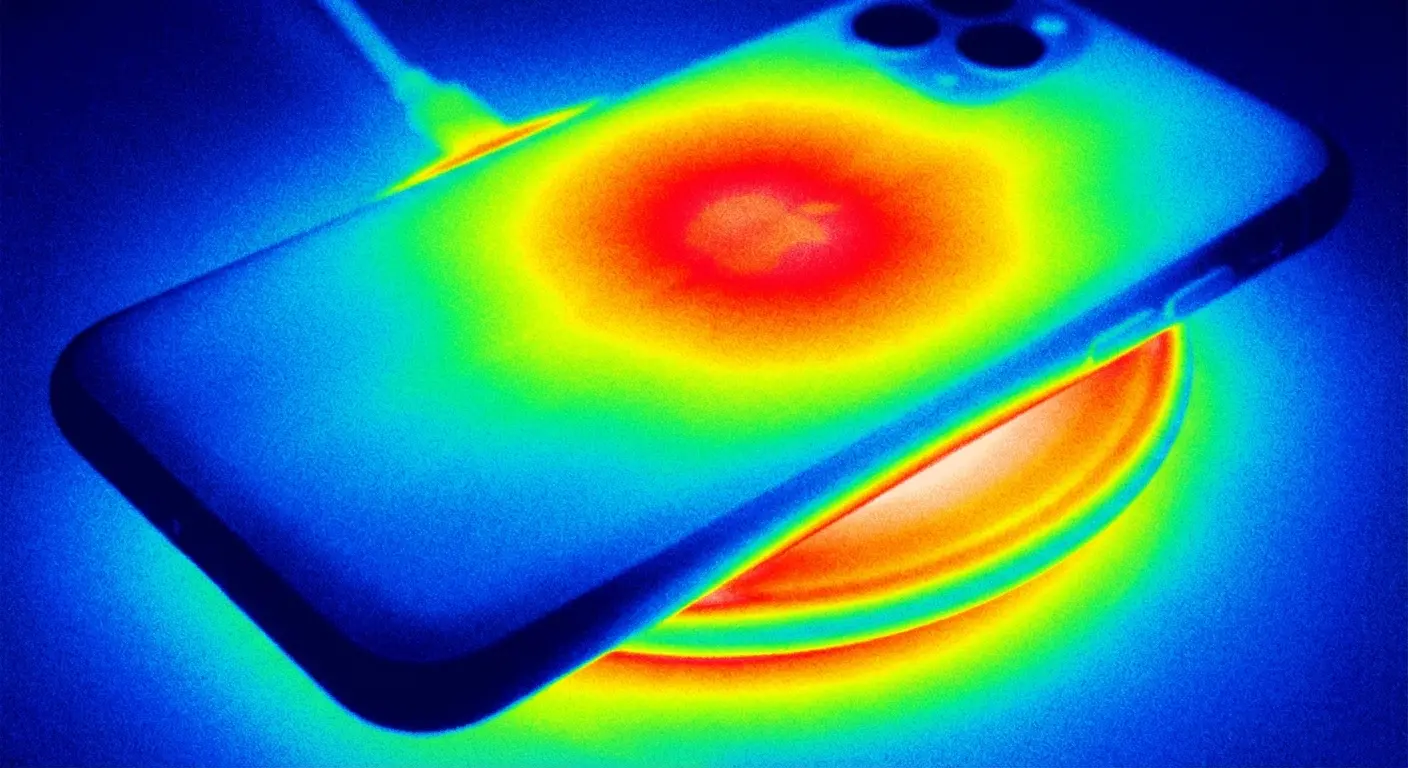
Your phone generates heat during wireless charging. The MagSafe coil converts electromagnetic energy to electricity, and that conversion isn't 100% efficient. The lost energy becomes heat. Pretty straightforward.
A grip sits directly in the thermal path between your phone and the surrounding air. If the grip material has poor thermal conductivity, it traps heat against your phone's back glass. That trapped heat raises your battery temperature, and elevated battery temperatures accelerate capacity degradation.
Metal grips conduct heat away efficiently but can interfere with wireless charging if they're too close to the coil. Plastic grips insulate but don't conduct. The best magsafe grips use materials with moderate thermal conductivity positioned strategically to channel heat away from the battery area while not interfering with the magnetic field.
You can actually feel this difference. Charge your phone with a cheap grip attached and touch the grip surface after 30 minutes. If it's uncomfortably hot, that heat is also cooking your battery. A well-designed grip will feel warm but not hot because it's dissipating thermal energy rather than trapping it.
Pressure distribution matters for back glass integrity. Phone backs are engineered to distribute pressure across their entire surface. A grip with a small contact patch concentrates pressure in one area, creating a stress point that makes the glass more vulnerable to cracking if you drop the phone.
I know this sounds backwards, but hear me out. You'd think a grip would protect against drops, and it does help prevent drops from happening. But if you do drop your phone with a poorly designed grip attached, the grip can worsen the outcome by creating an uneven impact profile.
Thickness is a double-edged sword. A thicker grip provides more leverage for your finger, improving hold security. But that same thickness creates more distance between your phone's MagSafe coil and any charging surface, reducing charging efficiency. It also makes your phone harder to fit in pockets and may prevent it from sitting flat on tables, which increases tip-over risk. I take a wider look at the phone grip category in a separate post.
Case compatibility becomes an issue with thickness too. Many people want to use a grip with a protective case, but if the grip is too thick or has the wrong profile, it won't adhere properly to the case's textured surface. You end up choosing between protection and functionality, which isn't a choice at all.
Picture this: you're charging your iPhone overnight with a thick polycarbonate grip attached. You might notice your battery health percentage dropping faster than expected over six months. The grip's poor thermal conductivity traps heat during the 7-8 hours of nightly charging, keeping the battery at elevated temperatures (often 95-105°F instead of the ideal 68-86°F). This constant heat exposure during the phone's longest charging sessions accelerates the chemical degradation inside the battery cells, potentially reducing maximum capacity by an additional 5-8% compared to charging without the grip or with a thermally efficient design. Not great.
The Hidden Cost of Cheap Magnetic Alignment
"MagSafe compatible" is marketing speak for "we put some magnets in it and hoped for the best."
The actual standard requires precise magnetic field strength, specific magnet positioning within tight tolerances, and careful material selection to avoid interference. Cheap grips skip these requirements and hope you won't notice until after the return window closes.
Misaligned magnets cause your phone to sit slightly crooked on chargers and mounts. You might think you've seated it properly, but the magnetic pull is fighting against proper alignment. This creates sideways stress on the MagSafe coil attachment points inside your phone.
Over months of use, this repeated misalignment can weaken the adhesive holding your phone's internal MagSafe ring in place. I've seen cases where the MagSafe coil itself starts to separate from the back glass because a poorly aligned grip has been pulling it at an angle thousands of times. It's not common, but it happens. Anyone who wants it to sit flat in a pocket should look at a collapsible phone grip instead.
Weak magnetic fields create a different problem: your phone connects initially but loses contact during use. In a car mount, this means your phone drops mid-navigation. On a wireless charger, it means you wake up to a dead battery because the charging connection broke overnight. Ever had a grip just... stop working? Like one day it's fine, the next day your phone's sliding off everything? That's the magnetic alignment dying slowly.
Some cheap grips use ferromagnetic materials in their construction that interfere with the magnetic field pattern. These materials can create "dead zones" where the magnetic force is weaker, or they can redirect the field in ways that prevent proper alignment. The best magsafe grip designs use carefully selected materials that enhance rather than interfere with magnetic performance.
You won't notice the cumulative damage immediately, which is the whole problem. Your magsafe phone grip might work fine for the first month. By month three, you notice your phone doesn't "snap" into place as satisfyingly. By month six, it barely holds at all, and you're buying a replacement. Except now you've also potentially damaged your phone's internal MagSafe components.
Quality manufacturers publish their magnetic pull force specifications. If a grip doesn't list this data? Red flag. Huge red flag. The specification should be at least 1,200 grams (about 2.6 lbs) of pull force for reliable mounting across different scenarios.
When a Phone Grip Becomes a Liability
Real talk: sometimes the grip is the problem. I know you just spent $30 on it, but that ring sticking out the back of your phone is about to ruin your day in ways you haven't thought about.
Standard Qi charging pads often fail with grips attached. The added thickness pushes your phone too far from the charging coil, and the charging either doesn't initiate or operates at reduced wattage. You're forced to remove the grip every time you want to charge, which defeats the purpose of having a "permanent" mounting solution.
Have you ever tried to put a phone with a ring grip in your jeans pocket? It's like trying to fit a doorknob in there. Catches on everything. A ring-style grip catches on fabric edges every time you slide your phone in or out of your pocket. Over time, this wears holes in your pocket linings. Pants with shallow pockets can't accommodate the extra thickness at all, forcing you to carry your phone in hand or bag instead.
Car cup holders and phone cradles designed for gripless phones won't accommodate the extra bulk. You bought the best magsafe phone grip for mounting purposes, but now your phone won't fit in the rental car's phone holder or your friend's vehicle mount. You're carrying adapter solutions or constantly removing and reattaching the grip.
Look, maybe your office doesn't care, but if you're meeting with clients... professional environments sometimes view visible phone grips as unprofessional or casual. If you're in client-facing roles or formal business settings, a phone with a bright-colored ring grip sitting on the conference table sends a different message than a sleek, unadorned device. Yeah, your neon green PopSocket looks super professional in the board meeting. Really screams "take me seriously." This is subjective and varies by industry, but it's worth considering.
Photography and videography suffer with some grip designs. The grip creates an uneven surface that makes stabilization difficult when you're trying to shoot handheld. It can also interfere with gimbal mounting or tripod adapters that expect a flat phone back.
Some car mounts and desk stands have shallow mounting surfaces that don't accommodate the additional thickness a grip adds. You end up with a phone that technically mounts but sits at an awkward angle or doesn't engage the mount's retention mechanism properly.
Apple just dropped this $70 Hikawa grip (yeah, seventy bucks for a phone grip), and it actually shows the growing recognition that grips serve diverse needs beyond basic phone holding. Designed in partnership with Los Angeles-based designer Bailey Hikawa, the sculptural silicone grip was developed after interviewing iPhone users with varying disabilities, highlighting how grip design can accommodate users with arthritis, reduced hand strength, or those who need more stabilizing support. Though its added volume means "you may need to remove it for some wireless charging pads or car mounts to work properly."
Removable grips solve some of these problems but introduce their own issues. The attachment and removal process itself creates wear on your phone's surface. The grip is never quite as secure as a permanent installation. You need to remember to bring it with you, which defeats the purpose for many users.
Be real with yourself: do you need a grip attached 24/7, or do you need mounting capability in specific situations? If it's the latter, you'd probably be better off with a MagSafe-compatible case and separate mounting accessories rather than a permanent grip.
Scenario |
Problem with Permanent Grip |
Removable Grip Solution |
Best Approach |
|---|---|---|---|
Airport Security |
Additional screening delay |
Easy removal before travel |
Keep grip in carry-on, attach after security |
Professional Meetings |
Appears casual/unprofessional |
Remove for client interactions |
Use slim, neutral-colored design or remove entirely |
Standard Qi Charging Pads |
Thickness prevents coil alignment |
Remove for charging sessions |
Switch to MagSafe charger or remove nightly |
Pocket Wear |
Ring catches fabric, frays edges |
Minimal catch points |
Choose low-profile pad design over ring style |
Photography/Video |
Creates uneven mounting surface |
Remove for stabilization needs |
Use phone without grip or invest in grip-compatible gimbal |
Material Science and Daily Wear Patterns
Polycarbonate is the most common grip material because it's cheap to mold and reasonably durable. But polycarbonate yellows when exposed to UV light, and that yellowing is irreversible. Your clear or white grip will turn dingy yellow-brown after six months of sun exposure in your car. I've seen it happen. It's not pretty.
TPU (thermoplastic polyurethane) feels better in hand and resists yellowing better than polycarbonate, but it attracts dust and lint constantly. That soft-touch finish that feels so premium when you first install the grip becomes a magnet for pocket debris. You'll spend more time cleaning it than appreciating the texture.
Aluminum grips look sleek and conduct heat well, but they're heavy. That extra weight increases the stress on both the adhesive bond and your phone's MagSafe coil attachment points. They also scratch easily, and those scratches are highly visible on metallic finishes.
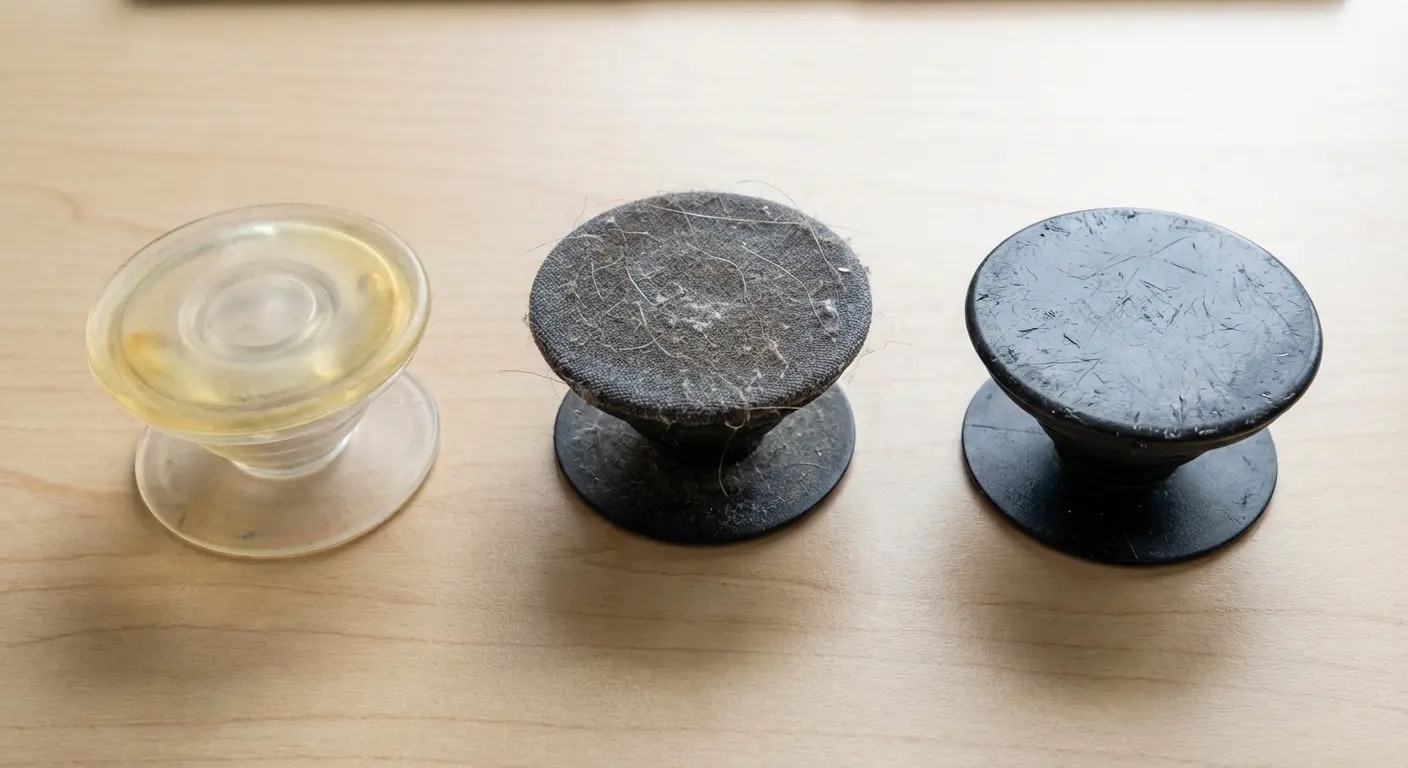
The adhesive backing matters more than the grip body material. (I know, boring, but this is the thing that's going to fail first, so pay attention.) 3M VHB (Very High Bond) tape is the gold standard, but it's expensive. Cheap manufacturers use generic acrylic adhesives that lose tackiness over time, especially when exposed to heat cycles.
You can identify cheap adhesive by how it feels during installation. Quality adhesive has a smooth, consistent texture and requires firm pressure to achieve full contact. Cheap adhesive feels slightly sticky immediately but doesn't develop a strong bond even after the recommended 24-hour curing period.
Surface preparation affects adhesive performance dramatically. Most installation instructions tell you to clean your phone with an alcohol wipe, but they don't explain why or what you're removing. Skin oils, microscopic dust, and residual manufacturing compounds all prevent proper adhesive contact. A truly clean surface feels squeaky when you run your finger across it.
Temperature during installation matters too. Adhesive bonds form best at room temperature (68-77°F). Install a magsafe phone grip in a cold car or hot garage, and you're starting with a compromised bond that will fail faster under stress.
Coating materials wear off with use. Rubberized coatings, soft-touch finishes, and metallic platings all degrade from the oils on your hands, friction from pockets, and contact with hard surfaces. Within a few months, you'll see wear patterns where your fingers naturally rest. Some grips wear evenly and develop a pleasant patina. Others wear unevenly and look shabby.
Chemical resistance varies widely. Hand sanitizer, sunscreen, and cleaning products can all damage grip materials. I've seen grips literally dissolve from repeated sanitizer exposure during the pandemic. If you use hand sanitizer frequently, you need a grip made from materials that can handle alcohol-based chemicals without degrading.
PITAKA's MagEZ Grip specs show that premium grips can achieve a minimum thickness of just 4.3mm and a minimum weight of 30g, demonstrating how advanced material selection (in this case, aramid fiber combined with zinc alloy) can deliver durability without excessive bulk that stresses adhesive bonds or adds distance between charging coils.
When you're evaluating a grip's material quality, check for:
Body Material: Is the material type clearly specified? Polycarbonate, TPU, aluminum, aramid fiber, silicone? UV resistance rating or anti-yellowing claims for light-colored grips? Chemical resistance specifications (alcohol, oils, cleaning agents)? Scratch resistance or protective coating information?
Adhesive Quality: Is the adhesive brand/type specified? (3M VHB is premium standard.) Temperature range for installation and operation? Curing time requirements? (24-48 hours typical for quality adhesive.) Reusability claims? (Most quality adhesives are single-use.)
Surface Finish: What's the coating type? Rubberized, matte, glossy, metallic? Wear resistance claims or warranty? Cleaning instructions and compatible cleaning agents? Texture durability under repeated handling?
The Rokform Advantage for Active Users
Active users face amplified versions of every problem I've covered. Your phone isn't just sitting on a desk or making occasional trips to a car mount. It's experiencing vibration, impact, temperature swings, moisture, and constant repositioning across multiple mounting scenarios daily.
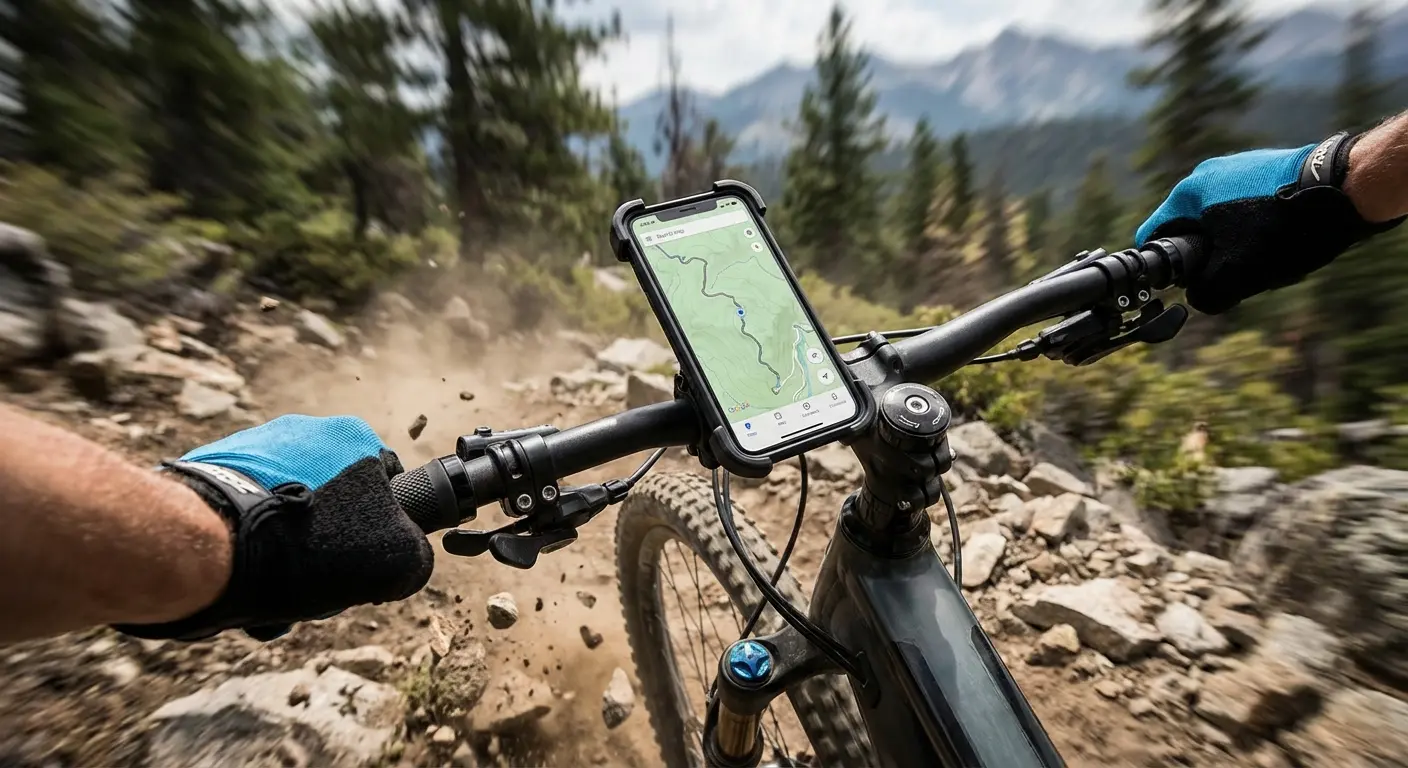
Most grips fail these stress tests. The adhesive loosens from sweat exposure during workouts. The magnetic hold isn't strong enough to keep your phone mounted during trail running or mountain biking. The materials crack from temperature cycling between your heated car and frozen outdoor activities.
Look, I'm going to talk about Rokform here because they actually solved this problem, but I'm also going to be honest about the fact that this is the part where I'm basically recommending a specific product. If that bugs you, skip to the next section.
The Rokform Magnetic Sport Ring With Stand addresses these specific failure points through engineering choices that matter for demanding use cases. The magnetic array uses rare-earth magnets positioned for maximum pull strength, which means your phone stays mounted during movement, not just static display. The ring rotates 360 degrees and includes a kickstand function, giving you landscape and portrait viewing options without needing separate accessories.
The difference? It's the ecosystem integration. Rokform builds mounting solutions for bikes, motorcycles, cars, and gym equipment that all work with the same magnetic standard. You're not buying a magnetic phone grip. You're buying into a mounting system that functions across the environments where you need it.
The materials are selected for durability under stress. The ring mechanism is metal, not plastic, so it won't crack from repeated use or impact. The adhesive is formulated to maintain bond strength through temperature and moisture exposure that would cause cheaper alternatives to fail.
If you've experienced grip failure during activities, or if you're tired of carrying multiple mounting solutions that don't work together, check out the Rokform Magnetic Sport Ring With Stand. It's engineered for the use cases where other grips become liabilities rather than solutions. This is the best magsafe grip for users who demand reliability across varied, high-stress environments.
What to Actually Test Before Buying
Most retailers give you 30 days to return products. USE THEM. Seriously, actually test this stuff. Don't just stick it on and admire it.
Start with the magnetic pull test. Mount your phone to your strongest magnetic charger or mount and try to slide it sideways without lifting it away from the surface. A quality grip will resist this shear force significantly. If your phone slides easily, the magnetic field is too weak for reliable mounting during vibration or movement.
Test the adhesive bond after the recommended curing period (usually 24 hours). Try to twist the grip while it's attached to your phone. You shouldn't be able to rotate it at all without applying significant force. If it twists easily, the adhesive hasn't bonded properly or the material is too flexible.
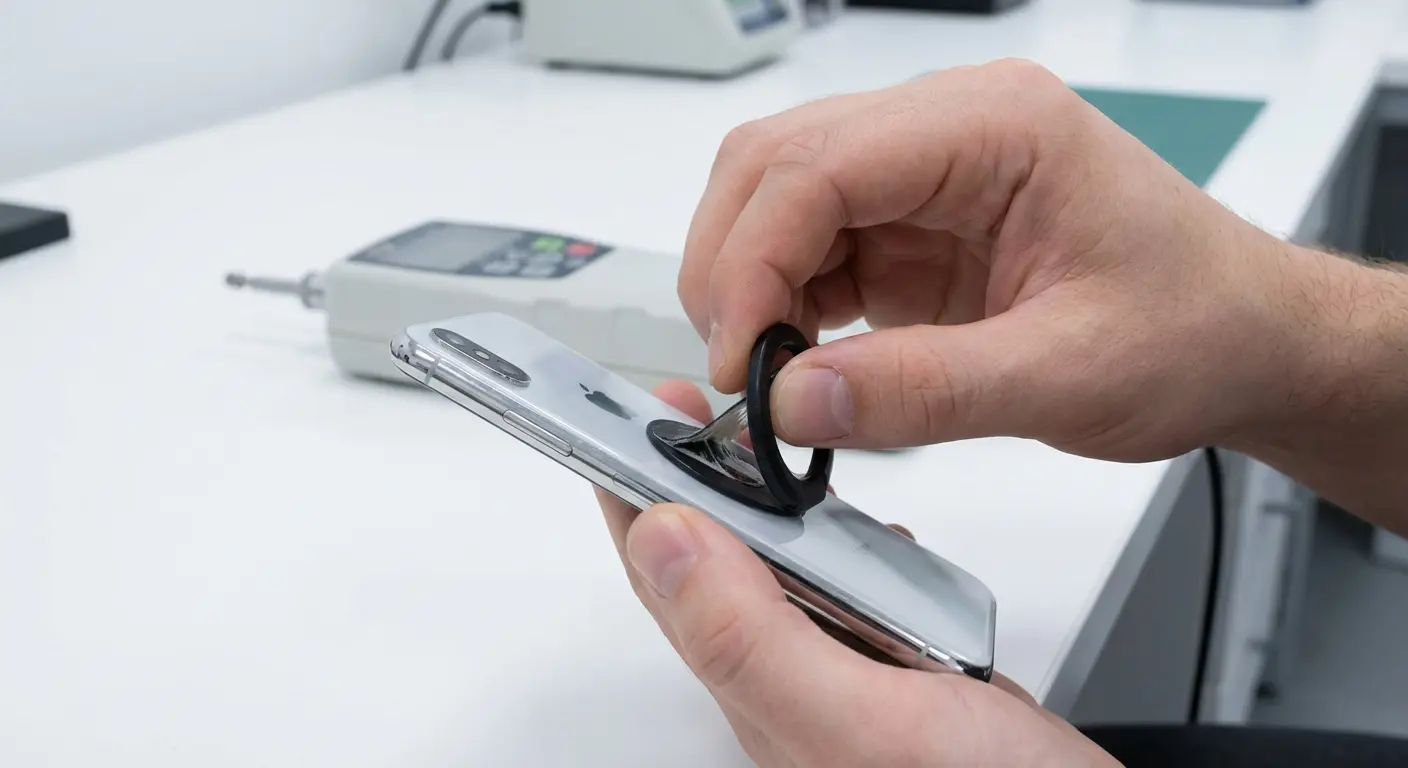
Temperature cycle the grip. Leave your phone in a hot car for an hour, then bring it into air conditioning. Repeat this several times over a few days. Check whether the adhesive edges start to lift or whether the grip material shows any cracking or deformation. This simulates months of real-world temperature exposure in a compressed timeframe. I tested this by leaving my phone in my car in July in Phoenix. Bad idea for my phone, good data for this article.
Moisture exposure matters if you'll use your phone during workouts or outdoors. Deliberately get the grip wet (not the phone, just the grip surface) and see how it responds. Does water bead off or soak into the material? How long does it take to dry? Does the texture change when wet?
Mounting and dismounting cycles reveal durability issues. Attach and remove your phone from a magnetic charger 50 times over a few days. This simulates weeks of normal use. Check whether the grip shows any wear, whether the magnetic alignment stays consistent, and whether the adhesive bond remains solid.
Charge your phone wirelessly with the grip attached and monitor the charging speed. Use your phone's battery settings to check how much charge you gain per hour. Compare this to charging without the grip (if possible) or to the manufacturer's stated charging speed. Significant differences indicate interference or excessive distance between coils.
Weight distribution testing requires mounting your phone at various angles. If you plan to use a car mount, test your actual car mount during the return period. Drive on rough roads and see whether your phone stays positioned correctly or gradually slides. Try both portrait and landscape orientations.
Document everything. Take photos of the magsafe phone grip when you first install it, then weekly photos showing any wear, discoloration, or adhesive failure. If you need to return the product, this documentation supports your case and helps you articulate specific failure modes rather than vague dissatisfaction.
Pay attention to how the grip affects your daily phone use. Does it catch on pockets? Does it make wireless charging unreliable? Does it interfere with how you naturally hold your phone? These ergonomic issues might not be apparent in the first few days but become annoying over extended use.
During a 30-day return window test, mount your phone with the new grip to your car vent mount and take your normal commute route for five consecutive days. On day three, you notice the phone has rotated about 15 degrees clockwise by the time you reach your destination. By day five, it's rotated 30 degrees and slipped down half an inch. This progressive failure indicates either weak magnetic alignment or inadequate pull strength for your specific use case. Without this real-world stress test, you might not discover the problem until month three when you're past the return window and the grip has fully failed during a critical navigation session.
When evaluating the best magsafe grips, consider testing compatibility with various car mount options to ensure your grip performs across your entire mounting ecosystem.
Look, Here's the Bottom Line
Stop shopping for grips based on color or how cool the ring looks. I know the purple one matches your case. I don't care. Buy the grip that works with your car mount, your charger, and everywhere else you're actually going to use your phone.
Your MagSafe grip choice affects your phone experience more than almost any other accessory. It determines where you can mount your device, how reliably those mounts work, and whether you're slowly damaging your phone through poor weight distribution or thermal management.
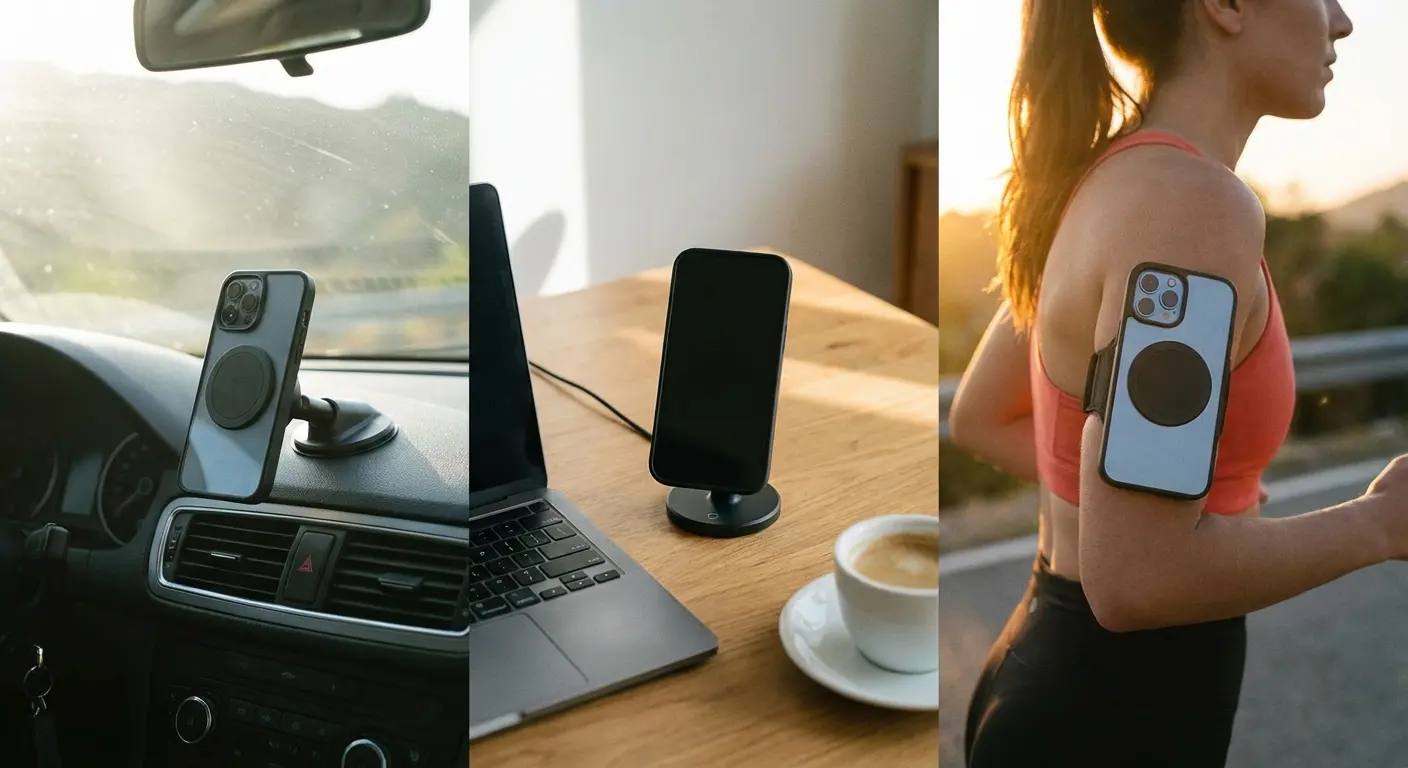
The overlooked angle isn't which grip feels best in your hand. It's which grip builds a system that works across all your mounting scenarios without compromising your phone's longevity or forcing you to buy adapter solutions for compatibility problems.
You're not buying a grip. You're buying into a mounting standard, a material durability profile, and a set of engineering compromises that will affect your daily phone use for months or years. Choose based on how the grip performs under stress, not how it looks in product photos.
Test it hard during your return window. I mean actually abuse it. Mount it and unmount it 50 times. Throw it in a hot car. See if it survives your actual life, not just sitting pretty on your desk. Most grip problems aren't apparent during casual use but reveal themselves under the specific stress conditions your lifestyle creates. Better to discover incompatibility or durability issues in week two than month six.
And yeah, quality costs more upfront. But a $40 grip that lasts two years beats buying three $20 grips that fail every six months. Plus you won't be dealing with the whole "my phone fell off my car mount during navigation" thing, which is worth something. Factor in the cost of phone repairs from grip-related damage, and the economics become even clearer.
Your phone cost you $800-$1200. Don't cheap out on the accessories that might damage it.

