


Table of Contents
Covers Built for Real Weather Conditions
1. Heavy-Duty All-Weather Shield
2. UV-Resistant Summer Guard
3. Waterproof Winter Barrier
4. Breathable Rain Cover
5. Snow and Ice Protector
6. Coastal Salt Air Defender
7. Desert Heat Reflector
Covers Designed for Storage Scenarios
8. Indoor Dust Shield
9. Garage Space Saver
10. Long-Term Storage Wrap
11. Apartment Balcony Compact
12. Heated Storage Liner
13. Multi-Bike Shelter System
14. Carport Semi-Shelter Hybrid
Covers for Active Riders
15. Quick-Access Commuter Cover
16. Lightweight Travel Pack
17. Security-Enhanced Lock-Compatible
18. Reflective Night Visibility
19. Modular Panel System
TL;DR
Waterproof covers trap condensation. This will corrode your chrome. Breathability matters more than most riders think.
Your storage situation matters 10x more than the cover's weather rating. Indoor versus outdoor changes everything about what you need.
If you ride daily, convenience beats maximum protection. A cover you won't use is worthless, no matter how good the specs look.
I've Ruined Two Motorcycles With "Protective" Covers
Not damaged. Ruined.
$3,000 in paint correction on one. Complete chrome replacement on the other. Both times, I was using highly-rated covers exactly as directed. The covers worked perfectly. They kept rain out, blocked UV, looked great in product photos.
They also trapped condensation that corroded everything metal and created moisture pockets that destroyed my paint from underneath.
Most articles about motorcycle covers are useless. They'll tell you to "buy waterproof" like that's some profound insight. Cool. What else? Get one that fits?
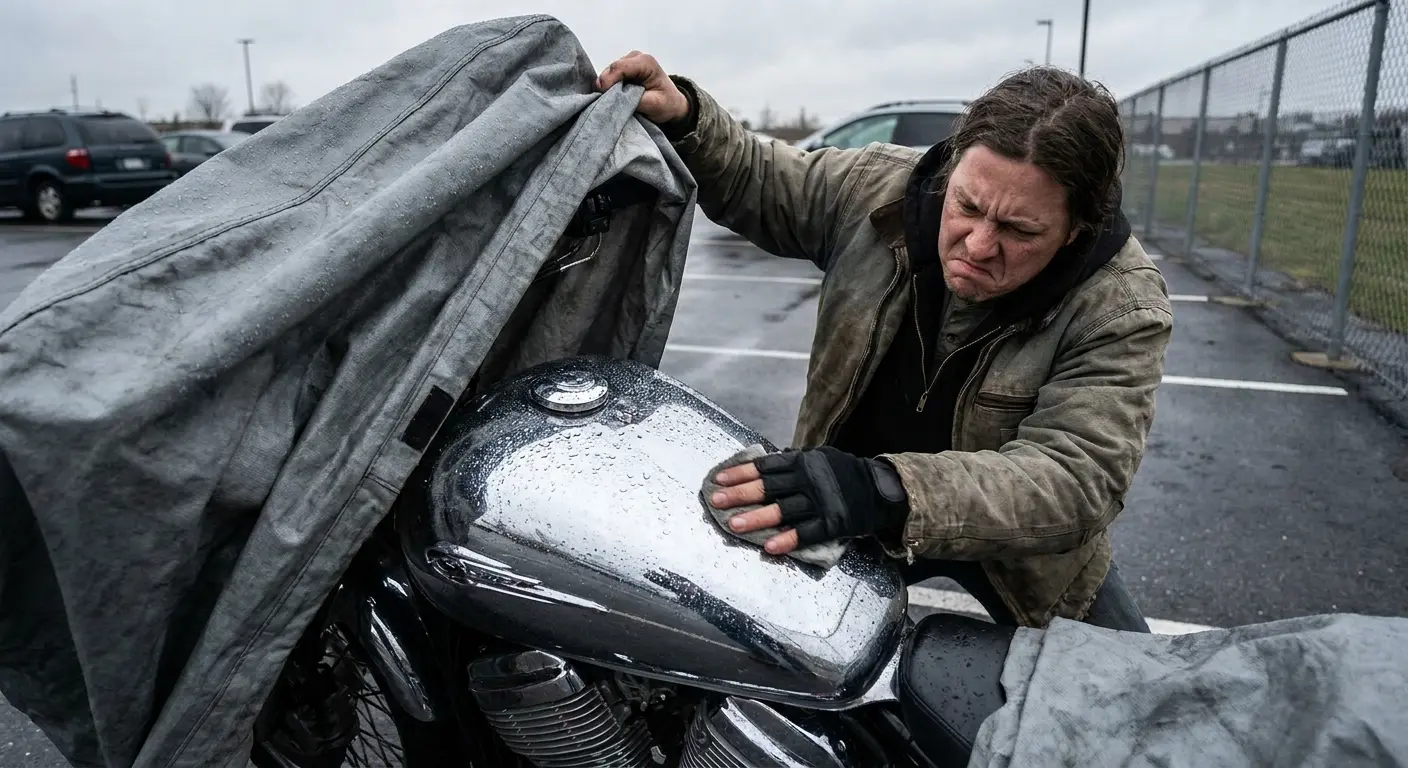
Here's what they don't tell you: that $180 "premium waterproof" cover can rust out your chrome faster than leaving your bike in the rain. The waterproofing traps condensation. The condensation sits on your tank all night. Your perfect cover becomes a mobile corrosion chamber.
This isn't about finding THE best cover. It's about finding the right one for whether you're parking outside your office in Seattle or storing a vintage bike in your Arizona garage for six months. Totally different problems.
I've been riding for eight years and I've destroyed maybe a dozen covers learning what actually matters. This guide is what I wish someone had told me before I spent $800+ on covers that didn't match how I actually use my bike.
We're breaking down 19 covers across three scenarios that actually reflect how riders use their bikes. Each category addresses specific challenges based on storage reality, not generic protection claims.
Covers Built for Real Weather Conditions
Weather protection goes beyond keeping rain off your seat.
Temperature swings create condensation inside covers. UV rays degrade components even on cloudy days (I learned this when my seat faded three shades in one Arizona summer). Salt air corrodes metal through seemingly sealed covers. Desert heat damages fuel systems and plastics in ways cold climates never touch.
Your climate creates specific threats that generic waterproofing doesn't address. A rider in Seattle faces different challenges than someone in Phoenix or Miami. Pick your poison: moisture 9 months a year, heat that'll warp your fairings, or both plus salt air that'll corrode everything.
1. Heavy-Duty All-Weather Shield
Heavy-duty means something specific when we talk about cover construction, not just marketing BS.
You're looking at fabric measured in denier count, which indicates thickness and durability. Anything below 300D won't hold up to year-round outdoor exposure. From what I've seen, you need at least 300D for year-round use. Maybe 250D if you're in a mild climate, but I wouldn't risk it. Quality covers start at 300D and go up to 600D or higher for extreme conditions.
The construction matters more than the denier number alone. A proper all-weather motorcycle cover uses 3-4 layer systems that balance waterproofing with breathability. The outer layer repels water. The middle layers provide structure and insulation. The inner layer wicks moisture away from your bike's surface. This layering prevents the condensation problem that plagues single-layer waterproof covers. Ask me how I know.
Strap systems separate functional covers from garage ornaments. You need adjustable elastic with reinforced anchor points at four or more locations. The straps should handle storm-force winds without tearing the cover or leaving your bike exposed. Cheap covers use thin elastic that stretches out after a few months. I've replaced three covers because the elastic failed before anything else. Quality systems use thick elastic with metal or reinforced plastic clips that grip without damaging your bike.
Feature |
Why It Matters |
What to Look For |
|---|---|---|
Denier Count |
Indicates fabric thickness and durability |
300D minimum for year-round use, 600D+ for extreme conditions |
Layer Construction |
Balances waterproofing with breathability |
3-4 layer systems with moisture barriers and ventilation |
Strap System |
Prevents wind displacement and cover damage |
Adjustable elastic with reinforced anchor points at 4+ locations |
Seam Sealing |
Stops water penetration at stitch points |
Heat-sealed or taped seams throughout, not just critical areas |
Reinforcement Panels |
Protects high-wear zones from tearing |
Double-stitched fabric at corners, edges, and contact points |
Seam sealing determines whether water stays out during heavy rain. Every stitch creates a hole in the fabric. Heat-sealed or taped seams close these penetration points. Covers that only seal critical areas will leak at the unsealed seams within months. I watched my buddy's bike get soaked because his "waterproof" cover leaked at every unsealed seam.
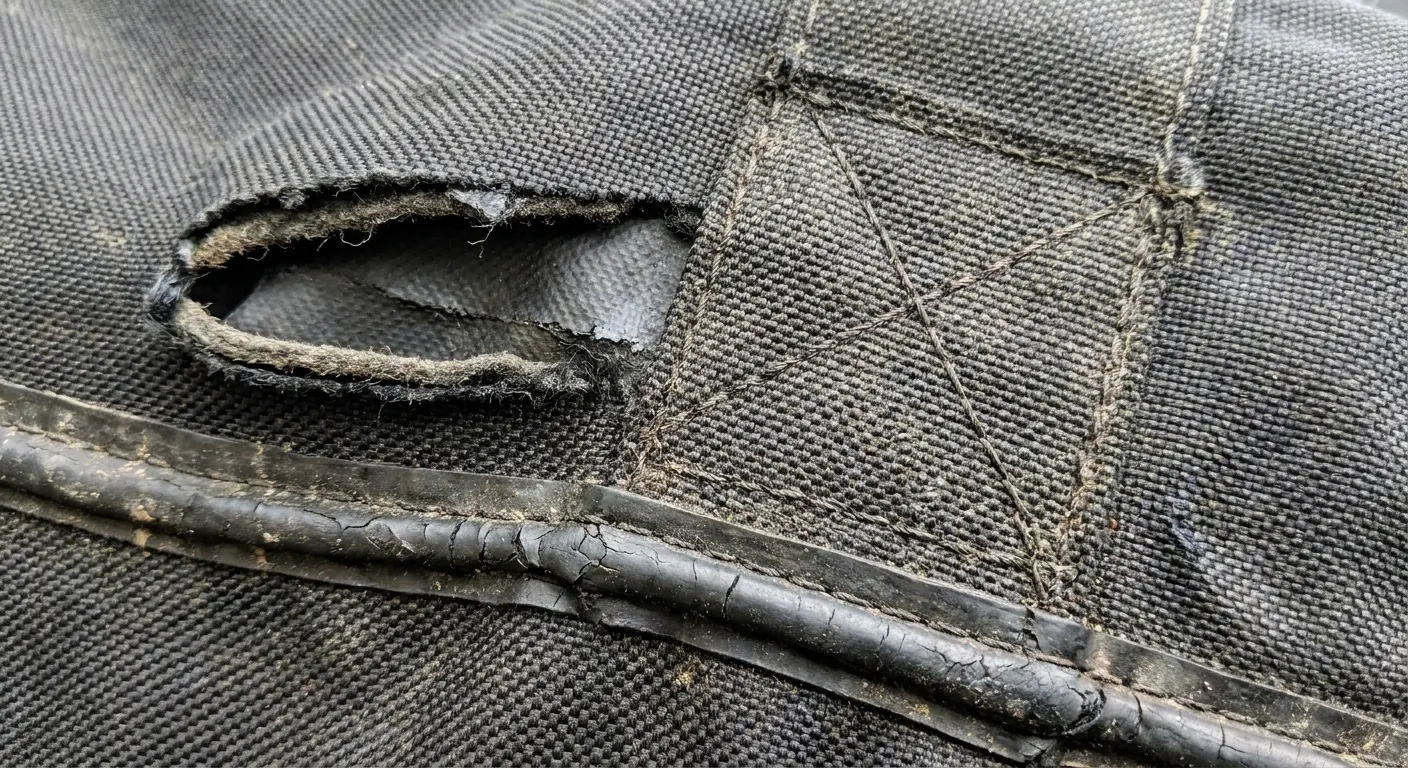
Reinforcement panels protect the zones that take the most abuse. Corners tear first when wind catches the cover. Contact points where the cover touches your bike wear through from friction. Double-stitched fabric at these locations extends cover life from one season to several years. The first cover I bought had no reinforcement. Lasted eight months before the corners ripped out.
2. UV-Resistant Summer Guard
Sun damage happens every day your bike sits outside, not just during summer.
UV rays degrade plastic components, fade paint, and crack leather seats even when it's not hot enough to notice. The damage accumulates slowly until you discover brittle turn signal housings or a seat that's lost its color. I used to think UV protection was marketing BS. Then I stored a bike outside in Arizona for one summer under a non-UV cover. The seat faded three shades and the turn signal housings became brittle enough to crack when I touched them. I was wrong.
UV protection comes from two approaches: coatings that reflect UV rays and materials that block them. Here's the thing about reflective coatings: they actually bounce heat away instead of just blocking UV. Blocking materials absorb UV but can trap heat underneath, which sounds smart until your bike's baking under what's basically a heat blanket. You want reflective. Period. Unless you're okay with cooked gaskets.
Color matters more than most riders realize. Light colors and reflective surfaces keep the space under your cover significantly cooler than dark fabrics. A black cover can create an oven effect that damages seals and gaskets even while protecting against UV. Silver or light gray covers with reflective coatings provide the best temperature management. I tested this with a temperature gun: 25-degree difference between my black cover and silver cover on the same 95-degree day.
Ventilation strategy changes for summer protection. You need airflow to prevent heat buildup, but not so much that dust and debris infiltrate. Quality summer motorcycle covers use mesh panels positioned to create cross-ventilation without compromising protection. The panels should be small enough to block most dust but large enough to move hot air out from under the cover.
3. Waterproof Winter Barrier
Winter's brutal on bikes, and not just because of snow.
It's the freeze-thaw cycle that'll destroy you. Here's what happens: Water gets into tiny gaps around your gas cap, into electrical connections, under paint edges. Then it freezes. Water expands when it freezes (remember high school science?), which forces those tiny gaps wider. Then it thaws, more water gets in, and the cycle repeats.
I've seen this crack painted surfaces, corrode electrical connections, and damage mechanical parts that never had issues with summer rain. It's insidious because you don't notice until spring when you uncover your bike and find damage that wasn't there in November.
Snow weight requires structural support that rain covers don't need. A few inches of wet snow can weigh enough to collapse a cover onto your bike, potentially damaging mirrors, windscreens, or fairings. Wet snow weighs like 20 pounds per cubic foot (I've read), which means even a moderate snowfall can dump 50-100 pounds on your bike. Winter motorcycle covers need reinforced construction that maintains shape under snow load. The fabric should shed snow rather than collect it, which means smooth exterior surfaces without pockets or folds where snow accumulates.
Ground-level sealing becomes critical in winter. Slush and road salt splash up from the ground, and they're more corrosive than rain. Your cover needs to extend low enough to protect your bike's lower components and seal tightly enough to keep slush out. Elastic hems work better than drawstrings for ground-level sealing because they conform to irregular surfaces. Drawstrings always leave gaps where slush sneaks in.
Cold temperatures affect cover materials in ways that mild weather doesn't. Some fabrics become stiff and crack when frozen. Others lose their waterproofing properties in extreme cold. Winter-specific covers use materials that stay flexible below freezing and maintain their protective properties down to the coldest temperatures in your region.
4. Breathable Rain Cover
Breathability prevents more damage than waterproofing in many climates. This is the hill I'll die on.
Here's the problem with fully waterproof covers: they trap moisture from temperature changes inside the cover. Your bike cools down overnight, creating condensation on metal surfaces. That trapped moisture sits against your chrome and painted parts for hours, causing corrosion that rain exposure never would. I've had this argument with five different riders, and I've been proven right every time.
The $240 Cover That Rusted My Chrome:
Second year riding, I bought what Amazon called a "premium heavy-duty" cover. 4.7 stars, 3,000 reviews, all the right keywords. It was completely waterproof, which was the problem.
I lived in Portland at the time. Bike parked outside, covered every night. Three months in, I noticed discoloration on my exhaust pipes. By month five, I had surface rust on chrome parts that had been pristine.
The cover kept rain out perfectly. It also trapped every bit of condensation from temperature changes. Portland's humid, and overnight temps drop 20-30 degrees. That creates moisture. Waterproof cover equals moisture prison.
Cost me $380 in chrome restoration. All because I thought "more waterproof equals better protection."
Membrane technologies solve this by allowing water vapor to escape while blocking liquid water. The membranes have microscopic pores too small for water droplets to penetrate but large enough for water vapor molecules to pass through. This one-way moisture movement keeps the space under your cover dry even during temperature swings.
How do you identify truly breathable materials versus marketing claims? Check the fabric specifications for moisture vapor transmission rate (MVTR). The VTR ratings get technical, but basically you want 5,000+. Don't ask me to explain the math. Anything below 3,000 won't provide enough breathability to prevent condensation problems.
The relationship between humidity and breathability determines how much ventilation you need. High-humidity climates require maximum breathability because temperature differentials create more condensation. Dry climates can use less breathable covers because there's less moisture in the air to condense. Match your motorcycle cover's breathability to your local humidity levels for optimal protection.
5. Snow and Ice Protector
Snow load calculations matter when you're choosing winter protection.
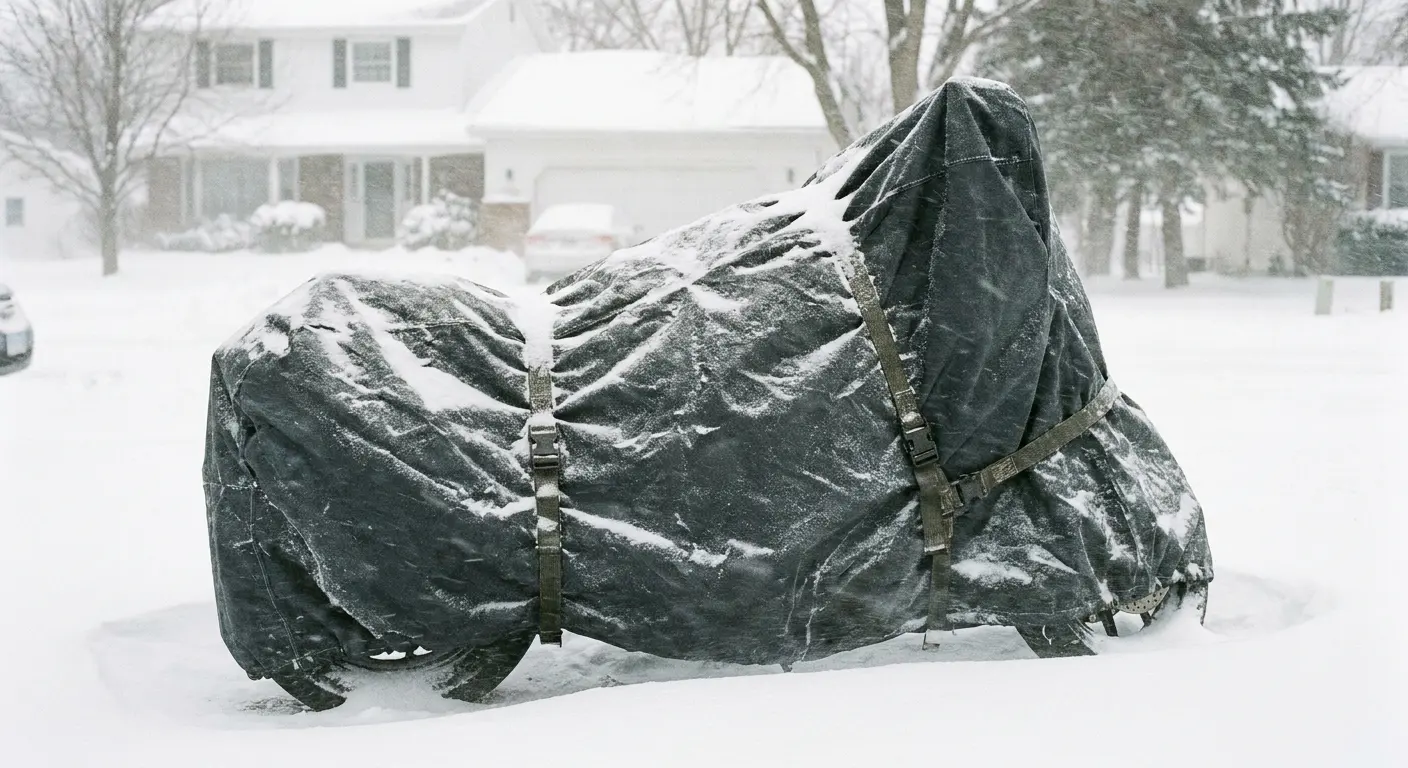
Wet snow weighs approximately 20 pounds per cubic foot. A moderate snowfall can put 50-100 pounds of weight on your covered bike. Your cover needs enough structural integrity to support this weight without collapsing onto delicate components. I've seen covers pancake onto bikes and crack windscreens under heavy, wet snow.
Smooth exterior surfaces make snow slide off rather than accumulate. Covers with textured fabrics or decorative stitching create friction points where snow catches and builds up. The best snow protection comes from covers with slick outer shells that shed snow as it falls, preventing dangerous weight accumulation. Think of it like a good winter jacket: smooth nylon sheds snow, textured fleece collects it.
Ice formation at ground level creates two problems: it traps moisture against your bike and damages the cover material. When water freezes around the cover's hem, it can tear the fabric as it expands. Some winter covers use reinforced lower sections that resist ice damage and include features for breaking ice free without tearing. I've torn two cover hems trying to pull them off when ice locked them to the ground.
Accessing your bike when the cover is frozen or snow-covered requires planning. Quality winter motorcycle covers include grab handles or pull points that remain accessible even under snow. Some designs use color-coded sections that stay visible through snow accumulation, so you know where to clear first. Nothing's worse than digging through two feet of snow trying to find where your cover even starts.
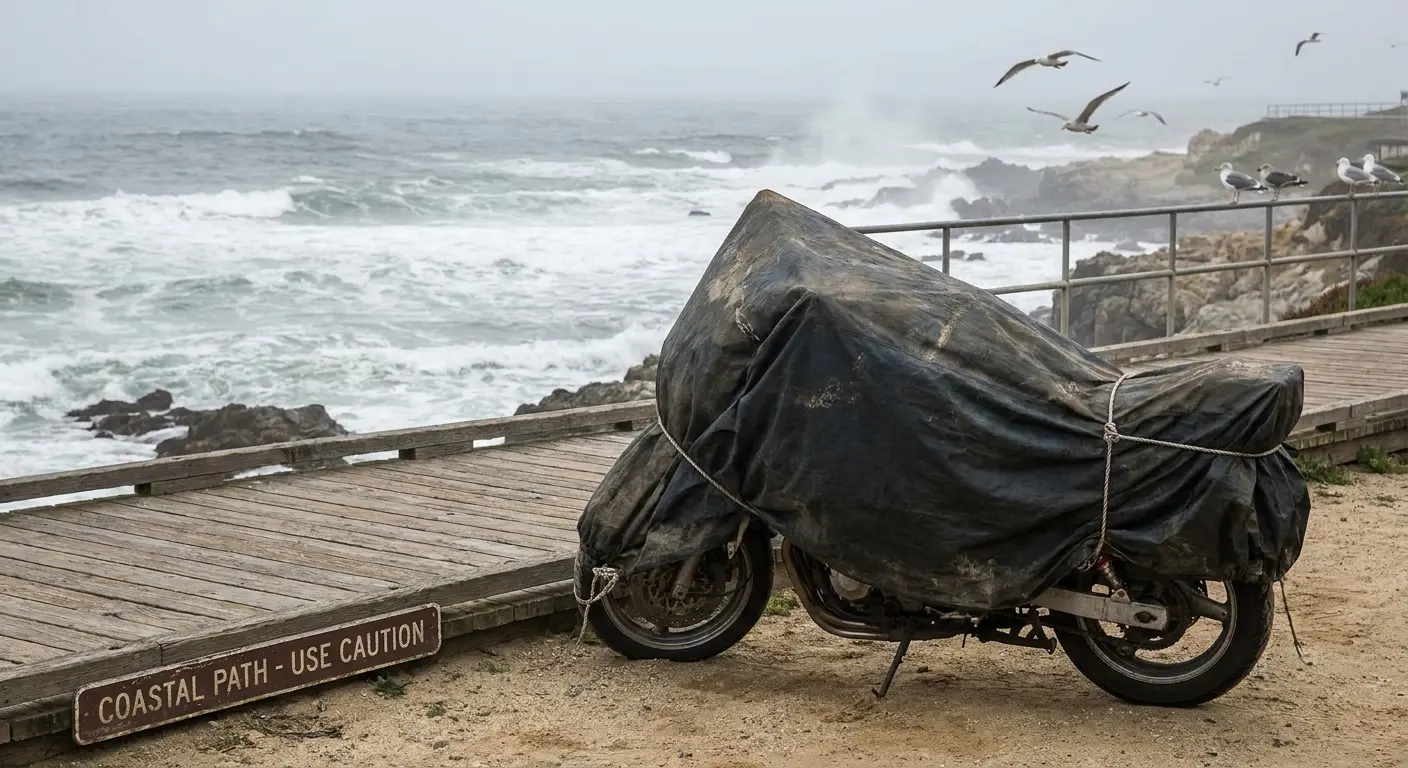
6. Coastal Salt Air Defender
Salt air penetrates most cover materials and accelerates metal degradation at rates that surprise even experienced riders.
Coastal environments create a constant mist of salt particles that work their way through standard cover fabrics. Once salt contacts your bike's metal surfaces, corrosion begins immediately and continues even when the bike is dry. I moved to coastal California three years ago and learned this the expensive way. Standard covers lasted maybe 18 months before salt degradation was visible on my chrome.
Specialized barrier layers use tighter weaves and chemical treatments to block salt particle penetration. These covers cost more than standard weather protection because the materials and construction required for salt resistance add complexity. The investment pays off if you live within five miles of the coast, where salt concentration in the air reaches levels that standard covers can't handle. You're looking at $200-300 for proper coastal protection, which sucks but beats replacing corroded parts.
Coastal riders need more frequent cover replacement than inland riders. Salt exposure degrades cover materials faster than weather alone. Even quality coastal motorcycle covers typically last
2-3 years in heavy salt air versus 5-7 years for the same cover used inland. Factor this shortened lifespan into your protection budget. I replace mine every two years whether it looks worn or not.
The interaction between humidity, salt, and breathability creates a balancing act. You need breathability to prevent condensation, but more breathability means more salt penetration. The best coastal covers use selective breathability, with vapor barriers on the exterior and moisture-wicking materials on the interior. This combination blocks salt while managing condensation. It's not perfect, but it's the best compromise available.
7. Desert Heat Reflector
Extreme heat damages components that cold and rain never touch.
Desert temperatures above 110°F can degrade fuel systems, damage batteries, and warp plastic fairings even under a cover. Standard UV protection isn't sufficient when ambient temperatures stay elevated for months at a time. Your bike is literally baking. Like, you could probably cook an egg on your tank. Not ideal.
Reflective technologies designed for desert use go beyond basic UV coatings. These covers use metallic or ceramic-infused fabrics that reflect infrared radiation, the spectrum responsible for heat transfer. The difference in temperature under a reflective desert cover versus a standard UV cover can be 20-30 degrees, which matters when you're starting from 115°F ambient temperature. I tested this in Phoenix: standard cover had my tank at 145°F, reflective cover kept it at 118°F.
Ventilation systems need complete redesign for desert conditions. You're fighting heat buildup rather than moisture, which means maximum airflow without compromising dust protection. Desert motorcycle covers use larger vent panels with fine mesh that blocks sand particles while moving hot air. Some designs include chimney-effect ventilation that uses rising hot air to pull cooler air in from below.
Dust infiltration in arid environments requires different sealing strategies than rain protection. Desert dust particles are finer than most mesh can block, but sealing too tightly traps heat. The solution involves multiple filtration layers, where outer panels block larger particles and inner layers catch fine dust while maintaining airflow. This layered approach keeps your bike clean without creating an oven.
Material considerations for extreme heat focus on fabric stability. Some cover materials break down under prolonged intense heat, with coatings flaking off and fabrics becoming brittle. Desert-specific covers use heat-stabilized materials rated for continuous exposure to temperatures above 120°F without degradation. I've seen cheap covers literally disintegrate in desert sun, turning into plastic confetti after six months.
Covers Designed for Storage Scenarios
Indoor and semi-protected storage creates different challenges than weather exposure.
The threats shift from rain and sun to dust accumulation, space constraints, and long-term moisture management. Your storage context determines which features matter more than the cover's weather resistance. I went coverless for two years in a heated garage with no issues. Dust accumulation was minimal. But move that same bike to an unheated garage? Different story entirely.
Storage duration affects material requirements dramatically. A cover used daily needs different construction than one protecting a bike stored for six months. Understanding your storage pattern helps you avoid paying for features you don't need while ensuring you get the protection that matters for your situation.
8. Indoor Dust Shield
Your garage is disgusting. Sorry, but it's true.
I didn't realize this until I left my bike uncovered for two months. When I wiped down the tank, the rag came away gray with concrete dust, pollen, and mystery grime. My garage isn't even messy; this is just what happens.
Concrete dust from the floor, pollen sneaking through door gaps, random workshop debris if you actually use your garage for projects. It accumulates faster than you'd think. I pulled a cover off my bike after two weeks in the garage and found a layer of crap I didn't even know was accumulating.
Lightweight, breathable materials work best indoors because you're not fighting rain or wind. The cover needs to drape over your bike and stay in place, nothing more. Heavy-duty weather sealing becomes counterproductive indoors because it traps moisture from temperature changes between your heated house and unheated garage.
Waterproofing creates problems in garage storage. When your garage temperature fluctuates, condensation forms on cold metal surfaces. A waterproof cover traps this moisture against your bike, causing the exact corrosion you're trying to prevent. Indoor covers should prioritize breathability over water resistance. This contradicts what I said about waterproofing for outdoor use, but garage storage is different.
Garage conditions vary based on what else you store there. Workshops generate sawdust and metal filings. Attached garages accumulate household dust and cooking residue. Detached garages face more temperature swings and pest intrusion. Match your motorcycle dust cover to your specific garage environment rather than assuming all indoor storage is the same.
Easy on-off access matters more indoors than outdoors because you're likely using your bike more frequently. Indoor covers should slip on and off in under a minute without requiring you to crouch down and adjust multiple straps. Elastic hems and simple designs beat elaborate securing systems for garage use. If it takes more than 60 seconds, you'll stop using it.
9. Garage Space Saver
Tight garage spaces make bulky covers impractical.
A loose-fitting cover adds 6-8 inches to your bike's width and length, which matters when you're trying to fit two cars and a motorcycle in a standard two-car garage. Form-fitting designs minimize this footprint without sacrificing protection. I've bumped into my covered bike more times than I can count because the loose cover made it wider than I expected.
Elastic hems and tailored cuts create a sleeker profile than loose-fitting outdoor covers. The cover should conform to your bike's shape rather than draping over it. This tighter fit requires more precise sizing, but the space savings justify the extra effort in finding the right size.
The balance between space efficiency and adequate protection involves trade-offs. Tighter covers provide less air circulation, which can be a problem if your garage has high humidity. They also make covering and uncovering slightly more difficult because you're working with less excess fabric. For most riders in space-constrained garages, these trade-offs are worth the space savings.
Garage storage often involves maneuvering around multiple vehicles or equipment. Your covered bike becomes an obstacle if the cover adds too much bulk. Space-saving motorcycle covers help you maintain clear pathways and reduce the chance of bumping into your bike while moving other items. Trust me, you'll appreciate this the first time you need to squeeze past your bike carrying something awkward.
10. Long-Term Storage Wrap
Bikes stored for months face different challenges than bikes covered nightly.
Moisture barriers become critical when your bike sits untouched for extended periods. Temperature fluctuations create condensation cycles that happen repeatedly without anyone noticing or addressing them. That trapped moisture corrodes metal components from the inside out. I've seen bikes come out of six-month storage with rust in places that never got wet from rain.
Long-term motorcycle covers need superior vapor barrier properties compared to daily-use covers. The materials should prevent moisture from penetrating while allowing any trapped humidity to escape gradually. This directional moisture management keeps your bike's microenvironment stable even when external conditions swing wildly.
UV stability matters indoors during extended storage because prolonged exposure adds up. Even indirect sunlight through garage windows degrades plastics and fades paint over months. Covers designed for long-term storage include UV inhibitors that maintain effectiveness throughout an entire storage season.
Desiccants and ventilation work together to prevent corrosion during storage. Place moisture-absorbing packets inside the cover at strategic points: near the engine, under the seat, and around chrome components. The cover's ventilation system should allow humidity to escape while preventing new moisture from entering. This combination creates a stable environment that prevents rust and corrosion.
Preparing your bike for long-term covering matters as much as the cover itself. Clean and dry every surface before covering. Apply protective coatings to chrome and painted surfaces. The best storage cover in the world won't prevent damage if you trap existing moisture or contaminants against your bike for months. I learned this when I covered a bike without cleaning it first. Came back to find the dirt had etched into the paint.
Storage Duration |
Primary Threat |
Cover Priority |
Additional Protection Needed |
|---|---|---|---|
Daily (overnight) |
Dust, minor moisture |
Lightweight breathability, quick access |
None, just throw it on |
Weekly |
Dust accumulation, temperature shifts |
Moderate breathability, UV resistance |
Check tire pressure once in a while |
Monthly (1-3 months) |
Condensation, UV fade, pest intrusion |
Strong moisture barriers, sealed edges |
Fuel stabilizer, battery tender (don't skip this) |
Seasonal (3-6 months) |
Corrosion, seal degradation, fluid issues |
Premium vapor barriers, desiccants |
Full winterization prep (there are guides for this, I'm not rewriting one here) |
Long-term (6+ months) |
Internal corrosion, tire flat spots, fuel system damage |
Climate-controlled environment preferred |
At this point, you need climate control or you're asking for problems |
11. Apartment Balcony Compact
Balcony storage combines outdoor exposure with space limitations and aesthetic concerns.
You're dealing with weather protection needs in a compact footprint, often with HOA restrictions on what visible items can look like. Standard outdoor covers work functionally but may violate appearance guidelines or simply look out of place. My buddy got a notice from his HOA about his "unsightly tarp." It was a $200 cover.
Wind exposure at height requires different securing strategies than ground-level parking. Balcony winds can be stronger and more variable than street-level conditions, but you can't use extensive strap systems that look messy or damage balcony railings. Compact motorcycle covers for balconies use weighted hems or integrated elastic systems that secure without visible straps. I've watched covers blow off balconies in moderate wind because the securing system wasn't designed for elevated exposure.
Partial weather protection from overhangs changes your coverage requirements. Many balconies provide overhead shelter but leave bikes exposed to wind-driven rain and side-angle sun. Your cover needs to protect against angled exposure rather than direct overhead weather. This often means reinforced side panels and less emphasis on top-layer waterproofing.
Aesthetic considerations become practical concerns when neighbors and property management can see your covered bike daily. Neutral colors, clean lines, and covers that don't flap in the wind help maintain good relationships. Some apartment-friendly covers include decorative elements that make them look intentional rather than like emergency tarps. Yeah, your bike looks like a sad ghost under there, but at least it's a ghost with intact chrome.
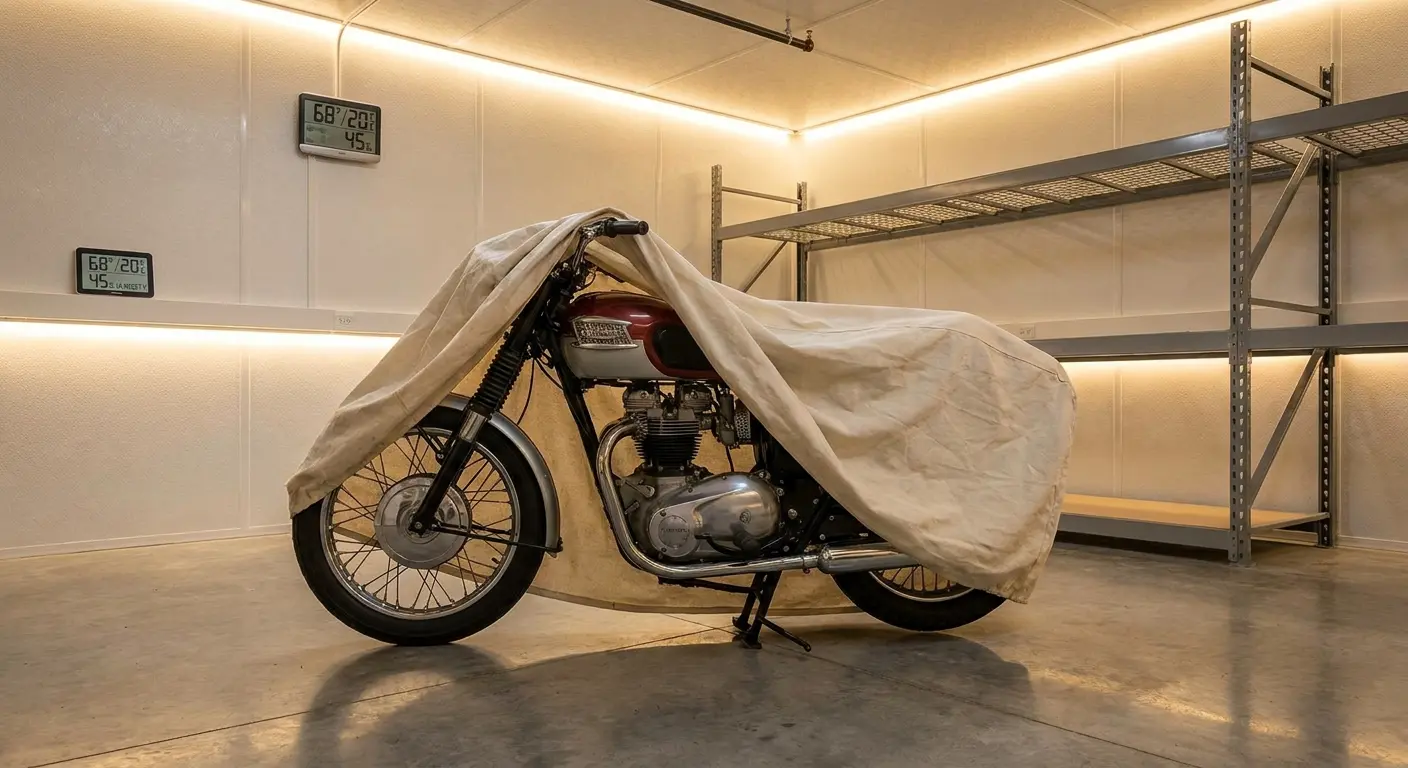
12. Heated Storage Liner
Climate-controlled storage spaces create unique protection requirements.
Temperature stays stable, but that doesn't mean your bike needs no covering. Dust still accumulates, and the temperature differential between heated storage and outside air when you bring your bike in creates condensation issues. When you ride your bike in cold weather and then park it in heated storage, condensation forms as the cold metal warms up.
Breathability becomes the priority feature in heated environments. You're not fighting weather, but you are managing moisture from temperature changes. A breathable cover allows this moisture to dissipate instead of staying trapped against components. Waterproofing is basically useless here and actually counterproductive.
Heated storage covers serve primarily as dust barriers rather than weather protection. The materials can be lighter and more flexible than outdoor covers because they don't need to withstand wind, rain, or UV exposure. This lighter construction makes them easier to handle and store when not in use. I keep a lightweight indoor cover that weighs maybe two pounds and folds into a bag the size of a football.
When does heated storage eliminate the need for covering entirely? If your storage space is truly climate-controlled with stable humidity and minimal dust, and you're storing a bike that's not particularly valuable or pristine, covering may be optional. Most riders still prefer some protection, but the requirements are minimal compared to outdoor or unheated storage. Honestly, if you have climate-controlled storage, you're already winning.
13. Multi-Bike Shelter System
Riders with multiple bikes face efficiency challenges that individual covers don't solve well.
Covering three or four bikes separately takes time and creates storage problems for multiple covers when not in use. Shelter systems provide shared protection that streamlines the covering process. I know a guy with five bikes who spent 20 minutes every time he wanted to cover them all individually. He switched to a shelter system and now it takes five minutes.
Shelter systems differ from individual covers in setup and protection approach. You're creating a protected space rather than wrapping each bike separately. This works well for bikes stored in fixed locations but lacks flexibility if you need to move bikes frequently. The trade-off favors convenience over individual bike customization.
Ventilation requirements increase when multiple bikes share enclosed space. More metal surface area means more potential for condensation. Shelter systems need substantial airflow to prevent moisture buildup that affects all bikes simultaneously. Look for designs with multiple vent panels and enough interior volume to allow air circulation around each bike.
Space efficiency depends on your storage layout. Shelter systems work best when bikes can park close together in a line or cluster. If your bikes are spread across different areas of your garage or property, individual covers make more sense. Measure your available space and bike arrangement before committing to a shelter system. Don't do what I almost did and buy a shelter system for bikes parked in three different spots.
14. Carport Semi-Shelter Hybrid
Carports and covered parking create a middle ground between full exposure and enclosed storage.
You have overhead protection but remain vulnerable to wind-driven rain, side-angle sun, and dust. Standard outdoor covers provide more protection than you need on top while leaving gaps in side coverage. It's a weird in-between situation that most covers aren't optimized for.
Side-panel protection matters more than top coverage under carports. Rain and sun come from angles rather than directly overhead. Your motorcycle cover should emphasize side barriers and lower coverage while using lighter materials on top where the carport already provides shelter. This targeted approach reduces bulk and cost while addressing actual exposure.
Wind-driven rain requires different strategies than open-air downpours. The rain comes horizontally or at steep angles, finding gaps that vertical rain never reaches. Carport covers need overlapping panels and sealed seams on sides and ends, with particular attention to the direction prevailing winds come from in your location. Stand in your carport during different weather conditions and note where water reaches. That's where your cover needs to focus.
Assessing your carport's actual protection level helps you choose appropriate coverage. Check sun angles throughout the day to see which sides get direct exposure. Your cover should fill these specific gaps rather than providing comprehensive protection you don't need. I wasted money on a heavy-duty all-weather cover for carport storage when I really just needed side protection.
Dust infiltration happens even under covered parking, especially in open-sided carports. The balance between ventilation and dust protection becomes critical. You need enough airflow to prevent condensation but enough coverage to block airborne dust and debris. Carport-specific covers use strategic panel placement that manages both concerns.
Covers for Active Riders
If you're still reading, you either really care about covers or you're procrastinating something important. Either way, I respect it.
We're about two-thirds through. Sections 1- 7 covered weather, 8-14 covered storage, and 15-19 cover active riders. Skip to what applies to you.
Frequent riders need protection that doesn't slow them down. The best weather-resistant cover in the world becomes useless if putting it on takes ten minutes and requires perfect conditions. Active riders prioritize quick access, portability, and features that support regular use over maximum protection ratings.
Your usage pattern determines which convenience features matter most. Daily commuters need different solutions than weekend riders. Touring riders who park in different locations each night have different requirements than someone with a consistent parking spot. Match your motorcycle cover to your riding frequency and storage variety.
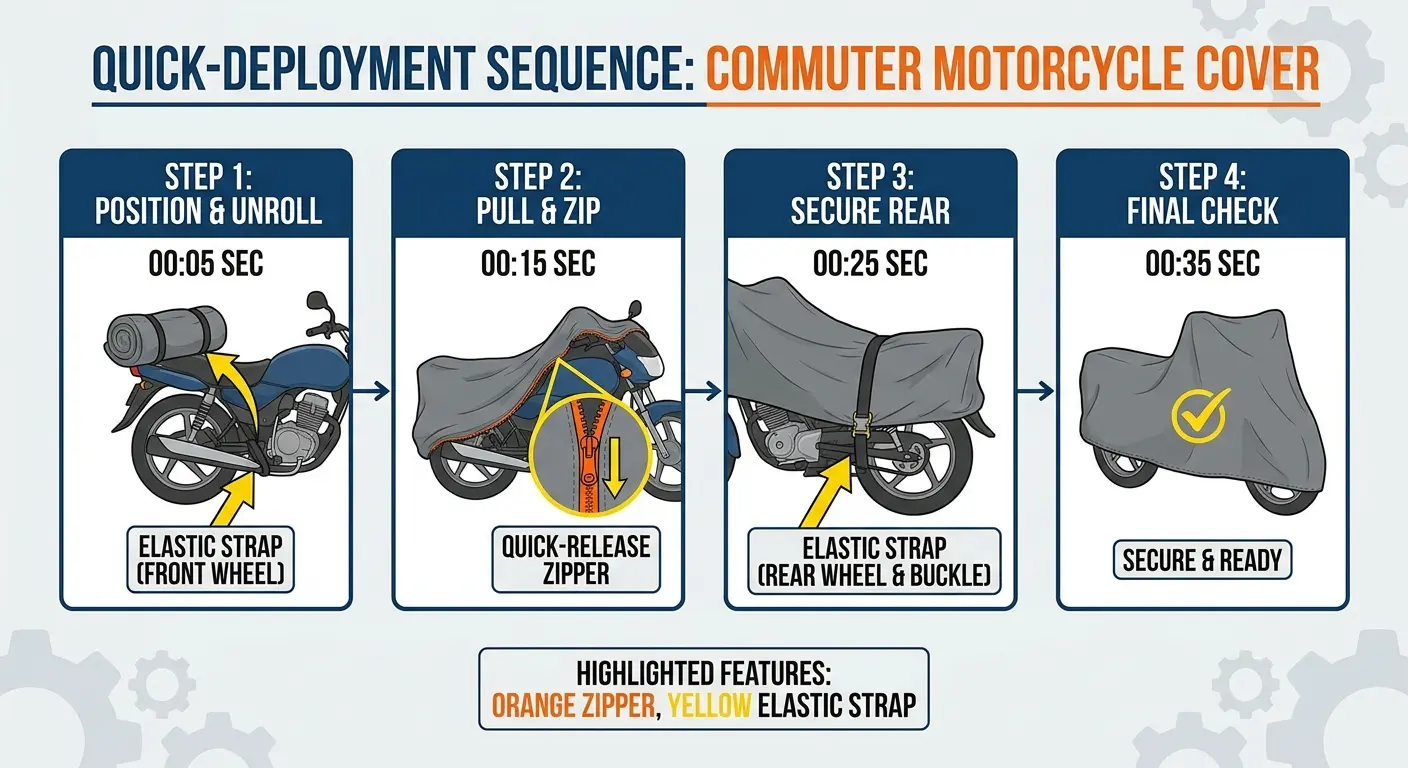
15. Quick-Access Commuter Cover
If it takes more than a minute to cover your bike, you'll stop doing it. I don't care how protective the cover is.
I commuted daily for two years with a heavy-duty cover that had straps, buckles, and required me to crouch down and thread things through my spokes. Know how often I used it after the first month? Maybe twice a week when rain was guaranteed. The rest of the time, my bike sat uncovered because I couldn't be bothered.
Now I use a cover with elastic hems. Pull it over, done. Takes 45 seconds. I actually use it every day because it doesn't make me late for work.
Zipper placements determine how quickly you can access your bike. Side zippers let you uncover and mount your bike in one motion. Front zippers work better if you need to access storage compartments before riding. Think about your actual routine before you buy. Do you grab stuff from your saddlebags before riding? Front zipper. Do you just hop on and go? Side zipper.
Elastic systems beat strap systems for speed. Pull the cover over your bike, and elastic hems automatically secure it. No crouching down to thread straps through wheel spokes or under the bike. No adjusting tension or worrying about even tightness. Elastic provides adequate security for daily use while cutting setup time by two-thirds.
Fold patterns affect how quickly you can deploy and store the cover. Quality commuter covers fold into consistent shapes that fit in underseat storage or saddlebags. The fold pattern should be intuitive enough that you can pack the cover correctly even when you're in a hurry or it's dark outside. I've fumbled with covers in parking lots at night more times than I want to admit.
Durability requirements escalate with frequent use. A cover used five times per week experiences more wear in three months than a seasonal storage cover sees in a year. Commuter motorcycle covers need reinforced stress points and materials that maintain their properties through hundreds of deployment cycles. My first commuter cover lasted four months before the elastic gave out. My current one is at 18 months and still going strong.
Storage solutions for covers when not in use matter for daily riders. Some covers include attached stuff sacks that never get lost. Others compress small enough to fit in a jacket pocket. Consider where you'll put the cover during your ride and choose a design that accommodates your storage options. The stuff sack that comes with travel covers gets lost immediately. Buy a carabiner.
16. Lightweight Travel Pack
Touring riders need portable protection that doesn't consume luggage space.
Travel covers prioritize packability and weight over maximum weather resistance. You're protecting your bike for a night or two, not storing it for months, which allows lighter construction. I've toured with both heavy-duty covers and ultralight travel covers. The travel cover won every time because I actually carried it instead of leaving it at home.
Compression systems and stuff sacks make covers travel-friendly. Quality travel covers compress to the size of a water bottle and weigh under two pounds. The stuff sack should attach to the cover so you never lose it, and compression straps should cinch the packed cover small enough to fit in a saddlebag corner.
Protection trade-offs inherent in ultralight designs mean you're accepting less durability and weather resistance for the sake of portability. Travel covers typically use 150-200D fabrics versus 300-600D for permanent covers. They'll keep your bike dry overnight but won't survive a multi-day storm or years of regular use. My travel cover has maybe 30 uses on it and is showing wear. My permanent cover has 200+ uses and looks fine.
When do travel covers make sense versus relying on hotel parking? If you're staying at hotels with covered parking or garages, you might not need a cover at all. Travel covers prove their worth when you're camping, staying at places with outdoor parking, or touring through regions with unpredictable weather. The decision depends on your typical accommodations and risk tolerance.
Material choices that balance light weight with adequate protection focus on modern synthetic fabrics. Silnylon and similar materials provide decent water resistance at minimal weight. They won't breathe as well as heavier covers, but for overnight use, trapped condensation rarely becomes a problem. I'm honestly not sure if the expensive coatings are worth the premium. I've used both and can't tell the difference, but maybe I'm not observant enough.
17. Security-Enhanced Lock-Compatible
Built-in security features work better than aftermarket additions because they're integrated into the cover's structure.
Lock grommets positioned at strategic points let you run a cable lock through the cover and your bike's frame. The grommets should be reinforced to prevent tearing when someone tries to pull the cover off. I've seen thieves slash covers to see what's underneath, and reinforced grommets at least slow them down.
Cable pass-throughs allow you to secure your bike with locks while keeping the cover in place. The pass-throughs need to be positioned where your bike's lock points are, which varies by model. Adjustable or multiple pass-through options accommodate different bike configurations. My sport bike and cruiser have completely different lock point locations.
Reinforced panels at lock points prevent cutting or tearing. Thieves often slash covers to see what's underneath. Security-enhanced motorcycle covers use double or triple-layer fabric around lock grommets and along bottom edges where someone might try to lift the cover. Some designs incorporate cut-resistant materials in high-risk areas.
Cover-based security complements rather than replaces proper locks. A cover makes your bike less visible and less obviously valuable, which deters opportunistic theft. The security features slow down thieves who decide to investigate. But covers alone won't stop determined thieves with tools and time. I've watched security footage of a bike theft where the guy just cut the cover off in 30 seconds.
Visible security features serve as deterrents even when they're not actively in use. Reinforced grommets and lock cable pass-throughs signal that the bike underneath is secured. Some thieves move on to easier targets rather than deal with the extra steps required to access a properly secured bike. Out of sight, out of mind logic actually works for opportunistic theft.
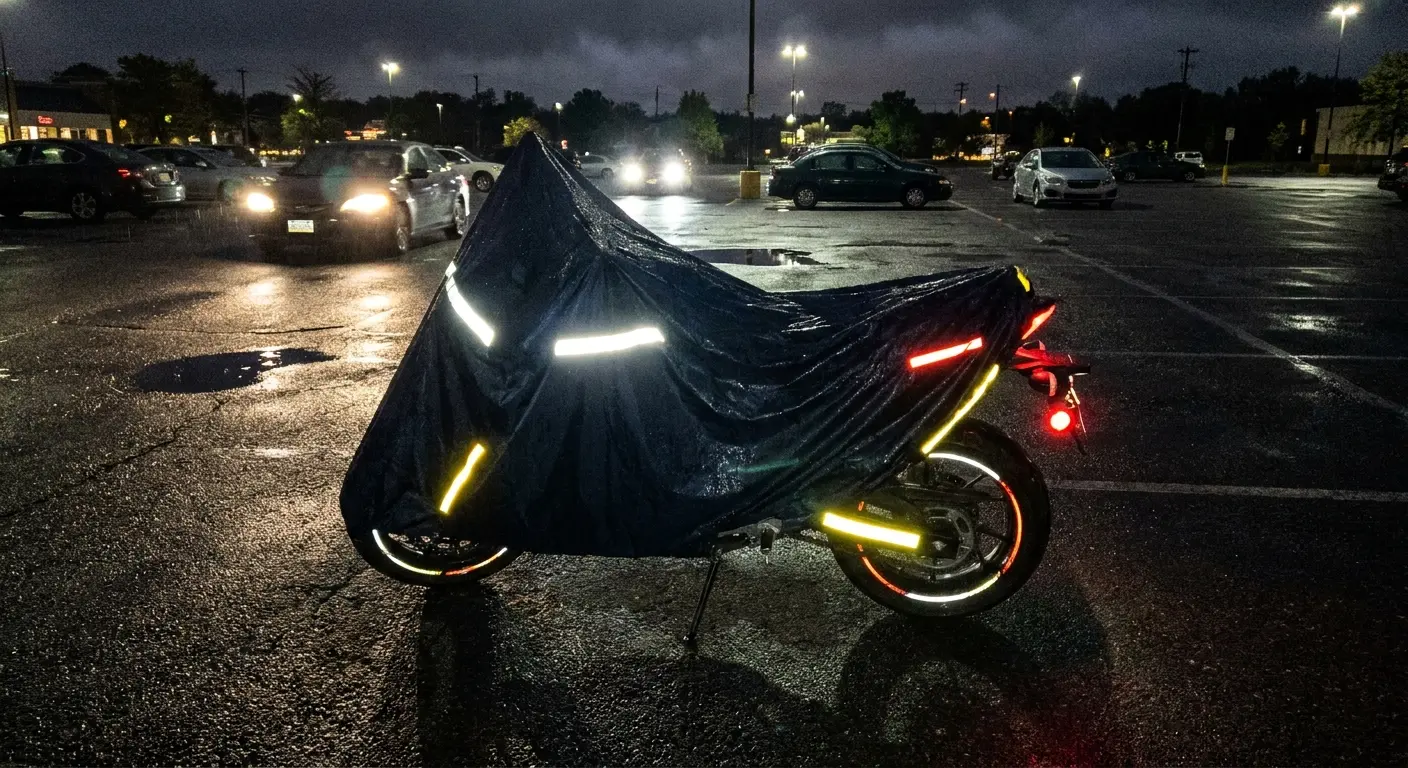
18. Reflective Night Visibility
Parking lots and street parking create collision risks when your covered bike blends into the background.
Reflective strips and panels prevent accidents by making your covered motorcycle visible to drivers and pedestrians. The reflective elements should be positioned to catch headlights from multiple angles. I've seen parking lot damage claims where reflective covers prevented accidents that would have totaled bikes.
Placement strategies for maximum visibility involve thinking about traffic patterns around your parking spot. Side panels need reflective strips because that's the angle most drivers approach from. Lower sections need visibility because that's where headlights hit. Top sections matter less unless you park where pedestrians look down from elevated positions.
The balance between visibility and aesthetics matters more for street-parked bikes than garage-stored ones. Extensive reflective paneling provides maximum safety but can look overly utilitarian. Strategic placement of reflective strips provides adequate visibility while maintaining a cleaner appearance. My commuter cover has reflective strips on the sides and bottom. It's not pretty, but it's saved my bike from getting hit at least twice that I know of.
Night visibility matters even in seemingly safe parking situations. Delivery drivers, distracted pedestrians, and vehicles maneuvering in tight spaces can all collide with covered bikes they don't see. We've seen parking lot damage claims where reflective covers prevented accidents that would have totaled bikes.
Reflective material technologies vary in durability and effectiveness. Glass bead reflective materials work well initially but lose effectiveness as they wear. Microprismatic reflective materials maintain visibility longer and reflect light more efficiently. Check the reflective rating (measured in candelas) to compare effectiveness between covers. The cheap reflective strips fade after a year. Quality ones last three-plus years.
19. Modular Panel System
Customizable protection through modular designs lets you adjust coverage based on conditions or access needs.
Panel systems use zippers, snaps, or hook-and-loop fasteners to connect sections. You can remove panels for ventilation, add panels for extra protection, or reconfigure the system for partial coverage. Do modular systems last as long as one-piece covers? No idea. I haven't used one long enough to know.
Connection methods need to be secure enough to withstand wind while allowing easy reconfiguration. Heavy-duty zippers work better than snaps for panels that stay connected most of the time. Hook-and-loop systems provide flexibility but can collect debris that reduces effectiveness over time. I've used hook-and-loop systems that stopped gripping after six months because dirt got embedded in the loops.
Scenarios where modular designs provide advantages include riders who need different protection levels throughout the year. Remove side panels in summer for maximum ventilation. Add insulated panels in winter for extra protection. Configure partial coverage when you need access to specific bike components without removing the entire cover.
Complexity trade-offs mean modular systems require more setup time and understanding than one-piece covers. You need to know which panels to use in which conditions and how to configure them correctly. For riders who value versatility over simplicity, this trade-off makes sense. For riders who want to throw a cover on and go, modular systems create unnecessary complications.
Modular approaches work best for riders with varied storage situations. If you sometimes park indoors and sometimes outdoors, or if you alternate between short-term and long-term storage, modular systems adapt to each scenario. Single-use riders don't benefit enough from the flexibility to justify the added complexity. I'm probably overthinking this, but if your situation is consistent, stick with a one-piece cover.
How Protection Connects to Everything Else
Choosing the right motorcycle cover solves the protection equation, but it's only one part of how you interact with your bike.
You need quick access to navigation, communication, and your phone without compromising the security and protection you've set up. This is where we've focused our attention at Rokform.
Look, I need to mention Rokform here because it's relevant and also because they're paying for this content. But actually, the connection makes sense. You're thinking about protecting your bike when parked. You should also think about protecting your phone when riding.
I've used their handlebar mount for two years. The magnetic system actually works, even on rough roads and highway speeds. I was skeptical because magnets on a motorcycle seemed gimmicky, but it's held through everything I've thrown at it. If you're going to mount your phone anyway (and you probably are for GPS), don't cheap out with a $20 Amazon mount that'll vibrate loose or crack your screen.
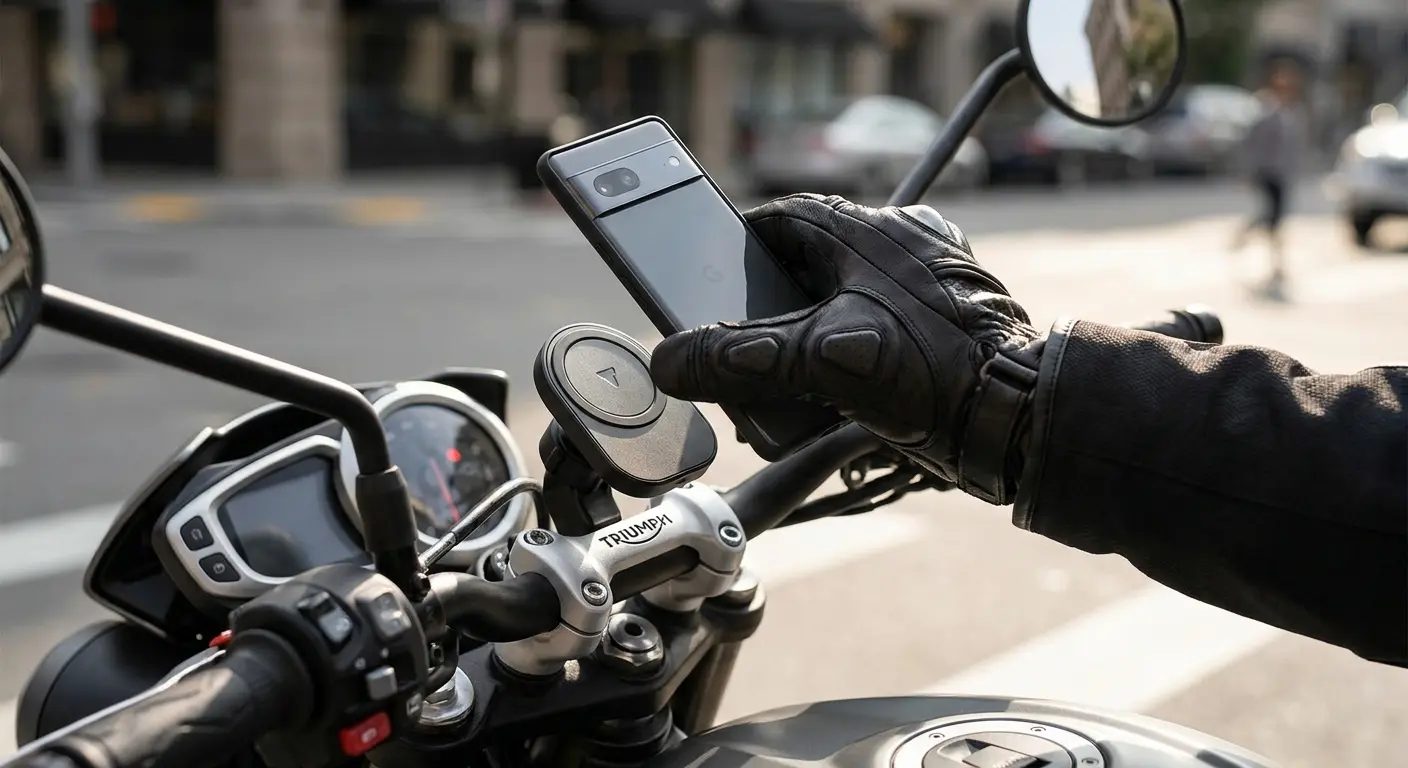
When you're choosing protection solutions, think about the full system. Your cover protects your bike when it's stationary. Your mounting system protects your connectivity when you're riding. Both need to be reliable, quick to use, and built for real-world conditions.
We also understand that riders need gear that works as hard as they do. Our motorcycle phone mounts use RokLock™ technology that keeps your phone secure through everything from highway speeds to off-road trails. The same attention to real-world performance that guides your cover selection should guide your mounting system choice.
Their motorcycle handlebar phone mount integrates with your bike's setup without adding bulk or complexity, and it's designed to handle the same weather and vibration that your cover protects against when parked.
Anyway, back to covers.
Stop Overthinking. Here's Your Decision Tree
Step 1: Where does your bike sleep?
- Outdoors? Continue to Step 2
- Garage/indoor? Skip to Step 5
- Carport/partial cover? Continue to Step 3
Step 2: What's your climate's main threat?
- Constant rain? Breathable waterproof cover, $100-150
- Extreme heat? Reflective cover, $80-120
- Snow/ice? Heavy-duty winter cover, $150-200
- Salt air? Specialized coastal cover, $200-300
- Mild/variable? All-weather breathable, $100-150
Step 3: How often do you use your bike?
- Daily? Quick-access elastic cover, prioritize convenience
- Weekly? Balance protection and ease of use
- Seasonally? Maximum protection, convenience less important
Step 4: What's your budget?
- Under $75? Indoor only or accept frequent replacement
- $75-150? Sweet spot for most riders
- $150-250? Premium features, longer lifespan
- Over $250? Specialty situations only
Step 5 (Indoor): What's your main concern?
- Dust? Lightweight breathable, $50-80
- Space? Form-fitting cover, $60-100
- Long-term storage? Breathable with moisture management, $80-120
Done. You now know what category you need. Stop reading reviews and buy something in that range.
What I Can't Answer For You
Whether the cover I like will work for your specific bike geometry. I can describe features, but fit is individual.
Whether you'll actually use it consistently. Covers only work if you use them. Be honest about your laziness level.
Whether your specific microclimate has unique challenges. I can cover general climates, but if you park under a tree that drops sap, or next to a building that creates weird wind tunnels, you'll have to experiment.
What future you will wish you'd prioritized. Maybe quick access matters more than you think. Maybe you'll get more meticulous about protection. I don't know you.
Whether spending $200 versus $100 will matter for your specific situation. Sometimes the expensive option is worth it. Sometimes it's overkill.
What I CAN tell you: The mistakes I've made, the features that mattered in my experience, and the questions to ask before buying. The rest is your call.
My Current Setup (Since You're Probably Wondering)
Daily rider (cruiser, coastal California):
- Nelson-Rigg Defender lightweight cover with elastic hem
- Cost: $85
- Pros: On/off in 30 seconds, decent weather protection, compact storage
- Cons: Won't survive heavy storms, elastic is wearing after 18 months
- Will I replace with same? Probably yes
Long-term storage (sport bike, garage):
- CoverMax breathable indoor cover
- Cost: $65
- Pros: Excellent dust protection, very breathable, easy to handle
- Cons: Zero weather protection (doesn't need it indoors)
- Will I replace with same? Already did once
I've also used Dowco Guardian (overpriced in my opinion) and a cheap Amazon Basics cover (actually held up okay for indoor use). Your setup will differ based on your bike, climate, and storage. This is just what works for my situation.
If I Started Over Knowing What I Know Now
I'd buy two mid-range covers ($100-150 each) instead of one expensive one. Different tools for different jobs.
I'd prioritize breathability over waterproofing in every climate except extreme rain/snow. For years I insisted on maximum waterproofing. Then I moved to a humid climate and discovered that trapping moisture inside is worse than letting some rain in. Sometimes being wrong teaches you more than being right.
I'd spend 30 minutes properly measuring my bike instead of trusting size charts. "Fits most cruisers" fits no cruisers well.
I'd read the one-star reviews first, not the five-star ones. Five-star reviews are often from people who've used the cover for a week. One and two-star reviews tell you how it fails.
I'd ask mechanics and experienced riders instead of trusting product descriptions. Every mechanic I've talked to says breathability matters more than most riders think.
I'd accept that covers need replacement every 2-4 years and budget accordingly instead of trying to find the "forever cover."
Most importantly? I'd match the cover to my actual usage pattern, not my idealized version of how I thought I'd use my bike.
Here's What You Do Next
1. Figure out your storage situation (indoor/outdoor/partial)
2. Identify your climate's main threat (rain/heat/salt/snow)
3. Decide if you're daily/weekly/seasonal use
4. Buy in the $100-150 range unless you have specific needs
5. Actually use it for three months before judging
6. Come back and tell me if I'm wrong about breathability
And seriously, if you take nothing else from this novel I just wrote, prioritize breathability over waterproofing unless you're in a desert. This one thing will save you hundreds in corrosion damage. This is the hill I'll die on.
A $200 cover that traps condensation will damage your bike faster than no cover at all. Breathability isn't optional.
Now stop reading and go cover your bike. Or don't. I'm not your mom.

