


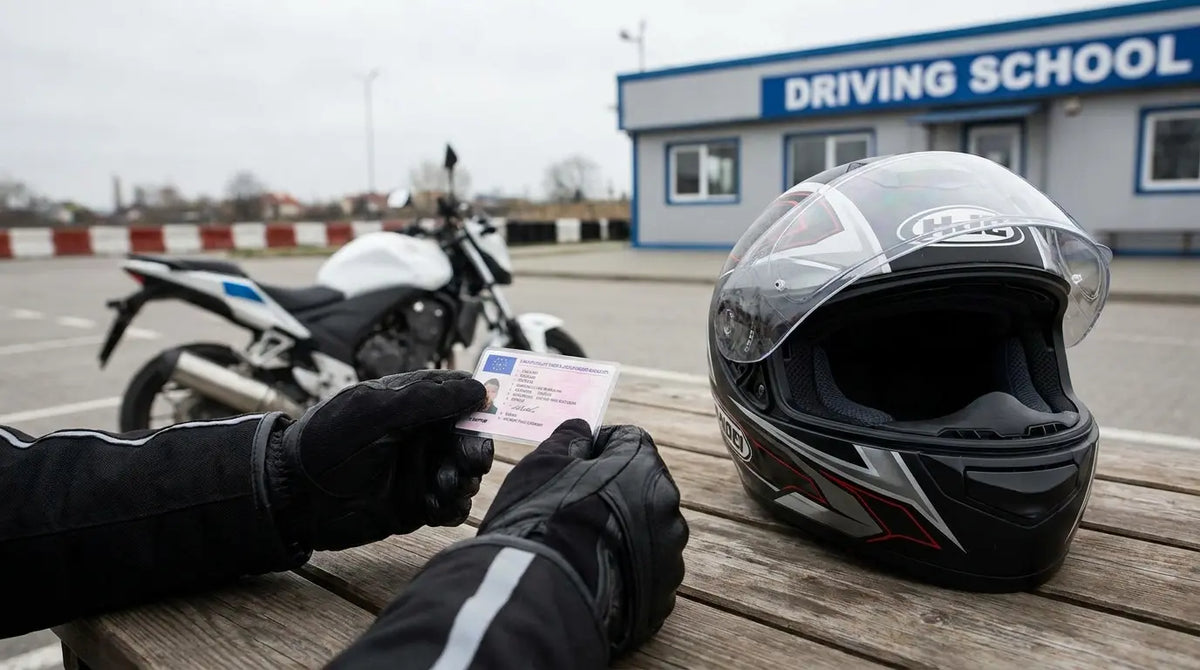
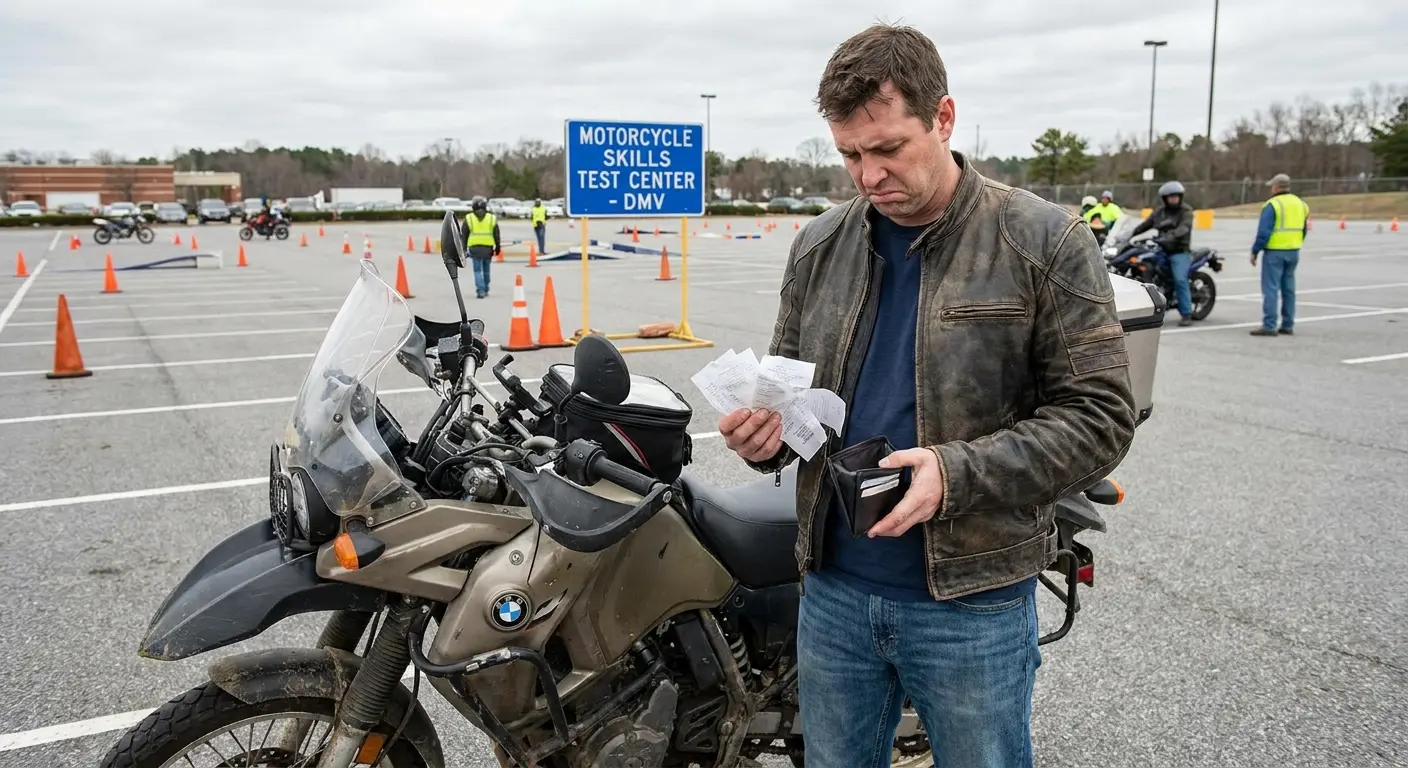
I watched a guy get turned away from his motorcycle skills test last month because his phone was at 12% battery. He'd driven two hours. Paid the $85 fee. Taken the day off work. Didn't matter. No working smartphone, no test. Welcome to 2024, where your ability to get a motorcycle license depends as much on your data plan as your riding skills.
Three years ago, getting your motorcycle license was simple. Almost boring. Pass a written test, complete a riding course, demonstrate basic skills, and you're done. That's done. In the past 24 months, states have overhauled their licensing requirements so completely that the process is basically unrecognizable. And somehow, most riders have no idea this happened. We're seeing states roll out digital testing platforms, mandate app-based training modules, and introduce requirements that assume you're constantly connected. Your ability to stay compliant now depends on having reliable access to your smartphone during every step of the licensing process. And here's what pisses me off: nobody's mentioning that you're expected to juggle your phone while learning to ride.
Table of Contents
The Digital Shift: Why Your Smartphone Became Part of the Licensing Process
State-by-State Variations That Actually Matter (Not Just the Obvious Ones)
The Hidden Costs Nobody Mentions When Calculating License Expenses
How Training Requirements Changed After 2022 and What That Means for You
Digital Endorsements and App-Based Renewals: The New Normal
International License Recognition Gets Complicated
What Happens When Technology Fails During Your Test
Insurance Implications of New Licensing Tiers
Accessibility Gaps in Modern Motorcycle Licensing
Preparing for Requirements That Don't Exist Yet
The Short Version (Because This Got Long)
You need a smartphone for basically every step now. Not "helpful to have." Actually required.
Training hour requirements increased in 14 states since 2022, with several introducing tiered licensing systems that nobody properly explains
Digital endorsements and app-based renewals eliminate grace periods that previously existed for paper systems (miss a renewal notification and you're screwed)
International license reciprocity narrowed significantly, affecting travelers and military personnel (which screws over military folks especially, because of course it does)
New licensing tiers directly impact insurance rates in ways that aren't immediately obvious
Technology failures during testing create legal gray areas with no standardized resolution process (meaning you're just out of luck)
Accessibility accommodations haven't kept pace with digital requirements, leaving some riders behind
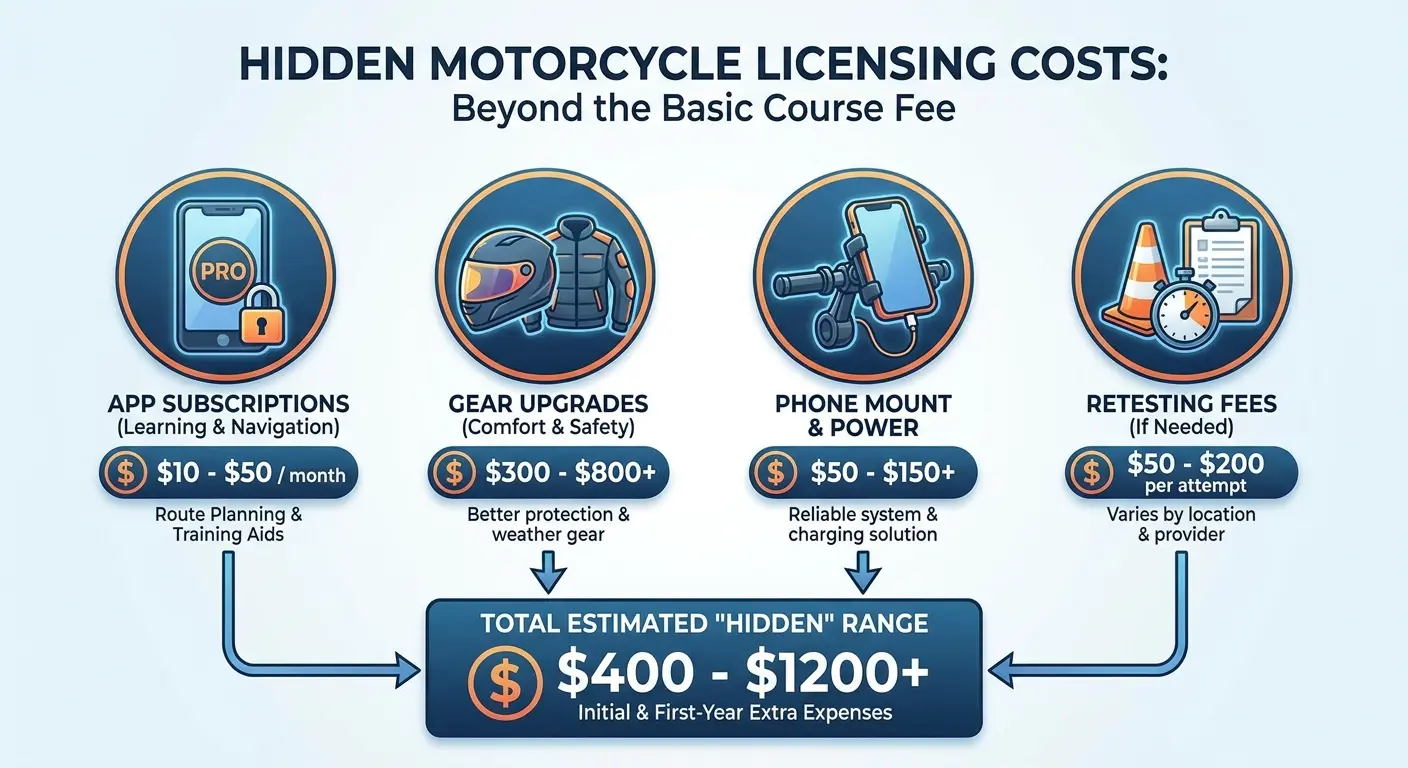
Costs extend beyond test fees into required app subscriptions and digital infrastructure needs (budget at least $300-400, not the $87 they advertise)
The Digital Shift: Why Your Smartphone Became Part of the Licensing Process
You Can't Even Schedule Without Their Damn App
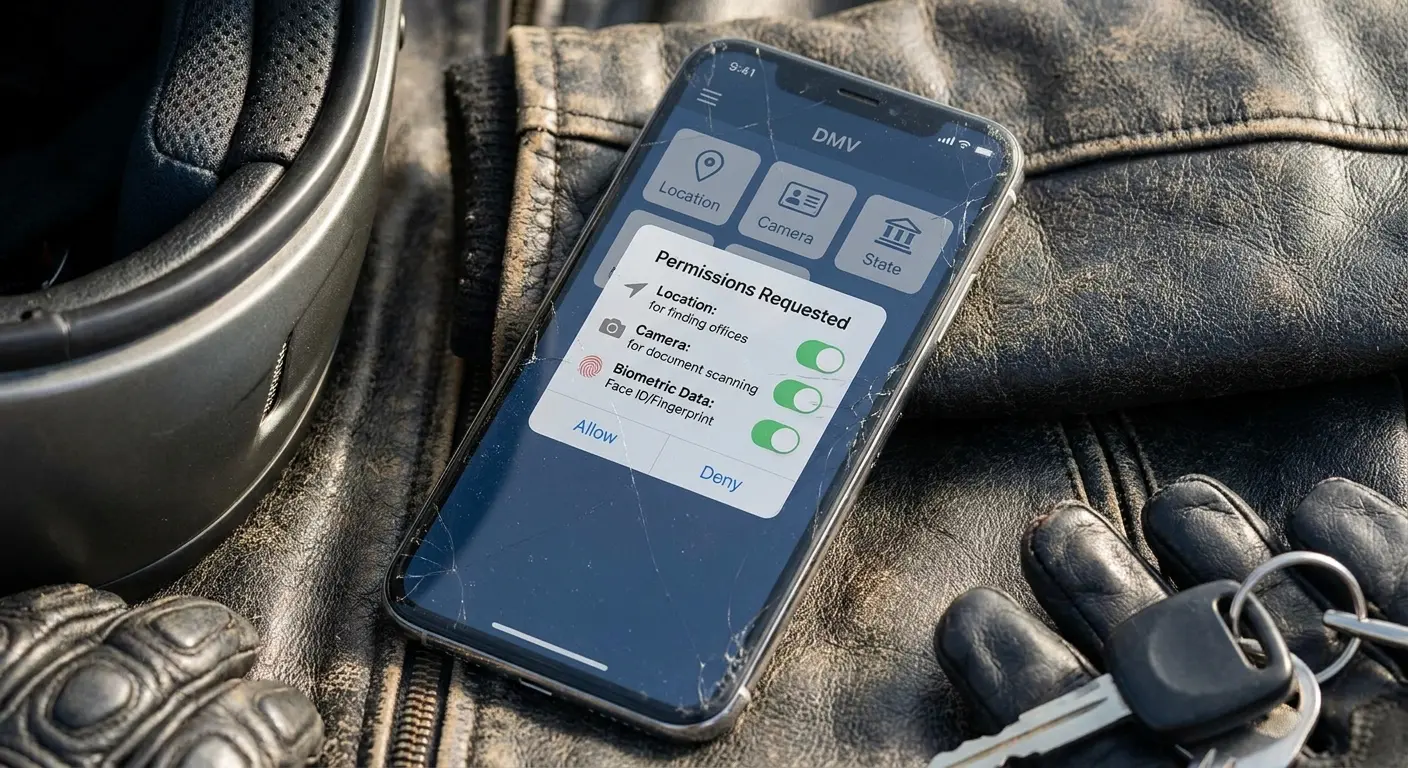
You can't book a motorcycle skills test in California anymore without downloading their DMV NOW app. Same goes for Texas, Florida, and 18 other states that shifted to app-only scheduling systems between 2022 and 2024. Sounds convenient, right? It's not. Here's what you actually need: a smartphone with enough storage space, a compatible operating system, reliable data connection, and the technical literacy to troubleshoot when things go wrong.
The permissions these apps demand would make Mark Zuckerberg blush. Location tracking when you're not using the app. Camera access. In California, biometric data - your fingerprints or face scan. To schedule a DMV appointment. You're handing over significant personal information just to schedule a test appointment. States justify this as fraud prevention, but the privacy tradeoff isn't something anyone consents to meaningfully when the alternative is simply not getting licensed.
Understanding how to get a motorcycle license now means accepting that your personal device has become government infrastructure. That's a fundamental shift from what licensing used to be.
State |
App Requirement |
What They Want Access To |
Alternative Booking Method |
Implementation Date |
|
|---|---|---|---|---|---|
California |
DMV NOW (mandatory) |
Location, Camera, Biometric |
None (seriously, app or nothing) |
March 2023 |
|
Texas |
Texas by Texas (mandatory) |
Location, Camera, Contacts |
Phone scheduling (limited slots) |
January 2024 |
|
Florida |
FLHSMV (mandatory) |
Location, Camera |
None |
August 2023 |
|
New York |
MyDMV (optional) |
Location, Camera |
In-person scheduling |
June 2022 |
|
Pennsylvania |
PA DMV (mandatory) |
Location, Camera, Storage |
None |
November 2023 |
|
Illinois |
ILSOS Mobile (optional) |
Location, Camera |
Online portal available |
February 2024 |
Look at that table. Really look at it. Pennsylvania wants access to your storage. Why? What are they storing? Nobody explains this. You just click "Accept" because what choice do you have?
Real-Time Documentation During Training Courses
MSF (Motorcycle Safety Foundation) courses now require you to use your phone to log practice hours in real time. Instructors verify your attendance through geofenced check-ins that only work if your location services are active and accurate. Miss a check-in because your phone died or you left it in your bag? That session might not count toward your required hours.
Guy in Phoenix (or maybe Scottsdale, somewhere in that area) showed up for day two of his MSF course with a phone that had a cracked screen and malfunctioning touch response. The geofence check-in required him to tap a specific button within a 30-second window, but his screen wouldn't register the touch. The instructor couldn't manually override the system, so despite being physically present and participating in all exercises, his attendance wasn't recorded. He had to retake the entire weekend course three weeks later and pay the $350 course fee again. Which is insane. He was there. He did the exercises. He learned the material. But the app didn't register his tap, so apparently none of that counts.
We're also seeing courses that require you to film yourself performing specific maneuvers and upload the footage through their proprietary platforms. They say it's to help you review your technique, but it's also becoming part of your permanent training record. Some states are experimenting with AI analysis of these videos to flag unsafe habits before you even reach the testing phase.
This is where having a secure phone mount becomes critical. You need something that survives drops and impacts while keeping your device accessible. The Rokform Pro Series Motorcycle Mount uses a magnetic system that holds through emergency stops and low-speed practice maneuvers where bikes often tip. When instructors ask you to film a specific exercise, you can't be fumbling with a suction cup that fell off three drills ago.
This isn't about convenience anymore. It's about meeting requirements that assume you have reliable phone access at all times. Whether you're working toward your California motorcycle permit or dealing with a motorcycle license CA renewal, your phone is part of the process now. Having a mount that actually works under training conditions matters.
The Rokform Rugged Case adds another layer of protection for riders who are still learning. When you drop your bike during a slow-speed drill (and you will), your phone shouldn't be the casualty. The case is built to military drop-test standards and integrates with the magnetic mounting system, so you're not choosing between protection and functionality.
QR Codes Replacing Physical Documentation
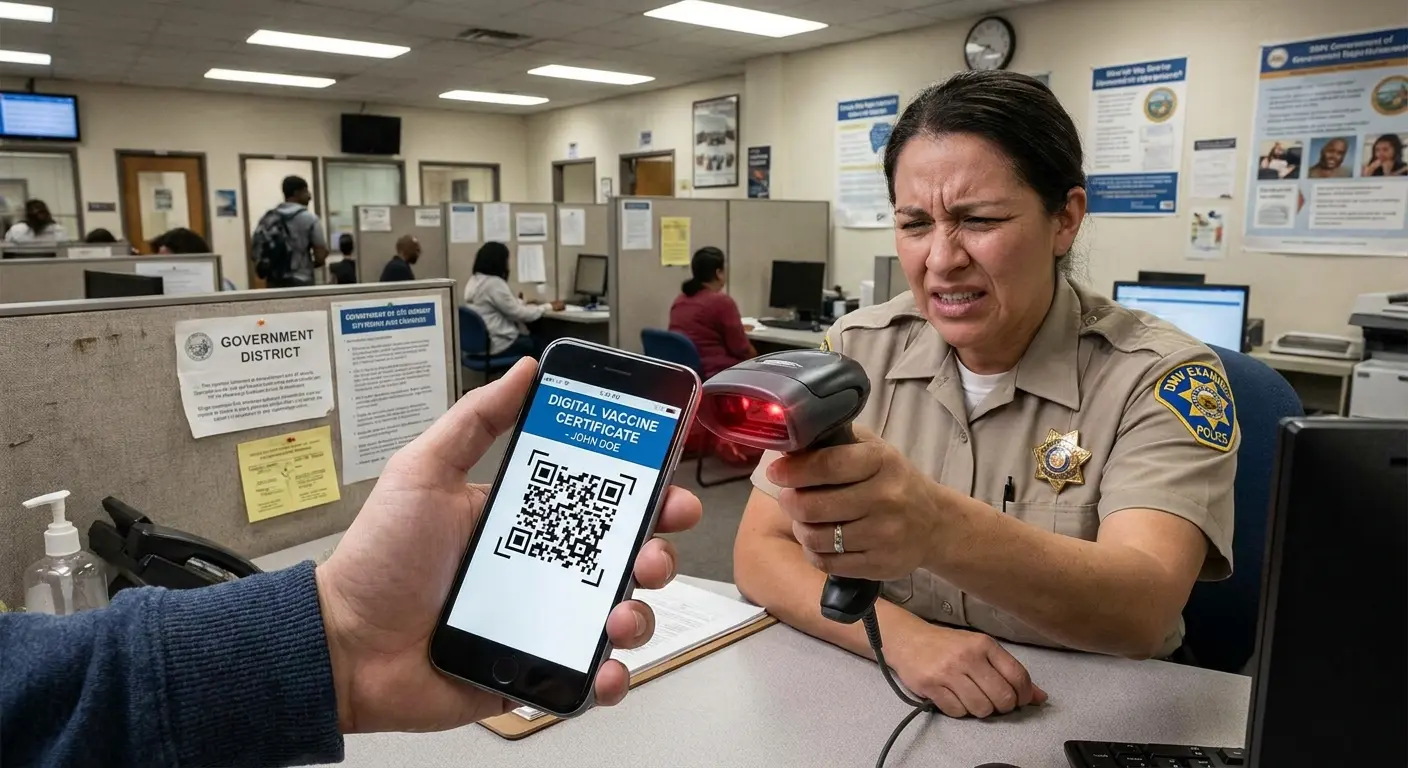
Your completion certificate from a training course used to be a paper document you'd bring to the DMV. That's being phased out in favor of QR codes that examiners scan directly from your phone screen. Great in theory. Absolute nightmare in practice when your screen cracks, your battery dies, or the scanning system goes down (which happens more often than states admit).
But that's not even the worst part. What happens when you switch phones or factory reset your device? If you didn't properly back up that QR code or save it to cloud service, you might need to pay for a replacement certificate. Some training providers charge $50 to $75 for reissuing digital credentials, turning a simple tech hiccup into an unexpected expense.
State-by-State Variations That Actually Matter (Not Just the Obvious Ones)
Tiered Licensing Systems Create New Complexity
Six states introduced tiered motorcycle licensing in 2023, and the distinctions matter more than you'd expect. Oregon now separates licenses into Class M1 (unrestricted), M2 (engine displacement under 400cc), and M3 (three-wheeled motorcycles only). Each tier requires different testing and comes with different insurance implications.
The annoying part nobody mentions? These tiers don't transfer cleanly across state lines. Your M2 license from Oregon doesn't automatically convert to an equivalent restricted license in Washington. You might need to retest entirely if you move, even if you've been riding legally for years.
California motorcycle license holders face similar complexity when traveling. The M1/M2 distinction in California doesn't align with how other states categorize endorsements, creating confusion during traffic stops or when renting bikes out of state.
State |
Tiered System |
Restrictions by Tier |
Cross-State Recognition |
Insurance Impact |
|---|---|---|---|---|
Oregon |
M1, M2, M3 |
M2: <400cc only; M3: Three-wheel only |
Not recognized in WA, CA |
M2 pays 20-30% more |
Wisconsin |
M, M-Sport |
M-Sport: Power-to-weight restrictions |
Recognized as standard M in most states |
M-Sport pays 15-25% more |
California |
M1, M2 |
M2: Motorized bicycles/mopeds only |
M2 not recognized outside CA |
M2 limited coverage options |
Montana |
Standard, Probationary |
Probationary: No passengers, no night riding |
Probationary treated as learner's permit |
Probationary 25-35% higher rates |
Idaho |
Class M, Restricted M |
Restricted: No passengers, daylight only |
Not recognized in neighboring states |
Restricted 20-30% higher rates |
Pennsylvania |
M, M-Restricted |
M-Restricted: <50cc only |
Not widely recognized |
Limited insurer participation |
Residency Requirements Got Stricter
You used to be able to obtain a motorcycle license in a state where you owned property, even if you didn't live there full-time. That loophole closed in most states after 2022. Now you need to prove primary residency with utility bills, lease agreements, or voter registration that matches your license application.
This especially affects military personnel, full-time RV travelers, and people who split time between states for work. The documentation burden increased substantially, and the definition of "primary residence" varies enough between states that you can find yourself in bureaucratic limbo.
Probationary Periods Extend Beyond Initial Licensing
Montana and Idaho introduced probationary periods that last 12 months after you receive your full motorcycle endorsement. During this time, you face additional restrictions: no passengers, no night riding after 10 PM, and mandatory helmet use regardless of age. Violate these terms and your endorsement gets suspended, requiring you to restart the entire licensing process.
These probationary rules aren't clearly communicated at the time of licensing. Many riders discover them only after receiving a citation, at which point the penalties are already in effect.
The Hidden Costs Nobody Mentions When Calculating License Expenses
Subscription Services for Test Prep Materials
Official state test prep materials increasingly sit behind paywalls. New Jersey's motorcycle knowledge test now draws from a question bank that's only accessible through a $29.99 monthly subscription to their approved prep platform. You can't purchase lifetime access. You can't download the materials for offline study. You're locked into a recurring payment for as long as you're preparing for your test.
Third-party prep apps aren't much better. The free versions are so limited they're essentially useless, and the paid tiers range from $15 to $50 per month. If you're someone who needs several months to feel confident about testing, these costs add up quickly.
When people ask how much is a motorcycle license, they're thinking about the test fee. They're not accounting for the $90 to $150 in app subscriptions they'll need before they even schedule their first attempt.
Hidden Licensing Cost Checklist
Before you budget for your motorcycle license, account for these often-overlooked expenses:
☐ Test prep app subscription ($15–$50/month, factor in 2–3 months minimum)
☐ Digital credential backup service or cloud storage upgrade ($5–$15/month)
☐ Required safety gear that meets examiner standards, not just "official" requirements ($200–$400)
☐ High-visibility vest for testing (not provided by testing centers) ($25–$60)
☐ Smartphone mount that survives training course impacts ($40–$120)
☐ Retesting fees if first attempt fails ($40–$90 per attempt, often increasing)
☐ Digital certificate reissue fees if phone is damaged or reset ($50–$75)
☐ Advanced course fees for larger displacement bikes ($300–$500)
-
☐ Refresher course for renewal in
states requiring it ($100–$200 every 5–10 years)
☐ Data plan costs for app-based requirements (varies by usage)
Equipment Requirements That Aren't Listed as Requirements
You need specific gear to take your skills test, but the official requirements are vague enough that you might show up unprepared. "Protective clothing" could mean anything, but examiners in practice often require over-the-ankle boots, abrasion-resistant pants, and gloves that cover your wrists completely. Show up in sneakers and jeans and you'll be turned away, forfeiting your test fee.
Some testing sites now require you to wear a specific type of high-visibility vest that they don't provide. You're expected to purchase one beforehand, but this isn't mentioned in the scheduling confirmation or the official requirements documentation. You find out when you arrive for your test.
Retesting Fees Compound Quickly
Failing your skills test once is understandable. What's not understandable is the fee structure that penalizes you for needing additional attempts. First test: $40. Second attempt within 30 days: $60. Third attempt: $90. Some states implement exponential fee increases that make it prohibitively expensive to keep trying if you're struggling with specific maneuvers.
The financial pressure creates a perverse incentive to rush through testing before you're truly ready, which undermines the entire point of having testing requirements in the first place.
A rider in Virginia failed her first skills test because she couldn't complete the figure-eight within the time limit. She paid $45 for the initial test. Her second attempt two weeks later cost $65, and she failed again on the U-turn. The third attempt, scheduled three weeks after that, cost $95. By the time she passed on her fourth try (at $125), she'd spent $330 just on test fees, not counting the gas money to drive to the testing center four separate times or the time off work. The total cost of her "failed" attempts exceeded the price of her actual training course.
How Training Requirements Changed After 2022 and What That Means for You
Minimum Training Hours Increased Across the Board
The MSF Basic RiderCourse used to require 15 hours of instruction (5 hours classroom, 10 hours riding). That's now the minimum, and many states mandate additional hours. Pennsylvania requires 20 hours total. New York requires 25. Illinois is piloting a 30-hour requirement for riders under 21.
More training time sounds beneficial until you factor in the scheduling logistics. These courses often run on weekends only, meaning a 25-hour requirement might span three or four weekends. That's a significant time commitment for people with work schedules, family obligations, or limited availability.
Figuring out how to get your motorcycle license now requires planning around these extended timelines. You can't just knock it out in a single weekend anymore.
Advanced Courses Becoming Mandatory for Certain Bikes
Want to ride a bike over 750cc in California? You'll need to complete an advanced rider course even after obtaining your basic motorcycle license. This requirement rolled out in January 2024 and caught many riders off guard. The advanced course costs $300 to $500 and requires you to provide your own motorcycle (which creates a chicken-and-egg problem if you don't own a larger bike yet).
Wisconsin implemented something similar for sport bikes specifically. Any motorcycle with a power-to-weight ratio exceeding a certain threshold requires supplemental training and a separate endorsement notation on your license.
Refresher Course Mandates for License Renewals
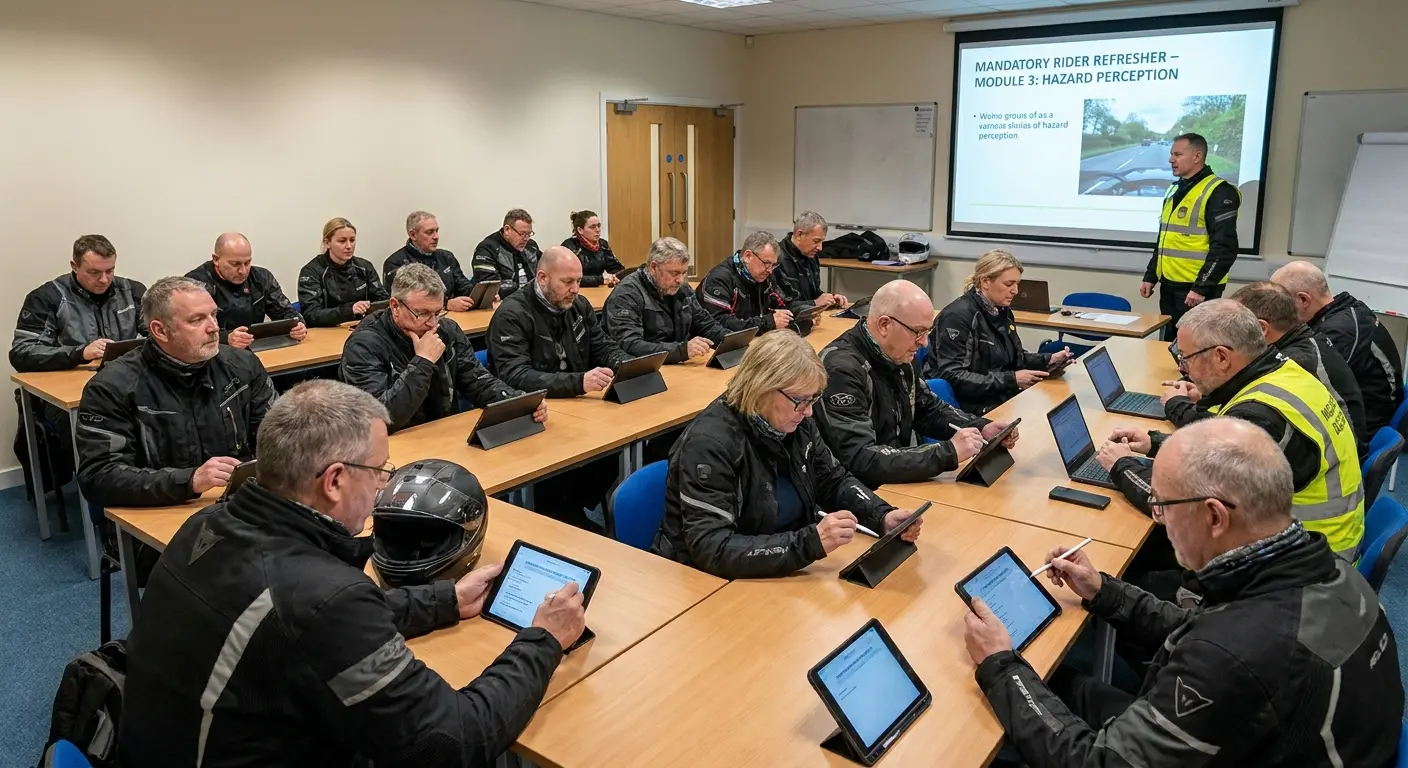
Your motorcycle endorsement used to renew automatically with your driver's license. Several states now require you to complete a refresher course every 5 to 10 years as a condition of renewal. These courses are shorter than initial training (usually 4 to 6 hours), but they're not free. Expect to pay $100 to $200, and you'll need to schedule it before your expiration date or face late penalties.
The refresher courses themselves focus heavily on new riding technologies and updated traffic laws, which is useful. The frustration comes from the lack of advance notice. Many riders don't find out about this requirement until they receive a renewal notice 30 days before expiration, leaving little time to find an available course.
Digital Endorsements and App-Based Renewals: The New Normal
Physical Licenses Becoming Secondary Documents
Your motorcycle endorsement now exists primarily as a digital credential in your state's DMV app. The physical card you carry is essentially a backup. This creates problems when you're pulled over in areas with poor cell service and can't load your digital license, or when your phone is damaged and you can't prove your licensing status.
Law enforcement officers are supposed to have systems that can verify your license status independently, but those systems don't always work. We're seeing cases where riders receive citations for not having a valid license simply because the digital verification system was down and they couldn't display their credential.
Automatic Renewals That Aren't Actually Automatic
States market their app-based renewal systems as "automatic," but there are multiple failure points. The app might not send you a renewal reminder if your notification settings are configured wrong. The payment might fail if your stored credit card expired. The renewal might not process if there's a hold on your license that you're unaware of (unpaid parking tickets, for example).
When automatic renewal fails, you don't always receive clear communication about it. You might discover your endorsement lapsed only when you're pulled over or when you try to register a new motorcycle.
Data Security Concerns Nobody's Addressing
Your licensing information, training records, test scores, and payment history all live in state-run databases that have varying levels of security. Several state DMV systems experienced data breaches in 2023, exposing personal information for hundreds of thousands of license holders.
The apps themselves often lack basic security features. Many don't offer two-factor authentication. Some store your information locally on your device in unencrypted formats. If your phone is stolen, someone potentially has access to all your licensing credentials and personal details.
Digital License Security Template
Protect your digital licensing credentials with these essential steps:
Immediate Setup (Do This Today)
Enable biometric authentication (fingerprint or face recognition) on your state's DMV app
Set up automatic cloud backup for QR codes and digital certificates (Google Drive, iCloud, or Dropbox)
Screenshot your digital license and save it in a password-protected folder as emergency backup
Add your license expiration date to your calendar with 60-day and 30-day advance reminders
Monthly Maintenance
Verify your DMV app is updated to the latest version
Confirm stored payment methods are current and valid
Check that notification permissions are enabled for renewal alerts
Test that your digital credentials load correctly and QR codes scan
Before Any Phone Change
Export all licensing documents and certificates to cloud storage
Screenshot current digital license with visible expiration date
Note down your license number and any endorsement codes
Verify you can access your DMV account from a web browser, not just the app
If Your Phone Is Lost or Stolen
Immediately access your DMV account from another device and change password
Download the DMV app on replacement phone and verify credentials sync
Contact your state DMV to report potential credential compromise
Request verification that no unauthorized changes were made to your license status
International License Recognition Gets Complicated
Reciprocity Agreements Narrowing
The United States used to recognize motorcycle licenses from most developed countries under reciprocal agreements. Those agreements are being renegotiated with stricter terms. As of 2024, licenses from 12 countries no longer receive automatic recognition, meaning you'll need to complete some portion of the U.S. licensing process even if you've been riding legally abroad for decades.
The specific requirements vary by state. California might require only a written test, while Texas requires both written and skills testing. There's no centralized resource that clearly explains which countries are affected or what you'll need to do, so you're left researching state-by-state.
This one makes me irrationally angry because it disproportionately screws over military families. You're stationed in Germany for three years, you get your license there, you ride legally the entire time, you come back to the States, and suddenly you're treated like you've never been on a bike. Make it make sense.
International Driving Permits Losing Value
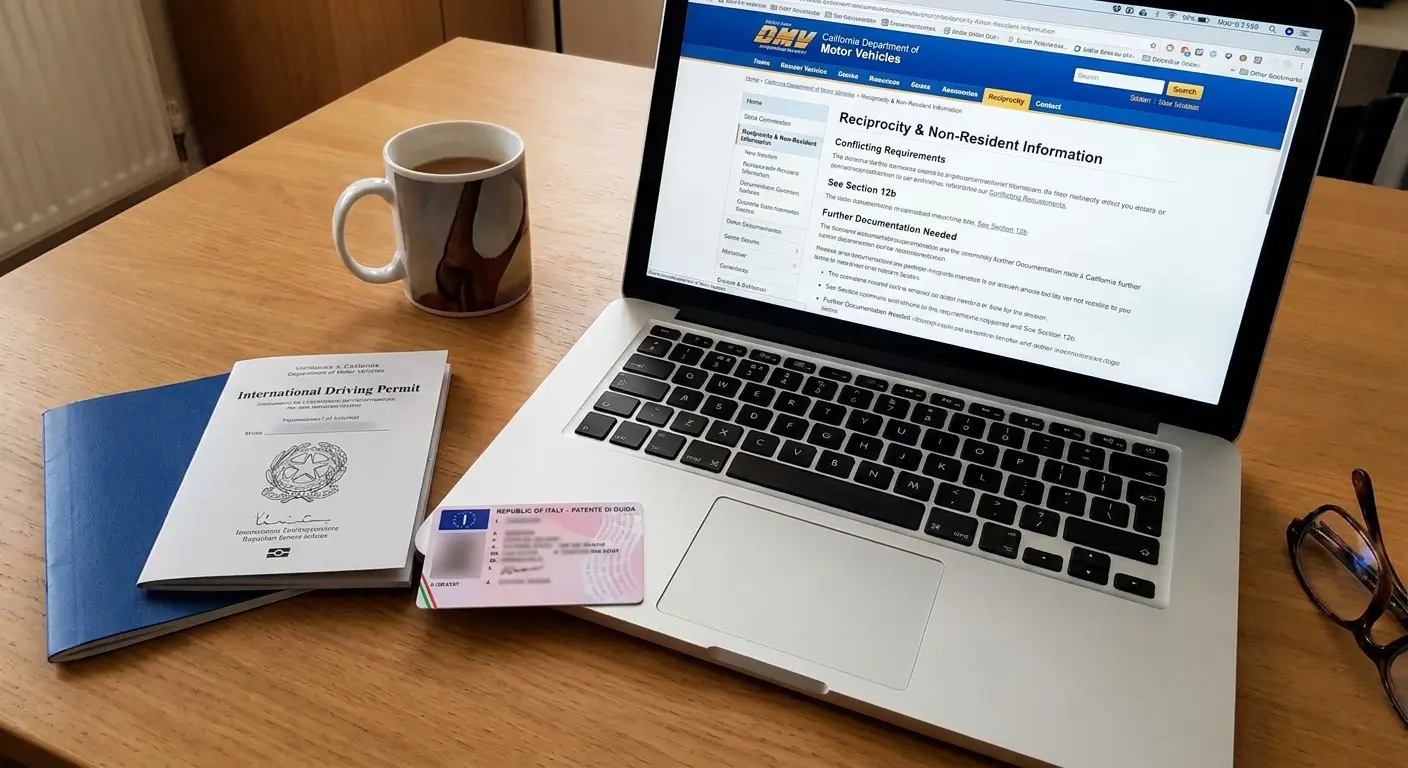
An International Driving Permit (IDP) used to provide temporary riding privileges while you sorted out your U.S. license. Several states no longer accept IDPs for motorcycle operation, even though they still accept them for car operation. This creates a gap period where you're legally unable to ride while waiting to complete the full licensing process.
Military personnel stationed overseas face particular challenges. Their foreign-issued licenses (even if obtained while serving) often don't transfer cleanly when they return to the U.S., forcing them through the entire licensing process as if they were new riders.
Documentation Requirements for Foreign Credentials
Proving your foreign license is valid and current requires more documentation than it used to. You need certified translations, apostille stamps, and sometimes notarized statements from the issuing country's licensing authority. These documents can take months to obtain and cost hundreds of dollars in fees.
Some states require you to provide a complete riding history from your home country, including any accidents, violations, or suspensions. Obtaining this information from foreign bureaucracies is often difficult or impossible, leaving you stuck in administrative limbo.
What Happens When Technology Fails During Your Test
No Standardized Protocols for System Outages
Testing centers rely on digital systems to record your performance, verify your identity, and process your results. When those systems go down (and they do), there's no consistent protocol for how to proceed. Some centers will let you complete the test and process results manually later. Others cancel your appointment and make you reschedule, forfeiting your test fee.
We've documented cases where system outages mid-test resulted in automatic failures because the examiner couldn't verify that you completed all required maneuvers. The appeals process for these situations is unclear and varies by state.
Smartphone Malfunctions During App-Based Testing
Some states now administer portions of the written knowledge test through your personal smartphone rather than on testing center computers. If your phone crashes, runs out of battery, or loses connectivity during the test, the rules about whether you can continue are inconsistent.
You're generally not allowed to charge your phone during testing (it's considered a security risk), so if you arrive with low battery, you're gambling on whether it will last. Some testing centers provide backup devices, but many don't, leaving you to reschedule and pay again.
Digital Skills Test Scoring Creates Disputes
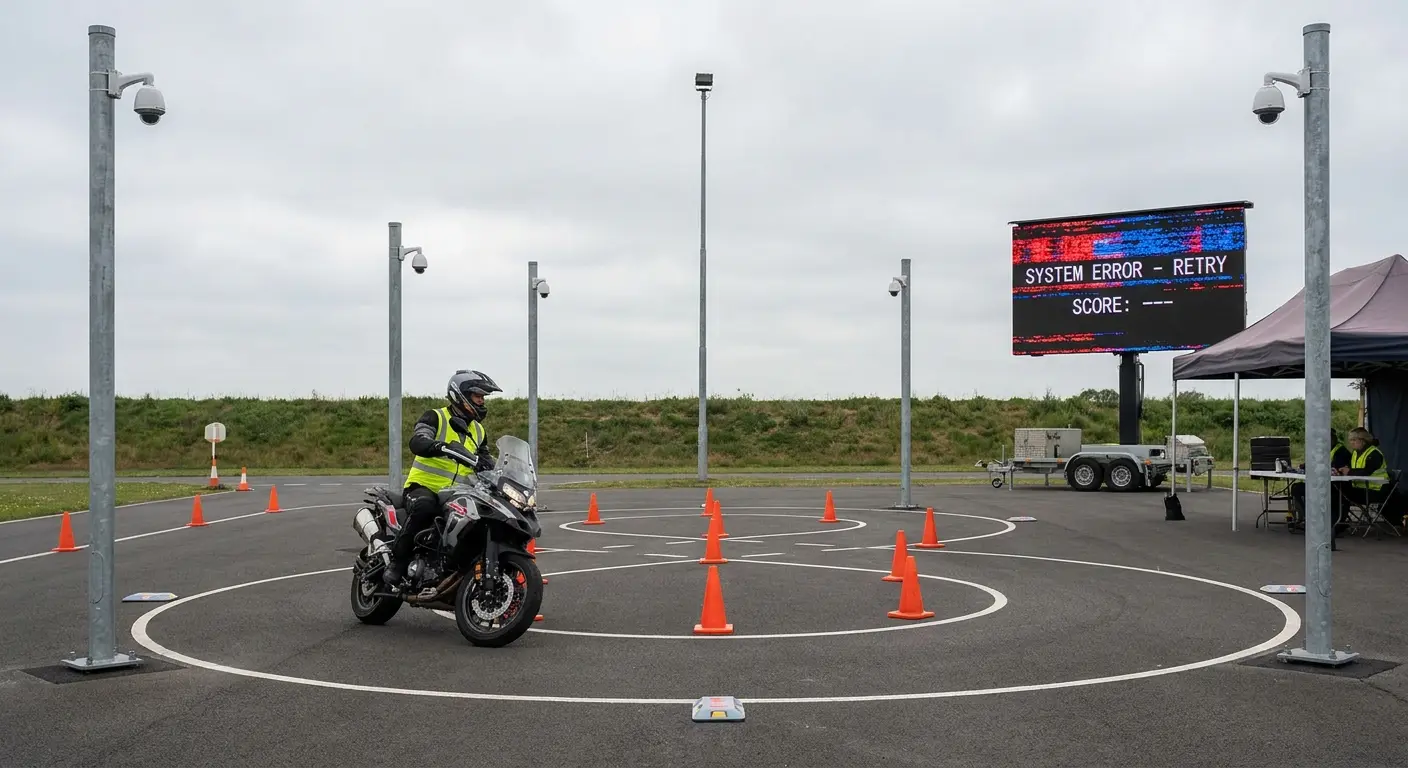
Several states implemented digital scoring systems for skills tests where sensors on the course automatically detect errors. These systems are supposed to be more objective than human examiners, but they're not infallible. Sensors sometimes trigger false positives (registering a foot down when you didn't put it down, for example) with no clear way to dispute the recorded error.
The appeals process for sensor-based test failures is virtually nonexistent. You're essentially told to retest and hope the sensors work correctly next time, which feels arbitrary when you're paying $60 to $90 per attempt.
Insurance Implications of New Licensing Tiers
Tiered Licenses Affect Premium Calculations
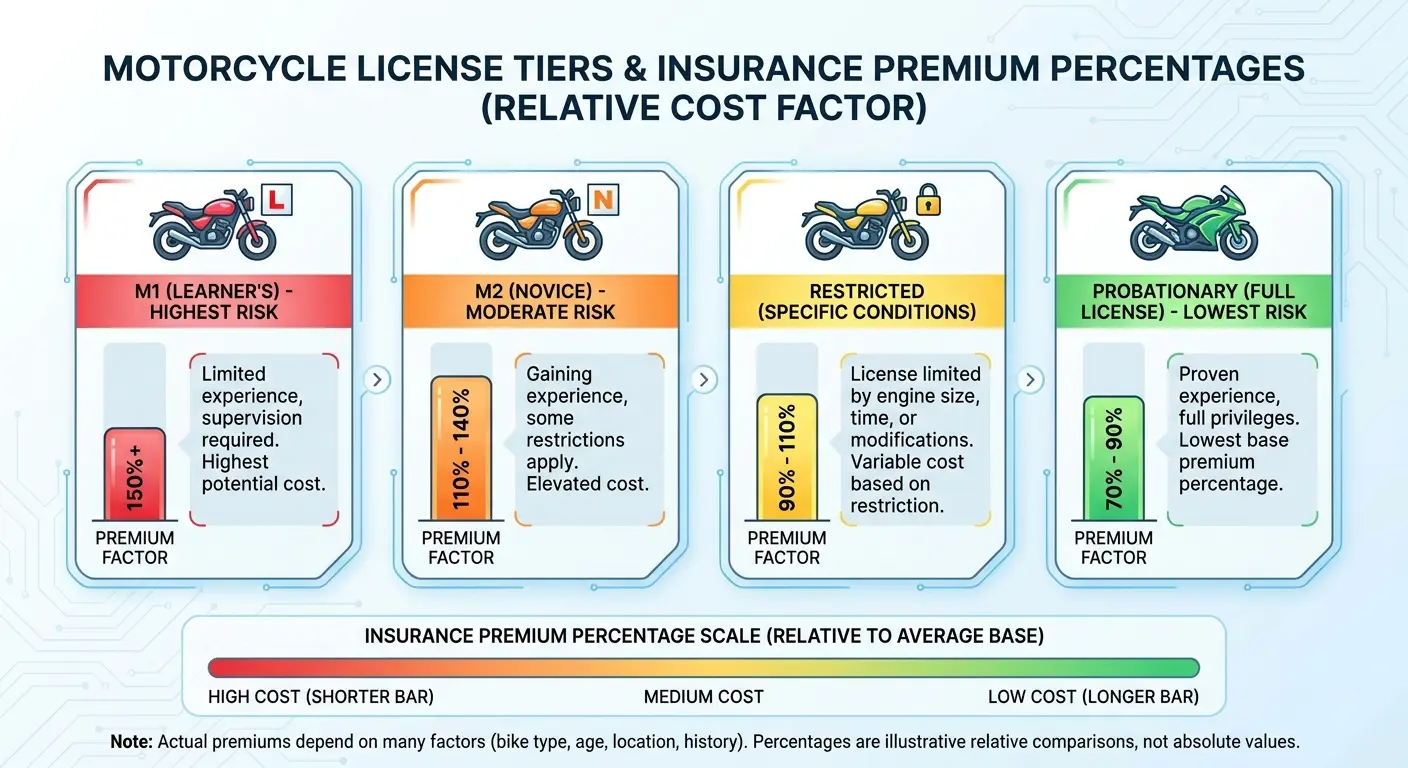
Insurance companies are adjusting their rate structures to account for tiered licensing systems. An M2 restricted license (engine displacement under 400cc) might seem like it would result in lower premiums, but the opposite is often true. Insurers view restricted licenses as indicators of inexperience, which translates to higher risk and higher rates.
The premium difference can be substantial. We're seeing M2 license holders pay 20% to 30% more than M1 license holders for the same coverage on the same bike, purely because of the license designation.
Training Course Completion Discounts Disappearing
Completing an MSF course used to guarantee an insurance discount, typically 10% to 15% off your premium. Many insurers are phasing out these discounts as training becomes mandatory rather than optional. Their logic: if everyone is required to complete training, it's no longer a differentiating factor that indicates lower risk.
Some insurers still offer discounts for advanced courses beyond the basic requirement, but the savings are smaller (5% to 8%) and often expire after one policy year.
Probationary Period Restrictions Aren't Always Disclosed
If you're in a state with probationary licensing periods, your insurance policy might include restrictions you're not aware of. Some policies limit or exclude coverage for accidents that occur while violating probationary terms (carrying a passenger during your probationary period, for example).
They bury this stuff in the fine print and never actually explain it when you're signing up. You might assume you have full coverage only to discover after an accident that your claim is denied because you violated a probationary restriction.
Accessibility Gaps in Modern Motorcycle Licensing
Digital Requirements Create Barriers
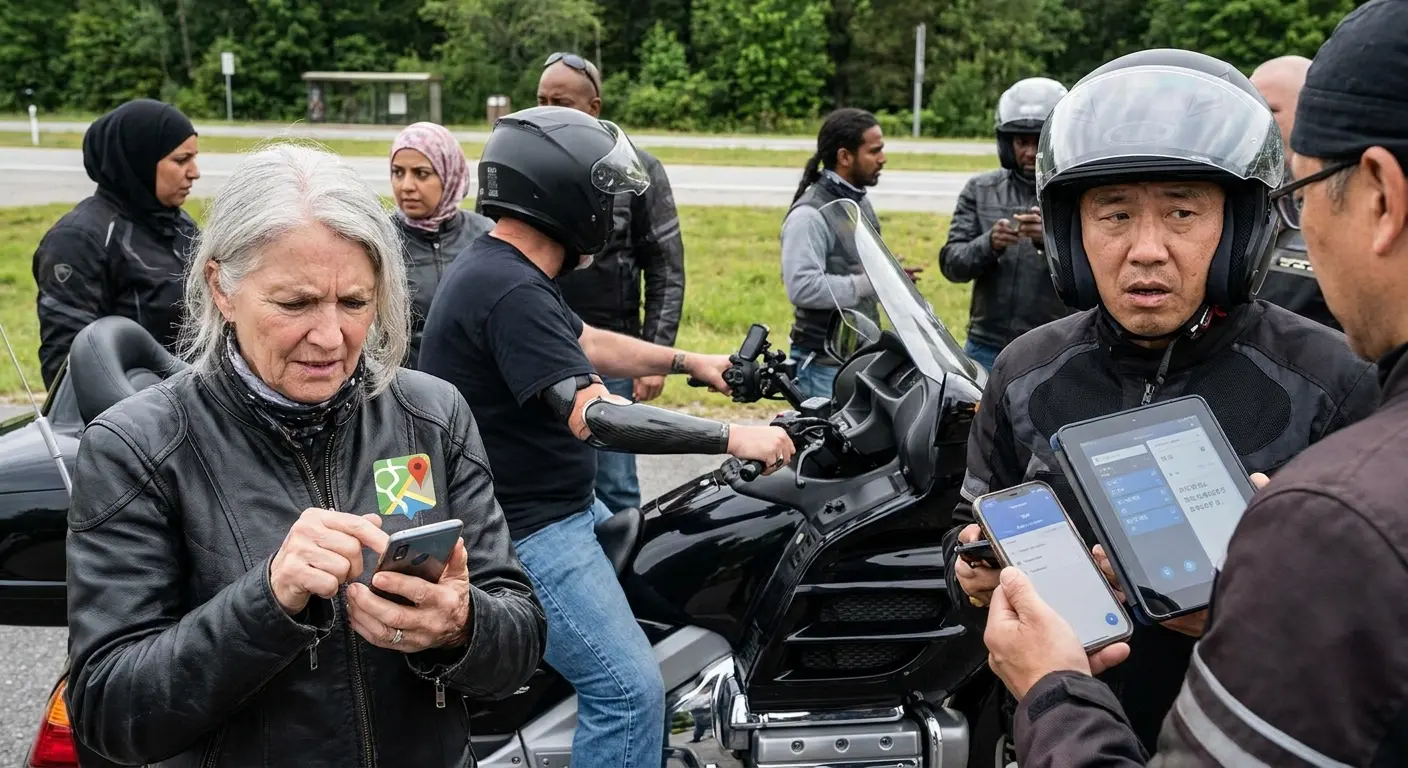
The shift to smartphone-dependent licensing processes excludes people who don't own smartphones or who have limited technical literacy. States are supposed to provide alternative pathways for these individuals, but in practice, those alternatives are poorly publicized and often more cumbersome than the standard process.
Older riders returning to motorcycling after years away are especially affected. They might be highly skilled riders but struggle with app downloads, QR code scanning, and digital documentation management.
Language Access Hasn't Kept Pace
Written tests are supposed to be available in multiple languages, but the digital prep materials and training course content often aren't. Spanish language support is common, but support for other languages is spotty or nonexistent. This creates a situation where someone can legally take the test in their preferred language but has no way to prepare for it effectively.
The video-based training modules that are becoming mandatory rarely include subtitles or translations, even when the written materials are available in multiple languages. This inconsistency makes it harder for non-native English speakers to meet requirements that are theoretically accessible to them.
Physical Disability Accommodations Lag Behind
Adaptive motorcycle equipment has advanced significantly, allowing people with various physical disabilities to ride safely. Licensing processes haven't caught up. Testing courses are designed around standard motorcycles and don't always accommodate adaptive equipment properly.
Some states require you to bring your own adaptive motorcycle to the skills test, which is reasonable. What's not reasonable is that examiners often aren't trained to evaluate riders using adaptive equipment, leading to arbitrary pass/fail decisions based on the examiner's comfort level rather than your actual riding ability.
A veteran in Colorado (I think his name was Mike, though I might be wrong about that) lost partial use of his right leg and uses a custom hand-controlled rear brake system on his motorcycle. When he arrived for his skills test with his adapted bike, the examiner had never seen hand controls before and wasn't sure how to score the braking exercises. The examiner consulted a supervisor, who consulted the state DMV, and after 45 minutes of calls, they told him they needed to reschedule so they could "research the proper evaluation criteria." He waited six weeks for another appointment with an examiner who had supposedly received training on adaptive equipment, only to find that examiner was equally unfamiliar and uncomfortable with the setup. He eventually passed on his third attempt, not because his riding improved, but because he finally got an examiner willing to focus on the results rather than the equipment.
And before someone says "well that's just one case," I found similar stories in forums from adaptive riders in four other states. This isn't an isolated problem. It's just an ignored one.
Sensory Processing Challenges With Digital Testing
The digital testing environments create sensory challenges that paper-based testing didn't. Bright screens, timed question displays, and audio prompts can be overwhelming for people with sensory processing differences or attention-related conditions.
Accommodations exist on paper (extended time, separate testing rooms), but requesting them requires extensive documentation and advance notice that many people don't know they need to provide. The accommodation request process itself is often more complicated than the actual testing.
Preparing for Requirements That Don't Exist Yet
Telematics Integration on the Horizon
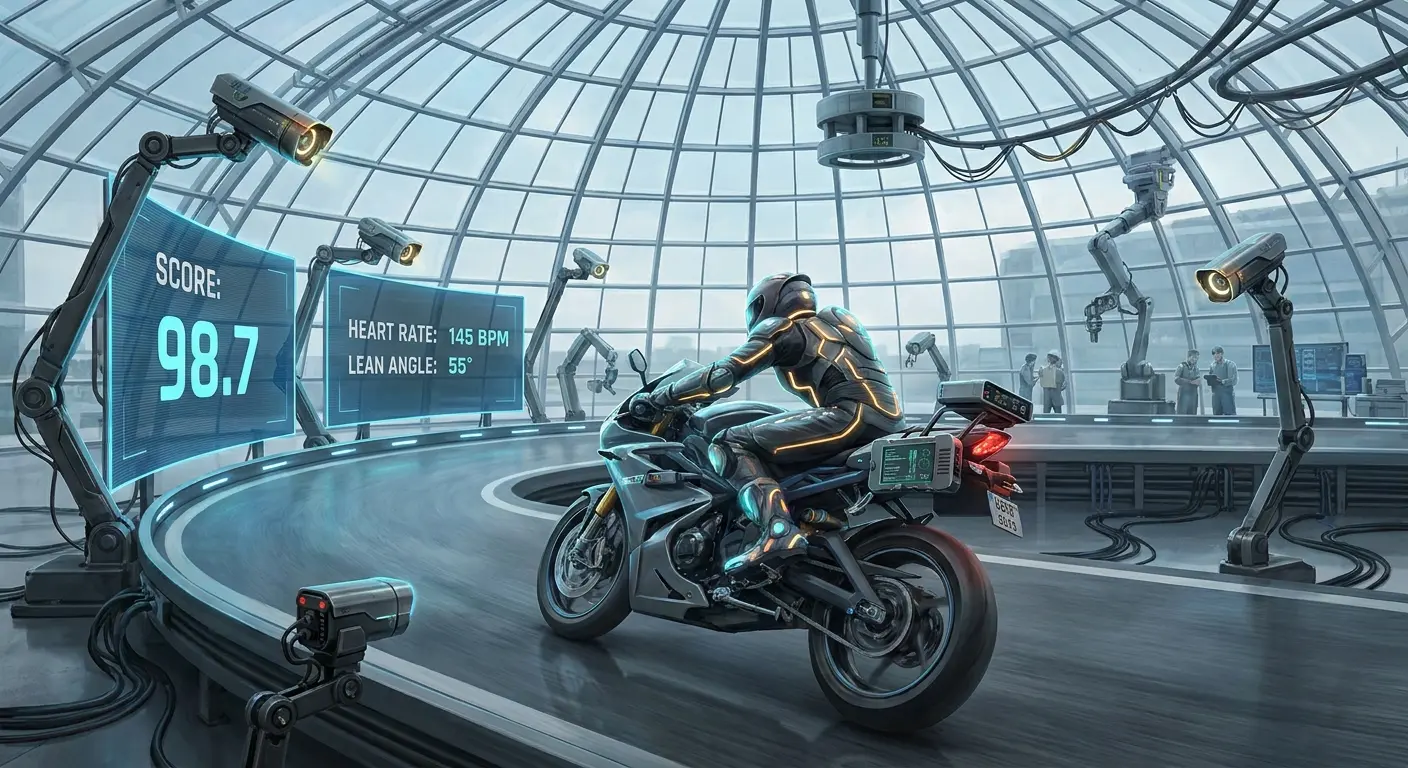
Several states are piloting programs that would require new riders to install telematics devices on their motorcycles during probationary periods. These devices monitor speed, braking, cornering, and other riding behaviors, transmitting data to licensing authorities.
They claim it's about identifying unsafe riding patterns early and providing targeted additional training. The privacy implications are significant. You're essentially allowing the government to track your every ride, and there's little clarity about how that data will be stored, who can access it, or how long it will be retained.
When you're trying to understand how do I get my motorcycle license in 2025 or 2026, you might be looking at mandatory telematics as part of the answer. That's a different world from what riders faced even three years ago.
Mandatory Connected Helmet Requirements
Proposals are circulating in multiple state legislatures that would require riders to wear connected helmets equipped with communication systems. The justification is safety (allowing emergency services to locate you quickly after an accident), but it's another layer of required technology and ongoing costs.
Connected helmets range from $400 to $1,200, and many require subscription services for the connectivity features. Making these mandatory would create a significant financial barrier to entry for new riders.
Periodic Skills Retesting for All License Holders
Some states are considering requirements for all motorcycle license holders to complete skills retesting every 10 years, regardless of riding history. The administrative burden of testing millions of existing riders would be substantial, and the logistics haven't been worked out.
This would represent a fundamental shift from viewing a motorcycle license as a credential you earn once to viewing it as a privilege that requires ongoing demonstration of competency. The implications for riders who live in rural areas with limited testing availability would be especially challenging.
AI-Assisted Evaluation Systems
Testing centers are experimenting with AI systems that analyze your riding during skills tests, providing supposedly objective scoring. These systems use cameras positioned around the course to track your movements and flag errors automatically.
These things screw up constantly, but good luck proving it. The appeals process when AI makes a wrong call is underdeveloped. You're essentially trusting an algorithm to determine whether you pass or fail, with limited recourse if the technology makes a mistake.
Rokform and the Mounting Problem Nobody Solved
Okay, real talk about phone mounts, because this is where I watched a lot of people screw up during training courses.
Cheap phone mounts are useless in this situation. I'm talking about the $15 suction cup thing from Amazon that everyone buys. It'll fall off during your first emergency braking drill, guaranteed. You're practicing emergency stops, swerving, and low-speed maneuvers where your bike might tip over. Your phone needs to stay secure through all of that, and it needs to be positioned where you can actually access it quickly when an instructor asks you to check in or verify something.
We've seen this friction point repeatedly. Riders show up to training courses with suction cup mounts that fail during the first practice session. Or they're fumbling with their phone in their pocket when they need to scan a QR code, wasting time and creating frustration. I ended up using a Rokform mount because it's one of the few that actually stays attached when you drop the bike. And you will drop the bike during low-speed practice. Everyone does. The Rokform Pro Series Motorcycle Phone Mount uses a magnetic system with their RokLock twist-lock mechanism, so you can mount and dismount in under two seconds when you need to film a maneuver or show your instructor your check-in confirmation.
This isn't about convenience anymore. It's about meeting requirements that assume you have reliable phone access at all times. Whether you're working toward your California motorcycle permit or dealing with a motorcycle license CA renewal, your phone is part of the process now. Having a mount that actually works under training conditions matters.
The Rokform Rugged Case adds another layer of protection for riders who are still learning. When you drop your bike during a slow-speed drill, your phone shouldn't be the casualty. The case is built to military drop-test standards and integrates with the magnetic mounting system, so you're not choosing between protection and functionality.
(Yeah, this is a recommendation for a specific product. No, they didn't pay me to say this. I'm mentioning it because I watched three people's phones hit the pavement during my MSF course and I'd rather you not be the fourth.)
Things I Definitely Forgot to Mention
Look, this post is already way longer than I intended, and I know I'm missing stuff. I didn't get into the helmet law changes in five states. I barely touched on the group ride restrictions some places are implementing. I didn't mention the new insurance requirements for bikes over 1000cc in certain states. There's always more. That's kind of the point - the requirements keep expanding, and keeping up with all of it is a part-time job nobody signed up for.
Actually, quick thing I should've mentioned back in the digital shift section: some states are charging convenience fees for app-based scheduling. Convenience fees. For a system that's mandatory. California charges $2.50. It's not a lot, but it's the principle - you're paying extra to use the only method they allow.
So What Do You Actually Do With All This?
Here's where I'm supposed to give you a clean action plan. Five simple steps to navigate the new licensing requirements. But there isn't one, because the requirements aren't stable enough to build a plan around.
What I can tell you: Budget more time and money than you think you need. The official fee schedule says $87 total? Plan for $300-400 once you factor in apps, retests, gear they don't list as required, and the subscription to whatever prep service your state pushes. The website says 15 hours of training? Block out three weekends, not one.
Back up every digital document in at least three places. Screenshot your QR codes. Save PDFs to cloud storage. Email yourself copies. I know this sounds paranoid, but I've read too many stories about people losing everything when their phone died and having to start over from scratch.
Get a phone mount that can survive impacts. Not "might survive" or "should survive" - actually will survive. Because you're going to drop your bike during training. Everyone does. Your phone shouldn't be the casualty.
And maybe most importantly: Check your state's DMV website every few months, even after you're licensed. These requirements change constantly. What's optional today might be mandatory in six months. What's free today might cost $50 next year. The digital renewal that worked fine last time might have new requirements you don't know about until you're 48 hours from expiration.
The whole system is shifting toward treating riders like problems that need constant monitoring instead of people learning a skill. Not making better riders - just creating more expensive barriers and more ways to track us. That's the part that bothers me most. Not the technology itself, but what it assumes about us.
If you're just starting this process: good luck. Seriously. You'll need it more than you should.

