


Table of Contents
The Real Cost of Battery Degradation (That Nobody Talks About)
What Actually Happens When Your Battery Dies Slowly
The Repair vs. Replace Decision Tree
Why Most Battery Repairs Fail Within Six Months
The Protection Gap Everyone Ignores
How to Extend Battery Life Before You Need Repair
What Repair Shops Won't Tell You About Success Rates
TL;DR
Quick version: Battery replacements seem cheap until you factor in the data risk, downtime, and the fact that most fail within 6 months anyway. The real problem? Physical damage and heat you could've prevented with a decent case. Third-party repairs void warranties and use parts from who-knows-where that work great for a few weeks, then tank. A quality protective case costs less than one battery replacement and actually addresses why your battery died in the first place instead of just swapping in another one that'll fail the same way.
The Real Cost of Battery Degradation (That Nobody Talks About)
Your battery always dies at the worst possible moment. Always.
You're heading into a meeting. Dead at 40%. Middle of a client call. Black screen at 25%. Trying to pull up your boarding pass at the airport. Phone's off, showing 30% two minutes ago.
This isn't bad luck. It's physics catching up with months of damage you didn't know was happening.
Look, I've spent years in the phone protection industry, and the number of people who come to us AFTER their second or third battery replacement is depressing. They think they just got unlucky with a bad battery. They didn't. They got a temporary fix for a permanent problem.
NH iPhone Repair says you can expect your battery to last two to three years or around 300-500 charging cycles. But that's assuming perfect conditions. No drops. No heat exposure. No cheap case trapping heat against your phone for hours every day.
Most phones don't live in perfect conditions.
We need to stop thinking about battery repair as fixing a worn-out part. You're addressing a symptom while completely ignoring what killed your battery in the first place.
The Invoice Is Just the Beginning
So you're gonna drop $79 for a battery swap at most repair shops. Sounds reasonable, right?
That number covers the part and labor. That's it.
What it doesn't cover is the three hours you spent without your phone. Or the full day if they had to order the battery. The hour you spent backing up your data beforehand (you DID back it up, right?). The mental overhead of wondering if your photos are still there, if your banking app will work, if they're going to find that embarrassing text thread from last weekend.

The opportunity cost is what really gets you. Missed calls. Can't verify that two-factor authentication code. Had to explain to your partner why you were unreachable during a family situation. These aren't dramatic nightmare scenarios. This is literally just Tuesday.
Sarah (not her real name, she's still mad about this) is a real estate agent who dropped her phone off Thursday morning for a battery replacement. Shop said "2-3 hours." By noon, she'd missed a call from a buyer ready to make an offer on a $450,000 property. The buyer moved on. Lost commission from that one missed call: $13,500. Battery repair: $79.
She told me she just sat in her car staring at her phone after she picked it up, doing the math in her head over and over. Still uses it as an example when she's explaining to other agents why she never lets her phone out of her sight now.
The Data Vulnerability Window
Repair shops need access to your device. Your photos, messages, banking apps, saved passwords. Everything.
Most technicians are trustworthy. Most. That's not exactly the confidence level you want when your entire digital life is sitting on a counter in the back room of a strip mall repair shop.
You can wipe your phone before repair. Then you're looking at hours of restoration afterward. Apps need reinstalling. Settings need reconfiguring. That weird Wi-Fi issue you finally fixed six months ago? You're troubleshooting it again. The battery replacement takes 30 minutes. Full recovery takes days.
The Reliability Tax
Your phone works after the repair.
For now.
But you've introduced an uncertainty variable that didn't exist before. Is that slight warmth normal? Should the battery percentage be dropping this fast? Did they use a quality replacement or whatever was cheapest?
You're now monitoring your phone's behavior in ways you never did before. That mental overhead compounds daily. Checking battery health settings obsessively. Googling "normal battery drain after replacement" at 11 PM. You traded one problem for a different kind of anxiety.
What Actually Happens When Your Battery Dies Slowly
Battery degradation isn't some mystery. The chemistry is well understood. What's missing is the connection between your daily habits and whether your battery lasts three years or barely makes it to eighteen months.
When you're trying to figure out if you need a new battery or if something else is wrong, checking battery life differences across models helps you understand what's normal wear versus actual failure.
MobileKlinik says Apple considers battery health 'good' at 80% capacity or more. Anything less and you're looking at slower performance, faster draining, unexpected shutdowns. But getting to that 80% threshold isn't just time passing. It's everything your phone endured between unboxing and the day you noticed problems.
The Chemistry of Capacity Loss
Lithium-ion batteries degrade through something called solid electrolyte interphase layer growth. Yeah, I'm not gonna quiz you on that term. But here's what it actually means for your phone.
Every charge cycle causes tiny chemical reactions that build up residue on the battery's internal components. This residue acts like insulation, making it harder for the battery to hold and deliver charge.
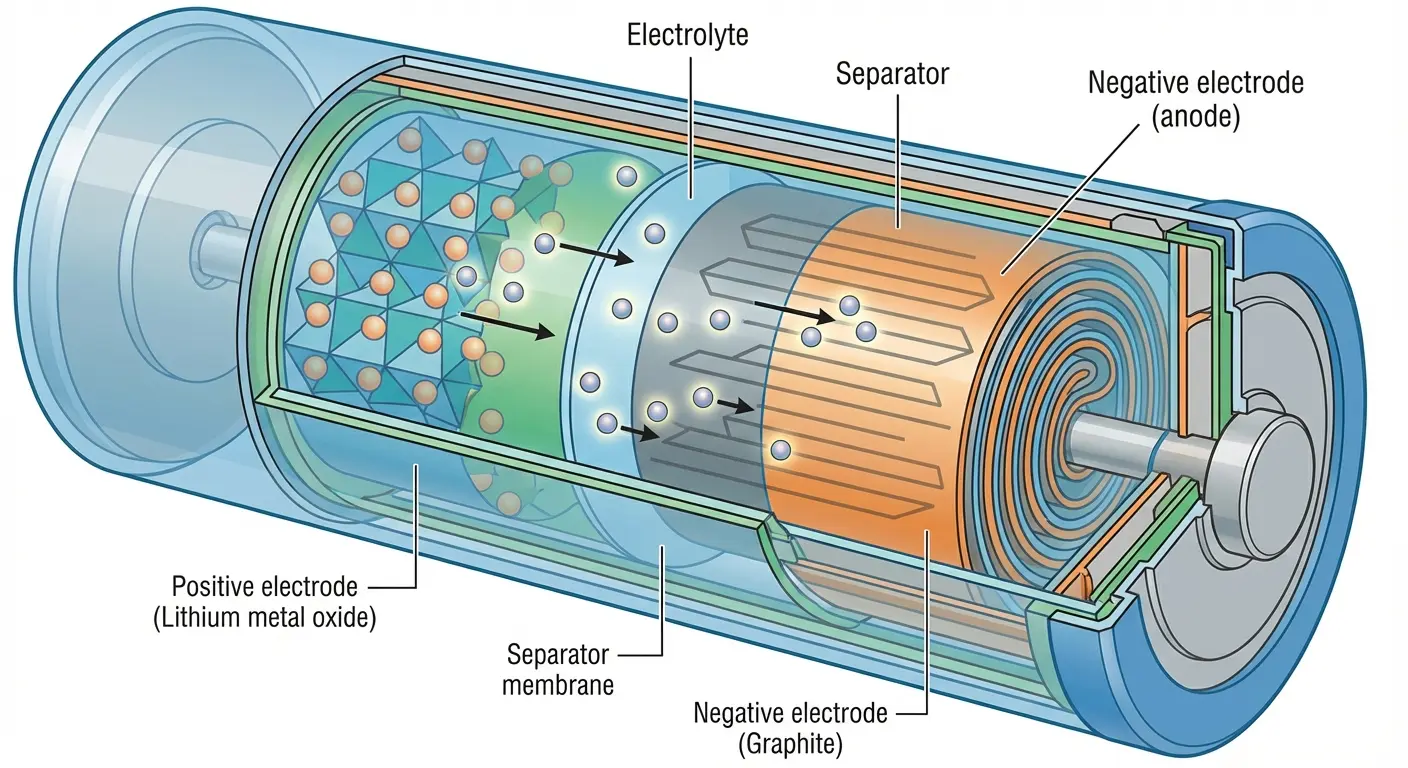
Temperature accelerates this exponentially. A battery running at 95°F degrades roughly twice as fast as one at 70°F. Your phone heats up from processor-intensive tasks, sure. But also from direct sunlight. From being pressed against your body. From (and nobody mentions this) inadequate heat dissipation in cheap cases that trap heat like a little oven around your phone.
Physical Damage You Can't See
Drop your phone once, crack the screen. Drop it five times, and you've potentially compromised the battery's internal structure even if everything looks fine.
Batteries contain thin layers of material separated by microscopic spaces. Impact force can cause these layers to shift. Internal short circuits. Ruptures that gradually worsen.
This damage doesn't show up immediately. Your battery works fine for weeks after a bad drop. Then you start noticing faster drain. The percentage jumps from 30% to 15% without warning. Phone shuts down at 20% remaining.
Marcus dropped his phone from waist height onto concrete during a morning run. Screen didn't crack. He figured he got lucky. Three weeks later, his phone started dying at 35%. Four weeks after that, random shutdowns during video calls. When he finally took it to a repair shop, the tech showed him the diagnostic report: internal battery resistance had increased by 340% compared to factory specs. That single drop created micro-fractures in the battery cells that gradually expanded with each charge cycle. Marcus said his stomach dropped when he saw the numbers, because he knew immediately that "lucky" drop wasn't lucky at all.
The Swelling Problem
Batteries expand when they fail. This swelling puts pressure on other components. Screen, logic board, camera modules. You come in for a battery repair, leave with a much larger bill because the swollen battery warped your phone's frame or cracked internal connections.
Swelling happens when the battery's internal chemistry breaks down and produces gas. Usually from overheating combined with physical stress. Once swelling starts, it doesn't reverse. The battery needs immediate replacement, not because it's out of capacity but because it's becoming a physical hazard.
The Repair vs. Replace Decision Tree
We've established that phone battery repair comes with hidden costs and risks. Sometimes repair is the right call. Sometimes it absolutely isn't.
Most people make this decision emotionally. Phone is dying, they need it working, they take the path of least immediate resistance. Spending ten minutes thinking through your actual situation can save you hundreds of dollars and significant frustration.
Decision Factor |
Repair Makes Sense |
Replace Makes Sense |
|---|---|---|
Device Age |
Less than 2 years old |
3+ years old |
Other Issues |
Phone functions perfectly otherwise |
Multiple problems beyond battery |
Repair Cost |
15-20% of replacement value |
30%+ of replacement value |
Warranty Status |
Authorized repair preserves warranty |
Warranty already expired, device outdated |
Performance |
Fast, handles current apps well |
Slow, struggles with updates |
Backup Device |
Available during repair window |
None available, can't afford downtime |
Data Security |
Comfortable with shop's practices |
Concerns about data exposure |
Future Use |
Planning to keep 1+ more years |
Ready to upgrade anyway |
When Repair Makes Sense
Your phone is less than two years old. Functions perfectly otherwise. Clear battery degradation symptoms, nothing else wrong. No screen damage, no water exposure, no persistent crashes.
The repair shop offers a warranty on parts and labor. You've verified they use OEM or certified equivalent batteries (not generic replacements from who-knows-where).
The math works: repair costs 15-20% of replacement value, and you're planning to keep the phone at least another year. You have a backup device during the repair window. You've backed up your data and feel okay with the shop's security practices.
Before you hand over your phone:
Confirm they use OEM or certified equivalent batteries (ask for documentation, not just verbal confirmation)
Verify warranty coverage (minimum 90 days on parts and labor)
Check online reviews specifically about battery replacements (look for 6+ month follow-ups, not just "great service!")
Get a written estimate including all potential additional charges
Complete full device backup to cloud or computer
Screenshot current battery health percentage for comparison
Remove SIM card and any external storage
Disable Find My iPhone/Android Device Protection
Note any existing cosmetic damage (take photos to avoid disputes later)
Confirm turnaround time and get a direct contact number
Ask about their data privacy policy (do technicians have access? for how long?)
Verify they have your specific model battery in stock, not ordering after you drop off
When Replacement Wins
You're already dealing with multiple issues beyond battery life. Phone is three-plus years old, meaning other components are approaching end-of-life. Repair cost exceeds 30% of a new or refurbished device's price. You've had previous repairs that introduced new problems.
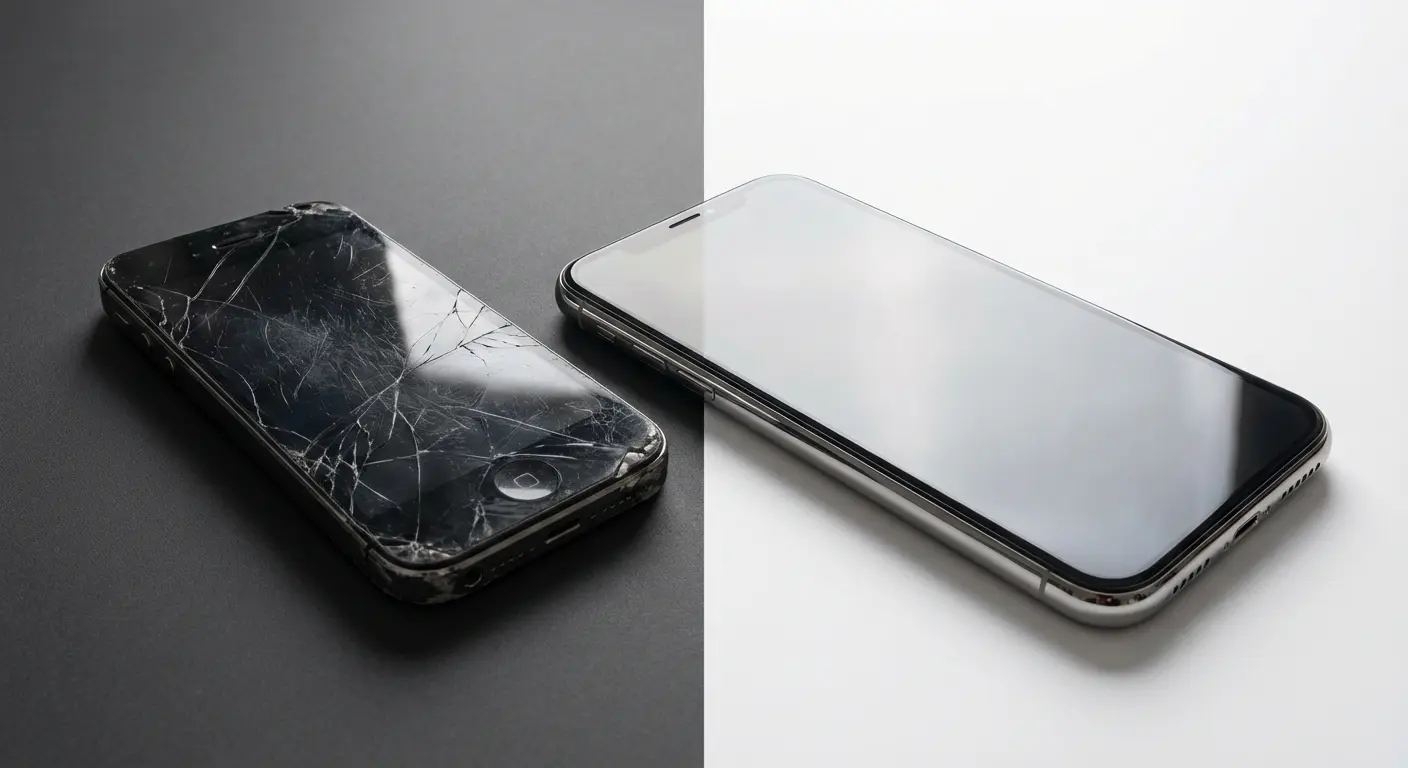
Software updates are noticeably slowing down your device. You're feeling limited by older camera tech, processing speed, connectivity standards. The battery repair becomes a band-aid on a device that's fundamentally reaching end of life. You're not solving a problem. You're postponing an inevitable decision while paying for the privilege.
The Warranty Consideration
Authorized repairs through your device manufacturer preserve your warranty. Third-party repairs void it immediately.
If you're within warranty or have extended coverage, unauthorized battery replacement means giving up potentially thousands in coverage value to save $79 on a repair.
Even if your warranty expired, you're betting no other covered issues will arise. That's a gamble where the house (third-party repair shops) has better odds than you do.
Why Most Battery Repairs Fail Within Six Months
The phone repair industry has a quality control problem nobody wants to talk about. I'm not saying every repair shop cuts corners or uses substandard parts. I'm saying enough do that your odds of getting a repair that actually lasts aren't as good as the friendly tech behind the counter wants you to believe.
The repair landscape might be changing. SlashGear reports the European Union mandated that smartphones must have user-replaceable batteries by February 18, 2027. Manufacturers will need to design phones where batteries can be safely removed and replaced by users without specialized tools. The goal is extending device lifespans and reducing electronic waste, though it'll probably force thicker phone designs to accommodate removable battery compartments and safety features.
That future sounds great. But today you're dealing with sealed devices, third-party repair shops with inconsistent standards, and a supply chain flooded with counterfeit parts.
The Counterfeit Battery Epidemic
Genuine OEM batteries cost repair shops $40-60 wholesale. Generic alternatives cost $8-15.
Guess which one most budget shops use when they quote you $79 for the full service.
These counterfeit batteries use lower-grade lithium cells, inadequate safety circuits, inflated capacity claims. A generic battery labeled "3200mAh" might deliver 2400mAh in real-world use. Safety circuits might fail to prevent overcharging or overheating. Battery works acceptably for a few weeks, then degrades rapidly as the inferior chemistry breaks down.
Installation Errors That Surface Later
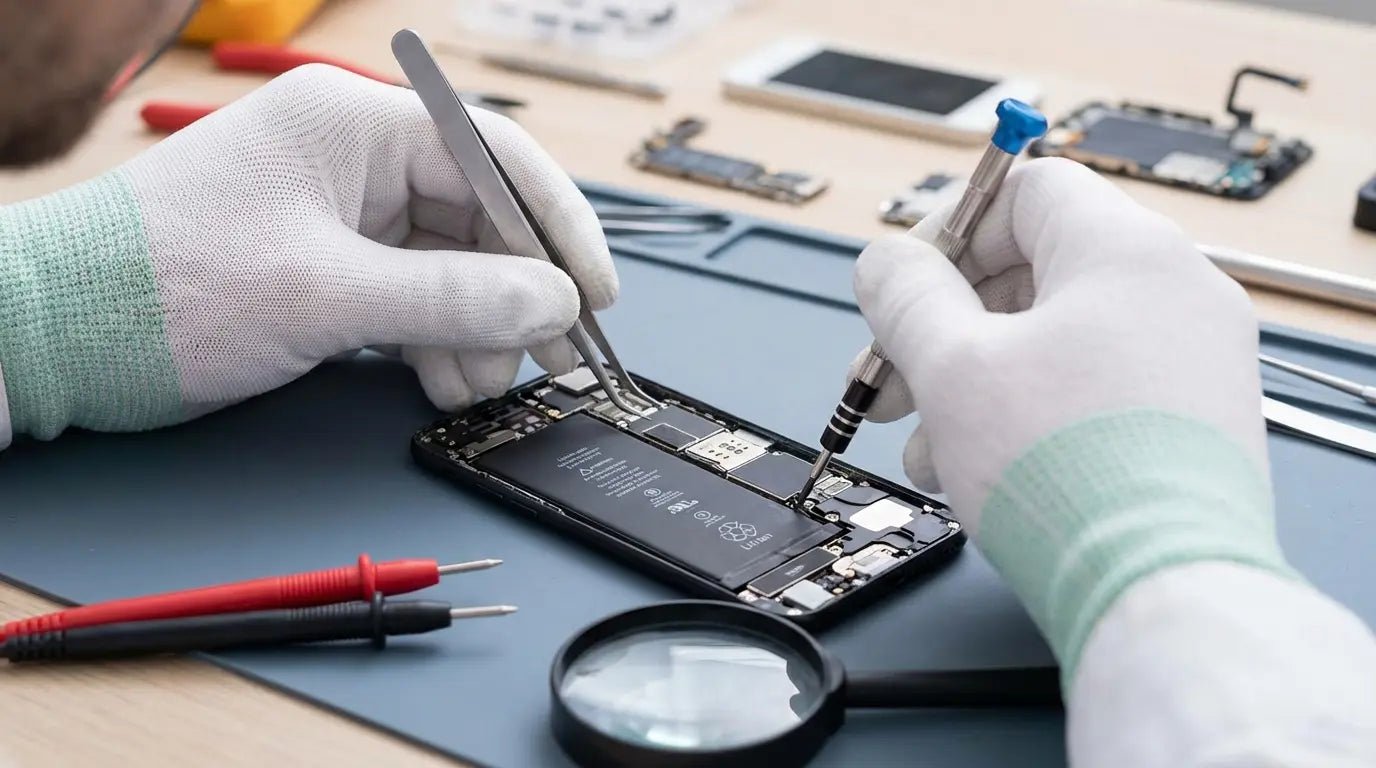
Battery replacement requires disconnecting multiple ribbon cables, removing adhesive, ensuring proper thermal contact with the phone's internal heat management system.
Technicians working on commission or volume quotas rush these steps. Ribbon cable gets slightly bent. Adhesive applied unevenly creates air gaps that trap heat. Screws overtightened create stress points.
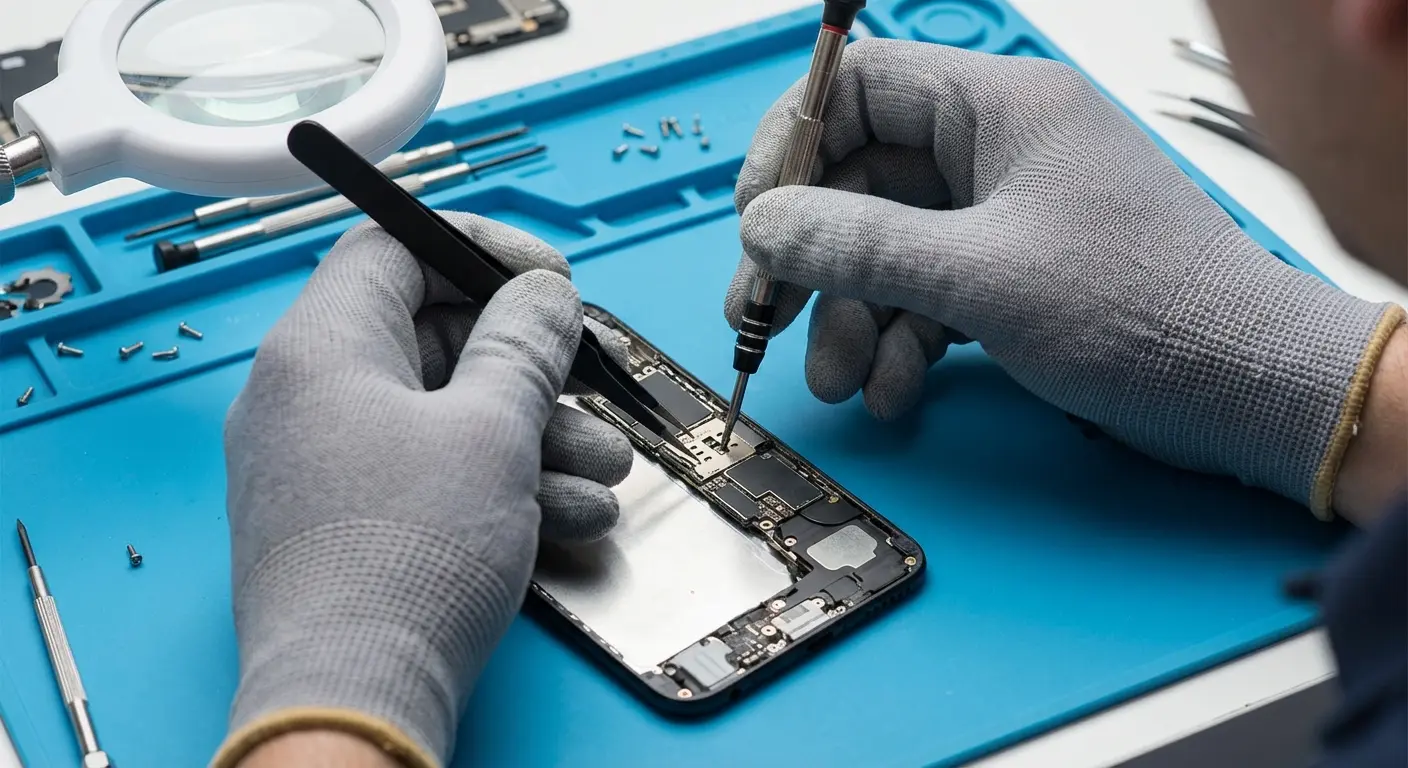
These errors don't cause immediate failure. Your phone works when you pick it up. Weeks later, that bent ribbon cable fails. The trapped heat accelerates battery degradation. Stress points crack under normal handling. You're back at the repair shop, and they're telling you it's a "coincidence" or "unrelated issue."
Google is working on solutions for these installation challenges. Hot Hardware covered Google's patent for a mechanical battery system that could debut as early as the Pixel 11 Pro series. It ditches high-strength adhesives for a rigid metal subassemb ly where the battery slides into the frame and locks using mechanical interlocks. This glue-free approach would let batteries pop out as safe modules without heat guns or solvents, potentially addressing the adhesive-related installation errors plaguing current repairs.
The Diagnostic Shortcut
Quality battery replacement includes diagnostics to verify the battery is actually the problem.
Shops that skip this step might replace a perfectly functional battery when the real issue is software, a failing charging port, or a logic board problem causing phantom drain.
You pay for a battery replacement that doesn't fix anything. Shop made their money. You're still dealing with rapid drain, but now you've also introduced the risks of any repair (data vulnerability, potential installation errors, voided warranty). You solved nothing and created new problems.
The Protection Gap Everyone Ignores
The connection most people miss: battery health and physical device protection aren't separate concerns. They're intimately linked.
Every drop your phone takes. Every hour it spends overheating in a poorly designed case. Every instance of structural flex from inadequate support. All of this contributes directly to accelerated battery degradation.
Understanding the relationship between physical protection and device longevity matters. For professionals relying on their devices daily, cases designed for demanding environments show how proper protection extends far beyond preventing cosmetic damage.
IDR Tech indicates phone batteries lose around 15-20% capacity per year depending on usage patterns. This degradation accelerates when devices are exposed to heat, physical impacts, and structural stress that proper protection could prevent.
We're not talking about keeping your phone looking pretty. We're talking about engineering-level protection that addresses root causes of battery failure.
How Physical Protection Extends Battery Life
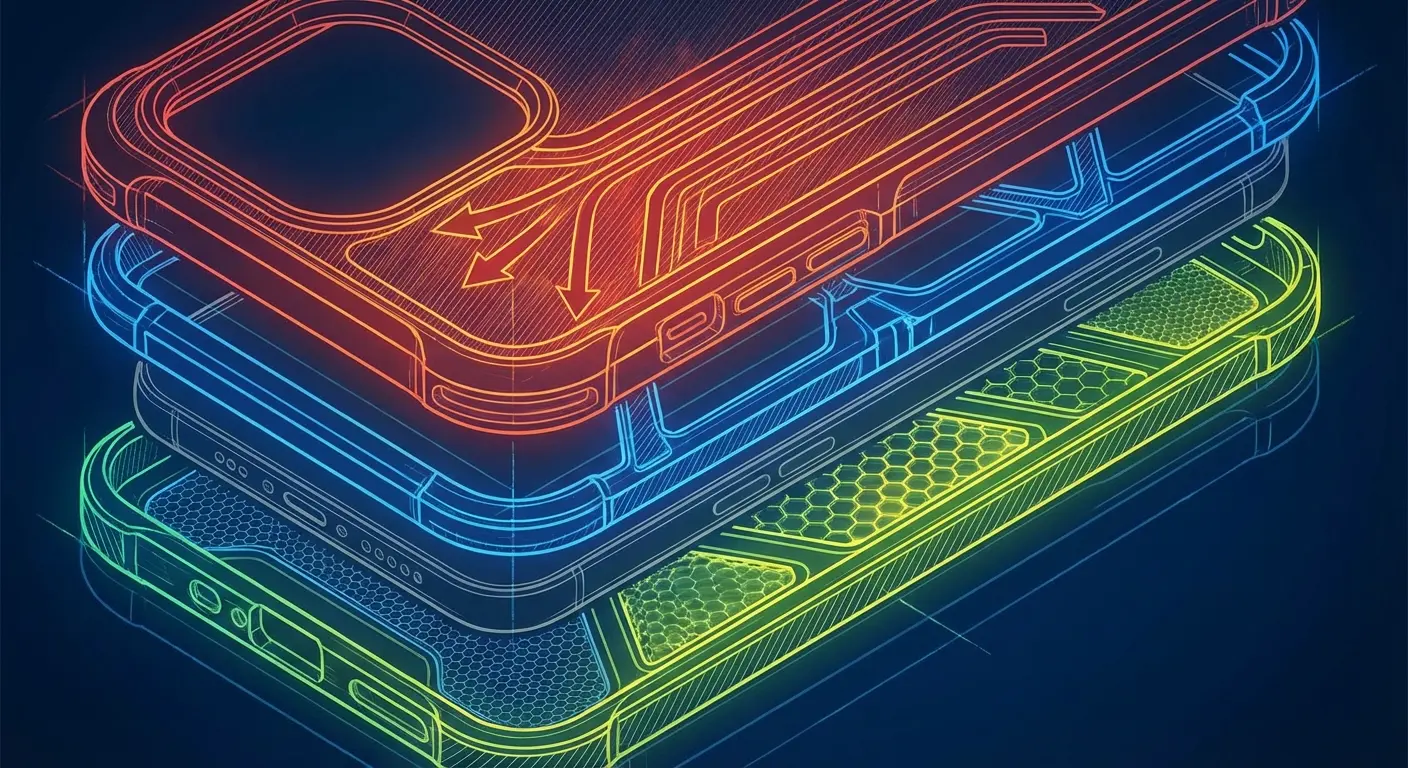
Drop protection isn't just about saving your screen. Every impact your case absorbs is an impact that doesn't transfer to your battery's internal structure. Quality cases distribute impact force across the phone's frame rather than letting it concentrate on vulnerable components.
Heat management matters more than most people realize. Your phone generates heat during normal operation. A case that traps this heat accelerates battery degradation. Cases designed with proper airflow or heat-dissipating materials keep your battery operating in its optimal temperature range. The difference between a phone that runs consistently warm and one that stays cool can mean 20-30% longer battery lifespan.
Protection Feature |
Battery Impact |
What to Look For |
What to Avoid |
|---|---|---|---|
Impact Absorption |
Prevents internal battery layer shifts and micro-fractures |
Dual-layer construction (polycarbonate + TPU), MIL-STD-810G certification |
Single-layer hard plastic, thin fashion cases |
Heat Dissipation |
Keeps battery in optimal temperature range, slows chemical degradation |
Ventilation channels, heat-conductive materials, breathable design |
Thick rubber that traps heat, cases without airflow consideration |
Structural Reinforcement |
Prevents micro-flexing that stresses battery connections |
Rigid frame support, reinforced corners, minimal flex under pressure |
Flexible silicone that allows device bending, cases that don't support full frame |
Corner Protection |
Absorbs drop impact at most vulnerable points |
Raised corners with shock-absorbing material |
Exposed corners, minimal corner coverage |
Raised Bezels |
Prevents screen pressure on battery during face-down drops |
1-2mm raised edge around screen and camera |
Flush design that allows direct surface contact |
The Structural Reinforcement Factor
Batteries degrade faster in phones with compromised structural integrity. A phone that flexes slightly during normal handling puts stress on internal components, including the battery. Cases providing rigid structural support prevent this flexing, maintaining the precise tolerances that keep your battery properly seated and protected.
This becomes critical during temperature changes. Materials expand and contract with heat and cold. A phone without proper structural support experiences micro-movements that gradually loosen internal connections and stress the battery. You won't notice these movements. Your battery's internal structure definitely does.
Protection Quality Indicators
Not all cases offer meaningful protection. Thin fashion cases provide minimal impact absorption. Cases with poor thermal properties trap heat. Cases that don't fully cover corners leave vulnerable points exposed.
Military-grade drop testing (MIL-STD-810G) indicates genuine impact protection. Materials matter: polycarbonate and TPU combinations absorb force better than hard plastic alone. Raised bezels protect your screen and camera without adding bulk. These aren't luxury features. They're functional requirements for protecting your device's longevity.
How to Extend Battery Life Before You Need Repair
Prevention costs less than repair. That's basic math combined with understanding how battery degradation works.
You have more control over your battery's lifespan than you think. Most of that control comes down to protection and thermal management, not charging habits.
For those serious about maximizing device longevity, learning comprehensive protection strategies can prevent the damage that leads to premature battery replacement.
The Daily Habits That Actually Matter
Charging patterns matter less than you've been told. Modern phones have sophisticated battery management systems preventing most charging-related damage.
What matters more: keeping your phone cool during charging. Remove thick cases during charging sessions, especially with fast charging. Don't charge in direct sunlight or hot cars.
Physical protection matters most. Every drop you prevent is potential battery damage you avoid. Every time your case absorbs impact force, you're extending your battery's functional lifespan. This isn't paranoia. It's recognizing battery health is directly connected to overall device protection.
Daily habits worth actually following:
Remove phone from direct sunlight when not in use
Avoid leaving phone in hot car (even for "just a minute")
Remove thick case during fast charging sessions
Keep phone in protective case all other times
Don't charge on soft surfaces (beds, couches) that trap heat
Avoid using phone for intensive tasks while charging
Check case regularly for damage reducing protection effectiveness
Clean charging port monthly for proper connection
Avoid exposing phone to extreme cold (below 32°F)
Monitor battery health monthly through device settings
Keep phone away from heat sources (radiators, stovetops, heating vents)
Use original or certified chargers to prevent voltage irregularities
Temperature Management Strategies
Your phone's biggest battery enemy isn't heavy use. It's heat exposure.
Leaving your phone in a hot car for 30 minutes causes more battery degradation than a full day of normal use. Direct sunlight exposure while using GPS navigation can push internal temperatures into ranges causing permanent capacity loss.

Use cases with proper heat dissipation. Avoid processor-intensive apps while charging (combining two heat sources). If your phone feels hot, let it cool before continuing use. These simple practices can extend battery life by months or years compared to users who ignore temperature factors.
Jennifer, a delivery driver, used her phone for GPS navigation 8-10 hours daily. Dashboard mount in direct sunlight, plugged in continuously. After 14 months, battery health dropped to 61%. Her coworker David did the same job with a dashboard mount using a sun shade, only charging during breaks in shaded areas. After the same 14 months, his battery health remained at 87%. Same phone model, same usage intensity, dramatically different outcomes based solely on temperature management.
The Protection Investment Math
Quality protection costs $40-80 upfront. Battery replacement costs $79-129. Screen replacement costs $150-300. Logic board repair costs $200-400.
You're looking at potential repair costs of $400+ over your phone's lifespan versus a one-time protection investment under $100.

The math becomes even more compelling when you factor in hidden repair costs: downtime, data risk, reduced resale value (repair history lowers trade-in value), and the stress of dealing with device problems. Prevention isn't just cheaper. It's dramatically more convenient and less risky than the repair cycle.
What Repair Shops Won't Tell You About Success Rates
The repair industry operates on a business model you need to understand before handing over your device.
I'm pulling back the curtain on practices affecting your repair outcomes that rarely get discussed in customer-facing conversations.
While repair shops focus on quick fixes, understanding how comprehensive protection works reveals why prevention delivers better long-term outcomes than reactive repairs.
The Repeat Customer Business Model
Repair shops don't make money from customers who never come back. They profit from repeat business. The battery replacement failing after seven months. The screen repair introducing touch sensitivity issues requiring another visit. The charging port cleaning damaging internal components.
Most shops offer 90-day warranties on repairs. Why not one year?
They know many repairs will fail within 6-12 months. The warranty period is calculated to cover obvious immediate failures while expiring before more common delayed failures surface. You're back paying for another repair. Shop just doubled their revenue from your device.
The Diagnostic Incentive Problem
Thorough diagnostics take time and expertise. They might reveal you don't need a repair. Software issues. Settings problems. App conflicts.
Repair shops make nothing from telling you to restart your phone or delete a problematic app. They make $79+ from replacing your battery, whether you need it or not.
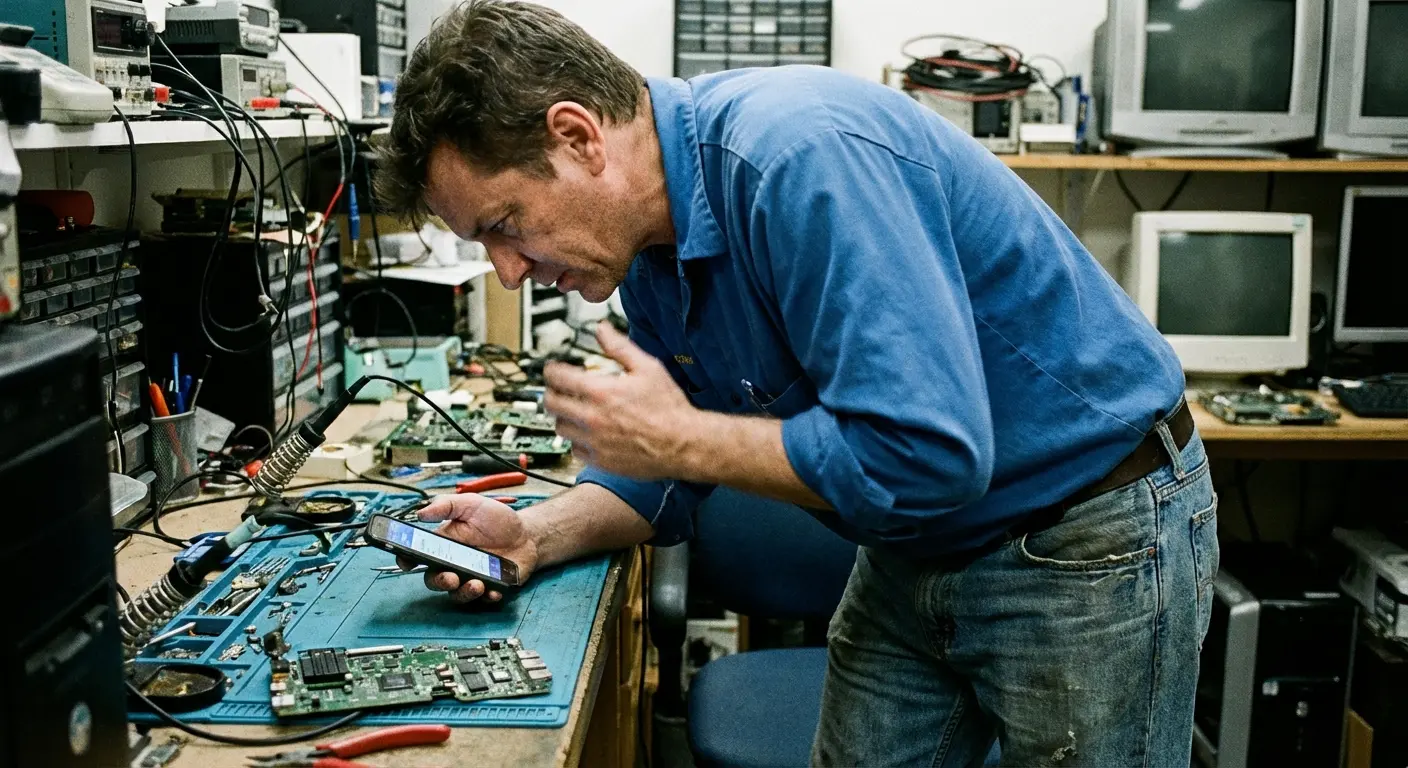
This creates an incentive structure favoring unnecessary repairs. You come in complaining about battery life. Technician spends 30 seconds looking at your phone, recommends replacement. Didn't check for apps causing background drain. Didn't verify battery health metrics. Didn't ask about charging habits. Just sold you a repair.
The Parts Quality Disclosure Gap
Most repair shops don't voluntarily disclose parts sourcing. They use terms like "premium replacement" or "OEM equivalent" without defining what those terms mean.
You're trusting their $79 battery replacement uses quality components. You have no verification method and no industry standards requiring disclosure.
Some shops use genuine OEM parts. Many use certified third-party parts meeting quality standards. Others use whatever's cheapest from overseas suppliers with zero quality control. You won't know which category your repair falls into until months later when the battery fails prematurely. By then, your warranty conveniently expired. You're facing another repair bill.
Protecting Your Investment From Day One
Full disclosure time: I work for Rokform. We make phone cases. So yeah, I'm biased.
But here's why I actually use our cases on my own phone, and why I genuinely believe they address the problems we've been talking about.
Most battery problems trace back to physical damage, heat exposure, and accumulated stress that proper protection could have prevented. You can't control battery chemistry or manufacturing defects. You can control how well you protect your device from environmental factors accelerating degradation.
For those seeking the ultimate protection solution, exploring the most protective phone cases available demonstrates how engineering-focused design prevents damage necessitating expensive repairs.

We build Rokform cases specifically to address these protection gaps. Our cases meet MIL-STD-810G drop protection standards because we engineer them with dual-layer construction absorbing and dispersing impact force away from your phone's internal components (including that vulnerable battery). The polycarbonate shell and TPU liner work together to handle drops, bumps, and daily abuse gradually destroying unprotected devices.
Heat dissipation isn't an afterthought in our design process. Our cases incorporate ventilation considerations preventing heat buildup during intensive use or charging. Your phone stays cooler, directly translating to slower battery degradation and longer overall lifespan. We've had customers report their phones running noticeably cooler in Rokform cases compared to previous protection solutions.
The structural reinforcement our cases provide prevents micro-flexing and component stress occurring in inadequately protected phones. Your battery stays properly seated. Internal connections remain stable. You're not introducing gradual wear patterns leading to premature battery failure and expensive repairs.
What this means for your wallet: A Rokform case costs less than a single battery replacement. Over your phone's lifespan, proper protection from day one can eliminate or significantly delay the need for phone battery repair entirely. You're not just protecting against catastrophic damage (shattered screens, bent frames). You're preventing gradual degradation most people accept as inevitable but is largely preventable.
What makes Rokform different? We don't compromise between protection and functionality. Our patented RokLock™ mounting system integrates seamlessly with protective design, giving you secure mounting options without sacrificing structural integrity keeping your battery and other components safe. We use premium materials (aerospace-grade polycarbonate and impact-absorbing TPU) because protection quality directly impacts your device's longevity and performance.
We've engineered every detail with purpose. Raised bezels protect your screen and camera from surface contact. Reinforced corners absorb impact at most vulnerable drop points. Precise fit maintains your phone's structural integrity while allowing proper heat dissipation. This isn't about making phones look rugged. It's about delivering engineering-level protection extending your device's functional lifespan.
Ready to stop the repair cycle before it starts? Check out our full line of protective cases engineered specifically for your device. We've spent years refining protection technology preserving your phone's longevity, not just its appearance.
Final Thoughts
Look, you're gonna do what you want. But if you're reading this after your second battery replacement in 18 months, maybe consider that the problem isn't your battery.
It's everything that happened to your phone before the battery gave up.
Phone battery repair isn't really about batteries. It's about accumulated damage, inadequate protection, and a repair industry profiting from recurring problems rather than permanent solutions. You can play the repair game (trading money, time, and data security for temporary fixes), or you can address root causes making repairs necessary in the first place.
The choice seems obvious when you examine actual costs. Prevention through proper protection costs less, delivers better outcomes, and eliminates the stress and inconvenience of the repair cycle. You're not hoping a repair shop uses quality parts and proper installation techniques. You're not gambling with data security or device downtime. You're protecting your investment from physical damage and environmental stress causing most battery problems.
Your phone's battery will eventually degrade. That's chemistry and physics working exactly as expected. But you control how quickly that degradation happens and whether it occurs on a natural timeline or an accelerated schedule caused by preventable damage.
Most people learn this lesson after their first or second expensive repair. You now have the information to skip that expensive education entirely.

