


Quick links if you want to skip around:
Why the whole screen protector conversation is backwards
When you actually need one (probably not as often as you think)
If you must buy one, here's what doesn't completely suck
Look, I'll save you some time: most people don't need screen protectors, and the ones you're buying are probably making your $1,200 phone feel like a $200 one. Modern glass is way tougher than the accessory industry wants you to believe. But if you work construction or plan to sell your phone next year, yeah, get one. Here's why everyone else should think twice.
The Whole Conversation Is Backwards
Most articles about screen protectors focus on drop tests and scratch resistance. Cool. But nobody talks about how that $20 piece of glass makes your expensive phone feel worse every single time you touch it.
The screen protector industry has gotten really good at making us obsess over worst-case scenarios. Cracked screens. Deep scratches. Meanwhile, we're ignoring the daily experience degradation that affects you literally every time you pick up your phone. Reduced responsiveness. Visual clarity that slowly turns to crap. Texture that feels wrong. Maintenance headaches that pile up over months.
What drives me crazy is this: phone manufacturers invest millions into display technology, touch response algorithms, and coating chemistry. Then we cover it with a $15 piece of plastic or glass from Amazon and wonder why our phone doesn't feel as good as it did in the Apple Store.
The smartphone screen protector market is forecast to increase by USD 1.02 billion at a CAGR of 10.5% between 2024 and 2029, according to Technavio's industry analysis. That's billion with a B. This explosive growth reflects an industry that has successfully convinced everyone that screen protection is mandatory, not optional. But they're not exactly advertising what you're giving up.
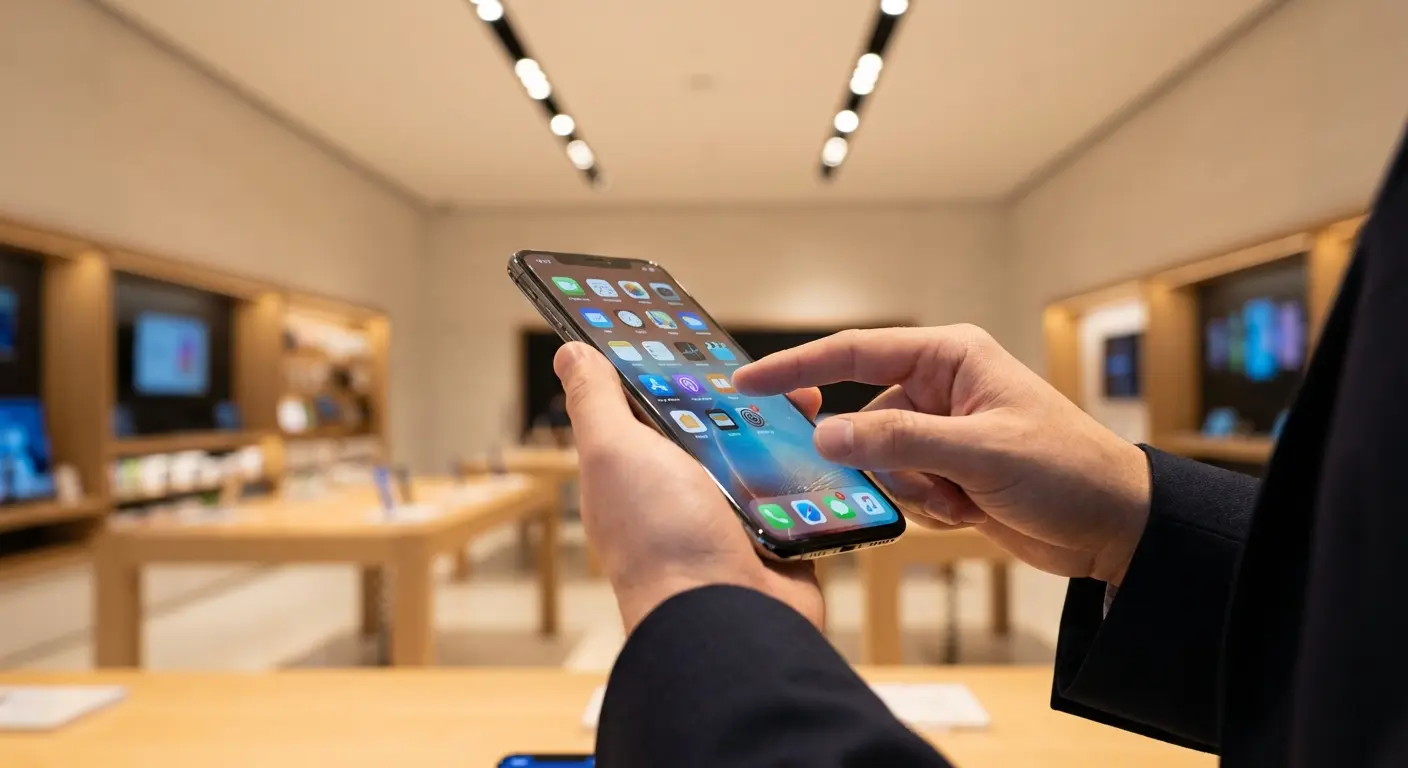
The question isn't whether screen protectors work. They do. The question is whether the protection they offer is worth the trade-offs nobody mentions in product descriptions. Let's look at what you're actually giving up when you add that extra layer between your finger and your display.
The Hidden Costs Nobody Talks About
You Just Signed Up for Ongoing Maintenance
Screen protectors aren't install-and-forget. They scratch (usually more easily than your actual screen would). They peel at the edges. They collect dust underneath when the adhesive starts failing. You're basically committing to a maintenance cycle you didn't ask for.
Every time you replace one, you're spending money and time. Worse, you're risking damage to your actual screen during removal. I've seen way too many phones with adhesive residue that needs alcohol and careful scraping to remove. All because someone wanted to "protect" their display.
Screen Protector Type |
Price |
How Long It Lasts |
How Often You Replace It |
|---|---|---|---|
Basic plastic film |
$5-$10 |
2-4 months |
3-6 times per year |
Better plastic film |
$10-$15 |
3-6 months |
2-4 times per year |
Standard tempered glass |
$15-$25 |
6-12 months |
1-2 times per year |
Premium tempered glass |
$25-$40 |
12-18 months |
Once a year if you're lucky |
Your Crystal-Clear Screen Won't Stay That Way
That brand-new protector you just installed? Give it two weeks. Micro-scratches pile up faster than you'd think, especially if you pocket your phone with keys or coins.
And here's the kicker: you're preventing major scratches on your screen by accepting hundreds of minor scratches on your protector.
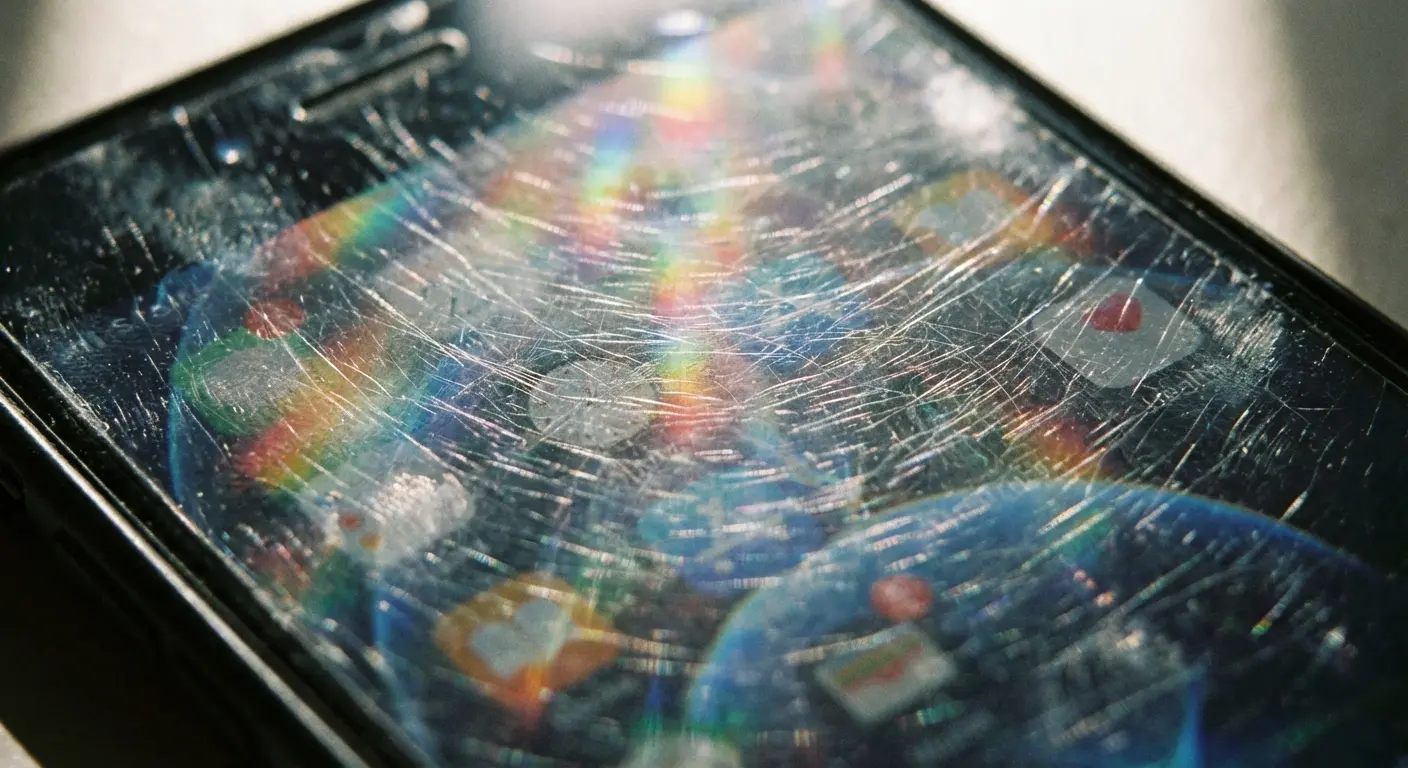
Some people replace their protectors every few months to maintain clarity. Others just live with the degraded visual quality because replacing it feels like too much work. Neither option is great.
My friend Sarah bought a $30 tempered glass protector for her iPhone 15 Pro Max. Three weeks of subway commutes later, sharing a pocket with loose change and receipts, the thing looked like she'd been using it to sand drywall. She could barely see the scratches indoors, but in direct sunlight they created this hazy film over everything. Her options: spend another $30 and an hour installing a replacement, or live with a cloudy screen for the next two years. She chose the cloudy screen. Paid $30 to make her phone worse.
That One Bubble Will Haunt You
There's something uniquely maddening about a screen protector with a single bubble you can't get rid of. Or that piece of dust trapped underneath. You notice it every single time you use your phone. That tiny imperfection becomes this constant low-level irritation.
You can remove it and start over (wasting the protector), live with it (which defeats the whole point), or try to ignore it. Good luck with that last one when you interact with your phone 50+ times per day.
About That Gorilla Glass Everyone Mentions
Corning has spent years refining Gorilla Glass, and the latest versions are actually pretty impressive. But here's what surprises people: the glass is designed to scratch fairly easily.
This isn't a bug. It's a feature. Glass has this inverse relationship between hardness (scratch resistance) and toughness (shatter resistance). Corning made a choice to optimize for drop protection because a cracked screen means you're buying a new phone. A few scratches? You'll probably live with it.
Modern smartphones feature sophisticated display technology that manufacturers have refined over years, yet most people immediately cover them with aftermarket protection. Understanding what makes quality glass protection different from standard options matters if you're going this route.
The Trade-off Nobody Explains
You can make glass harder (resists scratches) or tougher (survives drops). Not both. It's physics.
Harder glass is more brittle. Corning chose to optimize for drops because let's be real, a shattered screen is a way bigger problem than some surface scratches. Your phone's screen will scratch when it meets materials harder than the glass itself. Sand. Concrete. Certain metals. No amount of chemical strengthening changes this reality. And screen protectors made from tempered glass? They face the exact same limitation.
Drop Protection Reality Check
Gorilla Glass Victus (and newer versions) can survive drops from over six feet onto hard surfaces in lab conditions. Real-world results vary based on impact angle and whether your phone has a case, but the glass itself is remarkably tough.
Adding a screen protector provides maybe a tiny bit of extra drop protection. The protector might crack instead of your screen in some scenarios, but in plenty of cases, both will crack or neither will. It's not a magic shield.
I know a software developer who dropped his Pixel 8 Pro (Gorilla Glass Victus 2, no screen protector) from chest height onto concrete while getting out of his car. Face-down landing. He picked it up expecting the worst and found only a tiny chip at the corner bezel. Zero screen damage. Three months later, his coworker dropped her identical Pixel 8 Pro with a $25 tempered glass protector from waist height onto kitchen tile. Both the protector and the screen underneath shattered. The protector didn't absorb anything. It just added another layer that failed at the same time. Drop protection is more about angle, impact distribution, and luck than whether you have a screen protector.
The Samsung Galaxy A57 hasn't even officially launched yet, but accessory makers like Ringke are already listing screen protectors and cases (SammyGuru). This pre-launch scramble shows how the accessory industry just assumes protection is mandatory before anyone has even tested how the device's glass performs.
Touch Sensitivity Is More Complicated Than "Thickness"
Common wisdom says thicker screen protectors reduce touch sensitivity. That's sort of true but misses the point.
Your phone's touchscreen works by detecting changes in electromagnetic fields created by your finger. The protector becomes part of that equation, and its material properties matter way more than its thickness.
Why Some Protectors Feel Terrible
Cheap protectors (especially soft plastic ones) can create an air gap between the protector and your screen. This gap messes with the electromagnetic field detection, making your touches feel less responsive. You'll notice you need to press harder or that swipes don't register smoothly.
Glass protectors with liquid adhesive that bonds across the entire surface usually maintain better touch response because they eliminate air gaps. But installation becomes way trickier, and removal can be a nightmare.
Want to know if your protector is screwing up your touch screen? Type a paragraph at normal speed. Are you making more typos than usual? Swipe rapidly between home screens. Does it stutter? Try tapping lightly in the corners. Do they respond on first touch? Play a game you're good at. Is your timing off? If you're noticing problems in any of these, your protector is the issue.
The Friction Factor
Your finger's interaction with the screen isn't just about touch detection. It's also about friction. The oleophobic coating on your phone's screen is carefully formulated to provide specific friction characteristics. Change that surface (which every protector does), and the whole tactile experience changes.
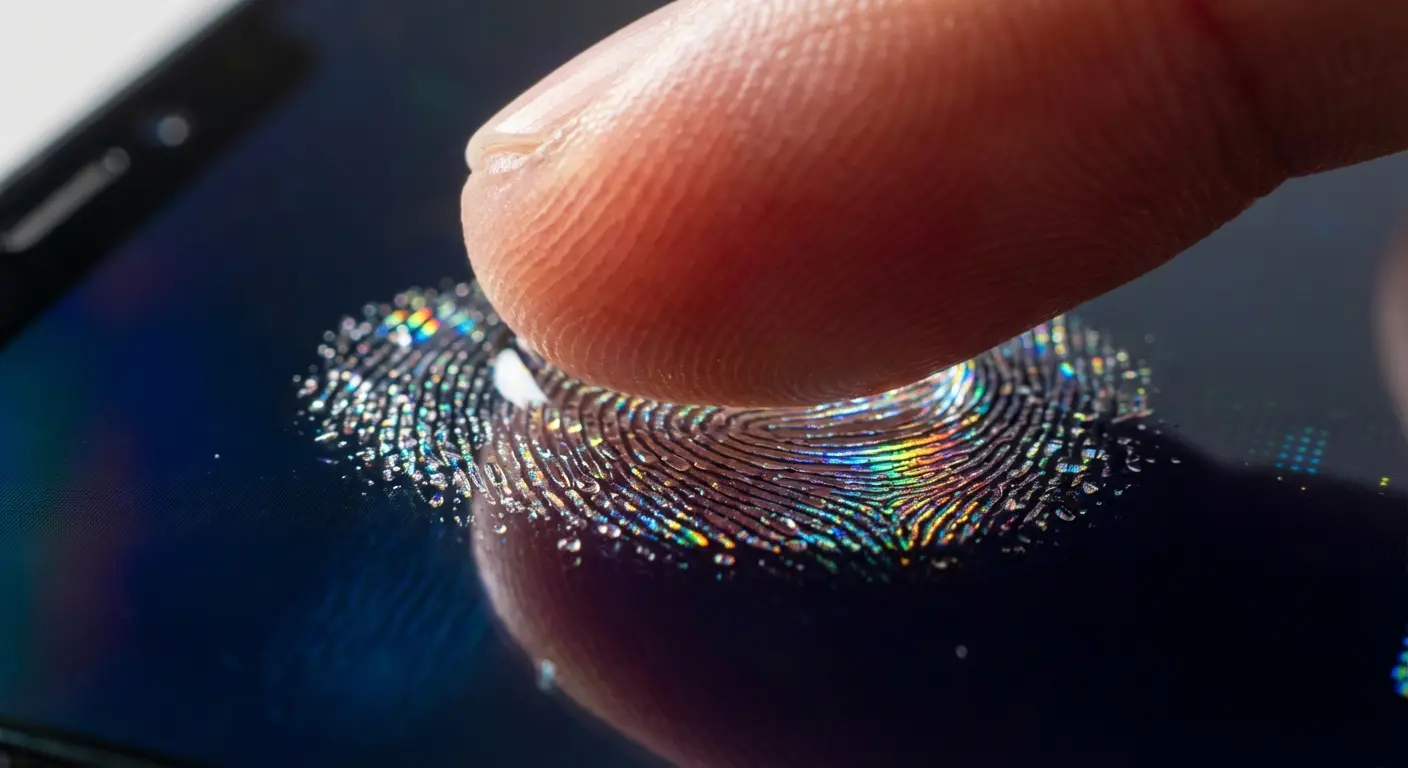
Some protectors feel sticky. Others feel slippery. Very few feel exactly like your phone's original screen, even if touch detection accuracy stays the same. This affects everything from typing speed to gaming precision.
The Coating Problem That'll Make You Mad
Here's something screen protector manufacturers definitely won't tell you: installing their product destroys your phone's oleophobic coating.
That coating is what makes your screen resist fingerprints and lets your finger glide smoothly. It's applied at the factory in controlled conditions and designed to last years. The moment you clean your screen with alcohol (standard pre-installation procedure) and apply adhesive, you're compromising or completely removing that coating.
What You're Losing
Oleophobic coatings are incredibly thin (we're talking nanometers) and fragile. They don't survive aggressive cleaning or adhesive application. Once damaged, they don't come back.
Remove your screen protector six months later, and your "naked" screen won't feel like it did when the phone was new. It collects fingerprints more readily, feels different to the touch, and needs more frequent cleaning. You've permanently changed your device.
Protector Coatings Are Never As Good
Screen protectors often advertise their own oleophobic coatings. These are rarely as good as factory coatings and they wear away faster because they're exposed to more friction and cleaning.
Next thing you know, you're reapplying coating treatments or replacing protectors just to maintain that smooth, fingerprint-resistant surface. It becomes this ongoing maintenance cycle instead of a one-and-done solution.
Installation Shouldn't Require a YouTube Tutorial
You shouldn't need a YouTube tutorial, perfect lighting, a steamy bathroom, and surgeon-steady hands to install a phone accessory. Yet here we are.
The screen protector industry has somehow normalized a user experience that's objectively terrible. Dust sensitivity, bubble formation, misalignment, and adhesive failure are all predictable problems that manufacturers have mostly failed to solve.
The Bathroom Steam Thing
People install screen protectors in bathrooms after running hot showers because steam supposedly reduces airborne dust. Yeah. We're installing phone accessories in bathrooms now. That's where we've ended up.
This workaround exists because manufacturers haven't adequately addressed dust contamination during installation. A well-designed product wouldn't require you to manipulate your environment just to get acceptable results.
When You're Paying Someone Else to Do It
Some people pay $10-20 to have their screen protector professionally installed at mall kiosks or phone repair shops. That cost (on top of the protector itself) shows how difficult proper installation has become.
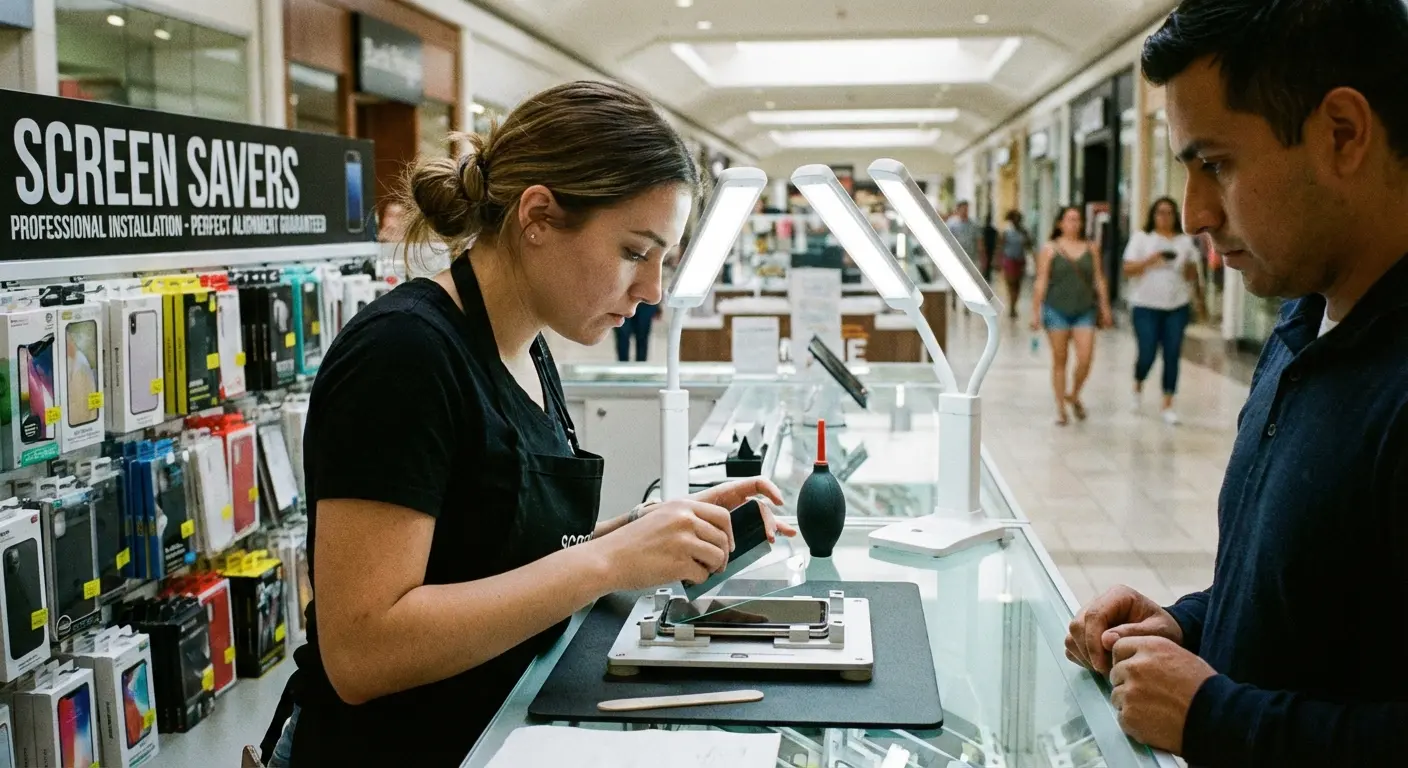
If your product requires professional installation to achieve the results shown in marketing materials, your product design has failed. Full stop.
If you've decided to install one yourself, here's what actually helps: Work in a room with minimal air circulation (turn off fans, close windows). Clean nearby surfaces with a damp cloth to reduce airborne dust. Use bright, even lighting from multiple angles. Wash and dry your hands thoroughly. Allow 20-30 minutes of uninterrupted time. Clean the screen with alcohol, let it dry completely (2-3 minutes). Use the dust sticker to remove any remaining particles. Align the protector using the guide before removing the adhesive backing. Apply in one smooth motion from one edge to the other. Use the squeegee to push out bubbles from center outward. Let the adhesive cure for 24 hours before heavy use.
Or just pay someone else to deal with it.
When You Actually Need One
Screen protectors aren't all good or all bad. They're tools with specific applications where the benefits outweigh the downsides.
In North America alone, the smartphone screen protector market generated USD 14,690.3 million in revenue in 2023 and is expected to grow at a CAGR of 6.5% through 2030, according to Grand View Research. This massive market reflects genuine use cases where protection makes economic sense, but it also shows how normalized screen protectors have become regardless of whether individual users actually need them.
High-Risk Environments
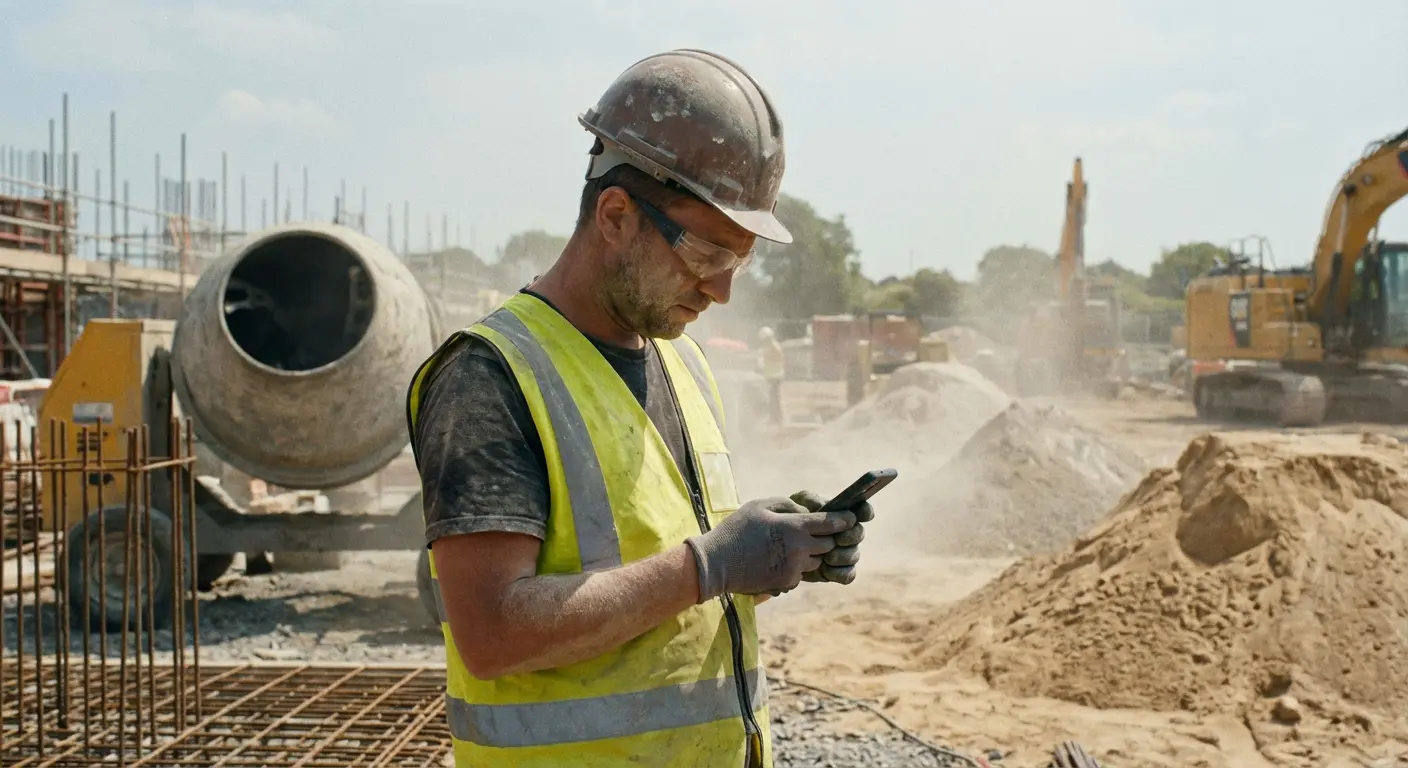
You work construction? Spend time at beaches? Frequently expose your phone to sand and abrasive particles? A protector makes sense. These environments contain materials harder than Gorilla Glass that will absolutely scratch your screen.
The protection trade-offs (reduced clarity, touch sensitivity changes) become acceptable when the alternative is guaranteed screen damage. You're choosing known, manageable downsides over certain degradation.
Resale Value Math
Planning to sell or trade in your phone? A screen protector helps maintain cosmetic condition, which directly affects resale value. Even minor scratches reduce what buyers will pay.
The economics work here. Spending $30 on protectors over two years might preserve $50-100 in resale value. The math checks out if you're not keeping your phone long-term.
Peace of Mind Counts for Something
Some people can't stop worrying about screen damage. The anxiety affects how they use their phone and their overall experience. For them, a protector's psychological benefit outweighs the functional compromises.
And you know what? That's fine. If protection helps you actually use your phone without constant stress, that's a legitimate reason. Just acknowledge you're optimizing for peace of mind rather than objective performance.
Your Situation |
Need One? |
Why |
What to Get |
|---|---|---|---|
Office worker, mostly indoors, phone in dedicated pocket |
Nah |
Gorilla Glass is plenty; minimal scratch risk |
None, or basic film if reselling |
Construction/outdoor worker |
Yeah |
High exposure to abrasive stuff (concrete dust, sand, metal shavings) |
Tempered glass with full adhesive |
Beach person |
Probably |
Sand is literally tiny quartz rocks harder than any phone glass |
Tempered glass, replace it seasonally |
Parent with young kids |
Maybe |
Depends if kids handle your phone; assess drop vs. scratch risk |
Tempered glass if kids use it |
If You're Getting One, Here's What Doesn't Completely Suck
If you've decided a screen protector fits your situation, these options minimize the compromises I've been complaining about. Recent product launches show manufacturers are finally addressing installation concerns. Screen protectors for the iPhone 17e (Phandroid) now commonly include alignment frames and installation trays, features that were premium options just two years ago.
Rokform Tempered Glass Screen Protector
I actually use this one. Full disclosure: not sponsored, though I wouldn't mind. The case-alignment technology eliminates the guesswork from installation. You're not hovering the protector over your phone for 30 seconds, sweating, trying to get it perfectly centered. It just clicks into place. Revolutionary concept: make the product easy to use.
The tempered glass maintains touch sensitivity better than most alternatives, and the oleophobic coating holds up to regular use without degrading rapidly. More importantly, if you're already using Rokform's magnetic mounting ecosystem, this protector is designed to work seamlessly with those cases. No interference with magnetic strength, no edge lifting from case pressure.
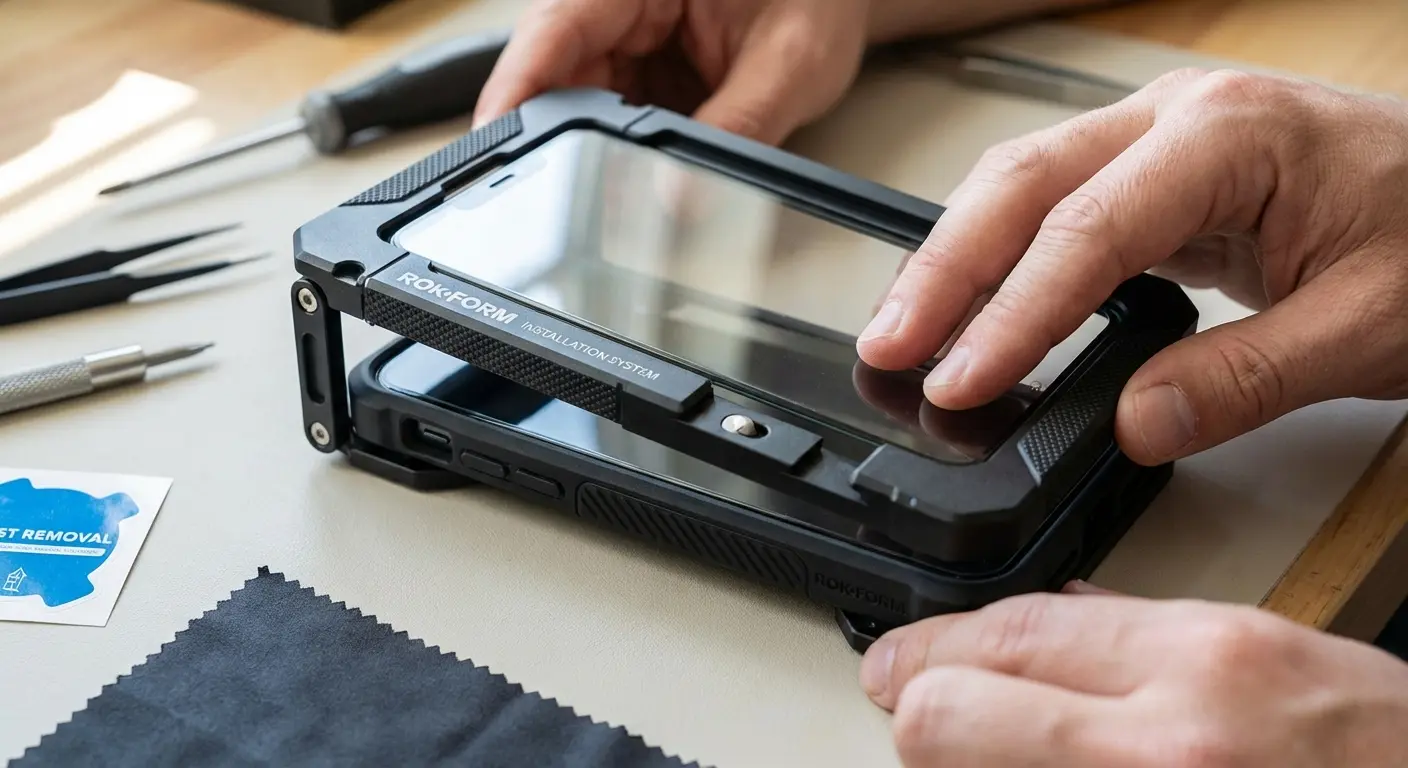
It solves the installation anxiety problem (the biggest complaint I hear) while maintaining the protective function you're paying for. This is what I recommend because it addresses real pain points instead of just adding another layer of glass.
Whitestone Dome Glass
Uses liquid adhesive that bonds across the entire screen surface, eliminating air gaps that cause touch sensitivity issues. Installation requires patience and careful following of instructions, but results are nearly invisible when done correctly.
Best for people who want maximum clarity and touch response and don't mind a more involved installation process.
Spigen GlasTR EZ Fit
Includes an installation tray that aligns the protector automatically. Removes human error from the equation. The glass quality is solid without being premium-priced.
Good option if you want foolproof installation and don't need absolute top-tier clarity.
amFilm OneTouch
Another alignment-frame option that makes installation straightforward. Slightly thicker than some alternatives, but touch sensitivity remains good. Affordable enough that replacing it doesn't feel wasteful.
Works well for people who want protection without overthinking the decision or spending premium prices.
Belkin Screen Protector
The Belkin line offers reliable protection with Apple Store backing, which means easy replacement if installation goes wrong. Their UltraGlass models maintain excellent clarity and are engineered specifically for each iPhone model. If you're looking for an iPhone screen protector that combines brand reliability with performance, Belkin deserves consideration.
Best for users who value brand reliability and want the peace of mind that comes with Apple's endorsement and in-store installation support.
Making the Right Call
Your decision should reflect how you actually use your phone, not generic advice or worst-case scenario fear-mongering.
The global privacy screen protectors market alone is estimated at USD 1.81 billion in 2025 and expected to reach USD 3.33 billion by 2032, exhibiting a CAGR of 9.1%, according to Coherent Market Insights. This specialized segment (just one category of screen protection) demonstrates how diverse protection needs have become. Your decision should reflect your actual requirements, not industry growth trends.
Questions Worth Asking
Do you frequently expose your phone to sand, concrete dust, or other abrasive materials? Protection makes sense. Does reduced visual clarity bother you enough that you'd rather risk scratches? Skip the protector. Will you actually replace it when it gets scratched, or will you just live with a hazy screen for two years? If the latter, reconsider whether you want one at all.
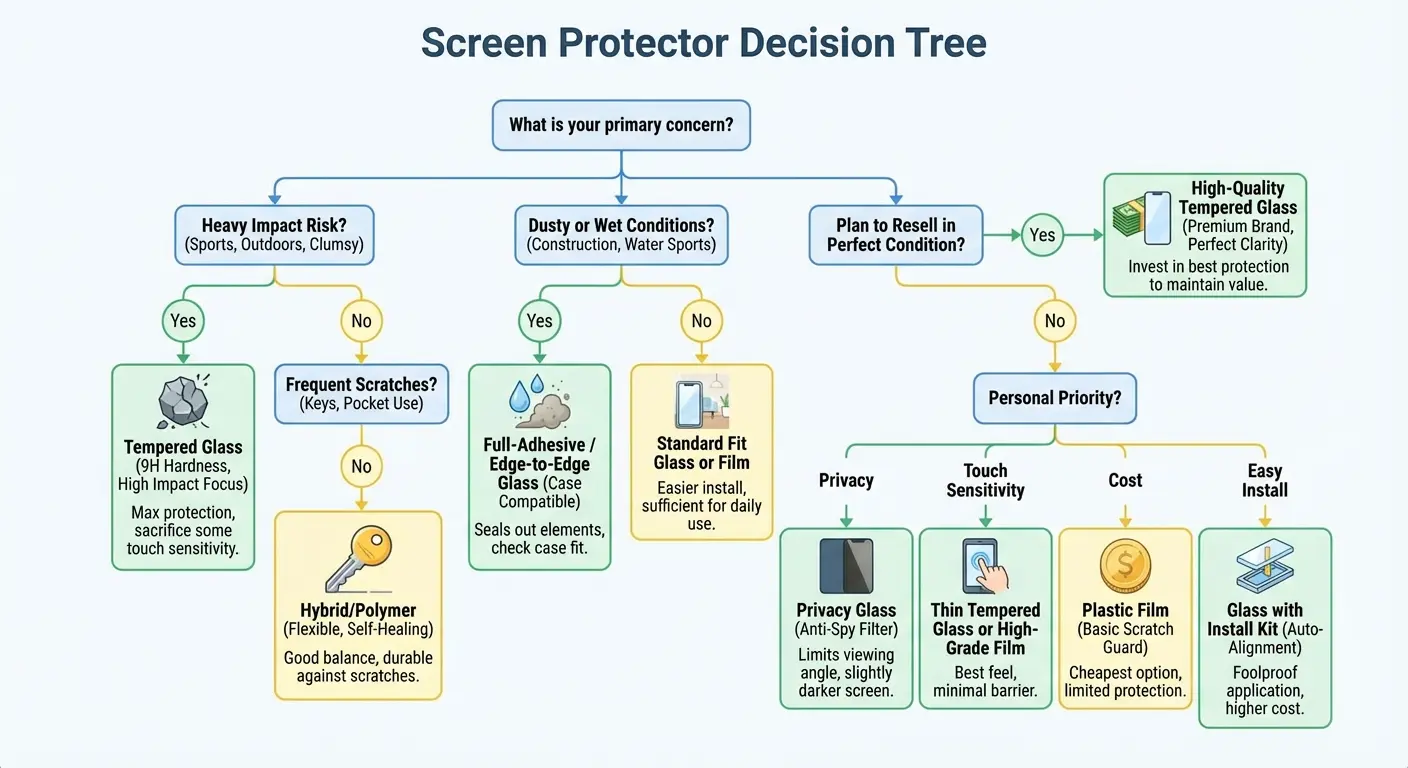
Do you have AppleCare+, insurance, or another coverage plan that makes screen replacement affordable? Factor that into your risk calculation.
A freelance photographer I know evaluated her usage before deciding on protection for her iPhone 15 Pro Max. She realized she uses her phone extensively for client previews, where screen clarity is critical for color accuracy and detail. She also keeps her phone in a dedicated camera bag pocket (never with keys or coins) and works primarily in controlled indoor environments. Her risk of scratches was minimal, but a protector's potential impact on color reproduction was unacceptable for her work. She chose to go without and has maintained a pristine screen for 18 months through mindful handling alone. Her colleague, a wedding photographer who shoots beach ceremonies monthly, made the opposite choice, accepting slight clarity reduction to protect against inevitable sand exposure. Same profession, different usage patterns, different rational decisions.
Going Naked Is Legitimate
Using your phone without a screen protector is a real choice. Modern Gorilla Glass survives normal use remarkably well. You'll get minor scratches over time, but they're often less noticeable than a scratched protector.
You maintain the exact experience your phone's manufacturer intended. Full clarity, precise touch response, and the original oleophobic coating performance. The trade-off is accepting cosmetic wear as part of device ownership.
A lot of people who try going without protectors after years of using them report their phone feels "new again." That's not placebo. You're experiencing the device as designed.
You Can Change Your Mind
You don't need to commit permanently. Use a protector during a beach vacation, then remove it. Apply one before a camping trip where your phone will face harsh conditions, then go naked afterward.
Screen protectors aren't marriage vows. Treating them as temporary, situational protection rather than permanent fixtures gives you flexibility to optimize for current needs.
My Actual Take
Whether you choose protection or not, ensuring your device is secured during activities like cycling or motorcycling matters more than surface scratches for preventing catastrophic damage.
Screen protectors have become this default accessory that most people buy without questioning whether they need one. The industry thrives on fear (what if you drop it?) while glossing over daily experience degradation.
I'm not anti-screen protector. I'm anti-blindly following conventional wisdom without understanding trade-offs. Some of you absolutely should use them. Others are compromising your phone's best features for protection you don't need.
The scratches you're preventing might matter less than the clarity you're losing. The drop protection you're adding might be redundant if you use a good case. The peace of mind you're gaining might come at the cost of actually enjoying your device.
You spent hundreds (maybe over a thousand) dollars on a phone with a carefully engineered display. Make sure your protection strategy enhances rather than undermines that investment. Sometimes the best protection is simply being mindful about where you set your phone and what you pocket it with.
Here's my final take: Most of you are wasting money on screen protectors that make your expensive phone feel cheap. The glass is tougher than the accessory industry wants you to believe. The protectors are more annoying than you realize when you actually think about it. And the industry is laughing all the way to the bank while we install glass on glass in steamy bathrooms.
Try going naked for a month. Actually use your phone the way Apple or Samsung designed it. Worst case? You learn something about your habits and you buy a protector. Best case? Your phone feels incredible again and you save $30 a year.
Or don't listen to me. Keep buying $25 pieces of glass every six months because some YouTube tech reviewer told you to. Your money, your phone.

