


Table of Contents
Trucks Built for Specialized Work
Boom Trucks
Knuckle Boom Trucks
Drilling Rigs
Vacuum Trucks
Trucks That Keep Cities Running
Refuse Packers
Street Sweepers
Sewer Jetters
Pothole Patchers
Trucks Designed for Extreme Conditions
Articulated Dump Trucks
Logging Trucks
Fire Apparatus Pumpers
Airport Crash Trucks
Trucks That Move What Others Can't
Heavy Haul Transporters
Auto Haulers
Livestock Trailers
Refrigerated Box Trucks
TL;DR
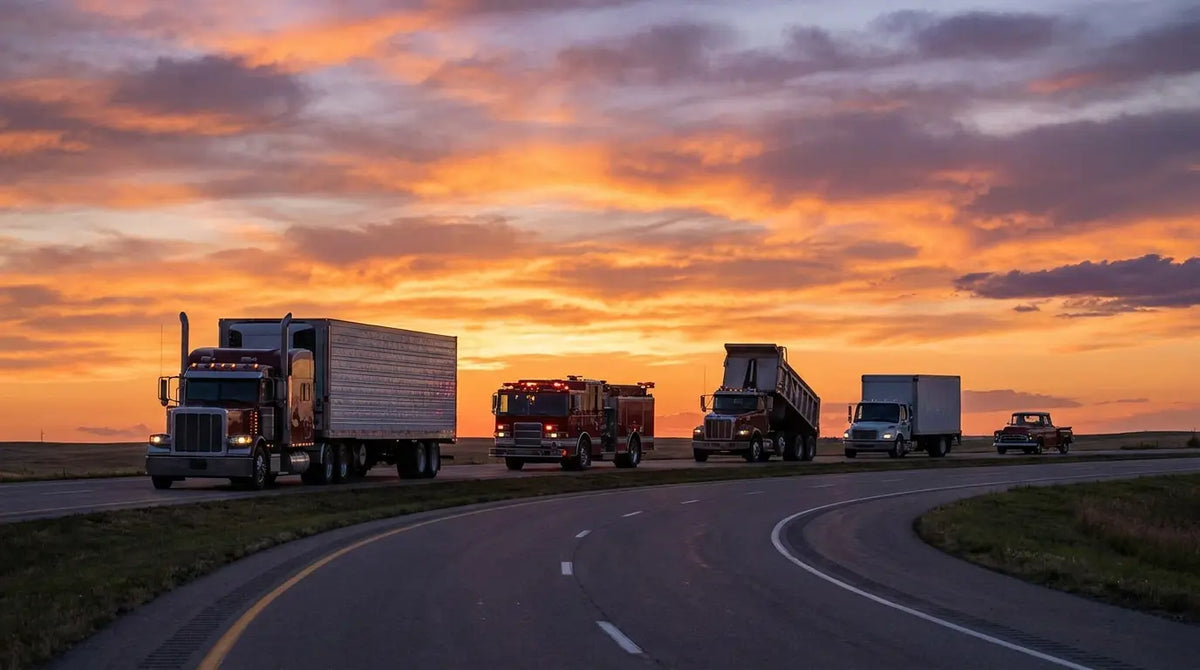
Quick version: There are hundreds of specialized truck types most people never see. This article covers sixteen of them, from boom trucks that lift stuff 165 feet in the air to airport crash trucks that accelerate like sports cars while carrying 4,000 gallons of firefighting foam. Boom trucks handle overhead work standard cranes can't reach efficiently. Municipal trucks operate on schedules most people sleep through. Extreme condition trucks use specialized suspension and braking to handle terrain that destroys conventional vehicles. Heavy haul transporters require permits and route planning for every single load. Vacuum trucks pull materials standard pumps can't handle. Airport crash trucks carry more firefighting agent than most fire stations and hit 60 mph in under 25 seconds. Refrigerated trucks maintain temperature zones within 2 degrees across thousands of miles. If you've ever wondered what that weird truck was doing at 3 AM, this'll probably answer your question.
Why Most Truck Guides Miss the Point
I'm not writing another article about F-150s.
There are thousands of articles comparing pickup trucks. This isn't one of them. I want to talk about the trucks you don't see, the ones working at 3 AM, the ones that require special permits just to drive on public roads, the ones doing jobs that sound fake until you watch them in action.
Like airport crash trucks that go from 0 to 60 in under 25 seconds while carrying enough firefighting foam to fill a swimming pool. Or vacuum trucks that can suck up 4,000 gallons of material in a single load. Or boom trucks that lift transformers 100 feet in the air while the operator calculates load angles in their head.
These trucks exist in the background of everything. You don't notice them until they're not there. This guide covers 16 types of trucks across four categories, each one built for work that requires engineering solutions most people never consider. You won't find generic cargo vans or standard delivery trucks here. We're talking about specialized equipment handling jobs from airport emergencies to moving 200,000-pound transformers across state lines.
Trucks Built for Specialized Work
Boom trucks. Drilling rigs. Vacuum trucks. These aren't vehicle types you can walk into a dealership and drive off the lot.
Each type serves industries where standard equipment fails, whether that's reaching 100 feet overhead, drilling through bedrock, or removing materials that conventional pumps can't touch. Purpose-built design that prioritizes function over versatility.
Truck Type |
Primary Function |
Typical Reach/Capacity |
Key Industries |
Setup Time |
|---|---|---|---|---|
Boom Trucks |
Vertical lifting with telescopic reach |
30-165 feet |
Utilities, construction, signage |
12-18 minutes |
Knuckle Boom Trucks |
Articulated lifting over obstacles |
Up to 80 feet |
Tree service, urban construction |
8-12 minutes |
Drilling Rigs |
Subsurface penetration |
1,000+ feet depth |
Geothermal, water wells, foundations |
30-60 minutes |
Vacuum Trucks |
Material extraction under negative pressure |
950-4,200 gallons |
Septic, industrial cleanup, tank cleaning |
5-10 minutes |
1. Boom Trucks
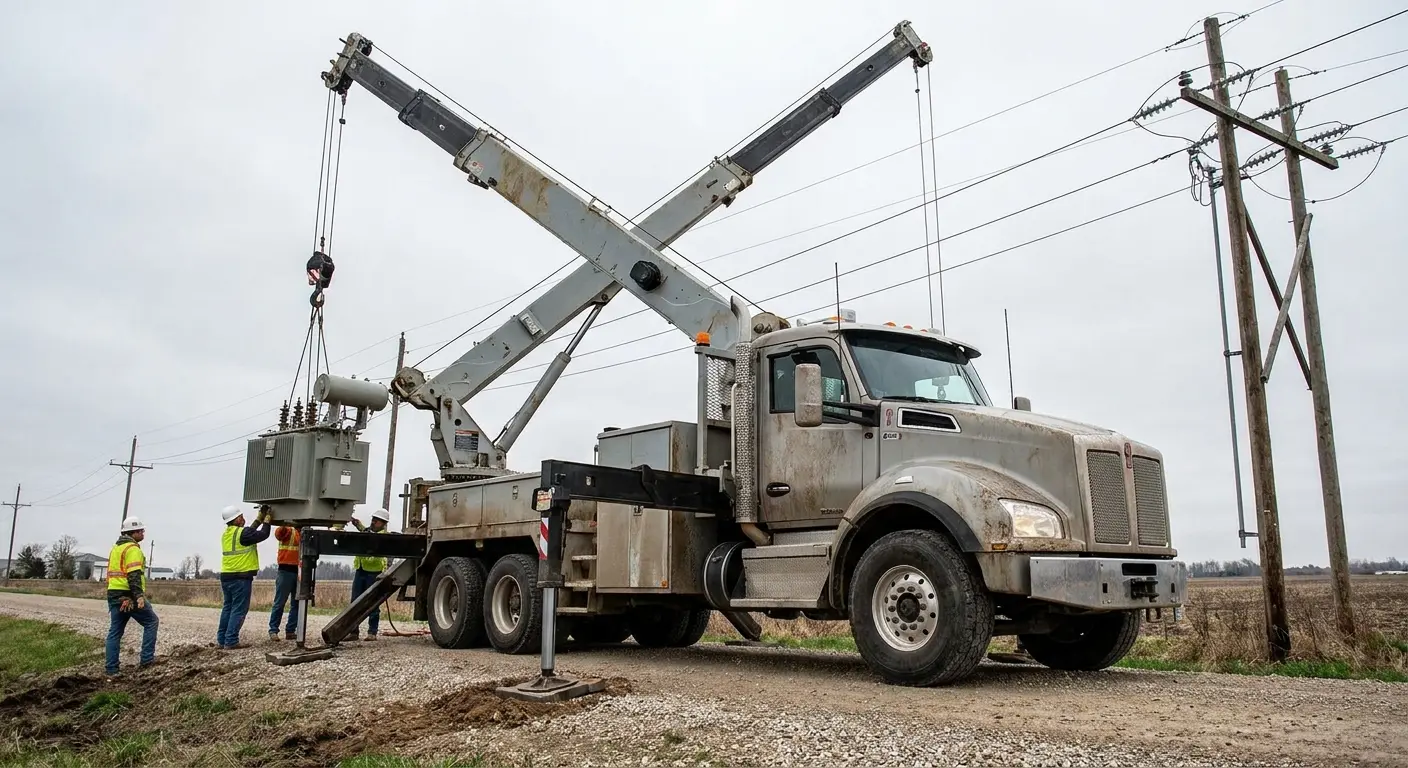
A boom truck is basically a crane that drives itself to the job. Instead of needing a whole separate crane operation with its own crew and transport, you've got one vehicle that shows up, sets up, and starts lifting. The boom telescopes out anywhere from 28 feet to over 160 feet, depending on what you paid for it.
Industries from utility work to sign installation depend on these types of trucks because they combine transportation and lifting in one unit. Operators need specialized certification beyond a commercial driver's license. Setup time matters. A boom truck can be operational within 12 to 18 minutes of arriving on site if you know what you're doing.
Outriggers stabilize the vehicle during lifts, and load charts determine safe working limits based on boom extension and angle. The hydraulic systems require regular maintenance. Most operators carry spare hoses because a blown line means the job stops completely. I talked to an operator in Seattle who carries three spares. "You blow a hydraulic line, your whole day is done," he told me.
Weight distribution calculations happen before every lift, factoring in boom length, load weight, and ground conditions. These aren't suggestions. Get the math wrong and the whole truck tips over.
2. Knuckle Boom Trucks
Knuckle boom trucks (also called articulating cranes, or just "knuckles" by most operators) add an extra pivot point that standard boom trucks lack. Game-changer for tight spaces. This articulation allows operators to reach over obstacles, around buildings, or into confined spaces where a straight boom can't function. The knuckle joint sits about halfway up the boom, controlled independently from the main extension.
Tree services use these constantly because they can position loads precisely without repositioning the entire truck. You lose reach versus a straight boom, sometimes 50 feet or more. Whether that matters depends entirely on what you're doing. Tree service? The articulation is worth it. Utility work? Maybe not. Most knuckle booms max out around 75 to 82 feet, but the articulation means they work in urban environments where space is measured in inches.
Setup requires less room than traditional boom trucks, and some models include grapples or buckets instead of hooks. Hydraulic pressure needs monitoring because the articulation point creates additional stress on the system. That knuckle joint takes a beating.
Operators develop spatial awareness that borders on instinctive, calculating angles and clearances while managing multiple control inputs simultaneously. I watched a knuckle boom operator eat a breakfast burrito while positioning a 3,000-pound AC unit through a window. One hand on the controls, one hand on the burrito. I asked him about it later and he just shrugged. "You get used to it."
3. Drilling Rigs
Truck-mounted drilling rigs bring the capability to bore through earth, rock, or concrete to virtually any location. These trucks carry everything needed for drilling operations: the rig itself, mud pumps, water tanks, pipe storage, and power generation.
Geothermal installers, water well drillers, and foundation contractors depend on mobile rigs because moving a stationary drill setup costs more than most small jobs are worth. The drill head can penetrate hundreds of feet, with some rigs capable of reaching depths over 1,000 feet. Torque output ranges from 5,000 to over 50,000 foot-pounds depending on application.
The truck provides a stable platform, but operators still need to assess ground conditions before drilling starts. Mud circulation systems remove cuttings and cool the drill bit. The mixture ratios change based on what you're drilling through. Soft soil versus bedrock? Completely different approach.
Maintenance schedules are aggressive. Drilling creates vibration, heat, and stress that accelerates wear on every component. Most rigs run diesel engines with hydraulic drive systems. Fuel consumption during active drilling can exceed 10 gallons per hour, sometimes hitting 12 or 13 on tough jobs. When you're burning fuel at that rate, efficiency isn't just about cost. It's about whether you brought enough diesel to finish the job without a refueling run that kills half your day.
4. Vacuum Trucks
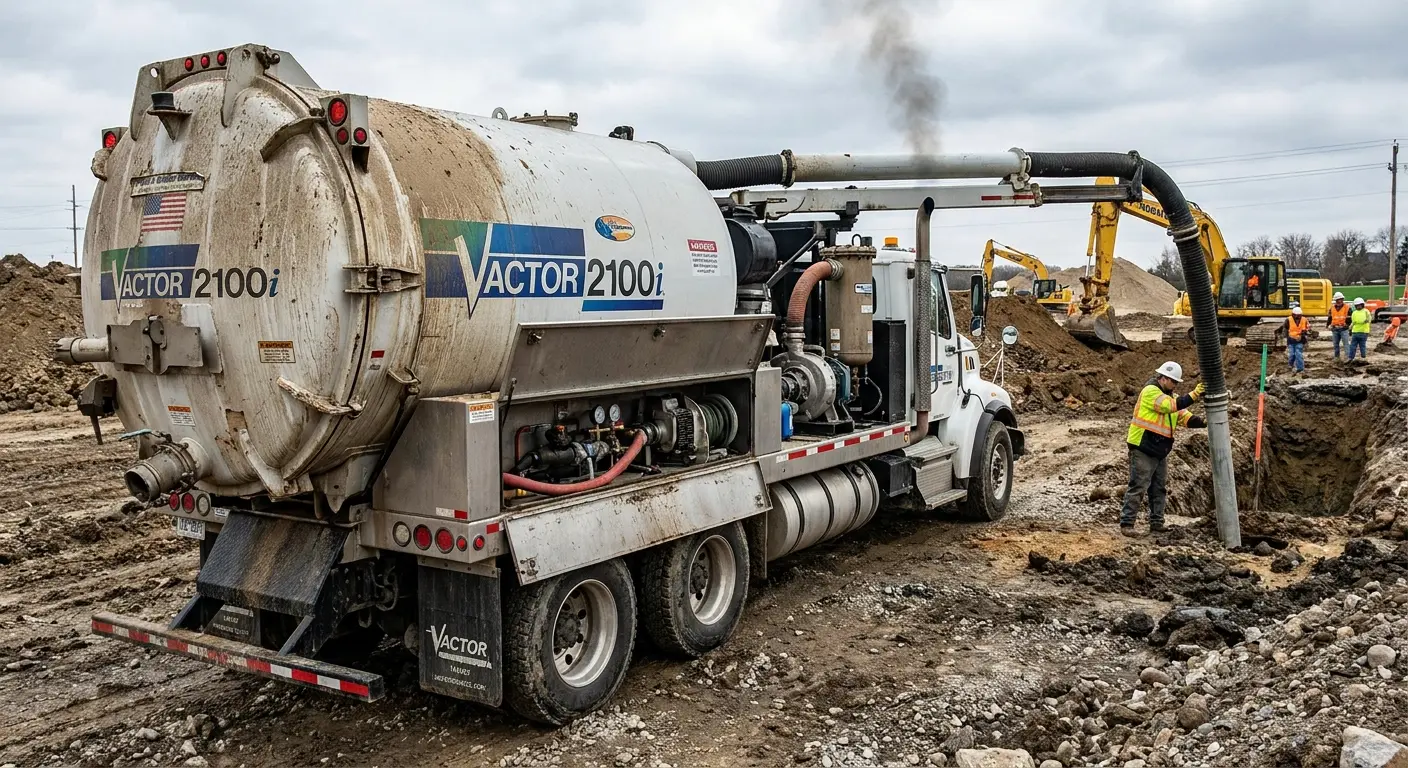
Vacuum trucks suck up stuff that won't flow on its own. Septic tanks, sure. That's what everyone thinks of. But they're also pulling contaminated soil at Superfund sites, cleaning out industrial storage tanks, and dealing with materials that would clog any normal pump in about thirty seconds.
The tank (usually between 950 and 4,200 gallons depending on the chassis) operates under negative pressure, pulling material through large-diameter hoses. The suction is strong enough that you need to be careful what you point the hose at. I've heard stories about operators accidentally pulling up chunks of asphalt when they weren't paying attention.
Septic services represent the most visible use, but industrial facilities rely on vacuum trucks for everything from cleaning storage tanks to removing contaminated soil. The pump creates suction equivalent to several atmospheres of pressure. Enough to pull up things you didn't even know were down there. The system includes filtration to protect the pump from debris.
Operators need to understand material properties because viscosity affects suction capability. Some trucks include water jets for breaking up solid material before extraction. Tank cleaning between jobs prevents cross-contamination, particularly when moving between food-grade and industrial applications.
The discharge system reverses the process, using compressed air to empty the tank. Weight limits become critical fast because liquids are heavy. A full tank of water alone weighs over 30,000 pounds. Picture that sloshing around in a tank while you're trying to navigate city streets.
Trucks That Keep Cities Running
Ever notice how your street is suddenly clean on Tuesday morning, but you've never actually seen it being swept? That's because these trucks work while you're asleep, and there's a good reason for that.
Municipal trucks operate on schedules designed around minimal traffic and maximum efficiency. These vehicles handle the unglamorous work that keeps cities functional, from waste removal to street maintenance. Most people never see them working, but the absence of these types of trucks becomes obvious within days. We're talking about the machines that prevent your city from turning into a garbage-filled, pothole-riddled disaster zone while you sleep.
5. Refuse Packers
Refuse packers compress garbage as they collect it, multiplying capacity compared to open-top trucks. In the waste industry, they're "refuse packers." Everyone else calls them garbage trucks. Operators usually just say "packer."
The compaction mechanism uses hydraulic rams to crush waste into the hopper, then force it forward into the main compartment. A modern packer compresses waste at ratios between 3:1 and 5:1, meaning it holds three to five times more than an uncompacted load. Routes get planned down to the minute because efficiency determines how many homes one truck can service.
The hydraulic systems cycle thousands of times per shift. Thousands. When they fail, and they will eventually, you've got a choice: head back to the yard half-full or keep running without compaction. Most operators keep running because turning around means falling behind on the route, and falling behind means working late.
Automated arms (increasingly common) grab bins and dump them without the operator leaving the cab, reducing injury rates and increasing collection speed. There's debate about whether these automated systems actually reduce injuries or just shift them to different body parts. Some drivers say the automation is great. Others say it creates new problems when the equipment malfunctions.
Leachate (liquid that drains from compressed garbage) collects in a separate tank to prevent it from dripping during transport. Maintenance focuses on hydraulic seals, rams, and the compaction chamber because those components face constant abuse. Weight distribution shifts as the hopper fills, affecting handling and braking.
A garbage truck driver told me his truck handles completely differently at the end of his route. "It's like driving a different vehicle," he said. "The weight shifts everything. You learn to anticipate it, but it never stops being weird."
6. Street Sweepers
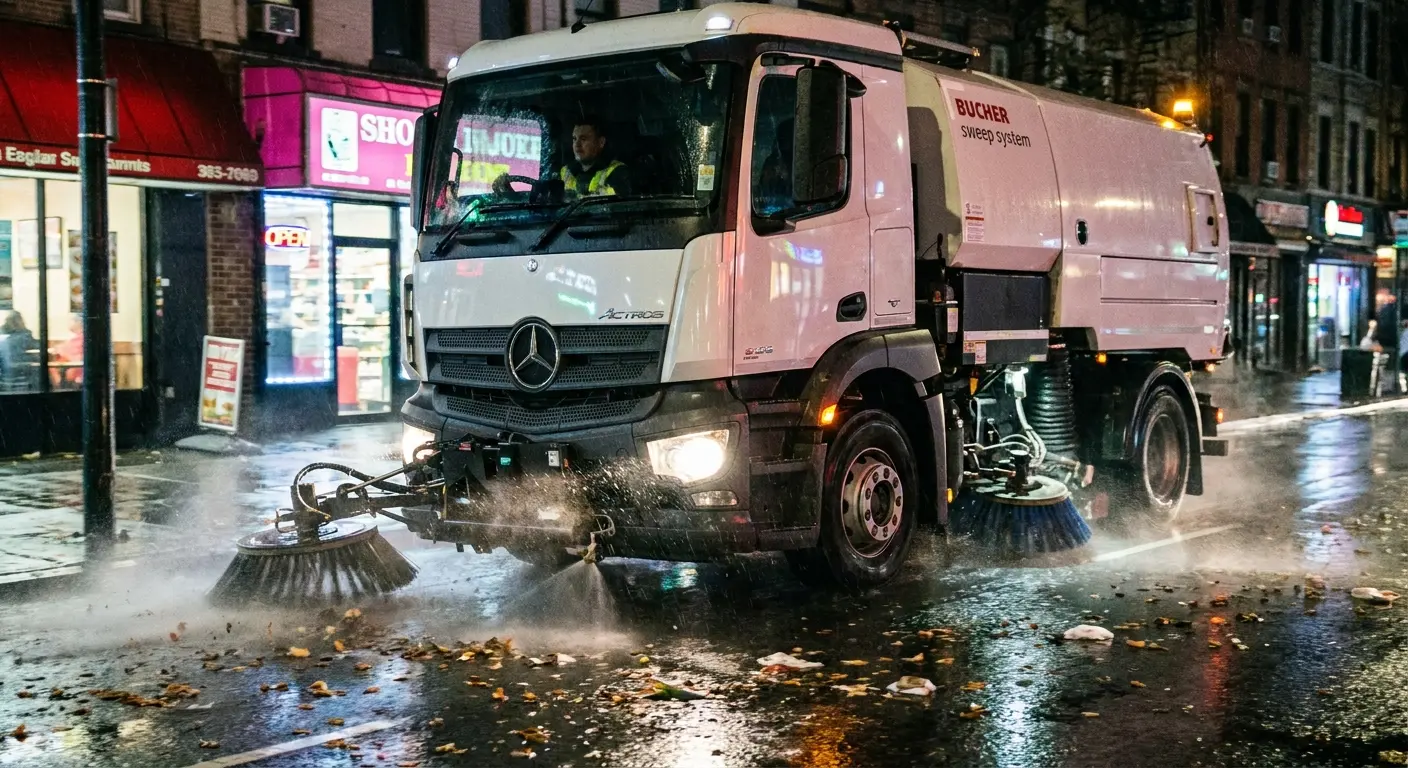
Street sweepers combine vacuum systems, rotating brushes, and water spray to remove debris from road surfaces. The brushes (usually two or three depending on configuration) spin at high speed to dislodge material, while the vacuum system pulls it into a hopper. Water spray controls dust and helps separate fine particles from pavement texture.
Modern sweepers capture particles down to 10 microns, which matters for stormwater compliance and air quality regulations. Street sweeper regulations vary wildly by state. California has strict particulate capture requirements. Other states barely regulate them at all. The hopper capacity determines route length, typically ranging from 3 to 8 cubic yards. Operators work overnight in most cities because traffic makes daytime sweeping inefficient.
Municipal fleet managers increasingly equip their street sweepers with professional phone mounts for route tracking and real-time documentation of street cleaning operations. GPS tracking has become standard because municipalities need documentation showing which streets were swept and when.
Brush wear happens constantly, and replacement schedules depend on the type of debris being swept. Glass, gravel, and construction debris accelerate wear compared to leaves and dust. The vacuum fan is the most expensive single component, and damage from large debris can require complete replacement. You can't just order a new one and have it show up next day. These things take weeks to source.
7. Sewer Jetters
Sewer jetters use high-pressure water (typically 2,000 to 4,000 PSI) to clear blockages and clean pipe interiors. The truck carries a water tank (usually 475 to 1,500 gallons), a high-pressure pump, and hundreds of feet of specialized hose. The nozzle at the hose end directs jets backward, propelling the hose forward through the pipe while the water pressure breaks up blockages.
Municipalities use jetters for routine maintenance because preventive cleaning costs less than emergency repairs. The system can cut through tree roots, dissolve grease buildup, and remove sediment that reduces pipe capacity.
Operators need to understand pipe materials because excessive pressure can damage older clay or concrete pipes. You can't just blast maximum pressure at every problem and hope for the best. The hose reel operates hydraulically, and retrieval speed matters because the hose needs cleaning after every use. Some jetters include vacuum systems for removing the material that gets dislodged, creating a complete cleaning solution.
Water consumption is substantial, and trucks either carry enough for the day's work or need access to hydrants for refilling. Nozzle selection changes based on pipe diameter and blockage type. An operator in Portland told me he carries eight different nozzles and switches between them multiple times per shift depending on what he's dealing with.
8. Pothole Patchers
Pothole patchers (also called throw-and-go trucks) carry everything needed for temporary road repairs: asphalt, emulsion, and application equipment. The truck heats asphalt to working temperature and includes a spray system for applying tack coat to the hole before filling.
Crews can repair dozens of potholes per shift because the truck eliminates trips back to a central facility. The asphalt hopper maintains temperature through insulation and sometimes active heating. Material that cools too much won't compact properly, and then you're just wasting everyone's time.
Application methods vary, but most systems blow the patch material into the hole using compressed air, then compact it with a roller or vibrating plate. These patches are temporary, and everyone knows it. They're meant to last maybe six months, maybe a year if you're lucky. Then you're back out there patching the same damn hole. Proper reconstruction happens later when budgets and weather allow.
The tack coat (a sticky emulsion) helps the patch bond to existing pavement. Trucks need refilling once the hopper empties, and timing those refills to minimize downtime requires route planning. Cold weather reduces working hours because asphalt won't bond properly below certain temperatures. Most crews won't even bother if it's below 40°F outside.
Trucks Designed for Extreme Conditions
These aren't weekend off-roaders with lift kits. We're talking about purpose-built machines designed for specific terrain, climate, or operational demands that push engineering to its limits.
Extreme condition truck types operate in environments that destroy conventional vehicles. Each type incorporates specialized systems for suspension, braking, powertrain, and structural integrity. The different types of trucks in this category share one thing in common: they work where normal vehicles die.
9. Articulated Dump Trucks
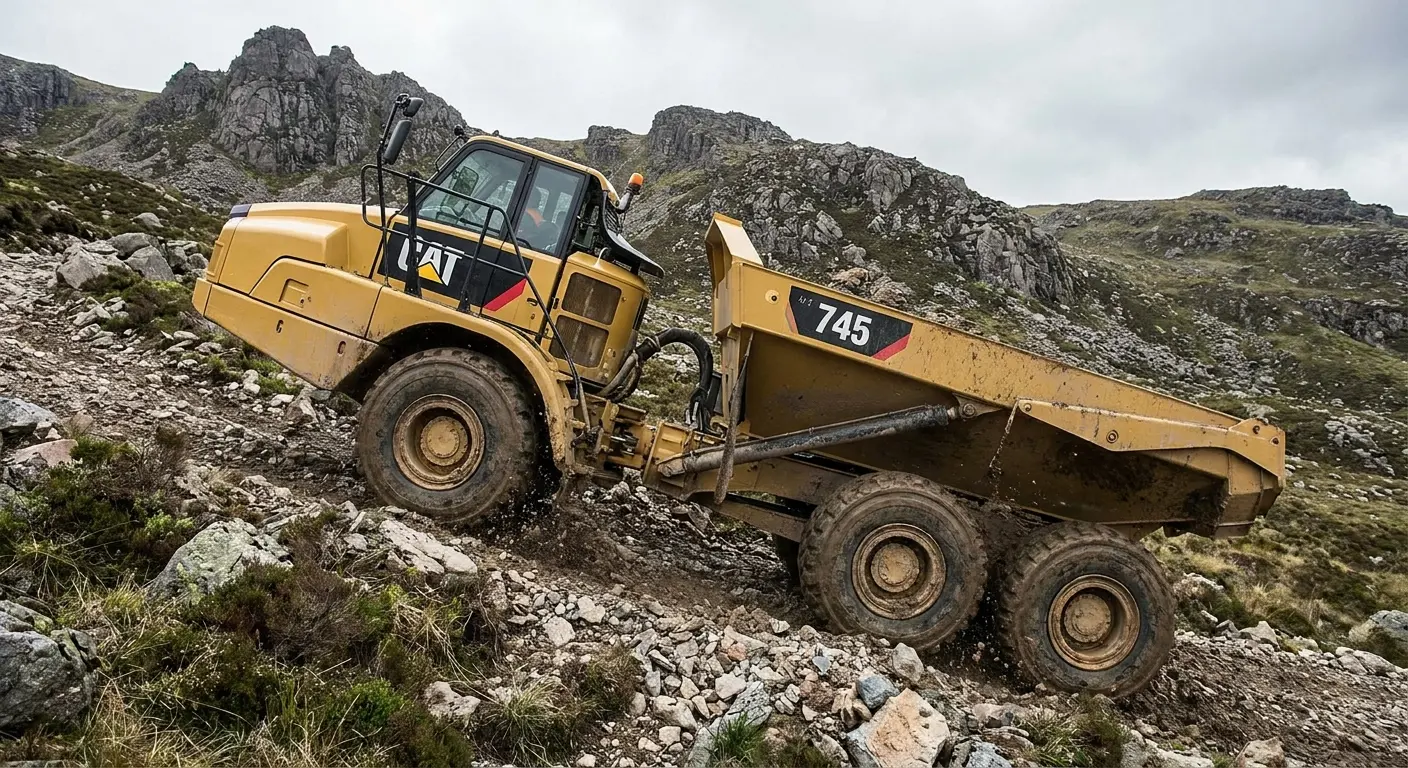
Articulated dump trucks (ADTs) feature a pivot joint between the cab and dump body, allowing the front and rear sections to move independently. This articulation provides traction and stability on terrain that would immobilize a rigid-frame truck.
Mining operations, large construction sites, and forestry work depend on ADTs because they handle soft ground, steep grades, and uneven surfaces. The all-wheel-drive system (usually 6x6 configuration) distributes power to all wheels, and the oscillating joint allows wheels to maintain ground contact when crossing obstacles.
Load capacities range from 25 to 45 tons, and the dump body raises hydraulically for unloading. Suspension systems use hydraulic struts designed to absorb impacts that would bend conventional frames.
The articulation joint itself takes a beating. It's a wear point under constant stress, and maintenance schedules reflect that. Operators learn to use the articulation for steering on slopes because it provides better control than conventional steering alone. Fuel consumption is measured in gallons per hour rather than miles per gallon. Most ADTs burn 8 to 15 gallons hourly under load, sometimes more if you're climbing grades all day.
10. Logging Trucks
Logging trucks transport cut timber from harvest sites to processing facilities, carrying loads that often exceed 80,000 pounds. The trailer features a skeletal frame with vertical stakes to contain logs, and the suspension is designed for extreme weight on unpaved roads.
Most logging trucks use a self-loading system with a hydraulic knuckle boom mounted behind the cab. This allows operators to load their own trucks without separate equipment. The boom includes a grapple that can handle multiple logs simultaneously. Watch a logging truck operator load their own vehicle sometime. The hydraulic boom grabs entire trees like they're toothpicks.
Chains and binders secure the load, and proper securement is critical because a shifting log load can flip the truck. The drivetrain typically includes a high-torque diesel engine with a multi-speed transmission (10 to 18 gears) for handling steep grades.
Logging truck operators face some of the harshest conditions on the road, which is why many choose vibration dampening mounts to protect their devices from the constant jarring of unpaved forest roads.
Braking systems use engine brakes and compression release systems in addition to service brakes because friction brakes alone can't safely control these loads on mountain roads. Tires are designed for cut resistance because logging roads include stumps, rocks, and debris. Maintenance intervals are aggressive because the combination of weight, terrain, and operating hours accelerates wear on every system.
Logging truck operators are a specific breed. You have to be comfortable with isolation, terrible roads, and the knowledge that your cargo could kill you if something goes wrong. The logging truck industry has a fatal accident rate that's significantly higher than most trucking sectors. Those mountain roads, combined with 80,000-pound loads, create situations where a single mistake is fatal.
11. Fire Apparatus Pumpers
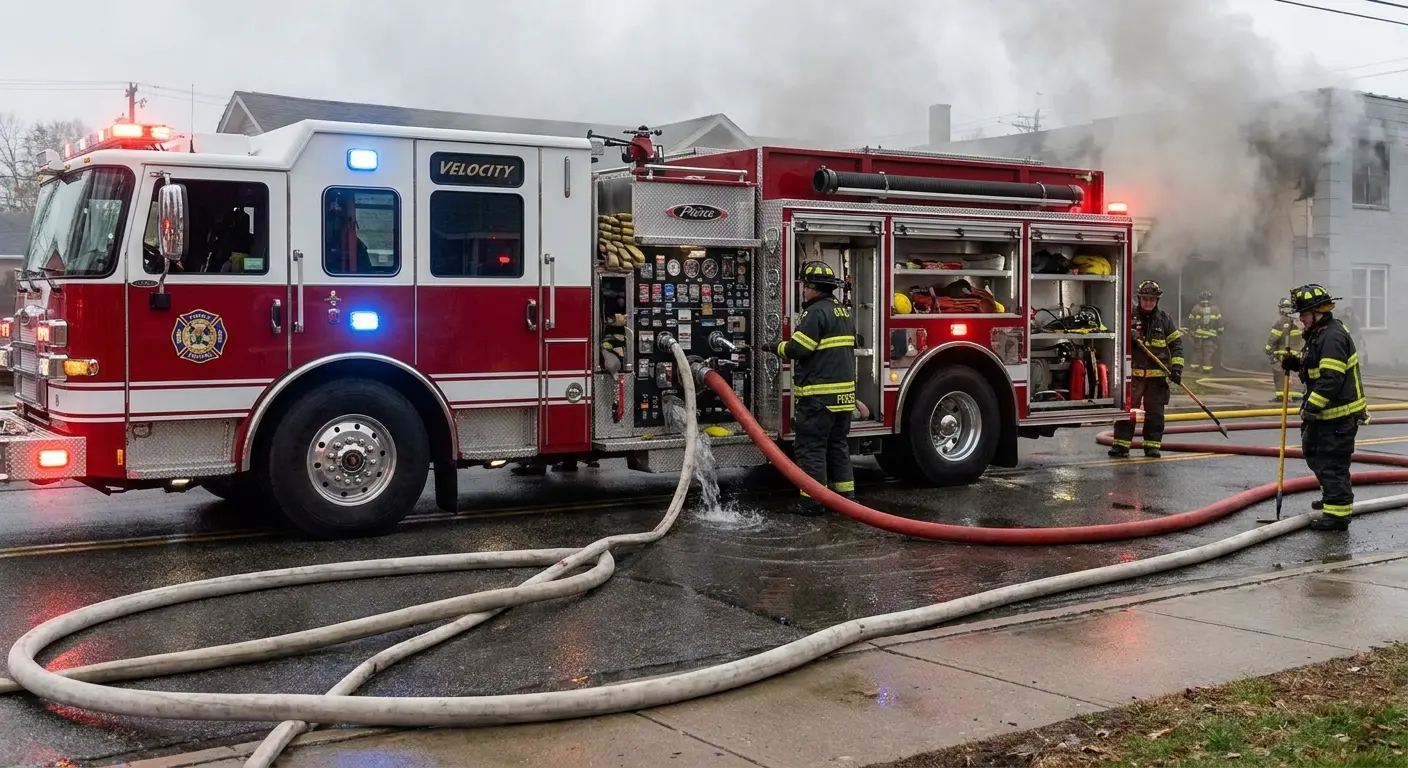
Fire apparatus pumpers combine water tanks, high-capacity pumps, and equipment storage into vehicles designed for rapid response. The pump (usually rated between 1,000 and 2,000 gallons per minute) draws water from the onboard tank or external sources like hydrants and drafts from ponds.
Tank capacity typically ranges from 475 to 1,100 gallons, providing immediate water for initial attack before supply lines are established. The pump panel controls pressure, flow, and distribution to multiple discharge points simultaneously. Foam systems inject firefighting foam into the water stream for fuel fires.
Storage compartments carry hoses, nozzles, hand tools, and breathing apparatus, organized for quick access in low-visibility conditions. The chassis is built to handle the weight of a full water tank (water weighs 8.34 pounds per gallon) plus equipment and crew.
These things brake better than they have any right to. I've seen a fully loaded fire pumper, we're talking 50,000 pounds, stop from 60 mph in a distance that would make a sedan jealous. The engineering is borderline ridiculous. Maintenance happens after every call because reliability isn't optional. The pump needs testing regularly to verify flow rates and pressure capabilities. Most departments run pumpers through annual certification testing that includes drafting, pressure tests, and flow measurements.
12. Airport Crash Trucks
Airport crash trucks are absurd. I mean that in the best possible way. They're fire trucks that accelerate like muscle cars while carrying enough foam to fight a jet fuel fire for six minutes straight. The engineering is bonkers.
Airport crash trucks (officially called Aircraft Rescue and Firefighting vehicles) respond to aircraft emergencies with capabilities that exceed structural firefighting equipment. These trucks carry 1,500 to 4,500 gallons of water, 200 to 500 gallons of foam concentrate, and 450 to 500 pounds of dry chemical agent.
The pump systems deliver over 1,000 gallons per minute, and roof-mounted turrets can pierce aircraft fuselage to inject suppressant directly into the cabin. Acceleration is absurd for a vehicle this size: most crash trucks reach 60 mph in under 25 seconds and hit 70 mph top speed. I watched one accelerate at an airport demonstration and literally said "what the fuck" out loud.
The suspension handles off-road travel because aircraft don't always stay on runways. All-wheel drive is standard, and the wheelbase is designed for maneuverability around aircraft. Thermal imaging cameras help operators identify fire location through smoke and fuselage.
The discharge systems can operate while the truck is moving, allowing agents to be applied during approach. Crews train constantly because response time is measured in seconds, and the first three minutes determine survival rates. These types of trucks cost between $750,000 and $1.5 million dollars, and airports are required to maintain them based on the size of aircraft they serve.
Trucks That Move What Others Can't
Specialized hauling trucks handle cargo that standard trailers can't accommodate due to size, weight, or handling requirements. These operations require permits, route planning, engineering calculations, and often escort vehicles.
Each truck type represents a solution to specific transportation challenges that emerge when cargo exceeds conventional limits. We're looking at the equipment that moves things other types of trucks won't touch.
Truck Type |
Typical Capacity |
Load Characteristics |
Permit Requirements |
Average Speed |
|---|---|---|---|---|
Heavy Haul Transporters |
200,000+ lbs |
Oversized industrial equipment, transformers |
Route-specific, time-restricted |
Under 45 mph |
Auto Haulers |
7-11 vehicles |
Multi-level stacking, high-value cargo |
Standard commercial, height restrictions |
55-65 mph |
Livestock Trailers |
40,000-50,000 lbs |
Live animals, multi-deck configuration |
Hours of service, animal welfare compliance |
60-65 mph |
Refrigerated Box Trucks |
20,000-45,000 lbs |
Temperature-sensitive perishables |
Food safety documentation, temperature logs |
60-70 mph |
13. Heavy Haul Transporters
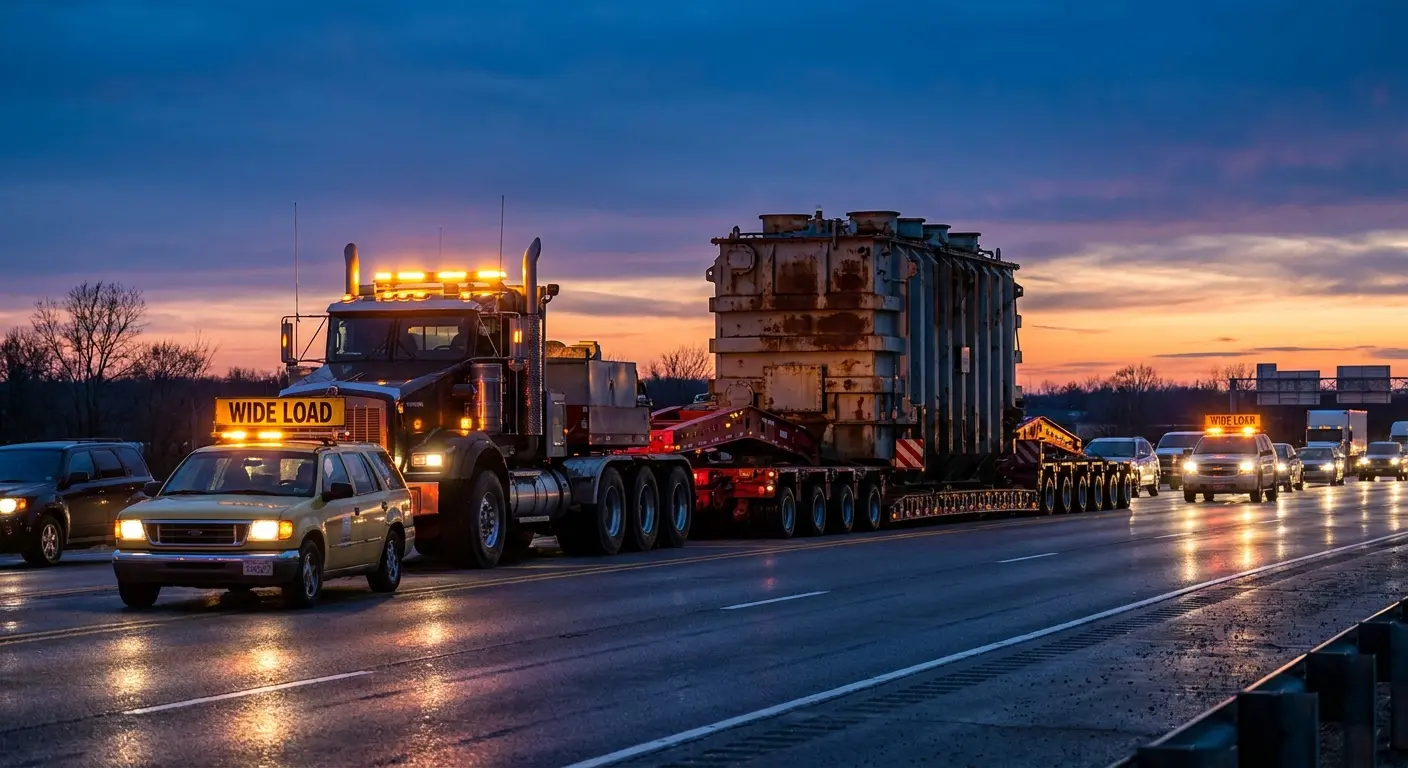
Heavy haul transporters move oversized and overweight cargo like transformers, generators, construction equipment, and industrial machinery. The trailers (operators call them "lowboys" or "RGNs," though the official term is "lowbed trailer") feature multiple axles to distribute weight. Configurations can exceed 20 axles for extremely heavy loads. Anyone hauling a bike should read my guide to motorcycle ramps for trucks.
Each axle adds weight capacity but also adds complexity to permitting and routing. The deck height sits low to minimize overall height, and some trailers include hydraulic systems to tilt or lower the deck for loading.
Loads often exceed 200,000 pounds, requiring route surveys to verify bridge ratings, overhead clearances, and road width. Permits specify exact routes, travel times (often restricted to overnight or weekend hours), and required escort vehicles. The permitting process for heavy haul is a bureaucratic nightmare. You need permits from every state you're crossing. Every county sometimes. The route planning alone can take days. And if something changes, a bridge closes, a road gets restricted, you're starting over.
The tractor needs massive horsepower (often 600+ HP) and torque to move these loads, and transmission options include 18-speed or automated systems. Operators calculate turning radius for every intersection because the trailer doesn't follow the tractor's path.
Securing the load involves chains, binders, and blocking calculated based on load weight and center of gravity. Transport speed rarely exceeds 45 mph, and grades require careful planning because momentum and braking distances change completely with this much weight. These types of trucks in logistics represent the extreme end of ground transportation, handling what rail and air can't accommodate.
14. Auto Haulers
Auto haulers transport multiple vehicles simultaneously using multi-level trailers that maximize capacity while meeting length and weight regulations. The standard configuration carries 7 to 11 vehicles depending on trailer type and vehicle size.
Upper and lower decks adjust hydraulically to accommodate different vehicle heights, and the ramps allow drivers to load and position vehicles efficiently. The entire operation depends on precise weight distribution because an unbalanced load affects handling and can damage the trailer.
Drivers secure each vehicle with wheel straps and chains, and state regulations dictate minimum securement requirements. The challenge isn't just hauling weight but protecting high-value cargo from damage during transport. When you're moving $500,000 worth of vehicles, a scratched bumper isn't just cosmetic damage. It's a lawsuit waiting to happen.
Clearance becomes critical because the upper deck often sits 13 feet or higher off the ground. Routes avoid low bridges, and drivers need to account for trailer sway on curves. Loading sequence matters because vehicles need to come off in reverse order of delivery.
Some haulers specialize in exotic or classic cars, using enclosed trailers with climate control and air-ride suspension. Fuel economy suffers with a full load, typically ranging from 4 to 7 mpg depending on terrain and vehicle weight.
15. Livestock Trailers
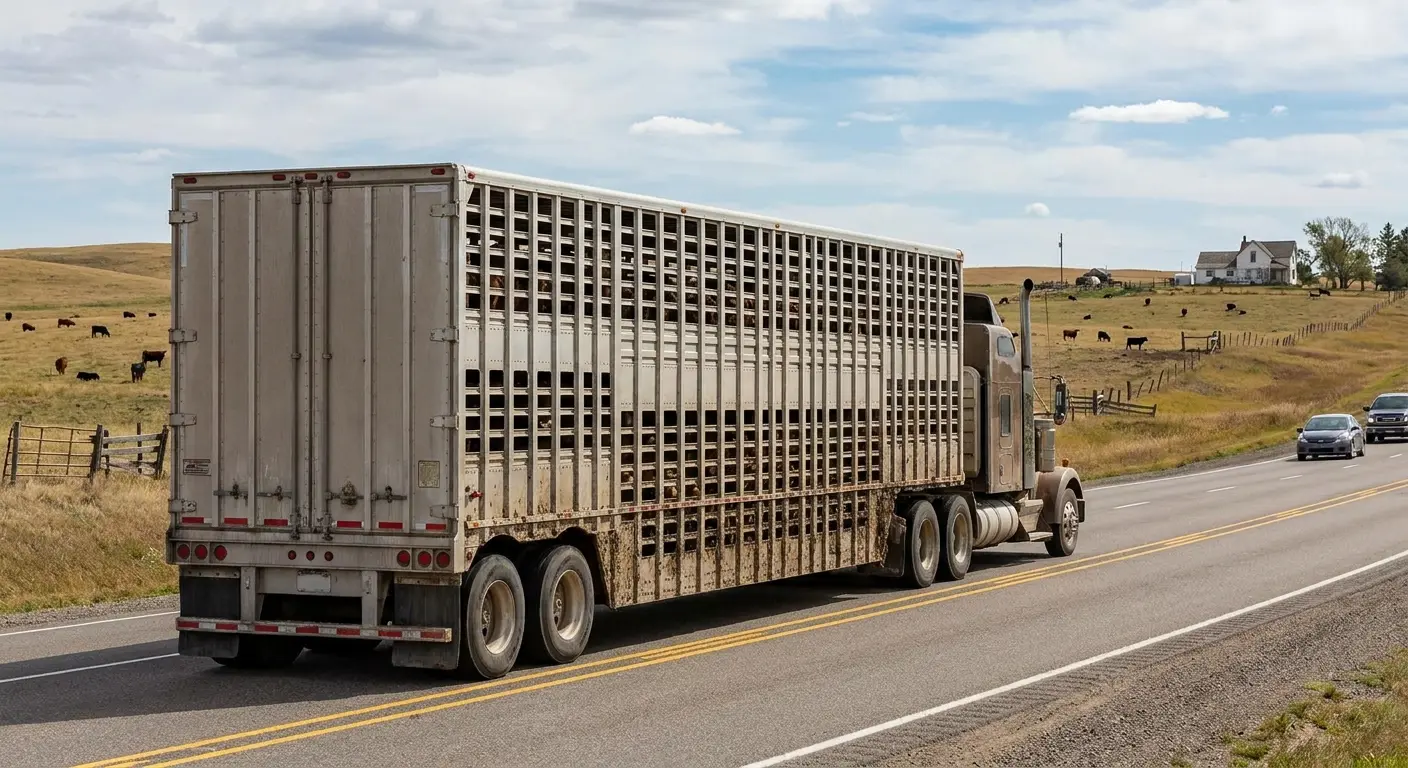
Livestock trailers transport animals with designs focused on ventilation, animal safety, and loading efficiency. The trailer features multiple decks (usually two or three) with adjustable heights to accommodate different species and sizes.
Ventilation openings line the sides and front, and some trailers include fans or misters for temperature control during summer transport. Flooring uses non-slip materials, and drainage systems remove waste during transit. Gates and partitions inside allow drivers to separate animals by size or temperament.
Loading ramps need proper angles because animals won't climb steep inclines, and some trailers include hydraulic ramps that adjust to dock height. Weight distribution affects animal comfort and trailer stability, so experienced haulers position heavier animals over the axles.
Transport regulations limit driving hours and require rest stops with water access. The suspension system needs to minimize jarring because rough rides increase animal stress and injury rates.
Cleaning between loads prevents disease transmission, and some operations require complete sanitization with documentation. Temperature monitoring has become standard because heat stress kills animals faster than most people realize. You can't just crank up the AC and call it good when you're dealing with living cargo. Animals generate their own heat, and ventilation becomes as important as cooling.
16. Refrigerated Box Trucks
Reefer trucks. Nobody says "refrigerated box truck" unless they're reading from a spec sheet.
Refrigerated box trucks maintain specific temperature ranges for perishable cargo, from frozen goods at -20°F to fresh produce at 34°F. The refrigeration unit mounts to the front of the box and runs independently of the truck engine, using its own diesel fuel supply or electric standby power.
Insulated walls (typically 3 to 4 inches thick) minimize heat transfer, and the refrigeration system can maintain temperature within 2 degrees across thousands of miles. Multi-zone units allow different temperature settings in separate compartments, critical for mixed loads.
The refrigeration unit requires its own maintenance schedule separate from the truck, and breakdowns mean the entire load is at risk. I've talked to refrigerated truck drivers who've lost entire loads because the reefer unit died in the middle of nowhere. Tens of thousands of dollars of food, gone. Fuel consumption for the reefer unit adds 0.5 to 1.5 gallons per hour to operating costs.
The refrigerated trucking industry runs on margins so thin that a lot of operators are running equipment that should've been replaced years ago. The reefer units fail, the loads spoil, and insurance fights ensue.
Door seals are critical because air leaks force the refrigeration unit to
Door seals are critical because air leaks force the refrigeration unit to work harder, increasing fuel consumption and reducing temperature stability. Drivers monitor temperature continuously, and most modern units include data logging that documents temperature throughout transit.
Loading procedures matter because proper air circulation prevents hot spots. Pallets need spacing for airflow, and blocking circulation paths can spoil sections of the load even when the unit operates correctly. These rank among the best trucks for cold chain logistics because they deliver precision temperature control that protects everything from vaccines to ice cream.
Keeping Your Phone Mounted When Your Truck Actually Works
Quick aside: I've watched street sweeper operators try to use their phones for route documentation while bouncing around at 3 mph. Most phone mounts last about a week before they're rattling loose or the phone's on the floor.
Most phone mounts fail the moment you leave pavement or start using your truck for actual work. I've seen it across industries: operators dealing with cracked screens, lost devices, and mounts that can't handle vibration, temperature swings, or the kind of abuse that comes with real truck work.
Rokform's mounting systems use a magnetic and mechanical locking system designed for motorcycles, which means they handle the sustained vibration and impacts that destroy conventional mounts. The system works across everything from vacuum trucks running pumps all day to heavy haul transporters crossing railroad tracks at 5 mph with 200,000 pounds behind them.
You need GPS routing, load documentation, customer communication, and sometimes equipment diagnostics, all running through your phone. A mount that fails means stopping to search the floor or dealing with a shattered screen.
Temperature resistance matters because cab environments range from below freezing to over 120°F depending on season and equipment heat. The mount stays functional across that entire range.
For operators who need extreme durability, our rugged phone cases pair perfectly with our mounting systems to create a complete solution that survives the toughest work environments.
Final Thoughts
Here's what I want you to take away from this: the next time you're stuck in traffic behind some weird-looking truck you don't recognize, there's a decent chance it's doing something genuinely important. Maybe it's carrying the transformer that powers your neighborhood. Maybe it's the only truck in the state that can drill deep enough to hit the aquifer for your town's water supply. Maybe it's keeping jet fuel fires from killing three hundred people.
These trucks exist in the background of everything. You don't think about them until they're not there, until your garbage doesn't get picked up, or the potholes don't get filled, or the power goes out because nobody could transport the replacement equipment.
The operators running this stuff aren't just drivers. They're doing math in their heads about weight distribution and hydraulic pressure. They're making judgment calls that could kill someone if they get it wrong. And most of them are doing it for wages that don't match the skill level required.
The next time you see one of these trucks working, you're watching a solution to a problem that required significant engineering investment to solve. That boom truck positioning a transformer didn't just show up. Someone calculated the lift, verified ground conditions, positioned outriggers, and is actively managing hydraulic pressure and load angles throughout the operation.
Whether you're operating specialized equipment or managing a commercial fleet, having the right phone accessories makes the difference between smooth operations and constant frustration.
The refrigerated truck maintaining your food supply at 34°F across 2,000 miles is running systems that require constant monitoring and maintenance. These trucks matter because the work they do can't happen without them.
Anyway. Now you know about sixteen types of trucks you probably didn't know existed this morning. You're welcome, I guess.

