


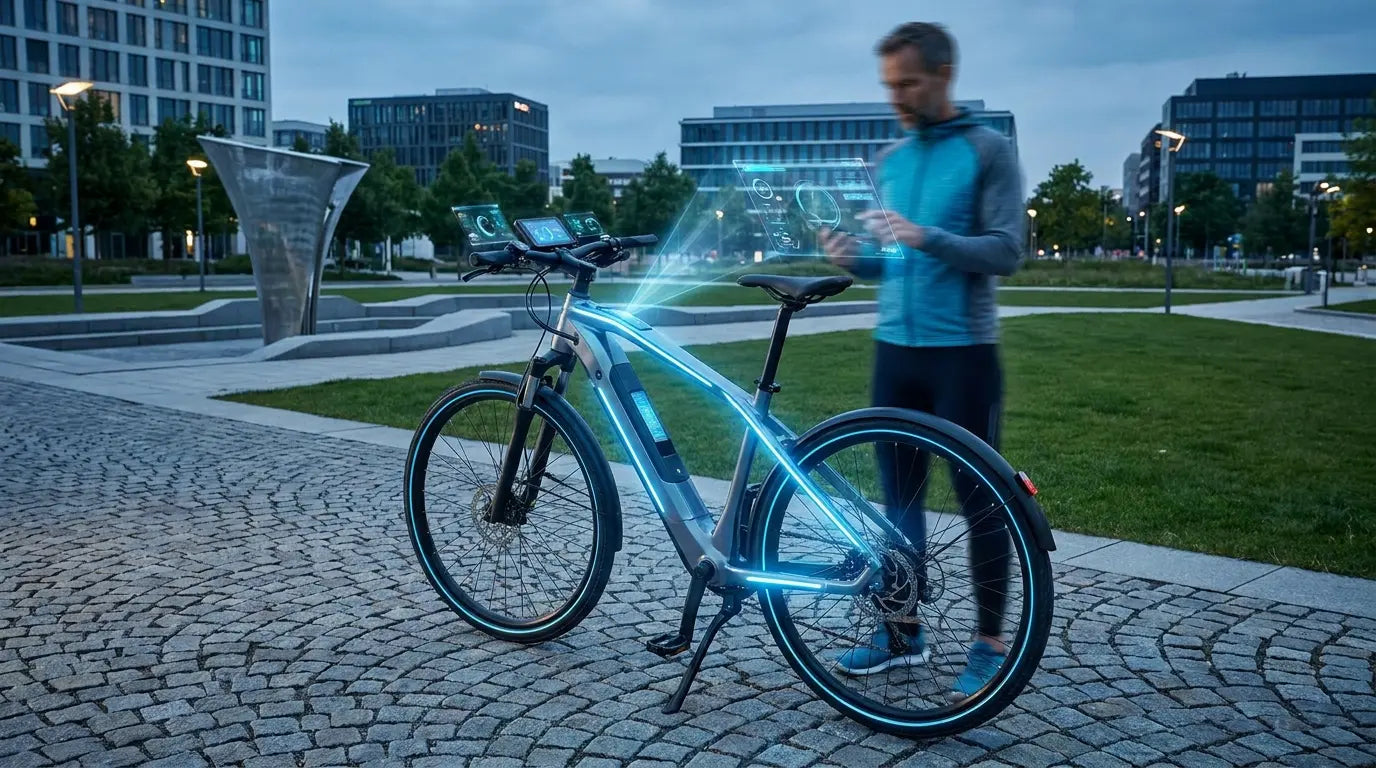
My $8,000 AI bike told me my chain would fail in 200 miles. It was wrong. Two weeks later, my front brake pads (which the bike never mentioned) wore down to metal on a steep descent. I'd stopped checking things manually because I trusted the computer.
Bad idea.
That's the thing about AI bikes nobody mentions in reviews: they make you dumber while making you faster. And that's just one of the problems we need to talk about.
Nobody's being honest about what's actually happening here. The reviews focus on features. Smarter shifting, predictive maintenance, optimized power delivery. Cool stuff. But they're missing the actual story: these bikes are changing what it means to ride. And not always in good ways.
Your AI bike is learning your behavior. Tracking your routes. Making decisions for you. Collecting data about your fitness, your schedule, your body. Some of this is genuinely useful. Some of it is surveillance capitalism on two wheels. And almost nobody's talking about the difference.
I've spent the last year riding AI-equipped bikes and digging into how they actually work. Not the marketing version. The real version, with the subscription fees and the privacy policies and the skills you stop developing because the computer's doing the thinking for you.
This is what they're not telling you.
Table of Contents
The Invisible Layer: How AI Bike Systems Actually Work
Predictive Maintenance Is Impressive Until It Isn't
Performance Optimization vs. Performance Dependency
Data Collection: Who Owns Your Ride Metrics?
The Skill Erosion Question Nobody Wants to Address
Battery Life, Processing Power, and the Hardware Compromise
Ecosystem Lock-In and the Subscription Creep
Where Rokform Fits Into Your AI-Enhanced Setup
What Happens When the AI Gets It Wrong?
The Environmental Cost of Smart Bike Tech
What You Actually Need To Know
These bikes collect way more data than you think, and the privacy policies are deliberately vague about who sees it
Subscription fees are spreading to basic features that should be included. Predictive maintenance alerts, detailed diagnostics, even full access to your own ride data
The AI makes you faster by making decisions for you, which means you're not developing actual riding skills. This matters more than reviews admit
When the system malfunctions (and it will), your fallback options range from "limited" to "nonexistent" depending on the manufacturer
The Invisible Layer: How AI Bike Systems Actually Work
Real-Time Data Processing Beyond Simple Sensors
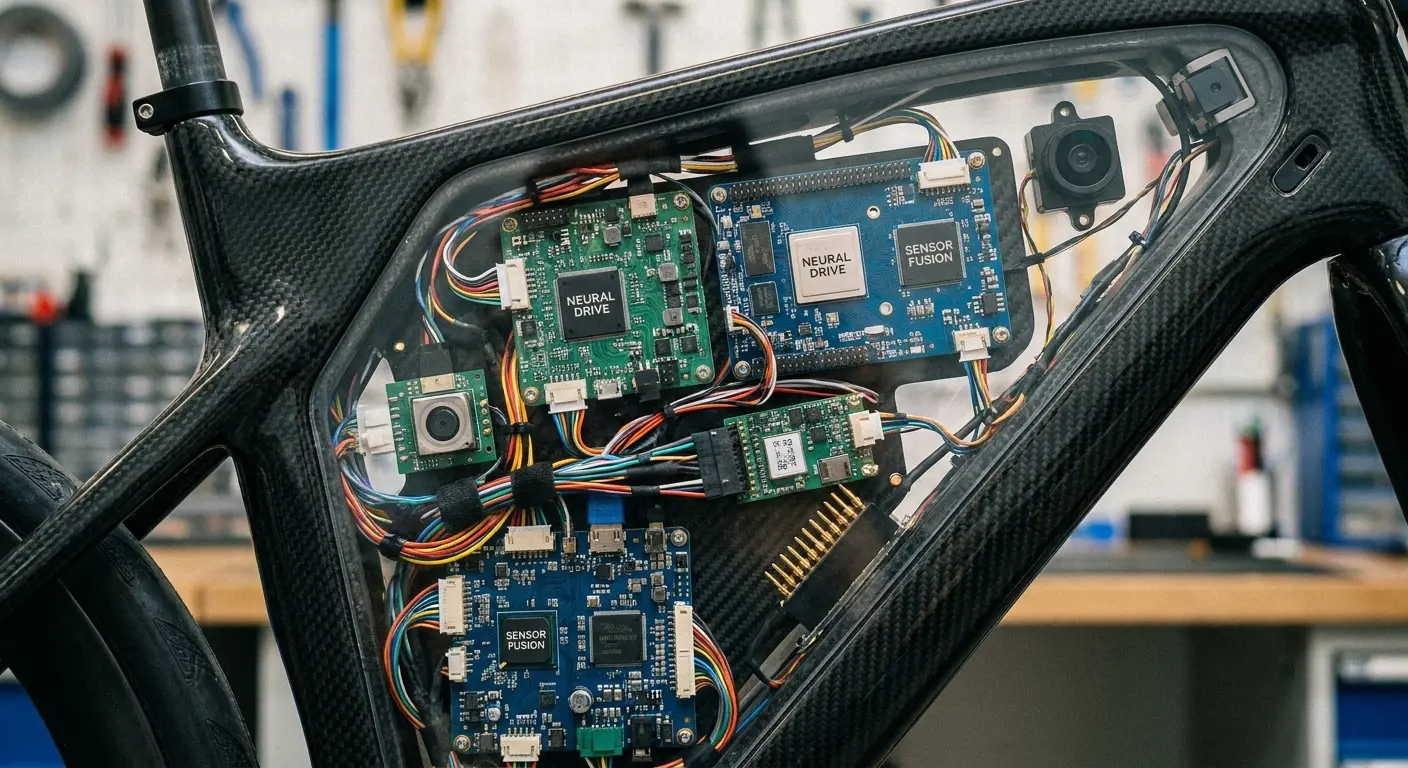
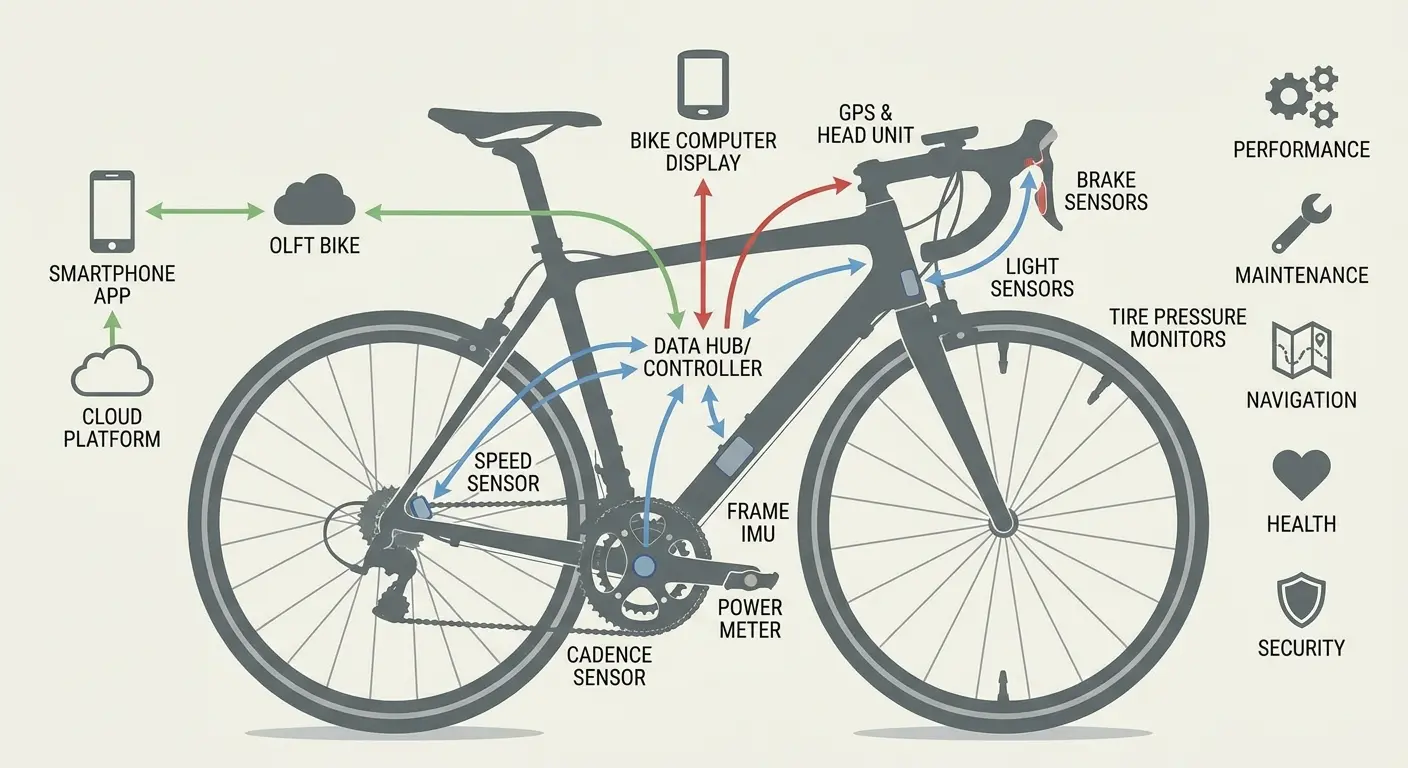
Your AI bike runs a network of sensors that continuously monitor dozens of variables. Cadence, power output, terrain gradient, weather conditions, rider heart rate. These sensors feed data into onboard processors running machine learning algorithms that make split-second adjustments to motor assistance levels, suspension settings, and gear recommendations.
The processing happens locally on some systems and in the cloud on others. Different latency. Different privacy implications.
The big difference between AI systems and regular e-bike computers? They actually learn. The bike isn't just responding to preprogrammed rules. It's building a model of your riding style, fitness level, and preferences over time. This model becomes more accurate with every ride, theoretically delivering a more personalized experience.
The catch? You're training the system with your own behavior, and that training data becomes valuable intellectual property for the manufacturer.
Processing Type |
Latency |
Privacy Impact |
Functionality When Offline |
Data Storage Location |
|---|---|---|---|---|
Local/On-Device |
<10ms |
High privacy, data stays on bike |
Full functionality maintained |
Bike's internal storage |
Hybrid (Local + Cloud) |
50-200ms |
Moderate, some data transmitted |
Core features work, advanced features limited |
Split between bike and servers |
Cloud-Dependent |
200-500ms+ |
Low privacy, continuous data transmission |
Minimal to no functionality |
Manufacturer's servers |
Edge Computing |
20-100ms |
Better privacy, processed at network edge |
Limited functionality |
Distributed edge nodes |
These latency numbers are what manufacturers claim. In real-world testing? Add 50-100ms to everything. They're measuring under ideal conditions that don't exist on actual rides.
Machine Learning Models That Evolve With Your Riding
The machine learning models embedded in AI adaptive bike systems typically start with baseline algorithms trained on thousands of rider profiles. When you first ride, the system categorizes you based on initial performance metrics and applies a generalized model. You're getting the average-cyclist treatment.
But here's where it gets interesting (or creepy, depending on your perspective): every pedal stroke is training data.
Over subsequent rides, it refines this model using your specific data. Some systems update these models continuously during rides. Others batch-process ride data and push updates during charging or when connected to WiFi. The sophistication varies dramatically between manufacturers.
Higher-end systems can distinguish between different types of fatigue (muscular vs. cardiovascular), adjust for wind resistance based on your body position, and even factor in your typical recovery patterns between hard efforts. Mid-range systems might simply track average power output and adjust motor assistance accordingly.
Want to know what these models are learning and how they're making decisions? Good luck. The manufacturers aren't telling. You're trusting a black box to make choices that affect your ride quality, battery range, and potentially your safety.
Consider a commuter who rides the same route daily. During the first week, the AI bike applies generic assistance patterns based on terrain data. By week three, it's learned that you prefer minimal assistance on the flat sections to maximize battery range, but need strong support on the 12% grade hill at mile four because you arrive at work exhausted without it.
By month two, it's recognized that you take the hill harder on Mondays (fresh from the weekend) and need more help on Fridays (accumulated fatigue). The system adjusts automatically without you touching a setting.
This personalization feels magical until you lend the bike to a friend and it applies your fatigue patterns to their fresh legs. Or until you take a different route and it makes completely wrong assumptions about what you need.
The Sensor Network That Never Stops Watching
Modern AI bike systems deploy anywhere from 8 to 20+ sensors depending on the model and price point. Beyond the obvious ones (speed, cadence, GPS), you're looking at accelerometers that measure vibration and impact, gyroscopes tracking bike angle and lean, barometric pressure sensors for elevation changes, and temperature sensors monitoring motor and battery heat.
Some systems include microphones that listen for unusual mechanical sounds that might indicate developing problems.
Others use cameras for obstacle detection or even to record rides automatically.
I'm going to skip over the technical details of how sensor fusion works (it's boring, and there are better explanations elsewhere). What matters is the outcome: your bike knows things about your riding you don't consciously track.
Actually, wait. One technical thing worth mentioning because it's weird: some systems use microphones to listen for mechanical problems. Your bike is literally listening to itself. I can't decide if that's clever or creepy. Probably both.
The sensor density creates opportunities for incredibly nuanced performance adjustments. It also creates a surveillance apparatus that captures far more information about your riding than you probably realize. That data stream includes location history, route preferences, time of day patterns, how aggressively you corner, how often you brake hard, and even biometric data if you've connected a heart rate monitor or smartwatch.
All of this feeds into the AI's decision-making process. All of it also gets stored somewhere, raising questions about data retention policies that most riders never think to ask about.
Predictive Maintenance Is Impressive Until It Isn't
Catching Problems Before They Become Failures
Predictive maintenance represents one of the most genuinely useful applications of AI in cycling. The system monitors component wear patterns, tracks performance degradation over time, and flags potential issues before they leave you stranded. Your chain stretch gets measured through power transfer efficiency. Brake pad wear shows up in braking distance calculations. Spoke tension changes appear in wheel vibration patterns. Battery health gets assessed through charge cycle analysis and capacity testing.
When it works well, you get advance warning that your cassette needs replacing in 200 miles or your bottom bracket bearings are developing play. You can plan maintenance during off-season or before a big trip rather than dealing with failures mid-ride. The system might even order parts automatically or schedule service appointments with local shops that integrate with the bike's platform.
This is the promise, and for riders who struggle with maintenance timing or lack mechanical knowledge, it's legitimately valuable.
The problems emerge when the predictions are wrong, when the diagnostic tools are only available through subscription services, or when the system flags issues that require proprietary tools or dealer-only service procedures.
Pre-Ride AI System Check:
Verify all sensors show green status in the companion app
Check that firmware is current (outdated firmware can cause false maintenance alerts)
Review any pending maintenance notifications and assess urgency
Confirm battery health percentage is above 80% for rides over 20 miles
Test manual override controls to ensure fallback options work
Export recent ride data as backup in case of system failure
Note any unusual sounds or handling characteristics the AI might not detect
The Subscription Model for Basic Diagnostics
And here's where predictive maintenance gets frustrating.
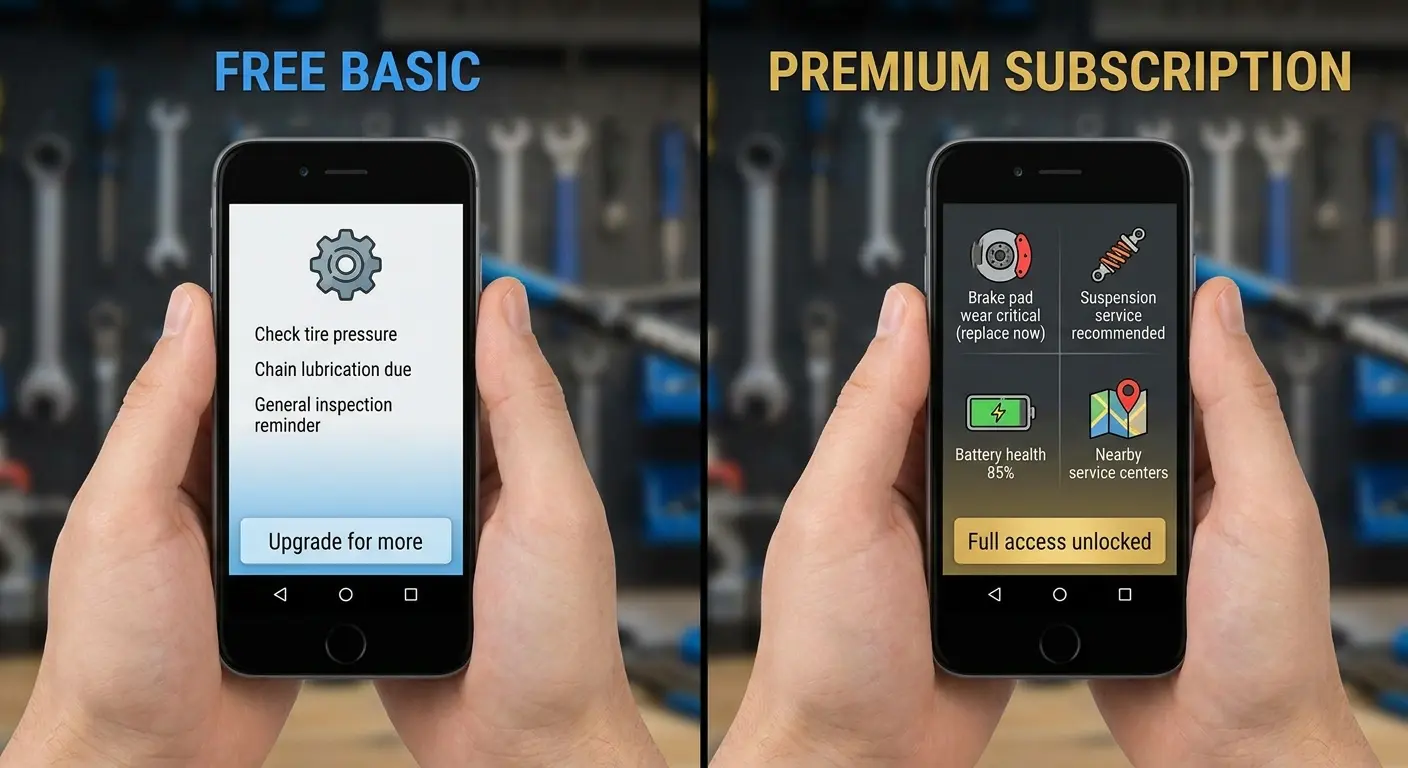
Many manufacturers gate their most useful diagnostic features behind subscription paywalls. Basic alerts might be free, but detailed component health reports, predictive timelines, and service recommendations often require monthly or annual fees. Some brands bundle these subscriptions with other premium features, making it difficult to opt out of services you don't want just to access maintenance data about your own bike.
The justification is that cloud processing, algorithm updates, and integration with service networks cost money to maintain. Fair enough. But when you've already paid premium prices for the bike itself, being asked to pay ongoing fees just to know when your chain needs replacing feels like getting nickel-and-dimed.
Worse, if you cancel the subscription, you might lose access to historical data about your bike's condition. That maintenance history could be valuable for resale or warranty claims, but it's held hostage to continued subscription payments.
Some manufacturers are more reasonable about this than others, offering lifetime access to basic diagnostics with optional paid tiers for advanced features. Others treat essential maintenance information as a recurring revenue opportunity.
Feature Category |
Typically Free |
Usually Requires Subscription |
Varies by Manufacturer |
|---|---|---|---|
Basic error codes |
✓ |
||
Component wear percentage |
✓ |
||
Predictive failure timelines |
✓ |
||
Maintenance scheduling |
✓ |
||
Historical health data |
✓ |
||
Parts ordering integration |
✓ |
||
Service appointment booking |
✓ |
||
Detailed diagnostic reports |
✓ |
||
Real-time component monitoring |
✓ |
||
Warranty claim documentation |
✓ |
When the AI Cries Wolf (Or Misses the Real Problem)
Predictive maintenance algorithms aren't infallible. They make mistakes in both directions.
False positives create alert fatigue. Your bike insists the rear derailleur needs immediate attention when it's fine. After the third or fourth false alarm, you start ignoring warnings, which defeats the entire purpose. You might skip a legitimate alert because you've learned not to trust the system.
False negatives might be worse.
The AI misses an actual developing problem because it falls outside the patterns the algorithm was trained to recognize. Your bottom bracket develops a crack that doesn't show up in the expected wear patterns. A spoke breaks in a way that doesn't trigger the wheel integrity alerts. The battery management system fails to detect early signs of cell degradation.
You're riding with a false sense of security, assuming the AI would have warned you if something was wrong. The system's confidence in its own predictions can make you less attentive to the subtle signs experienced riders pick up on naturally. You stop listening to your bike because you're trusting the computer to listen for you.
Until it doesn't, and you're dealing with a failure that could have been prevented with old-fashioned attention to how things sound and feel.
My buddy Jake (who rides a Specialized Turbo Levo) got brake pad alerts for three weeks straight. Every time he checked, the pads were fine. Like, 70% material left. He started ignoring all brake notifications. Then his front pads, which never triggered any alert, wore down to metal. Damaged his rotor. $180 fix. The AI had been trained mostly on rear brake data from road bikes, so it completely missed how aggressive mountain bikers use their front brake.
Performance Optimization vs. Performance Dependency
Automated Decision-Making That Makes You Faster
AI adaptive bike systems excel at making micro-adjustments that optimize performance in real time. The motor assistance ramps up just before you hit a steep gradient, smoothing out the power curve. Suspension settings adjust mid-corner based on your lean angle and speed. Gear recommendations appear exactly when you need them, preventing the inefficient cadence ranges that waste energy.
For riders focused on performance metrics, training load management, or competitive results, these optimizations deliver measurable improvements. You maintain higher average speeds with less perceived effort.
Your heart rate stays in target zones more consistently. You complete climbs that previously required walking sections.
The system functions as an invisible coach, making hundreds of small decisions per ride that add up to better overall performance. This is particularly valuable for newer riders who haven't yet developed the intuition to know when to shift, how to pace efforts, or how to read terrain ahead. The AI fills in those knowledge gaps, letting you ride at a higher level than your current skill set would normally allow.
The Skill Development You're Not Getting
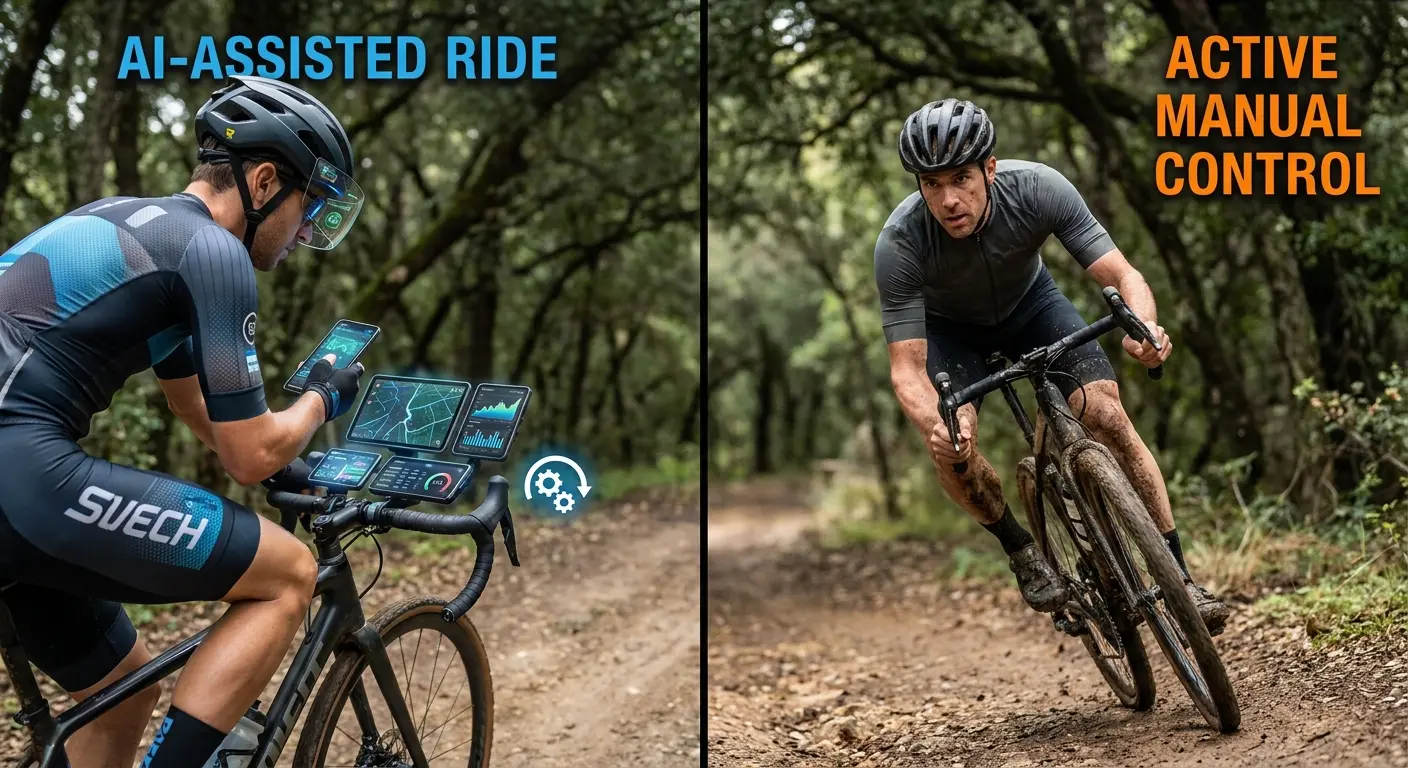
Look, nobody wants to say this, but when AI systems make decisions for you, you're not learning to make those decisions yourself.
The bike tells you when to shift instead of you developing the feel for optimal cadence. The motor smooths out your power delivery instead of you learning to pace efforts efficiently. The suspension adjusts automatically instead of you understanding how bike setup affects handling.
You're getting better results without developing better skills.
This matters less if you're purely focused on recreational riding and don't care about becoming a more skilled cyclist. But if you care about actually becoming a better rider? This is a problem.
The dependency can become real. Riders accustomed to AI assistance sometimes struggle when they switch to traditional bikes or when battery limitations force them to ride in low-assist or no-assist modes. The skills that experienced cyclists take for granted (reading terrain, anticipating gear changes, modulating power output, choosing lines through technical sections) never fully develop when the AI is handling those decisions.
You're fast, but you're not necessarily becoming a better rider. That distinction might not matter to everyone, but it's worth acknowledging.
Battery Range Anxiety Meets Processing Demands
AI processing isn't free from an energy perspective. The constant sensor monitoring, real-time calculations, and continuous adjustments drain battery power beyond what the motor assistance alone requires. The more sophisticated the AI features, the more processing power they demand, and the shorter your range becomes.
Some systems let you disable AI features to extend range, forcing a choice between smart functionality and distance capability. Others run the AI continuously with no option to reduce processing load. Battery technology is improving, but so is the computational complexity of AI systems. You're caught in an arms race where increased intelligence comes at the cost of decreased range.
For riders planning long adventures, multi-day trips, or routes without charging access, this creates real limitations. You might need to carry backup batteries, plan routes around charging infrastructure, or accept reduced AI functionality to make your range targets.
The processing demands also generate heat, which affects battery longevity and can trigger thermal management protocols that reduce performance.
Your bike might throttle motor assistance not because the battery is low, but because the processors are running hot from AI calculations. These are the practical tradeoffs that marketing materials gloss over but that affect real-world usability.
Data Collection: Who Owns Your Ride Metrics?
The Information Your Bike Knows About You
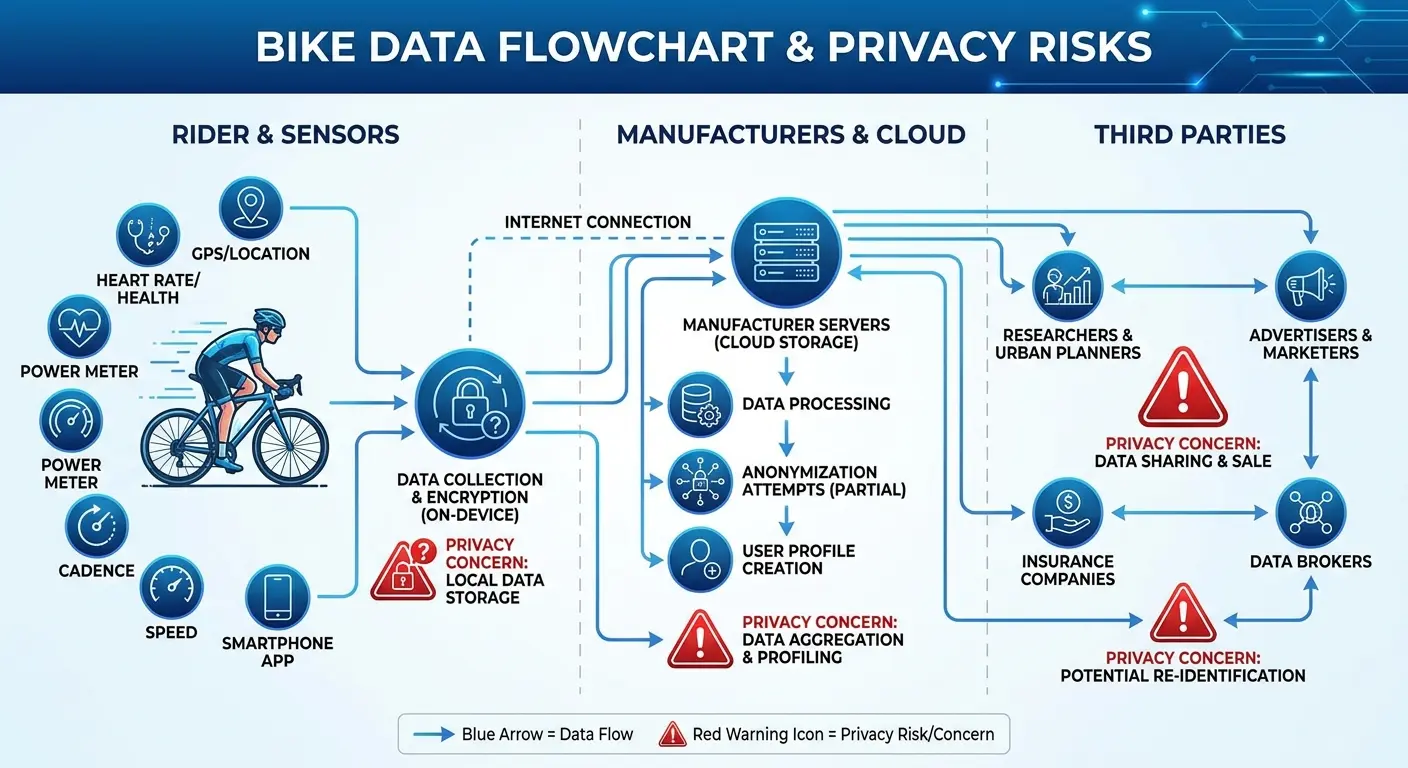
Your AI bike collects an astonishing amount of personal information. Every ride generates location data showing where you live, work, and regularly travel. Time stamps reveal your schedule and routine. Performance metrics indicate your fitness level and health trends. Route choices might suggest income level (based on neighborhood), risk tolerance (based on traffic patterns), or personal interests (based on destinations).
When integrated with accounts, payment information, and connected devices, the data profile becomes even richer. Some systems access your calendar to suggest pre-ride prep times. Others pull weather forecasts and traffic data to recommend route changes. Many connect to social platforms, adding another layer of personal information.
The bike manufacturer now has a detailed portrait of your life that extends well beyond cycling.
This data has commercial value. It can inform product development, target advertising, or be sold to third parties (depending on the terms of service you agreed to without reading). Location data interests insurance companies. Performance data interests health and fitness brands. Route data interests urban planners and real estate developers.
Your ride metrics are a commodity, and you might not be getting anything in return for providing them.
Data Privacy Audit for Your AI Bike:
-
Review permissions granted during initial setup
Location access (always vs. only while using)
Contact list access
Calendar integration
Social media connections
-
Check current data sharing settings
Anonymized data sharing with manufacturer
Third-party data sharing permissions
Marketing and advertising opt-ins
Research participation agreements
-
Verify data retention policies
How long ride data is stored
Deletion options and procedures
What happens to data if you sell the bike
Data transfer rights under GDPR or similar regulations
-
Assess connected device permissions
Which apps have access to your bike data
Smart home integrations
Wearable device connections
Payment system links
-
Document opt-out procedures
How to disable non-essential data collection
Steps to request data deletion
Process for downloading your complete data archive
Terms of Service You Didn't Read
Buried in the terms of service you clicked through during bike setup are clauses about data collection, usage rights, and sharing policies. Most riders never read these documents. They're long, deliberately obscure, and written to maximize the manufacturer's flexibility while minimizing their obligations.
You might have agreed to let the company share anonymized ride data with partners. You might have granted permission for your information to be used in aggregate studies. You might have accepted terms that allow the company to change their data policies at any time with minimal notice.
Some manufacturers are relatively transparent and responsible with user data. Others are less so. The problem is that you often don't know which category your bike falls into until after you've made the purchase and started riding. Switching platforms after you've invested in a particular ecosystem is difficult and expensive. You're somewhat locked in, which reduces your leverage to push back on data practices you're uncomfortable with.
Privacy-conscious riders face a dilemma: accept the data collection to access the AI features, or forgo the smart functionality to maintain privacy. There's rarely a middle ground that gives you full features with minimal data sharing.
Data Portability and Platform Lock-In
What happens to your ride data if you switch bike brands or stop using the manufacturer's app?
In many cases, you can't easily export your complete ride history, performance trends, or maintenance records. The data lives in proprietary formats within closed ecosystems. You might be able to export basic GPS tracks or summary statistics, but the detailed analytics, AI-generated insights, and historical trends often aren't portable.
This creates lock-in effects. You've accumulated years of data that inform the AI's personalization. Starting over with a new system means losing that training history and beginning from scratch. The new bike won't know your fitness patterns, preferred routes, or maintenance history. You're incentivized to stay within the same brand ecosystem even if better options emerge, because switching means abandoning your data.
Some riders work around this by using third-party apps that aggregate data from multiple sources. But these solutions are imperfect, often missing the proprietary metrics and AI-generated insights that make each system unique. The lack of data portability standards across the industry means your ride information is effectively held hostage by whoever manufactured your bike.
That's great for brand loyalty, less great for consumer choice and competition.
The Skill Erosion Question Nobody Wants to Address
Automation vs. Engagement
There's a fundamental tension between automated assistance and active engagement with the riding experience. When the bike handles technical decisions, you're freed to focus on other aspects of the ride (scenery, conversation, fitness goals). You're also removed from the immediate feedback loop that builds cycling skill.
Traditional riding forces you to pay attention. You feel when you're in the wrong gear. You notice when your line choice through a corner is inefficient. You learn from mistakes because the consequences are immediate and obvious.
AI adaptive bike systems buffer you from those consequences. The bike compensates for suboptimal choices, smoothing out the rough edges of your technique. You don't develop the same kinesthetic awareness because the system is mediating your relationship with the terrain.
Honestly? If you need AI to tell you when to shift gears, maybe you should spend less money on a smart bike and more time actually learning to ride. I know that sounds gatekeepy. I don't care. Some skills are worth developing.
The Lost Art of Reading Your Bike
Experienced cyclists develop an intuitive sense for their bike's condition and performance. They hear when the drivetrain needs cleaning. They feel when tire pressure is slightly off. They notice subtle changes in handling that indicate a loose headset or worn bearings. These skills come from paying close attention over many rides.
AI systems with predictive maintenance features can make this attention seem unnecessary. The bike will tell you when something needs service, so why bother listening for early warning signs?
The problem is that automated monitoring doesn't catch everything, and the skills you don't practice atrophy. Riders who rely heavily on AI diagnostics sometimes miss obvious mechanical issues because they've stopped paying attention to the sensory feedback their bike provides. They don't recognize the sound of a failing hub bearing or the feel of brake pads that need replacing.
When the AI fails to flag an issue (and it will, eventually), they lack the backup skills to catch it themselves.
This creates a brittle kind of competence. Everything works great as long as the system is functioning. When it's not, you're more helpless than you would be if you'd never had the AI assistance in the first place.
I watched a rider with five years of AI bike experience borrow a friend's traditional gravel bike for a weekend trip. Within the first hour, they were constantly second-guessing gear selection, unable to find a comfortable cadence without the AI's guidance. On a steep descent, they failed to notice the gradual fade in braking power that an experienced rider would have immediately recognized as overheating brake fluid. By the time they realized something was wrong, they'd lost significant stopping power on a technical section.
The skills that should have developed naturally over five years of riding had been outsourced to systems that weren't present on the borrowed bike.
Decision-Making Skills That Transfer Beyond Cycling
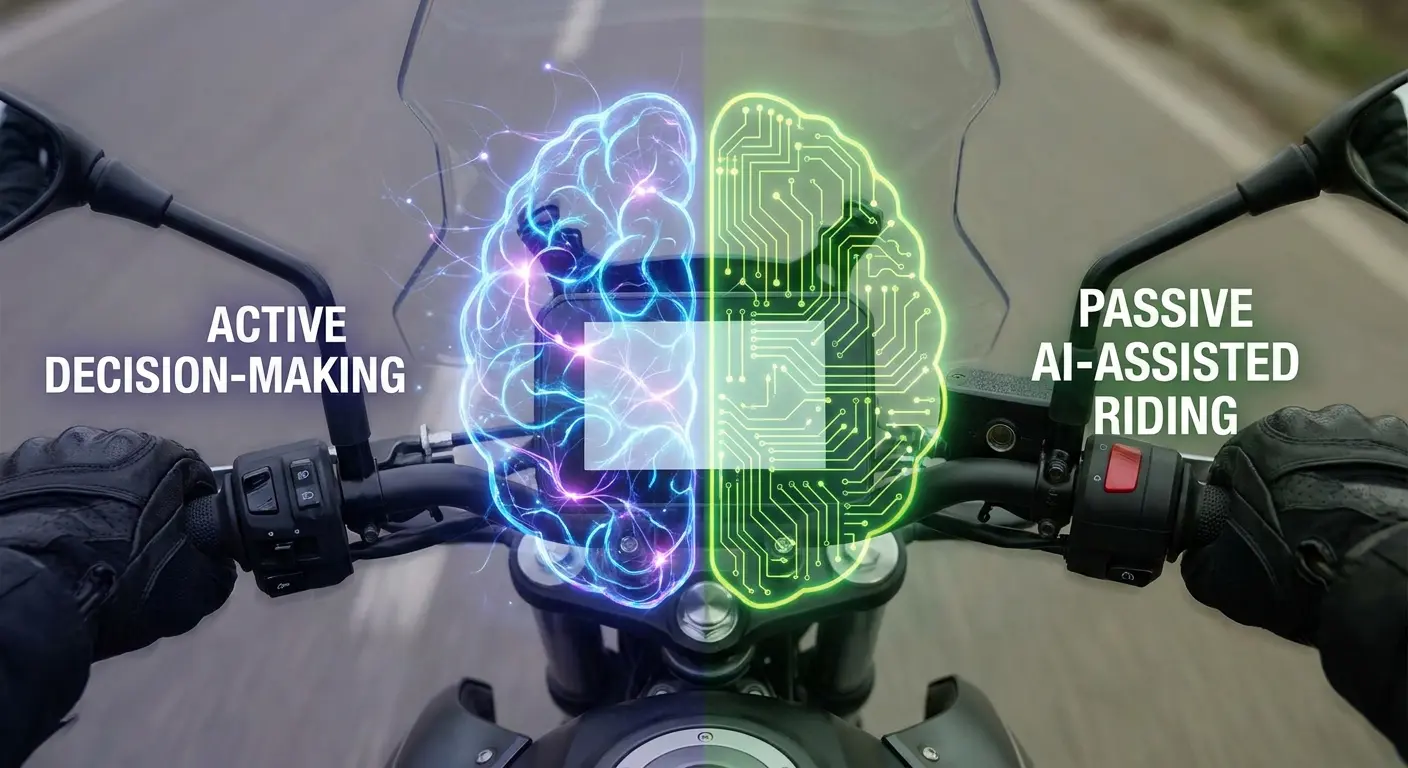
The cognitive skills you develop through unassisted cycling extend beyond the bike. Reading terrain ahead builds spatial awareness and predictive thinking. Managing effort over long rides develops pacing intuition that applies to other endurance activities. Making real-time tactical decisions in traffic or on technical trails sharpens judgment under pressure.
These transferable skills develop through active engagement with the riding experience, not passive acceptance of automated decisions. When AI systems handle the cognitive load, you're outsourcing the mental training that makes cycling valuable beyond simple exercise. You get cardiovascular benefits without the neurological development. Your body adapts while your brain coasts.
For some riders, this tradeoff makes sense. Cycling is purely recreational or utilitarian, and cognitive development isn't a priority. For others, the mental engagement is part of what makes riding worthwhile.
The AI bike might make you faster, but it's making you faster by doing the thinking for you. That's a fundamentally different experience than becoming faster through improved skill, judgment, and tactical awareness.
Battery Life, Processing Power, and the Hardware Compromise
Weight Penalties That Marketing Glosses Over
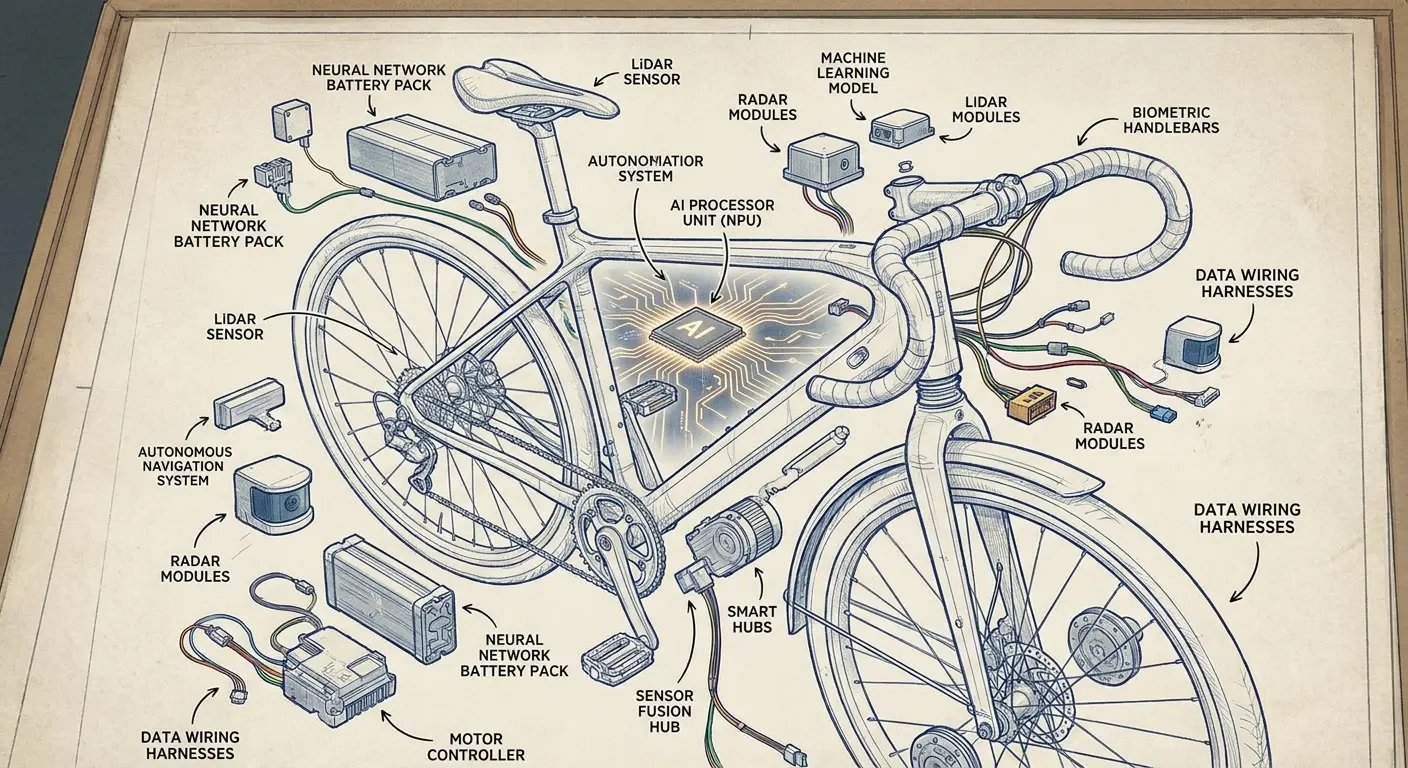
AI bike systems add weight in multiple ways. The sensor array, processing units, additional wiring, and larger batteries required to power everything contribute pounds that affect handling, acceleration, and climbing performance. Manufacturers often obscure total system weight by listing frame weight separately from electronics, or by comparing their AI-equipped models only to other e-bikes rather than traditional bicycles.
The weight matters more than you'd think. It affects how the bike feels in tight turns, how easily you can maneuver it in technical terrain, and how much effort is required when the battery dies and you're riding an unpowered bike that weighs 50+ pounds.
Some riders don't mind the weight penalty because the motor assistance more than compensates. Others find the handling characteristics frustrating, particularly when riding at low speeds or navigating obstacles where bike weight significantly affects control.
The weight also impacts portability. Getting an AI-equipped bike onto a car rack, up a flight of stairs, or into storage requires more effort. For riders with physical limitations or those who need to transport their bikes regularly, this isn't a trivial concern.
Component Complexity and New Failure Points
Every sensor, processor, and wire in an AI bike system is a potential failure point. Traditional bikes are mechanically simple. When something breaks, it's usually obvious and often fixable with basic tools. AI bikes introduce electronic complexity that requires specialized diagnostic equipment and technical knowledge.
A malfunctioning sensor might throw error codes that shut down the entire system. A software glitch could brick the bike's computer, requiring dealer service to reset. Water intrusion into electronic housings can cause intermittent failures that are difficult to diagnose.
The increased complexity also affects long-term reliability. Mechanical components wear predictably and can often be rebuilt or replaced. Electronic components fail suddenly and typically require complete replacement. The proprietary nature of many AI bike systems means you can't just swap in generic replacement parts. You're dependent on the manufacturer continuing to produce and stock components for your specific model year.
What happens when they discontinue support? Your expensive AI bike might become a regular e-bike with dead weight from non-functional sensors, or worse, a bike that won't run at all because the AI system is integral to basic operation.
Thermal Management Issues Nobody Mentions
The thermal management issues? Chef's kiss of poor engineering.
AI processing generates heat. So do motors and batteries. Cramming all of this into a bike frame creates thermal management challenges that affect performance and longevity. Processors throttle when they overheat, reducing AI functionality exactly when you might need it most (during long, hard efforts on hot days). Batteries degrade faster when operated at elevated temperatures, shortening their useful life and reducing range over time.
Some manufacturers implement active cooling systems with fans or liquid cooling, adding more complexity, weight, and potential failure points. Others rely on passive cooling through frame design and heat sinks, which works adequately in moderate conditions but struggles in temperature extremes.
Riders in hot climates report AI features becoming sluggish or unavailable during summer rides. Those in cold conditions deal with reduced battery capacity and slower processing speeds. The thermal constraints aren't always obvious during short test rides in ideal conditions. They emerge during real-world use across seasons and in varied environments, creating frustration for riders who expected consistent performance year-round.
Ecosystem Lock-In and the Subscription Creep
Proprietary Standards That Don't Play Nice
The AI bike industry lacks standardization. Each manufacturer builds closed ecosystems with proprietary communication protocols, mounting systems, and software platforms. Your handlebar-mounted phone case from one brand won't integrate with another brand's AI system. Third-party accessories that work with traditional bikes often aren't compatible with AI models because of non-standard mounting points or electronic interference issues.
This fragmentation forces you to commit to a single ecosystem and purchase accessories specifically designed for your bike's platform. The lack of interoperability extends to software.
Ride data doesn't sync cleanly between platforms. Training apps that work with one manufacturer's system might not support another's.
You're building a collection of devices, subscriptions, and accessories that only work together within a walled garden.
Switching brands means replacing not just the bike but potentially your entire accessory ecosystem. This lock-in is intentional. Manufacturers benefit from reduced competition and guaranteed accessory sales. Riders bear the cost through reduced choice and inflated prices for proprietary components that would be cheaper in a competitive, standardized market.
Feature Degradation Through Forced Updates
AI bike systems require regular software updates to function properly, patch security vulnerabilities, and add new features. Sounds reasonable until you experience an update that removes functionality you relied on, changes the user interface in frustrating ways, or introduces bugs that weren't present before.
You have limited control over when updates happen. Some systems update automatically when connected to WiFi. Others nag you with persistent notifications until you comply. Refusing updates eventually locks you out of online features or prevents the bike from connecting to companion apps.
Manufacturers occasionally use updates to gate features behind new subscription tiers. Something that was included with your bike purchase becomes a premium feature requiring monthly payments. Or they deprecate older models by ending update support, leaving you with a bike that still works mechanically but loses AI functionality over time.
The forced update model gives manufacturers ongoing control over your bike's capabilities long after purchase. You don't truly own the software that runs your bike. You're licensing it under terms that can change at any time, and your only recourse is to accept the changes or stop using the smart features you paid for.
The Monthly Fee Treadmill
Subscription models are spreading across AI bike features. Advanced route planning? Monthly fee. Detailed performance analytics? Monthly fee. Predictive maintenance alerts? Monthly fee. Social features and ride sharing? Monthly fee.
Some manufacturers bundle these into tiered subscription plans. Others offer them à la carte, letting you pick which features you're willing to pay for. The fees seem small individually (typically $5-15 per month per feature), but they accumulate quickly. You can easily find yourself paying $30-50 monthly just to access the full capabilities of a bike you already spent thousands of dollars purchasing.
Over a typical ownership period of 5-7 years, those subscriptions add up to thousands more.
Look, I'm going to be blunt: the subscription model for basic diagnostics is exploitative. I don't care that "cloud infrastructure costs money." My bike already has the sensors. It's collecting the data locally. Making me pay $15/month to see detailed wear reports on components I own is a cash grab, full stop. Yeah, some people will defend it. Those people are wrong.
Some features genuinely require ongoing server costs. Others are processed locally on your bike and gated behind subscriptions purely because the manufacturer can. Distinguishing between the two requires technical knowledge most riders don't have, leaving them vulnerable to paying for services that shouldn't require subscriptions at all.

Where Rokform Fits Into Your AI-Enhanced Setup
Mounting Solutions That Actually Work With Smart Bikes
Quick aside about phone mounts, since this is where I'd be a hypocrite if I didn't mention it.
AI bikes create mounting problems. You need secure phone access for navigation, ride tracking, and system monitoring, but many AI bike frames use non-standard tube shapes, integrated cable routing, and sensor placements that interfere with traditional mounts.
Rokform's magnetic mounting system addresses this through versatile placement options that work around the design quirks of modern AI bikes. The magnetic connection is strong enough to handle rough terrain and high speeds without worrying about your phone bouncing loose, which matters more when you're relying on it for real-time system feedback. The twist-lock mechanism adds redundancy, giving you confidence during aggressive riding where a dropped phone means losing access to your bike's controls and diagnostics.
For riders managing multiple devices (phone for navigation, secondary screen for performance data), Rokform's ecosystem lets you mount what you need without cluttering your cockpit with incompatible mounting systems from different manufacturers. The cases themselves protect your phone from the increased vibration and impact that comes with AI bike systems, which tend to be heavier and generate more trail feedback than traditional bikes.
Rokform's bike mount options are specifically designed to handle the unique challenges of modern smart bike systems, offering flexibility that proprietary manufacturer mounts often lack.
When Your AI System Fails Mid-Ride
AI bike malfunctions happen. When they do, your phone becomes your backup navigation, communication lifeline, and potentially your way to diagnose what went wrong or call for assistance. Having it securely mounted and easily accessible isn't optional.
Rokform's quick-release design means you can pull your phone off the mount instantly to troubleshoot, contact support, or switch to backup navigation apps when the bike's system crashes. The rugged case protection matters here too. If you're dealing with a mechanical issue in challenging conditions (weather, remote location, fading light), the last thing you need is a damaged phone that can't help you get home.
I've seen riders rely on their phones to access manufacturer support forums, watch repair videos, or coordinate pickup when their AI bike's motor assistance failed unexpectedly. Having that device protected and accessible made the difference between a manageable inconvenience and a serious problem.
Disclosure: yes, this is a Rokform blog. But I'm not going to recommend something that doesn't solve a real problem just because it's our product. The mounting challenges with AI bikes are legitimate, and this is what I actually use.
You can check out Rokform's bike mount options to find solutions that work with your specific AI bike setup, and their phone cases are built to handle the demands of modern smart bike systems that put your device through more stress than traditional riding.
What Happens When the AI Gets It Wrong?
Misreading Rider Intent in Critical Moments
AI systems make assumptions about what you're trying to do based on sensor data and learned patterns. Sometimes they're wrong.
The bike interprets your sprint effort as distress and adds unwanted motor assistance, throwing off your power balance mid-effort. It reads a technical descent as terrain to be avoided and suggests rerouting when you're intentionally seeking challenging trails. The suspension locks out during a section where you need compliance because the AI predicted smooth pavement based on map data that's outdated.
These misreadings range from annoying to dangerous. Unexpected motor assistance during a tight corner can break traction. Suspension changes mid-obstacle can cause loss of control. Gear changes at the wrong moment can disrupt cadence when you need stability.
Most systems include override options, but accessing them requires taking attention off the trail to interact with controls or screens. In critical moments, that divided attention creates risk.
The fundamental problem is that AI operates on predictions and probabilities. It doesn't know your actual intent, only what its model suggests you probably want based on similar past situations. When your current situation doesn't match the pattern, the system guesses wrong.
Cascade Failures in Integrated Systems
AI bikes integrate multiple systems that depend on each other. When one component fails, it can trigger cascading problems across the platform. A faulty cadence sensor feeds bad data to the motor controller, which makes poor assistance decisions, which drains the battery faster than expected, which triggers range anxiety alerts, which prompt the system to reduce AI processing to conserve power, which degrades performance optimization features.
You're left troubleshooting a complex web of interdependencies without clear indication of where the original failure occurred. The bike's error messages are often vague or misleading, pointing to symptoms rather than root causes.
Traditional bikes fail in isolated, comprehensible ways. A flat tire is a flat tire. A broken chain is a broken chain.
AI bike failures can be systemic and opaque, requiring diagnostic tools and technical knowledge that most riders don't have. The integrated nature that makes these systems powerful when working correctly becomes a liability when something goes wrong. You can't easily isolate and bypass a malfunctioning component. Everything is connected, so everything is potentially affected by a single failure point.
Limited Manual Override Options
How much control do you have when the AI makes decisions you disagree with? It varies dramatically between systems. Some bikes offer comprehensive manual modes that let you override every automated function and ride with traditional controls. Others provide limited override options that still rely on the AI for core functions.
A few systems are so deeply integrated that manual operation isn't truly possible. The motor assistance, gear selection, and suspension settings are all managed by the AI with minimal rider input. When the AI malfunctions or makes poor choices, you're stuck with its decisions. You can't simply switch to manual control and ride the bike traditionally.
This lack of fallback options creates vulnerability. You're dependent on the system functioning correctly with no backup plan when it doesn't. Experienced riders find this frustrating. They have the skills to manage the bike manually but are prevented from doing so by software that won't relinquish control.
The bike is smarter than you until it isn't, and then you're helpless because it won't let you be smarter than it.
The Environmental Cost of Smart Bike Tech
Manufacturing Impact of Electronic Components
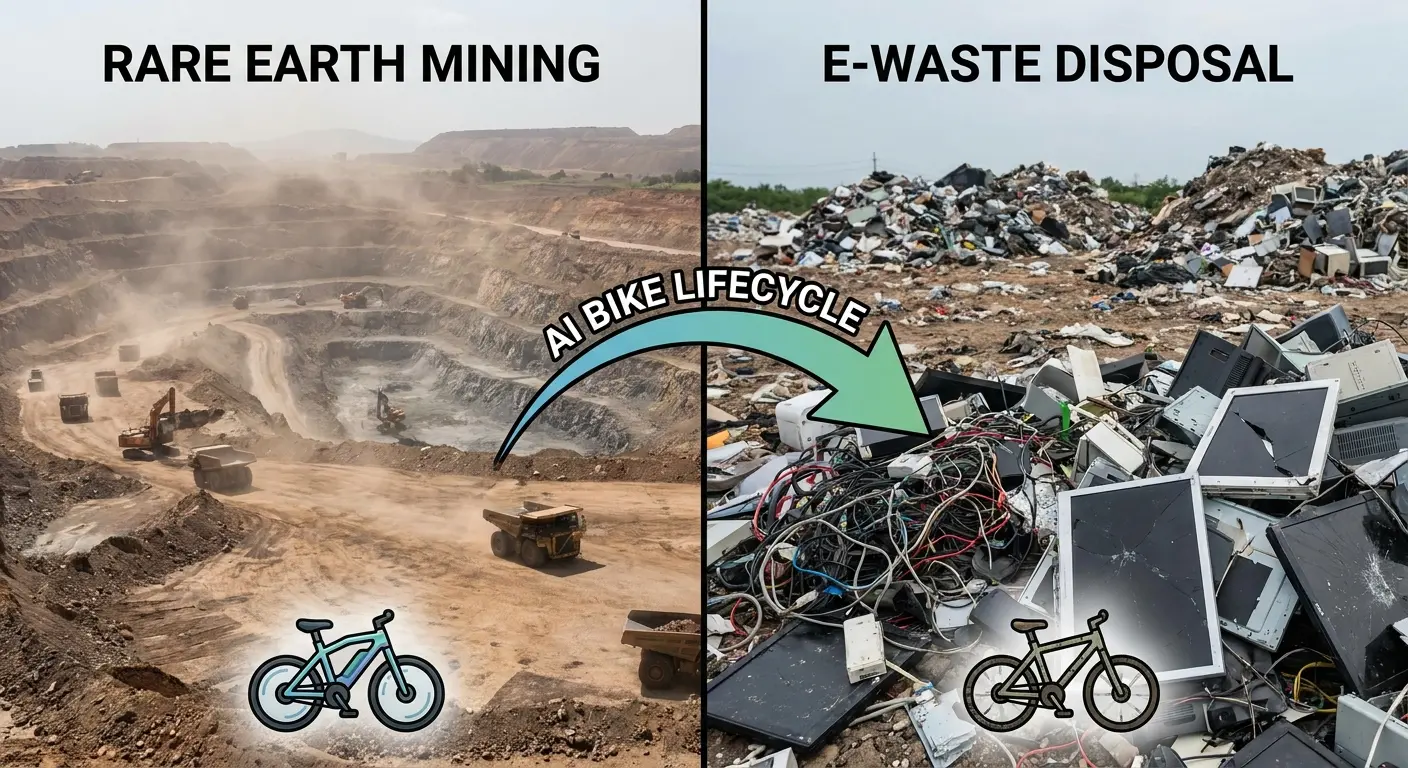
AI bikes require rare earth minerals for batteries, processors, and sensors. Mining these materials involves significant environmental destruction, water usage, and often questionable labor practices. The manufacturing process for electronic components is energy-intensive and generates toxic waste. Circuit boards contain materials that don't biodegrade and are difficult to recycle properly. Batteries require lithium, cobalt, and other minerals with problematic supply chains.
The environmental footprint of producing an AI bike significantly exceeds that of a traditional bicycle, and the gap is wider than most marketing materials acknowledge. Manufacturers highlight the environmental benefits of bike transportation compared to cars (valid), but rarely address the manufacturing impact of the technology itself.
An AI bike might reduce your carbon footprint compared to driving, but it has a much larger footprint than a traditional bike that accomplishes the same transportation goals. For environmentally conscious riders, this creates tension between wanting cutting-edge technology and minimizing environmental harm. The calculation isn't straightforward, and honest data about lifecycle environmental costs is difficult to find.
E-Waste and End-of-Life Challenges
What happens to an AI bike when it reaches end of life? The frame might be recyclable, but the electronic components present serious disposal challenges. Batteries contain hazardous materials requiring specialized recycling facilities. Processors and sensors include materials that contaminate soil and water if improperly disposed of.
Many municipalities lack infrastructure to properly handle e-bike waste, leading to components ending up in landfills where they leach toxins. The proprietary nature of AI bike systems complicates recycling further. You can't easily separate components for proper disposal. Everything is integrated and sealed in ways that make disassembly difficult without specialized tools and knowledge.
Manufacturers rarely provide clear end-of-life recycling programs or take-back initiatives. The responsibility falls on individual riders to figure out proper disposal, and most don't have good options available.
The rapid pace of technological advancement also means AI bikes become obsolete faster than traditional bikes. When the manufacturer stops supporting your model with software updates or replacement parts, the bike becomes difficult to maintain even if the frame and mechanical components are still sound. You're forced to dispose of a partially functional bike because the electronic components are no longer viable, creating waste that could have been avoided with simpler, more maintainable technology.
Energy Consumption Beyond the Ride
AI bikes consume energy even when not being ridden. The systems often remain in standby mode, maintaining connectivity and processing background tasks. Cloud-based features require server infrastructure that runs continuously, consuming electricity for processing and cooling. Software updates, ride data syncing, and social features all demand energy beyond what's needed for riding.
Over the bike's lifetime, this background energy consumption adds up. The total energy footprint includes not just charging the battery for rides, but also powering the always-on connectivity and cloud services.
Some manufacturers use renewable energy for their server infrastructure, reducing this impact. Others don't, or aren't transparent about their energy sources. For riders trying to minimize their environmental impact, these hidden energy costs are worth considering. The convenience of always-connected features comes with an environmental price that persists throughout ownership.
Traditional bikes consume no energy when not in use. AI bikes are never truly off, always drawing power somewhere in the system or the cloud infrastructure supporting them.
Final Thoughts
AI bike technology delivers real benefits. Predictive maintenance catches problems early. Performance optimization helps riders achieve goals they couldn't reach otherwise. The integration of sensors, processing power, and machine learning creates experiences that simply weren't possible a few years ago.
But the technology also introduces complications that deserve more attention than they typically receive.
Data privacy concerns, subscription models, skill erosion, ecosystem lock-in, and environmental costs are real tradeoffs, not minor inconveniences. The relationship between rider and machine is changing, and not everyone will find the new dynamic appealing.
Am I overthinking this? Probably. Do I sound like a paranoid luddite worried about bike computers stealing my data? Definitely. But here's the thing: I'm also right. Just because I sound skeptical doesn't mean manufacturers aren't tracking every ride and selling anonymized data to insurance companies. (They are. It's in section 12.4 of the terms of service. Yes, I actually read it. Yes, I need better hobbies.)
The riders who benefit most from AI bikes are those who understand what they're gaining and what they're giving up. You're not just buying a bike. You're buying into a platform, accepting ongoing costs, and trusting algorithms with decisions that affect your riding experience and safety.
For some riders, that bargain makes perfect sense. The benefits outweigh the complications, and the technology genuinely improves their cycling experience. For others, the tradeoffs aren't worth it. They'd rather maintain direct control, avoid subscription fees, and keep their ride data private.
Neither position is wrong. They're just different priorities leading to different conclusions about whether AI bike technology is solving problems you have or creating new ones you didn't ask for.
Understanding the full picture now positions you to navigate that evolution on your own terms rather than being swept along by marketing hype and feature creep you didn't see coming. We're still in the early stages of this technology. The standards, practices, and expectations are still being established. Being informed about the real implications helps you make choices that align with your values and riding goals.
Whether you embrace AI bikes fully, avoid them entirely, or find some middle ground with selective feature adoption, knowing what you're actually signing up for matters. The technology isn't going away. It's going to keep evolving, becoming more sophisticated and more integrated into cycling culture.

