


Table of Contents
Stop Buying Tires Based on Mileage Ratings
-
Sport Touring Tires (The Only Choice That Makes Sense for Most of You)
Michelin Road 6
Pirelli Angel GT II
Dunlop Roadsmart IV
Bridgestone Battlax T32
Metzeler Roadtec 02
Continental Road Attack 4
-
Tires for People Who Actually Drag Knees
Pirelli Diablo Rosso IV
Michelin Power 5
Dunlop Sportmax Q5
Bridgestone Battlax Hypersport S22
Metzeler Sportec M9 RR
Continental ContiSportAttack 4
-
Adventure Tires (Be Honest About Where You Actually Ride)
Michelin Anakee Adventure
Pirelli Scorpion Trail II
Dunlop TrailSmart Max
Continental TKC 70
Bridgestone Battlax Adventurecross AX42
How Rokform Keeps Your Tech Safe While You Focus on the Road
Final Thoughts
TL;DR
Sport touring tires work for most riders who commute but still want to have fun on weekends
Hypersport tires grip better but die twice as fast (do the math on your annual mileage)
Adventure tires depend on whether you actually leave pavement or just think you will
Buy for how you ride, not what you ride
Good tires grip fast and don't kill you in the rain
Check your damn tire pressure weekly
Stop Buying Tires Based on Mileage Ratings
You know what kills me? Watching riders calculate tire cost-per-mile like they're buying paper towels in bulk. I saw a guy at the dealership last month spend twenty minutes figuring out if a tire would give him 12,000 or 15,000 miles. Then he asked if it was "good in the rain" like it was a yes/no question. He bought based on the mileage number.
I guarantee he regrets it now.
Mileage ratings look great on a spec sheet. They tell you nothing about whether you'll trust the tire when you're leaned over at 40 degrees in a decreasing-radius turn. Or whether you'll white-knuckle it through a surprise rainstorm twenty miles from home.
Grip confidence changes how you ride. The best tires aren't the ones that last 15,000 miles while making you second-guess every aggressive lean angle. They're the ones that let you focus on the road instead of wondering if your contact patch will hold. I've ridden on tires that felt vague and unpredictable, and it's miserable. You spend the entire ride managing anxiety instead of enjoying the machine under you.
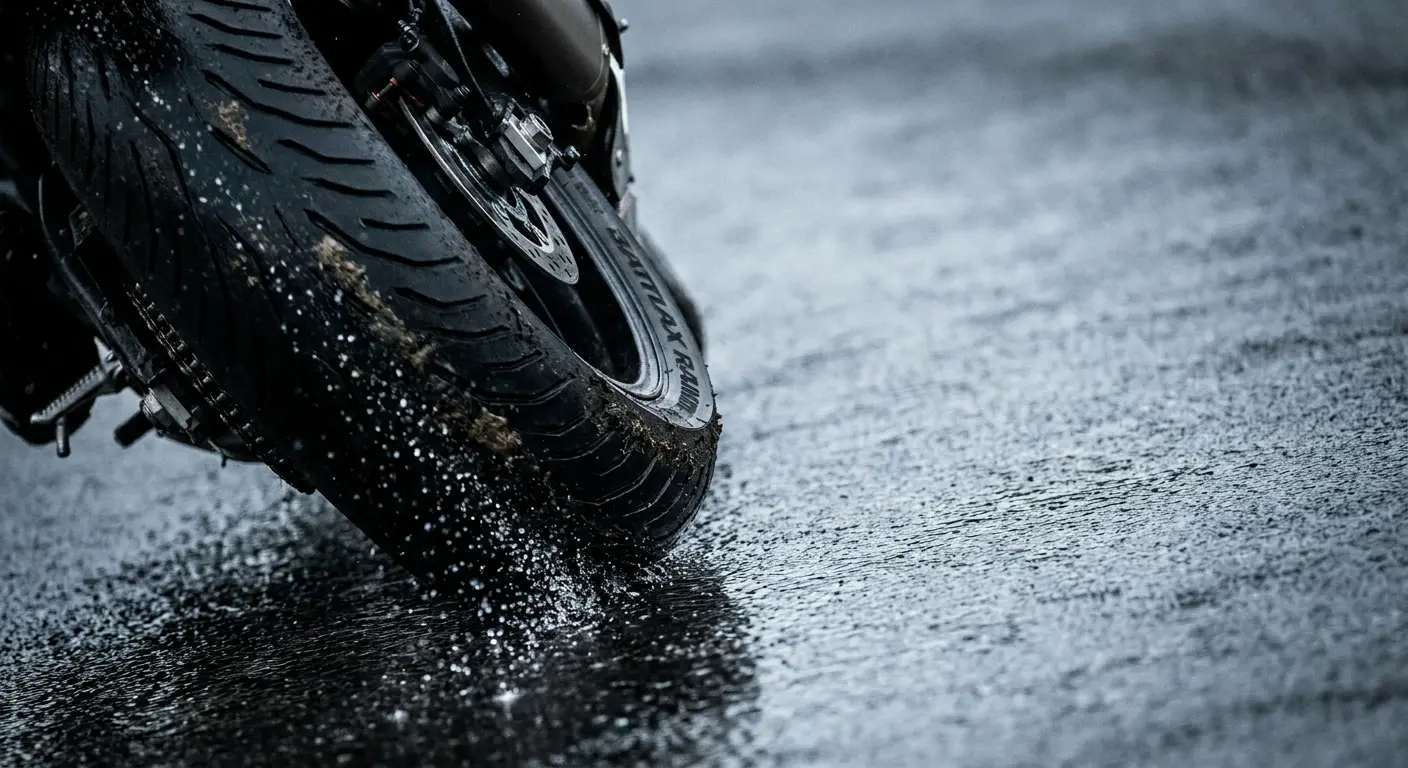
Rain matters more than most riders admit. You can plan around track days and canyon runs, but you can't predict when a storm will catch you. I've seen riders on $20,000 sport bikes tip-toeing through light rain because their tires inspire zero confidence on wet pavement. That's not acceptable. Modern compounds have gotten good enough to fix this problem, but only if you choose rubber designed for real conditions instead of optimized solely for dry-weather lap times.
Look, longevity matters when your annual mileage hits five figures or you're supporting a family. High-mileage commuters who rack up interstate miles need tires that won't square off after 4,000 miles. These are legitimate concerns.
But here's the thing: the right tire matches your specific riding behavior and risk tolerance. Someone commuting 100 miles daily on straight highways needs different rubber than a weekend canyon carver, even if they ride identical bikes. I've organized the following categories around riding style rather than generic bike types because that's what determines real performance. Your riding patterns matter more than whether your bike technically qualifies as a sport tourer or adventure machine.
Sport Touring Tires (The Only Choice That Makes Sense for Most of You)
Sport touring tires are the sweet spot for riders who need a single set of rubber to handle both mundane daily commuting and aggressive weekend rides. Most of us can't afford to swap tires based on weekend plans. We need compounds that stay compliant during cold morning commutes while still gripping adequately when we hit our favorite canyon road Saturday afternoon.
Modern sport touring tires have closed the performance gap with dedicated sport bike options while maintaining significantly better tread life and wet-weather capability. The compound technology has gotten good enough that you're not making dramatic compromises anymore. Sure, you'll give up a bit of ultimate edge grip compared to hypersport options, but the trade-off gets you versatility that makes sense for how most riders actually use their bikes.
These work for commuting when you refuse to accept that your weekday transportation can't also be your weekend entertainment. I've tested all of these across varied conditions, and each one solves specific problems for different rider priorities.
Alright, here's the quick comparison before we get into the details:
Tire Model |
Best For |
Wet Performance |
Typical Lifespan |
Warm-Up Time |
|---|---|---|---|---|
Michelin Road 6 |
Pacific NW, anywhere it rains without warning |
Exceptional |
8,000-12,000 miles |
Fast |
Pirelli Angel GT II |
FJR1300, K1600, Concours (600+ lbs) |
Excellent |
7,000-10,000 miles |
Moderate |
Dunlop Roadsmart IV |
15k+ miles/year, lots of highway |
Excellent |
9,000-13,000 miles |
Fast |
Bridgestone Battlax T32 |
Big temp swings (40°F mornings, 90°F afternoons) |
Very Good |
7,500-11,000 miles |
Moderate |
Metzeler Roadtec 02 |
Canyon-focused riders |
Very Good |
6,000-9,000 miles |
Fast |
Continental Road Attack 4 |
Year-round cold climate riding |
Excellent |
8,000-11,000 miles |
Very Fast |
*Lifespan varies wildly based on how hard you ride. I've seen Road 6s last 12k and I've seen them corded at 7k.
1. Michelin Road 6
I recommend Road 6s to almost everyone now, which annoys me because I hate being predictable. But they're stupid good in the rain.
I rode through a surprise storm on Highway 101 last October, the kind where you can barely see taillights, and never once felt sketchy. Michelin's XST Evo siping (those little grooves in the tread) fixes the problem where most sport touring tires lose grip in the final third of their life. The tread pattern stays confident even when wear indicators approach replacement time. You're not playing Russian roulette with your last thousand miles. Tire condition is one of the first things to check when you buy a used motorcycle.
I've put 9,200 miles on a set of Road 6s over eight months. Three of those months were Pacific Northwest winter. The confidence these provide on wet pavement borders on ridiculous. The compound evacuates water efficiently enough that you can maintain aggressive pace even when visibility drops. If you live somewhere with unpredictable weather, these eliminate the anxiety of checking forecasts before every ride.
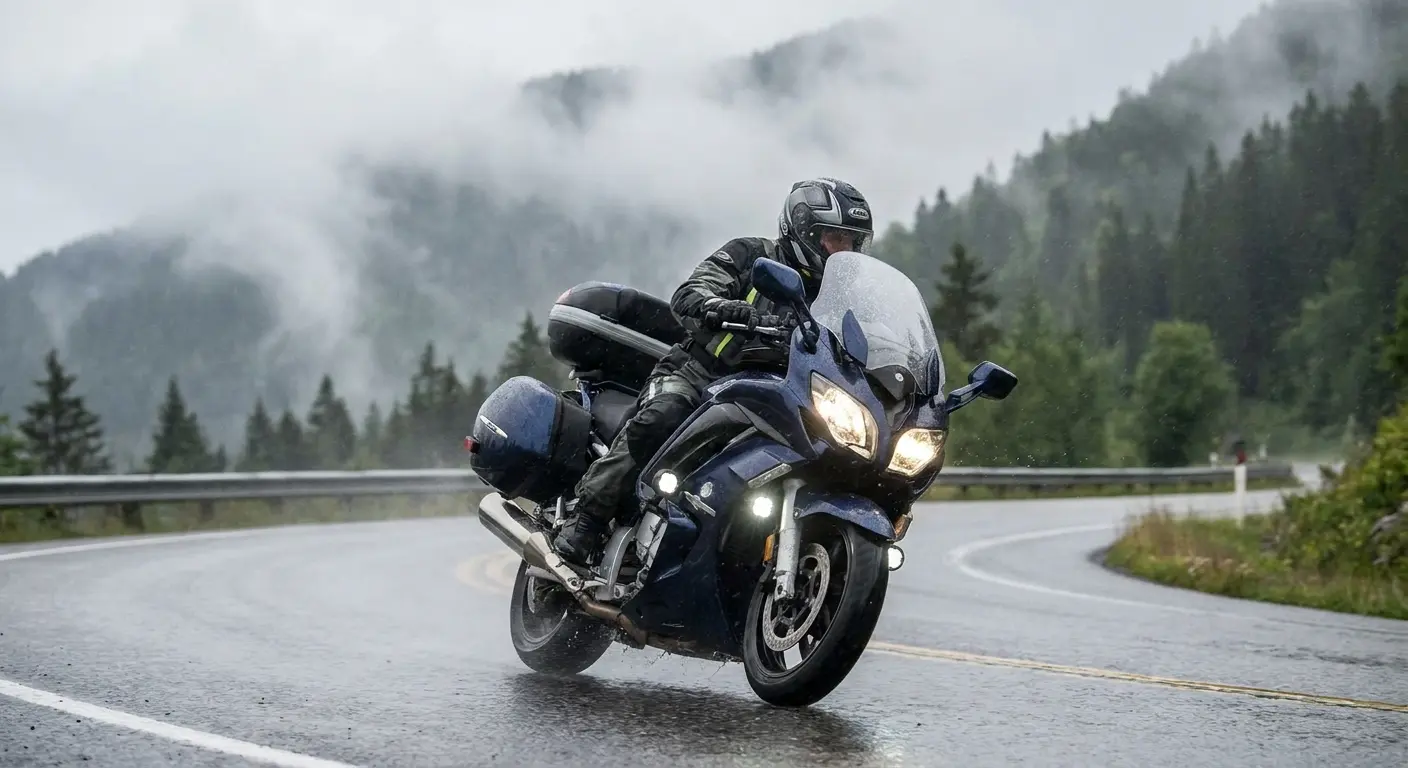
Warm-up characteristics matter for short commutes where you don't have the luxury of waiting for optimal operating temperature. These grip adequately within the first mile, which means you're not tip-toeing through your neighborhood every morning. The compound forgives riders who need immediate performance rather than gradual heat cycling.
The Road 6 runs about $350 for a rear, $200 for a front. Not cheap, but not insane.
2. Pirelli Angel GT II
The Angel GT II gives you sport bike-level feedback and cornering stability while maintaining the longevity expected from touring tires. Pirelli's dual-compound rear design extends center tread life without compromising shoulder grip during aggressive cornering. I've pushed these into lean angles that would make my insurance agent nervous, and the tire tells you exactly what's available throughout the entire range. I also explain the types of motorcycle tires and what each one is built for.
Heavier sport touring bikes benefit from the Angel GT II's construction. If you're on an FJR1300 or a K1600GT (bikes that weigh 650+ pounds wet and get ridden hard), the carcass stiffness provides stability that lighter sport-focused tires sometimes lack. Precise handling feedback matters when you're threading through traffic or carving switchbacks, and this tire talks to you clearly about road surface and grip levels.
Long highway stretches reveal another strength: the Angel GT II resists cupping better than competitors. I've seen riders get 8,000 miles without developing the annoying vibration that ruins otherwise good tires. The wear pattern stays even across the profile when you maintain proper pressure and alignment.
3. Dunlop Roadsmart IV
Riders who log serious miles but refuse to accept compromised performance choose the Roadsmart IV. Dunlop's MT Multi-Tread technology splits different performance characteristics across the tire profile, with a harder center compound for longevity and softer shoulders for cornering grip. This isn't revolutionary, but Dunlop's execution works better than previous attempts at multi-compound designs.
The tire stays consistent across its entire lifespan, which matters when you're planning multi-day tours or can't afford unexpected grip loss during long-distance rides. I've tracked these through 10,000+ miles, and the confidence level at mile 9,000 matches what you experience at mile 1,000. That consistency eliminates the guessing game about when performance degradation requires replacement.
Stability under load makes the Roadsmart IV popular among riders who frequently carry passengers or luggage. The tire doesn't feel unsettled when you add weight, and it handles the dynamic load transfers during hard braking and acceleration without drama. Two-up touring becomes more enjoyable when you trust your tires to manage the additional mass.
4. Bridgestone Battlax T32
The T32 has earned its reputation for exceptional stability and predictability, particularly during mid-corner adjustments. Riders transitioning from pure sport tires often prefer how the T32 communicates because it gives clear feedback about available grip without the nervous edge feel of some hypersport options. The compound tells you exactly what's happening at the contact patch (that's the couple square inches where your tire actually touches the road).
Performance in varied temperature conditions sets this tire apart. I've ridden these in 40-degree morning commutes and 95-degree afternoon heat, and the grip characteristics stay consistent across that range. Regions with dramatic seasonal temperature swings benefit from this versatility, as you're not constantly adjusting your riding style based on ambient conditions.
The T32 works well for riders who split time between solo riding and two-up touring. The tire handles load changes without requiring pressure adjustments that compromise solo performance. You can run optimal pressure for spirited riding and still feel confident when you add a passenger for weekend trips.
5. Metzeler Roadtec 02
The Roadtec 02 occupies a unique position as a sport touring tire that leans heavily toward the sport side of the equation. It's really a sport tire that won't immediately disintegrate on your commute. Metzeler's Interact technology optimizes the tire's footprint during cornering, which translates to confidence when you're pushing hard through technical sections. Riders who prioritize canyon performance over maximum mileage choose this tire because it handles the transition from street to aggressive riding better than more longevity-focused options.
I've found the Roadtec 02 particularly impressive during sudden rain on spirited rides. The wet-weather performance inspires confidence when conditions change mid-ride, which happens more often than I'd prefer. The compound maintains adequate grip on damp pavement without requiring dramatic speed reductions.
This tire sacrifices some lifespan compared to the Roadsmart IV or Road 6, but the trade-off gets you sharper handling and more communicative feedback. Plan on 6,000 miles, not 9,000. Riders who view tires as a performance investment rather than a maintenance expense appreciate what the Roadtec 02 brings.
6. Continental Road Attack 4
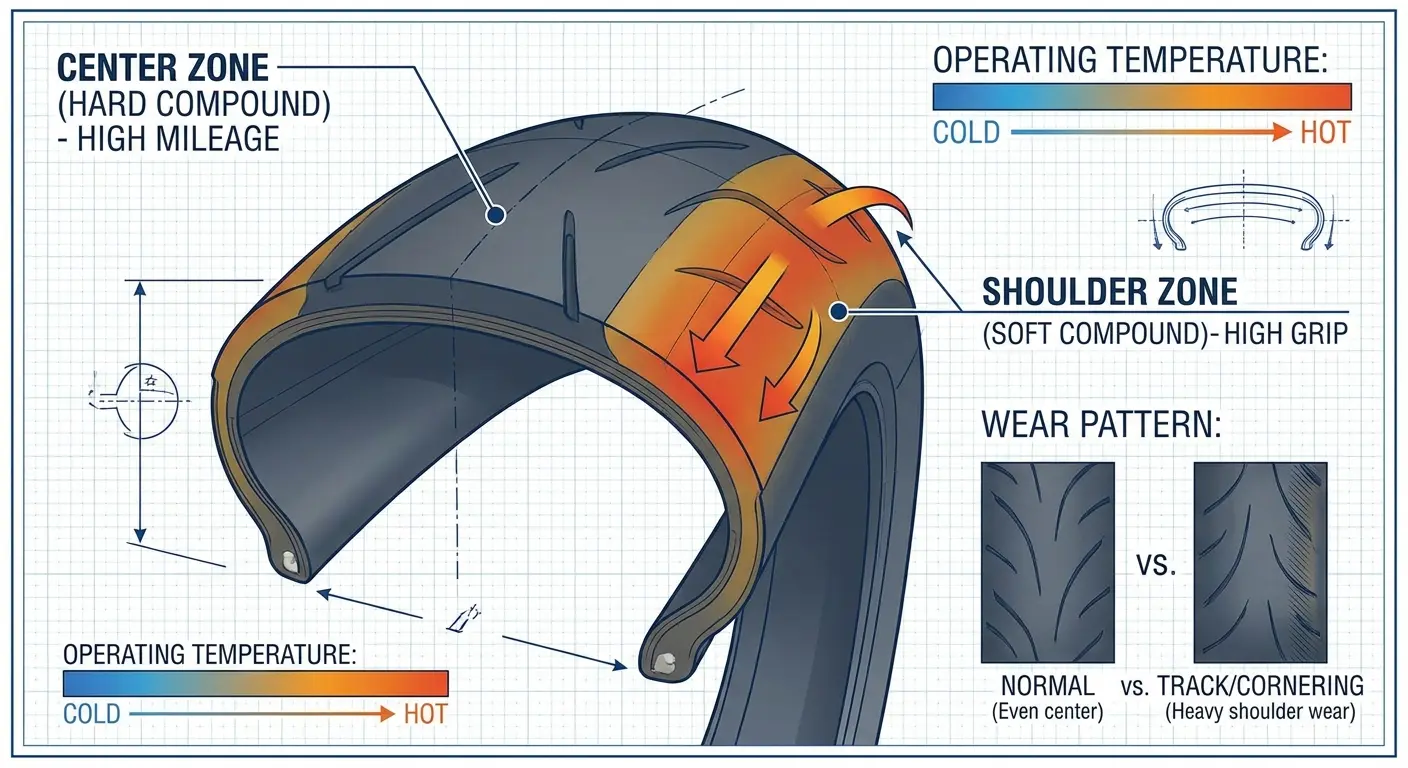
The Road Attack 4 has built a loyal following among riders who value all-around competence over specialized excellence. Continental's MultiGrip technology balances center tread longevity with shoulder grip through a compound formulation that varies across the tire profile. The execution feels more refined than earlier attempts at multi-compound designs, with smooth transitions that don't create handling quirks.
Cold-weather performance makes this tire popular among year-round riders in northern climates. The compound stays compliant in temperatures where some competitors feel wooden and unpredictable. I've ridden these through late fall and early spring conditions that would make fair-weather riders park their bikes, and the Road Attack 4 gives you confidence when thermometers drop below 50 degrees.
Predictable wear patterns appeal to riders who meticulously track tire life and maintenance schedules. The center tread wears gradually without sudden degradation, which means you can plan replacement timing rather than discovering you've exceeded safe limits unexpectedly. This predictability matters for riders managing maintenance budgets and scheduling.
Tires for People Who Actually Drag Knees
Okay, real talk: most of you don't need sport bike tires. You think you do, but you don't.
These are for people who regularly attend track days, canyon carvers who push into serious lean angles, and anyone who views their motorcycle as a performance tool rather than transportation. Sport bike tires demand more from you in terms of technique and awareness. They require proper warm-up procedures before delivering peak performance, and they punish riders who expect immediate grip from cold rubber.
I'm not suggesting everyone needs hypersport rubber. Most riders would be better served by sport touring options that provide 80% of the performance with double the lifespan and better all-weather capability. But if you genuinely exploit what these tires offer, nothing else gives you the same level of grip and feedback.
The best tires in this category separate themselves through how they communicate grip limits and how progressively they break away when you exceed available traction. Abrupt breakaway characteristics make learning difficult and crashes likely, while progressive feedback helps you develop skills and push boundaries safely (obviously ride within your skill level and obey traffic laws, but if you're gonna push it, these tires won't let you down).
Here's the breakdown:
Tire Model |
Max Lean Angle Confidence |
Track-Day Ready |
Typical Lifespan |
Wet Capability |
|---|---|---|---|---|
Pirelli Diablo Rosso IV |
High |
Yes |
3,500-6,000 miles |
Good |
Michelin Power 5 |
Very High |
Yes |
4,000-6,500 miles |
Good |
Dunlop Sportmax Q5 |
Extreme |
Yes |
3,000-5,000 miles |
Moderate (slow down when wet) |
Bridgestone Battlax S22 |
Very High |
Yes |
3,500-5,500 miles |
Good |
Metzeler Sportec M9 RR |
High |
Yes |
4,000-6,000 miles |
Very Good |
Continental ContiSportAttack 4 |
High |
Yes |
4,500-7,000 miles |
Good |
7. Pirelli Diablo Rosso IV
The Rosso IV? It's basically the default choice now for street riders who track occasionally. Pirelli's flash compound technology provides quick warm-up times without sacrificing ultimate grip, which solves the problem of needing performance during your commute to the track and during actual track sessions.
I've pushed these through dozens of track days and countless canyon runs, and the confidence they inspire at aggressive lean angles remains impressive. The tire tells you clearly what's available throughout the entire cornering arc, which helps you understand when you're approaching limits. That communication matters when you're actively working to improve your cornering speed.
Wet-weather capability surprises riders expecting typical hypersport compromises. The Rosso IV maintains adequate grip on damp pavement, though you'll want to reduce pace compared to dry conditions. I've been caught in unexpected rain during spirited rides, and the tire gives enough confidence to get home safely rather than requiring parking under an overpass until conditions improve.
8. Michelin Power 5
The Power 5 just works. Clear feedback, progressive breakaway, lasts longer than competitors. Done.
Okay, there's more to it than that. Michelin's 2CT+ technology splits different performance zones across the tire profile, with compounds optimized for the specific demands of each section. Center tread focuses on stability and longevity, while shoulders prioritize maximum mechanical grip.
Riders actively working to improve their cornering skills gravitate toward the Power 5 because it tells you clearly what's available. The tire telegraphs information about road surface, load transfer, and traction limits consistently. You can feel when you're approaching the edge of adhesion, which builds confidence to explore that boundary rather than backing off prematurely.
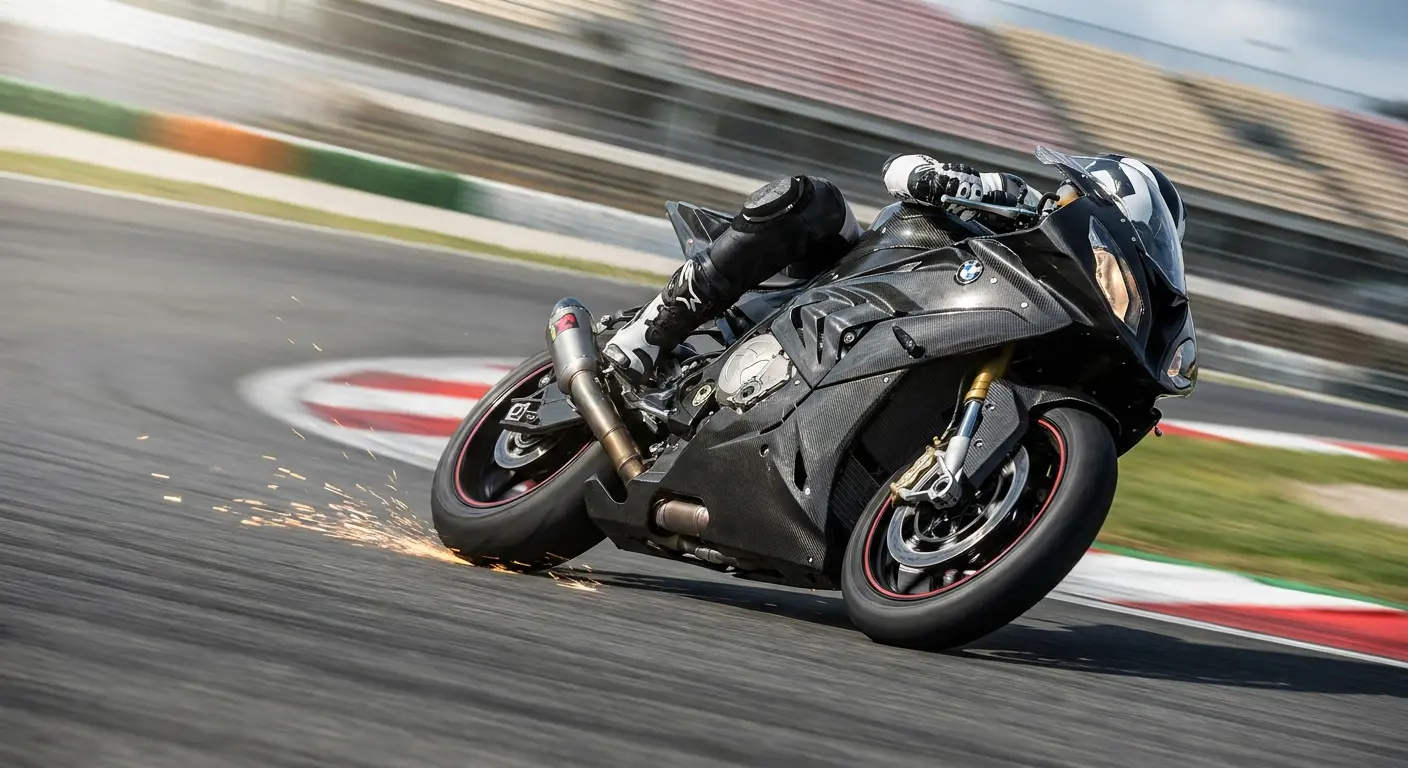
Performance longevity sets the Power 5 apart from some competitors. The tire stays consistent throughout its lifespan better than options that feel great for 2,000 miles then degrade noticeably. I've tracked these through their entire service life, and mile 5,000 feels remarkably similar to mile 500.
I used to think the Power 5 was overrated. Then I actually rode them for 4,000 miles. I was wrong. They're excellent.
9. Dunlop Sportmax Q5
The Q5 blurs the line between street and track performance in ways that impress even skeptical riders. Dunlop's carbon fiber technology enables the tire to stay stable at high speeds and aggressive lean angles without the flex or squirm that compromises confidence. I've hit triple-digit speeds on track straights and dragged knees through decreasing-radius corners, and the Q5 stays planted throughout.
Riders who regularly attend track days choose this tire because it handles both the commute to the circuit and multiple sessions without overheating or degrading. The compound manages heat cycles better than previous generations, which means you're not gambling on whether the tire will maintain grip during your fourth session of the day. When you're documenting performance data and need secure mounting solutions, motorcycle handlebar mounts let you capture video footage and telemetry without compromising safety or control.
Edge grip inspires confidence when pushing into unfamiliar territory. The Q5 grips at lean angles most street riders never explore, and the feedback stays clear even when you're testing limits. That communication helps you develop skills rather than just hoping the tire holds.
The Q5 is expensive as hell and you'll replace them constantly. Q5s will cost you $400+ for a rear and you'll replace them twice as often as sport touring tires. If that bothers you, buy something else.
10. Bridgestone Battlax Hypersport S22
The S22 provides maximum mechanical grip through advanced silica compounds that work particularly well with modern electronics packages. Liter bikes equipped with sophisticated traction control and ABS systems need tires that can exploit these technologies fully, and the S22 gives the grip necessary to let electronics do their job. I've felt the traction control intervene smoothly rather than abruptly because the tire provides consistent grip characteristics that electronics can predict.
Warm-up characteristics prove more forgiving than previous-generation hypersport options. The compound grips adequately within a few miles rather than requiring extended heat cycling before you can ride aggressively. This matters for street riders who need reasonable performance during the initial miles of every ride rather than waiting until the tire reaches optimal temperature.
I don't love the S22's warm-up characteristics despite what I wrote above. First mile is sketchy. But after that, it's solid.
Riders who split time between aggressive street riding and track days appreciate the S22's versatility. The tire handles both environments competently without requiring different pressure settings or riding techniques. You can commute Monday through Friday and hit the track Saturday without wondering whether your rubber will perform adequately in either context.
11. Metzeler Sportec M9 RR
The M9 RR has earned its reputation for exceptional wet-weather performance in the hypersport category. Metzeler's compound formulation and siping patterns maintain grip on wet roads without compromising dry performance, which addresses the typical trade-off in this tire class. I've ridden through sudden rainstorms during spirited rides, and the confidence this tire provides on damp pavement exceeds what you'd expect from aggressive sport bike rubber.
Riders in regions where weather changes rapidly choose the M9 RR because it eliminates anxiety about getting caught in rain. The tire doesn't require dramatic speed reductions when roads turn slick, though you'll obviously adjust pace based on conditions. That capability matters when your favorite canyon road sits two hours from home and weather forecasts prove unreliable.
Feedback characteristics during hard braking and acceleration help riders understand exactly what's happening at the contact patch. The tire communicates load transfer clearly, which improves your ability to modulate throttle and brake inputs smoothly. That information flow builds skills and confidence simultaneously.
12. Continental ContiSportAttack 4
The ContiSportAttack 4 prioritizes consistency and predictability over absolute maximum grip. Continental's BlackChili compound provides stable performance across a wide temperature range, which means the tire feels similar whether you're riding in 60-degree morning air or 90-degree afternoon heat. That consistency eliminates the variable of wondering how temperature affects available grip.
Riders who value precise, repeatable performance choose this tire because it acts the same lap after lap, session after session. The compound doesn't degrade noticeably during track days, and street performance stays consistent throughout the tire's lifespan. I've tracked these through their entire service life, and mile 5,000 feels remarkably similar to mile 500.
Longevity relative to competitors in this category appeals to riders who want performance without constantly replacing rubber. The ContiSportAttack 4 typically outlasts other hypersport options by 1,000-2,000 miles, which matters when you're managing tire budgets. You're still replacing them more frequently than sport touring options, but the extended life reduces overall ownership costs.
The ContiSportAttack 4 is fine. It's perfectly fine. But "fine" isn't exciting, and I can't get worked up about it.
Adventure Tires (Be Honest About Where You Actually Ride)
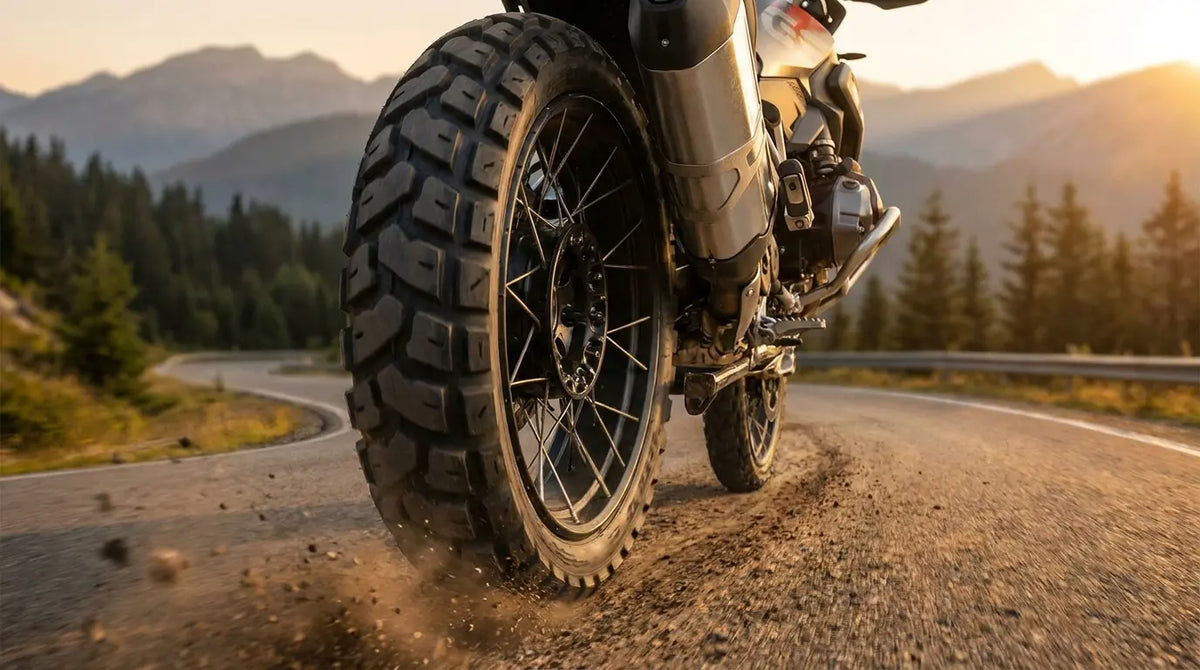
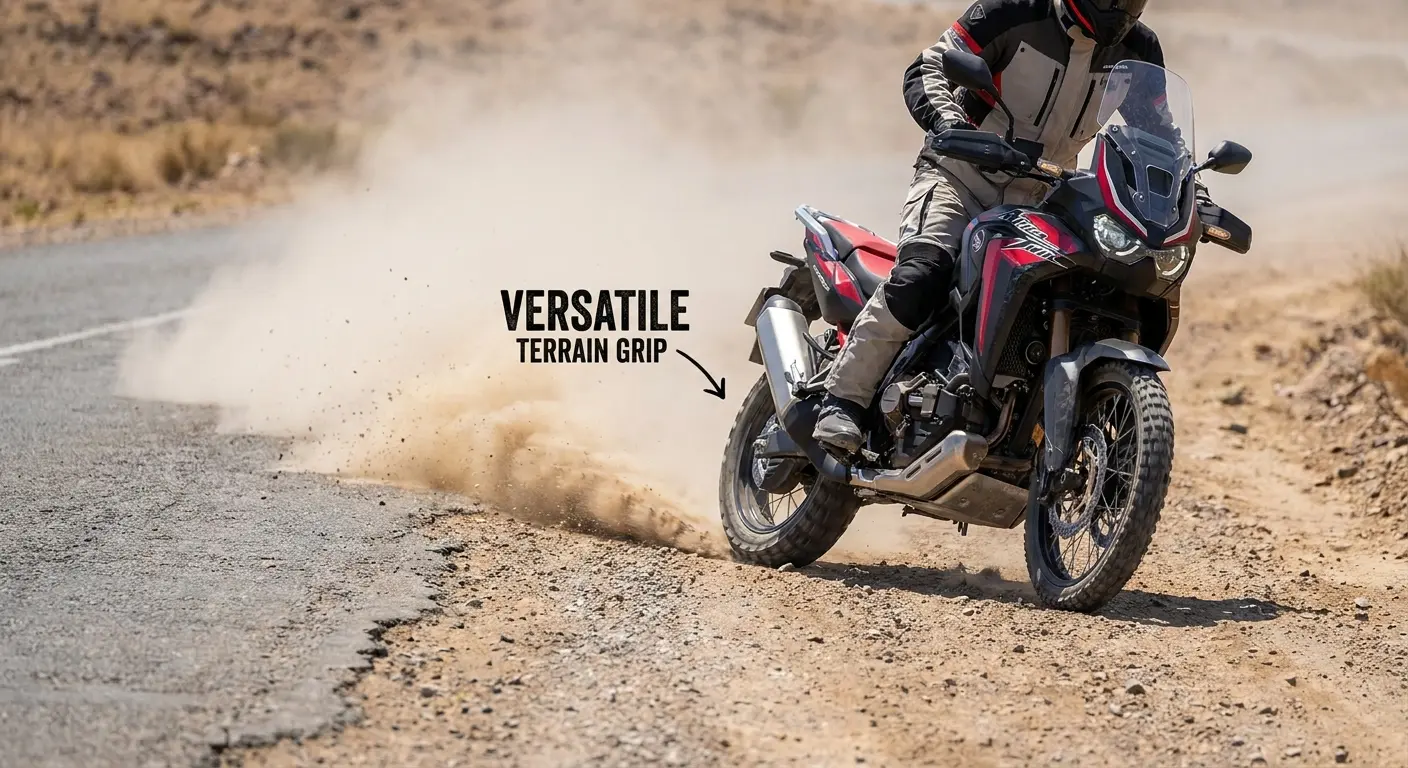
Adventure and dual-sport tires require different evaluation criteria than street-focused options. The compromise inherent in designing rubber that must perform on pavement, gravel, dirt, and everything in between creates challenges that don't exist for dedicated street tires. You're balancing contradictory requirements: street tires need smooth, continuous contact patches while off-road tires need aggressive tread blocks that bite into loose surfaces.
The spectrum runs from street-biased to dirt-biased, and choosing correctly depends on honest assessment of actual riding patterns rather than aspirational off-road adventures. I've watched riders buy aggressive knobby tires for adventure bikes that spend 95% of their time on pavement, then complain about handling and noise.
Choose based on where you actually ride, not where you imagine riding.
Most adventure riders spend 90% of time on pavement but buy aggressive knobbies because they look cool. Don't be that person. Your ears will hate you on the highway.
Here's the spectrum:
90/10 (street/dirt): Anakee Adventure, Scorpion Trail II (basically sport touring tires with slightly chunkier tread)
70/30: TrailSmart Max, AX42 (work on both but excel at neither)
50/50: TKC 70 (genuine compromise, loud as hell on pavement)
Real talk about adventure tire noise: Anything more aggressive than the Anakee Adventure is LOUD on pavement. The TKC 70 sounds like you're riding a tractor. Highway trips require earplugs. If you commute daily, this matters. A lot. Don't say I didn't warn you.
Tire selection dramatically impacts adventure bike handling. These machines already carry significant weight, and the wrong rubber makes them feel unwieldy and unpredictable. Proper tire choice transforms the same bike from a cumbersome beast into a capable tool.
Getting it wrong creates misery. Street-biased tires leave you tip-toeing through gravel roads, while dirt-biased options make highway miles exhausting through excessive noise and squirm. Match your actual 80/20 or 70/30 split between pavement and dirt. When you're navigating remote terrain and need reliable GPS, solutions like motorcycle perch mounts provide secure phone attachment even on rough off-road conditions where traditional mounts fail.
13. Michelin Anakee Adventure
The Anakee Adventure has become the benchmark for street-biased adventure tires that prioritize on-road performance while maintaining competence on gravel and dirt roads. Michelin's compound technology and tread pattern design give handling that rivals sport touring options while providing adequate grip during occasional unpaved detours. I've carved twisty mountain roads on these tires with confidence that would be impossible on more aggressive adventure rubber.
Riders who spend 80% of their time on pavement but need confidence during unpaved sections choose the Anakee Adventure because it doesn't compromise street manners. The tire provides precise feedback during cornering, stable high-speed tracking, and comfortable highway cruising. Then when the pavement ends, it gives enough off-road capability to handle forest service roads and gravel passes without drama.
Wet-weather performance on pavement exceeds what you'd expect from adventure rubber. The tread pattern evacuates water efficiently, and the compound maintains grip on slick roads. I've ridden through Pacific Northwest rain for hours, and the Anakee Adventure provides confidence that eliminates anxiety about weather changes during long rides.
I put 11,400 miles on a set of these on my F850GS. Still going. They're that good.
14. Pirelli Scorpion Trail II
The Scorpion Trail II gives on-road handling that rivals dedicated sport touring tires while maintaining adequate off-road capability. Pirelli's dual-compound construction enables confident cornering on twisty mountain roads without the vague, mushy feel some adventure tires produce. I've pushed these through technical canyon sections at pace that would alarm adventure bike stereotypes, and the tire communicates clearly throughout.
Riders who rarely venture off-pavement but need the versatility of adventure rubber choose the Scorpion Trail II because it doesn't punish you for prioritizing street performance. The tire carves corners with precision, tracks straight at highway speeds, and tells you about grip levels. Then when you encounter dirt roads, it handles them competently enough to reach remote destinations.
The Scorpion Trail II is great until you hit actual mud, then it's useless. Don't let the adventure bike marketing fool you.
Stability when loaded with luggage and passengers matters for long-distance adventure touring. The Scorpion Trail II maintains composure under load better than competitors, which translates to confidence during multi-day trips carrying camping gear and supplies. Dynamic load transfers during braking and acceleration don't unsettle the bike when you're managing significant weight. For extended adventure touring where keeping devices charged in remote areas becomes critical, motorcycle charging mounts provide power while maintaining secure phone attachment.
15. Dunlop TrailSmart Max
The TrailSmart Max provides balanced performance across varied surfaces through tread pattern design that manages the compromise between on-road grip and off-road traction effectively. Dunlop's engineering addresses the challenge of creating blocks large enough for dirt bite without creating excessive noise or squirm on pavement. The result feels more refined than previous attempts at true dual-sport capability.
Riders who genuinely split time between pavement and unpaved roads appreciate how the TrailSmart Max handles transitions between surface types. The tire doesn't require mental recalibration when pavement turns to gravel or vice versa. Grip characteristics stay predictable across both environments, which builds confidence to maintain reasonable pace regardless of surface.
Wear characteristics prove consistent throughout the tire's lifespan. The compound maintains performance as tread depth decreases, which matters for riders covering diverse terrain over thousands of miles. I've tracked these through 8,000+ miles of mixed-surface riding, and performance at the end of service life remains adequate rather than degrading noticeably.
16. Continental TKC 70
The TKC 70 occupies the true 50/50 position without heavily favoring either pavement or dirt. Continental's block pattern design and compound formulation enable competent performance across dramatically different surfaces, though you're making compromises in both environments compared to specialized options. The tire handles technical off-road sections better than street-biased alternatives while maintaining acceptable road manners for highway miles.
Riders who regularly tackle challenging off-road sections choose this tire despite compromises in on-road performance. The aggressive tread blocks bite in loose dirt, mud, and sand that street-biased tires simply can't match. When your adventure riding includes genuine technical terrain rather than just gravel roads, the TKC 70 gives capability that justifies the highway noise and reduced pavement grip.
The TKC 70 is loud. Like, really loud. Highway riding is annoying.
Self-cleaning characteristics help the tire handle mud and loose surfaces effectively. The block spacing allows packed dirt to evacuate rather than building up and reducing traction. I've ridden through conditions that would clog tighter tread patterns, and the TKC 70 maintained adequate grip by shedding debris.
17. Bridgestone Battlax Adventurecross AX42
The AX42 handles everything from highway miles to technical off-road trails through versatile tread design that balances competing requirements effectively. Bridgestone's engineering philosophy prioritizes on-road stability while maintaining off-road traction, creating a tire that doesn't excel in either environment but performs adequately in both. That compromise makes sense for riders who genuinely use their adventure bikes across the full capability spectrum.
Riders wanting genuine dual-sport capability without completely sacrificing street manners choose the AX42 because it manages the trade-offs intelligently. Highway riding remains tolerable rather than exhausting, while off-road performance provides confidence on trails that would intimidate street-biased options. You're not getting maximum capability in either context, but you're getting enough in both.
Longevity across different surfaces represents excellent value for adventure riders covering diverse terrain. The compound wears gradually whether you're logging interstate miles or exploring forest service roads. I've seen riders extract 10,000+ miles from these tires through mixed use, which reduces overall ownership costs compared to more specialized options requiring frequent replacement.
How Rokform Keeps Your Tech Safe While You Focus on the Road
Modern riders depend on smartphones for navigation, communication, and emergency assistance. But here's the thing: your phone is useless if you can't actually look at it safely.
I've fumbled with poorly mounted phones while trying to navigate unfamiliar roads. It's dangerous and frustrating. You're trying to check the next turn while managing traffic or technical terrain, taking your eyes off the road for way too long.
I run a Rokform motorcycle phone mount because I got tired of my phone falling off cheaper options. The magnetic system actually works. You glance down for a second to confirm the next turn, then immediately return attention to the road ahead. That efficiency matters when you're carving corners or navigating challenging off-road sections.
Vibration threatens expensive devices during aggressive riding. Modern smartphone cameras contain delicate optical image stabilization systems that handlebar vibration can damage permanently. I've seen riders destroy $1,000 phones through prolonged exposure to motorcycle vibration, which makes protective solutions essential. Motorcycle mount dampeners absorb handlebar vibrations and prevent camera damage on modern smartphones.
Buy the dampener. Just buy it. Your iPhone's camera will thank you.
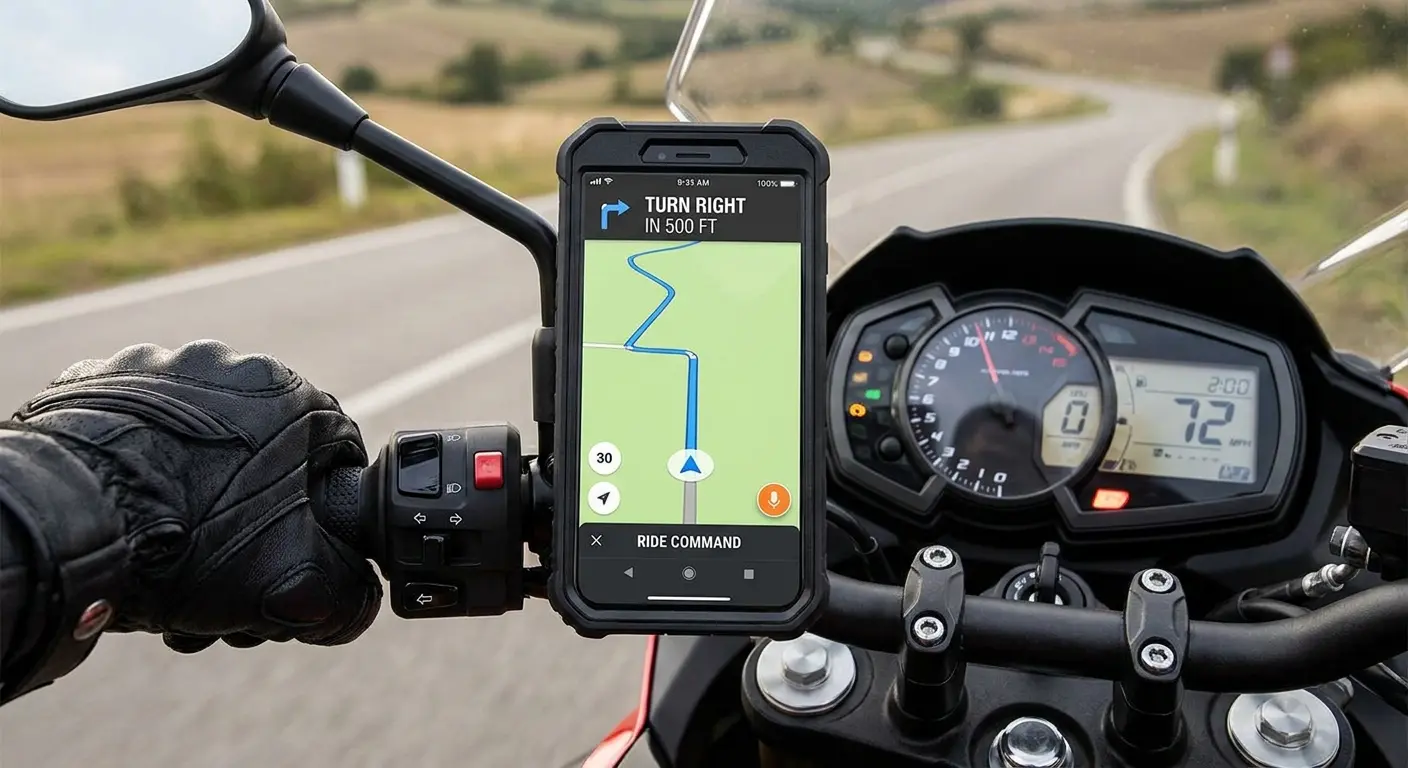
Weather and impact protection become critical when riding in varied conditions. Rain, dust, and potential drops threaten devices that cost more than many tire sets. Rokform's protective cases provide the durability necessary for motorcycle use while maintaining the magnetic mounting interface. The cases handle the abuse that comes with adventure riding and track days without compromising phone functionality.
Full disclosure: Rokform sponsors this content. I still actually use their stuff because the magnetic mount is legitimately good and the dampener actually protects your camera. If you're serious about off-road, get the perch mount instead. Handlebar mounts shake loose on rough terrain. Check out their lineup here if you want something that doesn't suck.
Final Thoughts
Look, here's the deal: buy tires for how you actually ride, not how you wish you rode. If I could only recommend three tires from this entire list, it'd be the Road 6, the Power 5, and the Anakee Adventure. Everything else is for specific edge cases.
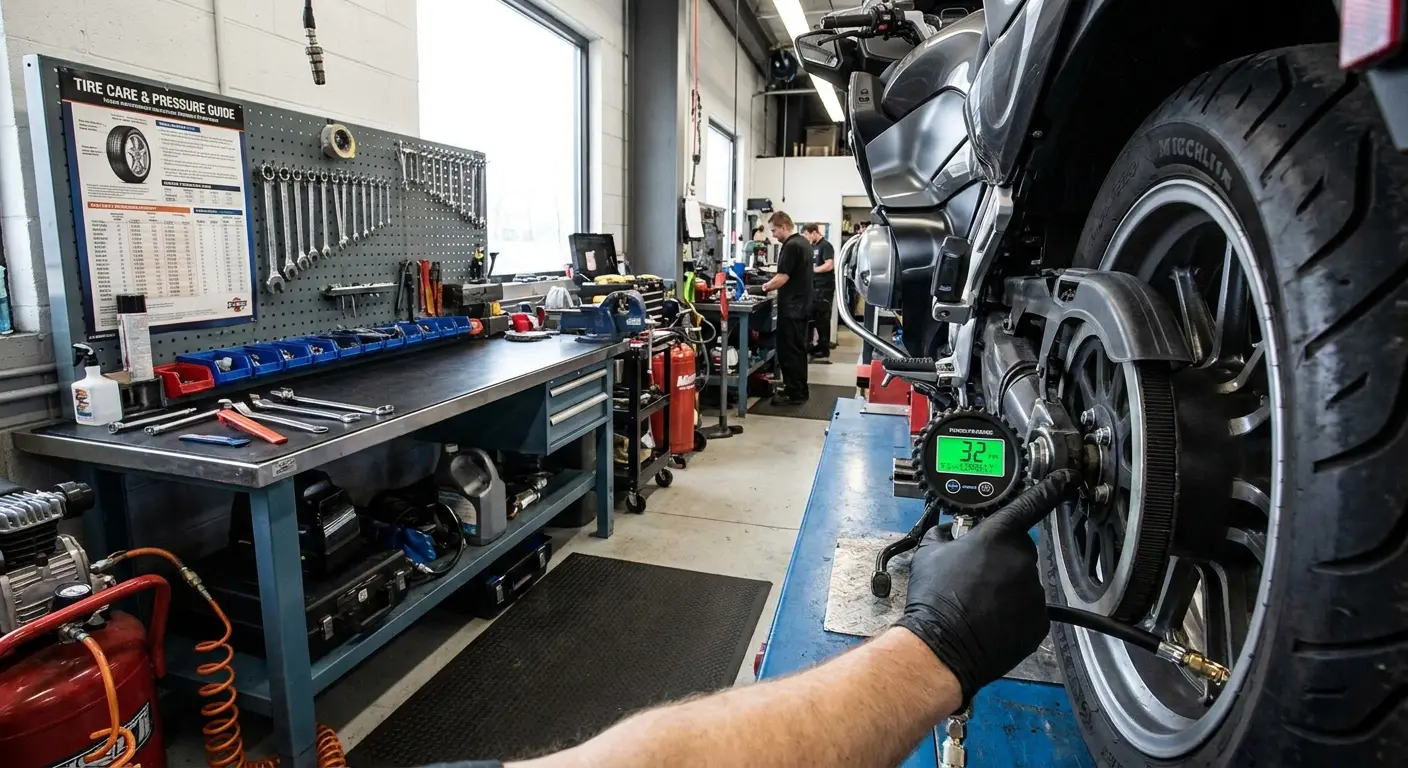
Check pressure weekly. Takes 30 seconds. Buy a good gauge (the $3 gas station ones are garbage). Your bike's manual has pressure specs. Usually it's 32-36 PSI front, 36-42 PSI rear, but varies by bike and load. Check pressure cold, before riding.
Replace tires when they're done, not when you've squeezed every last mile out of them. And for god's sake, if they're over 5 years old, throw them away. Tires expire. Check the date code (four digits on the sidewall: first two are week, last two are year). If they're over 5 years old, replace them even if they look fine. Rubber degrades. I've seen people riding on 8-year-old tires because "they still have tread." Don't be that person.
PSA about new tires: they're slippery as hell for the first 50-100 miles. They have a mold release coating. Take it easy while you scrub them in. No hard cornering or aggressive braking until you've put some miles on them. Yes, even if you're excited about your new rubber.
Real talk about tire costs: You'll spend $400-800 per set depending on bike and tire choice. Sport tires last 3-6k miles. Sport touring lasts 7-12k. Do the math on your annual mileage. This matters if you're not rich. Figure $50-80 for mounting and balancing at most shops. Most shops charge $5-10 per tire for disposal.
Hot take that'll piss people off: 90% of riders would be fine on cheaper tires than what I'm recommending here. But the 10% of riding where tires matter (emergency braking, unexpected rain, that one decreasing-radius turn you misjudged) is when you'll wish you'd spent the extra $200.
Devil's advocate: You could buy mid-tier tires for half the price and spend the savings on track day instruction. Better rider on cheaper tires beats mediocre rider on expensive tires. Just saying.
I've been riding for 15 years and I've learned this the expensive way: tires are the cheapest performance upgrade and the most important safety component. Don't cheap out. I've spent $8,000+ on tires over the years. I've made every mistake. Bought cheap, ran them too long, ignored pressure, all of it. Learn from my expensive stupidity.
I've had two tire failures: a Road 5 delamination at 8,000 miles (Michelin warrantied it, but it was scary as hell when it happened) and a cheap Chinese tire that catastrophically failed at 2,000 miles. Never again.
Some final practical stuff:
Punctures happen. Plugs are controversial. Some people won't ride on a plugged tire, some people run them for thousands of miles. I've plugged tires and kept riding, but I replace them sooner rather than later. Your risk tolerance may vary. Definitely don't plug sidewalls. Just don't.
Tire warranties are mostly useless. They're prorated and exclude road hazards. But keep your receipt anyway (sometimes you get lucky with manufacturer defects).
Make sure you're buying the right size. 190/55 and 190/50 are NOT interchangeable. Check your bike's manual or the sidewall of your current tires.
Rears wear 2-3x faster than fronts on most bikes. You'll replace two rears for every front. Budget accordingly.
Buy tires in winter if you can wait. Prices drop 15-20% in off-season. Summer demand drives prices up. These used to be $280. Now they're $380. I'm still mad about it.
Good luck finding Road 6s in stock right now. Michelin can't keep up with demand. If your local shop doesn't have them, order online and ship to the shop for mounting.
I'm not a professional tester. I'm a rider who's made expensive mistakes and learned from them. I currently ride a 2019 MT-09 and a 2021 F850GS. Previously owned a 2015 R6 and a 2017 Street Triple. Tire experience comes from all four bikes. Take this as one person's experience, not gospel.
No tire manufacturer has paid me. I buy my own tires at retail like everyone else.
Your riding style determines which category makes sense, and being honest about actual patterns matters more than aspirational plans. If you commute daily and carve canyons on weekends, sport touring options provide the versatility you need. If you track regularly and prioritize maximum grip, hypersport tires justify their compromises. If you explore mixed terrain frequently, adventure rubber makes sense despite pavement compromises.
The best tires are the ones that match your specific needs and inspire confidence every time you twist the throttle.
Choose wisely, maintain properly, and replace timely.

