


Table of Contents
The Overlooked Reality: Why Most New Driver Gifts Miss the Mark
-
Safety Gear That Doesn't Feel Like a Lecture
Dash Cam with Night Vision
Emergency Roadside Kit (The Actually Useful Kind)
Tire Pressure Gauge and Portable Air Compressor
First Aid Kit Designed for Vehicle Storage
Reflective Safety Vest and Warning Triangles
-
Tech That Solves Real Problems
Magnetic Phone Mount Built for Durability
Dual USB Car Charger with Fast Charging
Bluetooth FM Transmitter
OBD2 Scanner for DIY Diagnostics
Portable Jump Starter with USB Ports
Weather-Resistant Car Organizer
-
The Comfort and Confidence Builders
Quality Sunglasses with Polarized Lenses
All-Weather Floor Mats
Microfiber Cleaning Kit
Insulated Travel Mug with Spill-Proof Lid
Car Escape Tool with Seatbelt Cutter
TL;DR
The Short Version:
Most people buy new drivers fuzzy dice and novelty keychains. These are completely useless.
What they actually need: stuff for when things go wrong (and they will)
Think dash cams, jump starters, phone mounts that don't fall off during turns
Basically anything that keeps them from calling you in a panic at midnight
(Keep reading for the full breakdown. I promise it's not boring.)
The Overlooked Reality: Why Most New Driver Gifts Miss the Mark
My nephew Jake got his license six months ago. His grandma gave him fuzzy dice. His parents gave him gas money. His friends gave him a novelty air freshener shaped like a pine tree.
Know what I gave him? A dash cam.
Know what saved him from a $3,000 insurance fraud claim two months later? Not the fuzzy dice.
This is the problem with new driver gifts. Everyone's so busy celebrating the milestone that they forget these kids are about to face real problems on real roads with real consequences. Dead batteries in parking lots. Flat tires on dark highways. Check engine lights that may or may not mean the car is about to explode. Other drivers who straight-up lie about what happened in accidents.
I've helped three teenagers in my family prep their first cars. I've watched friends' kids start driving. And I can tell you exactly what happens in those first six months behind the wheel. It's not Instagram-worthy moments with perfect lighting. It's panic when a warning light comes on. It's standing on the side of the road not knowing what to do. It's realizing you have no idea how to change a tire or jump a battery.
So here's my list of gifts that actually prepare new drivers for reality. Not the celebratory tokens that look cute in photos. The unglamorous stuff they'll actually use when things go sideways.
Because things will go sideways.
I've broken this down into three types of gear. Safety equipment that handles emergencies without making you sound like a paranoid parent. Technology that solves the daily frustrations nobody warns you about. And comfort items that reduce the fatigue and stress that make new drivers dangerous behind the wheel.
Each one addresses something that causes genuine panic for someone still building their confidence on the road.

Stuff That Keeps Them Alive (Without Being Preachy About It)
Yeah, I know. Safety gear sounds boring as hell. But here's the thing about these items: they give new drivers agency when everything goes wrong. I'm not talking about theoretical concerns or worst-case scenarios that'll never happen. Breakdowns, tire problems, and visibility issues happen constantly, especially to drivers who haven't learned to read the warning signs yet.
The safety gifts worth giving work because they provide solutions during moments of genuine distress. A reflective vest matters when you're standing on a dark highway shoulder and semis are blowing past at 70mph. A first aid kit matters when you've sliced your hand open loading cargo and blood is everywhere. These things seem unnecessary until the exact moment they become critical.
1. Dash Cam with Night Vision
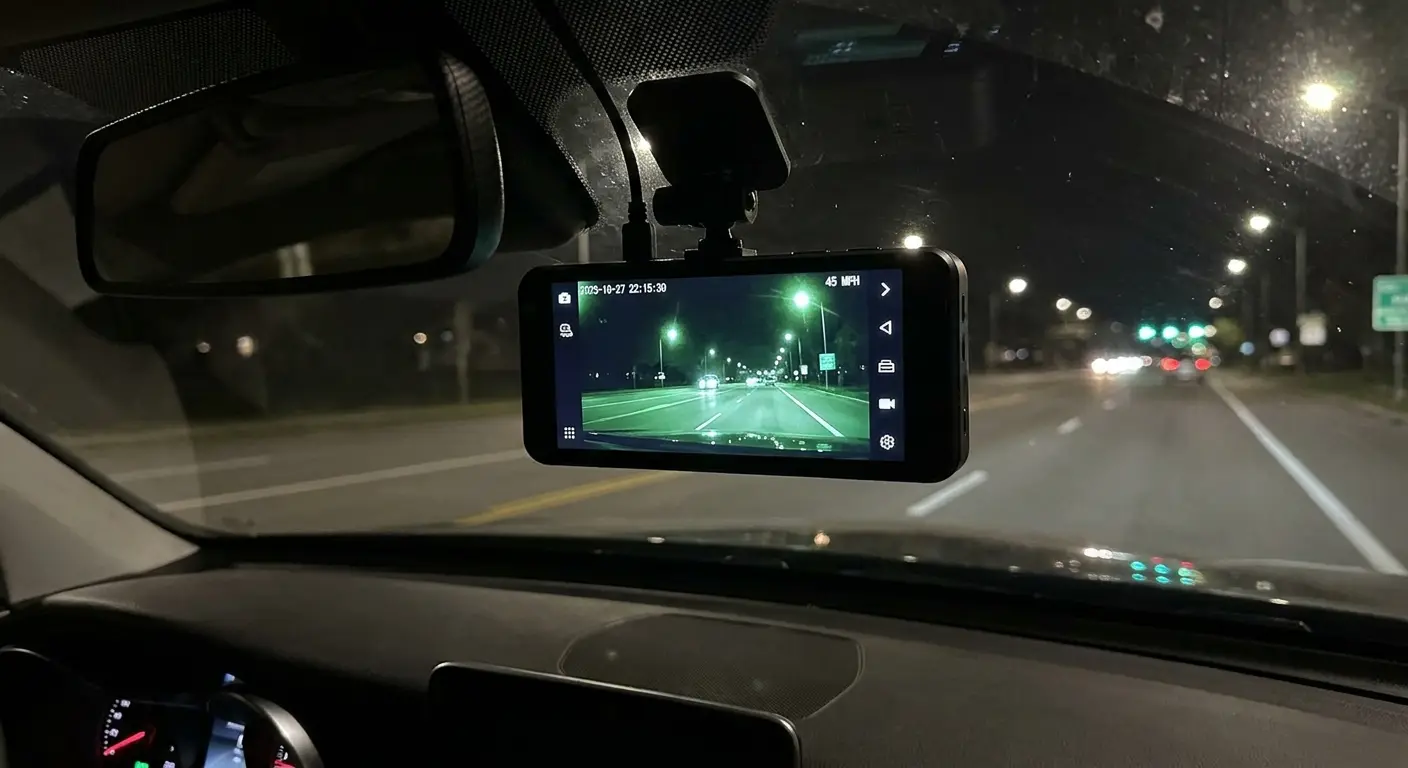
Controversial opinion: Every new driver should have a dash cam before they have fuzzy dice.
Here's why. Insurance fraud is real. Parking lot hit-and-runs happen constantly. And "he said, she said" accidents are a nightmare. Jake's dash cam saved him from a fraudulent injury claim that would've destroyed his insurance rates for years. The other driver claimed whiplash from a 5mph parking lot tap. Video showed she was texting, rolled backward into him, then tried to blame him.
Case dismissed.
Insurance companies increasingly request video evidence now. Having objective footage protects against false claims while streamlining the entire claims process. No more spending weeks arguing about who's at fault when you have clear video of exactly what happened.
Night vision capability? Not optional. Most new drivers do their first solo runs after dark when they're nervous and visibility already sucks. These are many of the same challenges that make choosing the best dash car phone holders so important for safe navigation. The camera captures clear footage even in low-light conditions, documenting everything from aggressive drivers to unexpected road hazards that appear out of nowhere.
Look for models with loop recording that automatically overwrites old footage and G-sensors that detect impacts and save those critical moments. The peace of mind factor extends to both the driver and you. When something happens, you have evidence. That certainty alone makes this worth the investment.
Expect to spend $80-150 for something decent that'll actually work when you need it.
2. Emergency Roadside Kit (The Actually Useful Kind)
I'm gonna say something controversial: Skip the cheap $20 emergency kits from big box stores. They're garbage. The flashlight dies in three months, the jumper cables are too short to actually reach between cars, and the bag falls apart after one summer in the trunk.
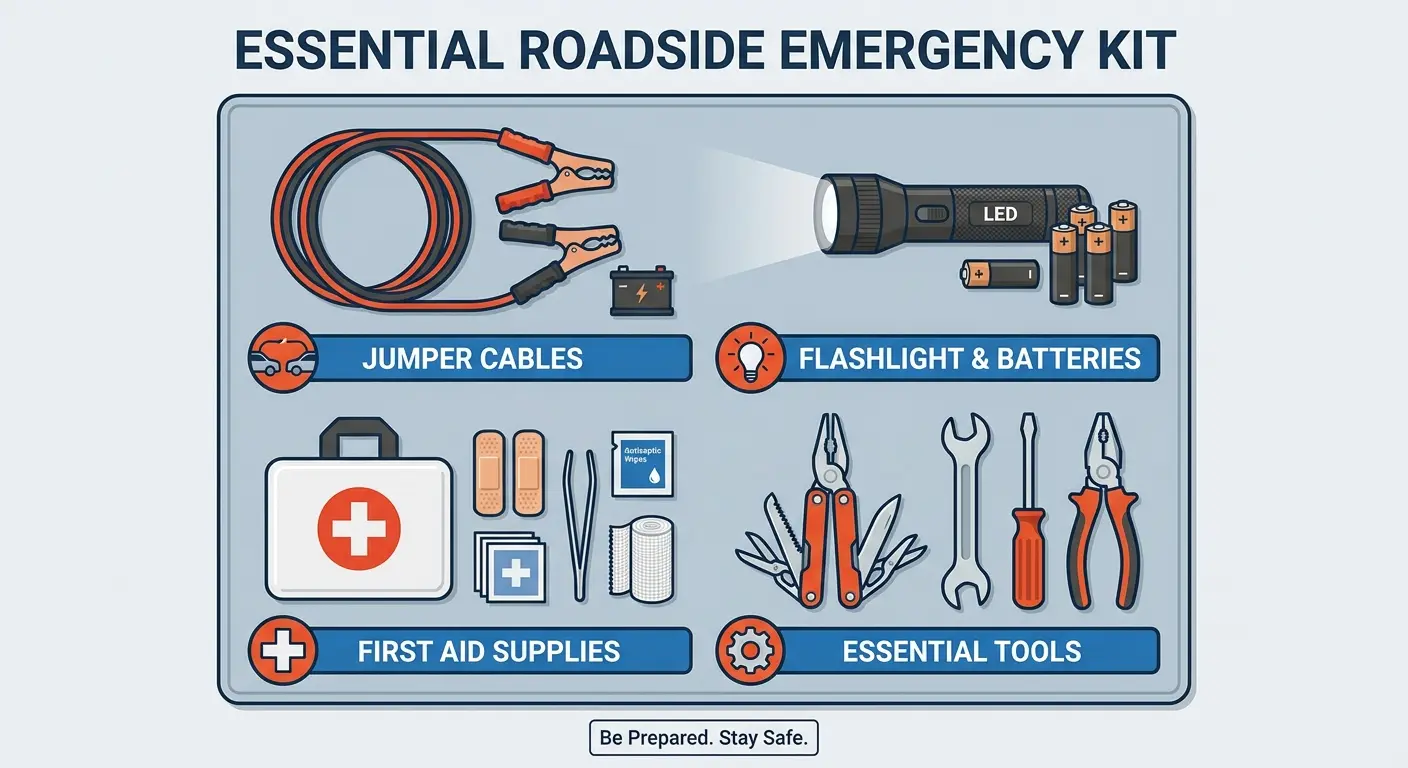
Generic roadside kits contain items that look impressive but require mechanical knowledge most new drivers don't have. The useful kind focuses on tools someone can deploy without a YouTube tutorial: jumper cables with clear positive/negative markings, a flashlight with extra batteries, basic tools that won't rust, duct tape, zip ties, and work gloves that actually protect your hands.
New drivers never assemble this collection on their own. They don't know what to keep in their car until they desperately need something and don't have it. My sister needed duct tape to temporarily secure a loose bumper cover. Her battery died in a parking garage. She waited in cold weather for AAA and wished she'd had a blanket. These scenarios happen faster than anyone expects.
Spend $50-70 on a real kit with a durable, weather-resistant bag that won't fall apart. Cheap nylon tears, zippers break, and contents scatter everywhere. Quality bags with reinforced handles and multiple compartments keep everything organized and accessible during stressful situations when fumbling through loose items wastes precious time and tests your patience.
Essential Kit Component |
Real Talk: Why You Need This |
Pro Tip |
|---|---|---|
Jumper Cables (12-foot minimum) |
Dead batteries don't care about your schedule or location |
Keep these on top so you're not digging with your hood up in a parking lot |
LED Flashlight + Extra Batteries |
Murphy's Law: Everything breaks at night in the worst possible spot |
Test it every few months or it'll be dead when you need it (ask me how I know) |
Basic Tool Set (screwdrivers, pliers, adjustable wrench) |
For when something is loose and rattling and driving you absolutely insane |
Get the rust-proof kind unless you enjoy buying tools twice |
Duct Tape + Zip Ties |
Fixes literally everything temporarily until you can get proper help |
The good industrial-grade stuff, not dollar store garbage that doesn't stick |
Work Gloves |
Because engine parts are hot, sharp, and disgustingly dirty |
Leather lasts forever. Those fabric ones fall apart in a month |
Reflective Blanket |
Signals distress to other drivers and provides warmth during extended waits |
Compact emergency blankets fold to pocket size and weigh nothing |
3. Tire Pressure Gauge and Portable Air Compressor
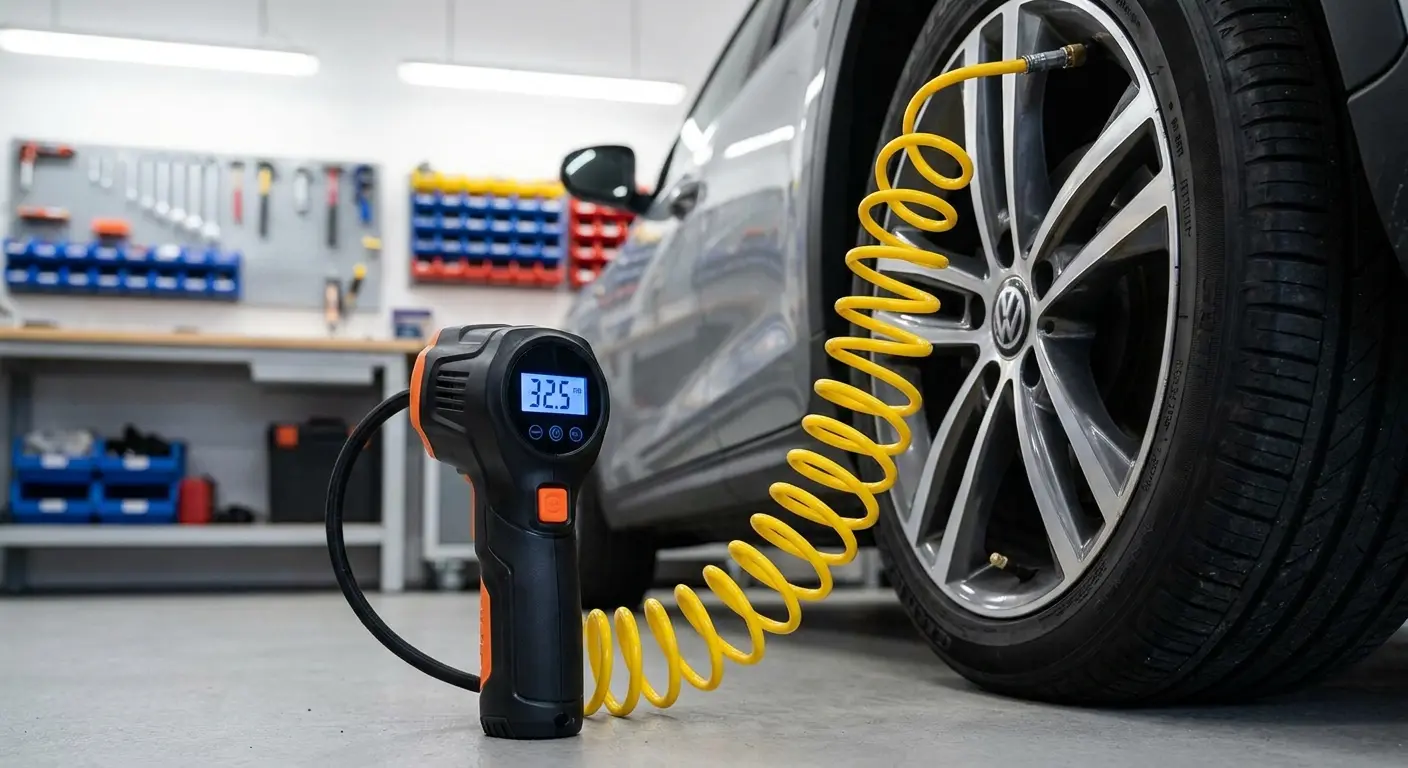
Here's a scenario that plays out constantly: The tire pressure warning light comes on. New driver panics. Doesn't know if it's safe to drive. Searches for a gas station with working air equipment. Finds one. Discovers it costs $2 in quarters they don't have. Drives home on potentially unsafe tires.
A digital gauge removes all the guesswork with precise readings, and a portable compressor means they can handle the problem immediately rather than dealing with that entire frustrating chain of events. This combination prevents the progression from low pressure to flat tire to roadside emergency to expensive tow truck call.
New drivers commonly ignore tire pressure until the warning light appears because they don't understand how it affects their car. Proper tire pressure impacts fuel economy, handling characteristics, and safety. Many gifts for new drivers focus on aesthetics, but this addresses a mechanical reality that impacts every single drive and saves money over time.
Temperature changes cause pressure fluctuations that catch new drivers off guard. A tire that's fine in summer drops below safe levels in winter. They don't know to check pressure seasonally or before long trips because nobody teaches them this stuff. Having the tools readily available in the car means they can develop good maintenance habits without making special trips to service stations or spending money on air.
This is practical. This is what they'll actually use.
4. First Aid Kit Designed for Vehicle Storage
Regular first aid supplies degrade fast in the temperature extremes that cars experience. Adhesives fail in heat. Medications lose potency sitting in a hot trunk all summer. Plastic components crack in cold. Vehicle-specific kits use materials engineered to withstand these conditions while remaining effective when you need them.
What should be inside? Pain relievers, antihistamines for unexpected allergic reactions, gauze and medical tape, scissors, tweezers, and instant cold packs. Minor injuries from loading cargo, changing tires, or handling roadside debris happen way more frequently than serious accidents. Having supplies readily available prevents small problems from becoming bigger issues that require urgent care visits.
My friend's kid cut his hand pretty badly while trying to remove a stuck spare tire. No first aid kit. Had to wrap it in a dirty T-shirt and drive to an emergency clinic bleeding all over the interior. A $30 first aid kit would've handled it right there.
Choose a compact, clearly labeled kit that mounts securely so it doesn't become a projectile during hard braking. I've seen loose items in cars cause injuries during collisions, which is the opposite of helpful. Proper mounting keeps the kit accessible while ensuring it stays put during normal driving.
The visibility of a well-stocked first aid kit also signals preparedness to passengers. In multi-car situations, your supplies might make a critical difference for someone else too.
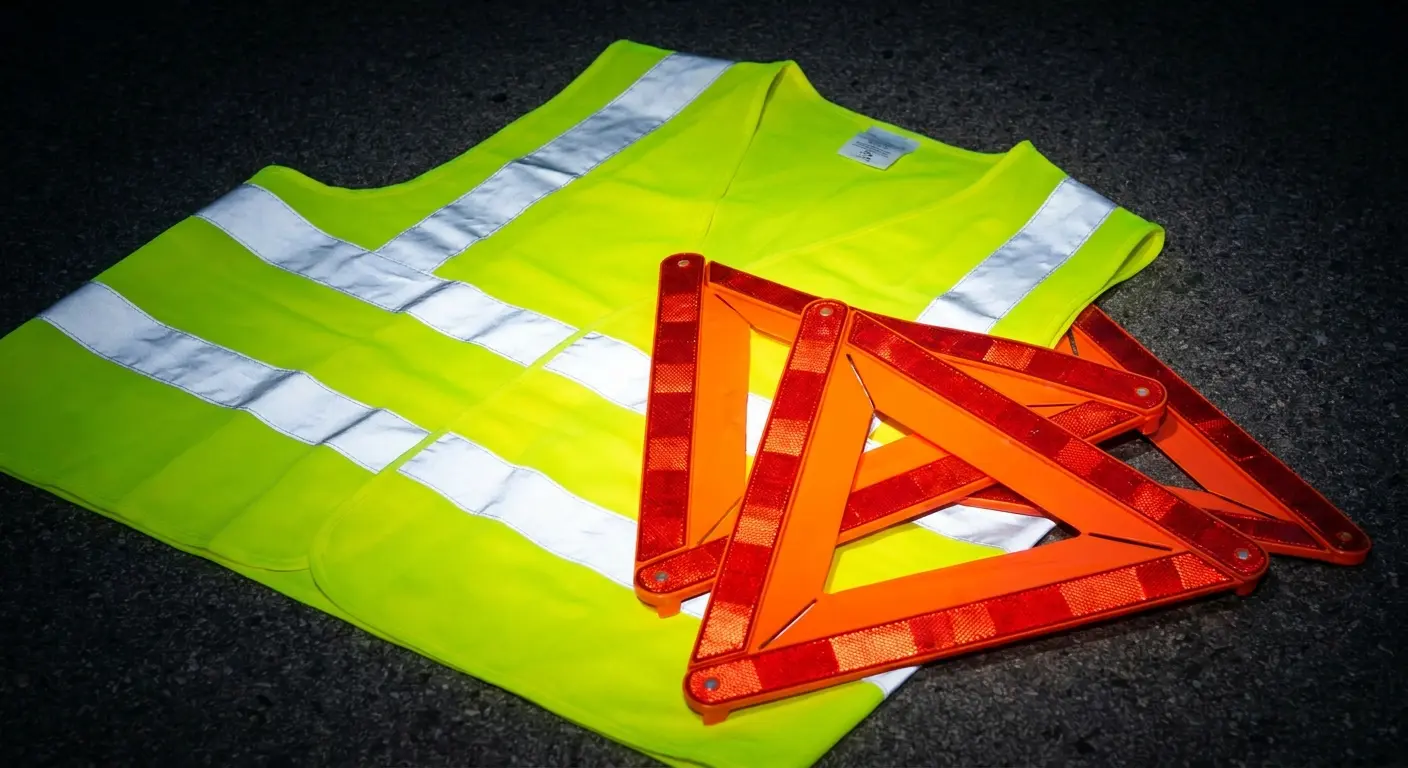
5. Reflective Safety Vest and Warning Triangles
Visibility matters critically when a new driver needs to exit their vehicle on a roadside, particularly on highways or poorly lit roads. Other drivers approaching at speed need time to recognize there's a person outside a vehicle and react accordingly. Reflective vests make you visible from hundreds of feet away, providing that crucial reaction window that prevents tragedy.
Warning triangles placed behind a disabled vehicle create a safety perimeter. They're required by law in some states, which new drivers often don't know. These signal to approaching traffic that there's a hazard ahead, encouraging drivers to slow down and move over instead of blowing past at full speed.
New drivers focused on a car problem often don't think about their visibility to others until a vehicle passes uncomfortably close and scares the hell out of them. By then it's too late to put on safety gear.
Here's the key thing nobody mentions: Store these items in the cabin rather than the trunk. If the trunk won't open due to a mechanical or electrical failure, you can't access safety equipment stored there. Keeping a vest under the driver's seat or in a door pocket ensures it's available even in worst-case scenarios when you need it most desperately.
This is the kind of preparation new drivers don't think about. Parents and mentors worry about it constantly.
The Tech They'll Actually Use
New drivers rely heavily on technology for directions, communication, and entertainment but often lack the right setup to use it safely. Phones slide off mounts during turns. Batteries die mid-route. Check engine lights create anxiety spirals about whether the car is dying.
These gifts address specific pain points that create dangerous distractions. Fumbling with poorly designed tech while driving diverts attention from the road at exactly the wrong moment. Quality technology fades into the background, working seamlessly without requiring constant adjustment or attention.
6. Magnetic Phone Mount Built for Durability
Okay, real talk about phone mounts.
Phone security matters critically for drivers using GPS navigation, especially new drivers unfamiliar with routes who depend on their phones to get literally anywhere. Suction cup mounts fail constantly. Adhesive pads leave gross residue on dashboards. Clamp-style holders break within months of regular use.
I've tested probably 15 different phone mounts over the years. Most are complete garbage.
Magnetic mounts using strong neodymium magnets keep phones secure through sharp turns and sudden stops without complicated installation procedures. I've watched countless drivers struggle with mounts that drop their phones at the worst possible moment, creating a dangerous temptation to grab the device while moving. By the way, if you're going down the magnetic mount route (which you should), here's what you need to know about magnetic car phone mounts and how they actually work.
Quality magnetic systems work with cases and allow one-handed phone attachment. You approach the car, place the phone on the mount with a satisfying magnetic click, and it stays put until deliberately removed. No fumbling with clamps or adjusting suction cups while trying to start a route and not miss your turn.
Rokform's RokLock mounting system uses twist-lock magnets specifically engineered for vehicle vibration and movement. The magnetic connection provides security, while the twist-lock mechanism adds a secondary retention layer that prevents any possibility of the phone detaching during aggressive driving or rough roads. This solves the common new driver problem of trying to reposition a fallen phone while driving, which creates dangerous distraction at speeds where reaction time matters most. Check out Rokform's car mounts for systems designed specifically for the demands of vehicle use.
7. Dual USB Car Charger with Fast Charging
Here's a scenario: Your kid's phone is at 8%, they're lost, GPS is actively draining battery, and their cheap gas station charger can't keep up with power consumption. Fun times for everyone involved.
New drivers run their phones down to critical battery levels using GPS, music streaming, and communication simultaneously. Standard chargers can't keep up with power drain during active use, leaving drivers with dead phones when they need directions most urgently. I've tested like 15 different car chargers. Here's the short version of what's worth buying for the best car charger that ensures phones stay powered during long commutes and navigation-heavy drives.
Fast charging capability (18W or higher) and multiple ports allow simultaneous charging for driver and passengers. This prevents the anxiety of watching battery percentage drop while following unfamiliar routes in areas where getting lost creates genuine problems and potential safety issues.
Choose chargers with LED indicators showing active charging status and built-in safety features preventing overheating or overcharging. Quality chargers regulate power delivery based on device needs, protecting expensive phones from electrical damage while maximizing charging speed.
This addresses a daily frustration that impacts both safety and peace of mind. Dead phone equals no GPS equals lost driver equals panicked parent.
8. Bluetooth FM Transmitter
Most first cars are old. Old cars have terrible stereos or no Bluetooth connectivity. This fixes that problem completely.
Many new drivers inherit or buy older vehicles without Bluetooth or aux inputs as first cars because that's what they can afford. These devices plug into the 12V outlet and broadcast phone audio to an unused FM frequency that the car radio picks up, enabling hands-free calling and music streaming without expensive stereo upgrades that cost more than the car is worth.
Sound quality varies significantly between models , so choosing reputable brands matters. Poor-quality transmitters produce static, interference, and audio dropout that creates frustration rather than solving problems. Quality units maintain clear audio even in areas with crowded radio frequencies where every station seems taken.
Models with USB charging ports pull double duty, addressing two needs with one device. The transmitter handles audio while simultaneously charging the phone, eliminating the need for separate charging cables cluttering the dashboard area. This maximizes functionality while minimizing clutter and complexity in an already cramped space.
9. OBD2 Scanner for DIY Diagnostics
Check engine light comes on. Panic ensues. This is the solution.
My sister's check engine light came on during her second week of solo driving. She spent $95 for AutoZone to tell her the gas cap wasn't tight. Ninety-five dollars. For a loose gas cap. If she'd had a $20 OBD2 scanner, she could've figured that out herself in 30 seconds and saved the money for actual problems.
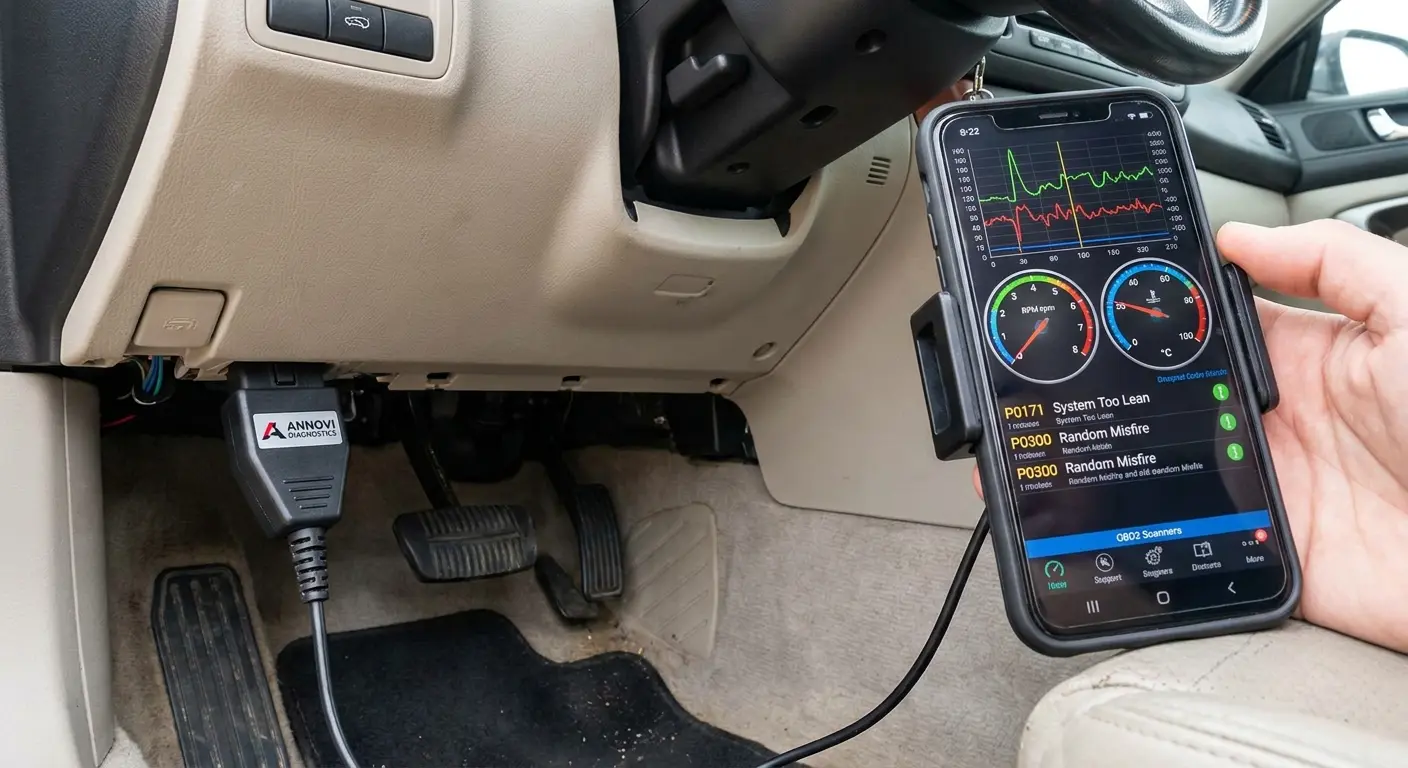
These affordable scanners plug into the OBD2 port (present in all cars since 1996) and read diagnostic codes through a smartphone app, demystifying dashboard warnings that send new drivers into anxiety spirals. This knowledge empowers them to make informed decisions rather than either ignoring warnings dangerously or rushing to mechanics unnecessarily for minor issues.
Some codes indicate minor problems that can wait for a scheduled service appointment. Others signal serious issues requiring immediate professional attention. Understanding the difference prevents both dangerous "ignore it" decisions and expensive panic responses to things that aren't emergencies.
Some scanners also monitor real-time engine data and can clear codes after repairs, confirming fixes worked correctly. This builds mechanical literacy over time, helping new drivers understand their vehicles better and communicate more effectively with mechanics instead of getting ripped off. The money saved on diagnostic fees pays for the scanner within a few uses.
This is practical knowledge that gives them independence and confidence.
10. Portable Jump Starter with USB Ports
Know what's worse than a dead battery? A dead battery when you're alone in a dark parking garage at 10pm and nobody's around to give you a jump. Ask me how I know.
Lithium-ion power banks eliminate the need to find another vehicle and figure out jumper cable connections during a dead battery situation. Modern units are compact enough to store in a glove box and hold charges for months without maintenance, ready when needed most.
The safety advantage of not needing another vehicle matters significantly. You don't need to position cars close enough for cables or trust a stranger's electrical system or even find another person willing to help. The jump starter connects directly to your battery, you press a button, and you start the car. Simple, safe, independent.
USB charging ports make these useful beyond emergency jump starts. The same battery pack that can start a car can charge phones and laptops during camping trips or power outages. Check that the peak amp rating matches or exceeds your vehicle's engine size for reliable starting power. This becomes especially valuable in winter when batteries fail more frequently due to cold temperatures that drain power overnight.
My nephew used his three times in the first year. Three times. That's three potential tow truck calls he avoided.
11. Weather-Resistant Car Organizer
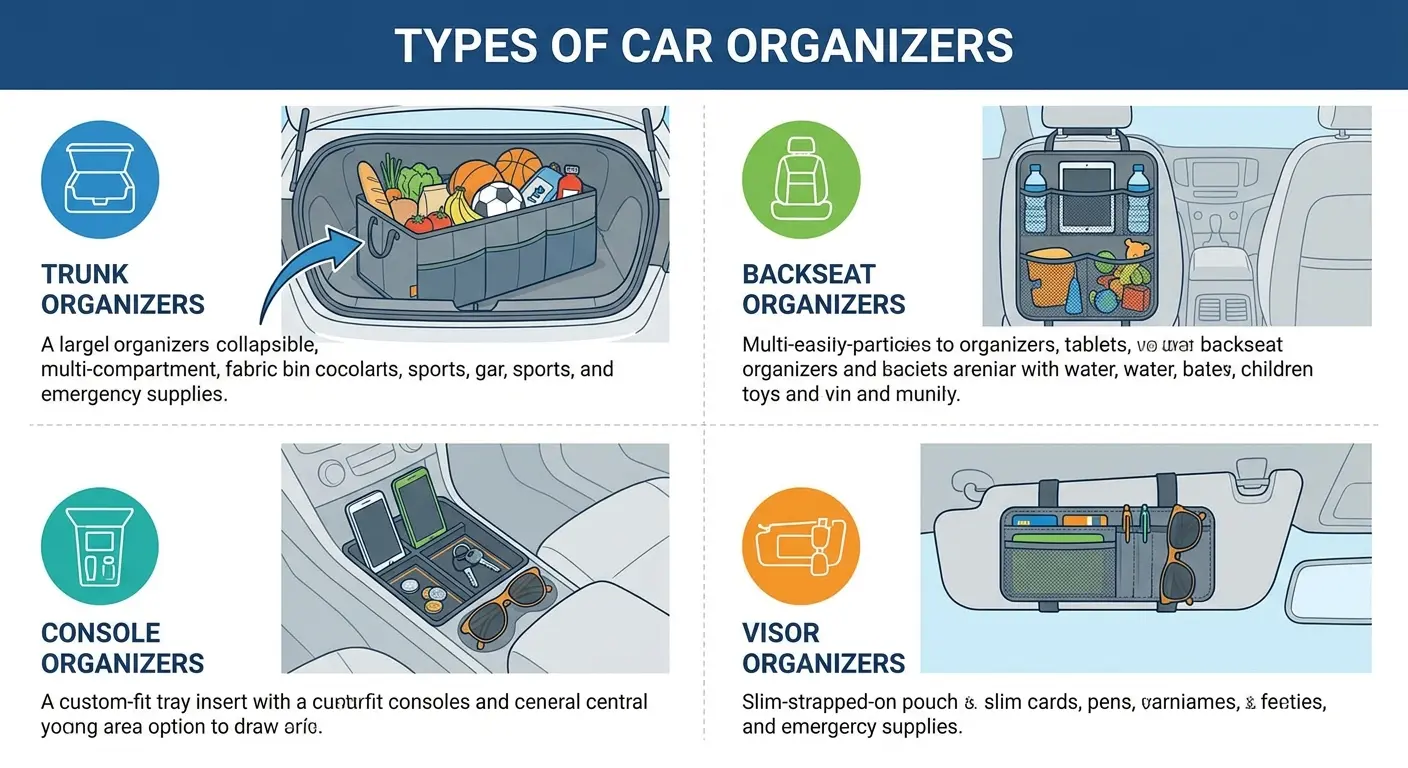
Chaos develops quickly in new driver vehicles when registration papers, insurance cards, charging cables, sunglasses, and miscellaneous items have no designated storage. Organizers with multiple compartments prevent the dangerous practice of rummaging through loose items while driving, which diverts eyes from the road and hands from the wheel at exactly the wrong time.
Water-resistant material, secure attachment preventing sliding, and quick access to frequently needed items define quality organizers. Keeping the car organized reduces stress during traffic stops when officers request documentation and you're already nervous. Everything has a place. You know exactly where to reach. No panicked searching through the glove box while a cop waits.
Organizer Type |
Best For |
Key Features to Look For |
Typical Price Range |
|---|---|---|---|
Trunk Organizer |
Emergency kits, sports equipment, groceries that roll around |
Collapsible design, reinforced sides, multiple compartments, non-slip bottom |
$25-$50 |
Backseat Organizer |
Frequent passengers, rideshare drivers, keeping the backseat from becoming a disaster |
Kick mat protection, tablet holder, tissue dispenser, bottle pockets |
$15-$35 |
Console Organizer |
Daily essentials, toll money, charging cables you use constantly |
Custom-fit for vehicle model, coin slots, phone holder, cup holder inserts |
$10-$30 |
Visor Organizer |
Registration, insurance cards, parking passes you need immediately |
Clear document sleeves, pen holder, card slots, quick-release attachment |
$8-$20 |
Seat Gap Filler |
Preventing items from falling into that annoying space between seats |
Leather or premium material, exact-fit sizing, storage pocket option |
$12-$25 |
Trunk organizers work best for emergency supplies and equipment that stays in the vehicle permanently. Console organizers handle daily-use items that need constant access. The key is matching organizer type to the specific storage challenge rather than buying generic solutions that don't fit the actual use case or vehicle layout.
Small Things That Make Driving Less Miserable
Physical comfort and environmental control directly affect driving confidence and safety. New drivers often underestimate how factors like glare, temperature, and fatigue impact their ability to focus and react appropriately to changing road conditions and unexpected situations.
These gifts address the subtle stressors that accumulate during commutes or long drives. Discomfort builds gradually until it becomes a significant distraction that affects judgment. Preventing that progression helps drivers stay alert and comfortable behind the wheel, maintaining the focus required for safe operation when it matters most.
12. Quality Sunglasses with Polarized Lenses
I'm gonna say something that might sound dramatic: Polarized sunglasses are non-negotiable. I don't care if your kid thinks they look dorky or already has cheap gas station shades. Driving into the sunrise without proper eyewear is dangerous, full stop.
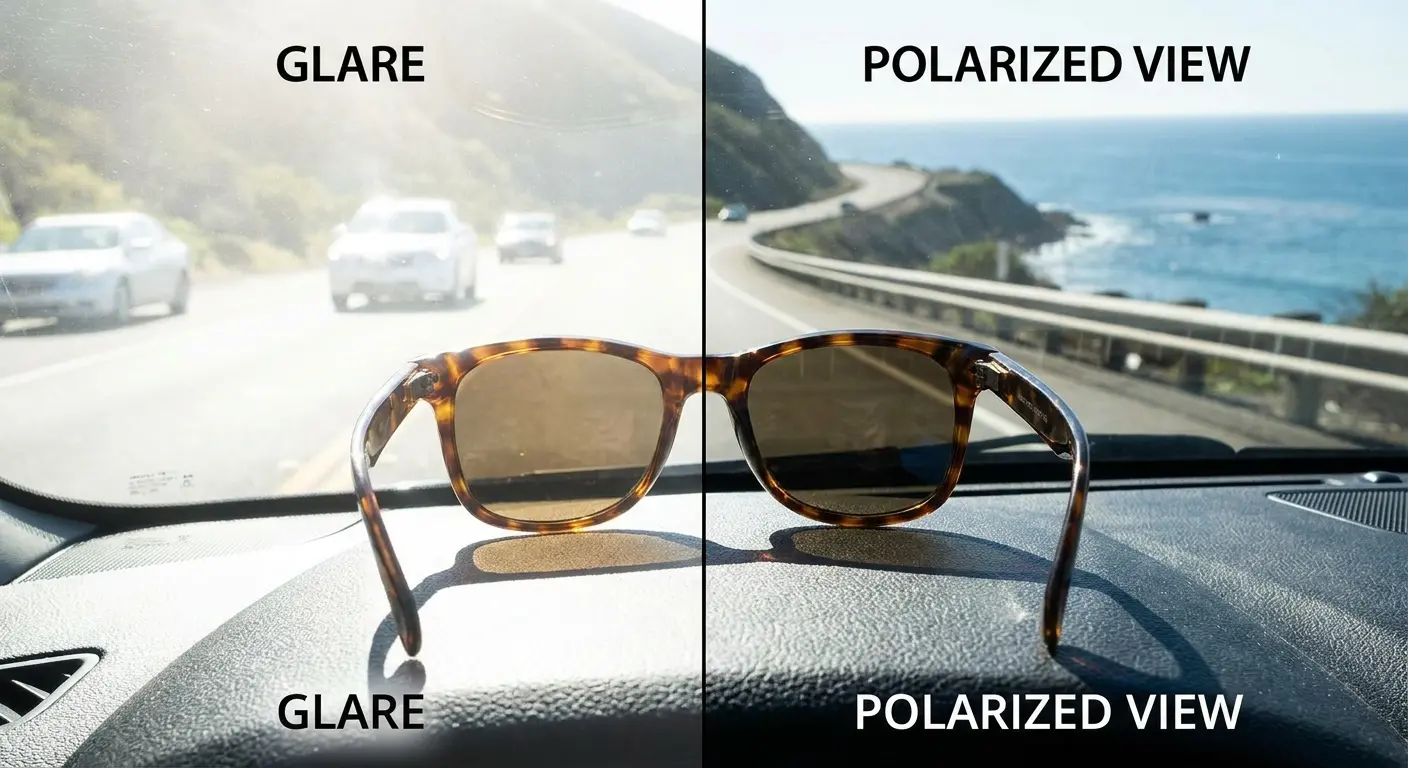
Polarization eliminates glare from windshields, wet roads, and other vehicles by filtering horizontal light waves. The safety improvement becomes obvious during sunrise and sunset drives when sun angles create maximum glare that forces drivers to squint or use visors that block forward visibility and road awareness.
New drivers often squint through difficult lighting rather than investing in proper eyewear because they don't realize how much visual information they're missing. They think squinting is fine. It's not. Road markings become visible with proper lenses. Traffic signals stand out clearly instead of getting washed out. Other vehicles' brake lights register instantly rather than getting lost in glare that delays reaction time.
Choose impact-resistant lenses and frames that stay secure during head movements. Sunglasses that slide down your nose or fall off during quick head checks create more problems than they solve and become another distraction. This addresses a problem new drivers experience daily but might not prioritize on their own, making it one of the more thoughtful gifts available.
I've seen too many near-misses from drivers squinting through glare. Don't let your kid be one of them.
13. All-Weather Floor Mats
Vehicle interiors face inevitable spills, mud, snow, salt, and general wear that accelerate during a new driver's first year when they're still learning to be careful. Original carpet mats stain permanently and wear through quickly under regular use and abuse. Rubber or thermoplastic mats contain messes and rinse clean, maintaining interior condition without constant stress.
The practical benefit extends to maintaining resale value by preserving the original flooring underneath. Raised edges prevent liquids from spreading under seats where they create mold and persistent odors that never fully go away. This shows you understand they'll actually use their car rather than keeping it pristine like a museum piece.
Custom-fit options provide better coverage than universal sizes. They extend further up the footwell walls, cover more floor area, and stay positioned correctly without sliding around under pedals. Universal mats bunch up under pedals or shift out of position, creating legitimate safety hazards. Spending extra for proper fit eliminates these problems while providing superior protection that actually works.
Consider this necessary for any practical vehicle maintenance approach, especially in areas with harsh weather conditions.
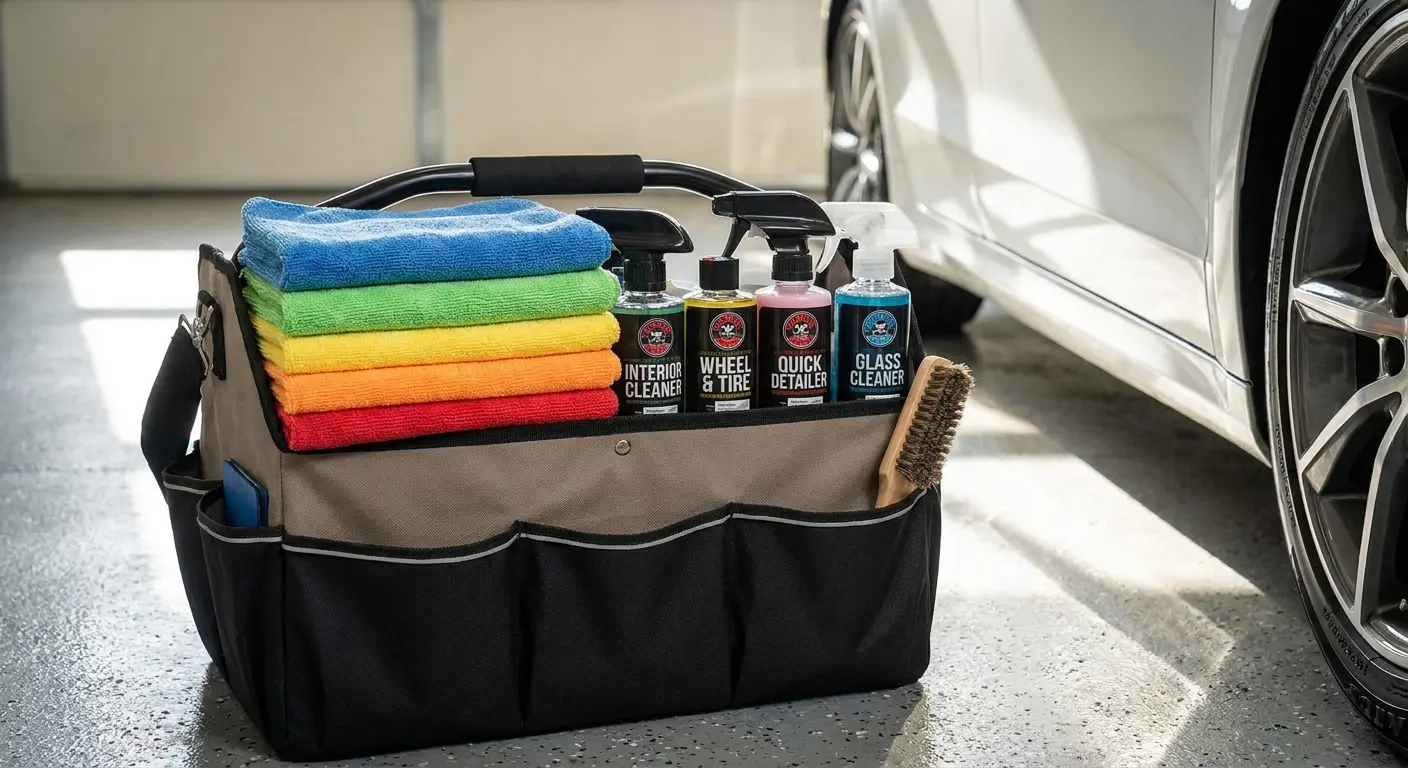
14. Microfiber Cleaning Kit
Dirty windshields, mirrors, and windows create visibility and safety issues that new drivers often neglect until they can barely see through the grime and bug splatter. Microfiber cloths clean without scratching glass and don't leave lint residue that paper towels deposit across every surface you just cleaned.
Include interior glass cleaner, exterior wash solution, dedicated cloths for different surfaces, and a small brush for dashboard vents that collect dust. Keeping this kit in the car makes regular cleaning convenient enough to actually happen rather than remaining a task that gets perpetually postponed until the windshield is legitimately dangerous.
Clear windows reduce eye strain during night driving by eliminating the halos and streaks that form around oncoming headlights on dirty glass. This improves reaction time by ensuring full visibility in all directions without visual distortion. The difference between clean and dirty windows becomes most apparent in challenging driving conditions when you need maximum visibility most desperately and can't afford compromised vision.
It's a small thing that makes a big difference in both safety and comfort.
15. Insulated Travel Mug with Spill-Proof Lid
Temperature-controlled beverages improve alertness during early morning commutes or late-night drives home from work or school when fatigue becomes a real safety concern. Quality insulation keeps coffee hot or water cold for hours without the condensation that damages car interiors and creates slippery surfaces on cup holders and center consoles.
Truly leak-proof lids seal completely and fit standard cup holders without wobbling or tipping during normal driving. This reduces the distraction and danger of managing disposable cups while driving, which often leads to spills during turns or sudden stops that create messes and potential burns. The best road trip accessories and must-haves extend beyond just travel mugs to comprehensive vehicle preparation for any journey.
New drivers often grab drive-through drinks without considering the mess factor or cumulative expense that adds up fast. A quality reusable mug saves money while preventing the interior damage that coffee spills cause to upholstery and electronics that are expensive to repair or replace. Choose mugs with one-handed operation for safer use at stoplights, allowing drivers to stay hydrated without fumbling with complicated lids that require both hands.
This represents one of the more practical gift ideas for new drivers who spend significant time commuting to school, work, or social activities.
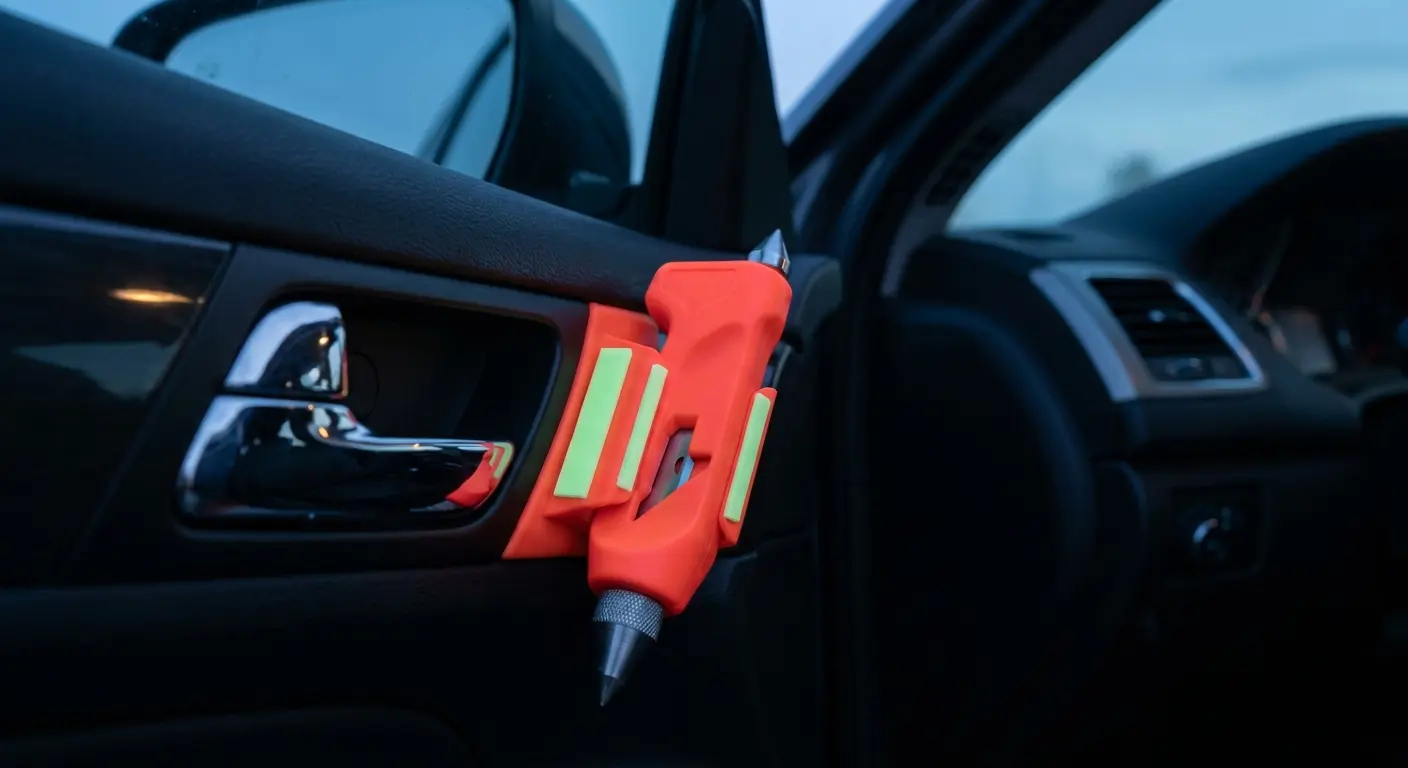
16. Car Escape Tool with Seatbelt Cutter
This is the most underrated safety item on this entire list. Everyone thinks about airbags and seatbelts. Nobody thinks about being trapped in a vehicle after an accident or water submersion when electronic systems fail completely.
This tool hopefully never gets used but provides capability in worst-case scenarios that keep parents awake at night. The dual function includes a spring-loaded window punch that shatters tempered glass and a recessed blade that cuts through jammed seatbelts when electronic release mechanisms fail due to impact or electrical failure.
These tools matter in water submersion or post-collision situations where electronic windows stop functioning and belt mechanisms lock due to impact forces or computer malfunctions. Mounting one within driver's reach rather than storing it in the glove box makes it accessible when needed most urgently. You can't open the glove box if you're trapped by a jammed seatbelt or the latch is damaged.
Choose tools with glow-in-the-dark handles for visibility in darkness. Many emergencies happen at night or in conditions where interior lighting fails completely. Being able to locate the tool by feel or minimal light becomes critical when every second matters and panic is setting in.
This represents the kind of preparation new drivers don't think about but parents and mentors worry about constantly. It's the gift that shows you've thought about their safety in scenarios they haven't even considered yet.
One Last Thing
Look, I know this list is long. You're probably thinking "I can't buy all this stuff."
You're right. Don't.
Pick 3-5 things based on what scares you most about your kid driving or what challenges they're most likely to face. If you live somewhere cold, prioritize the jump starter and emergency kit. If they're commuting to college in unfamiliar areas, focus on the phone mount and dash cam. If they're driving an older car that might have issues, get the OBD2 scanner and roadside kit.
The point isn't to buy everything on this list and overwhelm them with gear. The point is to stop buying fuzzy dice and start thinking about what they'll actually face out there on real roads with real problems.
Consider themed approaches when building a gift package. A "winter preparedness" bundle might include the portable jump starter, emergency blanket, ice scraper, and insulated mug. A "tech safety" package could feature the magnetic phone mount, car charger, dash cam, and OBD2 scanner. Tailoring the selection to specific needs shows thoughtfulness beyond generic celebration tokens that gather dust.
For the phone mounting solution specifically, Rokform's rugged cases paired with their mounting systems address the core problem of keeping devices secure and accessible without creating distraction or fumbling. Side note: I did a whole deep-dive on the most protective phone cases for people who drop their phones constantly (we all know someone). Check out Rokform's phone cases to find options built specifically for the demands of vehicle use, with integrated mounting systems that work seamlessly with car mounts.
Learning how to protect your phone while traveling extends the same preparedness mindset to all aspects of new driver readiness. Phone mounts are their own rabbit hole. I wrote a whole breakdown of the best phone mounts for cars that covers what actually works versus what's just marketing nonsense.
Exploring what dad wants for Father's Day gift guide can provide inspiration for assembling meaningful driver safety packages that work for any occasion beyond just new licenses. Considering phone accessory gifts provides additional options beyond traditional vehicle-focused items, recognizing that modern driving relies heavily on smartphone integration for navigation and communication.
Funny new driver gifts have their place for celebrations and social media posts. But combining humor with utility creates more lasting value and shows you actually care about their safety. A novelty item paired with something genuinely useful strikes the right balance between acknowledging the milestone and preparing for practical challenges ahead.
Whether you're shopping for gifts for new drivers male or female, focusing on capability and independence resonates more than gender-specific marketing gimmicks. Every new driver faces the same fundamental challenges: staying safe, handling emergencies, maintaining their vehicle, and building confidence behind the wheel. The gifts that address these universal needs provide the most value regardless of who's receiving them.
My nephew still has those fuzzy dice his grandma gave him. They're in a drawer somewhere collecting dust. But that dash cam I gave him? It's saved his ass twice already, and he's only been driving eight months. The jump starter got used three times. The emergency kit came out once when he needed duct tape for a loose trim piece.
That's the difference between a gift that celebrates and a gift that prepares.
Investing in a new driver's safety and confidence pays dividends in reduced stress for everyone who cares about them. These aren't just gifts for a new driver celebrating a license. They're investments in their ability to handle whatever the road throws at them during those critical first months and years behind the wheel when experience hasn't caught up with independence yet.
The difference between being prepared and being caught off guard often comes down to having the right tool at the right moment. These gift ideas ensure they have exactly that when things go wrong.
Choose preparation over celebration. Your future self will thank you when the panicked midnight phone call doesn't come.

