


Table of Contents
The Hidden Tax on Your Time and Mental Energy
Why Prevention Gets Ignored Until It's Too Late
The Repair Shop Lottery: What Actually Happens to Your Phone
OEM Parts vs. Third-Party Components: What Nobody Says Out Loud
The Data Security Blind Spot
Software Gremlins That Survive Hardware Fixes
When "Fixed" Doesn't Mean Whole
The Environmental Cost Nobody's Calculating
Protection as a Philosophy, Not an Afterthought
Final Thoughts
TL;DR
Smartphone repair drains your time, disrupts your workflow, and creates anxiety most people don't account for until they're living through it. The financial cost? That's just the beginning.
The repair industry operates in this weird gray zone where quality varies wildly. You're basically gambling every time you hand over your device.
Third-party parts might save money upfront but they compromise performance. Water resistance, touch sensitivity, battery life... all of it takes a hit.
Data security during repairs is rarely discussed but it's a massive vulnerability. Your personal information just sits there, exposed, while your phone's out of your hands.
Software issues pop up post-repair constantly, even when the hardware fix seems fine. And these problems? They compound over time.
Prevention through quality protection isn't just cheaper. It's the only strategy that doesn't require you to lose access to your device, risk your data, or accept a phone that's never quite right again.
The Hidden Tax on Your Time and Mental Energy
Okay, so repairs are expensive. We all know that. But the money? That's honestly the least annoying part of the whole nightmare.
Think about the last time you were separated from your phone for more than a few hours. You know what I'm talking about. The phantom vibrations. Reaching for your pocket even though you *know* it's not there. The sudden awareness of how many daily functions depend on that single device. It's actually kind of pathetic how dependent we've become, but here we are.
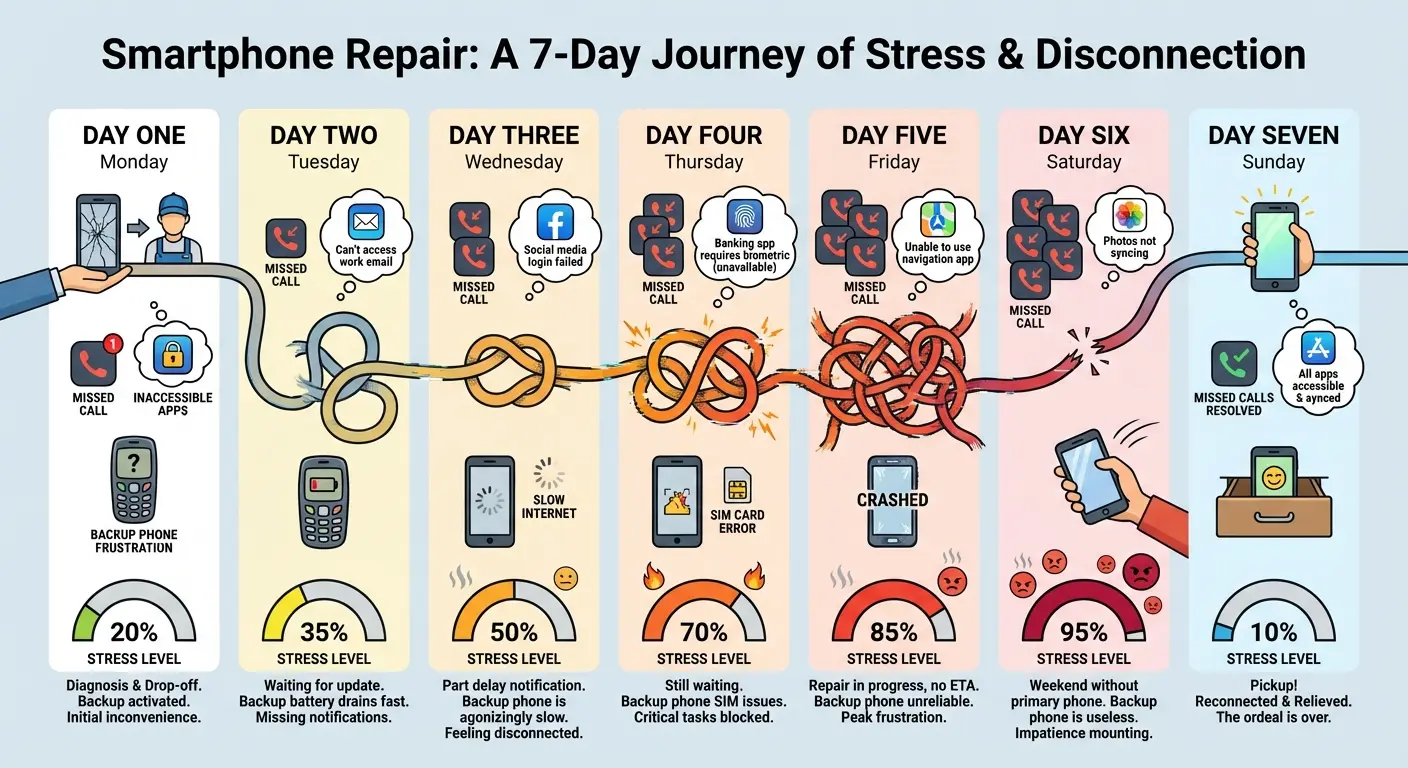
Now stretch that feeling across three to seven days (the typical repair window), and you're starting to grasp the real price.
Americans spent $8.3 billion on cellphone screen repairs in 2023. That's billion with a B. Nearly triple the $3.4 billion we spent just five years earlier. That jump isn't just about rising repair costs. It shows how completely screwed we are without these devices that have become, let's be honest, irreplaceable in daily life.

We've normalized being constantly connected, which means we've also normalized the absolute chaos that erupts when that connection breaks. Your two-factor authentication codes? Good luck with that. Your work Slack? Silent. Your kid's school pickup schedule? Hopefully you remember it without checking the calendar app.
A friend of mine (Sarah, she does freelance design) cracked her screen on a Tuesday. Nothing dramatic, just dropped it in a parking lot like we've all done a thousand times. She figured she'd drop it at that repair place near her office, get it back in a couple days, no big deal.
That was her first mistake.
By Thursday, the shop called to say they needed to order a different part. By Friday, she'd missed three client calls because her backup phone didn't have her business contacts synced, lost a project bid because she couldn't access the proposal in her cloud drive, and spent four hours trying to remember passwords for accounts that relied on her phone's authenticator app. When she finally got her phone back on Monday, the repair cost $240. The week of lost productivity and missed opportunities? Easily ten times that.
Your Workflow Is About to Explode
Backing up your device before repair isn't optional, but it's rarely straightforward. You'll spend anywhere from 30 minutes to several hours making sure your photos, messages, and app data transfer correctly. Then there's the restoration process when you get your phone back, assuming the repair didn't wipe something critical.
Want to know something repair shops don't advertise? Sometimes they need to factory reset your device to complete the repair. Sometimes they don't warn you first.
You're left rebuilding your digital life from whatever backup you managed to create, hoping you didn't miss anything important. The coordination itself becomes a part-time job. Dropping off the phone. Waiting for the diagnostic. Approving the quote. Arranging pickup. Each step needs scheduling around your actual responsibilities, and each interaction carries the risk of miscommunication about what's covered, what's not, and how long it'll actually take.
Pre-Repair Preparation Checklist:
Back up all photos and videos to cloud storage or computer
Export and save text messages if they contain important information
Write down two-factor authentication backup codes for critical accounts (and yes, you'll forget at least one)
Screenshot any important notes, reminders, or calendar events
Remove SIM card and store it separately
Document your phone's current condition with photos
Disable Find My iPhone/Find My Device features
Sign out of all accounts (iCloud, Google, banking apps)
Record your phone's IMEI number for reference
Create a list of installed apps you'll need to reinstall
Transfer any active subscriptions or tickets to another device
Inform key contacts of your temporary number if using a backup phone
The Waiting Is the Worst Part
Repair timelines are suggestions at best. "We'll call you in two days" becomes four, then six. Parts get backordered. Technicians discover additional damage. The shop gets busy. You're stuck in limbo, unable to plan around a firm return date.
And this uncertainty? It makes everything else worse. You can't commit to being fully reachable for work calls. You can't rely on your usual navigation for that road trip you planned. You're operating in a degraded state, using a borrowed device or an old backup phone that doesn't have your passwords saved or your apps configured correctly.
The mental energy required to manage all this while maintaining your normal life? That's the hidden tax nobody mentions when they quote you $200 for a screen replacement.
Why Prevention Gets Ignored Until It's Too Late
We all know we should use cases. Every single person reading this knows it. And yet, look around any coffee shop. How many naked iPhones do you see? Cracked screens everywhere. (29% of all damage is screen cracks, if you want the depressing statistics.)
The disconnect isn't about ignorance. It's about human nature and the way we calculate risk in the moment versus risk over time.
Why You Think It Won't Happen to You
Your brain's wired to believe bad things happen to other people. You've dropped your phone before and it survived, so you'll probably be fine next time too. This cognitive shortcut works great for maintaining sanity in an uncertain world but fails spectacularly when applied to fragile electronics.
Every successful drop reinforces the belief that protection is unnecessary. You're basically running a probability experiment where the stakes increase with each trial, and you only lose once to lose everything.
The math doesn't support this approach. Drop a phone enough times and the screen will crack. Expose it to enough situations and water will find its way in. Use it long enough without protection and the frame will dent, the corners will chip, and the resale value will tank.
Aesthetics vs. Durability
Here's the thing that drives me nuts: Apple spends millions making their phones beautiful. That perfect weight, that specific shade of blue they probably focus-grouped for six months. And then what? They fully expect you to cover it with a case.
It's like buying a sports car and keeping it in the garage. Except worse, because the sports car doesn't shatter if you look at it wrong.
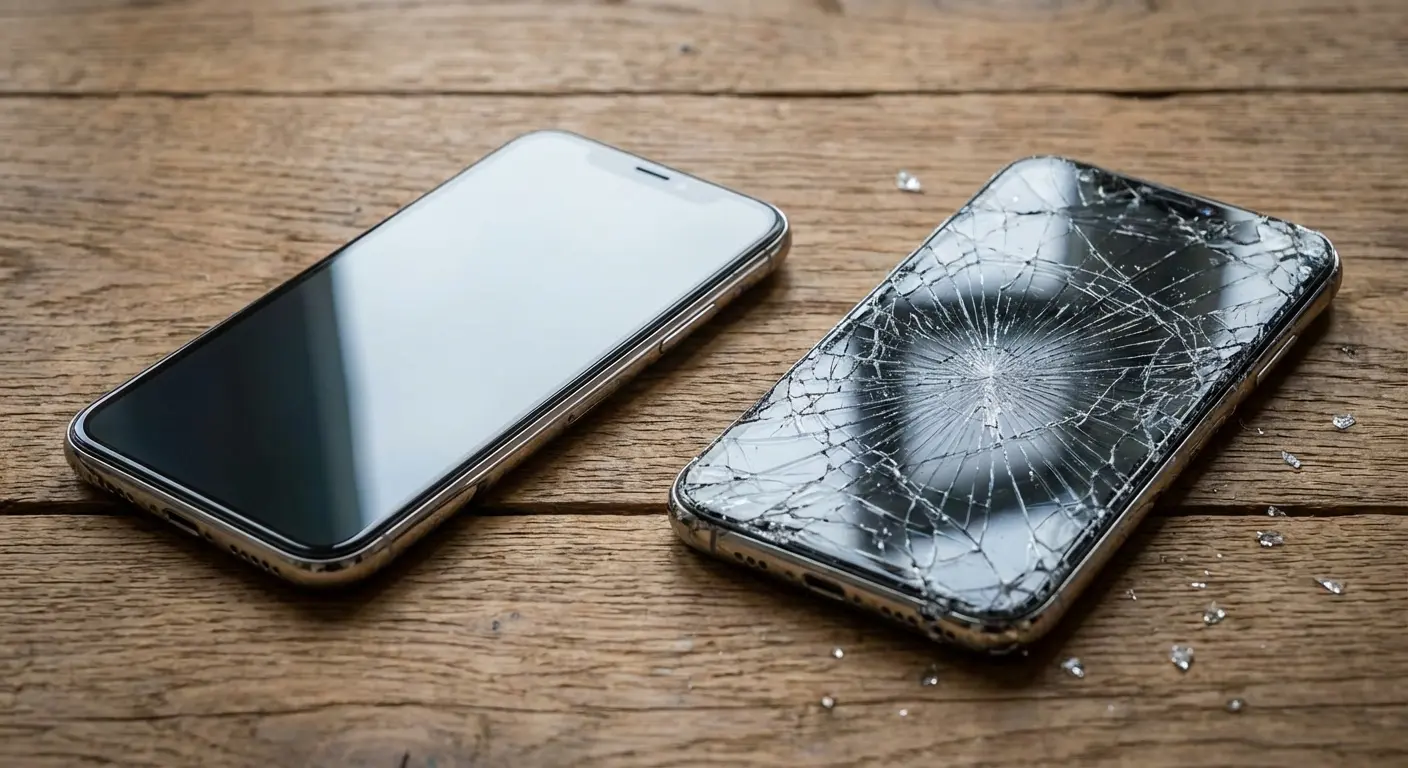
This creates a tension most people resolve by either going naked (and accepting the risk) or choosing minimal protection that looks good but doesn't do much. The slimmest case that technically counts as protection becomes the compromise, even though it won't survive a real impact.
Look, I get it. You didn't spend $1,200 on a beautiful device to hide it in a bulky case. But a cracked screen isn't beautiful either, and neither is the anxiety of using an exposed phone you're afraid to actually use fully.
The False Economy of Skipping Protection
A quality protective case costs between $40 and $80 depending on the features and materials. A screen replacement starts around $200 for recent iPhone models and climbs from there if you're dealing with OLED panels or curved glass. Back glass replacement? Often $400 to $600 because it requires disassembling the entire device.
The math is obvious, yet people consistently choose to roll the dice rather than invest upfront. Part of this is the psychological difference between a certain cost now versus a potential cost later. The protection purchase feels uncomfortable. The potential repair feels abstract and avoidable.
Understanding how phone cases protect your phone can help shift this perspective from viewing cases as optional accessories to essential protection.
Protection vs. Repair Cost Comparison
What You're Actually Paying |
Upfront Cost |
Typical Lifespan |
Cost Per Year |
|---|---|---|---|
Quality protective case |
$40-80 |
2-3 years |
$20-40 |
Screen replacement (standard) |
$200-300 |
N/A |
N/A |
Screen replacement (OLED/curved) |
$300-500 |
N/A |
N/A |
Back glass replacement |
$400-600 |
N/A |
N/A |
Full device replacement (mid-range) |
$600-900 |
N/A |
N/A |
Full device replacement (flagship) |
$1,000-1,500 |
N/A |
N/A |
This calculation ignores the compounding costs we discussed earlier: the time, the inconvenience, the data risk, the performance degradation. When you factor in everything repair actually costs, the protection investment looks even more reasonable.
The Repair Shop Lottery: What Actually Happens to Your Phone
When you hand your phone to some repair tech, you're basically just... hoping? Hoping they know what they're doing, hoping they're not using garbage parts, hoping they're honest about what actually needs fixing.
It's a lot of hoping.
That trust is often misplaced, not because repair techs are malicious but because the industry operates with wildly inconsistent standards.
Third-party repair services now handle over 60% of all smartphone repairs in the United States, driven by consumer demand for convenience and lower costs compared to manufacturer-authorized centers.
The repair landscape keeps evolving. Just this month, CPR Cell Phone Repair opened a new location in Maplewood, Minnesota, marking the fifth store in the Twin Cities metro. This expansion reflects the growing demand for independent repair services, but it also highlights a critical question: how do you evaluate quality when shops are popping up this quickly?
Authorized vs. Independent: The Real Differences
Manufacturer-authorized repair centers offer genuine parts and trained technicians, but you'll pay premium prices and often face longer wait times. They're also more likely to declare your device unrepairable if the damage extends beyond their service protocols, pushing you toward a full replacement instead.
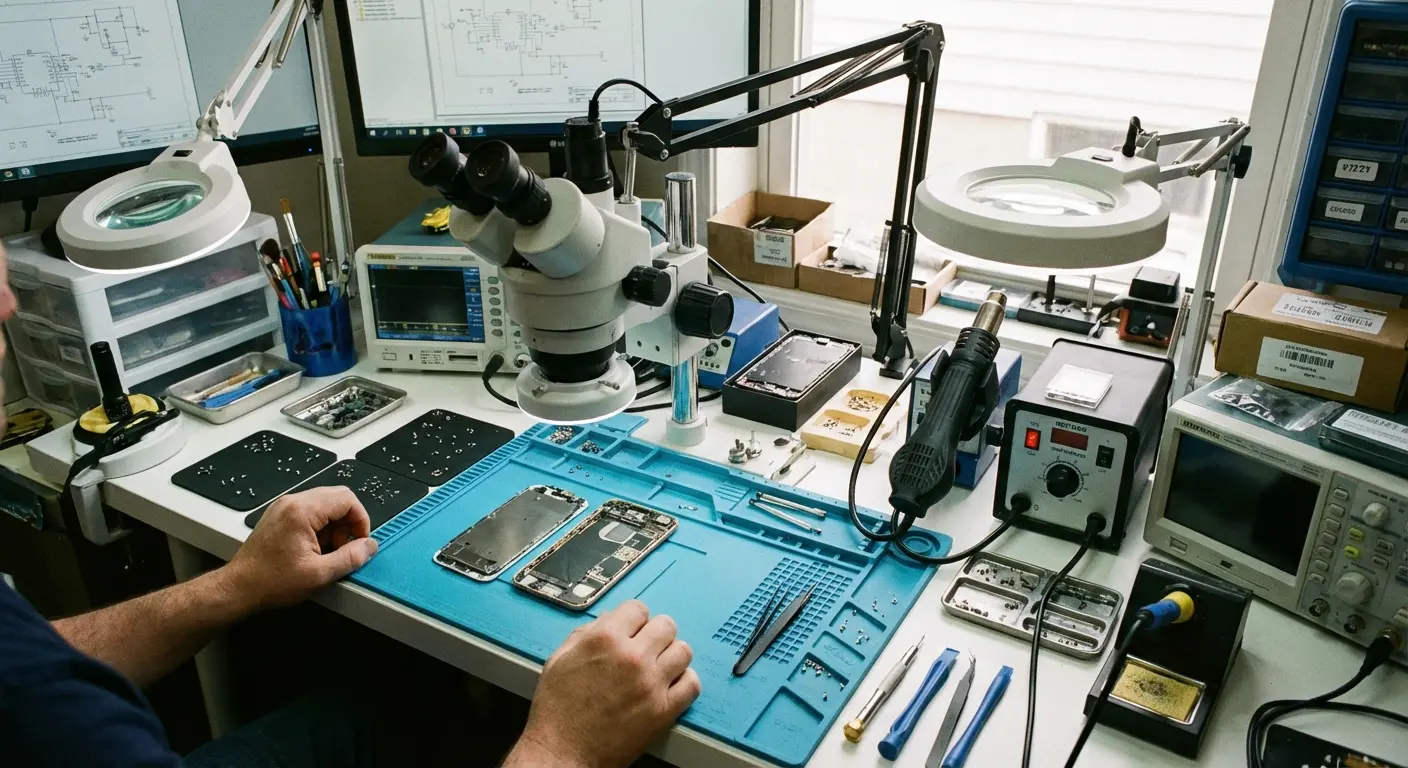
Independent repair shops can be faster and cheaper, but quality varies dramatically. Some employ skilled technicians with years of experience and access to quality parts. Others are staffed by people who learned phone repair from YouTube videos last month.
You can't easily tell the difference from the outside. Both shops will have professional signage, both will confidently quote you a price, and both will promise your phone will work perfectly when they're done.
The Parts Problem
This is where things get murky. Even authorized service providers sometimes use refurbished components rather than brand-new parts, especially for out-of-warranty repairs. They're genuine manufacturer parts, but they've been pulled from other devices, refurbished, and repackaged.
Independent shops typically source parts from third-party suppliers. These range from high-quality aftermarket components that perform nearly as well as originals to cheap knockoffs that barely function. The shop might not even know which tier they're getting, depending on their supplier relationships.
You won't know what you're getting until after the repair, and by then you've already paid. If the replacement screen has worse color accuracy or the new battery drains faster than expected, your options are limited. You can complain, but proving the parts are substandard requires expertise most customers don't have.
Mail-In Services: Convenience with Complications
Shipping your phone to a repair center eliminates the local shop lottery but introduces new risks. Your device spends days in transit, vulnerable to loss or additional damage. You're completely cut off from it during the entire process, with no ability to check in or expedite service.
These services often operate at scale, which can mean better parts sourcing and more experienced technicians. It can also mean your phone becomes one of hundreds in a queue, processed with minimal attention to detail and returned with issues the remote service center couldn't detect.
When problems arise, you're dealing with customer service reps instead of the person who touched your device. Troubleshooting becomes a game of telephone, and getting a redo means another shipping cycle and more time without your phone.
OEM Parts vs. Third-Party Components: What Nobody Says Out Loud
Parts quality isn't just about whether your phone turns on after repair. It's about how well it performs, how long it lasts, and what functionality you lose in the process.
The repair industry has an incentive to downplay these differences. Acknowledging that third-party parts compromise performance would undermine their value proposition and send more customers back to expensive manufacturer repairs.
According to industry analysis, screen replacements dominate the repair market at 42% of all repairs, followed by battery replacements at 18%, charging port issues at 10%, and camera repairs at 8%. Understanding what you're getting when these components are replaced matters more than most people realize.
Water Resistance Doesn't Survive Most Repairs
Modern smartphones are sealed units with carefully engineered gaskets and adhesives that keep water out. When a repair shop opens your device, they break those seals. Reassembling it requires new adhesive and precise application to restore water resistance.
Most shops don't bother with this step. They'll use generic adhesive that holds the phone together but doesn't create a proper seal. Your IP68-rated phone becomes... well, not that anymore. It's vulnerable to moisture damage from situations it would have previously survived.
You won't know this until you accidentally drop your phone in water and it dies. And you know what really pisses me off? The repair shop that killed your water resistance will act shocked (SHOCKED) when water damage isn't covered under warranty.
My buddy Marcus (who should know better, he works in IT) took his Galaxy S23 to one of those mall kiosks for a cracked screen repair. The technician replaced the screen in 45 minutes for $180, way less than Samsung's $280 quote. Three months later, Marcus was caught in a rainstorm while jogging. His phone, which previously survived accidental sink splashes and humid bathroom steam, died completely from rain exposure. The water damage repair quote? $450, because moisture had corroded internal components. The original screen repair had eliminated the waterproof seal. Something the shop never mentioned and Marcus never thought to ask about.
Touch Sensitivity and Display Quality
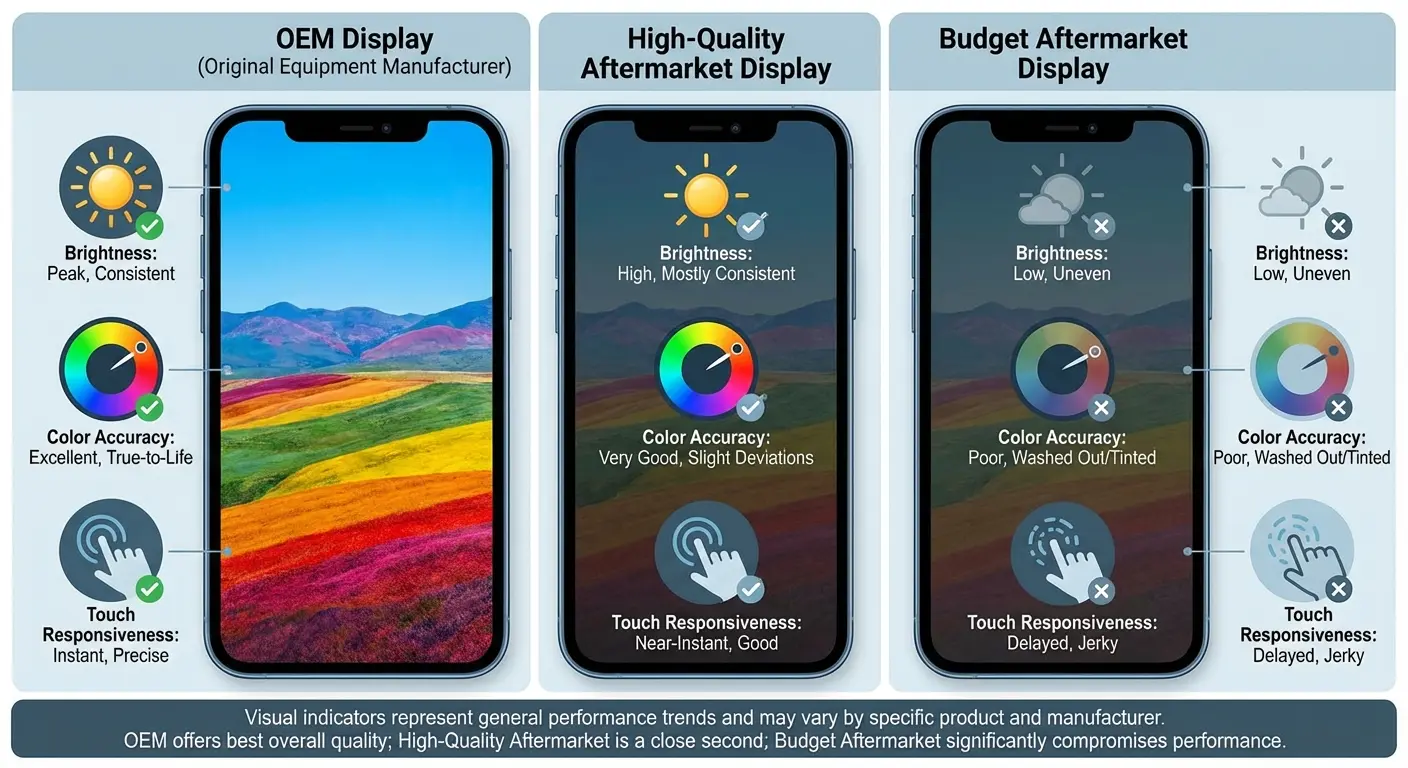
Aftermarket screens often use different digitizer technology than original equipment. The glass might be thinner, the touch layer less responsive, or the calibration slightly off. You'll notice it when typing, when scrolling through social media, or when trying to precisely select text.
Color accuracy suffers too. Third-party displays typically can't match the color gamut and brightness range of OEM panels. Photos look different. Videos lose vibrancy. If you use your phone for any kind of creative work, you're now looking at an inaccurate representation of your content.
These differences are subtle enough that you might convince yourself you're imagining them, especially if the repair shop insists the new screen is "just as good." It's not. You've permanently downgraded your device's most important interface.
What You're Actually Getting
Component |
OEM Parts |
High-Quality Aftermarket |
Budget Aftermarket |
|---|---|---|---|
Water resistance seal |
Factory-grade adhesive, IP68 maintained |
Good adhesive, partial water resistance |
Generic adhesive, no water resistance |
Touch sensitivity |
100% baseline accuracy |
90-95% accuracy, occasional lag |
70-85% accuracy, frequent missed inputs |
Color accuracy |
Full P3 or sRGB gamut |
85-90% color gamut coverage |
60-75% color gamut, washed out colors |
Display brightness |
Full nits range (800-1200+) |
80-90% of original brightness |
60-70% of original brightness |
Battery cycle life |
500-800 full cycles |
300-500 full cycles |
200-400 full cycles |
Warranty/guarantee |
90 days to 1 year |
30-90 days |
7-30 days or none |
Battery Performance and Longevity
Battery replacements are common repairs, but aftermarket batteries rarely match OEM specifications. They might claim the same capacity (measured in mAh), but performance depends on cell quality, charging efficiency, and how well the battery management system can communicate with the replacement unit.
Third-party batteries often degrade faster than originals. What starts as acceptable performance becomes noticeably worse within six months. You're back to carrying a charging cable everywhere, defeating the entire purpose of the replacement.
Some aftermarket batteries also trigger warning messages in your phone's settings, alerting you that the system can't verify the battery's authenticity. This doesn't necessarily mean the battery is dangerous, but it does mean your phone can't optimize charging or provide accurate health information. You're flying blind on one of your device's most critical components.
The Data Security Blind Spot
Think about what's on your phone right now. Bank stuff. Messages you'd die if anyone saw. Photos from... well, you know. Your entire email history. Every password you've ever saved because remembering them is impossible.
And you're about to hand all of that to some random person at a repair kiosk.
Does that seem smart? Because it doesn't to me.
Device manufacturers are starting to address this vulnerability. Android now includes a Repair Mode feature for Pixel and Samsung phones running Android 14 or later, which creates a sandboxed temporary profile that allows technicians to test functionality without accessing personal files or apps. However, most repair customers remain unaware this protection exists, and it's not available on older devices or iPhones.
What Technicians Can Actually See
Most repairs don't require accessing your data, but nothing prevents technicians from looking. Your phone is unlocked (or they'll ask you to unlock it for testing), and they have physical possession for hours or days. The barrier to snooping is nothing more than professional ethics and shop policy.
Some technicians will browse through photos out of boredom or curiosity. Others might copy files they find interesting. The worst actors will look for financial information, sensitive documents, or anything they can exploit or sell.
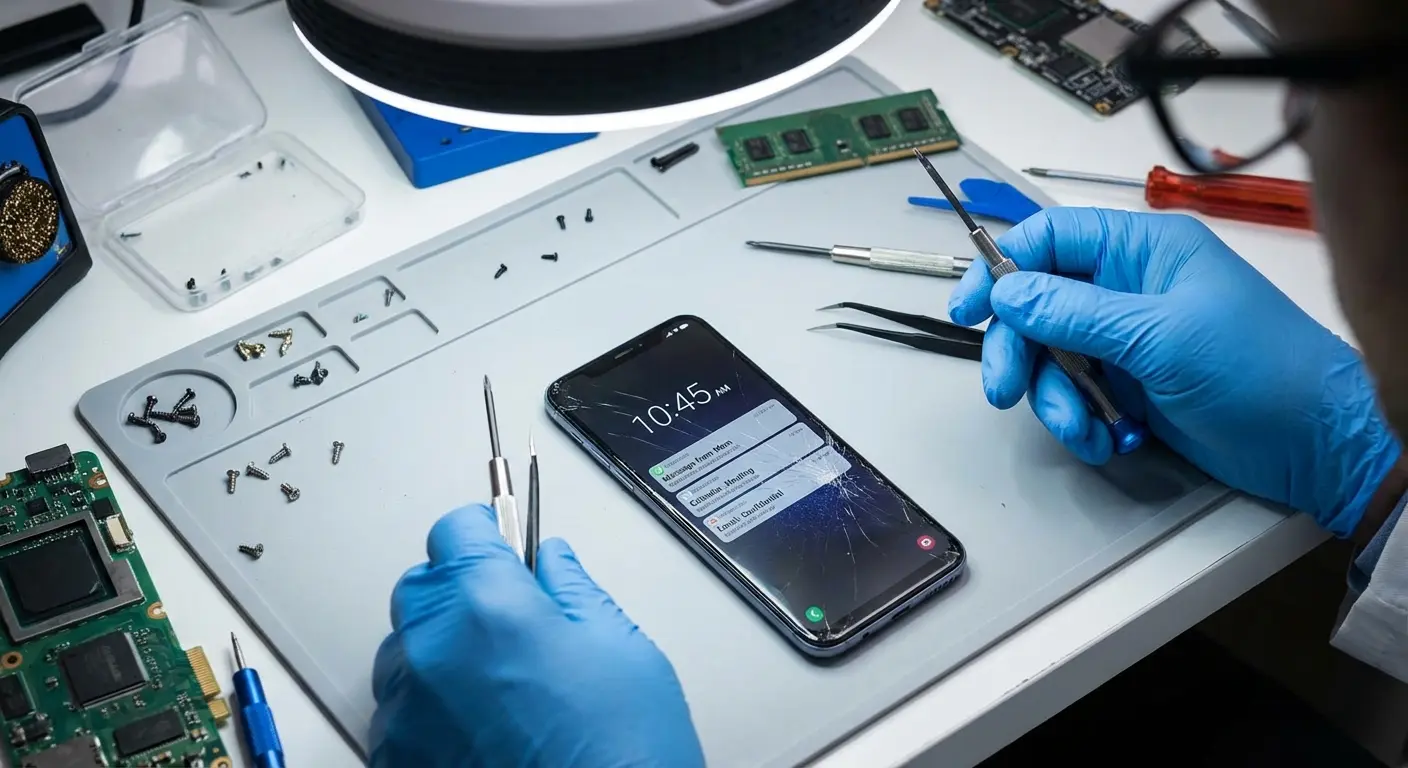
You have no way to monitor this. No logs track what was accessed. No oversight makes sure your privacy was respected. You're trusting strangers with your most personal information simply because you need a new screen.
The Recycling Data Risk
When your phone is declared unrepairable or not worth fixing, shops often offer to recycle it for you. Generous, right?
Except many devices that enter recycling streams aren't immediately destroyed. They're harvested for parts, sold in bulk to refurbishers, or shipped overseas.
If you didn't properly wipe your device before handing it over (and many people don't, especially if the phone won't turn on), your data is still on there. Professional data recovery can extract information from devices that seem completely dead.
Your old phone might end up in a warehouse in another country, where someone with the right tools can access years of personal information. By the time you realize this is possible, the device is long gone and the data breach is already complete.
Insurance Claims and Data Privacy
Filing an insurance claim for a damaged phone often requires sending the broken device back to the insurance company. They'll inspect it to verify the damage and make sure you're not committing fraud.
During this process, your phone sits in a processing center, handled by multiple people, potentially for weeks. The insurance company's privacy policy might technically cover data protection, but enforcement is another matter. You're hoping everyone who touches your device follows protocols, knowing you'll never have proof if they don't.
Even manufacturer-authorized repairs involve some data risk. Apple and Samsung have both faced lawsuits from customers whose private photos were accessed and shared by repair technicians. These are companies with strict policies and training programs. Independent shops have far less accountability.
Software Gremlins That Survive Hardware Fixes
Your repair shop fixed the cracked screen. The phone turns on. The display works. You pay and leave, assuming everything is back to normal.
Then the problems start.
Calibration and Sensor Issues
Smartphones are packed with sensors: accelerometers, gyroscopes, proximity sensors, ambient light sensors, barometers. These components work together to enable features like auto-rotation, screen dimming, fitness tracking, and photography stabilization.
Opening the phone and replacing parts can mess with sensor calibration. Your screen might not auto-rotate reliably anymore. The brightness might not adjust properly to lighting conditions. Face ID or fingerprint sensors might work intermittently. GPS accuracy might degrade.
These issues are maddeningly inconsistent. Sometimes the sensors work fine. Sometimes they don't. You'll spend hours troubleshooting, resetting settings, and searching forums for solutions that may or may not exist.
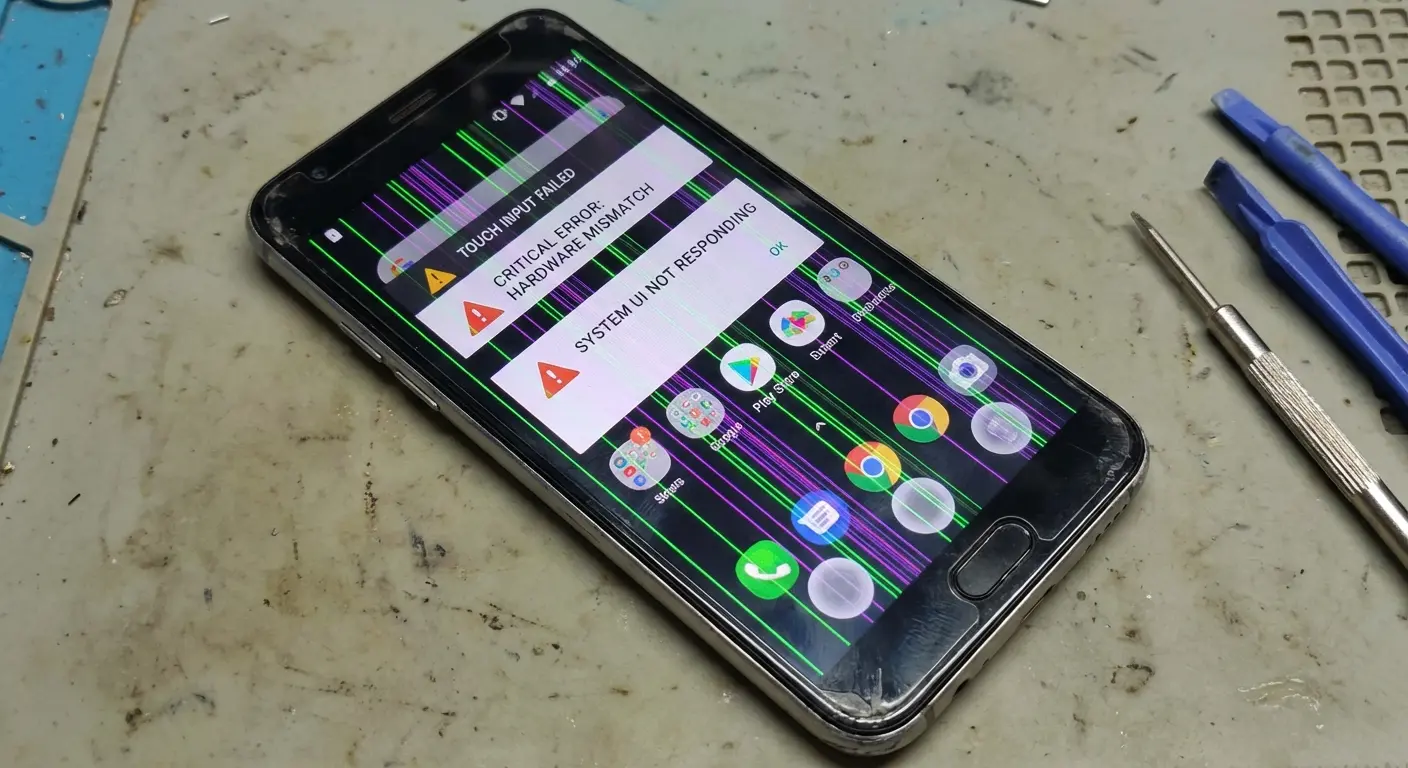
Repair shops rarely have the diagnostic tools or expertise to properly recalibrate sensors after reassembly. They'll test basic functionality (does the screen display? does touch work?) and call it done. The subtle sensor drift that ruins your user experience won't show up in their five-minute quality check.
System Stability Takes a Hit
Third-party components don't always communicate perfectly with your phone's operating system. The OS expects specific hardware responses and behaviors based on the original parts. When aftermarket components respond differently (even slightly), it can trigger system instability.
You might experience random crashes, apps that freeze unexpectedly, or battery drain that doesn't match your usage patterns. The phone works, technically, but it doesn't work smoothly. Something feels off, even if you can't pinpoint exactly what.
Diagnosing these issues is nearly impossible without specialized knowledge. Is the problem caused by the repair? A software bug? A failing component that wasn't replaced? You're stuck troubleshooting something that might not have a solution short of replacing the third-party parts with OEM components.
Update Complications and Warranty Voids
Operating system updates can expose repair-related issues that were previously hidden. An iOS or Android update might include new hardware checks, stricter component verification, or optimizations that assume OEM parts.
Suddenly your phone won't update, or it updates and then functions worse than before. Features get disabled because the system detects non-genuine components. Performance throttling kicks in because the OS can't properly manage the aftermarket battery.
Manufacturer warranties typically become void the moment an unauthorized repair is performed. You've saved money on the repair but lost your safety net for everything else. If the logic board fails three months later, you're paying full price for that fix even though it's unrelated to the screen you replaced.
When "Fixed" Doesn't Mean Whole
Getting your phone back from repair should feel reassuring. Often, it feels more... unsettling.
The device looks familiar. It mostly works the same. But something fundamental has changed in how you relate to it.
The Confidence You Can't Get Back
You'll never fully trust a repaired phone the way you trusted the intact original. Every glitch makes you wonder if it's repair-related. Every weird behavior triggers anxiety about whether the fix is failing.
This hypervigilance is exhausting. You're constantly monitoring performance, looking for signs of problems, unable to use your phone unselfconsciously. The device that was supposed to fade into the background of your life now demands attention and worry.
You'll baby the phone more than you did before, paradoxically treating the repaired device more carefully than you treated the pristine one. The repair taught you vulnerability in a way that abstract knowledge never could.
Resale Value Drops Permanently
Repair history tanks resale value, even if the work was done perfectly. Buyers know what you now know: repaired phones carry more risk. They'll lowball offers or skip your listing entirely in favor of undamaged devices.
You might think you can hide the repair history, but buyers can tell. Slight variations in screen quality, adhesive residue around edges, screws that don't quite match factory installation. Experienced buyers know what to look for, and they'll use any evidence of repair to negotiate down or walk away.
The money you saved on repair versus replacement gets partially offset by the reduced resale value when you eventually upgrade. You've kicked the cost down the road rather than eliminating it.
Jennifer repaired her iPhone 13 Pro's cracked back glass for $350 instead of paying Apple's $599 replacement fee. Seemed like a win. Two years later, when upgrading to the iPhone 15, she listed her phone for $450 based on comparable listings for undamaged models. After three weeks with no serious offers, she dropped the price to $350. A potential buyer noticed the back glass didn't quite sit flush with the frame and offered $275, citing concerns about the repair quality. She accepted, realizing she'd gotten basically no value from keeping the phone for those extra two years. An undamaged phone would have sold for $425-475 in the same condition.
The Compounding Repair Trap
First repair: cracked screen. Second repair: battery replacement because the first repair somehow accelerated battery degradation. Third repair: charging port that stopped working reliably after the battery swap.
Each repair increases the likelihood you'll need another one. You're not maintaining a pristine device anymore. You're managing a degraded one, playing whack-a-mole with cascading failures.
At some point, you'll realize you've spent more on repairs than the phone is worth. You've been emotionally committed to "saving money" while hemorrhaging it in increments that felt manageable individually but are absurd in aggregate.
Post-Repair Inspection Checklist:
Before leaving the repair shop or accepting a mail-in device, verify:
Screen displays properly with no dead pixels or discoloration
Touch response works across entire screen, including corners
All buttons (volume, power, mute switch) function correctly
Front and rear cameras capture clear photos and videos
Flash and flashlight work at full brightness
Speaker produces clear sound at various volumes
Microphone records audio clearly (test with voice memo)
Charging port accepts cable firmly and charges properly
Wireless charging works (if applicable)
Face ID or fingerprint sensor unlocks reliably
Proximity sensor turns off screen during calls
Auto-brightness adjusts to lighting conditions
No unusual gaps, adhesive residue, or misaligned components
Phone doesn't feel warmer than normal during basic use
Battery percentage displays and charges predictably
The Environmental Cost Nobody's Calculating
Repair gets framed as the environmentally conscious option. You're extending device life, reducing e-waste, being a responsible consumer.
Except the environmental math isn't that simple.
Failed Repairs Create More Waste
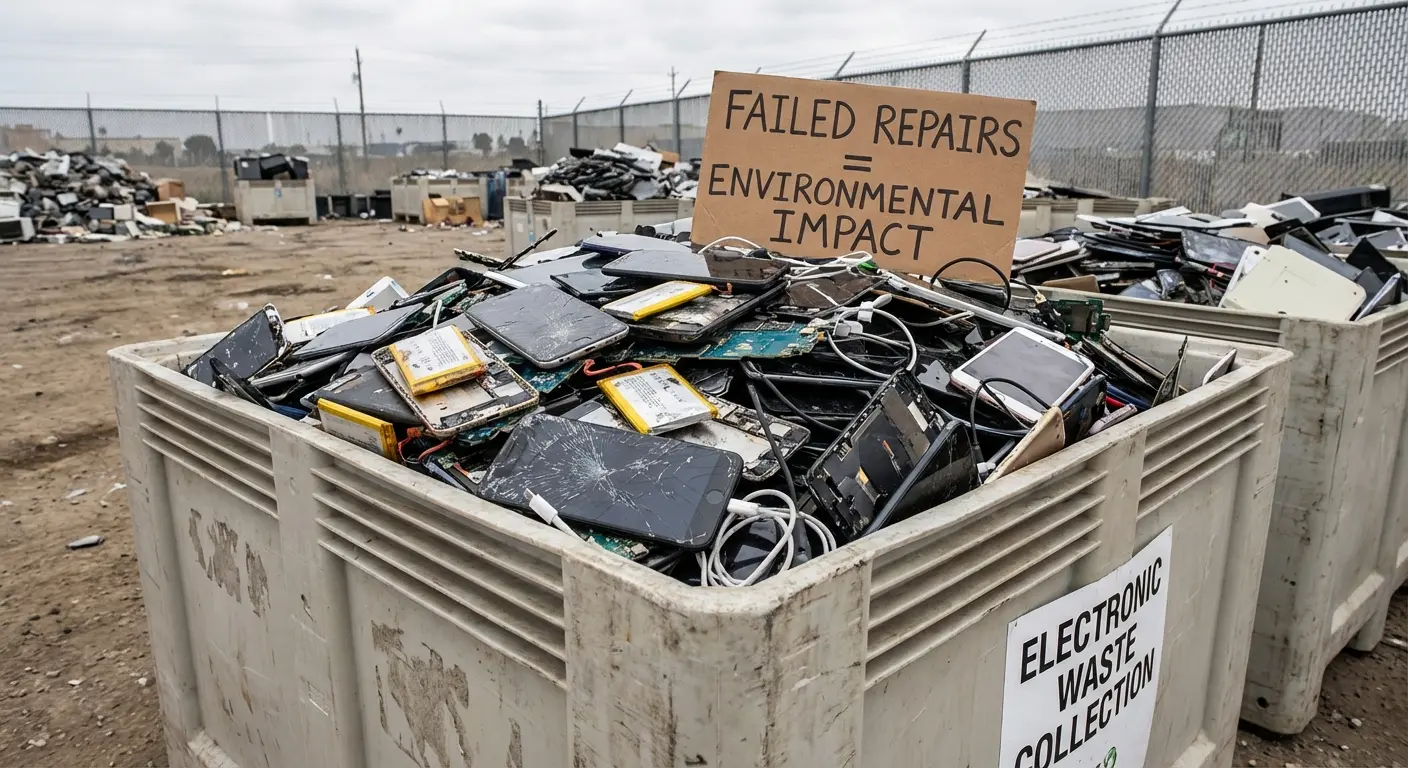
When a repair doesn't work or works poorly, you're often left with a device you'll replace sooner than planned. The broken parts get discarded. The replacement parts you paid for become waste when you upgrade. The phone itself enters the waste stream earlier than it would have if properly protected from the start.
Quality repairs done right can absolutely extend device life. But the repair industry's inconsistent standards mean many repairs fail to deliver meaningful longevity improvements. You've just added steps (and waste) to the same endpoint.
The Supply Chain Impact of Replacement Parts
Manufacturing replacement screens, batteries, and other components requires raw materials, energy, and water. It generates emissions and waste. Third-party parts often come from factories with lower environmental standards than OEM facilities.
Then there's shipping. Parts travel from manufacturers to distributors to repair shops, often crossing multiple international borders. Your local repair might feel environmentally friendly, but the components came from halfway around the world on planes and trucks.
Prevention through durable protection eliminates this entire supply chain. The case you buy once has a fraction of the environmental impact of the multiple replacement parts you'll need without it.
Planned Obsolescence by Another Name
Nobody wants to admit this, but the repair industry benefits from device fragility just as much as manufacturers benefit from planned obsolescence. More broken phones mean more business.
Repair shops have no incentive to advocate for better device protection. They profit from the current situation where phones are beautiful, fragile, expensive to fix, and frequently damaged. The environmental argument for repair conveniently ignores that preventing damage in the first place is far more sustainable.
You can't repair your way to sustainability if you're constantly repairing damage that shouldn't have happened.
Protection as a Philosophy, Not an Afterthought
Everything we've discussed points to a single conclusion: the best repair is the one you never need.
That's not just a platitude. It's a fundamentally different approach to device ownership.
What Makes Protection Actually Work
Effective protection isn't about adding bulk. It's about strategic engineering that addresses real-world failure modes. Phones break in predictable ways. Screens crack from corner impacts. Cameras shatter when the phone lands lens-down. Frames bend from pressure in pockets or bags. Water seeps in through ports and seams.
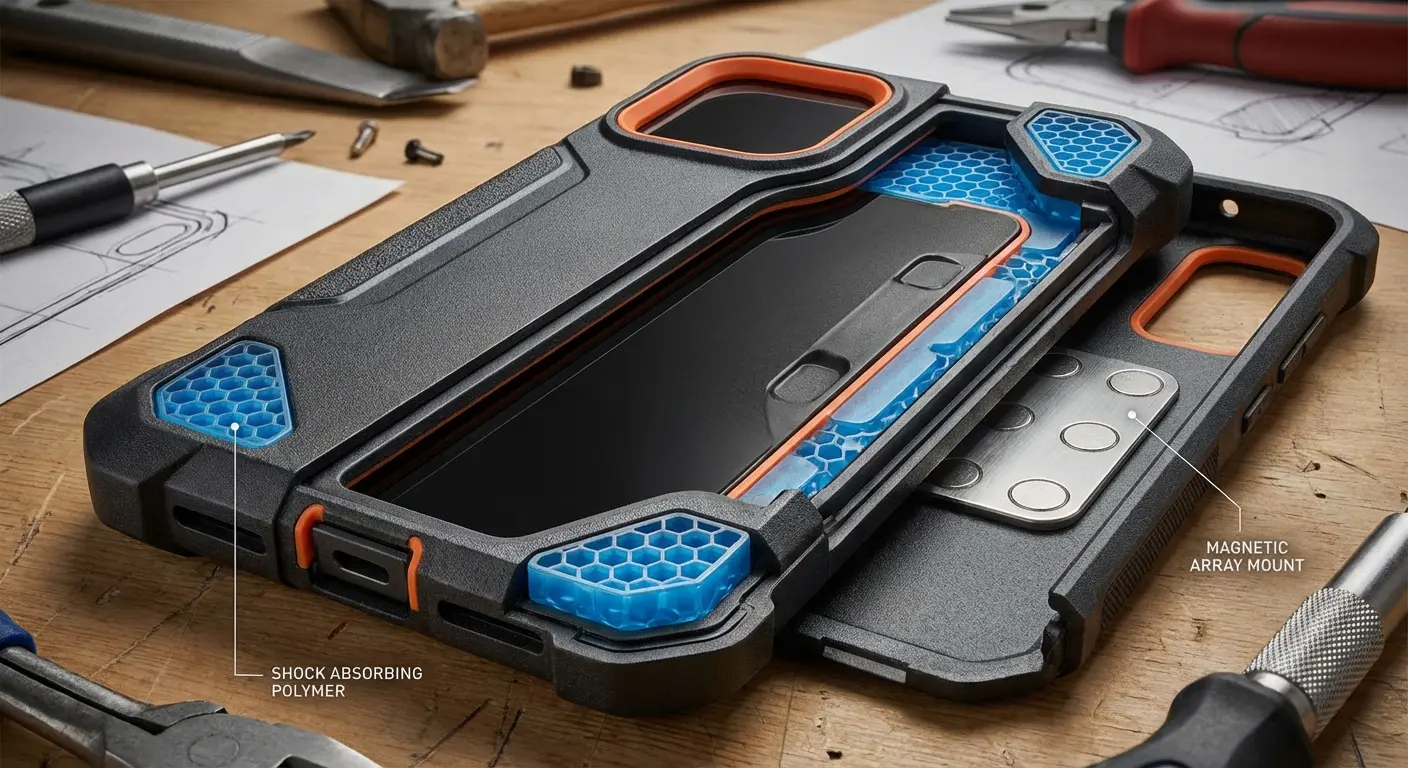
Quality protection addresses these specific vulnerabilities without turning your phone into a brick. It uses materials that absorb and distribute impact force. It creates standoffs so your screen and camera don't contact surfaces. It reinforces weak points without adding unnecessary weight everywhere else.
You shouldn't have to choose between protection and usability. The right case protects your device while maintaining reasonable dimensions, port access, and wireless charging compatibility.
Military-Grade Standards That Mean Something
"Military-grade" has become marketing nonsense, slapped on products that barely exceed basic standards. But genuine military drop test protocols (MIL-STD-810G) represent meaningful protection thresholds.
These tests simulate repeated drops from multiple angles, temperature extremes, vibration, and other real-world stresses. Products that genuinely meet these standards have been engineered and tested to survive conditions that would destroy unprotected devices.
Full disclosure: we make Rokform cases, so obviously I'm biased. But here's why we started making them. We got tired of watching people learn the expensive way that cheap cases don't actually protect anything.
Our cases use polycarbonate and TPU (the shock-absorbing stuff that actually works), and we test them to military drop standards. Not marketing-bullshit military standards. Actual MIL-STD-810G-516.6 protocols where we drop them from 6+ feet onto concrete until we're satisfied they'll survive your life.
The Magnetic Mount Ecosystem
Here's where protection becomes more than just damage prevention. Rokform's magnetic mounting system (RokLock) turns your protected phone into a genuinely more useful device.
You can securely mount your phone in your car without fumbling with clamps or adhesive holders. You can attach it to your bike for navigation without worrying about vibration or bumps knocking it loose. You can mount it to golf carts, motorcycles, or any metal surface with confidence that it'll stay put.
The same protection that prevents damage also enables functionality that naked phones can't safely access. You're not compromising to get protection. You're upgrading your entire device experience.
The magnetic mount thing? We built it into the case structure instead of slapping it on as an afterthought. Because if you're going to have a mount, it should actually, you know, work.
Rethinking the Aesthetics Argument
Look, I get it. You bought a beautiful phone. Covering it feels counterintuitive. But there's nothing beautiful about a cracked screen or a dented frame. There's nothing aesthetically pleasing about using your phone tentatively, afraid to take it places or use it fully.
Real beauty in a device comes from confident use. From pulling it out without worry. From not having to think about where you set it down or whether your pocket is safe enough. From using the camera in challenging environments because you know it's protected.
Rokform cases are designed by people who understand this tension. We're not trying to hide your phone or turn it into something unrecognizable. We're creating a version of your device that you can live with, that goes where you go, that works how you need it to work.
The aesthetic isn't just about how it looks on a table. It's about how it fits into your life.
The Total Cost Perspective
Okay, let me just show you the math because it's kind of insane:
The repair costs you'll avoid. The time you won't lose. The data security you'll maintain. The performance degradation you'll prevent. The resale value you'll preserve. The environmental impact you'll reduce. The anxiety you won't experience.

Quality protection pays for itself many times over, even if you never drop your phone. Because the value isn't just in preventing the worst-case scenario. It's in all the small ways your relationship with your device improves when you're not constantly worried about it.
You can use your phone the way it was designed to be used. You can take it on adventures. You can hand it to your kid without panic. You can set it down without calculating the risk of every surface.
That's worth more than the cost of a case. That's worth more than most people realize until they've lived both ways and can compare.
Final Thoughts
Smartphone repair will always exist. Accidents happen, components fail, and sometimes damage is unavoidable.
But most repairs are preventable. Most of the pain, expense, and disruption we've explored in this piece comes from choices made (or not made) before damage occurred.
Understanding how to protect your iPhone properly means thinking beyond just cases to a complete protection strategy.
You can't eliminate all risk. You can dramatically reduce it through thoughtful protection that doesn't compromise the device experience you paid for.
The repair industry would prefer you keep learning this lesson the expensive way. We'd rather you didn't have to learn it at all.
Your phone is too important, too expensive, and too central to your daily life to leave unprotected. The question isn't whether protection is worth it.
The question is why you'd take the risk of finding out what smartphone repair actually costs.

