


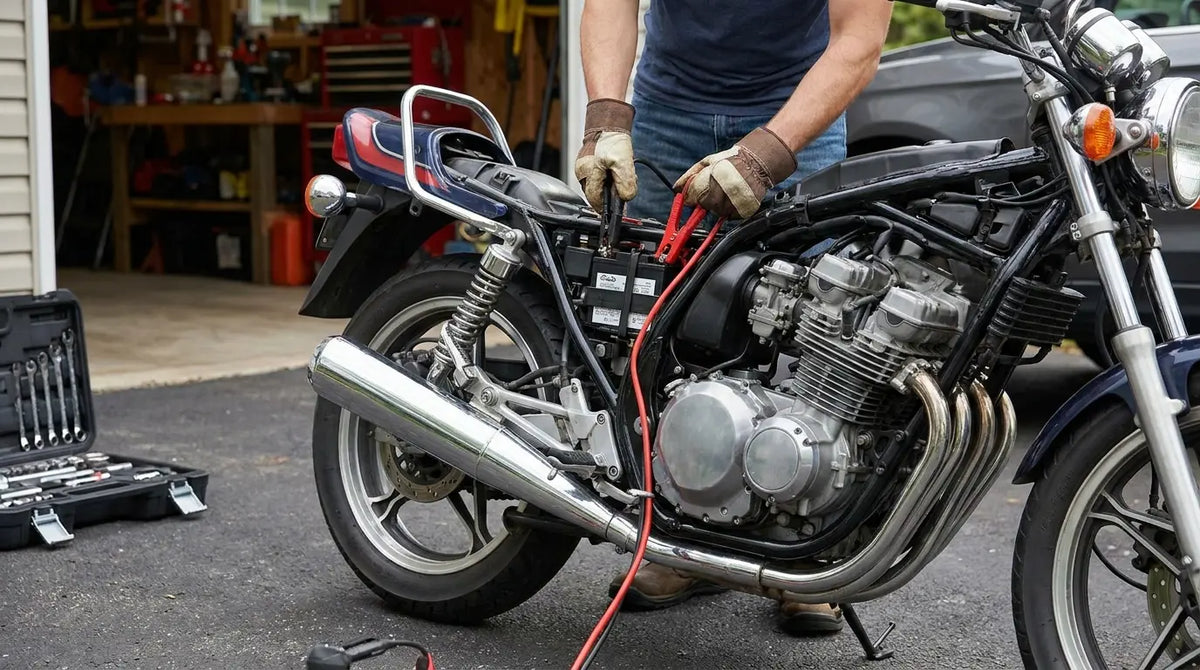
So your bike's dead. Phone's at 2%. And you're, let me check the map, yeah, you're in trouble. Middle of nowhere, no bars, no cars coming by.
This happened to me outside Moab last spring, and every YouTube tutorial I'd ever watched assumed I had either a buddy with jumper cables or enough phone battery to call someone. I had neither. Just me, a dead Triumph, and the growing realization that I'd been outsourcing my mechanical knowledge to my phone for way too long.
Here's what actually works when you're solo and can't Google your way out.
Why Your Phone Matters More Than You Think (And What Happens When It Fails)
Your motorcycle won't start. That's frustrating but fixable. Your phone's at 2% battery. That's when frustration turns into a real problem.
Look, I can't remember the last time I fixed something without Googling it first. Nobody can. We've gotten lazy, and our phones made us that way. Your bike won't start? Google it. Weird noise from the engine? YouTube it. Don't know where you are? GPS it.
And that worked great until the one time my phone died 40 miles from anywhere. Turns out I didn't actually know shit. I'd watched videos. I'd read forums. But I'd never bothered to remember any of it because why would I? My phone remembered for me.
Modern bikes come with increasingly complex electrical systems, and troubleshooting often requires looking up specific model information, wiring diagrams, or recall notices. Paper manuals disappeared from under seats years ago. Everything's digital now, which works brilliantly until your digital lifeline dies.
And batteries always die at the worst possible time. It's like they wait. Cold morning? Dead. Middle of nowhere? Dead. Been sitting for three days and now you're late for work? Dead as hell. These are exactly the situations where cell service gets spotty and your phone's been working overtime trying to maintain a signal, draining faster than usual.

So you're not just fixing the bike. You're keeping your phone alive too. Because if your fix doesn't work, you need to be able to call someone. And if things get worse, you need to tell people where you are. Understanding how to jump start a motorcycle is only half the battle when you're stranded. Maintaining communication capability is the other half.
The False Confidence of Always Being Connected
My dad's generation carried tools because they had to. Bikes broke. You fixed them or you walked. Simple.
We don't do that anymore. Why carry tools when AAA exists? Why memorize anything when it's all on your phone? I've done this too. I've ridden with nothing but a phone and a credit card, figuring I could solve any problem with those two things.
Works perfect until your phone dies. Then you're standing there with a dead bike, a useless credit card, and the mechanical knowledge of a toddler.
Smartphones changed the calculation. Why memorize anything when you can look it up in seconds? Why carry extra weight when you can call for help? Why learn to bump start when there's a tutorial ready whenever you need it?
Don't get me wrong: phones are incredibly useful tools for riders. But they've become single points of failure in emergency situations, and that's something you figure out real fast when you're stuck on a dark road with no options.
What You're Really Troubleshooting: Two Systems, Not One
A dead motorcycle battery is a mechanical problem with mechanical solutions. A dead phone is a communication and information problem that affects your ability to implement those solutions.
You're not just getting your bike started. You're maintaining the ability to contact help if your fix doesn't work, documenting your location in case the situation worsens, and preserving access to information you might need for follow-up repairs.
Check your phone battery before you leave. Charge it while you ride. Carry a backup power bank. This isn't paranoia; it's just not being an idiot.
Phone battery management becomes part of your pre-ride checklist, not an afterthought. Knowing your phone's charge level before you leave is as important as checking your fuel gauge. Carrying a backup power source isn't paranoia; it's basic preparedness for anyone riding beyond easy walking distance from help.
The Pre-Ride Battery Health Check Nobody Does
Nobody checks their battery. I don't. You don't. We just turn the key and hope it starts.
And it does start. Every time. Until one morning it doesn't, and you're surprised like this is some kind of betrayal. But batteries don't die suddenly; they die slowly, and we just don't pay attention.
The warning signs exist, but you need to know what you're looking for.
Voltage Testing: The Five-Minute Check That Prevents Hours of Frustration
Get yourself a basic multimeter. They're under twenty bucks and eliminate guesswork.
Let the bike sit for two hours (I know, you want to check it now, but wait). Then test the battery. With your bike off and having sat for at least two hours, check the battery voltage. You want 12.6 to 12.8 volts. That's a healthy battery.
12.4V? Charge it soon or you'll be sorry.
12.0V or less? This is your problem. Charge it now or replace it.
Now start the bike (if it starts) and check again. You should see 13.5 to 14.5 volts with the engine running. This tells you the charging system is working. Lower than 13.5 volts means your stator or regulator might be failing, which explains why your battery keeps dying even after you charge it.
Higher than 14.5 volts indicates overcharging, which will kill your battery through excessive heat and electrolyte loss. Understanding these voltage readings means you'll know how to jump start a motorcycle properly when the time comes, and more importantly, you'll know when prevention is still possible.
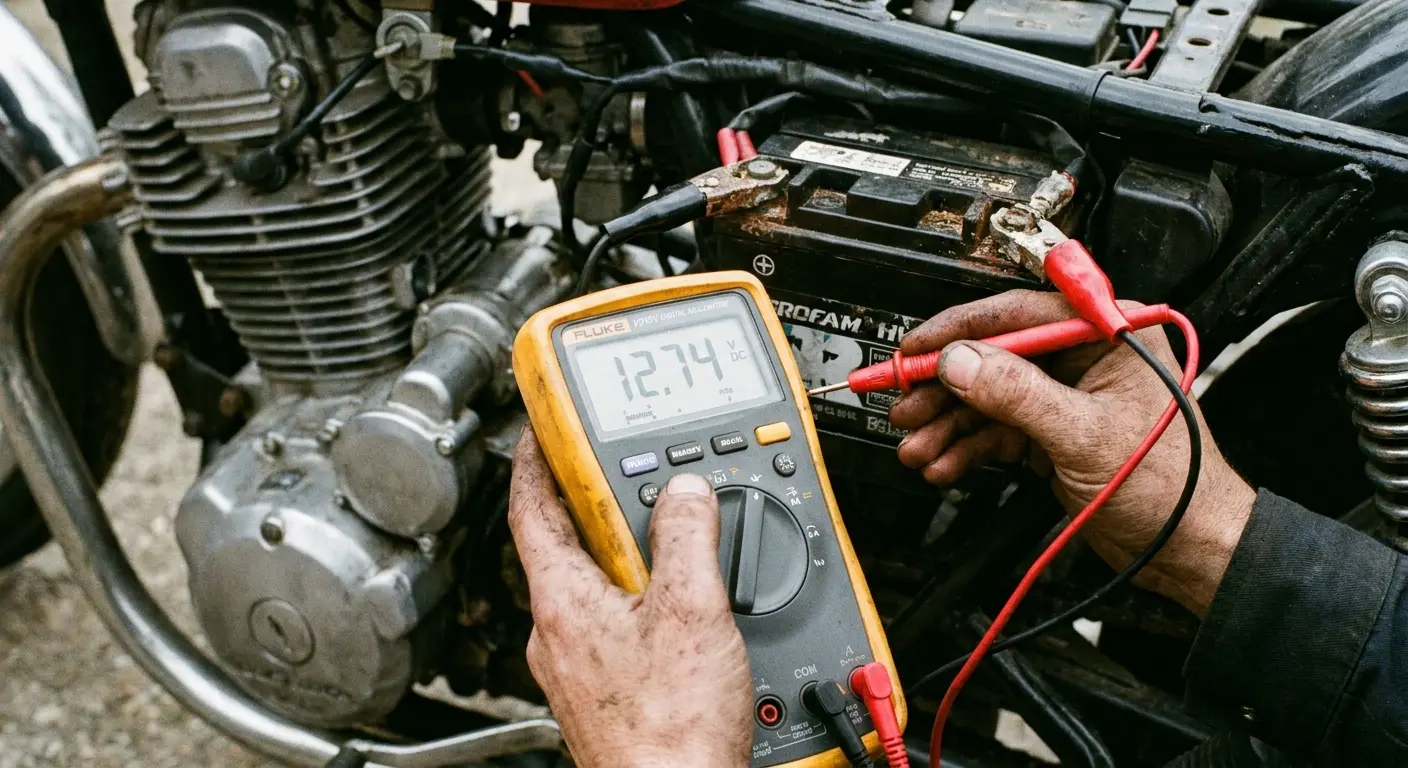
I keep these numbers on a card in my wallet because I can never remember them when I actually need them. Here's what matters:
12.6-12.8V (engine off): Fully charged, healthy. Continue normal use, retest monthly.
12.4-12.5V (engine off): Partially discharged. Charge battery, investigate charging system.
12.0-12.3V (engine off): Significantly discharged. Immediate charge needed, may not start reliably.
Below 12.0V (engine off): Dead or failing. Replace battery or charge and load test.
13.5-14.5V (engine running): Charging system healthy. Normal operation.
Below 13.5V (engine running): Undercharging. Check stator, regulator, connections.
Above 14.5V (engine running): Overcharging. Replace voltage regulator immediately.
These numbers tell you exactly where you stand. You're not guessing whether the battery is "probably fine" or wondering if you should replace it soon. You have data, and data drives better decisions than hunches.
Test monthly if you ride regularly. Test weekly if your bike sits for extended periods. Test before any long trip, period.
Terminal Corrosion: The Silent Connection Killer
Corrosion builds up on battery terminals and creates electrical resistance. Your battery might be fully charged, but if the connection is compromised, the power can't flow properly to your starter.
You'll see white, blue, or green crusty buildup around the terminals. Remove the cables (negative first, always) and clean everything with a wire brush. Baking soda mixed with water neutralizes the acid causing the corrosion. Rinse, dry completely, and reconnect (positive first this time).
Last summer this guy at a gas station was bitching about his Sportster eating batteries. Two batteries in six months, both "defective." I looked at his terminals. They had so much blue-green crust you could barely see the metal.
Cleaned them with a wire brush and baking soda. Took maybe five minutes. That "defective" battery lasted four more years. The battery was never the problem, but he'd convinced himself it was because cleaning terminals is boring and buying new batteries feels like you're solving something.
Apply a thin layer of dielectric grease or petroleum jelly to the terminals after reconnecting. This prevents moisture from reaching the metal and starting the corrosion process again. This simple maintenance step solves more "dead battery" problems than most riders realize. You're not adding power; you're removing resistance that was blocking power flow.
Seasonal Considerations That Destroy Batteries
Cold weather slows the chemical reactions inside your battery, reducing available power right when your engine needs more cranking power to turn over cold oil. A battery that works fine at 70 degrees might fail completely at 20 degrees.
Heat accelerates those same chemical reactions, causing faster self-discharge and internal degradation. Batteries in hot climates often fail within three years, while the same battery in moderate temperatures might last five or six.
Winter storage: Pull the battery out. Keep it somewhere warm. Put it on a tender. That's it. Let it freeze while dead and you'll crack the cells. I've killed two batteries this way because I got lazy.
If you're storing your bike for winter, remove the battery and keep it on a battery tender in a temperature-controlled space. Letting it freeze while discharged will likely destroy it through internal ice crystal formation. Check voltage monthly during storage. You want it above 32°F minimum.
Hot weather: Check the water level every couple weeks if you've got a regular battery (not sealed). Heat makes water evaporate, and low water kills batteries permanent. Also, your battery will die faster in Arizona than Minnesota. Heat kills batteries way faster than cold, but cold is what stops them from working right now, so we notice it more.
For summer riding in extreme heat, check electrolyte levels more frequently if you have a conventional battery. Inspect for case swelling or deformation. Test voltage every two weeks instead of monthly. Keep terminals clean and protected with dielectric grease. Park in shade when possible to reduce heat exposure.
Temperature management isn't complicated, but ignoring it guarantees premature battery failure.
Jump Starting Solo: Methods That Work Without Another Vehicle
You're alone. No other bikes, no cars, nobody. Here's what actually works when you can't flag someone down for a jump. Keeping your phone accessible with the best motorcycle phone mount means you can at least document your location or call for backup if these methods fail.
Bump Starting: The Technique That Saves Solo Riders
Bump starting (also called push starting or pop starting) uses momentum to turn the engine over instead of relying on the battery and starter motor. Your bike still needs enough battery power to fire the ignition system, so this works for weak batteries but not completely dead ones.
You need a hill or enough flat space to push the bike up to 5-10 mph. Second gear works best for most bikes because it provides good mechanical advantage without requiring excessive speed.
Here's the process for how to bump start your bike: Turn the ignition on, pull in the clutch, and get the bike moving. Once you've built some speed, drop your weight onto the seat, release the clutch quickly, and give it some throttle as the engine catches. The rear wheel's momentum turns the engine over through the transmission.

The engine should fire within a second or two. If it doesn't catch immediately, pull the clutch back in before the bike slows too much, then try again. Keep the engine running for at least 20 minutes to put some charge back into the battery. Mastering the bump start technique means you'll always have a backup plan when you need to jump start a motorcycle without another vehicle.
First time I tried this, I dropped the bike. Came down too hard on the seat, the front wheel turned, and over we went. Second attempt worked better. You'll figure it out, but maybe practice in a parking lot first so you don't scratch your tank like I did.
My charging system died somewhere in Montana. Middle of nowhere, naturally. I bump started that bike six times getting to the next town. Every time I had to stop, I had to find a hill or push it myself to get going again.
By the sixth time I was exhausted and pissed off and my left leg was cramping from all the clutch work. But I made it. Without bump starting, I'd still be out there.
Bump starting doesn't work on bikes with automatic transmissions or certain models with complex electronics that require minimum battery voltage to operate. Know your bike's limitations before you're stranded. It also requires physical capability and decent terrain. If you're injured, exhausted, or stuck on flat ground with no help, you need another option.
Portable Jump Starters: The Tool That Changed Solo Riding
Portable jump starters designed for motorcycles are compact enough to fit in a tank bag and powerful enough to start most bikes multiple times on a single charge. When you need to jump start a motorcycle solo, these devices eliminate the need for another vehicle entirely.
You want a unit rated for at least 300 peak amps for most motorcycles, though larger bikes might need 400-500 amps. Check your bike's starter draw specifications if you want to be precise, but these ratings provide good general guidance.
Small bike (250-500cc): Get a 200-300 amp starter. Fits in your jacket pocket. Around 8,000-10,000 mAh capacity, weighs 1-1.5 lbs.
Mid-size (500-900cc): 300-400 amps. Tank bag or side case. 12,000-15,000 mAh, about 1.5-2 lbs.
Big bike (900cc+): 400-500 amps. You'll need a bigger bag. 15,000-20,000 mAh, 2-2.5 lbs.
Adventure/touring bikes: 400-600 amps because your bike is huge and complicated. 18,000-22,000 mAh, 2.5-3 lbs.
I ride a 1200, so I carry a 500-amp unit. It's about the size of a paperback book and weighs maybe two pounds. Fits in my side case. I've used it three times in two years, and it paid for itself the first time.
Connection procedure matters. Attach the positive clamp to your battery's positive terminal first, then attach the negative clamp to an unpainted metal ground point on your frame (not the negative battery terminal). This reduces spark risk near the battery.
Turn on the jump starter, wait about 30 seconds for the capacitors to stabilize, then try starting your bike. If it doesn't start within three or four attempts, stop and reassess. You might have a problem beyond a simple dead battery.
Keep your jump starter charged. Check it monthly and top it off before long trips. These devices self-discharge over time, and discovering your emergency backup is dead doesn't help anyone. The investment pays for itself the first time you need it. You're not hoping someone drives by or trying to find cell service to call for help . You're solving the problem yourself in under five minutes when you need to jump start a motorcycle.
Solar Chargers and Trickle Chargers: Prevention Tools That Travel
Small solar panels designed for motorcycle batteries won't jump start a dead battery, but they'll maintain charge during extended stops and potentially prevent the battery from dying in the first place.
A 5-10 watt solar panel provides enough trickle charge to offset parasitic drain from your bike's clock, alarm system, or other electronics that draw power even when the bike is off. If you're camping or stopped for several hours during a multi-day trip, positioning a solar panel on your bike can maintain battery health.
Expectations need to be realistic. You're not gonna recharge a dead battery with a portable solar panel in any reasonable timeframe. You're preventing discharge, which is different from providing charge. Compact trickle chargers that run off 110V outlets work better for overnight stops where you have access to power. Some hotels and campgrounds offer electrical hookups, and a small trickle charger can fully restore your battery overnight.
These tools suit specific riding styles. If you're doing long-distance touring with overnight stops, they make sense. For daily commuting or day trips, a portable jump starter provides more practical emergency value. And if prevention fails, you'll still need to know how to bump start as a last resort.
Reading Your Bike's Electrical System Without Diagnostic Apps
Modern bikes have complicated electronics, but the basics haven't changed. Battery makes power, charging system refills it, everything else uses it. You can figure out most problems just by paying attention. Regular motorcycle maintenance helps you spot these issues before they leave you stranded trying to figure out how to jump start a motorcycle.
Warning Light Interpretation: What Your Bike Is Telling You
Battery light comes on while you're riding? Your charging system just died. You're running on battery power only now, which means you've got maybe 30 minutes before everything stops working.
The light should come on when you turn the key, then go off when the engine starts. That's normal. If it stays on, something's broken.
Some bikes just show "check engine" for everything, which is useless. But if your lights start dimming or your gauges start acting weird, that's your charging system dying. The battery's probably fine; it's just not getting refilled.
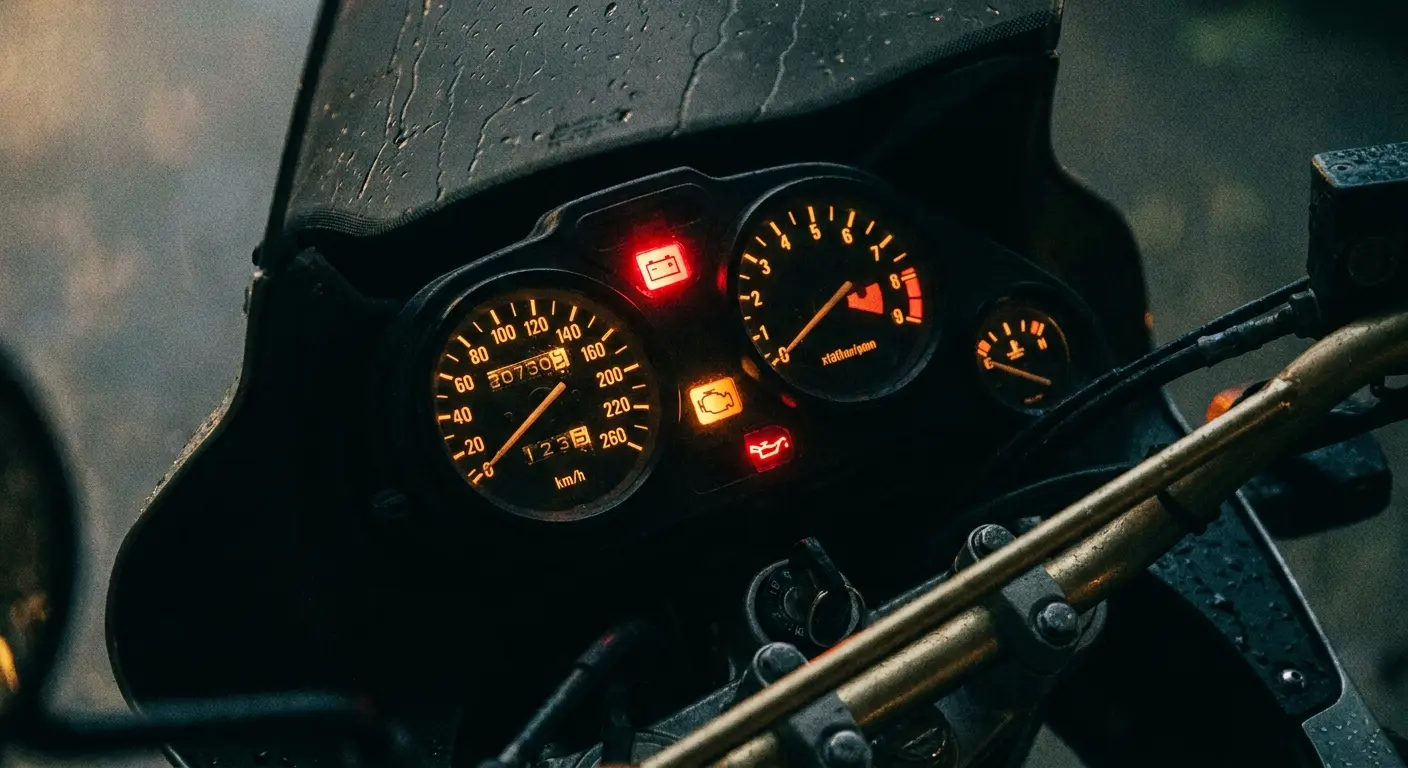
Flickering lights, dimming gauges, or accessories that stop working while riding all point to charging system problems rather than simple battery issues. The battery is likely fine; it's just not receiving charge to replace what it's using.
Understanding what these signals mean helps you make better decisions about whether to attempt a jump start or whether you're dealing with something that requires professional diagnosis. Knowing how to jump start a motorcycle is useless if the underlying charging system can't keep it running.
Testing Circuits Without a Smartphone App
Your multimeter does more than check voltage. Switch it to continuity mode (usually marked with a sound wave symbol) and you can test whether electricity flows through a circuit.
Pull a fuse and test across its terminals. If the multimeter beeps, the fuse is good. No beep means it's blown. This works faster than visual inspection and catches marginal fuses that look fine but have failed internally.
Testing grounds requires checking for continuity between a ground point and the negative battery terminal. Poor grounds cause all sorts of weird electrical problems that seem like battery issues but aren't. Clean ground connections often solve mysterious electrical gremlins.
You're looking for resistance values near zero ohms on good connections. Higher resistance indicates corrosion, loose connections, or damaged wires. This diagnostic approach works anywhere, requires no internet connection, and gives you real answers about what's failing.
The Starter Motor vs. Battery Question
You turn the key and hear clicking. Is it the battery or the starter?
Rapid clicking (multiple clicks per second) almost always means insufficient battery power. The starter solenoid is trying to engage but doesn't have enough juice to hold the connection, so it clicks repeatedly as it tries and fails.
A single loud click followed by nothing suggests the starter motor itself has failed. The solenoid engages (that's the click) but the motor doesn't turn. Jump starting won't fix this.
Complete silence when you hit the starter button points to a wiring problem, a failed starter button, or a safety interlock issue (clutch switch, kickstand switch, neutral safety switch). Check that your bike is in neutral or the clutch is pulled in, and verify the kickstand is up.
Headlight behavior during starting attempts tells you a lot. If your headlights dim significantly when you hit the starter, the battery is trying to deliver power but doesn't have enough capacity. If the lights stay bright and nothing happens, you're not drawing power, which means the circuit isn't completing somewhere between the button and the starter.
These observations guide your next steps when starting a motorcycle. Don't waste time jump starting if the battery isn't your problem.
Emergency Kit Essentials That Actually Fit On Your Motorcycle
Bikes don't have trunks. You can't carry everything. Here's what actually matters.
Every item you carry competes for limited space with your riding gear, daily essentials, and comfort items. Your emergency kit needs to be compact, lightweight, and genuinely useful.
The Core Electrical Emergency Kit
Start with a portable jump starter. This single item solves your most likely electrical emergency and takes up less space than a pair of shoes. Models designed for motorcycles are smaller than automotive versions and sufficient for your needs when you need to jump start a motorcycle.
Add a basic multimeter. Digital models the size of a deck of cards cost under fifteen dollars and provide diagnostic capability you can't replicate with guesswork. You need this if you want to troubleshoot beyond "battery seems dead."
Pack a small wire brush or battery terminal cleaner. Corrosion causes more starting problems than dead batteries, and cleaning terminals takes two minutes when you have the right tool.
Include a few critical fuses for your bike. They weigh nothing, take up no space, and a blown fuse will stop your bike as surely as a dead battery. Know which fuses control your ignition and fuel pump.
Throw in a small roll of electrical tape and a couple wire connectors. You're not doing major rewiring on the roadside, but securing a loose connection or temporarily insulating exposed wire might get you home. Zip ties deserve a spot. They're not specifically electrical tools, but they secure loose components, bundle wires, and solve a surprising number of roadside problems for their negligible weight and bulk.
While motorcycle jumper cables are bulkier than portable jump starters, some riders still prefer carrying them for vehicle-to-vehicle jumping if help arrives.
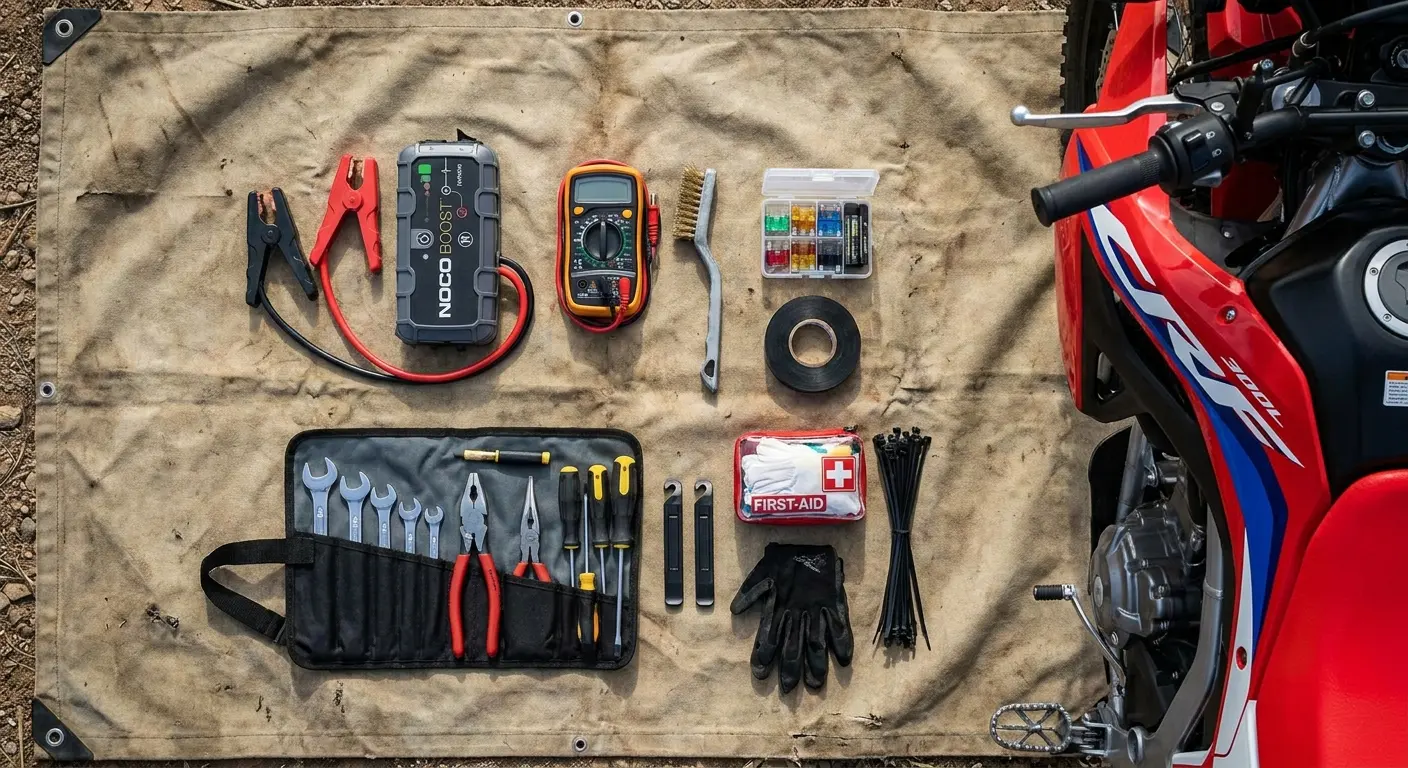
What you actually need:
Portable jump starter (this solves 80% of problems)
Multimeter (the cheap $15 one is fine)
Wire brush for terminals
Spare fuses for your bike
Electrical tape
Zip ties (zip ties fix everything)
Optional if you have room:
Dielectric grease
Small screwdriver set
Flashlight
Gloves (battery acid sucks)
This whole kit fits in a bag the size of a pencil case. You're not building a mobile workshop. You're carrying enough to solve the most common problems or at least diagnose what's broken. Total weight is around 3 lbs and fits in a small tool roll.
Phone Power Solutions for Riders
Your bike likely has a USB port or you can install one easily. Use it. Keeping your phone charged while riding means you're never starting an emergency with a low battery.
Carry a small portable power bank (10,000 mAh capacity is a good balance of size and charging capability). This gives you multiple full phone charges in a package smaller than a wallet. When your bike won't start and you're troubleshooting, plug your phone into the power bank immediately. You're preserving your communication lifeline while you work on the mechanical problem.
Rokform's rugged motorcycle phone mounts keep your phone accessible and secure during rides, but they also position your phone where you can monitor charge levels and access it quickly during roadside situations. A phone buried in a pocket or backpack doesn't help when you need to reference a wiring diagram or call for backup. Having it mounted and visible means you're aware of battery status before it becomes critical.
Waterproof cases matter more than riders think. I killed a phone in a rainstorm once. Not even a bad storm; just normal rain. Phone was in my pocket, got soaked, died. Learned that lesson the expensive way. Protection extends functionality.
Get a charging cable that can handle vibration and movement. Cheap cables fail at the connection points, leaving you with a cable that looks fine but doesn't charge reliably. This is not the place to save three dollars.
The Paper Backup: Information That Doesn't Need Power
Write down essential phone numbers. Your emergency contact, your roadside assistance provider, your insurance company. When your phone dies, you can't access your contacts. A small laminated card with critical numbers fits anywhere and works when nothing else does.
Print a basic wiring diagram for your specific bike model. Fold it up and stick it in your tool roll. You won't need it often, but when you're tracing an electrical problem on the roadside, having the actual wire colors and connections mapped out beats trying to remember what you once saw in a forum post.
I keep five phone numbers written on a card in my wallet: wife, roadside assistance, insurance, my mechanic, and my buddy Dave who knows bikes. Last year I dropped my phone in a creek (don't ask), and I had to use a pay phone at a gas station. Pay phones still exist, apparently. But only because I had those numbers written down.
Your phone's contact list is useless when your phone is dead. Write down the important numbers. Stick them somewhere waterproof. Feel like a dinosaur doing it. Do it anyway.
Keep your insurance and registration info in a waterproof bag. This isn't specifically about jump starting, but roadside emergencies sometimes escalate, and having your documents accessible without a functioning phone matters.
Paper doesn't run out of batteries. It doesn't need cell service. It works in direct sunlight and doesn't crack when you drop it. For critical reference information, old technology still has advantages.
When Jump Starting Isn't Enough: Recognizing Deeper Electrical Issues
You jumped it. It started. Ten minutes later it died again.
Congratulations, the battery wasn't your problem. Now you get to figure out what the actual problem is. Understanding when to jump start a motorcycle versus when to recognize deeper issues saves time and prevents damage.
Charging System Failures That Masquerade as Battery Problems
Your stator generates AC power from the engine's rotation. The rectifier converts that AC to DC, and the voltage regulator ensures the output stays within safe ranges. When any component in this chain fails, your battery discharges faster than it charges, eventually leaving you stranded.
A bike that starts fine in the morning but dies after 30 minutes of riding has a charging system problem, not a battery problem. The battery had enough charge to start the bike, but it's not receiving replacement power as you ride. Even with a quality motorcycle battery, you'll face repeated failures if the charging system isn't working.
Test this by checking voltage with the engine running. You should see 13.5 to 14.5 volts at the battery terminals with the engine at 2,000-3,000 RPM. Lower voltage means your charging system is underperforming. Higher voltage means the regulator is failing and overcharging, which will destroy your battery through heat and electrolyte loss.
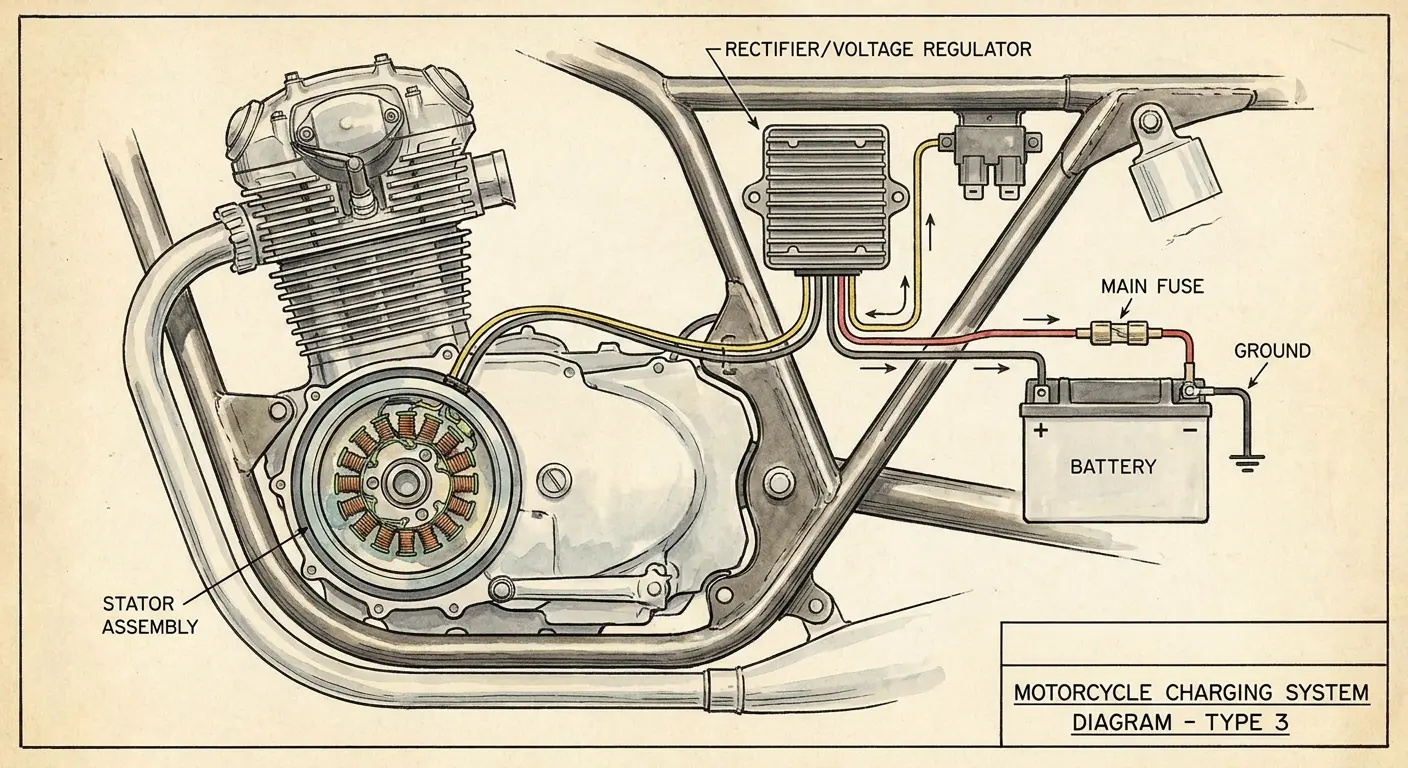
Stator failures often happen gradually. You might notice your battery needs charging more frequently, or your headlight dims slightly at idle. These early warnings are easy to miss until the stator fails completely. Voltage regulator failures can be sudden. You're riding fine, then every electrical component dies at once as the regulator shorts out and drains the battery in seconds.
Jump starting gets you nowhere with these failures. The underlying problem remains, and you'll be stranded again soon. You need to recognize the pattern and stop attempting temporary fixes when you try to jump start a motorcycle.
Parasitic Drain: The Silent Battery Killer
Something is drawing power when your bike is off. Clocks, alarms, fuel injection computers, and aftermarket accessories all consume small amounts of electricity continuously. Individually they're negligible, but combined they can drain a battery over days or weeks.
You'll notice this as a bike that starts fine when ridden regularly but struggles after sitting for a few days. The battery is healthy, the charging system works, but something is consuming power faster than the battery can hold it during storage.
Testing for parasitic drain requires disconnecting the negative battery cable and connecting your multimeter in series between the cable and the terminal (set to measure DC amps). With everything off, you should see less than 50 milliamps of draw. Higher readings indicate something is staying on when it shouldn't be.
Start pulling fuses one at a time while watching the meter. When the draw drops significantly, you've identified which circuit is causing the problem. This process works without any digital resources, just patience and systematic testing.
Common culprits include aftermarket GPS units that don't fully power down, poorly installed heated gear controllers, and alarm systems with excessive standby draw. Sometimes factory accessories are the problem, especially on bikes with complex electronics. Understanding parasitic drain helps you decide whether jump starting is a solution or just a temporary delay before the same problem recurs.
Staying Connected During Roadside Emergencies
You're working through a dead battery situation. The process might take 20 minutes or two hours depending on what you discover. Your phone needs to last through the entire event, and managing it properly is as important as knowing how to jump start a motorcycle.
Power Management When Every Percent Counts
Drop your screen brightness immediately. This single change extends battery life more than any other setting adjustment. You can still see the screen; it just won't drain power as quickly.
Enable airplane mode if you don't need cell service at that exact moment. Your phone burns power constantly searching for signals, especially in areas with weak coverage. When you need to make a call or access data, disable airplane mode temporarily, then turn it back on.
Close all apps running in the background. They're consuming processing power and battery even when you're not actively using them. A fresh start with only essential apps open makes your remaining battery last longer.
Disable automatic updates, background app refresh, and location services unless you specifically need GPS at that moment. These features are convenient normally but wasteful during emergencies. Turn off vibration for notifications. The motor that creates vibration uses more power than you'd expect. Switch to sound-only alerts or disable notifications entirely until you're back on the road.
These adjustments buy you time. You're not adding power, but you're dramatically slowing the drain rate, which might mean the difference between being able to call for help or not.
Using Your Phone Strategically During Troubleshooting
Download critical information while you still have good battery. If you're looking up jump starting procedures or w iring diagrams, save the pages offline or take screenshots. Repeatedly accessing web pages drains battery faster than viewing saved content.
Take photos of your electrical connections before you start disconnecting things. This uses minimal battery and creates a reference you can check later if you forget how something was oriented. You won't need to keep the phone screen on trying to remember which wire went where.
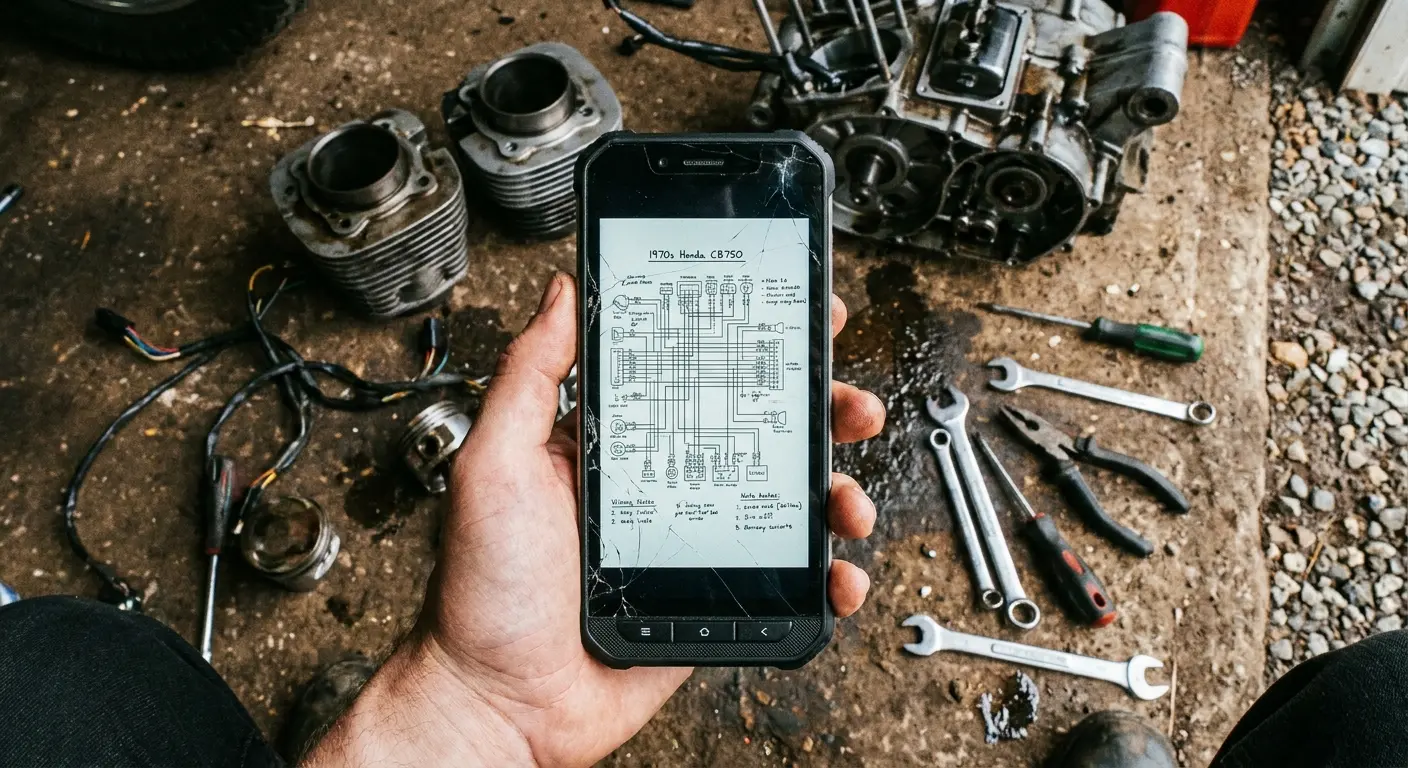
Limit video watching. That detailed jump start tutorial might be helpful, but streaming video demolishes your battery. If you need the information, take notes or screenshots of key steps rather than repeatedly watching the video.
Make phone calls efficiently. Know what you need to communicate before you dial. A focused three-minute call uses less power than a rambling ten-minute conversation where you're figuring out details as you talk. GPS is a massive battery drain. If you need to share your location, do it once and then disable location services. Constantly updating your position for maps you're not actively using serves no purpose during a roadside repair.
You're balancing information access against resource preservation. Get what you need, then conserve what remains. Having essential motorcycle accessories like proper phone mounts and power banks makes this balance easier to maintain.
Final Thoughts
So that's it. Check your battery voltage before you ride. Keep your phone charged. Carry a jump starter. Learn to bump start. Know the difference between a dead battery and a broken charging system.
You've probably got jump starting figured out now. The mechanical process isn't complicated once you understand the actual techniques that work when you're alone. Whether you need to jump start a motorcycle with a portable starter or master how to jump a motorcycle using the bump start method, the skills themselves are straightforward.
What most riders miss is the second layer: maintaining the communication and information tools you'll need throughout the entire process. A dead phone compounds a dead battery in ways that aren't obvious until you're living through it.
The riders who handle roadside emergencies best are the ones who prepare for parallel failures. They keep their phones charged and accessible during rides with a reliable motorcycle phone mount. They carry compact tools that solve problems without requiring another vehicle or outside help. They understand their bike's electrical system well enough to diagnose beyond "battery seems dead."

You don't need to become an electrical engineer or carry fifty pounds of tools. You need the right ten pounds of equipment, basic diagnostic knowledge, and the foresight to keep your digital resources functional when things go wrong.
We've built our riding habits around constant connectivity. That's not inherently bad, but it creates vulnerability when the connectivity fails at the same moment your motorcycle does. Recognizing that vulnerability and preparing for it separates riders who handle emergencies confidently from those who end up stranded and frustrated.
None of this is complicated. It's just stuff you should know and probably don't because we've all gotten lazy.
Will you do any of this? Maybe. Probably not until you get stranded once and realize how unprepared you were. That's fine. That's how most people learn. I learned by getting stuck outside Moab with a dead bike and a dead phone and nobody around for miles. You'll probably learn the same way.
But at least now you know what to do when it happens.
Test your battery monthly. Carry a portable jump starter. Keep your phone charged and mounted where you can see it. Know how to bump start your specific bike. Understand the difference between a dead battery and a charging system failure. Master the techniques of how to jump start a motorcycle before you need them in the field.
These aren't complicated skills or expensive investments. They're practical preparations that match the reality of modern motorcycling, where mechanical problems and dead phones can hit simultaneously, and you need solutions for both when you jump start a motorcycle miles from help.
Or you can check your battery voltage once a month and avoid the whole thing. Your call.

